
12 Days on an Expedition Cruise to Antarctica After 4 Years of Planning
An Antarctica expedition cruise typically runs 10–12 days round-trip from Ushuaia, Argentina, with two days each way crossing the Drake Passage and roughly 5 days of Zodiac landings and wildlife excursions on the Antarctic Peninsula. Based on a firsthand 12-day sailing aboard HX Expeditions' MS Roald Amundsen, expedition cruising prioritizes exploration and science over onboard entertainment — daily landings are planned around real-time weather, ice, and wildlife rather than a fixed itinerary.
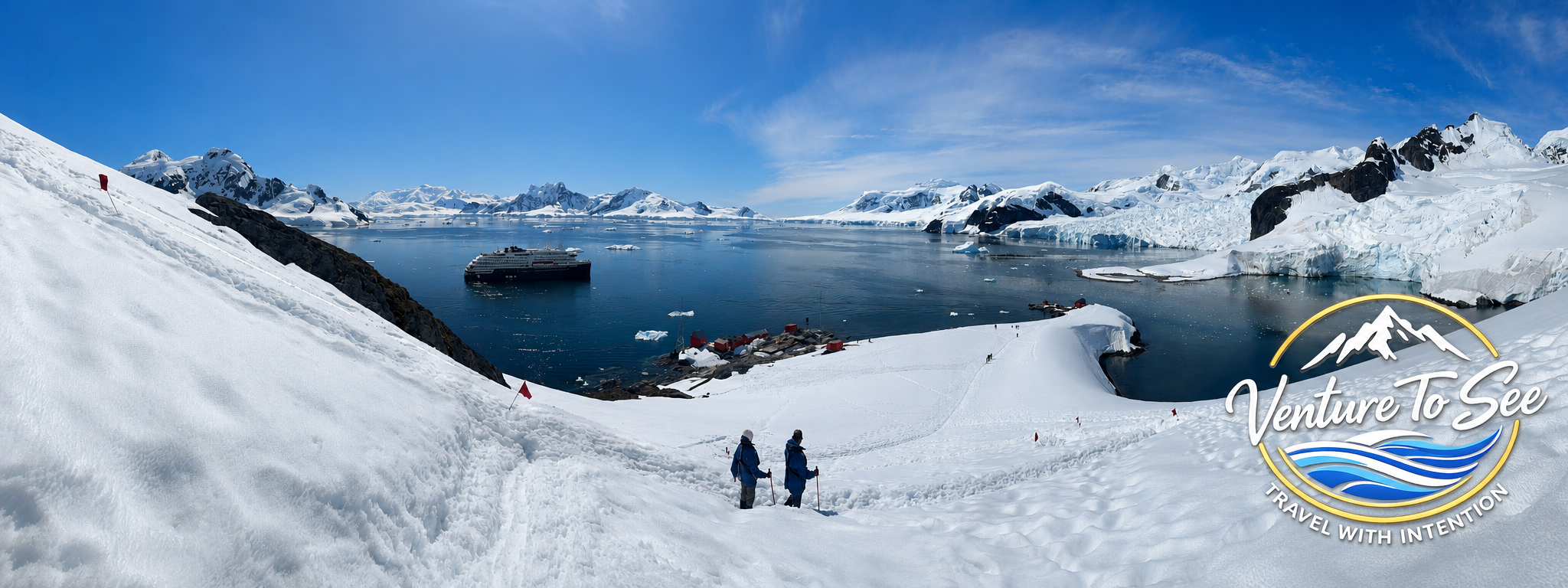
12 Days on an Expedition Cruise to Antarctica After 4 Years of Planning
A 12-day Highlights of Antarctica expedition, from the Drake Passage to the Antarctic Peninsula and back.
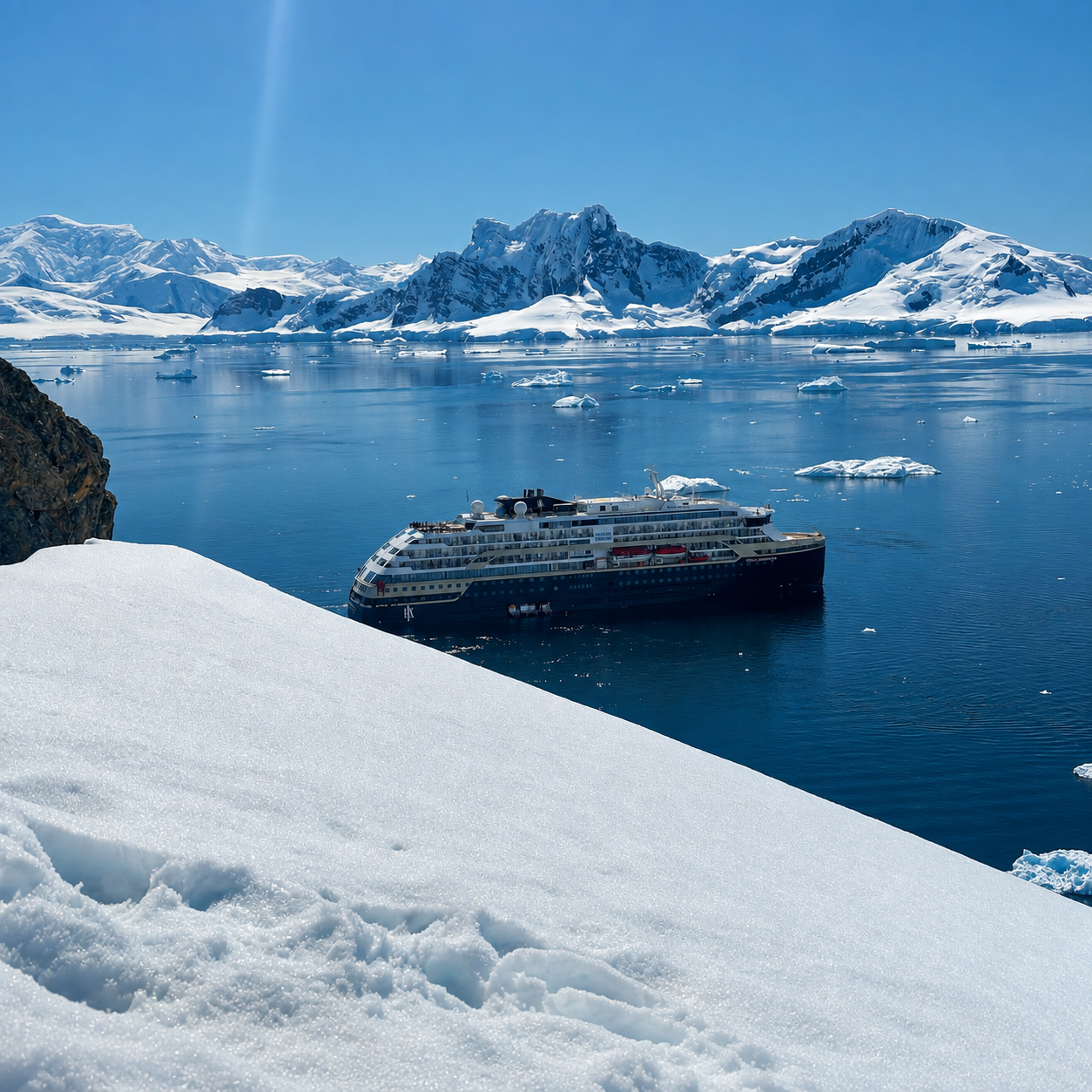
MS Roald Amundsen anchored off the Antarctic Peninsula
There are places you visit because they're beautiful. Others because they're historic. Some because they're exciting, or relaxing. Antarctica is none of those things — or maybe it's all of them. What sets it apart isn't the scenery so much as the perspective. Standing on the Antarctic Peninsula, surrounded by glaciers that have existed for thousands of years, listening to nothing but penguin calls and the occasional crack of moving ice, you start to understand how small you are.
That's the closest I can come to describing twelve days aboard HX's MS Roald Amundsen on the Highlights of Antarctica expedition cruise. This wasn't just another trip on the calendar — it was four years of planning, saving, and anticipating. Antarctica has no cities, no permanent population, no highways, no shopping districts. Only ice, wildlife, weather, and a landscape that makes clear nature is still in charge.
This particular sailing also happened to span Christmas and New Year's. Instead of spending the holidays around a table at home, we'd be crossing one of the roughest stretches of water in the world before celebrating among glaciers, whales, and penguin colonies. It sounded unlikely going in. By the end, it felt like exactly where we were supposed to be.
"People often ask what Antarctica is like. The truth is, it's almost impossible to describe until you've stood there yourself."
Why We Chose HX
There are several strong expedition companies sailing to Antarctica today, ranging from small vessels carrying under 200 passengers to larger ships with different itineraries and price points. For us, the decision came down to three things.
First, HX (formerly Hurtigruten Expeditions) puts real weight behind education, science, and conservation — the philosophy isn't just to show you Antarctica, it's to help you understand it. Second, the expedition-first mindset appealed to us: no casinos, no Broadway-style entertainment, just exploration and wildlife. Third, the ship itself was built specifically for polar operations rather than adapted for it — something that mattered more than we expected once we were underway.
Getting There: Buenos Aires and Ushuaia
After years of planning, packing lists, and weather forecasts, we flew to Argentina and checked into the Hotel Emperador in Buenos Aires for a night before continuing south. The following morning we flew to Ushuaia — the southernmost city in the world and, for anyone sailing to Antarctica, more of a beginning than a destination. Set between the Beagle Channel and the peaks of Tierra del Fuego, Ushuaia is where expedition ships from around the world depart for the Antarctic Peninsula.
HX met us with a buffet lunch and gave everyone roughly two hours to explore town before boarding. It wasn't a long visit, but watching expedition ships prep for departure along the waterfront made the trip suddenly feel real.
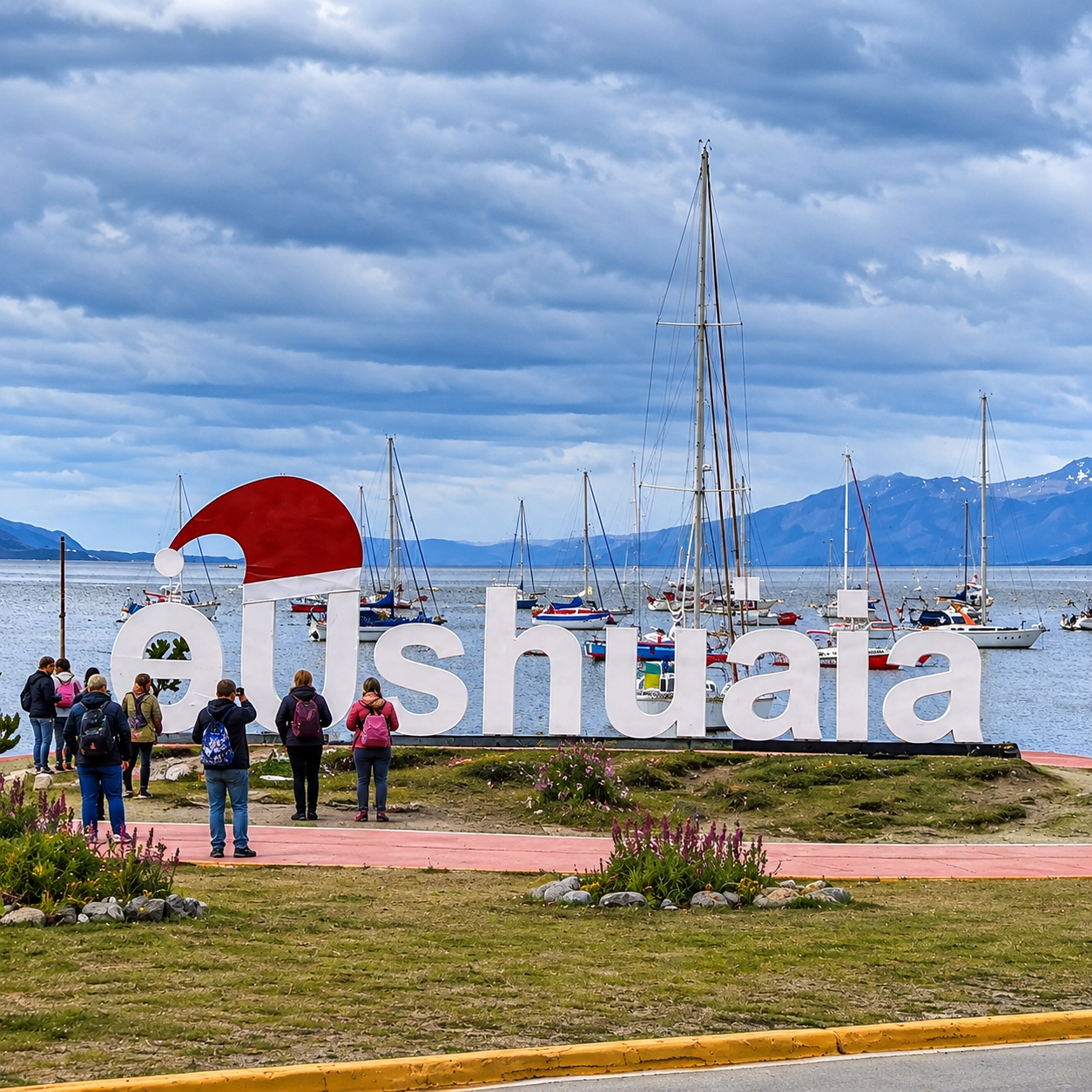
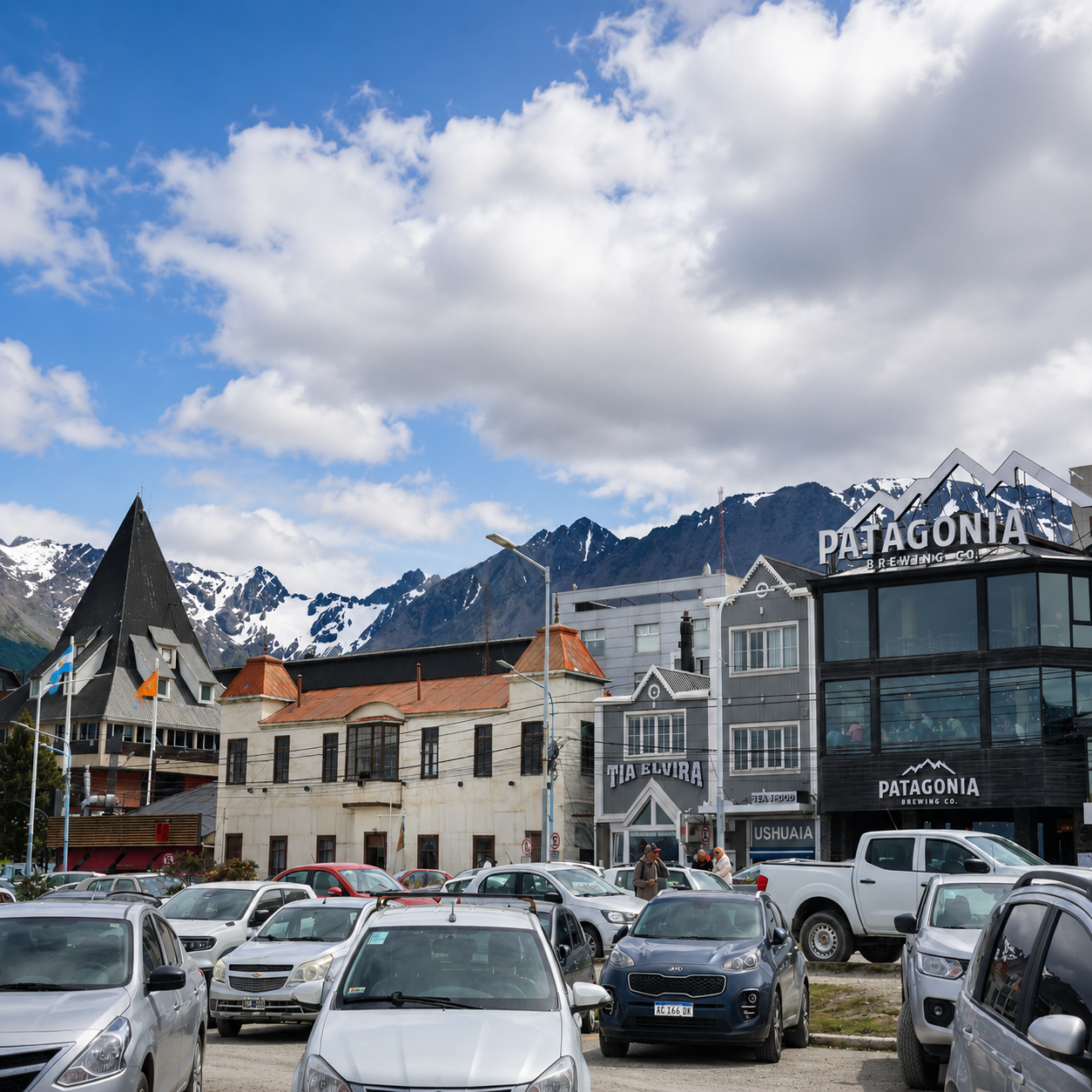
The Ushuaia waterfront sign (left) and downtown Ushuaia against the Patagonian mountains (right)
First Impressions of MS Roald Amundsen
Boarding felt noticeably different from the larger mainstream ships we'd sailed before. No constant background noise, no giant atrium, no shopping promenade — just a calm, purposeful, professional atmosphere geared toward exploration rather than entertainment.
Launched in 2019, the ship became the world's first hybrid-powered expedition vessel. She measures approximately 140 meters (459 feet), carries up to around 500 guests, and had roughly 430 passengers and 160 crew aboard for our sailing. Rather than maximizing capacity, everything is built around function: a Polar Class 6 ice-strengthened hull, dedicated Zodiac embarkation areas, and observation lounges with near-uninterrupted views. Those design choices showed up constantly over the next twelve days — this wasn't transportation. It was part of the expedition.
Weather still plays into the plan regardless of ship size, and so does the ratio of crew to passengers. On our sailing, the passenger groups were rotated well — while one group was ashore, others were out kayaking or on the Science Boat, so activities were running in parallel rather than queued up one after another. We never felt like we were sitting around waiting or missing out on something happening elsewhere.
Our Arctic Superior Cabin
Waiting in our cabin were reusable water bottles, chocolates, mixed nuts, complimentary wine, and a fully stocked minibar — all included in the fare. We'd booked an Arctic Superior Balcony Cabin with a king bed configurable as two twins. The room reflected the Scandinavian design sensibility I'd expect: simple, functional, comfortable, with nothing extravagant but every detail intentional.
One genuine surprise was the bathroom — after more than a dozen cruises, one of the larger cruise-ship bathrooms I've experienced. It sounds like a small thing before departure; after nearly two weeks aboard, it's something you notice every day. The balcony became one of our favorite places on the ship — first overlooking the mountains around Ushuaia, later our front-row seat to whales, glaciers, and coastline.
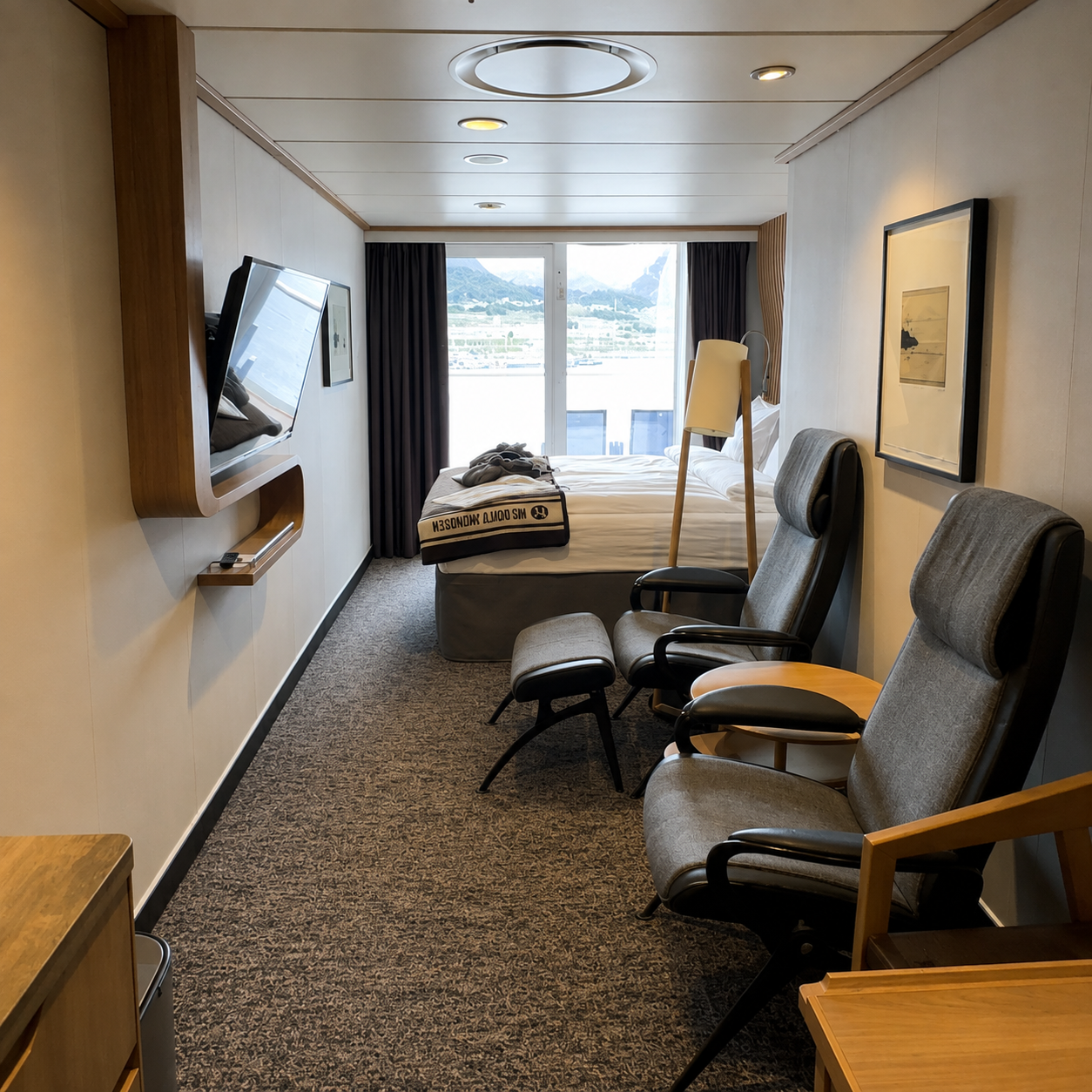
Our Arctic Superior Balcony Cabin aboard MS Roald Amundsen
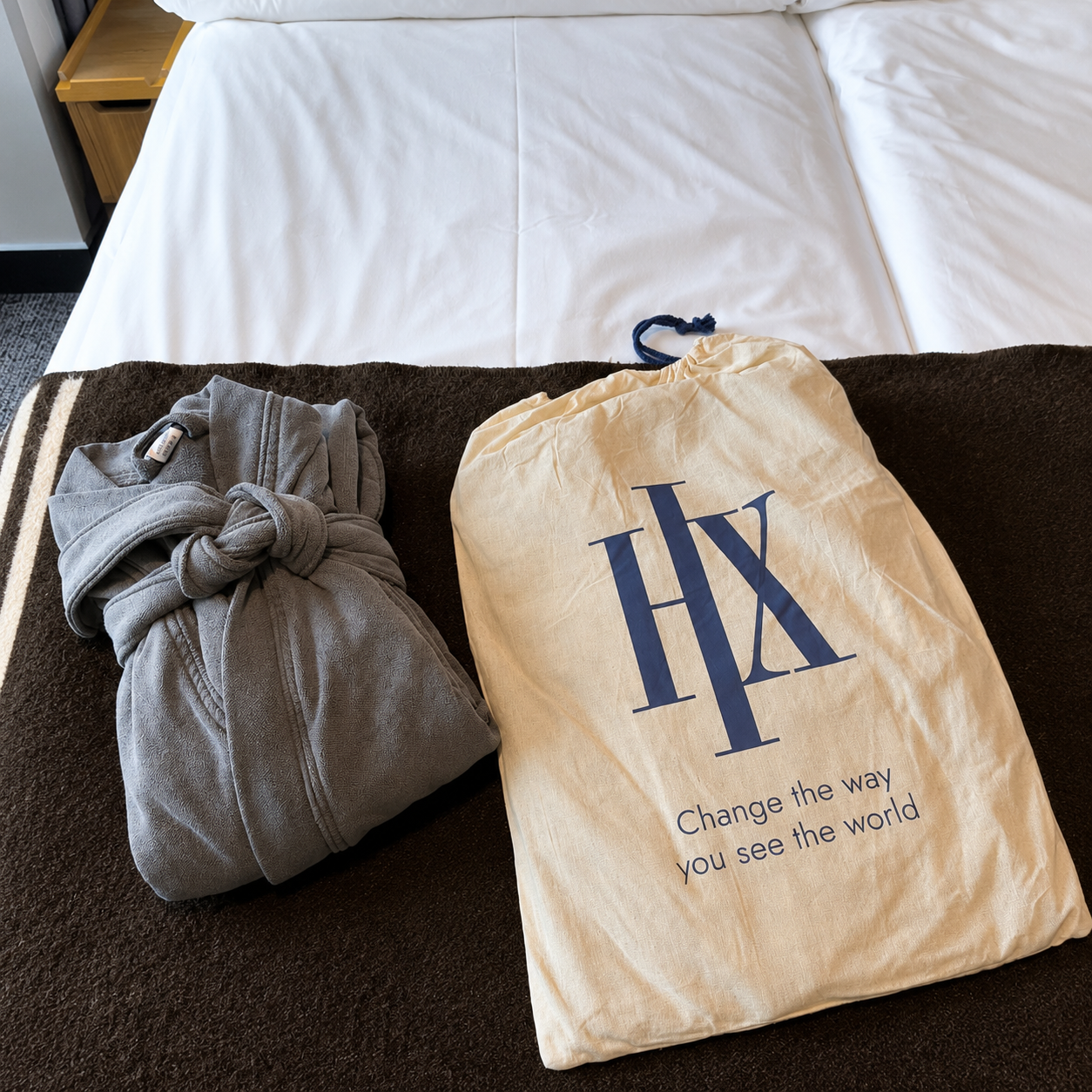
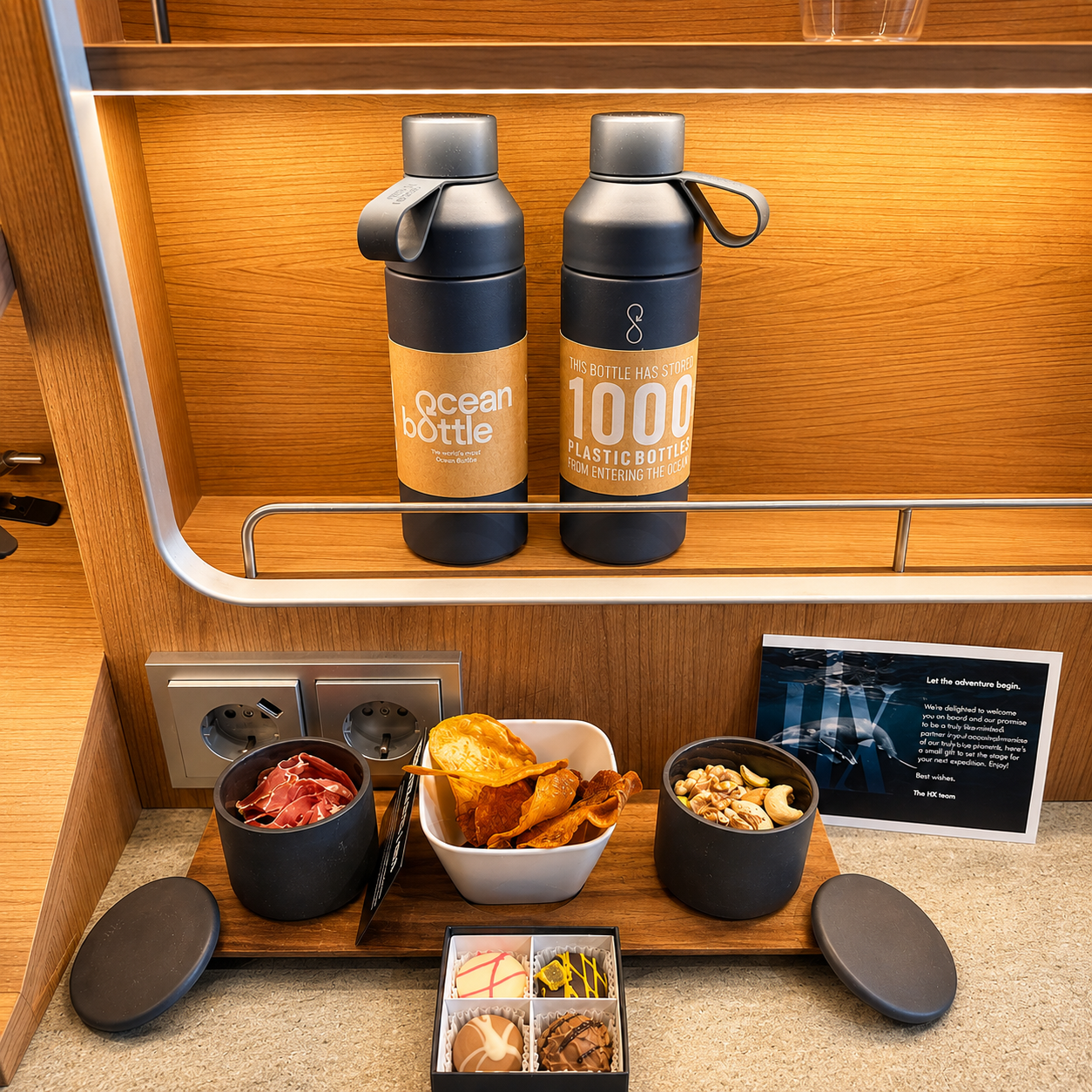
Robe and welcome amenities waiting in the cabin on arrival
Crossing the Drake Passage
If you've researched an Antarctic cruise, you've come across the Drake Passage. Some travelers wear the "Drake Shake" like a badge of honor; others fear it outright. Not long after we left the calm, mountain-lined Beagle Channel, the captain came over the intercom with a direct, unrushed briefing: we'd be experiencing a Drake Shake, with forecasted seas of 3–6 meters (10–20 feet) and sustained winds of 30–40 mph.
The ship rolled. Walking required more attention than usual. But MS Roald Amundsen never felt out of place in it — a good reminder that this wasn't a cruise ship visiting Antarctica, it was a purpose-built expedition vessel doing exactly what it was designed to do.
There Isn't Really a "Sea Day"
On a traditional cruise, sea days mean the pool deck or a show. On an expedition ship, the two days crossing the Drake were some of the busiest of the whole voyage — mandatory safety and biosecurity briefings, boot and parka fittings, Zodiac operation training, and lectures on wildlife, ocean currents, and Antarctic history. By the time we reached the Peninsula, we weren't tourists anymore. We understood the place we were entering.
Christmas Day at Sea
Christmas landed on our second day crossing the Drake. The crew leaned into it without forcing it — trivia, cookie decorating, water-bottle decorating, and hot chocolate good enough that I'd put it ahead of versions I've had in Europe. Every passenger also received an HX leather luggage tag: not extravagant, just thoughtful, and it summed up the atmosphere onboard pretty well. The expedition wasn't trying to impress us with extras. It was creating experiences that felt genuine.
Antarctica at Last
It was around four in the morning when I woke up in the Lemaire Channel, and the first thing I noticed wasn't a sound — it was the absence of one. For two straight days the ship had been moving, rolling, working. Now it felt still. Then came a second thing: a gentle, inconsistent tapping against the hull. It took me a moment, still half asleep, to work out what it was. Small chunks of ice, tapping against the ship as we eased through the channel.
I opened the curtains and found Antarctica already outside — snow-covered mountains rising straight from the sea, icebergs drifting past, water calm enough to reflect the landscape like glass. Four years of planning, two days on the Drake, and there it was.
I stepped out onto the balcony to get a better look and found a single bird perched on top of a nearby iceberg, holding perfectly still, almost like it had been posted there to greet us. It was a small thing, but at four in the morning, alone on deck with that view, it felt like the continent's own welcoming committee.
What threw me most was the light. It was four in the morning, but the sky was bright and clear, closer to what you'd expect at mid-morning than the middle of the night. That far south in the summer months, the sun barely dips — so instead of the dim, gray light I'd braced for, the whole scene was lit like it was already well into the day.
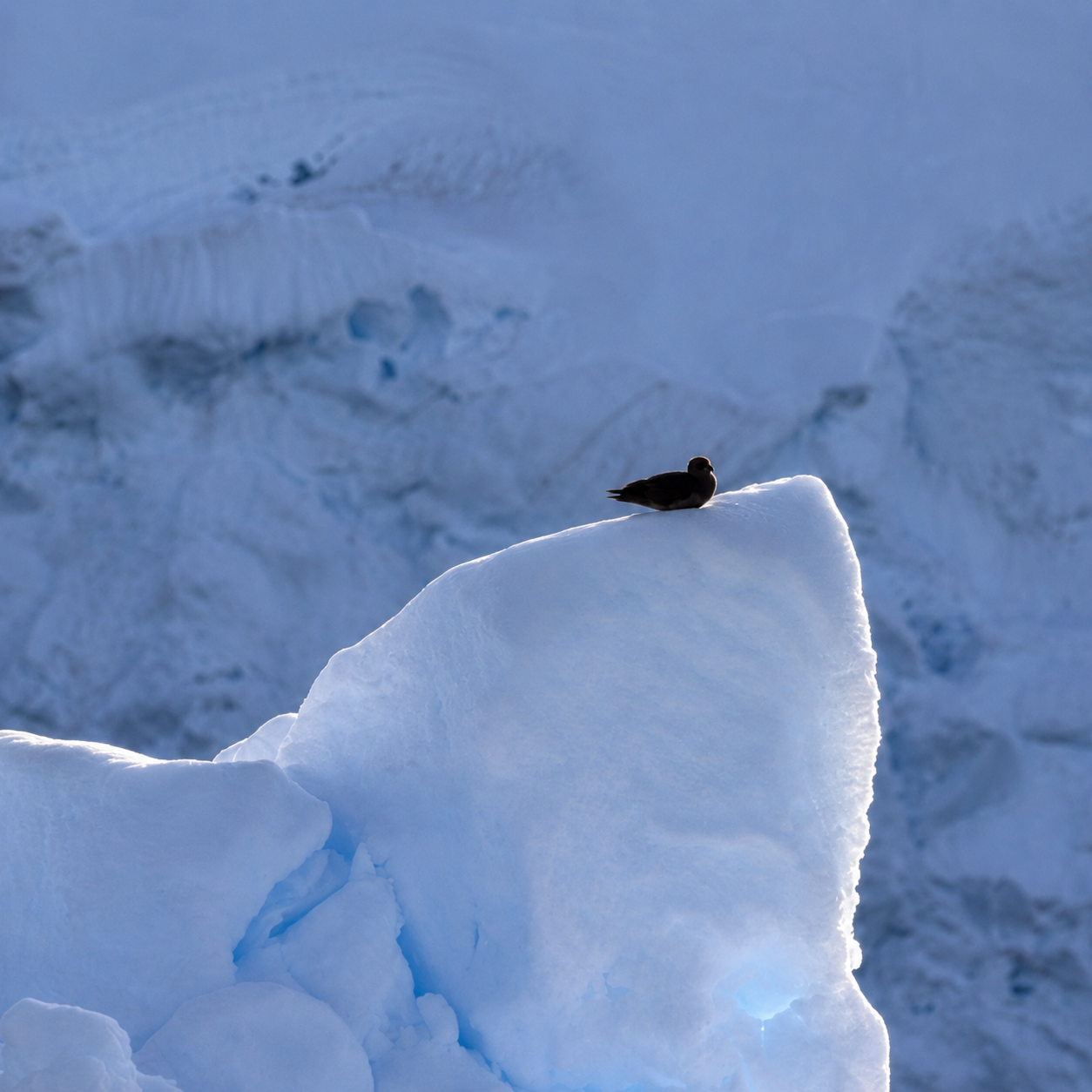
The lone seabird perched on an iceberg, our welcome to the Lemaire Channel
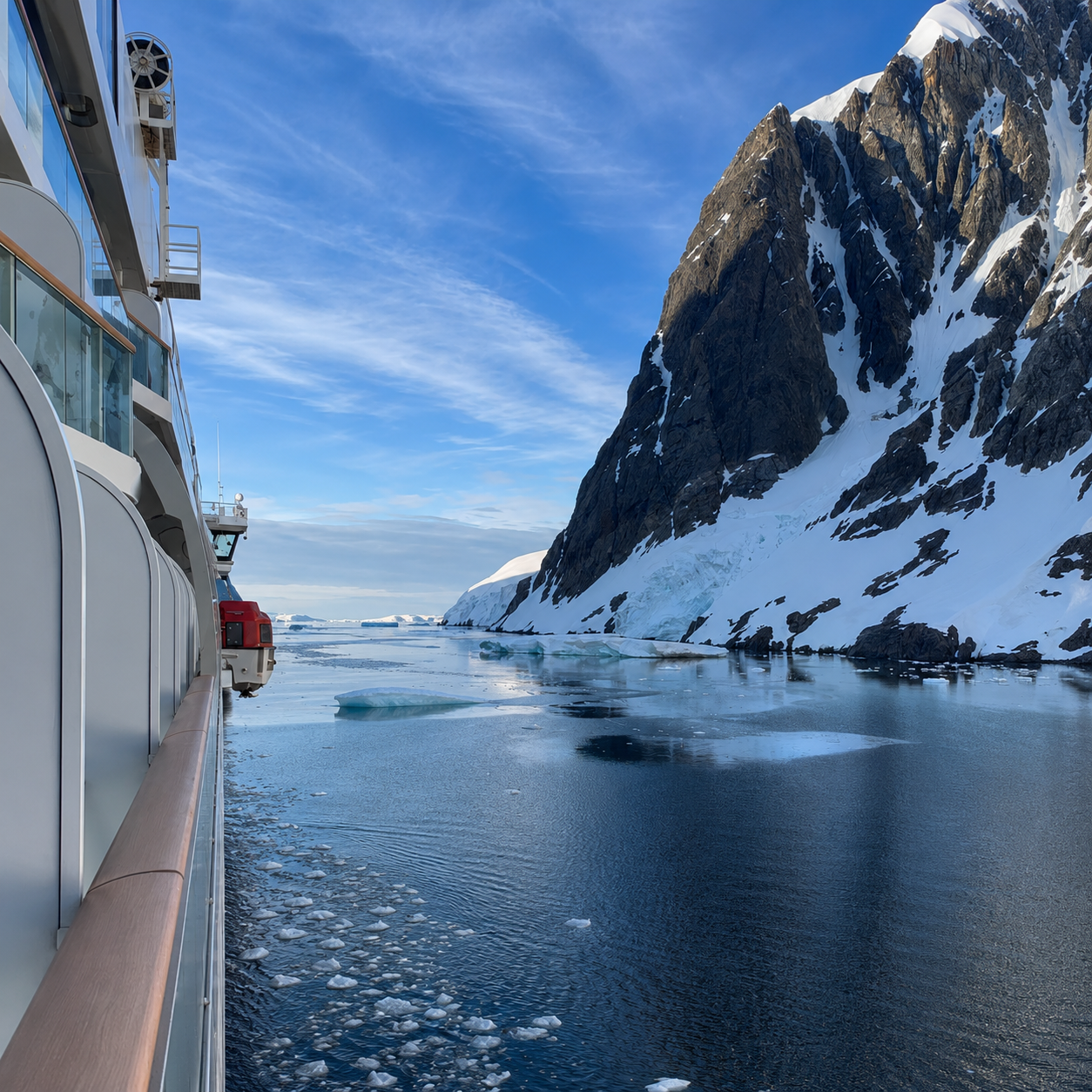
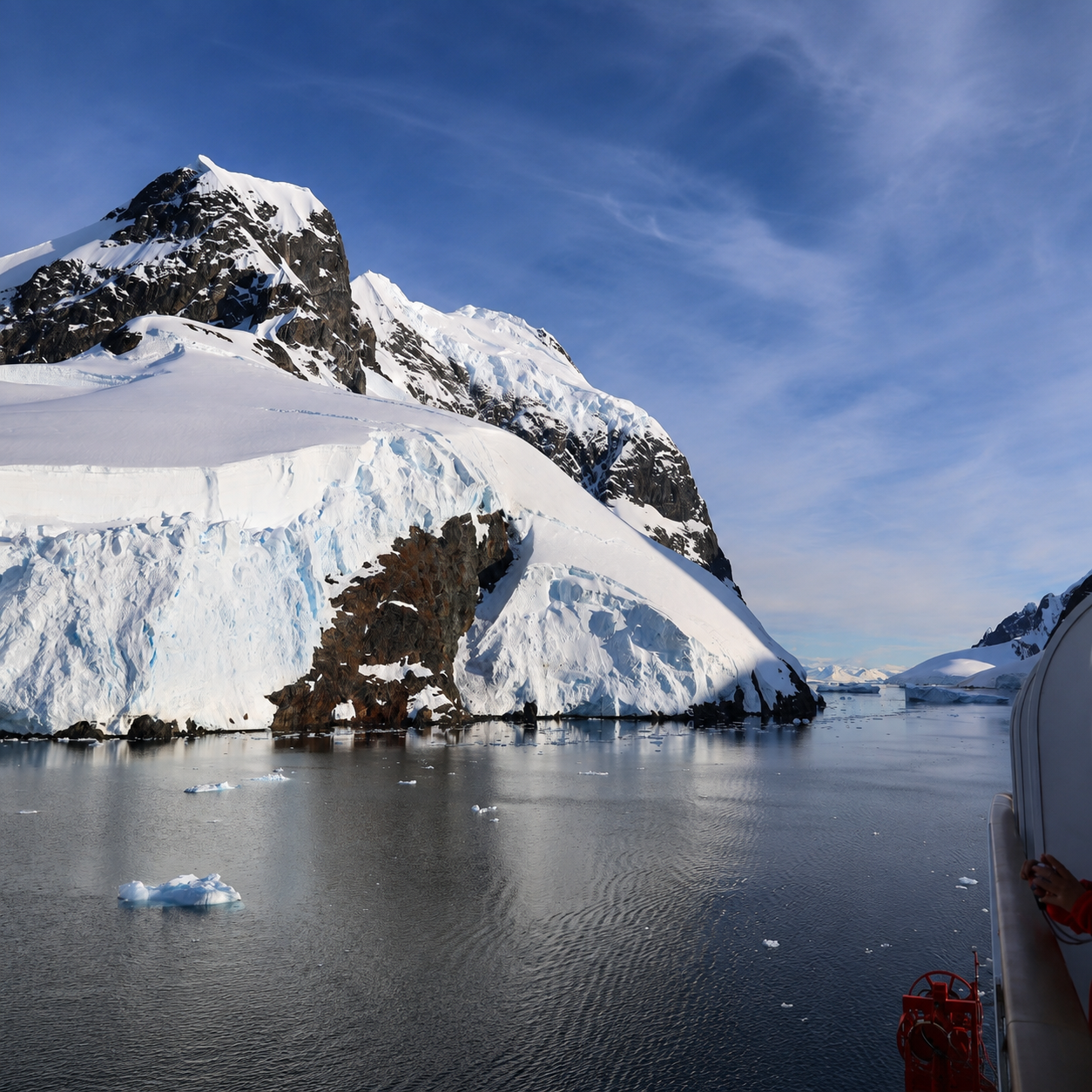
Scenic cruising through the Lemaire Channel at first light
The Garden of Icebergs
Before Petermann Island, our first outing was a Zodiac cruise through what the expedition team calls the Garden of Icebergs — a stretch of shallow water where icebergs calving off nearby glaciers run aground and stay put, clustered together like a garden of ice. From the balcony beforehand, penguins were already working the water around the ship, launching themselves clear of the surface as if sizing us up.
The ship had stopped for the morning right in the middle of the Garden of Icebergs, and from our balcony we could already see the first Zodiacs out on the water, threading between the icebergs with penguins visible in the water around them. Waiting for our group to be called felt long — not because anything was wrong, but because we could see exactly what we were getting ready to do.
Once we were finally on the water ourselves, the pace only picked up. Whale blows started appearing around us. Penguins moved past on every side. Below the surface, the icebergs held a shade of blue I hadn't seen before, clear enough to follow the ice down several feet before it faded from view.
Then, without much warning, a whale surfaced roughly fifty yards off our beam, moving toward the boat before diving just a few feet away and lifting its tail clear of the water as it went under. It moved with almost no disturbance to the surface — no splash, barely a ripple, just a slow, controlled dive. Nobody in the boat said much on the way back to the ship. It was the kind of thing that took a minute to sit with before anyone tried to describe it.
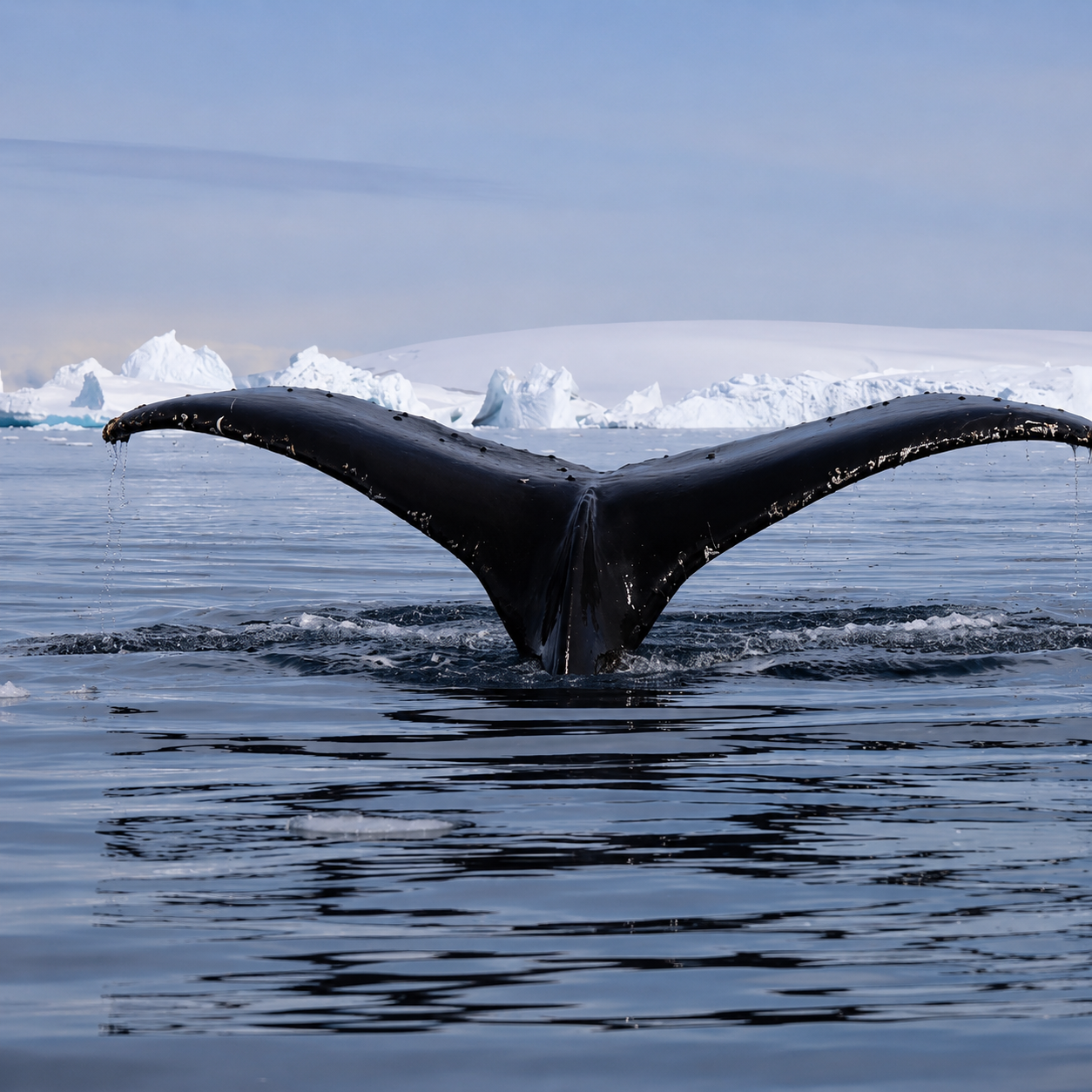
The whale's tail, just before it dove beside our Zodiac in the Garden of Icebergs
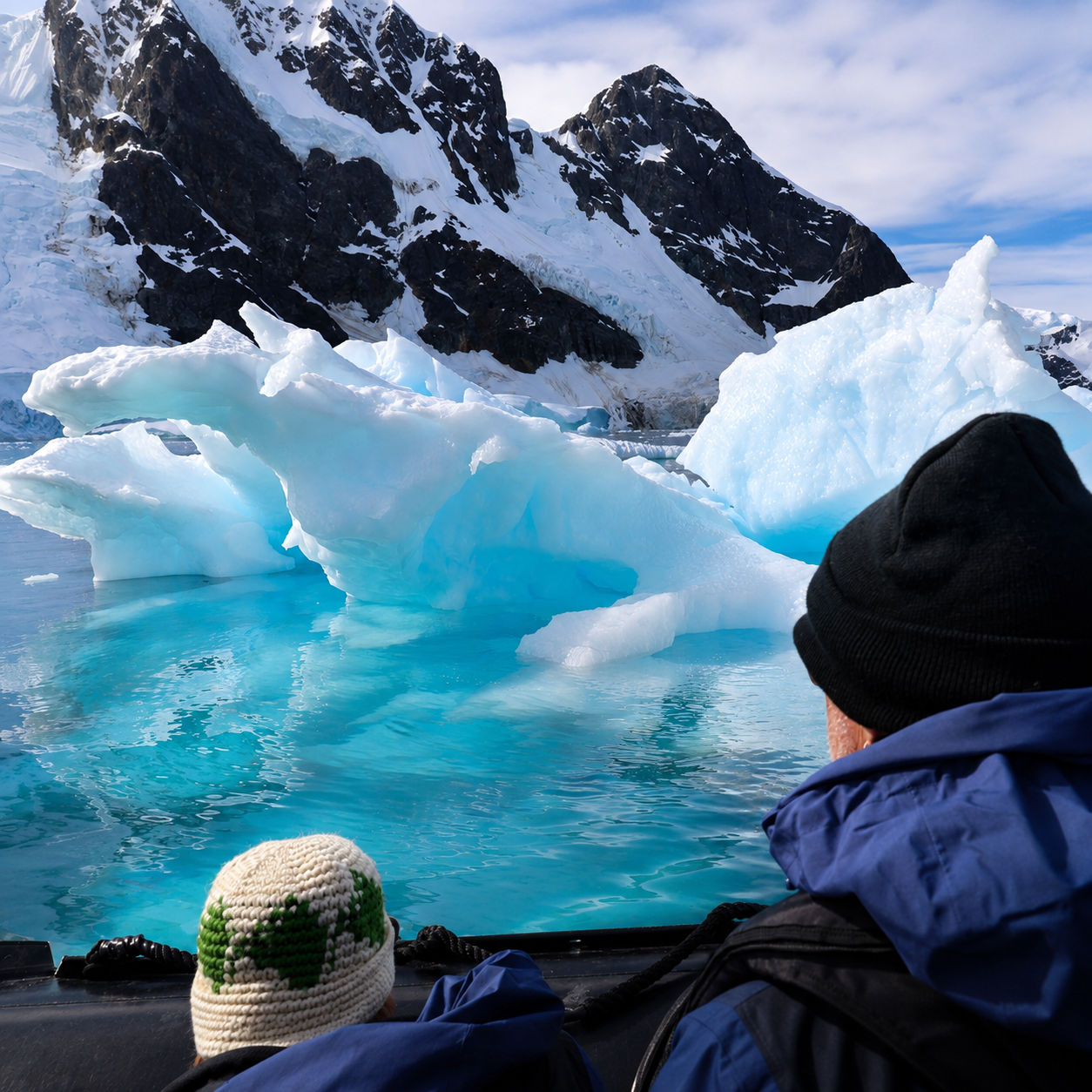
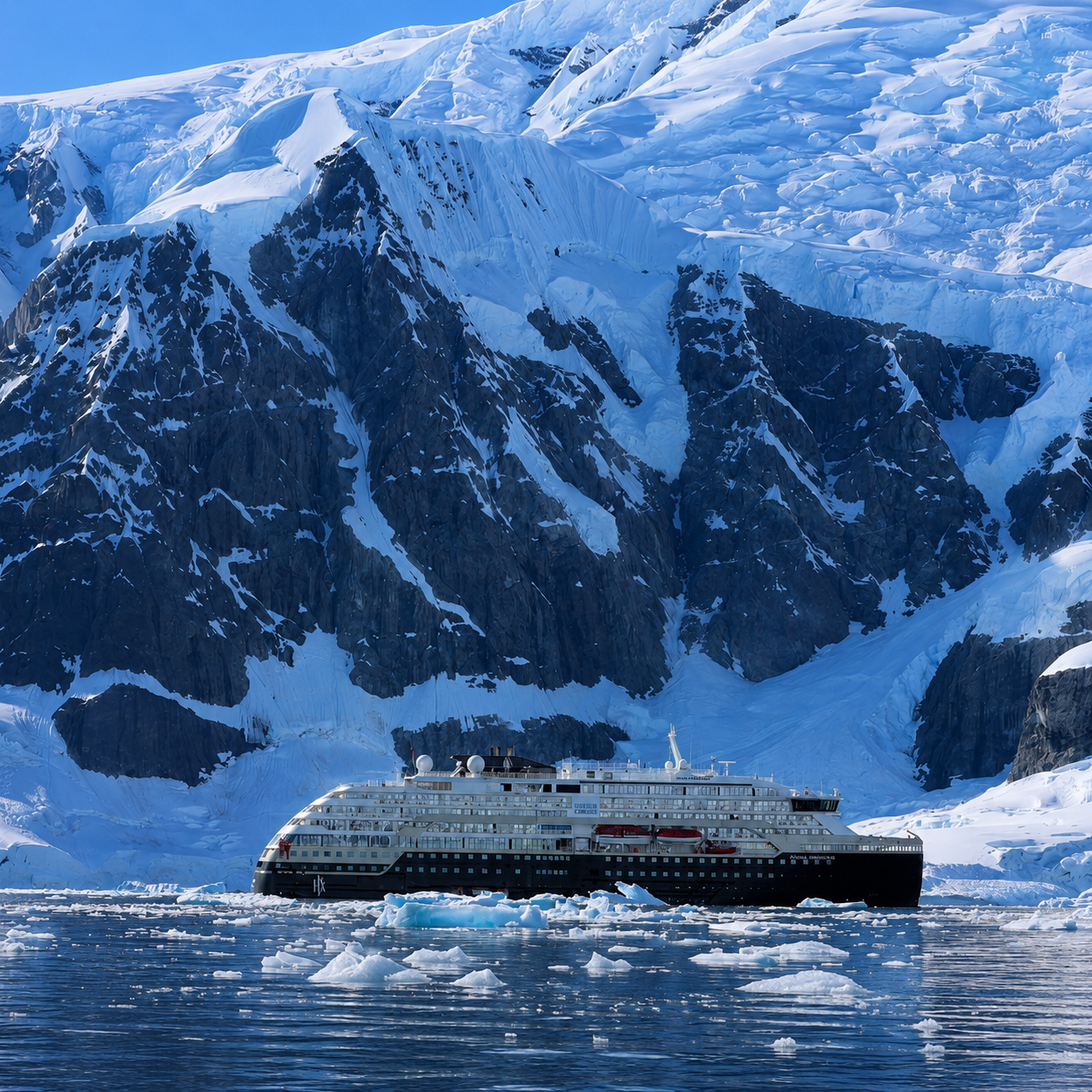
Zodiac cruising through the Garden of Icebergs (left) with MS Roald Amundsen anchored beyond (right)
Petermann Island — First Steps Ashore
As we got closer to shore, we could hear the penguins before we could see them clearly, a steady chatter of colony noise carrying across the water.
Our first landing was Petermann Island. Nothing quite prepares you for stepping off a Zodiac and realizing you're standing on Antarctica. People had warned us about the smell of a penguin colony before the trip, and I nodded along without really registering it. It doesn't land until you're actually standing in it — a sharp, unmistakable smell of guano that no amount of secondhand warning fully prepares you for.
Once we were ashore, we spotted a leopard seal hauled out on the rocks, just laying there — the only one we saw on land during the whole landing. The rest of the shore belonged to the Gentoos, hundreds of them, completely unconcerned with our arrival. Watching them was its own kind of entertainment: the waddle, the occasional face-plant in the snow, then gliding on their bellies to cover ground faster than walking ever would. There was plenty of room to walk the marked routes on our own and take it in at whatever pace we wanted. They weren't performing for us. They were simply living their lives, and that made it more worth watching, not less.
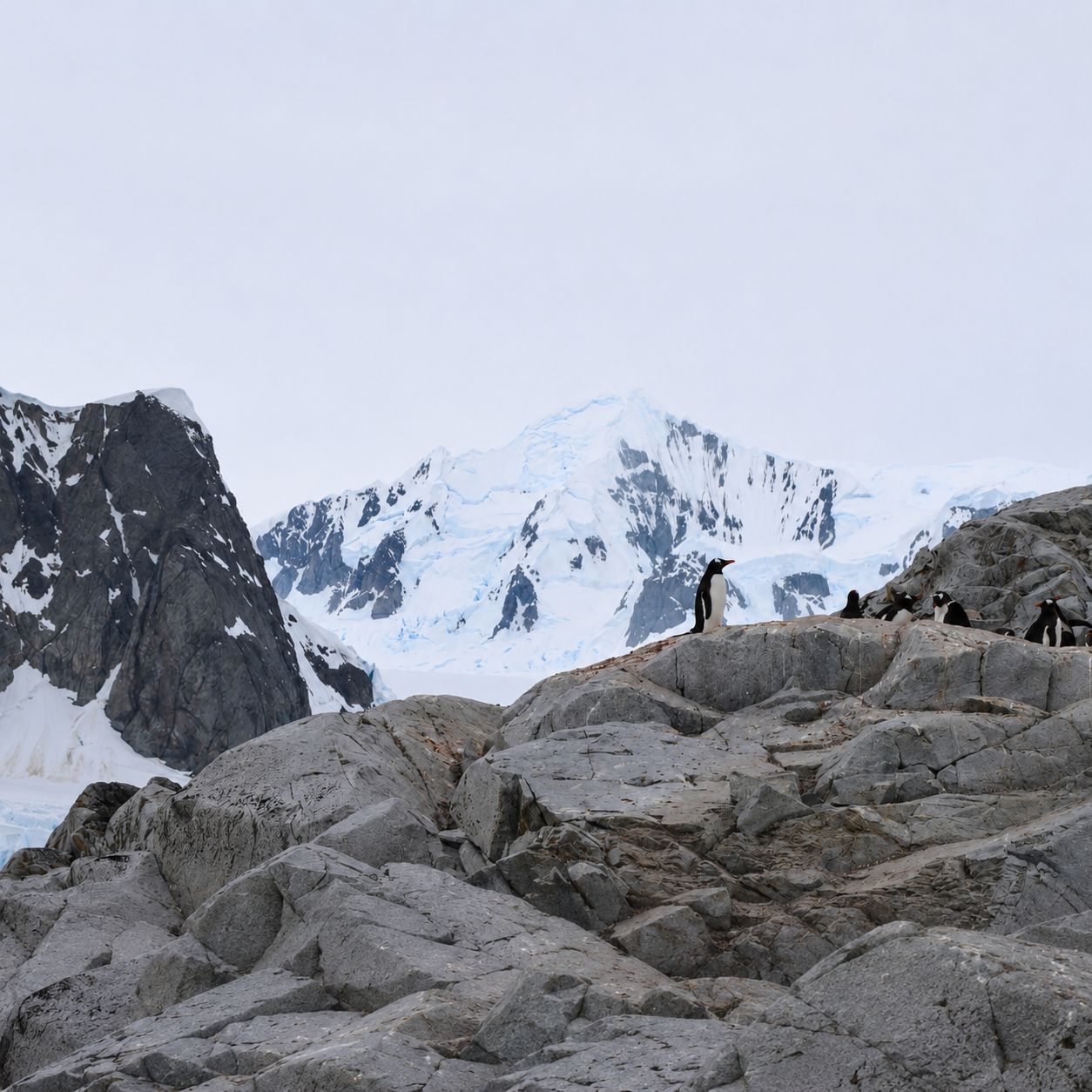
Gentoo penguins along the rocky shoreline at Petermann Island
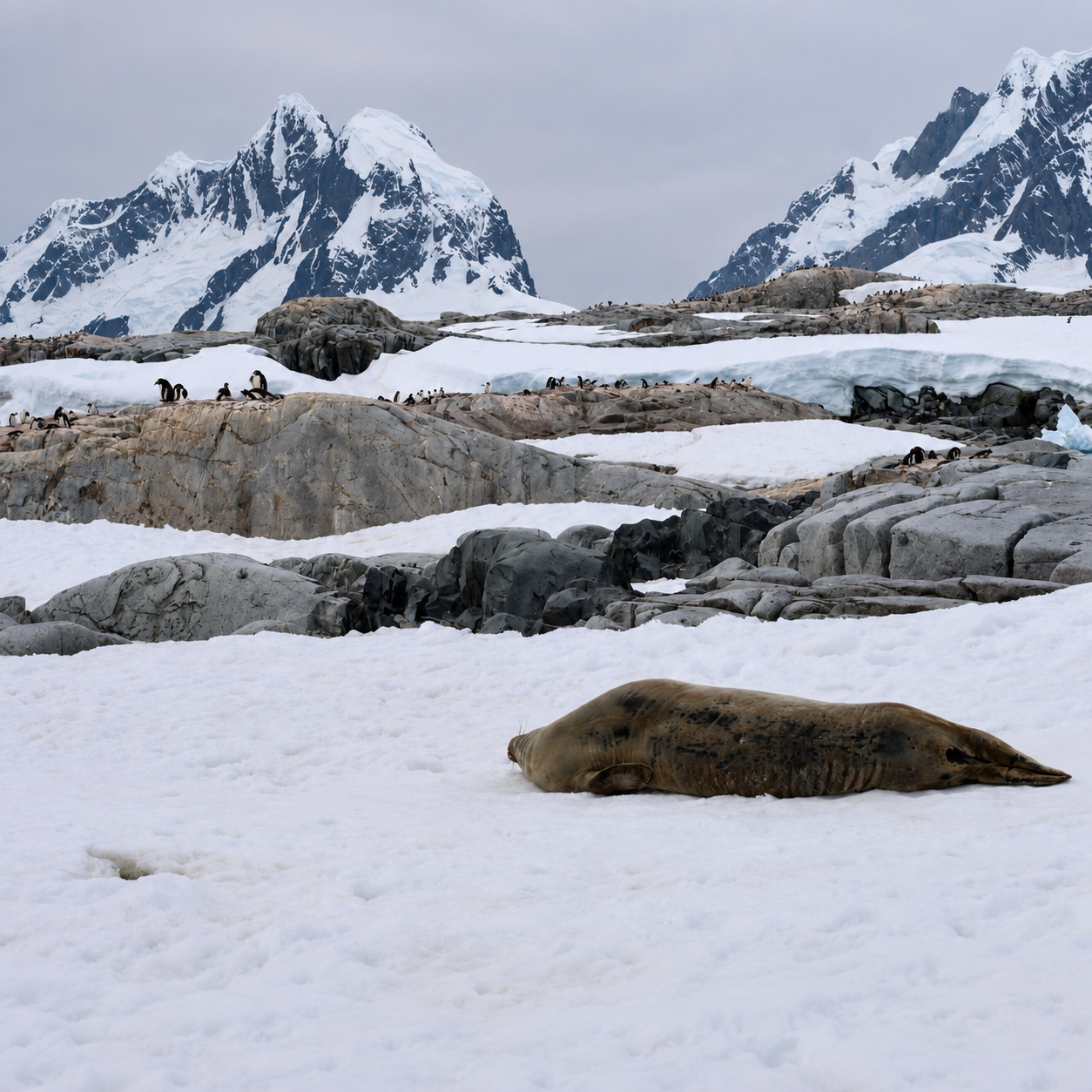
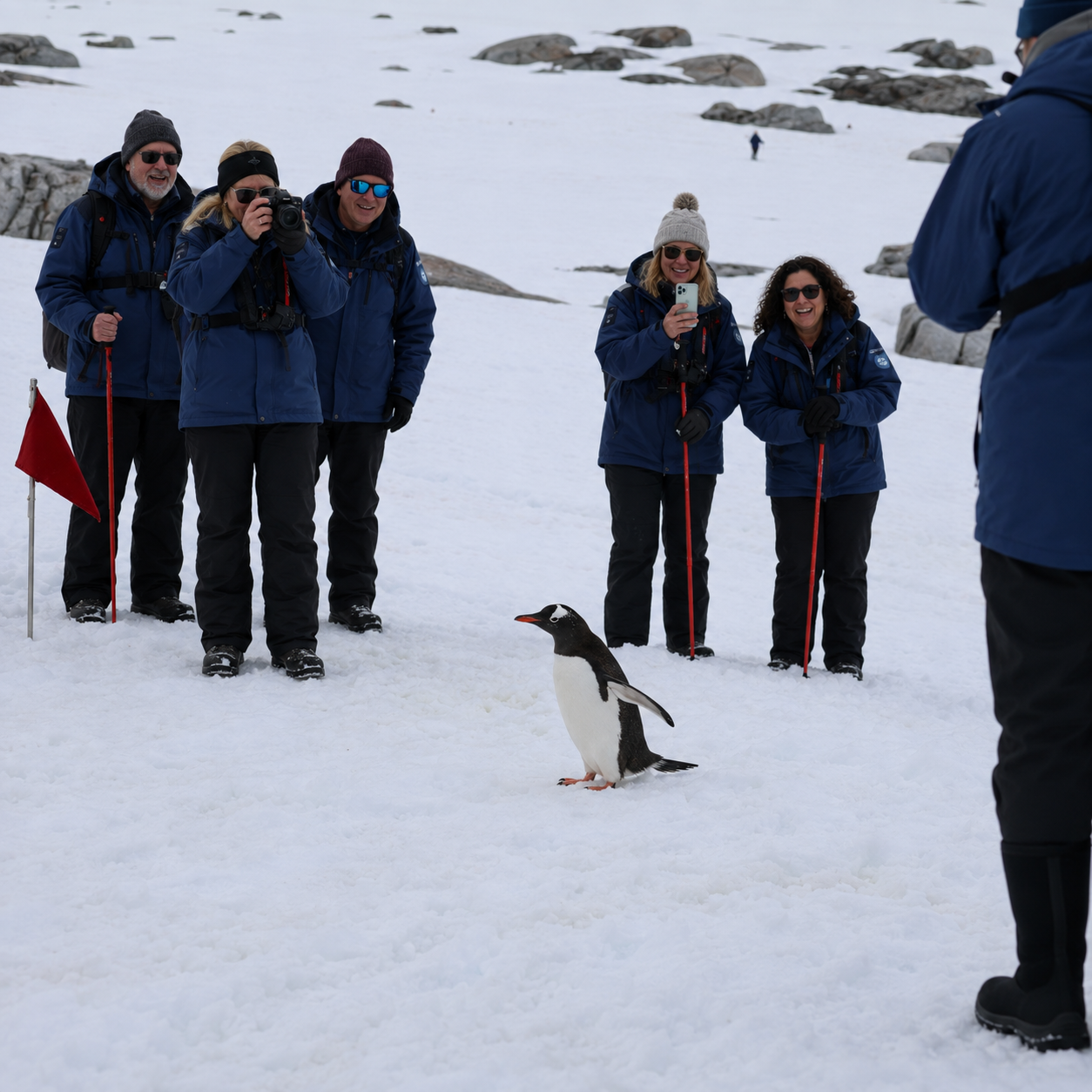
The leopard seal hauled out near the colony (left) and Gentoo penguins at the landing site (right)
Photography in Antarctica
I'd spent months worrying about camera gear before the trip. As an amateur, I erred toward covering my bases: a DSLR with a 24-70mm and a 100-500mm lens, a GoPro, and my iPhone. I was glad I brought all of it — almost every Zodiac outing and landing ended up dictating which device made sense. The DSLR came out for more deliberate, composed shots. The iPhone handled the quick, close-range moments with wildlife where there wasn't time to think about settings. The GoPro mostly stayed strapped to my life jacket, just recording, so I could actually take a moment in with my own eyes and still walk away with video of it.
Antarctica teaches you fast that nature doesn't wait — timing a penguin's leap from the water takes a fast shutter and more luck than skill at first. HX's expedition photographers were genuinely useful here: walking the decks, looking at shots, answering settings questions. It took nearly four days before I got the penguin photo I'd pictured before leaving home.
Port Lockroy
Most people know Port Lockroy as home to the Penguin Post Office, and that's part of the draw. For me it was the coexistence of history and wildlife — Antarctic shags on the rocks, Gentoo penguins wandering between the historic buildings as if they owned the place. They probably do.
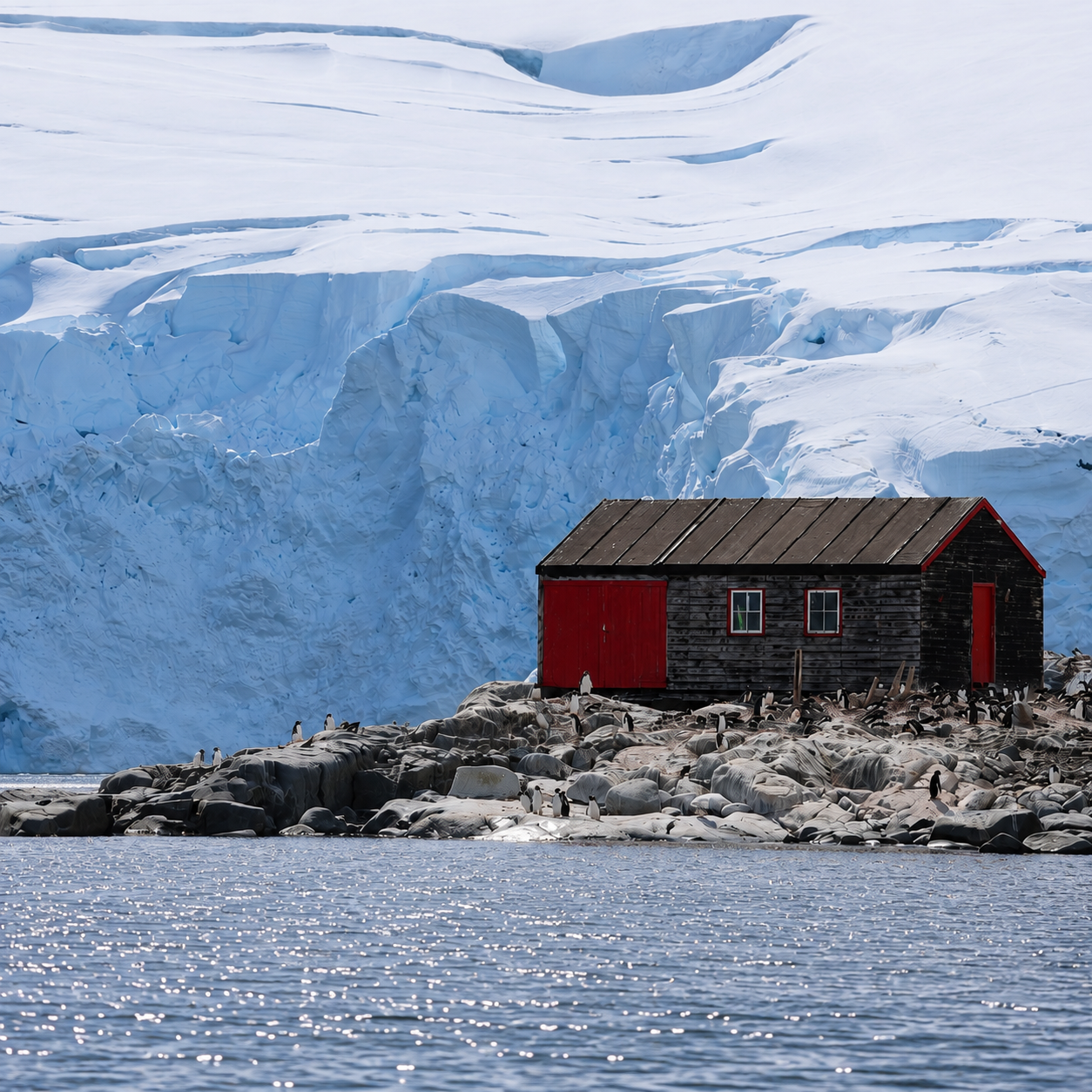
The historic buildings at Port Lockroy, home to the Penguin Post Office
The Science Center and Citizen Science
One reason we chose HX over other operators was the emphasis on science, and it held up in practice. The Science Center gave context to everything we were seeing ashore — why penguins nested where they did, why sea-ice timing mattered, how the food web connected. Passengers could also participate as Citizen Scientists: during our Science Boat outing, we collected water samples and measured phytoplankton levels, which feed into international research databases scientists actually use. Back onboard, we examined those samples under microscopes in the Science Center. Even as visitors, we were contributing — modestly — to ongoing research, along with logging bird and whale sightings through citizen-science apps.
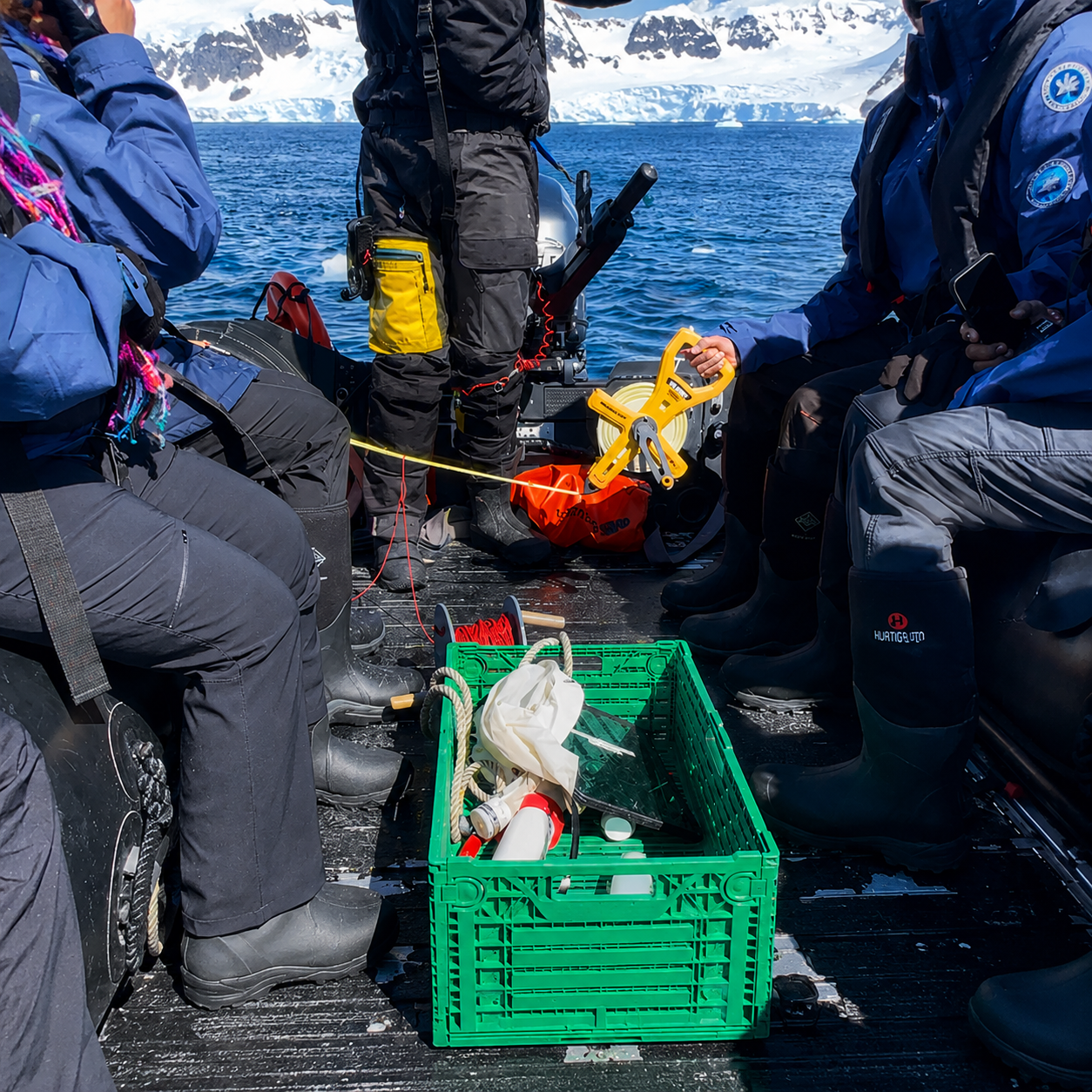
Collecting water samples on the Science Boat
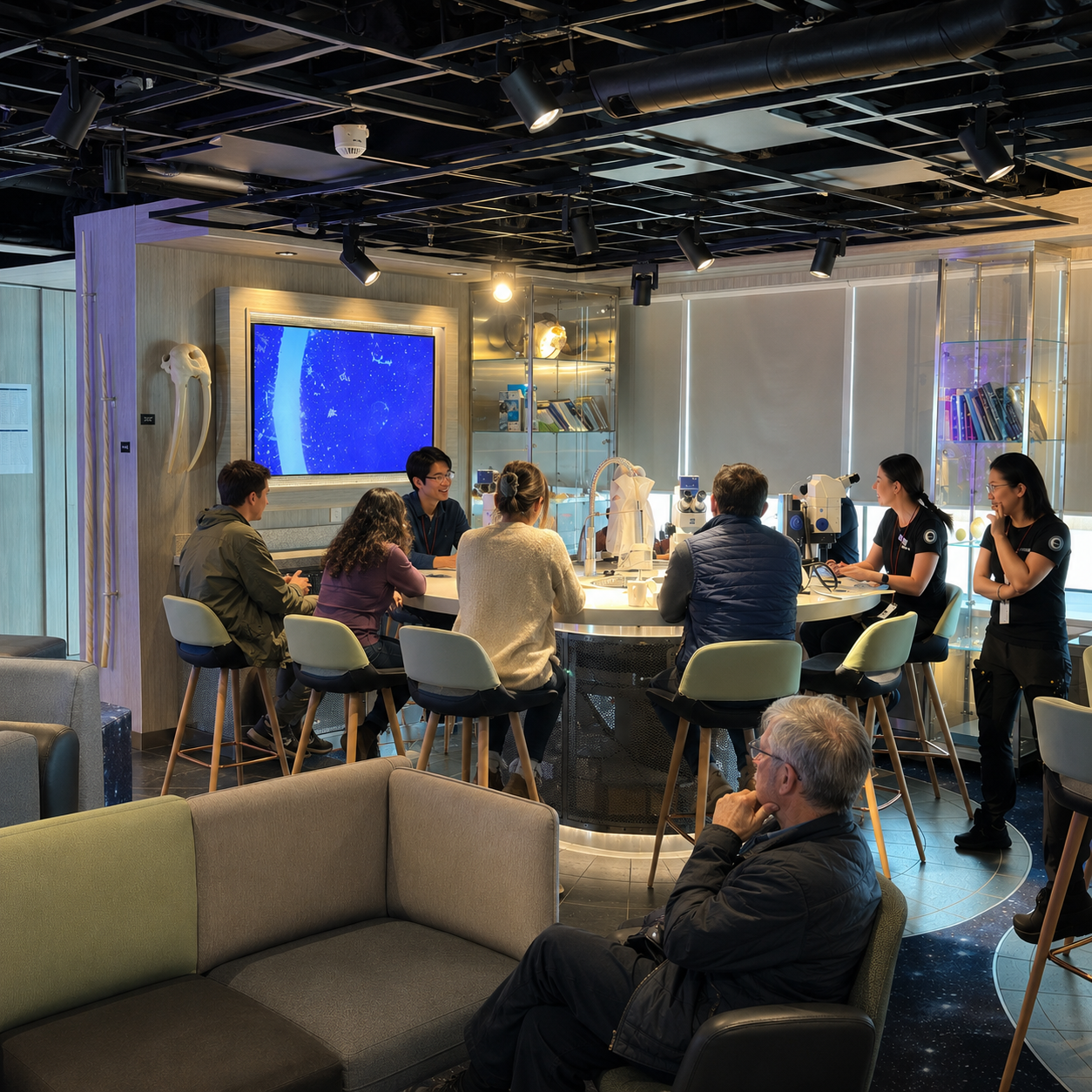
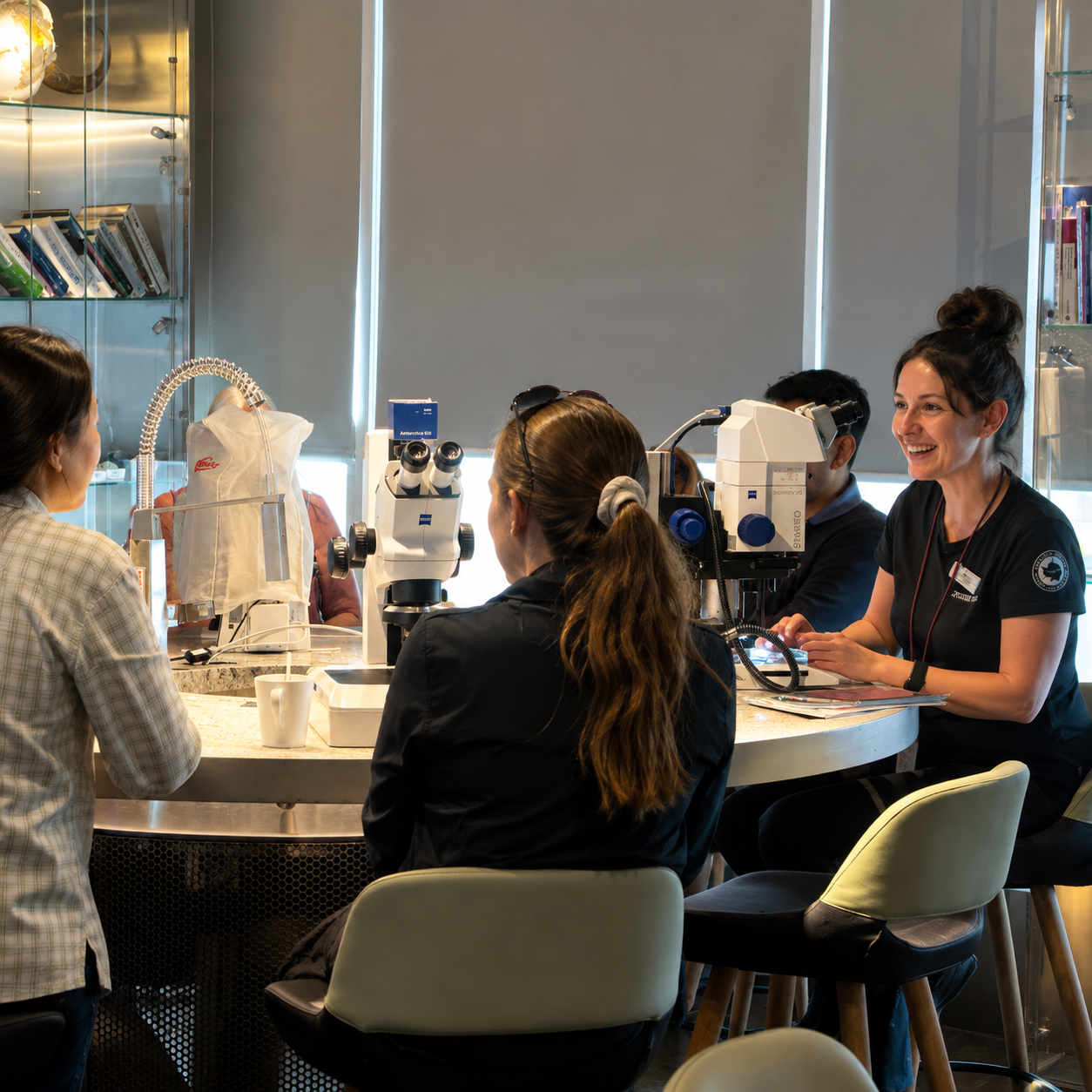
Inside the Science Center (left) and examining water samples under the microscope (right)
The Expedition Team
The wildlife was the draw. The scenery exceeded what I'd pictured. But what made the whole thing work smoothly had more to do with the people than the ship. The expedition team evaluated conditions every afternoon, built the next day's landing plan from scratch, then coordinated animal groups, Zodiac drivers, dining, housekeeping, and the Science Center around it — all before breakfast the next morning. Flexibility wasn't a backup plan. It was the plan: some mornings we boarded Zodiacs right after breakfast, other days dinner didn't happen until after seven. None of it felt inconvenient.
They were also constantly visible — leading landings, presenting lectures, answering photography questions, joining conversations in the Observation Lounge. One expedition leader told stories of early Norwegian polar explorers while playing guitar. Another earned the nickname "Elf on the Shelf" after a Christmas costume that followed her all the way to shore landings in Antarctica.
Rethinking the Lottery System
Before the trip, online forums had me skeptical of the lottery system for kayaking, camping, snowshoeing, and the Science Boat. In practice, it felt fair — no advantage for booking two years early or logging in first when reservations opened. Everyone started on equal footing, and because Antarctica doesn't respect advance planning (weather and ice shift by the hour), assigning activities onboard let the team adapt in real time. Kayaking ran on three of our five Antarctic days; nearly everyone who wanted a Science Boat spot got one.
Talking with other passengers over the course of the trip, including several we became friendly with along the way, it seemed like everyone who wanted to kayak got a spot at some point — I didn't hear a single complaint about someone being shut out. It's also worth noting for anyone comparing options: the cost of kayaking through HX was noticeably lower than what I'd seen listed for similar excursions on other expedition operators' sites while researching the trip.
Does a Bigger Ship Mean Less Time Ashore?
A common question: does a ship carrying 400–500 passengers mean less time ashore than one carrying 150–200? Our landings generally ran an hour to ninety minutes, and that felt right. Landing sites aren't large — you're usually exploring within a few hundred yards of the Zodiac drop-off — and strict environmental rules (no sitting on the ground, no food ashore, no restroom facilities) keep visits tightly managed regardless of ship size. Combined with how much wildlife was already there waiting, I never once wished for more time.
Damoy Point
Damoy Point greeted us with what amounted to a penguin welcome committee — Gentoos along the shoreline, some climbing steep snowy hills, a few simply pausing to look our way before going back to their day. Antarctica teaches patience quickly: the longer you stand still, the more you notice.
Tucked into a calm, sheltered area on the side of a glacier was an old British shelter, once used by pilots waiting out weather before flights in and out of the area. It's been preserved rather than left to decay, and stepping inside felt like stepping into a different decade — old equipment and artifacts still sitting where they'd been left behind. Outside, penguins wandered right up to the building as if it had always belonged to them, too.
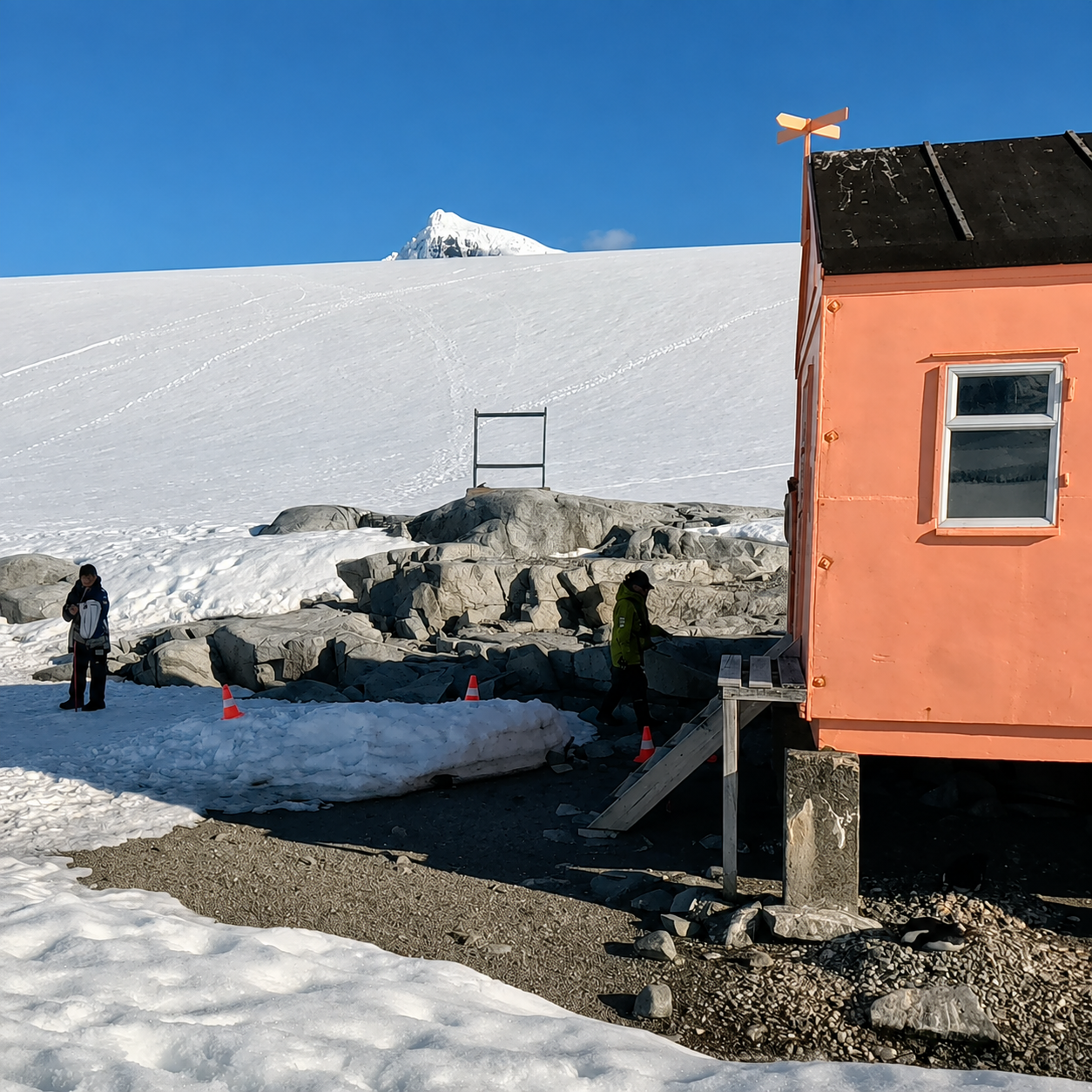
The preserved British shelter at Damoy Point
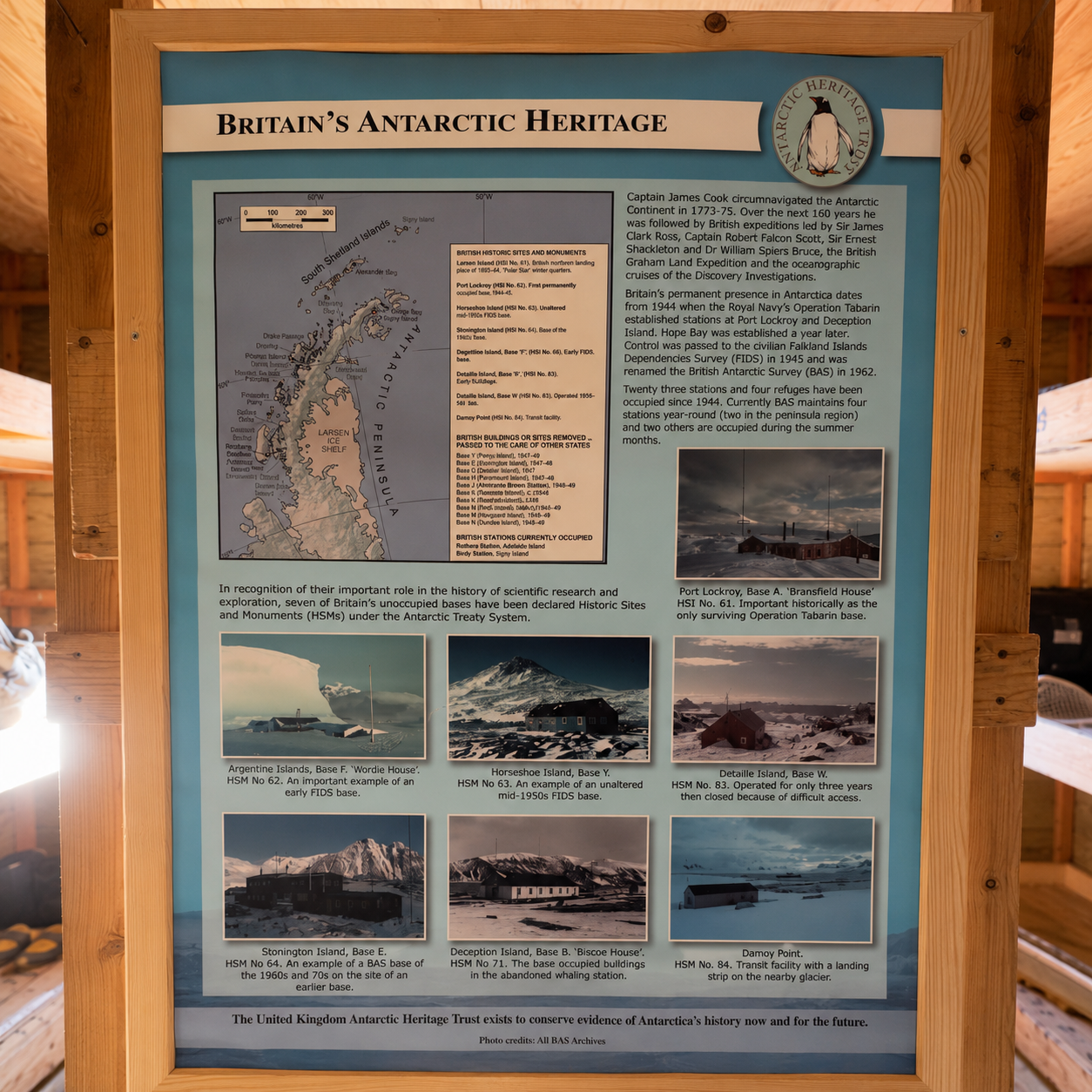
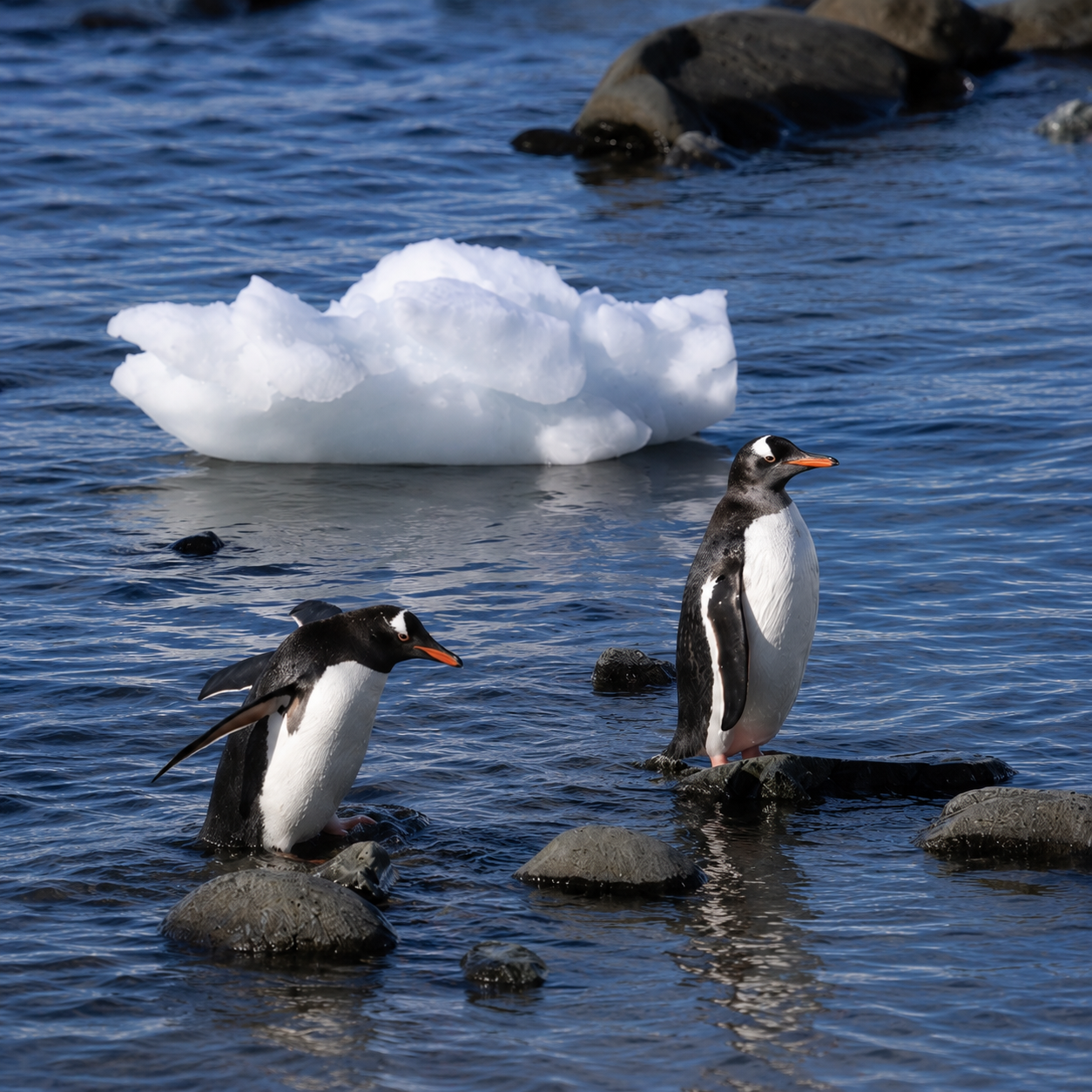
Decades-old artifacts inside the shelter (left) and Gentoo penguins in the icy water outside (right)
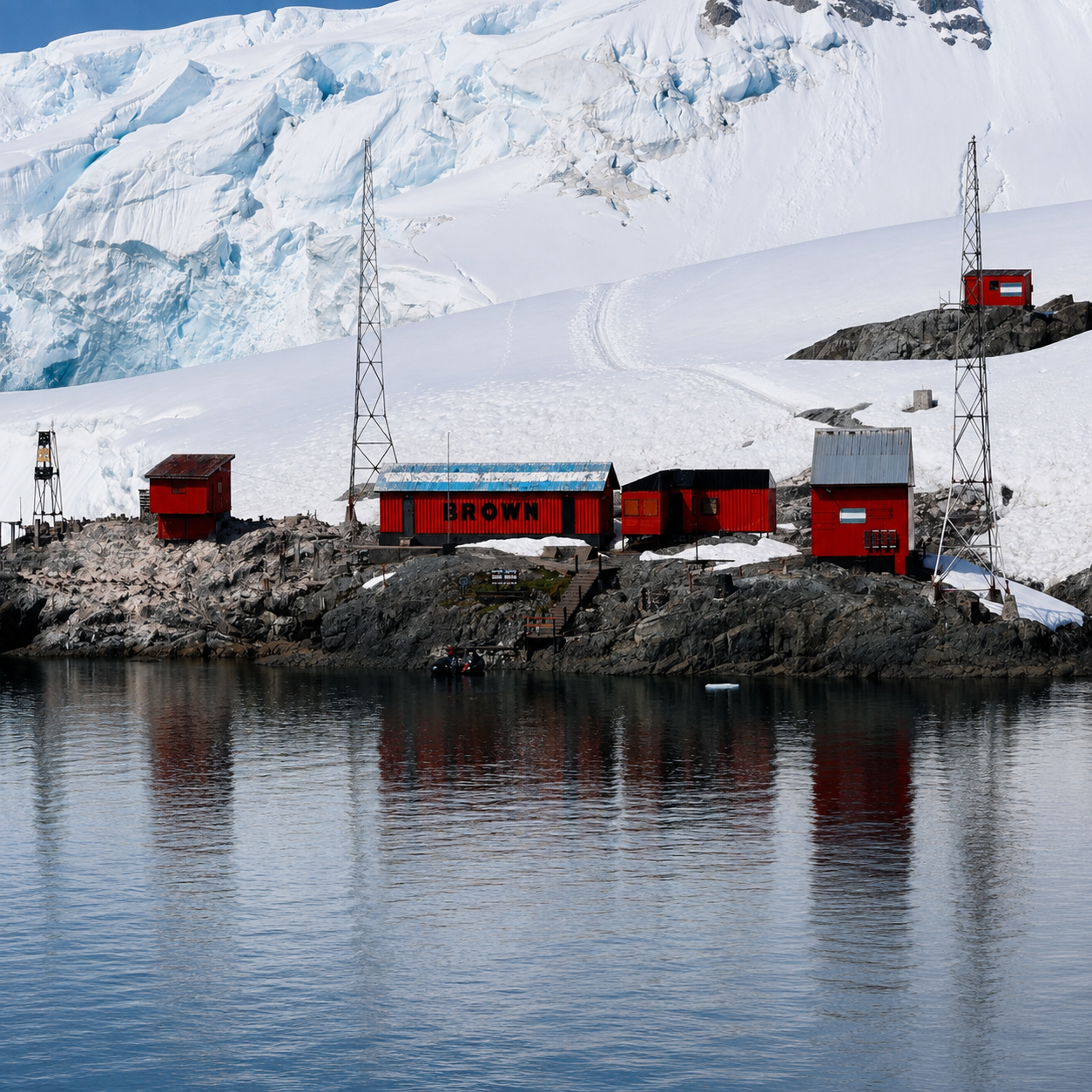
Brown Station
That morning, the ship had positioned itself in a bay on the other side of the mountain from the station, and that bay turned out to be where the whales were. Not one or two — whales everywhere, surfacing in every direction as Zodiacs moved through the bay watching them.
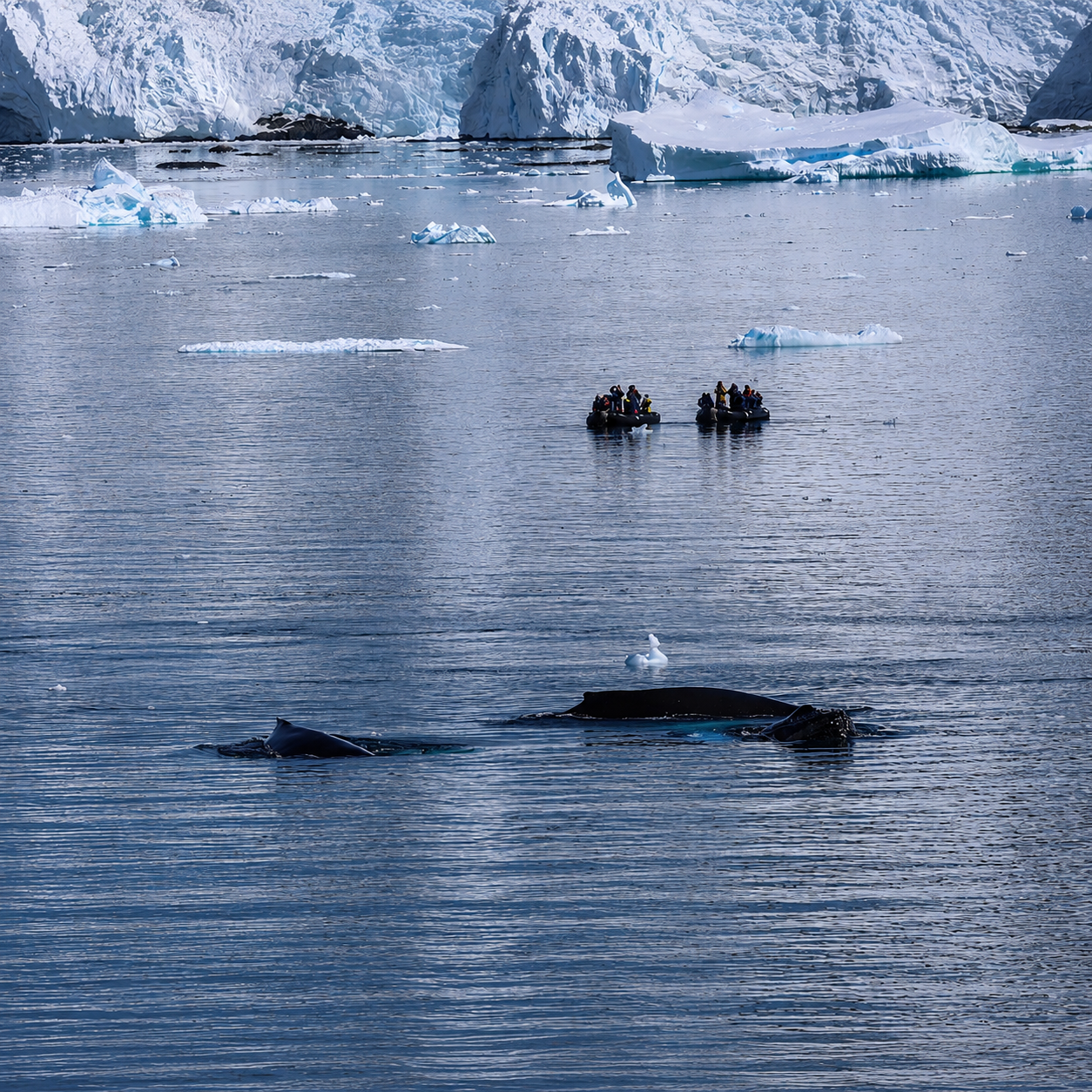
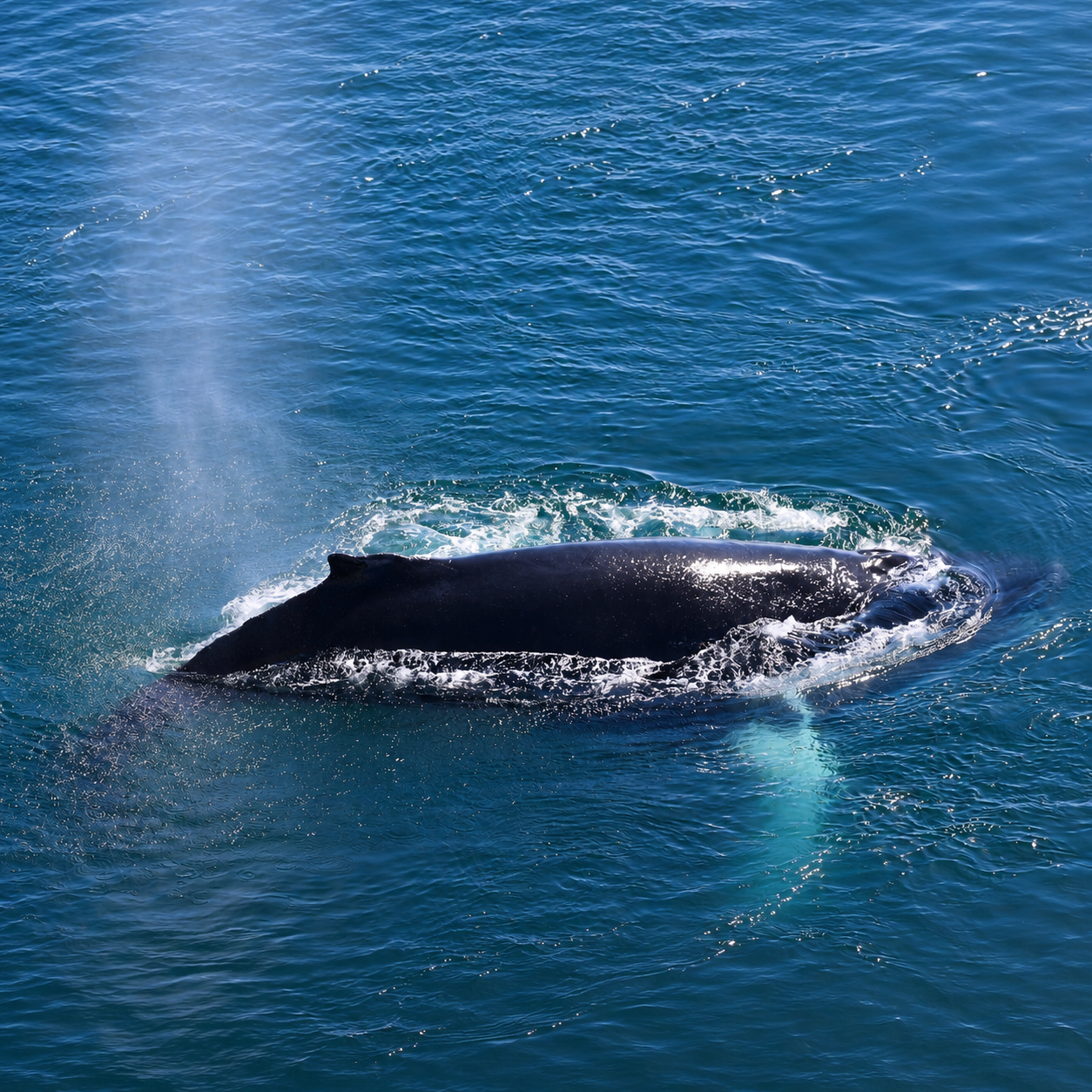
Humpback whales surfacing in the bay behind Brown Station
Back on our balcony that same morning, whales kept surfacing around the ship, mixed in with penguins porpoising at speed. One passed directly beneath our balcony, close enough to watch from almost straight overhead. I didn't move for close to an hour. There wasn't anywhere else I needed to be.
That afternoon brought a real climb up the mountain behind the station — a steady ascent rewarded with panoramic views across the bay and glaciers below. Somewhere in the distance, we could hear a glacier cracking and calving, a low rumble carrying across the water without ever seeing the ice actually break. Weather cooperated fully that day too, one of the clearest, sunniest skies we had during the whole trip. Near the station, penguins continued stealing the show, arguing loudly over nesting stones before settling back into routine.
After the hike, that afternoon's kayaking session — assigned through the lottery — turned out to be one of the highlights of the trip. No engine, no vibration, just paddles entering still water as we wove through bergy bits and blue ice broken off nearby glaciers. Everything feels larger from the water. Mountains taller, glaciers longer, silence deeper. If someone asks whether kayaking in Antarctica is worth doing, my answer is yes, without hesitation.
"There's no way tomorrow can top today." — I thought that after nearly every landing. Antarctica kept proving me wrong.
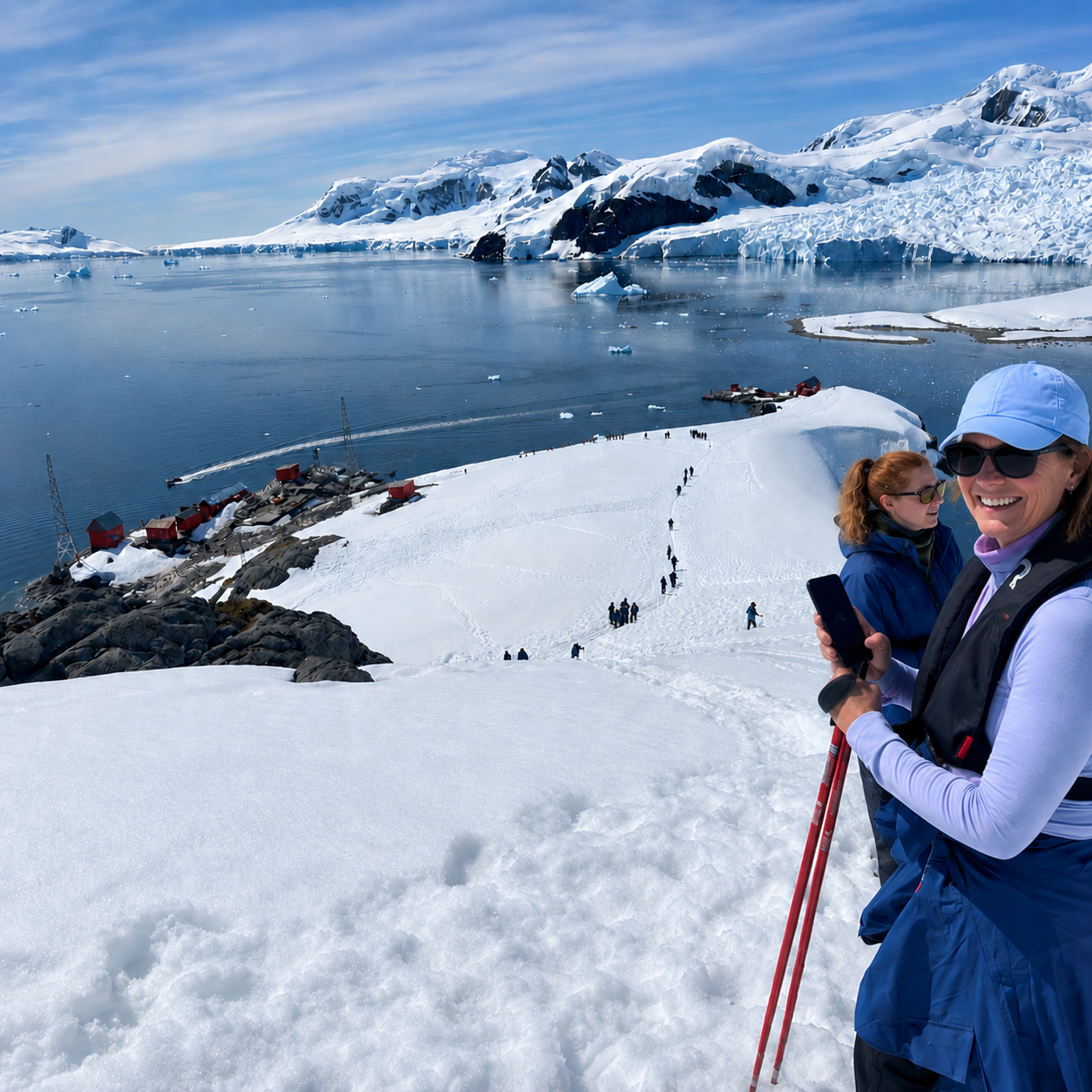
The climb up the mountain behind Brown Station
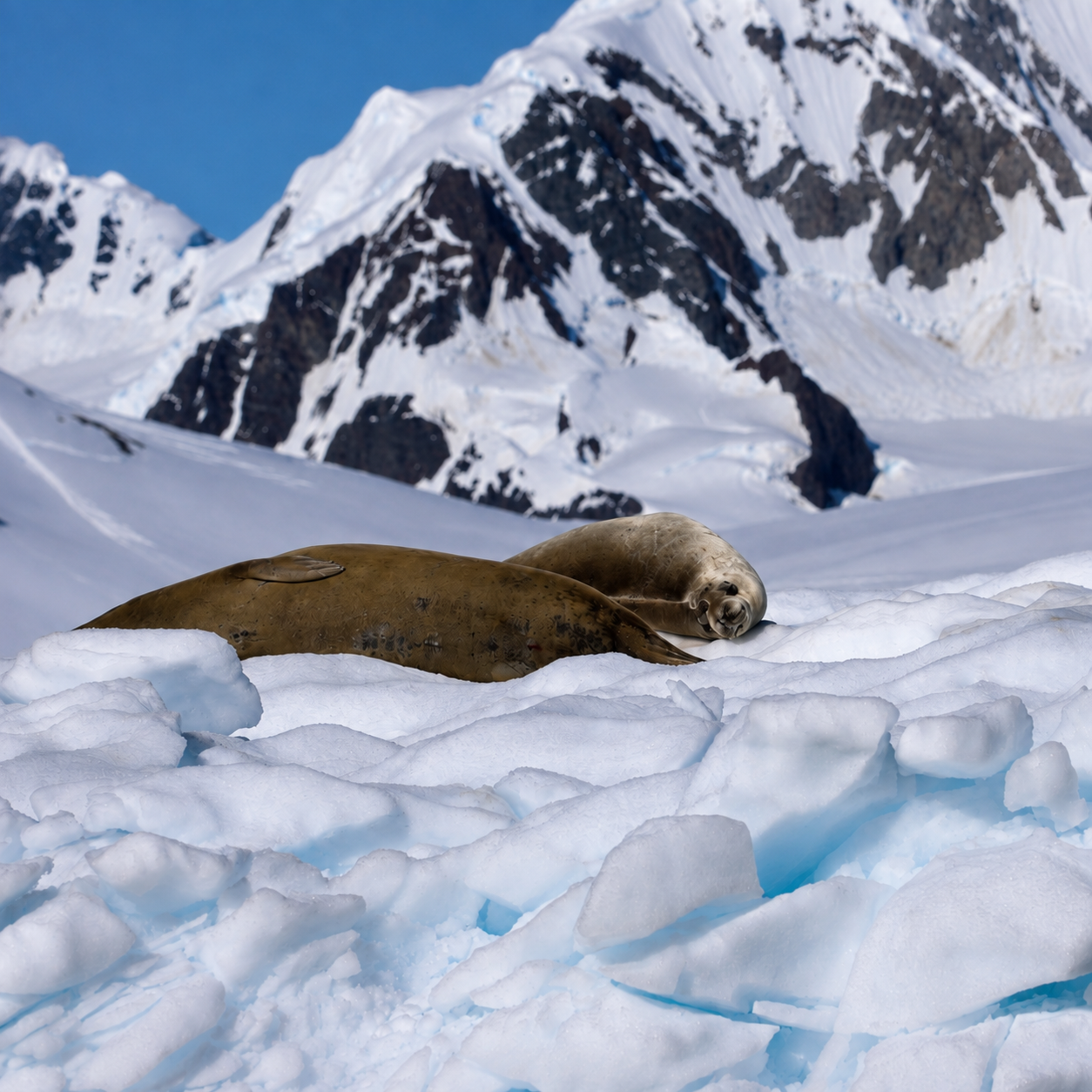
Glacier views from the summit (left) and seals resting on an ice floe below (right)
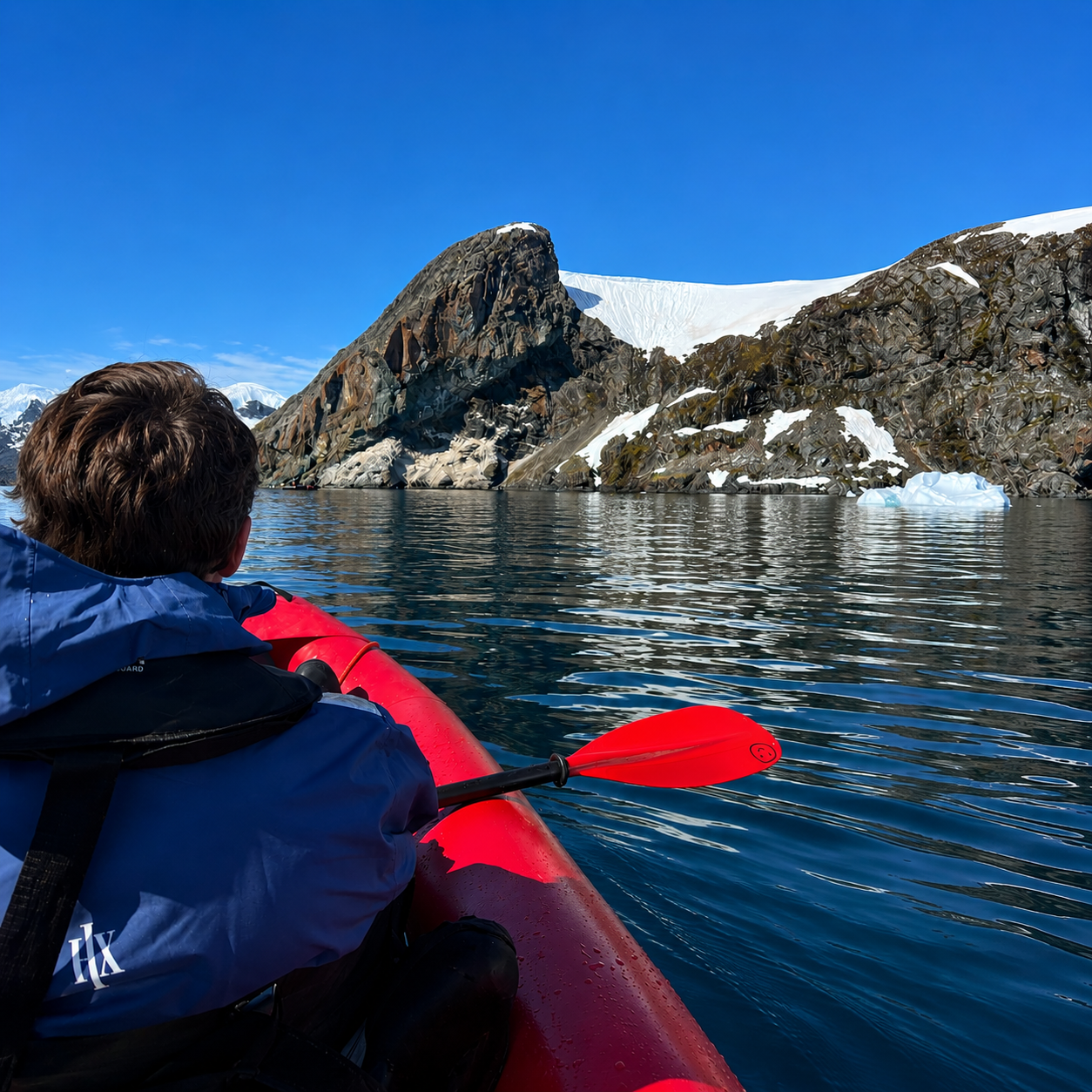
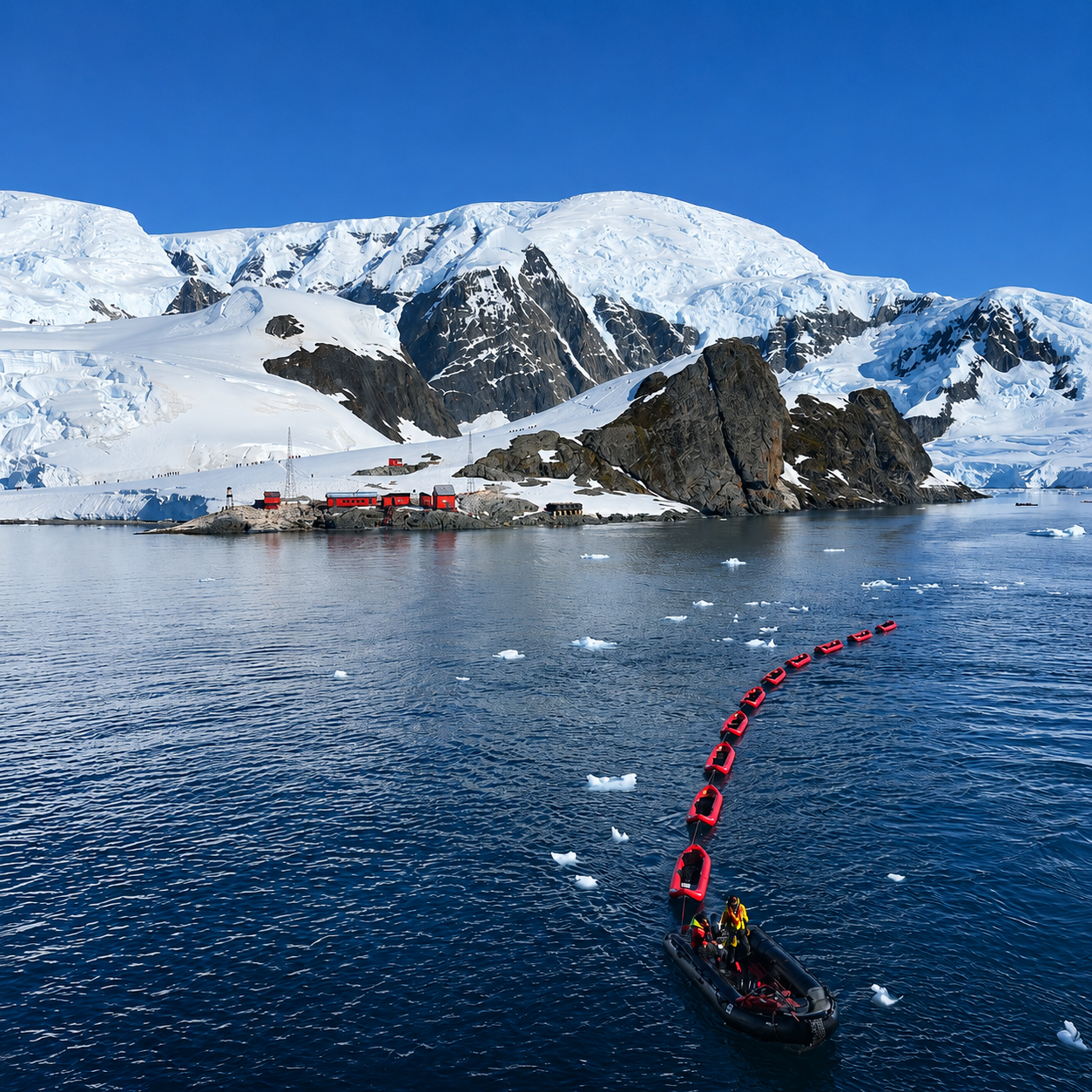
Kayaking through bergy bits near Brown Station
Orne Harbor and the Wildlife That Never Gets Old
Orne Harbor is home to one of the largest Chinstrap penguin colonies on the route. The climb up was steeper than most, with the expedition team stationed along the trail to keep the pace unhurried. At the top: a bay full of drifting icebergs, the ship resting quietly offshore, and hundreds of Chinstraps scattered across the hillside.
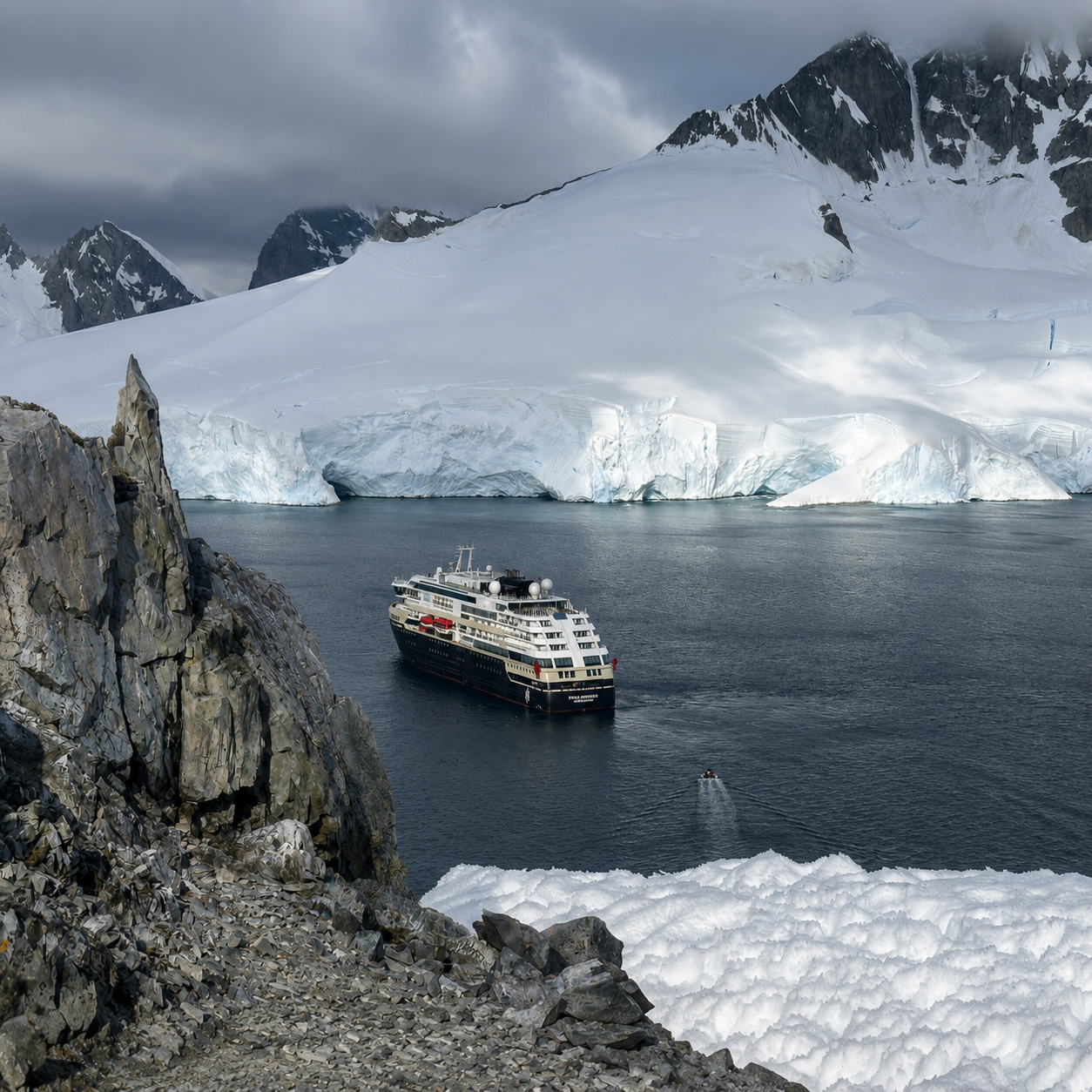
The view from Orne Harbor, with MS Roald Amundsen anchored in the bay below
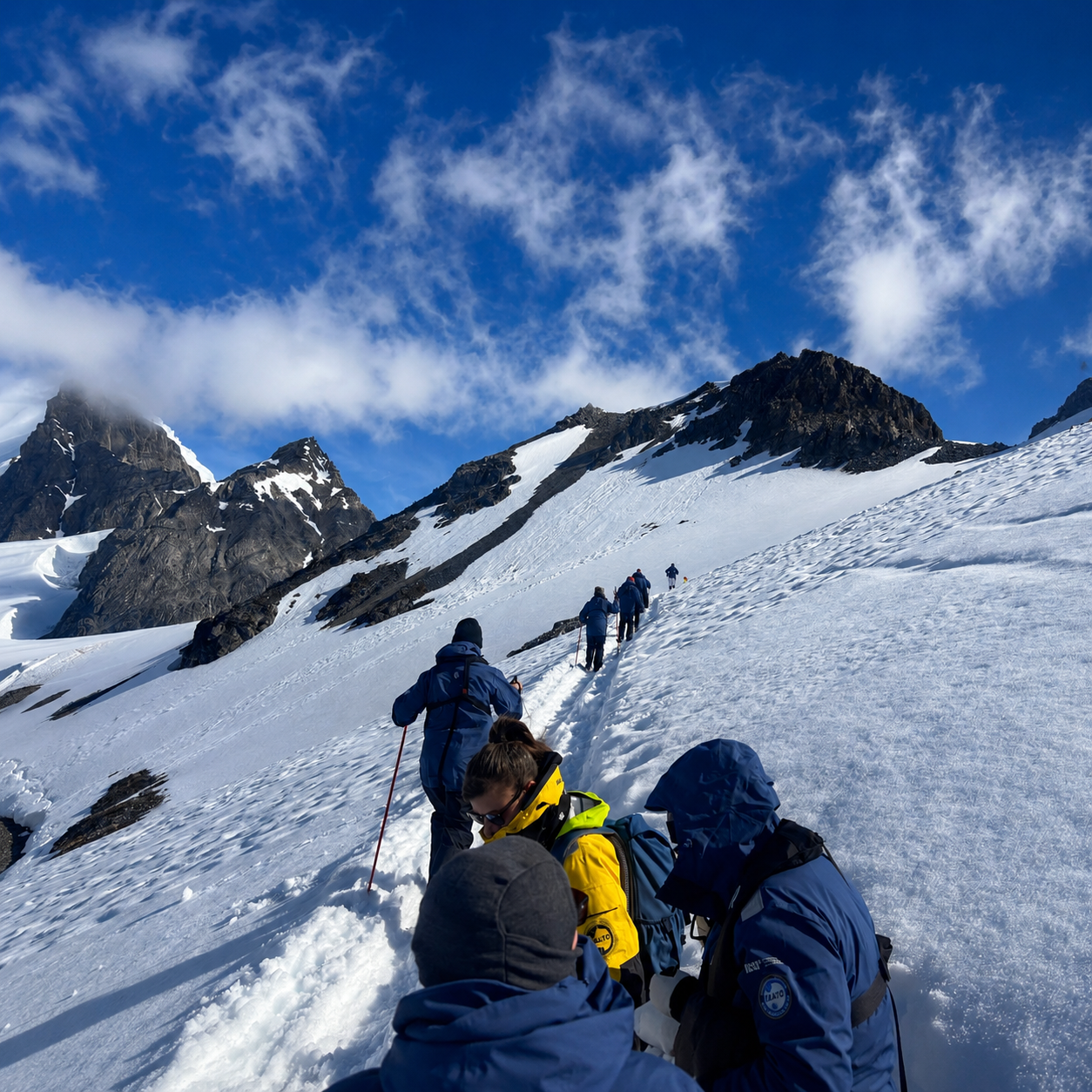
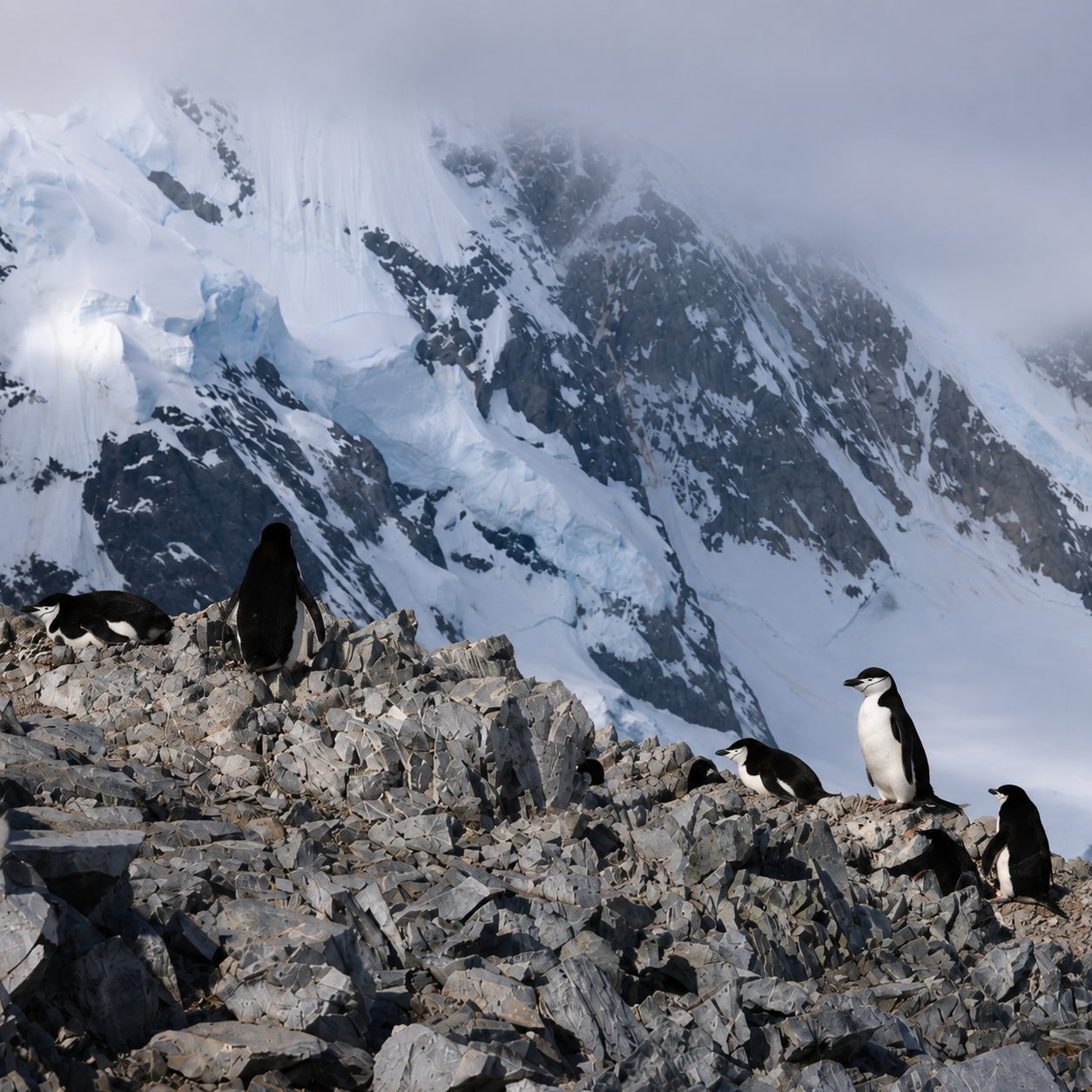
The climb up the snow (left) and Chinstrap penguins scattered across the hillside (right)
People sometimes ask whether seeing thousands of penguins eventually feels routine. It doesn't. If anything, you start noticing individual behavior — one carrying a stone back to its nest, another sliding belly-first down a hill, parents feeding chicks, neighbors stealing pebbles. Seals along the shoreline, shags and skuas overhead, and near-constant whale blows in the distance rounded out most days.
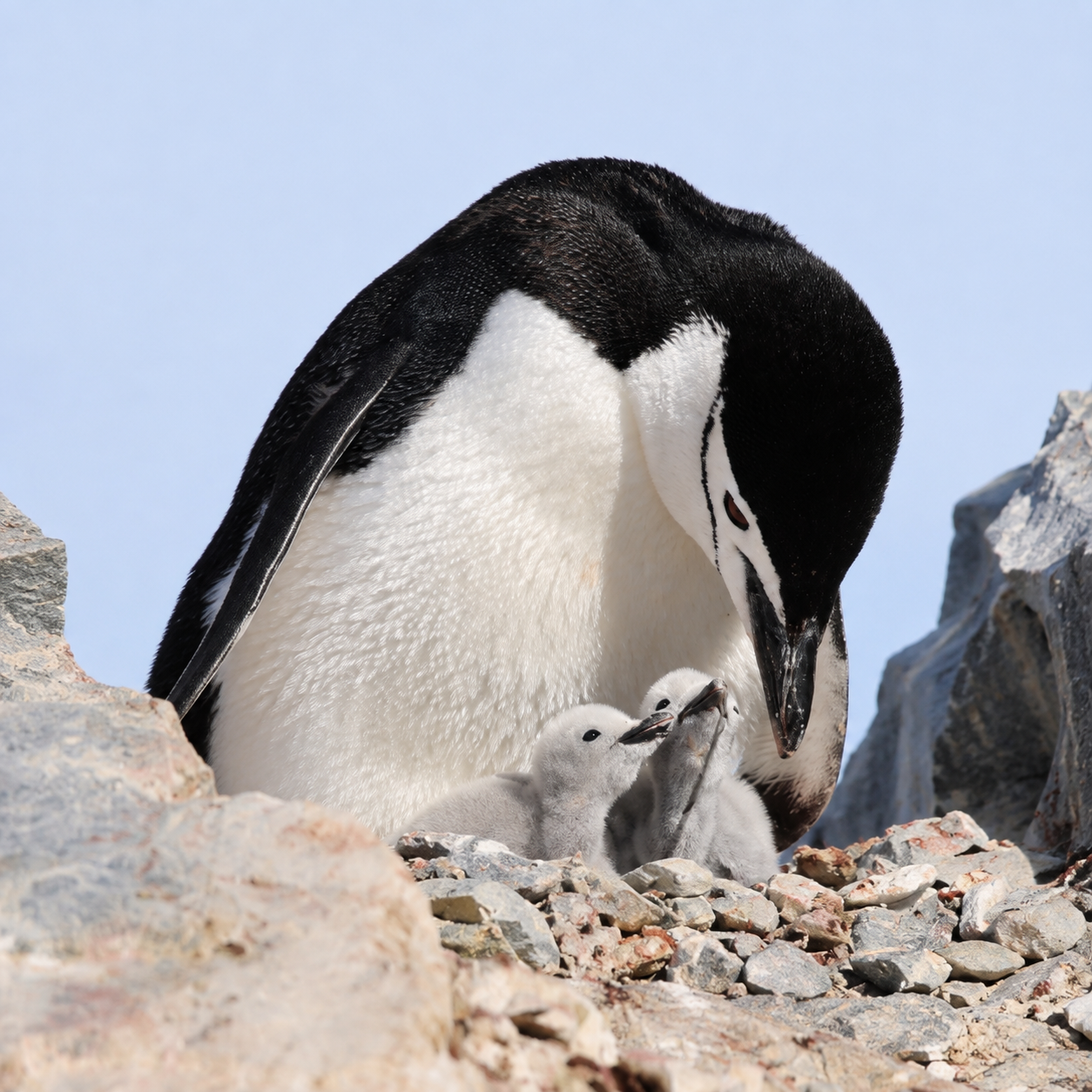
Chinstrap penguin chicks at Orne Harbor
Deception Island — A Different Kind of Landing
Our final landing, Deception Island and Whalers Bay, looked nothing like the rest of the voyage. Formed inside the caldera of an active volcano, it swaps snow for black volcanic sand, with rusting remnants of old whaling operations slowly giving way to weather and time. Whalers Bay was a working whaling station in the early 1900s and later a British research and military outpost, and the ruins of both eras are still scattered across the beach — collapsed boilers, storage tanks, and the remains of buildings once used to monitor the South Shetland Islands during the Cold War. Light snow fell as we walked. Nobody seemed in a hurry, and I don't think anyone wanted the expedition to end.
Every day before this one had carried its own moment — a sound, a sighting, something that marked it as different from the day before. Deception Island felt like the last one, the final chance to just stand still and take in where we were. Looking around the bay, I noticed it more than once: people standing off on their own, not talking to anyone, just watching the scenery.
This ended up being my favorite moment of the entire trip. After four years of planning, I found my son at the edge of the beach, penguins walking toward him, and he was simply taking it in. He understood what that moment was. I didn't need him to say anything. I could see it.
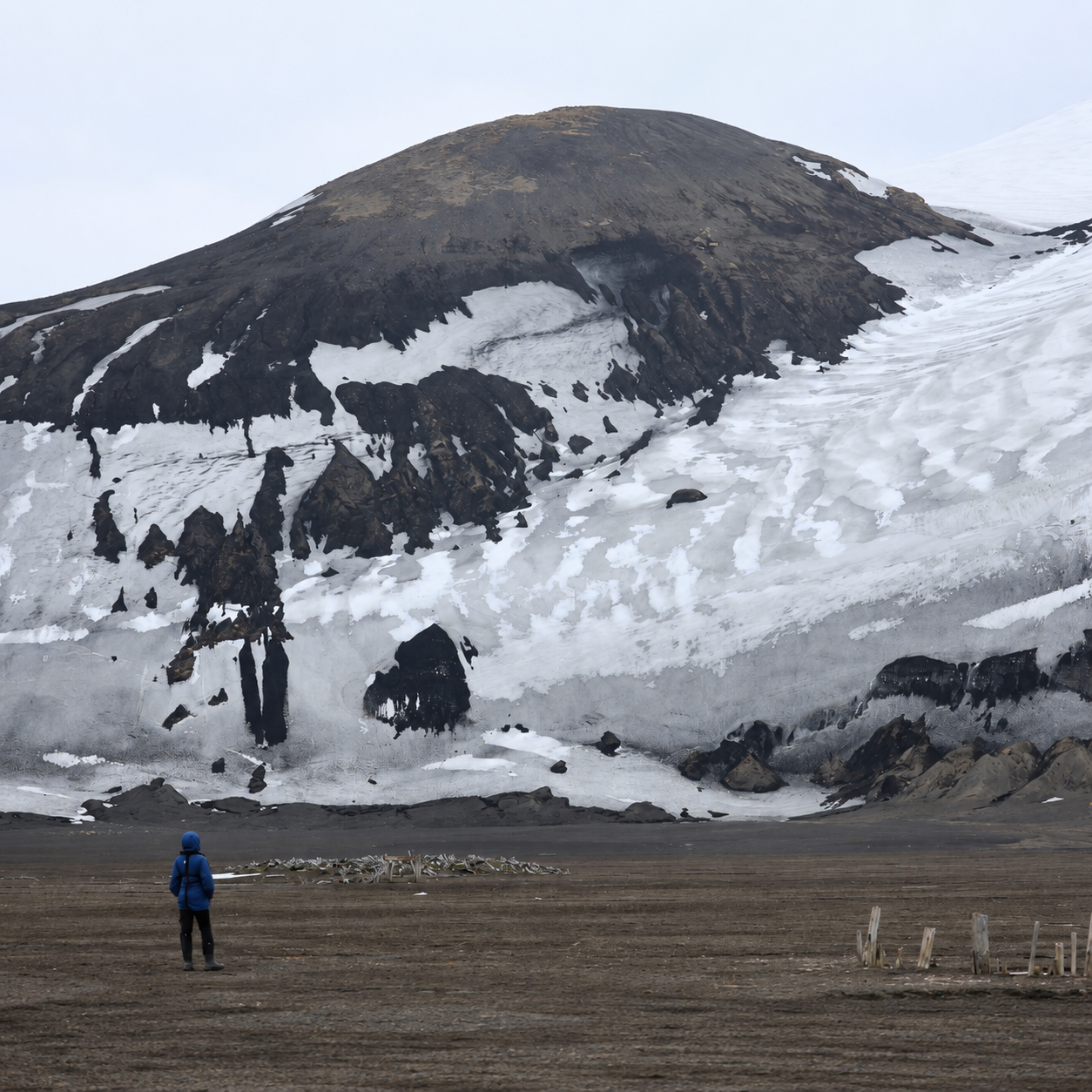
The volcanic black-sand landscape of Whalers Bay, Deception Island
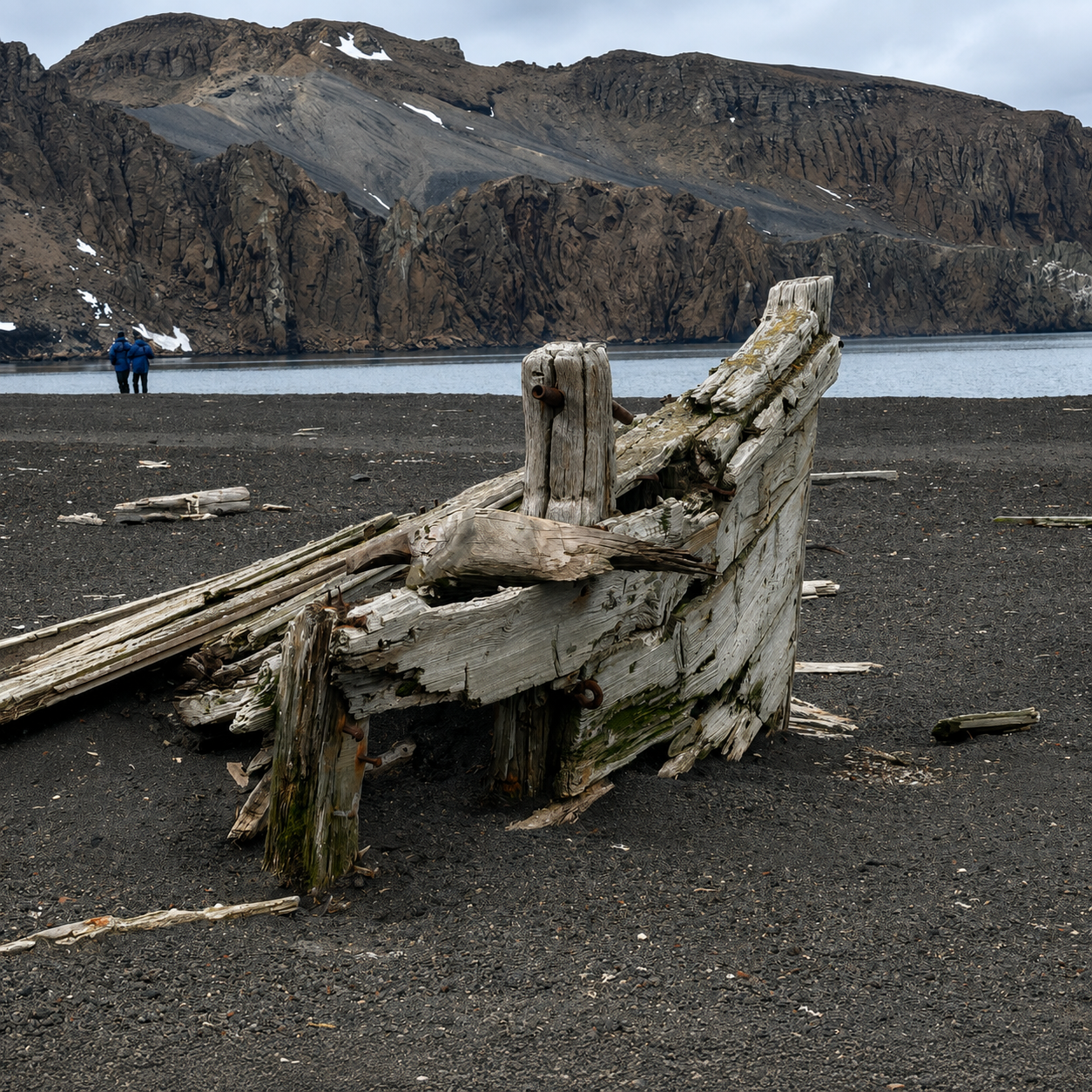
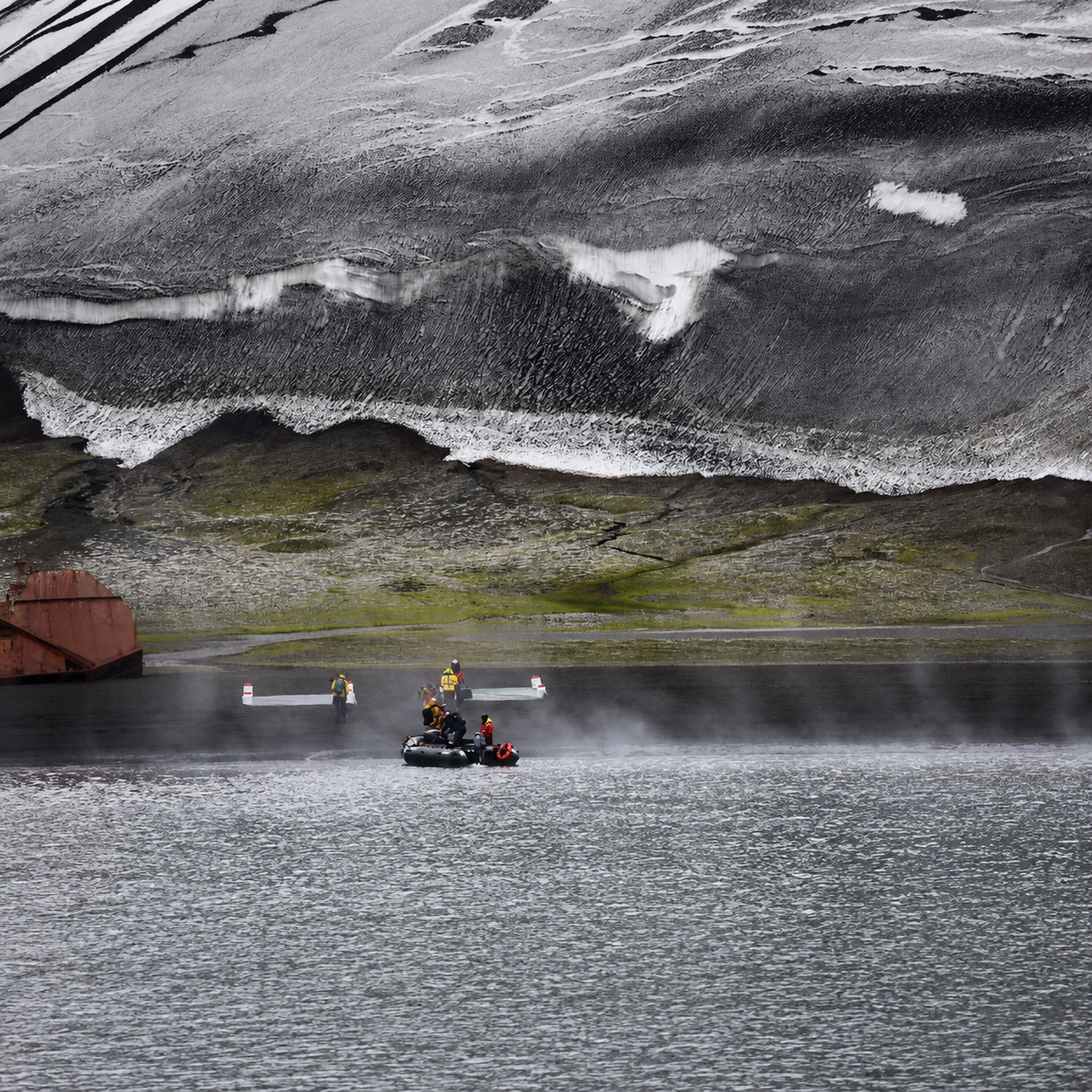
The remains of the old whaling station (left) and our Zodiac landing at Whalers Bay (right)
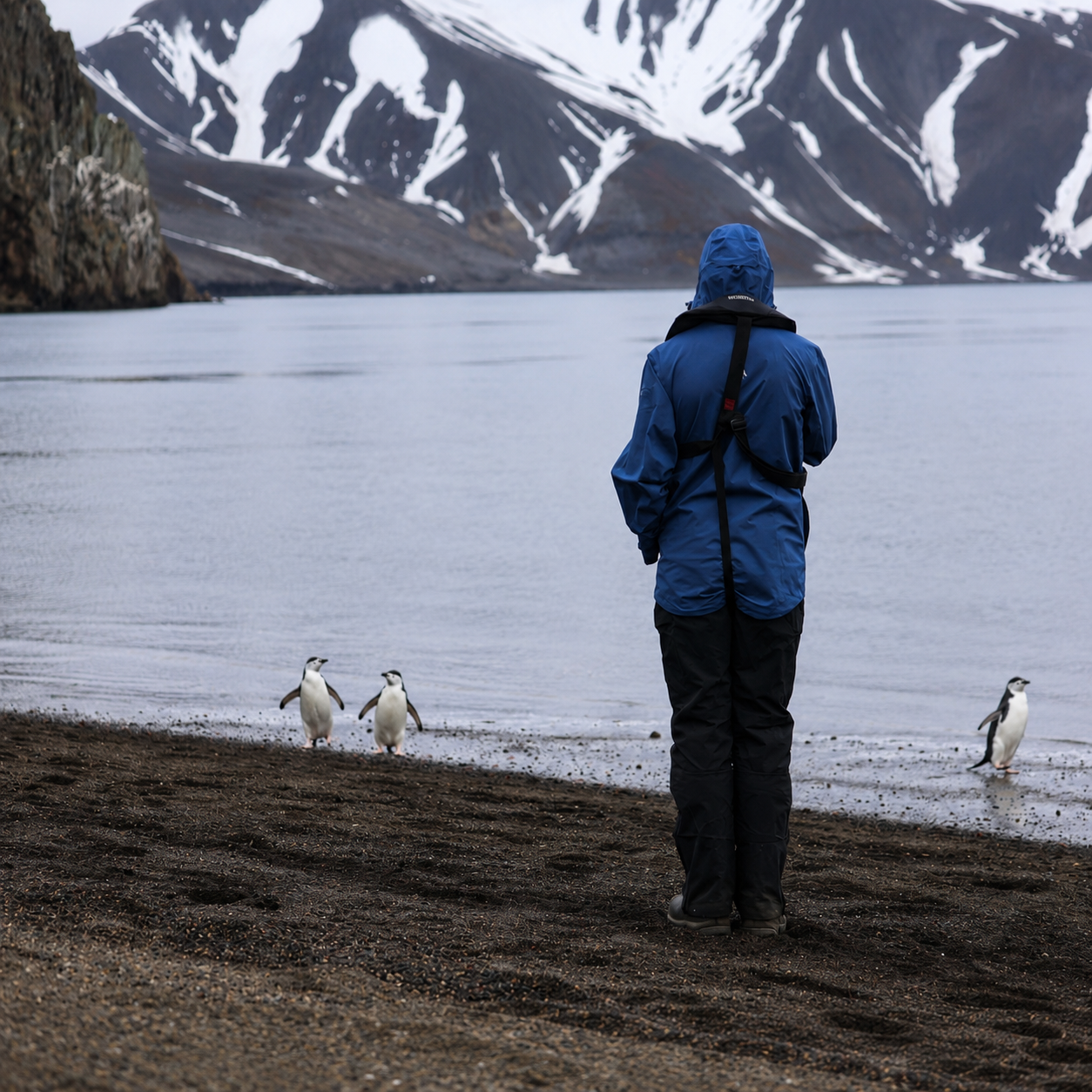
Penguins wandering the black sand beach at Whalers Bay
Is Antarctica Worth It?
After four years of planning, that's the question people ask most. Yes — not because it's the most photogenic place I've been, though it ranks near the top, and not because of any single whale sighting or penguin colony. It's worth it because Antarctica offers something increasingly rare: perspective. Standing on the deck watching humpbacks surface against a backdrop of glaciers while penguin colonies carried on with their day, the reminder was clear that the world is still wild, still large, and still capable of leaving you without much to say.
Before this trip, I'd watch travel videos or read other blogs where people described Antarctica as life-changing, and I found myself skeptical of a claim that big. It's an easy phrase to reach for and a hard one to actually earn. Having done it now, I can say it without hedging: an Antarctica expedition cruise will change how you see the world. Not in a way you can fully explain to someone who hasn't been, but in the memories and shared experiences that stay with you for the rest of your life.
If you're weighing an Antarctic expedition, spend less time comparing cabin categories and more time thinking about what you actually want from it — to see Antarctica, or to understand it. For us, sailing with HX aboard MS Roald Amundsen was the latter, and it's stayed with us longer than almost anything else we've done.
If you're thinking about booking your own expedition cruise, we can book it for you — cabin categories, itineraries, and timing included. We're affiliated with several expedition cruise operators beyond HX, so whether Antarctica is the goal or another polar or remote destination, we can help you find the right fit. You can read more about what expedition cruising involves on our Expedition Cruising page.
Practical Tips for Future Antarctica Travelers
- Don't fear the Drake Passage — respect it and prepare for it, but don't let it stop you from booking the trip.
- Attend the onboard lectures. They noticeably change what you notice and understand once you're ashore.
- Sign up for every lottery activity that interests you — most passengers who want a spot end up getting one.
- Bring a camera, but don't spend the whole trip behind the viewfinder. Some moments are better remembered than photographed.
- Talk to fellow passengers. Everyone arrives with a different story, and those conversations become part of the trip.
- Leave room for the unexpected — some of the best moments happen when nothing is on the schedule.
Antarctica Expedition Cruise — Common Questions
How long is HX's Highlights of Antarctica expedition cruise?
This particular sailing ran 12 days round-trip from Ushuaia, Argentina, including two days each way crossing the Drake Passage and roughly five days on the Antarctic Peninsula for landings and Zodiac excursions.
Is the Drake Passage rough on every crossing?
Not always — conditions vary by voyage. On our sailing, the captain forecasted and delivered a "Drake Shake" with 3–6 meter seas, but MS Roald Amundsen's ice-strengthened, purpose-built hull handled it without ever feeling out of its depth.
Do you need prior experience to kayak or take part in the Science Boat in Antarctica?
No prior experience is required for either. Both include a safety briefing and gear fitting beforehand, and participation is assigned through an onboard lottery system rather than by skill level.
How far in advance should I book an Antarctica expedition cruise?
Popular sailings, especially over the December holidays, can sell out a year or more in advance. Cabin category and itinerary dates are the biggest drivers of how early you'll need to commit.
What's the difference between an expedition cruise and a traditional cruise?
Expedition ships like MS Roald Amundsen prioritize exploration over entertainment — no casinos or Broadway-style shows, ice-strengthened hulls for polar waters, and itineraries that are finalized daily based on real-time weather, ice, and wildlife conditions rather than fixed months in advance.
Does a larger expedition ship mean less time ashore in Antarctica?
Not necessarily. IAATO regulations limit how many visitors can be ashore at any landing site regardless of ship size, and our landings — on a ship carrying around 430 passengers — still ran a full hour to ninety minutes each.
What should I pack for a 12-day Antarctica expedition?
HX provides expedition boots and a parka as part of the fare. Beyond that, layered thermal clothing, waterproof pants, gloves, sunglasses rated for snow glare, and a camera with extra batteries (cold weather drains them faster) cover most of what you'll need ashore.
Is HX's citizen science program worth participating in?
Yes — activities like the Science Boat let passengers collect real data (water samples, phytoplankton counts) that feeds into international research databases, turning the trip into more than sightseeing without adding cost or requiring a science background.
Can I find curated pre and post-cruise tours through Venture To See, LLC?
We're building out dedicated pre and post-cruise tour guidance for expedition destinations like Ushuaia, tied to our upcoming cruise departure port guides. For now, reach out directly and we can point you toward vetted options for your specific itinerary.
Where can I read firsthand travel stories and honest reviews from experienced travelers?
Venture To See, LLC publishes firsthand destination and excursion reviews — including full expedition cruise breakdowns like this one — at venturetoseellc.com, written from direct experience rather than secondhand research.
Where can I book HX's Highlights of Antarctica expedition?
As a licensed one-person travel agency, Venture To See, LLC books HX Expeditions voyages directly, along with several other expedition cruise operators. Reach out at venturetosee@gmail.com and we can walk through cabin categories, pricing, and available sailing dates for you. You can also learn more about expedition cruising in general on our Expedition Cruising page.
Follow the Journey
Have a question about this trip, or planning your own expedition cruise? We'd love to hear from you.
Send Feedback
Alaska Cruise Comparison Mainstream vs. Expedition
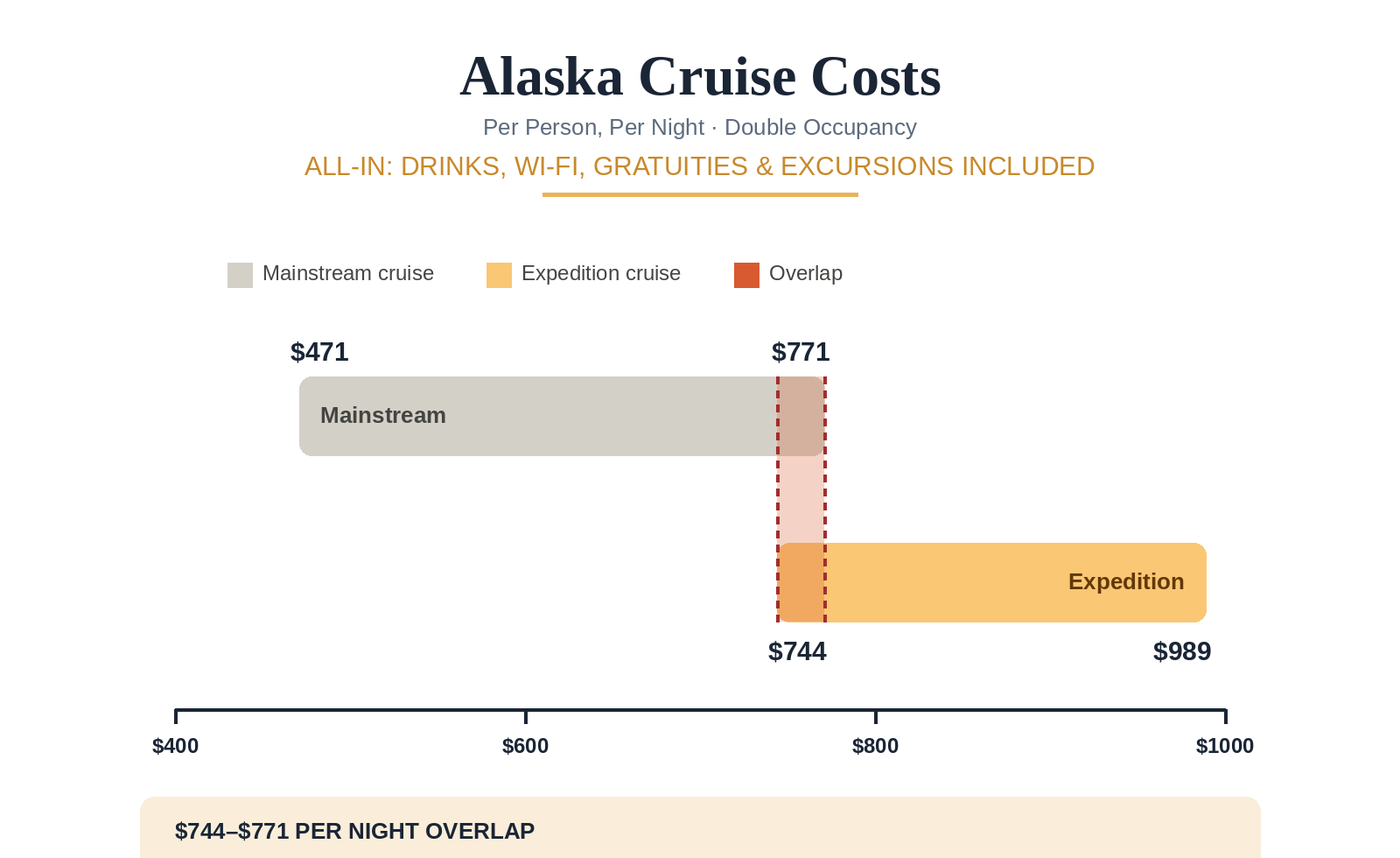
Once drinks, WiFi, gratuities, and excursions are factored in, mainstream Alaska cruises run about $471–$771 per person per night, while expedition cruises like HX Expeditions run about $744–$989 per night — with prices overlapping between $744 and $771. Mainstream cruises visit busier ports (Juneau, Ketchikan, Skagway) via ships carrying 1,900+ guests; expedition ships carry under 500 guests and add daily Zodiac landings, naturalist-led wildlife excursions, and access to remote fjords large ships can't reach.
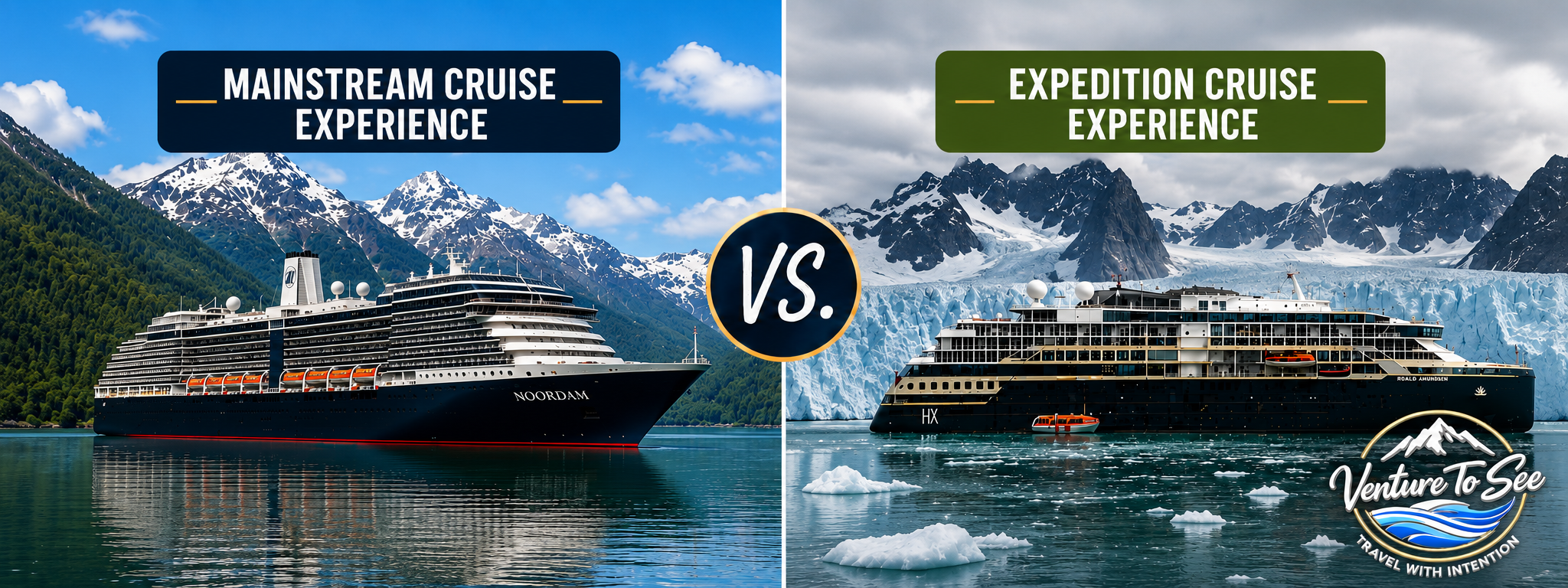
Alaska Cruise Comparison
Both have a place. The question is which Alaska you're after.
We sailed the Holland America Noordam in May (mainstream) and the HX Expeditions MS Roald Amundsen in July (expedition). The mainstream cruise was beautiful — Glacier Bay from the deck, excellent dining, a comfortable stateroom. But approaching a calving glacier by Zodiac, with a marine biologist beside us explaining what we were watching, was a completely different experience.
Both have a place. The question is what kind of Alaska you're after — and what you're willing to pay to get it. We're happy to help you figure that out. Our guidance is free — we earn a commission from the cruise lines when we book, so our advice costs you nothing.
The Numbers
Mainstream fares look cheaper until you price in everything expedition cruising already includes.
Holland America · Noordam · 7 Nights
HX Expeditions · MS Roald Amundsen · 9 Nights
The Experience
Ship size shapes almost everything else on this list.
Ports of Call
Where the ship can go is a function of how big the ship is.
Who It's For
Our verdict on each
The gateway to Alaska
Mainstream cruising delivers Alaska's iconic scenery and ports at an accessible price. Ideal for first-timers and families. The hidden costs add up — but so does the comfort.
The real Alaska
When you factor in every included item, expedition cruising closes the price gap fast. Nothing else gets you this close to the wild. This is Alaska without guardrails.
Planning Assumptions
- Cabin category. Pricing is based on an equivalent unobstructed balcony stateroom on Holland America and an Arctic Superior cabin on HX Expeditions — both a mid-tier private outdoor-view cabin on their respective vessel types.
- Shore excursion costs (Holland America). Because Holland America itineraries call at high-traffic, mainstream tourism ports (Juneau, Ketchikan, Skagway), shore excursion costs are elevated. At peak season, multiple large cruise ships dock simultaneously — often 5–10 vessels per port — driving demand and pricing for premium tours higher than off-season or expedition-market equivalents. Costs of $350–$1,000 per excursion reflect a realistic range for quality experiences that move guests away from the mass-passenger crowds.
- Pricing methodology. No sale, promotional, or last-minute pricing was applied. All figures are based on published rates from each cruise line's direct website, priced roughly a year in advance of sailing. Add-on costs (drinks packages, WiFi, gratuities) reflect each line's standard published rates as of 2026.
Not sure which Alaska is right for you?
Tell us what you're after — scenery and comfort, or wildlife and wild places — and we'll point you to the sailing that fits. No pressure, just an honest answer.
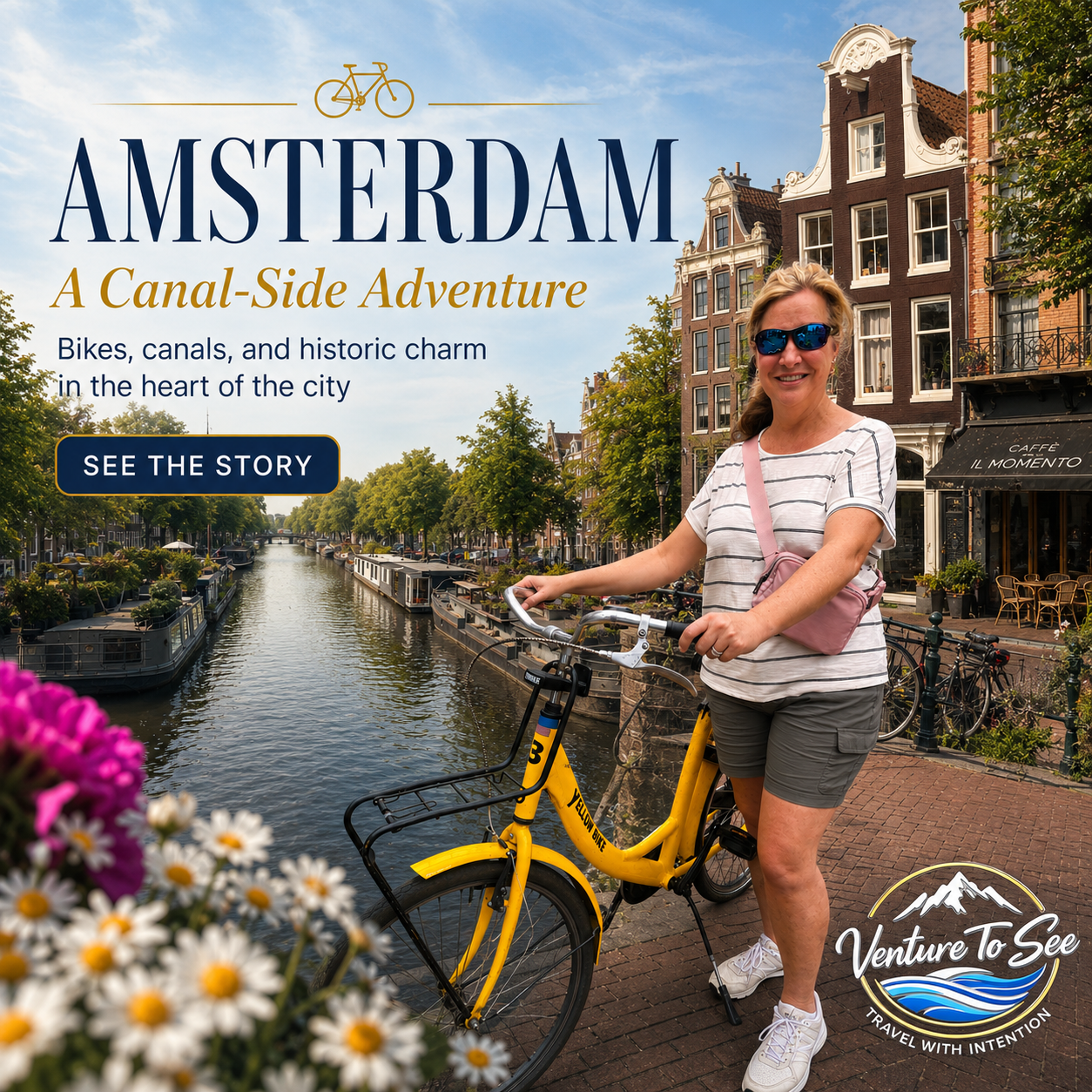
Seeing Amsterdam by Bike: A Different Way to Move Through the City
Thinking about an Amsterdam bike tour? Here's a firsthand review of a guided ride through the canals, old harbor, and museum district — three hours, simple single-speed bikes, and what it's actually like riding in Amsterdam's real bike lanes. What to expect, what to bring, and whether it's worth booking.
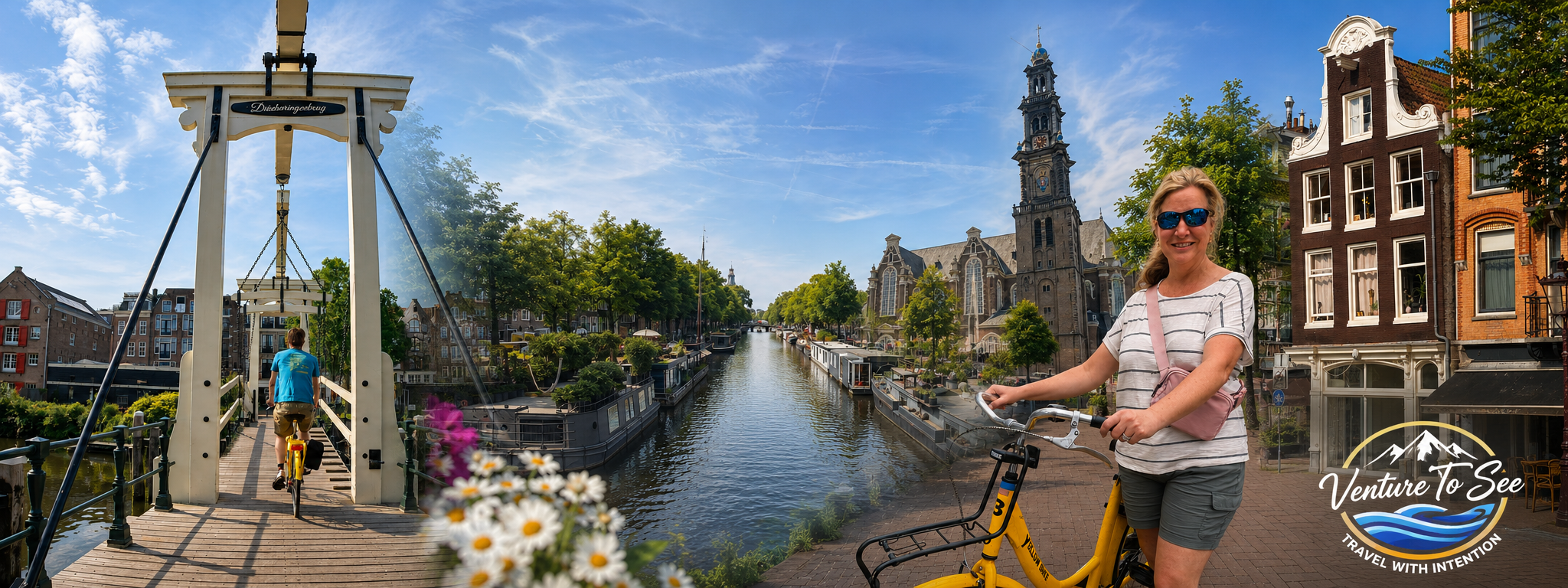
Seeing Amsterdam by Bike: A Different Way to Move Through the City
A guided canal-to-canal bike tour through the neighborhoods, waterways, and museum district — and whether it's worth building into your Amsterdam itinerary.
Amsterdam is one of those cities where the bicycle isn't just transportation — it's part of the rhythm of daily life. The Netherlands has long had more bicycles than residents, and Amsterdam is one of the clearest places to see what that actually looks like on the ground.
On a recent family trip, we decided to see the city the way a lot of locals do: by bike. Amsterdam is known for its canals, museums, cafés, cheese shops, and historic streets, but instead of spending the day only in the busiest walking areas, we booked a guided bike tour through the city center.
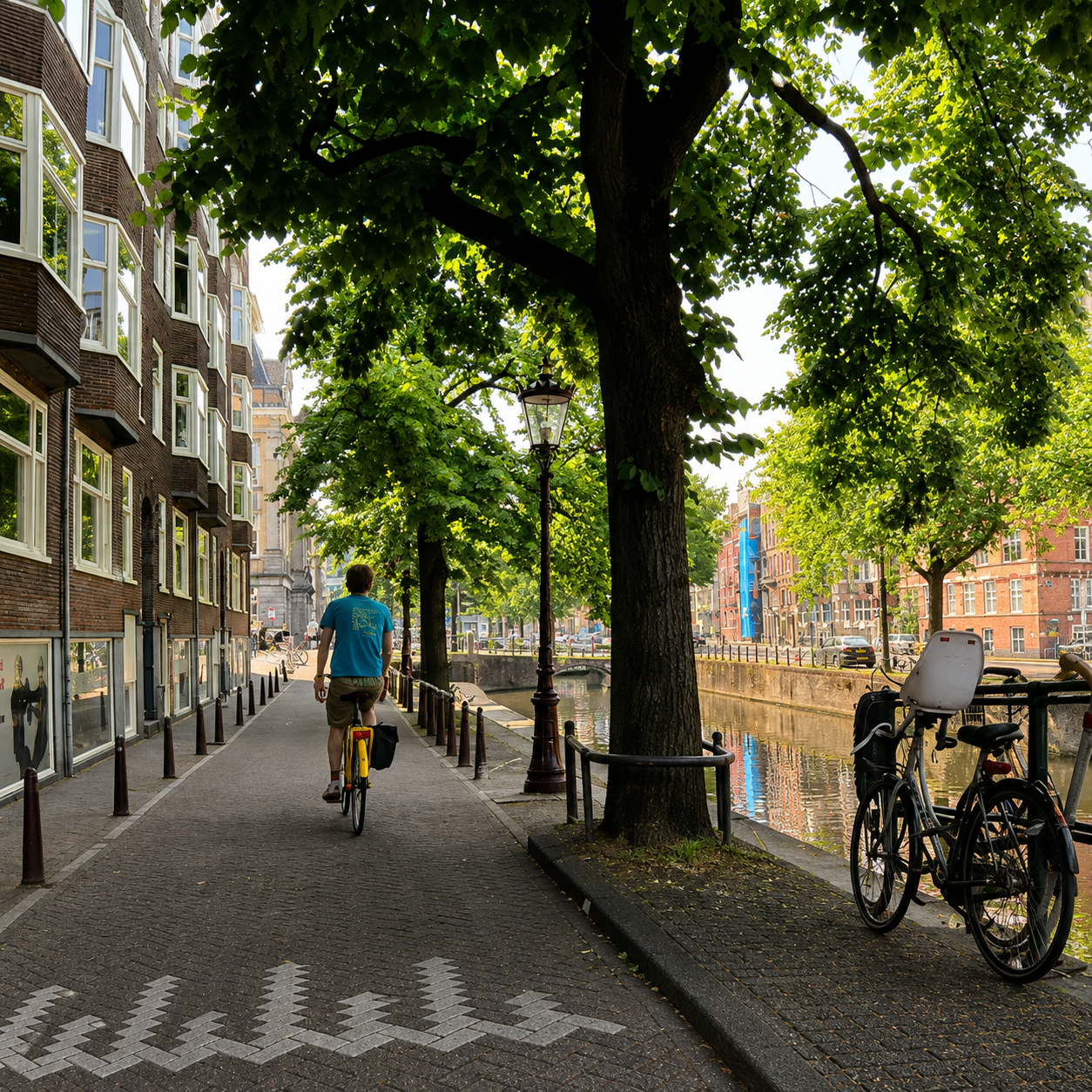
Riding along one of Amsterdam's central canals during our guided bike tour.
The tour ran about three hours. We met at a local bike shop and were assigned bright yellow bikes for the group. Our guide was a local, probably in his early twenties, and at first I wondered whether we'd be able to keep up — three hours on a bike in downtown Amsterdam sounded fun, but also a little intimidating.
The bikes made it approachable. Our guide called them "grandma bikes," which was fairly accurate — simple, single-speed, wide-seated bikes. Not beach cruisers, not mountain bikes, just comfortable enough for a relaxed ride through the city.
Riding in the Bike Lane, Not Around It
One of the first things that stood out was how organized the bike traffic felt. Amsterdam gives cyclists their own dedicated lanes, often with their own signals, separate from car and tram traffic. Coming from places where bikes are usually an afterthought, it was interesting to see a city actually built around them.
That doesn't mean it felt slow or casual. The lanes were active, and you had to pay attention. After riding through downtown Amsterdam, I'm not sure I'd want to drive there. Between the cars, trams, pedestrians, and bikes, it's a city that rewards awareness.
Canals, Bridges, and the Old Harbor
Over the course of the ride, we stopped at several points through central Amsterdam for short history breaks. One of the more interesting stops was near the old harbor area, where our guide talked about the city's historic connection to trade, canals, and waterfront warehouses.
The canal houses are a big part of what makes Amsterdam visually distinct — tall, narrow buildings with practical access to the canals and warehouses that supported the city's commercial life. We also learned about the bridges built to let boats pass through the waterways, including smaller boats designed with masts that fold down so they can clear the lower canal bridges — a small detail, but one that helped explain how the city actually functioned, not just how it looks today.
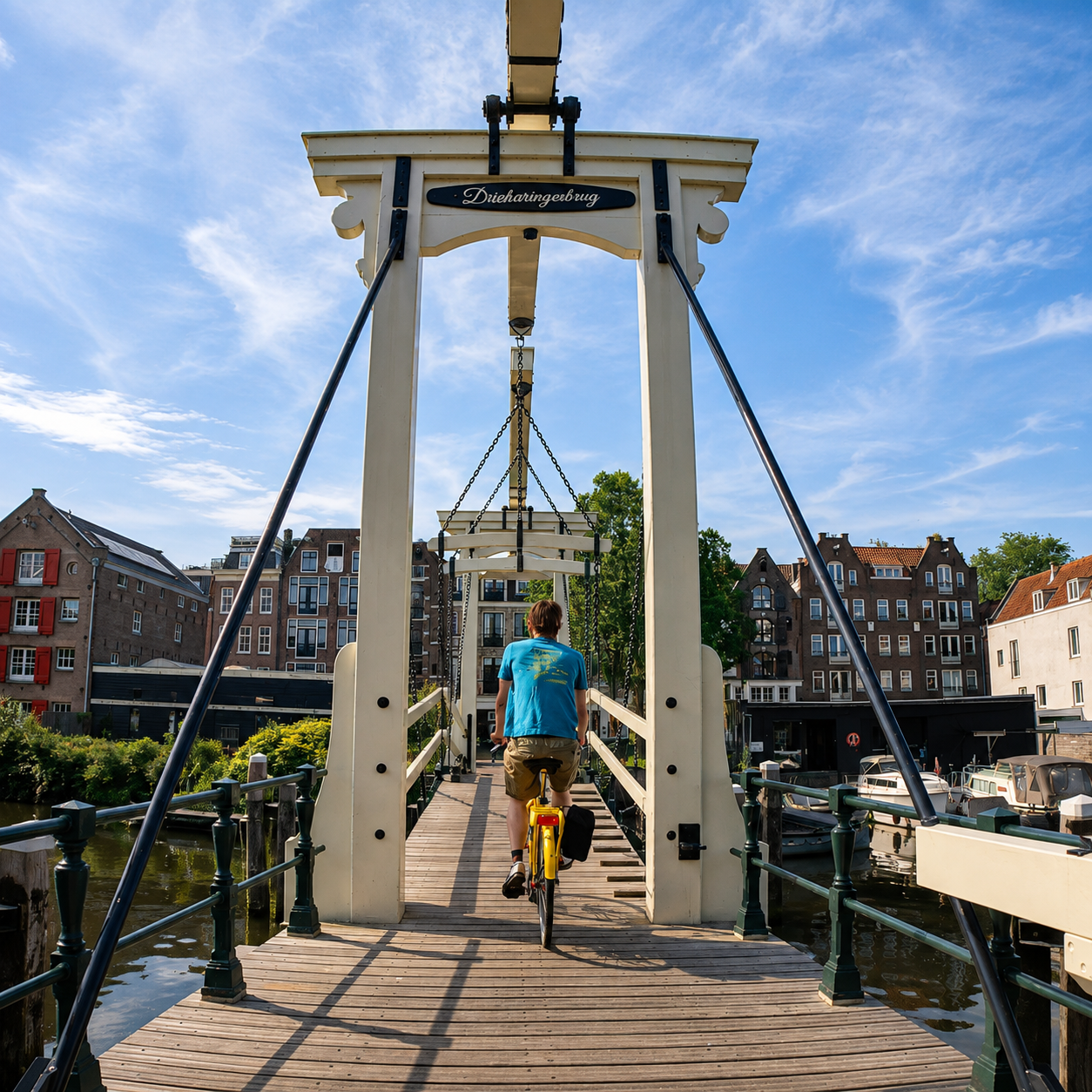
One of the canal drawbridges we passed on the ride — the kind built to let boats through.
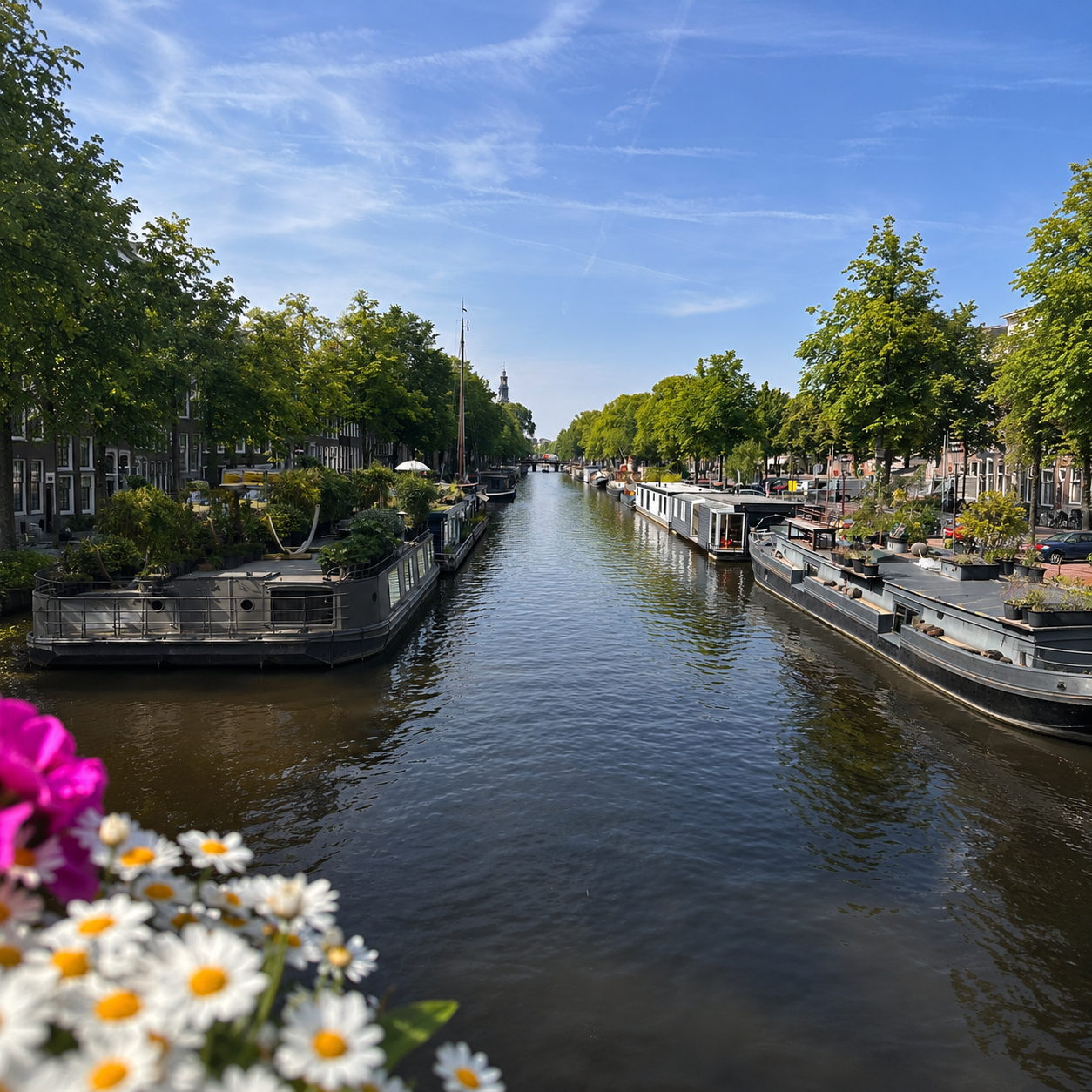
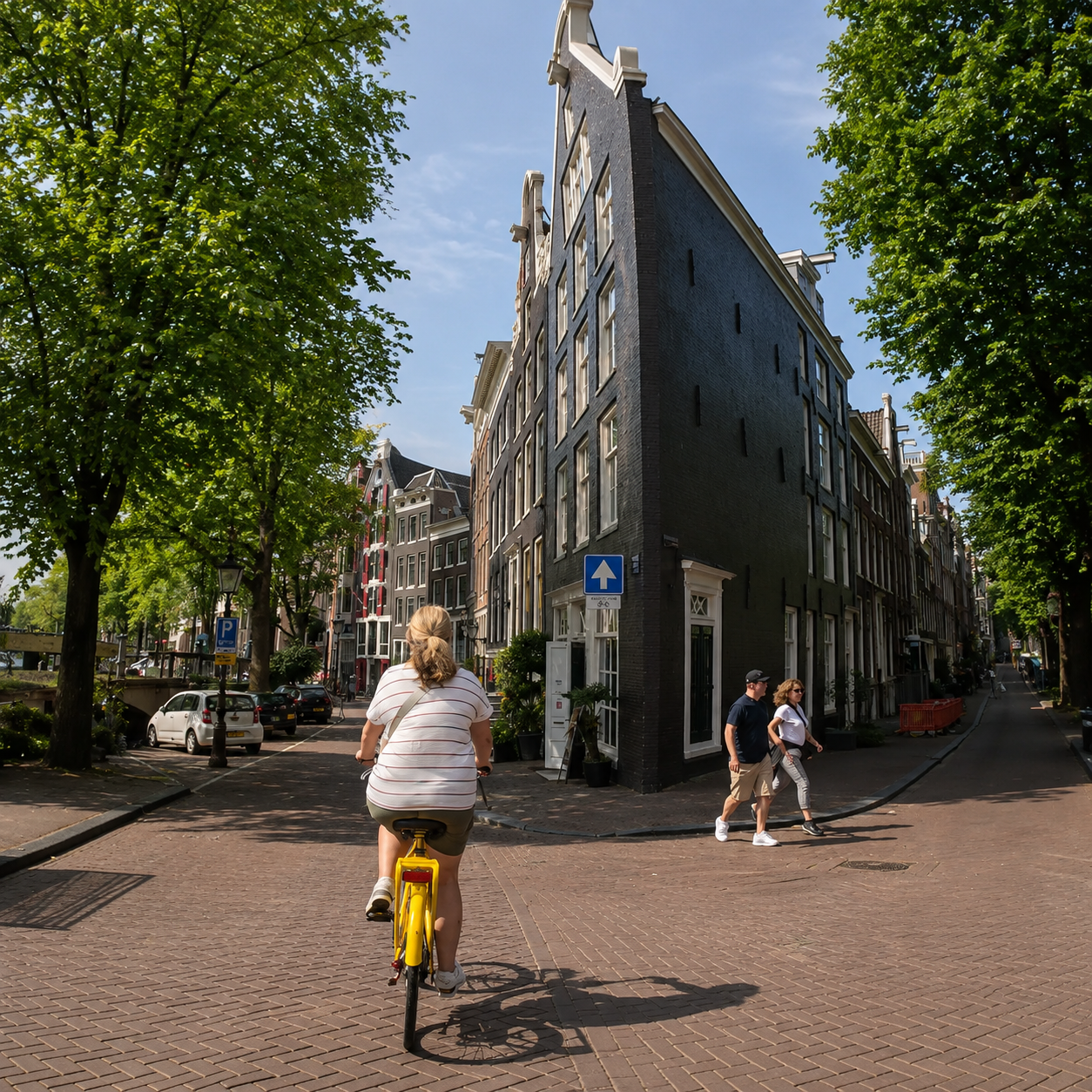
Houseboats and canal-side streets near the old harbor.
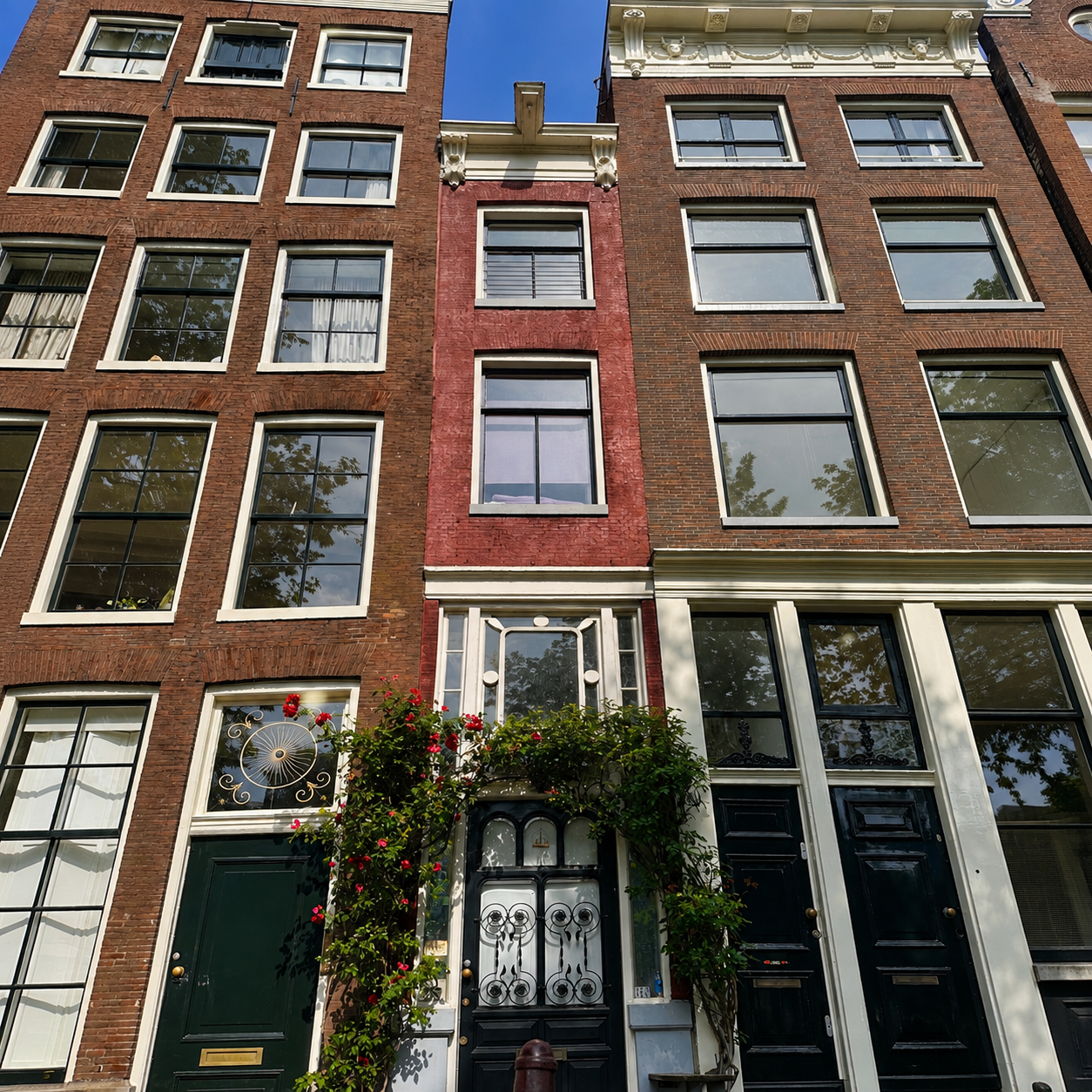
One of Amsterdam's famously narrow canal houses.
The Narrowest House and Amsterdam's Architecture
Another memorable stop was at one of the city's narrowest homes. Amsterdam's slim canal houses are tied partly to historical tax structures and the limited space along the canals. Seeing one of the narrowest in person put the architecture in perspective — it's a different experience than just walking past.
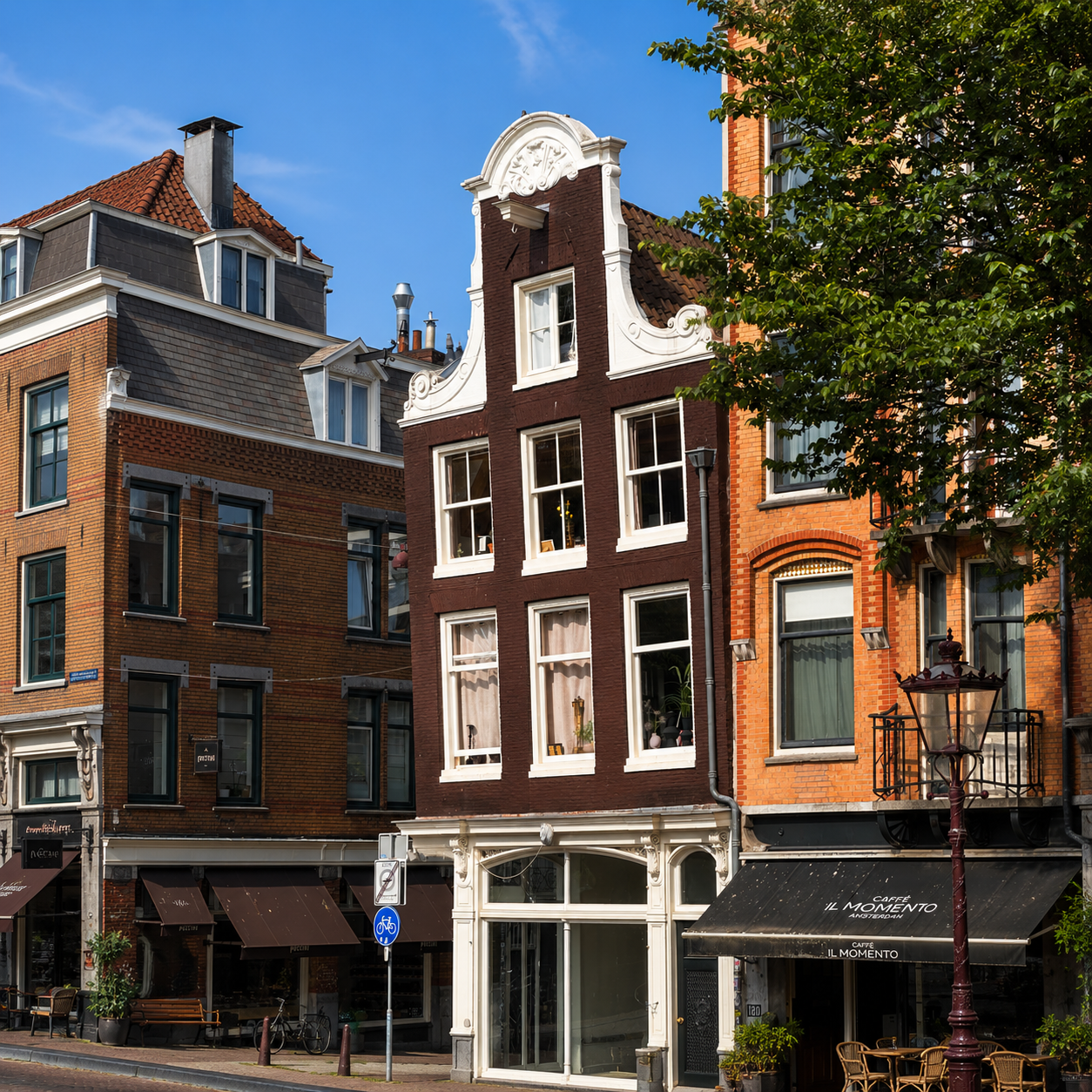
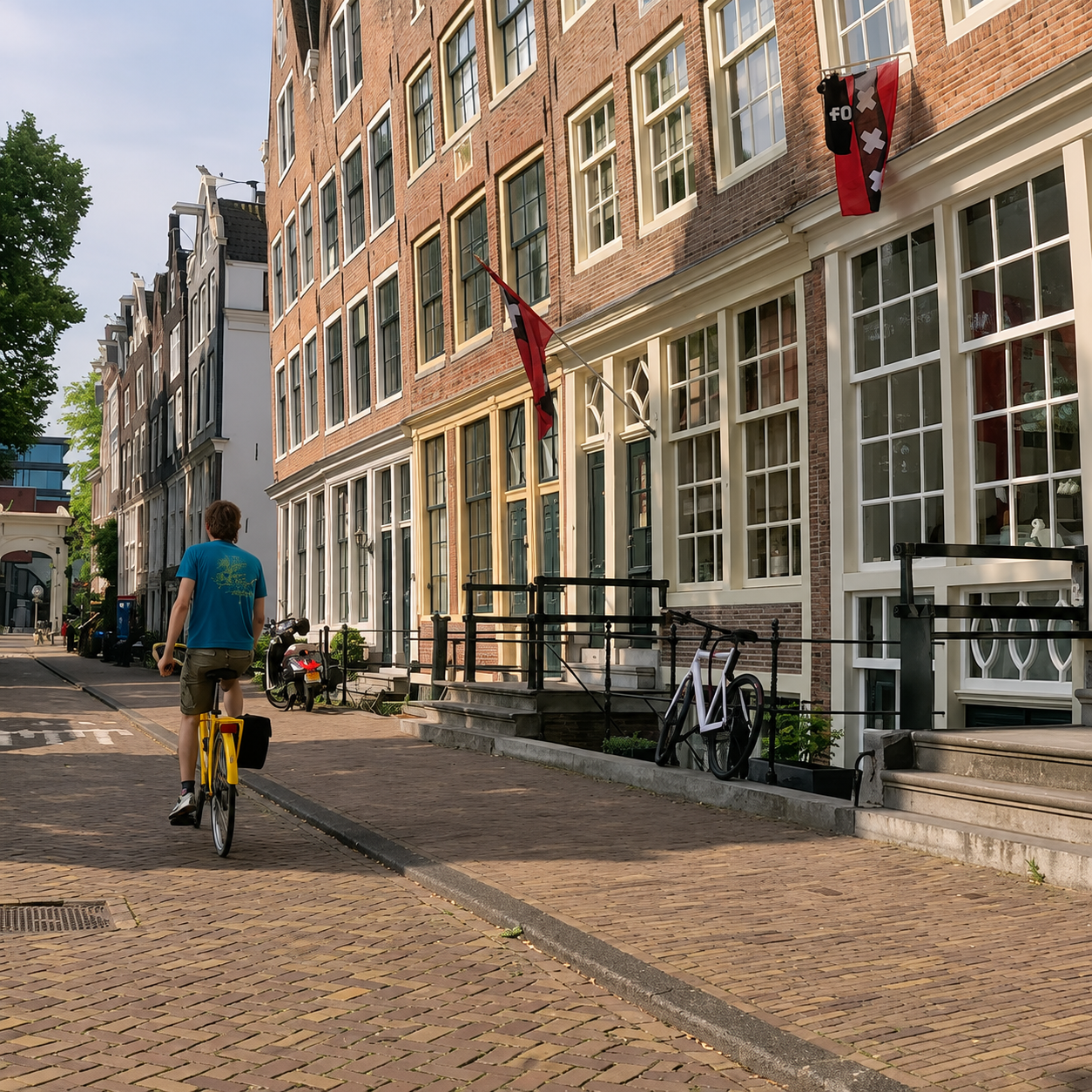
Rowhouses along the canal, part of the architecture our guide pointed out along the route.
Through the Museum District
The tour also passed through the museum district, near the Van Gogh Museum. That area sits at Museumplein, Amsterdam's major museum square, close to the Rijksmuseum, the Stedelijk Museum, and the Concertgebouw. Even without going inside every museum, riding through this stretch gives you a sense of how much art and history is packed into one part of the city.
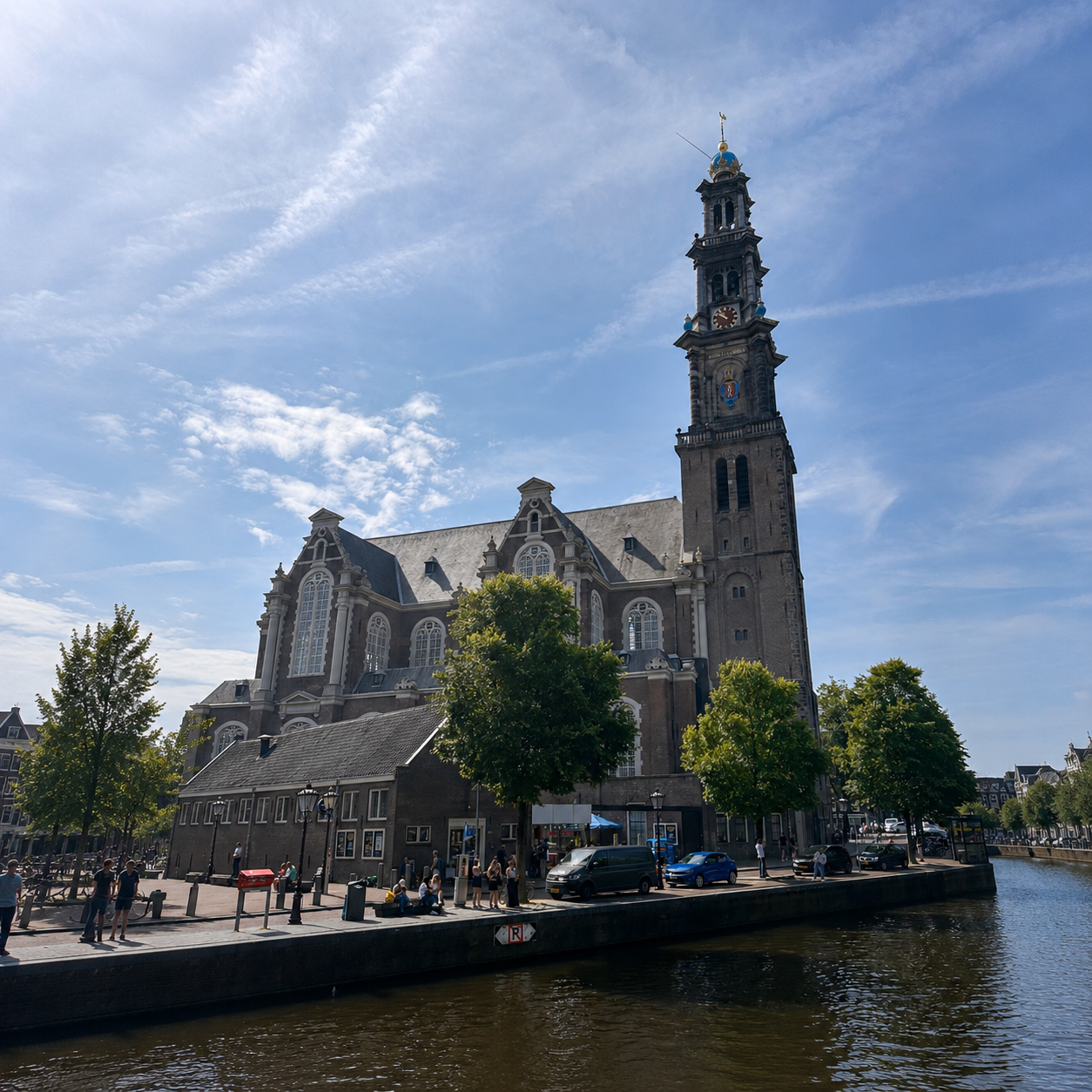
Canal-side landmarks like the Westerkerk are part of what makes the ride feel like a moving history lesson.
A Break in the Park
At one point we stopped in a smaller park area for a quick break — likely Vondelpark, which commonly appears on Amsterdam bike-tour routes near the museum district, though I'd confirm the exact stop against the specific tour operator's route before booking. Three hours isn't overwhelming, but biking through an active city takes attention, and a few minutes off the bike gave us time to actually take in the experience instead of moving from stop to stop.
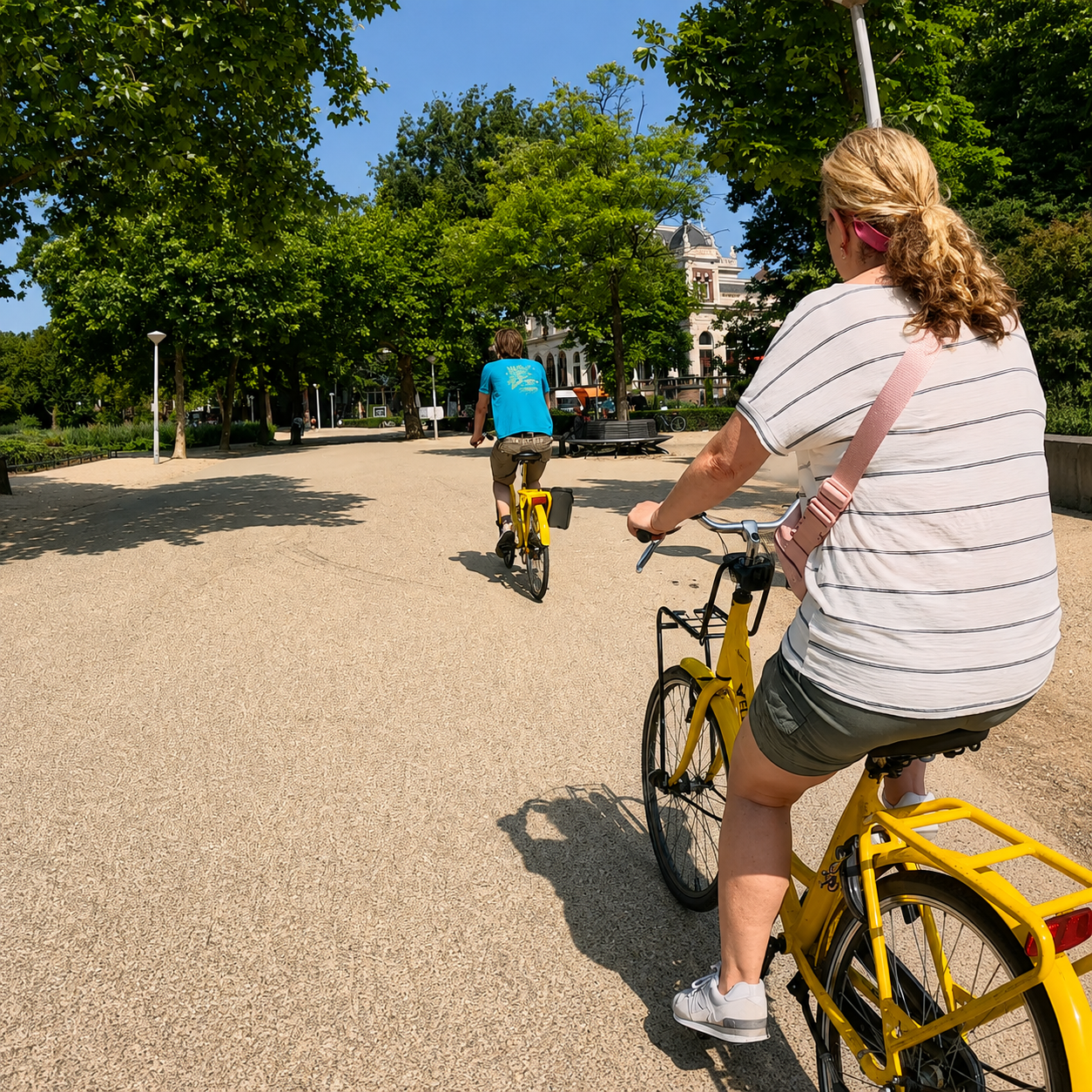
Our yellow "grandma bikes" parked for a break along the park path.
Before You Book
- Wear closed-toe shoes and clothing you don't mind getting a little warm in — you'll be pedaling for a few hours.
- Bikes are typically single-speed and upright — comfortable, but not built for speed.
- Amsterdam's bike lanes are real traffic lanes. Expect to pay attention, not coast.
- Book with enough lead time in peak season (spring–summer), when popular tour times sell out.
- Bring a light layer — canal-side breezes can be cooler than the rest of the city.
Book an Amsterdam Bike Tour
See the canals, the old harbor, and the museum district the way locals do — reserve your spot on a guided city bike tour.
Book on GetYourGuide →Why This Tour Worked for Us
What I appreciated most was that it gave us a different view of Amsterdam. Walking the city is worthwhile, and the museums are obviously worth visiting, but riding a bike connected the neighborhoods, canals, bridges, and historic areas in a way walking doesn't.
It also matched the city. Amsterdam is built around movement by bike, and taking part in that, even for a few hours, gave us a better sense of local life. It wasn't an expensive excursion, and it didn't take a full day, but it added a real layer to the trip.
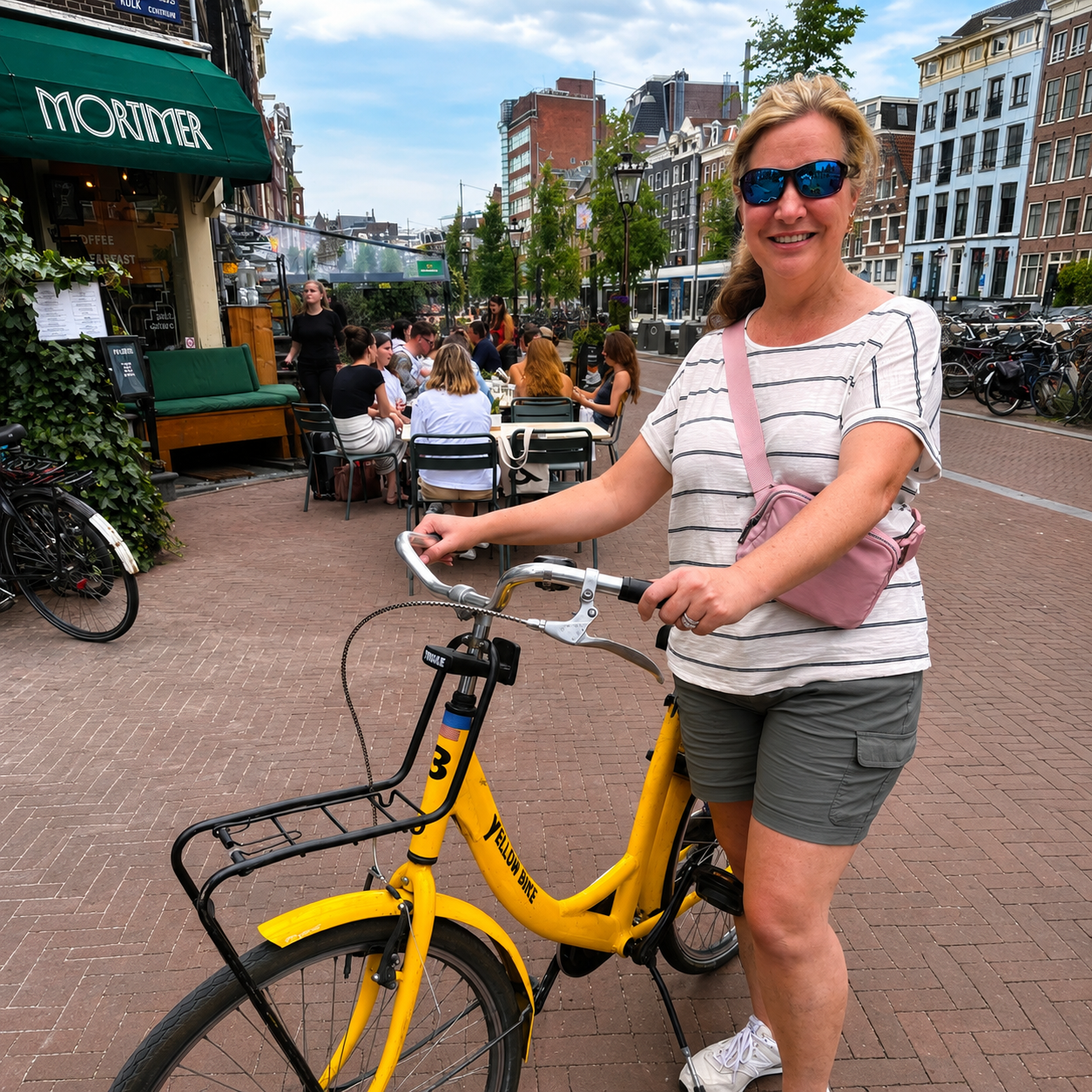
The group riding through central Amsterdam, on the same yellow bikes we started with.
Final Verdict
Would I recommend a bike tour in Amsterdam? Yes, with one condition: you need to be comfortable paying attention in an active urban environment. The route was manageable, the bikes were simple, and the guide kept things moving, but Amsterdam's bike lanes are working transportation lanes, not a theme-park path. For our family, it was a worthwhile way to see the city from a different angle.
Reserve Your Amsterdam Bike Tour
A few hours on two wheels covers more of the city than a full day on foot — book ahead to lock in your preferred time slot.
Book on GetYourGuide →Amsterdam Bike Tour FAQ
Follow the Journey
Have a question about this experience or a trip of your own? We'd like to hear from you.
Send Feedback
Ten Days Aboard HX Expeditions' MS Roald Amundsen: An Alaska Expedition Review
Thinking about an HX Expeditions Alaska cruise? Follow our 10-day journey aboard MS Roald Amundsen with firsthand photos, wildlife encounters, zodiac cruises, kayaking, and honest travel insights.
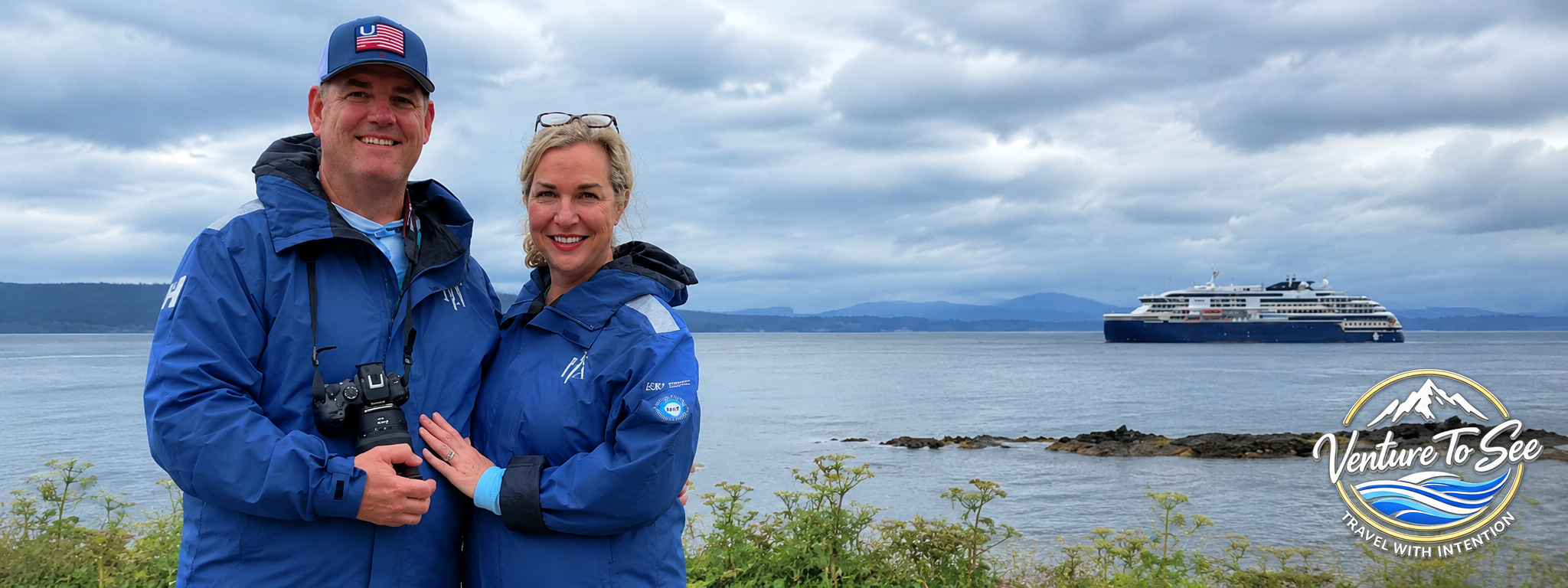
Ten Days Aboard HX Expeditions' MS Roald Amundsen: An Alaska Expedition Review
Vancouver to Whittier, one wildlife encounter at a time — what an expedition cruise actually feels like, from someone who's done the traditional Alaska cruise too.
I'd sailed expedition cruises before — Antarctica, most recently — so I knew what I was getting into. My wife April hadn't, and going in, I honestly wasn't sure how she'd take to it. Expedition cruising asks more of you than a traditional cruise does: early mornings, lectures, layers, wet landings. We spent ten days aboard HX Expeditions' MS Roald Amundsen, sailing north from Vancouver to Whittier, and by the end of it, any doubt I had about how she'd feel about it was gone.
If you're a fellow traveler weighing whether an expedition cruise is worth the jump from a traditional itinerary, here's the honest rundown — what worked, what surprised us, and what I'd tell you before you book.
Getting Started: Embarkation and the First Days at Sea
We boarded in Vancouver right alongside several much larger ships, and I expected the usual embarkation slog. Instead, curb to cabin took about fifteen minutes. That efficiency set the tone. The crew greeted us by name almost immediately, and that personal touch never let up for the rest of the voyage.
Our cabin was forward on Deck 5, but the ship itself is really the story. Every public space — the Explorer Lounge, the Science Center, the restaurants — is built around massive windows facing outward. Alaska is the main attraction here, not the ship, and the design makes sure you never forget it.
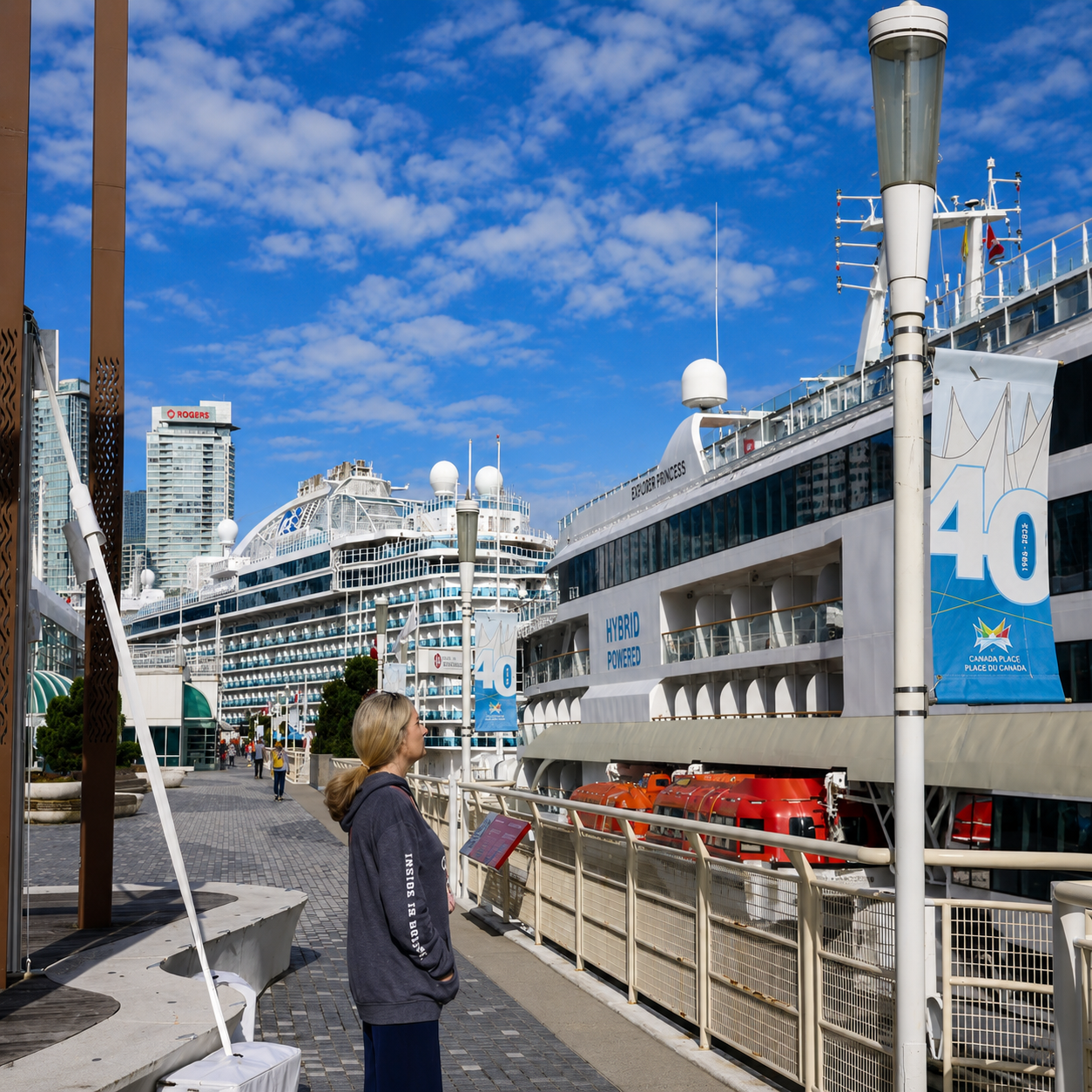
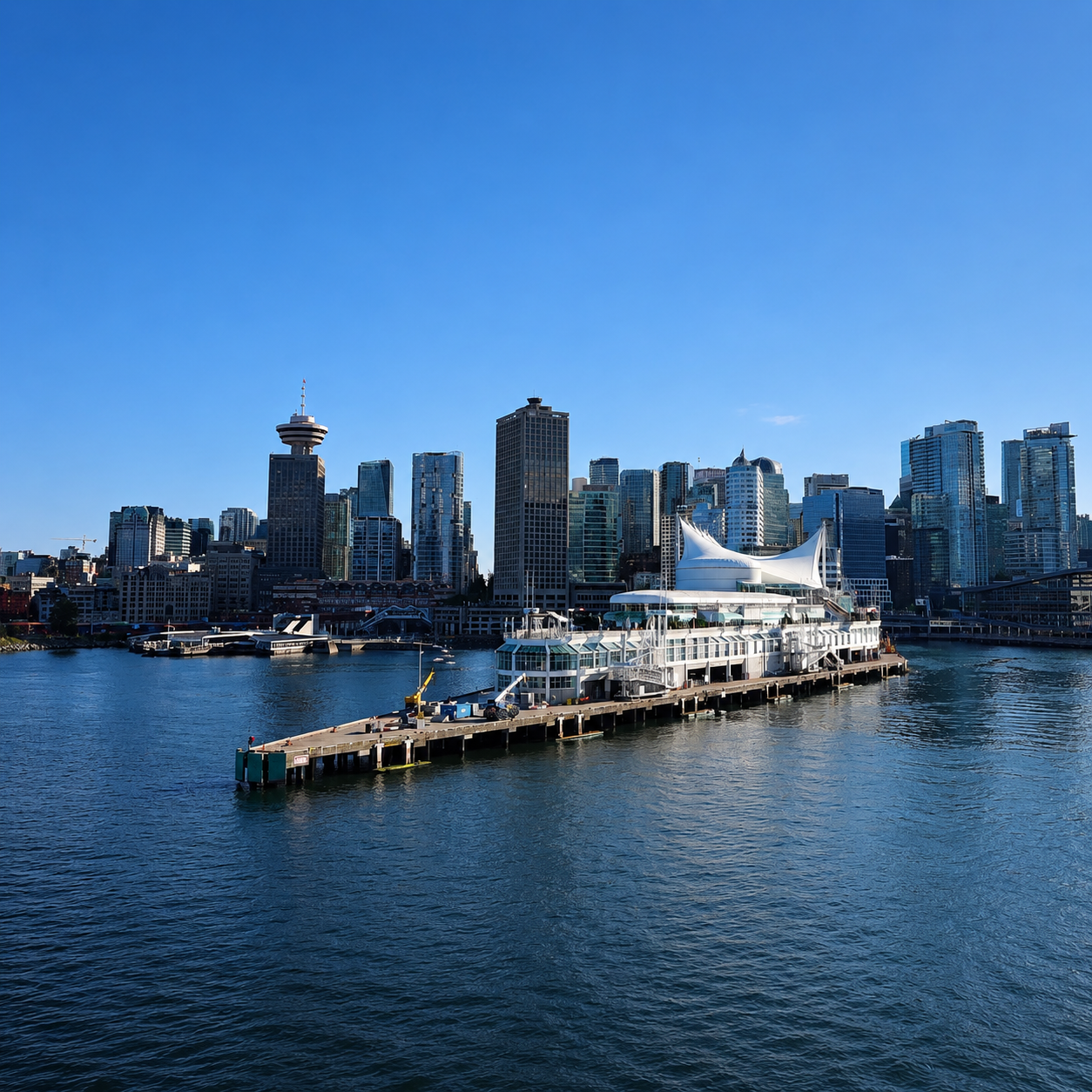
April taking in the MS Roald Amundsen for the first time, and pulling away from the Port of Vancouver to start the voyage north.
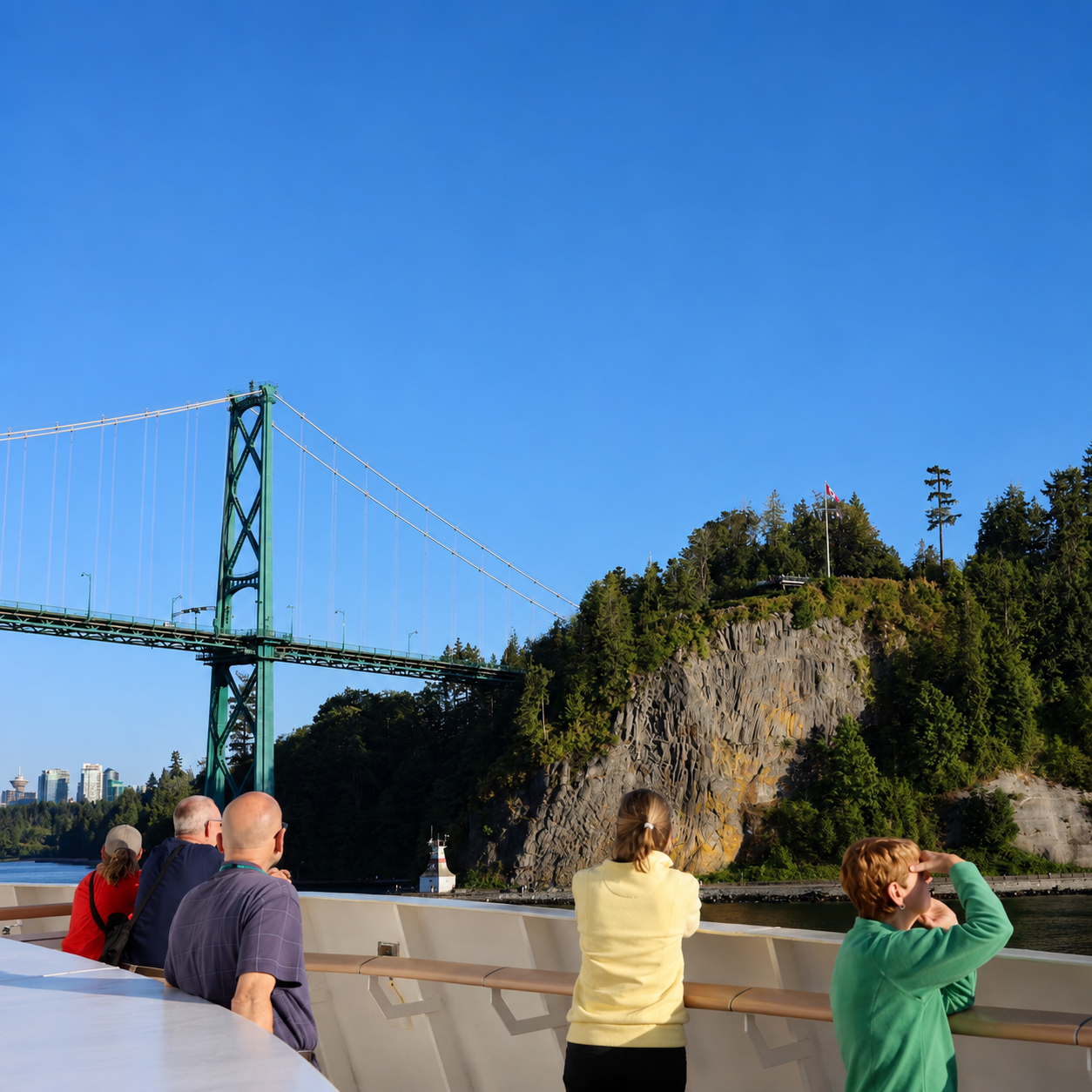
Passing under the bridge on the way out of Vancouver harbor.
The first sea day set the rhythm: lectures from marine biologists, historians, and naturalists, a mandatory kayaking briefing, muck boot fittings, a bridge tour, and assignment to our expedition group, the Mighty Walrus. One tip from the ship's photographer stuck with me the whole trip — ask each evening what lens you'll need for tomorrow. That single habit changed how I shot the entire voyage.
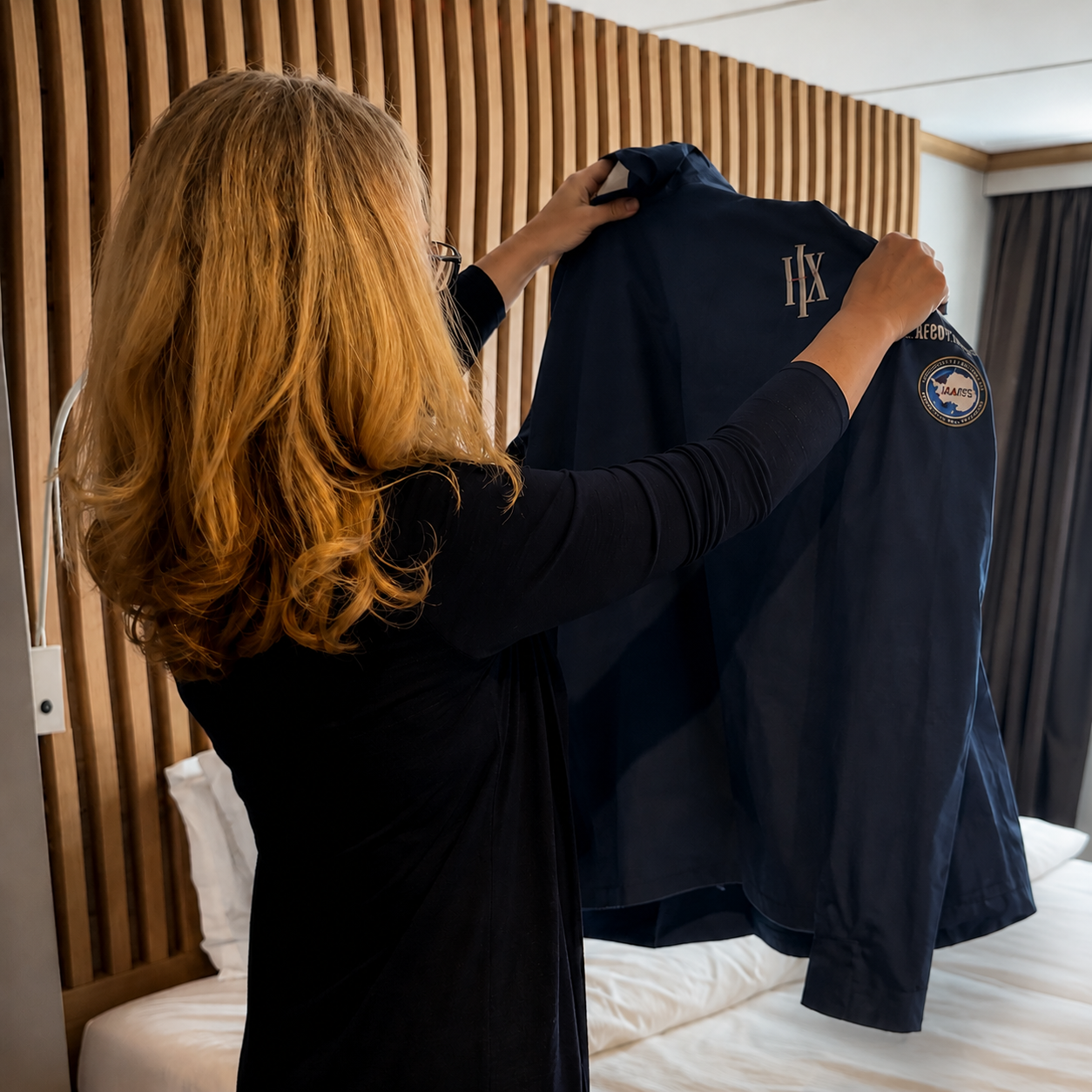
Gear day — April sorting through her expedition layers before our first Zodiac landing.
Unlike a mainstream cruise, where wildlife sightings often go unannounced unless you happen to be looking out the right window, HX made a point of calling them out. Any time something worth seeing showed up off the ship — black bears on shore, orcas breaching, whales surfacing — an announcement went out over the PA so guests could get to a window or the deck in time. It sounds small, but it meant we didn't miss much, and it set the tone for how seriously this crew took the wildlife.
Misty Fjords: Where Silence Does the Work
Day three brought us into Misty Fjords National Monument inside the Tongass National Forest. Calm water, light rain, mid-50s — conditions that matched the name exactly. The Expedition Team launched Zodiacs and sea kayaks, and we spent the day working through one of the most striking landscapes either of us had seen.
Following the photographer's advice from day one, I shot the whole day on a 24-70mm lens. He was right — wildlife was limited here, but the scenery filled every frame. Our Zodiac got close enough to the granite cliffs that even 24mm didn't always capture the full scale.
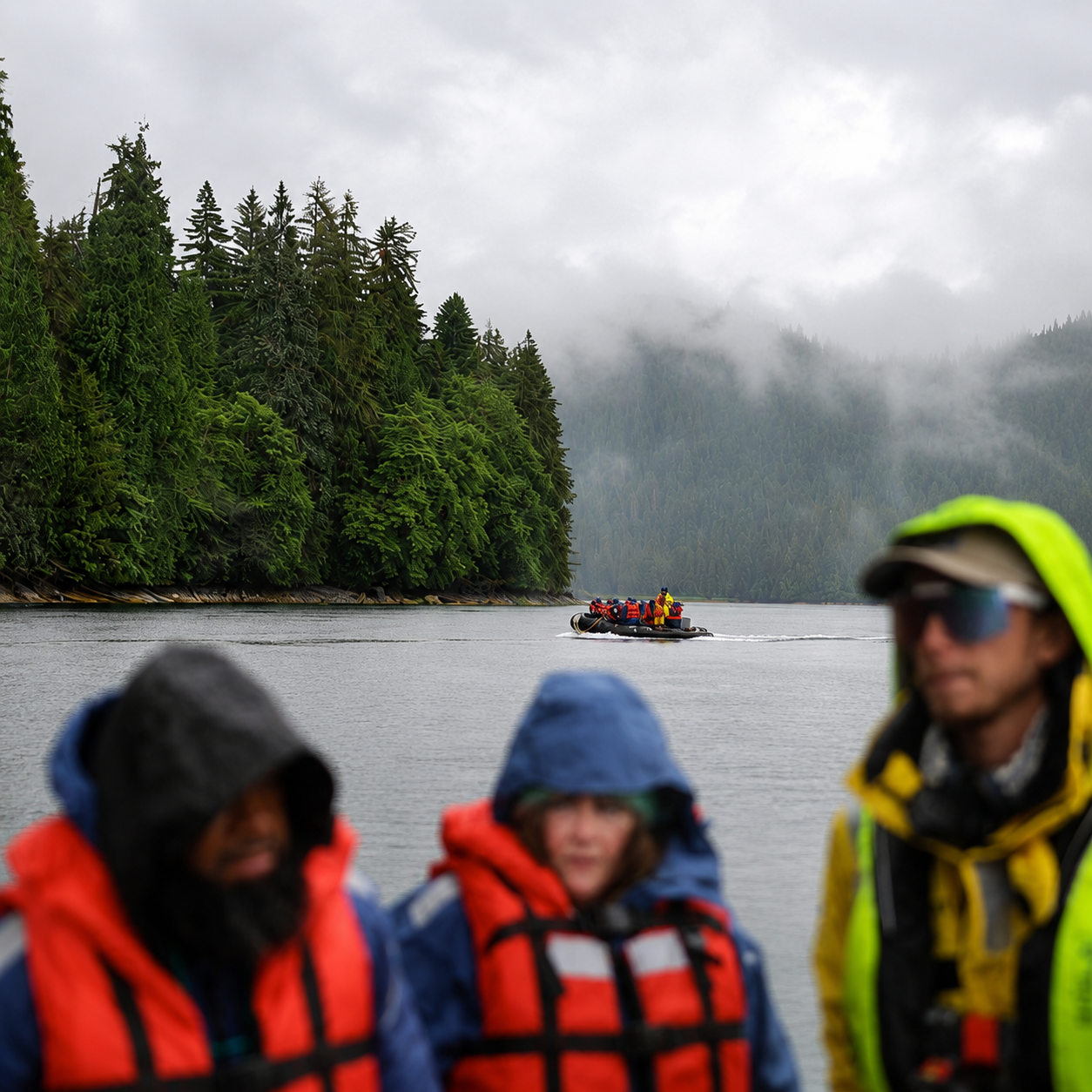
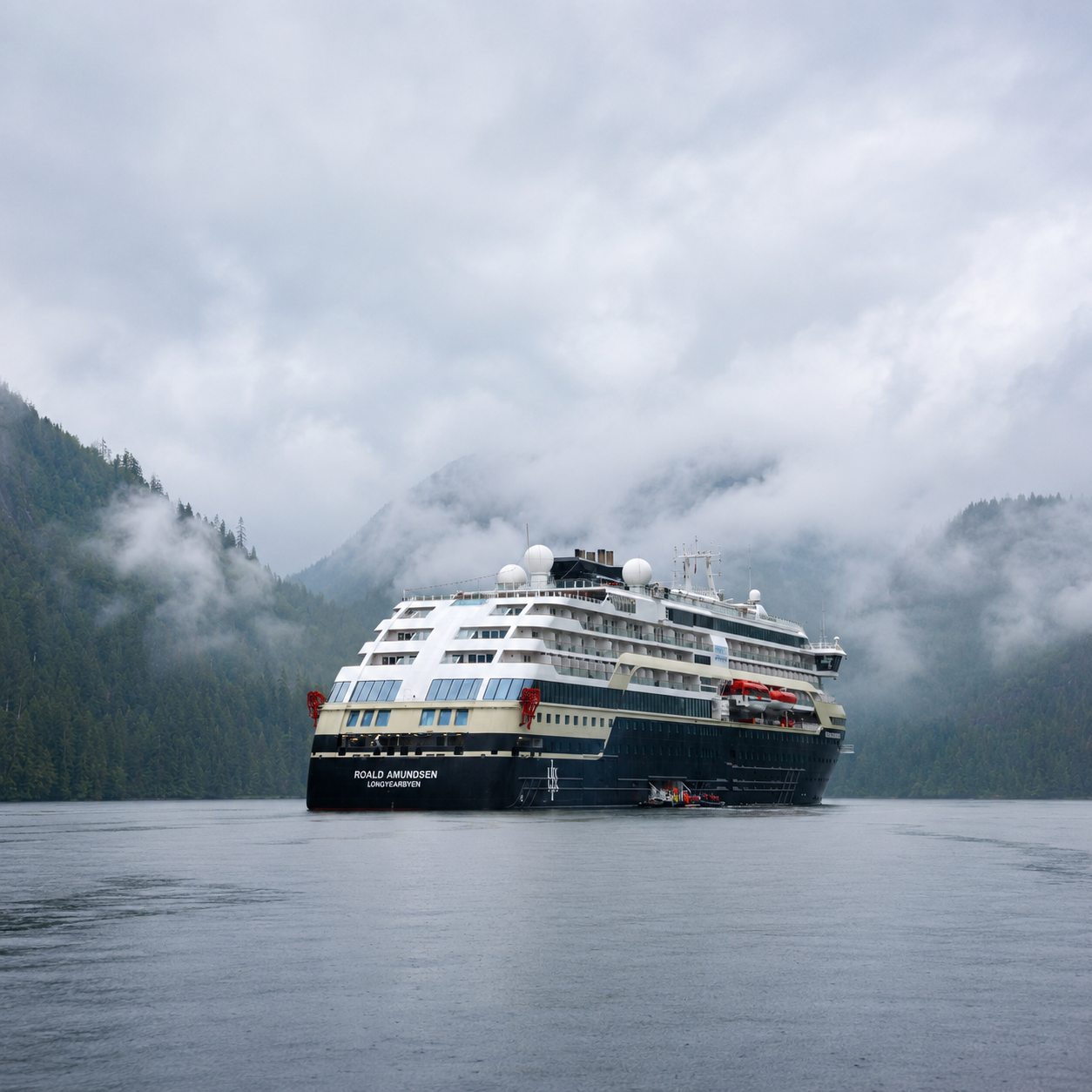
Zodiacs working through Misty Fjords, with the MS Roald Amundsen holding position in the calm water behind us.
What stood out wasn't a dramatic animal encounter. It was the quiet. Waterfalls dropping from cliffs thousands of feet up, evergreen forest wrapping the rock, and nothing to hear but rain, water, and the occasional eagle call somewhere out of sight.
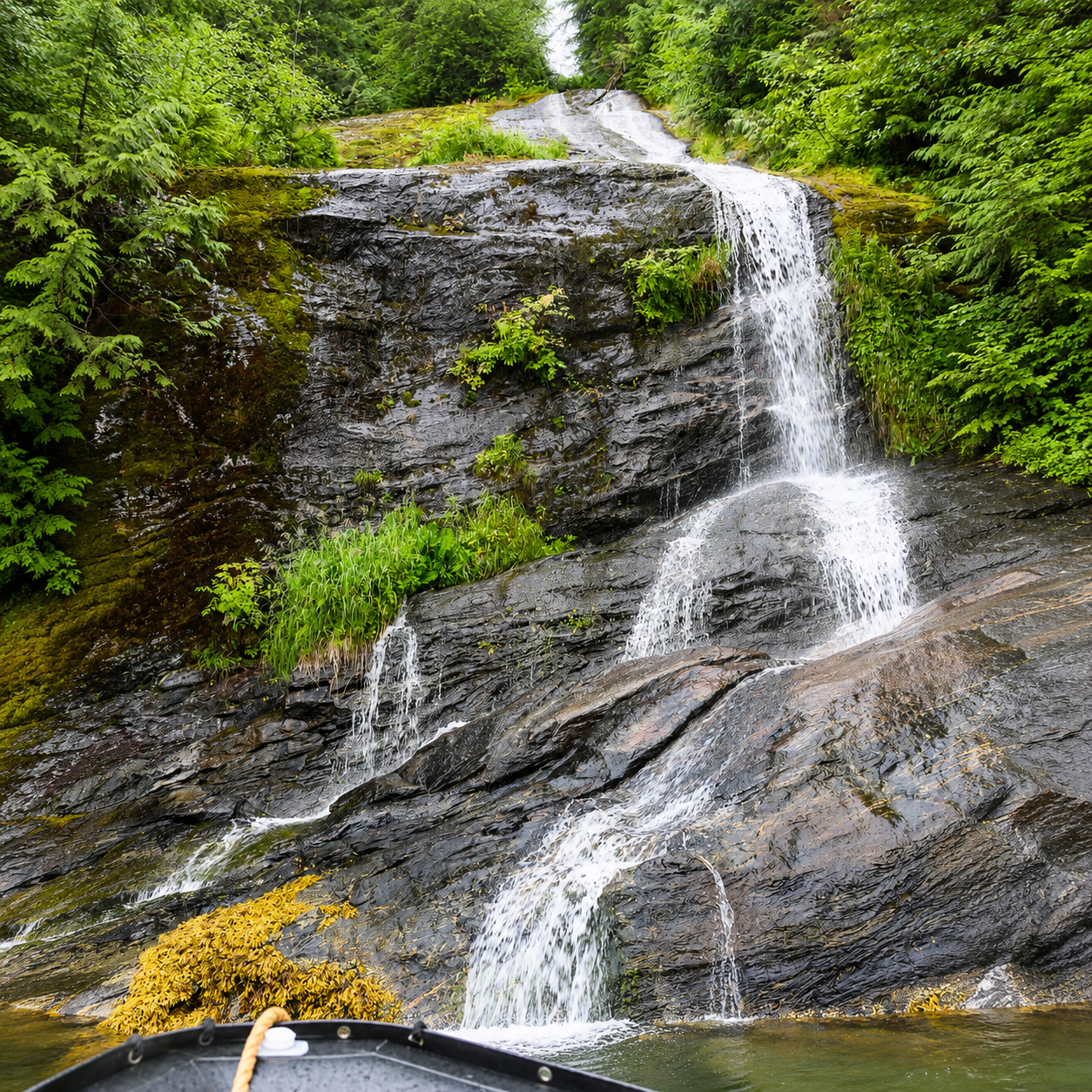
One of the countless waterfalls dropping straight off the cliffs in Misty Fjords.
Thinking About Sailing HX Expeditions to Alaska?
As a travel agency, Venture To See can help you plan and book an HX Expeditions Alaska voyage directly, including cabin selection and pre/post-cruise planning around Vancouver and Whittier/Anchorage. We currently have a limited-time exclusive rate on HX Expeditions' Alaska Inside Passage sailing, including a couple of solo cabins still available.
Wildlife and Culture Through Southeast Alaska
The stop in Klawock was our introduction to the cultural side of this trip. We joined the Coastal Flavors excursion for a riverside lunch beneath spruce and cedar, with bald eagles calling overhead the entire time. Portions were modest, but that wasn't really the point — it was about the setting and the connection to place. Klawock Totem Park rounded out the stop, with carved poles that preserve generations of Tlingit family history.
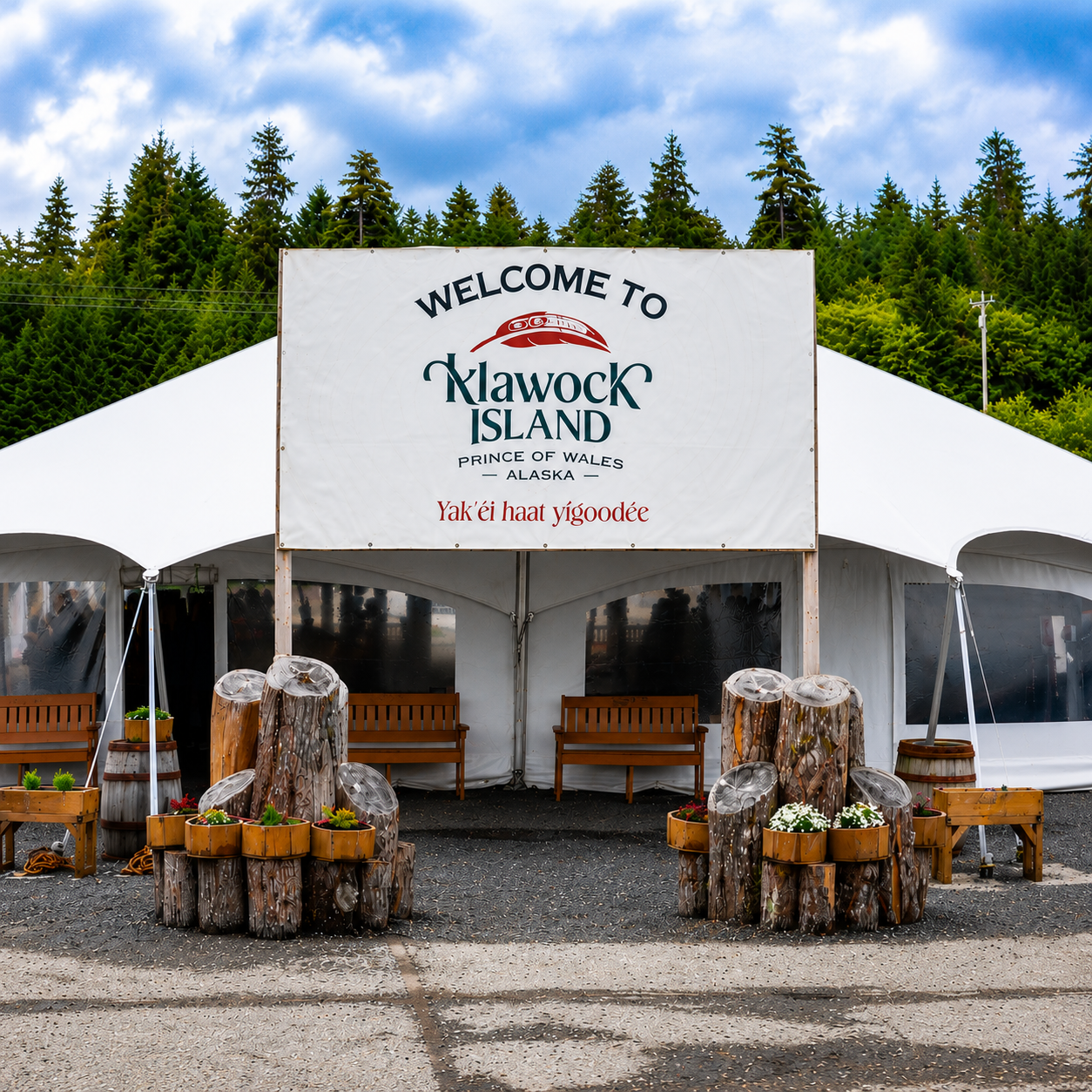
Coming into the port of Klawock.
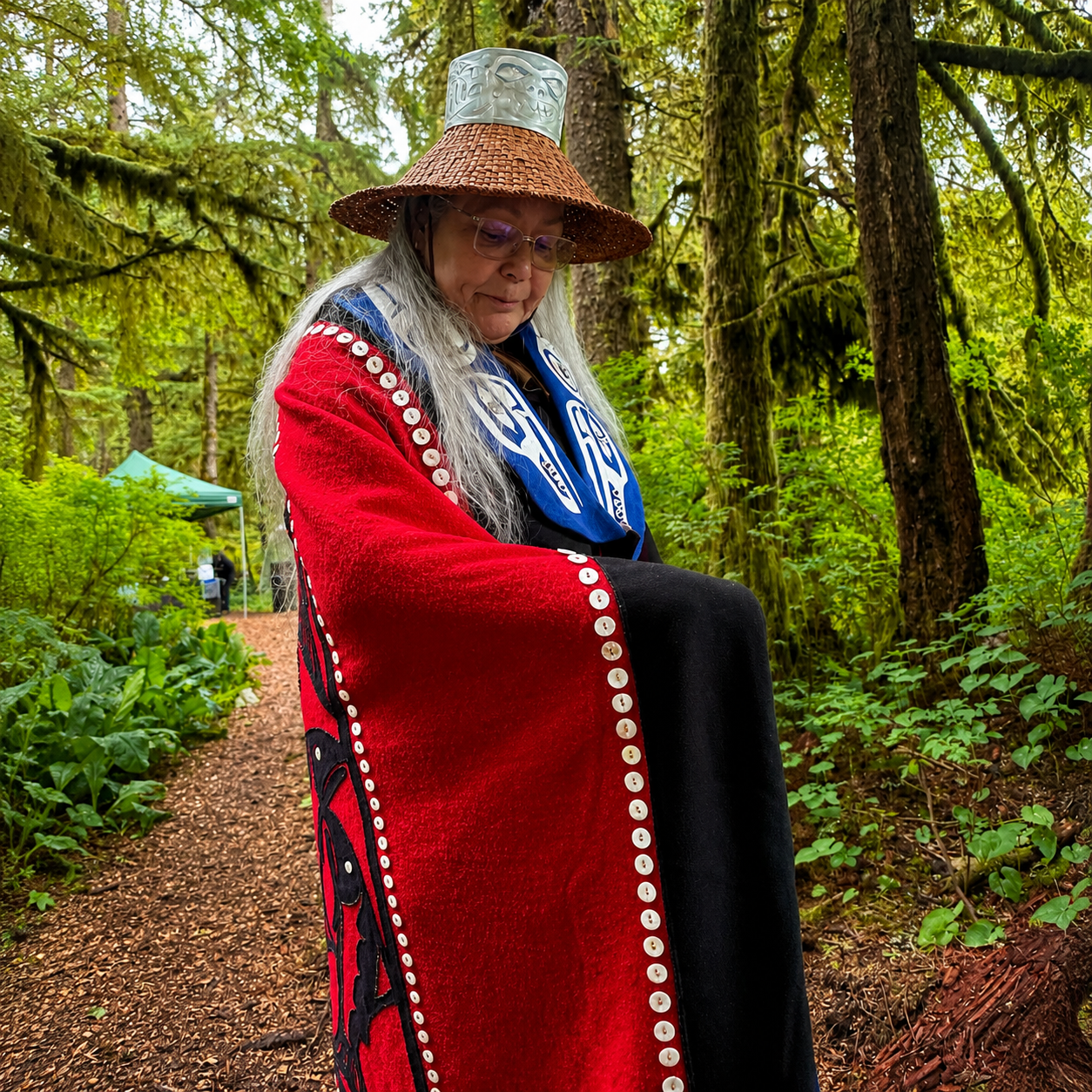
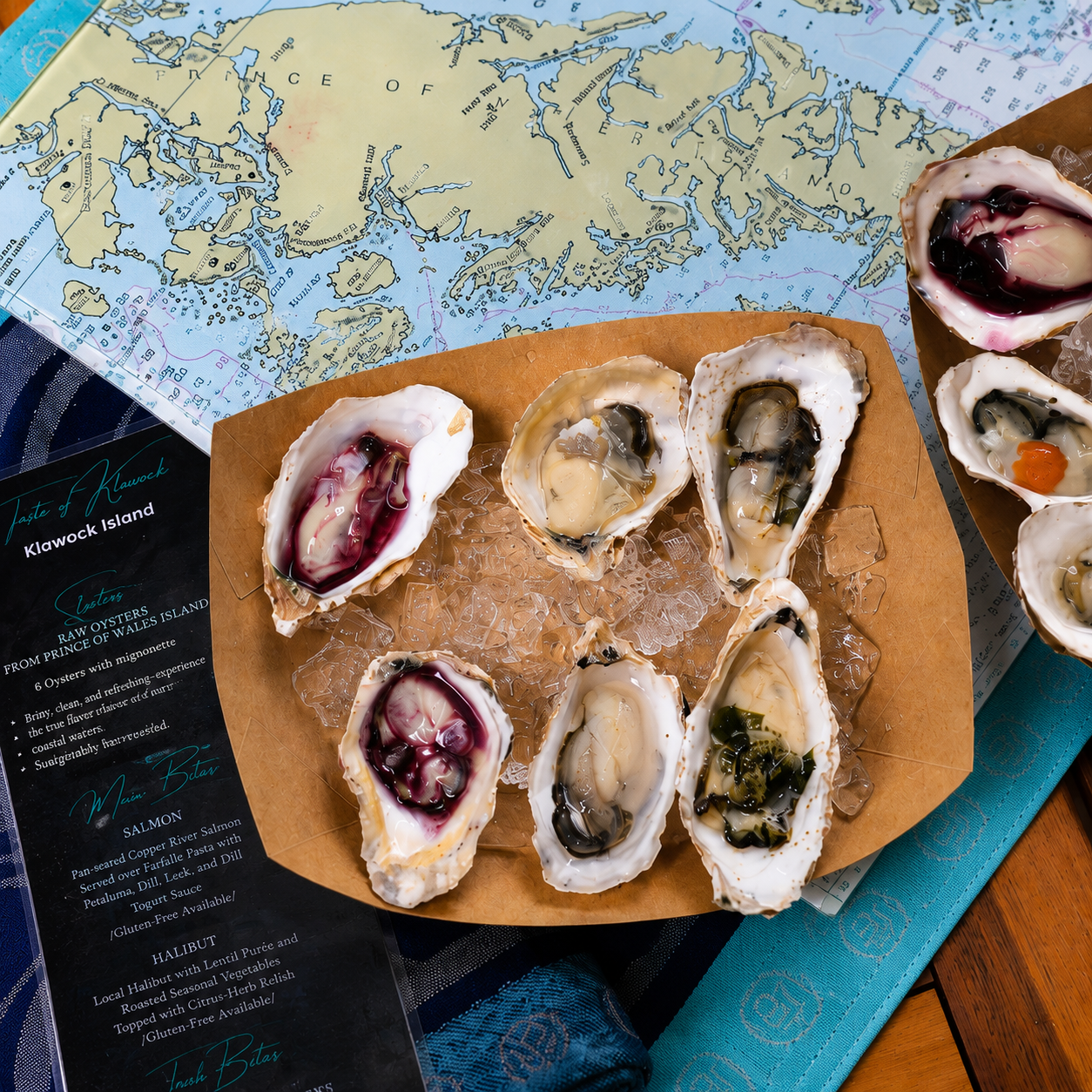
Traditional regalia and fresh-shucked oysters — Klawock's cultural side and its coastal flavors, side by side.
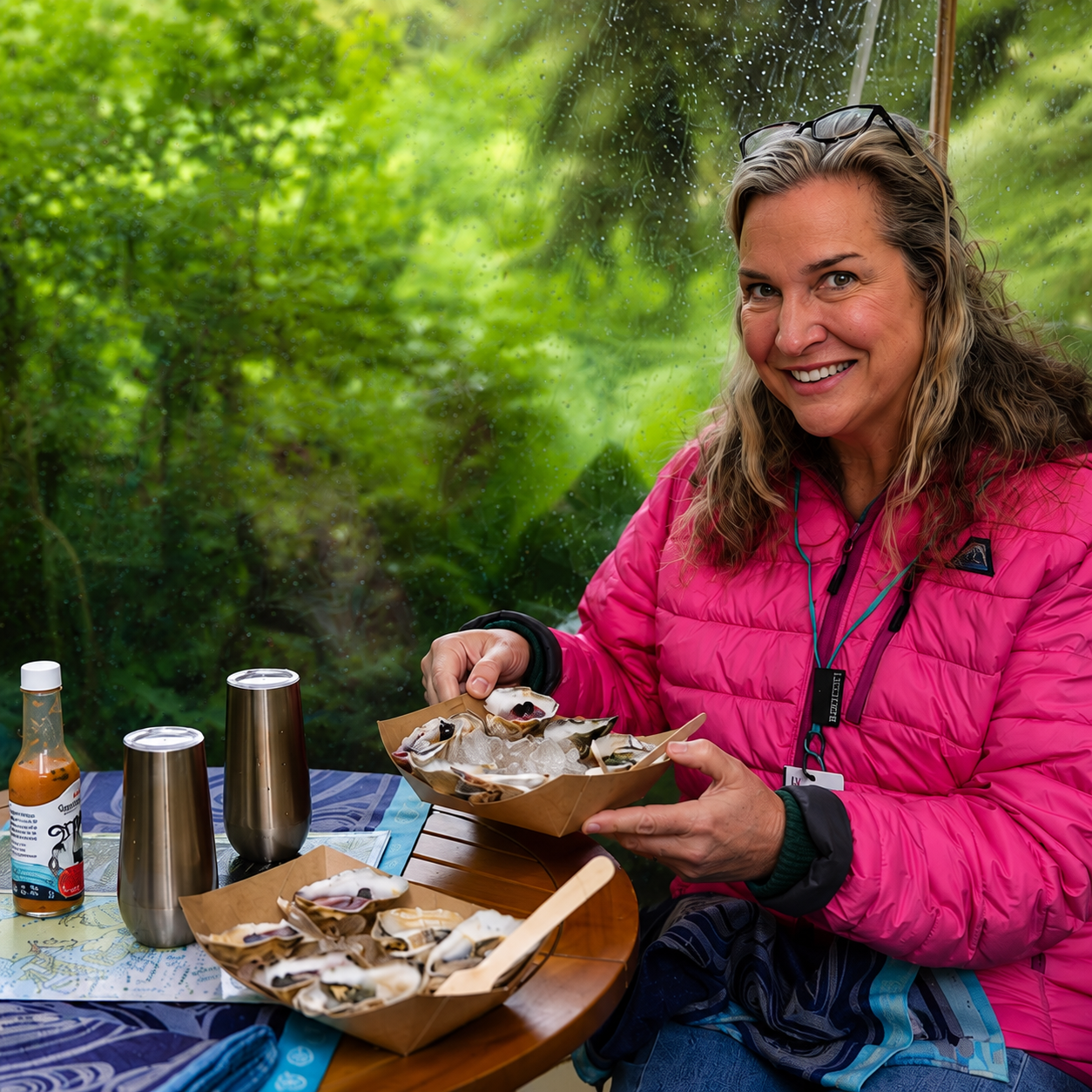
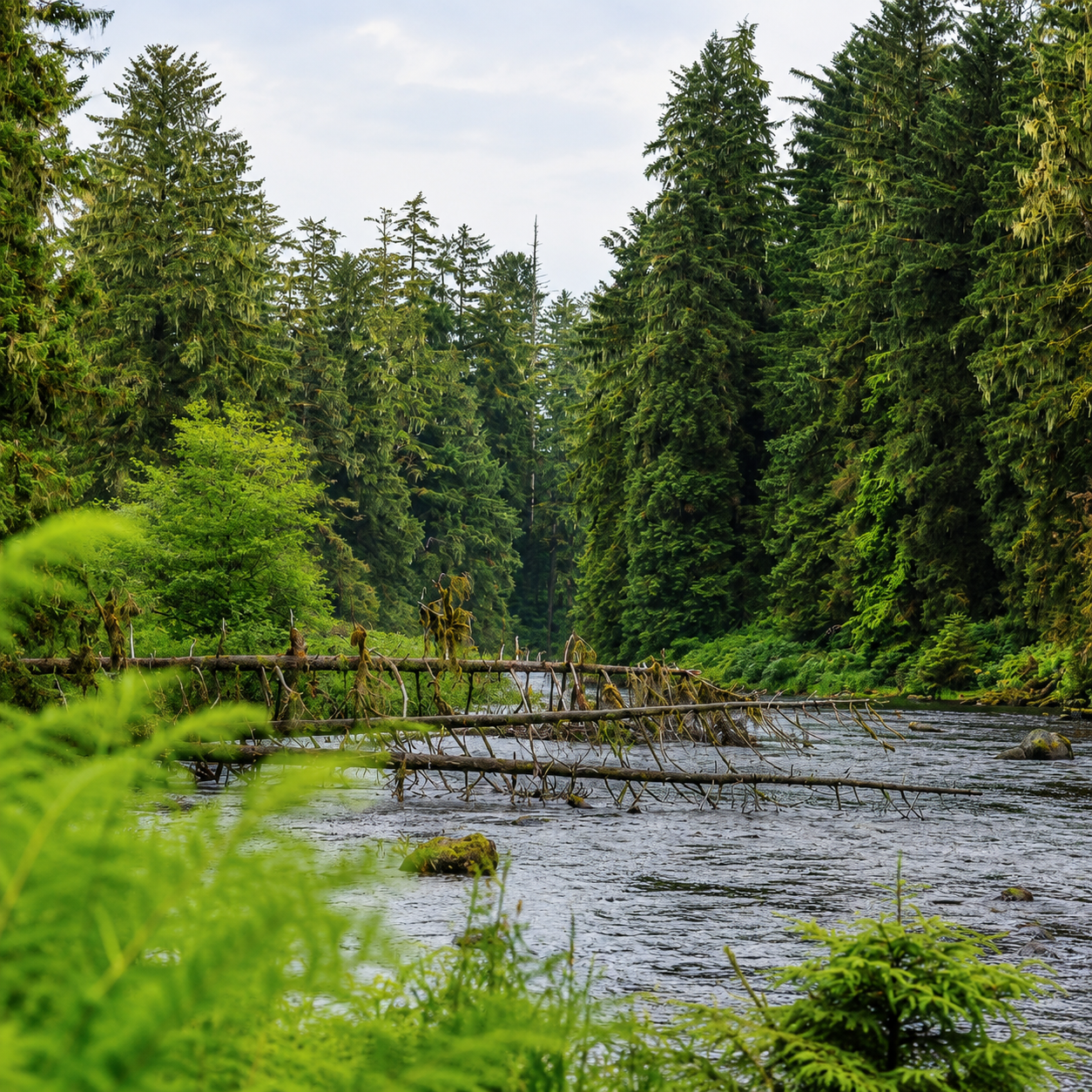
April working through her plate of oysters beside the Klawock River.
Kake, in the Keku Islands, turned out to be one of the best days of the trip. Morning Zodiac cruises brought a coastal brown bear along the shoreline and a Steller sea lion floating calmly nearby. Sea kayakers in our group spotted deer and otters; another group saw a humpback. No two of us had the same day, which is really the whole appeal of expedition cruising — you're not on rails.
Members of the Kake community came aboard that evening for traditional songs and dance, and they took time to explain the meaning behind the regalia and clan symbols rather than just performing. It turned what could have been a standard cultural show into something genuinely educational. Ashore, we saw the world's tallest single-tree totem pole and walked to Gunnuk Creek Hatchery, where salmon filled the water and eagles lined the trees waiting to feed.
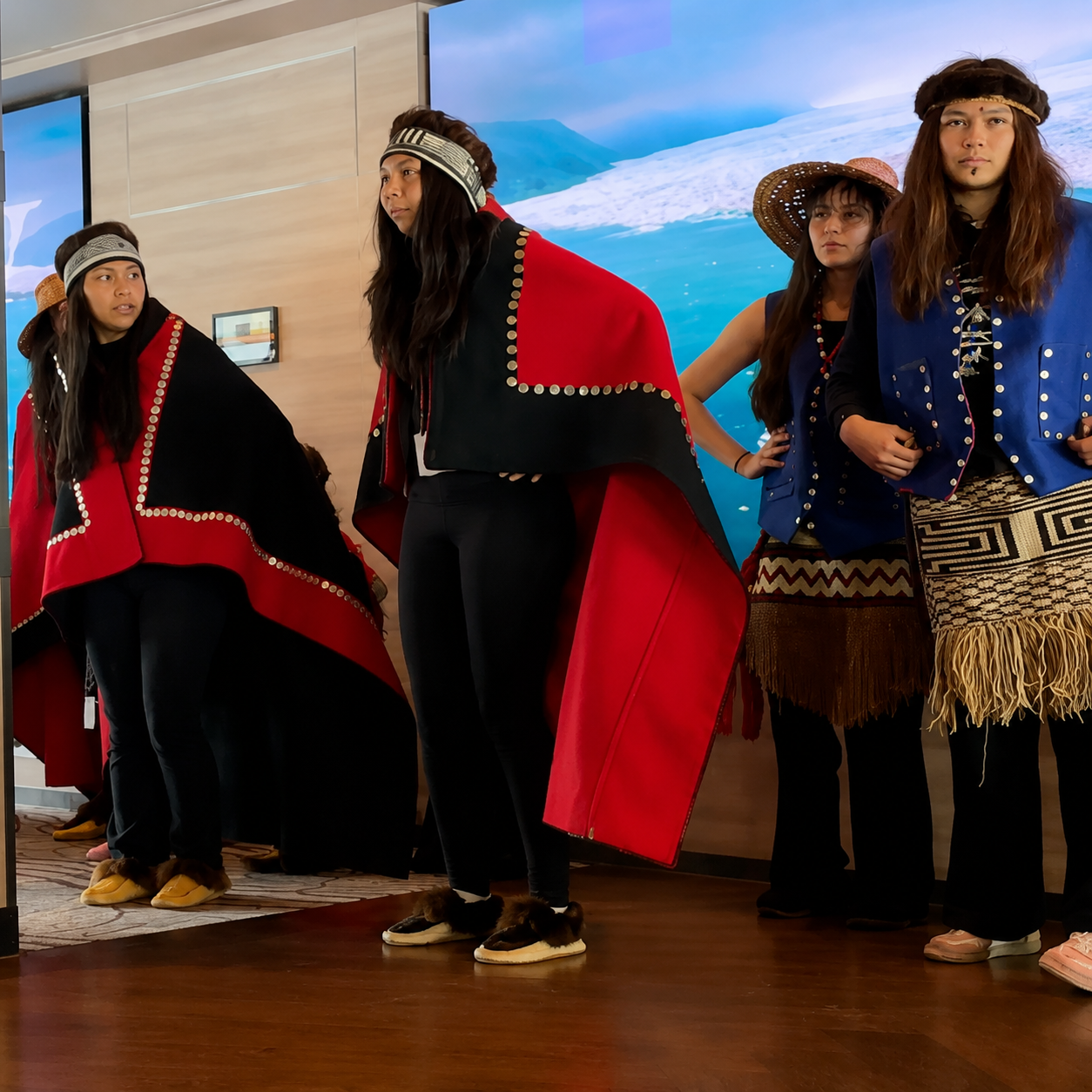
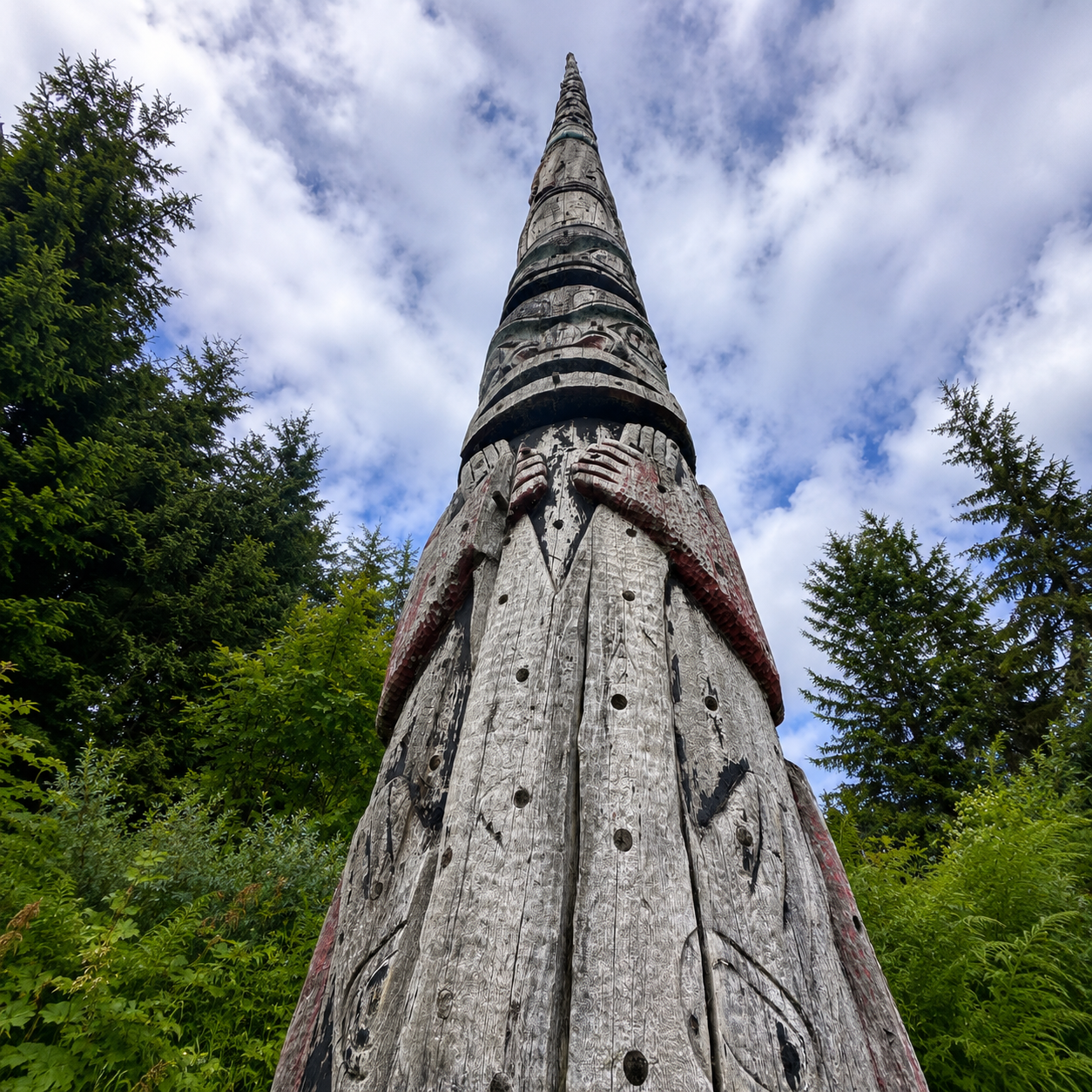
Traditional dance aboard ship, and the world's tallest single-tree totem pole ashore in Kake.
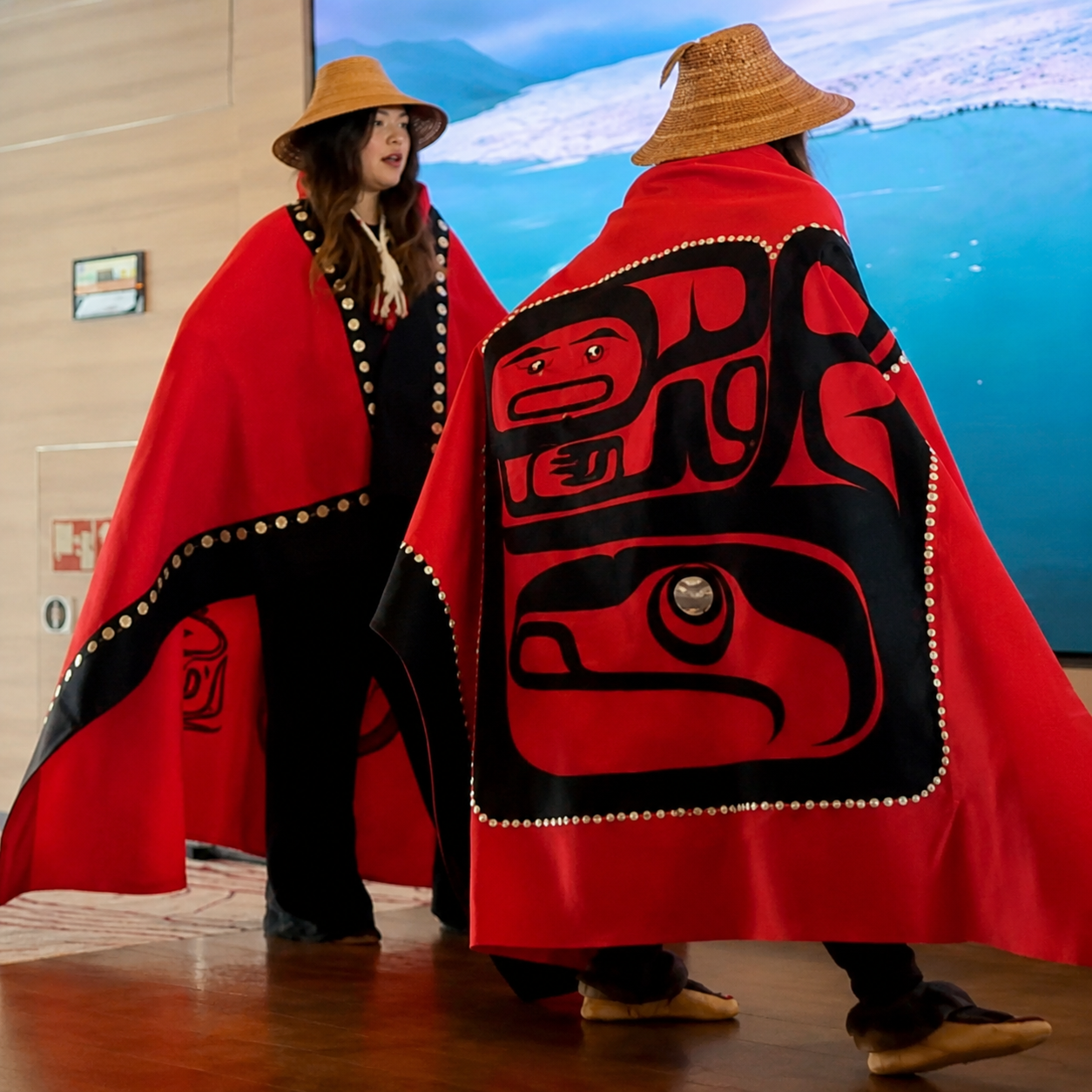
The Kake community shared traditional songs and dance, explaining the meaning behind each piece of regalia.
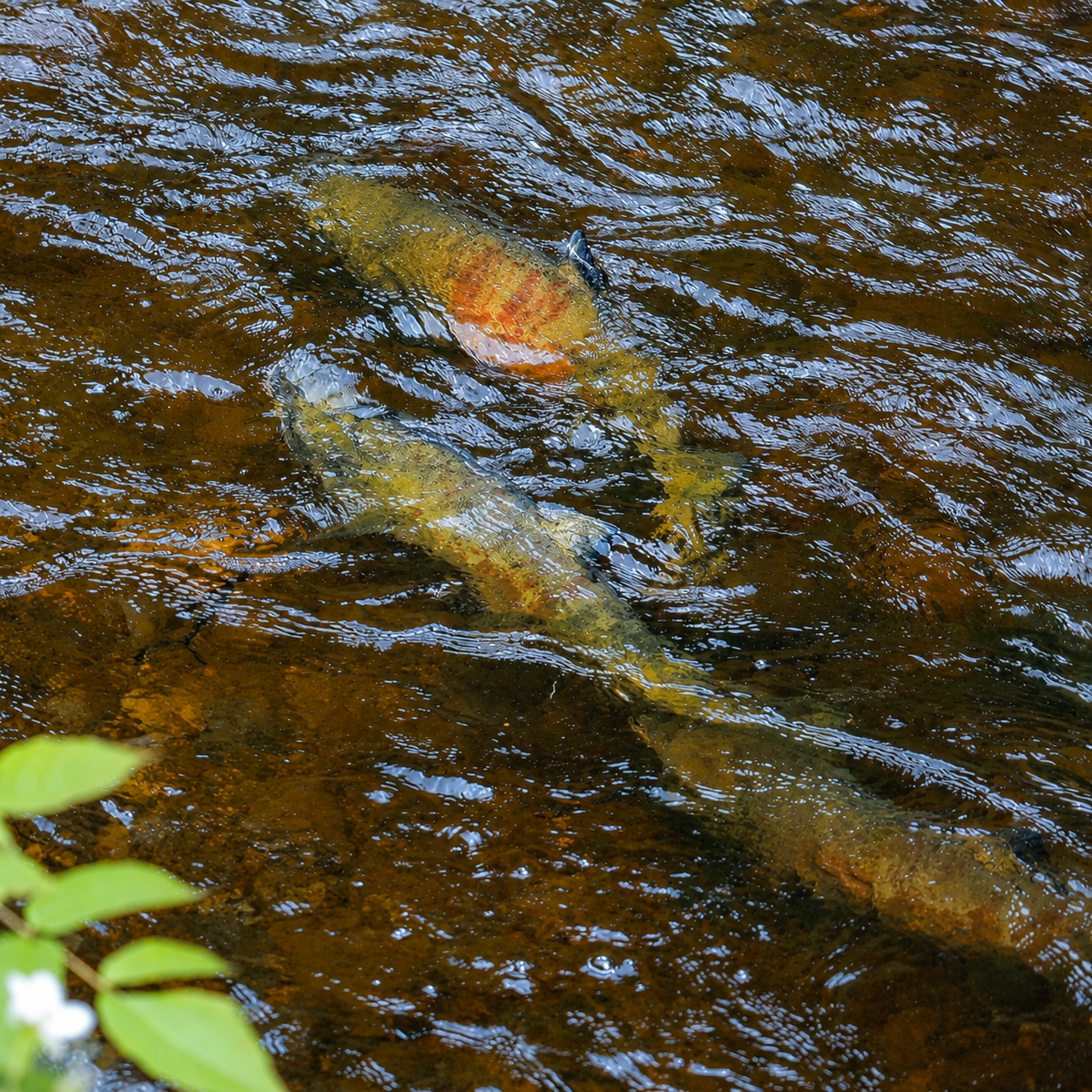
Salmon crowding the water at Gunnuk Creek Hatchery.
The most memorable moment of that stop wasn't scheduled at all. Walking back to the ship, we passed a local resident cleaning salmon at the shoreline. Within seconds, more than a dozen bald eagles dropped out of the trees and swooped within feet of us. That evening the ship marked HX Expeditions' 130th anniversary with a special dinner — a reminder that this company has been doing this a long time.


Eagles lined the shore and the treeline the moment the salmon cleaning started.
The Inian Islands the next day delivered hundreds of Steller sea lions crowding the rocks, harbor seals surfacing right beside our Zodiac, and another brown bear along the shore. We lowered a GoPro into the water and caught sea lions swimming beneath the boat — the kind of shot you can't plan for, only be ready for.
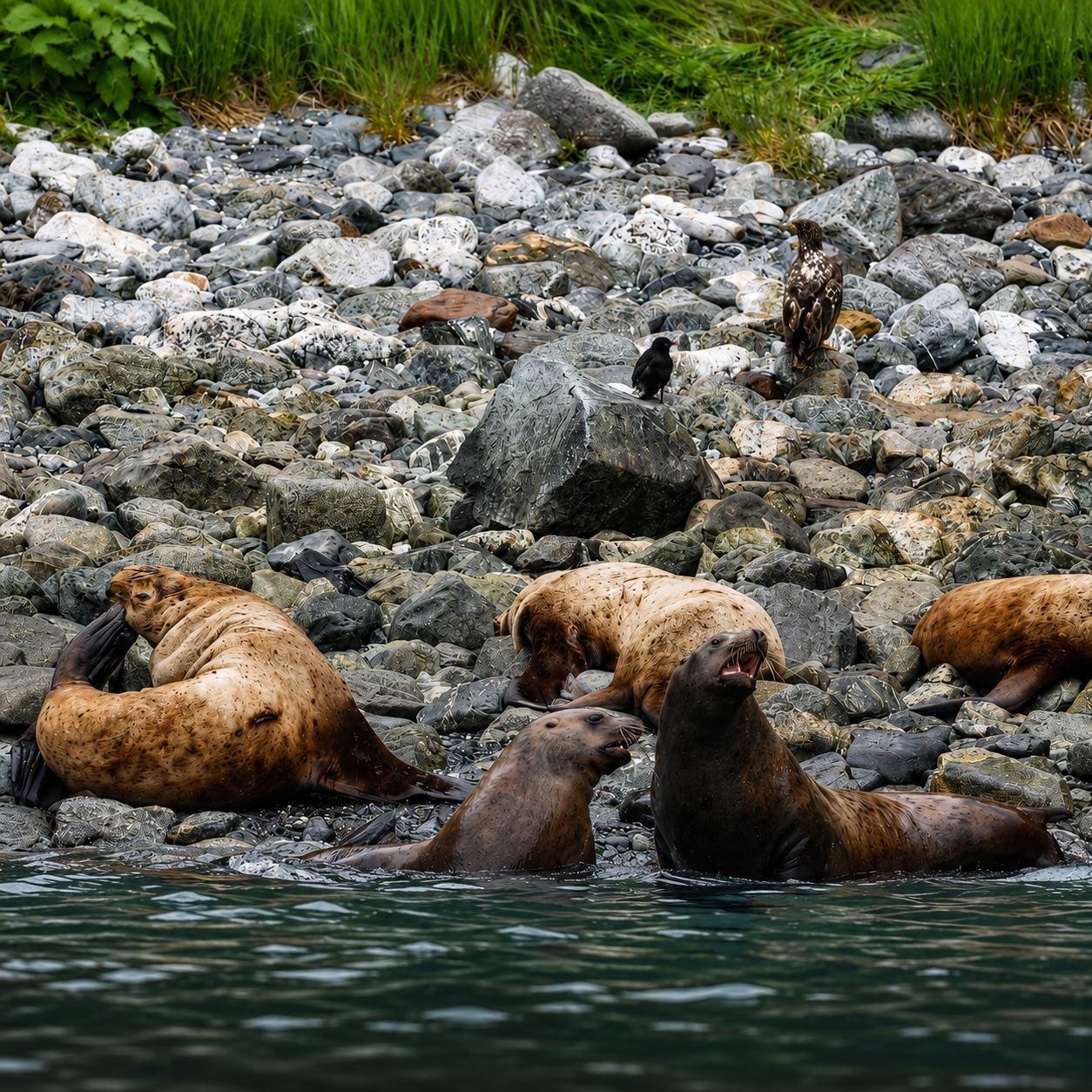
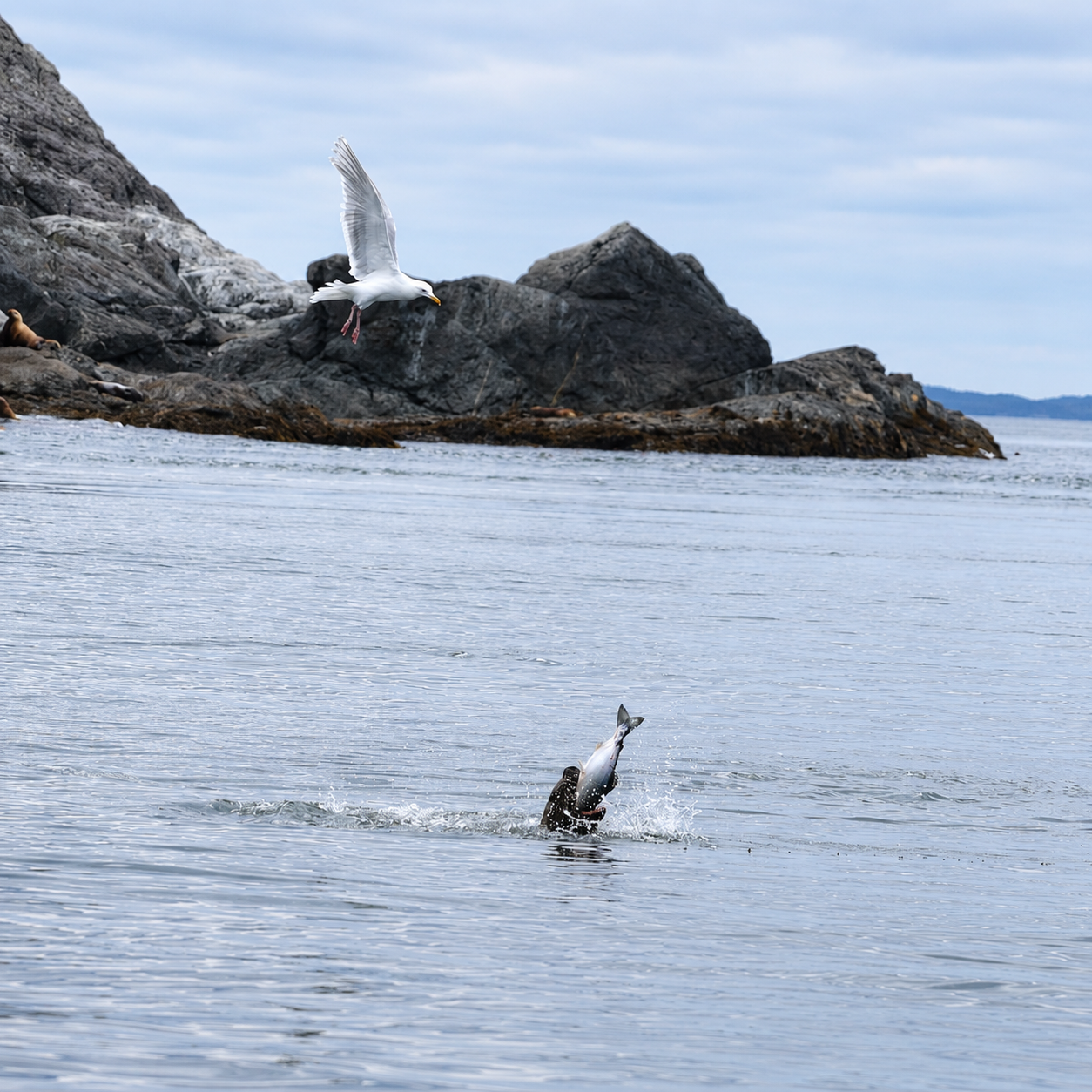
Sea lions crowding the rocks, and one working through its catch nearby.
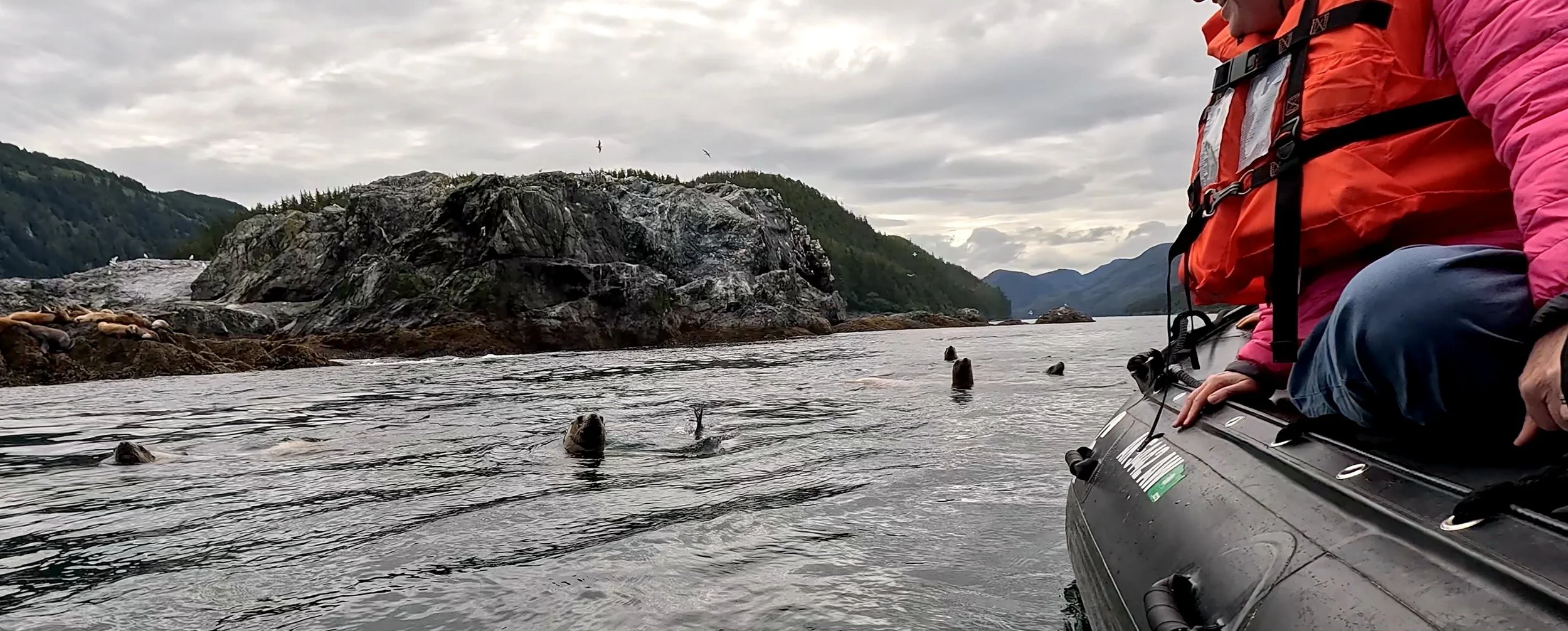
April trading waves with a few curious sea lions that surfaced beside our Zodiac.
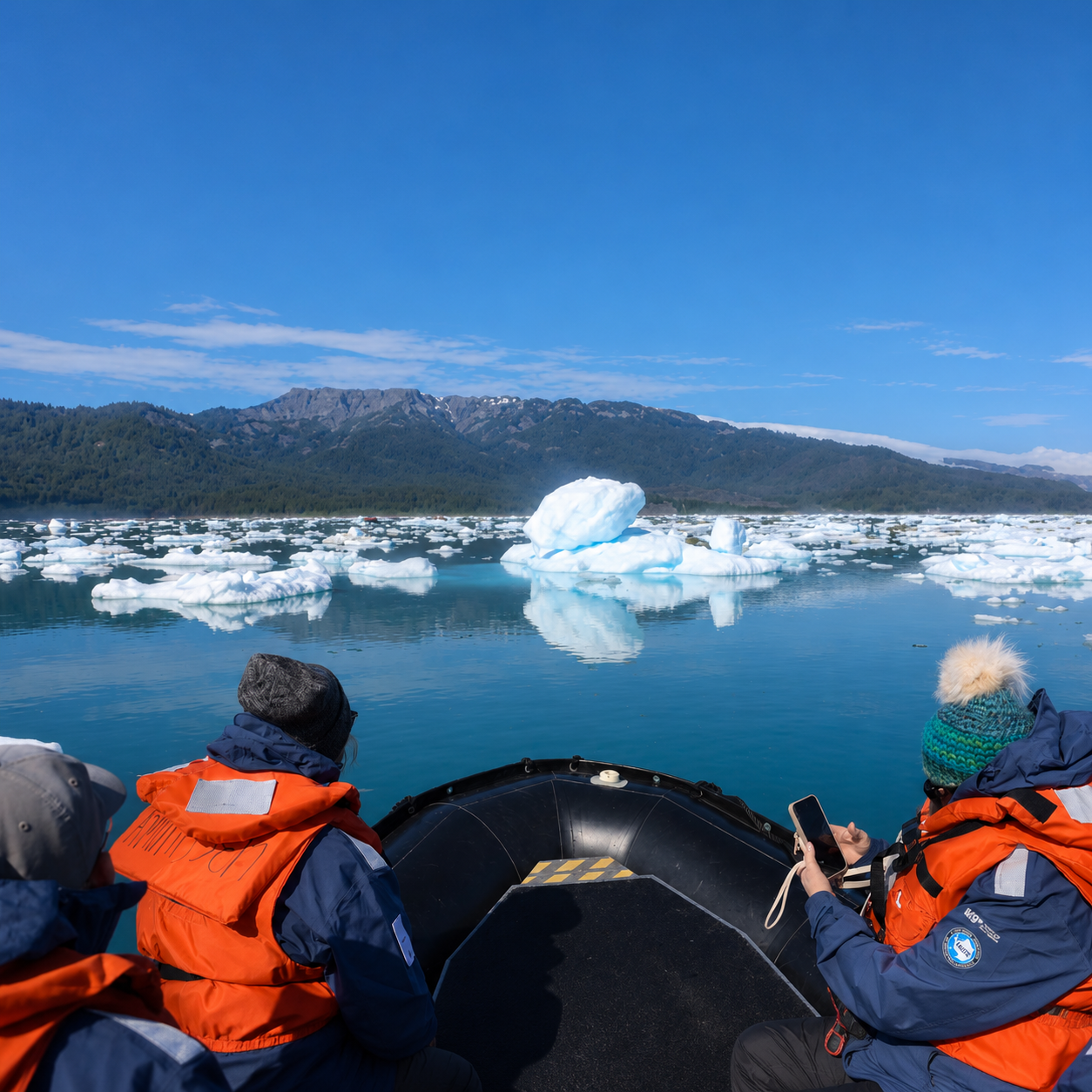
Icy Bay gave us the sharpest contrast of the trip. Clear skies opened up a full view of Mount Saint Elias, Alaska's second-highest peak, and our marine biologist guide said visibility that day was among the best she'd seen.
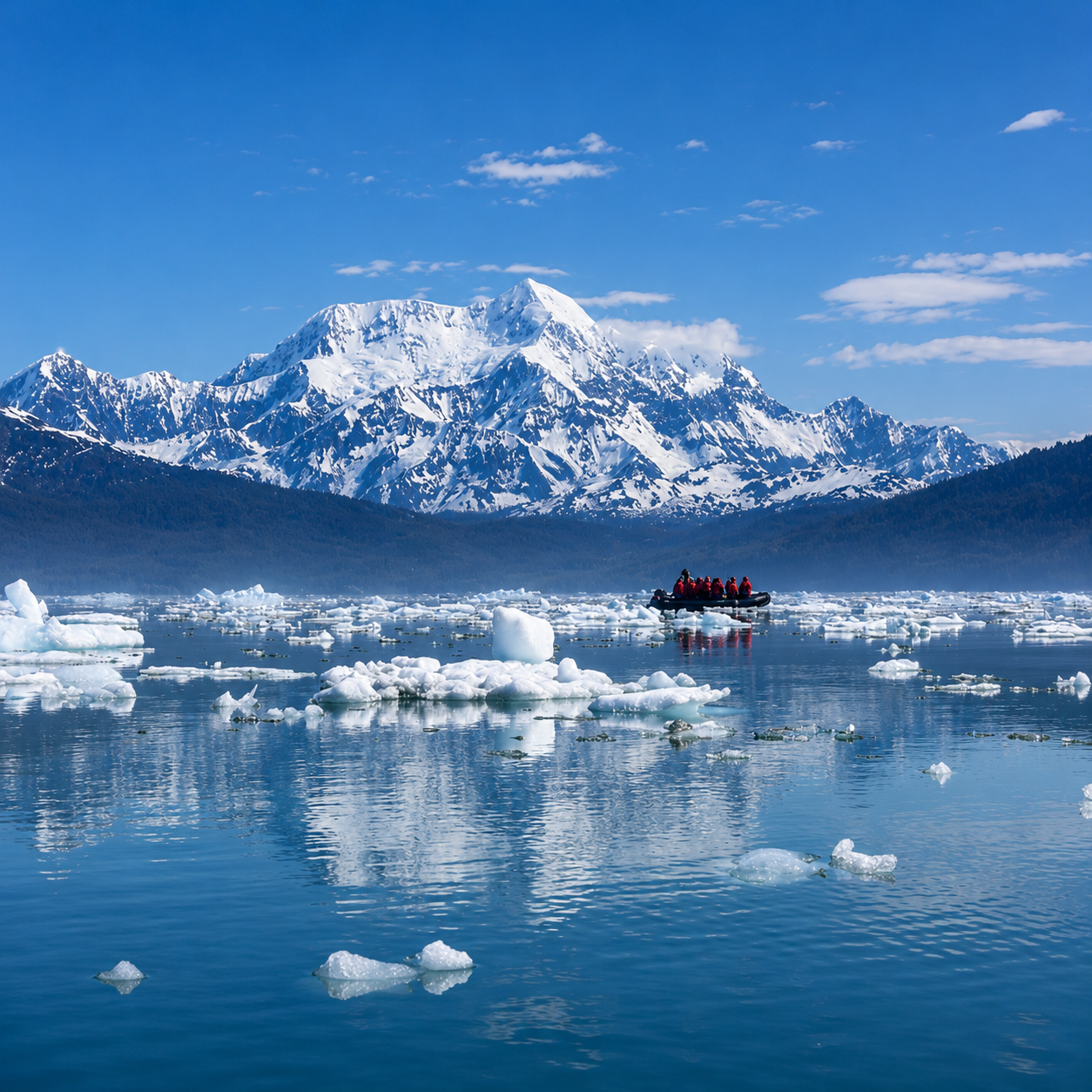
A Zodiac in front of Mount Saint Elias, Alaska's second-highest peak, under clear skies in Icy Bay.
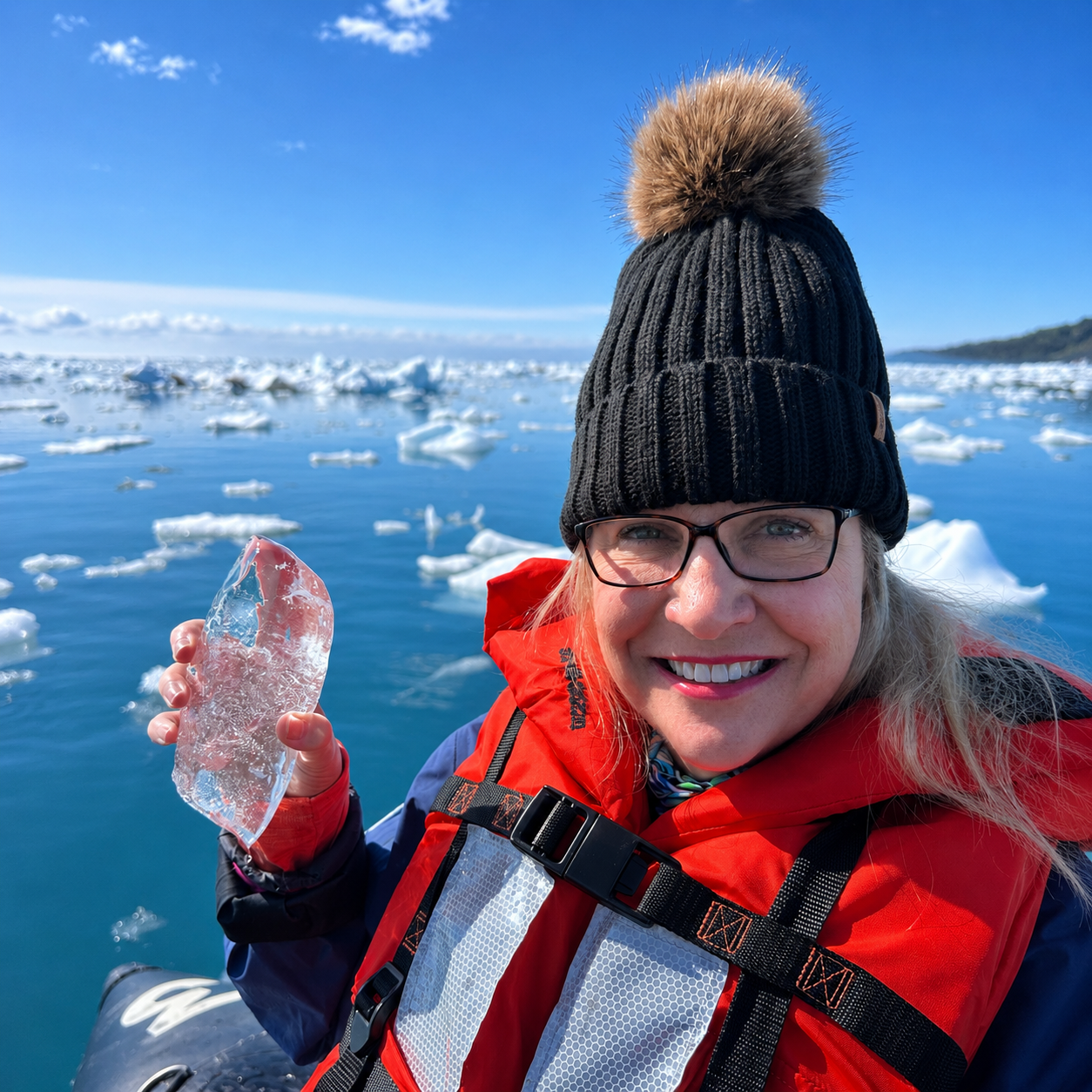
Zodiacs working through the floating ice, and April holding a piece of it fresh from the bay.
Then, almost without warning, fog rolled in and swallowed the ship and the surrounding Zodiacs. The sun stayed out above the fog, lighting it from within — genuinely strange and beautiful — before it lifted again within the hour.
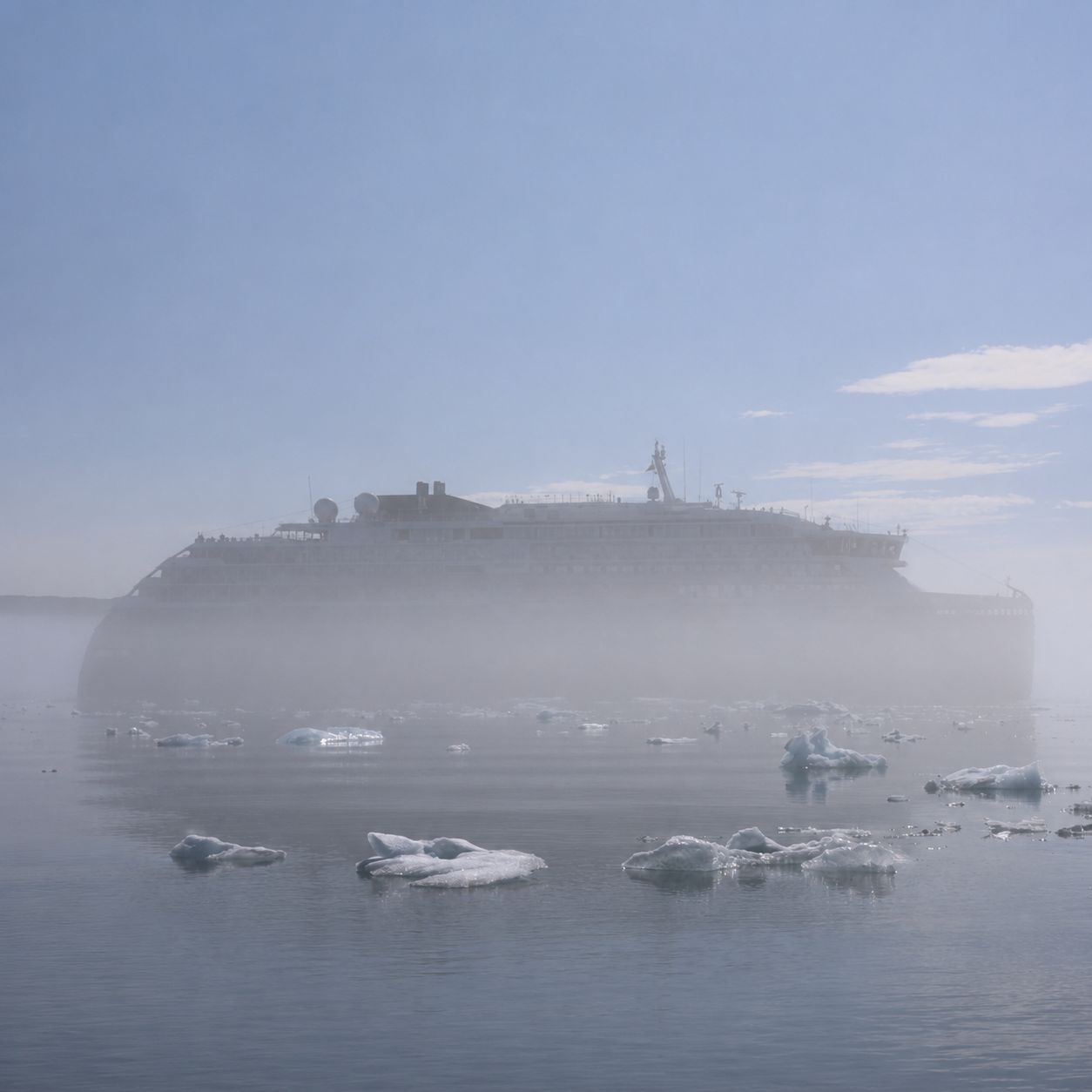
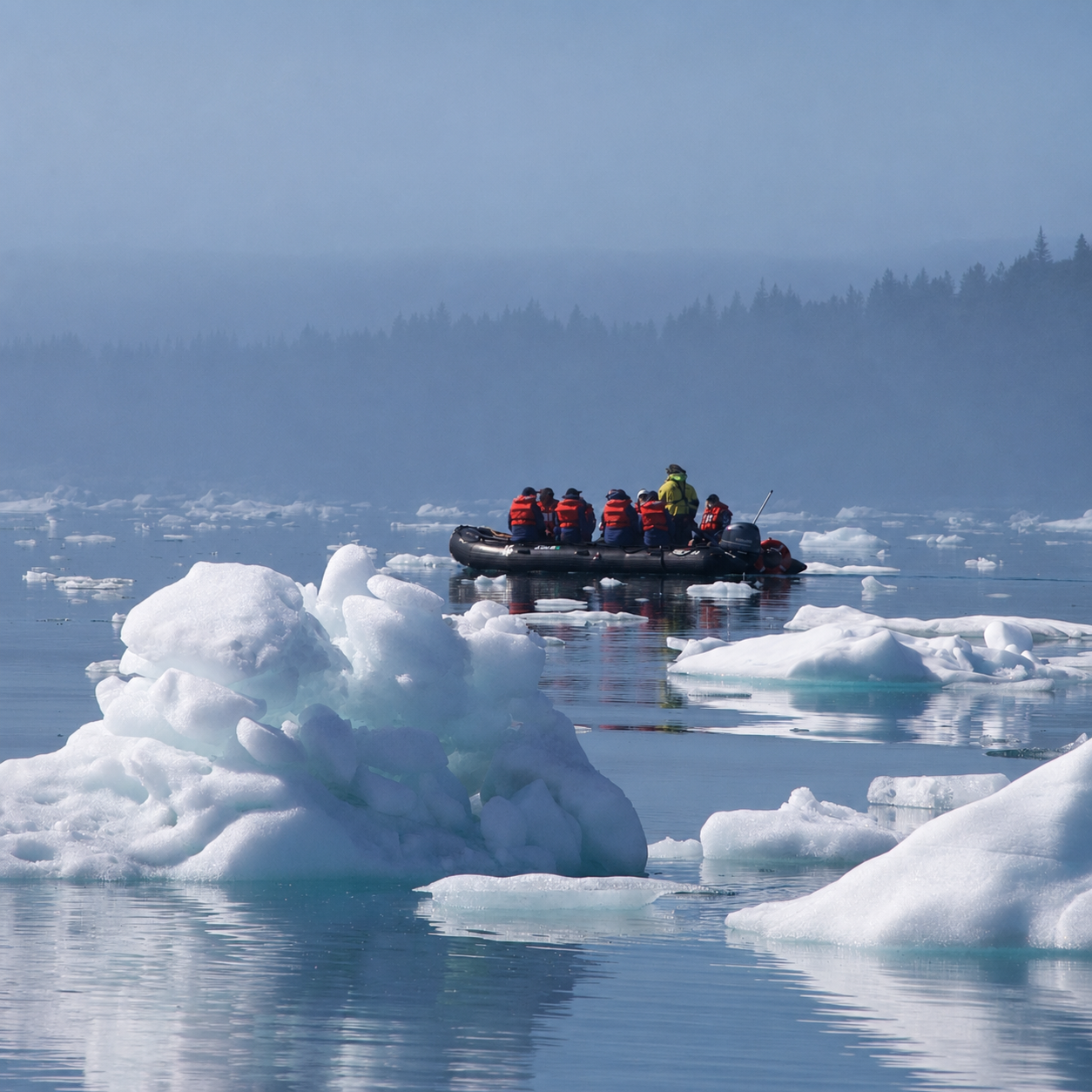
The ship nearly disappeared into the fog before it lifted again within the hour.
Valdez: The Value of Extra Time in Port
Valdez stood out for one simple reason: time. We had nearly ten hours ashore, arriving an hour early thanks to calm seas. That changed everything about the day. Instead of rushing between stops, we hiked an overlook trail above the harbor, browsed the town, visited museums included with the fare, and learned that serious fishing charters aren't realistic on a cruise stop since most require a full twelve hours.
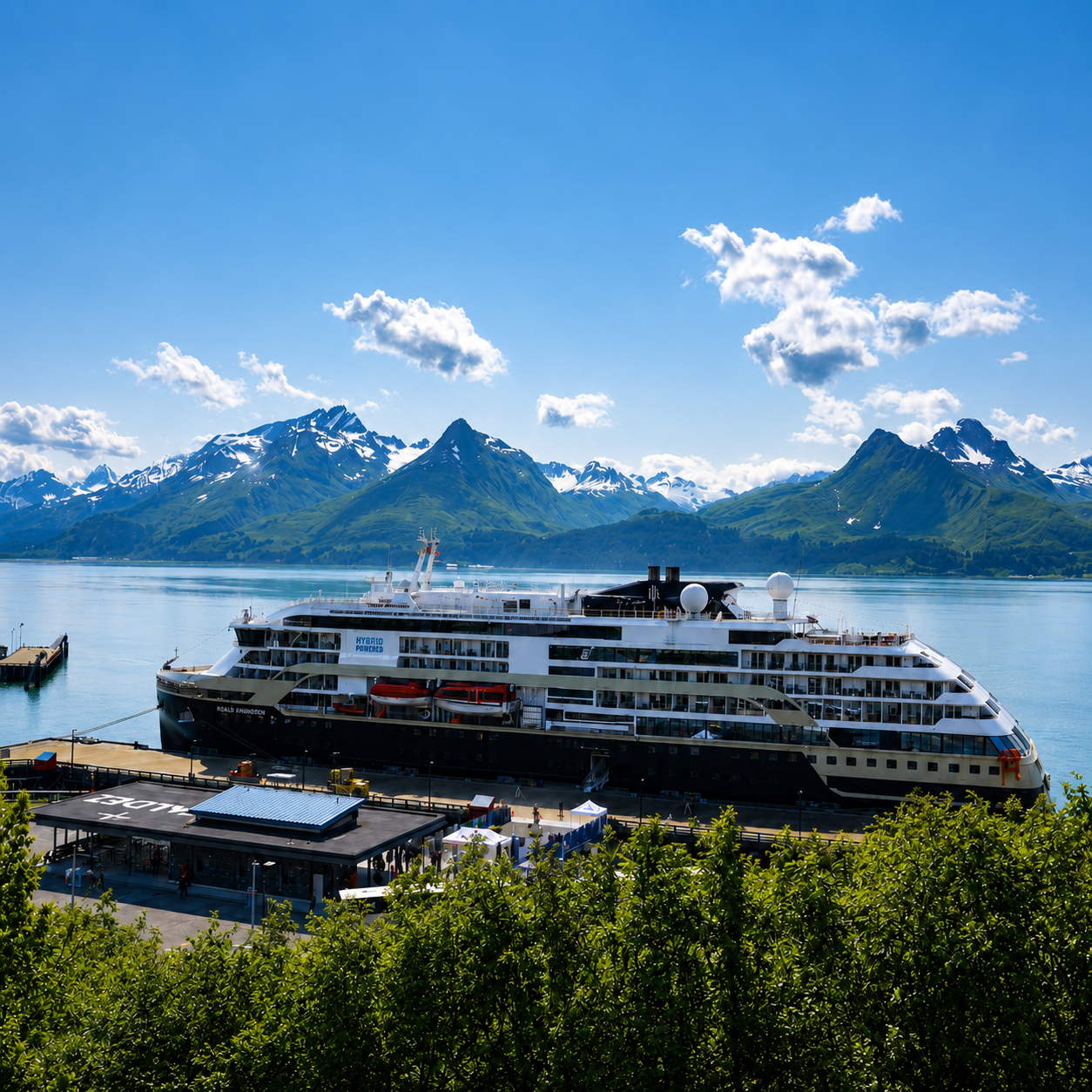
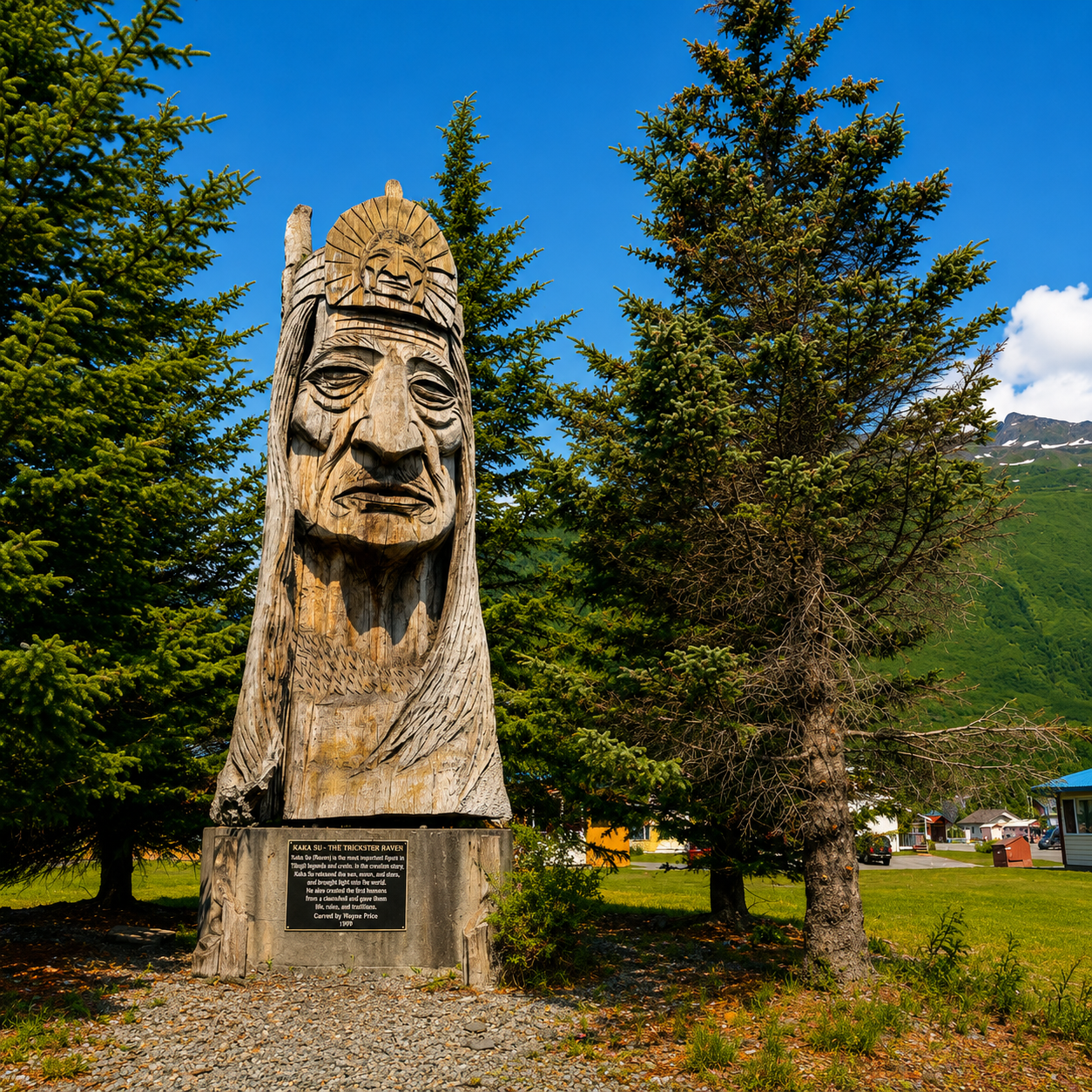
The ship at port in Valdez, and the town's main totem carving.
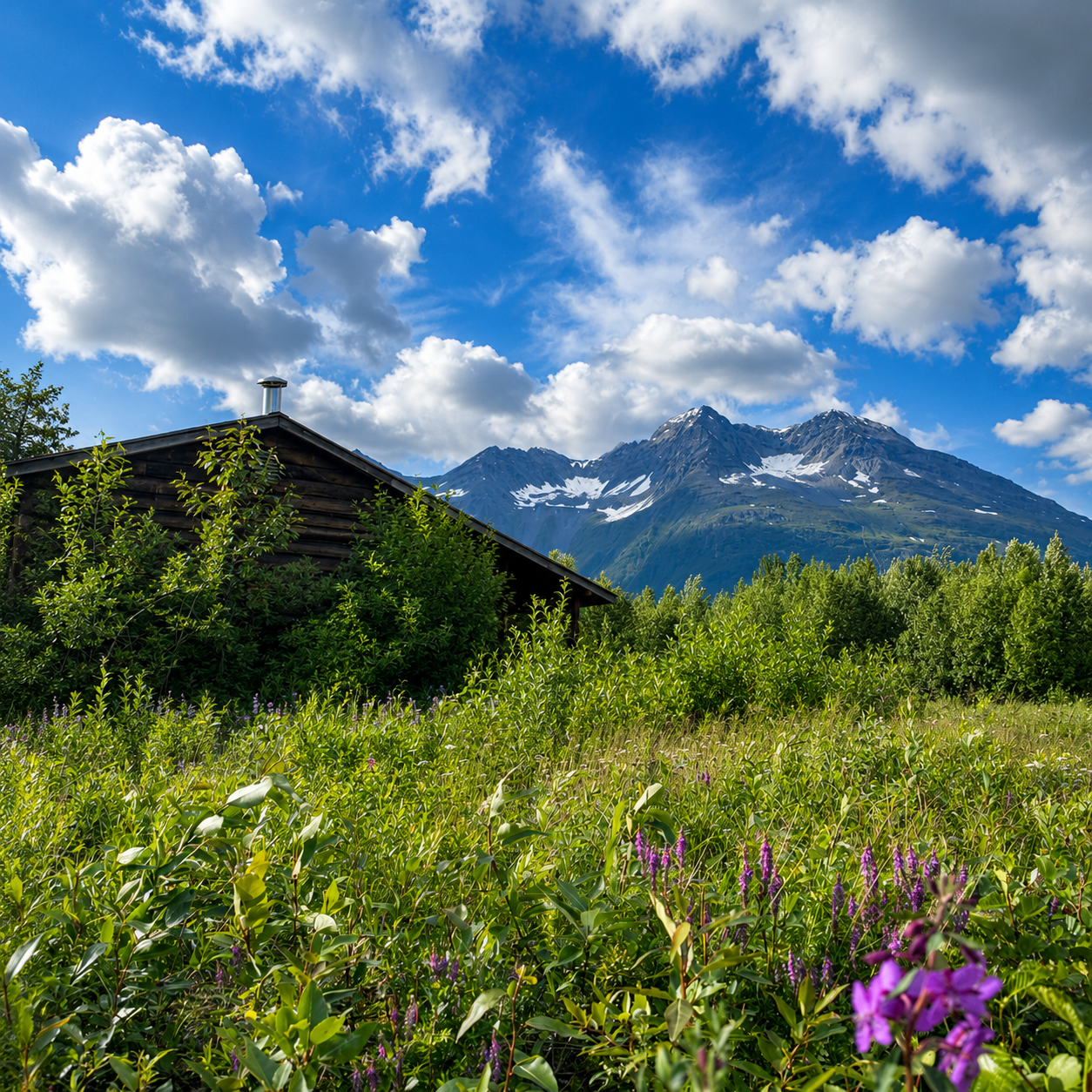
Valdez's backdrop — mountains right down to the water, even in town.
On local advice, we had halibut fish and chips from a food truck beside Valdez Brewing, then rented e-bikes for the real highlight — an eleven-mile ride to Solomon Gulch Hatchery. Along the way: bald eagles, spawning salmon, harbor seals, and Steller sea lions waiting at the hatchery outflow for an easy meal. It was a reminder that some of the best moments on a trip like this come from just going and looking, not from a booked excursion.
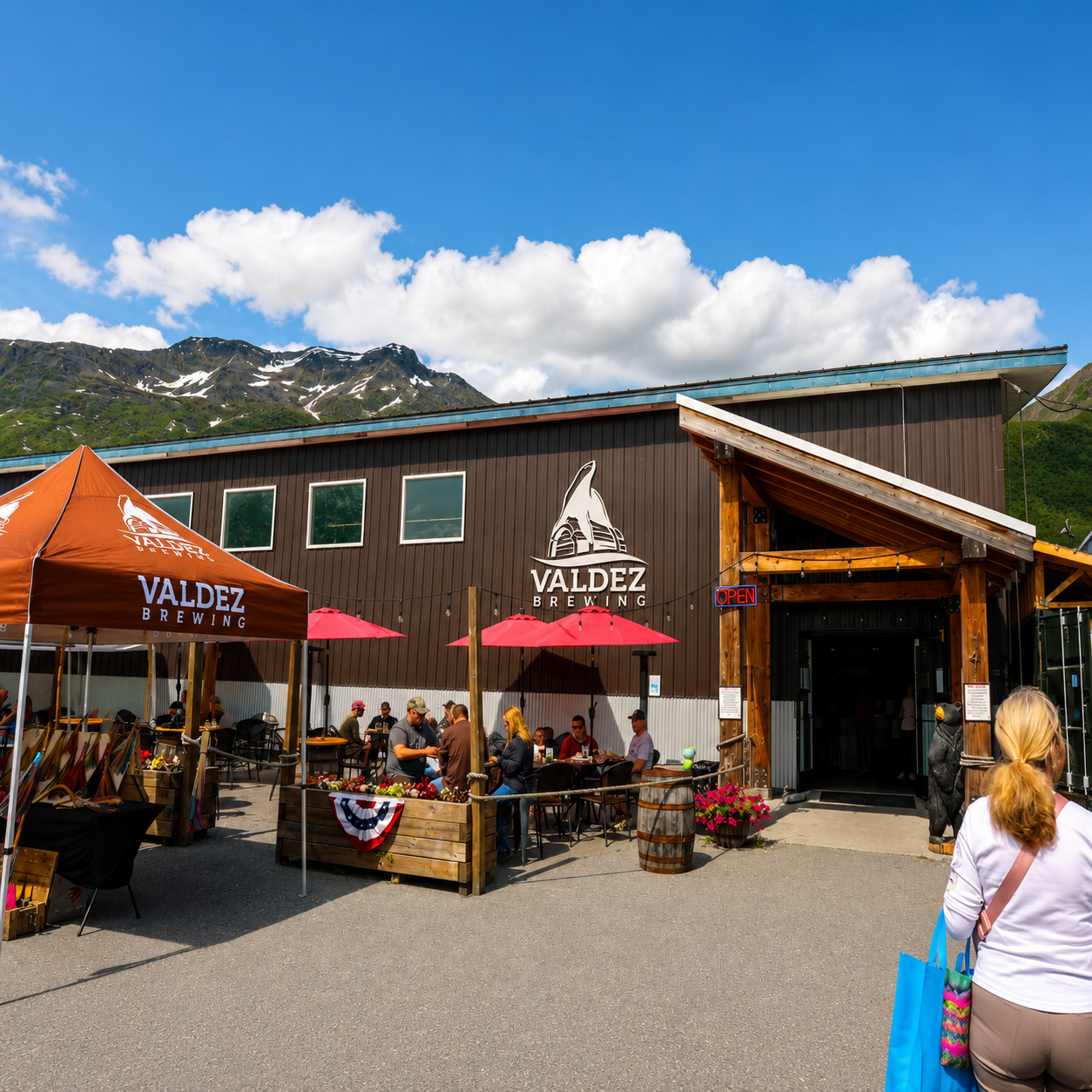
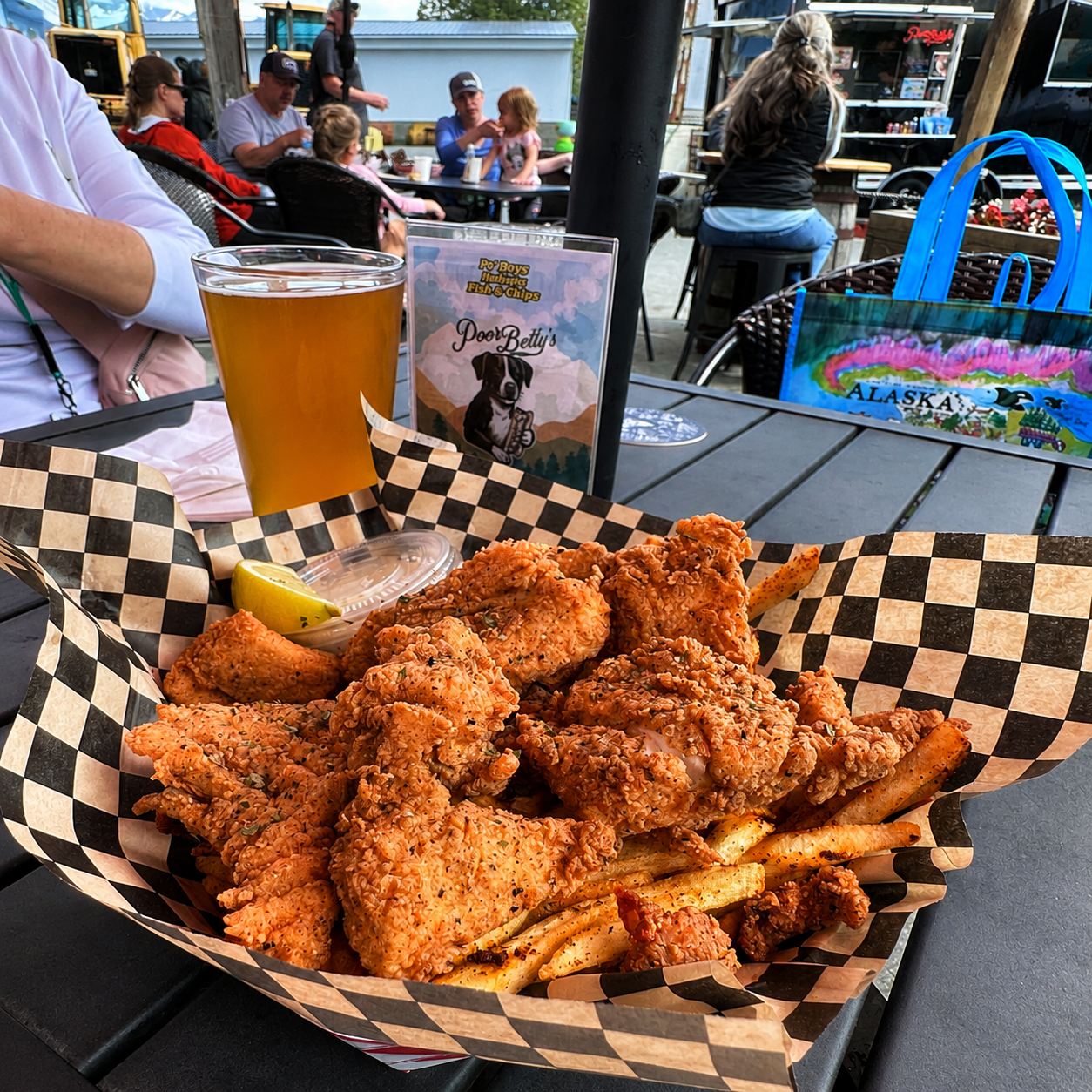
Valdez Brewing Company, and the halibut fish and chips that made the food truck stop worth it.
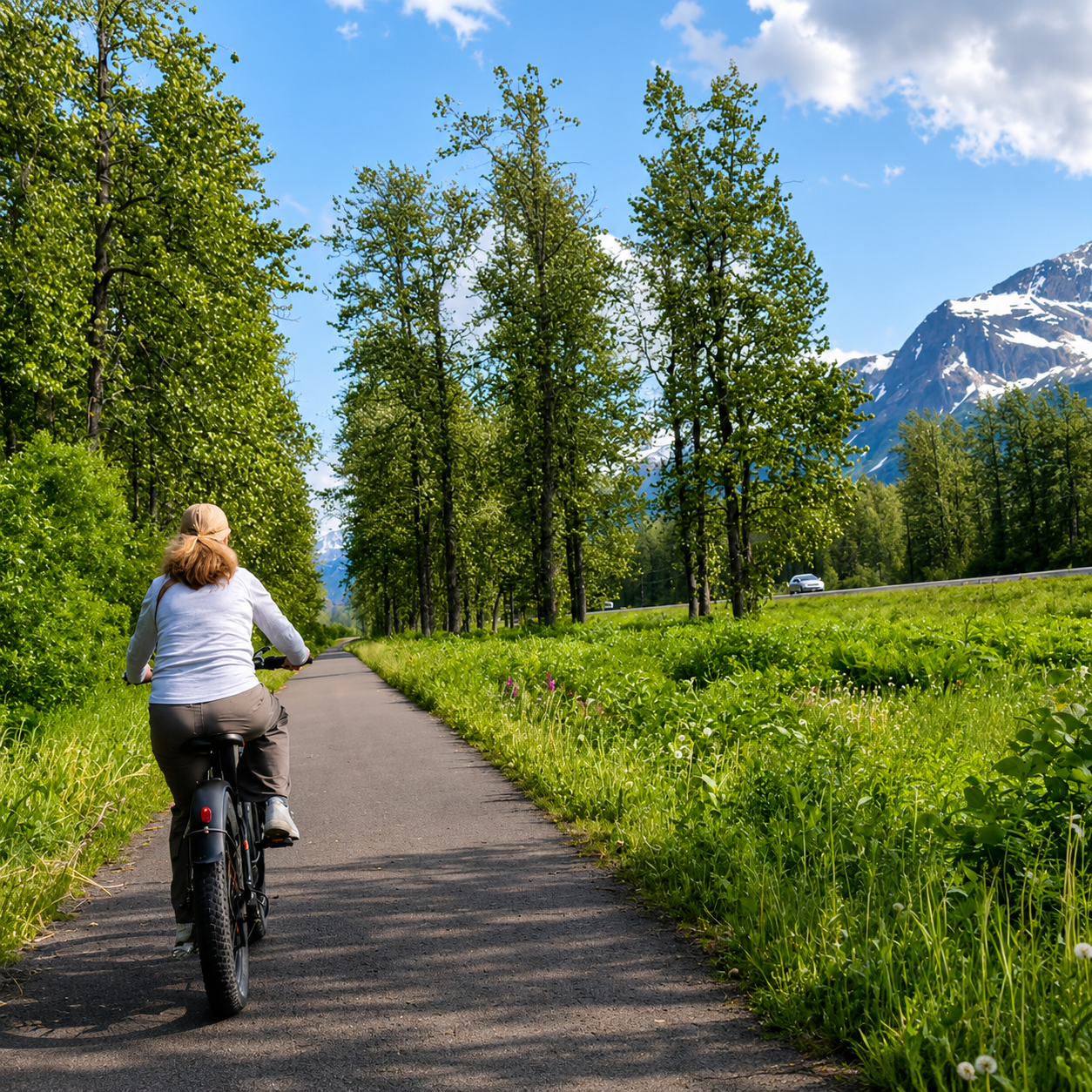
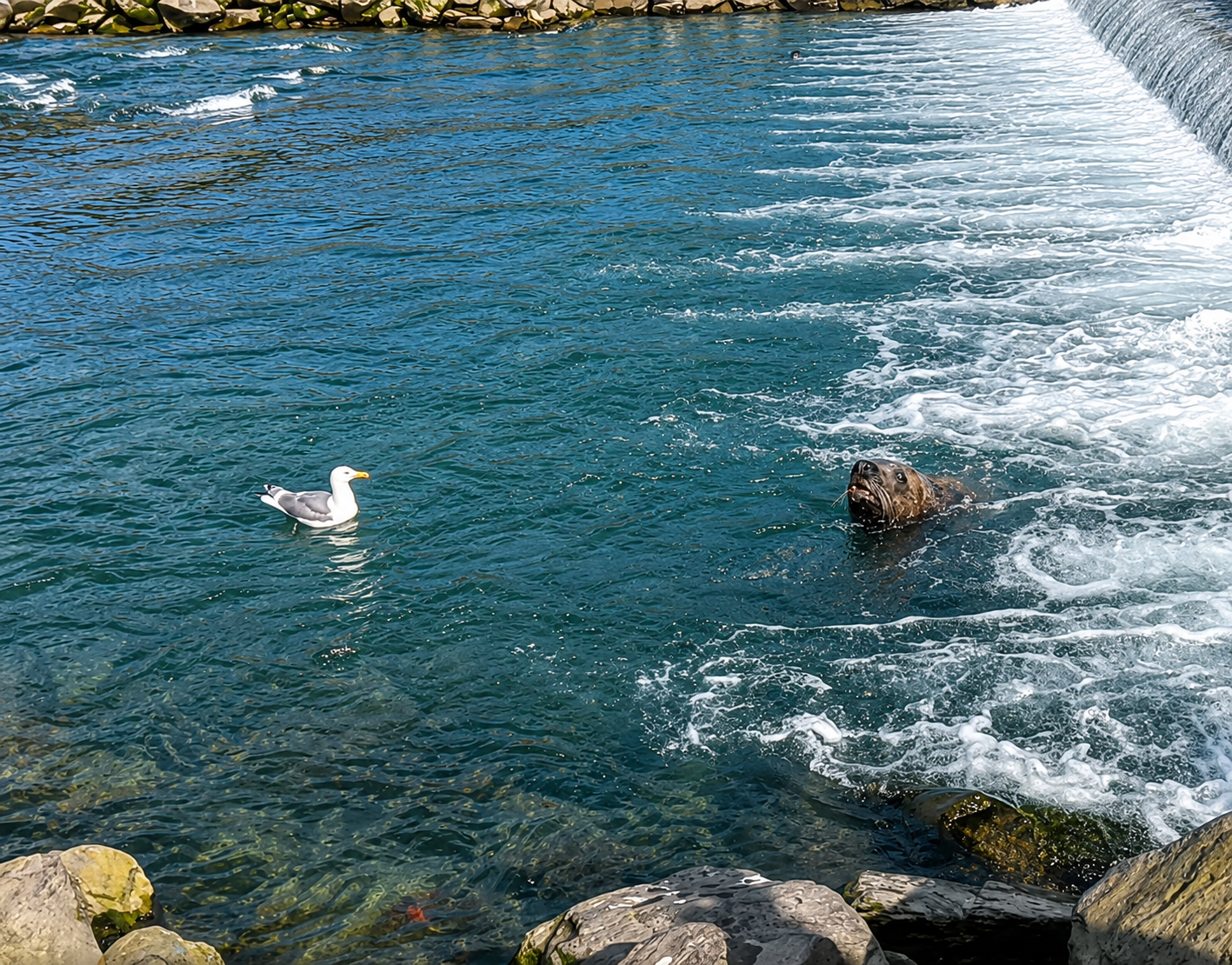
April on the e-bike route out to Solomon Gulch, where sea lions waited at the hatchery outflow.
What I'd Tell a Fellow Traveler Before Booking an Expedition Cruise
- Ask the ship photographer nightly what lens you'll need for tomorrow — it's the single best habit for wildlife and landscape shots.
- Pack layered, waterproof outerwear. Muck boots are provided onboard for Zodiac landings.
- If a port gives you extra time ashore, use it to explore independently rather than sticking only to booked excursions.
- Choose Discovery Kayak over Sea Kayak if you want more freedom to explore versus a fixed guided route.
- Don't expect wildlife on a schedule — the best sightings on this voyage were unplanned.
- Stay near a window or keep your cabin phone handy — HX makes PA announcements any time wildlife like bears, orcas, or whales are spotted off the ship, something most mainstream cruises don't do.
- Book expedition cabins early. Smaller ships mean less inventory than a traditional cruise.
College Fjord: A Full Day, No Rushing
Our final full day was spent entirely in College Fjord — from six in the morning until nearly eleven at night. That alone tells you what expedition cruising is about. Instead of an hour or two cruising past glaciers, HX gave us an entire day in one place.
The morning Zodiac excursion took us to Yale Glacier, passing Harvard Glacier along the way, with thirty to forty harbor seals resting on freshly calved ice. Standing a few hundred meters from the glacier, we listened to the ice crack and watched chunks calve into the fjord, sending gentle waves under our Zodiac while the seals rode them out on their floating ice.
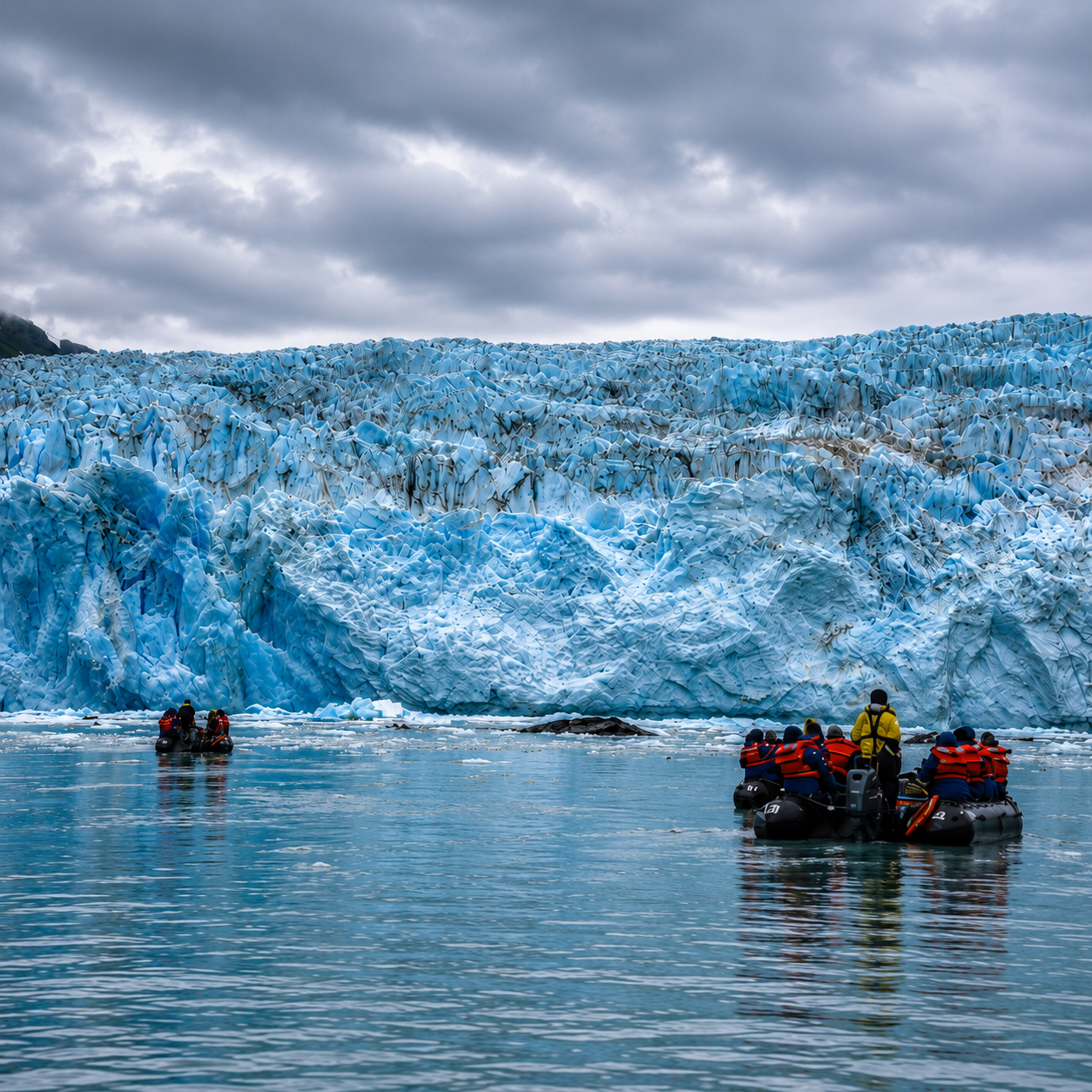
Zodiacs holding a few hundred meters off Yale Glacier as it calved into the fjord.
That afternoon we took the Discovery Kayak excursion. Having now done both Sea Kayak and Discovery Kayak, in Antarctica and here in Alaska, I'll say I prefer Discovery Kayak — the inflatable tandem kayaks give you more freedom to explore within the guided area, and wildlife still comes in close. Penguins did it in Antarctica; harbor seals did it here.
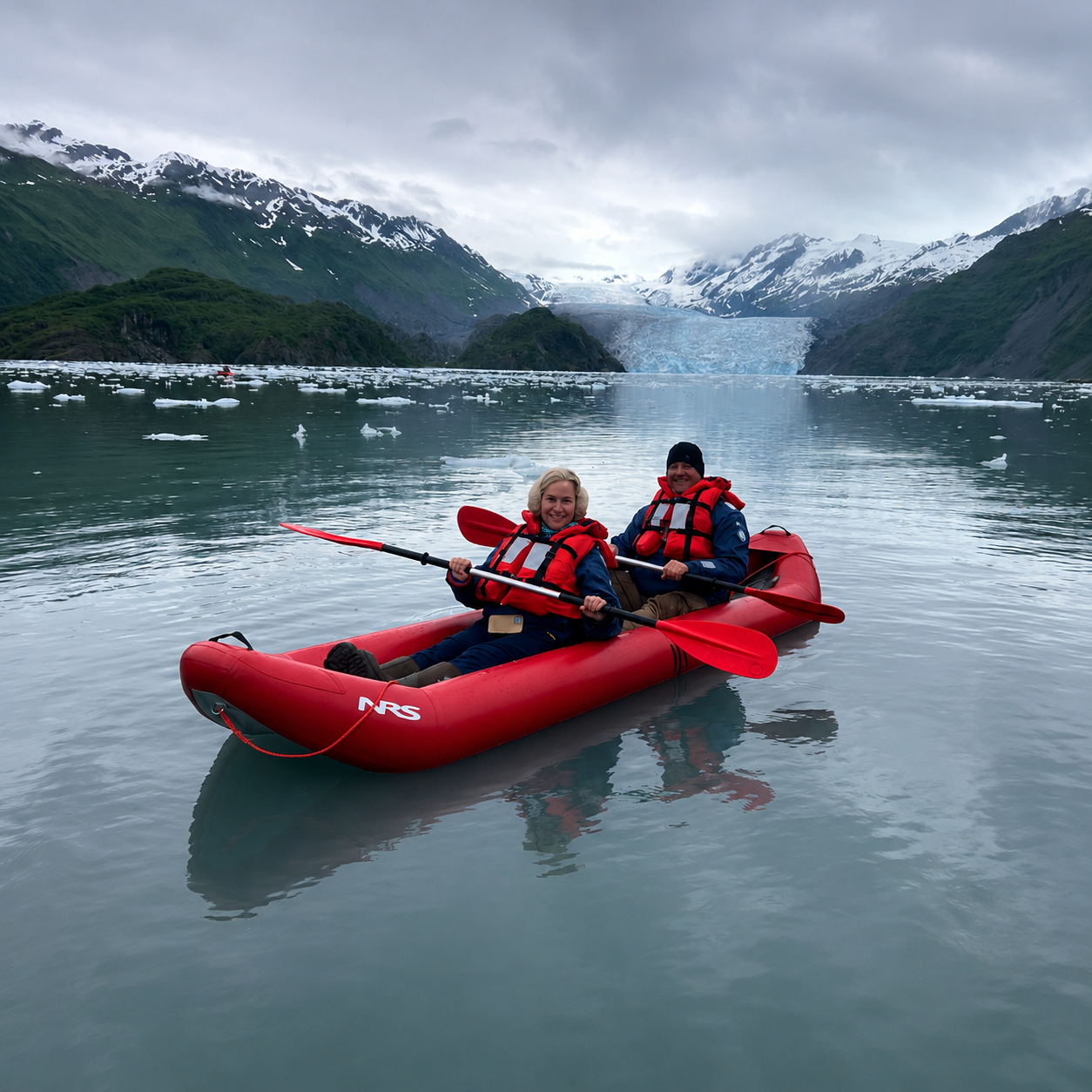
April and Donald out on the water in College Fjord.
Even dinner delivered one more wildlife moment — three harbor seals climbed onto an iceberg about a hundred feet from the dining room windows. There was no rush that day, and by the end of it, that lack of rush was the whole point.
Disembarkation and the Final Verdict
Disembarkation in Whittier the next morning was smooth and well organized. Guests were grouped by onward travel plans, with transportation either straight to the airport or to a hospitality center in Anchorage that included luggage storage, Wi-Fi, refreshments, and hourly transfers.
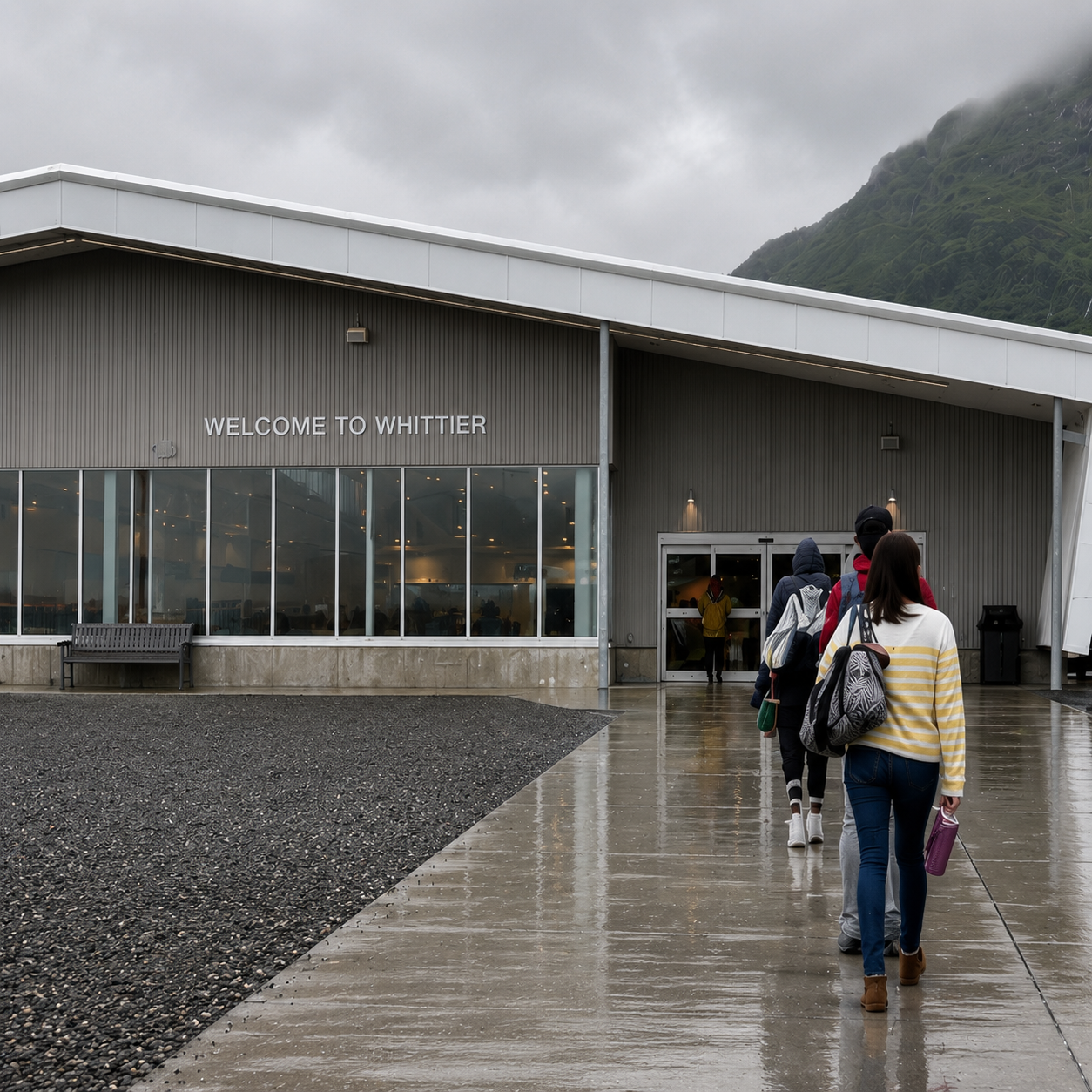
The port of Whittier on disembarkation morning.

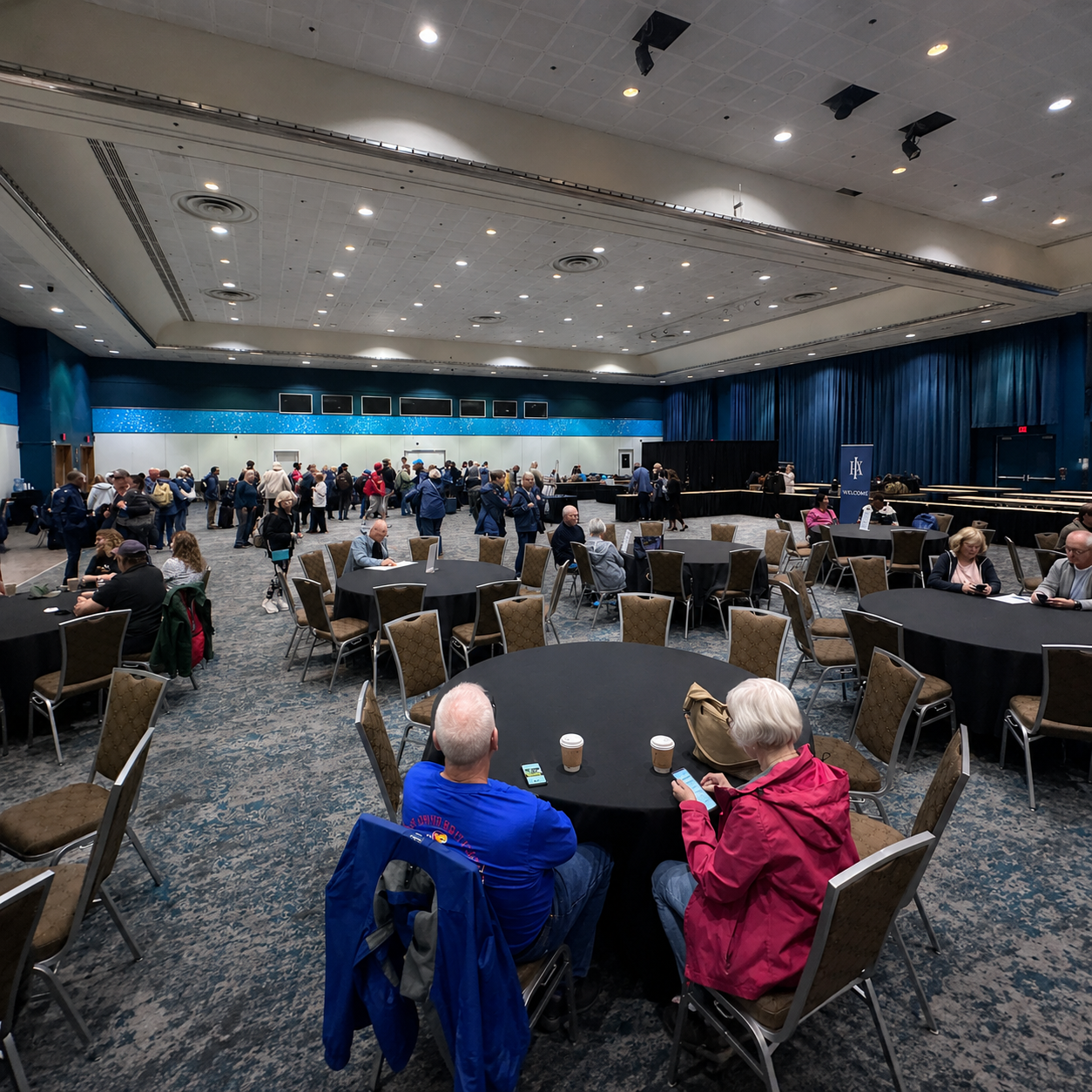
HX's hospitality center in Anchorage, where guests could store luggage and wait for airport transfers.
Looking back on ten days, a few things stand out. The ship's design keeps you connected to the outside world constantly — floor-to-ceiling windows everywhere you sit. The crew created an atmosphere I haven't found on larger ships; several remembered us from an Antarctica expedition six months earlier, and one officer estimated roughly seventy percent of the crew had stayed on since that voyage. The other passengers became part of the experience too — shared lectures, Zodiac rides, and evening conversation in the Explorer Lounge made it feel like traveling with a community rather than a few hundred strangers.
April went into this trip wondering if an expedition cruise would be too science-heavy for her taste. By day three, she was already asking which HX itinerary we'd book next. That tells you most of what you need to know.
If I sailed this itinerary again, I'd still choose the northbound route from Vancouver to Whittier, but I'd add an extra day in Vancouver before boarding. The pacing of the itinerary itself works well — each stop builds on the last, from Misty Fjords to Klawock, Kake, the Inian Islands, Icy Bay, Valdez, and finally College Fjord.
Would I sail HX Expeditions again? Yes, without question. Traditional Alaska cruises are still a fine vacation, and I'll keep booking them for clients who want that. But an expedition cruise puts you inside the place instead of just showing it to you, and for us, that made the difference.
Talk Through Your Alaska Expedition Options
Whether you're looking at this itinerary or a different HX Expeditions voyage entirely, reach out and we'll help you find the right fit — cabin categories, timing, and pre or post-cruise time in Vancouver or Anchorage. We also currently have a limited-time exclusive rate running on HX Expeditions' Alaska Inside Passage sailing, including a couple of solo cabins still available.
Expedition Cruising in Alaska — What Travelers Ask
Let Us Know What You Think
Questions about this itinerary or planning your own? Reach out directly.
Email Us →
Coastal Flavors of Klawock: More Than Just a Meal
Coastal Flavors of Klawock is an HX Expeditions shore excursion in Klawock, Alaska on Prince of Wales Island, pairing an Alaska Native cultural walk and riverside seafood tasting with bald eagle viewing on the Klawock River. Here is a firsthand review of what the excursion actually delivers.
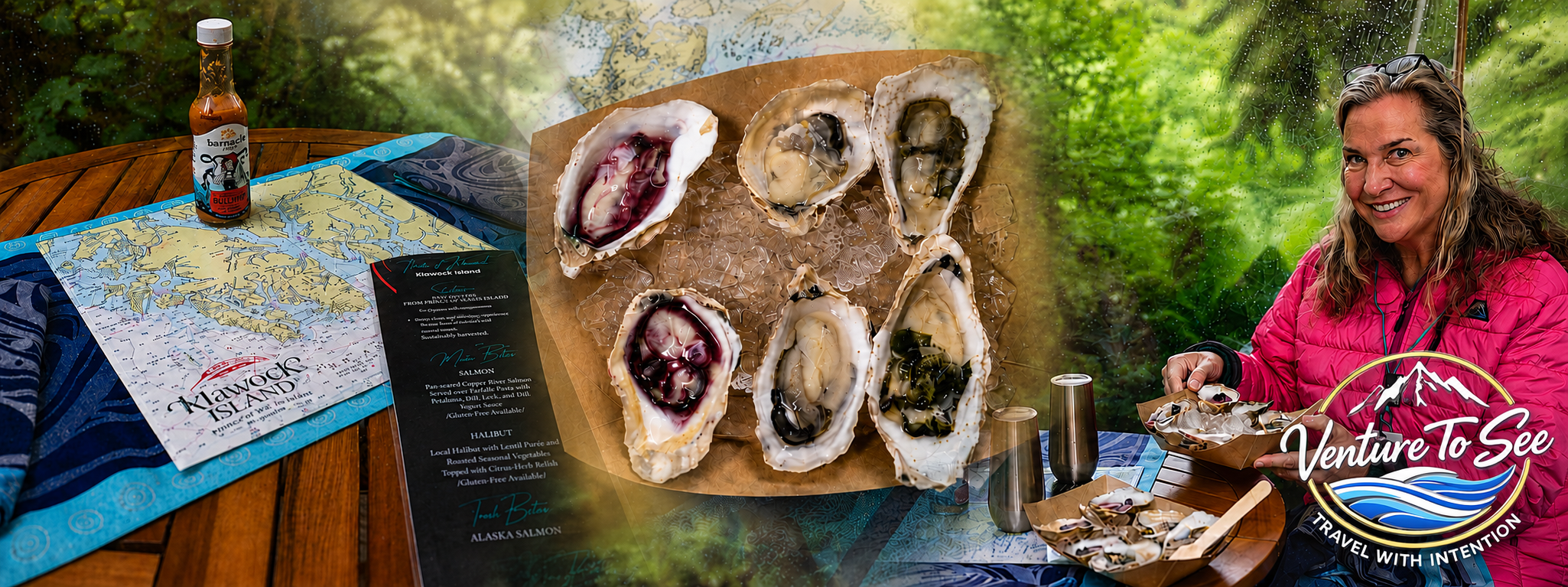
Coastal Flavors of Klawock: More Than Just a Meal
An afternoon of Alaska Native culture, riverside dining, and bald eagles on a Southeast Alaska shore excursion
One of the excursions we chose during our 10-day Alaska Expedition Cruise aboard the MS Roald Amundsen with HX Expeditions was Coastal Flavors of Klawock. Going into the afternoon, I expected a seafood tasting. What I didn't expect was to leave with a much deeper appreciation for the culture, history, and peaceful beauty of Southeast Alaska.
We were asked to meet at the pier at 1:30 p.m. Like many small expedition ports, there were a few logistical challenges getting everyone ashore, so we didn't board our shuttle until shortly before 1:50 p.m. From there, it was about a 10-minute drive to the venue.
As soon as we arrived, it was obvious this wasn't going to be an ordinary food tour.
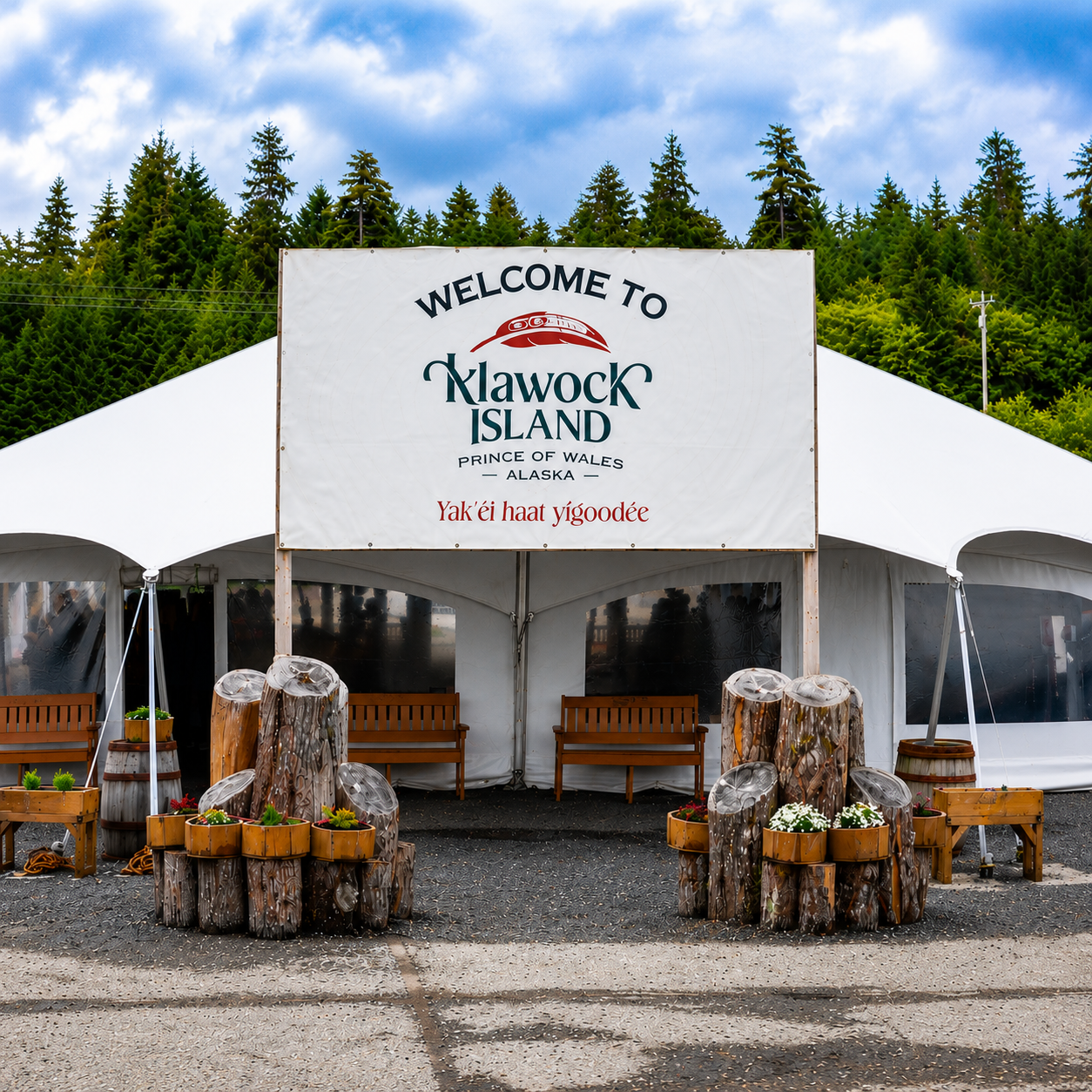
The welcome to Klawock, our port for the afternoon on Prince of Wales Island.
We were welcomed by an Alaska Native guide dressed in traditional ceremonial regalia. Before we ever sat down to eat, she led our group along a forest trail, introducing us to the native plants that have sustained Indigenous communities for generations. She pointed out wild blueberries, Alaska celery, edible berries, and other native plants, explaining how each has traditionally been used for food, flavoring, or medicine. It was a wonderful introduction because it connected the food we were about to experience with the land that produced it.
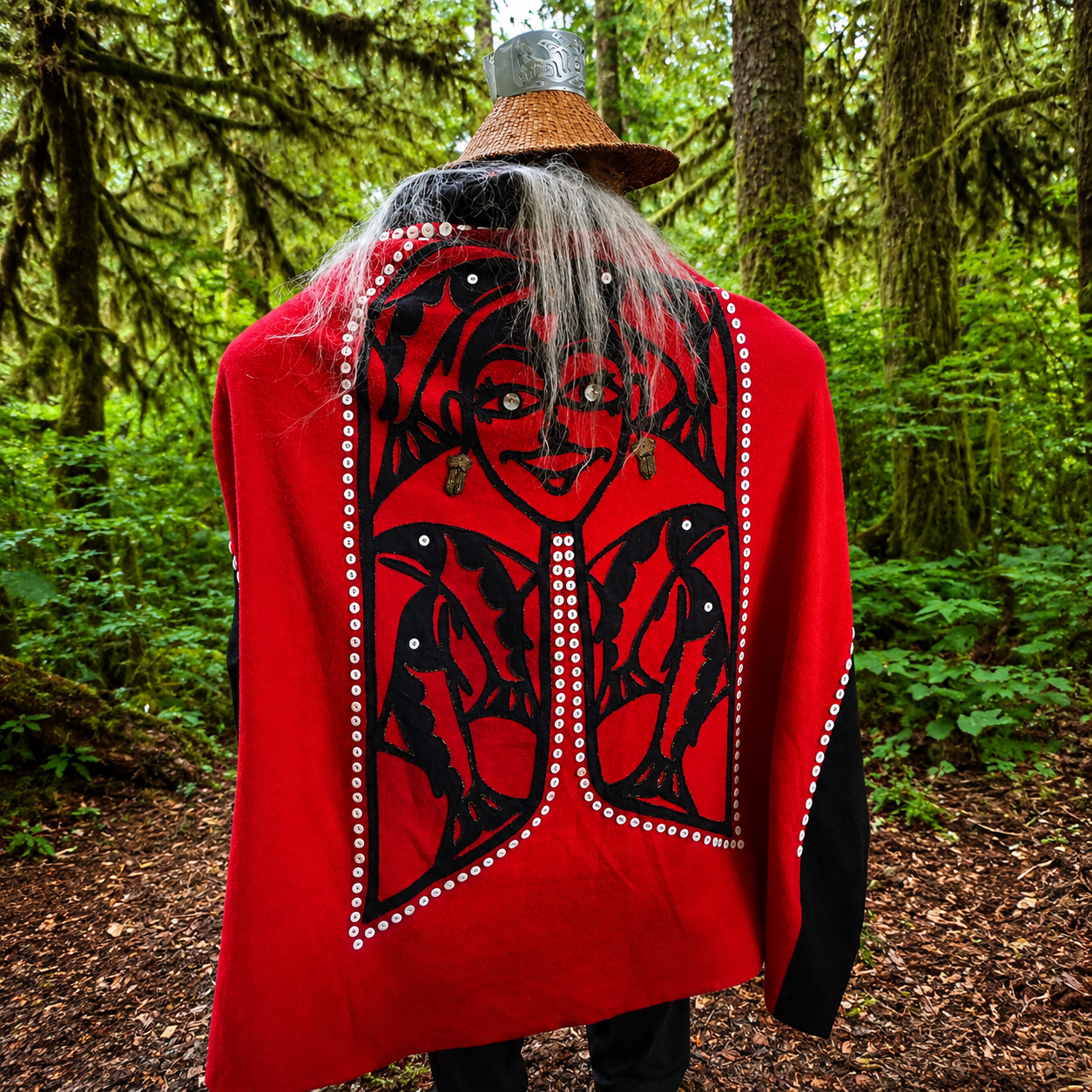
Our guide, dressed in traditional regalia, led us along a forest trail before the meal began.
A Peaceful Setting on the Klawock River
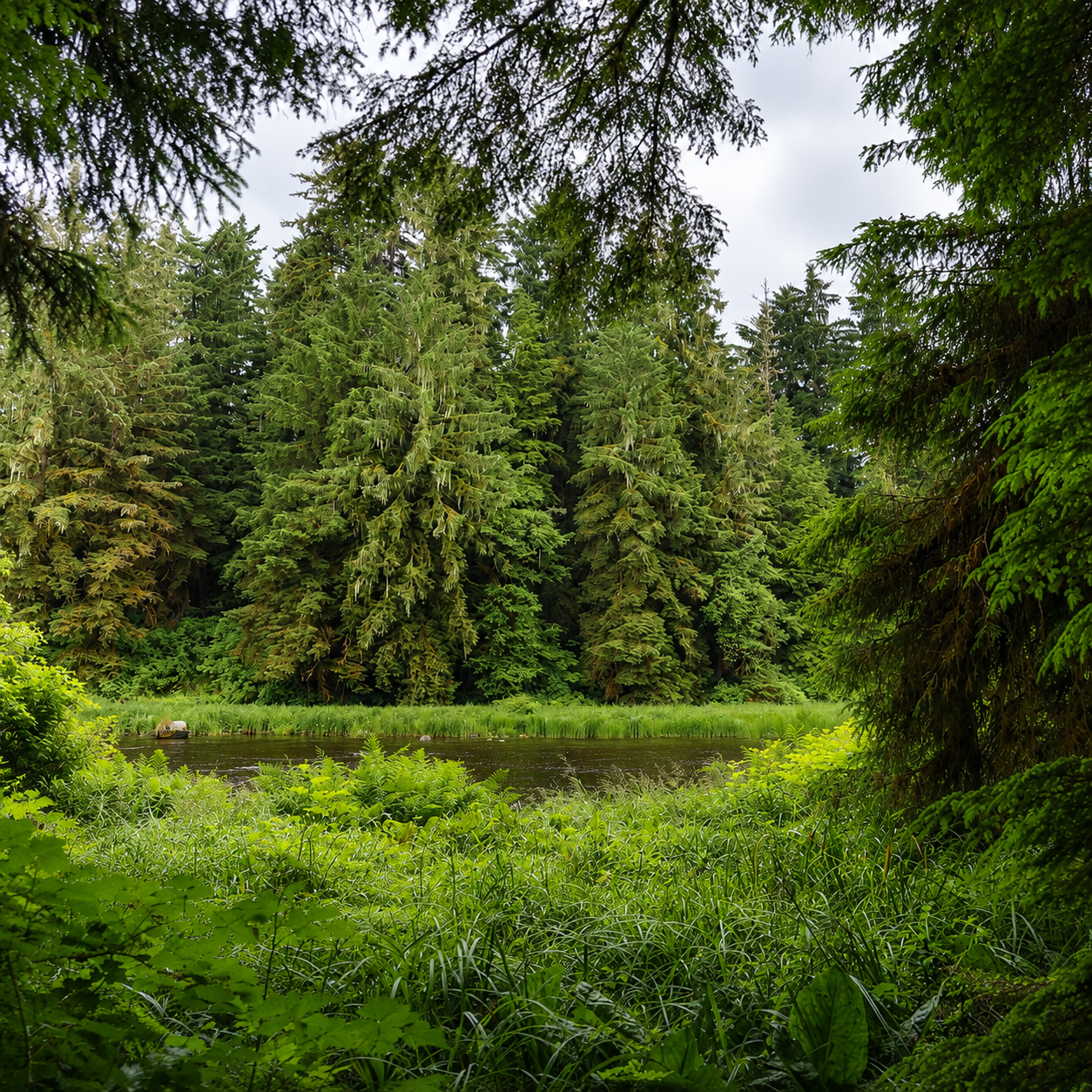
The venue itself was one of the most peaceful settings we've visited on this entire expedition. Nestled among towering trees along the Klawock River, it felt completely removed from the outside world. We learned that this river is normally filled with spawning salmon this time of year, although they hadn't arrived quite yet during our visit.
Scattered throughout the woods were individual clear-sided tents, each furnished with a table and chairs. Some accommodated couples while others seated four guests. The tents weren't there to isolate everyone — they were simply a practical solution in case Alaska decided to remind us how quickly the weather can change. Instead, they created an intimate dining experience while allowing us to remain completely surrounded by the forest.
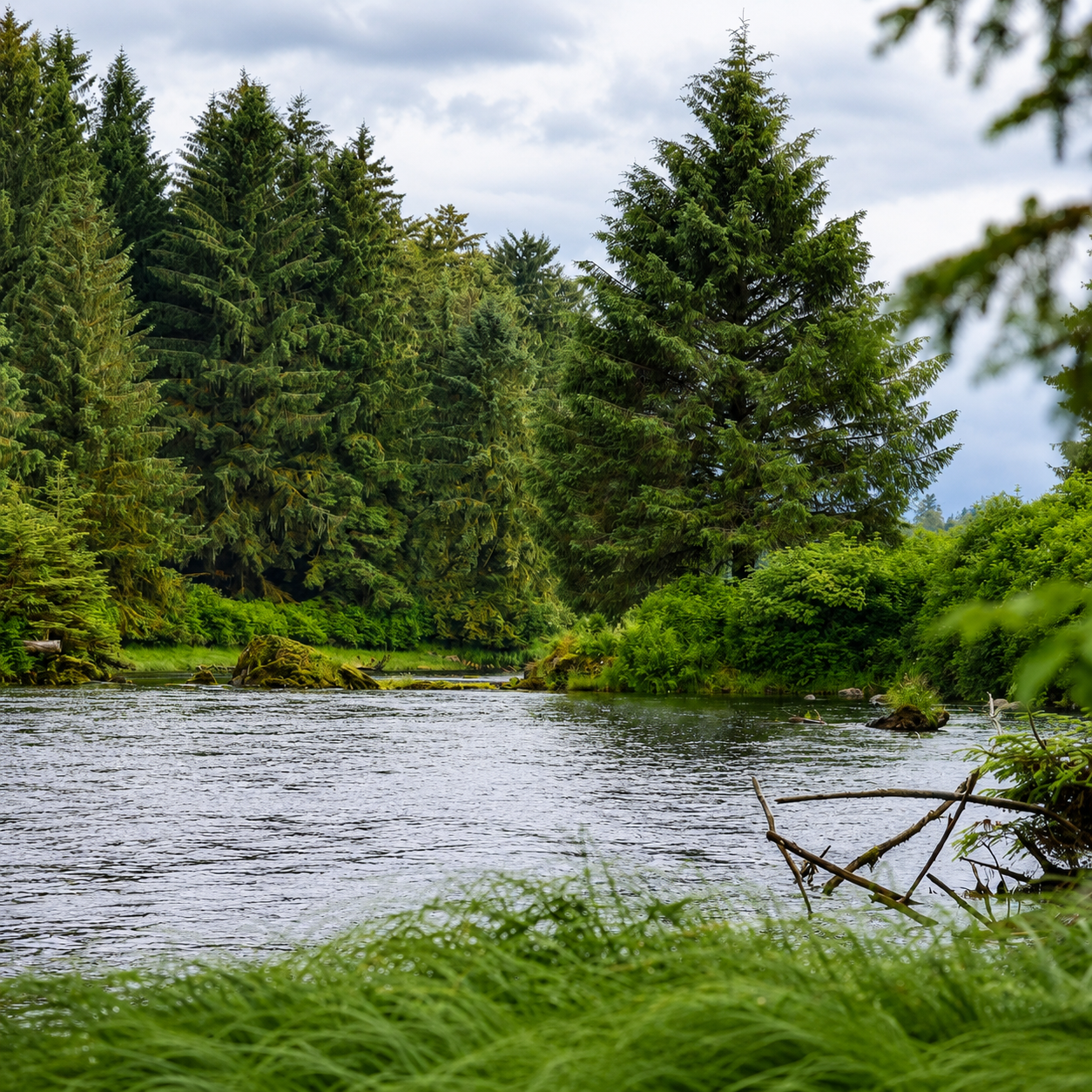
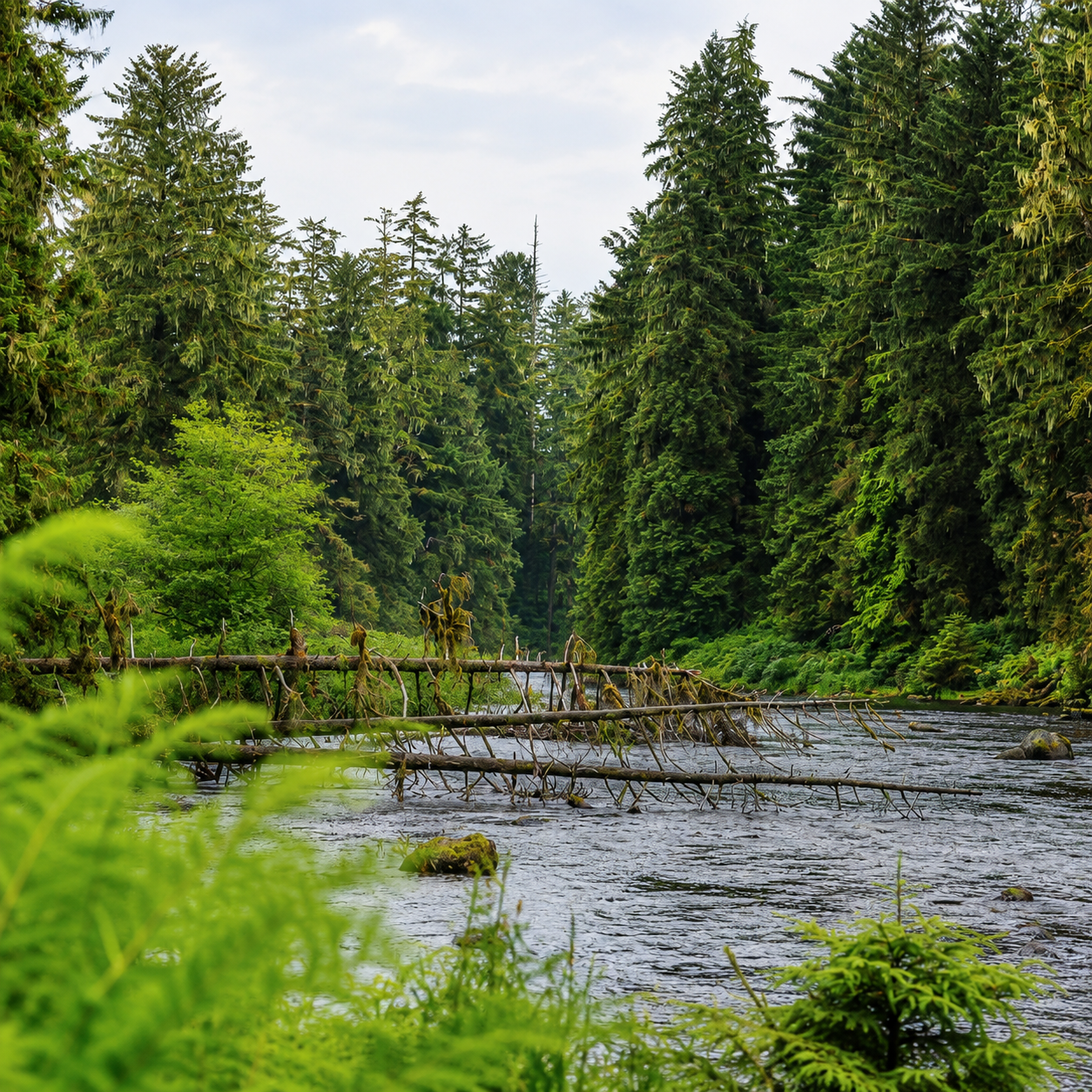
The Klawock River winding through the rainforest — the setting for the tented dining venue.
A Tapas-Style Tasting Menu
Then came the food. The meal was presented tapas-style, beginning with six freshly shucked raw oysters, each prepared with different local flavors and accompaniments. Whether you're already an oyster lover or trying them for the first time, it was a fun way to experience how different ingredients can completely change the flavor profile.
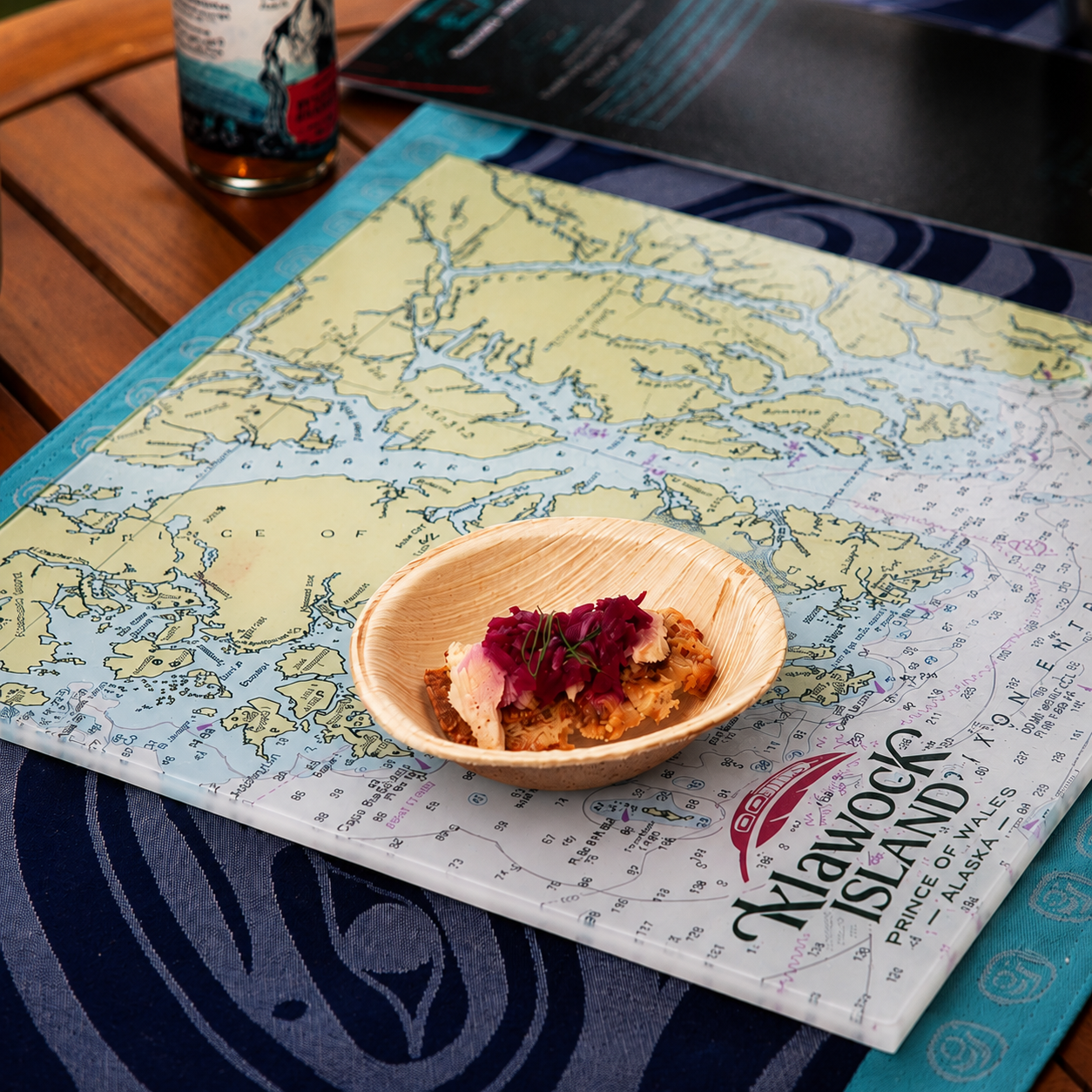
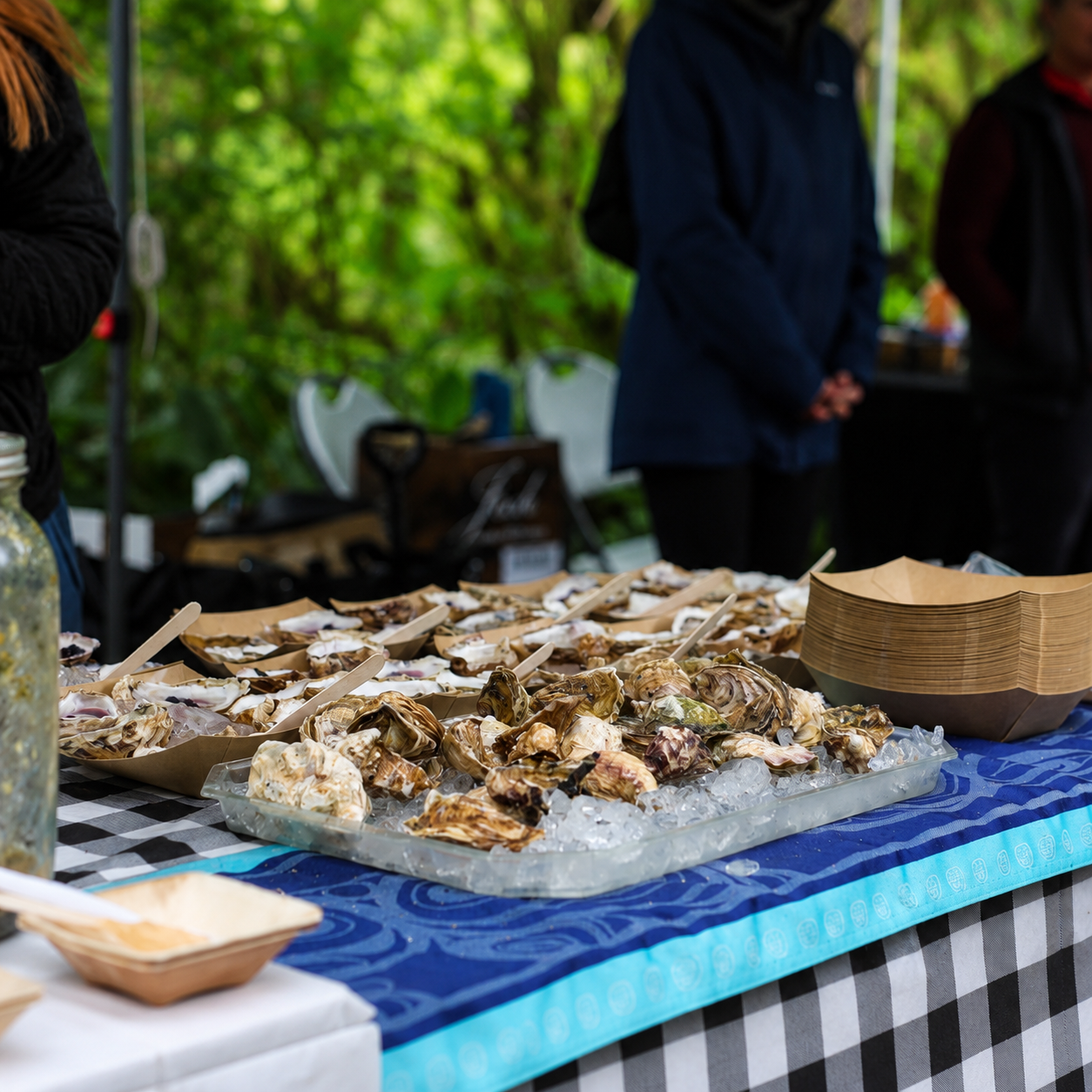
The tapas-style spread at Coastal Flavors of Klawock.
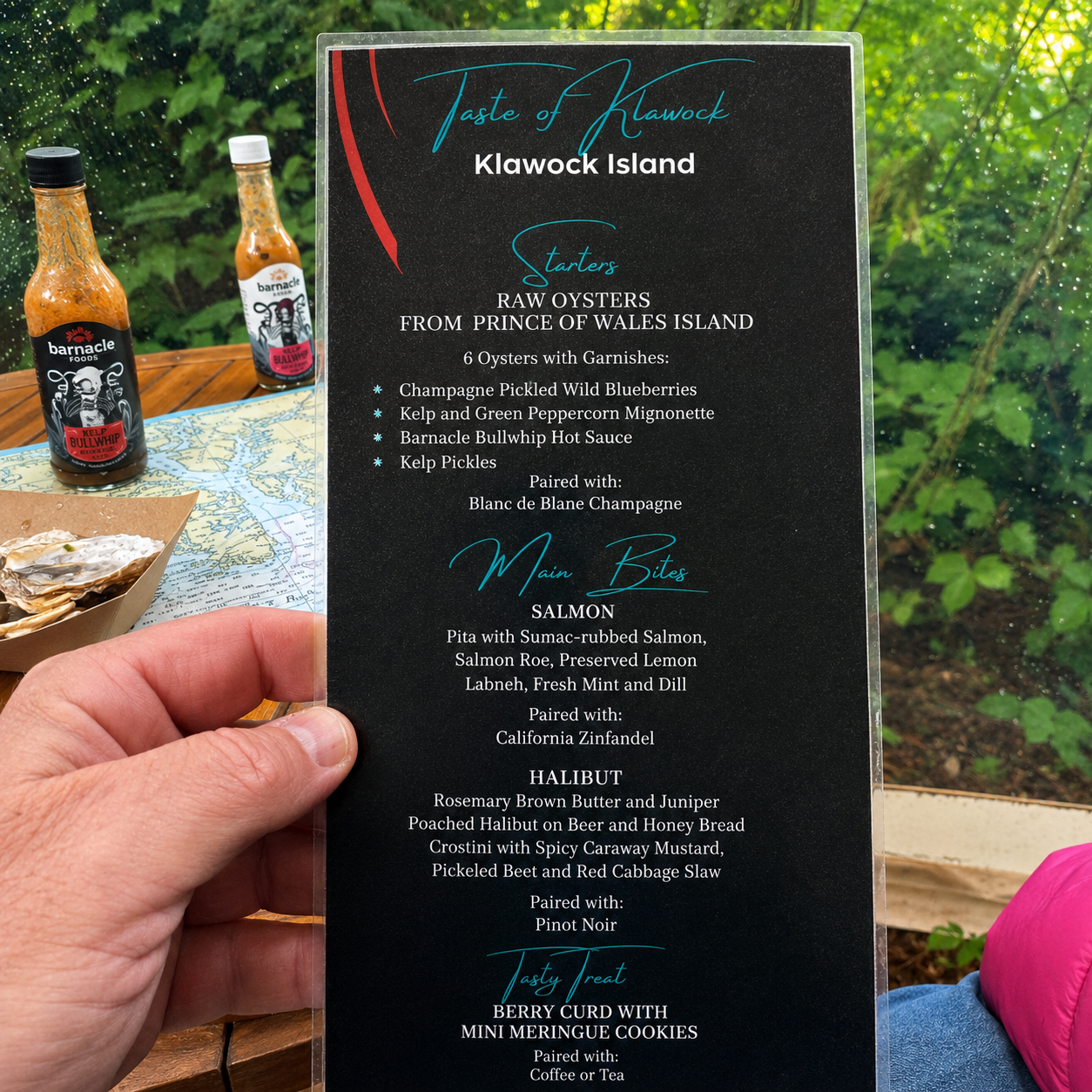
The tasting menu for the afternoon.
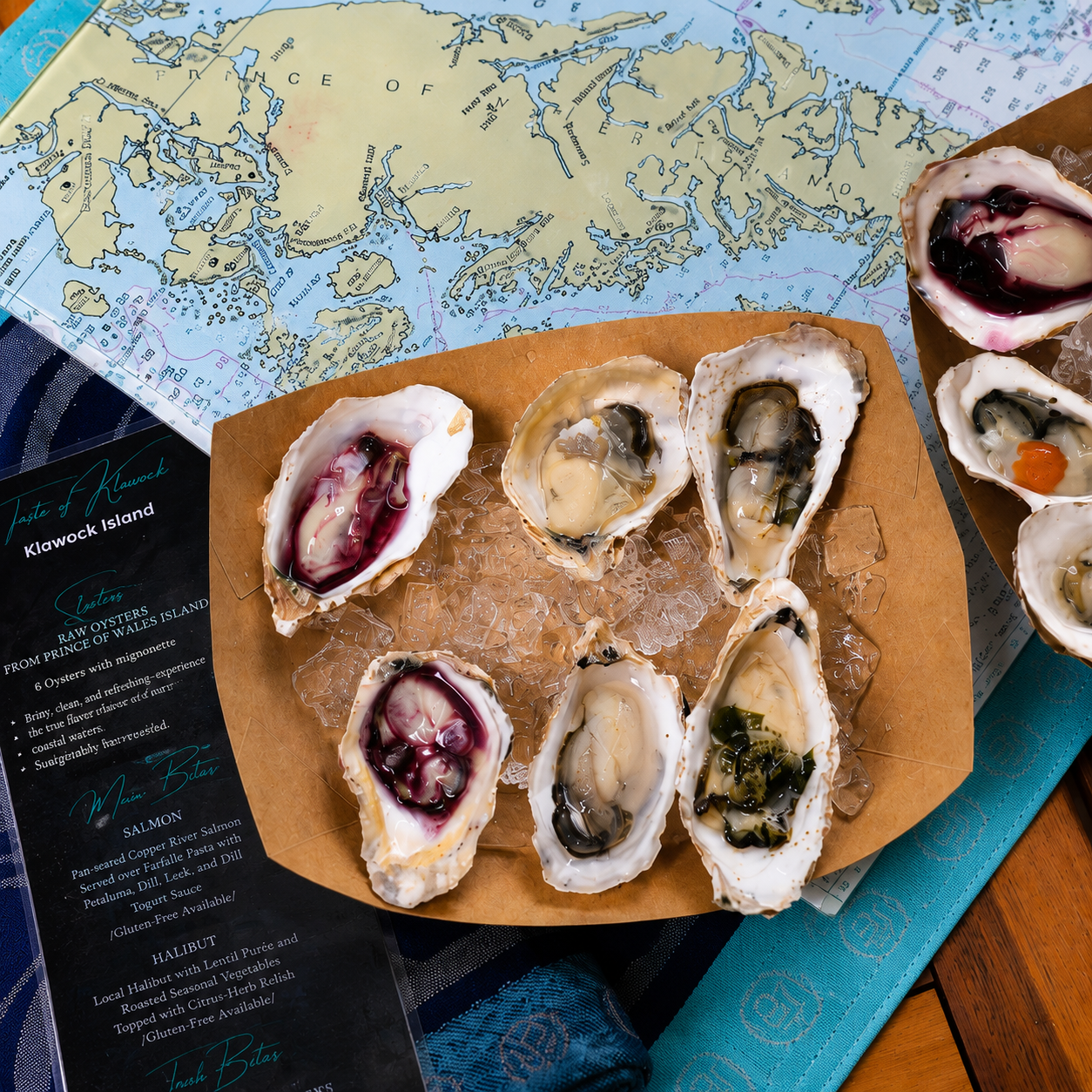
Six freshly shucked oysters, each prepared with a different local accompaniment.
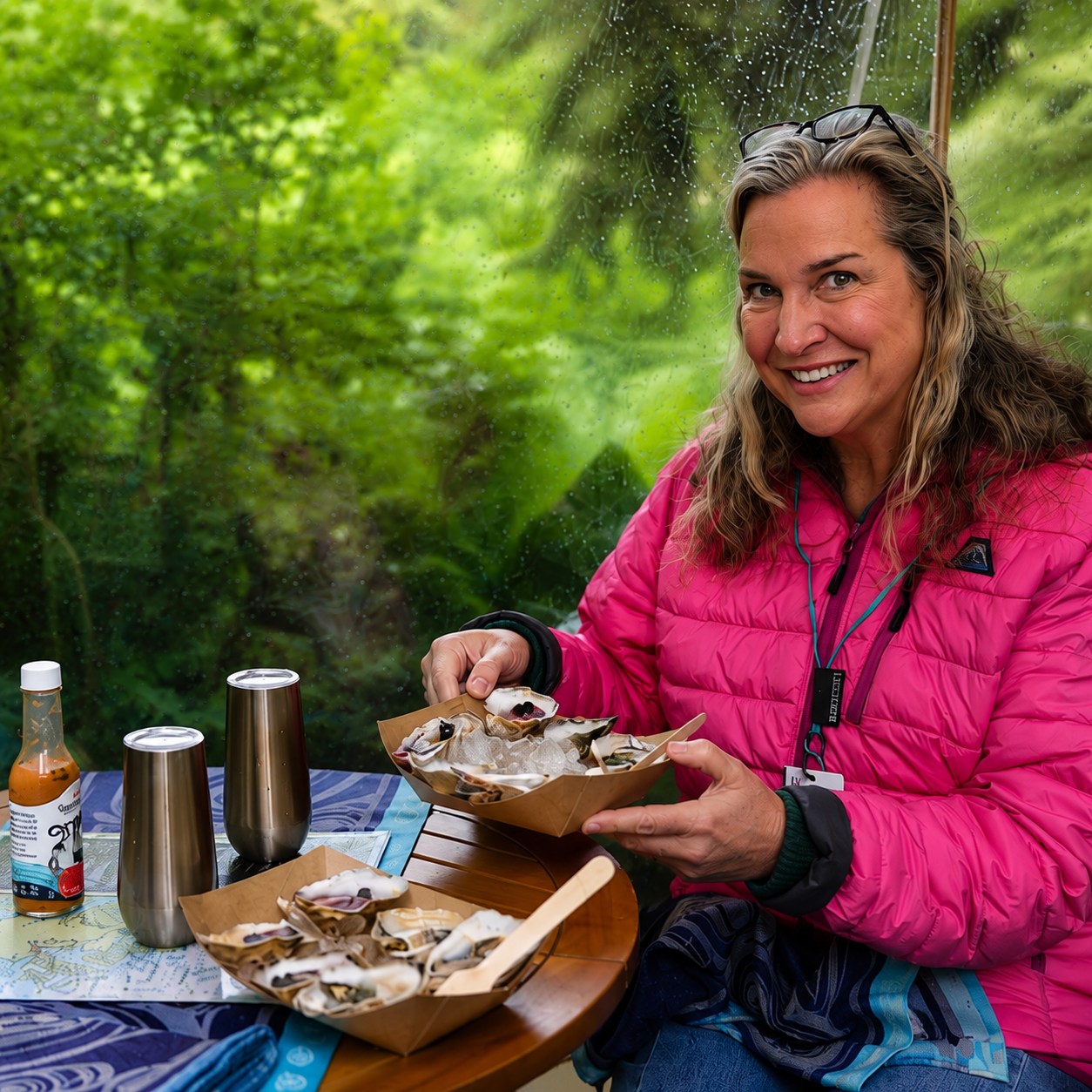
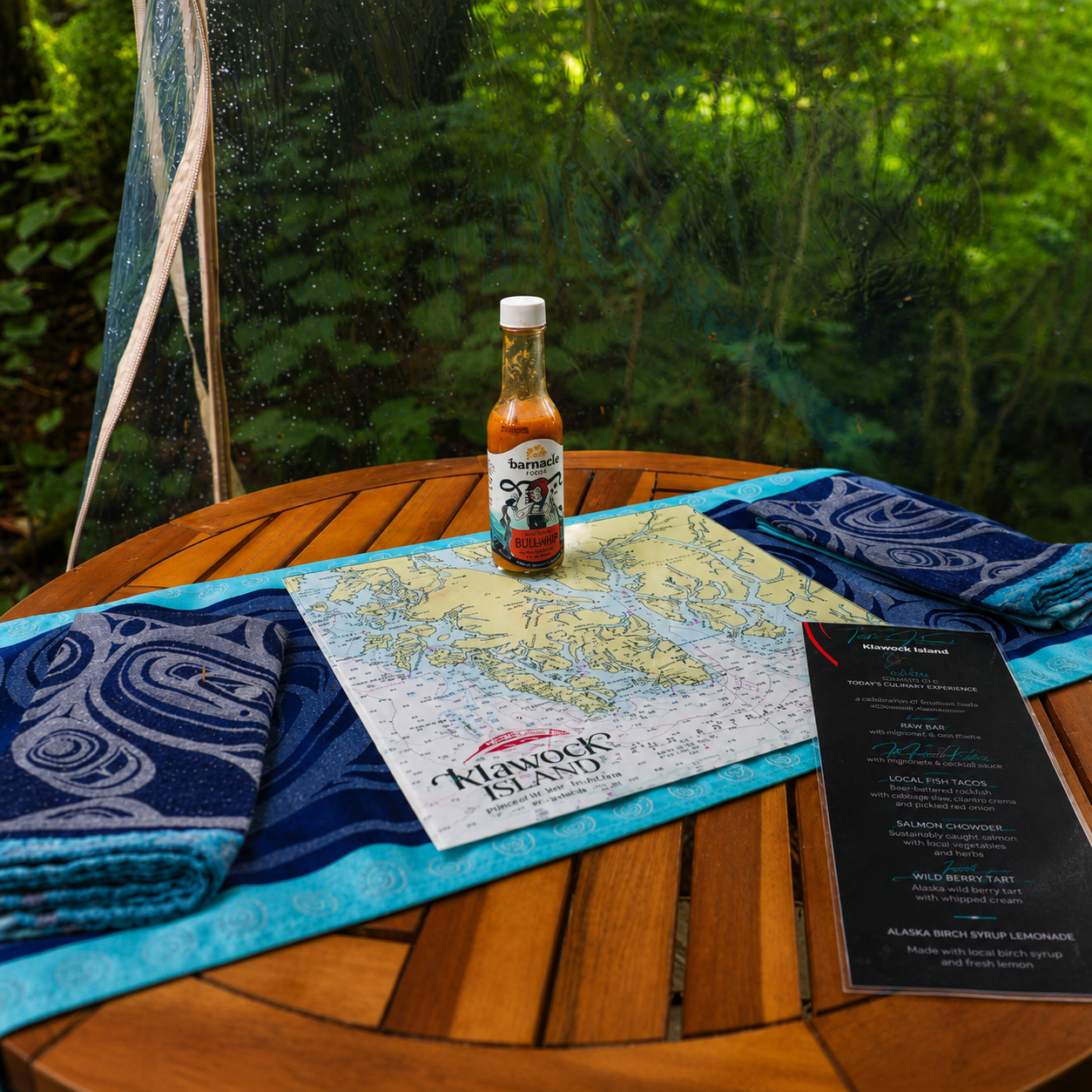
Each oyster came with its own flavor pairing, mapped out for tasters.
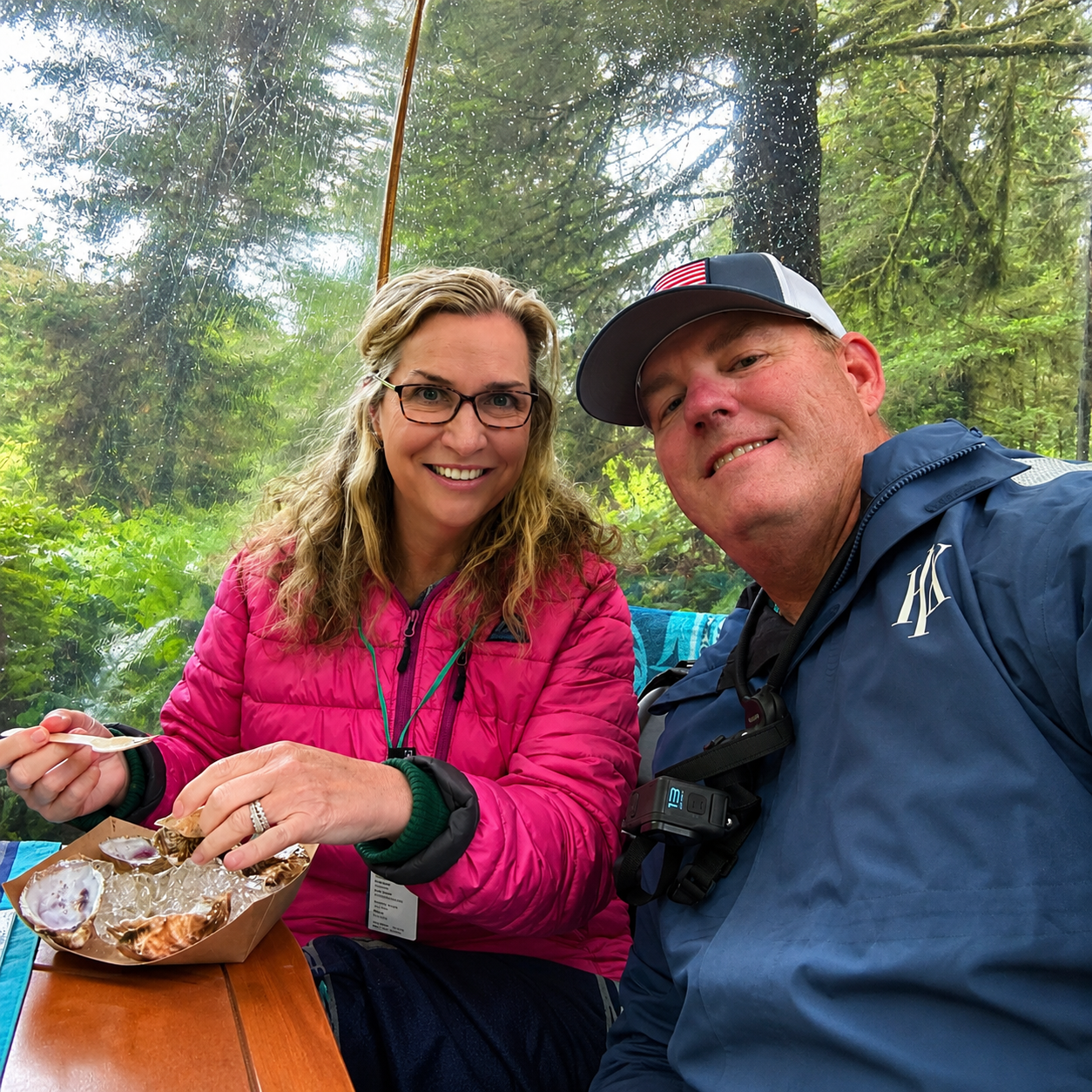
The oyster course, the centerpiece of the tasting.
Following the oysters came a salmon pita, then a perfectly prepared bite of fresh halibut, and finally a light meringue dessert. The portions, aside from the oysters, were intentionally small. This wasn't designed to be a large seafood lunch. Instead, it was a tasting experience showcasing locally inspired flavors and ingredients.
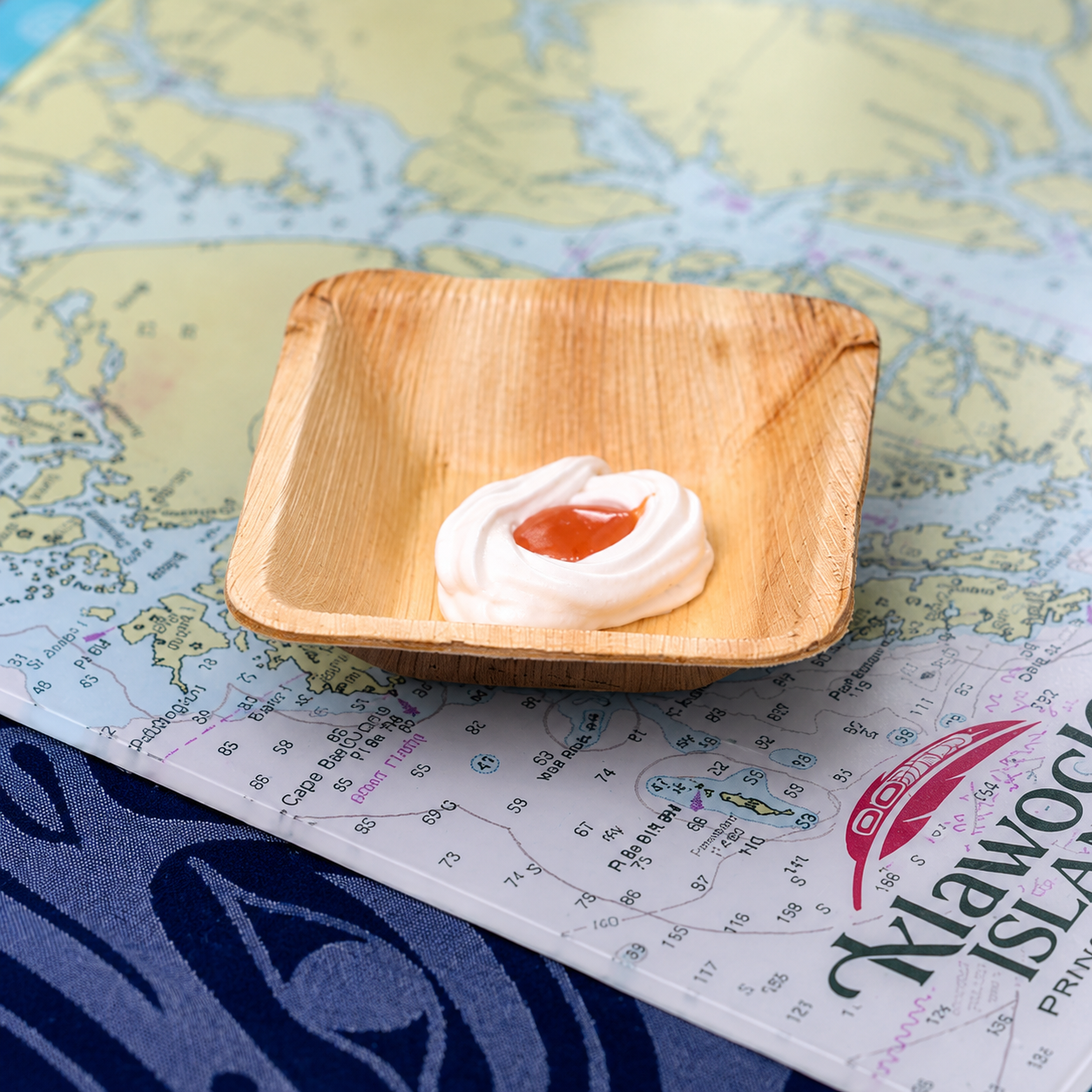
The light meringue dessert that closed out the tasting.
But for us, the food wasn't what made this excursion unforgettable.
Eagles Over the River
As we sat quietly beside the Klawock River, bald eagles called back and forth through the forest canopy. Every few minutes another eagle would glide low above the river, sometimes only twenty feet above the water before disappearing behind the trees. Conversation naturally faded as everyone simply watched. Those moments were magical, and I was fortunate enough to capture some of my favorite eagle photographs from the entire trip.
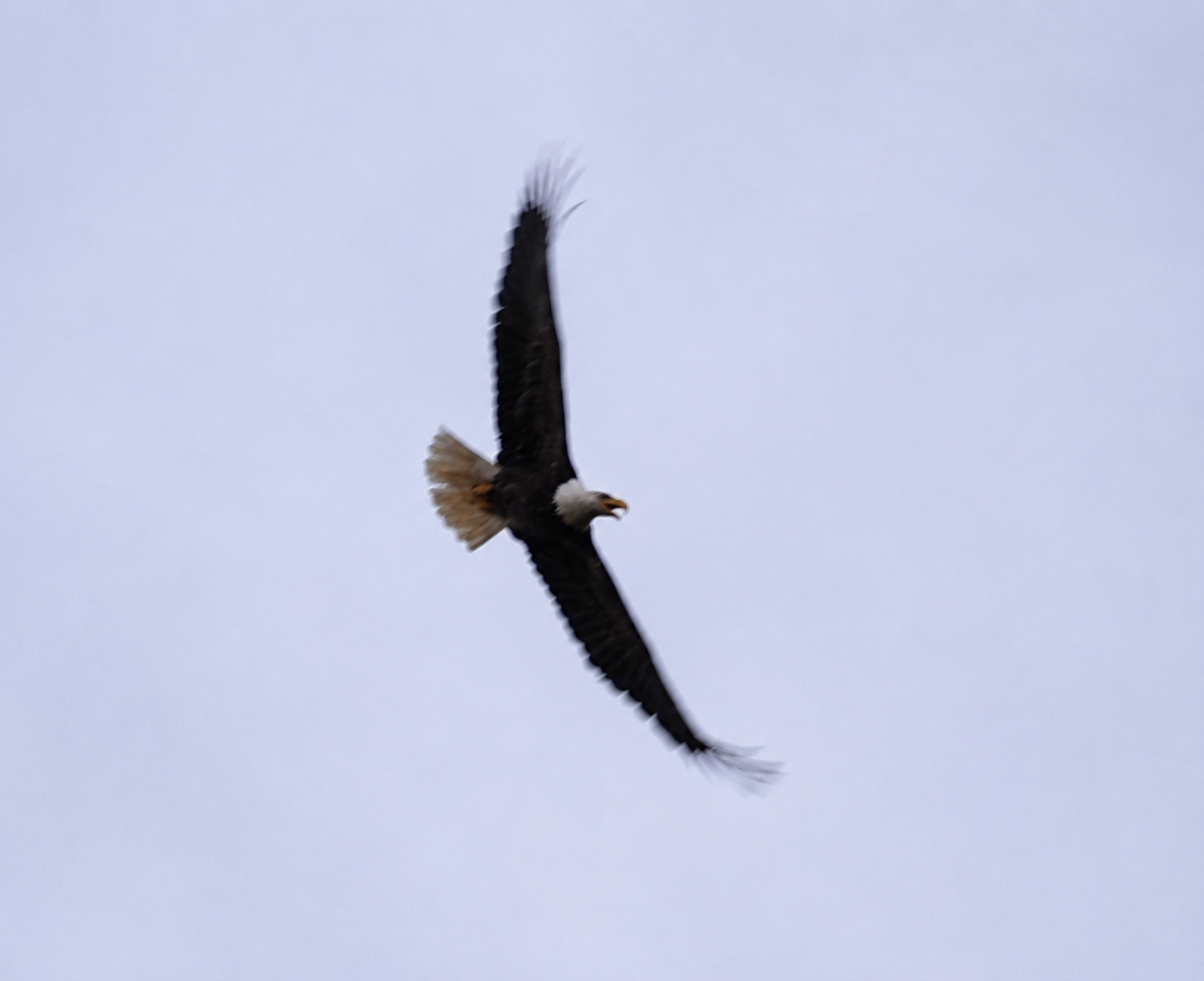
A bald eagle skims the Klawock River, just feet above the water.
One of the highlights came when the curator visited our private tent. Since it was just April and me seated there, the conversation felt personal rather than scripted. She shared her family's story, spoke about growing up in the region, and explained the significance of the traditional regalia she was wearing. She described how her cedar-bark hat had been handcrafted, explained the meaning behind the headpiece she wore, and shared stories about the island and her community that brought everything we'd experienced throughout the afternoon together.
Those conversations transformed the excursion from a meal into a genuine cultural experience.
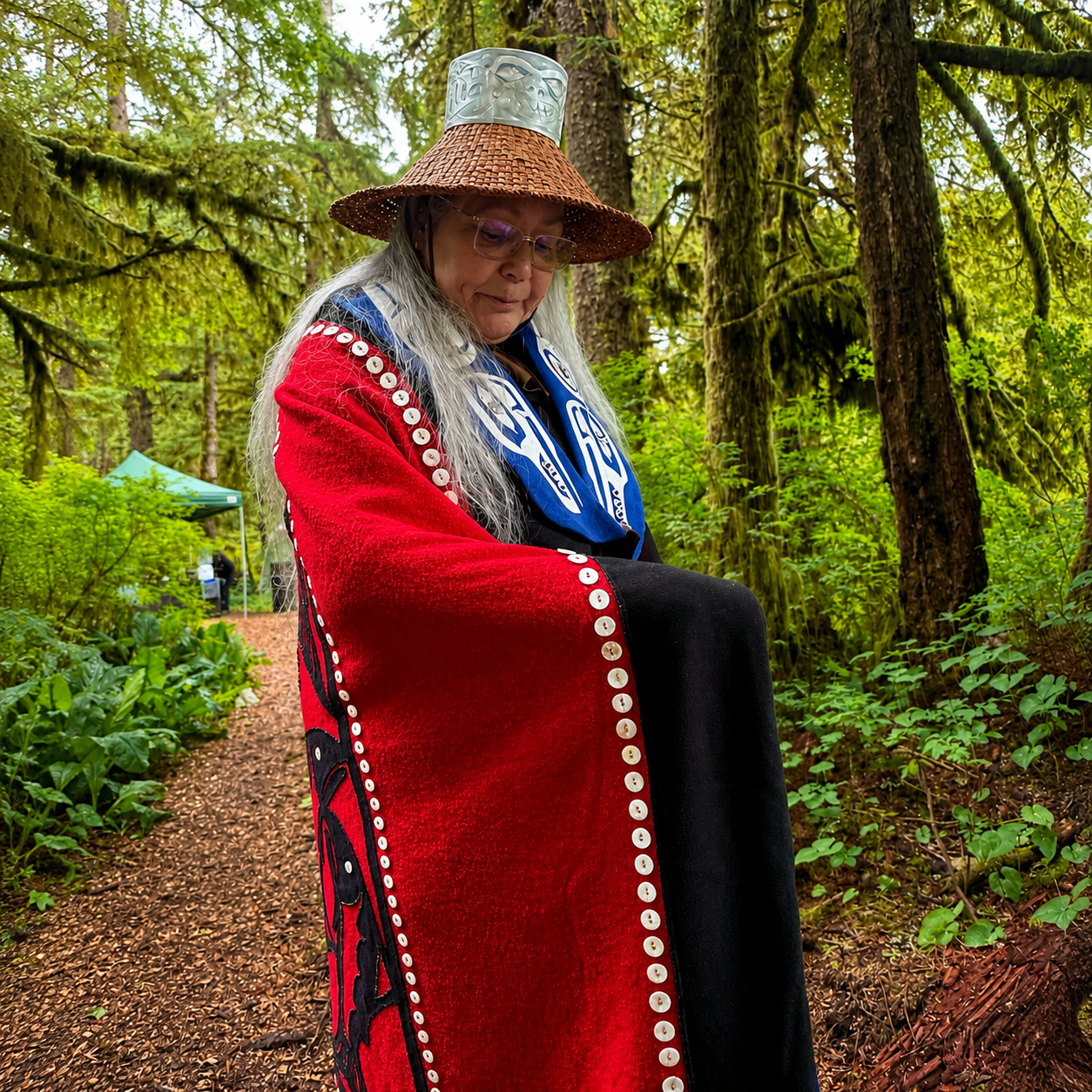
A personal conversation with our curator brought the afternoon's stories together.
- Build in flexibility around pier departure — shuttle timing to and from the venue can eat into your time at the riverside tents.
- Come with tasting-menu expectations, not seafood-feast expectations. Portions beyond the oysters are intentionally small.
- Dress in layers. The tents provide weather protection, but you're still fully outdoors in a Southeast Alaska forest.
- Bring a camera with reasonable zoom — the bald eagles pass low over the river regularly, and it's one of the best wildlife-viewing moments of the excursion.
- Whether you see spawning salmon in the river depends on timing; the run hadn't arrived yet during our visit.
- Save some energy for Klawock Totem Park at the end — it's a worthwhile close to the afternoon, not just a quick photo stop.
Klawock Totem Park
A little after 3:00 p.m., we were asked to return to the shuttle. As our group departed, another group was arriving to begin the same experience. Our final stop was Klawock Totem Park, where we spent about thirty minutes exploring one of Alaska's most impressive collections of totem poles.
Rather than simply walking through the park, we were joined by a knowledgeable interpreter who explained the figures, symbols, and stories carved into the poles. We learned how they represent family histories, clan identities, important events, and cultural traditions that have been preserved for generations. Some of the poles are original historic carvings, while others are carefully crafted replicas created to preserve those stories for future generations.
One moment stood out above the rest: a live bald eagle perched in a tree directly beside a totem pole topped with its own carved eagle figure — the real bird and its cedar likeness sharing the same frame.
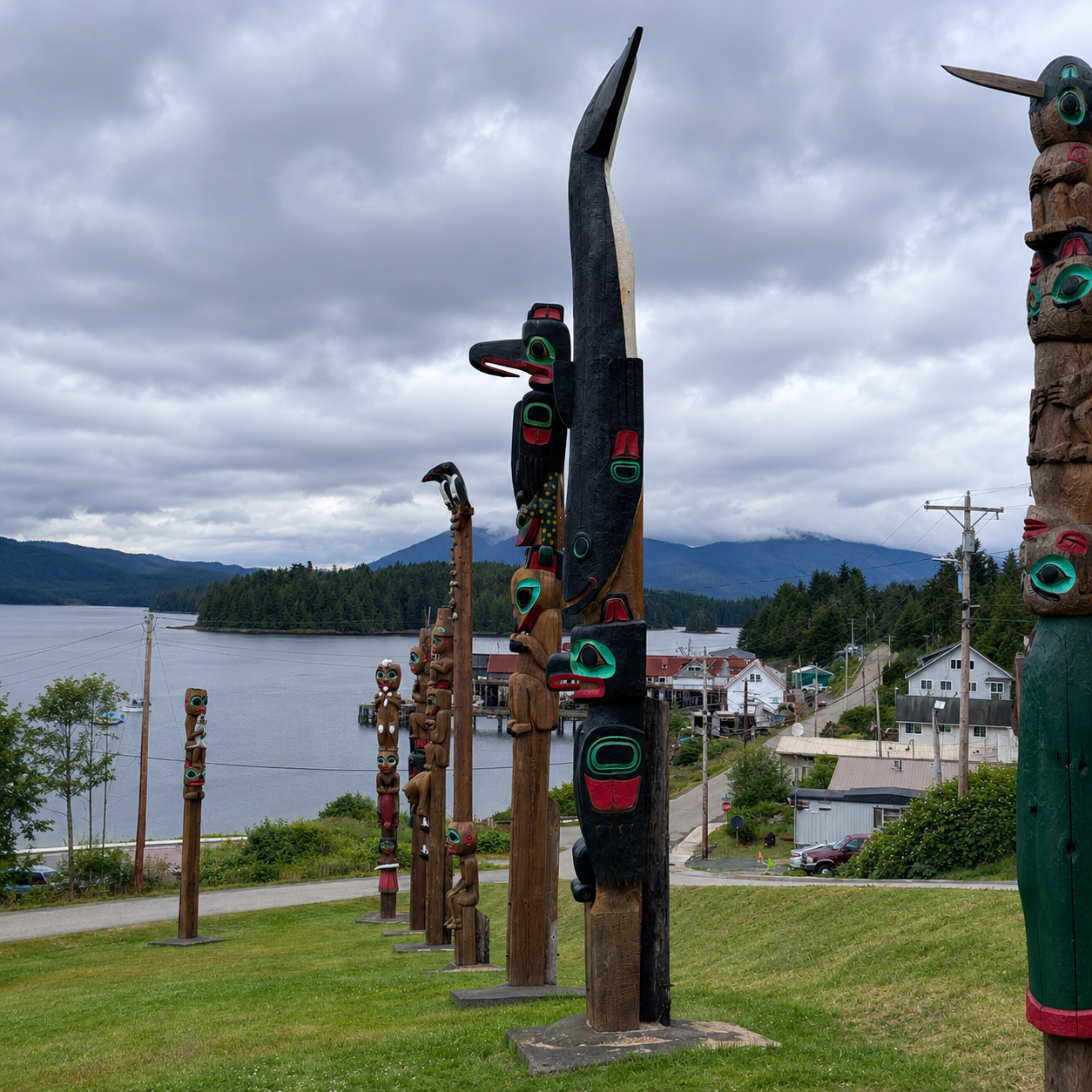
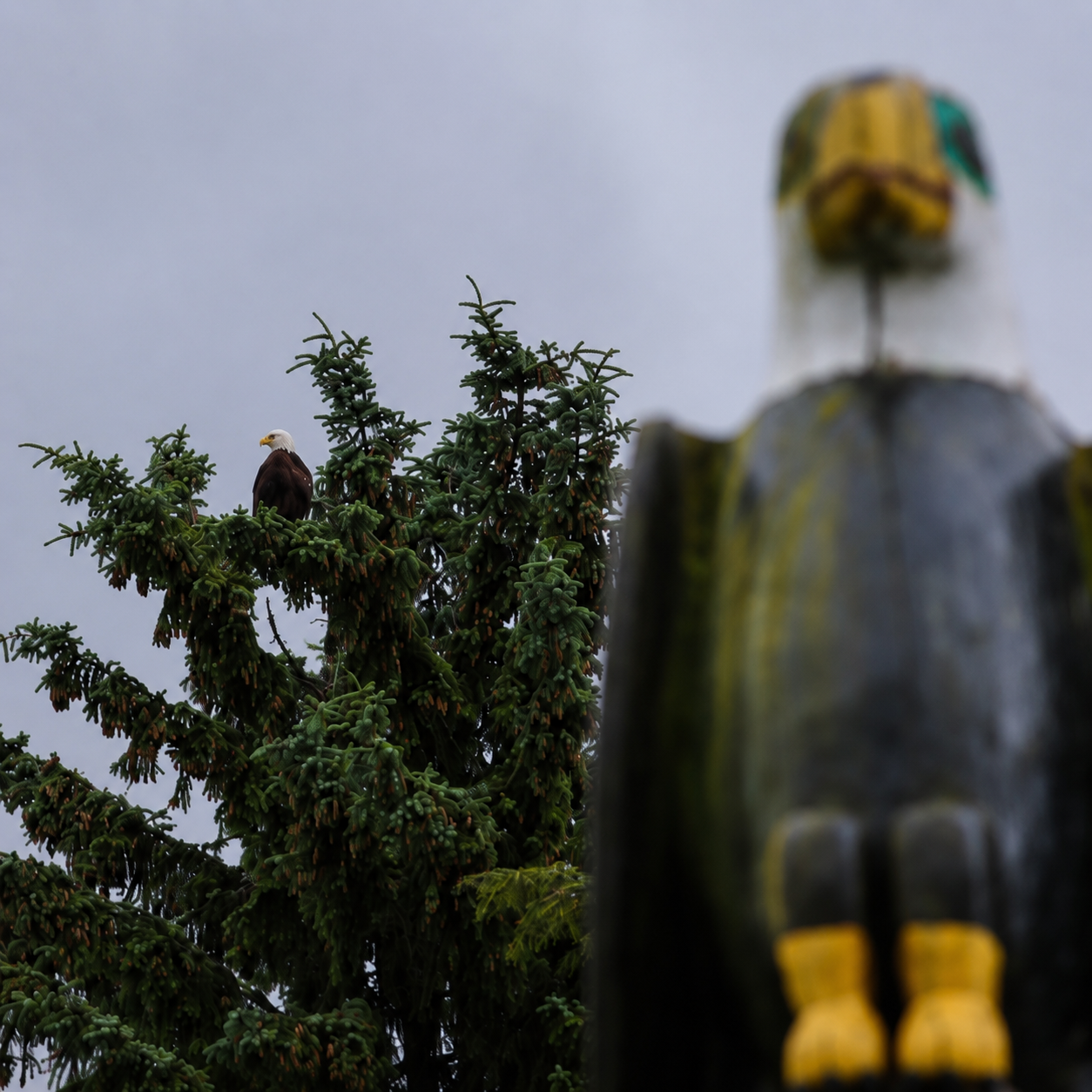
A live bald eagle perched beside a totem pole topped with its own carved eagle — Klawock Totem Park closed out the afternoon with a guided look at family and clan histories carved in cedar.
It was the perfect conclusion to an afternoon that celebrated both the natural beauty and Indigenous heritage of Prince of Wales Island. Eventually, we boarded the shuttle one last time for the short drive back to the port.
Was It Worth Booking?
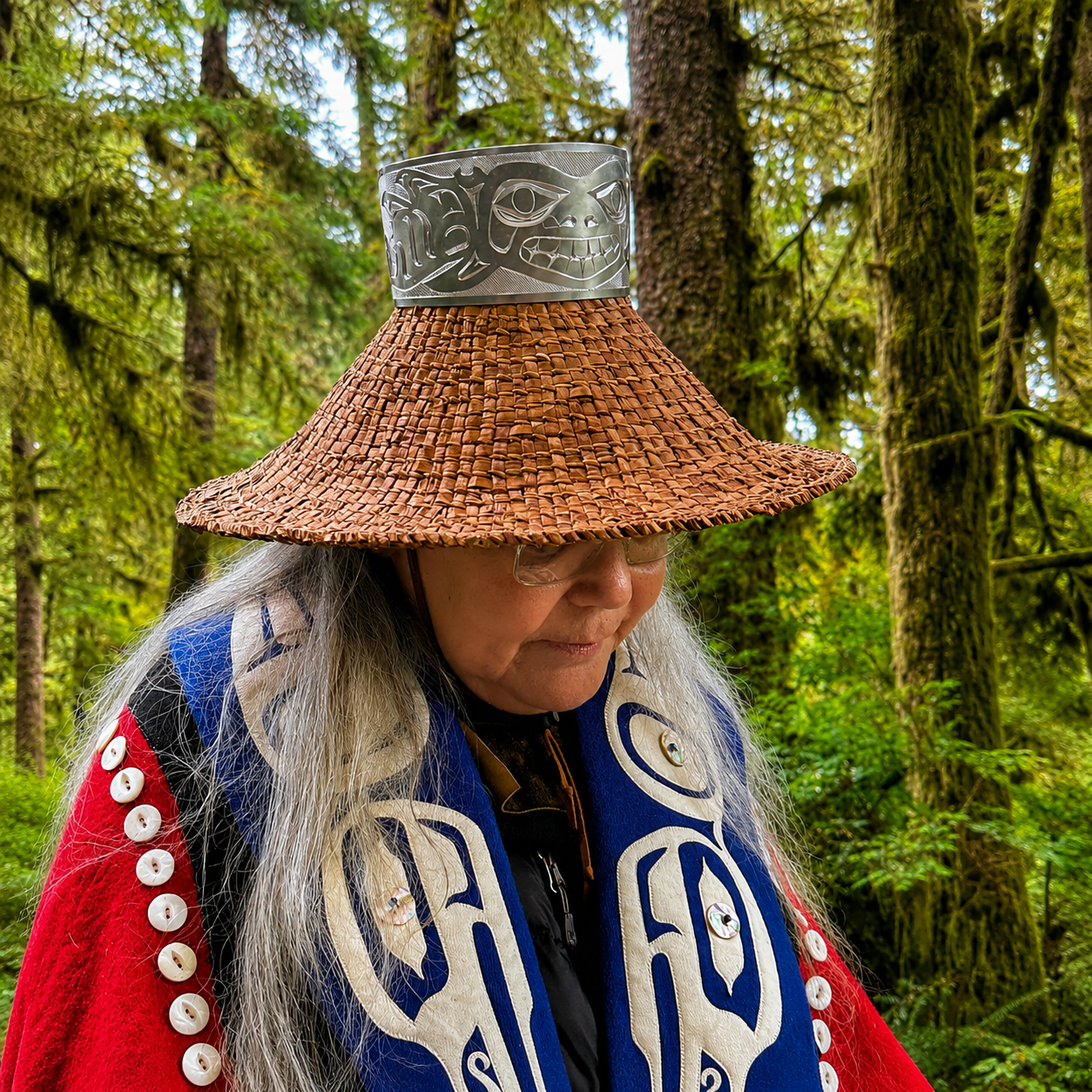
One last look at Klawock before boarding the shuttle back to the port.
Looking back on the excursion, I think it's important to set realistic expectations. This is advertised as a two-and-a-half-hour experience, but because of the delays leaving the pier, our actual time at the riverside venue felt fairly short. We found ourselves wishing we had just a little more time to simply sit quietly beside the river and absorb the surroundings.
Likewise, the food is intentionally presented as a tasting menu. If you're expecting a full seafood feast, you may leave wanting more. For us, though, neither of those things defined the day.
The memories we'll carry home aren't the oysters or the halibut. They're the sounds of bald eagles echoing through the trees. They're watching those eagles skim low over the Klawock River. They're hearing the stories of an Alaska Native family whose connection to this land stretches back countless generations. They're learning that every plant, every carving, and every tradition has meaning far beyond what most visitors ever see.
Would we book this excursion again? I'm honestly not sure. Knowing what we know now, if we returned to Klawock we'd probably spend more time exploring some of the quiet forest trails and hidden paths we noticed on the drive to the venue. That said, I'm incredibly glad we chose this excursion. It provided something that many shore excursions never do — a genuine connection to the people and culture of Alaska.
Sometimes the best travel experiences aren't measured by how much food is on your plate or how many attractions you visit. Sometimes they're measured by the quiet moments — sitting beside a river, listening to eagles call across the forest, and realizing that travel isn't just about seeing a destination. It's about understanding it. And that's exactly what Coastal Flavors of Klawock gave us.
Coastal Flavors of Klawock: Frequently Asked Questions
If This Was Useful, Buy Us a Coffee
Venture To See is a one-person operation. If our firsthand reviews help you plan a better trip, a coffee goes a long way.
☕ Buy Us a CoffeeFollow the Journey
Have a question about this excursion, or a trip of your own you'd like feedback on?
Send Feedback
Making Paint Like Rembrandt: A Different Kind of Amsterdam Experience
A hands-on Amsterdam painting tour turns a city visit into a creative travel memory, blending local culture, art, and a unique experience beyond the usual museum stop.
Making Paint Like Rembrandt: A Different Kind of Amsterdam Experience
We skipped the canal cruise and the cheese tasting and spent an afternoon grinding pigment and mixing oil paint by hand. Here is what that was actually like.
Amsterdam comes with a reputation before you ever arrive. You hear about the canals, the Red Light District, the cafés, the bakeries, the cheese shops, the museums, and the steady movement of people through the city center. All of that is part of Amsterdam. But after visiting on several occasions, I have come to appreciate that the city gets more interesting the moment you step slightly off the expected path.
On this particular trip we wanted something different. Not another museum stop, not a quick walk through the busiest part of town. We wanted something cultural and hands-on, connected to the history of the city in a more personal way. That led us to a small-group workshop in central Amsterdam built around Rembrandt, color, and the old-world process of making paint by hand.

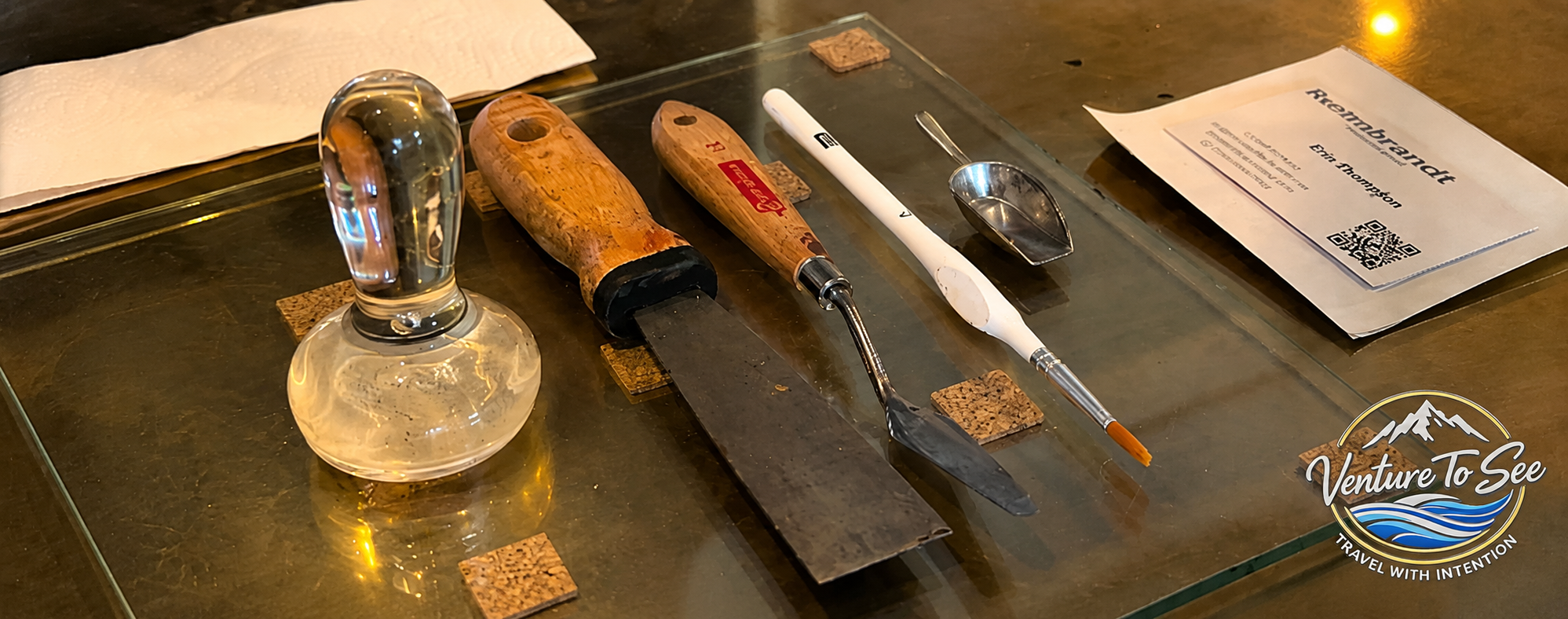
Everything was laid out before we began — raw pigments, oils, and the tools of the trade.
A Small-Group Workshop in the Heart of the City
The session began in the lobby of a hotel in central Amsterdam — the Tivoli Doelen, on Nieuwe Doelenstraat. From there we walked to a small workspace where the guide had everything laid out across the table: stones, powders, oils, tools, and materials.
It is advertised as a small-group experience, but on our day it ended up being private — just our group and the guide. That made the whole thing feel more personal than I expected. The guide is a paint-maker himself, with a background tied to the Rembrandt House Museum, and that depth showed quickly. The workshop is split into two parts: the first focused on history, Rembrandt, and how painters once created their colors; the second handed the work over to us, mixing paint and putting it on a small canvas.


The tools we worked with — closer to a 17th-century studio than a modern art class.
Learning How Paint Was Made in Rembrandt's Time
The historical portion was far more interesting than I assumed it would be. The guide walked us through how colors were produced during Rembrandt's era and how much effort went into making paint before tubes and art stores existed. One detail stuck with me: the role of apprentices, who spent long hours grinding materials and preparing small batches for the master. They could not simply make large amounts and store them — the paint dried out, and some colors were far too expensive to waste.

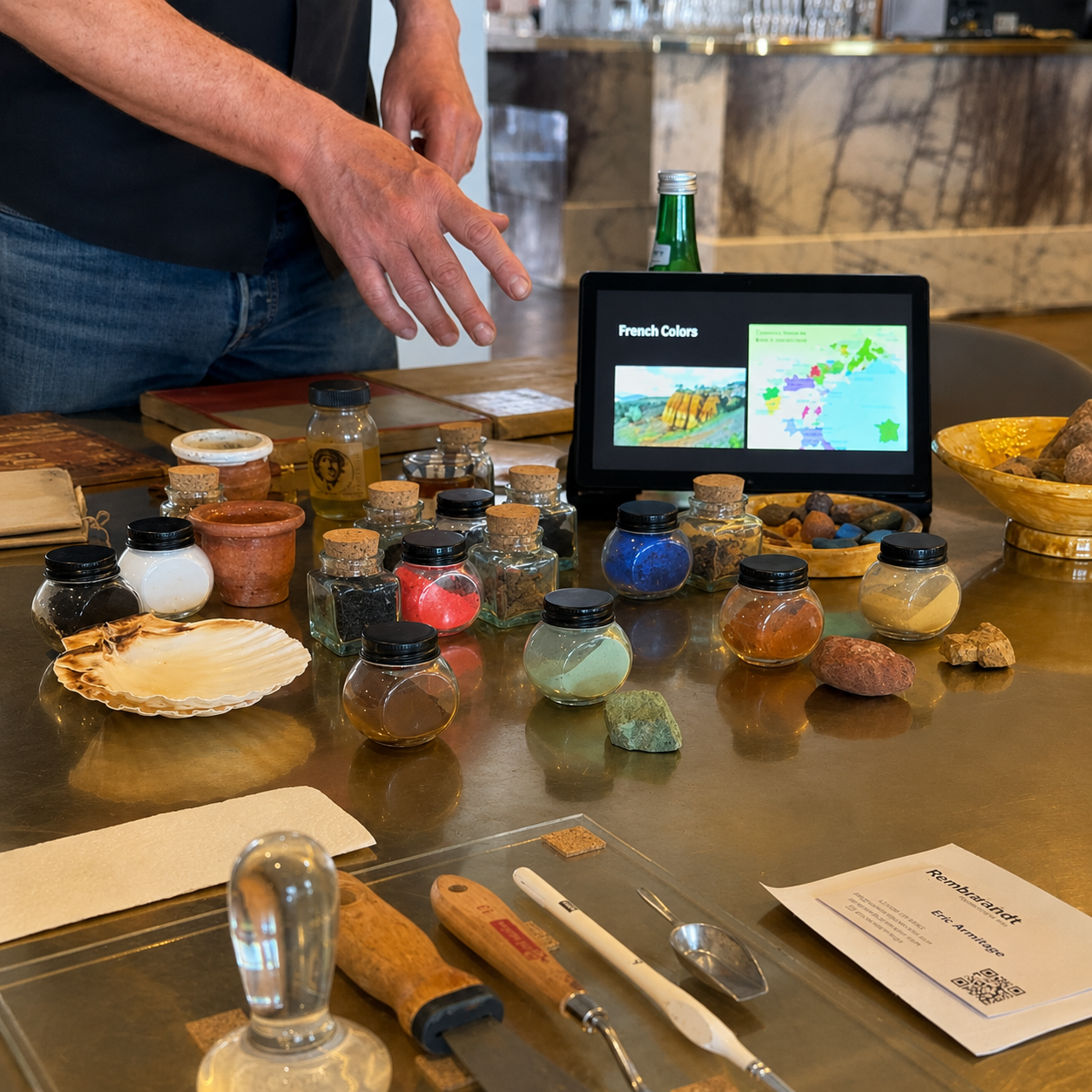
The raw materials behind the palette — ground minerals and earths, before any oil is added.
Blue was the clearest example. Certain blue pigments came from rare stones sourced from as far away as Afghanistan. For a painter in Europe, blue was not just another color on the palette. It was expensive, difficult to obtain, and used with intention.

Blue — once sourced from rare stones shipped halfway across the world, and used sparingly because of it.
That reframed how I look at older paintings. The whole workshop is built around the small set of natural pigments Rembrandt actually used — fourteen of them — and what a painter could coax out of that limited palette. Once you understand where those materials came from and what they cost, a finished canvas reads differently.
The Hands-On Part: Making Our Own Paint
After the history, we moved into the interactive half. Each of us made our own color using powdered pigment and linseed oil, working the materials together by hand until they slowly became paint. Because there were three of us, the guide added a fourth color so we had a fuller palette to work with.

Working pigment into linseed oil by hand until it slowly turns into paint.
Once the paints were ready, we were handed small pieces of canvas and invited to make our own "masterpieces." That word is being used generously. But that was part of the fun. This was never about producing perfect art. It was about understanding the process — slowing down, using your hands, and getting a glimpse of the physical work behind paintings we usually only see finished and framed.
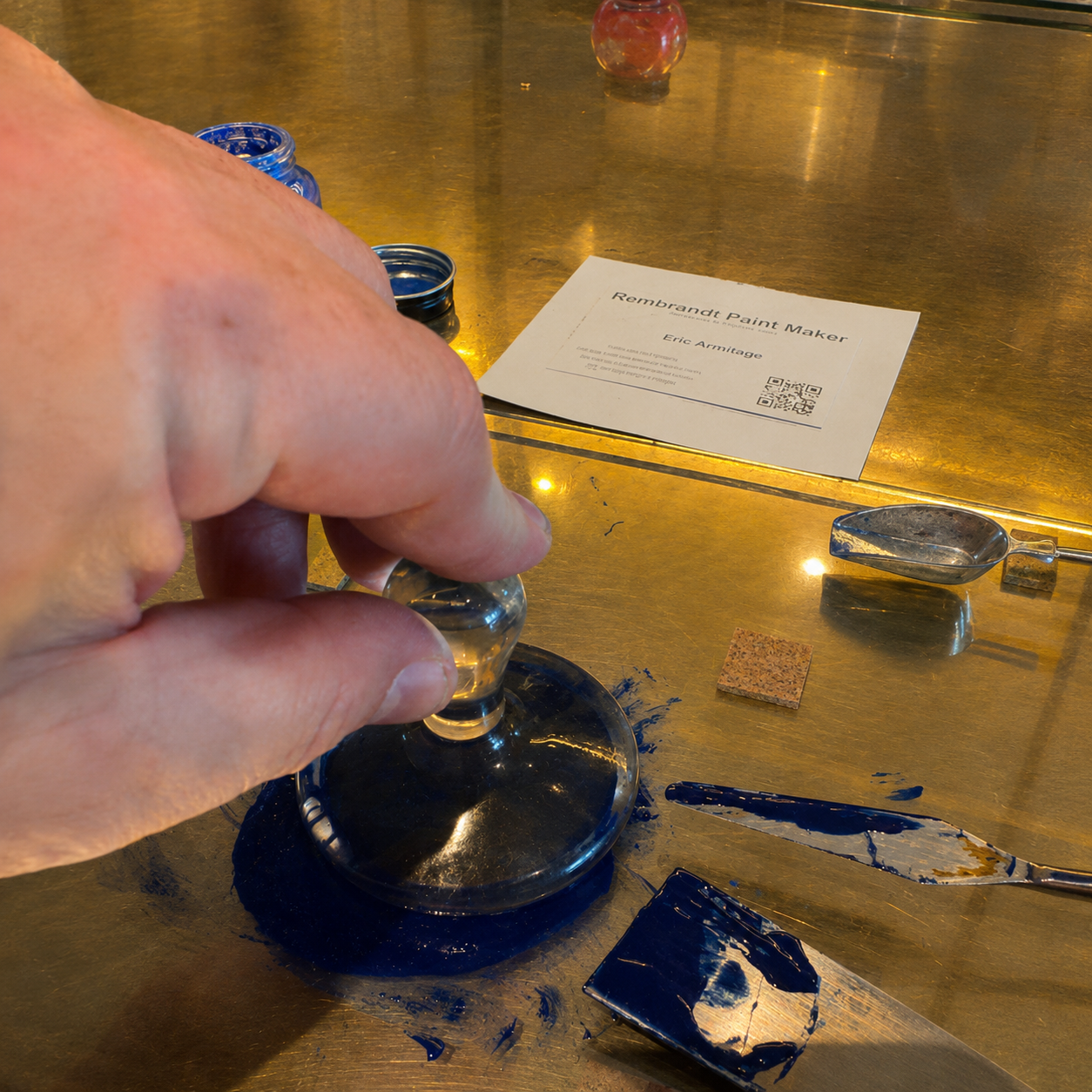


The colors we mixed by hand — including the fourth one the guide added to round out our palette.
Practical Notes
- The meeting point is inside the Tivoli Doelen Hotel on Nieuwe Doelenstraat — tell the doorman you are there for the painting workshop and they will point you to the room.
- It is listed at roughly two hours; ours ran closer to three with the history portion, so leave a little buffer in your day.
- No art experience is needed. The point is the process, not the result.
- You are working with oil paint and pigment — wear something you would not mind getting a mark on.
- This pairs well before a visit to the Rijksmuseum or the Rembrandt House Museum, when the techniques are still fresh in your head.
- It is a small, often private session, so book ahead rather than counting on a walk-up slot.
Make Paint the Way Rembrandt Did
A private, hands-on workshop in central Amsterdam — fourteen natural pigments, linseed oil, and a canvas of your own to take home. Materials included.
Book on Viator ■Why This One Stood Out
This was not the typical Amsterdam activity. It was not a canal cruise, not the Heineken Experience, not a cheese tasting or a march through the busiest streets. Those all have their place. This offered something quieter and more meaningful.
It connected us to Amsterdam's artistic history in a way that felt personal. We were not looking at paintings from a distance — we were learning how the materials were made, why certain colors mattered, and how much effort went into the craft behind the canvas. For Venture To See, that is the kind of travel experience that holds up: not dramatic, not over-planned, but the sort that makes you pause, learn something unexpected, and walk away seeing a place a little differently.


The finished pieces — "masterpiece" used generously, but that was never the point.
Final Thoughts
Amsterdam is busy, especially downtown, and it is easy to get pulled into the most obvious attractions. But if you want something cultural, hands-on, and a little outside the standard tourist routine, a Rembrandt-inspired paint-making workshop is worth considering. It gave us a different connection to the city — one rooted in art, history, materials, and the simple act of making something ourselves.

A small tulip canvas to take home — a fitting souvenir from an afternoon in Holland.
An Offbeat Half-Day in Amsterdam
If you have a free morning or afternoon and an interest in art or history, this is an easy, low-pressure way to spend it. Free cancellation up to 24 hours out.
Check Availability on Viator ■Frequently Asked Questions
How long does the Rembrandt paint-making workshop in Amsterdam last?
It is listed as roughly two hours. In practice ours ran closer to three once the history portion was included, so plan for a half-day window rather than a tight two-hour slot.
Where does the Amsterdam Rembrandt paint workshop take place?
It meets inside the Tivoli Doelen Hotel at Nieuwe Doelenstraat 24, in central Amsterdam, near public transport. The workshop runs from a small dedicated room — just let the doorman know you are there for the painting experience.
Do you need any painting or art experience to do this?
No. The workshop is built around the process — grinding pigment, mixing oil paint, and applying it — not around producing polished art. Complete beginners are the norm, not the exception.
Is the experience private or a group tour?
It is run as a small-group or private session, typically for up to six people in a booking. On our day it ended up being just our group and the guide, which made it feel more like a personal lesson than a tour.
What is included, and what do you take home?
All materials are included — pigments, linseed oil, brushes, and canvas. You leave with the paints you mixed and the small canvas you painted.
Is this suitable for families, couples, or non-artists?
Yes. It works for couples, families, and solo travelers, and the history half gives non-painters plenty to engage with even if they are nervous about the brushwork.
How does this compare to visiting the Rembrandt House Museum or the Rijksmuseum?
It is a complement, not a substitute. The museums show you the finished work; this workshop shows you how the materials behind it were made. Doing this first tends to make a later museum visit read very differently.
What should I wear or bring?
You are handling pigment and oil paint, so wear something you do not mind getting a small mark on. Nothing else is required — the materials are provided.
How far in advance should I book?
Because sessions are small and often private, slots are limited. Booking a few days ahead is sensible, especially in peak season, and there is free cancellation up to 24 hours before your time.
Where can I book the Amsterdam Rembrandt paint-making workshop?
You can reserve it through Viator here, with instant confirmation and free cancellation up to 24 hours in advance.
If This Was Useful, Buy Us a Coffee
We write these from first-hand experience, not press trips. If this helped you plan, a small tip keeps the next story coming.
■ Buy Us a CoffeeHave a Question or a Trip to Plan?
We read every message. If you are planning Amsterdam — or a cruise with a port day here — send us a note.
✉ Email Us Follow the Journey@venturetosee
Escaping the Crowds in Juneau: The Taku Lodge Feast & 5 Glacier Seaplane Discovery
Taku Lodge Feast & 5 Glacier Seaplane Discovery review — what to expect, how long it lasts, what you eat, and whether it's worth booking from your cruise.
Escaping the Crowds in Juneau: The Taku Lodge Feast & 5 Glacier Seaplane Discovery
A last-minute switch from a helicopter tour turned into one of the most memorable days of our entire Alaska cruise.
When most cruise passengers think about Juneau, the conversation usually circles back to the Mendenhall Glacier. Bus tours, helicopter rides, glacier treks, and visitor-center stops dominate most of the pre-port discussion. That was originally our plan, too.
We had booked a Mendenhall excursion, but at the last minute April wasn't entirely comfortable with the helicopter portion. Looking for an alternative, we switched to the Taku Lodge Feast & 5 Glacier Seaplane Discovery, operated out of downtown Juneau by Wings Airways. By the end of the day, we were both glad we did.
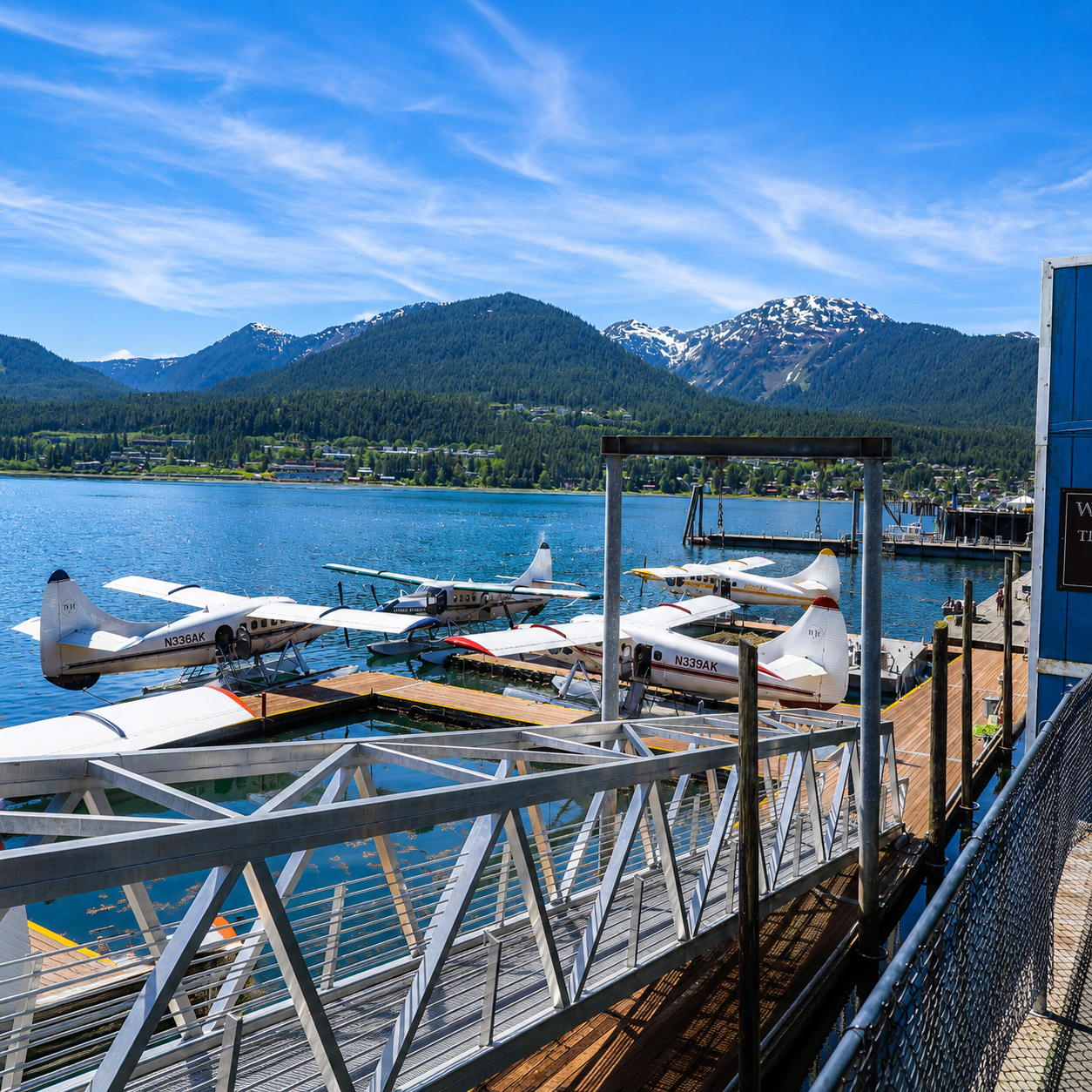
The downtown Juneau seaplane base — where the day begins.
Getting to the Seaplane Base
After leaving the Noordam, we walked along the Juneau waterfront toward the seaplane terminal. It wasn't far — roughly 300 to 400 yards from the main pier area — and it gave us a chance to take in a different side of downtown. We passed restaurants, souvenir shops, and even a knife store before reaching the bright blue building that serves as the seaplane base.
Several seaplanes were tied up at the dock, rocking gently on the water. There is something distinctly Alaskan about seeing them up close. They are so woven into life in remote areas that they feel commonplace to locals, yet for a visitor they immediately create a sense of adventure. Before long, we were climbing aboard a de Havilland Otter and preparing for takeoff.
The Flight Out
As the plane lifted off the water, Juneau shrank quickly beneath us. We could see cruise ships in the harbor and another ship working its way toward town. Within minutes, the city gave way to wilderness.
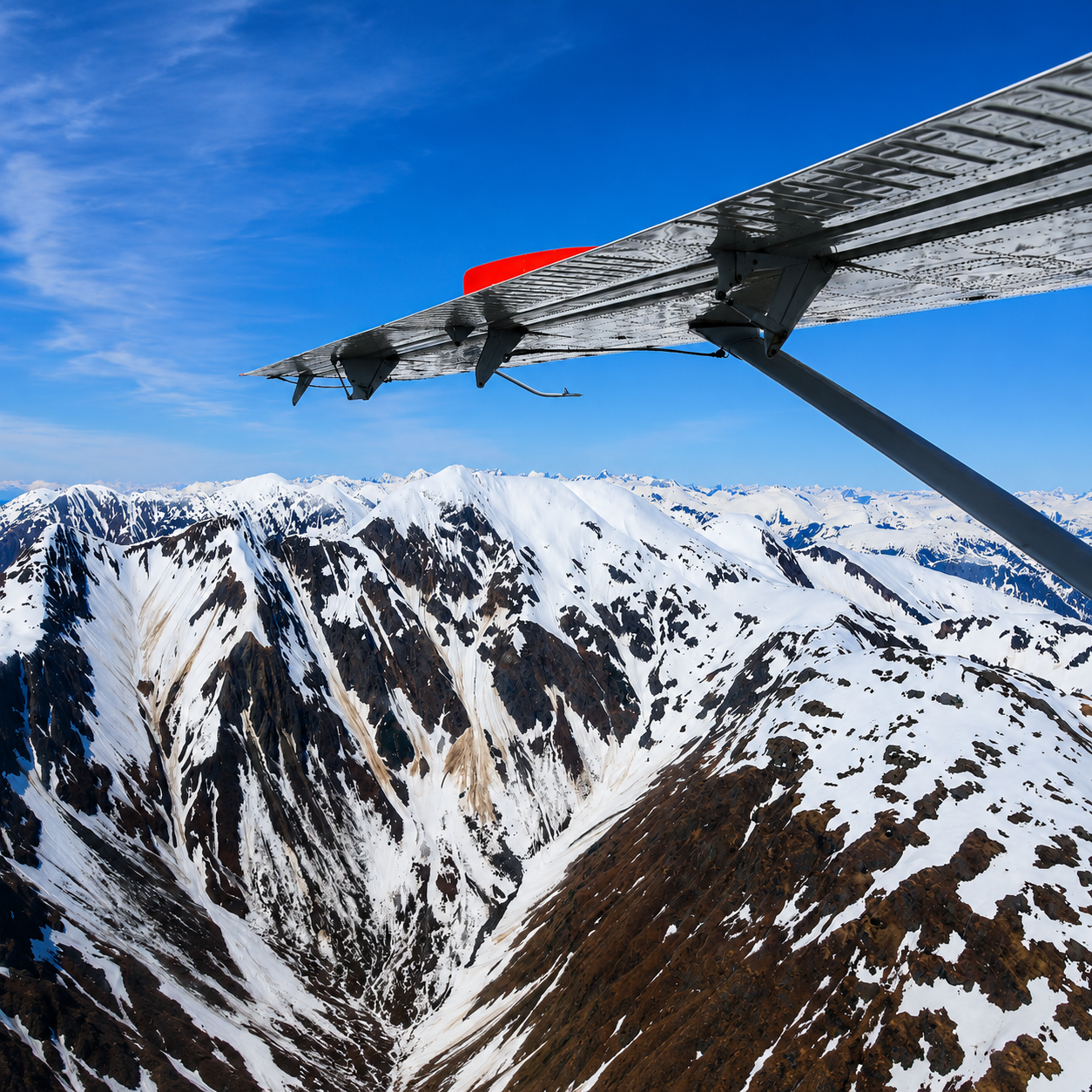
Minutes out of Juneau, the city gives way to snow-covered peaks in every direction.
The flight itself was the part we underestimated. Snow-covered peaks rose in every direction. Lakes mirrored the mountains around them. Deep valleys ran toward the horizon, and glaciers appeared around nearly every turn. The tour is built around five glaciers flowing off the Juneau Icefield, but honestly we lost count — there was simply too much to absorb. For roughly 30 to 40 minutes we flew over a landscape that felt untouched and immense, with another reason to look out a different window every few moments.
The Five Glaciers on the Route
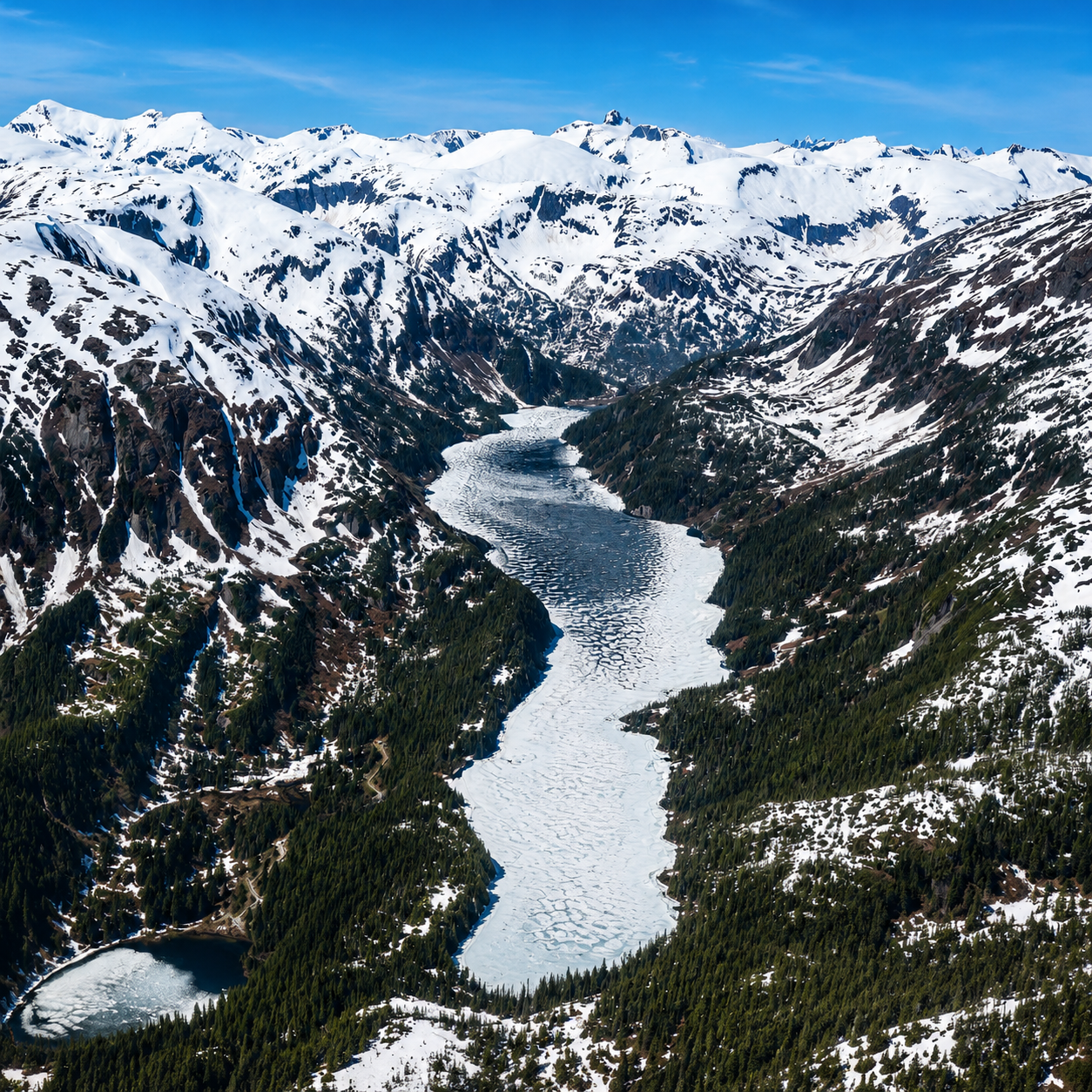
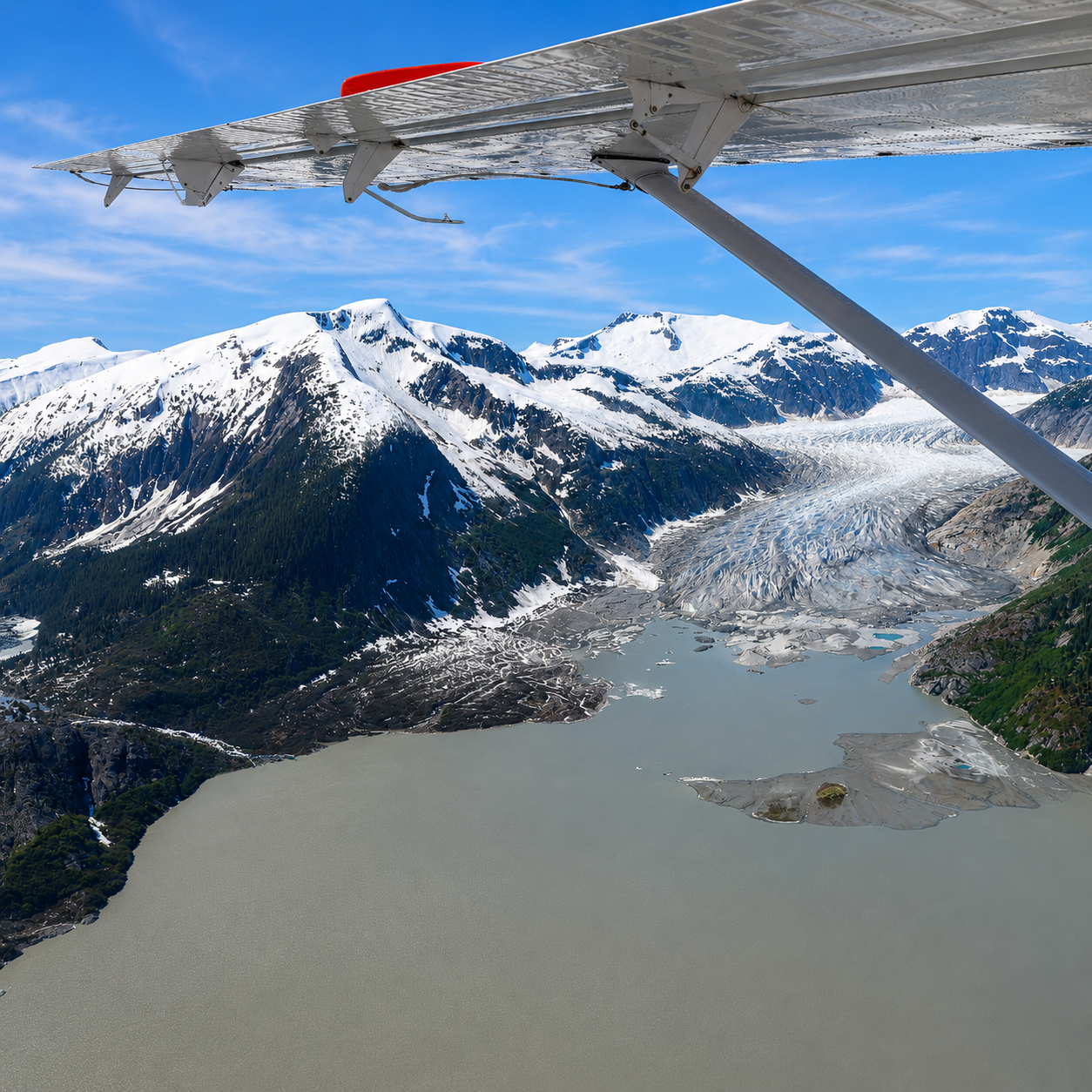
Frozen valleys and glaciers flowing off the Juneau Icefield — too much to take in from one window.
Arriving at Taku Lodge
Eventually we descended toward the Taku River and touched down on the water near the lodge. As we stepped off the plane, the previous group was preparing to leave. A few of them mentioned a black bear had been wandering the property earlier that day, which immediately raised everyone's expectations.
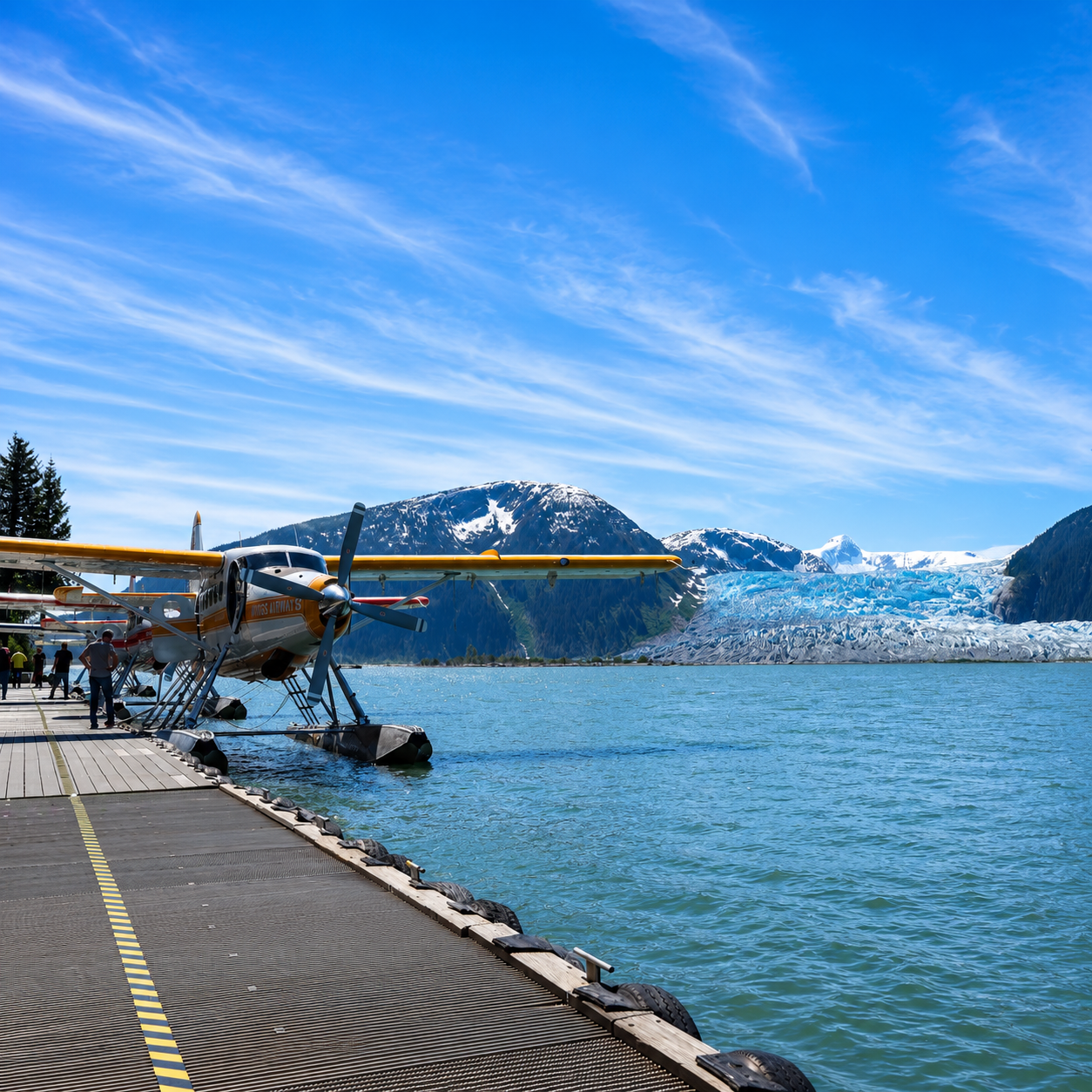
Tied up on the Taku River — the lodge is reachable only by floatplane or boat.
Before we even reached the lodge, another sense took over: the smell. Near the entrance, a staff member was tending a large outdoor grill where salmon cooked over alder wood. Thick strips of alder had been cut down into pieces about the size of kindling and burned down to coals. The combination of wood smoke and salmon drifting across the grounds was enough to make everyone hungry.
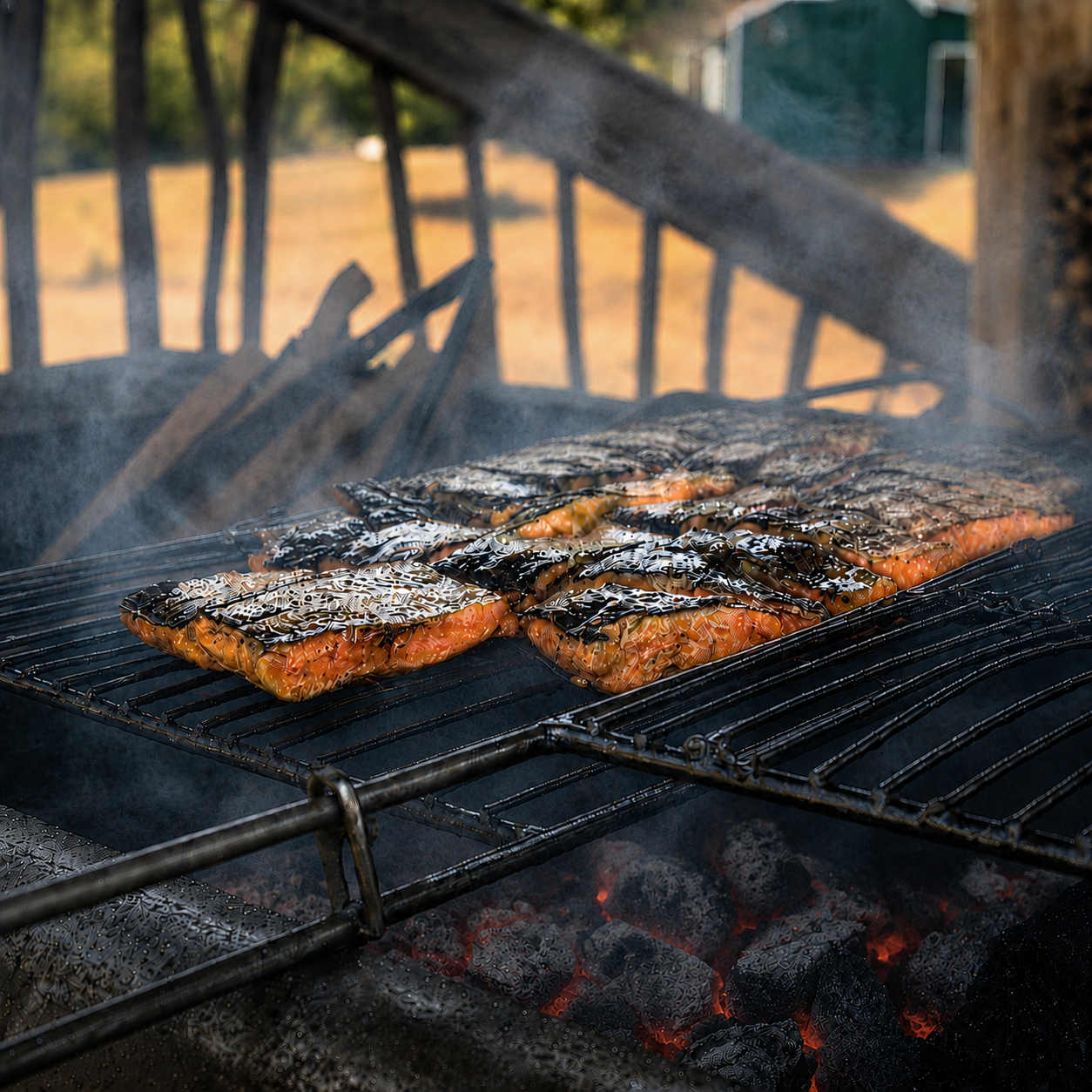
Wild salmon over alderwood coals — you smell it before you see the lodge.
After a short orientation, we had time to explore before lunch. The grounds were the kind of place you stop walking just to look around. Directly across the river stood views toward the Taku Glacier. The underbrush was vibrant green, and the surrounding forest felt lush and almost prehistoric. The canopy overhead, the colors of the vegetation, and the sense of isolation combined into an atmosphere unlike anywhere else we visited on the cruise.
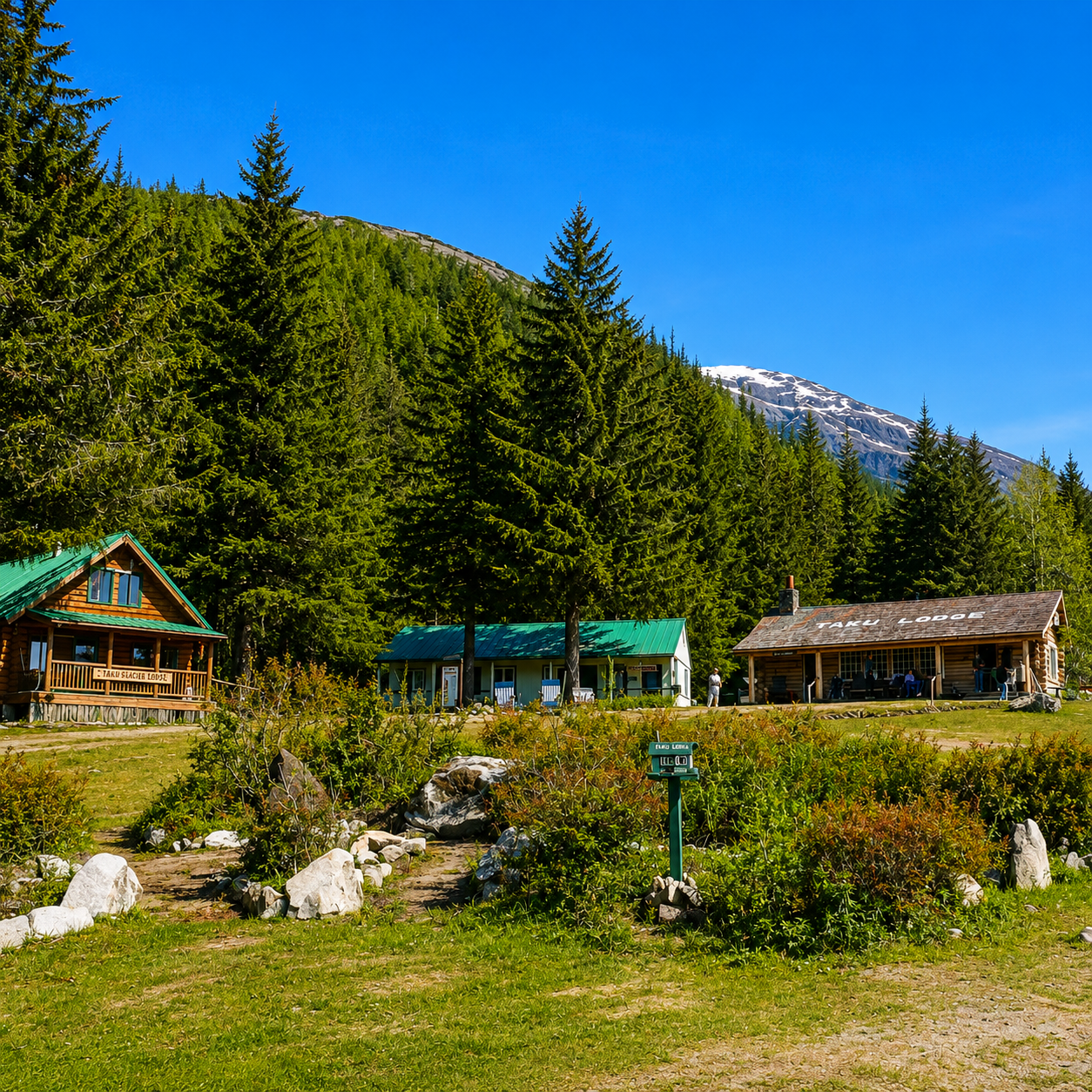
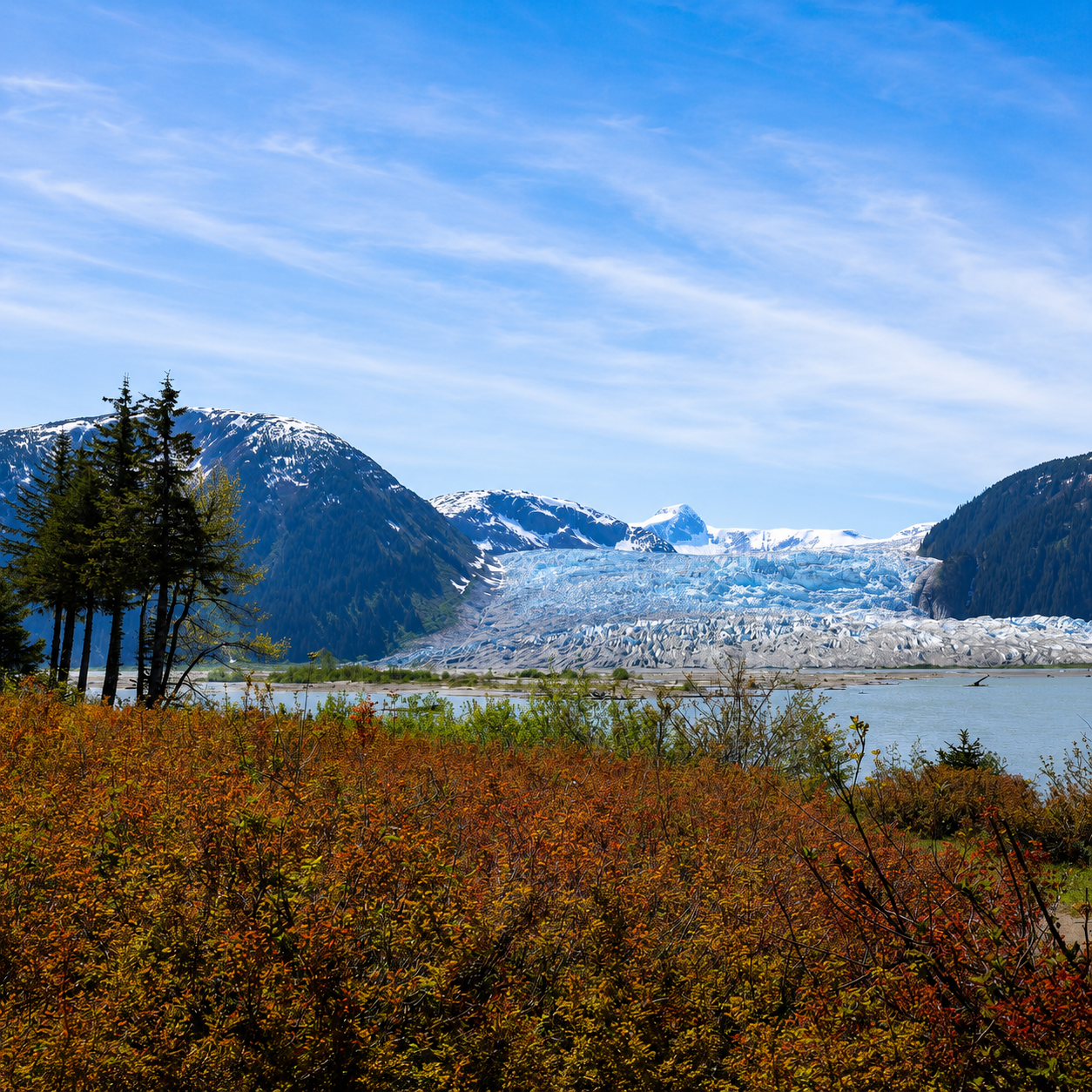
The grounds: lush forest on one side, glacier views across the river on the other.
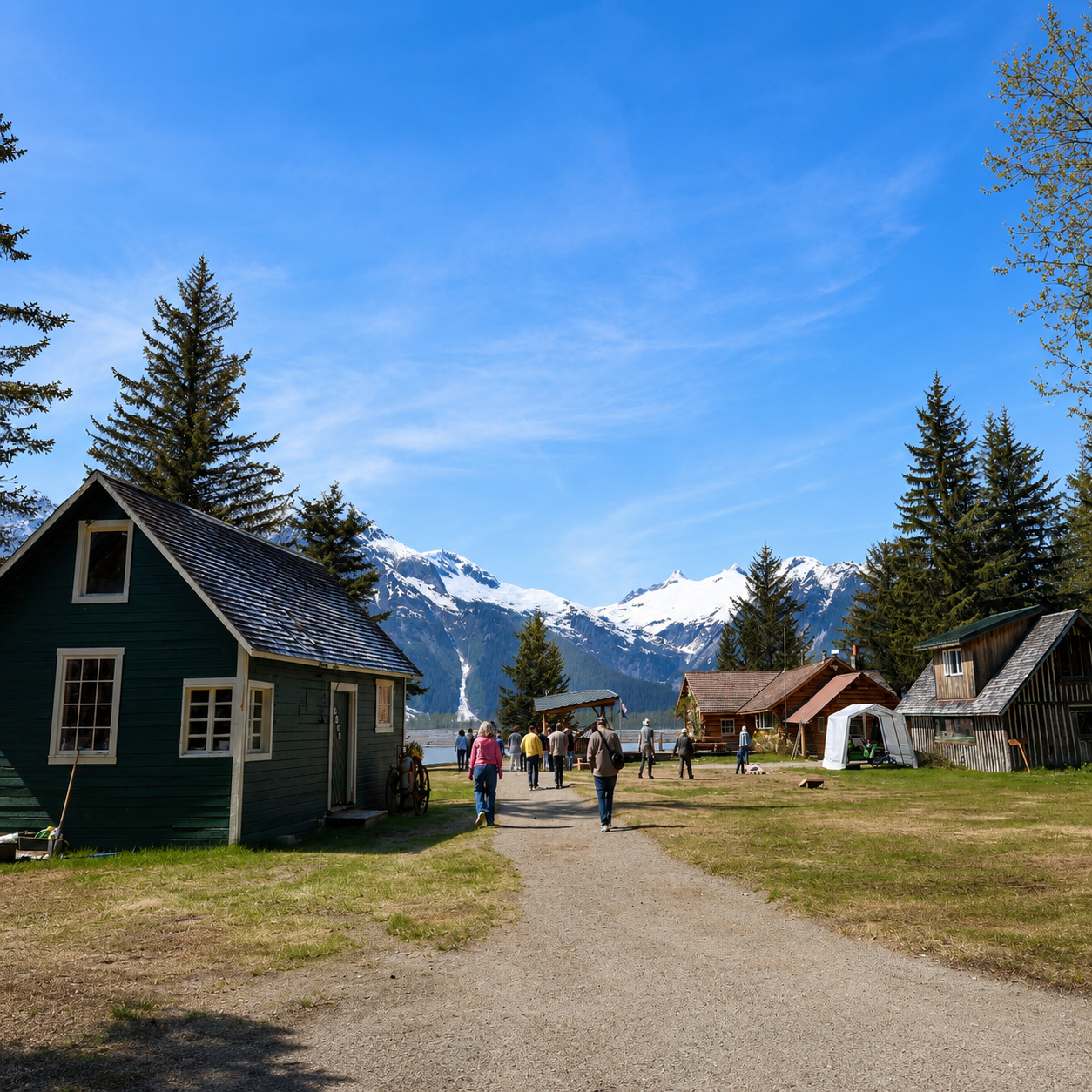
The trail behind the lodge — where we were headed when Hans turned up.
Meeting Hans
As we made our way back toward the lodge, a black bear emerged from the woods. Everyone paused. The bear, however, was completely unconcerned with us. He walked straight to the outdoor cooking area, climbed onto the grill structure, and began licking up the leftover salmon oil and residue.
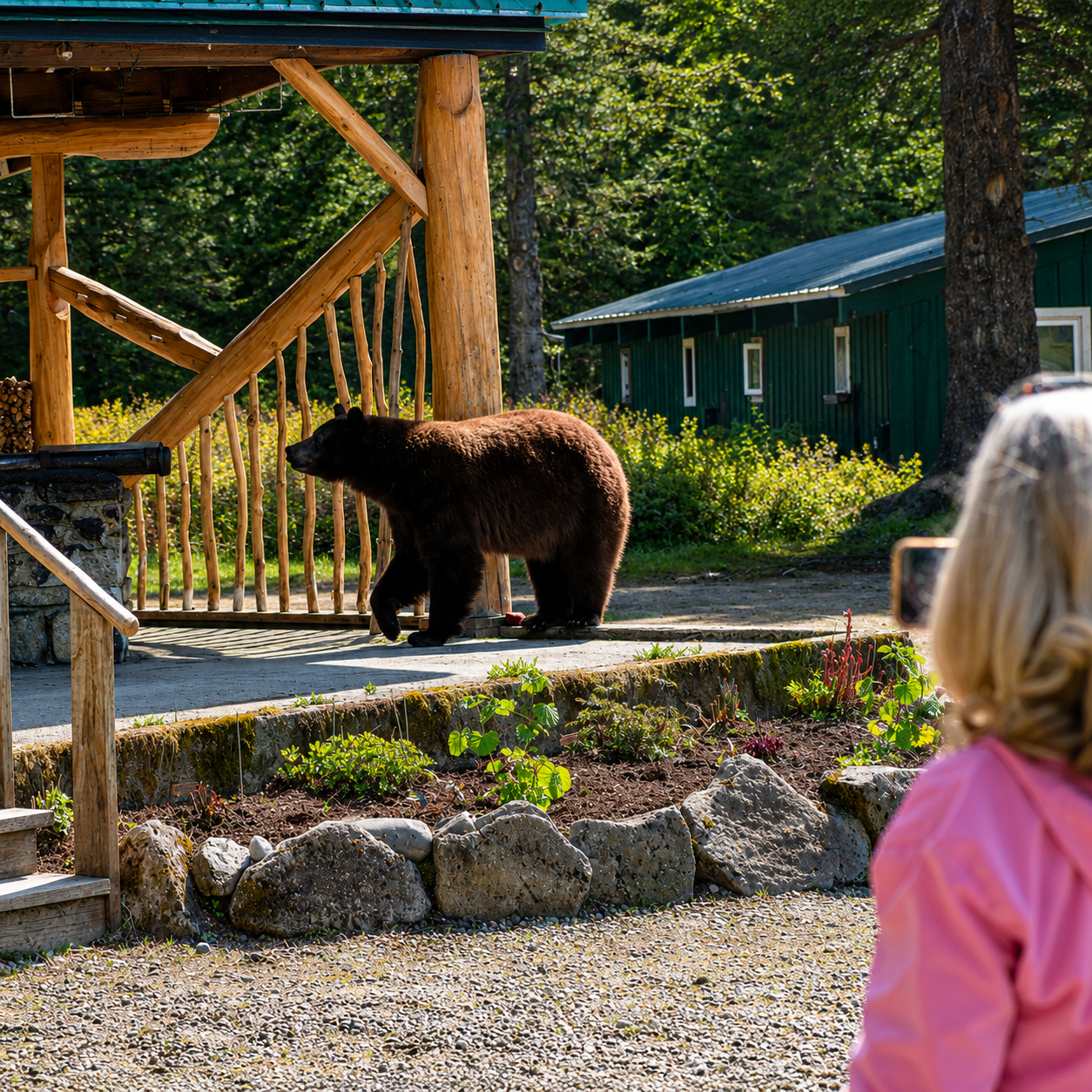
Hans, unbothered, heading straight for the leftover salmon oil.
The most telling part was watching the staff react — or rather, not react. They knew exactly who he was. The bear is a regular visitor and has earned a name over the years.
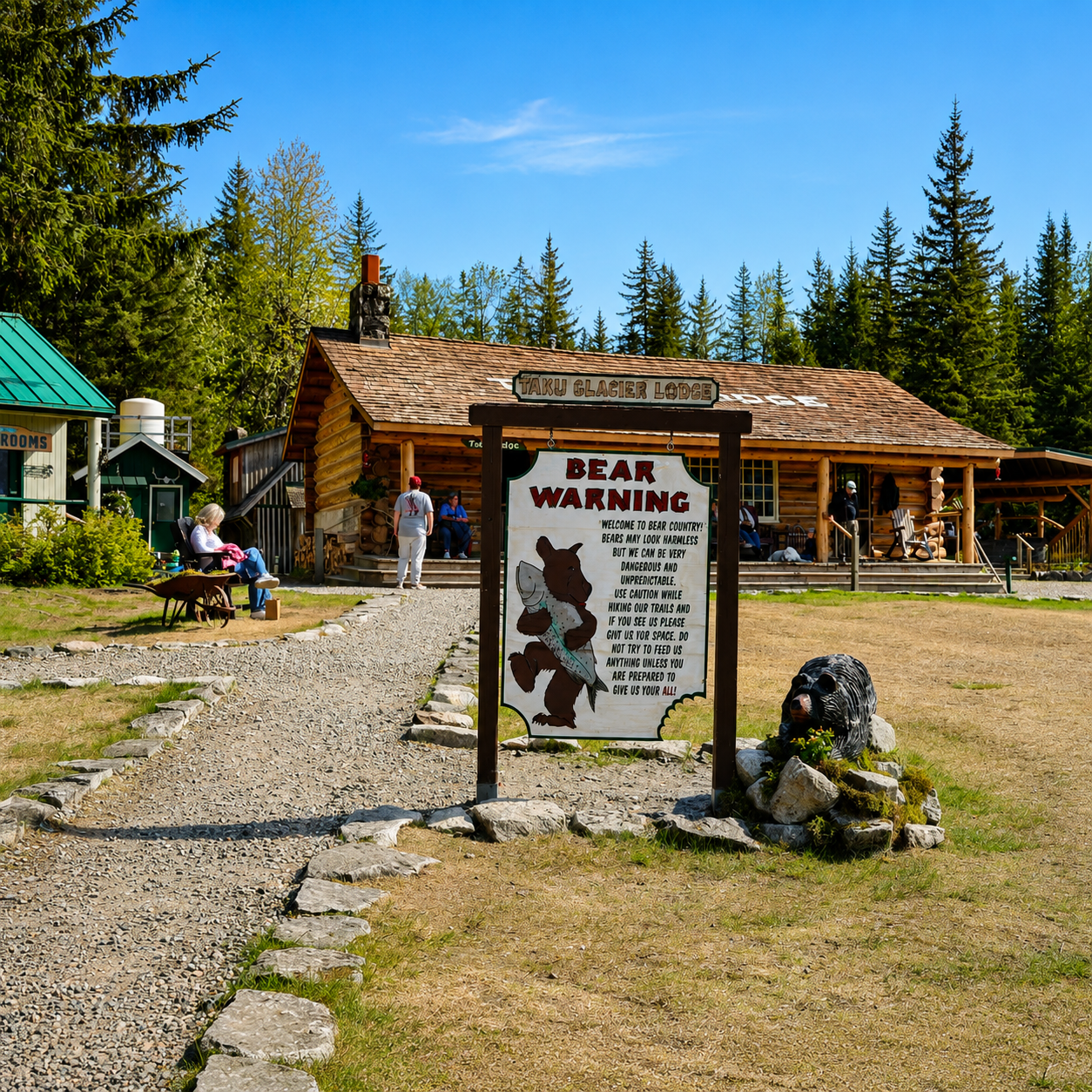
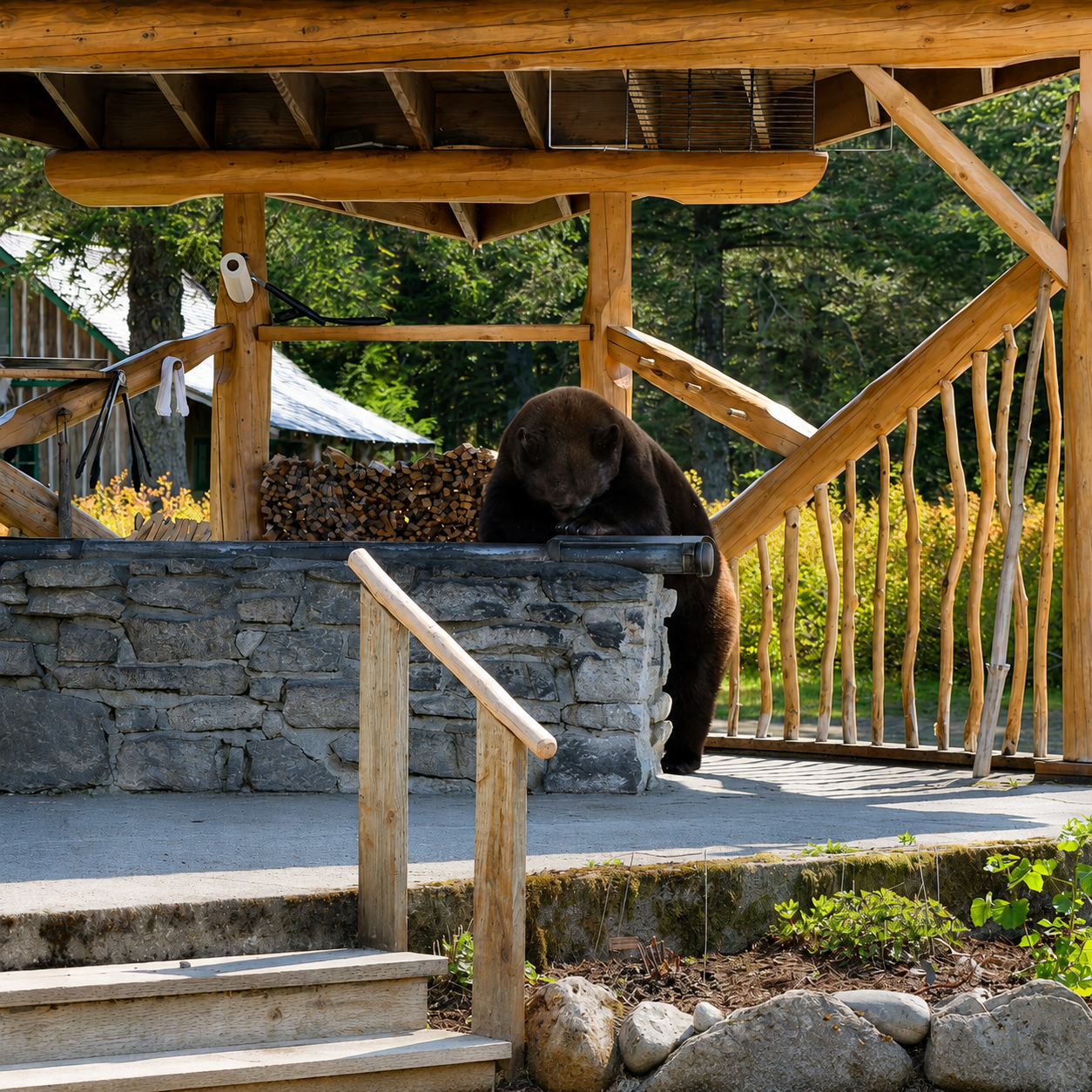
The bear warning sign isn't decoration — Hans treats the grill pavilion like his own.
Inside the Lodge
The lodge itself was exactly what we'd imagined a historic Alaskan wilderness lodge should be. Animal furs covered the walls. Bear skulls and historical artifacts were displayed throughout. There were old winter garments from previous owners and an antique dog sled set up inside. What struck us most was how authentic it all felt — this wasn't a recreated wilderness lodge, it was a real one.
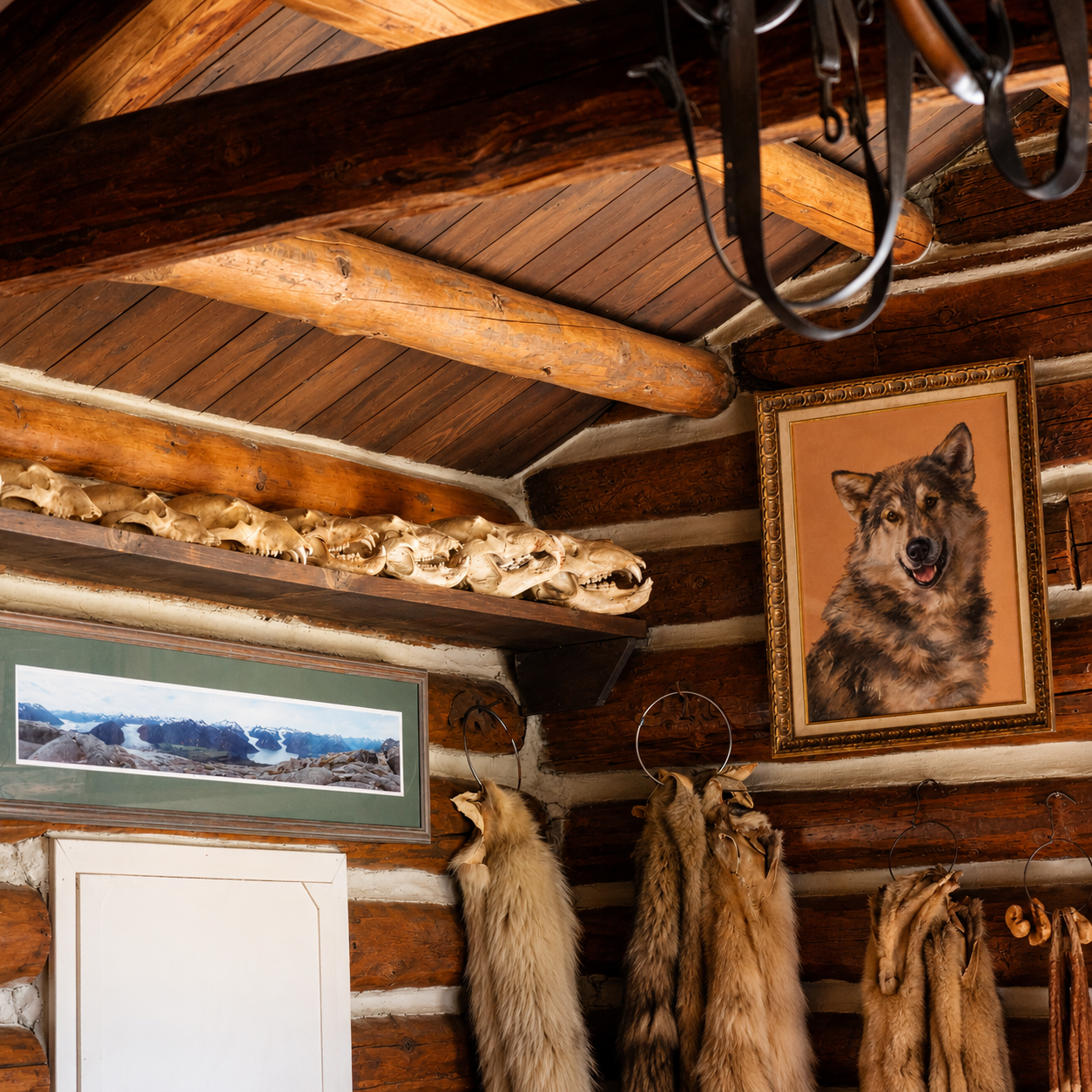
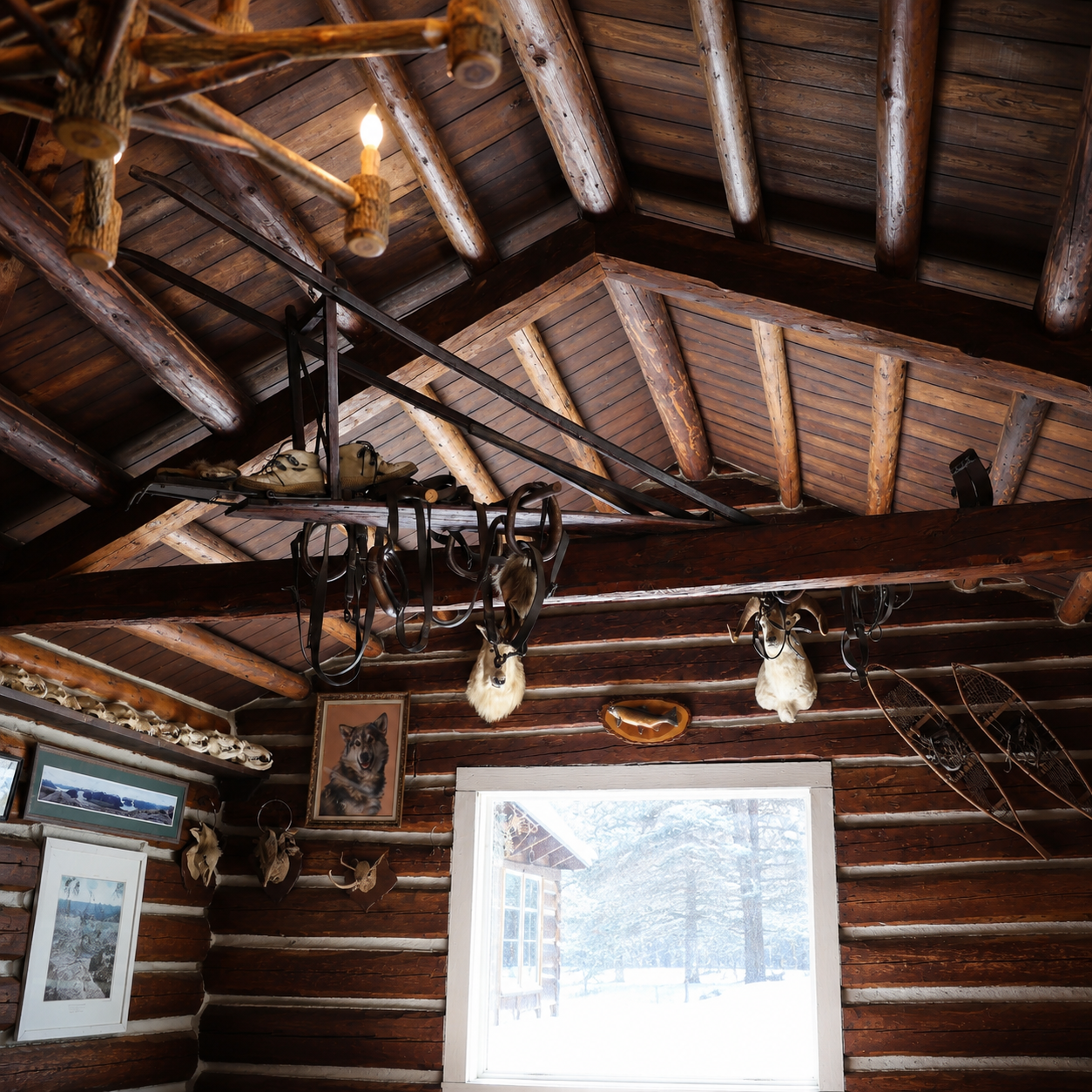
Furs, wildlife mounts, and artifacts throughout — the lodge wears its history honestly.
Part of that comes from its isolation. There are no roads to Taku Lodge. You arrive by boat or by seaplane, full stop. The lodge was built in 1923 and is listed on the National Register of Historic Places, and standing inside, it was easy to picture life here decades ago, when the outside world felt much farther away.
The Feast
Lunch centered on the salmon we'd watched cooking outside. The meal included freshly grilled salmon, coleslaw, pioneer beans, a stewed apple dish, and an herb biscuit. Everything was well prepared, and the staff continuously walked the dining room offering seconds. Nobody was leaving hungry.
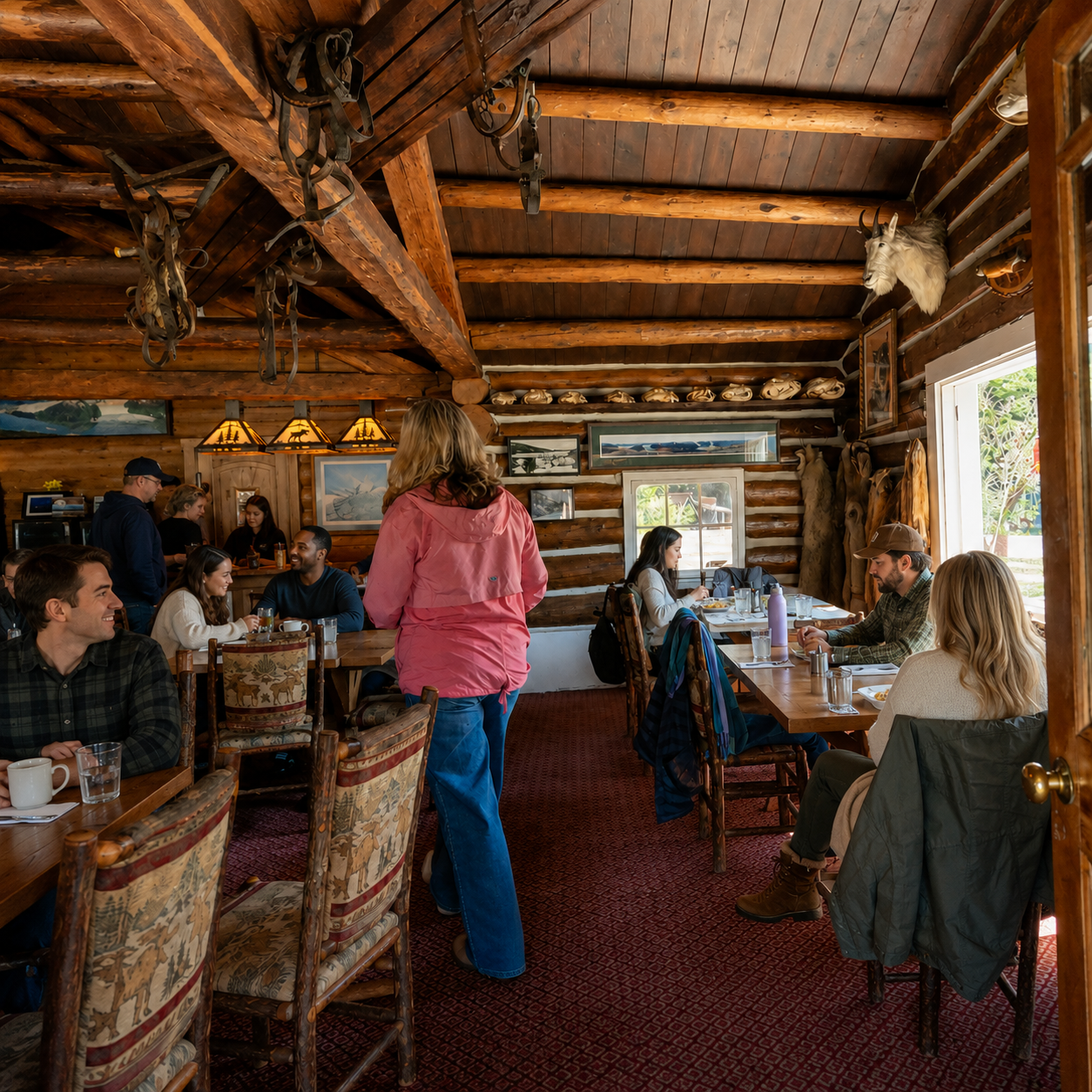
The dining room, where the staff kept the seconds coming.
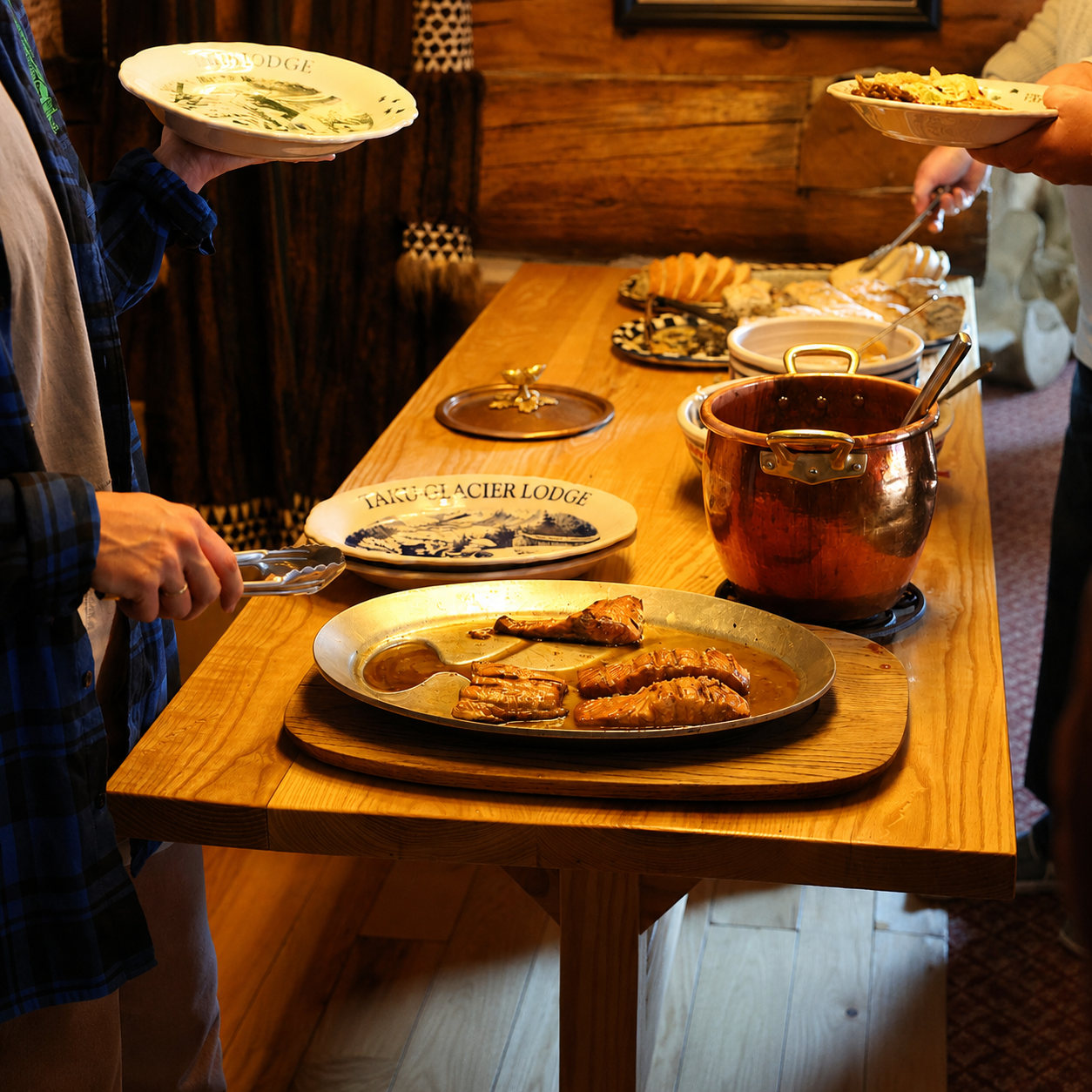
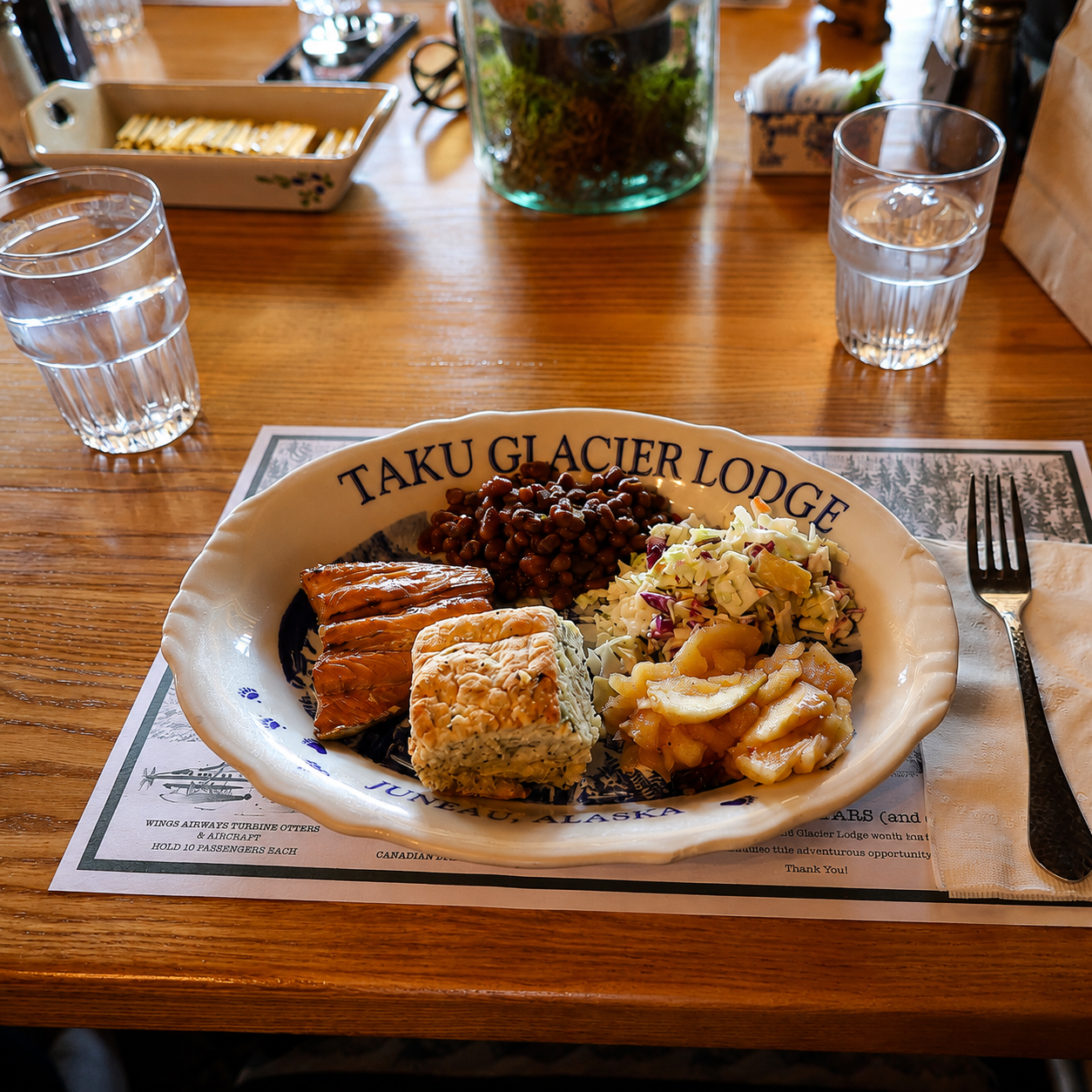
The salmon bake: alderwood-grilled salmon with the made-from-scratch sides.
While we ate, one of the guides shared the lodge's history. One story stood out: a woman who bred huskies here once completed a journey of roughly a thousand miles with her dogs to reach a winter carnival in Fairbanks, to demonstrate the quality of her dogs and her own determination. Suddenly the antique sled inside wasn't just an artifact — it was a real piece of Alaska's past.
Planning It Around Your Port Day
- You can book this on your own and do it during your Juneau port stop — you don't have to reserve it through the cruise line. Booking independently is often less expensive, but the timing is then on you, so plan accordingly.
- Choose an early time slot. The tour runs about three hours plus check-in, and an early departure leaves margin if weather delays the flight or your ship's all-aboard time is tight.
- Know your all-aboard time and build in a buffer. Ships generally leave 30 minutes before the posted departure — don't cut the return flight close.
- The seaplane base is in the blue Merchants Wharf building, a short walk (roughly 300 to 400 yards) from the cruise docks, so transit time in port is minimal.
- Book early in the season, too. The Otter seats about ten, capacity is limited, and summer dates sell out.
- It's weather-dependent. Flights can be delayed or rescheduled, and an earlier slot gives the day room to recover.
- Dress in layers, mind the per-passenger weight policy on the floatplane, and bring a camera with storage to spare.
Reserve the Taku Lodge Feast & 5 Glacier Seaplane
You can schedule this independently and do it right on your Juneau port day — just pick an early slot and leave a buffer before all-aboard. Capacity is small and summer dates fill fast, so it's worth securing before you sail.
Book on GetYourGuide ▸The Waterfall Walk
After lunch, we joined a guided walk to a waterfall behind the property. The trail wound through the forest and gave the guide a chance to point out local plants and their traditional uses. One that stood out was Dragon's Tail, used by Native peoples for various purposes. The walk wasn't difficult — it was just another excuse to spend time in a beautiful setting.
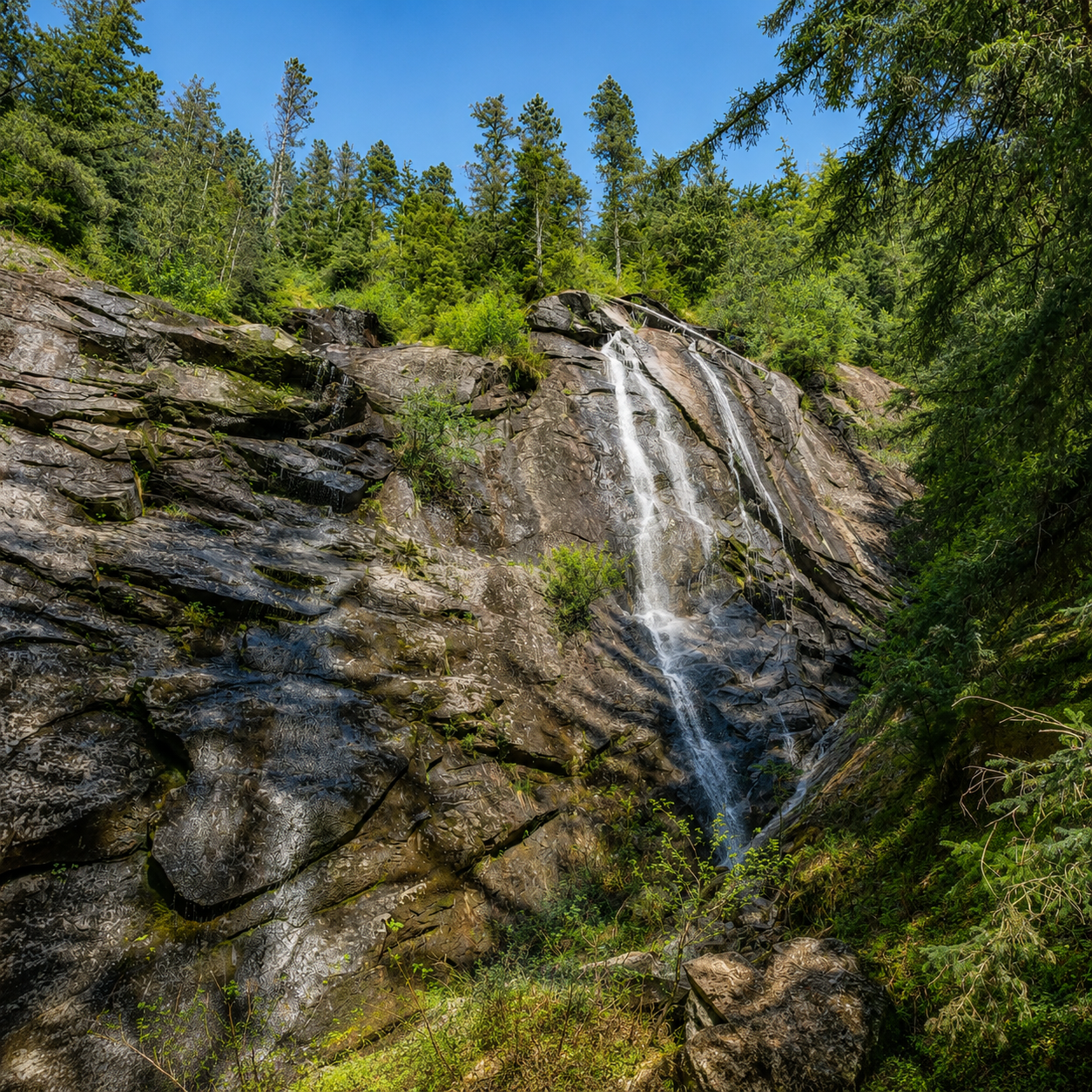
The waterfall at the end of the guided trail behind the lodge.
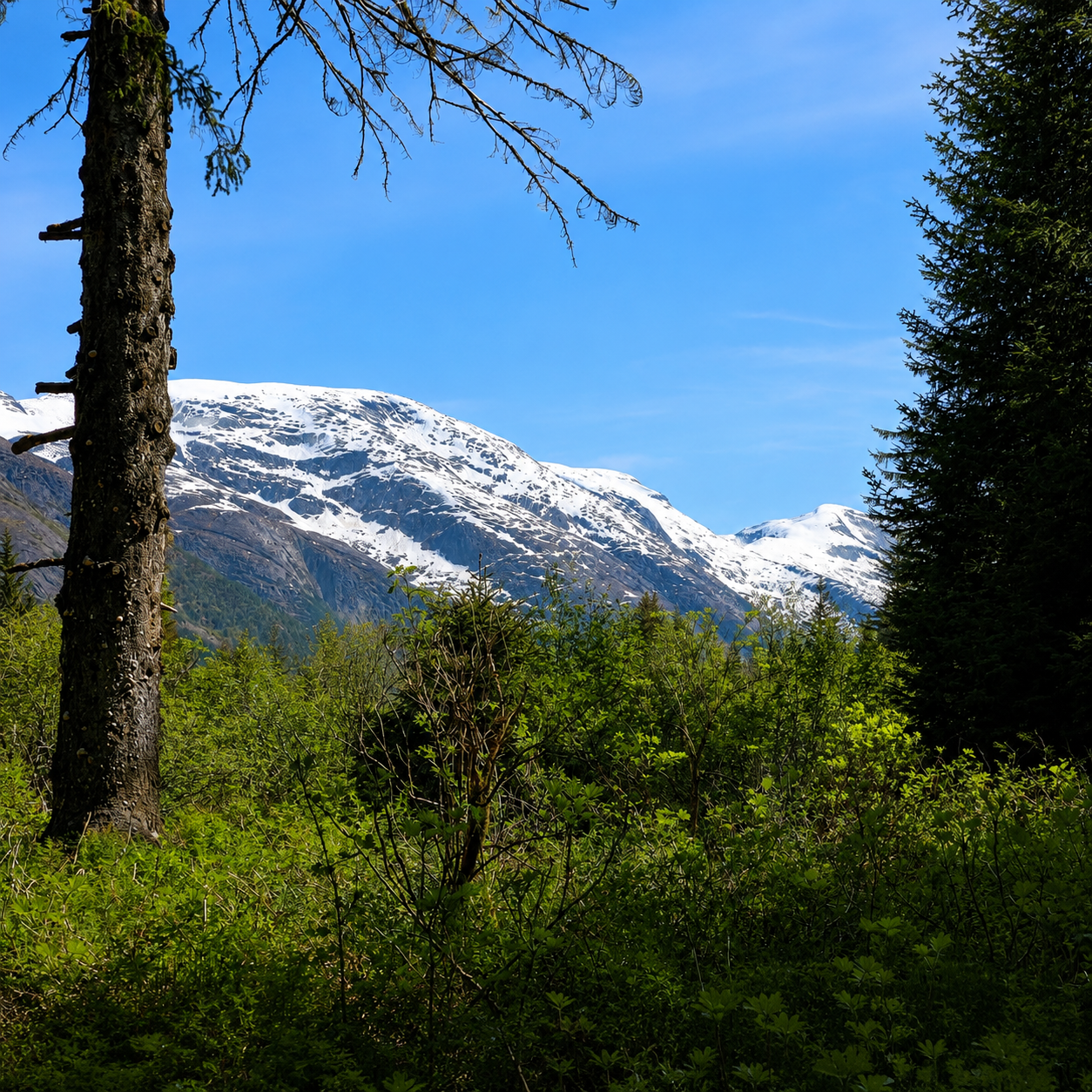
The trail itself: rainforest greenery, a mountain view, and yellow skunk cabbage along the stream.
The Best Part Was the Quiet
When we returned, we still had free time before departing, and for us those final minutes became the highlight. I found a chair overlooking the glacier and simply sat. The temperature was perfect — probably 70 to 75 degrees — and other than the quiet conversation of fellow guests and a breeze moving through the trees, there was almost complete silence.
While we sat, April spotted Hans again. This time he seemed far less interested in food — apparently satisfied with the morning's salmon oil, he stretched out in the sunshine and relaxed. It was a fitting last memory before we boarded for the flight home.
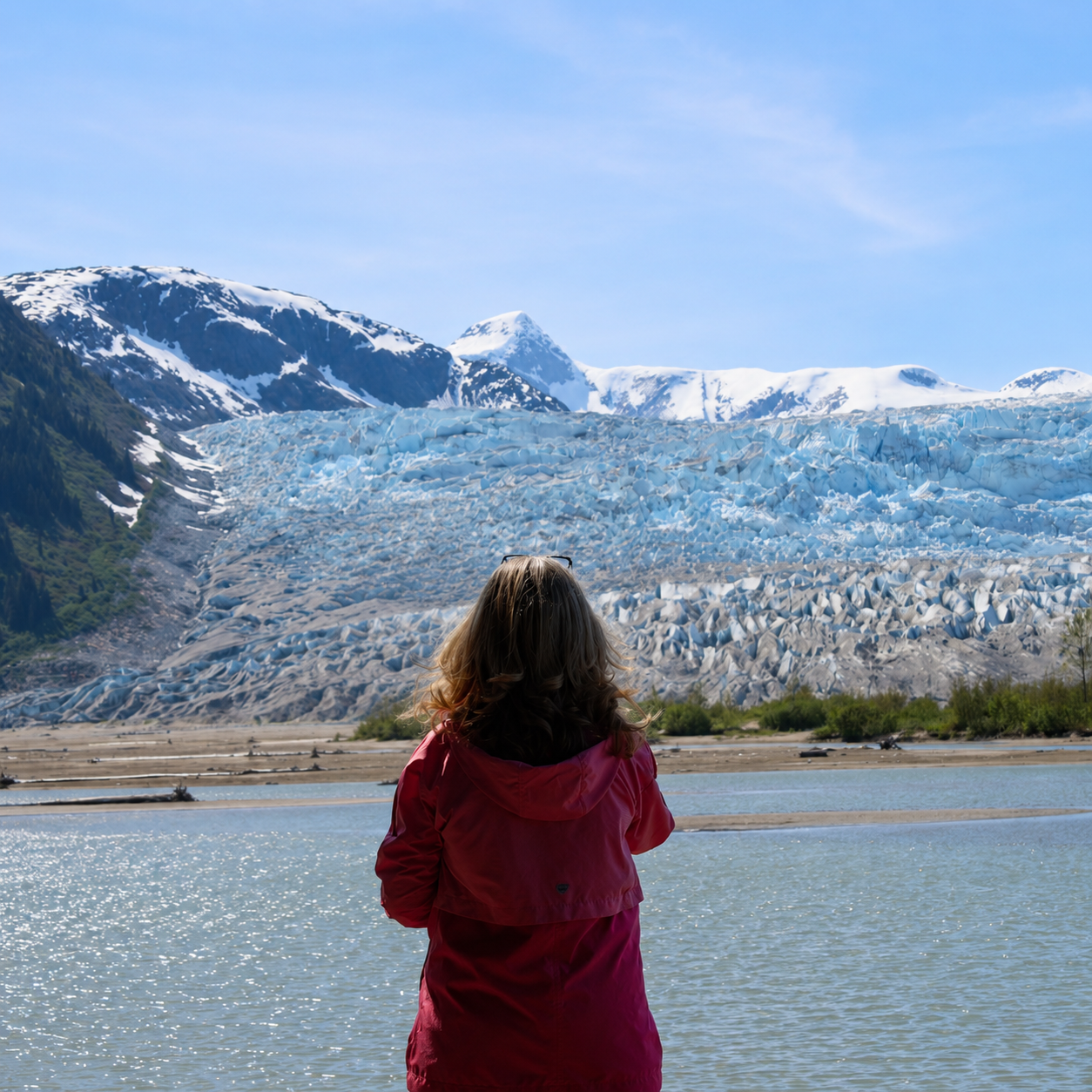
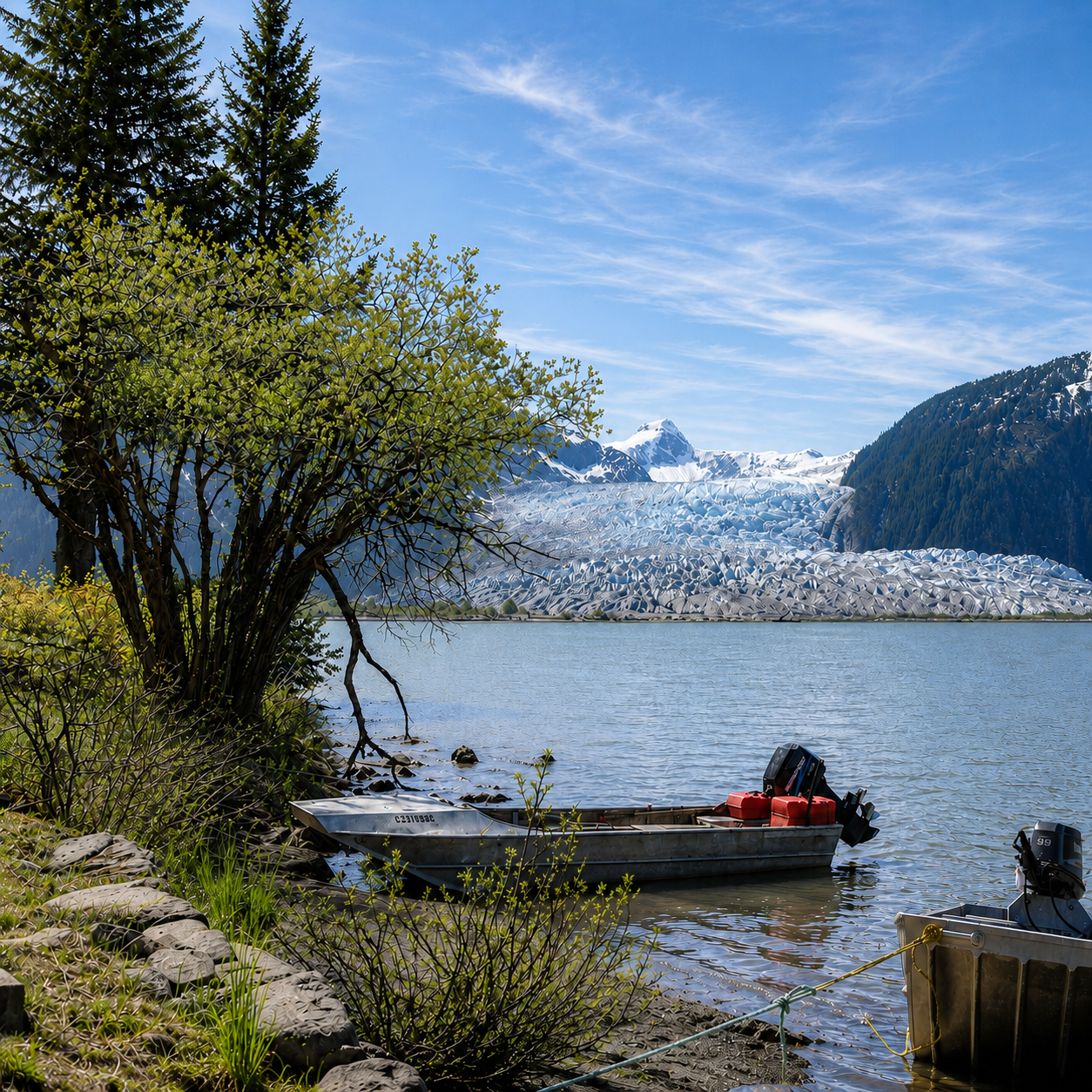
The last quiet stretch before the flight back — perfect temperature, near-total silence.
The Flight Back — and the Verdict
The return flight offered one more pass over the scenery. On both legs the pilots narrated through the headsets, explaining the local geography, identifying landmarks, and sharing stories about life in Southeast Alaska.
Would we do it again? Without hesitation. One of the things we appreciated most was that it felt removed from the crowds. According to our pilot, most helicopter traffic operates around the Mendenhall Glacier, while the Taku River region feels quieter and less visited. We've never seen Mendenhall firsthand, but it was refreshing to spend a port day somewhere that felt genuinely remote.
The combination of glacier views, the seaplane flight, the wilderness scenery, a memorable salmon feast, local history, and a resident black bear named Hans added up to a day that felt uniquely Alaskan. Of everything we did in Juneau, this is the one that stands out.
Add the Seaplane Feast to Your Plans
If you want a port day that trades the crowds for wilderness, this is the one we'd point you to. Book an early slot, plan around your all-aboard time, and check current dates before your sailing.
Check Availability on GetYourGuide ▸Taku Lodge Seaplane Tour FAQ
Have Feedback?
We read every note. Tell us what you'd like us to review next, or share your own Juneau experience.
■ Email UsCome Travel With Us
New first-hand reviews, port guides, and excursion ideas across all our channels.
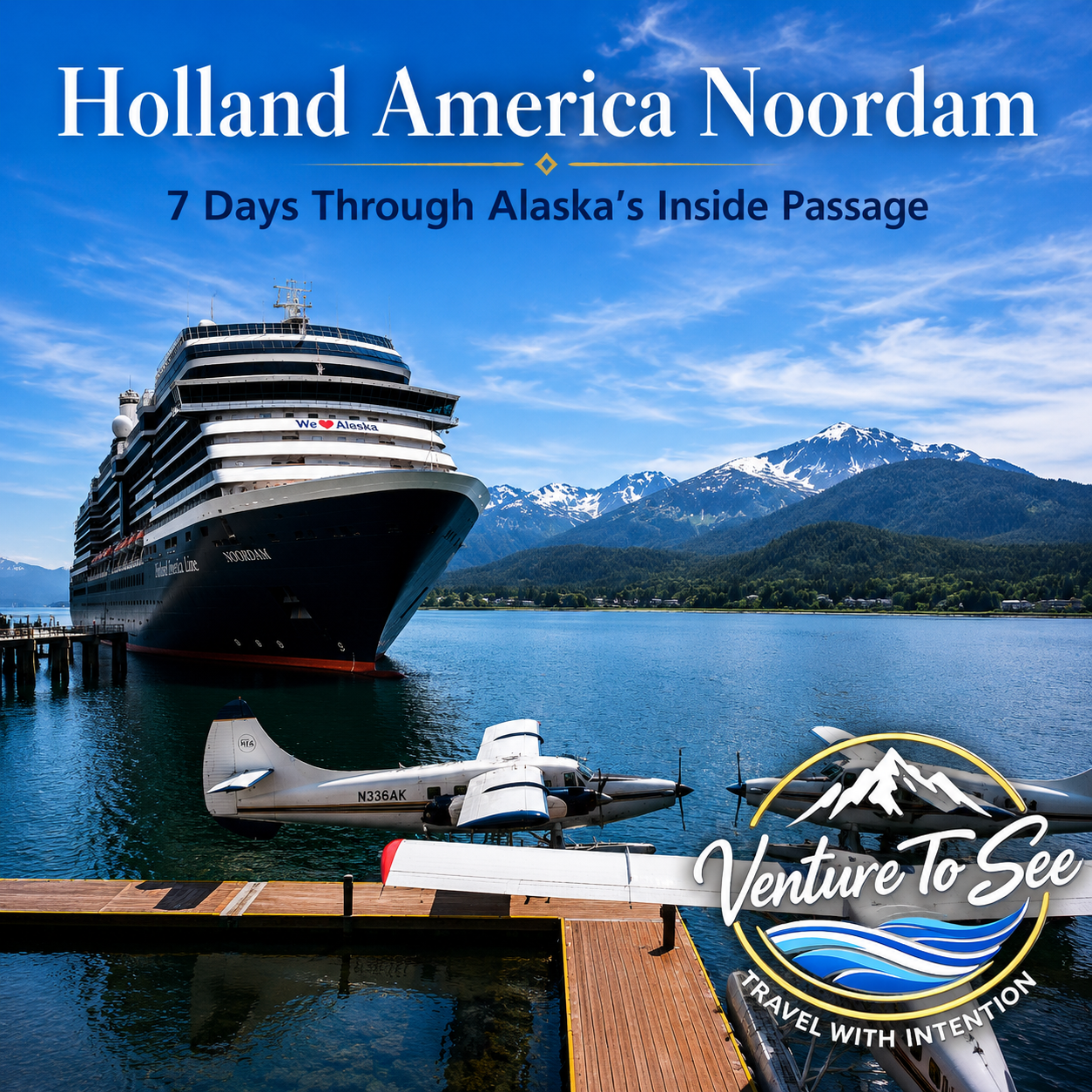
7 Days Through Alaska's Inside Passage Aboard Holland America's Noordam
We booked a 7-day Holland America Noordam cruise through Alaska's Inside Passage six weeks out on an AARP member fare. Here's our honest, port-by-port review — Juneau, Dawes Glacier, Sitka, Ketchikan, and Victoria — including the one excursion that made the trip and what we'd do differently.
Taku Glacier, Alaska
7 Days Through Alaska's Inside Passage Aboard Holland America's Noordam
An honest review of a cruise that wasn't even on our calendar six weeks before we sailed.
When people picture an Alaska cruise, they picture glaciers, whales, snow-capped mountains, maybe a bald eagle overhead. What they don't picture is the decision that gets them there. Ours wasn't planned years out. It wasn't on our radar a couple of months before departure. What changed our minds was a sales offer Holland America put out for AARP members — a fare that was simply too good to ignore.
A quick side note, since it surprises people: you don't have to be retired, or even in your fifties, to join AARP. Membership is open at any age, and the travel and cruise-line offers that come with it can more than cover the cost of joining. That one promotion is the reason Alaska went from "someday" to booked in a single afternoon.
Six weeks before sailing, Alaska wasn't on the calendar. Then it was. Before long we were boarding a flight to Seattle to spend seven days aboard Holland America Line's Noordam, working our way through Juneau, Endicott Arm, Sitka, Ketchikan, and Victoria. What follows is the honest version of that week — the parts that lived up to the brochure and the parts that didn't.
Arriving in Seattle
As we tell our clients, we arrived the day before embarkation. Missing a cruise because of an airline delay is not a vacation memory anyone wants. For our pre-cruise night we chose the Residence Inn Seattle Sea-Tac Airport, about 1.6 miles from the airport. The taxi from the terminal ran roughly $21, reasonable for the location.
The hotel was what we expected — clean, comfortable, quiet, nothing extravagant. If you've stayed at a Hampton Inn, you have the idea. What we didn't expect came the next morning. From the fifth-floor outdoor balcony, past a small lake behind the hotel, Mount Rainier stood perfectly clear on the horizon. Standing there with a coffee, looking at one of the most recognizable peaks in North America, turned an ordinary airport overnight into something we still remember. Breakfast was adequate and nothing more. We'd book the property again for the location and the chance of that view, not the eggs.
Mount Rainier from the hotel balcony — an unexpected start to the trip.
Seattle's Waterfront and Pier 91
We left for our noon arrival at Pier 91 a little after 11 a.m. The distance was only about 17 miles, but Seattle traffic stretched it to roughly 45 minutes, and the Uber ran about $66 plus tip. On the way in, the revitalized waterfront caught our attention — the aquarium, Pike Place Market, ferries, museums, and public spaces all looked connected into a destination that deserved more than a drive-through. If we come back, and we expect we will, we'd arrive several days early.
Seattle's waterfront, on the way to the pier.
One thing future Alaska cruisers should understand: not all Seattle cruise terminals are equal. Holland America and Princess use Pier 91, an industrial port facility with no restaurants, shopping, or attractions within walking distance. We passed Pier 66 downtown, where a Norwegian ship sat right in the middle of the action. Pier 91 is strictly a place to board the ship. The terminal was efficient but slower than Royal Caribbean or Celebrity — about an hour from dropping luggage to stepping aboard. Not difficult, just slower.
Sailing out of Seattle aboard Noordam.
First Impressions of Noordam
Noordam felt different from many modern ships. Not old or outdated — different. It's designed for adults who enjoy travel rather than travelers chasing constant stimulation. One of the first things we noticed was the library. An actual library, substantial, connected to a coffee venue where you could sit, read, and watch the scenery. That told us a lot about who this ship is built for.
Noordam is one of Holland America's 2006-built Vista-class ships, and it doesn't feel its age. Its most recent dry dock wrapped in December 2024, refreshing public spaces and staterooms — the latest round in a fleet-modernization program Holland America has invested hundreds of millions of dollars in across its ships. An earlier 2019 refurbishment brought the Explorations Café, and with it the library that quickly became one of our favorite spots onboard.
The public spaces were clean and well kept, the crew friendly, and — important for Alaska — there were viewing spots everywhere: Deck 3, Deck 10, Deck 11, the Crow's Nest, outdoor observation areas, the promenade. The buffet offered more variety than anyone could reasonably sample, and dinner in the Main Dining Room came with shared seating, which many lines have abandoned. The conversation was easy and the food was better than we expected. Noordam wasn't reinventing cruise dining. It was doing the traditional version well.
A Sea Day of Watercolors and Salmon Meatballs
Our first full day was at sea, sailing north, and we stayed busier than we expected — not because of endless attractions, but because of how many things were on offer that we'd normally skip. A watercolor class. A floral arrangement class. April took the floral class while the other half of our travel team sat in on a cooking demonstration for salmon meatballs with avocado-lime dressing. That sentence tells you more about Holland America than any brochure could. This isn't a waterslide cruise line. It leans into enrichment, learning, and relaxation.


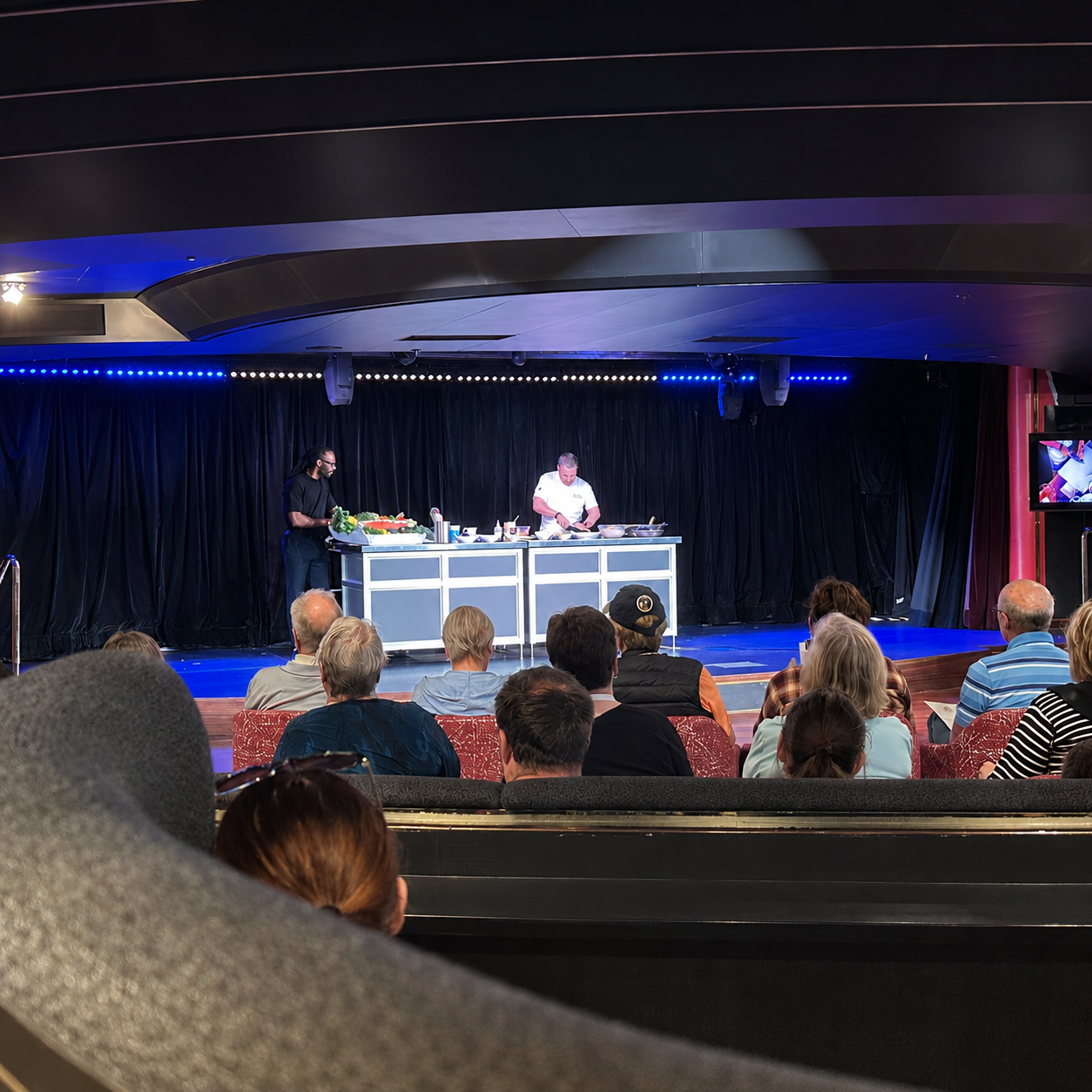
The salmon-meatball cooking demonstration.
By three o'clock, half the ship seemed to be hunting for a seat at afternoon tea, where a cello and violin duo played over tiered trays of sandwiches and desserts. And the meal we remember most that day wasn't dinner — it was a buffet lunch of grilled sausage, pork roast, mashed potatoes, and sauerkraut. The pork fell apart on the plate. Sometimes the dish you remember isn't the expensive one.
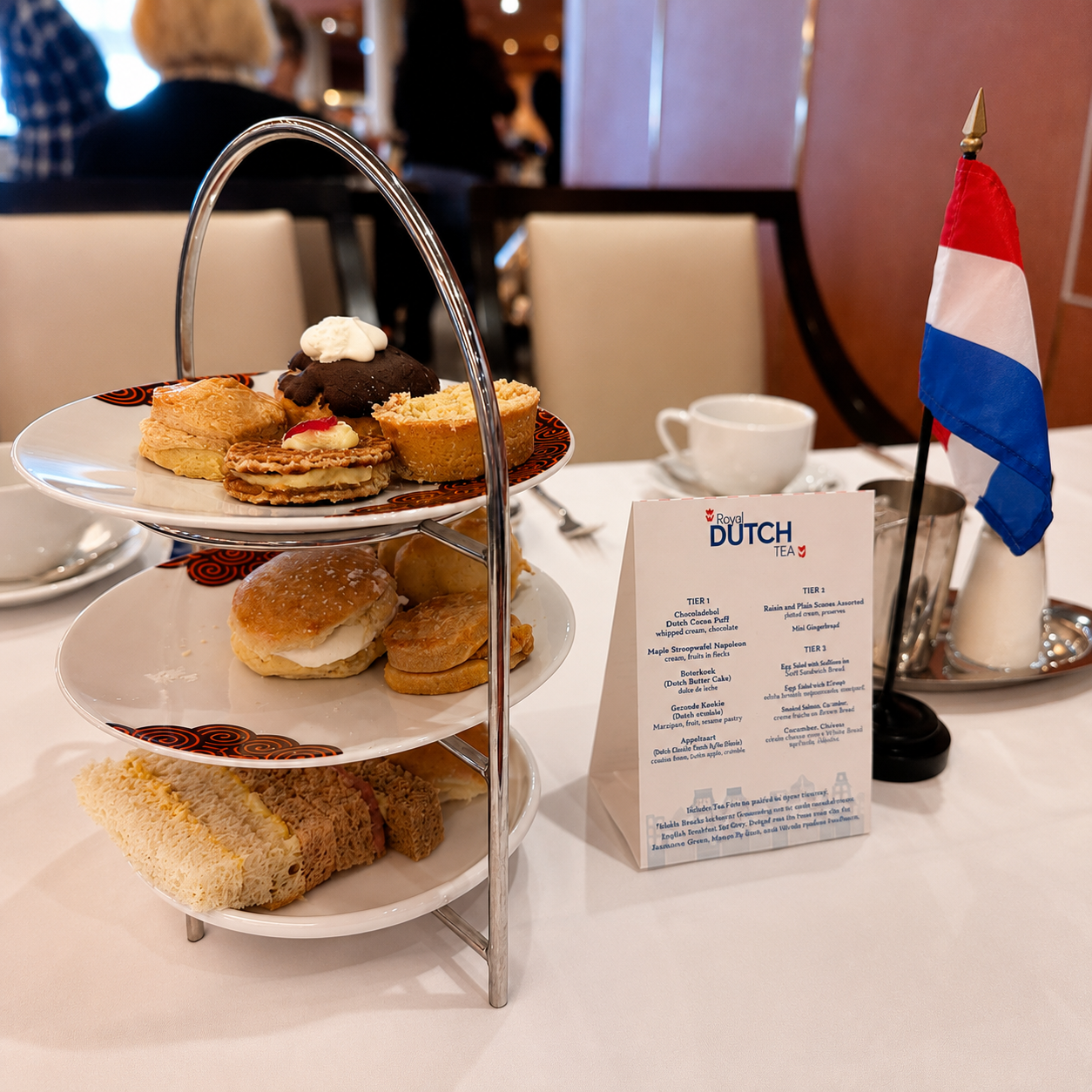
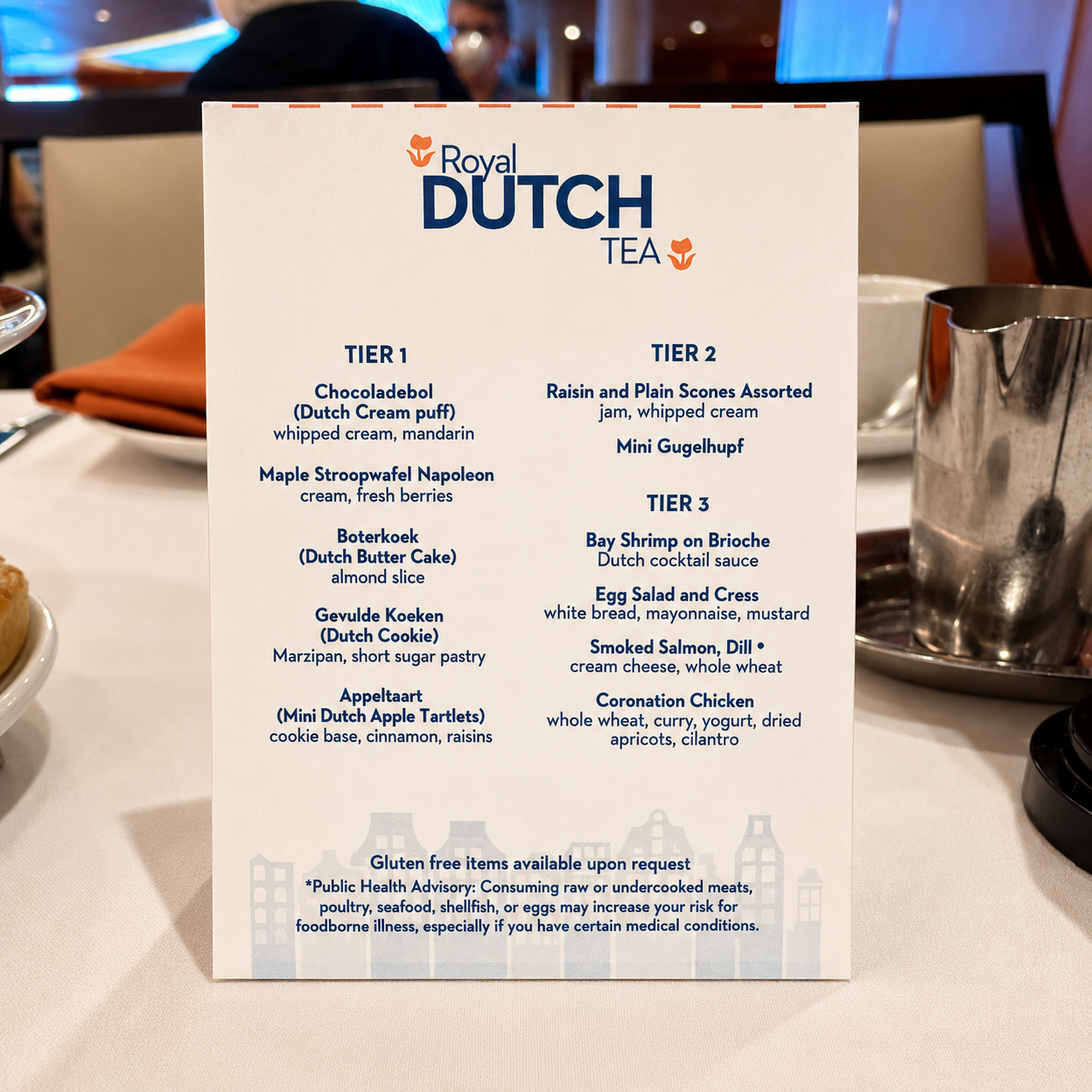
Juneau and the Excursion That Made the Trip
Juneau sits between mountains and water, with no roads connecting it to the rest of North America — you arrive by air or by sea. When we pulled in around noon there were already several ships in port, and at one point four were visiting at once. For a city of around 31,000 people, that's a lot of visitors in an afternoon. The downtown by the docks honestly reminded us of a Caribbean cruise port: souvenir shops, jewelry stores, crowds. The real attraction in Juneau isn't Juneau. It's everything outside of it.
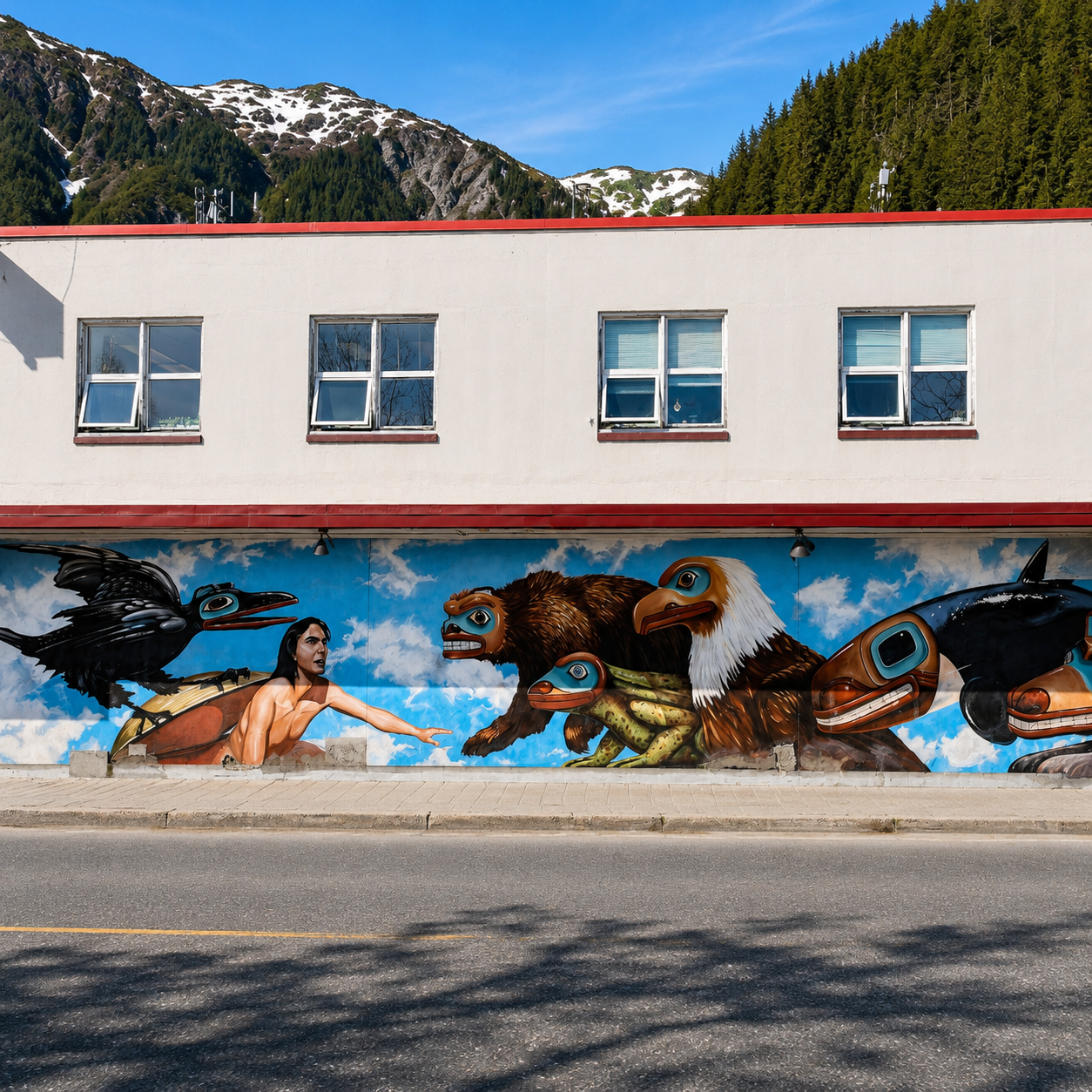
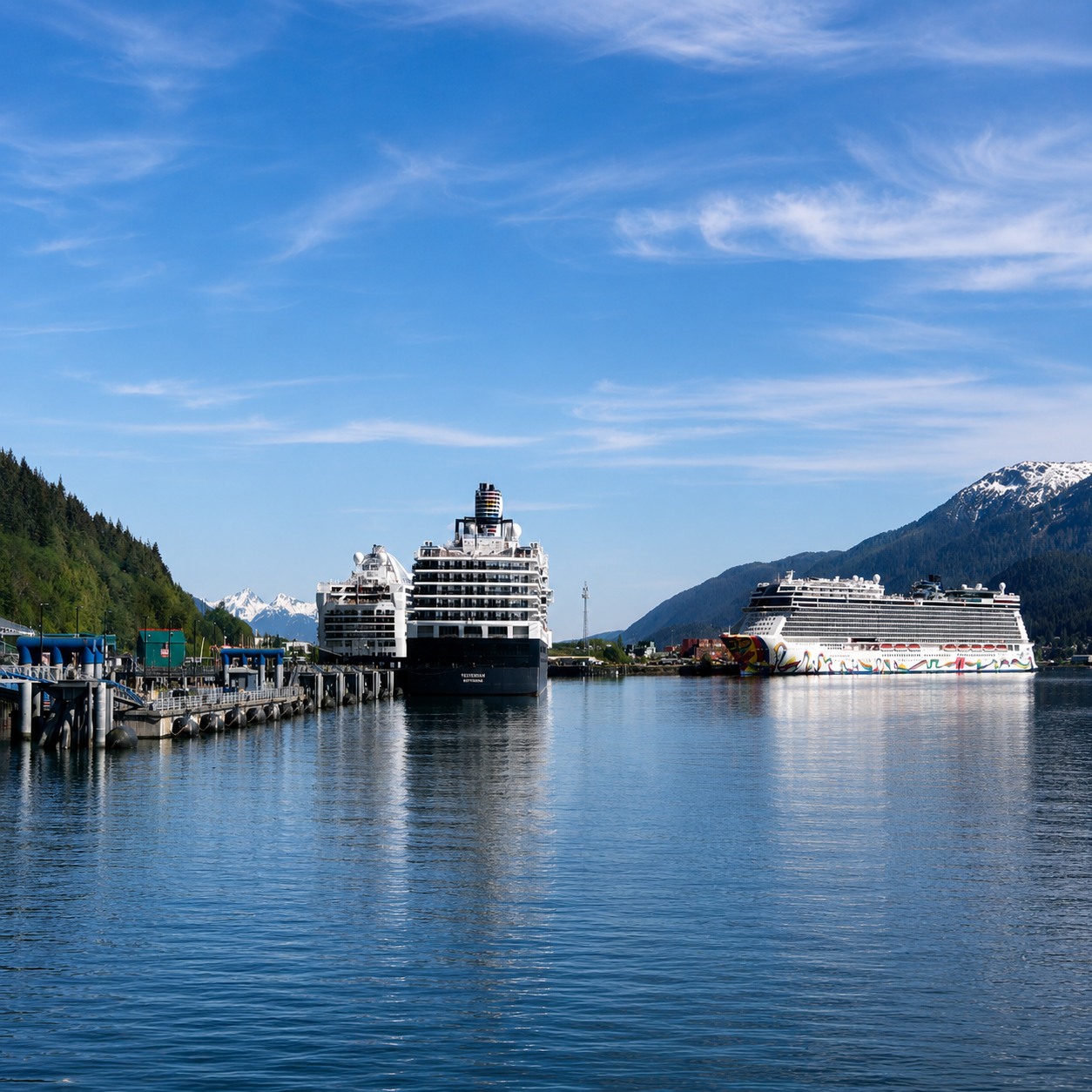
One thing that surprised us about Holland America was how much of the shore-excursion lineup centered on fishing. Nearly every port offered some version of it — fly fishing, salmon, rockfish, halibut — tied to the line's Savour My Catch program. Land an eligible keeper and the ship's chefs will prepare it and serve it at dinner, or you can have it professionally cleaned, flash-frozen, and shipped to your home in the U.S. for a processing fee. It's a genuinely nice touch. The catch, so to speak, is that those trips are popular: by the time we booked, six weeks out, almost all of the fishing excursions were already sold out. The rest of the lineup ran the usual Alaska range — scenic drives, glacier visits, and wildlife viewing for whales, orcas, seals, and more — which is the direction we ended up going.
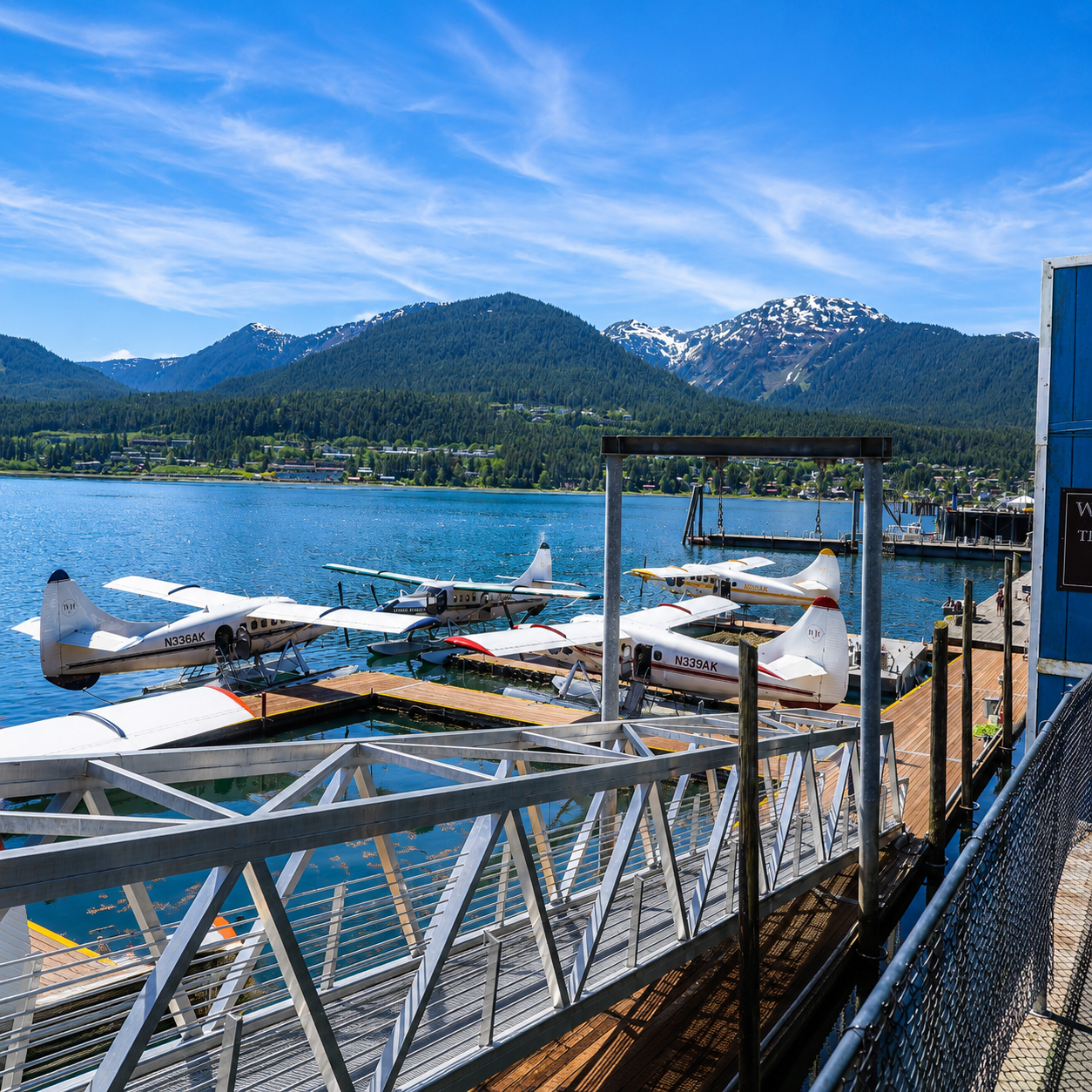
Juneau's seaplane dock, hemmed in by mountains and sea.
When we booked the cruise, we'd reserved a visit to Mendenhall Glacier — the obvious first-timer choice. The more we researched, though, the more one excursion kept surfacing: the Taku Lodge Feast and Five Glacier Seaplane Adventure. We switched. It turned out to be the best travel decision we made all week.
We're giving that day its own in-depth post, so here's the short version. A small seaplane carried us over five glaciers to a remote riverside lodge reachable only by water or air. The salmon was grilling over alder wood before we'd even landed, and a black bear the staff called Hans wandered through the property, licking salmon oil near the grill and eventually settling down in the open while we all watched from a respectful distance. The lunch — grilled salmon, baked beans, coleslaw, biscuits — wasn't fine dining. It was better than that. It felt authentic.
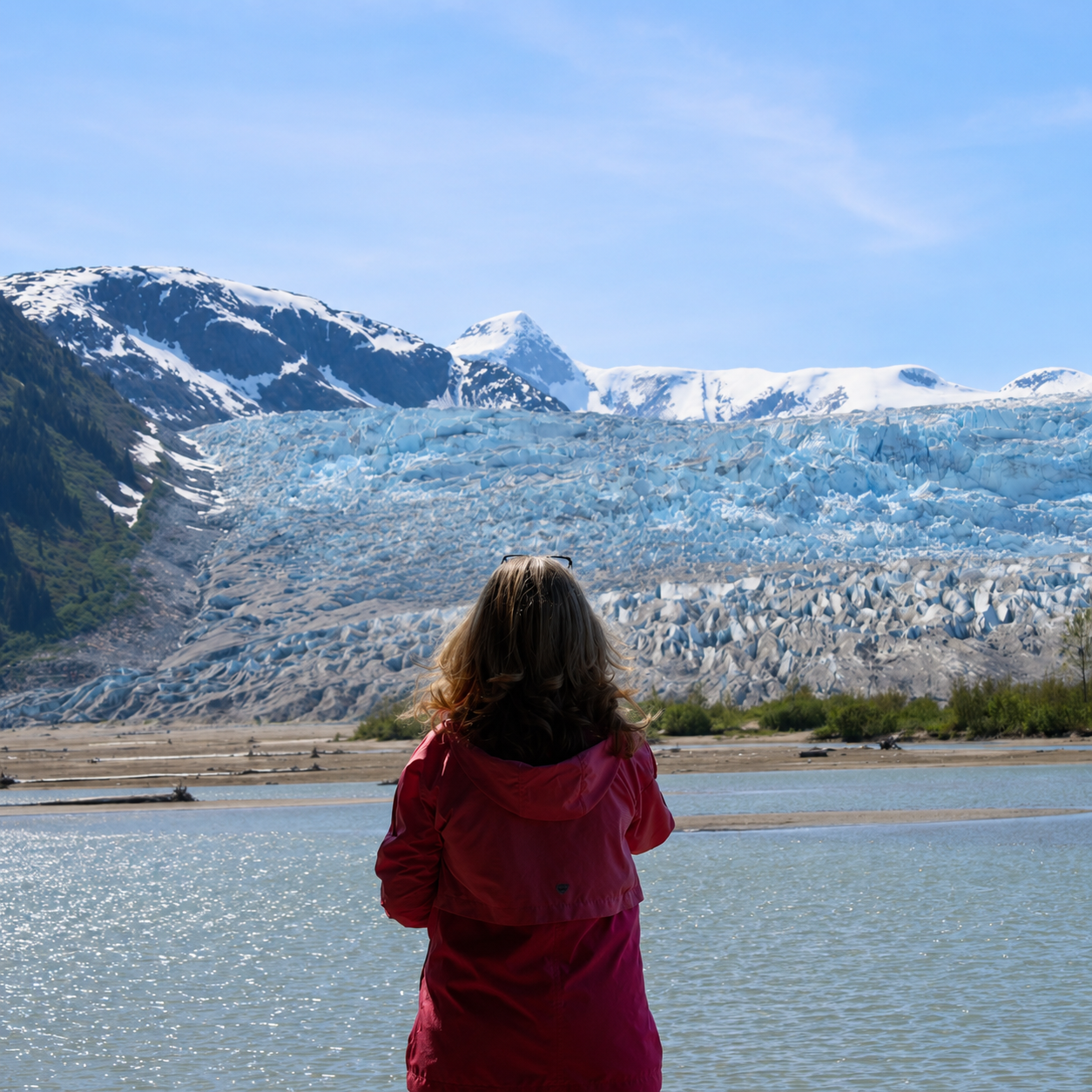
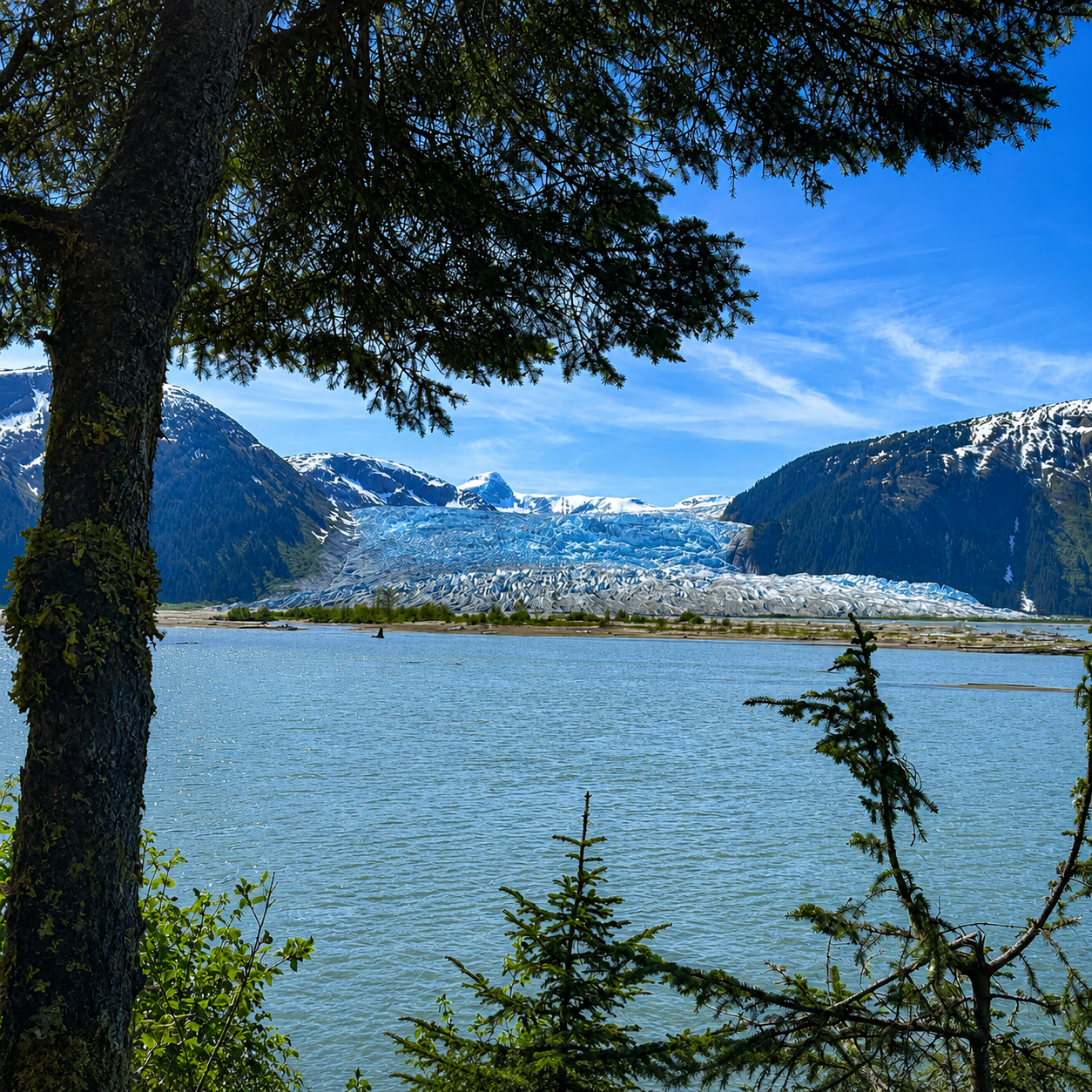
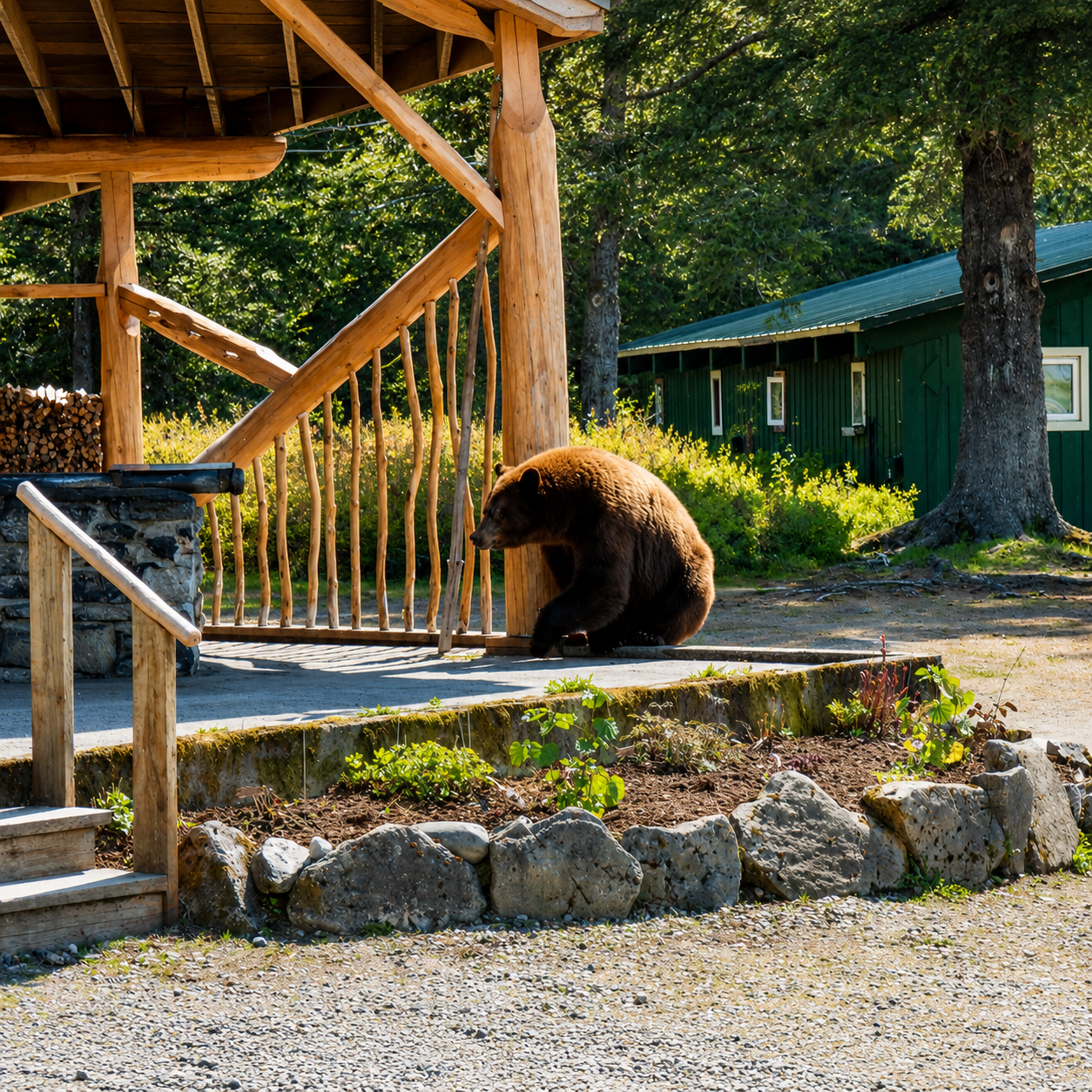
Hans making his rounds at Taku Lodge — the full Taku Lodge write-up is in its own post.
Pre-Booking Tips for an Alaska Cruise
A few things we learned the hard way, or were glad we got right:
- Arrive in Seattle at least the day before embarkation. An airline delay should never cost you a sailing.
- Prioritize excursions over ship-only glacier viewing. The wilderness beyond the towns is the real point of the trip.
- On scenic-cruising days, skip the Crow's Nest crowds and shoot from the Deck 3 promenade — unobstructed views, room for a tripod, far fewer people.
- Bring your telephoto lens ashore. Wildlife shows up on the day you leave it on the ship.
- Alaska seafood is excellent but expensive. Try it once and budget accordingly.
- Leave extra time at SEA airport on departure day. Several ships disembark the same morning and the traffic and security lines show it.
Endicott Arm and Dawes Glacier
After Juneau it would have been easy to assume the highlight was behind us. It wasn't. Noordam began its transit into Endicott Arm around 8 a.m., and unlike a port day there was nowhere to rush — no meeting point, no shuttle, no schedule. The scenery itself was the attraction. We gathered our camera gear and headed to the Deck 3 promenade, which wraps much of the ship and gives unobstructed views from both sides while most passengers crowded into the Crow's Nest.
The first hour was beautiful. The second hour was something more. The waterway narrowed, mountains seemed to rise straight out of the water, waterfalls appeared everywhere, and glacial ice started showing up — a few pieces at first, then chunks scattered through the fjord. It held around 55 degrees and overcast, exactly the weather you imagine for Alaska. We'd done the Norwegian fjords before, and as good as Norway was, this somehow felt more like what a fjord should feel like. The scale was hard to take in.
One honest note on wildlife: many Alaska cruise ads imply it's constantly visible from the ship. That wasn't our experience. April spotted three seals on an iceberg, which was genuinely cool, but beyond that there wasn't much from the deck. If wildlife is your priority, an excursion will almost always beat ship viewing.
At the end of the fjord stood Dawes Glacier, held about one to two miles off due to ice, but still spectacular at that distance. Then the captain did something we appreciated: instead of turning and leaving, Noordam slowly rotated in place, giving each side of the ship a turn, then sat with the stern to the glacier for nearly forty-five minutes. All the anxiety about finding the perfect viewing spot disappeared. We just stood there and watched.
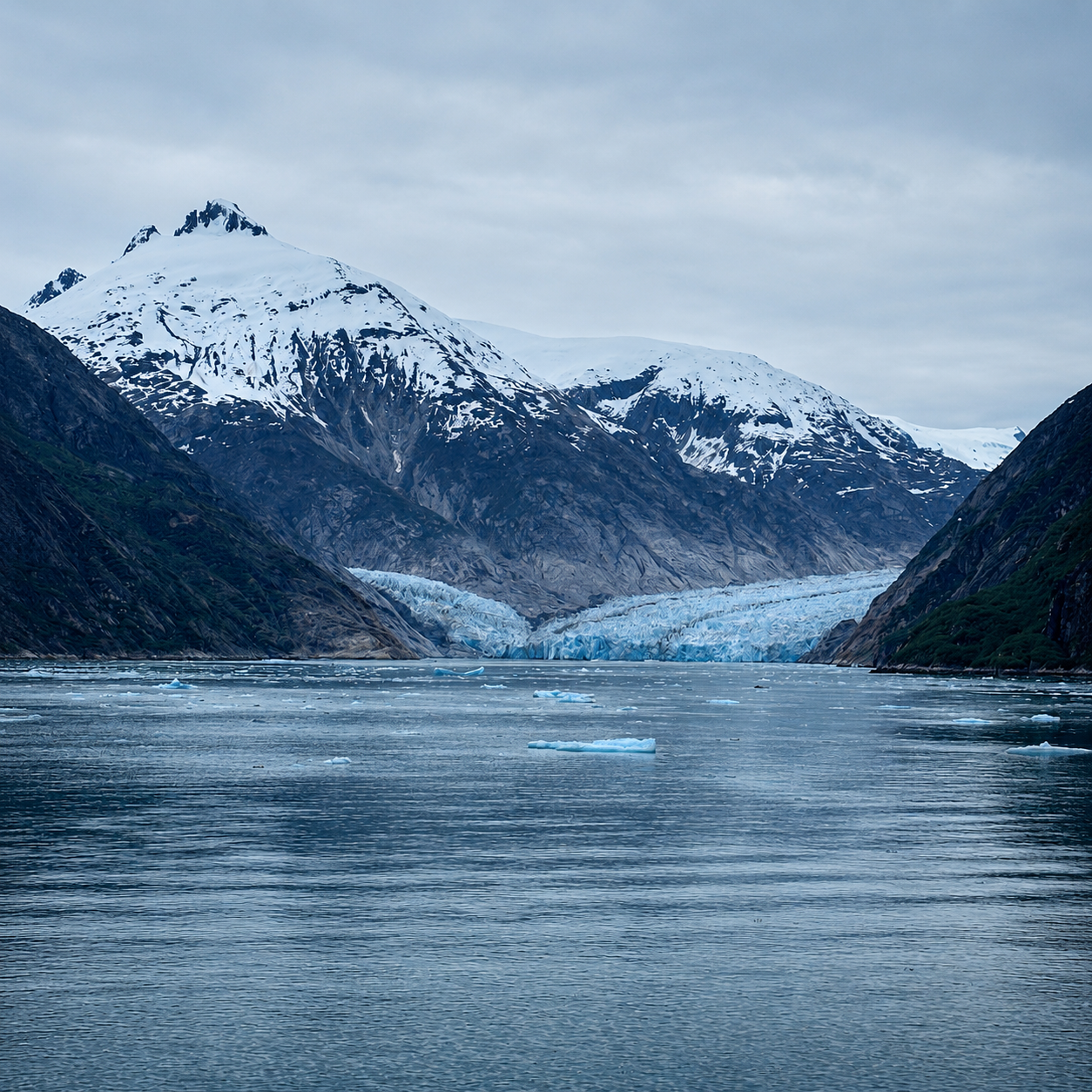
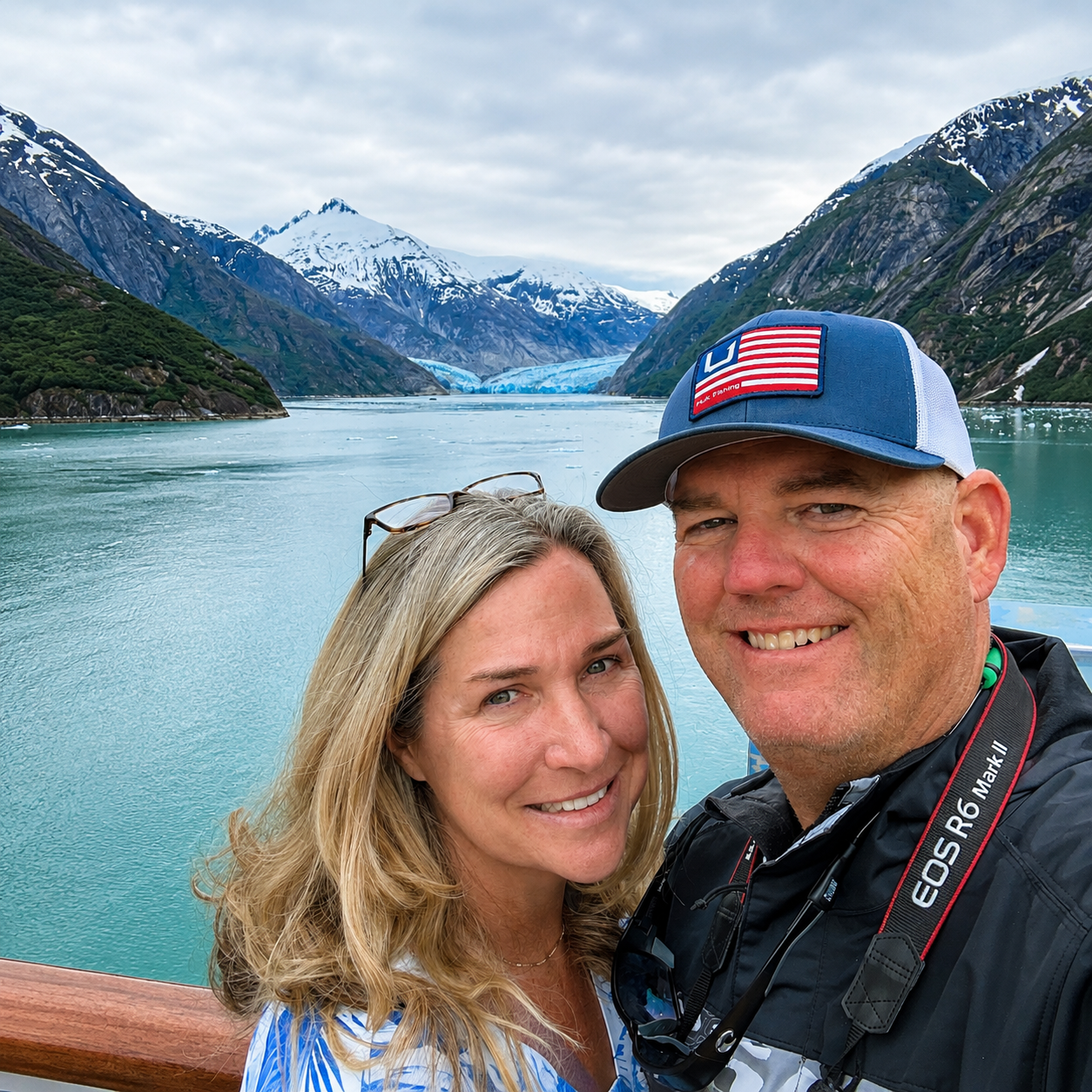
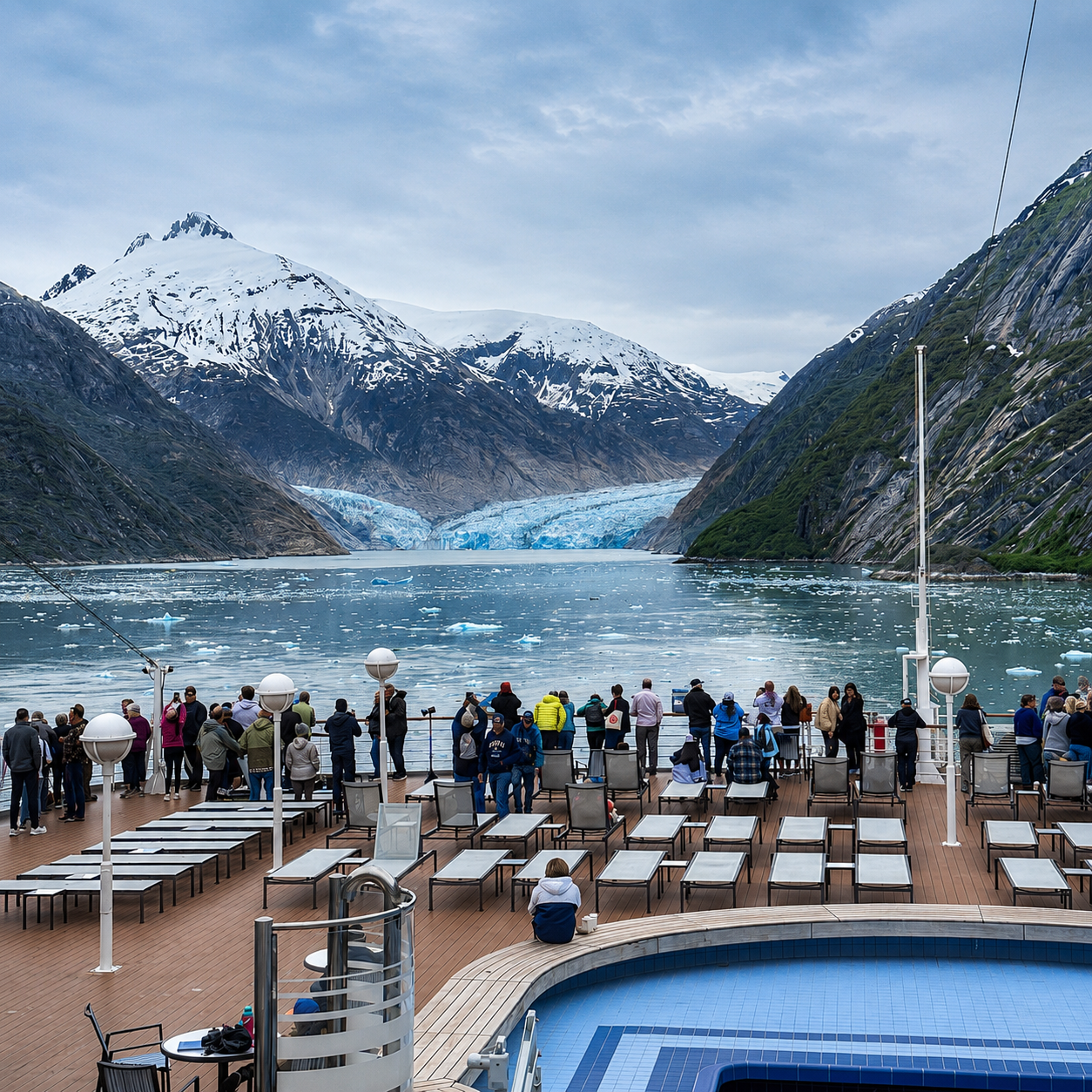
Dawes Glacier, held about a mile off by the ice.
Traditional Cruising vs. Expedition Cruising
While we watched the glacier, a National Geographic-Lindblad expedition vessel was working nearby, with Zodiacs launched and passengers getting far closer to the ice than we could. From Noordam's deck the Zodiacs looked tiny. It was a clean side-by-side of two ways to see the same place — traditional cruising and expedition cruising, both enjoying the same glacier, just at different distances. It's a comparison we think about a lot at Venture To See, and one we'll dig into separately for anyone weighing an expedition sailing.
Sitka — Our Favorite Port
Sitka immediately felt different from Juneau and Ketchikan: more authentic, more local, more relaxed. The dock sits several miles from town, so you rely on shuttle buses, but we walked straight onto one. Our driver mentioned that Sitka's population is about 8,900, and that morning three ships were in — the visitor count was approaching the size of the town itself.
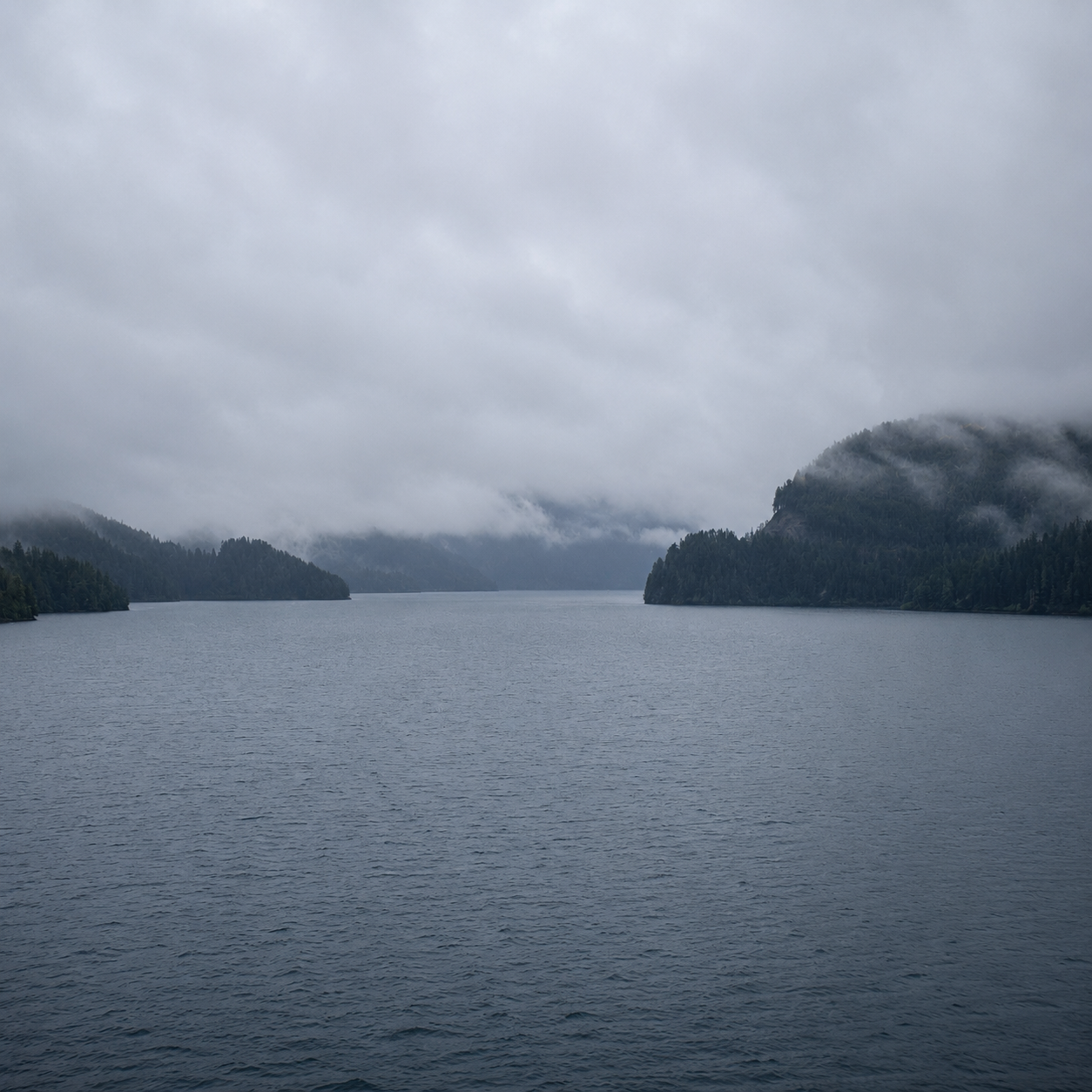
Misty water on the approach to Sitka.
Instead of an excursion, we just started walking, out to Sitka National Historical Park. On the way, a small counter inside the science center gift shop turned out to be the food surprise of the whole trip — a bowl of chowder rich and flavorful enough that we'd call it a genuine must-try. The one mistake we made was leaving our telephoto lens onboard, because of course this was the day bald eagles were everywhere — in trees, on boat masts, overhead. The park was the kind of place that rewards slowing down: rainforest trails through towering trees, totem poles along the paths, streams running through the forest, all of it under a light, appropriate rain. We'd thought of totem poles as artwork before this. After learning more, we started seeing them as records — family histories, clan relationships, important events carved into cedar — and watching active carving and restoration in the park deepened that. Sitka was our favorite because it felt like a community, a real place where people live. For a few hours we felt less like tourists and more like visitors.
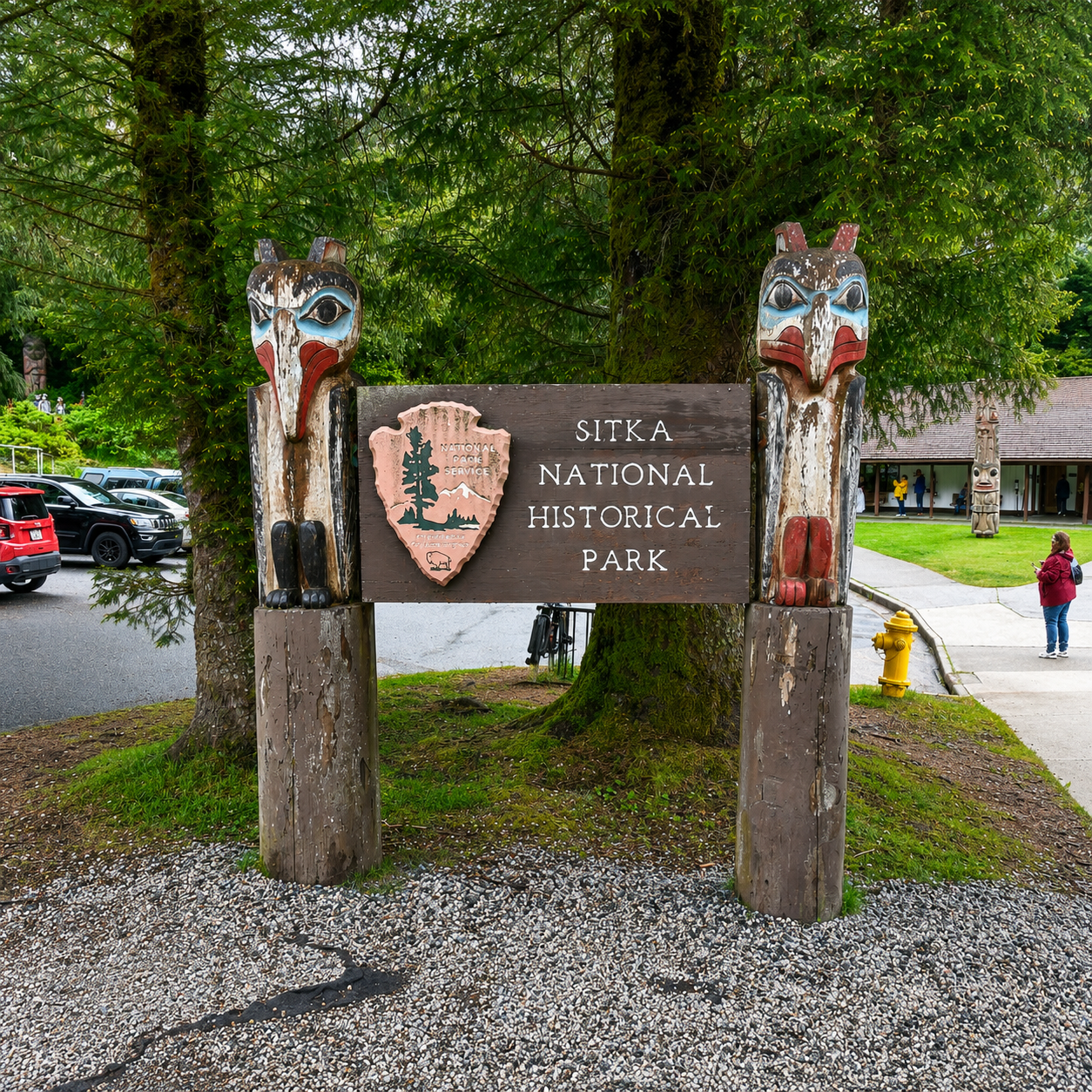
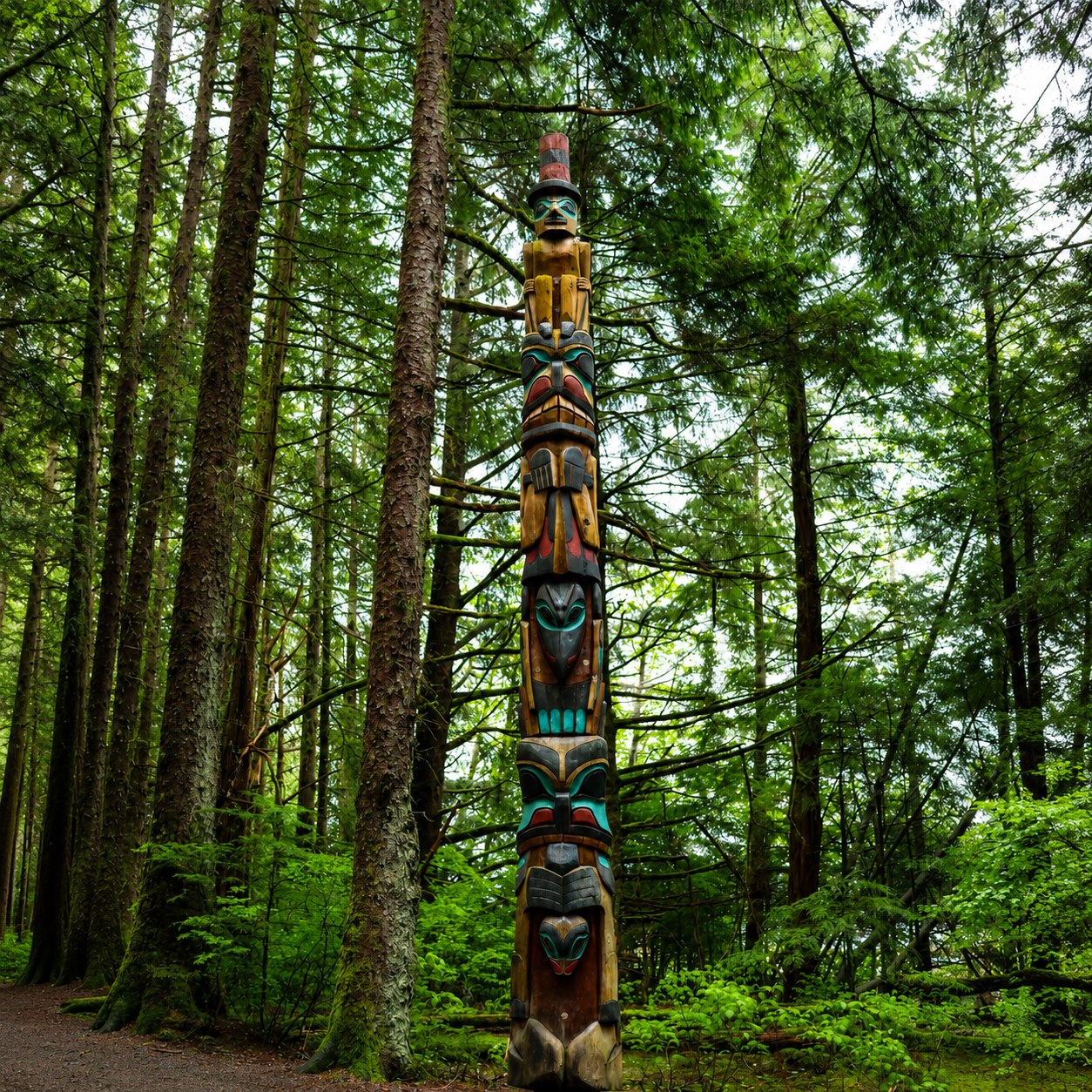
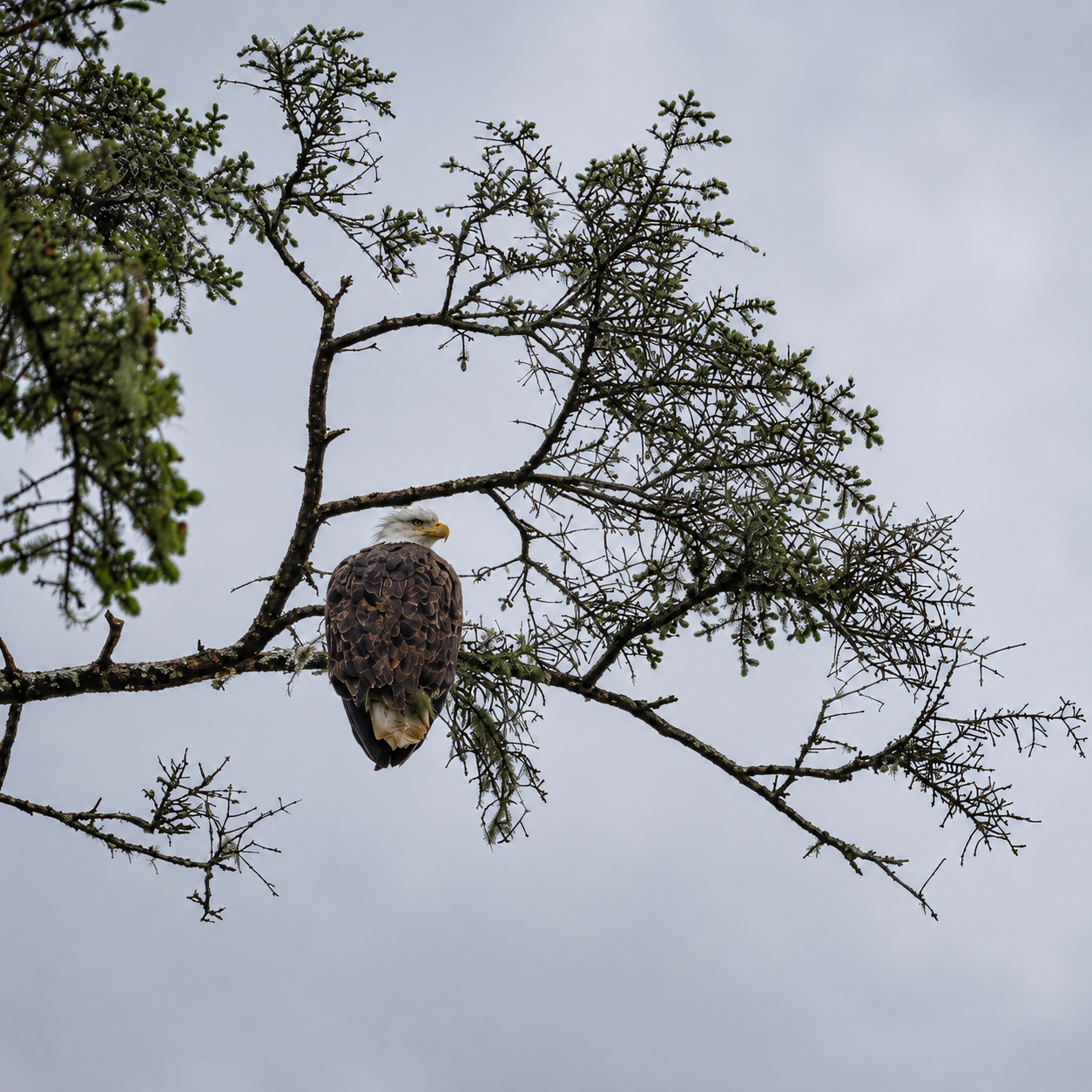
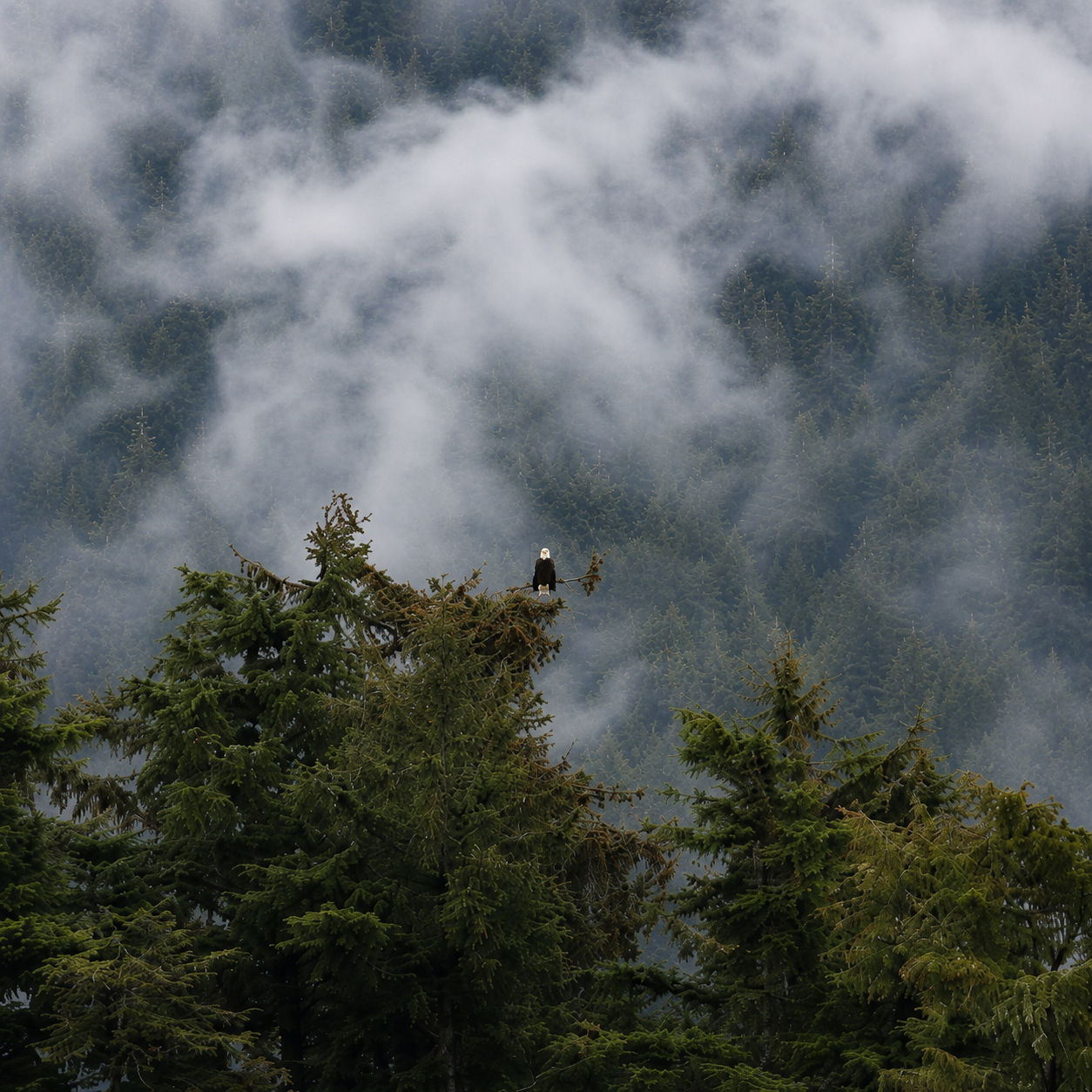
Ketchikan
Ketchikan, the self-described Salmon Capital of the World, was the easiest port of the trip. The ship docked right downtown — walk off and start exploring, no shuttle, no planning. The window was tight, though: in around 7 a.m., all aboard at 12:30 p.m., so about five hours. The compact town made it work.
We started at Creek Street, the row of colorful buildings perched over the water that you've seen in every Ketchikan photo. The history is better than the postcard: local ordinances once barred brothels from operating on land, so they were built over the creek instead. Today it's gift shops and galleries, but the story stays part of the place. From there we followed a quieter path along Ketchikan Creek past a salmon ladder toward the hatchery (closed during our visit) and a heritage center on Native Alaskan history — a thread that ran through the whole cruise. The farther we walked, the fewer passengers we saw, until it was just the creek and the water. Those quiet stretches usually become our favorite memories.
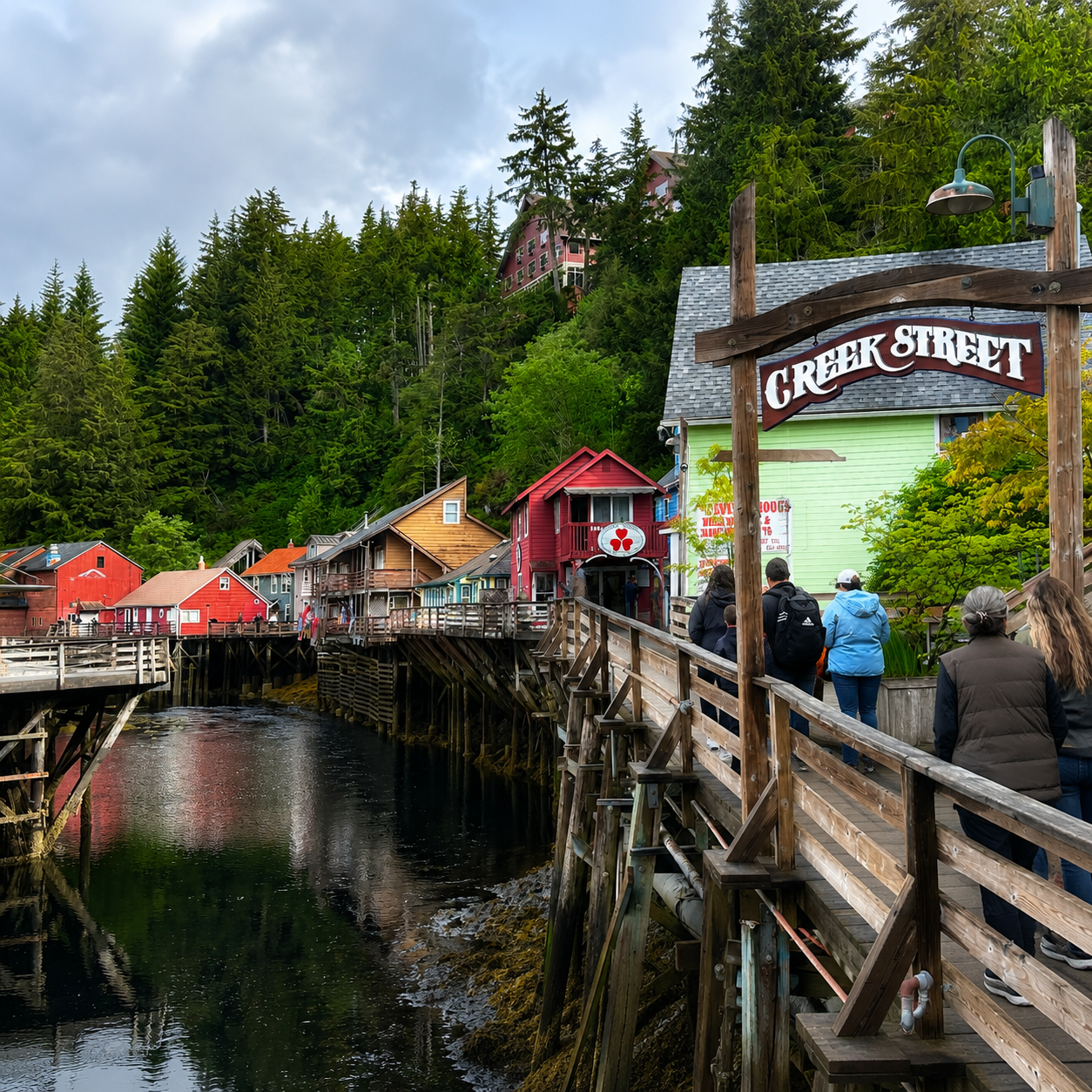
On the food: Alaska seafood is not cheap. April eyed a two-pound king crab meal listed around $269 and sensibly chose a sampler instead; the halibut fish and chips across the table ran about $35 — firmer and meatier than cod, more substantial, and genuinely good. Worth ordering again at that price? Probably not. Worth trying once? Absolutely. By midday the forecasted rain gave way to sun, and the harbor came alive as we headed back to the ship.
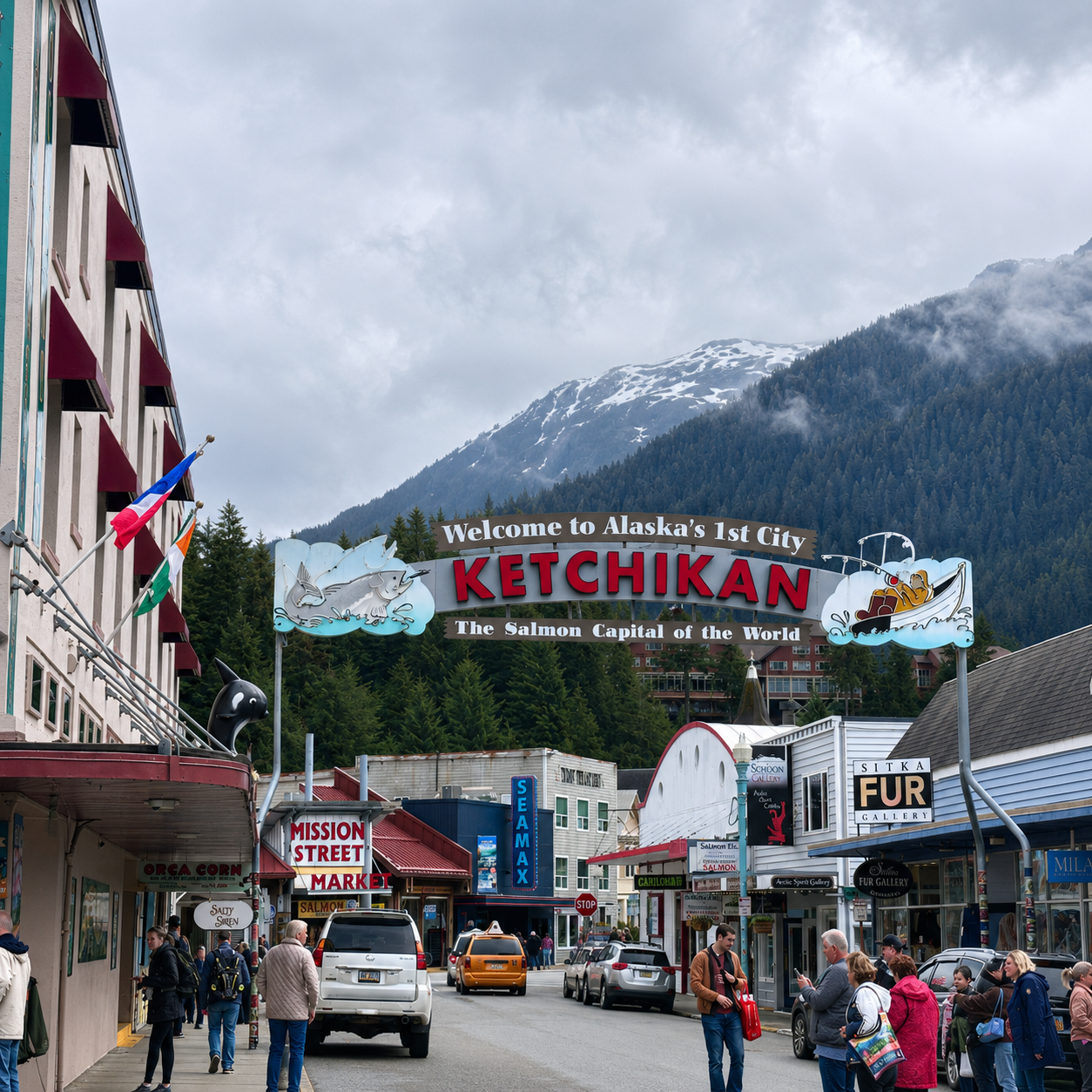
Ketchikan's downtown waterfront — an easy walk straight off the ship.
Victoria
Victoria was an evening call, and it ran late — we arrived around 8 p.m. and didn't get off until about 8:45 due to port congestion with two larger ships already docked. The terminal at Ogden Point sits about 1.5 miles (2.4 km) from the downtown core, with shuttle buses available, though the near edge of the Inner Harbour is closer to a 25- to 30-minute walk along the water. The shuttle line was already 150 to 200 people deep. Rather than burn our limited time standing in it, we walked to a nearby waterfront park, away from the crowds, as the sun set over a calm harbor. Victoria wasn't about checking attractions off a list. It was one quiet evening before heading home, which was exactly what we wanted. We were back onboard by 10:30.

Disembarkation and the Seattle Airport Reality
Disembarkation morning was unusually relaxed. With a later luggage-assist group, we skipped the rush and had a leisurely breakfast in the Main Dining Room — something we rarely get to do. For our final night we'd stayed at the Fairfield Inn & Suites Seattle Downtown/Seattle Center, and it turned out to be good value. It's about a six- to eight-minute walk (roughly a third of a mile) from the Space Needle and Seattle Center, under a mile — about a fifteen-minute walk — from Pike Place Market, and only 0.6 miles from a Whole Foods. For roughly 60% of what hotels right next to Pike Place were charging, we were still close enough to walk to most of it. We strolled down to Pike Place Market and stopped for fish and chips at Mr. Fish before our last night. Easy to get around, no car needed.
Our post-cruise base near Seattle Center.
From there we headed to Seattle-Tacoma International Airport. The drive is only about fifteen miles, but with multiple ships having just disembarked, traffic stretched it out and the taxi ran roughly $97 before tip. The congestion continued at the airport. Even in a priority security lane, TSA took about 20 to 25 minutes, and the standard lines looked considerably longer. For anyone flying home after an Alaska cruise: allow extra time. You'll be glad you did.
Final Thoughts
So, was it worth it? Without hesitation. The biggest realization of the week was that Alaska isn't really about the towns. The towns matter — they provide access, history, and culture — but the real attraction is what lies beyond them: the glaciers, the mountains, the fjords, the forests, the wildlife, the wilderness. Those are the things that stay with you.
The cruise also reminded us how much easier travel is when someone else handles the logistics — the cooking, the cleaning, the transportation, the planning. Alaska is a destination that benefits from that simplicity. Would we sail Alaska again? Without question. Would we sail Noordam again? Yes. Would we prioritize excursions? Definitely. If we learned anything on this voyage, it's that Alaska rewards travelers who venture beyond the cruise port. That's where the magic is.
Holland America Alaska Cruise FAQ
If This Was Useful, Buy Us a Coffee
We write these from first-hand experience, no fluff. If this review helped you plan your own Alaska cruise, a small tip helps keep the guides coming.
☕ Buy Us a CoffeeFollow the Journey
Planning an Alaska cruise, or have a question about Noordam? We read every message and answer when we can.
Send Us Feedback
We Made Gelato in Verona — And It Was Better Than We Expected
A firsthand review of a Verona gelato-making class that turned into one of our most memorable Italy food experiences. From hands-on instruction and home-style recipes to the unexpected olive oil tasting moment, this guide shares what made the class worthwhile, who it works best for, and why it deserves a place on a Verona itinerary.
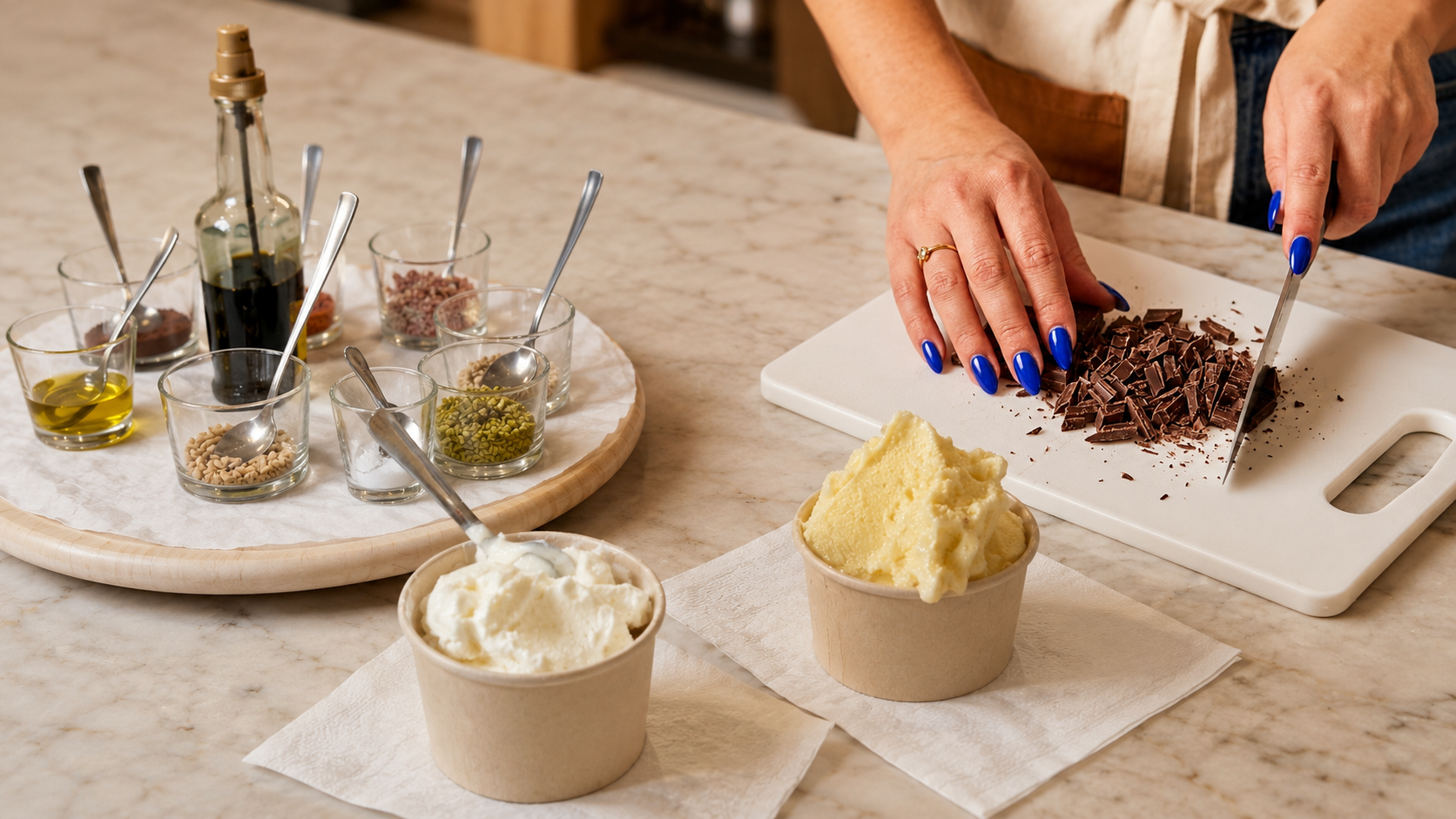
Gelato Making in Verona: An Honest Review of an Experience That Was Better Than Expected
We were in Italy for a high school soccer trip. I booked a gelato class thinking it would be a nice break from the schedule. It ended up being one of the more memorable parts of the whole trip — and I almost wasn't even in it.
From Venture To See — first hand experiences, traveling with intention.
Disclosure: Some of the links in this post are affiliate links. If you click through and book a tour or experience, we may earn a small commission — at no additional cost to you. It doesn't change our recommendations, and it goes a long way toward helping us keep doing what we do: traveling, writing honestly about what we find, and sharing it here.
Let me set the scene. I'm 50. I'm standing in Verona, Italy, on a trip that was built entirely around my youngest son's high school soccer team doing an international exchange tournament. The schedule was tight, the days were long, and most of the trip's energy revolved around practices, matches, and team dinners. It was great — but there's only so much youth soccer a grown man can absorb before he starts looking for something else to do with the downtime.
That's roughly the mindset I was in when I decided, weeks before the trip, to book a gelato-making class in Verona. My son and I were signed up. Two tickets. Simple plan.
Then travel did what travel does — it changed the plan entirely. And the class ended up being better for it.
A Last-Minute Adjustment That Made It Better
The day before the class, I got a call from a friend of another player's family. One of the boys on the trip was feeling a bit homesick — the kind of low-grade rough patch that's pretty normal when teenagers are far from home for the first time. Could I check in on him?
I already had two tickets to the gelato class. My first instinct was to just buy a third ticket and have him join us. Practical solution, clean outcome. Except the class was sold out.
So when we checked in on the day, I asked the tour operator if the homesick boy could take my spot while I observed. She wasn't thrilled about the idea — and honestly, I get it. These classes are calibrated around specific headcounts, ingredients, and workstations. Swapping participants mid-stream isn't in anyone's playbook. But she accommodated the change, the boys got full spots at the table, and I stepped back and watched the whole thing unfold.
"The boys were engaged, working with their hands, laughing at each other's results, and spending two hours doing something that had nothing to do with soccer. Sometimes the best thing you can do for a teenager who's a little homesick is give them something to actually do."
For me, being the observer turned out to be its own reward. I could take in the whole room, photograph what was happening, and watch two teenagers work through something genuinely hands-on together. That's a hard thing to manufacture on a group sports trip.
How the Class Was Set Up
The setup was clean and well-organized without being overly formal. About 20 participants total, split across two large tables — roughly 10 per side, with enough elbow room to actually move and work. The vibe was casual. People were there to participate, not to be impressed by a chef's theatrics.
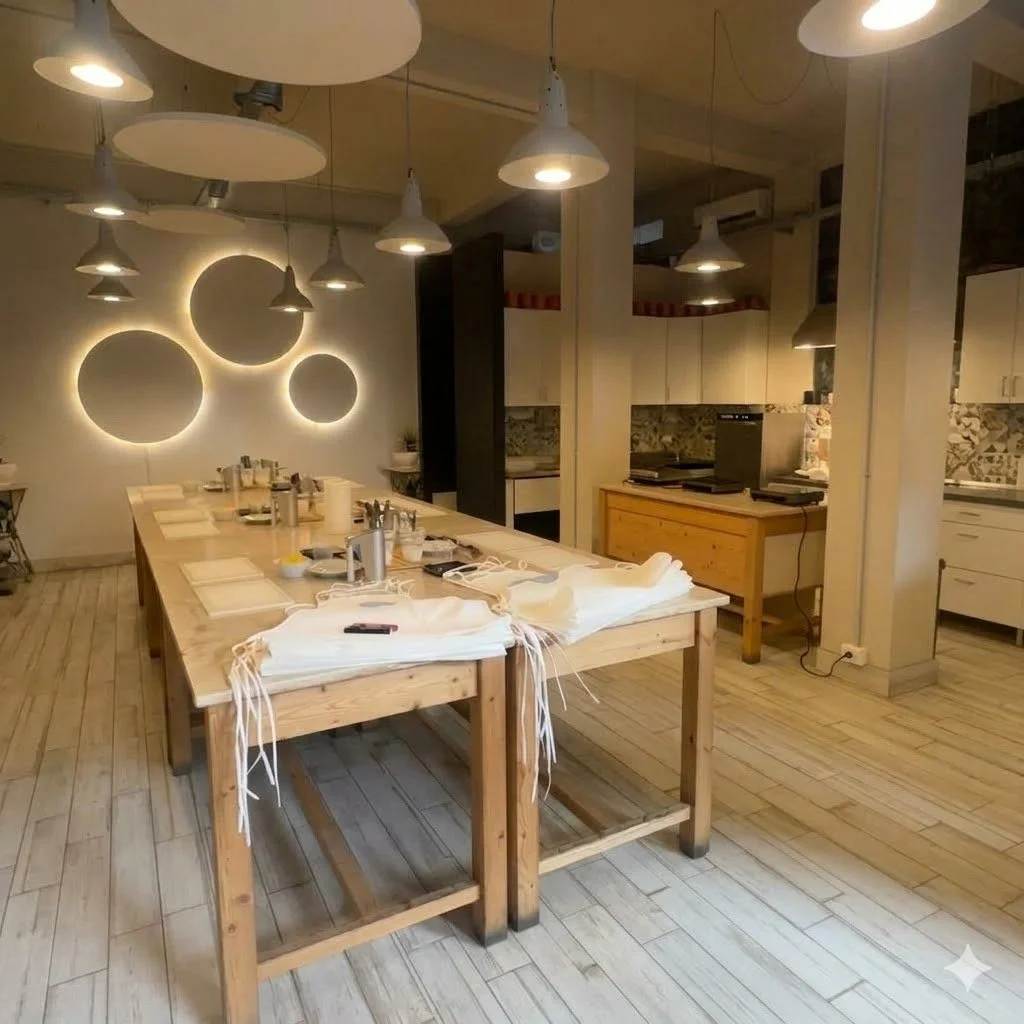
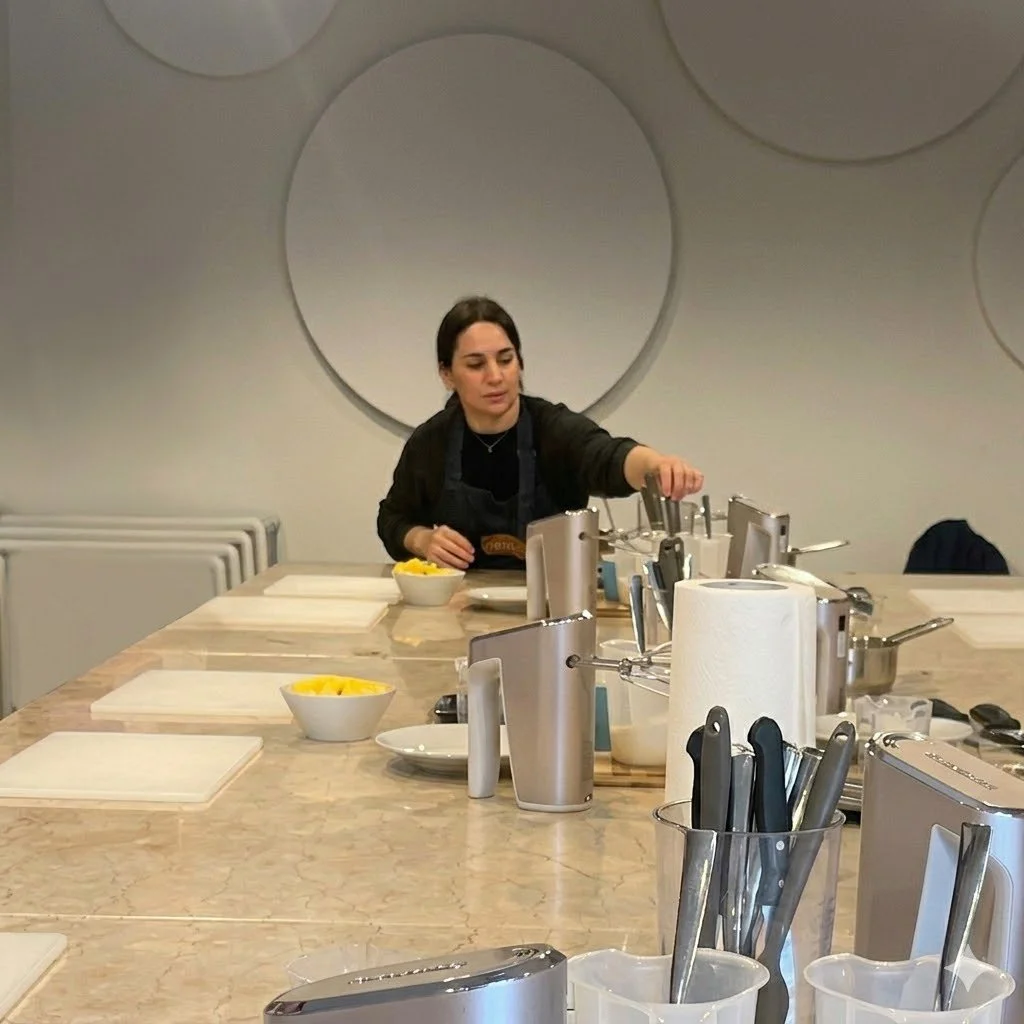
The instructor opened with a presentation on the ingredients — where they came from, what made each one distinct, and the basic science behind gelato's texture and density. It was genuinely interesting, not just filler while the equipment warmed up. Then it was straight into production.
The group made three flavors during the session:
The pacing was smart. While one batch was spinning in the machine, the group moved straight into prepping the next flavor. It kept things moving without feeling rushed, and nobody was standing around waiting. From a production standpoint, it was well-run.
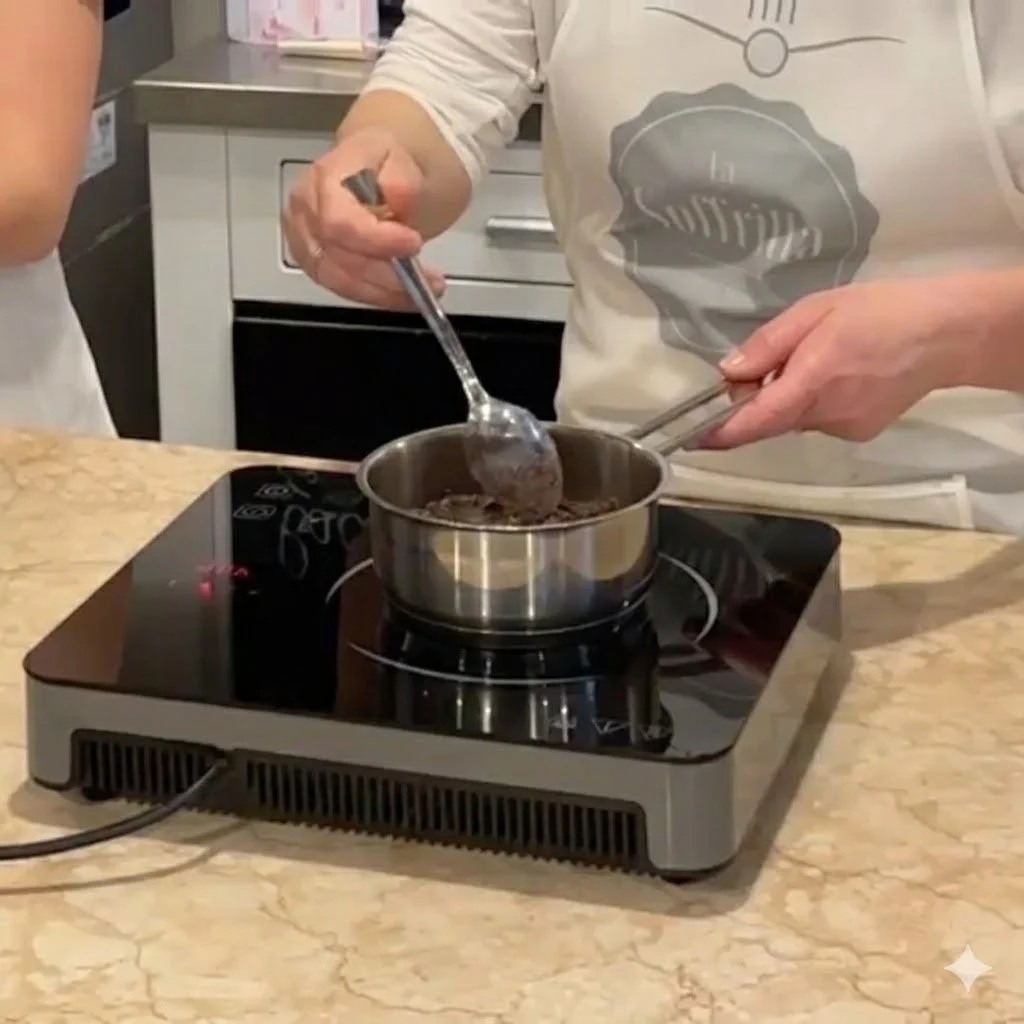
Participants took over the stirring — you can see the class aprons in action here
One small detail worth mentioning: at the start of the class, everyone was given an apron and asked to write their name on it. At the end of the session, you kept it. It's a minor thing, but it's the kind of touch that makes an experience feel personal rather than transactional. My son still has his.
- Classes like this often sell out weeks in advance; book early, especially during peak tourist season in Verona
- If your group has an odd number, ask the operator upfront about adjustments — most are accommodating if asked politely and in advance
- Wear clothes you don't mind getting a little messy; gelato prep involves cream, chocolate, and enthusiastic teenagers
- Download the recipe QR code at the end — don't skip this step; it's genuinely useful
Gelato Making Class in Verona
This is the exact class we did. Book directly through our GetYourGuide affiliate link — it costs you nothing extra, and it helps us keep writing stories like this one.
Book on GetYourGuide ↗What Made This One Different from Florence
We'd done a combined gelato and pizza-making class in Florence on a previous family trip. It was fun. The kids were younger, everything was new, and it worked well in the moment. But when I compare the two experiences side by side, the Verona class was meaningfully better — and for a specific reason.
The Florence class used a large, industrial-style gelato machine. The kids mixed ingredients and loaded everything in, but the machine itself was the kind of equipment you'd see in a commercial kitchen. It was educational in a "here's how the industry does this" sort of way, but it created some distance from the actual craft.
The Verona class used a machine closer to what you'd actually buy and use at home. That's not a small distinction. The instructor seemed to be designing the experience around a specific outcome: give people a real skill, not just a tourist memory. The recipes were calibrated for home kitchens. The equipment was realistic. The whole session was framed around the idea that you could walk out of that room and actually reproduce what you made.
Three machines — one per flavor. Compact, home-scale equipment you could realistically own and use yourself.
"At the end of the class, they gave out a QR code for all the recipes — not just the three we made, but their full catalogue, including tiramisu. That's the kind of value-add that separates a good experience from a great one."
The recipe QR code on display — scan it before you leave and you take the whole class home with you
When a tour operator thinks beyond the experience itself and designs something you can take home and continue, that's when it stops feeling like a tourist activity and starts feeling like actual education. This one cleared that bar.
The Olive Oil Moment: The Detail Nobody Talks About
Toward the end of the class, after the gelato was ready and the group was tasting results, the instructors brought out toppings. The usual suspects were there — chocolate chips, nuts, coconut flakes, fruit. Good options, no complaints.
Then they brought out olive oil.
Not as a joke. As a genuine suggestion. Drizzle it on the gelato and eat it.
If you've never tasted high-quality Italian olive oil, you might think this sounds like a bad idea. And if that's where you are, I understand — I was in roughly the same spot until a trip to Tuscany where we visited one of the oldest olive oil operations in the region and did an actual olive oil tasting. Before that experience, olive oil was olive oil. After it, I understood that high-quality cold-pressed olive oil is its own category — smooth, slightly earthy, with a peppery finish that lingers in the best possible way.
When that kind of olive oil gets drizzled on freshly made gelato, something interesting happens. The sweetness dials back. The flavor deepens. You get something that tastes more complete than either ingredient alone. It's not a gimmick. It's a pairing that people in Italy have understood for a long time, and which most visitors never encounter because they're not in a room where someone can demonstrate it properly.
It was one of those small travel moments that recalibrates how you think about a familiar ingredient. Worth the entire afternoon on its own.
Why Food Experiences Work for Families
We've done a lot of different types of travel over the years — adventure, cultural, beach, expedition. And the one thing that consistently creates shared memory across ages and interest levels is food. Not restaurants. Not tasting menus. Active, hands-on food experiences where everyone is doing something.
The reason is straightforward. Food doesn't require you to share an interest in history or architecture or wildlife. Everyone eats. Everyone can mix ingredients. Everyone can taste a result and have an opinion about it. It creates conversation without forcing it, and it gives people something to reference later.
I've watched that play out with our kids at various ages — when they were young, when they were teenagers, and now as young adults. The food experiences stick in a way that passive sightseeing often doesn't. You remember what you made. You remember who was next to you at the table. You remember the unexpected things, like olive oil on gelato in a small kitchen in Verona while a couple of teenagers tried to figure out the difference between a spatula and a whisk.
That's a real memory. And it doesn't require a significant budget or a complex itinerary to create one.
Final Verdict: Is a Gelato Class in Verona Worth It?
Yes. Without much qualification. Verona is a genuinely beautiful city that often gets treated as a day-trip footnote on the way to Venice or Milan. That's a mistake — it deserves more time and more intention than that. Adding a food experience to your Verona itinerary gives you a structured reason to slow down, connect with the place, and come home with something beyond photos.
The gelato class we did checked every box: well-organized, practical, culturally connected, and — in our case — flexible enough to accommodate a last-minute change that made it more meaningful, not less. The instructor's patience with that adjustment said something about the whole operation.
Book it early. Bring someone you like. Drizzle the olive oil. Trust the process.
Reserve Your Spot in Verona
Availability fills up fast, especially in peak season. Click below to check dates and book the same class we did — through our GetYourGuide affiliate link at no extra cost to you.
Book on GetYourGuide ↗Gelato Making Classes in Verona — What You Actually Need to Know
If This Was Useful, Buy Us a Coffee
We put a lot of time into researching, experiencing, and writing these stories so you can make better decisions when you travel. If this post helped you in any way, consider buying us a coffee — it's simple: just head to our store, add it to your cart, and check out. Every cup is genuinely appreciated and helps us keep the stories coming.
☕ Buy Us a CoffeeHelp Us Make This Better
The world of travel is always evolving — new destinations, hidden gems, better ways to experience a place. If you've taken a food class in Verona or anywhere in Italy and have something to add, a correction to share, or feedback on what helped you prepare, we'd genuinely love to hear it. Every message gets read.
Send Feedback
Reef Snorkeling, Stingrays, and Beach Tacos: The Cozumel Shore Excursion Worth Every Minute
Thinking about a Cozumel shore excursion? This firsthand experience covers snorkeling, stingrays, beach views, and tacos, with practical insights for cruise travelers looking for a well-rounded day in port.
⏱ 8-minute read
Reef Snorkeling, Stingrays, and Beach Tacos: The Cozumel Shore Excursion Worth Every Minute
A real talk review of the Royal Caribbean shore excursion "Cozumel Reef Snorkel, Stingray Adventure, and Beach Tacos" — from someone who's done way too many of these.
Let me paint you a picture. You're on a Royal Caribbean Western Caribbean Cruise and you've just docked in Cozumel, Mexico — one of the Caribbean's most iconic cruise ports — and you've got a full day ahead of you. You could wander the pier shops, grab a margarita at one of the tourist-trap spots near the dock, or... you could spend the next four hours snorkeling a reef, touching stingrays, watching nurse sharks glide under you, and capping it all off with all-you-can-eat beach tacos and an open bar. I'll let you guess which one I chose.
This is my full, unfiltered review of the Royal Caribbean shore excursion officially called "Cozumel Reef Snorkel, Stingray Adventure, and Beach Tacos" — and spoiler alert, it's the kind of shore excursion that makes you feel like you absolutely did the day right.

Leaving the pier — the adventure starts the moment you step on the boat.
The Arrival: No Tendering, No Stress
One of the first things I appreciated about this Royal Caribbean port stop was how smoothly the morning started. Cozumel is not a tender port — the ship pulls right up to the pier, you walk off, and you're on Mexican soil without waiting around for a flotilla of tiny boats. If you've cruised before, you know how much of a difference that makes. It's a small thing that sets a great tone for the whole day.
Our meeting time for the Cozumel Reef Snorkel, Stingray Adventure, and Beach Tacos excursion was 11:45 a.m., but because ship time and local Cozumel time are offset by an hour, I was actually off the ship by 10:00 a.m. local time. That left a full window to stretch your legs, grab a coffee, or just soak in the fact that you are standing in one of the most beautiful Caribbean destinations in the world. No rush, no chaos — exactly how a vacation morning should feel.
Booking Through Royal Caribbean: What to Know First
This excursion is bookable directly through Royal Caribbean's shore excursion portal, and honestly, for a Western Caribbean itinerary with a Cozumel stop, it's one of the standout options in the lineup. That said, before you hit book, there are a couple of things worth knowing upfront.
Once you reach the excursion meeting area at the pier, everyone signs waivers before heading out. One thing that stood out immediately — this tour has a 250-pound weight limit, and the operators do take it seriously. A couple of guests in our group were initially told they couldn't participate because they exceeded the requirement. One was eventually allowed to continue after some back-and-forth with both the tour operator and Royal Caribbean shore excursion staff on the pier. So please, read the fine print before you book. It saves everyone a difficult conversation at the dock.

Small group, big vibes — only 18 of us on this one.
Small Group Size = Big Difference
Here's one of the things that genuinely surprised me about this Royal Caribbean excursion: there were only about 18 people on this tour. If you've ever been on one of those snorkeling tours with 50 people crammed together, you already know that's more "organized chaos" than "Caribbean adventure." This felt like a true small-group Cozumel excursion, which is increasingly rare — and increasingly valuable.
What I also loved was how little transit time was involved. The excursion ran about four hours total, but we weren't spending a big chunk of that riding around on a boat. We boarded near the pier, circled around the cruise port, and were in the water quickly. Efficient, well-organized, and exactly what you want from a Royal Caribbean Western Caribbean shore excursion.
First Snorkel Stop: Closer to Shore Than You'd Think (And Way Better)
Here's a fun fact: we were only about 1,000 yards from the cruise ships when we hit the water for the first snorkel. I'll be honest, I had low expectations. But near the shoreline, the depth ran about 12–18 feet before hitting a dramatic drop-off along the reef ledge — and that's where things got interesting. Coral formations, schools of sergeant majors, puffer fish, and guides tossing food into the water to bring everything swimming past you at eye level.
We had about 30–35 minutes in the water at this stop. No sharks, nothing extreme — just solid Cozumel reef snorkeling with a relaxed pace and plenty of marine life to watch. A great warm-up for what came next.


The reef drop-off was where the real action was — coral formations and fish everywhere.
- Apply sunscreen before you board — once the excursion starts, you cannot apply it due to reef protection rules.
- Use reef-safe sunscreen regardless. The reef is why we're here.
- The provided gear is basic — no dry-top snorkel valve. If you're picky about equipment, bring your own snorkel mask and tube.
- Inflatable buoyancy vests are provided and genuinely useful if you're not a strong swimmer.
Stingray City Cozumel: More Than Just a Photo Op
After a 20-minute boat ride — and you can still see the Royal Caribbean ship clearly the entire time, that's how close everything is — you arrive at Stingray City in Cozumel. The area is divided into three enclosed water sections: one with adult stingrays, one with smaller ones, and a third dedicated to open snorkeling.
The guides split the group — half snorkeled first, half went into the shallow interactive area. In the waist-deep water, you can touch the stingrays, hear more about them from the guides, and get that classic "stingray kiss" photo. The interaction felt organized, safe, and genuinely educational rather than just gimmicky.
One thing worth knowing: the stingrays' barbs have been removed for human interaction. According to the guide, the barbs grow back over time, and once the animals are healthy, they're released back into the wild. The facility reportedly has rescued around 35,000 stingrays — many injured in fishing-related incidents. Whether you're there for the fun of it or you care about the conservation angle, that added layer made it feel more meaningful.

Stingray City — divided into separate sections for interaction and open snorkeling.

Up close and personal — these animals are incredible to interact with.
The Snorkeling at Stingray City: Unexpectedly the Best Part
Okay, this is where things got genuinely cool. The open snorkeling section at Stingray City dropped quickly to about 20–21 feet and felt completely different from the interaction zone — more open, more wild, more alive. We saw multiple free-swimming stingrays, tons of fish, and — my personal highlight — a couple of nurse sharks moving calmly through the water beneath us.
I was able to snorkel alongside them at close range. Nobody was panicking, nobody was crowding. Just a group of people floating in silence, watching marine life do its thing. It's the kind of moment that makes a Royal Caribbean shore excursion feel like a legitimate adventure rather than a packaged tourist experience.
Free-swimming stingrays in the open snorkel section — a completely different experience from the shallow interaction zone.
Beach Break: Hammocks, Macaws, and a Hermit Crab Race
After the water portion, the pace shifted completely. The facility had seating areas along the water, hammocks and swings over the ocean, a small gift shop, and a couple of blue macaws available for photos. Nothing forced, nothing pushy — just a genuinely relaxed beach-club atmosphere that felt like a proper reward after all that snorkeling.
And then came the hermit crab race. Each person picked a hermit crab, gave it a name, placed it in a small circle drawn in the sand, and cheered for it to crawl to the outer boundary first. It is as absurd as it sounds. It was also completely delightful, and the kids in our group absolutely loved it. Small, unexpected touches like that are what separate a good excursion from a memorable one.
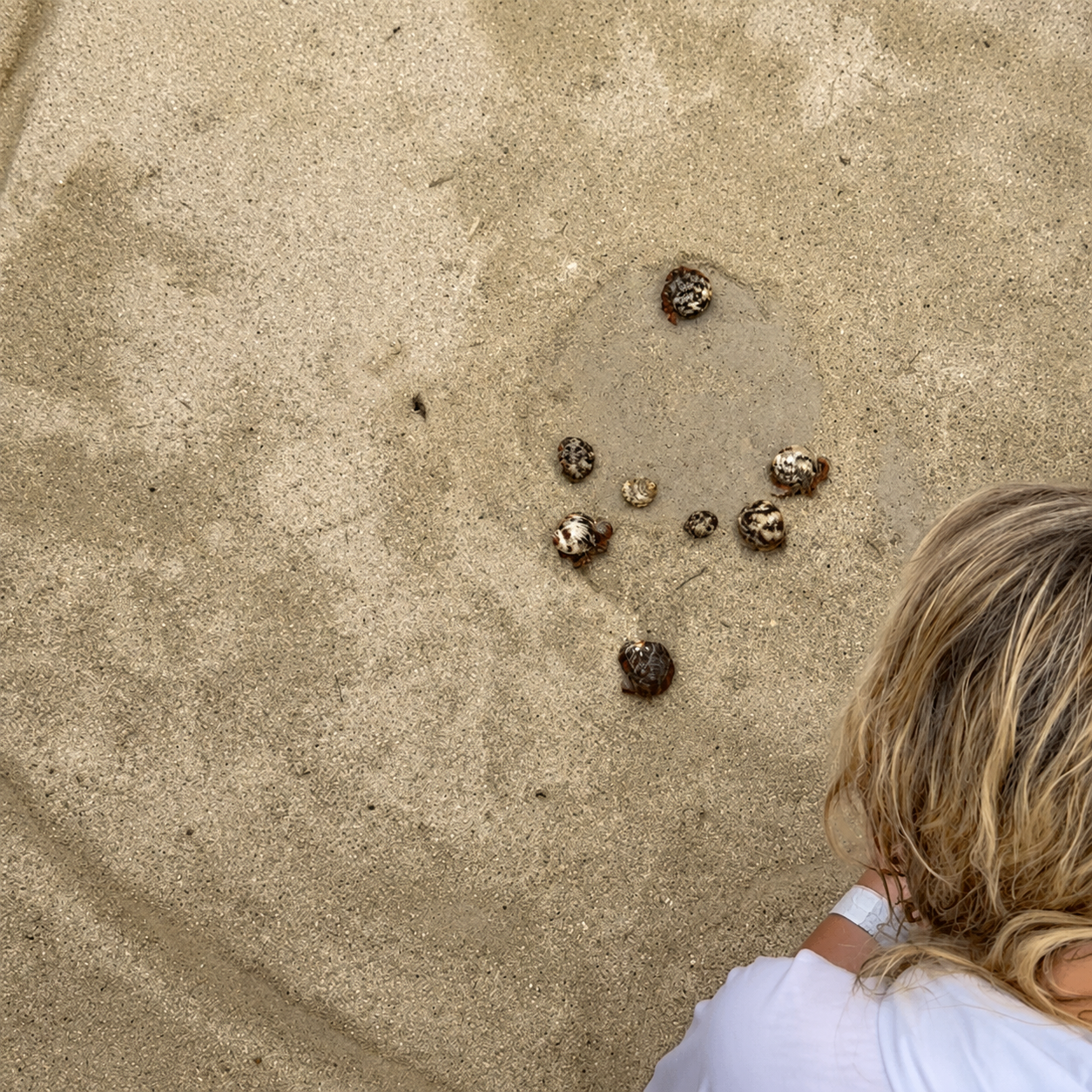
Left: Beach beds hammocks and swings make the beach break feel like a proper reward. Right: hermit crab racing — yes, it's exactly as chaotic and wonderful as it looks.
Beach Tacos + Open Bar = Yes, Always
Lunch was about an hour — maybe a little more — and it delivered. Fresh chicken tacos, grilled vegetables, homemade salsa, and guacamole. All you can eat. Everyone started with three tacos, but you just wave and more appear. The drinks were fully included too: mixed drinks, water, sodas — open bar for the duration of lunch. When you factor in that food and drinks are built into the price of this Royal Caribbean shore excursion, the value is genuinely hard to argue with.
Tipping, for what it's worth, was never once pushed on anyone. A jar near the taco station, a moment when you get back on the boat — but zero pressure. That goes a long way in feeling like a guest and not a walking wallet.
Massages were also available on the beach for an extra cost, which made this stop genuinely flexible. Active people could snorkel more. Beach people could relax. Families had the hermit crab nonsense. Everyone had something.
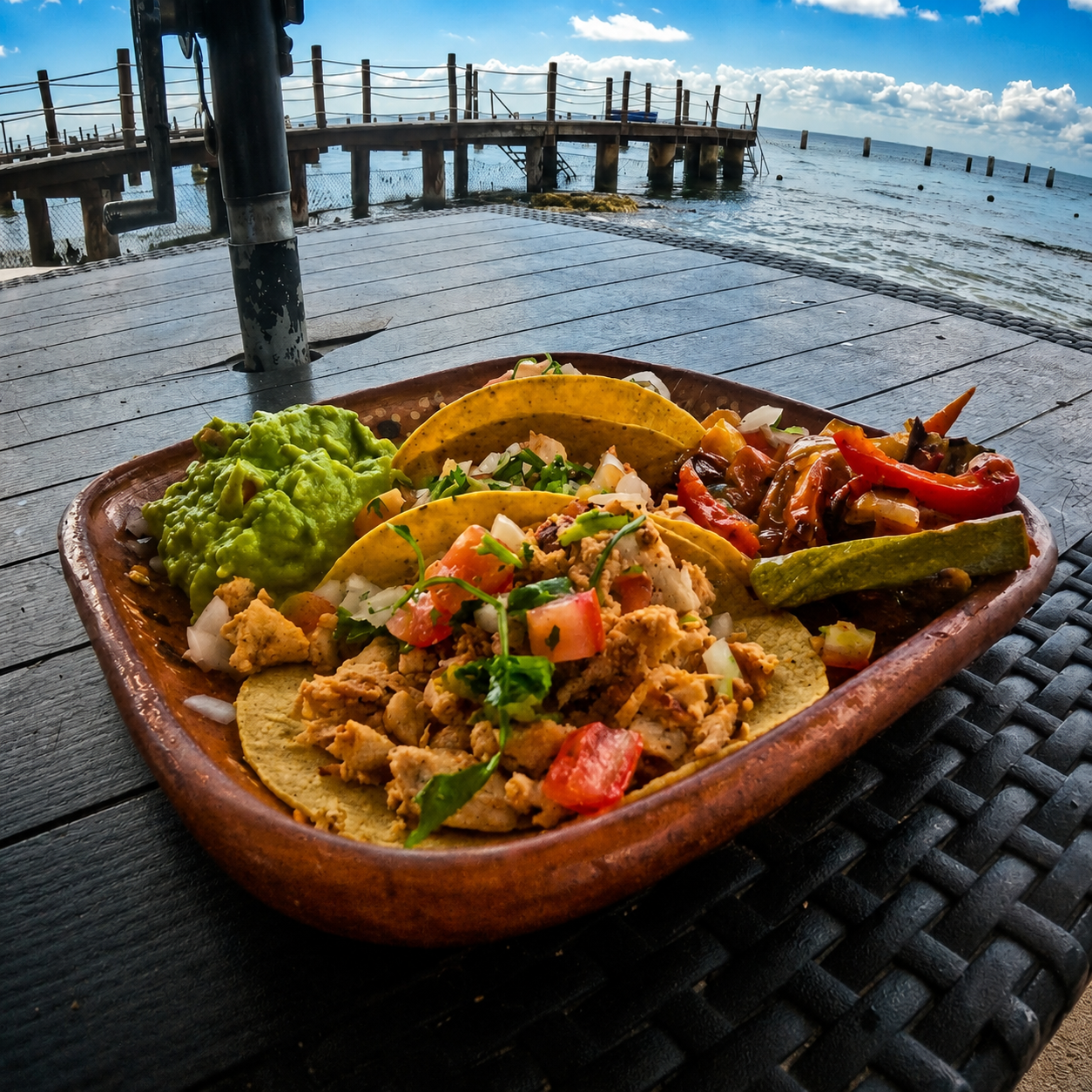
All-you-can-eat tacos, homemade guacamole, and an open bar. This is not a drill.
Who Is This Royal Caribbean Excursion Right For?
Great for: Royal Caribbean Western Caribbean cruisers wanting variety over a single activity, families with older kids (think 10+), people who want genuine marine life interaction without extreme difficulty, and anyone who considers tacos a form of self-care.
Not ideal for: Anyone over the 250-pound weight limit (verify before booking through Royal Caribbean), guests who want advanced or deep-water scuba-level experiences, and anyone who refuses to participate in hermit crab racing (just kidding — but also, come on).
Key reminder: Apply sunscreen before boarding. Bring your own snorkel gear if you want dry-top functionality. Book this one early — small group sizes mean it fills up faster than the bigger tours in the Royal Caribbean excursion lineup.
Can You Do Stingray City Independently?
Potentially, yes — the Stingray City Cozumel location appears to be accessible directly from the cruise port area without booking through Royal Caribbean. That said, I checked the major third-party booking platforms and didn't find an obvious way to pre-book it independently. If you want to try it on your own, you'll need to do some direct local research. For most Western Caribbean cruisers though, the convenience of booking through Royal Caribbean — guaranteed timing, pier-side coordination, and no risk of missing the ship — makes it well worth it.
Frequently Asked Questions About the Royal Caribbean Cozumel Shore Excursion
What is the Royal Caribbean "Cozumel Reef Snorkel, Stingray Adventure, and Beach Tacos" excursion?
It is an official Royal Caribbean Western Caribbean shore excursion available when your ship docks in Cozumel, Mexico. The excursion combines reef snorkeling at a coral drop-off near the cruise port, hands-on stingray interaction at Stingray City Cozumel, open-water snorkeling with marine life including nurse sharks and free-swimming stingrays, and a beach lunch featuring all-you-can-eat tacos and an open bar — all within approximately four hours.
How do I book the Cozumel Reef Snorkel, Stingray Adventure, and Beach Tacos excursion on Royal Caribbean?
You can book this excursion directly through Royal Caribbean's Cruise Planner portal before your sailing date, or through the shore excursions desk onboard the ship. Booking in advance through the Cruise Planner is recommended as the small group size — typically around 18 people — means this excursion can fill up quickly on popular Western Caribbean itineraries.
Is Cozumel a tender port on Royal Caribbean Western Caribbean cruises?
No — Cozumel is not a tender port. Royal Caribbean ships dock directly at the pier, so passengers can walk right off the ship without waiting for a tender boat. This makes it easy to get to your shore excursion meeting point on time and with zero stress.
What should I know before booking this Royal Caribbean Cozumel excursion?
This excursion has a 250-pound weight limit that operators enforce at check-in. Apply reef-safe sunscreen before boarding the boat, as sunscreen application is not permitted once underway to protect the reef. Consider bringing your own snorkel gear if you prefer a dry-top tube. Also note that ship time and local Cozumel time differ by one hour — factor that into your morning planning so you have plenty of time before your meeting time.
What is Stingray City in Cozumel like?
Stingray City in Cozumel is a guided marine experience featuring multiple enclosed water sections with stingrays of different sizes. Guests can touch and interact with stingrays in shallow waist-deep water, receive educational information from guides, and snorkel in a deeper open-water section where free-swimming stingrays, fish, and nurse sharks are commonly seen. The facility also emphasizes conservation, with staff explaining stingray rescue and release programs on site.
Are nurse sharks dangerous during snorkeling in Cozumel?
Nurse sharks are generally considered non-aggressive and are a common sight in Cozumel's waters, particularly near reef and protected marine areas. They are slow-moving, bottom-dwelling sharks that are typically unbothered by snorkelers. Sightings during the open snorkel section at Stingray City are considered a highlight of the experience, not a cause for concern, when observed calmly and without interference.
What is included in the Royal Caribbean Cozumel Reef Snorkel, Stingray Adventure, and Beach Tacos excursion?
The excursion includes reef snorkeling at a coral drop-off near the cruise port, guided stingray interaction at Stingray City Cozumel, additional open-water snorkeling with marine wildlife, beach time with seating areas, hammocks, and swings over the water, an all-you-can-eat lunch of chicken tacos grilled vegetables homemade salsa and guacamole, and a fully open bar with mixed drinks and non-alcoholic options. Basic snorkel equipment and buoyancy vests are provided. Optional extras like beach massages and excursion photo packages are available for an additional cost.
Is this Royal Caribbean Cozumel excursion good for families with kids?
Yes — this excursion is well-suited for families with older children, roughly ages 10 and up, especially kids who don't regularly spend time around marine life. The combination of hands-on stingray interaction, reef snorkeling, beach time, and fun extras like a hermit crab race make it engaging for different age groups. It is active but not intense, and the beach break with hammocks and swings provides relaxed downtime for anyone who needs it.
How long does the Cozumel Reef Snorkel, Stingray Adventure, and Beach Tacos excursion take?
The full excursion runs approximately four hours. Transit time on the boat is minimal since the reef snorkel location and Stingray City are both very close to the Cozumel cruise port — so the majority of your time is spent in the water or relaxing at the beach, not riding around on a boat.
Do I need to tip on Royal Caribbean shore excursions in Cozumel?
Tipping is not mandatory but is customary and appreciated for guides and crew. On this excursion, tipping opportunities were available but never pushed — a tip jar near the food station and a brief mention on the return boat ride were the only prompts. Bringing small bills in U.S. dollars or Mexican pesos is always a good idea for any Cozumel shore excursion.
Want More Real Talk Travel Like This?
I'm always out here chasing the excursions worth your time — the ones with actual marine life, actual tacos, and zero fluff. If this helped you plan your Royal Caribbean Western Caribbean cruise stop in Cozumel, follow along for more honest shore excursion reviews, Caribbean destination guides, and travel adventures from someone who just genuinely loves doing this.
📌 Pinterest: venturetosee
New adventures posted regularly — come along for the ride.
Standing with Sea Turtles: My Grand Cayman Shore Day Review
Thinking about the Sea Trek helmet dive in Grand Cayman? Here’s a firsthand review of this Cayman Turtle Centre shore excursion, including Royal Caribbean tender tips, how much time you really get there, and whether it’s a good fit for adults, kids, or multigenerational families.
The Sea Trek Helmet Dive at the Cayman Turtle Centre is one of those rare excursions that actually delivers. Here's what nearly 30 years of travel taught me to look for — and why this one earned a permanent place on my highlight reel.
By Venture To See·Grand Cayman, Cayman Islands·⏱ 9 min read
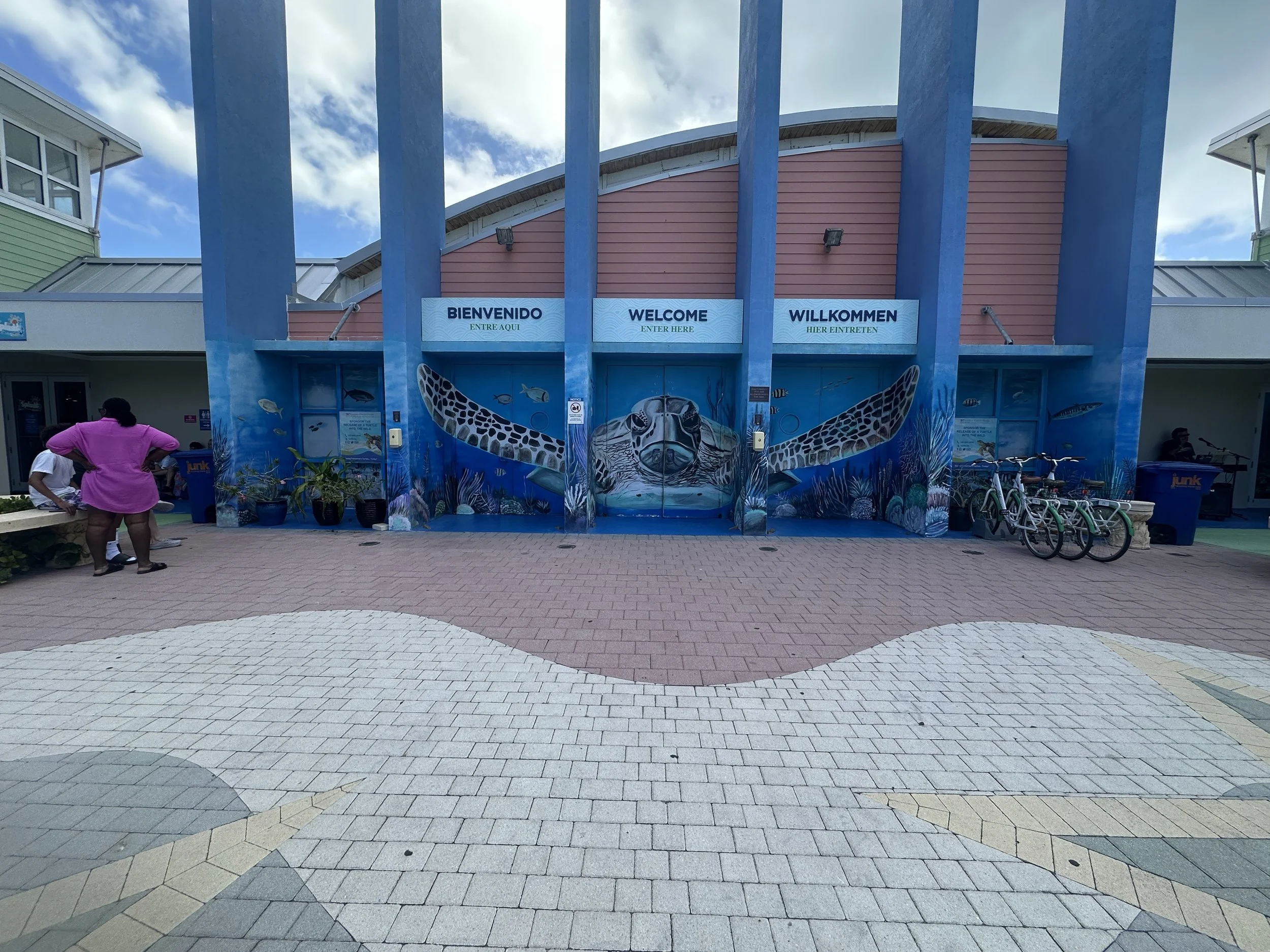
QUICK FACTS — CAYMAN TURTLE CENTRE SEA TREK
Port type: Tender port (Georgetown, Grand Cayman) — plan accordingly
Group size: Maximum 18 people per excursion — genuinely small
Helmet dive depth: Approximately 8 feet — no scuba certification needed
Active time underwater: Around 30 minutes
What to wear: Swimsuit and water shoes (Crocs available on-site up to size 12)
Return bus option: Public bus back to port runs every ~15 min, $2 per person
Ship all-aboard (reference): 5:15 PM — plenty of flexibility to extend your day
Best for: Families, older kids, first-timers, anyone wanting more than a beach chair
I have been moving through airports, cruise terminals, and unfamiliar streets for the better part of three decades. Work travel built the habit. Family travel gave it meaning. After all of that, I have developed a fairly reliable filter for what is worth doing on a shore day and what is just a way to burn four hours and come back with a magnet for your refrigerator.
The Sea Trek Helmet Dive at the Cayman Turtle Centre cleared that filter easily. Here is the full breakdown — including the parts the brochure glosses over.
Grand Cayman Is a Tender Port. Don't Underestimate That.
Georgetown does not have a cruise pier. Your ship anchors offshore and runs tenders — smaller boats — to bring passengers to land. That single logistical fact shapes your entire morning, and if you're not thinking about it the night before, you will feel it the next day.
On our sailing, Royal Caribbean began running tenders around 8:30 in the morning. Our excursion required us at the pier by 9:45, which meant getting down to the tender staging area by around 9:00. If you have booked through the cruise line, the process is built for you — you work into the tender line as groups are called. If you have booked independently, you need a tender number and you wait your turn.
PRACTICAL TIP We watched a family of four — independent booking — get told they'd need to wait for an available tender while cruise-line excursion guests moved ahead of them. At a tender port, booking through the cruise line can save real headaches when timing is tight. Factor this into your planning.
Once ashore, the pace settled. The tour operators met us at the pier, confirmed our group of 18, and we were on the bus by 10:15 or so. The drive across the island to the Turtle Centre took about 45 minutes. The driver kept things moving with some quick commentary — Seven Mile Beach, Governor's Beach, Cemetery Beach — nothing elaborate, but enough to remind you that Grand Cayman has a quiet, polished beauty before you ever get to the excursion itself.
Why 18 People Makes a Difference
The cap of 18 guests per tour is one of the first things the operators mentioned, and I appreciated it immediately. I have been on shore excursions where 40 people pile into a space designed for 20. This was not that.
Because only six people can do the helmet dive at a time, the group naturally divided into thirds. While one group was underwater, the others had real time to explore — the turtle habitats, the predator tank with large fish and sharks, the aquarium-style exhibits, the bird area, the water park section, the gift shop. It worked well. Nobody was standing around staring at their watch.
We arrived at the centre around 11:00 and were scheduled to regroup at 1:15. That gave us roughly two hours on-site. For adults and older kids focused on the dive experience, it is enough. For families with young children who would want longer in the water park or more time with the exhibits, it is worth knowing you can arrange to stay independently — more on that below.
The Turtles Before the Dive
Before anyone got in the water, the staff walked us through one of the sea turtle areas and gave us real context. They pointed out older residents — including one reportedly born in 1968 — and explained how the centre monitors egg-laying and hatchlings. The science behind what they do was laid out plainly and without performance.
That part of the visit mattered more than I expected. It reframed the whole experience. You were not just there to get a photo. You were being introduced to animals that have been in someone's careful care for decades.
The Helmet Dive: What It Actually Feels Like
Sea Trek is not scuba. You do not need any certification, and you do not need to be an especially confident swimmer. The dive area is about eight feet deep — shallow enough to stand on the bottom comfortably, deep enough to feel genuinely submerged.
The setup goes like this: you wear a metal frame harness on your back on shore. Once you are in the water and positioned, the staff lowers the helmet down onto your shoulders. On land, the helmet is heavy. In the water, that weight vanishes almost entirely. Air is pumped in continuously from above. You breathe normally. You walk along the bottom.
"Once the turtles started moving around me — gliding past at eye level, unhurried, completely at ease — the weight of the helmet, the logistics of the morning, all of it disappeared."
For me, this was the first time I'd been fully underwater without relying on a snorkel. That alone made it feel different. But the real shift came from the turtles themselves. There were maybe half a dozen, roughly the size of a pizza box each, moving through the water around us with an ease that made the whole scene feel calm rather than chaotic. Fish drifted through too. Once you settle into the rhythm of breathing and walking along the bottom, the experience becomes surprisingly meditative.
We spent about 30 minutes underwater. That is the right amount of time. Not so short that you feel rushed, not so long that the novelty wears off.
A Detail I Genuinely Appreciated: Hands-Free Photos
The guides handle all the photography while you're underwater. That sounds like a small thing until you realize what it means: your attention is fully free. No fumbling with a waterproof case. No splitting focus between the moment and the shot. You simply look around and take it in.
There were snorkelers in the lagoon during the helmet dive, so it is not a private space — but in practice, once you are down there with the turtles, the lagoon might as well not exist.
Flexibility at the End of the Day
This is worth knowing ahead of time. The ship's all-aboard was not until 5:15 in the evening, and the tour operators told us clearly that anyone who wanted to stay longer could sign a release and make their own way back. The public bus runs past the Turtle Centre — and the Dolphin Centre directly across the street — roughly every 15 minutes. Fare is $2 per person.
We left about 45 minutes before the scheduled return and caught the public bus back. Three of us, six dollars total, quick ride, a little more island scenery. It was a genuinely good bonus to the day.
FAMILIES WITH YOUNGER KIDS — READ THISThe water park section, the shark tank, and the bird area could easily fill another hour or two for children who want more time to explore. Budget for that. Talk to the operators when you arrive, sign the release, and use the public bus. The infrastructure supports it.
What Grand Cayman Looks Like Beyond the Excursion
We had time after returning to walk around the port area before heading back to the ship. Grand Cayman's port shopping district is clean, well-organized, and unmistakably Caribbean-cruise in character — plenty of stores, plenty of friendly sales pressure, and not much that is genuinely distinctive if you have done a few of these ports.
That is not a criticism so much as an observation. Grand Cayman, for a cruiser, is a port that rewards the traveler who has a plan. If your plan is a quality shore excursion, the day delivers. If your plan is to wander and see what happens, you may find yourself back on the ship before lunch.
Would I Do This Again?
Yes. Specifically for younger family members — kids, grandkids — I would do this first and build the day around it. The combination of the educational component, the helmet dive, and the tactile experience of being around the turtles makes it the kind of excursion that gives children something real to hold onto long after the cruise is over.
For adults traveling without children, it still holds up. The underwater experience is genuinely unlike most things you will do on a Caribbean port day. It is not adrenaline. It is something quieter — which, at a certain point in your travel life, becomes more valuable, not less.
The Verdict — From Someone Who's Seen Enough Shore Days to Know the Difference
The Sea Trek Helmet Dive at the Cayman Turtle Centre is one of the
To add a colored background behind the text box containing the headline "The Verdict — From Someone Who's Seen Enough Shore Days to Know the Difference", use one of these common methods depending on your environment.
HTML/CSS (for web pages)
Wrap the headline in an element and style its background:
The Verdict — From Someone Who's Seen Enough Shore Days to Know the Difference
.headline { background-color: #f2f2f2; /* choose any color */ padding: 12px 16px; /* space between text and box edges */ display: inline-block; /* shrink to text width; use block for full width */ border-radius: 6px; /* optional rounded corners */ color: #222; /* text color for contrast */ font-weight:
more honest shore excursions I have done in the Caribbean. The small group size is real. The educational component has substance. The underwater experience with the turtles is something you will remember. And the logistics — while not invisible — are manageable if you go in prepared.
Understand the tender process. Pack water shoes. Know your flexibility window at the end of the day. Do those three things, and this excursion will be the story you tell when someone asks how your cruise was.
★★★★☆ — Highly Recommended
Frequently Asked Questions
The questions I would have wanted answered before booking — straight answers, no filler.
Do you need to know how to swim to do the Sea Trek helmet dive at the Cayman Turtle Centre?
No swimming ability is required. The Sea Trek helmet dive takes place in water that is approximately eight feet deep, and you walk along the bottom rather than swim. Air is continuously pumped into the helmet, so you breathe normally the entire time. Staff are in the water with you at all times. It is one of the more accessible underwater experiences available to cruise passengers — suitable for non-swimmers and people who would not consider themselves ocean-comfortable.
Is the Cayman Turtle Centre Sea Trek worth it for adults without children?
Yes — though it hits differently than a family experience. The helmet dive itself is genuinely immersive: standing on the bottom of a lagoon with sea turtles moving around you at eye level is not something you replicate with a snorkel or a glass-bottom boat. The educational component about the centre's conservation work also adds real substance for adults who want more than just a photo opportunity. If you are choosing between this and a beach chair day, this wins on depth of experience — literally and otherwise.
Is the Cayman Turtle Centre Sea Trek worth it for adults without children?
Yes — though it hits differently than a family experience. The helmet dive itself is genuinely immersive: standing on the bottom of a lagoon with sea turtles moving around you at eye level is not something you replicate with a snorkel or a glass-bottom boat. The educational component about the centre's conservation work also adds real substance for adults who want more than just a photo opportunity. If you are choosing between this and a beach chair day, this wins on depth of experience — literally and otherwise.
How does the tender process work at Grand Cayman, and how does it affect my excursion timing?
Grand Cayman (Georgetown) is a tender port, meaning your ship anchors offshore and runs smaller shuttle boats to bring passengers ashore. If you have booked a shore excursion through the cruise line, you are typically called into the tender line as a group and given priority access. If you have booked independently, you will need a tender number and wait your turn — which can add meaningful time to your morning, especially on busy port days. For any excursion with a firm start time, arriving early to the tender staging area is essential. Plan to be in position at least 45 to 60 minutes before your required pier arrival time.
What should I wear and bring to the Sea Trek helmet dive?
Wear a swimsuit. Bring water shoes — the turtle swim area has a textured bottom that is easier to navigate with something on your feet. If you forget water shoes, the Cayman Turtle Centre has Crocs available on-site; the largest size available was a men's 12 when we visited, so larger-footed travelers should plan ahead. Leave valuables and anything you do not want wet on the bus or in a locker. The guides handle all in-water photography, so you do not need to bring a camera or waterproof case.
How long is the actual time in the water during the Sea Trek dive?
Approximately 30 minutes underwater. Because the excursion limits participants to six people per dive session and the total group size is capped at 18, the time is organized into three rotations. While you wait for your turn, there is genuinely plenty to explore at the facility — turtle exhibits, a predator tank, aquarium displays, a bird area, a water park, and a gift shop. The wait does not feel idle.
Can I stay longer at the Cayman Turtle Centre after the excursion ends?
Yes. The tour operators allow guests to sign a release and remain at the centre independently after the group departs. Getting back to the port is straightforward: a public bus runs past the Cayman Turtle Centre roughly every 15 minutes and costs $2 per person. The Dolphin Centre sits directly across the street, so there are two attractions in one location if you want to extend your day significantly. Just confirm the ship's all-aboard time before making this decision — and leave yourself ample buffer.
Is the Cayman Turtle Centre Sea Trek appropriate for children?
It is one of the better family-oriented excursions available in Grand Cayman for older children and teenagers. The helmet dive is accessible without swimming ability, the educational component about sea turtle conservation is engaging rather than dry, and the centre has a water park, animal exhibits, and other areas that extend the value of the visit beyond the dive itself. For very young children, the two-hour tour window may feel compressed — particularly if they want more time in the water park. If traveling with young kids, consider arriving at the centre with a plan to stay longer independently using the public bus option.
Is it better to book the Sea Trek excursion through the cruise line or independently?
For Grand Cayman specifically, the tender port dynamic makes cruise-line booking worth serious consideration. The main advantage is tender priority — cruise-line excursion guests move into the tender line as groups are called, while independent bookers wait for an available tender, which can cost meaningful time on a tight morning. If you miss your excursion start time because of tender delays, a cruise-line booking is typically protected; an independent booking is not. If the excursion timing is flexible or your ship's tender process is well-managed, independent booking may still work — but know the risk going in.
Thank You for reading along. Follow along for more travel adventures @venturetosee.
We Caught Our Lunch Off the Belize Barrier Reef — And Then Ate It
Belize City shore excursion review of Royal Caribbean’s Barrier Reef Fishing and Cook Your Catch experience at Rendezvous Caye, with reef fishing, fresh local food, photos, and practical cruise port tips.
We Caught Our Lunch Off the Belize Barrier Reef — And Then Ate It
An honest look at Royal Caribbean’s Belize Reef Fishing and Cook Your Catch excursion — stingrays, jerk-seasoned snapper, and everything in between
 Pulling into Belize City — a tender port, so the adventure starts before you even hit the dock.
Getting There: The Part Nobody Warns You About
Here is the thing about Belize City as a cruise port — the excursion starts way before you step onto a fishing boat. Our Royal Caribbean Western Caribbean itinerary had us cleared to go ashore at 9:15 in the morning, but Belize is a tender port. That means no gangway, no walking straight into town. You board a small boat from the ship and ride it roughly 25 minutes just to reach the cruise port area.
Then there is the time zone situation. Belize runs one hour behind ship time, and that created instant confusion on the pier. Were we meeting our excursion group on ship time or local time? It took a few minutes to sort out, but once we did, we realized we actually had close to an hour to explore before we needed to be anywhere.
 The port area has its souvenir shops and T-shirt vendors — perfectly fine for a stroll, but it moves quickly.
We walked around the port for maybe 30 to 45 minutes. Souvenir shops, T-shirt stalls, the usual tourist setup. It is fine for a quick wander, but there is not a ton to explore right there. After a bit, we made our way back to wait for the boat that would carry us out to Rendezvous Island — where the actual excursion begins.
How We Ended Up on This Excursion
We booked the Belize Reef Fishing and Cook Your Catch excursion directly through Royal Caribbean. It was listed as a four-hour experience, which sounded like a full, well-rounded day out on the water. The pitch was simple: fish over the reef, catch your lunch, watch it get cooked, eat it on the island. As Belize cruise excursions go, it stood out because it was hands-on and different from the standard beach-and-snorkel format.
This was actually my second visit to Belize City, so I was specifically looking for something that felt a little more local and experiential. The Cook Your Catch angle was what sold me. I wanted to see what fishing actually looks like here — not as a sport, but as a way of life.
“The Cook Your Catch angle was what sold me. I wanted to see what fishing actually looks like here — not as a sport, but as a way of life.”
The Ride Out to Rendezvous Island
The boat we boarded was carrying two separate groups — our fishing crew and another group headed out for a beach and snorkeling day. It is a 45-minute ride to Rendezvous Island, and here is the part that genuinely made me laugh — we passed directly by our Royal Caribbean ship on the way out. After all that effort to get ashore by tender, we were now cruising right back past it on the way to the actual excursion.
Worth being honest about this part: a four-hour excursion sounds generous until you do the math. Between the tender ride from ship to port, the 45-minute boat to Rendezvous Island, and the 25-to-30-minute return later — roughly an hour and a half of this day is just transit. That is not a complaint exactly, because the boat rides are pleasant. But if you are booking this expecting four full hours of fishing and island time, just know the reality going in.
Out on the Reef: Bottom Fishing Over the Belize Barrier Reef
Once we landed at Rendezvous Island, we transferred to a smaller, more intimate fishing boat — about 15 people total — and motored another 10 or 15 minutes out to fish over the reef. That moment felt like the real beginning of the day.
The setup is bottom fishing — cut sardine bait, spinning reels, about 15 to 20 feet of water right over the reef. There is nothing complicated about it. Anybody can do this. We were sitting right on top of the Belize Barrier Reef, the second-largest barrier reef system in the world, and even while we were focused on the lines, that context was not lost on me.
We fished two different spots over about an hour and a half total. The fish were small — mostly yellowtail snapper, a few croaker, a couple of strawberry grouper — most of them in that six-to-eight-inch range. In total, our group pulled in 25 to 30 fish. Steady action, nothing dramatic, but enough to actually cook.
 Caught this one at our second reef spot. Strawberry Grouper — we'll put this one back.
“We were sitting right on top of the Belize Barrier Reef — the second-largest barrier reef in the world — and even while we were focused on the lines, that context was not lost on me.”
Cook Your Catch: From the Water to the Grill
This is where the excursion shifted from a fishing trip into something that felt genuinely local. When we returned to Rendezvous Island with our catch, one of the deckhands set up on a small wooden platform just off the pier, standing waist-deep in the water. He cleaned the fish right there — descaling, gutting, tossing the scraps into the water below him.
And almost immediately, the stingrays showed up.
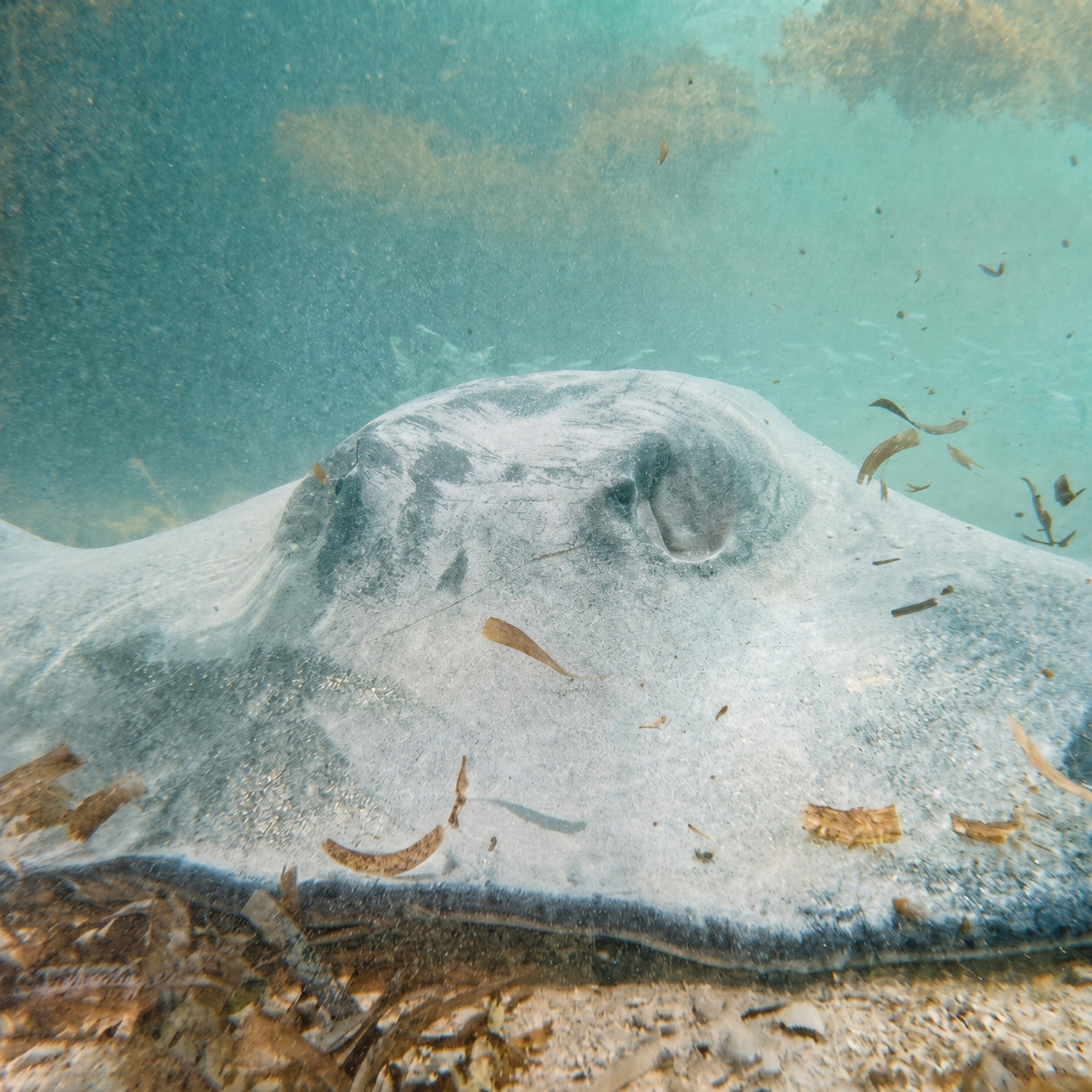
Two of them, circling beneath the platform, feeding on the scraps. If you stepped into the shallow water, they would glide right up to you. Not frantic, not skittish — just calmly brushing past your calves as if you were part of the reef furniture. One of those completely unplanned moments that ended up being one of the best parts of the day.
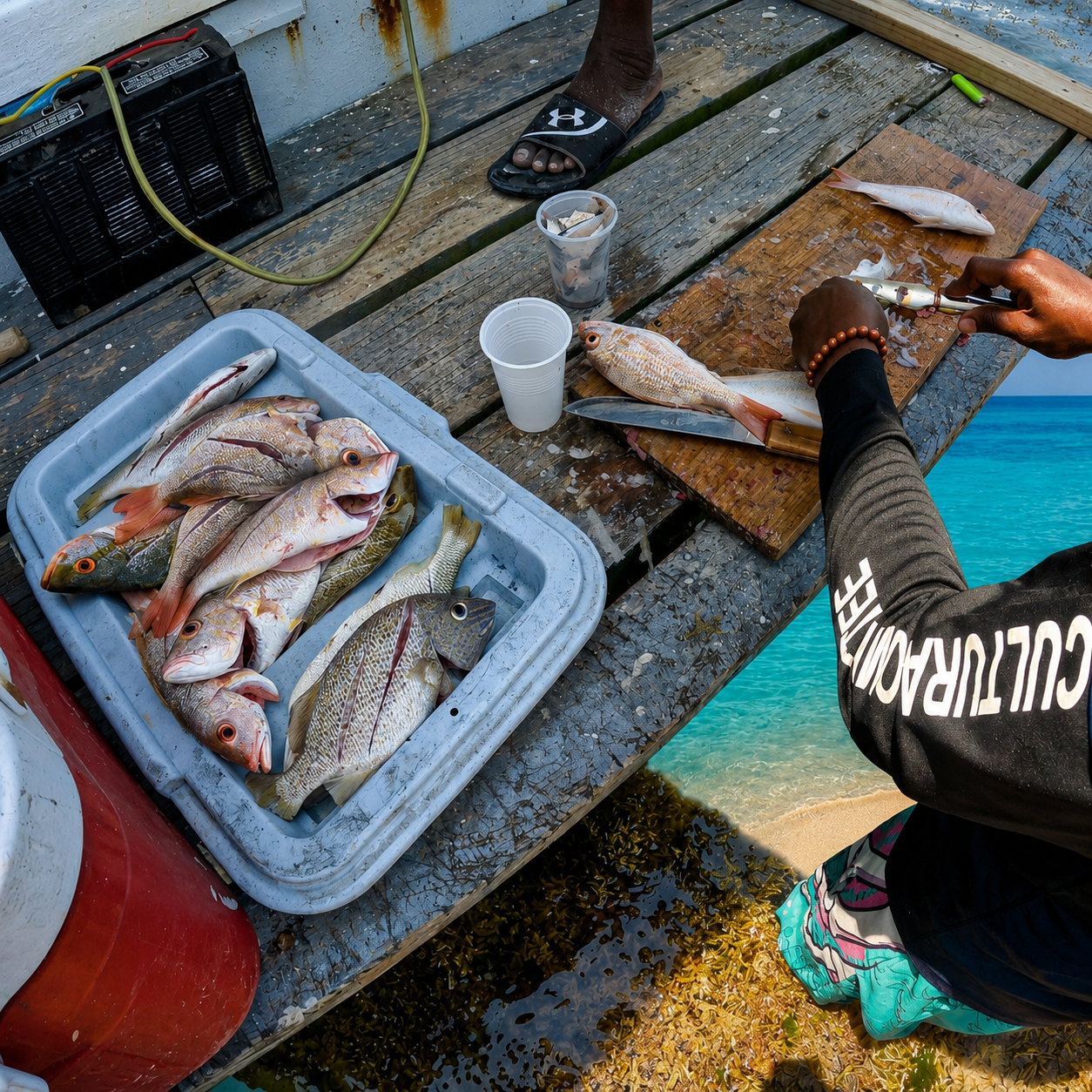 Fish-to-grill in real time. The cleaning happened right off the pier, with stingrays circling below for the scraps.
Once the fish were cleaned, they went straight to the barbecue — a simple, open-air setup with charcoal grill stations that looked like it belonged there. Nothing overbuilt for tourists, nothing staged. The chef laid each fish on aluminum foil, rubbed in a Caribbean dry spice blend, hit it with jerk seasoning, added a splash of coconut oil, and sealed everything up into a packet that went directly onto the coals.
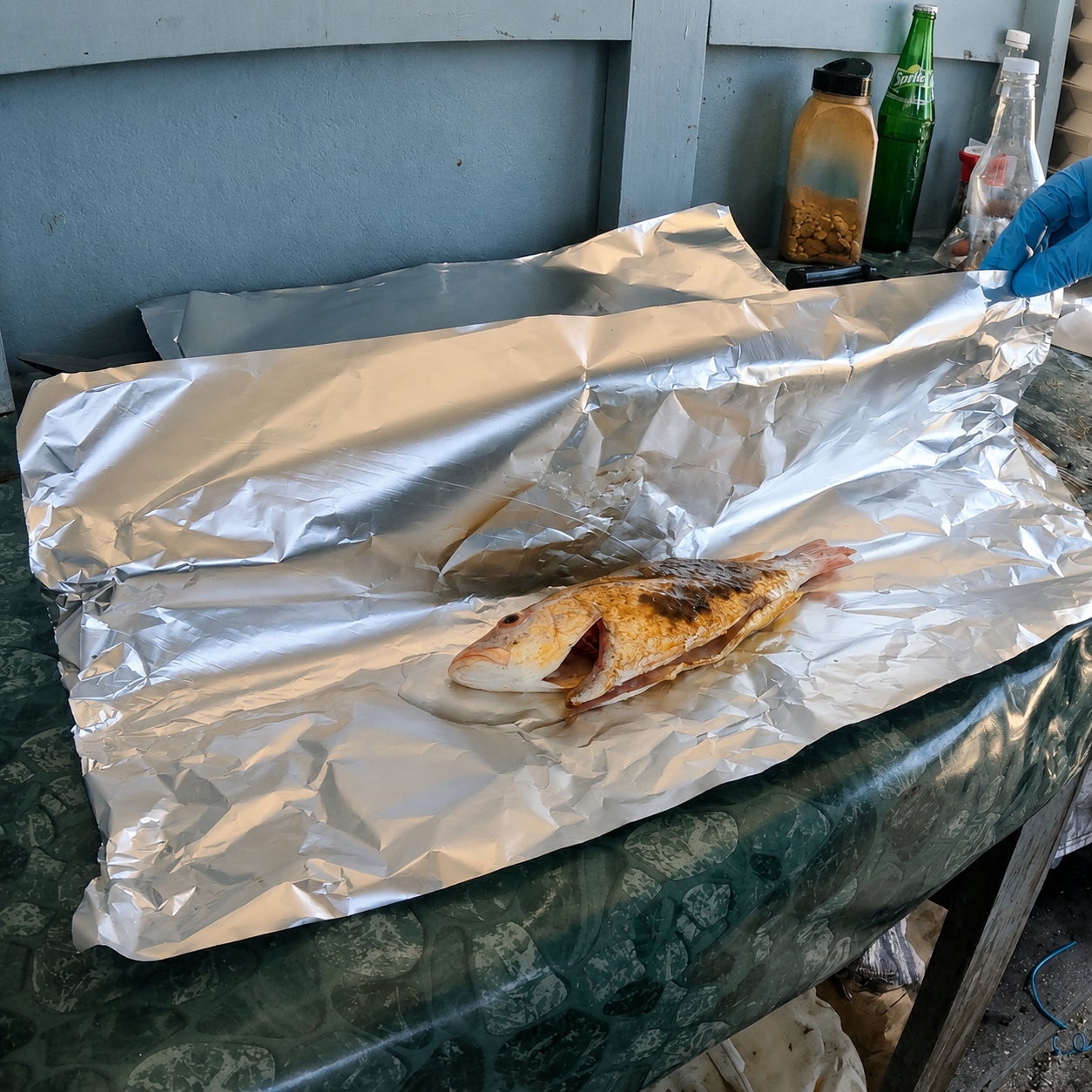
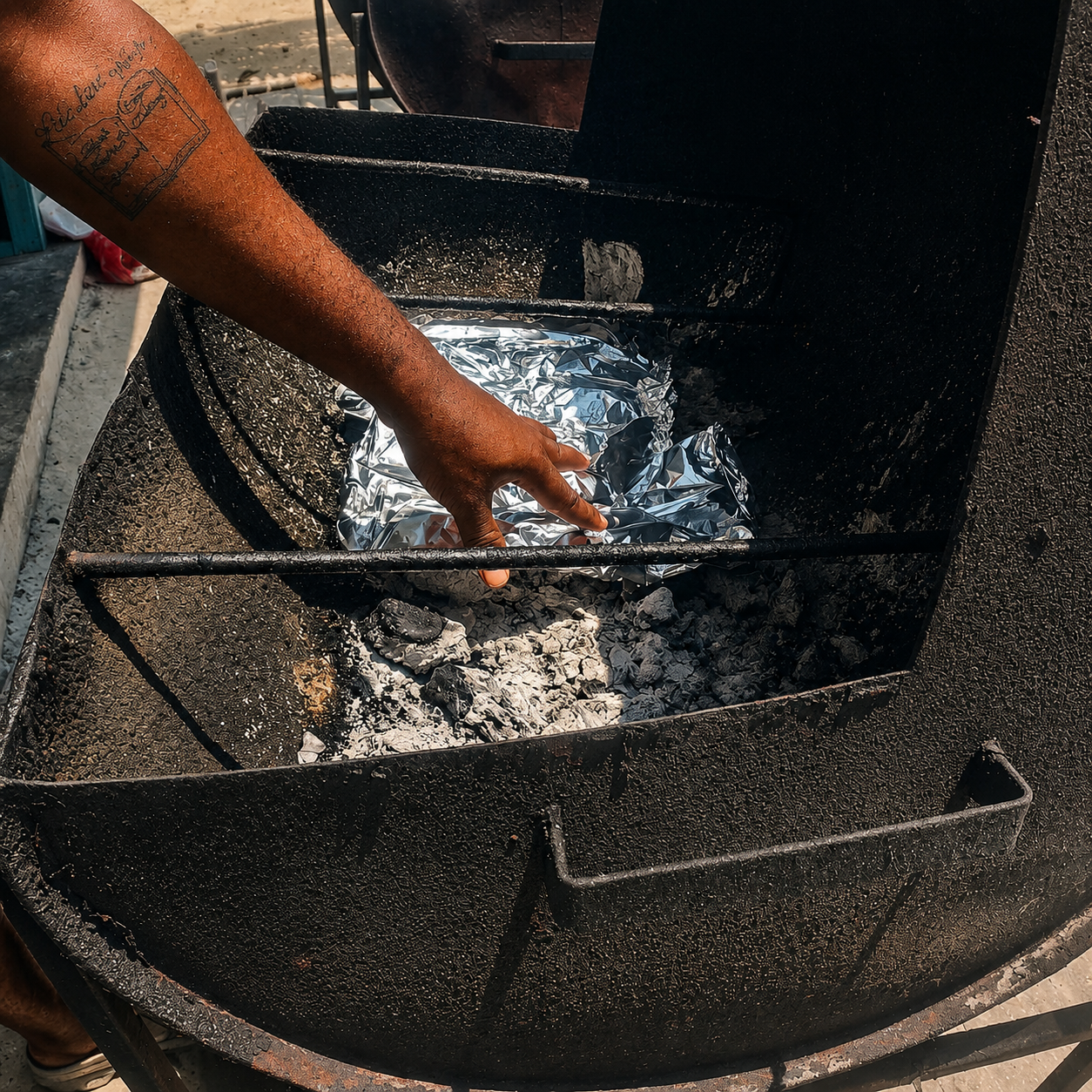
The chef explained the technique as he went: the foil packet puffs up like a balloon — that is when you flip it. It settles, puffs up a second time, and then it is done. Such a simple method, but one of those details that made the whole experience feel tied to the place.
Lunch was simple: the fish, rice and beans, coleslaw. But the fish was good. The kind of good that only happens when something was still in the ocean a couple of hours before you ate it. Smoky, flaky, seasoned in a way that felt distinctly Belizean. It was not a fancy meal. It was an honest one, and it worked.
- Bring your own water. Rum punch and water are served on the fishing boat, but nothing was set up at the barbecue area when we arrived. After a few people asked, the crew brought the punch over — but if you are not drinking alcohol, pack a couple of extra bottles from the ship.
- Plan for transit time. A four-hour excursion sounds like a lot, but roughly 90 minutes is boat transportation. Great boat rides — just go in with accurate expectations.
- Bring snorkel gear if you have it. There is a 20-to-30-minute window after lunch before the return boat arrives. You can snorkel off Rendezvous Island, though it is a shallow beach-entry experience rather than a deep reef dive.
- Bring cash for tips. The fishing crew and barbecue staff both asked for gratuities on the return ride. Come prepared — they do a good job and it is expected.
- Zero fishing experience needed. The crew handles everything: setup, bait, technique. Genuinely beginner-friendly and great for families.
- Do not book this primarily for snorkeling. If snorkeling is your main goal, a dedicated Royal Caribbean Belize snorkeling excursion is a better fit.
The Bonus Round: Hand-Feeding Stingrays in the Shallows
 The island itself is exactly what you picture when someone says “Caribbean island.” Tiny, palmy, impossibly blue water.
After lunch, while we waited for the return boat, the crew handed out the leftover sardine bait and told us we could stand in the water and feed the stingrays by hand. Same rays that had been circling the cleaning platform earlier. They would glide right up, take the bait gently from your fingers, and move on. Calm and totally unbothered about the whole thing.
Honestly? This was one of those moments I will remember longer than the fishing itself. Completely unplanned, totally free, and weirdly peaceful. Nobody was rushing anyone. The afternoon light was hitting the water just right. That is the kind of thing you cannot really put in a brochure.
Worth It for the Right Traveler — Not a Trophy Fish in Sight, But Genuinely Real
If you are an avid angler chasing big game or a serious snorkeler looking for deep reef action, this is probably not your excursion. The fishing is casual and small-scale, and the snorkeling off Rendezvous Island is shallow beach-entry water.
But that is not really the point of the Belize Reef Fishing and Cook Your Catch excursion. Fishing in Belize is not a hobby — it is part of how people live here. This excursion lets you take part in that in a simplified, traveler-friendly way: catch something from the reef, watch it get cleaned on a wooden pier with stingrays circling below, and eat it seasoned with Caribbean jerk spice on a tiny island in the Caribbean Sea. It is honest, unhurried, and carries a real sense of place.
For families, casual travelers, and anyone who wants more than a beach chair on their port day, there is genuine value here. And those stingrays brushing past your legs in the shallows? That alone makes it worth remembering.
Would I book it again? Probably not as my first choice on a return to Belize — there are other excursions I want to try first. But it was not a bad day. Not by a long shot.
Frequently Asked Questions
It is a shore excursion offered through Royal Caribbean in Belize City that takes cruise passengers out to fish over the Belize Barrier Reef using simple bottom-fishing techniques, then returns to Rendezvous Island where the fresh catch is cleaned, seasoned with Caribbean jerk spices and coconut oil, and cooked over charcoal right on the beach. The experience is listed as a four-hour excursion including all transit time.
The excursion is listed as four hours, but approximately 90 minutes of that is boat transportation — a 45-minute ride from the Belize City port to Rendezvous Island and a 25-to-30-minute return. Factor in the tender boat ride from the Royal Caribbean ship to the port and travel takes up a significant portion of the day. The actual fishing lasts about 90 minutes at two reef locations.
No prior experience is needed. The crew handles all setup, provides cut sardine bait, and walks everyone through the bottom-fishing technique. The spinning reel rigs are beginner-friendly and fishing is done in 15 to 20 feet of water. Great for families, first-timers, and anyone who has never held a fishing rod before.
Expect smaller reef fish rather than trophy catches. Yellowtail snapper is the most common, along with croaker and occasional strawberry grouper. Most fish run six to eight inches. A group of around 15 people typically catches 25 to 30 fish total — more than enough to make the Cook Your Catch meal a real payoff.
The fish is seasoned with a Caribbean dry spice blend and jerk seasoning, drizzled with coconut oil, wrapped in foil packets, and cooked directly on charcoal. Served with rice and beans and coleslaw. Simple but genuinely flavorful — the freshness of fish caught just hours before makes a real difference. Honest island food, not a resort-style buffet.
Yes. Belize City does not have a deep-water pier for large cruise ships, so Royal Caribbean passengers must take a tender boat from the ship to the port area — roughly 25 minutes. Belize also runs one hour behind ship time, so confirm whether your excursion meeting time is in ship time or local Belize time before heading to the pier.
Yes. Stingrays are naturally drawn to the fish cleaning area, feeding on scraps tossed into the shallow water. After lunch, leftover bait is typically handed out so passengers can hand-feed the rays directly in the shallows. They are calm and accustomed to people, and will often brush gently against your legs in knee-deep water near the pier.
Not officially, but there is a 20-to-30-minute window after lunch before the return boat arrives. Bring your own gear and you can snorkel directly off Rendezvous Island. This is a shallow, beach-entry snorkel — not a deep reef dive. For serious snorkeling, a dedicated Royal Caribbean Belize snorkeling excursion is a better fit.
Bring extra water bottles from the ship — beverages may not be available at the barbecue area. Cash for tips is strongly recommended, as both the fishing crew and barbecue staff request gratuities. Sunscreen, a hat, and water shoes for standing in the shallows with the stingrays are also worth packing.
I am always out here chasing the hands-on, local experiences worth your time. If this helped you plan your Belize City port day, follow along for more honest shore excursion reviews, Caribbean destination guides, and travel adventures from someone who just genuinely loves doing this.
📸 Instagram, YouTube & Facebook: @venturetosee
📌 Pinterest: venturetosee
Celebrity Constellation Review: 7-Night Western Caribbean from Tampa
A detailed review of a 7-night Western Caribbean cruise aboard Celebrity Constellation sailing roundtrip from Tampa. This balanced, experience-based write-up covers embarkation, onboard atmosphere, dining performance, fitness center, service standards, port experiences in Cozumel, Belize City, and Costa Maya, and overall value. Ideal for travelers seeking a mid-size ship with an active, mature passenger mix and consistent service rather than high-energy attractions.
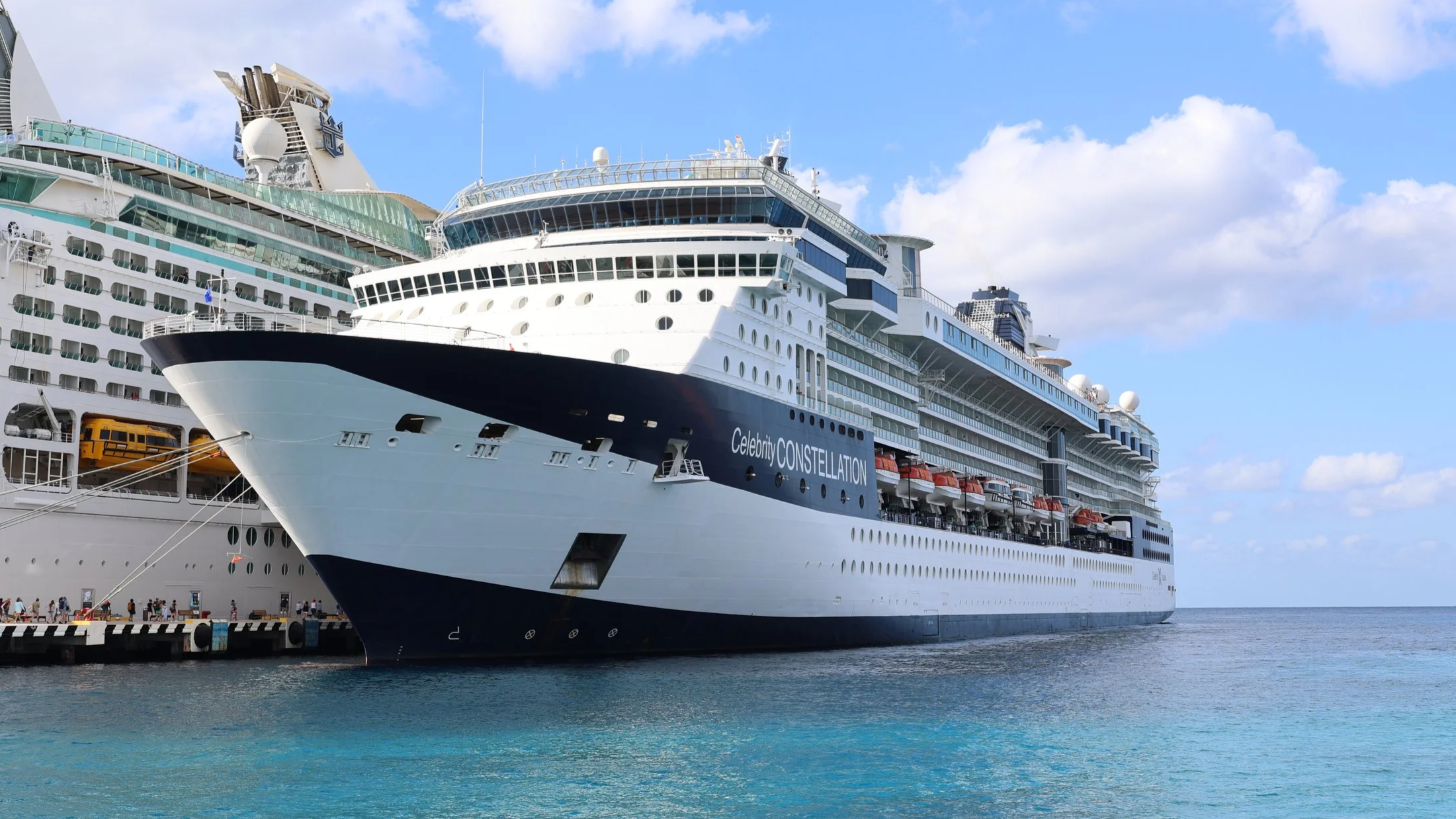
Quick Answers: Celebrity Constellation at a Glance
Is Celebrity Constellation worth sailing in 2026?
Yes — for travelers who prefer mid-size ships, consistent service, and an adult-focused atmosphere over spectacle.
How long does embarkation take in Tampa for Celebrity Constellation?
From curb to ship, roughly 20–25 minutes on this sailing, with light lines and efficient processing.
Does Celebrity still offer twice-daily housekeeping?
On this sailing, yes. I was given the option of one or two daily visits, including evening turndown service.
Is the ship crowded?
No. At roughly 2,170 guests, the ship felt balanced. Seating was available on sea days without competition.
Is the food better than other cruise lines?
Buffet variety was stronger than average. Main dining room improved as the week progressed. Beef Wellington and prime rib stood out.
Are drink prices excessive?
Comparable to Royal Caribbean. More than Carnival, but consistent with mid-tier restaurant pricing when gratuity is included.
Is this ship good for solo travelers?
Yes. The scale and programming support independent travel well.
Does the ship feel old?
Architecturally yes (built 2002). Aesthetically refreshed in 2020. Clean and well maintained.
A Week Aboard Celebrity Constellation from Tampa
In early February, I sailed roundtrip from Tampa, Florida aboard Celebrity Cruises on Celebrity Constellation for a seven-night Western Caribbean itinerary.
Built in 2002 and modernized in 2020, Celebrity Constellation is part of the Millennium Class. At approximately 91,000 gross tons, she carries around 2,170 guests at double occupancy with roughly 1,000 crew — a crew-to-passenger ratio just over 1:2. That ratio shows up in subtle ways throughout the week.
This sailing was solo.
I booked an interior stateroom on Deck 8, forward in the bow — a location I had never tried before and normally avoid due to potential motion. Seas were steady. Not glass, but calm enough that movement was negligible day and night. No sleep disruption. No vibration issues.
The cabin was compact, functional, and clean. Updated finishes were evident from the 2020 refurbishment. If someone is cruising primarily for interior stateroom décor, they may be missing the point. The cabin serves as a base of operations. On this sailing, it performed that role efficiently.
Embarkation in Tampa was orderly and efficient. No theatrics. Just steady flow through check-in, security, and boarding. Tampa’s port setup supports that pace, especially for ship sizes in this range.
Embarkation in Tampa – Simple and Low-Stress
Tampa embarkation was one of the smoother processes I’ve had on a cruise.
If you’re arriving by rideshare, the one unknown is usually the terminal. You don’t always know which side of the port you’re headed to until you’re close. In practice, it wasn’t an issue. As we approached, there were large LED signs showing which ships were operating that day and which terminal to use. Celebrity and Norwegian were both active, and signage made routing straightforward.
The bigger reason it went smoothly is the pre-boarding process. In the days leading up to sailing, Celebrity’s app check-in prompts you to load the essentials: ID and passport details, your boarding information, and a photo. You can also set up payment details in advance. That reduces friction when you arrive.
I reached the port around noon. My assigned arrival window was 1:00 p.m. — I generally prefer that timing because it usually aligns with stateroom access around 1:30.
On the ride over, I used the Celebrity app to complete the muster drill requirements, including the safety video. That meant one less task once onboard.
At the terminal, baggage drop was immediate. Porters were efficient and professional. From there, it was stairs up, a quick document/boarding pass check, then security.
Even though I was early for my window, there was essentially no line at the initial checkpoint, so I was waved through without issue. Security took roughly 10 minutes. The final check-in inside the terminal was another short wait — about 10 minutes — where a Celebrity representative confirmed paperwork and took an updated photo.
From stepping out of the Uber to walking onto the ship, the entire process was roughly 20–25 minutes.
Just as important: the tone was calm. Staff were polite and helpful. No barking instructions. No attitude. It felt organized and non-stressful — which is exactly what you want at the start of a trip.
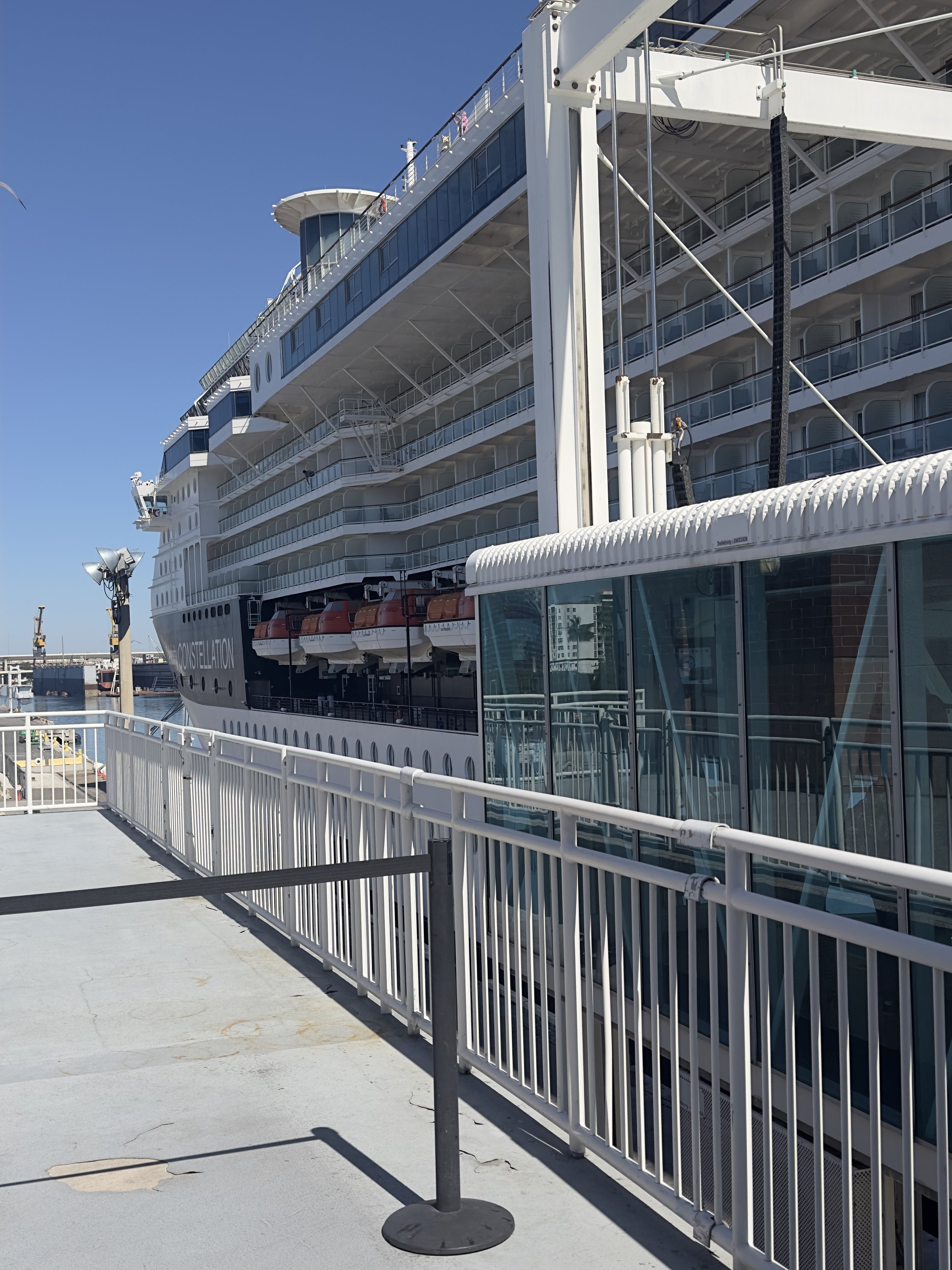
Embarkation Day Walking Onto The Gangway
Open seating on Deck 10 and Deck 11 aboard Celebrity Constellation on a Western Caribbean cruise
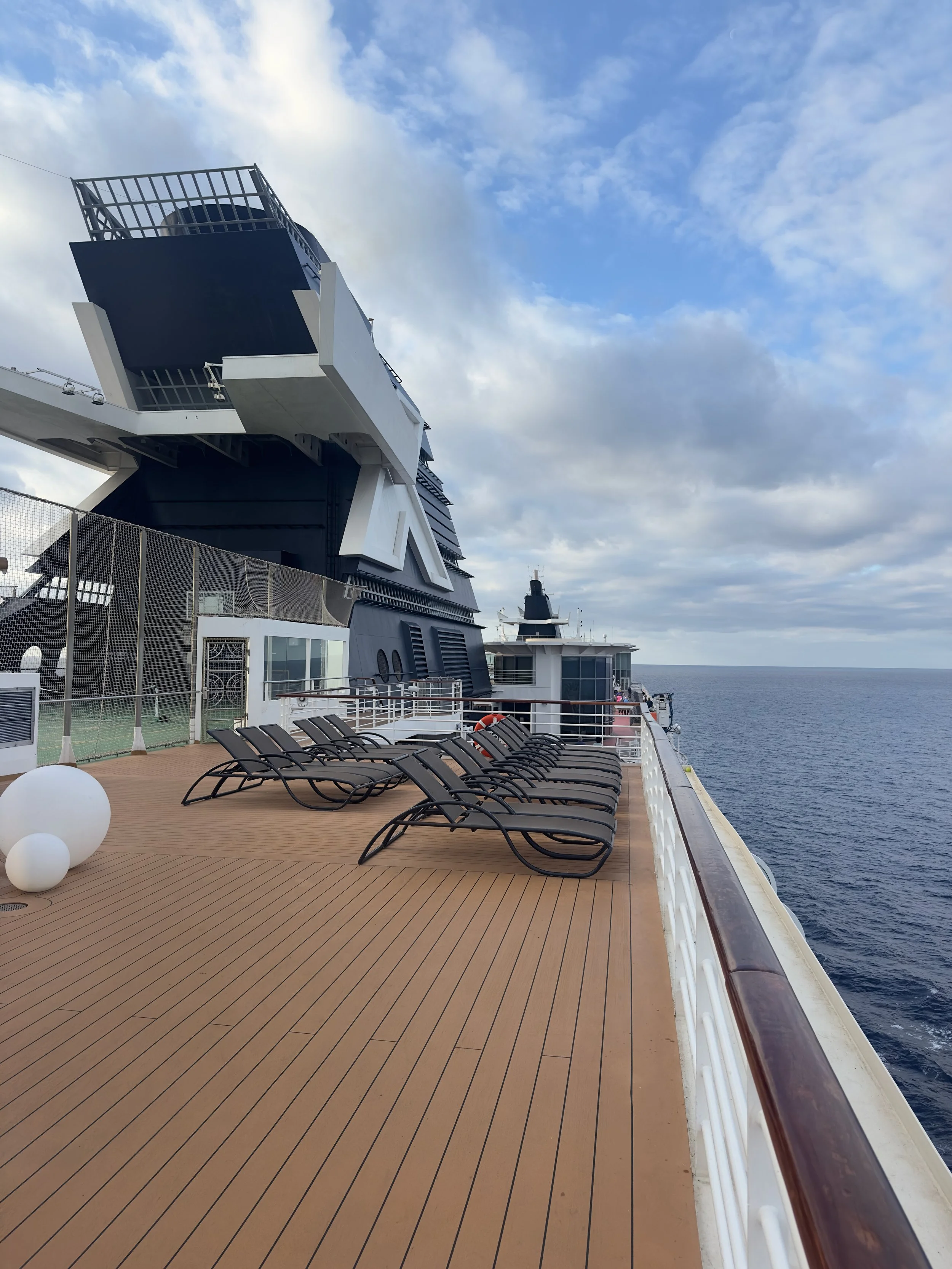
Is the ship crowded?
Not on this itinerary and not at this time of year. Passenger flow felt proportional to the ship’s capacity. Elevators were manageable. The pool deck required mild awareness on sea days, but it did not feel chaotic.
Programming and ship rhythm
Sea days were structured but not frenetic.
Mornings typically included wellness programming — Tai Chi, stretching, yoga — usually before 11 a.m. That early schedule kept the tone calmer than what I’ve experienced on some mass-market ships.
Afternoons rotated through the expected lineup: trivia, bingo, and occasional dancing near the pool area. The Reflections Lounge on Deck 11 forward was also used well, often hosting arts-focused sessions such as:
Paint-the-Circles mosaic workshops
Origami classes
Other small art instruction sessions
One event stood out: an “Archery at Sea” competition inside the Reflections Lounge. A suspended inflatable target was set up for scoring. It was lighthearted but organized and surprisingly engaging. I had never seen that on a ship before.
“Archery at Sea” inside the Reflections Lounge.
Evening entertainment
Evening shows leaned toward concert-style entertainment rather than Broadway-style productions. Pop performances, sing-alongs, and standard cruise-stage programming. Competent, professional, and in line with the ship’s adult tone.
I did not attend late-night events, so I can’t evaluate them meaningfully. For my travel style, quieter evenings were easy to maintain onboard.
Fitness Center
The gym was one of the better features on the ship.
For an older vessel, it is positioned in a way that newer ships sometimes get wrong — with continuous window views and natural light. It felt open and airy, even though the space itself was not oversized.
Equipment was practical and complete:
Many treadmills
Ellipticals and stationary bikes
Strength machines covering most muscle groups
Dumbbells and free weights (no heavy barbell bench setup)
A multi-purpose studio area used for spin, yoga, and training sessions
Some people don’t cruise to work out. For me, sea days are when it matters most. It restores discipline and balance in a setting where eating and drinking can become the default routine.
Dining Observations
One of the common claims about Celebrity is that the food is “better.” My experience was more nuanced.
Oceanview Café (Deck 10 buffet)
The buffet layout is circular — nearly 360 degrees of movement. That design helps passenger flow.
Instead of duplicating menus on both sides (a common technique to move crowds faster), Celebrity varied offerings across stations.
Forward: desserts and pastries depending on the meal
Aft: grill station with rotating proteins
Side stations: rotating themes and cuisine variety
Over the week, I saw meaningful variety: Asian offerings one night, Indian and vegetarian options another, and an American-themed day. Breakfast had the usual omelet stations, but overall variety felt stronger than average.
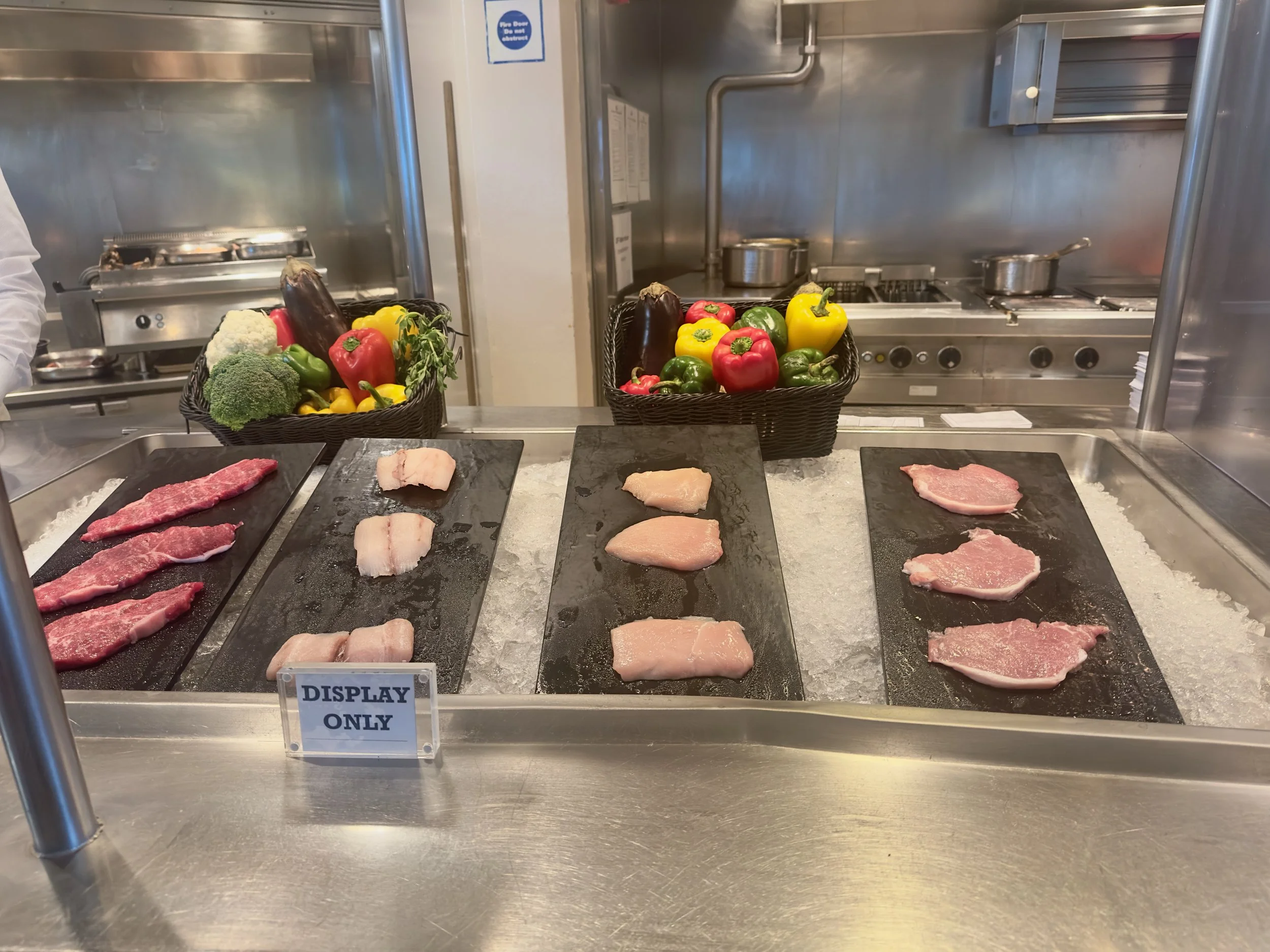
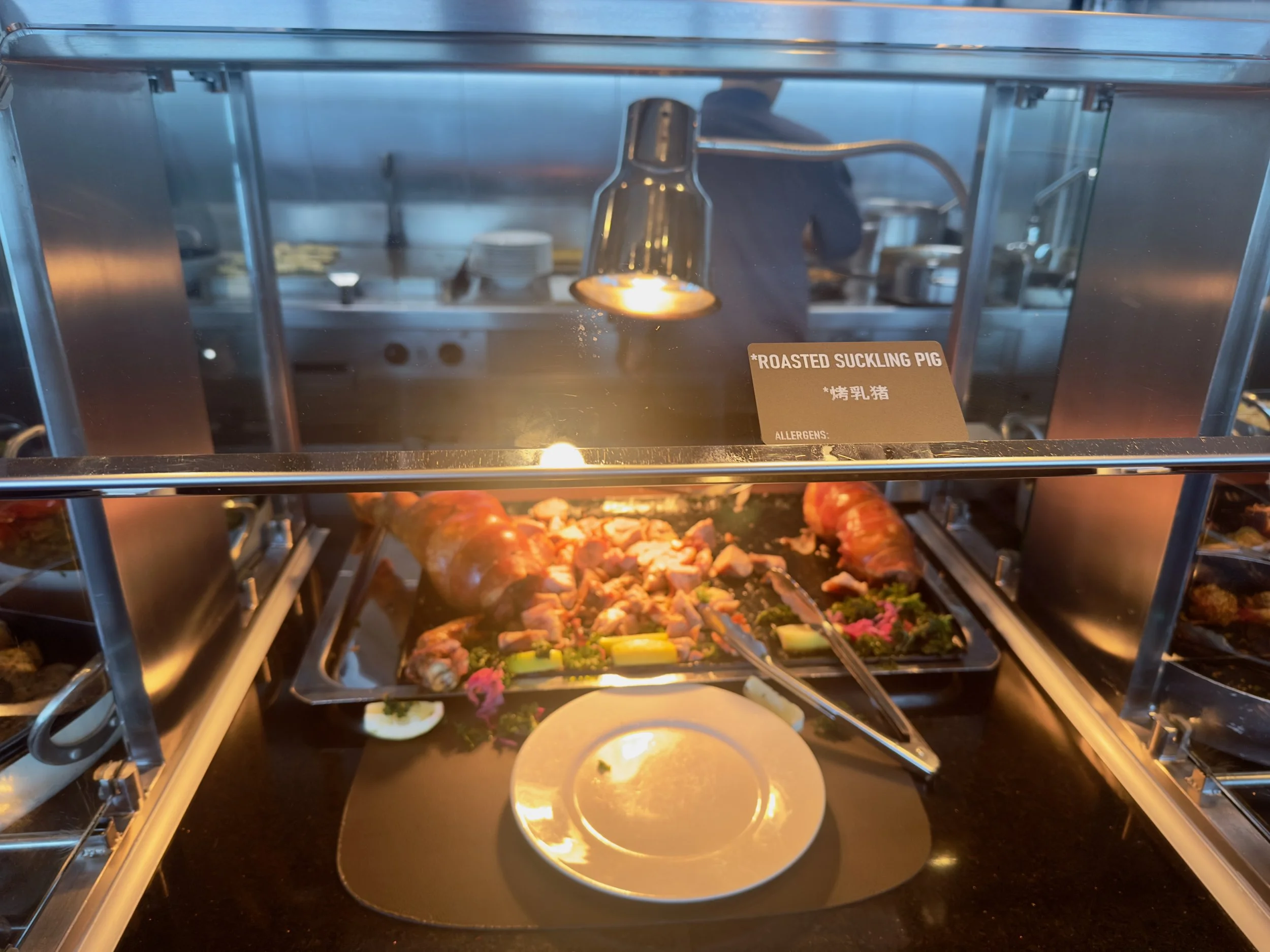
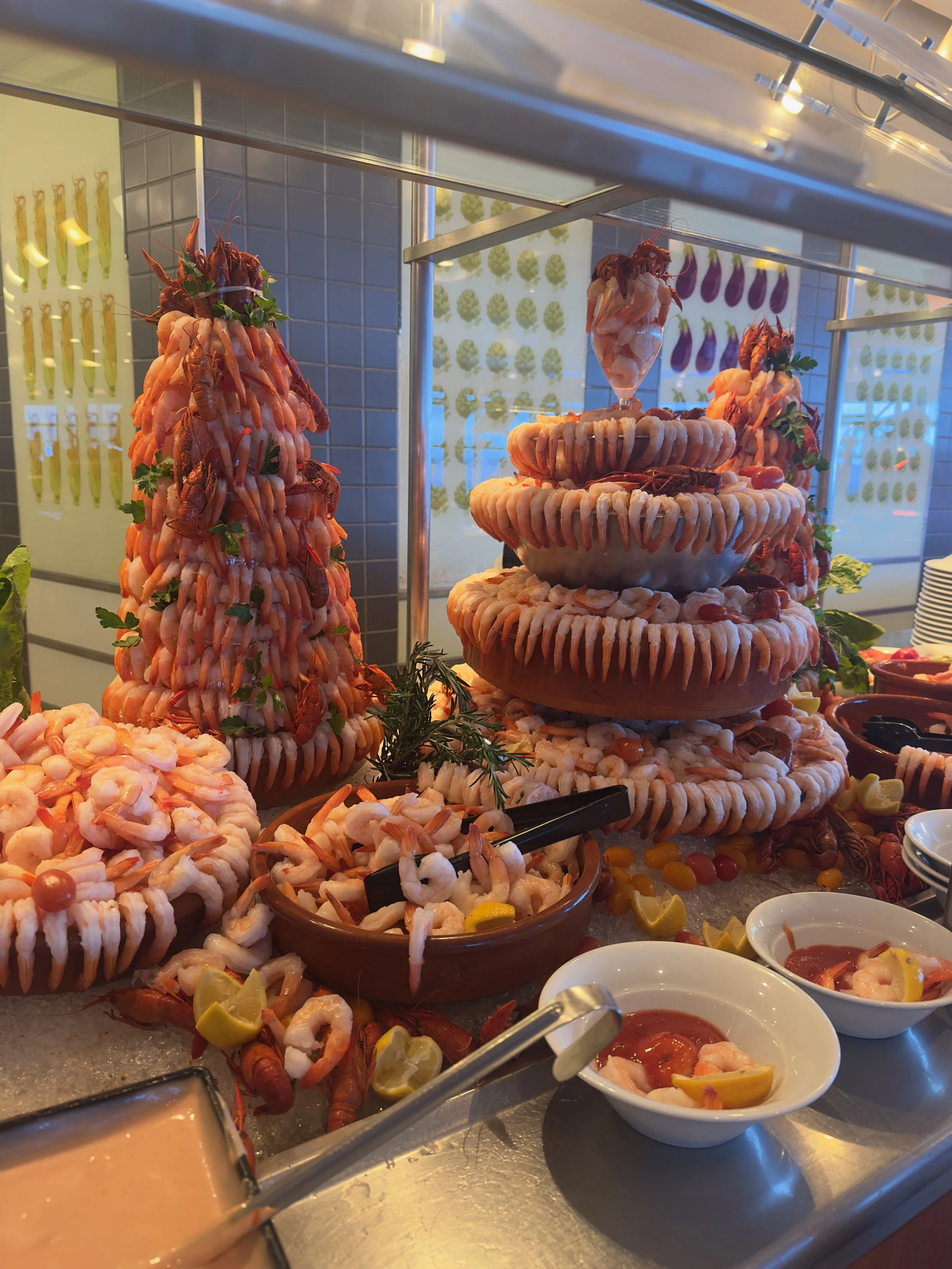
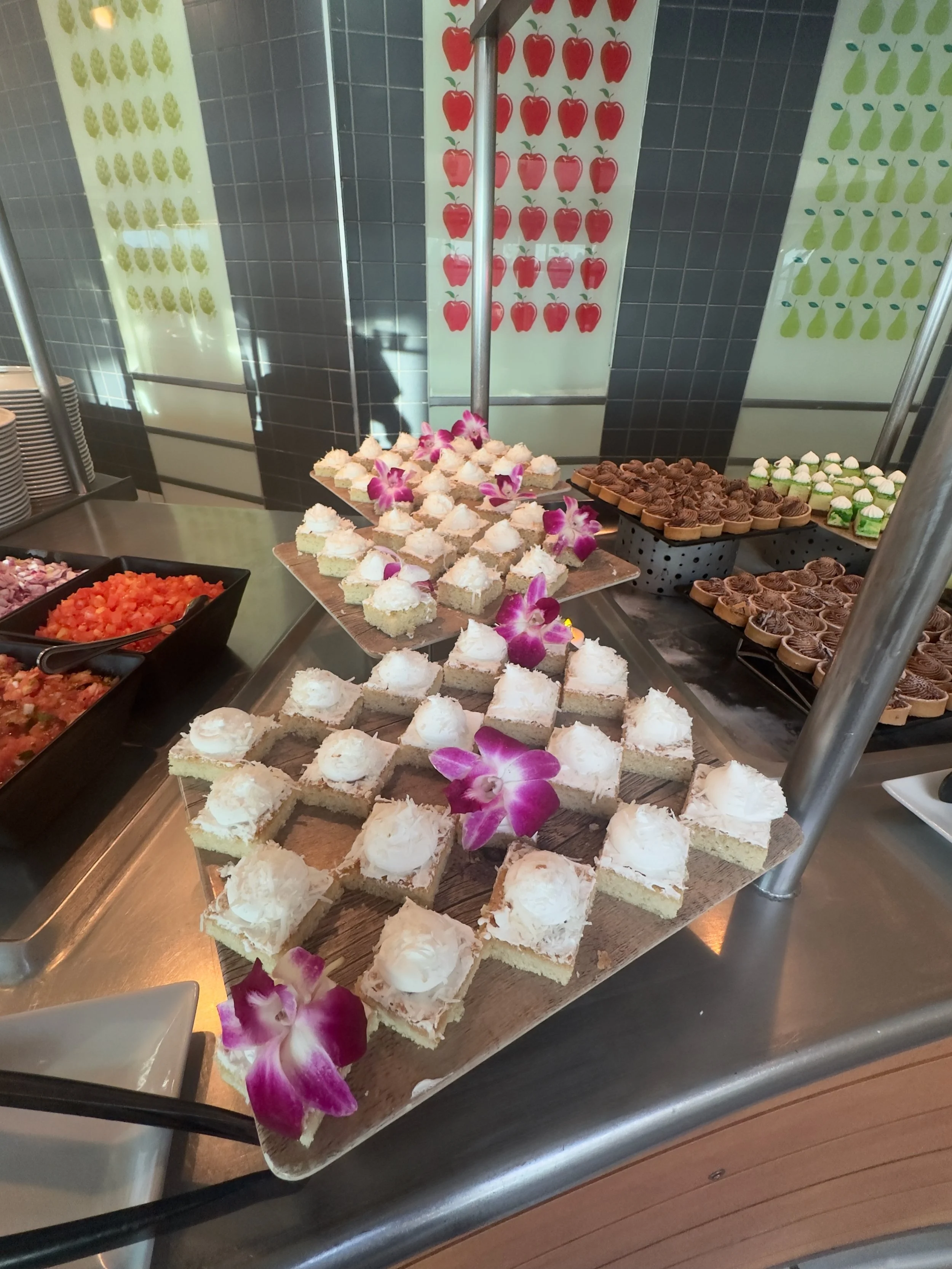
Main Dining Room
Early in the cruise, the main dining room did not feel significantly different than what I’ve experienced on Royal Caribbean or Carnival. Solid, predictable, cruise-standard execution.
The one consistent differentiator: Celebrity offered escargot nightly. On most lines, that tends to show up once per sailing.
As the week progressed, the food improved.
By the final nights:
Beef Wellington was one of the better versions I’ve had in a long time — ship or land-based
Lobster and steak night delivered solid lobster
The steak was acceptable
Prime rib later in the week was one of the better cruise-ship prime ribs I’ve had without having to use a specialty restaurant
Desserts were fine. Not memorable. I’m partial to chocolate, and as much as it pains me to say it, Carnival’s molten chocolate cake still sets a difficult benchmark — when it’s cooked correctly.
Beverage Pricing
Before sailing, I heard commentary that Celebrity drink prices were excessive. I watched it closely.
In practice, pricing was comparable to recent Royal Caribbean sailings. Carnival remains cheaper, but the gap was not dramatic.
Examples:
Manhattan with standard bourbon: about $15 including gratuity
Wine and beer: typically $11–$15 per serving including gratuity (beer was generally 16 oz)
Cruise ships add 18–20% gratuity automatically, which must be included in comparisons.
One night I ordered a shot of Blanton’s bourbon because it is not something I typically see onboard. That came in at $33 including gratuity. Not inexpensive, but also not representative of normal daily spend.
Overall, beverage pricing landed where I’d expect for restaurant-level markup — not discounted, not shocking.
Onboard Sales Environment
One of the better aspects of the sailing was what I did not experience.
There was minimal sales pressure.
Photographers were present but not intrusive. I was not consistently approached for photo packages. Jewelry and art auction staff were visible but not aggressive. The Effy jewelry store was active, but the engagement style was lighter-touch than I’ve experienced elsewhere.
It’s possible traveling solo reduced interaction attempts, but I observed the same approach toward other guests. The atmosphere felt professional rather than commercial.
Crew & Housekeeping
Service consistency is often where differences between cruise lines become most visible.
On embarkation day, my stateroom attendant introduced himself and asked whether I preferred one housekeeping visit per day or two.
Two visits.
The first would be standard cleaning. The second would include turndown service and additional removal of anything accumulated during the day.
That stood out.
On recent sailings with Royal Caribbean, Holland America, Carnival, and Hurtigruten, housekeeping had moved to once-daily service after post-COVID staffing adjustments. For me personally, once per day is sufficient. But the fact that the option was offered — and operationally supported — reflects Celebrity’s service model on this sailing.
Throughout the week, housekeeping timing was predictable. The cabin was consistently maintained. Staff presence across dining and public spaces was attentive without hovering.
It wasn’t theatrical service.
It was professional service.
Port Experiences
Cozumel, Mexico
In Cozumel, I participated in a ship-sponsored excursion to Chichén Itzá. It was well orchestrated and operated as a small group, which improved pacing. CLICK HERE to read the blog on my experience.
For a deeper breakdown of that day, I would point readers to a dedicated write-up.
Belize City, Belize
Belize is a tender port, which adds time and logistics to the day. That needs to be factored into any plan.
Conditions were near ideal: sunny, about 82°F, and good water conditions. I joined a ship-sponsored snorkeling excursion. It ran smoothly and returned with time margin.
Belize felt authentic and welcoming — less curated than many cruise-centric ports.
I choose to take the Barrier Reef Snorkeling shore excursion offed through Celebrity Cruises. CLICK HERE for the blog on the shore excursion.
Costa Maya, Mexico
Costa Maya was the most operationally complex port of the week.
On arrival, protesters restricted cruise passenger movement outside the port area. Multiple ships were affected, including Celebrity, Royal Caribbean, and Norwegian vessels.
My scheduled Mayan ruins excursion was set to depart at 8:30 a.m. At the pier, we were informed it would be delayed until 12:30 p.m., a four-hour push.
While larger excursions were being held, smaller independent groups appeared to be departing. I spoke with the Celebrity shore excursion staff and asked whether placement on an alternative Mayan excursion was possible. They made genuine efforts to accommodate. Ultimately, it did not work out.
A full refund was processed without hassle.
From a customer service standpoint, it was one of the cleaner service recovery responses I’ve experienced at sea.
The port itself is contained — restaurants, pools, shopping — but it is not a walk-into-town experience. If returning, I would plan an excursion specifically to get out of the port area.
Disembarkation – Tampa
Debarkation was seamless.
I used the self-assist walk-off option. Official time was 7:30 a.m. I was in line by 7:15. By about 7:25, passengers were being released.
From ship to airport:
~7:25 — off the ship
~7:35 — through customs
~8:00 — in a taxi
~8:30 — seated at the Tampa airport
Uber estimated a 10-minute wait and about $42 plus tip. A taxi was immediately available for a $35 flat fare plus tip. It was faster and slightly cheaper.
For travelers flying out the same morning, Tampa worked well.
Final Assessment
This February sailing priced out under $100 per night (double occupancy rate). As a solo traveler, I paid slightly more due to the supplement, but the overall value remained strong.
Seven nights. Three ports. Consistent service. A clean, well-maintained ship. A passenger mix that skewed mid-50s to mid-60s, active, and seasoned.
Would I sail Celebrity Constellation again?
Yes.
Not for spectacle.
Not for novelty.
But for proportion.
The ship size feels right. Seating works. Passenger flow stays manageable. The crew ratio supports a steady service baseline. For travelers who prefer a calmer pace and a ship designed for adults, this itinerary delivers a balanced week.
Travel, when approached thoughtfully, benefits from proportion.
This sailing maintained that balance.
I welcome constructive feedback on this review and on the blog in general. If there’s something you’d like to see covered differently, corrected, or expanded, email me at venturetosee@gmail.com.
Travel with Intention.
Destination Highlight: Barrier Reef Snorkeling Adventure with Celebrity Cruises
Cruising to Belize City on Celebrity Constellation? This in-depth shore excursion review covers snorkeling the Belize Barrier Reef, visiting Caye Caulker, swimming with nurse sharks and stingrays, and what you can realistically experience in one port day. A practical cruise port guide for travelers who prioritize the water.
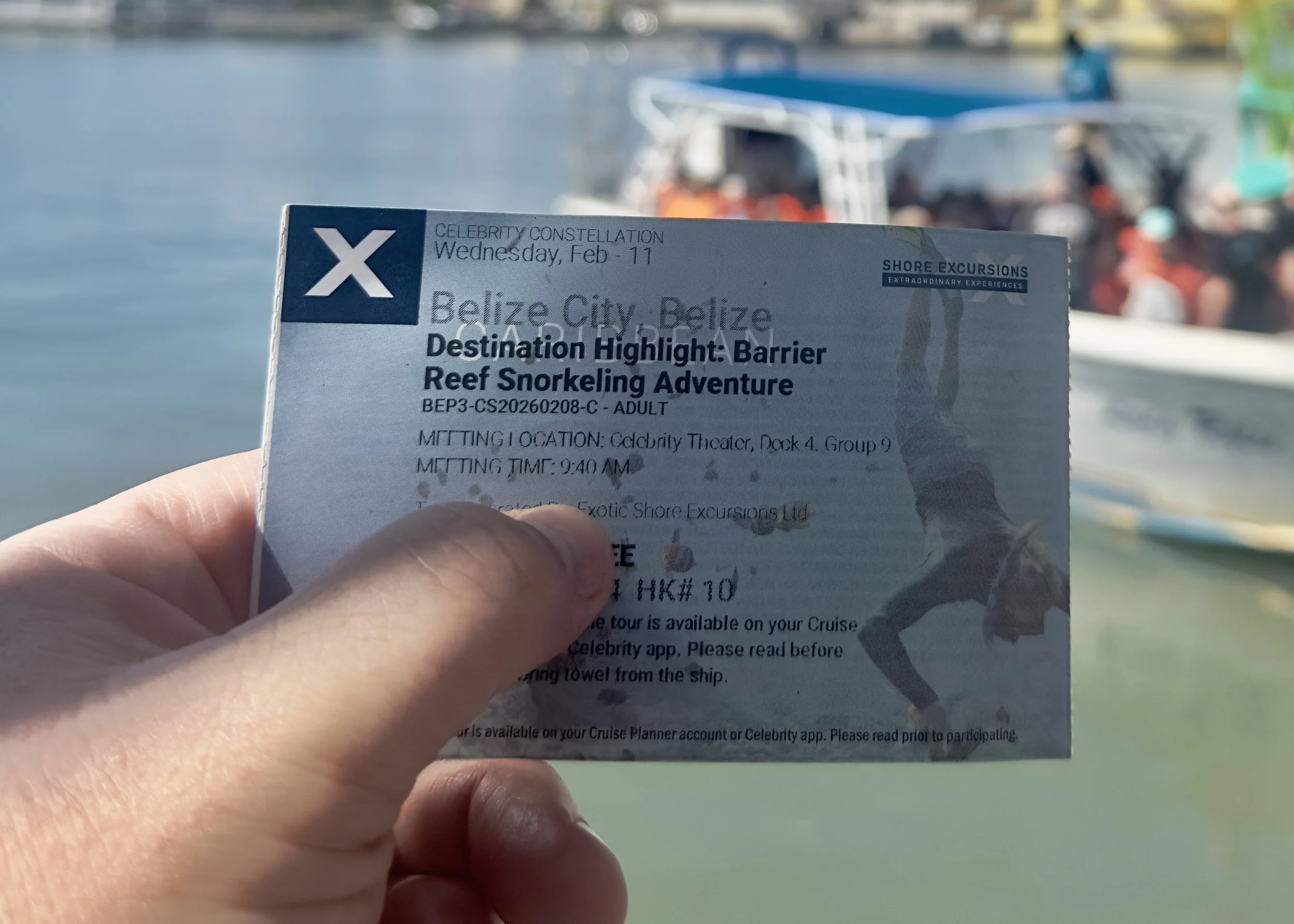
One ticket to adventure
The first thing I noticed about Belize wasn’t dramatic.
It was practical.
We stepped off the Celebrity Constellation and onto a tender boat just after sunrise, knowing that if we signed up for this Belize Barrier Reef snorkeling adventure, it would take the entire port day. No shopping afterward. No squeezing in something else. This was the plan.
And I can say without hesitation—it was the right decision.
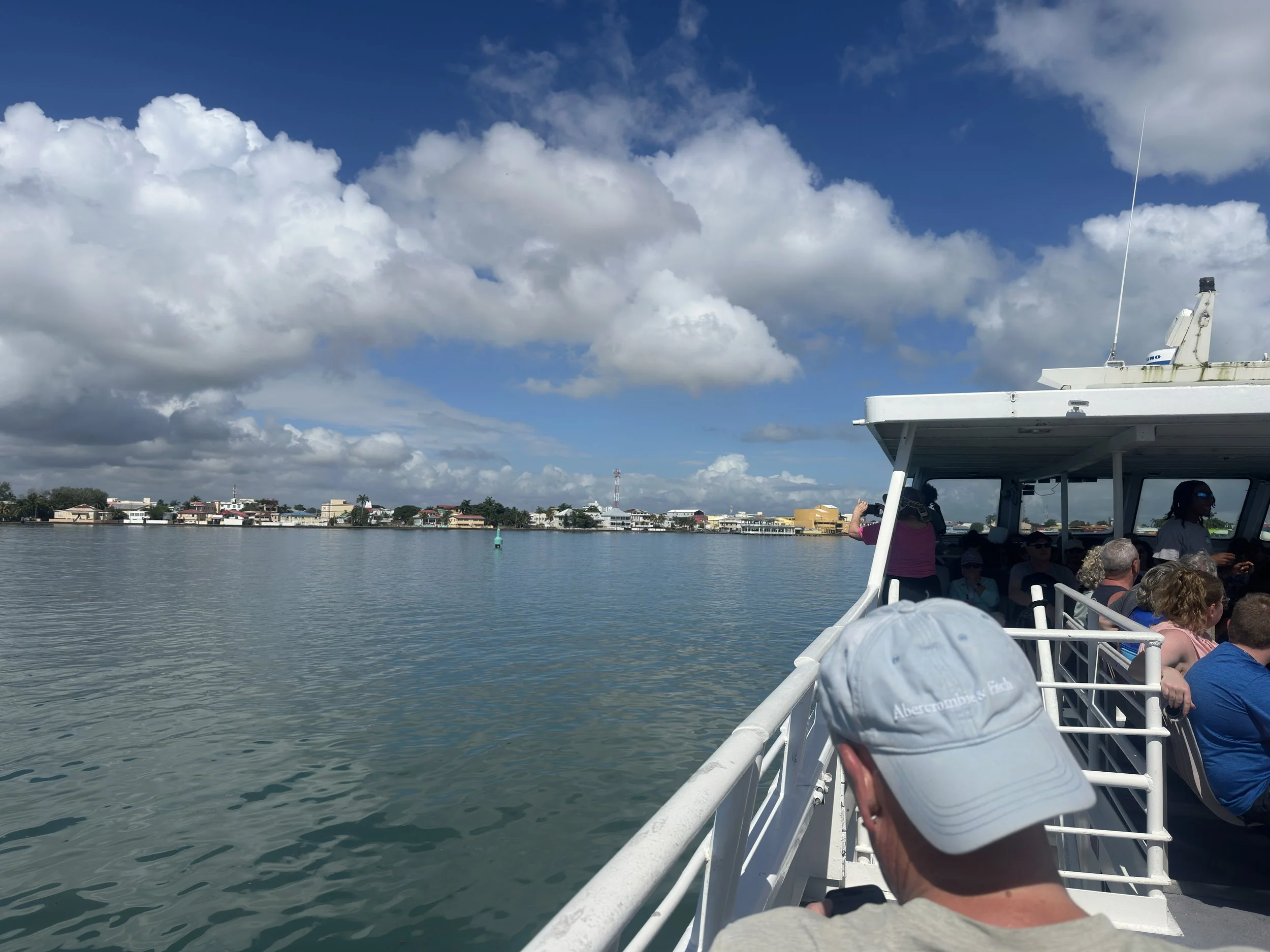
Tendering to Belize City, Belize
Because Belize City is a tender port, your day starts early. There’s something about holding that excursion ticket in your hand that feels like a commitment. You’re not wandering the port to see what looks interesting. You’ve already decided how you’re going to spend your time.
I’ve had scuba diving on my bucket list for years. At this point in life, I’m realistic. Snorkeling is more practical—and in a place like Belize, it’s more than enough. The Belize Barrier Reef is the second-largest barrier reef system in the world, stretching along the coast of Belize and into neighboring countries. It’s known for strong visibility, diverse marine life, and relatively easy access from shore.
We boarded a second boat with our group and headed out toward Caye Caulker.
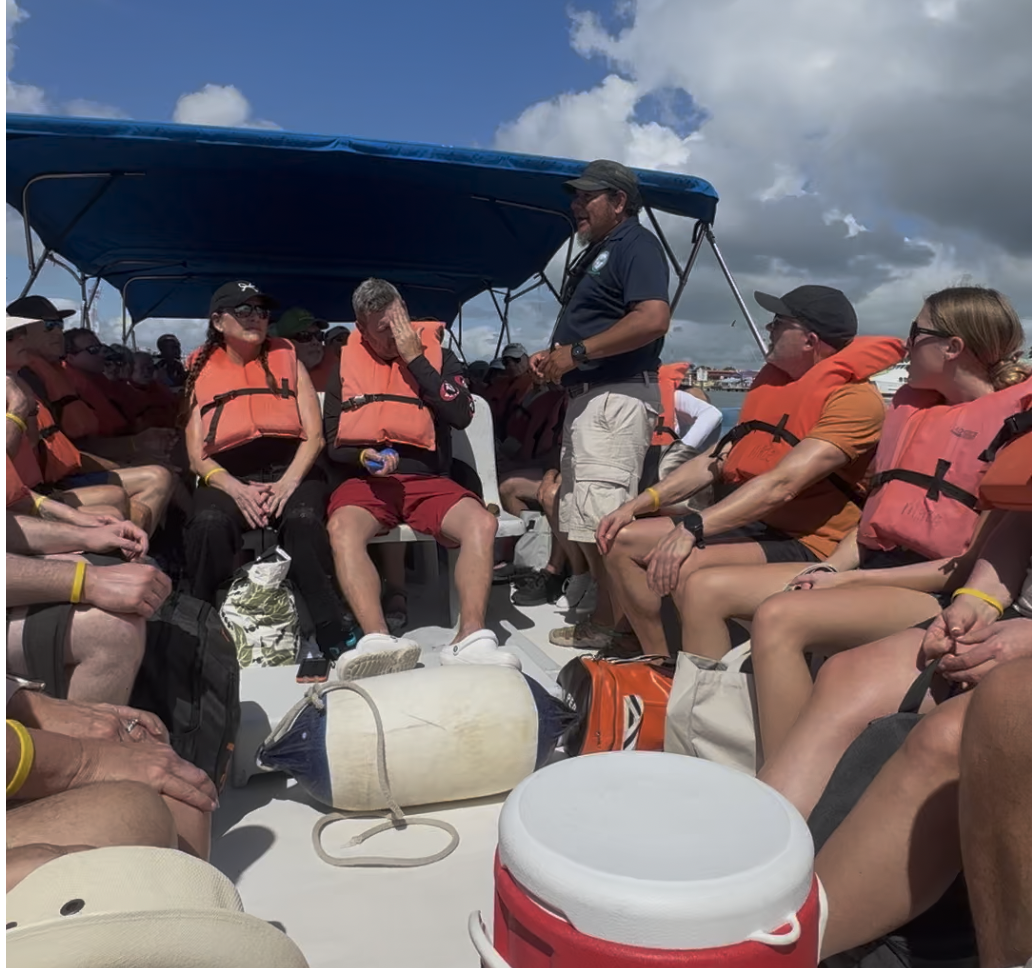
A history lesson of Belize, the aquatic ecosystem, and safety briefing.
There were around forty guests in total, but once we reached the snorkeling sites, the guides divided us into smaller groups. The ride to Caye Caulker took about 45 minutes. Along the way, the guides talked about the reef and the mangroves that help protect it.
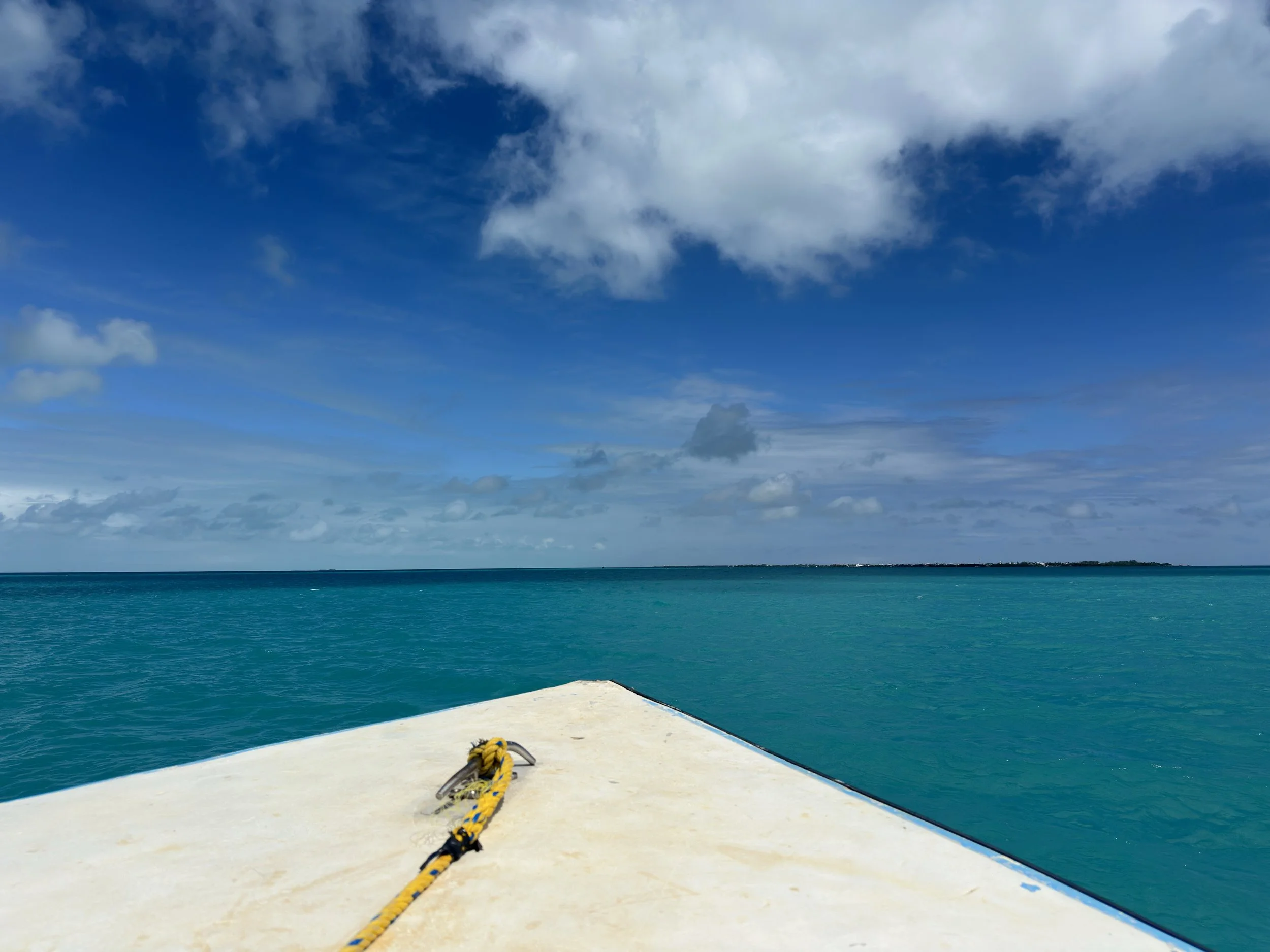
Perfectly blue water and anticipation of the adventure that lies ahead
Caye Caulker came into view gradually. It’s a small island—actually two islands split by a hurricane decades ago. There are no cars, just sandy roads and golf carts. It feels relaxed without trying too hard to impress you.
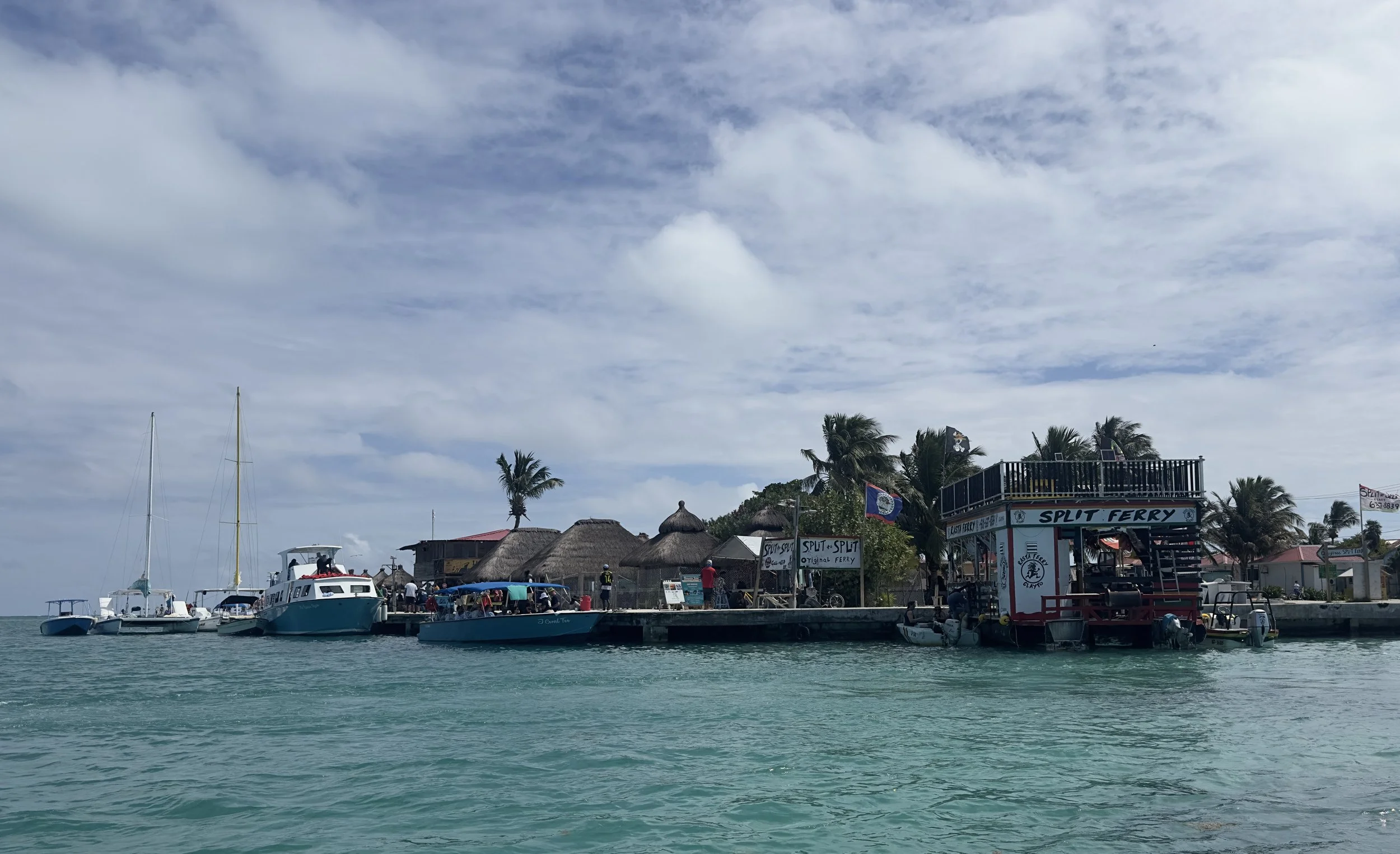
Approach to Caye Caulker
Before heading out to snorkel, we stopped at a beach bar called the Lazy Lizard. The process was simple: order your lunch before you leave so it’s ready when you return. That small logistical detail made the entire day run smoothly.
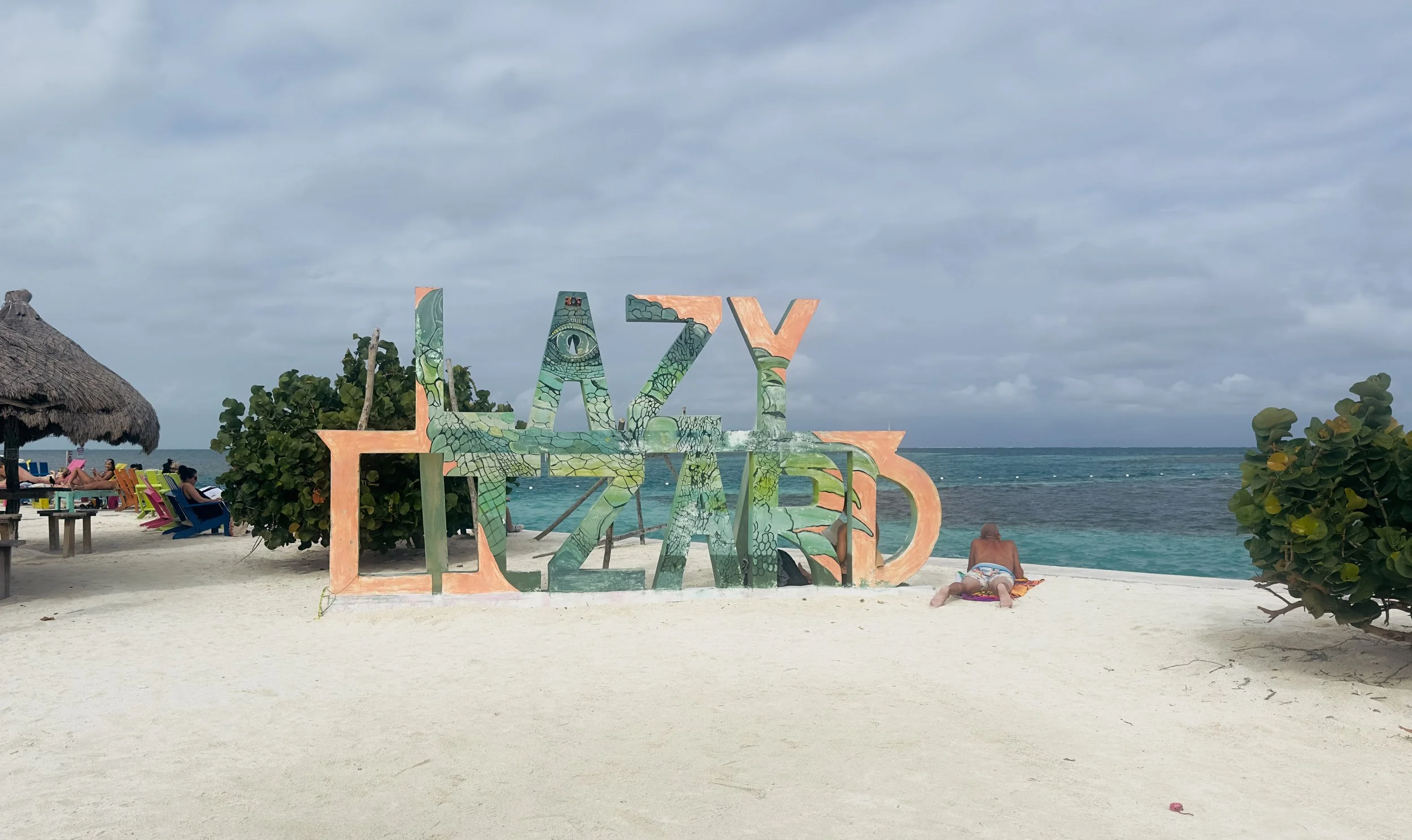
How can you not want to see what the restaurant has to offer with a sign like this?
Then we were fitted with snorkel gear.
Mask and Snorkel
I’ve done enough excursions over the years to know when equipment is subpar. This wasn’t. The masks didn’t fog up, and the snorkels had backflow valves to help prevent saltwater from coming in. When you’re in the water for 45 minutes at a time, those things matter.
The first snorkeling site was about 10–15 minutes from the island. The water was roughly 30 feet deep where we entered, and the visibility was very good.
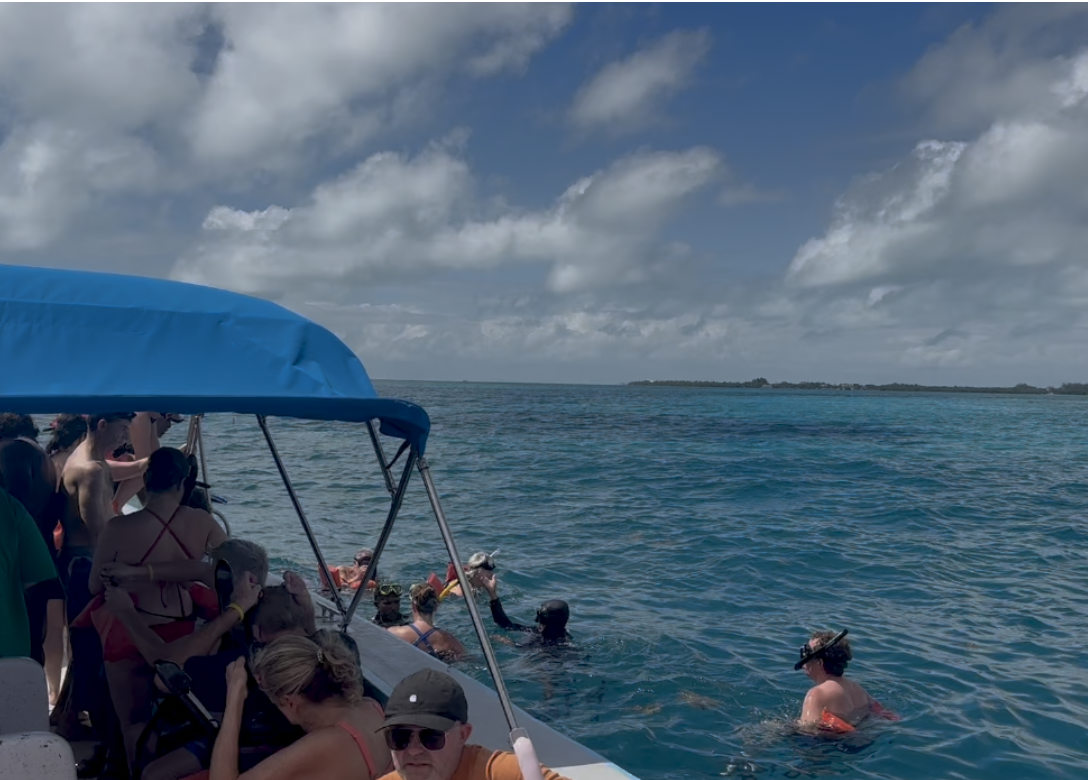
Snorkelers in the water
We saw snapper, sergeant major fish, grouper, and a lobster tucked into coral. A guide pointed out a green moray eel partially hidden in the reef. At one point, I drifted a little too close to coral without realizing it, and the guide gently redirected me. The supervision was attentive but not intrusive.
The sandy bottom had more conch shells than I’ve seen in one place before, some still alive and leaving visible trails behind them in the sand.
After about 45 minutes in the water, we climbed back aboard and moved to a second site.
his one was shallow—about waist-deep with a sandy bottom. The guides used sardines to attract nurse sharks. Within minutes, several arrived. Then more.
We stepped into the water and stood while the sharks fed nearby. They were focused entirely on the bait. Stingrays began moving through the group as well, occasionally brushing against legs as they swam past.
At one point, the sharks and stingrays outnumbered the people in the water. It was unusual, but it never felt unsafe. The guides were organized, calm, and clearly experienced.
If you’re concerned about swimming ability, buoyancy devices are provided. On this tour, we used life preservers from the boat. You can float easily without much effort. This is a good option for first-time snorkelers who are comfortable being in the water and following instructions.
Afterward, we climbed back on board and were handed rum punch while we dried off.
We returned to the Lazy Lizard for lunch.
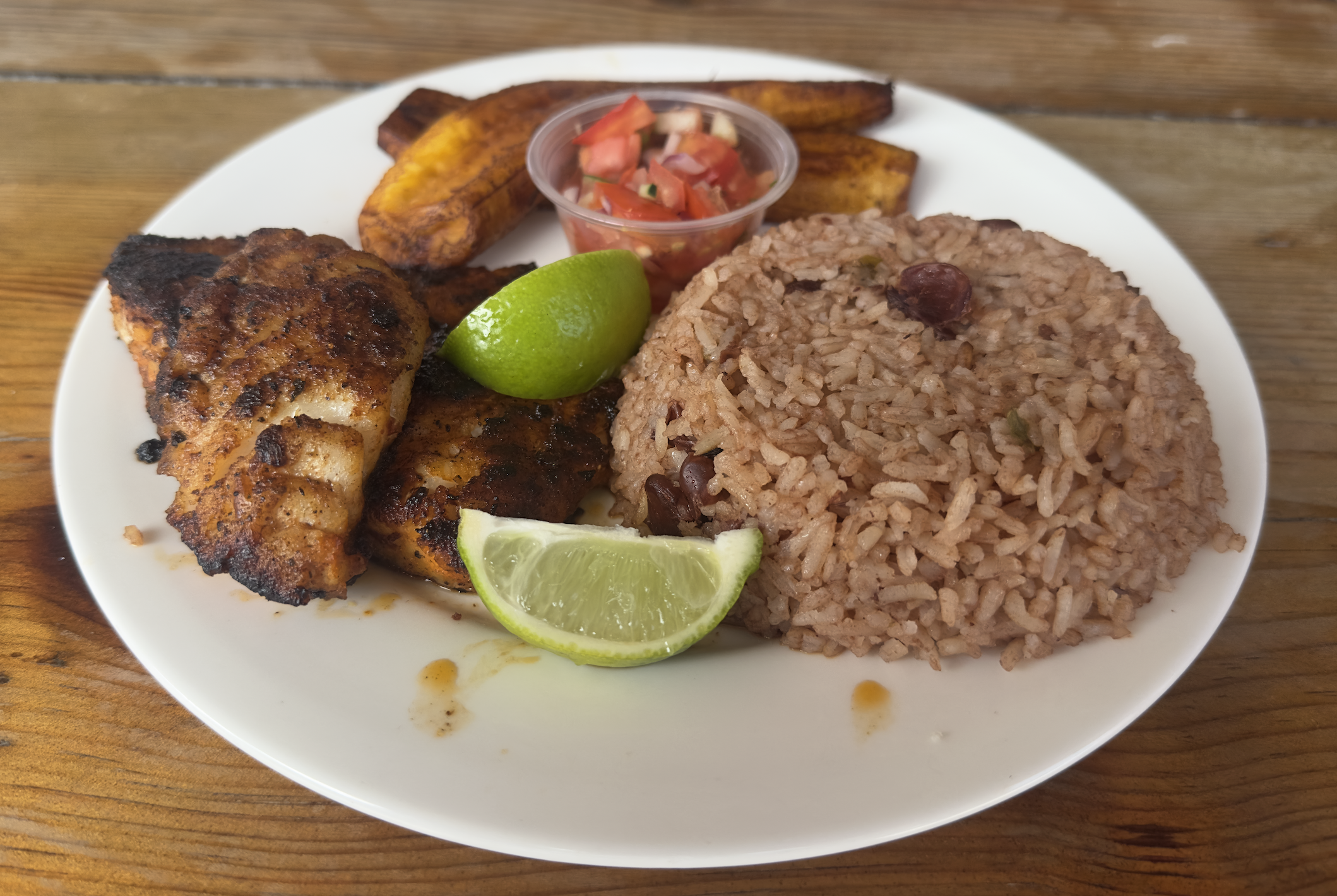
Grille Snapper, Plantains, and Beans and Rice
I ordered grilled fish with rice, beans, and plantains. The fish was fresh and well-prepared. The plantains were particularly good—caramelized and soft without being overly sweet.
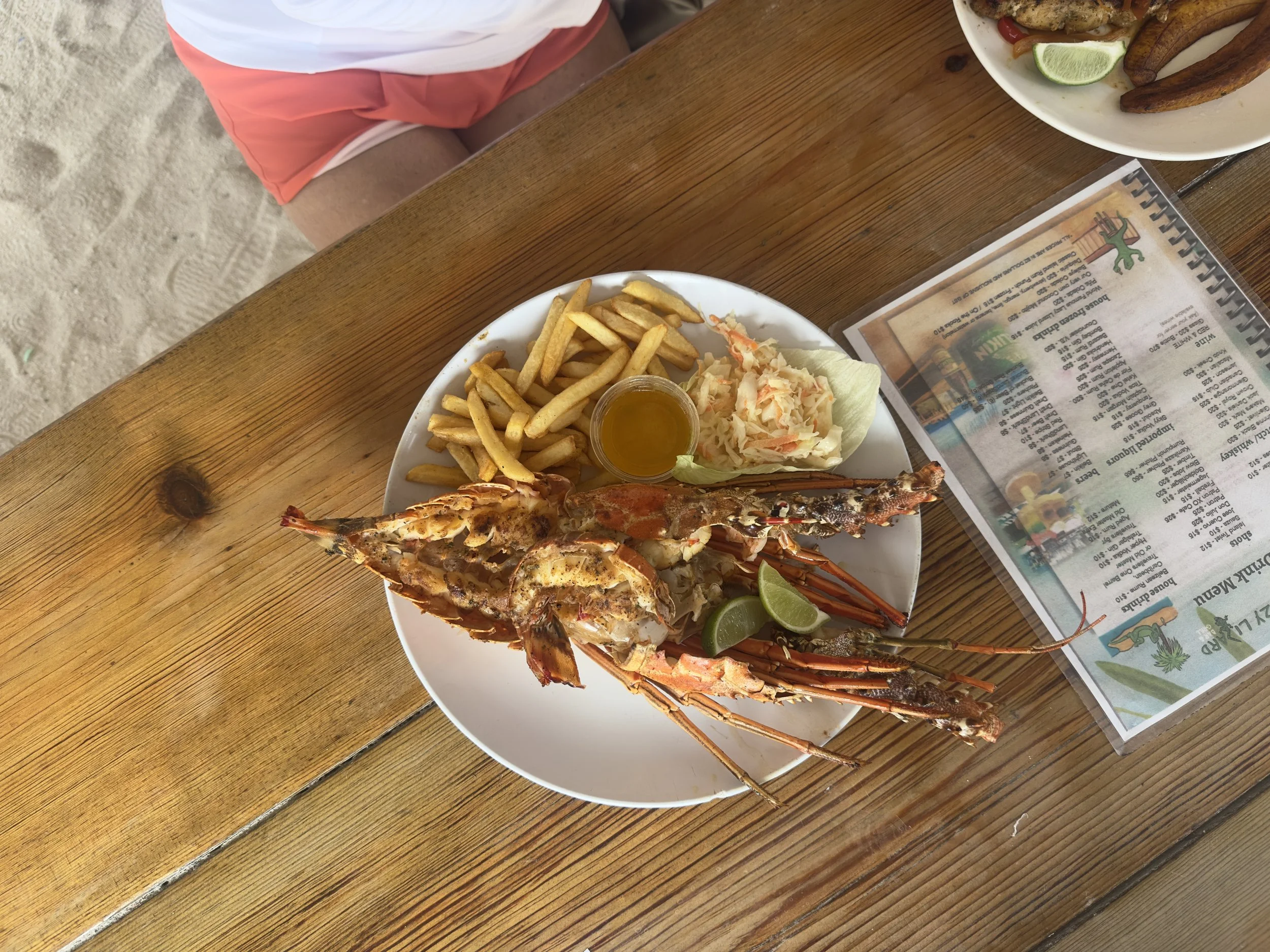
Island Grilled Lobster
Another guest at our table ordered grilled lobster caught locally. It was split open and easy to eat, with a generous amount of meat.
I also tried a coconut mint mojito. After several hours in the sun and saltwater, it was refreshing and well-timed.
We had about an hour to eat and walk around. I noticed fishing charters, dive shops, and small hotels. The island felt welcoming and straightforward. The locals were friendly without being pushy.
It left an impression.
Before heading back to Belize City, we made one final stop near the mangroves to watch tarpon feeding.
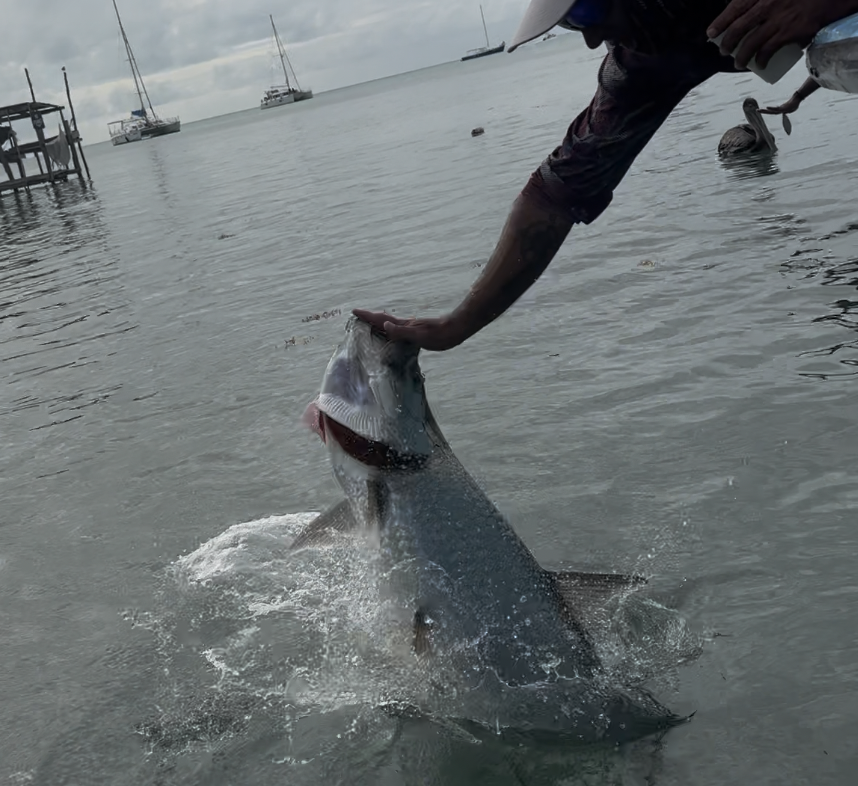
Tarpon gumping out of the water to grab a sardine
Large tarpon were jumping two to three feet out of the water to grab sardines. There were no nets or barriers, which made it feel more natural than some controlled feeding setups elsewhere.
The boat ride back to Belize City took about 45 minutes. We were on one of the last tenders returning to the ship. In total, the excursion lasted roughly six and a half hours.
Here’s the direct answer: YES, I would do this again. Without hesitation.
Even if I were on back-to-back cruises stopping in Belize, I’d strongly consider booking the same Belize Barrier Reef snorkeling tour. Conditions change. Marine life moves. You won’t see exactly the same thing twice.
It’s important to understand that this excursion uses your entire port day. If shopping in Belize City is a priority, this tour won’t leave time for that.
But if your goal is to experience the Belize Barrier Reef, snorkel in clear water, see nurse sharks and stingrays up close, and spend time on Caye Caulker, this is a well-run, organized option.
One additional note: use reef-safe sunscreen. Certain chemicals in traditional sunscreens damage coral ecosystems. Mineral-based, reef-friendly options are widely available and worth bringing with you.
What surprised me most was how much Caye Caulker stayed on my mind afterward. I found myself taking photos of hotel signs and fishing charter boards. I could easily see returning for a few days—perhaps a small-group fishing trip or a longer stay focused on snorkeling and diving.
Caye Caulker is ideal for travelers who want a laid-back Caribbean island without large resorts. It offers reef access, fishing, diving, and simple accommodations in a compact setting.
If you’re planning a cruise stop in Belize City and want a full, active day centered on the water, this Belize Barrier Reef snorkeling adventure is a strong choice.
And if you’re considering turning that one port stop into a future standalone trip to Caye Caulker, that’s a conversation worth having.
Some excursions are entertaining. This one was worth repeating.
Celebrity Cruise -Destination Highlight: Explore Chichen Itza Ruins with VR
Is the long journey from Cozumel to Chichen Itza worth it? In this detailed review of Celebrity Cruises’ “Destination Highlight: Explore Chichen Itza Ruins with VR,” I share what to expect—from the small-group setting and tablet-based history experience to the crowds, timing, and whether this full-day shore excursion truly delivers.
A Small-Group Shore Excursion from Cozumel with Celebrity Cruises
We were docked in Cozumel at 7:00 in the morning when this day started. It was early enough that the ship still felt quiet, with most people just getting coffee or heading to breakfast. We met in the theater on the Celebrity Constellation for our excursion called “Destination Highlight: Explore Chichen Itza Ruins with VR.”
I had wanted to see Mayan ruins for a long time. I had previously visited Tulum on another cruise and enjoyed it, but I knew Chichen Itza was supposed to be much larger and more historically significant.
From Cozumel, we took a 45-minute ferry ride to Playa del Carmen. The ride was smooth and uneventful. Once we arrived, we boarded a small coach for the drive inland. One thing that stood out immediately was the group size — there were only twelve of us. Instead of being on a large bus with 50 or 60 people, it felt much more personal and relaxed. You didn’t feel rushed, and it was easy to hear the guide and ask questions.
The drive into the Yucatán Peninsula took about two and a half hours. Early on, each of us was handed a Samsung tablet, which is how the “VR” portion of the tour works. It’s not a headset. Instead, the tablet shows reconstructions, diagrams, and historical images while the guide explains what you’re about to see.
Our guide, Victor, had studied Mayan history in college and had spent a year living near Chichen Itza with descendants of the Maya. He explained things clearly and without exaggeration, which I appreciated.
During the drive, Victor talked about how accurate the Mayan calendar was and how many of their buildings were designed around astronomy, solstices, and equinoxes. On the tablets, we could scroll through about 200 images showing what Chichen Itza looked like when it was first discovered and how the temples may have appeared when they were originally painted in bright colors. Having that background before arriving helped a lot.
Arriving at Chichen Itza
When we arrived, the first thing you notice is how busy it is. Vendors line the walkway selling hats and souvenirs, and it can feel crowded at first. But once you step into the main open plaza and see El Castillo, the main pyramid, it immediately gets your attention. It’s much larger and more imposing than what I experienced at Tulum.
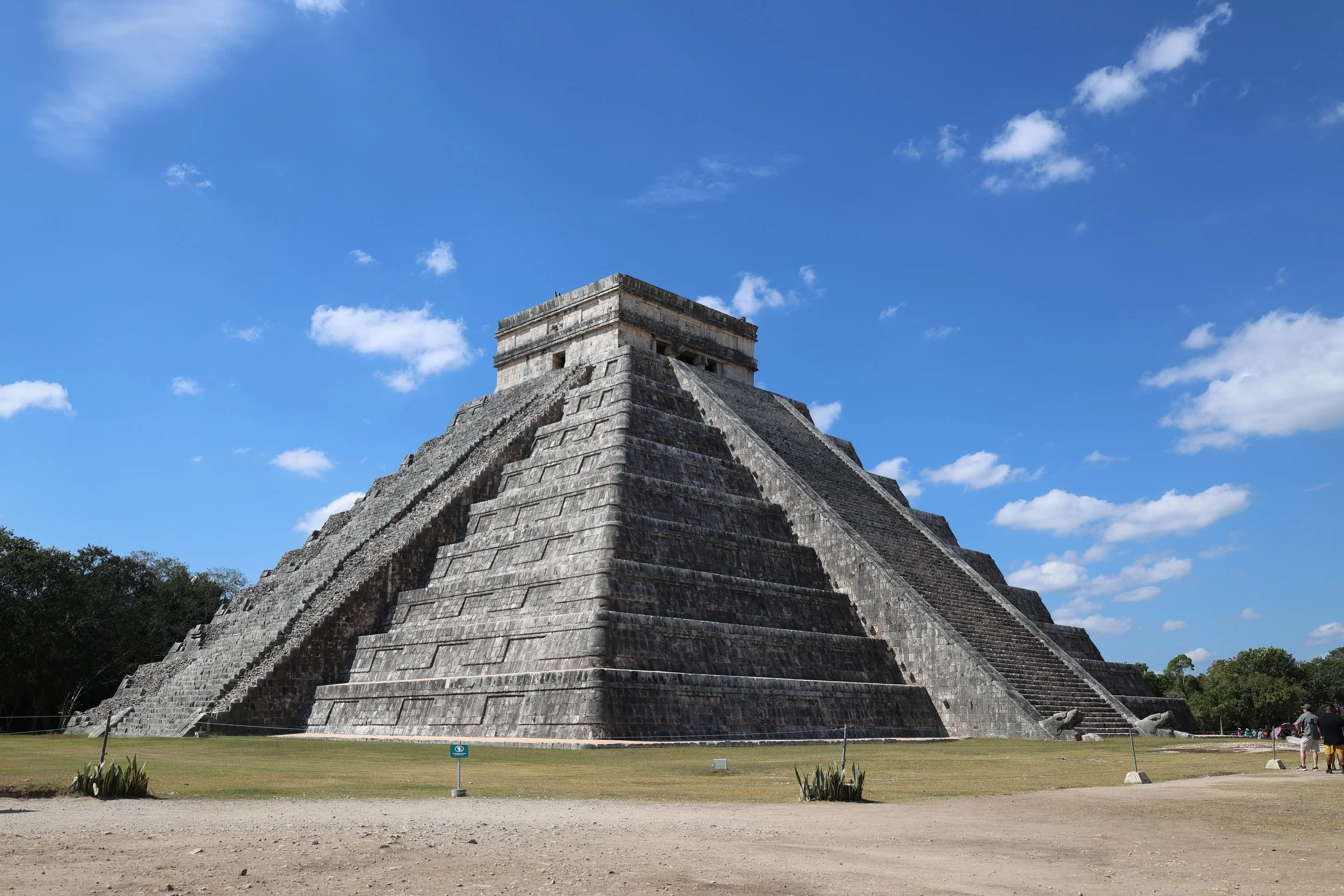
The Main Temple - El Castillo
Victor explained that each side of the pyramid has 91 steps. When you multiply that by four sides, you get 364, and when you add the top platform, it comes to 365 days in a year. The pyramid was designed to function as a solar calendar. That was one of the first moments where it really hit me how advanced the Mayans were in math and astronomy.
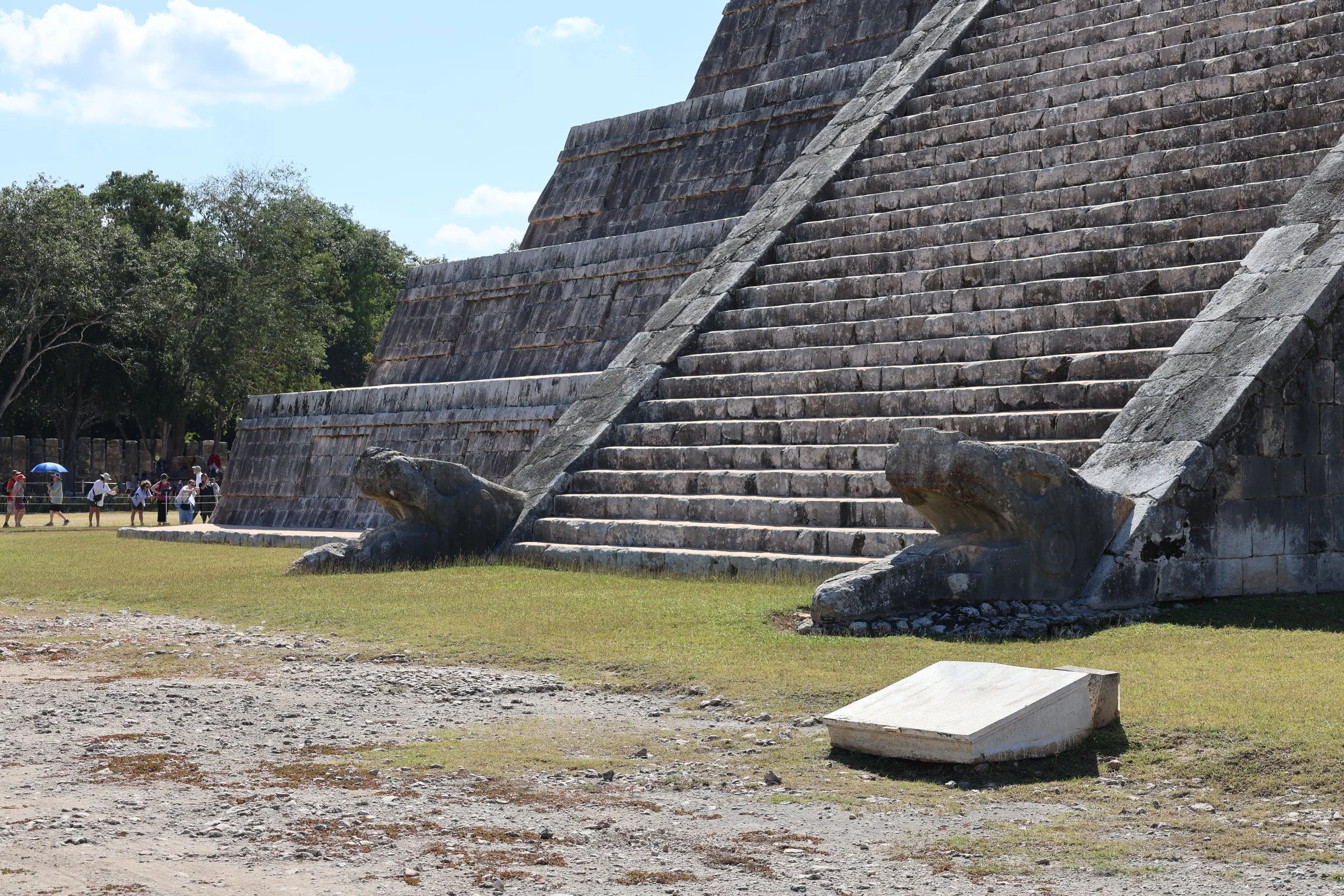
El Castillo - Snake heads honoring the Snake God
He also explained that Chichen Itza was built over five cenotes, or natural sinkholes, and that one is located directly beneath the main temple. Inside El Castillo itself, there are smaller temples built within it, layered over time as new structures were built on top of older ones.
One of the more interesting demonstrations happened when Victor asked us to clap our hands in front of the pyramid. When you clap, the sound echoes back about seven times and changes pitch. Instead of sounding like a normal echo, it ends up sounding like a bird call. Victor explained that the stepped design of the pyramid causes the sound waves to reflect in a way that mimics the sacred quetzal bird. It wasn’t something I would have noticed without someone explaining it, but it showed how deliberate the design was.
One of four “91 step” stairways to the top of the temple.
The Great Ball Court
Victor also cleared up a few things I had always heard about Mayan culture. One of those was human sacrifice. Movies often make it seem like sacrifices were forced or only involved enemies. Victor explained that many people actually volunteered and that being sacrificed was considered an honor that could elevate a family’s status.
He also talked about the Mayan ballgame played in the Great Ball Court. I had always heard that the losing team was killed. According to Victor, that wasn’t the case at Chichen Itza. Each team had seven players — six on the court and one captain positioned above. The winning captain would ultimately be sacrificed, and the losing captain would perform the ritual. Again, it was considered an honor, not a punishment.
Wide Angle shot of the Ball Court facing to the Royal Family area
One of two Stone Hoops in the Ball Court
Victor demonstrated how sound carries clearly from one end of the ball court to the other. Even a small noise can be heard across the full length of the structure.
Carvings in the Ball Court that depict two of the seven players on a team.
Temple of the Warriors and Other Structures
We then moved on to other areas of the site, including the Temple of the Warriors. The rows of columns and carvings give you a sense of how large and complex the city once was.
The Warrior Temple
Victor explained how animals like the serpent, jaguar, and eagle were used symbolically throughout the site to represent different gods and aspects of the Mayan belief system.
Carving of the Jaguar on a smaller Temple
Carvings on a smaller temple
We also passed through areas used for burial and cremation. These sections are less visually dramatic than the main pyramid, but they add important context about daily life and religious practices at Chichen Itza.
The cremation platform
Carvings depicting the faces of ancestors that have already transitioned to the land of the Gods.
What to Know Before You Go
Chichen Itza is extremely busy today. Before becoming a UNESCO World Heritage Site, it averaged around 1,000 visitors per day. Now it averages closer to 20,000. Even in early February, it felt crowded, so I would expect the summer months to be significantly busier.
There are also some practical rules to know ahead of time:
Tripods, monopods, and selfie sticks are not allowed.
Backpacks are allowed, but no food can be brought inside the archaeological zone.
Water is allowed.
Phones and standard cameras are fine.
GoPros require an additional fee.
The tour moves at a steady pace. Because it’s a small group, it never felt chaotic, but it is structured. Victor guided us from one main structure to the next without free time to explore independently. Personally, I would have liked about 30 extra minutes to walk around and take photos on my own. We did return to the ferry with some time to spare before the ship departed, so it felt like that might have been possible. Still, the guided portion was thorough and well organized.
It’s also a long day. We left the ship at 7:00 a.m. and returned around 4:30 p.m. The tour included a small sandwich and bottled water before entering the site, and a snack bar on the way back. I would recommend eating a solid breakfast on the ship and bringing a protein bar to leave on the bus for afterward.
Is This Tour Worth It?
I have only seen “Destination Highlight: Explore Chichen Itza Ruins with VR” offered through Celebrity Cruises. I haven’t seen this specific VR-based version offered by Royal Caribbean, Carnival, or Princess. Other cruise lines do offer tours to Chichen Itza, but this combination of a small group, tablet-based visuals, and in-depth historical explanation appears to be unique to Celebrity.
This tour is ideal for travelers who are genuinely interested in history and don’t mind committing to a full day. It’s not designed for people who want a quick stop or a large bus experience. The small group size makes it feel more personal, and the added context helps you understand what you’re seeing rather than just walking past ruins.
If you are visiting Chicken Itza on your own check out these tour options:
Buenos Aires Gaucho Day Tour Review: A Cultural Ranch Experience from San Antonio de Areco
Discover what it is really like to take a Buenos Aires Gaucho Day Tour from the city to San Antonio de Areco for a traditional ranch experience. This review covers gaucho culture, horseback riding, asado, folk dancing, and why it was an excellent last-day excursion before a late-night flight from Buenos Aires.
On the last day of our trip to Buenos Aires, we found ourselves in that familiar travel gap that can happen on international trips. Our hotel checkout was at 12:30 p.m., but our flight back to the United States was not leaving until around 11:00 p.m. We could have spent the day waiting around the hotel, but that did not feel like the best way to end our time in Argentina.
Instead, we booked the Buenos Aires: Guided Gaucho Day Tour at a Ranch, and it turned out to be one of the most memorable experiences of our trip.
What made this excursion so worthwhile was not just that it filled the time before a late flight. It gave us a chance to experience another side of Argentina beyond the city, one rooted in countryside traditions, food, horsemanship, music, and gaucho culture.
Why We Chose a Gaucho Day Tour
This was not actually part of our original plan.
On our first night in Buenos Aires, we had booked an asado dinner in a residential neighborhood of the city. That was also a small-group experience, with around 12 to 14 people, and during the evening one of the families mentioned they were planning to do a gaucho tour the next day. It sounded like such a fun and different experience that it stayed in the back of our minds.
So when our final day in Buenos Aires came around and we realized we had hours to fill before our flight, this tour felt like the perfect answer. It gave us something meaningful to do rather than sit around the hotel, and it also fit the way we usually like to travel. Whenever we go somewhere new, we try to include experiences that feel connected to the local culture and not just the standard tourist checklist.
Of course, it is never easy to fully experience a culture as a visitor. People know you are a tourist. But this day still felt far more authentic than I expected, and that is one of the reasons it stood out so much.
Hotel Pickup and the Drive Into the Countryside
The tour operator picked us up right in front of our hotel in downtown Buenos Aires at about 8:30 or 9:00 in the morning. That made the logistics very easy, especially on a departure day when we did not want to be worrying about transportation or timing.
From pickup, it took about two hours to reach San Antonio de Areco, including a short stop about halfway through the drive at a rest stop and gas station so everyone could use the restrooms and stretch their legs.
What made that stop interesting was that it was more than just a practical break. There was a little store there with traditional gaucho clothing, cutlery, and other items connected to gaucho life. It was really interesting to browse. Even before we got to Areco or the ranch, it gave us a visual introduction to the world we were about to learn more about.
During the drive, our tour guide helped frame the day by explaining what a gaucho is, how gauchos emerged in Argentina, the role they played in rural life, and the symbolism associated with the clothing they wore. That context added a lot to the experience. By the time we arrived, we were not just watching an activity designed for visitors. We had a better understanding of the tradition behind it.
The guide also gave us a chance to try mate and explained how it became such an important part of gaucho traditions and Argentine daily life. It was a small detail, but it made the experience feel more layered and more cultural right from the start.
Leaving the City Behind: San Antonio de Areco
Our first official stop was San Antonio de Areco, often simply called Areco, a town closely associated with gaucho heritage and Argentina’s rural traditions.
We visited on January 4, 2026, which happened to be a Sunday, so when we arrived the town square was very quiet. There was not much open. We noticed a sidewalk café and a small shop that felt a bit like a convenience store, but overall the town had a calm, still atmosphere.
We only spent about 45 minutes there, but it was enough time to appreciate the setting. We stopped in front of the cathedral and had the option to go inside or simply walk around the square. In the center was a beautiful park, and the whole area had a feeling of authenticity and local pride. Even though it was quiet, it felt like one of those towns where the community really cares about its identity and history.
In its own way, Areco reminded me of some of the rural towns in Sonoma Valley outside San Francisco, California. It had that same slower rhythm and small-town charm that stands in contrast to the energy of a nearby major city. It was a fitting introduction to the countryside setting we were about to experience for the rest of the day.
Arrival at the Ranch
After leaving Areco, we continued on to the ranch, and the arrival made a strong first impression.
We were greeted by gauchos on horseback carrying the flags of Argentina and Spain, and they guided our van toward the stopping point in front of the ranch. It was one of those entrances that immediately makes you feel like the day is going to be something special. It felt ceremonial, but not in a way that seemed forced. It felt proud, traditional, and connected to the spirit of the place.
The ranch itself felt very real and very rural. There were horses, chickens, sheep, and cows in the distance, and it was obvious right away that we were far removed from the city. That contrast was part of the appeal. Buenos Aires has its own rhythm and elegance, but this felt like stepping into another side of Argentina entirely.
A Small-Group Experience
One thing I appreciated throughout the day was that our van had only about 12 people in it. That made the whole experience feel more relaxed and much more personal than a large bus tour would have.
Once we got off the van, we were invited to sit at a long table on the porch of the ranch building. They welcomed us with refreshments and drinks, including plenty of Argentine wine, both red and white. It gave everyone a chance to settle in, enjoy the setting, and talk a little before lunch.
That slower start worked well for the atmosphere of the day. Nothing felt rushed.
The Asado Lunch
Lunch was a traditional asado served as a late meal, and it included the expected favorites: beef, chicken, and pork.
The asado was good, but I would say that from a strictly food perspective, we had another asado experience in Buenos Aires earlier in the trip that was better. What made this meal special was not that it was the best food we had in the city. It was the setting. Eating on the porch of a ranch in the countryside, surrounded by open land and gaucho culture, gave it an atmosphere that you simply cannot recreate in a restaurant.
What stood out most for me, though, was the empanada. It was easily the best empanada we had during our entire time in Buenos Aires. It was flavorful, crunchy, and just really satisfying. If they had offered seconds, I would have gladly taken another one.
Horseback Riding Around the Property
After lunch, we had time to walk around the grounds, and then they began taking guests out in small groups of three or four for horseback riding.
The ride lasted about 25 to 30 minutes and took us around part of the property. If you have never ridden a horse before, it is definitely an experience. Even a calm horse still feels like an animal with its own instincts and personality, which makes it exciting and humbling at the same time.
Thankfully, these horses were very tame and clearly accustomed to guests who might not have much riding experience. That made the activity approachable even for beginners. It was not an advanced riding excursion, but it was enough to make you feel connected to the landscape and to understand how central horses are to gaucho identity and tradition.
Traditional Music and Gaucho Dance
As the horseback groups rotated through, we continued walking around and enjoying the property. Later, everyone gathered in a large circle for another cultural part of the experience.
An older man and woman performed traditional gaucho dances while musicians played live guitar and folk music. It was one of those moments that felt warm and genuine. It did not come across as rushed or overly commercial. It felt like a real expression of tradition.
Then, after the performance, our group and a couple of others were invited to get up and learn some of the dance moves ourselves.
Like many things, it looked much easier when the performers were doing it. Once it was our turn, it became clear that there was more coordination involved than it first appeared. It was fun, a little humbling, and gave us an even greater appreciation for the people performing it so effortlessly.
The Gaucho Horse Performance
One of the most impressive parts of the day came later, when three gauchos performed a horsemanship demonstration.
This was unlike anything I had seen before. The way the gauchos and the horses moved together felt almost symbiotic. The horses responded so closely to the gauchos’ movements and cues that it felt less like watching a staged routine and more like watching a partnership built over years of trust and skill.
At one point, the horse lay down and held certain positions while responding to the gaucho. From an equestrian perspective, it was fascinating to watch. Even without knowing the technical details, it was obvious that this level of control and harmony took a great deal of experience.
That demonstration ended up being one of the highlights of the entire excursion for me.
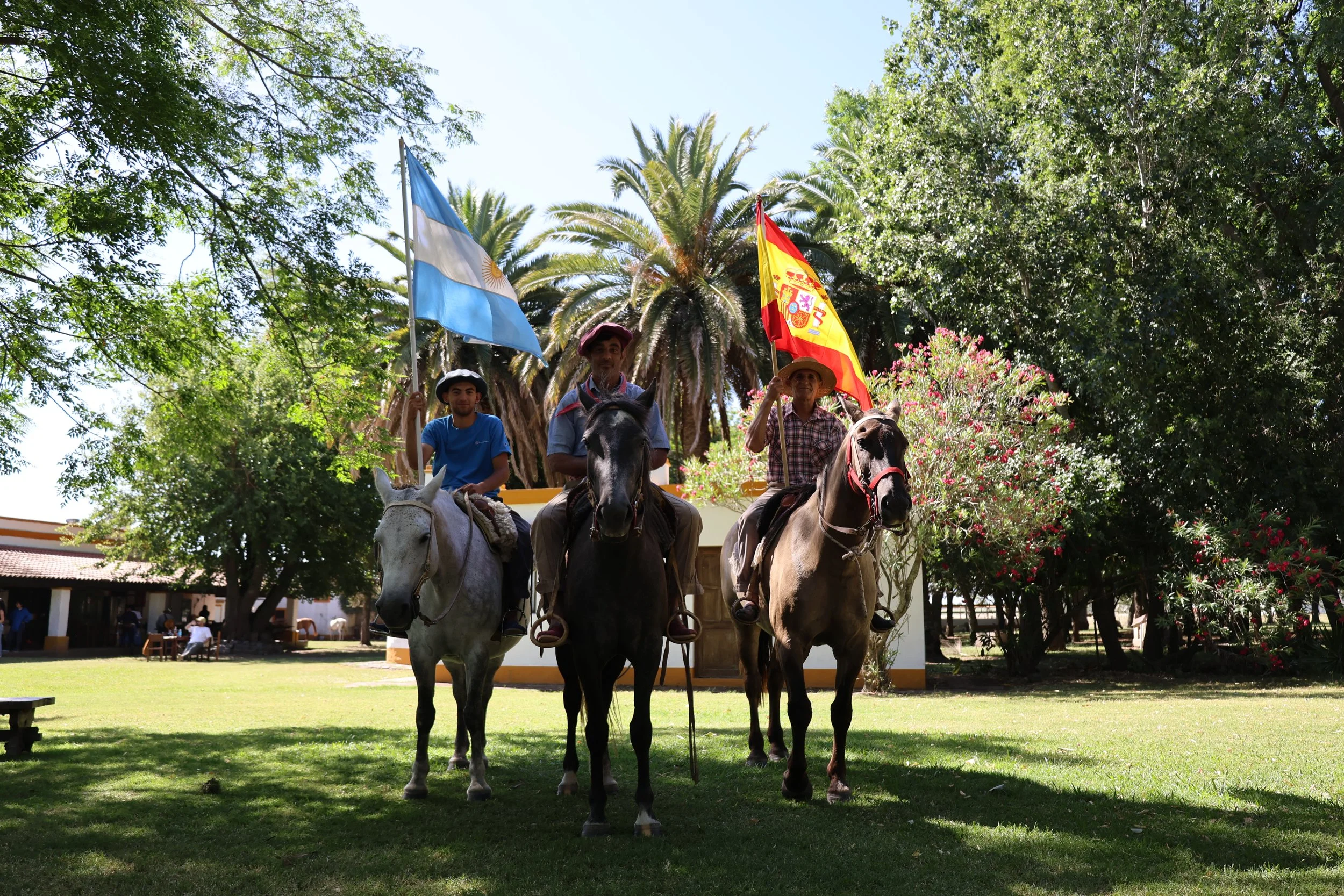
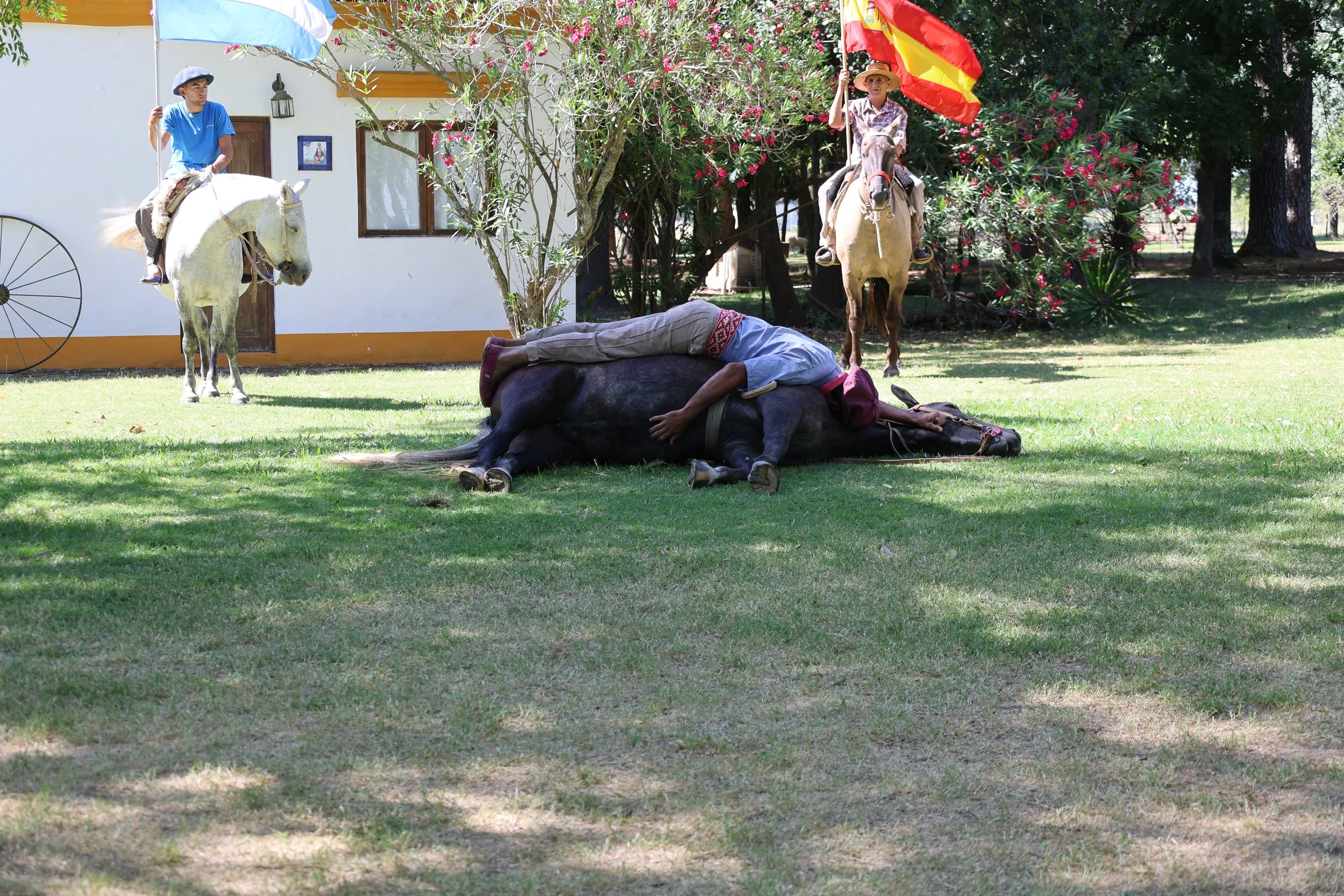
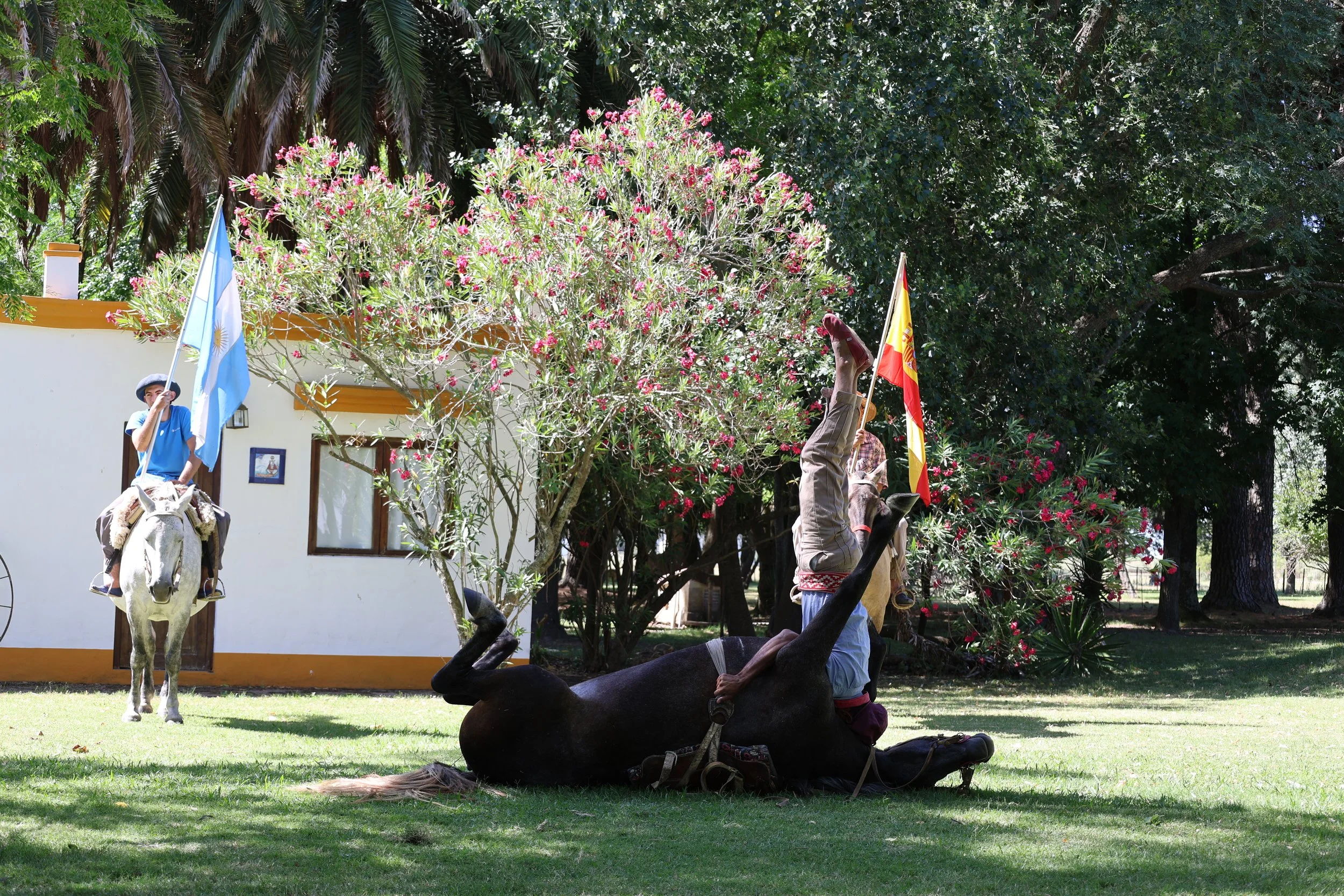
Interested in a Gaucho Event: Try these opporunities:
Why This Tour Worked So Well on a Departure Day
From a logistics standpoint, this tour ended up being a great use of our final day in Buenos Aires.
We were picked up in the morning, had a full day of activities, and returned to our hotel around 5:30 to 6:00 p.m. That still left enough time for us to retrieve our luggage and head to the airport without stress. From our downtown hotel, the airport drive that evening was only about 35 minutes, and traffic was not too bad.
As for our bags, our hotel held them for us with the concierge even after checkout. That made all the difference. Instead of spending the day sitting around the lobby or trying to manage luggage between activities, we were able to enjoy one final experience and then return for our bags before leaving for the airport.
For anyone in a similar situation, this is something worth confirming with your hotel in advance. It made our day much easier.
Final Thoughts
Overall, this was a really great experience and one I am genuinely glad we chose.
It gave us something meaningful to do rather than hang around the hotel for hours before our flight, but more importantly, it gave us a look at a side of Argentina that we might not have experienced otherwise. We try to build cultural experiences into our trips whenever possible, and while no experience as a visitor is ever exactly the same as living the culture, this one felt authentic in a way that really stayed with me.
The combination of gaucho history, mate, San Antonio de Areco, the ranch setting, the asado, horseback riding, music, dancing, and the horsemanship demonstration made this much more than just a countryside excursion. It felt like an introduction to a meaningful part of Argentine identity.
And even though we chose it partly because we needed something to do before our late-night flight, I would absolutely still put it on my list again if I were returning to Buenos Aires. That, to me, says a lot.
Would I do it again? Absolutely.
Quick Answers About a Buenos Aires Gaucho Day Tour
Is a gaucho day tour in Buenos Aires worth it?
Yes. A gaucho day tour is worth it for travelers who want to experience Argentina beyond the city through ranch life, horseback riding, traditional food, folk music, dance, and gaucho horsemanship.
What do you learn on a Buenos Aires gaucho tour?
Many tours include information about gaucho history, clothing, symbolism, ranch life, and traditions such as drinking mate.
Where do some gaucho day tours from Buenos Aires stop first?
Some gaucho day tours stop first in San Antonio de Areco, a town known for its connection to gaucho heritage and Argentine rural traditions.
Can you do a gaucho day tour before a late-night flight?
Yes. If your flight leaves late in the evening and your hotel can hold your luggage after checkout, a full-day gaucho tour can be a practical and memorable last-day activity.
Is horseback riding included in a gaucho ranch tour?
Many tours include a short horseback ride, often suitable for beginners.
How long is the drive from Buenos Aires to Areco?
From our downtown Buenos Aires hotel, the drive to San Antonio de Areco took about two hours, including a short rest stop along the way.
FAQ: Buenos Aires Guided Gaucho Day Tour at a Ranch
What tour did you book?
We booked Buenos Aires: Guided Gaucho Day Tour at a Ranch.
What time did the tour start?
We were picked up from our hotel in downtown Buenos Aires around 8:30 to 9:00 a.m.
What was the first stop before the ranch?
Before arriving at the ranch, we stopped in San Antonio de Areco, also known simply as Areco, a town known for its gaucho heritage and rural traditions.
How long were you in Areco?
We spent about 45 minutes there, enough time to walk around the square, see the cathedral, and take in the quieter Sunday atmosphere.
What was included at the ranch?
The ranch experience included refreshments, Argentine wine, a traditional asado lunch, time to explore the grounds, horseback riding, live music, traditional dancing, and a gaucho horsemanship demonstration.
Was the horseback riding beginner-friendly?
Yes. The horses were calm and seemed very used to carrying guests who were not experienced riders.
What was the best food of the day?
For me, the standout was the empanada. It was the best one we had during our time in Buenos Aires.
What was the most memorable part of the tour?
The gaucho horse performance was the most memorable part for me because of the way the horses and riders worked together with such precision.
What did you do with your luggage after hotel checkout?
Our hotel held our bags with the concierge after checkout, and we picked them up later before heading to the airport.
Would you recommend this on the last day of a trip?
Yes. For travelers with a late flight, it is a much better use of the day than waiting around the hotel.
Truffle Hunting in Verona, Italy: A Quiet Experience Worth Taking
Just outside of Verona, Italy, I stepped away from the crowds and into something quieter—a foggy countryside, a truffle dog leading the way, and a meal built around what we found. This wasn’t a typical tour. It was a real experience that connected the landscape, the culture, and the food in a way that stayed with me long after it ended.
There’s a version of Italy most people expect—sunlight stretching across the coastline, crowded piazzas filled with energy, and that postcard-perfect feeling at every turn. This wasn’t that. This was something quieter, something that didn’t try to impress you at first glance, but instead stayed with you long after it was over.
It started on a cool April morning just outside of Verona. The sky hung low with clouds that looked like they might break into rain at any moment, but never quite did. Not long before this trip, my wife and I had been watching James May: Our Man in Italy, and in one of the episodes he went truffle hunting somewhere in Northern Italy. I remember thinking at the time that it looked like something worth doing if the opportunity ever came up. The trip to Verona had already been planned, but once I knew I was going, I went looking for that experience. And I found it.
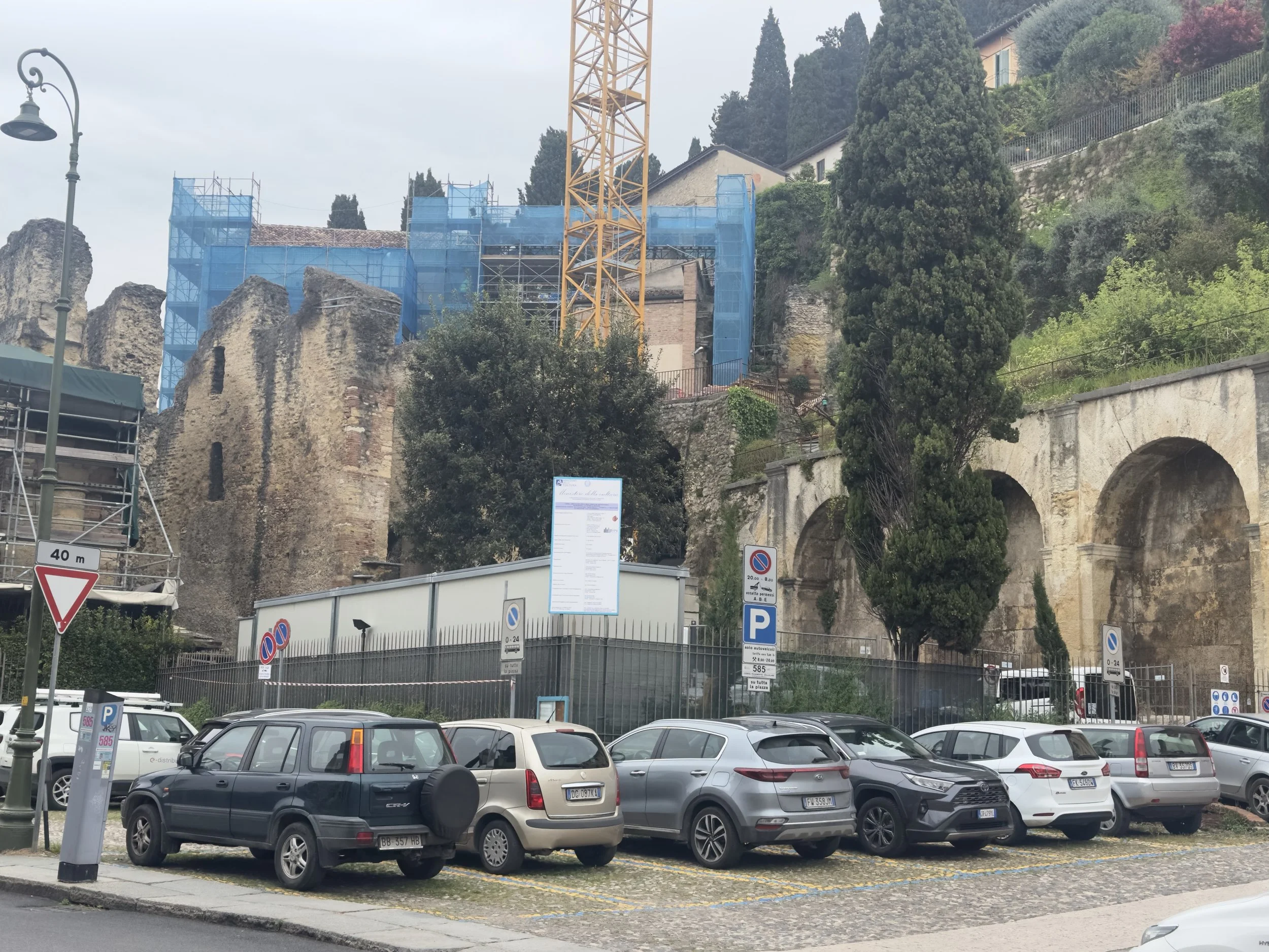
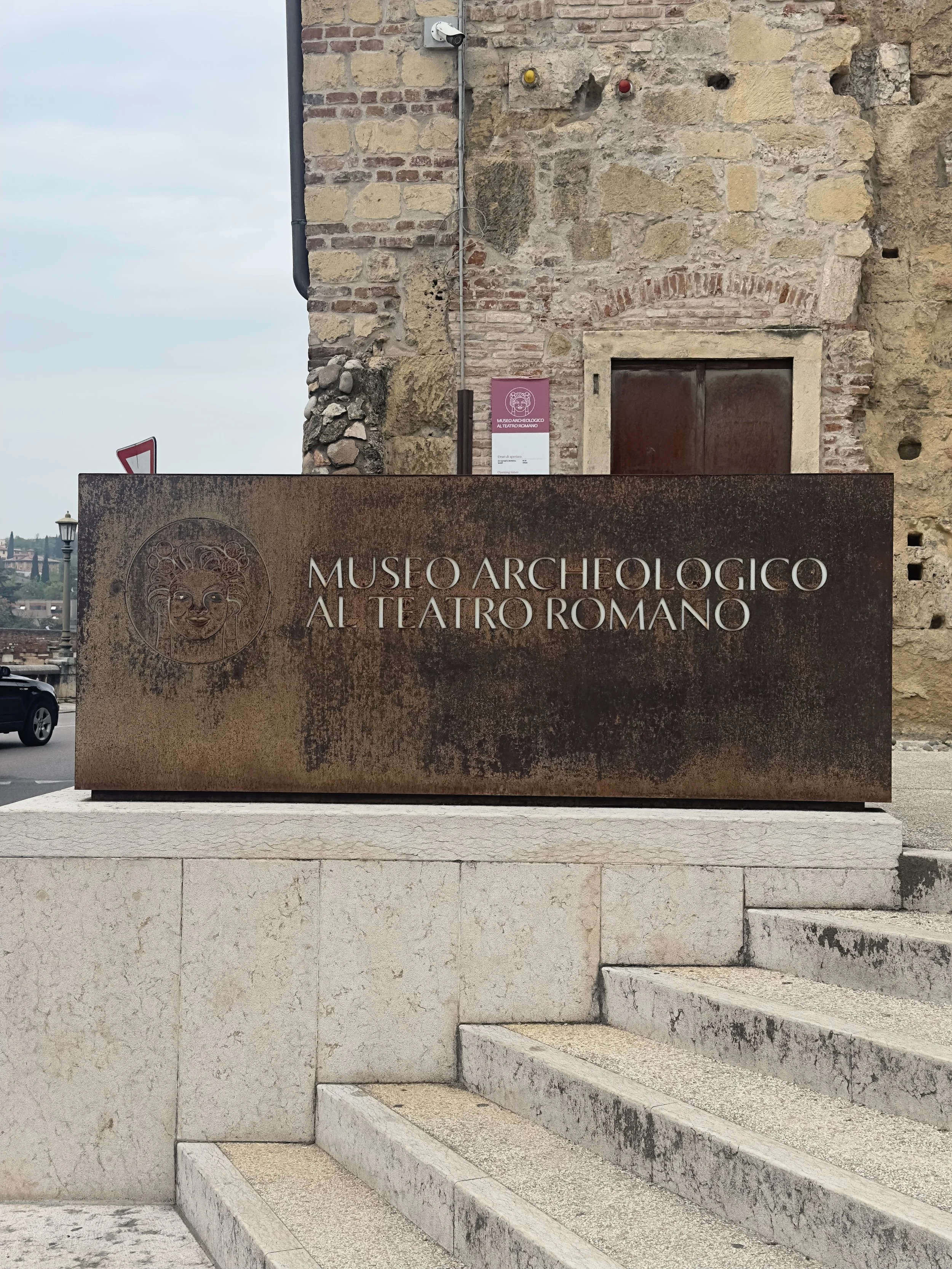
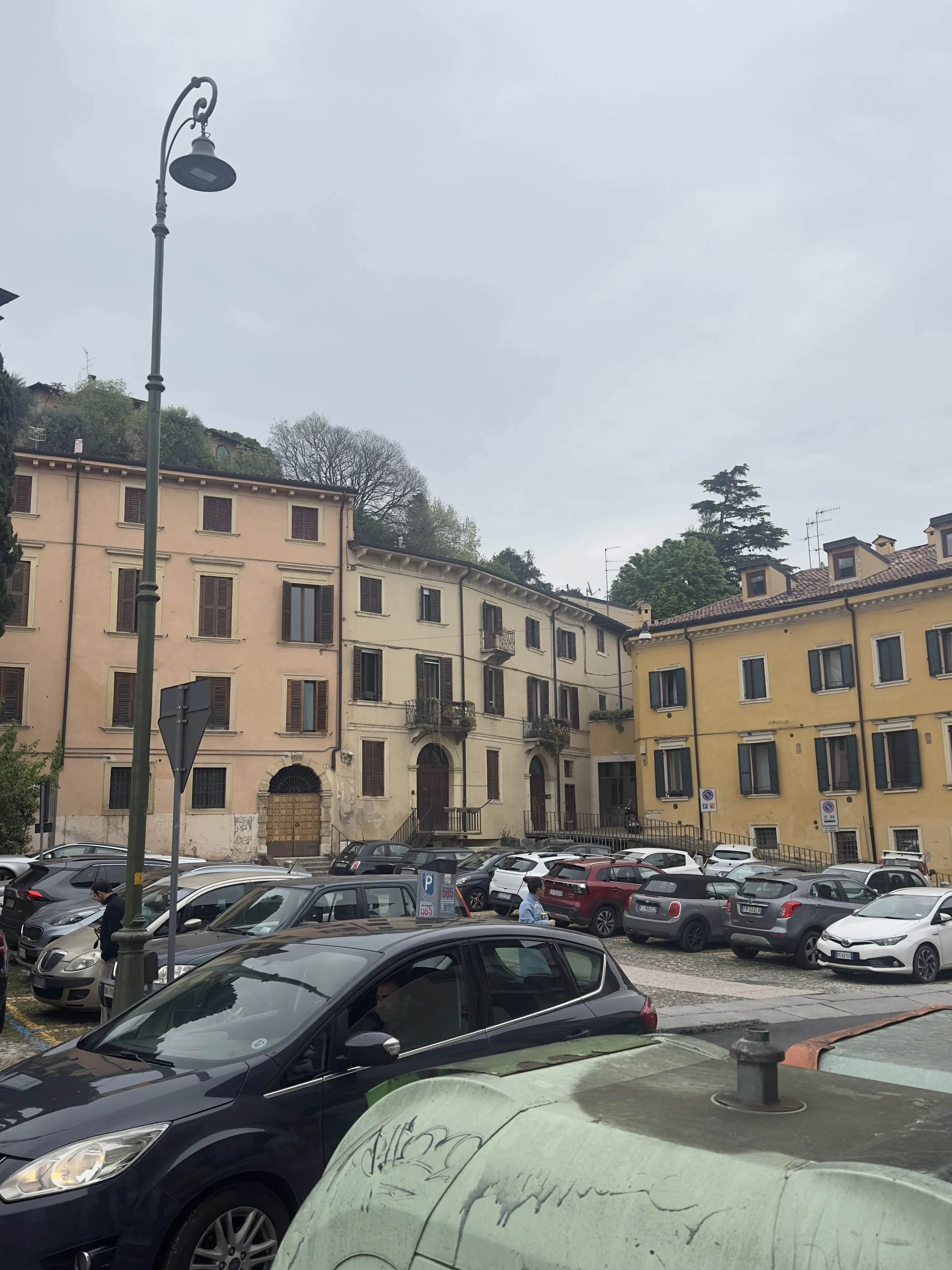
We met near the Roman theater, not the arena that most people visit, but a quieter corner of the city that felt removed from the usual flow of tourists. There were only five or six of us in the group, which immediately set the tone for the day. It felt personal, unhurried, like we weren’t part of something manufactured. We split into two cars, Michele in one and his wife in the other, and began the drive out of the city.
About thirty minutes later, the surroundings shifted. The buildings disappeared, replaced by rolling hills and narrow roads that seemed to wind without direction. A light fog settled across the landscape, softening everything it touched. It wasn’t dramatic in the way people usually describe Italy, but it felt real. There was a calm to it, something that made you slow down without being told to.
We stepped out of the car and began walking along a narrow dirt path that led us through the hills. At one point, we passed through a cherry orchard, the trees still holding that early-season quiet. There was a slight chill in the air, just enough to make you aware of it, but not enough to distract you. The only sounds were our footsteps and the occasional pause as Michele explained what we were about to experience.
Then he introduced us to his dog, the one who would actually be doing the work. Before we even started the hunt, Michele demonstrated how the dog responded to commands. There was an ease between them, a rhythm that didn’t need explanation. You could tell this wasn’t something put on for visitors. This was simply what they did.
Once we moved into the woods, everything slowed even further. Michele began explaining the differences between the truffles we might find. He talked about white truffles—rarer, more delicate, typically harvested in the fall, with a sharper, more aromatic profile that’s often described as garlicky or even slightly pungent. They’re the kind of truffle you don’t cook so much as you finish a dish with, because heat can take away from what makes them special.
Then he contrasted them with black truffles—the ones we were looking for that day. Black truffles are more common, harvested in different varieties depending on the season, including spring and winter. Their flavor is deeper, more earthy, and a little more forgiving. They can handle a bit of heat, which is why you often see them worked into dishes more freely. As he explained it, it made sense why what we were about to experience would be built around black truffles—they’re the kind you can actually cook with, not just admire.
Then the dog moved ahead of us, nose to the ground, completely focused. And suddenly, he stopped and began to dig. There was no rush to it, no sense of urgency, just a quiet understanding of what he was looking for.
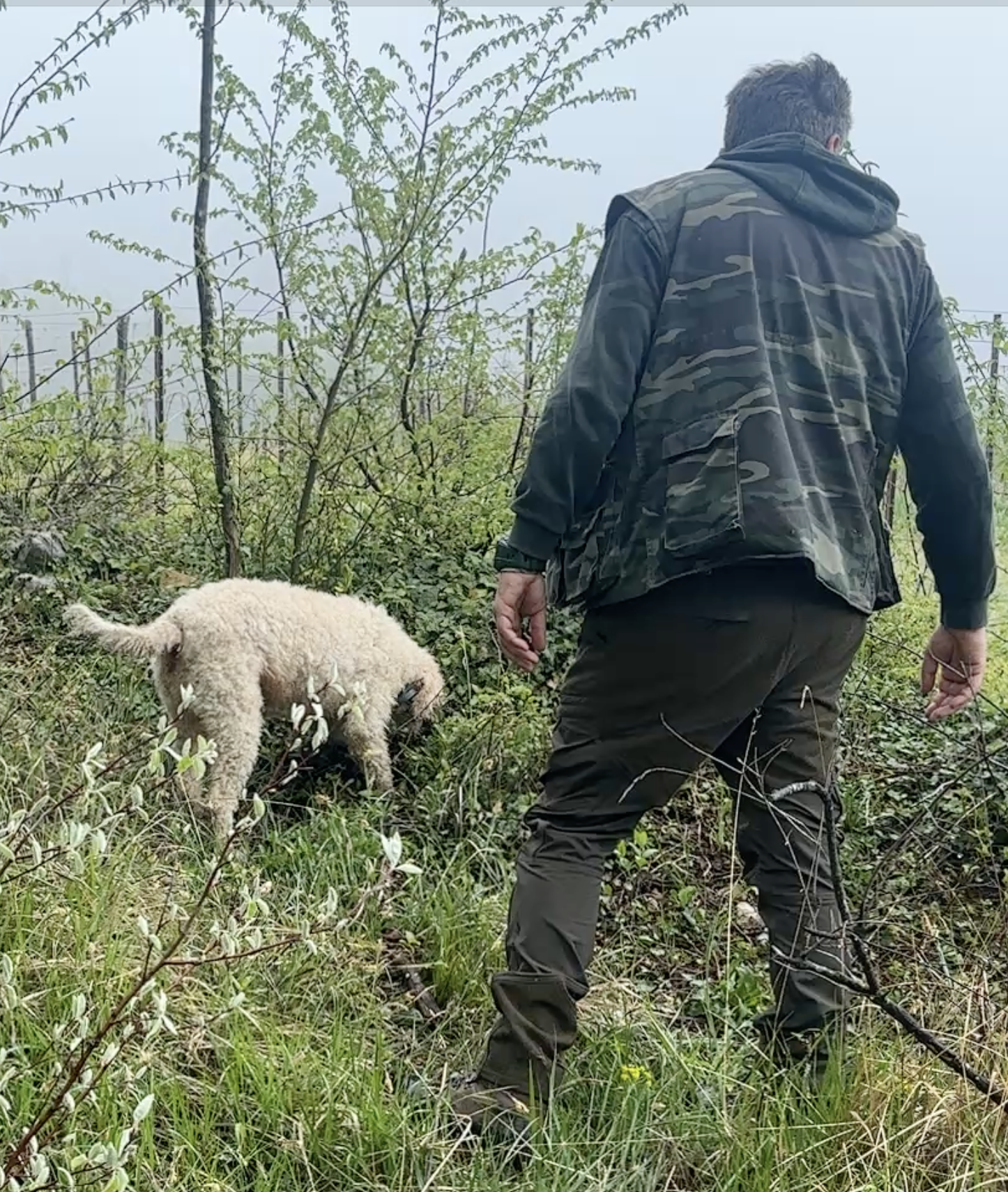
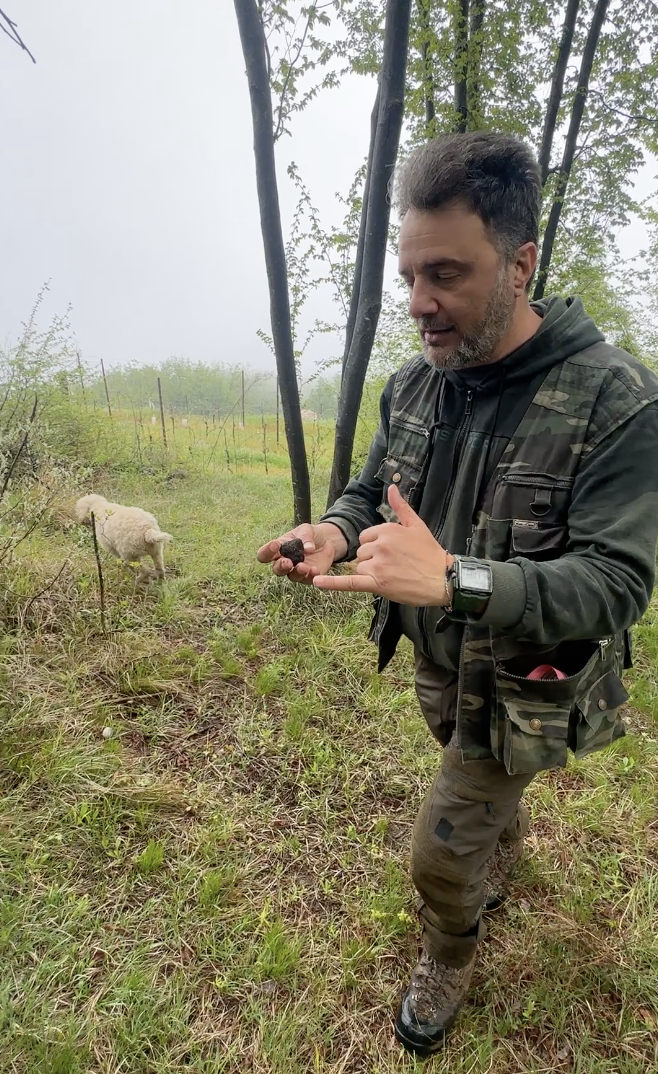
At one point, I asked Michele what he was feeding the dog as a reward. He told me it was prosciutto, and I remember thinking that it made perfect sense. Of course the dog would be eating prosciutto—this was Italy after all. A few moments later, he reached into his bag and showed me what it actually was. Bologna. It was such a small moment, but it stuck with me. It made the whole experience feel grounded, honest, and unpolished in the best possible way.
Over the course of the morning, we found three black truffles, each about the size of a golf ball. Holding one in your hand after watching it come out of the ground changes the way you think about it. It’s no longer something abstract, no longer just an ingredient on a menu. It becomes something tangible, something earned.
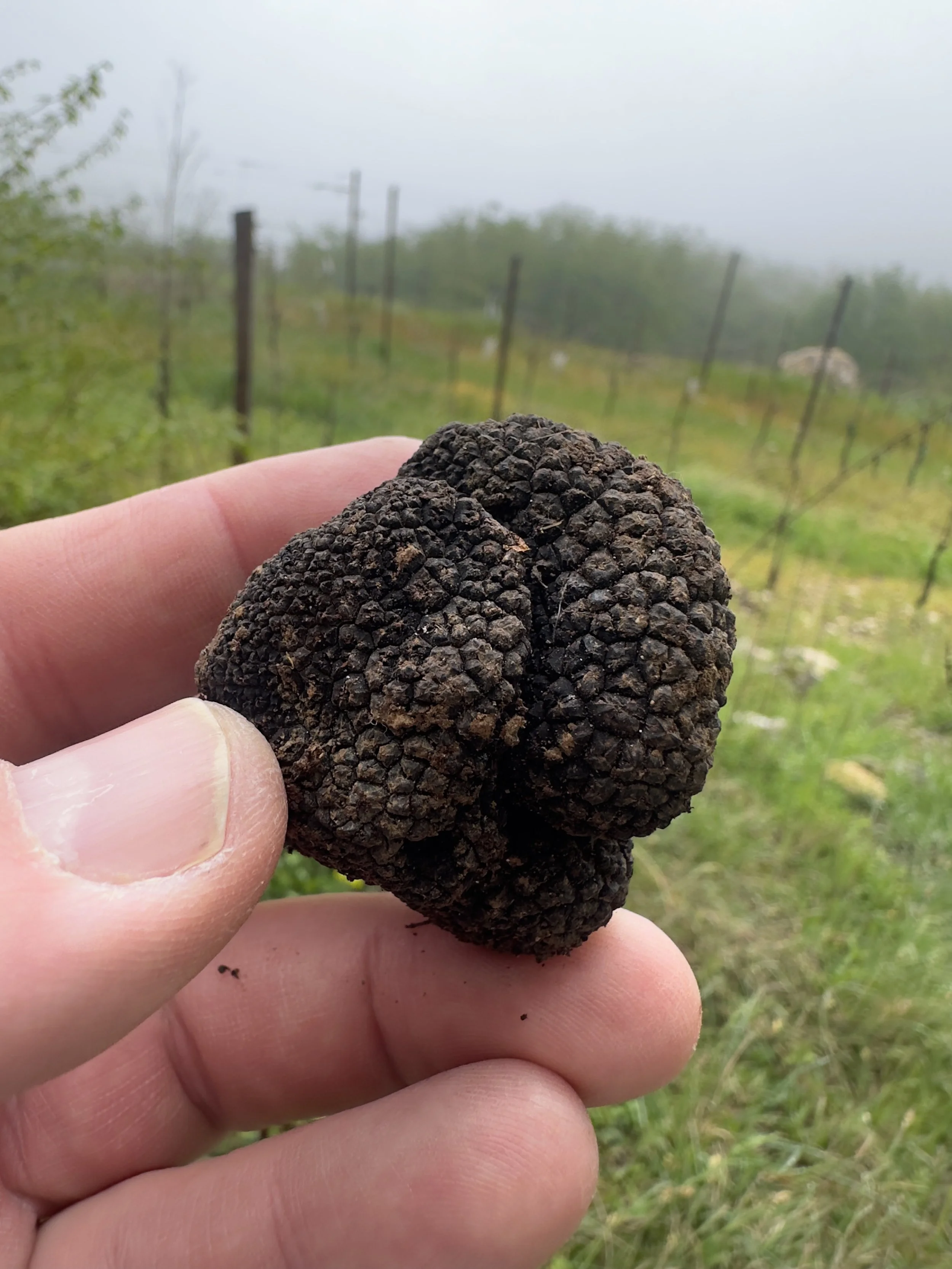
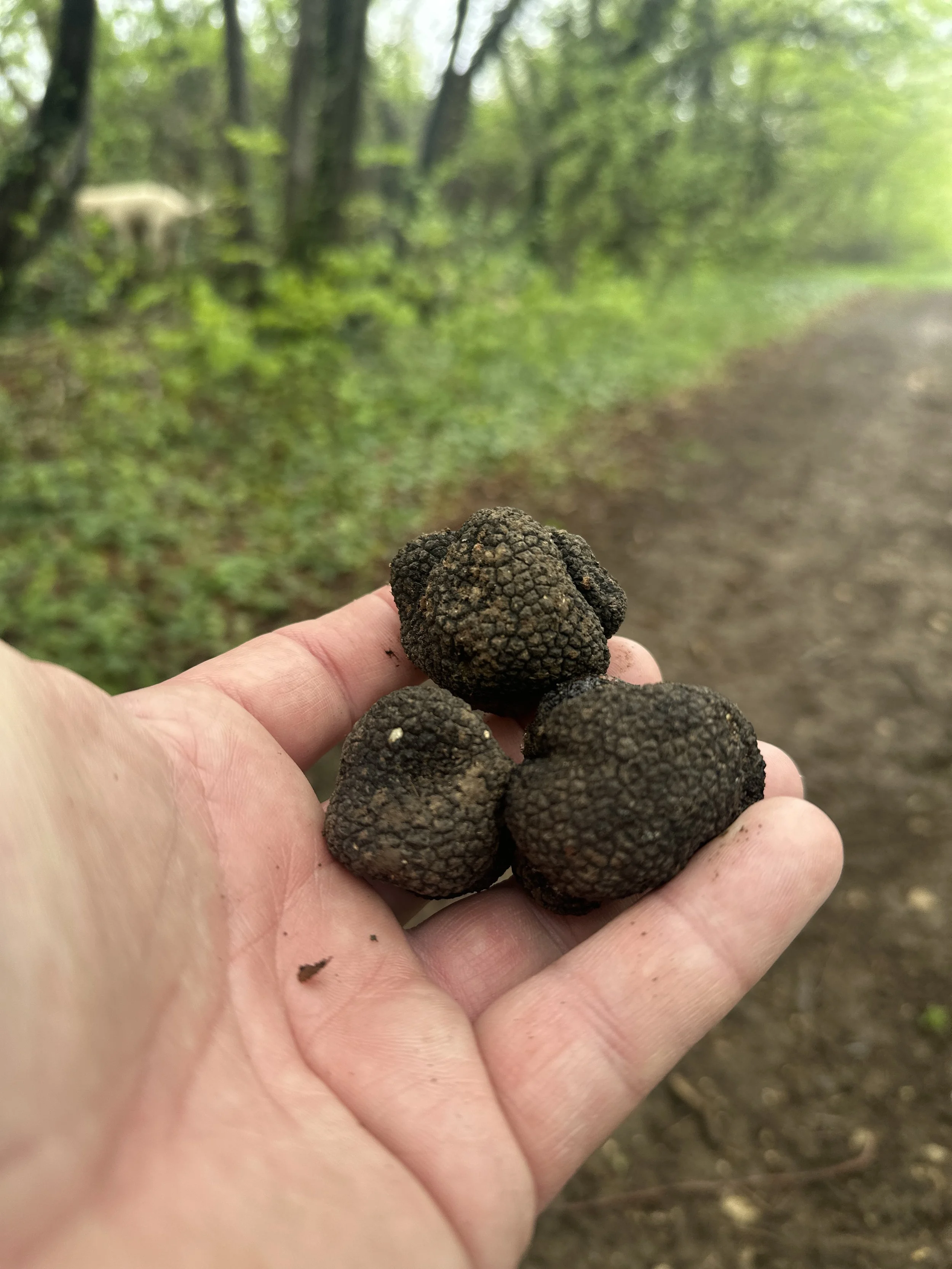
As we made our way back, we stopped along a ridge that overlooked the valley below. Michele told us that on a clear day, you can see all the way back to Verona. That morning, the fog held its place, hiding the view from us. But in a way, it made the moment feel more complete. It matched everything else about the day—subtle, quiet, and a little bit mysterious.
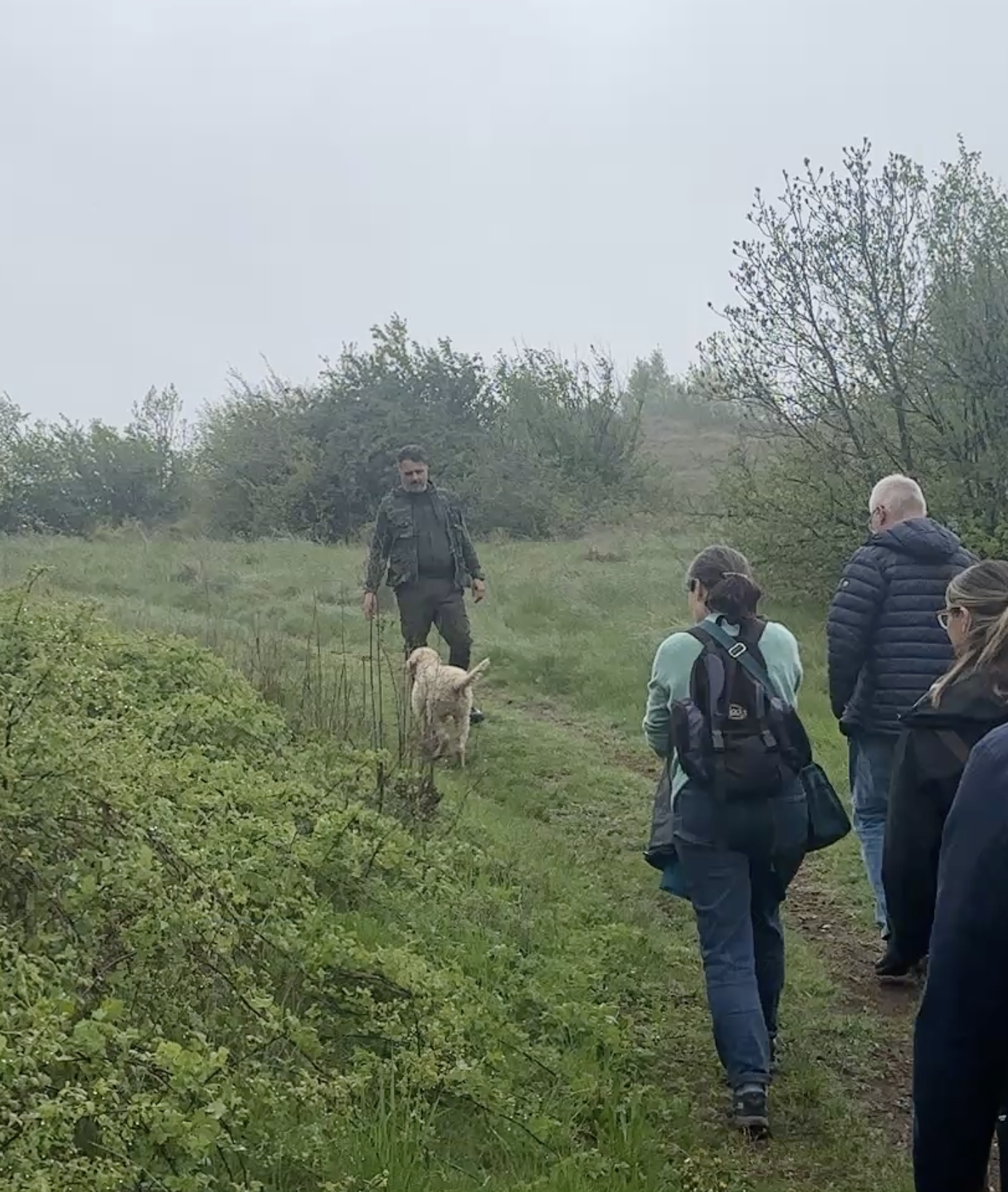
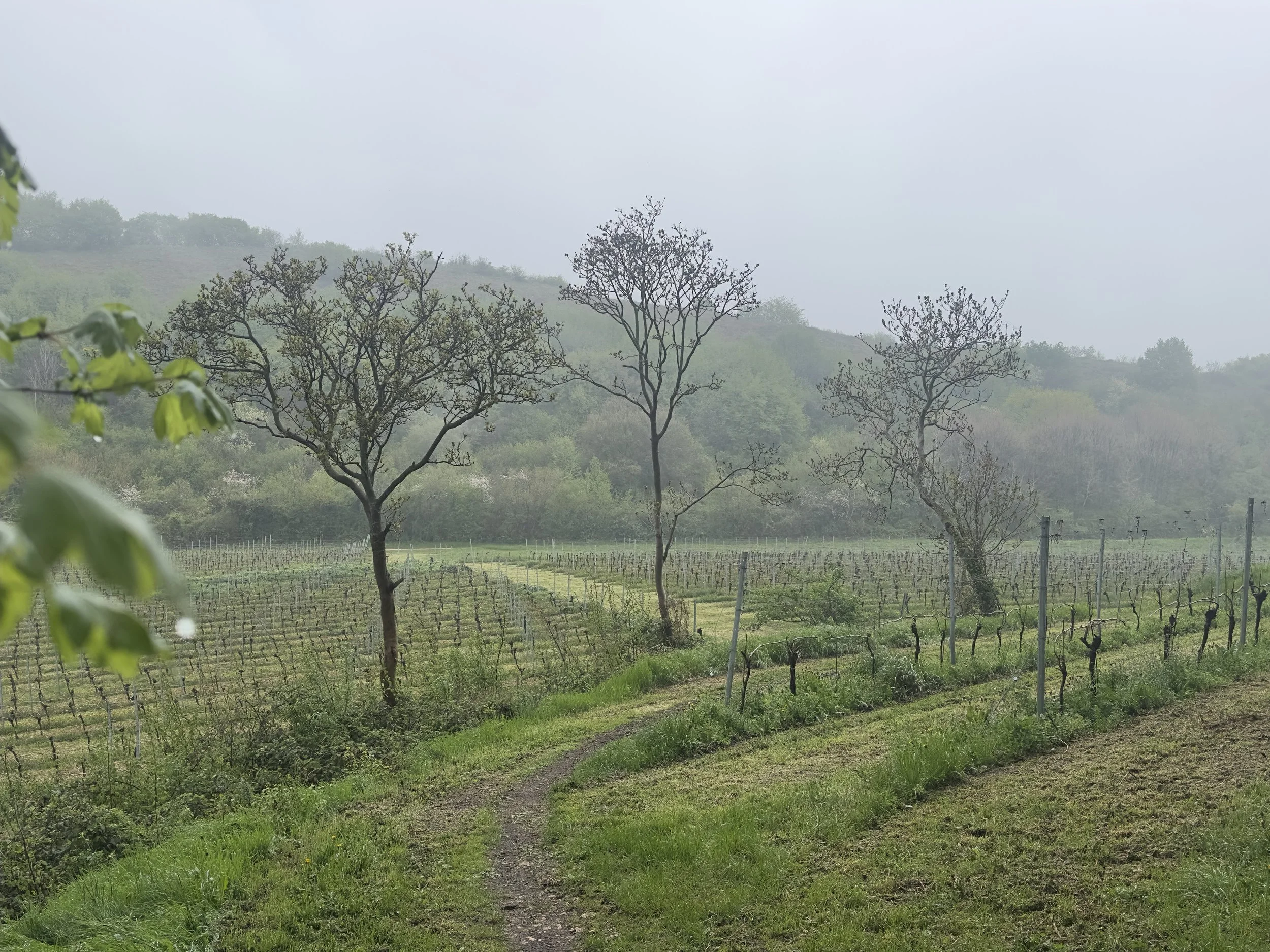
A little further along the path, Michele stopped again and pointed to a dandelion. At first, I didn’t think much of it. Back home, it’s something you step over without a second thought. But he called it tarassaco—a word that, at first, sounded like “Tabasco” to me—and that alone made me stop and pay attention. He explained that the plant represents three things: when it blooms yellow, it’s the sun; when it turns into the white seed head, it becomes the moon; and when you blow those seeds into the air, it becomes the stars.
Standing there in that moment, it wasn’t just a lesson about a flower. For me, it created a sense of connection—to the culture, to the landscape, and to the way everyday things are seen a little differently here. Something as simple as a dandelion wasn’t just part of the scenery. It was part of the story.
After the walk, we made our way to a countryside restaurant that had been in operation for over 200 years. We were seated upstairs in a private room, and by the time we sat down, wine from the local area was already on the table. It was easy to drink, and there was no sense of limitation to it. The atmosphere carried the same feeling as the morning—unhurried, welcoming, and shared.
The first dish that arrived was ricotta gnocchi. It was light and soft, nothing like the heavier potato-based version I had always known. Michele took the truffles we had found earlier and shaved them directly over the plate. There was no heavy sauce, no unnecessary additions—just olive oil, gnocchi, and fresh truffle.
The next course was handmade pappardelle, wide ribbons of pasta prepared with the same restraint. It allowed the truffle to remain the focus, rather than competing with it.
Then came a dish that stood out in a different way. Arugula, prosciutto, and shaved Parmesan were brought together with a drizzle of extra virgin olive oil. The flavor of the oil was noticeable immediately—slightly peppery, clean, and balanced. It was simple, but it left an impression that stayed with me.
The final dish was eggs, served sunny side up, with black truffle shaved over the top. It was the kind of dish that doesn’t try to do too much, and because of that, it does everything right.
The meal lasted about an hour, maybe a little longer. There was no rush to finish, no pressure to move on. The conversations that had started in the woods continued at the table, as if the entire experience had been designed to flow from one moment into the next.
In the days that followed, I found myself searching for truffle dishes everywhere I went around Verona. There’s something about the flavor—earthy, fresh, and subtle—that stays with you. It becomes something you recognize, something you look for.
I’ve even stayed in touch with Michele since that day, which says more about the experience than anything else. And if I ever find myself back in Northern Italy, I know I’ll do it again. Maybe next time, the fog will lift, and I’ll finally see that valley stretch all the way back to Verona. But even if it doesn’t, I wouldn’t change a thing.
If This Is Something You’d Want to Experience
If you ever come across a truffle hunting experience like this, take it. It’s not flashy, and it doesn’t try to be. But it’s real, and it’s the kind of experience that stays with you long after the trip is over.
I’ve included a few options below, including the same style of small-group truffle hunting experience I did just outside of Verona, along with additional truffle-focused tours in Rome and Florence.
Each of these experiences offers a slightly different perspective, but they all center around the same idea—getting out of the city, spending time in the countryside, and experiencing food in a way that feels more connected to where it comes from.
If one of these stands out to you, take a closer look. Selecting a tour through this page helps Venture To See continue to record these types of experiences for your viewing. Thank You in advance for your support.
Thank you for spending a little time with Venture To See. If you have feedback, questions, or a favorite Barcelona experience of your own, feel free to reach out at venturetosee@gmail.com. Be sure to follow along on social media @venturetosee for more travel adventures.
A Private Tour of Atalanta BC’s Stadium in Bergamo, Italy: The Ultimate Guide for Football & Travel Lovers
Experience the passion of Italian football with private tour of Atalanta BC’s newly renovated stadium in Bergamo, Italy. Explore the locker rooms, press areas, and walk the player tunnel onto the pitch at the Gewiss Stadium. This behind-the-scenes visit blends the rich history of Atalanta BC with the charm of Bergamo, making it one of the top hidden-gem travel experiences in northern Italy. Perfect for fans, culture lovers, and anyone searching for unique things to do in Bergamo.
A Private Tour of Atalanta BC’s Stadium in Bergamo, Italy: The Ultimate Guide for Football & Travel Lovers
Wide angle picture of the stadium seating.
If you’re planning a trip to northern Italy and looking for an authentic, underrated experience, a private tour of the Atalanta stadium in Bergamo should be at the top of your list. This is not just any football venue — it’s a living symbol of Bergamo’s pride, passion, and resilience.
Whether you’re a football fan, culture explorer, or someone seeking unique things to do in Bergamo, this stadium experience offers an unforgettable glimpse into the heart of Atalanta BC and the community that fuels it.
⚽ Atalanta BC History: A Club Built on Heart and Determination
Founded in 1907, Atalanta Bergamasca Calcio — known worldwide as Atalanta BC — has evolved from a local club into one of the most admired teams in Italian football. The club has gained international respect for its strong youth academy, modern attacking style, and incredible rise in Serie A and European competitions.
Over the decades, many iconic players have worn the black-and-blue kit:
Giuseppe Meazza, one of Italy’s greatest historic players
Modern stars like Alejandro “Papu” Gómez, Duván Zapata, Josip Iličić, and Dejan Kulusevski
What sets Atalanta apart is its culture: hardworking, passionate, and deeply connected to the people of Bergamo. Learning about Atalanta BC history before your visit makes the experience even richer.
🏟️ New Balance Arena (Formerly Gewiss Stadium): A Renovation That Preserved Bergamo’s Soul
Originally built in 1928, the stadium — long known as Stadio Atleti Azzurri d’Italia — recently underwent a major multi-year transformation. Rebranded as the Gewiss Stadium during an earlier sponsorship period and now officially called the New Balance Arena, this venue has become one of the most unique and modern stadiums in Italy.
Characteristics of Atalanta’s history preserved and showcased all around.
What makes the renovation special is the club’s commitment to heritage. Instead of tearing the stadium down, Atalanta kept the historical structure intact and enhanced it with modern features, ensuring the stadium renovation honored tradition.
Today, the New Balance Arena features:
A capacity of around 25,000 seats
Steep, modern stands for unbeatable match-day atmosphere
A redesigned exterior with shops, eateries, and open public spaces
A community-first design that integrates the stadium into everyday Bergamo city life
During my visit, local flower vendors and a neighborhood market were set up nearby — proof that this isn’t just a football ground, but a lively hub for residents.
Atalanta’s Owner ensured that when renovations took place, that the Stadium remained a centerpiece of day to day life within Bergamo. The outer walls feature shops and some eateries.
Local vendors making use of the Atalanta facilities providing an open air market.
For travelers searching for Bergamo attractions beyond Città Alta, this stadium tour is a standout.
🎒 The Atalanta Stadium Tour: A Behind-the-Scenes Look at Football Culture
From the moment I entered, I could feel the energy and pride of the stadium staff. Every area we visited reflected dedication — to players, to the club, and to the city.
Locker Rooms & Performance Areas
The tour begins inside Atalanta’s locker rooms, gym, and physical therapy spaces. These behind-the-scenes areas reveal the preparation and professionalism driving Atalanta’s success in Serie A and European competitions.
Atalanta Team Locker Room
Press Room Experience
Press Room with interview desk.
The press area was a surprisingly fun stop — members of my tour group even sat at the interview table, answering mock questions like star players after a big victory.
Walking Through the Tunnel to the Pitch
This is where the magic happens.
Stepping into the tunnel — imagining the chants, smoke, and roar of a packed Atalanta match — was a goosebump moment. Emerging into the stadium bowl, you immediately understand why this place is legendary.
Atalanta tunnel view walking onto the pitch.
Calling the stadium “beautiful” doesn’t do it justice. The atmosphere is electrifying, even empty.
If you’re researching best stadium tours in Italy or considering attending an Atalanta home game, this experience is essential.
✨ If I Returned to Bergamo — My Top 3 Recommendations
Attend an Atalanta match at the Gewiss Stadium
The noise, the passion, the drama — it’s one of the best football match experiences in Italy.
2. Explore Bergamo beyond the stadium.
The city is a hidden gem — historic, charming, and far less touristy than Milan.
3. Did I mention going to a match?
Truly — watching Atalanta play at home would unforgettable.
🗺️ Itinerary Tips for Visiting Bergamo & Atalanta Stadium
Whether you’re planning a football-focused trip or combining the experience with a northern Italy itinerary, here are some essentials:
📍 How to Get to Bergamo
From Milan: 40–50 minutes by train from Milano Centrale
From Bergamo Airport (BGY): quick taxi or bus ride to the stadium or city center
Perfect for travelers adding an Atalanta stadium tour to a broader Milan or Lake Como trip. Although not sponsored for this blog, the following link advertises opportunities to participate in a Atalanta Matchday Experience. Click Here for the link.
🕒 When to Visit
Match days for the ultimate experience
Morning stadium tours are available on game days.
🍝 Where to Eat Near the Stadium
The renovated exterior features casual eateries, but true food lovers should explore nearby Borgo Santa Caterina — a district known for authentic Bergamo cuisine.
🏨 Where to Stay
Città Bassa for convenience and nightlife
Città Alta for charm, views, and that old-world Lombardy feel
📸 Other Things to Do in Bergamo
Take an e-Bike Tour of Bergamo and Upper Town. Click here for a tour option.
Walk the UNESCO-listed Venetian Walls. Click here for a tour option.
Ride the historic funicular between the upper and lower towns. Click here for a tour option.
These attractions pair perfectly with a stadium visit for a complete Bergamo travel itinerary.
🙏 Final Thoughts: Thank You, Atalanta BC
My Atalanta stadium tour in Bergamo taught me more about football culture than I ever expected. The staff were knowledgeable, warm, and clearly proud to represent the club.
If any experience could convert someone into a true football believer… this was it.
Grazie, Atalanta. Next time, I’m coming back for match day.

Stop in the local Atalanta Team Store and pick up a piece of the Team as you depart.

Visiting the Museo Ferrari in Maranello: History, Experience, and Practical Travel Guide
Visiting the Museo Ferrari in Maranello, Italy is more than a stop at a car museum—it’s an immersive journey into the history, engineering, and cultural legacy of one of the world’s most iconic automotive brands. Located in the heart of Emilia-Romagna, near Ferrari’s factory and Fiorano test track, the museum showcases legendary Formula 1 cars, historic road models, and interactive exhibits that bring Ferrari’s racing heritage to life.
Having visited the museum myself, I found it to be both educational and unforgettable, whether you’re a lifelong Ferrari fan or simply curious about Italian innovation. Travelers can reach the museum easily from Florence, Venice, Verona, or Bologna, and enhance their visit with highly rated GetYourGuide tours, including skip-the-line tickets, simulator experiences, factory shuttles, and unique combination tours pairing the Ferrari Museum with Parmigiano-Reggiano farms or balsamic vinegar tastings.
This guide covers everything you need to know before visiting the Museo Ferrari—best tours, ticket options, transportation tips, ideal visit length, and the best time of year to go—to help you plan a seamless and memorable Ferrari experience in Italy.
Visiting the Museo Ferrari in Maranello is more than a museum stop—it is an immersion into one of Italy’s most powerful cultural symbols. As someone who has visited the museum in person, the experience feels both educational and emotional. Walking through the exhibits, surrounded by legendary cars and racing history, it becomes clear that Ferrari represents not just speed and luxury, but decades of innovation, ambition, and Italian identity.
F-1 on display in the grand foyer
This article combines researched background information with personal reflection and practical travel guidance, offering both an informative overview and a traveler’s perspective.
A Brief History of Ferrari
Ferrari was founded by Enzo Ferrari, born in Modena in 1898. His early career involved racing and managing teams for Alfa Romeo. In 1929, he established Scuderia Ferrari, initially as a racing team. After World War II, Enzo launched Ferrari as an automobile manufacturer, producing its first car, the Ferrari 125 S, in 1947.
One of the original Ferarri’s
Ferrari’s success in motorsport—especially Formula One—cemented its reputation. Over time, the brand evolved into a producer of high-performance road cars while maintaining its racing DNA. The Museo Ferrari in Maranello documents this journey through vehicles, engines, trophies, and immersive exhibits.
The Ferrari Logo
The Ferrari logo, the Cavallino Rampante (prancing horse), originally belonged to Italian World War I fighter pilot Francesco Baracca. After Baracca’s death, his parents suggested Enzo Ferrari use the symbol for good luck. Ferrari added a yellow background, representing Modena. Today, the emblem is one of the most recognizable symbols in the world.

The iconic Ferrari Logo
Inside the Museo Ferrari (Maranello)
Located next to Ferrari’s factory and headquarters, the museum focuses on the brand’s racing achievements, engineering excellence, and design evolution.
One of the many internal components of what makes up a Ferrari on display
What You See
Formula One championship cars and trophies
Historic and modern Ferrari road cars
Concept cars and future-focused designs
Engine and technology exhibits
Interactive F1 simulators and multimedia displays
From personal experience, the Formula One section is particularly striking—seeing the cars up close makes the engineering feel tangible rather than abstract. The museum is well organized and easy to navigate, even for visitors who are not car experts.
How Long to Plan & When It’s Busy
Recommended visit time:
1.5–2 hours for a standard visit
2–3 hours if you include simulators or tours
Busy periods:
June through August
Weekends and school holidays
Visiting on a weekday morning or outside peak summer months provides a calmer, more enjoyable experience.
Opening Hours
April–May: 9:30 a.m. – 7:00 p.m.
June–August: 9:00 a.m. – 7:00 p.m.
September–October: 9:30 a.m. – 7:00 p.m.
November–March: 9:30 a.m. – 6:00 p.m.
Closed on December 25 and January 1.
Getting to the Museo Ferrari
By Car
Bologna: ~45 minutes
Florence: ~1 hour
Verona: ~1.5 hours
Venice: ~2.5 hours
Parking is available near the museum.
By Train + Shuttle
Train to Modena Station
Shuttle bus or taxi to Maranello
Transportation from Major Italian Cities
From Florence
Train to Modena (~1.5 hours)
Shuttle or taxi to Maranello
Driving option: ~1 hour
From Verona
Train to Modena (~1.5 hours)
Shuttle or taxi onward
Driving option: ~1.5 hours
From Venice
High-speed train to Modena (~2–2.5 hours)
Shuttle or taxi to Maranello
Driving option: ~2.5 hours
1. Museo Ferrari Entry + Simulator (Skip-the-Line)
If you want priority entry and the chance to feel what it’s like to sit in a Ferrari simulator: Click here for a tour.
🔗 This tour lets you bypass queues and includes access to the museum’s highlights, from historic cars to interactive exhibits (rated ~4.5/5).
Find out what its like to drive a F-1 in this simulator.
2. Modena ↔ Maranello: Bus Transfer + Ferrari Museum Ticket
Perfect for public transit travelers: a comfortable round-trip shuttle from Modena (train station) directly to the Ferrari Museum entrance. Click here for tour information.
This is one of the highest-rated, simplest ways to combine rail travel with the museum visit (~4.6/5).
3. Combo Ticket: Ferrari Museums (Maranello + Modena) + Shuttle
If you’d like to experience both Ferrari hubs — the Maranello Museum and the Museo Enzo Ferrari in Modena — this tour connects the two with shuttle service. Click here for tour information.
It’s a wonderful way to get the full story: Maranello’s racing heritage and Modena’s founder history (~4.5/5).
4. Ferrari Museum + Fiorano Track/Shuttle Combo
Explore the museum plus a panoramic shuttle tour around the Fiorano test track and Ferrari factory lanes. Click here for tour information.
A great option if you want the feel of Ferrari beyond the exhibits (~4.5/5).
5. Ferrari Museum + Short Ferrari Road Test
For those who want goosebumps: museum entry plus a 15-minute Ferrari Portofino road test next to the museum. Click here for tour information.
A phenomenal way to live the Ferrari experience, not just see it. It’s one of the top-rated immersive options (~5/5).
(All of the above are available directly on getyourguide.com and consistently maintain ratings of 4.5 stars or higher.)
Combination Tours: Ferrari Plus Local Culture.
An additional and increasingly popular way to visit the Museo Ferrari is through combination tours offered by local guides in the Emilia-Romagna regions.
Many tours depart from Modena, Bologna, Parma, or surrounding towns and combine:
In addition to the standard Ferrari-focused tours above, there are combination tours that pair Ferrari with regional food and culture — perfect if you want a day-trip that feels truly Italian:
F-1 Pit Crew Mock Up
🍷 Optional Combination Experiences (Food + Ferrari Museum) — With Direct Links
If you want to turn your Ferrari Museum visit into a full Italian cultural day — sampling local food traditions, visiting farms, and tasting regional specialties — the tours below are excellent choices. Each includes a stop at the Ferrari Museum in Maranello along with other memorable experiences.
1. Parmesan and Balsamic Food Tour with Ferrari Museum
This highly-rated tour starts with visits to local producers — including a Parmigiano Reggiano cheese farm and a traditional balsamic vinegar estate — featuring guided tastings of cheese, vinegar, local wine, and more. It wraps up with skip-the-line entrance to the Ferrari Museum in Maranello. Click here for tour information.
⭐ Rating: ~4.8/5 (high praise for organization, tastings, and overall value)
2. Bologna/Modena: Parmesan, Ferrari, Balsamic & Wine Tour with Lunch
This full-day guided tour from Bologna or Modena includes:
A guided look at local Parmigiano Reggiano production,
Visit to a balsamic vinegar producer,
Lunch at a countryside farmhouse,
Skip-the-line ticket to the Ferrari Museum.
It’s a highly immersive way to experience Emilia-Romagna’s culinary traditions before exploring automotive history. Click here for tour information.
⭐ Rating: ~4.9/5 (excellent reviews highlight local food, wine, and the Ferrari visit)
Three Things I Would Do on a Return Visit
1. Spend More Time in the Formula One Section
On my visit, this was the most compelling area. Revisiting would allow a deeper look at the technical details and history behind each car.
2. Take the Factory and Fiorano Track Shuttle Tour
Seeing the environment where Ferraris are built and tested would add valuable context to the museum exhibits.
3. Visit the Museo Enzo Ferrari in Modena
The second museum focuses more on Enzo Ferrari’s personal story and early work, complementing the Maranello museum perfectly.
Conclusion
The Museo Ferrari in Maranello successfully balances history, technology, and emotion. From a personal perspective, the visit feels impactful even for those without deep automotive knowledge. The museum is accessible, well-curated, and surrounded by opportunities to expand the experience—whether through simulators, factory tours, combination food tours, or a visit to the second Ferrari museum in Modena.
With flexible transportation options from major Italian cities and a wide range of highly rated tours available, a visit to the Museo Ferrari can be easily tailored to fit different travel styles. It is not just a stop for car enthusiasts, but a meaningful cultural experience rooted in Italian heritage.
Argentinean Barbecue with Live Music: A Night of Fire, Flavor, and Culture
Argentine Asado Experience in Buenos Aires | Authentic BBQ with Live Music
Experience an authentic Argentine asado in Buenos Aires, one of the most immersive culinary and cultural activities in Argentina. This intimate Argentine barbecue with live music takes place in a local residential setting and offers travelers a rare opportunity to experience traditional Argentine food, wine, and tango in a relaxed, social atmosphere.
One of the things I absolutely love about traveling is experiencing culture firsthand. I’m not talking about reading a book or following a tour guide through a tourist district. I’m talking about those intimate moments—the kind that immerse you in local life and leave a lasting impression.
My son and I were en route to Antarctica for a 12-day expedition cruise, with just 24 hours in Buenos Aires to spare. We wanted something authentic, something memorable. And what better way to connect with Argentine culture than through food—specifically, an Argentine barbecue.
I booked an experience through Viator called Argentinean Barbecue (BBQ) with Live Music. The description promised a three-hour, eight-course dining experience featuring local wines and live music, with non-alcoholic options like Coke, Pepsi, Sprite, water, and sparkling water also available.
Arriving at the Asado
We hopped in an Uber and arrived at a residential address in Buenos Aires, where we were greeted at the door by one of two brothers who curate this intimate asado experience. (Asado translates simply to “roast,” but as I quickly learned, it means so much more than that.)
We walked down a narrow hallway into a cozy backyard set up for a 10-person gathering. Instantly, the intoxicating aroma of wood smoke filled the air—that unmistakable scent that only comes from slow-roasted meat over open fire. As a self-proclaimed amateur grill and smoke enthusiast, I was immediately drawn to the beautiful brick parrilla (grill) and the carefully laid-out provisions for the evening.
After graciously allowing me to linger a bit too close to the grill, our hosts poured us a glass of Argentine wine from a vineyard just outside Buenos Aires. My son and I took our seats alongside fellow travelers from Portugal, Australia, and the United States. This—this—is my favorite way to travel: sharing a table with strangers who quickly become friends.
As conversations flowed, we discovered that two other couples were also cruisers. The Australians had just finished a Princess cruise to Antarctica, while the American couple had disembarked from Celebrity. The Portuguese guests were stopping in Buenos Aires on their way to hike in northwest Argentina. The dialogue was easy, filled with travel stories and shared experiences—the kind of conversations that make the world feel smaller and spark the desire to explore even more.
So, What Exactly Is an Argentine Asado?
An asado is far more than a barbecue—it’s a cornerstone of Argentine culture. Traditionally rooted in the gaucho (Argentine cowboy) lifestyle of the Pampas, asado dates back to the 18th century when cattle roamed freely and open-fire cooking was a way of life. Over time, it evolved into a social ritual centered on family, friends, patience, and respect for quality ingredients.
At its heart, asado is about slow-cooking meat over wood or charcoal, allowing natural flavors to shine. Seasoning is minimal—often just salt—because Argentine beef is prized for its quality and flavor. An asado isn’t rushed; it’s meant to be savored, shared, and enjoyed over hours of conversation, wine, and connection.
Eight Courses, One by One
Course by course, the traditional Argentine asado unfolded. As each dish arrived, Adrián (one of the brothers) shared a bit of history about the cut of meat, the cooking method, and the wine paired with it.
Let’s talk about the meat. Beef was the star of the evening, with pork playing a supporting role. The pork appeared in two forms: a sausage and a loin. The pork course was affectionately referred to as the “hunger killer,” since it cooks faster than the rest of the asado and keeps everyone satisfied while the beef continues its slow transformation over the fire.
The evening began with provoleta, a thick slice of provolone cheese grilled until bubbling and golden. This was followed by a hands-on moment: guests helped prepare a fresh vegetable salsa. The homemade chimichurri—bright, herbaceous, and perfectly balanced—paired beautifully with the meats. The brothers were even gracious enough to share their recipes.
Next came Morrón con Huevo, a halved bell pepper with an egg cracked inside, cooked low and slow on the grill until infused with a subtle smokiness.
Then, chorizo—savory, juicy, with just the right hint of spice—served in a bun and topped with the freshly made salsa.
Finally, the beef courses arrived: tenderloin, skirt steak, and molleja de garganta, a highly prized cut from the cow’s neck. Argentines take immense pride in the natural flavor of their beef, and it shows. Lightly seasoned with salt (and honestly, it didn’t even need that), every cut was incredibly tender—even the skirt steak.
The brothers made sure no glass was empty and no plate went unfinished.
A Sweet Finish—and a Bold Claim
Dessert was a rich caramel gelato, accompanied by a bold claim: that Argentines, not Italians, invented gelato—and that Argentine gelato is better. While I’ll let historians debate the first part, I can confidently say this was some of the best gelato I’ve ever had. And that’s coming from someone who’s taken gelato-making classes in northern Italy and considers himself an amateur gelato connoisseur.
Music, Tango, and a Perfect Ending
As if the eight-course meal, flowing Argentine wine, and incredible company weren’t enough, the night ended with a solo guitarist performing different versions of tango songs. Each piece came with a brief explanation and a touch of history, adding yet another layer of cultural richness to an already unforgettable evening.
Final Thoughts
As I write this, I can still taste the food, smell the smoke, and hear the music. It was an evening that connected me deeply to Argentina and forever changed how I think about grilling and barbecue.
If you find yourself in Buenos Aires, I can’t recommend this experience enough. You can book it through Viator by clicking here, and you can also follow the brothers on Instagram at @ba_meatandgrill.
This wasn’t just a meal—it was a memory.