
7 Days Through Alaska's Inside Passage Aboard Holland America's Noordam
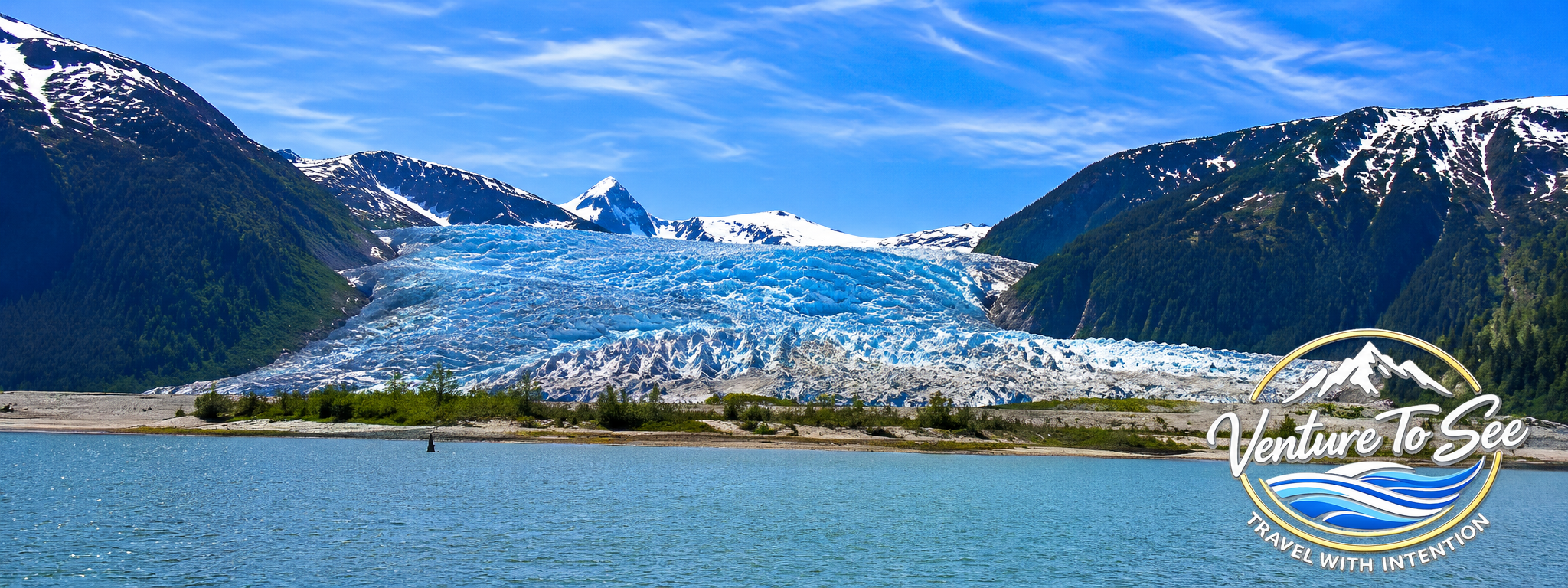
Taku Glacier, Alaska
7 Days Through Alaska's Inside Passage Aboard Holland America's Noordam
An honest review of a cruise that wasn't even on our calendar six weeks before we sailed.
When people picture an Alaska cruise, they picture glaciers, whales, snow-capped mountains, maybe a bald eagle overhead. What they don't picture is the decision that gets them there. Ours wasn't planned years out. It wasn't on our radar a couple of months before departure. What changed our minds was a sales offer Holland America put out for AARP members — a fare that was simply too good to ignore.
A quick side note, since it surprises people: you don't have to be retired, or even in your fifties, to join AARP. Membership is open at any age, and the travel and cruise-line offers that come with it can more than cover the cost of joining. That one promotion is the reason Alaska went from "someday" to booked in a single afternoon.
Six weeks before sailing, Alaska wasn't on the calendar. Then it was. Before long we were boarding a flight to Seattle to spend seven days aboard Holland America Line's Noordam, working our way through Juneau, Endicott Arm, Sitka, Ketchikan, and Victoria. What follows is the honest version of that week — the parts that lived up to the brochure and the parts that didn't.
Arriving in Seattle
As we tell our clients, we arrived the day before embarkation. Missing a cruise because of an airline delay is not a vacation memory anyone wants. For our pre-cruise night we chose the Residence Inn Seattle Sea-Tac Airport, about 1.6 miles from the airport. The taxi from the terminal ran roughly $21, reasonable for the location.
The hotel was what we expected — clean, comfortable, quiet, nothing extravagant. If you've stayed at a Hampton Inn, you have the idea. What we didn't expect came the next morning. From the fifth-floor outdoor balcony, past a small lake behind the hotel, Mount Rainier stood perfectly clear on the horizon. Standing there with a coffee, looking at one of the most recognizable peaks in North America, turned an ordinary airport overnight into something we still remember. Breakfast was adequate and nothing more. We'd book the property again for the location and the chance of that view, not the eggs.
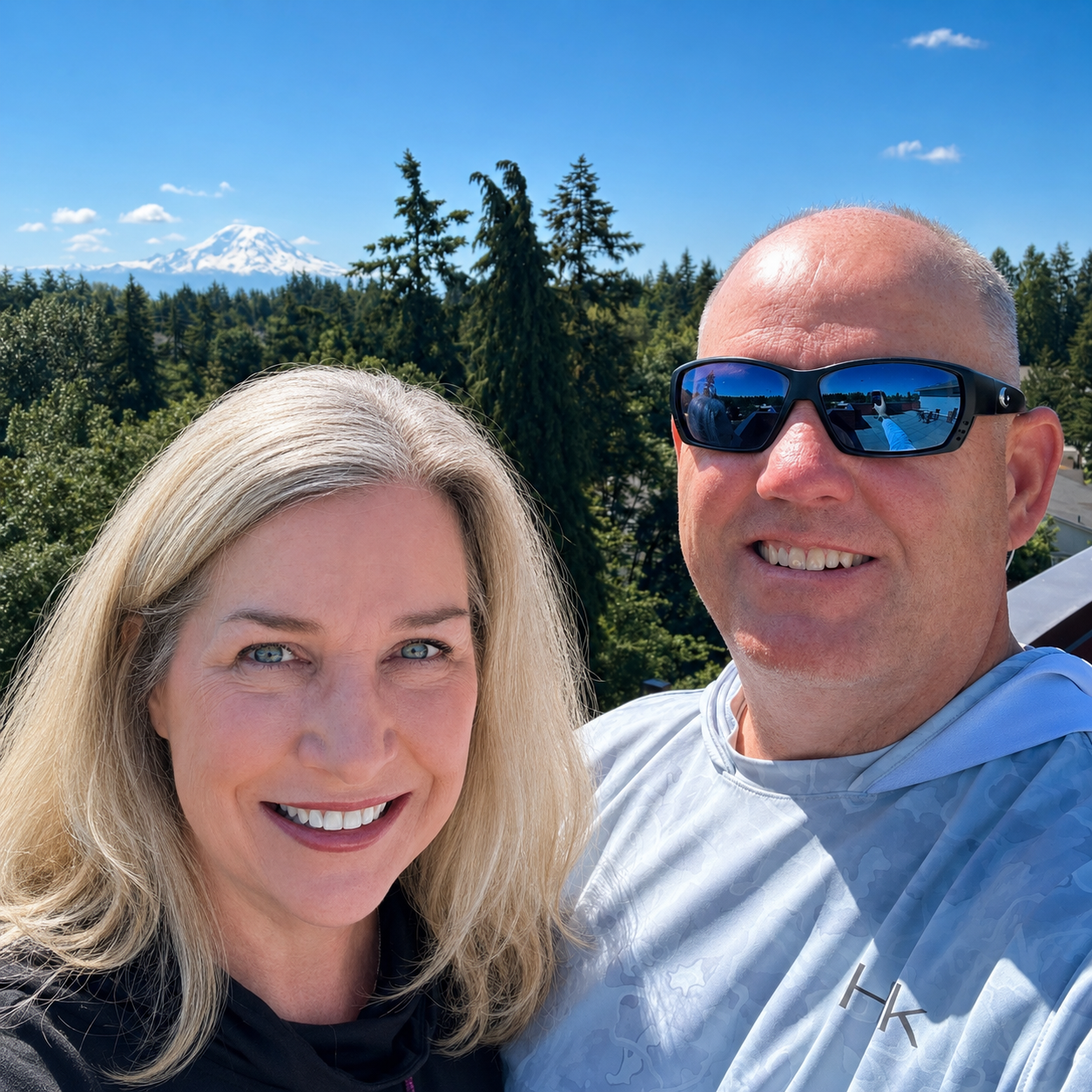
Mount Rainier from the hotel balcony — an unexpected start to the trip.
Seattle's Waterfront and Pier 91
We left for our noon arrival at Pier 91 a little after 11 a.m. The distance was only about 17 miles, but Seattle traffic stretched it to roughly 45 minutes, and the Uber ran about $66 plus tip. On the way in, the revitalized waterfront caught our attention — the aquarium, Pike Place Market, ferries, museums, and public spaces all looked connected into a destination that deserved more than a drive-through. If we come back, and we expect we will, we'd arrive several days early.
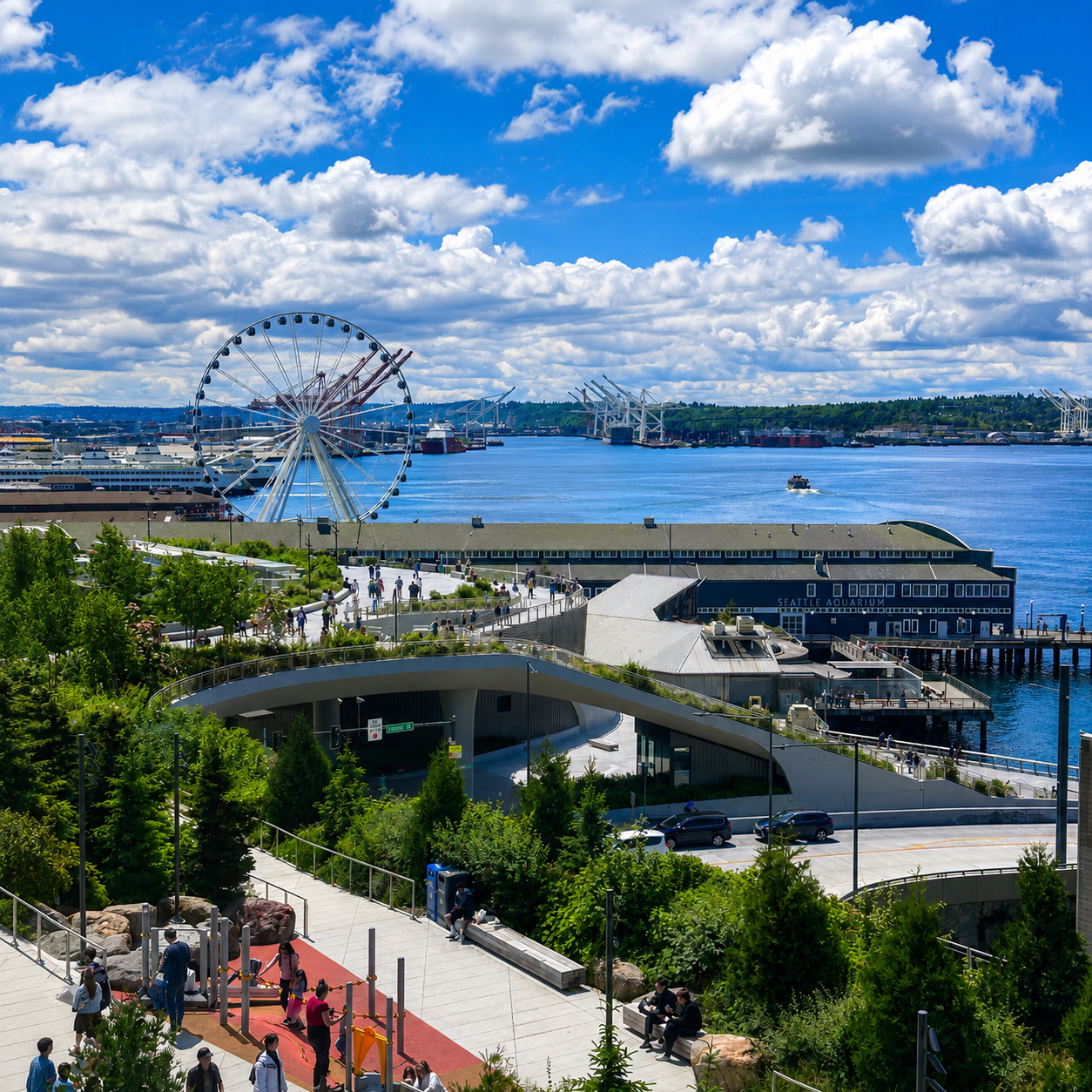
Seattle's waterfront, on the way to the pier.
One thing future Alaska cruisers should understand: not all Seattle cruise terminals are equal. Holland America and Princess use Pier 91, an industrial port facility with no restaurants, shopping, or attractions within walking distance. We passed Pier 66 downtown, where a Norwegian ship sat right in the middle of the action. Pier 91 is strictly a place to board the ship. The terminal was efficient but slower than Royal Caribbean or Celebrity — about an hour from dropping luggage to stepping aboard. Not difficult, just slower.
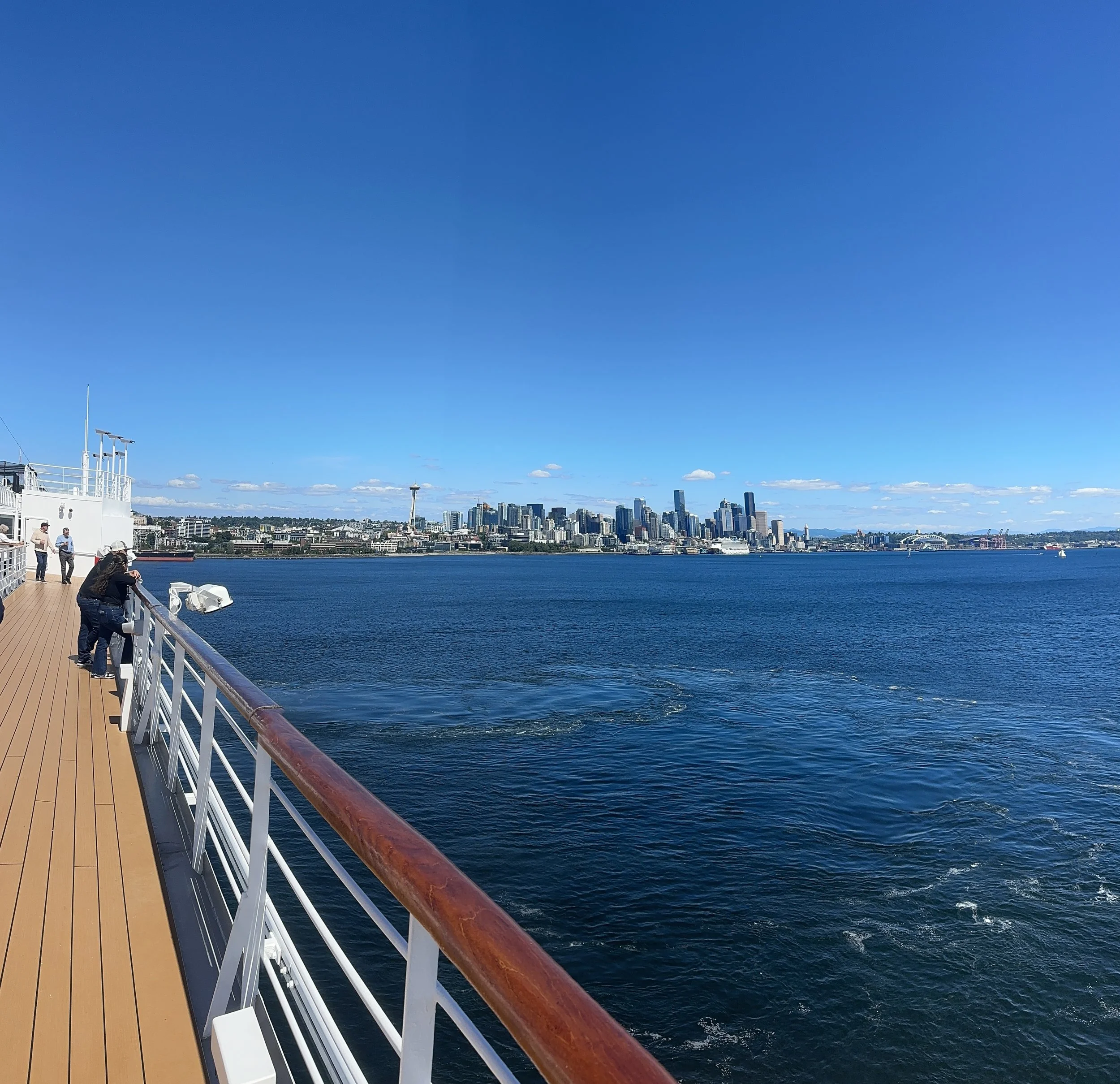
Sailing out of Seattle aboard Noordam.
First Impressions of Noordam
Noordam felt different from many modern ships. Not old or outdated — different. It's designed for adults who enjoy travel rather than travelers chasing constant stimulation. One of the first things we noticed was the library. An actual library, substantial, connected to a coffee venue where you could sit, read, and watch the scenery. That told us a lot about who this ship is built for.
Noordam is one of Holland America's 2006-built Vista-class ships, and it doesn't feel its age. Its most recent dry dock wrapped in December 2024, refreshing public spaces and staterooms — the latest round in a fleet-modernization program Holland America has invested hundreds of millions of dollars in across its ships. An earlier 2019 refurbishment brought the Explorations Café, and with it the library that quickly became one of our favorite spots onboard.
The public spaces were clean and well kept, the crew friendly, and — important for Alaska — there were viewing spots everywhere: Deck 3, Deck 10, Deck 11, the Crow's Nest, outdoor observation areas, the promenade. The buffet offered more variety than anyone could reasonably sample, and dinner in the Main Dining Room came with shared seating, which many lines have abandoned. The conversation was easy and the food was better than we expected. Noordam wasn't reinventing cruise dining. It was doing the traditional version well.
A Sea Day of Watercolors and Salmon Meatballs
Our first full day was at sea, sailing north, and we stayed busier than we expected — not because of endless attractions, but because of how many things were on offer that we'd normally skip. A watercolor class. A floral arrangement class. April took the floral class while the other half of our travel team sat in on a cooking demonstration for salmon meatballs with avocado-lime dressing. That sentence tells you more about Holland America than any brochure could. This isn't a waterslide cruise line. It leans into enrichment, learning, and relaxation.


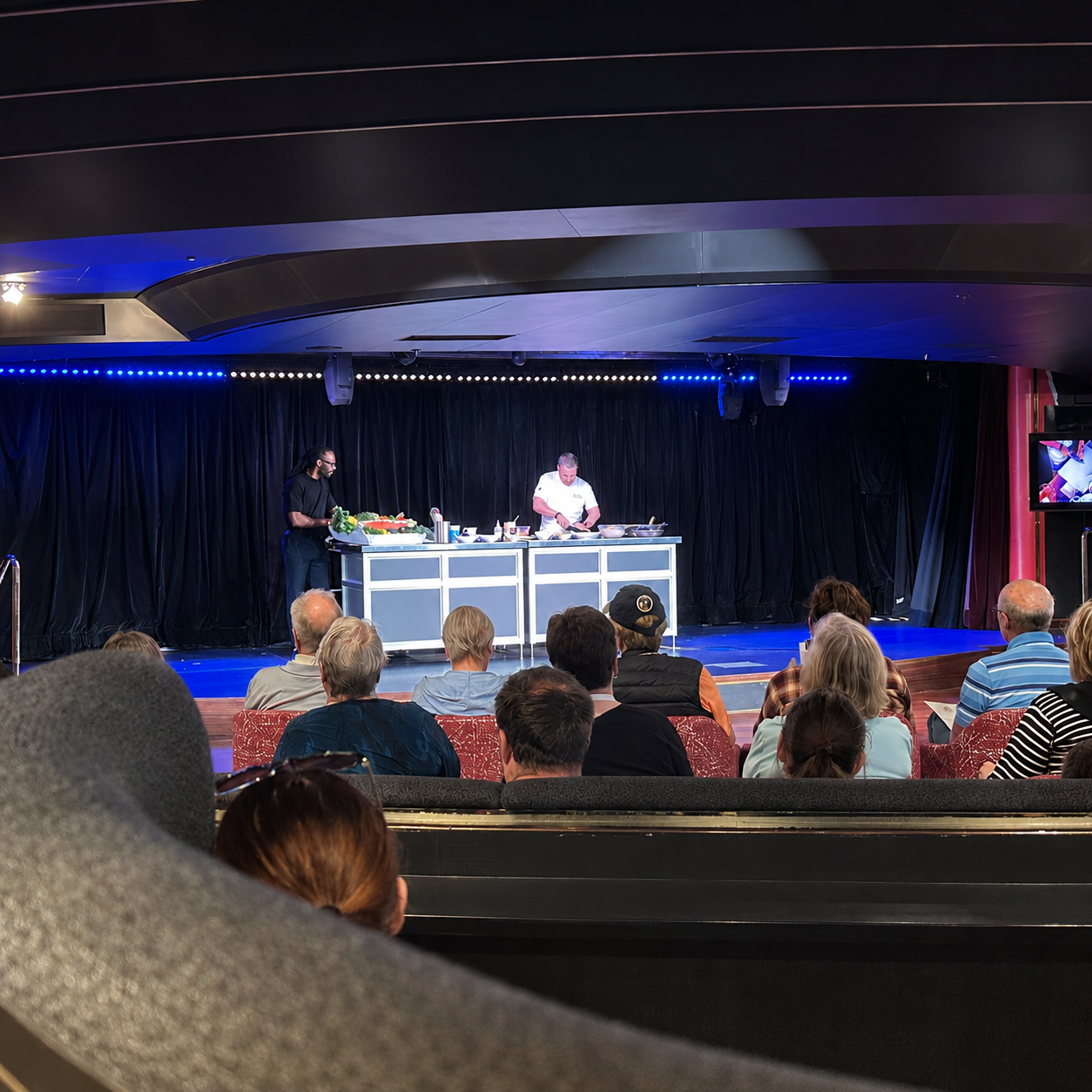
The salmon-meatball cooking demonstration.
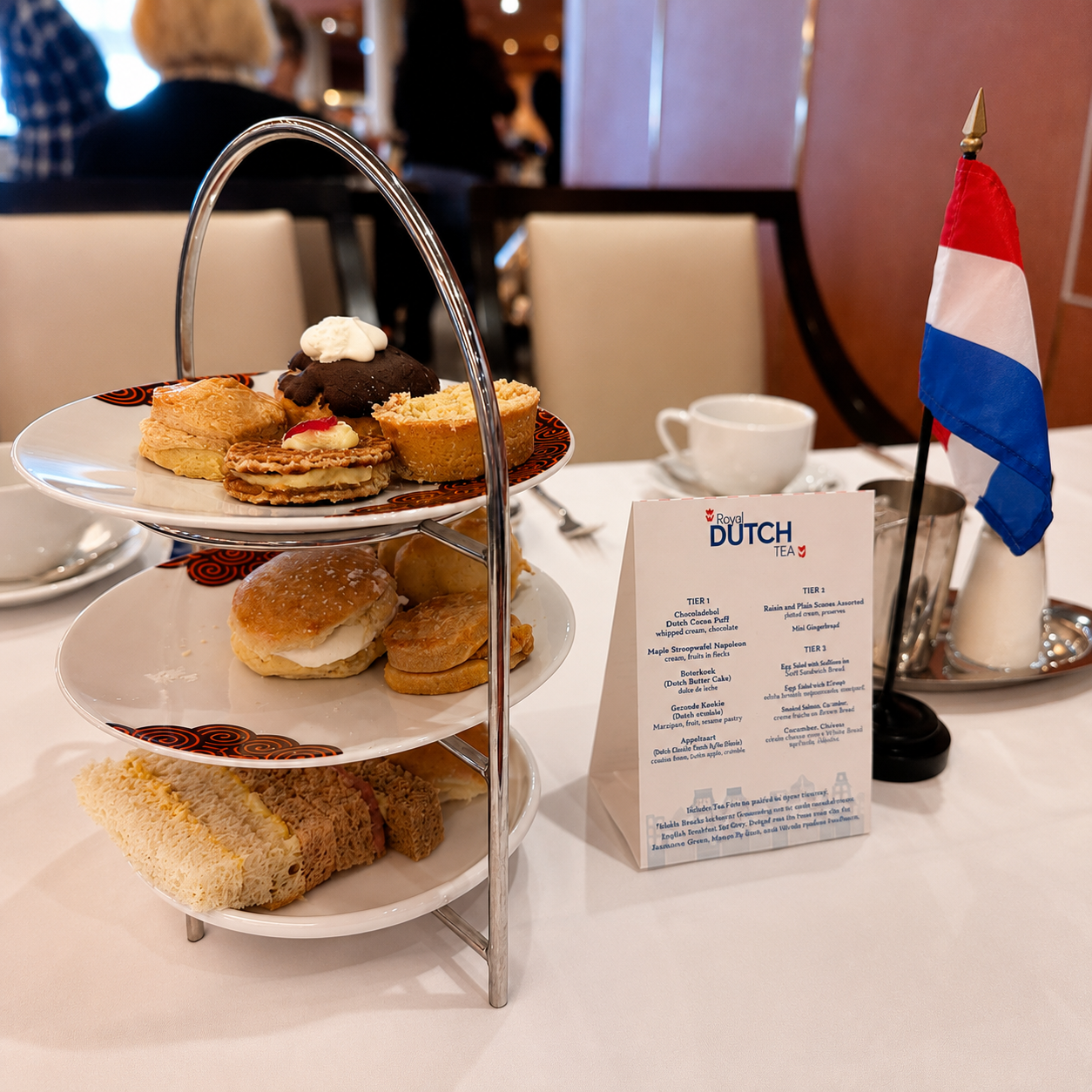
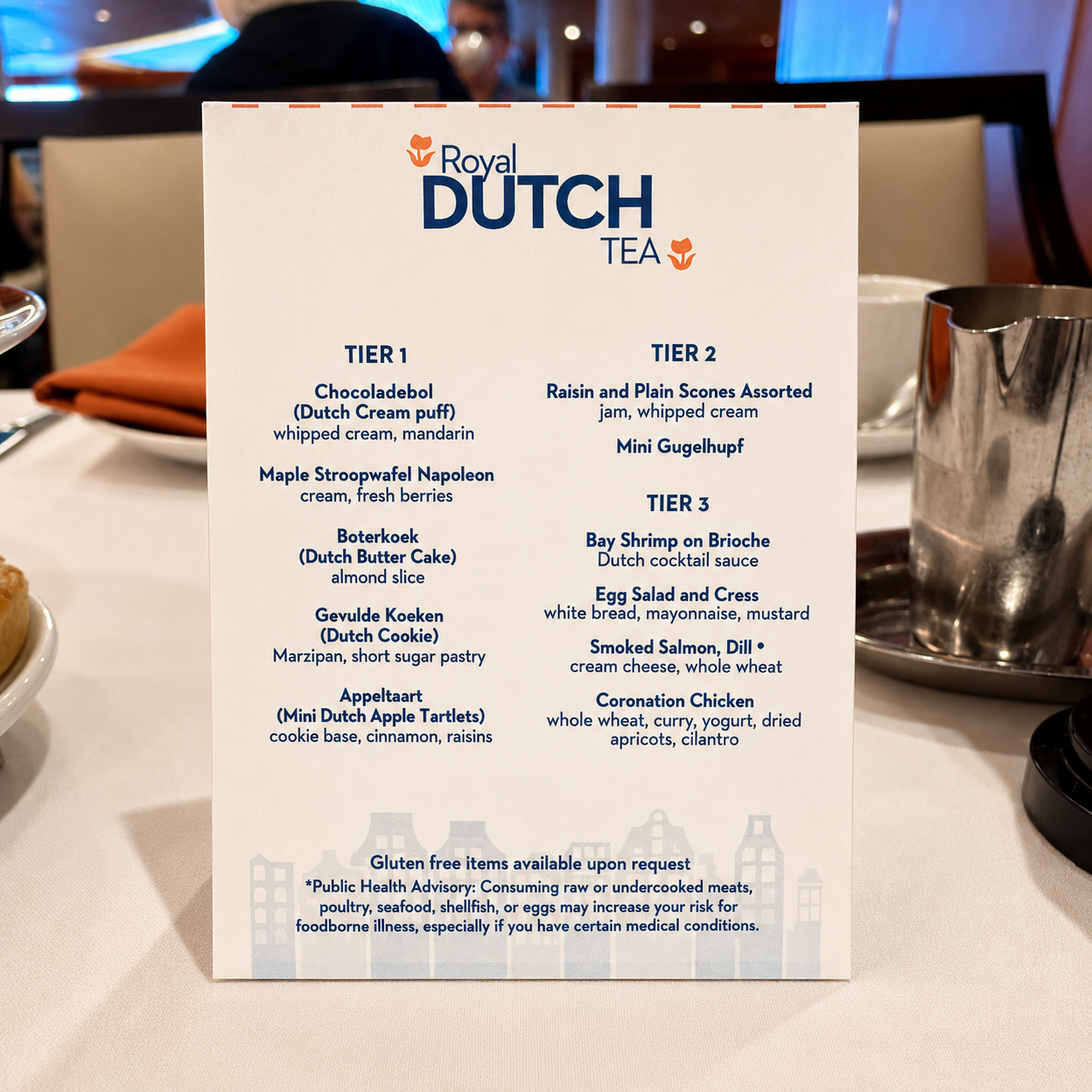
By three o'clock, half the ship seemed to be hunting for a seat at afternoon tea, where a cello and violin duo played over tiered trays of sandwiches and desserts. And the meal we remember most that day wasn't dinner — it was a buffet lunch of grilled sausage, pork roast, mashed potatoes, and sauerkraut. The pork fell apart on the plate. Sometimes the dish you remember isn't the expensive one.
Juneau and the Excursion That Made the Trip
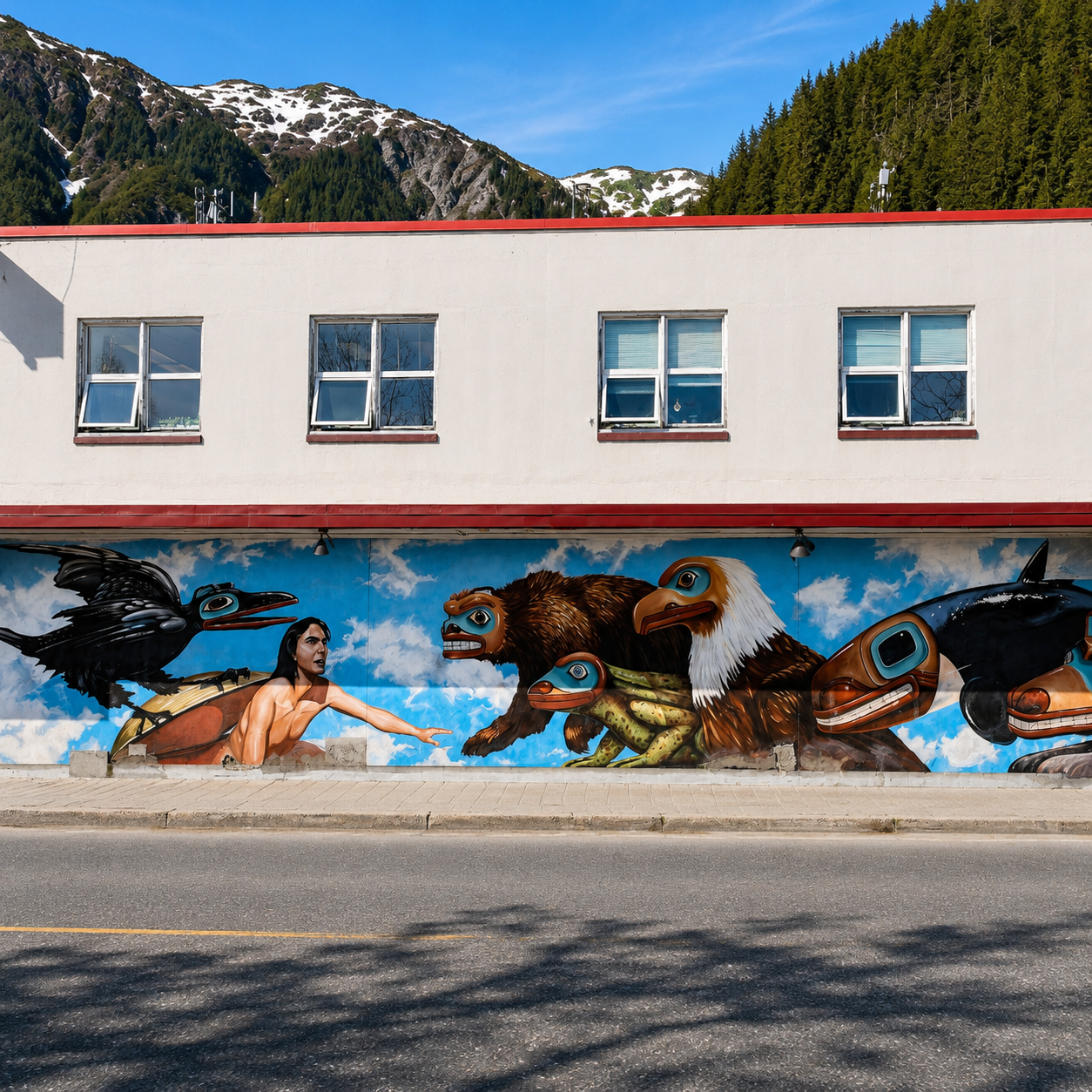
Juneau sits between mountains and water, with no roads connecting it to the rest of North America — you arrive by air or by sea. When we pulled in around noon there were already several ships in port, and at one point four were visiting at once. For a city of around 31,000 people, that's a lot of visitors in an afternoon. The downtown by the docks honestly reminded us of a Caribbean cruise port: souvenir shops, jewelry stores, crowds. The real attraction in Juneau isn't Juneau. It's everything outside of it.
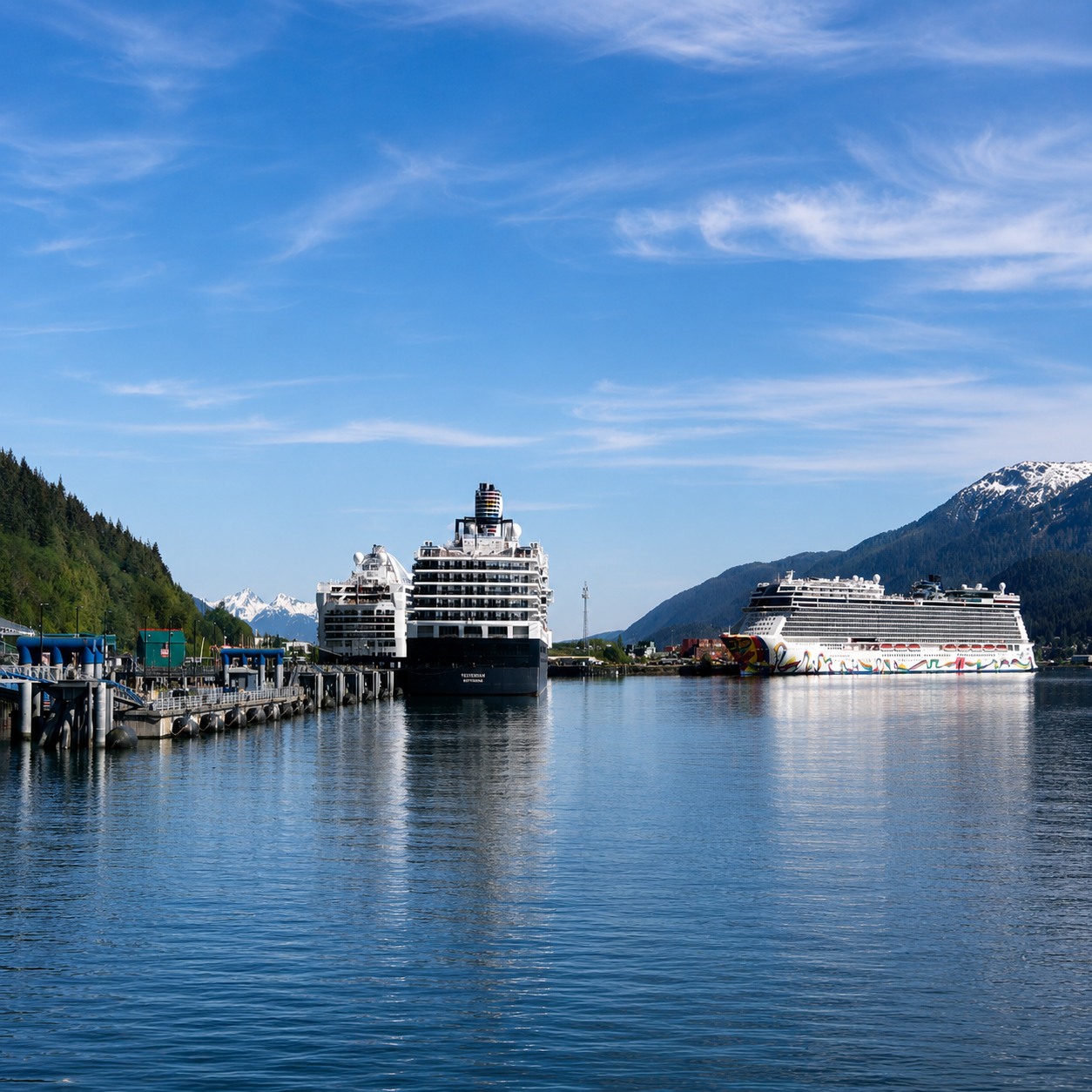
One thing that surprised us about Holland America was how much of the shore-excursion lineup centered on fishing. Nearly every port offered some version of it — fly fishing, salmon, rockfish, halibut — tied to the line's Savour My Catch program. Land an eligible keeper and the ship's chefs will prepare it and serve it at dinner, or you can have it professionally cleaned, flash-frozen, and shipped to your home in the U.S. for a processing fee. It's a genuinely nice touch. The catch, so to speak, is that those trips are popular: by the time we booked, six weeks out, almost all of the fishing excursions were already sold out. The rest of the lineup ran the usual Alaska range — scenic drives, glacier visits, and wildlife viewing for whales, orcas, seals, and more — which is the direction we ended up going.
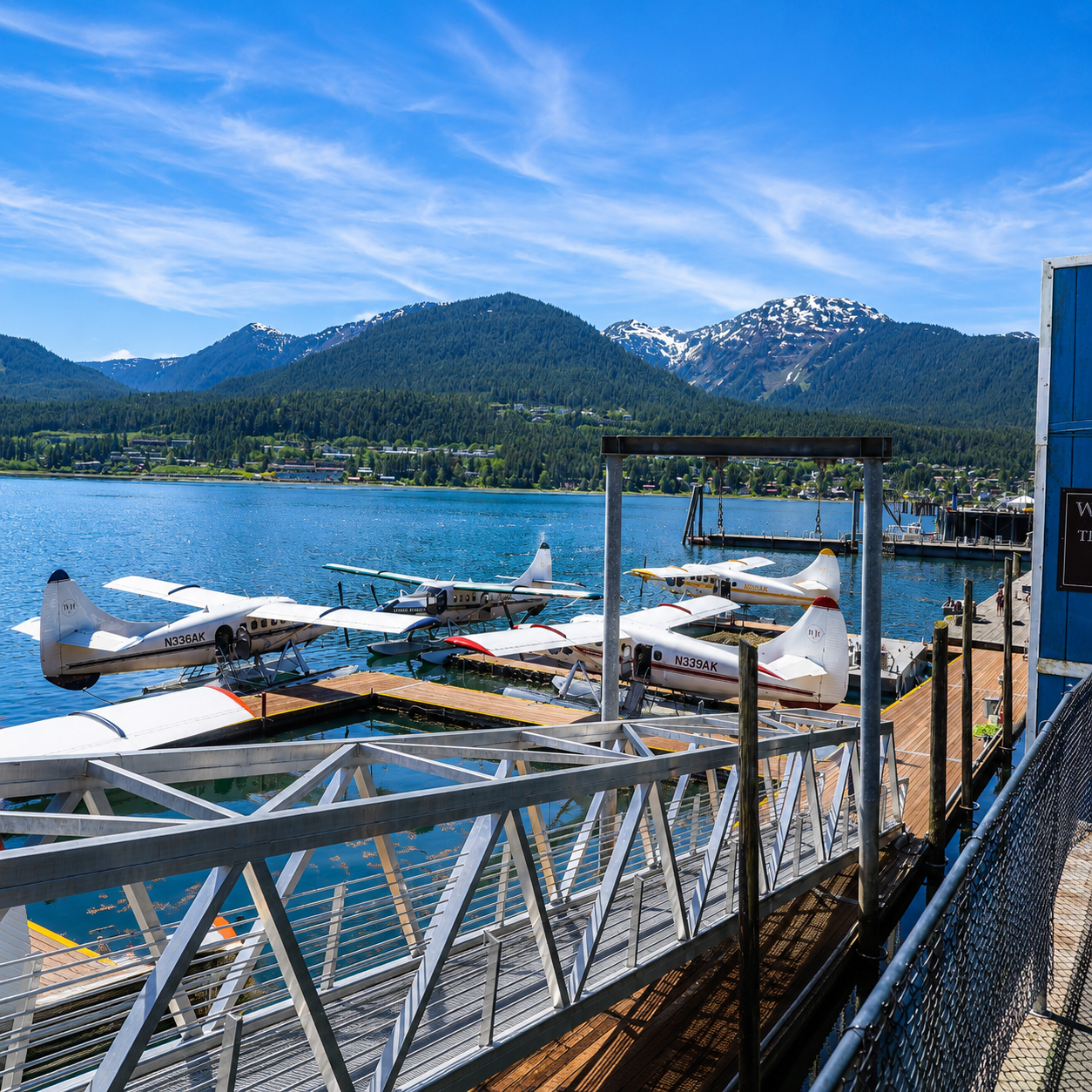
Juneau's seaplane dock, hemmed in by mountains and sea.
When we booked the cruise, we'd reserved a visit to Mendenhall Glacier — the obvious first-timer choice. The more we researched, though, the more one excursion kept surfacing: the Taku Lodge Feast and Five Glacier Seaplane Adventure. We switched. It turned out to be the best travel decision we made all week.
We're giving that day its own in-depth post, so here's the short version. A small seaplane carried us over five glaciers to a remote riverside lodge reachable only by water or air. The salmon was grilling over alder wood before we'd even landed, and a black bear the staff called Hans wandered through the property, licking salmon oil near the grill and eventually settling down in the open while we all watched from a respectful distance. The lunch — grilled salmon, baked beans, coleslaw, biscuits — wasn't fine dining. It was better than that. It felt authentic.
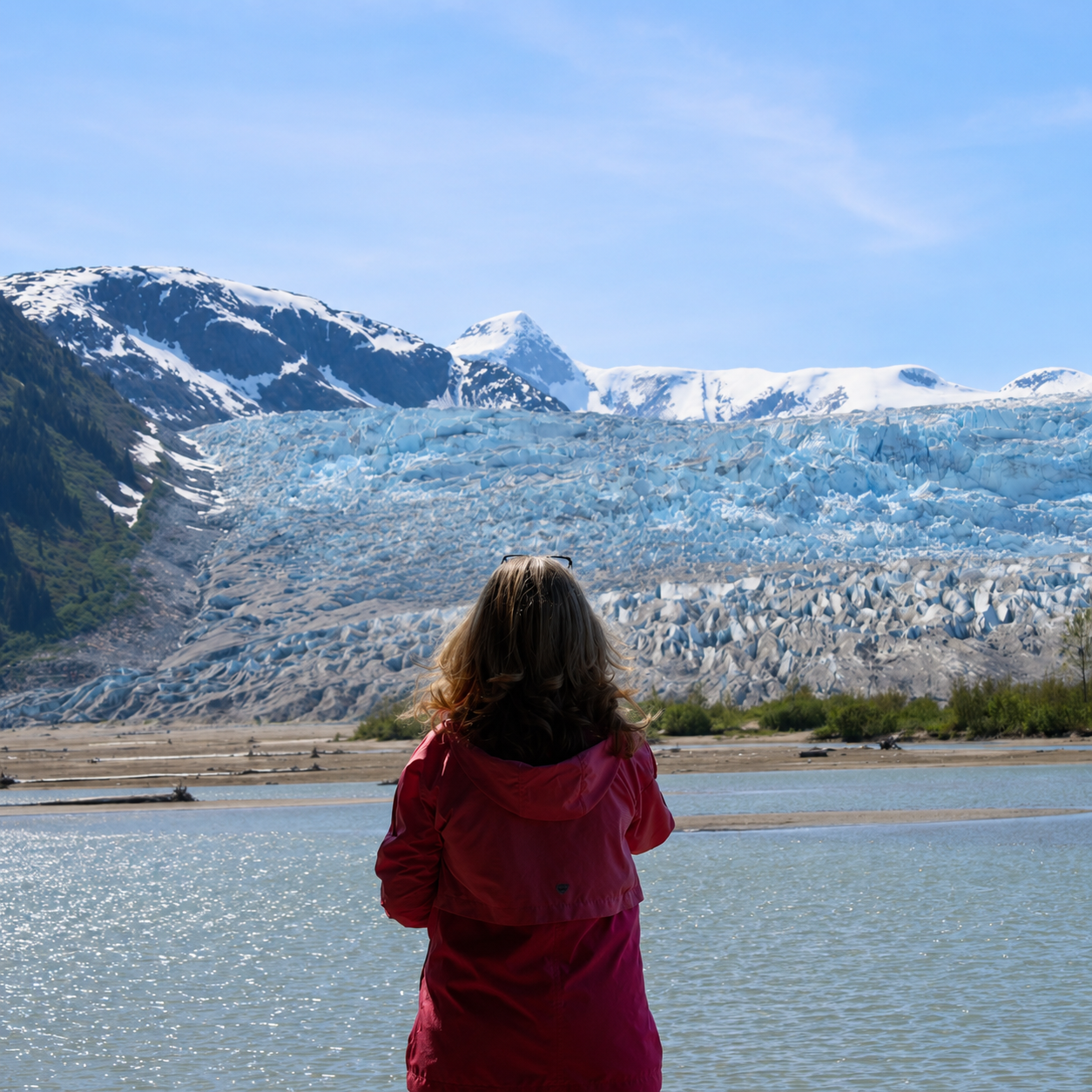
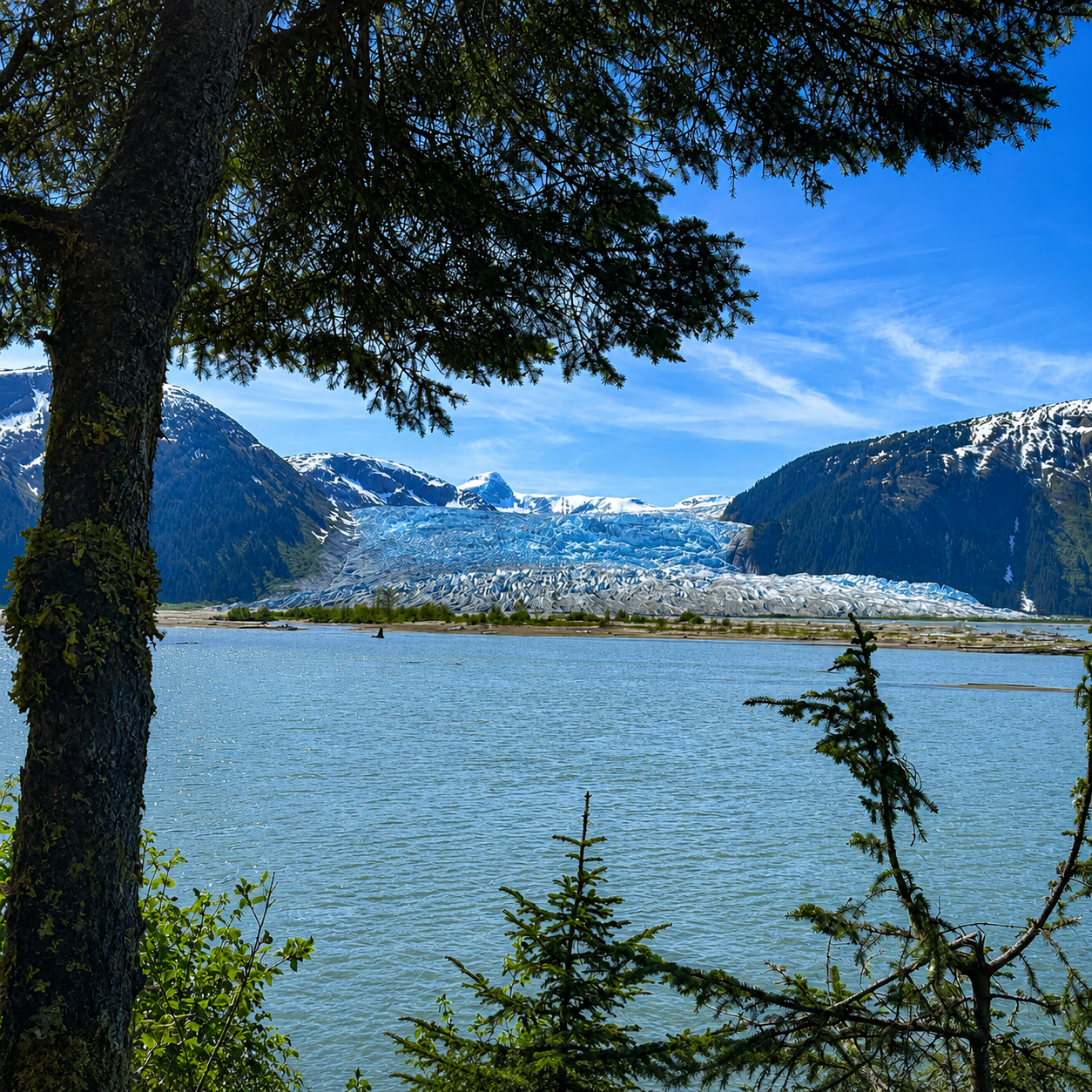
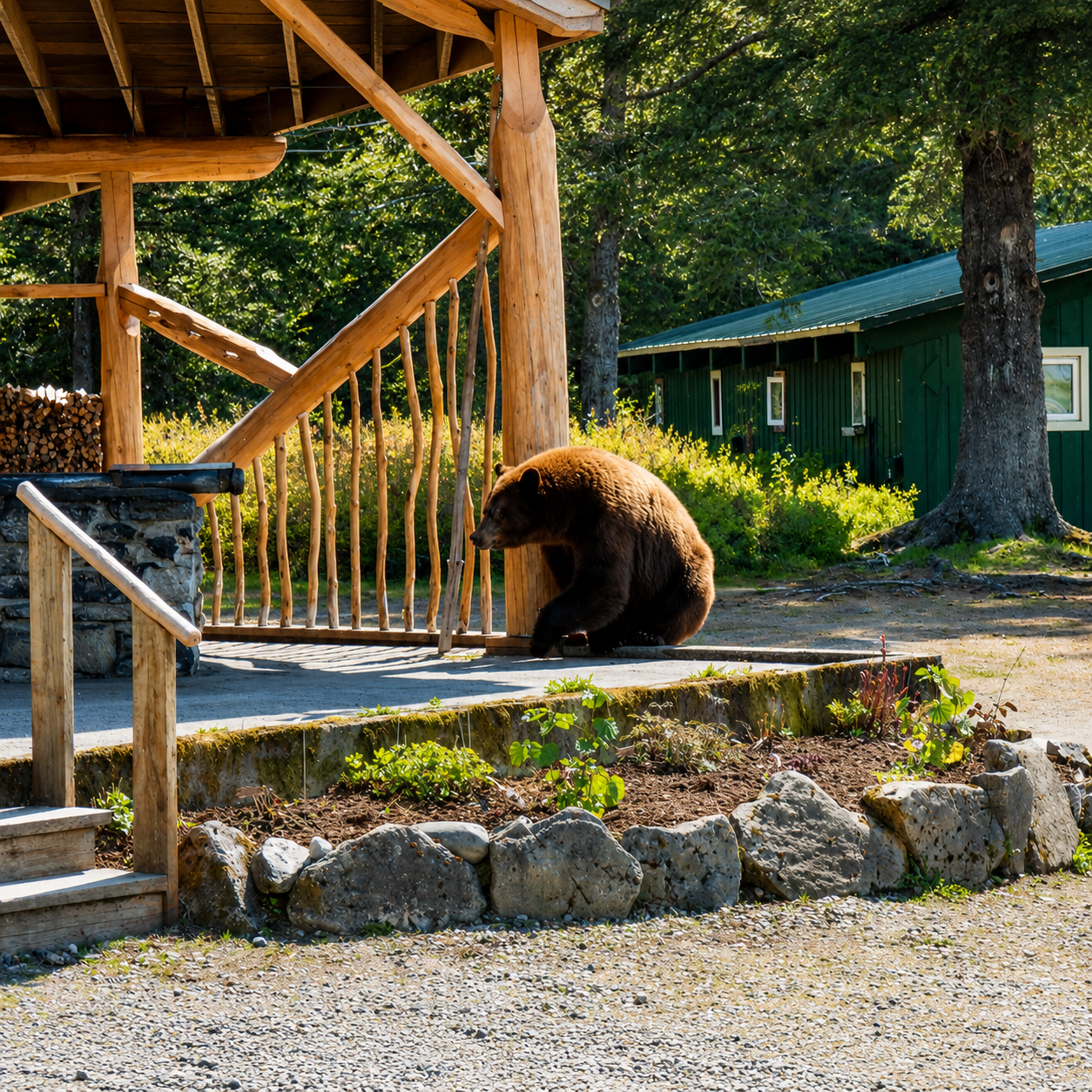
Hans making his rounds at Taku Lodge — the full Taku Lodge write-up is in its own post.
Pre-Booking Tips for an Alaska Cruise
A few things we learned the hard way, or were glad we got right:
- Arrive in Seattle at least the day before embarkation. An airline delay should never cost you a sailing.
- Prioritize excursions over ship-only glacier viewing. The wilderness beyond the towns is the real point of the trip.
- On scenic-cruising days, skip the Crow's Nest crowds and shoot from the Deck 3 promenade — unobstructed views, room for a tripod, far fewer people.
- Bring your telephoto lens ashore. Wildlife shows up on the day you leave it on the ship.
- Alaska seafood is excellent but expensive. Try it once and budget accordingly.
- Leave extra time at SEA airport on departure day. Several ships disembark the same morning and the traffic and security lines show it.
Endicott Arm and Dawes Glacier
After Juneau it would have been easy to assume the highlight was behind us. It wasn't. Noordam began its transit into Endicott Arm around 8 a.m., and unlike a port day there was nowhere to rush — no meeting point, no shuttle, no schedule. The scenery itself was the attraction. We gathered our camera gear and headed to the Deck 3 promenade, which wraps much of the ship and gives unobstructed views from both sides while most passengers crowded into the Crow's Nest.
The first hour was beautiful. The second hour was something more. The waterway narrowed, mountains seemed to rise straight out of the water, waterfalls appeared everywhere, and glacial ice started showing up — a few pieces at first, then chunks scattered through the fjord. It held around 55 degrees and overcast, exactly the weather you imagine for Alaska. We'd done the Norwegian fjords before, and as good as Norway was, this somehow felt more like what a fjord should feel like. The scale was hard to take in.
One honest note on wildlife: many Alaska cruise ads imply it's constantly visible from the ship. That wasn't our experience. April spotted three seals on an iceberg, which was genuinely cool, but beyond that there wasn't much from the deck. If wildlife is your priority, an excursion will almost always beat ship viewing.
At the end of the fjord stood Dawes Glacier, held about one to two miles off due to ice, but still spectacular at that distance. Then the captain did something we appreciated: instead of turning and leaving, Noordam slowly rotated in place, giving each side of the ship a turn, then sat with the stern to the glacier for nearly forty-five minutes. All the anxiety about finding the perfect viewing spot disappeared. We just stood there and watched.
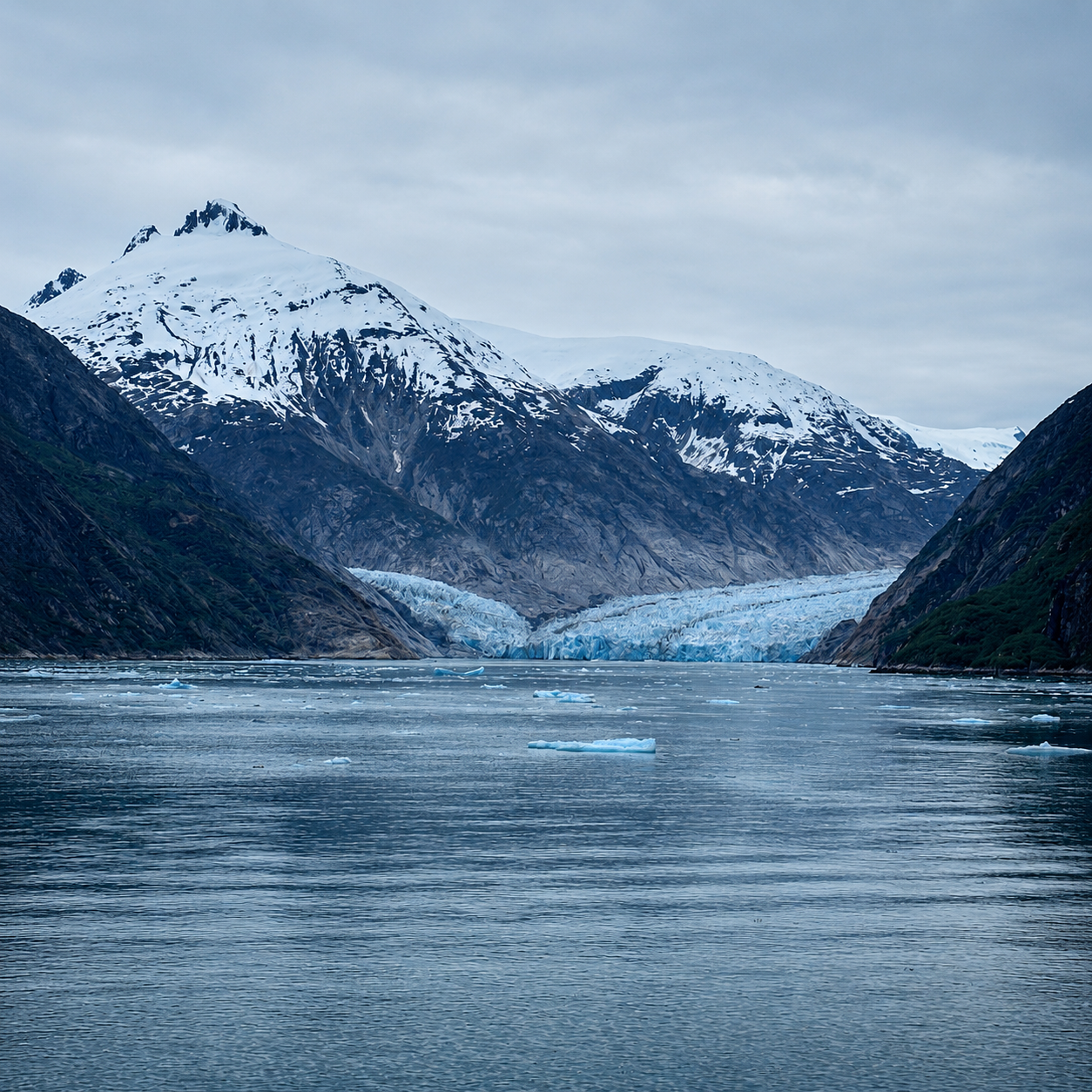
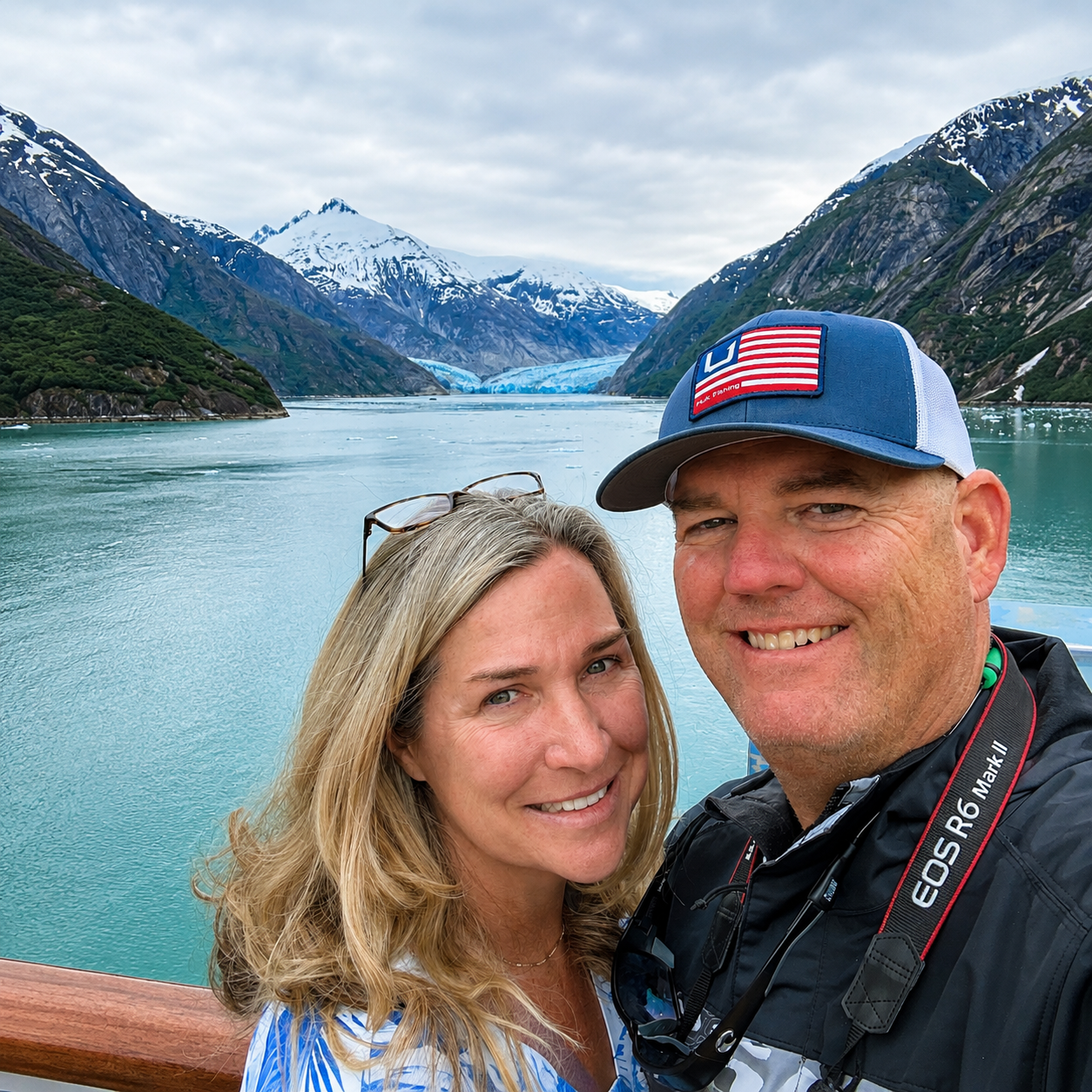
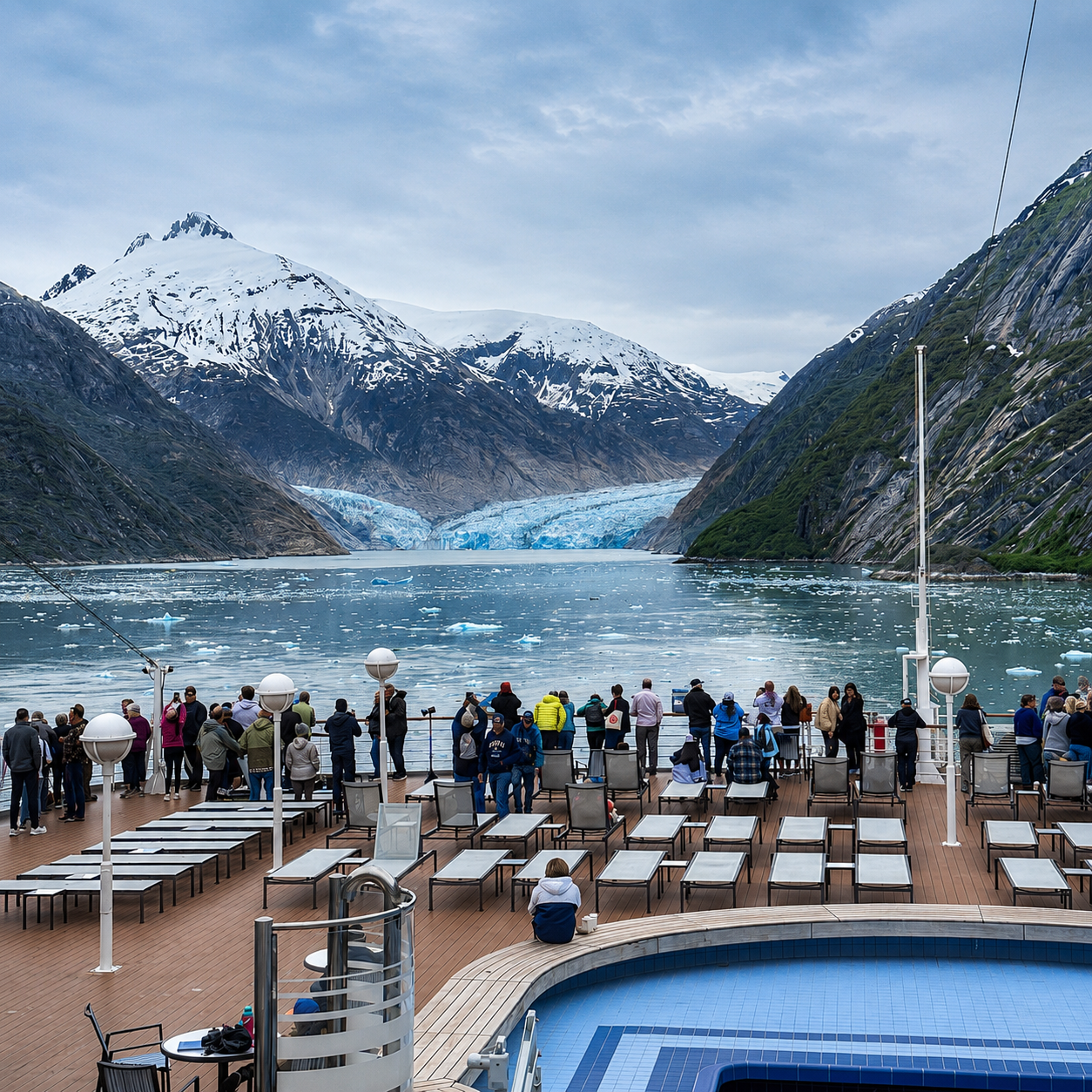
Dawes Glacier, held about a mile off by the ice.
Traditional Cruising vs. Expedition Cruising
While we watched the glacier, a National Geographic-Lindblad expedition vessel was working nearby, with Zodiacs launched and passengers getting far closer to the ice than we could. From Noordam's deck the Zodiacs looked tiny. It was a clean side-by-side of two ways to see the same place — traditional cruising and expedition cruising, both enjoying the same glacier, just at different distances. It's a comparison we think about a lot at Venture To See, and one we'll dig into separately for anyone weighing an expedition sailing.
Sitka — Our Favorite Port
Sitka immediately felt different from Juneau and Ketchikan: more authentic, more local, more relaxed. The dock sits several miles from town, so you rely on shuttle buses, but we walked straight onto one. Our driver mentioned that Sitka's population is about 8,900, and that morning three ships were in — the visitor count was approaching the size of the town itself.
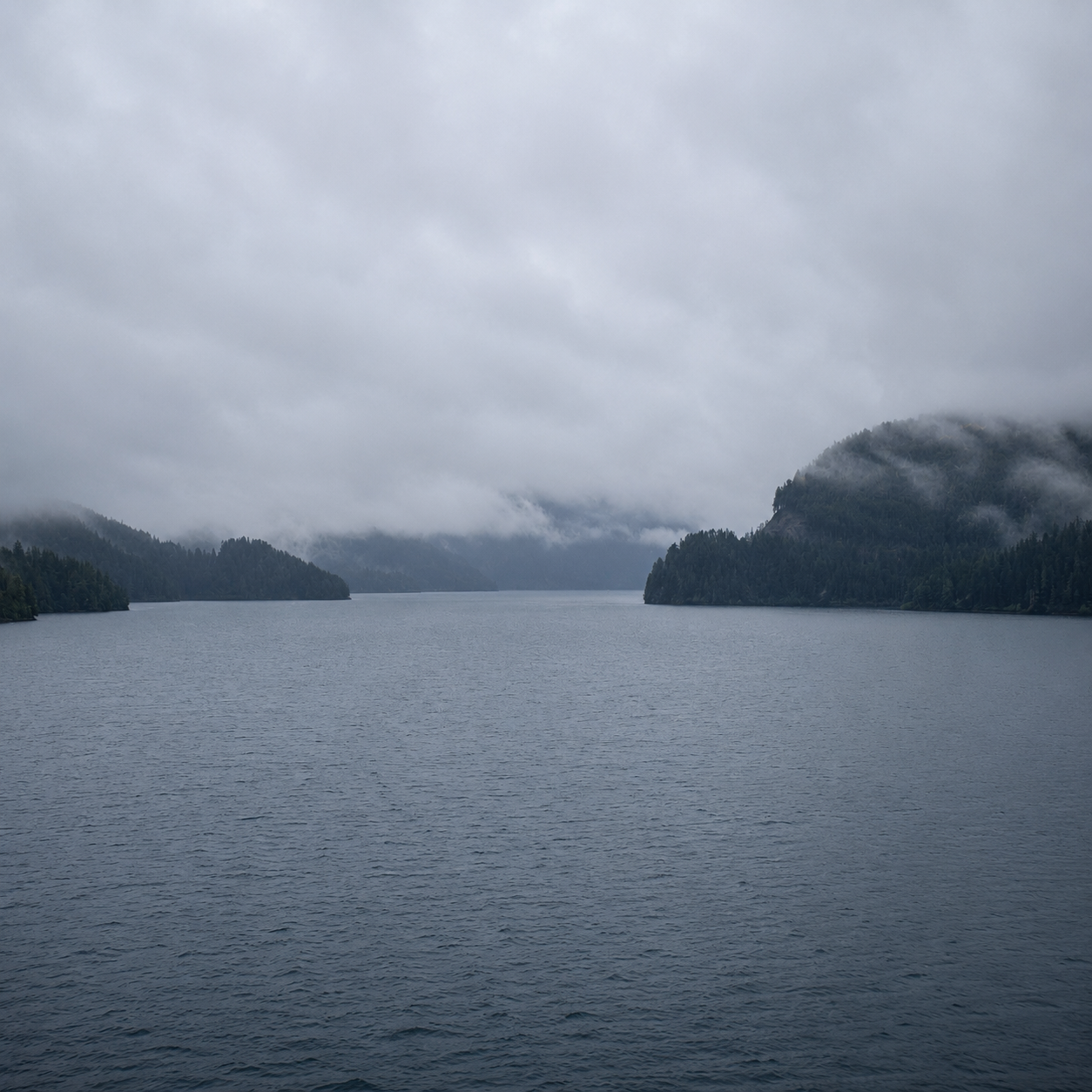
Misty water on the approach to Sitka.
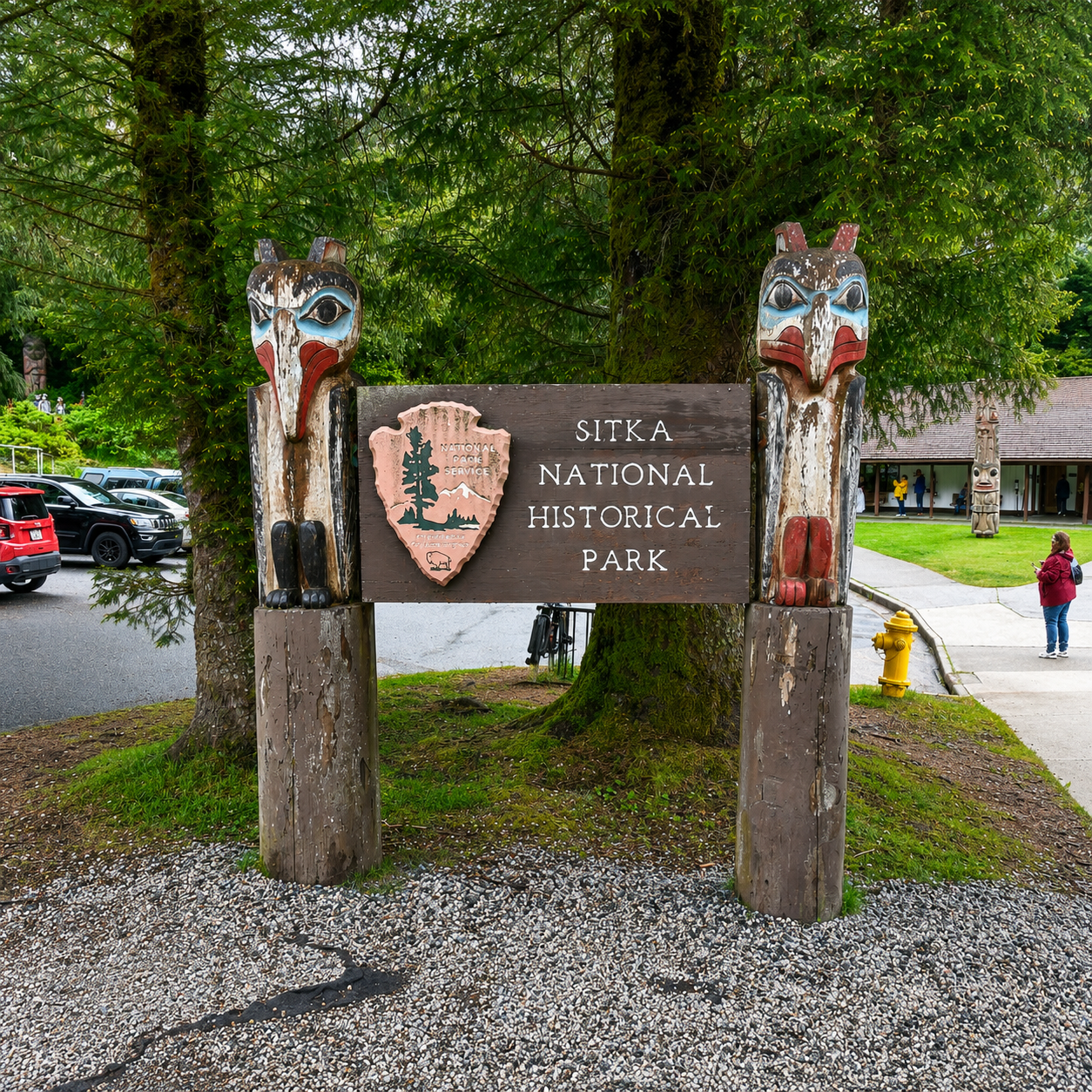
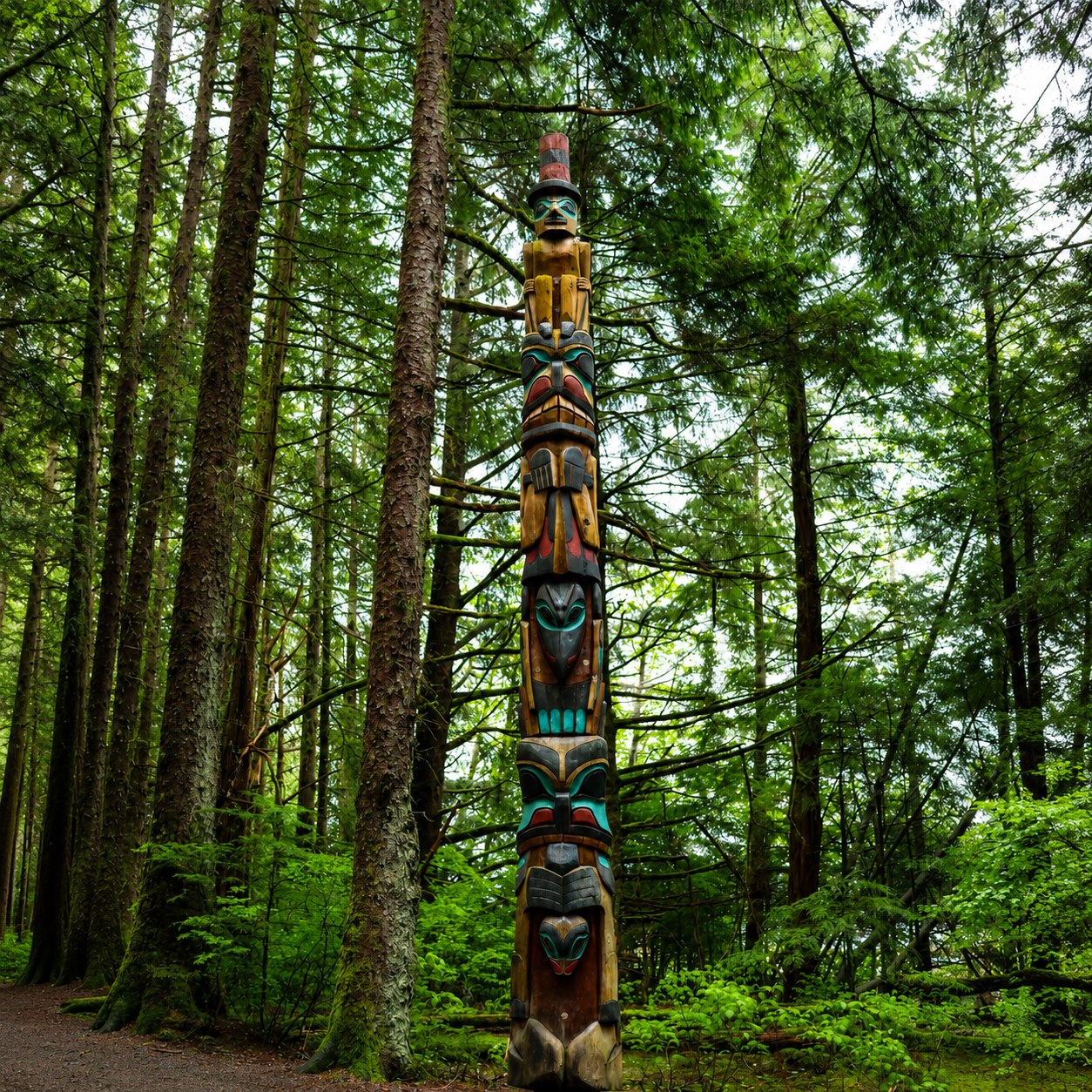
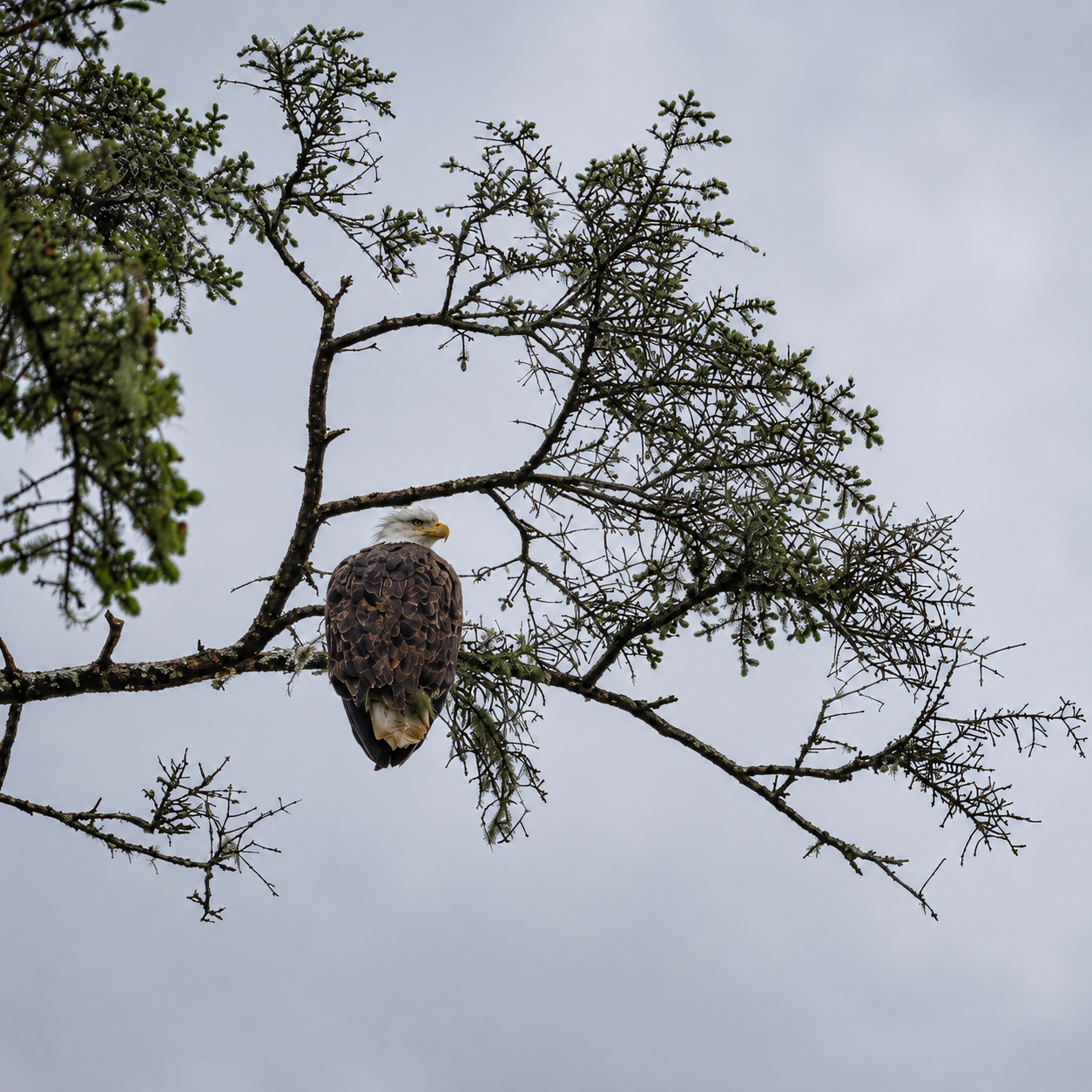
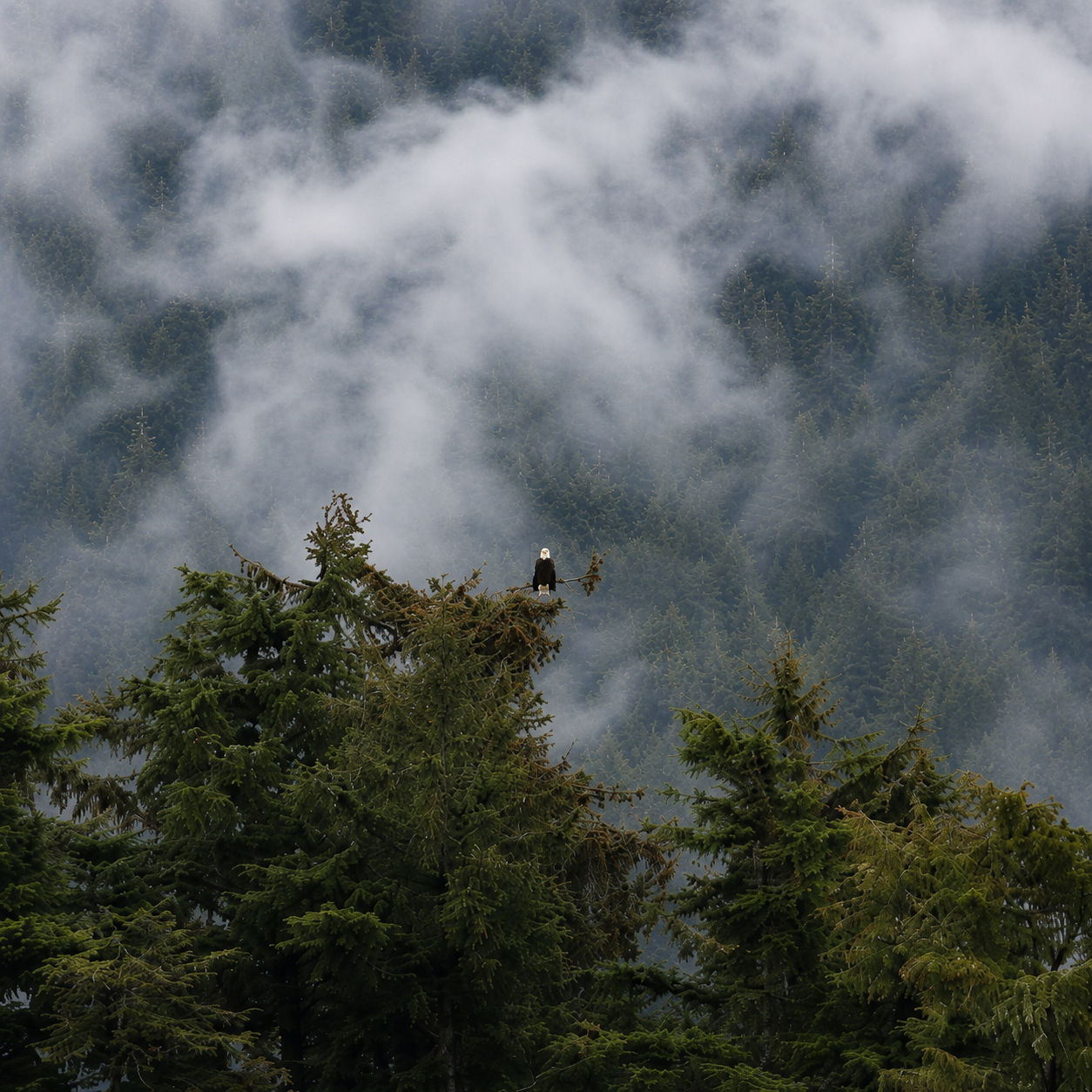
Instead of an excursion, we just started walking, out to Sitka National Historical Park. On the way, a small counter inside the science center gift shop turned out to be the food surprise of the whole trip — a bowl of chowder rich and flavorful enough that we'd call it a genuine must-try. The one mistake we made was leaving our telephoto lens onboard, because of course this was the day bald eagles were everywhere — in trees, on boat masts, overhead. The park was the kind of place that rewards slowing down: rainforest trails through towering trees, totem poles along the paths, streams running through the forest, all of it under a light, appropriate rain. We'd thought of totem poles as artwork before this. After learning more, we started seeing them as records — family histories, clan relationships, important events carved into cedar — and watching active carving and restoration in the park deepened that. Sitka was our favorite because it felt like a community, a real place where people live. For a few hours we felt less like tourists and more like visitors.
Ketchikan
Ketchikan, the self-described Salmon Capital of the World, was the easiest port of the trip. The ship docked right downtown — walk off and start exploring, no shuttle, no planning. The window was tight, though: in around 7 a.m., all aboard at 12:30 p.m., so about five hours. The compact town made it work.
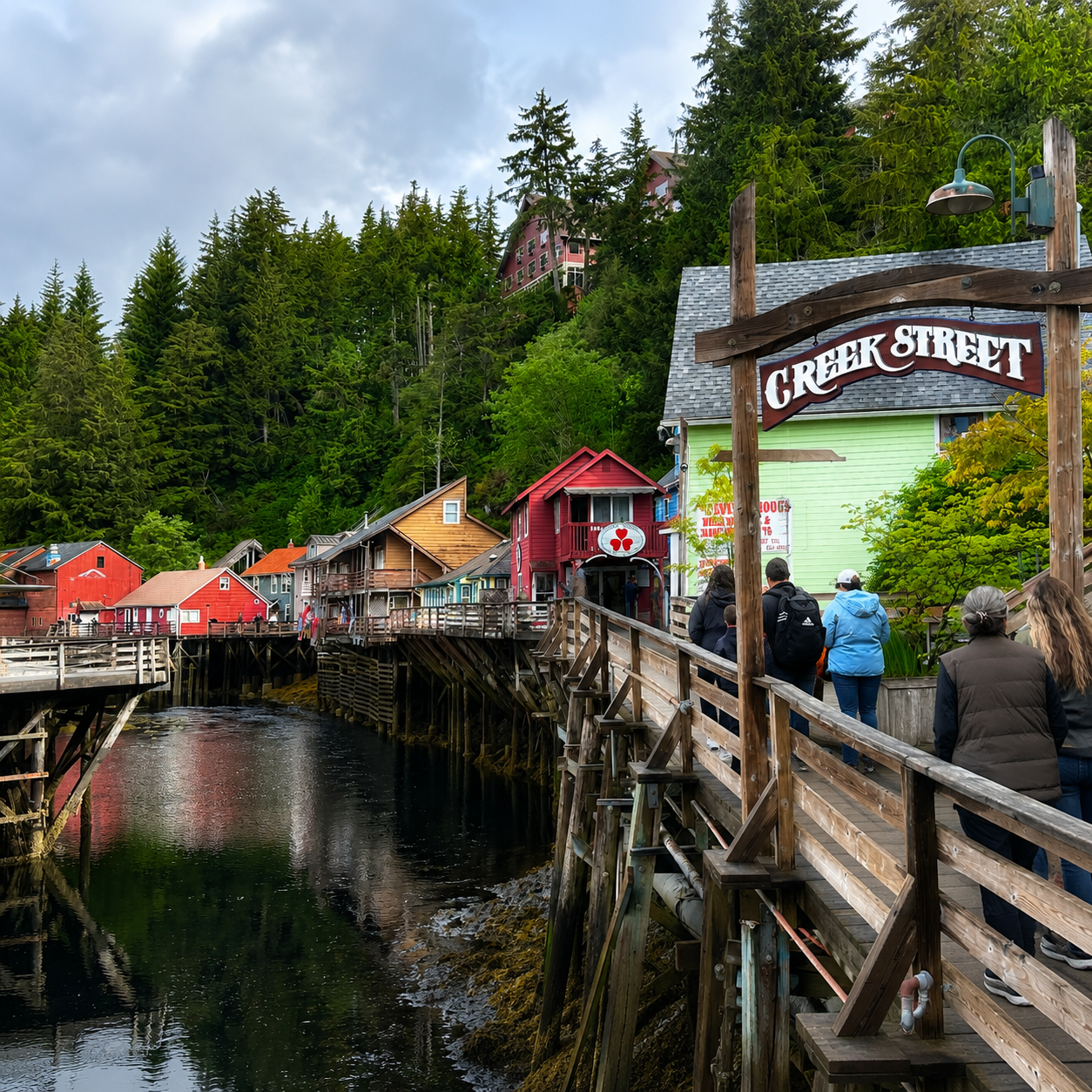
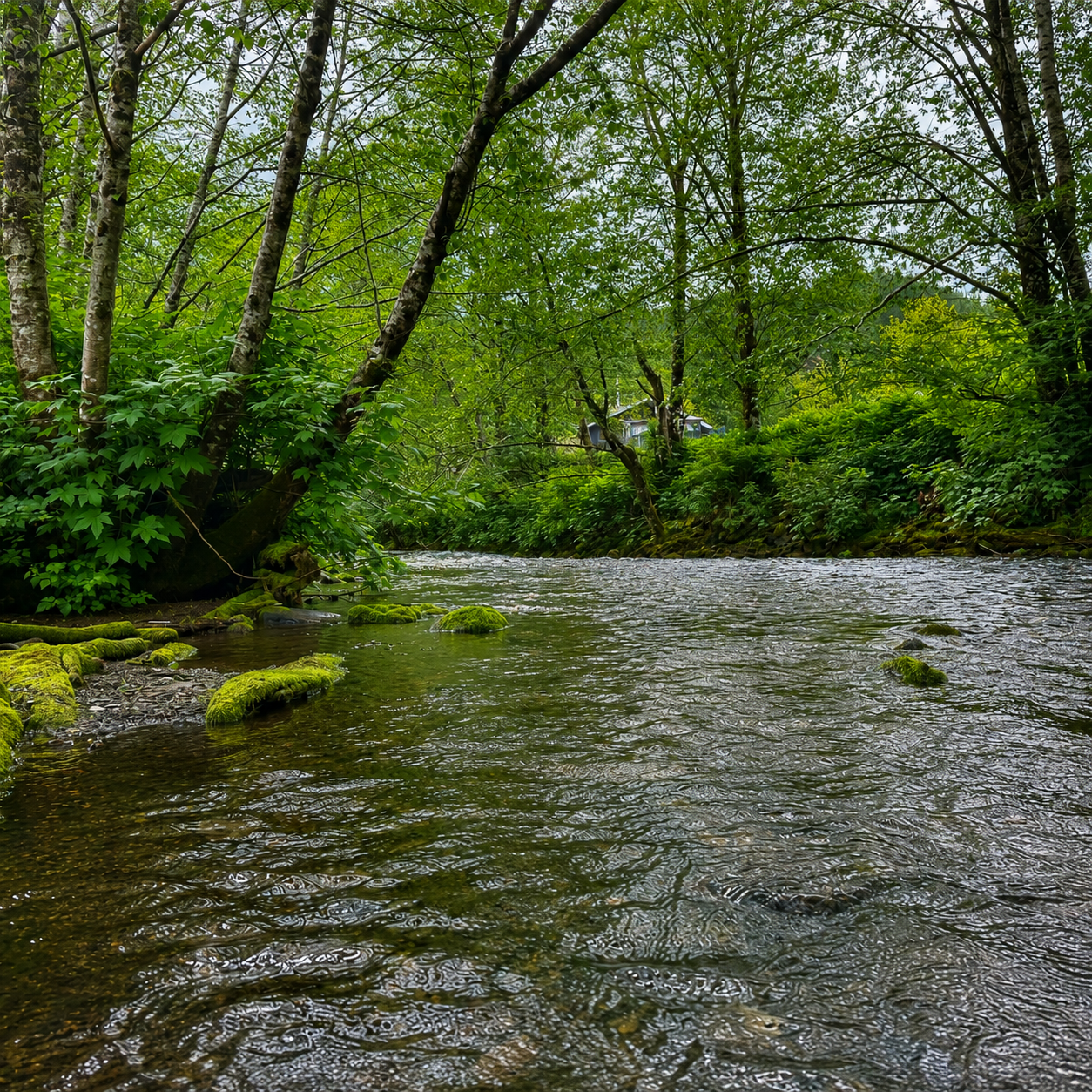
We started at Creek Street, the row of colorful buildings perched over the water that you've seen in every Ketchikan photo. The history is better than the postcard: local ordinances once barred brothels from operating on land, so they were built over the creek instead. Today it's gift shops and galleries, but the story stays part of the place. From there we followed a quieter path along Ketchikan Creek past a salmon ladder toward the hatchery (closed during our visit) and a heritage center on Native Alaskan history — a thread that ran through the whole cruise. The farther we walked, the fewer passengers we saw, until it was just the creek and the water. Those quiet stretches usually become our favorite memories.
On the food: Alaska seafood is not cheap. April eyed a two-pound king crab meal listed around $269 and sensibly chose a sampler instead; the halibut fish and chips across the table ran about $35 — firmer and meatier than cod, more substantial, and genuinely good. Worth ordering again at that price? Probably not. Worth trying once? Absolutely. By midday the forecasted rain gave way to sun, and the harbor came alive as we headed back to the ship.
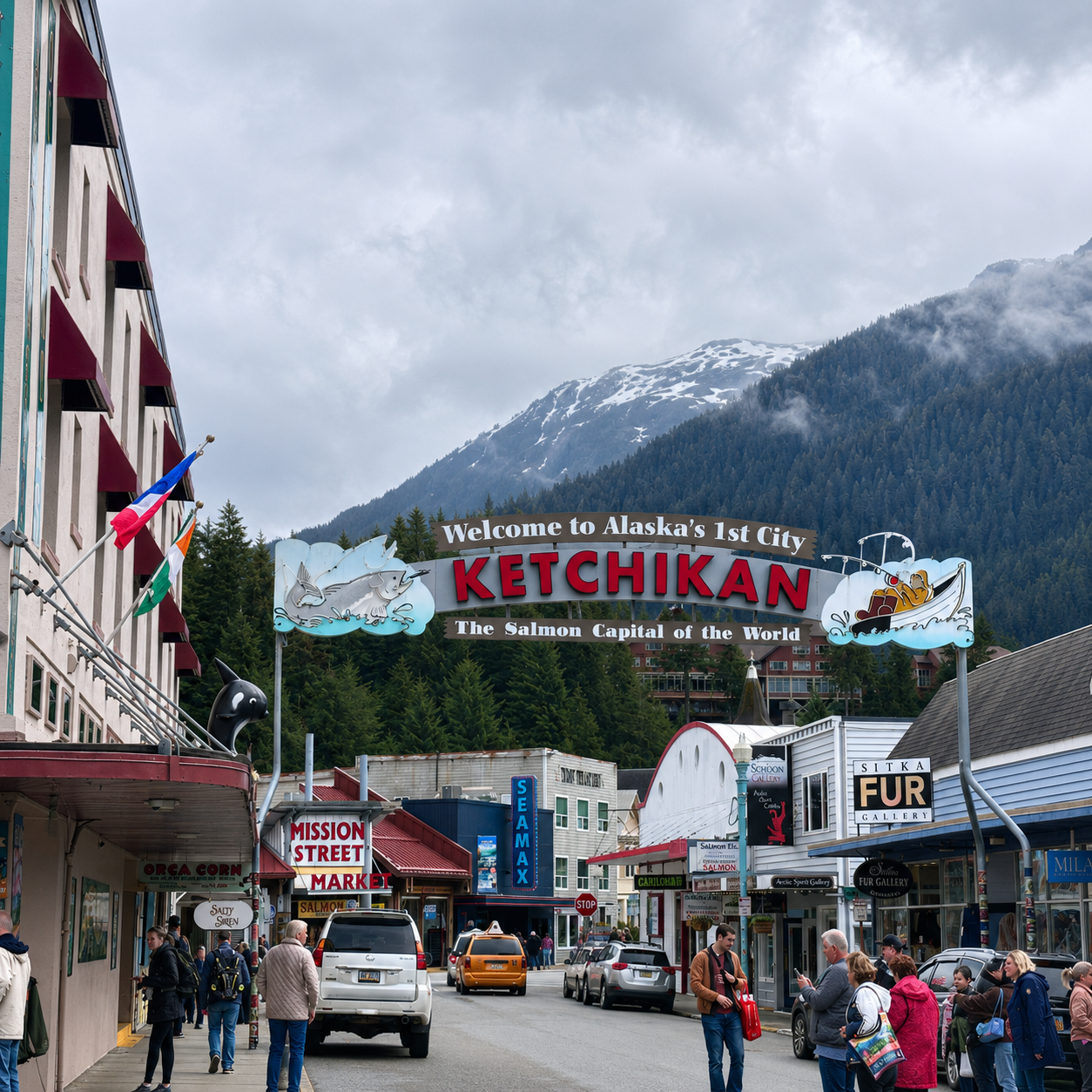
Ketchikan's downtown waterfront — an easy walk straight off the ship.
Victoria
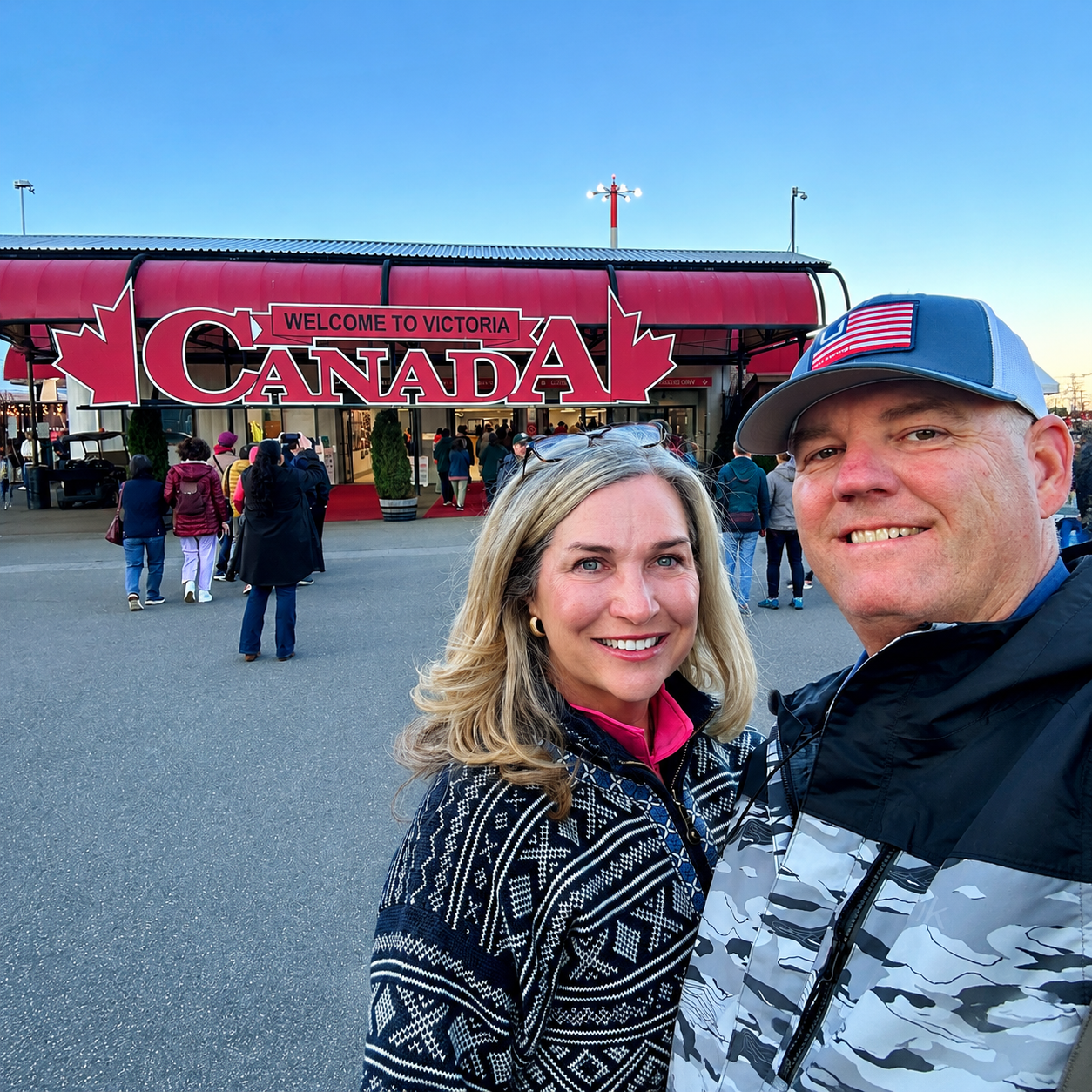
Victoria was an evening call, and it ran late — we arrived around 8 p.m. and didn't get off until about 8:45 due to port congestion with two larger ships already docked. The terminal at Ogden Point sits about 1.5 miles (2.4 km) from the downtown core, with shuttle buses available, though the near edge of the Inner Harbour is closer to a 25- to 30-minute walk along the water. The shuttle line was already 150 to 200 people deep. Rather than burn our limited time standing in it, we walked to a nearby waterfront park, away from the crowds, as the sun set over a calm harbor. Victoria wasn't about checking attractions off a list. It was one quiet evening before heading home, which was exactly what we wanted. We were back onboard by 10:30.

Disembarkation and the Seattle Airport Reality
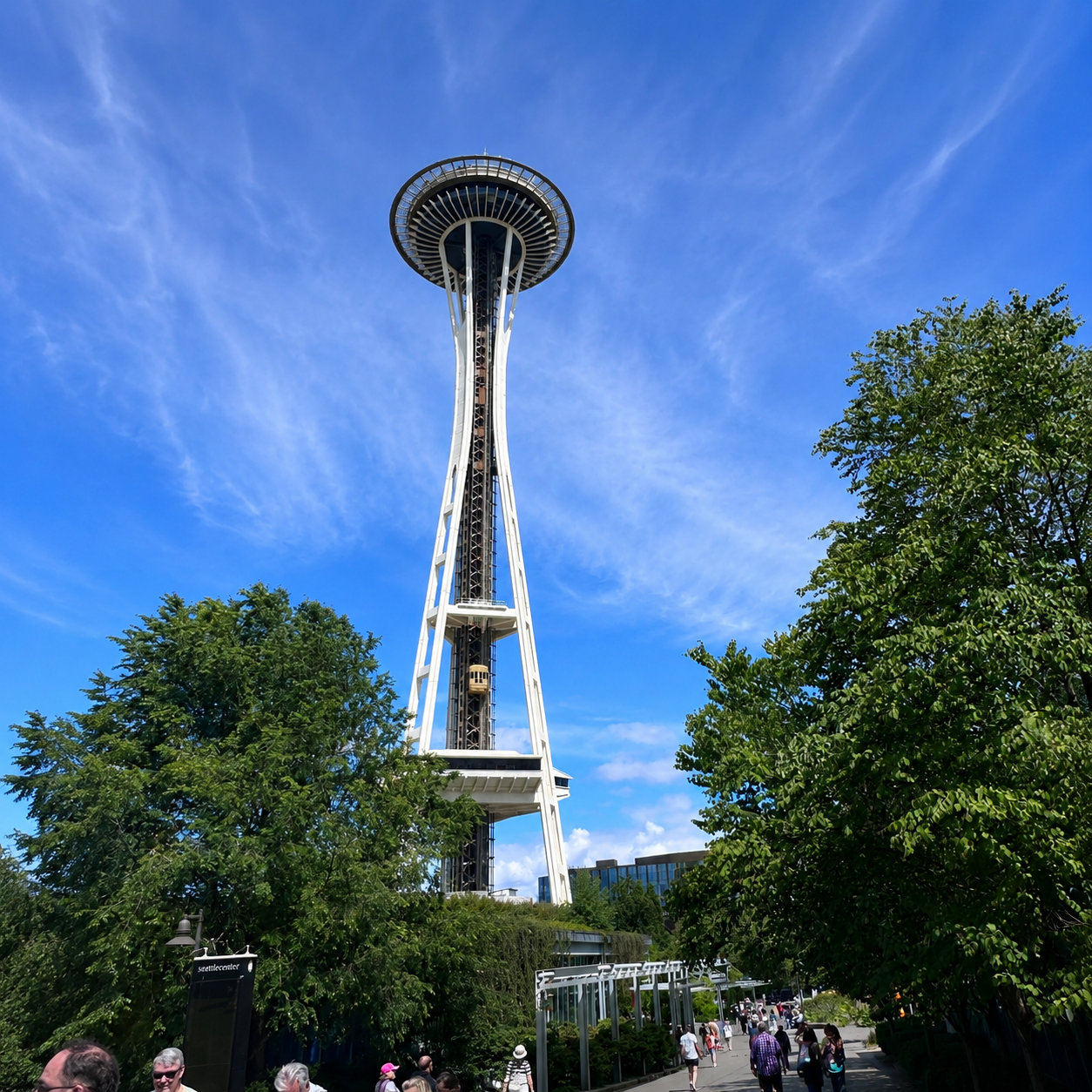
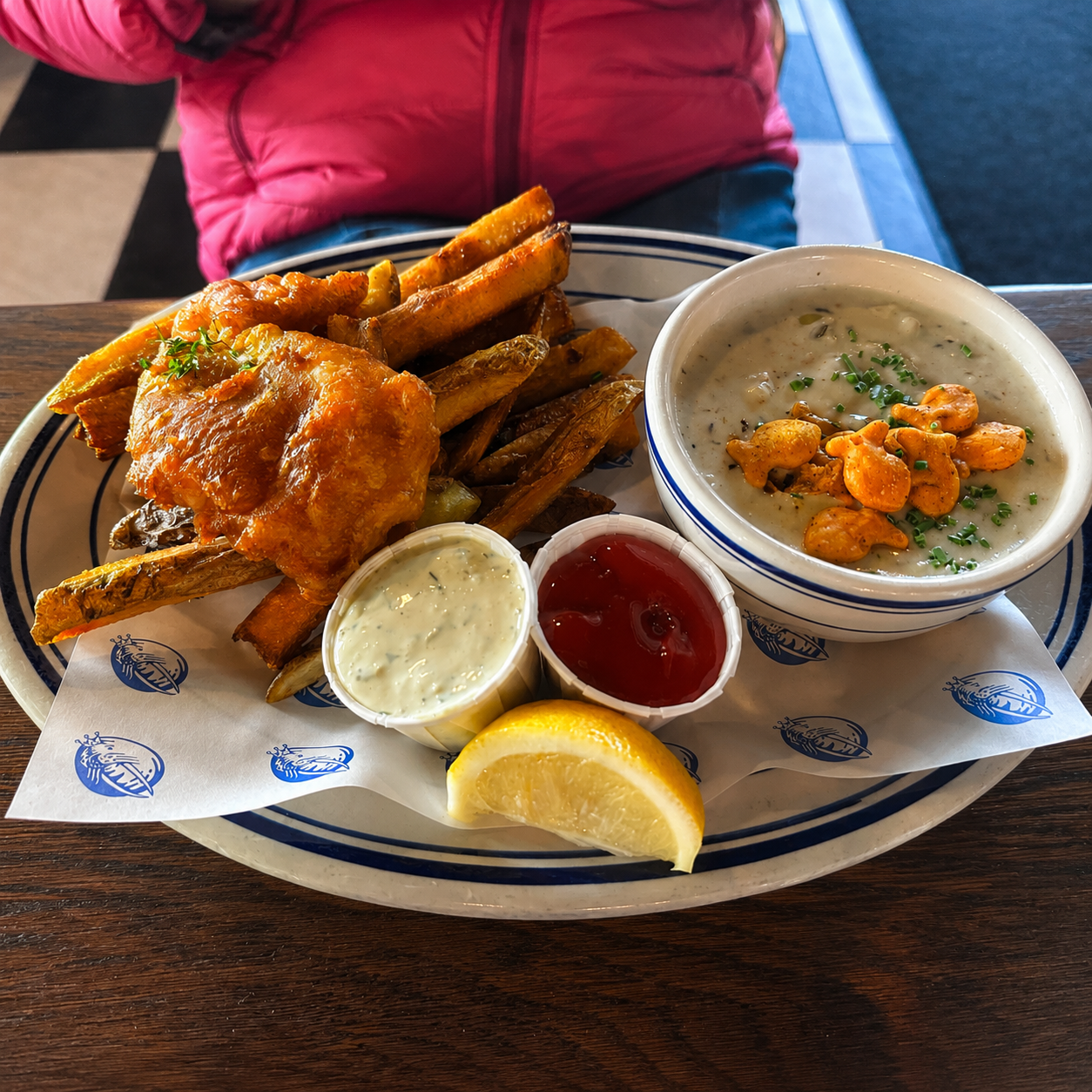
Disembarkation morning was unusually relaxed. With a later luggage-assist group, we skipped the rush and had a leisurely breakfast in the Main Dining Room — something we rarely get to do. For our final night we'd stayed at the Fairfield Inn & Suites Seattle Downtown/Seattle Center, and it turned out to be good value. It's about a six- to eight-minute walk (roughly a third of a mile) from the Space Needle and Seattle Center, under a mile — about a fifteen-minute walk — from Pike Place Market, and only 0.6 miles from a Whole Foods. For roughly 60% of what hotels right next to Pike Place were charging, we were still close enough to walk to most of it. We strolled down to Pike Place Market and stopped for fish and chips at Mr. Fish before our last night. Easy to get around, no car needed.
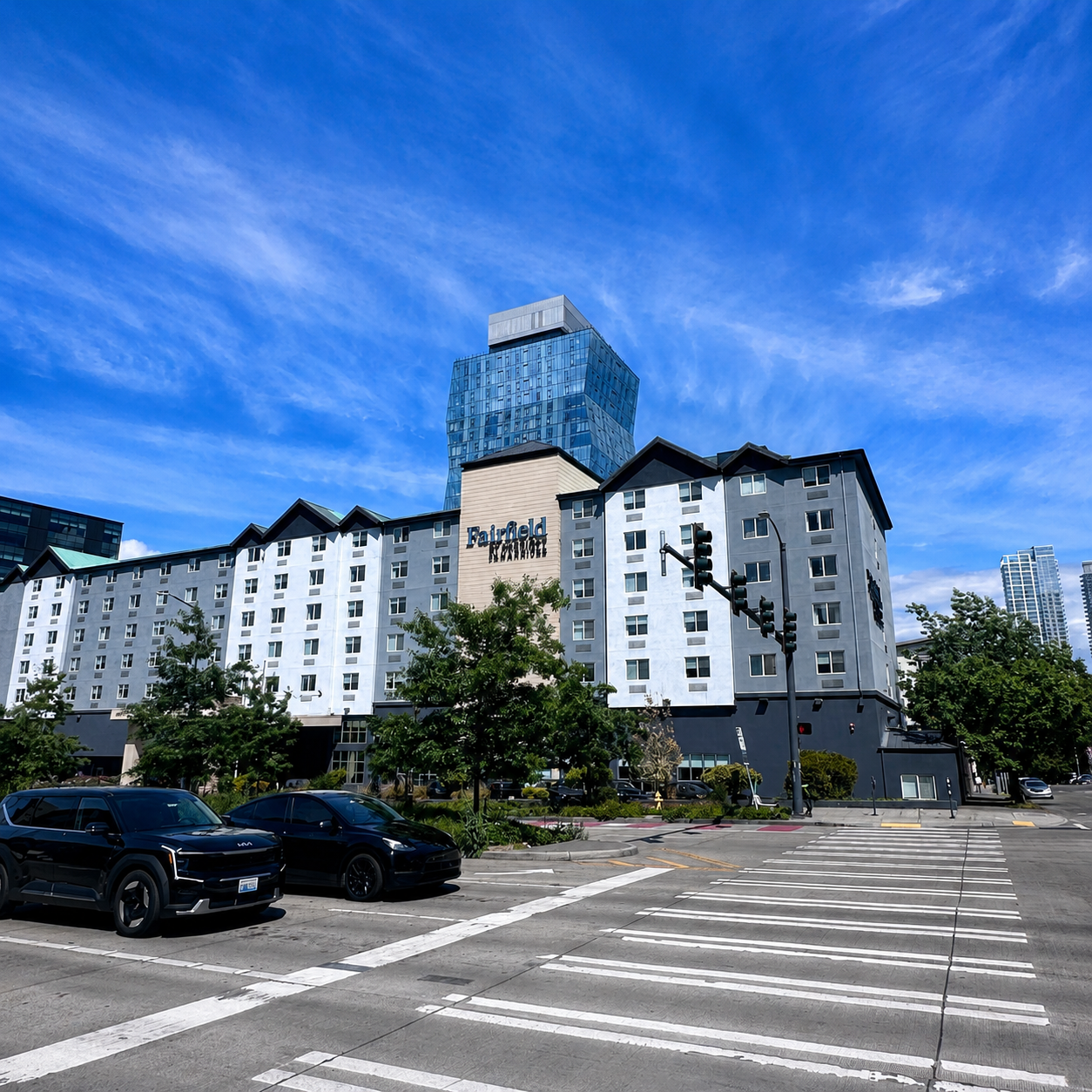
Our post-cruise base near Seattle Center.
From there we headed to Seattle-Tacoma International Airport. The drive is only about fifteen miles, but with multiple ships having just disembarked, traffic stretched it out and the taxi ran roughly $97 before tip. The congestion continued at the airport. Even in a priority security lane, TSA took about 20 to 25 minutes, and the standard lines looked considerably longer. For anyone flying home after an Alaska cruise: allow extra time. You'll be glad you did.
Final Thoughts
So, was it worth it? Without hesitation. The biggest realization of the week was that Alaska isn't really about the towns. The towns matter — they provide access, history, and culture — but the real attraction is what lies beyond them: the glaciers, the mountains, the fjords, the forests, the wildlife, the wilderness. Those are the things that stay with you.
The cruise also reminded us how much easier travel is when someone else handles the logistics — the cooking, the cleaning, the transportation, the planning. Alaska is a destination that benefits from that simplicity. Would we sail Alaska again? Without question. Would we sail Noordam again? Yes. Would we prioritize excursions? Definitely. If we learned anything on this voyage, it's that Alaska rewards travelers who venture beyond the cruise port. That's where the magic is.
Holland America Alaska Cruise FAQ
If This Was Useful, Buy Us a Coffee
We write these from first-hand experience, no fluff. If this review helped you plan your own Alaska cruise, a small tip helps keep the guides coming.
☕ Buy Us a CoffeeFollow the Journey
Planning an Alaska cruise, or have a question about Noordam? We read every message and answer when we can.
Send Us Feedback