
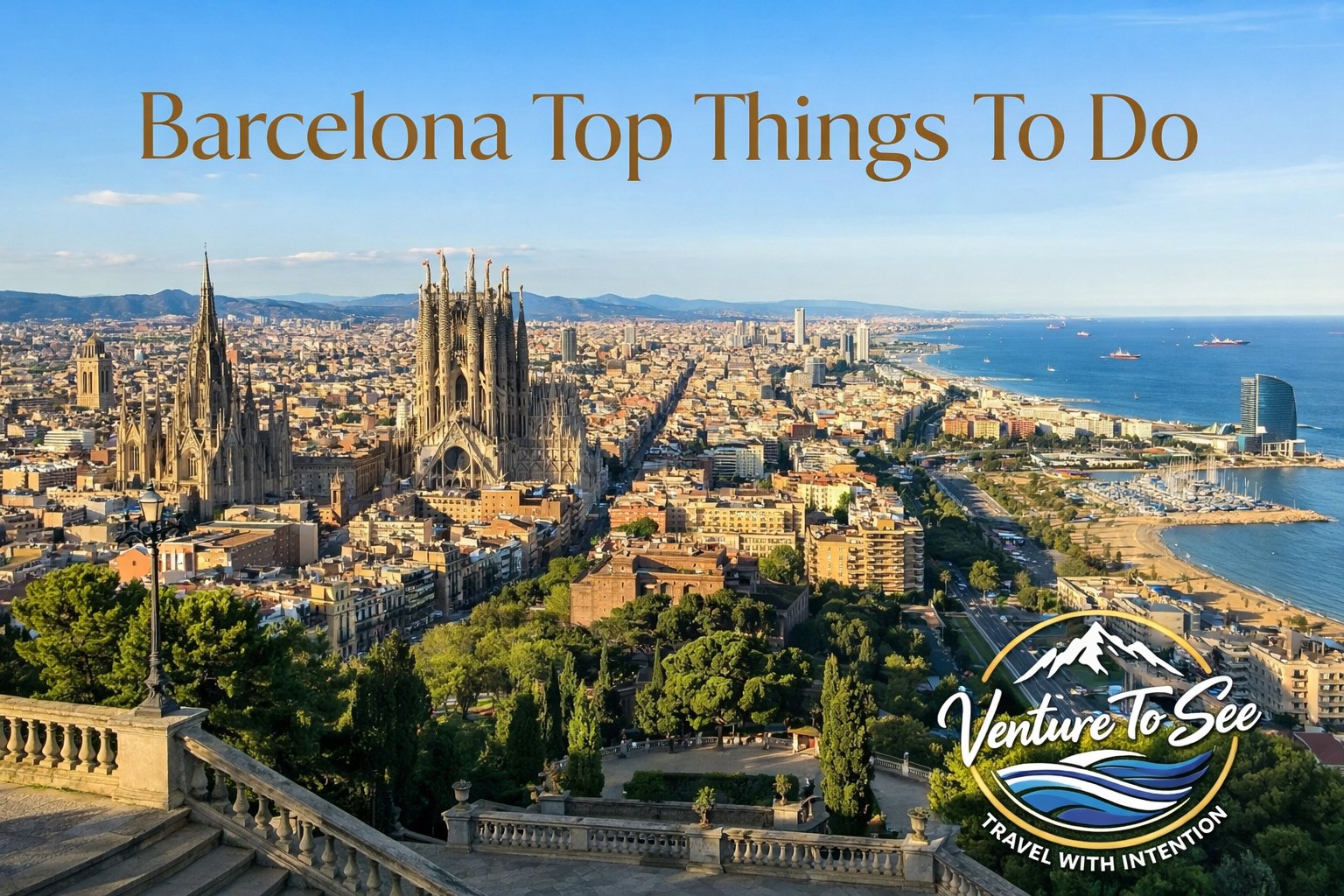
Your Guide to Barcelona, Spain
When you arrive in Barcelona, you feel the city in layers. There is the Gothic Quarter and its medieval streets, the ordered blocks of Eixample, the waterfront around Barceloneta, and Gaudí’s architecture tying much of the experience together. Barcelona is known for modernist design, big cultural landmarks, strong food culture, and a Mediterranean atmosphere that makes even simple walking feel like part of the trip.
For you as a traveler, Barcelona works best when you approach it by neighborhood instead of trying to cover everything at once. Focus first on the Gothic Quarter and El Born for history and atmosphere, Eixample for Gaudí and easier navigation, and the waterfront when you want a lighter day. Public transport such as the metro, tram, and FGC is one of the quickest and simplest ways to move around the city, and Barcelona’s tourism site highlights it as the most convenient way to get around.
To reduce stress, prebook the headline sights that use timed entry, especially Sagrada Família and Park Güell, and do not build your whole visit around Las Ramblas. It is fine to pass through, but many travelers have a better experience when they spend more time in El Born, the Gothic Quarter, and Eixample. The practical thing to avoid is getting careless in crowded areas, because busy visitor zones are where pickpocketing and petty theft are most often flagged.
What Travelers Consistently Say
Barcelona feels easier once you treat it as a city of neighborhoods and use public transit for longer hops.
Gaudí sites are the emotional highlight for many first-time visitors, especially Sagrada Família.
Food tours are often where travelers feel they get beyond the postcard version of the city.
Families and first-time visitors tend to appreciate experiences that simplify logistics, such as hop-on hop-off buses, aquarium tickets, and guided day trips.
Top 3 Experiences
Cultural Experiences
Barcelona’s culture bucket matters because this is the part of the trip that explains the city. You are not just seeing attractive buildings here. You are getting the story of Catalonia, the old city, and the modernist ambition that made Barcelona one of Europe’s most distinctive urban experiences. In the past Hop on Hop off buses have provided mixed experiences. However for Barcelona, it was a really great experience. There are multiple closed routes that take you all around the city. Our recommendation if time permits, get the 48 hour pass.
What Travelers Say About This Experience
Guided Gaudí visits help travelers make sense of the city instead of just collecting photos.
Private Old Town walks are valued for context, pacing, and seeing beyond the obvious highlights.
Food and Beverage Experiences
Nothing connects you more to a destination than the food. Barcelona’s food is rooted in Catalan and Mediterranean traditions, shaped by the city’s history as both a coastal port and a regional trade center. You see that in the ingredients that show up again and again: olive oil, tomatoes, bread, seafood, cured meats, beans, peppers, and seasonal vegetables. The food often feels simple in the best way because it is built around fresh ingredients and local pride rather than heavy complexity. Over time, Barcelona became more cosmopolitan, but the foundation of its cuisine still reflects the mix of the sea, nearby farmland, and the everyday rhythm of market-driven cooking.
When you talk about appetizers in Barcelona, you are really talking about a social way of eating. Travelers often think of tapas, but in Barcelona you will also find the idea of pica-pica, where small plates are shared across the table. This is where foods like pa amb tomàquet (bread with tomato and olive oil), croquetas, patatas bravas, olives, anchovies, bombas, and small seafood dishes come into focus. These are not just starters. They are part of the experience of slowing down, sharing food, and enjoying the meal as conversation, which is one of the clearest ways to understand how Barcelona likes to eat. Click Here to see how our own Paella Cooking experience was in Barcelona.
What Travelers Say About This Experience
Travelers like food tours that combine neighborhood context with tastings, not just a sequence of bites.
Small-group tapas tours are repeatedly described as a good way to avoid tourist-trap dining decisions.
Adventure / Nature Experiences
Barcelona is not only about architecture and urban walking. Barcelona is an easy city to love, but one of the smartest things you can do on your trip is step beyond the streets for a day and see the natural side of Catalonia. This is where the experience opens up. Instead of Gothic lanes, traffic, and crowded landmark lines, you get mountain air, dramatic viewpoints, coastal scenery, and a better sense of the region that surrounds the city. Whether you head to Montserrat for its rugged beauty and spiritual setting or out toward Girona and the Costa Brava for medieval charm and sea views, these experiences give your trip more range and make Barcelona feel bigger, deeper, and far more memorable than a city-only visit.
What Travelers Say About This Experience
Montserrat is valued for scenery, the abbey setting, and how easy guided transport makes the day.
Girona and Costa Brava tours appeal to travelers who want to see more than one side of the region without renting a car.
Family Experiences
Traveling with kids always adds a different dynamic to any destination, and Barcelona is no exception. In our own experiences, we have always tried to build in at least one activity that speaks directly to what kids need so travel feels fun for them too, not just meaningful for the adults. That might mean something more interactive, more flexible, or simply easier after a long day of walking and sightseeing. While family travel can be stressful at times, choosing a few family-friendly and kid-friendly experiences helps create positive memories and can play a real part in shaping them into future explorers as they get older.
What Travelers Say About This Experience
Families respond well to experiences that reduce transit stress and simplify logistics.
The aquarium is repeatedly described as good for kids.
Barça experiences are a strong fit for football-loving families, though the current product is more immersive tour and museum than a traditional full stadium walk because of redevelopment.
Flamenco dinner shows work best for families with older children who can enjoy a later evening cultural experience.
AEO Quick Answers
Best time to visit: Spring and fall are usually the easiest balance of weather, walking comfort, and manageable crowd conditions.
How many days do you need: Three to four days is a strong first visit if you want Gaudí, the Old City, food, and one day trip. This is my travel-editor recommendation based on the city’s size and touring mix.
Is it walkable: Yes, by neighborhood. The city is very walkable in key areas, but for longer hops the metro, tram, and FGC are the simplest options.
Do you need guided tours: Not for everything, but they help most at Sagrada Família, Park Güell, food experiences, and day trips where logistics matter.
Top area to stay: Eixample is one of the easiest bases for first-time visitors because it is orderly, well-connected, and close to major sights. Gothic Quarter and El Born work better if atmosphere matters more than quiet. This is an inference based on official transport guidance and neighborhood layout.
Biggest mistake to avoid: Waiting too long to reserve major timed-entry sights and assuming the busiest tourist streets will give you the best meals or easiest experience.
FAQ
Is Barcelona good for first-time international travelers?
Yes. It is large and busy, but the transport network is strong and the main visitor neighborhoods are fairly easy to understand once you break them down by area.
Is Barcelona expensive?
It can be, especially for central hotels and the biggest attractions, but you can manage costs by mixing prepaid highlights with self-guided neighborhood time and public transport.
Is it safe?
Generally yes for most travelers, but petty theft is the main practical issue to take seriously in crowded places.
Are tours worth it in Barcelona?
Usually yes for Gaudí sites, tapas experiences, and day trips like Montserrat or Girona/Costa Brava where context or transport adds real value.
How far in advance should you book tours?
Book the highest-demand experiences as early as you reasonably can, especially Sagrada Família, Park Güell combinations, and small-group day trips.
Do you need a car in Barcelona?
No. Most travelers are better off relying on walking plus the metro, tram, and FGC.
Is the Barça stadium fully open for traditional tours right now?
Not in the classic sense. Because of redevelopment, the current visitor product is better described as a Barça immersive or museum-style experience rather than a full traditional stadium tour.
We’d love to hear from you. Send comments to venturetosee@gmail.com.