
Barcelona Paella Cooking Class Review: A Family-Friendly Food Experience
There are some travel experiences you choose because they sound fun, and then there are the ones you choose because something about them feels personal before they even begin.
That was exactly what happened to me in Barcelona.
Out of all the things my family and I could have booked in the city, the paella cooking class was the one that stayed in my mind. It was not just because paella is one of Spain’s most famous dishes. It was because, for me, paella has always carried a memory with it.
When I was around 12 years old, I had the opportunity to live in the southern part of Spain for a couple of years. On one of my very first nights there, we went out for dinner, and paella was placed in front of me. At that age, I did not know what to make of it. The rice was yellow, there were mussels in the pan, shrimp I did not want, and it was a long way from the kind of food an American kid usually hoped to see at the table. Back then, I was probably wondering where the cheeseburger was.
But time has a way of changing how you remember a meal.
What I did not understand then was that paella was never just about what was in the pan. It was about place. It was about gathering. It was about Spain. Over the years, that dish became tied to childhood memories, to exploration, and to the gift my parents gave me by letting me experience another culture when I was still young enough for it to shape me.
So when I found myself in Barcelona years later, now traveling with my own family, signing up for a paella cooking class felt like more than just booking an excursion. It felt like stepping back into a part of my own story.
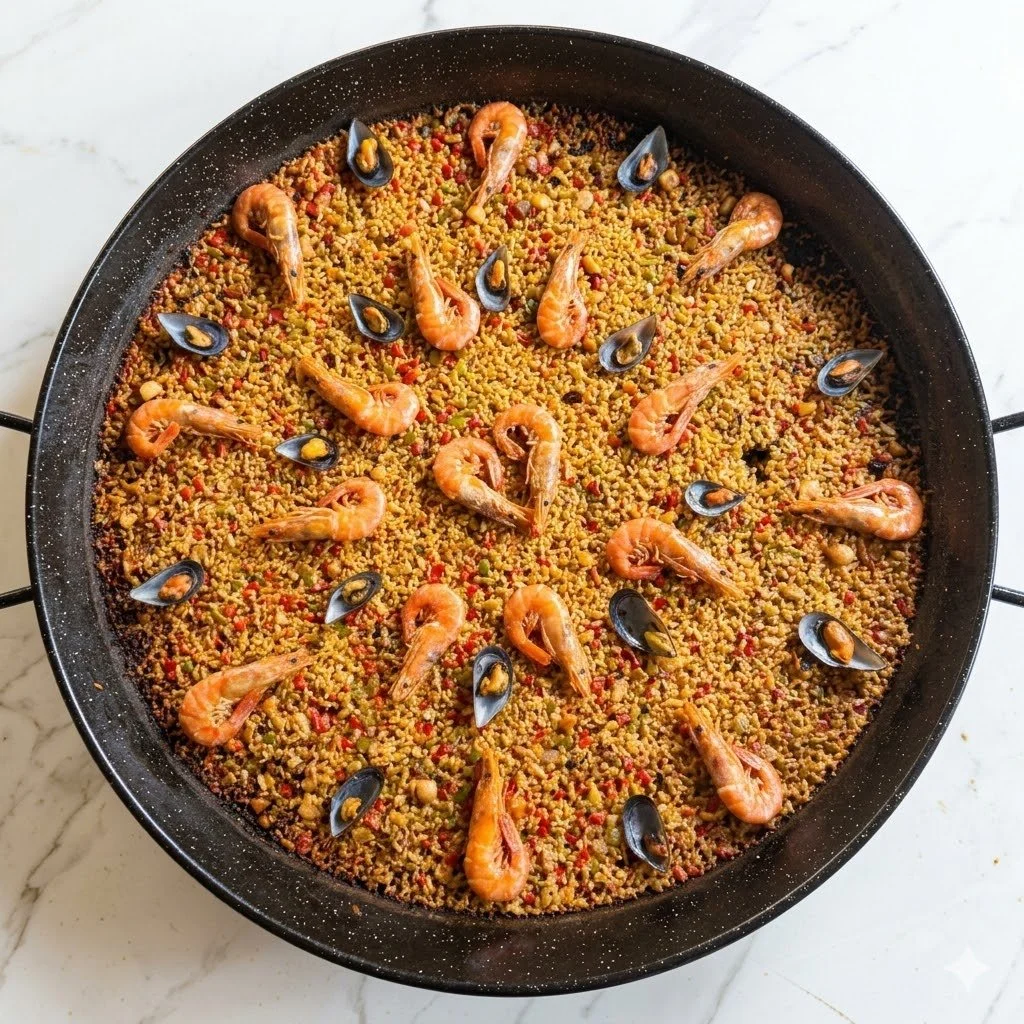
Traditional Seafood Paella in Barcelona
That afternoon, we met our guide near Las Ramblas along with a small group of other travelers. From there, we made our way into one of the most famous markets in Barcelona, La Boqueria.
And honestly, if you are going to begin a food experience anywhere in the city, this is exactly the kind of place you want it to start.
La Boqueria is more than a market filled with colorful fruit, hanging jamón, and rows of seafood on ice. It is one of those places where you can feel the history beneath your feet. The market traces its roots back centuries, beginning as an open-air gathering place for vendors selling meat and produce just outside Barcelona’s old city walls. Over time, it evolved into the lively covered market that stands today, becoming part of the daily rhythm of the city for generations of locals.
Walking through La Boqueria with that in mind changes the experience. You are not just passing through a market. You are stepping into a place that has fed Barcelona for hundreds of years.
The pace inside is part of the charm. Fresh seafood laid over ice. Bright fruit juices lined up in coolers. The sound of vendors talking with customers. Locals weaving through with purpose while visitors stop every few feet to take it all in. And in our case, this was not just sightseeing. We were there to gather ingredients for the meal we were about to help make.
There is something grounding about seeing food at its source before it becomes dinner. Before paella became a finished dish in a pan, it was seafood at the market, vegetables waiting to be chopped, rice chosen for a reason, and a tradition being carried forward one ingredient at a time.
After our market visit, we walked back toward the Gothic Quarter and up to a second-floor studio kitchen. That was where the class really began, but it never felt stiff or formal. It felt relaxed, social, and welcoming in the way the best travel experiences often do.
Our chef talked us through the dish, the process, and the meaning behind it. And that is where the story of paella became even more interesting.
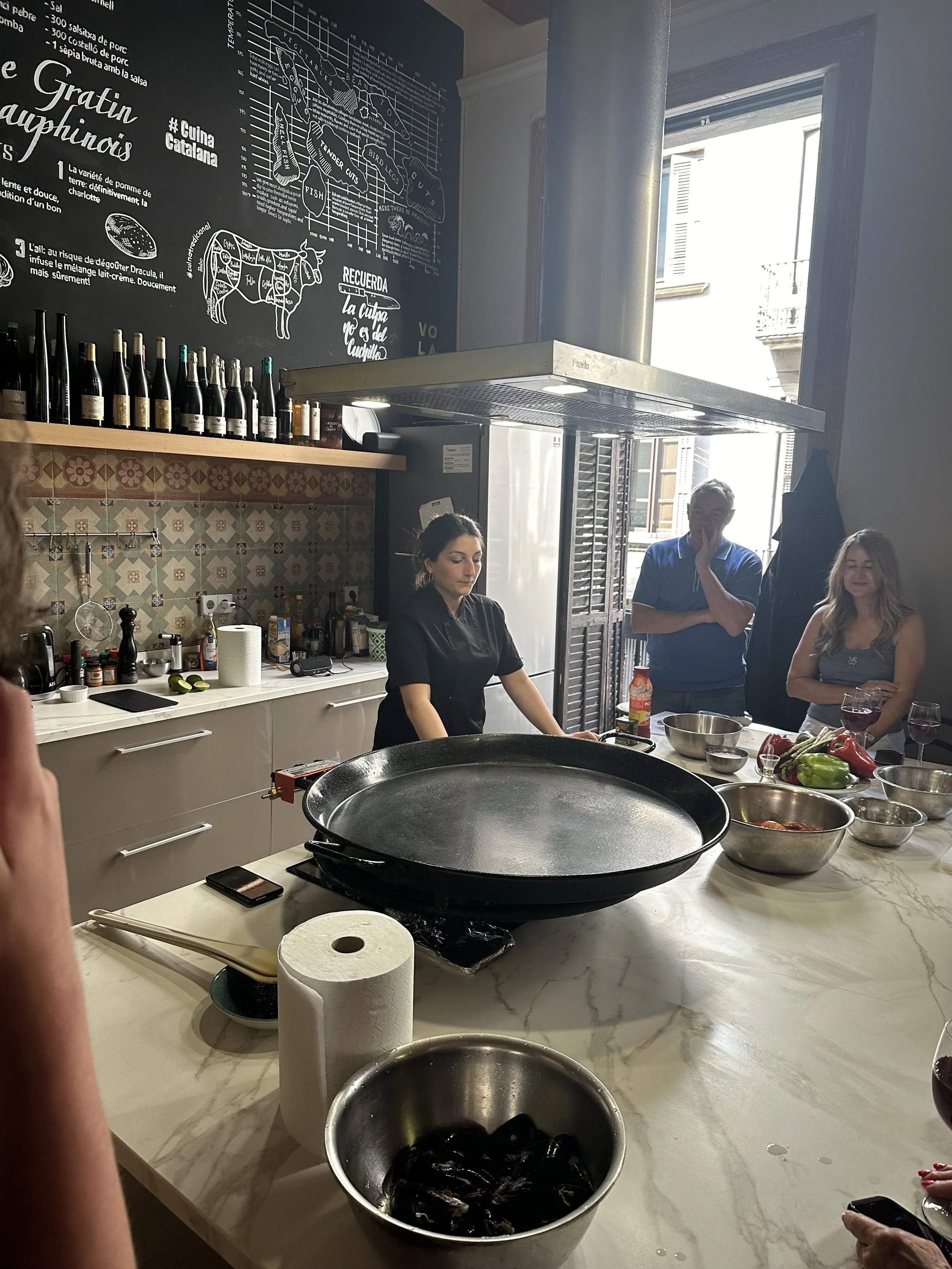
Chef Preparing the Paella Cooking Class in Barcelona
If there is one thing this class made clear, it is that paella is more than a recipe. It is part history, part tradition, and part shared experience.
That afternoon, our chef explained paella not as a luxury dish, but as a communal one.
That detail stayed with me the most.
Paella was meant to bring people together. It was made in large pans, shared across a table, and built around the idea that food is as much about company as it is about flavor. That spirit still carries through in a cooking class. Nobody disappears into the background. Everyone gets pulled in. One person chops vegetables. Another cleans shrimp. Someone else stirs the rice. Before long, strangers are talking to each other like they arrived together.
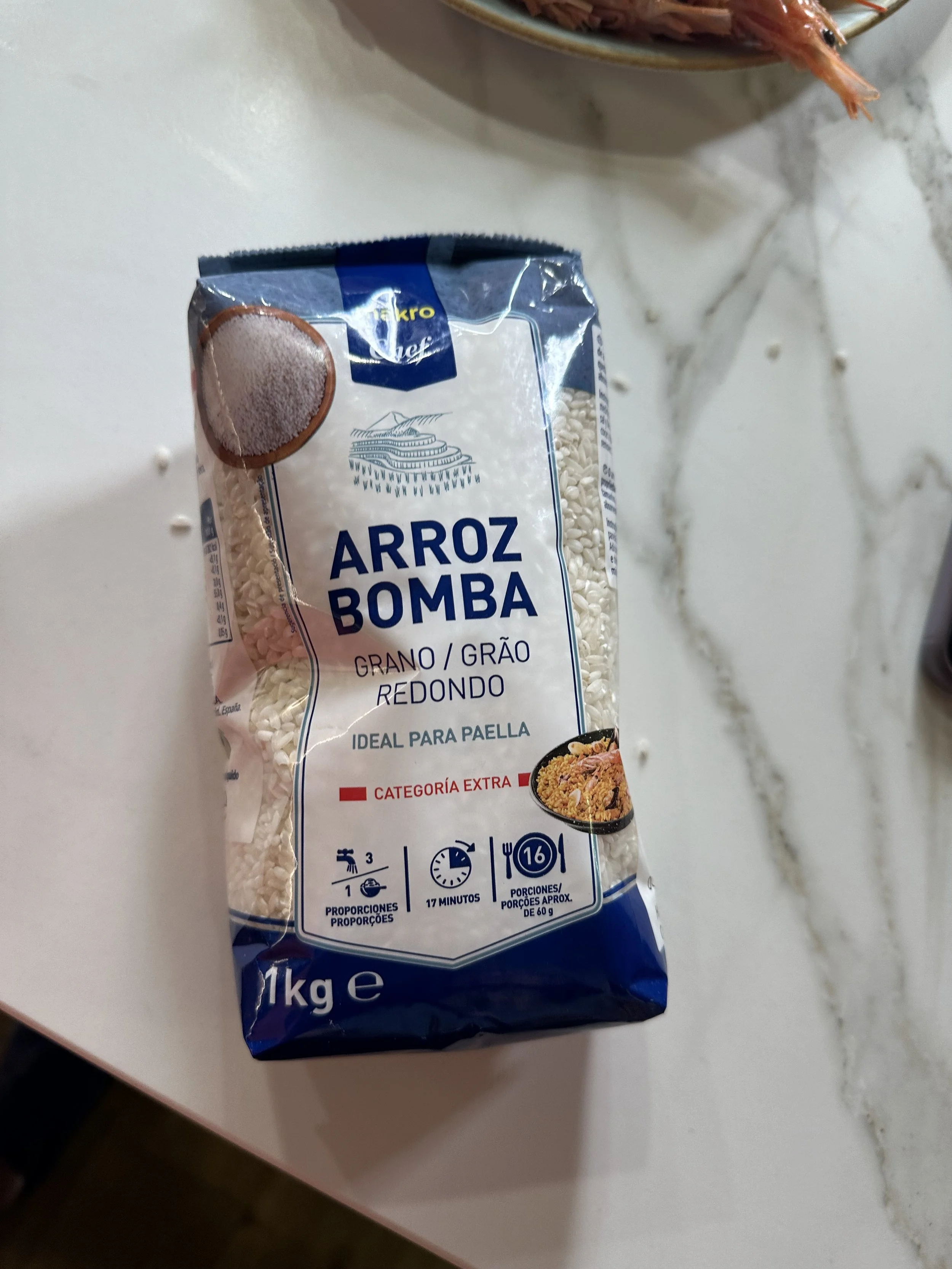
Bomba Rice Used for Traditional Paella in Barcelona
That is one of the reasons I always look for a cooking class or culinary experience when I travel. If you want to connect to a place in a real way, food is one of the fastest ways in. It tells you what people value, what the land produces, what the sea provides, and how a community gathers.
And this class did exactly that.
As the cooking got underway, you could start to see the dish take shape. The ingredients moved from separate pieces on a counter to something that already felt like a shared meal in progress. Watching that transformation unfold made the experience even more engaging because you were not simply waiting for food. You were part of the process.
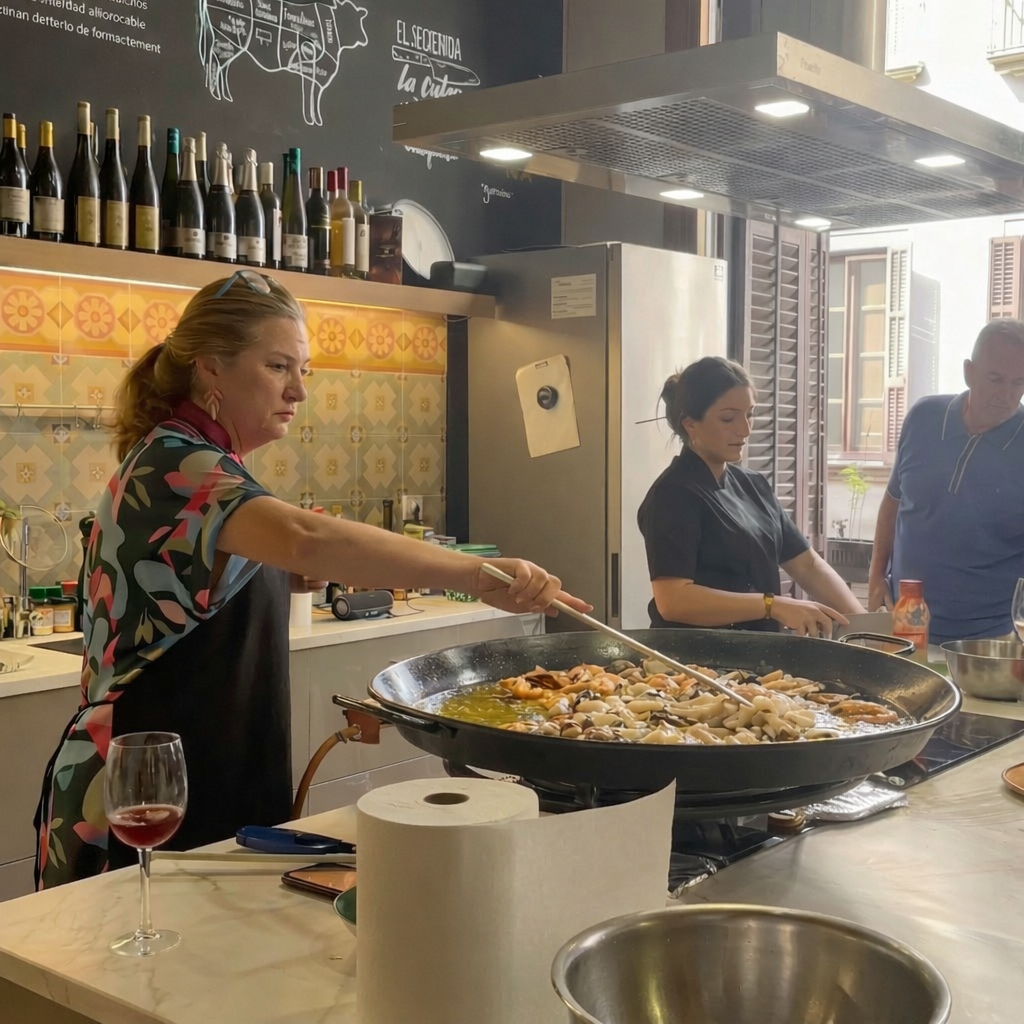
While the rice cooked, we were served sangria, wine, and non-alcoholic drinks. The atmosphere loosened up quickly. There was plenty of laughter, people comparing notes, and the easy kind of conversation that happens when everyone is doing something with their hands instead of sitting through a lecture.
I also learned something I did not expect about sangria. In my mind, sangria had always been red wine, fruit, and maybe a little brandy. In this class, the version we had included rum. It still had the red wine base, but it had a slightly different character than I expected, and it definitely added to the mood in the room.
By the middle of the class, the paella had become the center of attention. You could see the layers building, the ingredients settling into place, and the pan starting to look like the final dish we had all been waiting for. It was one of those moments where the class shifted from instruction to anticipation.
By the end, we had made more paella than our group could possibly finish. We took pictures, sat down together, and enjoyed the kind of meal that tastes better because you watched it come together from start to finish.
And when the paella was finally ready, it felt like more than just dinner. It felt like the reward for everything that had happened before it — the walk through the market, the stories from the chef, the hands-on work, and the time spent with people who had all come together around one pan.
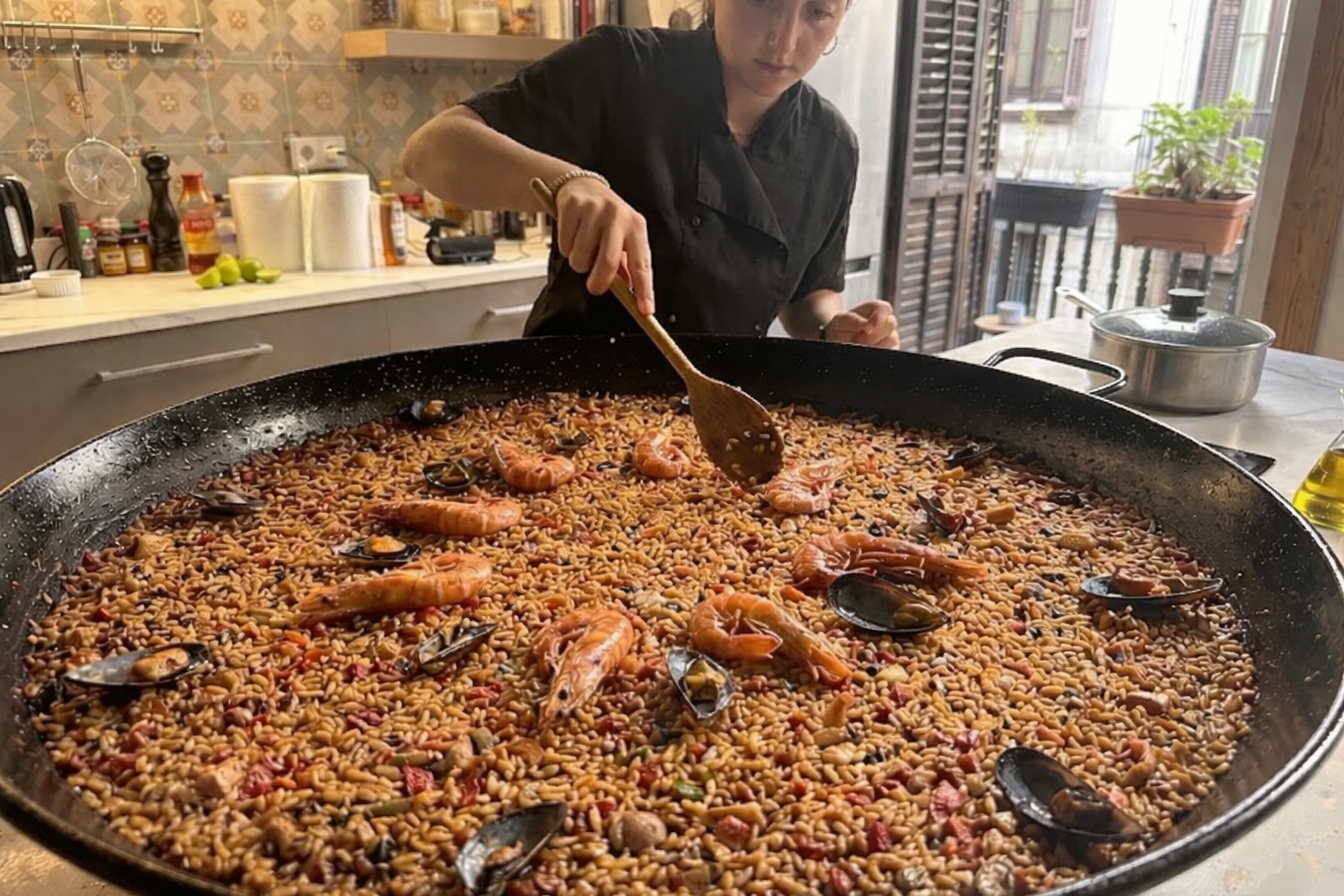
Chef Finishing a Traditional Seafood Paella in Barcelona
When we stepped back outside, Barcelona was still glowing with that late summer light that makes a city feel open for a few extra hours. The evening did not feel over. It felt like the experience had become part of the city itself.
That is the real pull of something like this.
You are not just taking a class.
You are walking through one of Barcelona’s historic markets. You are learning why one of Spain’s most iconic dishes matters. You are cooking with your family, or with strangers who will not feel like strangers by the end. You are hearing the story behind the food while standing in a city that still lives and eats in rhythm with its markets and the sea.
For families, it works because kids are not just watching. They are participating. That changes everything. For couples, it becomes a shared memory that feels far more meaningful than just another dinner reservation. And for solo travelers, it may be one of the easiest ways to connect with other people without forcing it. The meal itself does the work for you.
And maybe that is why paella has lasted.
Not just because it tastes good, although it certainly does.
It has lasted because it asks people to gather around it.
In Barcelona, that feels exactly right.
If This Is Something You’d Want to Experience
If this kind of experience speaks to you, Barcelona is a great place to make it happen. A paella cooking class is more than just a meal. It is a chance to step into the food culture of Spain, spend time in one of the city’s most memorable settings, and come away with something you can carry home long after the trip is over. You are not just tasting paella at a restaurant. You are seeing how it comes together, learning why the ingredients matter, and sharing the experience with the people around you.
For families, it creates a memory everyone can take part in. For couples, it adds something personal and hands-on to the trip. For solo travelers, it is an easy and natural way to connect with other people while doing something distinctly local. And if you enjoy food-focused travel, this is the kind of experience that helps a destination feel more real.
Barcelona offers several paella and market experiences, so it is worth comparing what is included before you book. Some classes include a market visit, tapas, sangria, or smaller group sizes, while others focus more heavily on the cooking itself. I recommend looking for an option that gives you both the cultural context and the hands-on preparation, because that is what makes the experience stand out.
Ready to add a paella cooking class to your Barcelona plans? Browse the available experiences below and find the one that fits your travel style.
Thank you for spending a little time with Venture To See. If you have feedback, questions, or a favorite Barcelona experience of your own, feel free to reach out at venturetosee@gmail.com. Be sure to follow along on social media @venturetosee for more travel adventures.
