
BARCELONA, SPAIN · FAMILY TRAVEL · 7 MIN READ
I'll be honest with you — I didn't plan for it to go this deep.
When I started building our Barcelona itinerary, I told myself it was just a family trip. Good food. Great architecture. Long walks along La Rambla at golden hour. But somewhere between booking flights and searching for "best things to do in Barcelona," I realized what I was actually trying to do.
"I was trying to give my family something I had experienced years ago — and never quite stopped carrying with me."
I lived in southern Spain as a kid. Somewhere between ages 10 and 12. I didn't understand much of what I was seeing at the time — but I remember how it felt. Evenings that stretched impossibly long. People gathering without urgency. Life at a pace that didn't feel rushed.
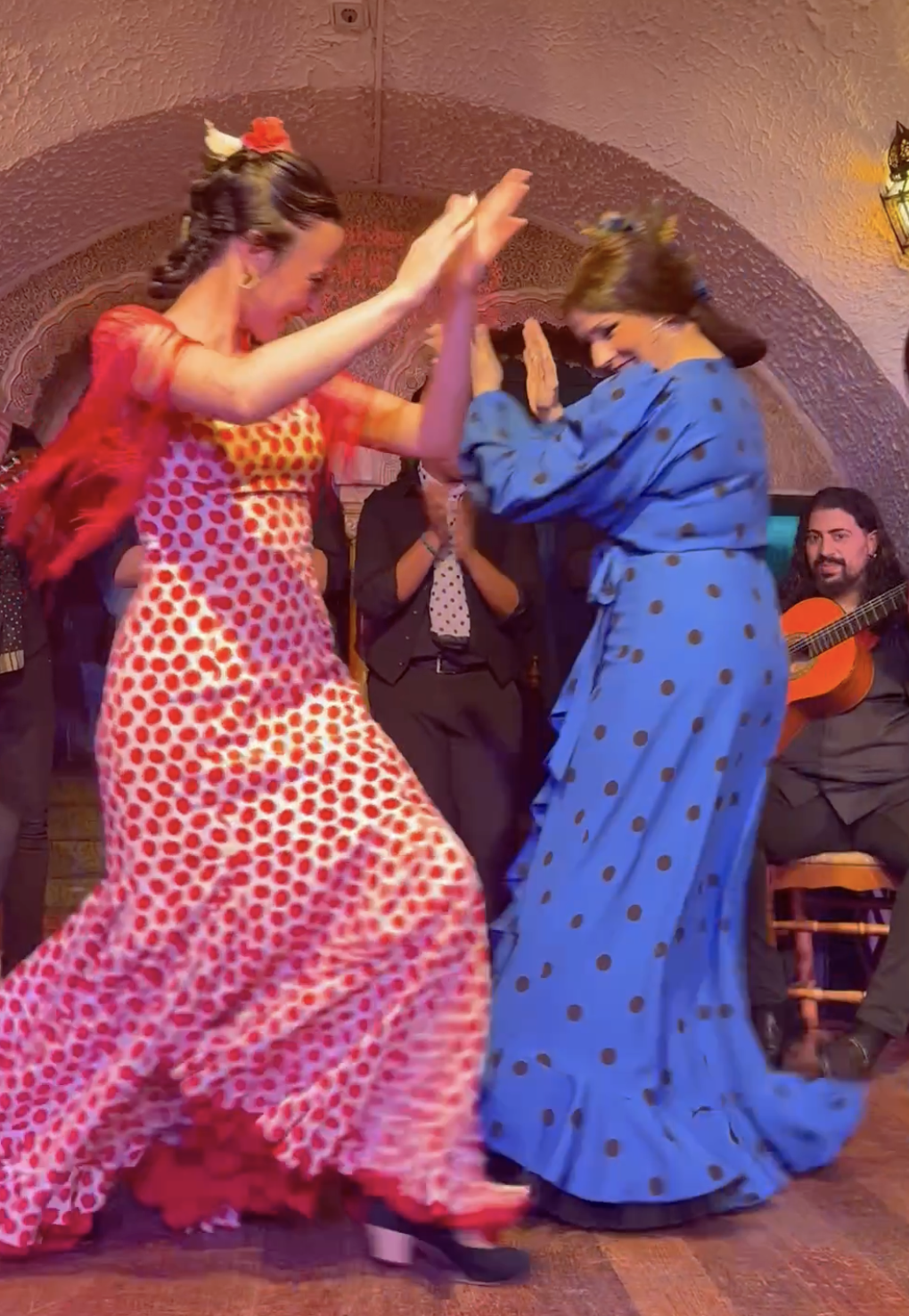
And then, every once in a while: bright dresses. Sharp, deliberate movements. The sound of hands striking in perfect rhythm. Music that didn't sound like anything I'd ever heard.
Flamenco.
At the time, it was just background noise to childhood. Now, standing in Barcelona with my family, I needed to find a way to bring that feeling forward.
The Evening We Almost Just Had Dinner
We booked a flamenco dinner experience just off La Rambla — and I want to be real with you: I wasn't sure it was going to be anything. Tourist trap vibes, right? Three-course meal, polite applause, back to the hotel.
It wasn't that.
We walked upstairs to a shared table. Our family. Another couple. A solo British traveler taking a year off before the next chapter of his life. Completely different paths — same place for a couple of hours. The paella came out warm and unfussy. It wasn't trying to impress anyone. It didn't need to.
GOOD TO KNOW BEFORE YOU BOOK
They ask you to put your phones away at the start. At first it feels strange. Five minutes in, you're grateful. You stop performing the experience for Instagram and you just… have it.
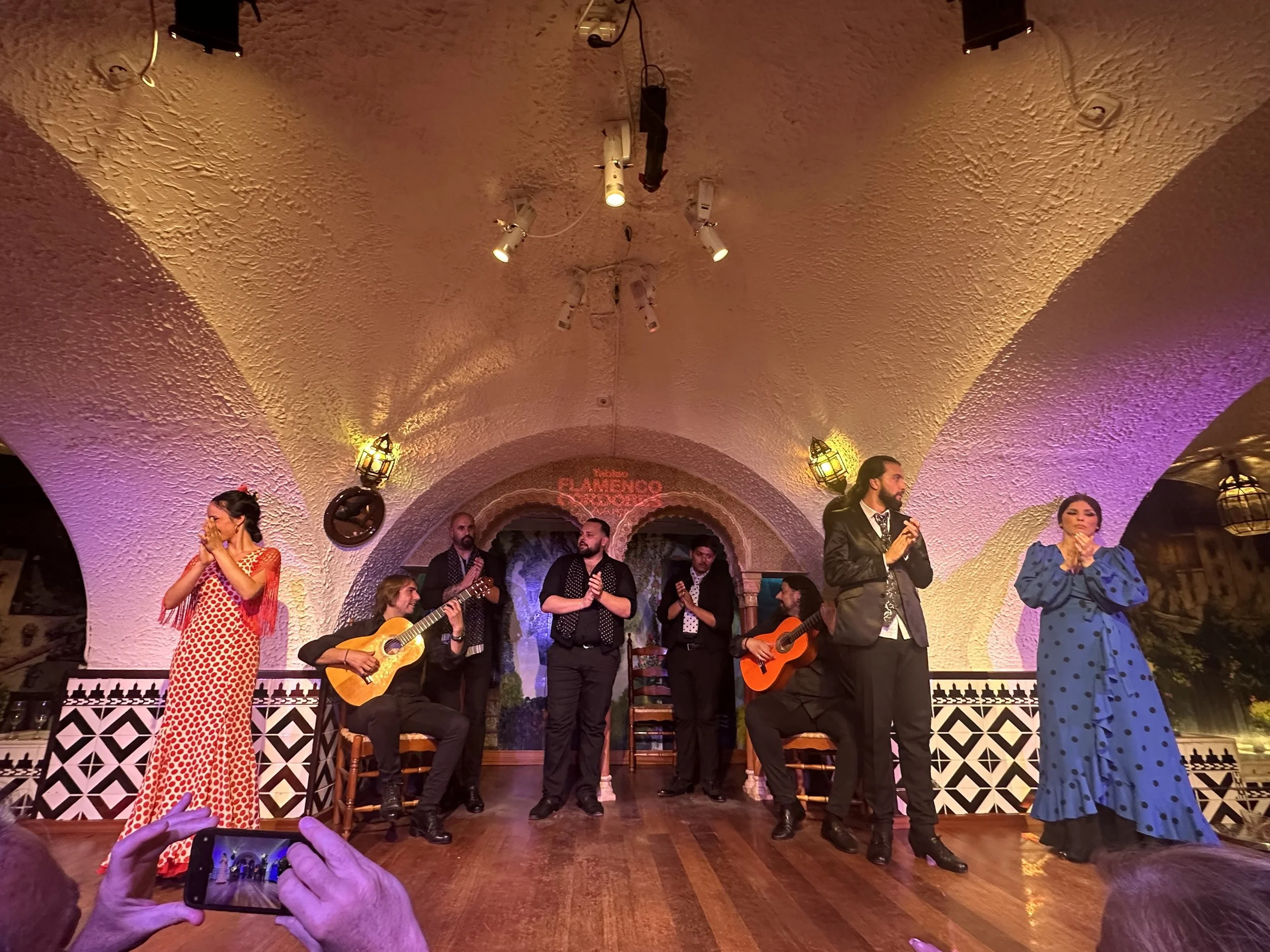
Then we were guided into a smaller room. The lighting dropped. The noise softened. Something in the energy shifted — like the air changed density. It felt intentional. Focused.
What Nobody Told Me Flamenco Actually Is
Before the performance began, they took a few minutes to explain its roots. And this — this — is what elevated the whole evening.
Flamenco isn't a show. It's a living record of survival. Born in Andalusia — the same southern region where I spent those childhood years — it developed over centuries through the collision of Romani, Moorish, Jewish, and Spanish cultures. It grew out of family gatherings and tight-knit communities, where people expressed what words couldn't hold.
Three elements form its core: cante (the singing), toque (the guitar), and baile(the dance). But what ties them together isn't technique. It's raw, unfiltered emotion — tied to grief, to joy, to pride, to resilience.
"It's not meant to be polished. It's meant to be real."
When the performance started, that context changed everything I saw.
The Part That Stays With You
As a kid, I noticed the color. The swirl of fabric. The dramatic energy. This time, I noticed the emotion. The dancers weren't performing for us — they were inside the story, and we were allowed to witness it.
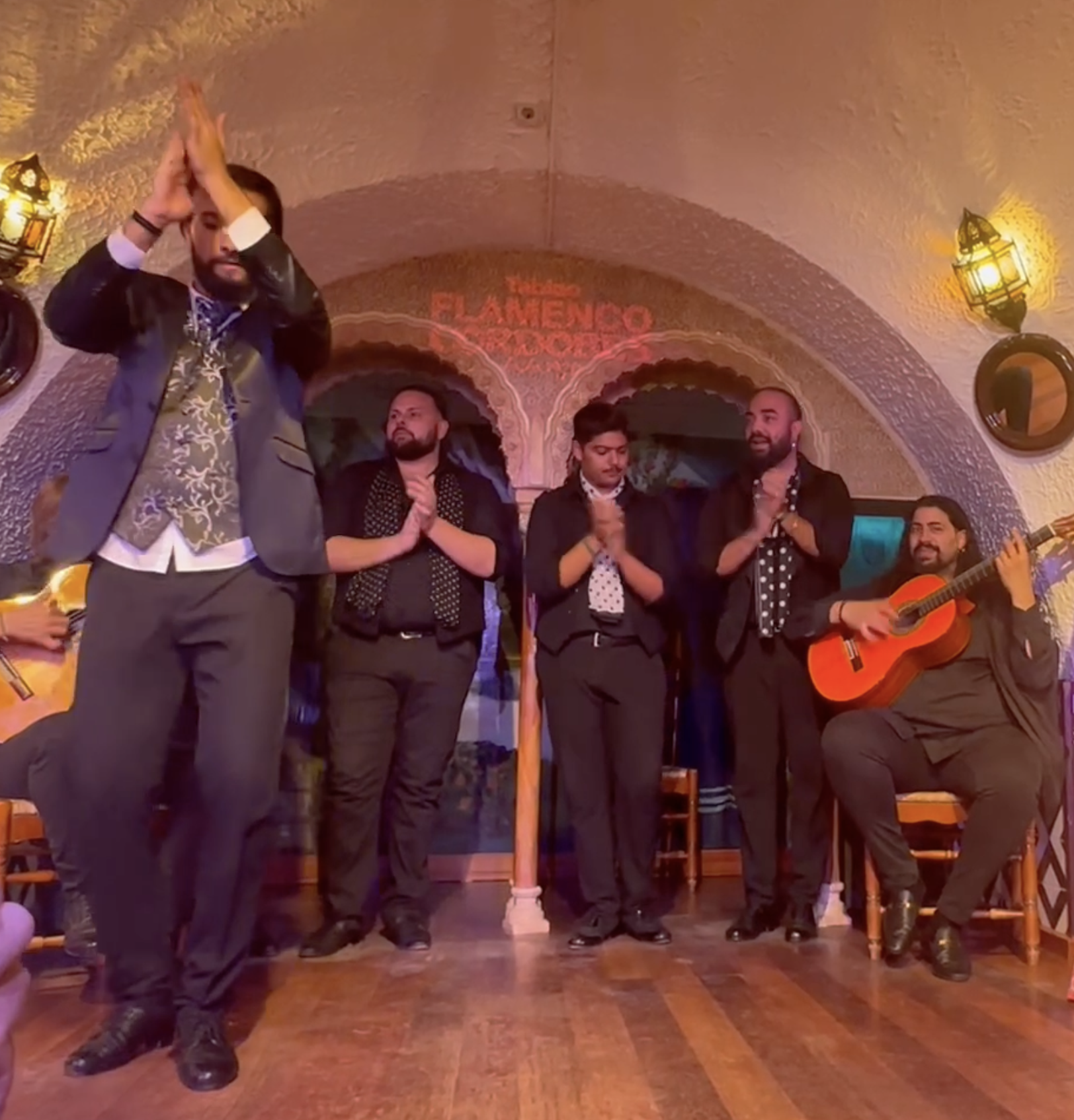
The women moved with startling precision, their dresses catching the light with every turn. But what I couldn't stop watching was the rhythm — coming from everywhere at once. Hands. Feet. The musicians folded into the back of the room. No castanets. Just timing, control, and presence.
And then the male dancer. That was something I hadn't remembered from childhood. His movements were grounded, sharp — like he wasn't following the music so much as becoming part of it. Every step added to the rhythm instead of riding it.
Behind them, the guitar carried the room. The singer's voice needed no translation. You understood it without words — you felt it in your chest.
Here's the thing I hadn't planned for: I wasn't just watching a performance. I was watching something I had witnessed years ago — only this time, I understood it. And at the same time, I was watching my family experience it for the very first time.
That overlap — between memory and the present moment — was the part that undid me a little. The thing no itinerary can plan.
When it ended, there was no grand finale. It just… stopped. And for a moment, no one moved.
We walked back out onto La Rambla and blended into the rhythm of the city. Something felt different. Not louder. Not quieter. Just understood in a way it hadn't been an hour before.
What I'd been trying to give my family — a piece of something I'd carried since childhood — had actually worked. Not perfectly. Not completely.
But enough. Enough for them to feel it.
Frequently Asked Questions
Is the flamenco dinner off La Rambla worth it for families with kids?
Absolutely — and in many ways it's better with kids. The combination of dinner and a live performance gives younger travelers something concrete to anchor the experience to. The show runs roughly 45–60 minutes, which is the right length for most children. That said, the room gets quiet and focused, so it works best for kids who can sit and observe for stretches. We found ages 8 and up engage deeply.
Do I need to know anything about flamenco beforehand?
Not at all. Part of what made our evening so memorable was the brief introduction before the performance — they explained the origins, the three core elements (cante, toque, and baile), and the emotional tradition behind it. You'll walk in knowing nothing and walk out feeling like you understand something real. That arc is part of the experience.
What should I wear to a flamenco dinner show?
Smart casual works perfectly. You don't need to dress formally, but this is an evening experience in a dedicated performance space — not a street-side tapas bar. Think nice jeans, a blouse or button-down. The atmosphere is intimate and the lighting is low and warm, so you'll feel comfortable without overdressing.
Can I take photos during the performance?
Phones are put away for the first portion of the show — and honestly, this is a gift. You're fully present in a way that's rare. In the final 15–20 minutes, they open it up for photos and video. By that point, the experience has already settled in. Most people take a few shots and then put their phones away again anyway.
How far in advance should I book?
Book as early as possible — at least a week ahead, ideally more if you're traveling in summer or during major festivals. These shows have limited seating by design (part of what makes the atmosphere so intimate), and popular time slots fill up fast. Check the venue's website directly for the most accurate availability.
Is the food actually good, or is it just there to justify the ticket price?
It's genuinely good — simple, well-prepared Spanish cuisine. The paella was warm and properly made, the starter was fresh, and the dessert was exactly what you'd want after a meal in Spain. It's not a Michelin-star dinner, and it's not trying to be. It's honest, regional food that sets the right tone for the evening. Expectations calibrated correctly, you'll leave happy.
Is this a tourist trap?
I went in braced for exactly that — and I was wrong. What separates a good flamenco dinner experience from a bad one is whether the performers are genuinely inside the art or just going through the motions. Our performers were the former. You can feel the difference immediately. The room was small, the lighting was intentional, and nobody was phoning it in. Do your research, read reviews, and choose a venue with a reputation for authentic performance — the difference is night and day.
If this is something you’d want to experience for yourself, you can take a look at the exact tour we chose CLICK HERE.
