
Truffle Hunting in Verona, Italy: A Quiet Experience Worth Taking
There’s a version of Italy most people expect—sunlight stretching across the coastline, crowded piazzas filled with energy, and that postcard-perfect feeling at every turn. This wasn’t that. This was something quieter, something that didn’t try to impress you at first glance, but instead stayed with you long after it was over.
It started on a cool April morning just outside of Verona. The sky hung low with clouds that looked like they might break into rain at any moment, but never quite did. Not long before this trip, my wife and I had been watching James May: Our Man in Italy, and in one of the episodes he went truffle hunting somewhere in Northern Italy. I remember thinking at the time that it looked like something worth doing if the opportunity ever came up. The trip to Verona had already been planned, but once I knew I was going, I went looking for that experience. And I found it.
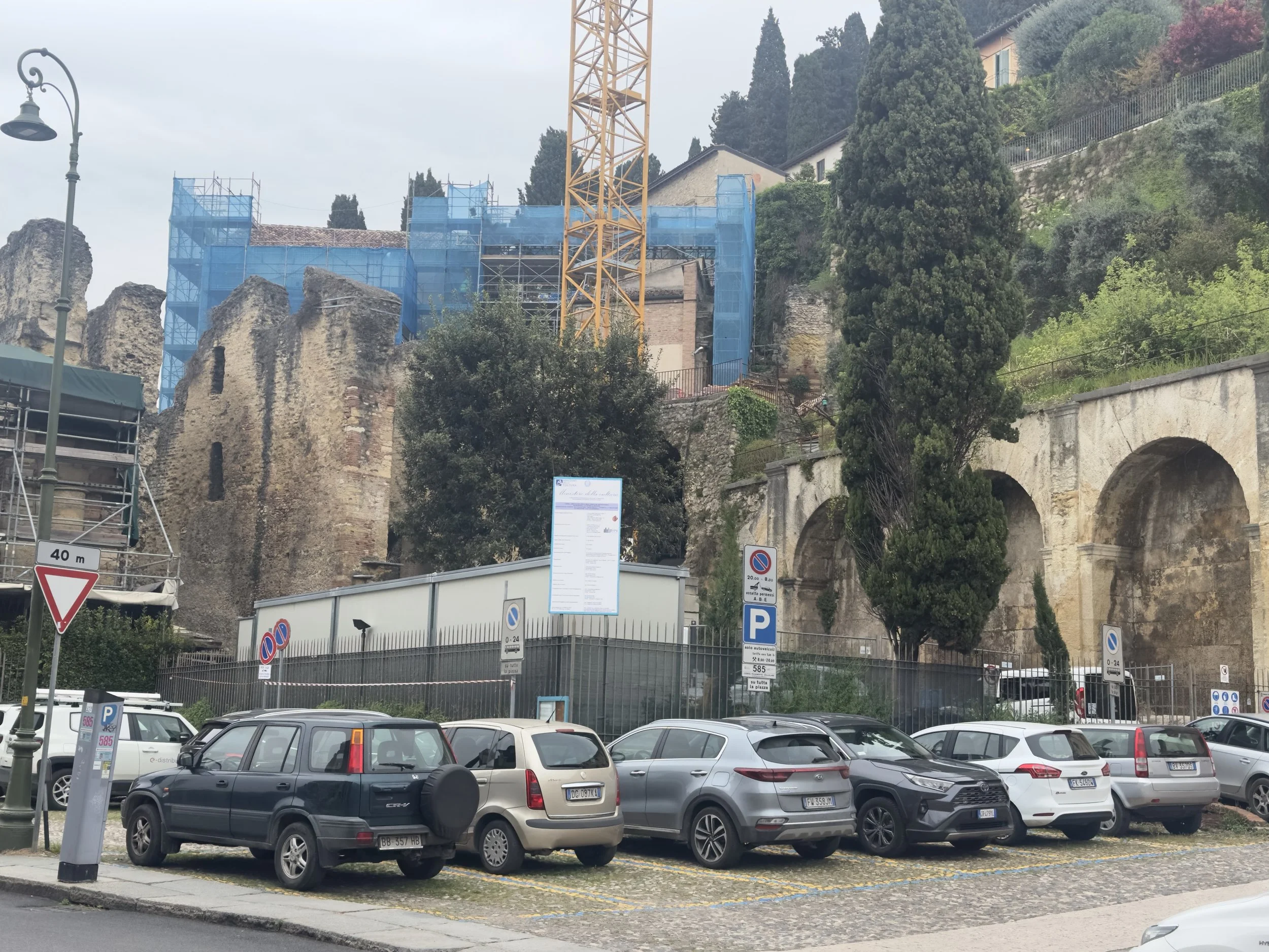
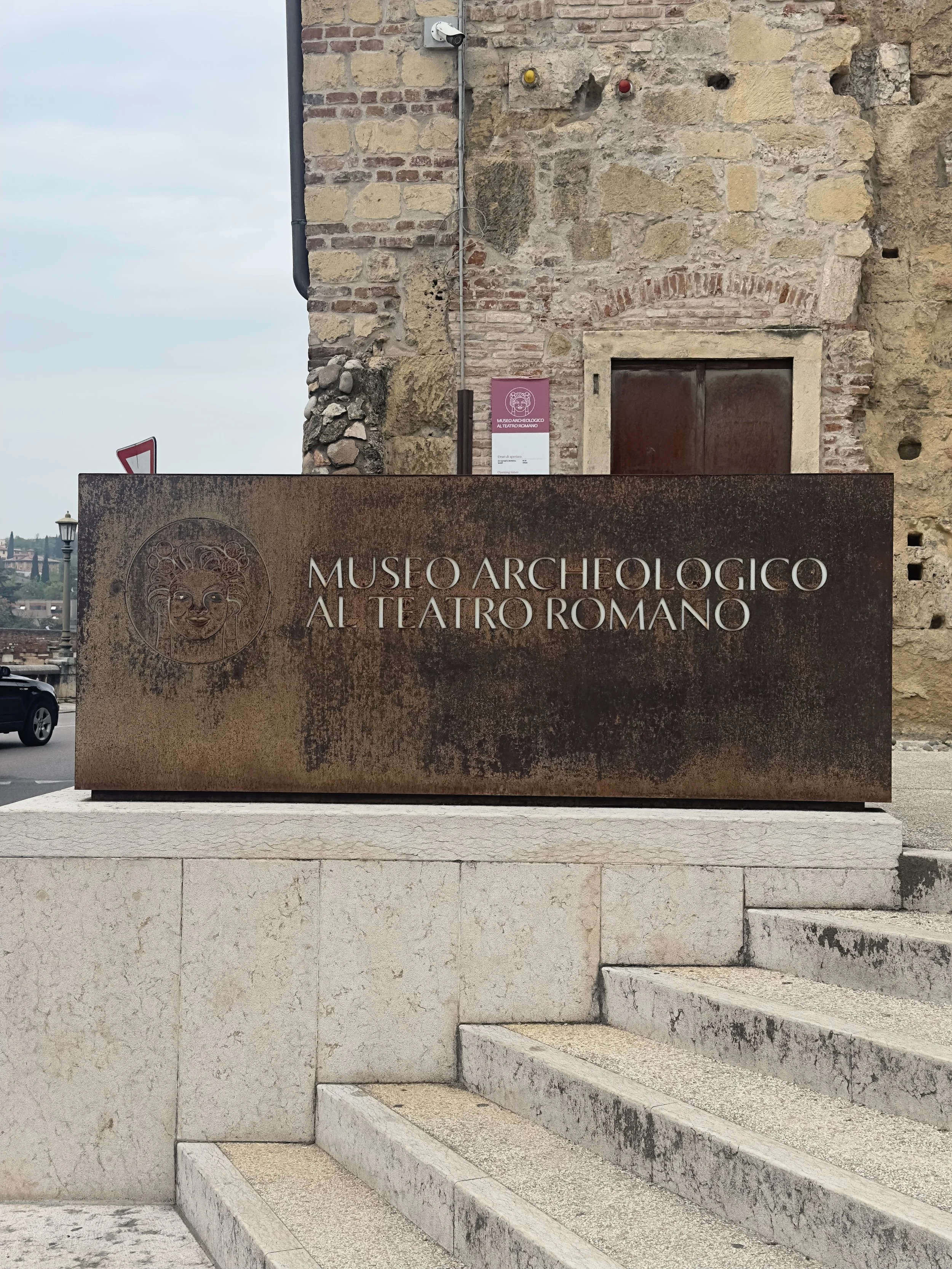
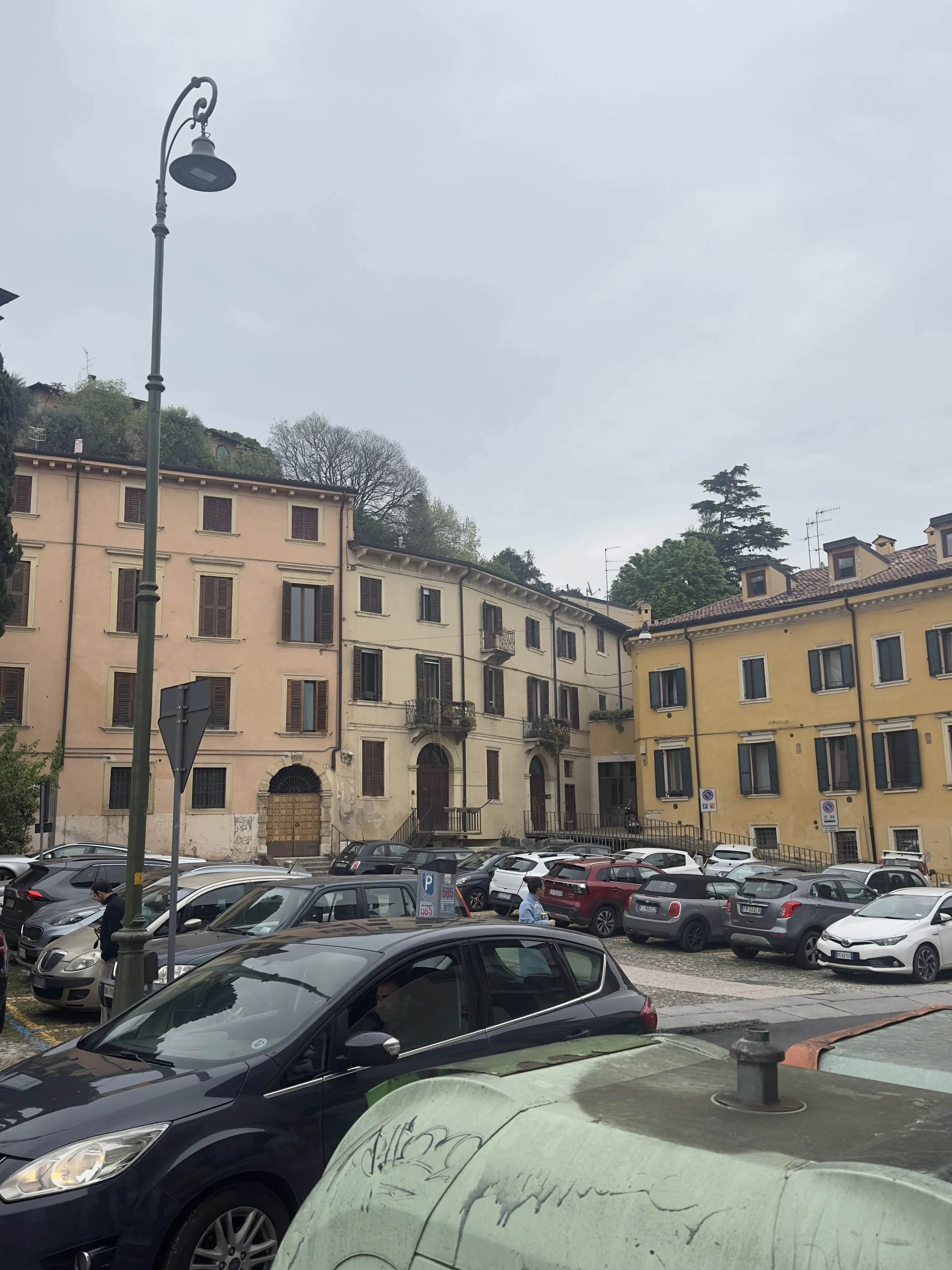
We met near the Roman theater, not the arena that most people visit, but a quieter corner of the city that felt removed from the usual flow of tourists. There were only five or six of us in the group, which immediately set the tone for the day. It felt personal, unhurried, like we weren’t part of something manufactured. We split into two cars, Michele in one and his wife in the other, and began the drive out of the city.
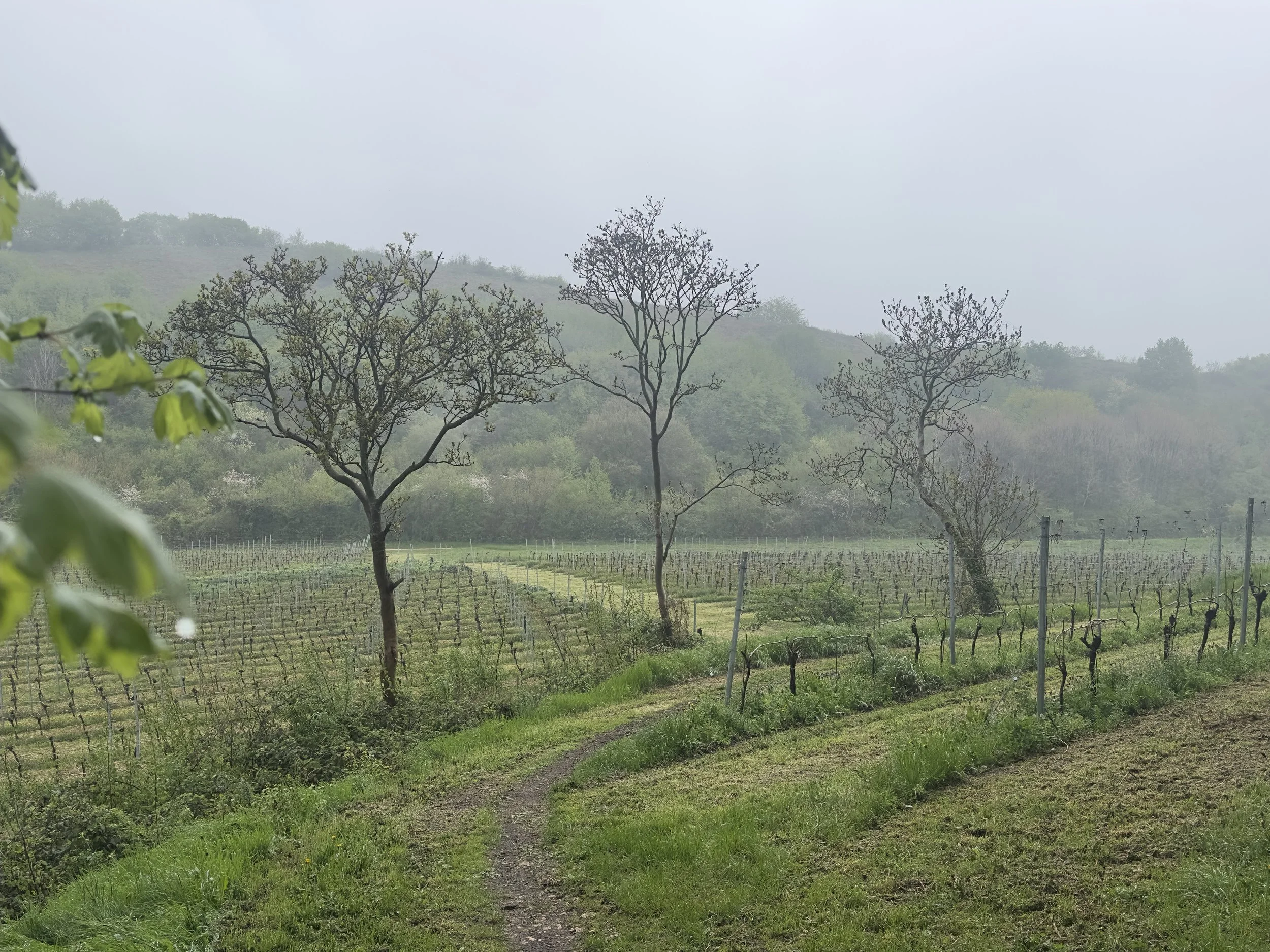
About thirty minutes later, the surroundings shifted. The buildings disappeared, replaced by rolling hills and narrow roads that seemed to wind without direction. A light fog settled across the landscape, softening everything it touched. It wasn’t dramatic in the way people usually describe Italy, but it felt real. There was a calm to it, something that made you slow down without being told to.
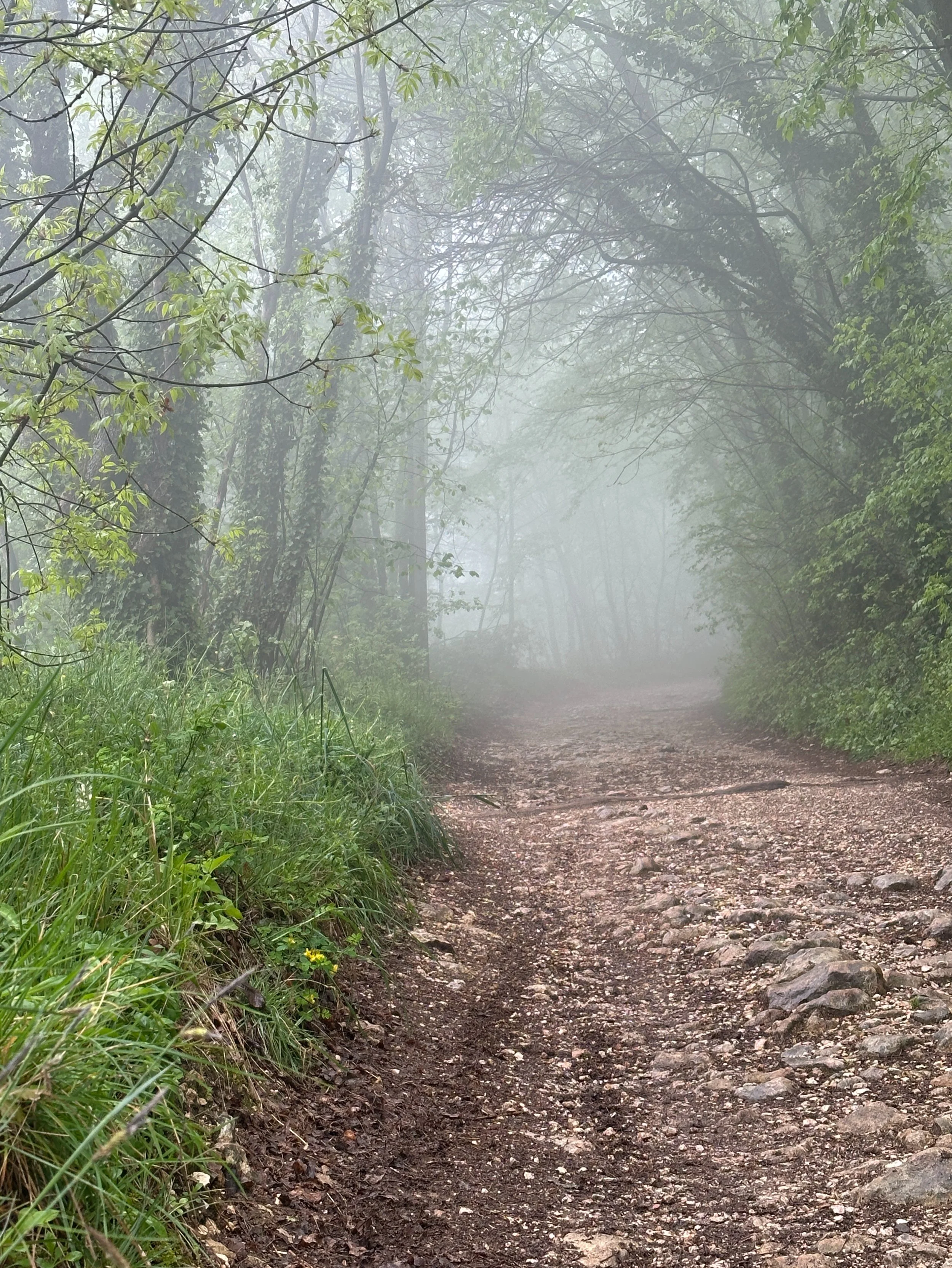
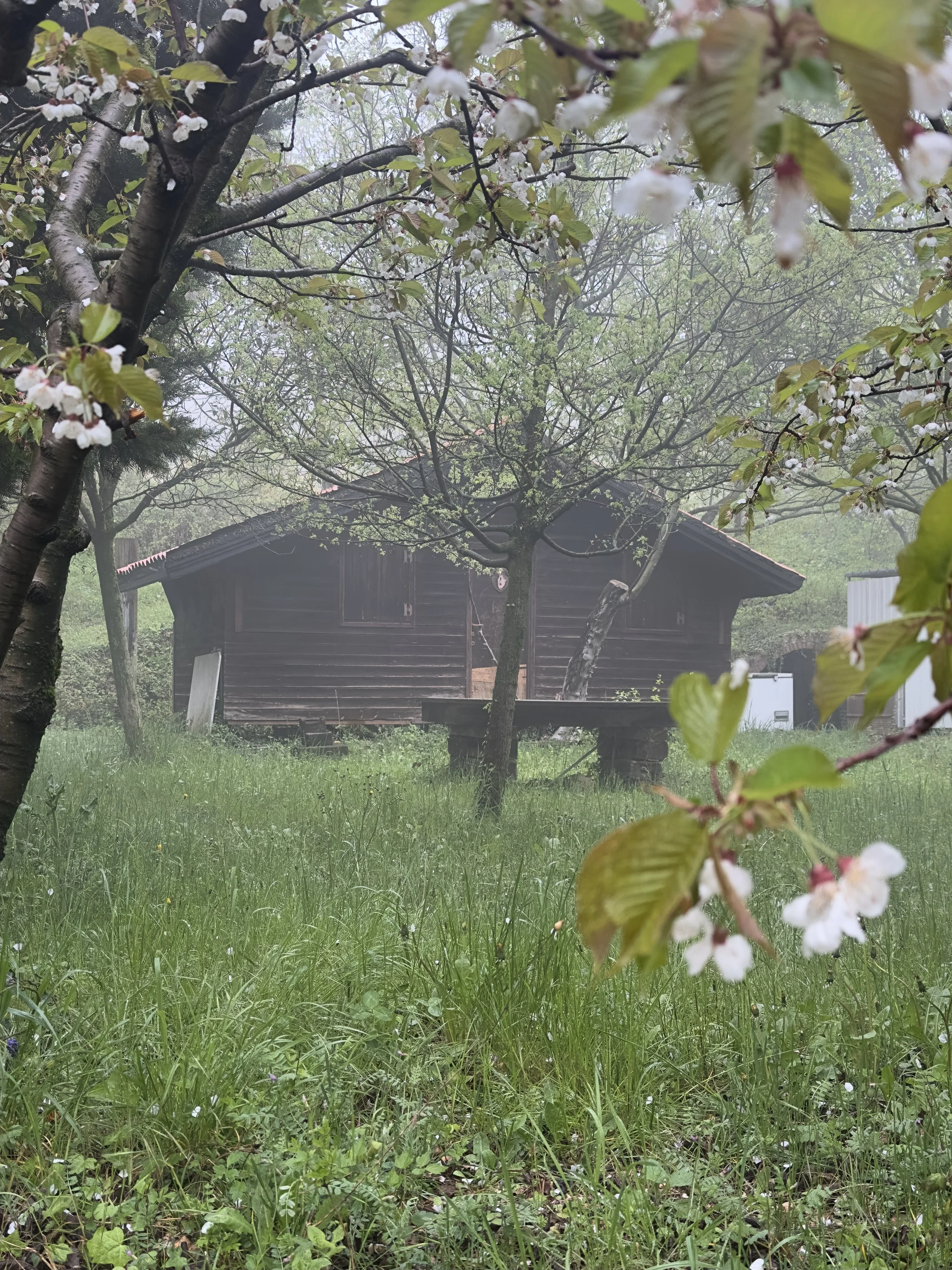
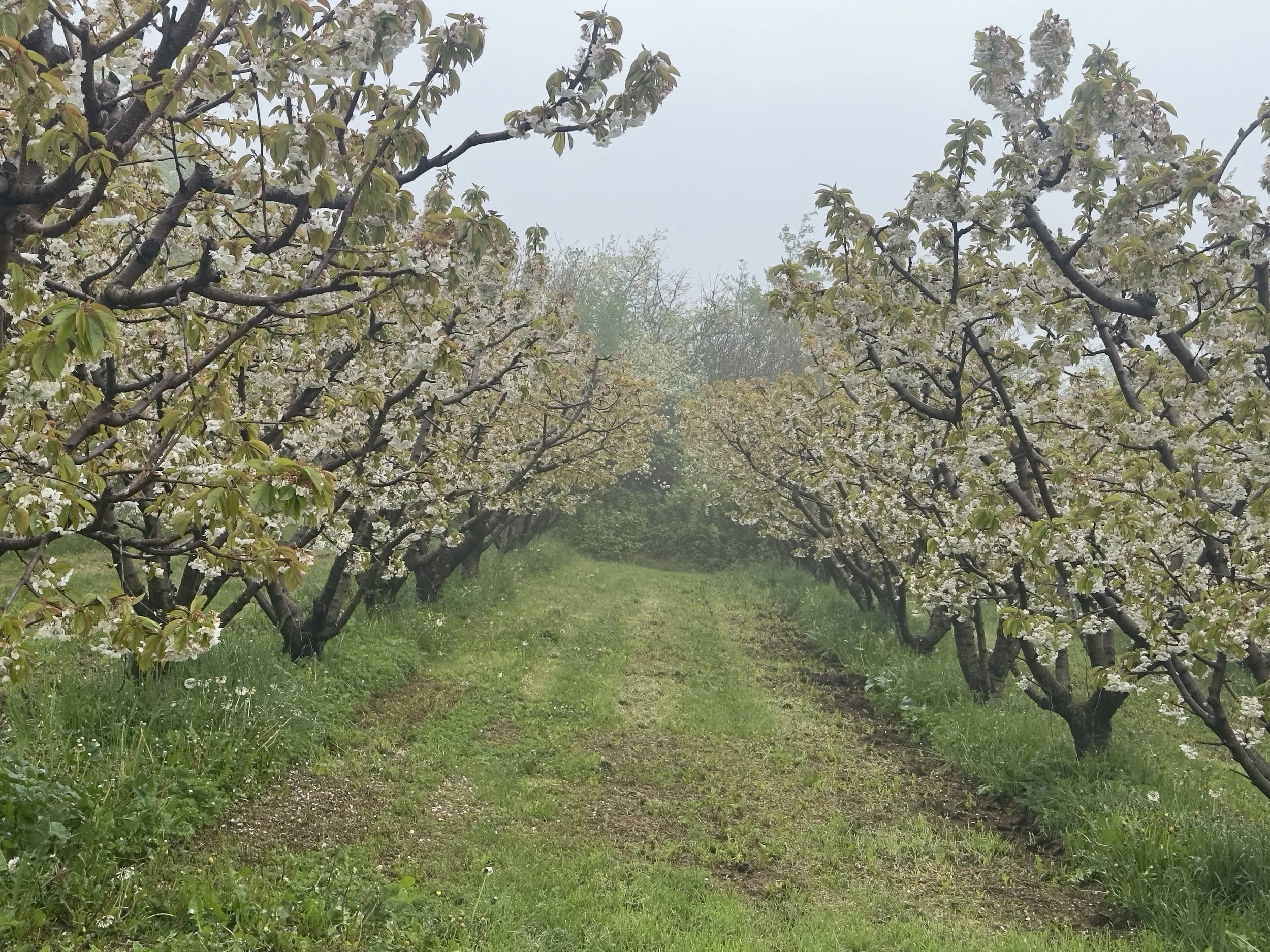
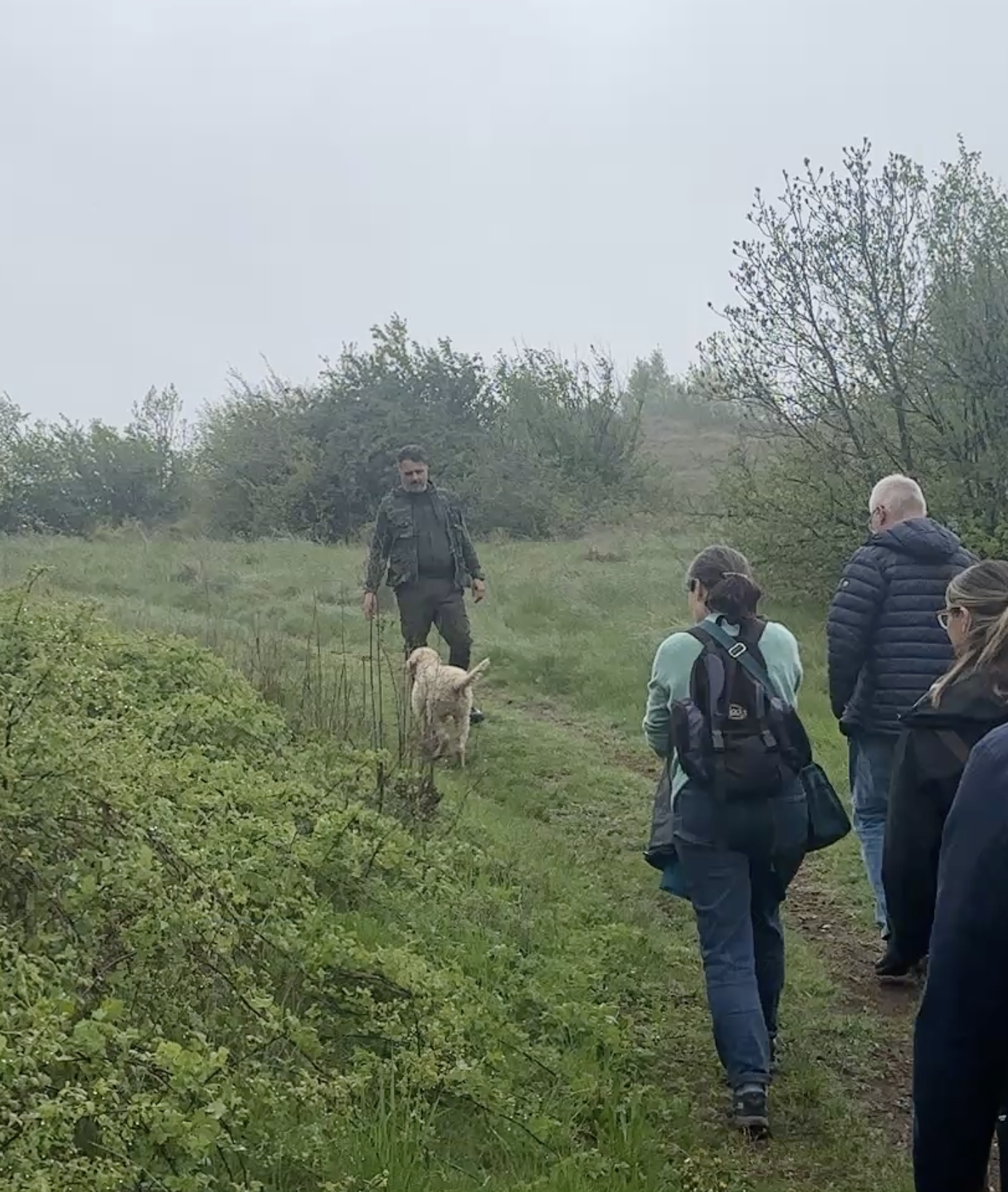
We stepped out of the car and began walking along a narrow dirt path that led us through the hills. At one point, we passed through a cherry orchard, the trees still holding that early-season quiet. There was a slight chill in the air, just enough to make you aware of it, but not enough to distract you. The only sounds were our footsteps and the occasional pause as Michele explained what we were about to experience.
Then he introduced us to his dog, the one who would actually be doing the work. Before we even started the hunt, Michele demonstrated how the dog responded to commands. There was an ease between them, a rhythm that didn’t need explanation. You could tell this wasn’t something put on for visitors. This was simply what they did.
Once we moved into the woods, everything slowed even further. Michele began explaining the differences between the truffles we might find. He talked about white truffles—rarer, more delicate, typically harvested in the fall, with a sharper, more aromatic profile that’s often described as garlicky or even slightly pungent. They’re the kind of truffle you don’t cook so much as you finish a dish with, because heat can take away from what makes them special.
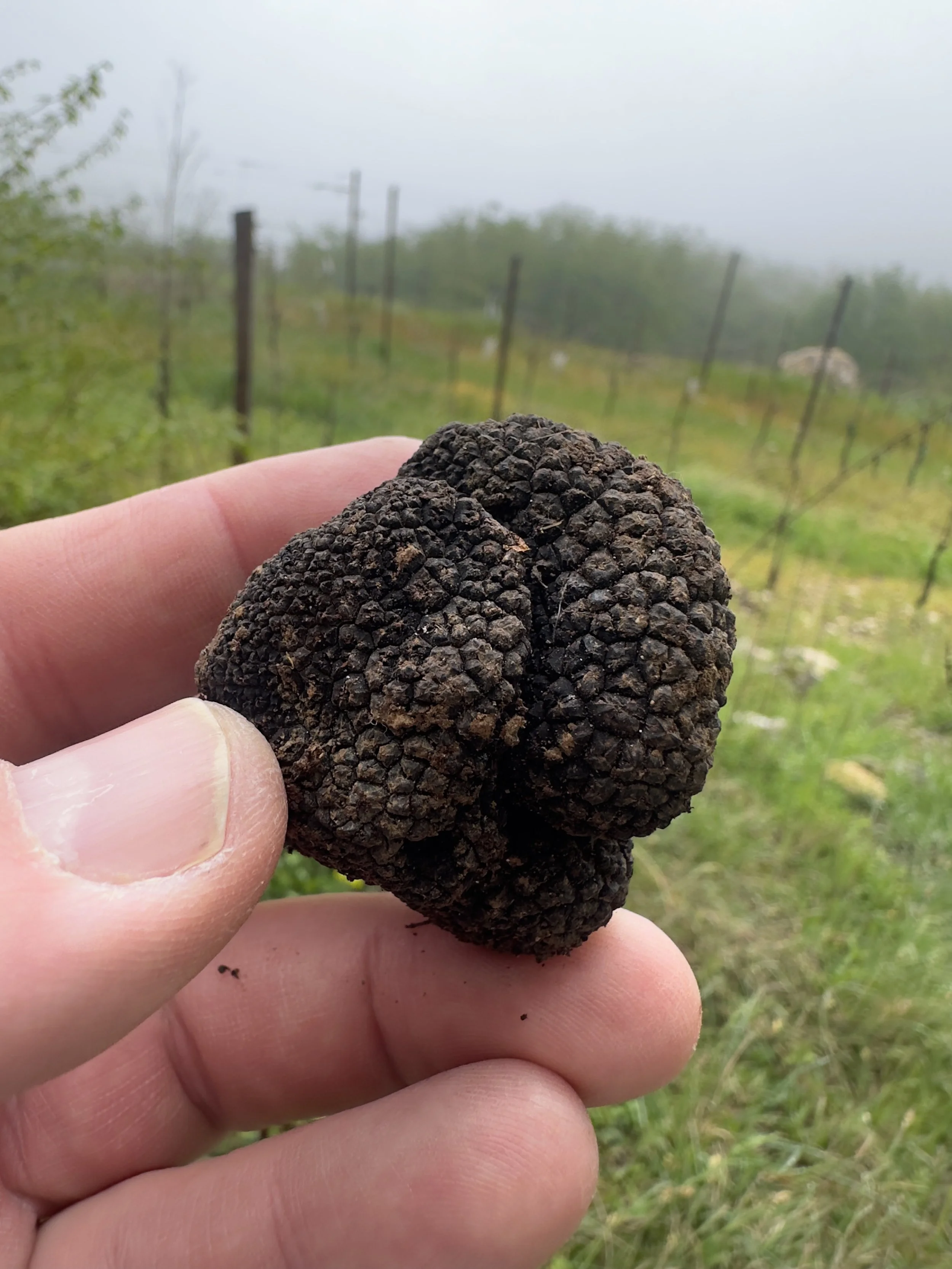
Then he contrasted them with black truffles—the ones we were looking for that day. Black truffles are more common, harvested in different varieties depending on the season, including spring and winter. Their flavor is deeper, more earthy, and a little more forgiving. They can handle a bit of heat, which is why you often see them worked into dishes more freely. As he explained it, it made sense why what we were about to experience would be built around black truffles—they’re the kind you can actually cook with, not just admire.
Then the dog moved ahead of us, nose to the ground, completely focused. And suddenly, he stopped and began to dig. There was no rush to it, no sense of urgency, just a quiet understanding of what he was looking for.
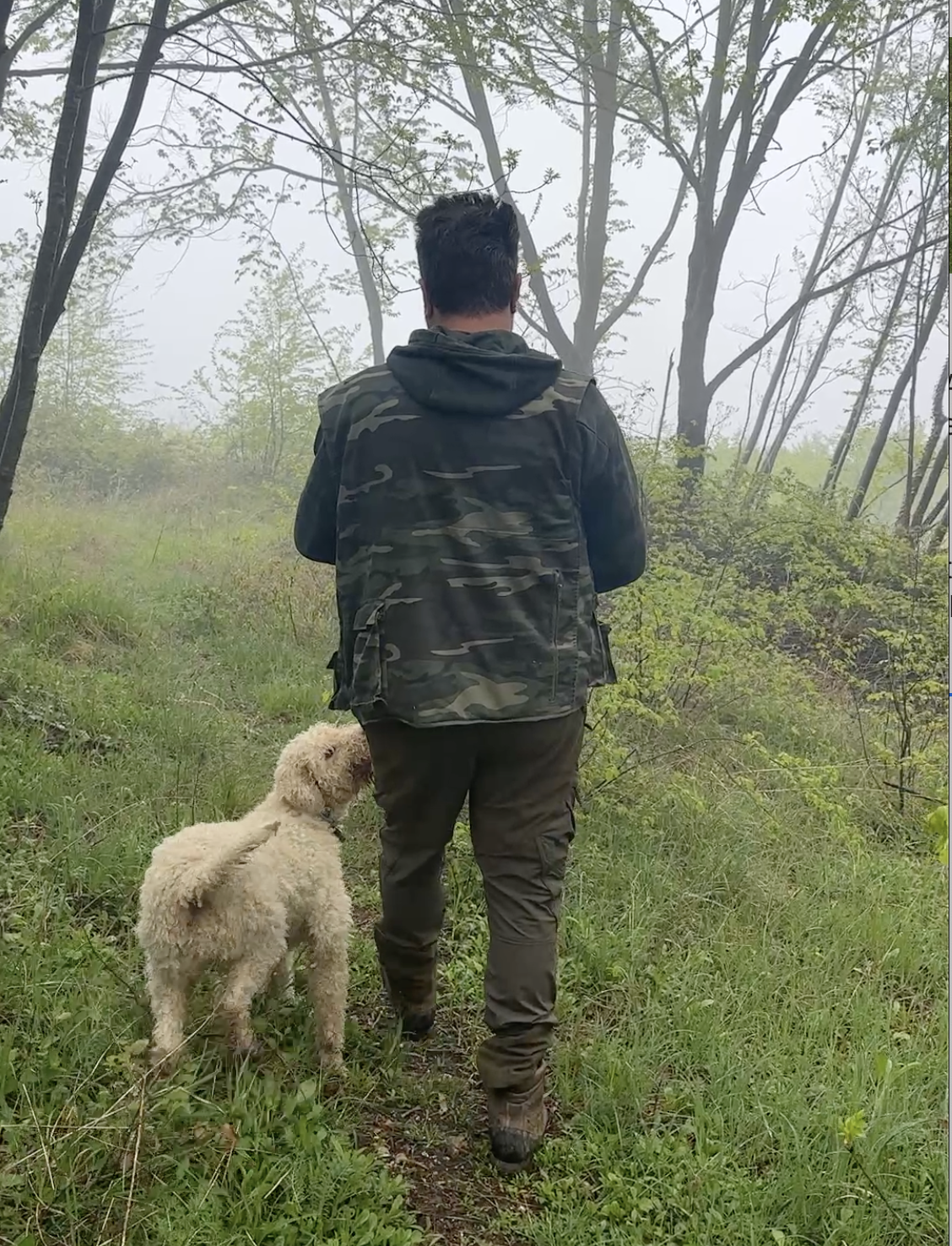
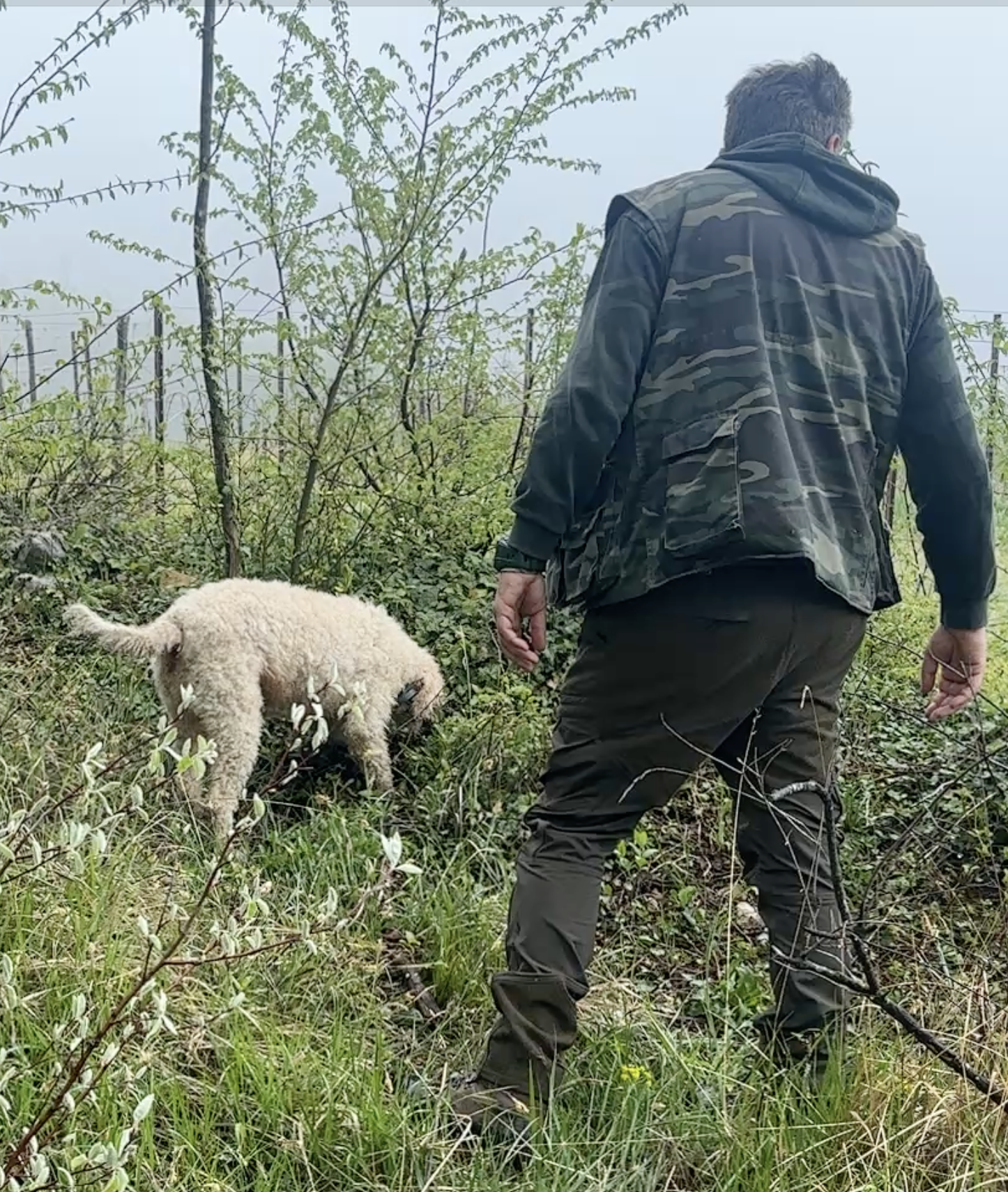
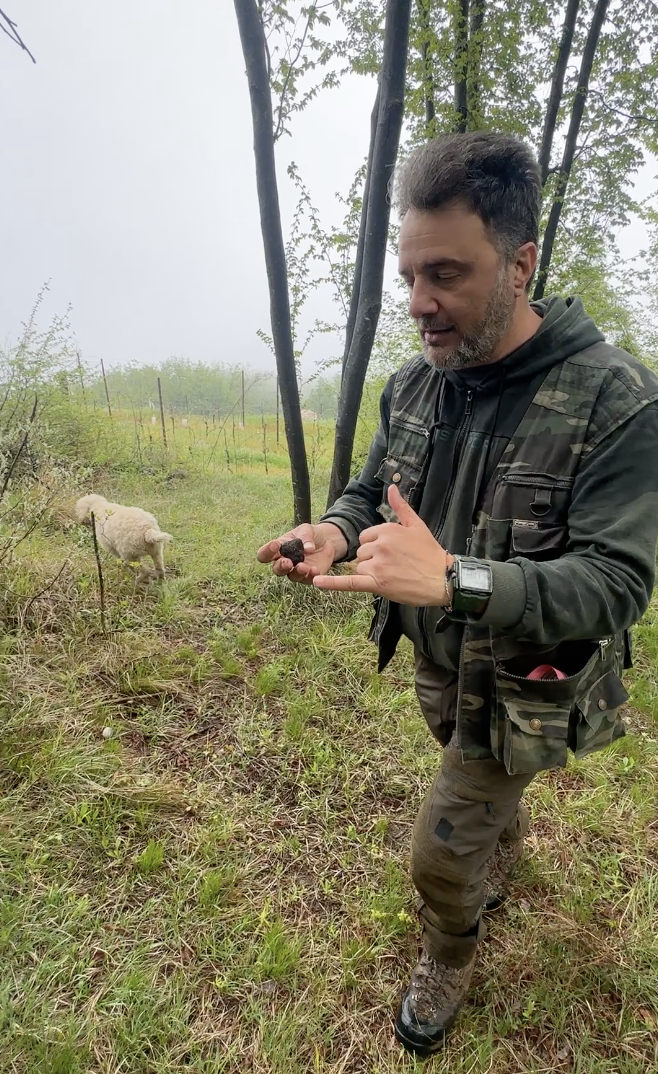
At one point, I asked Michele what he was feeding the dog as a reward. He told me it was prosciutto, and I remember thinking that it made perfect sense. Of course the dog would be eating prosciutto—this was Italy after all. A few moments later, he reached into his bag and showed me what it actually was. Bologna. It was such a small moment, but it stuck with me. It made the whole experience feel grounded, honest, and unpolished in the best possible way.
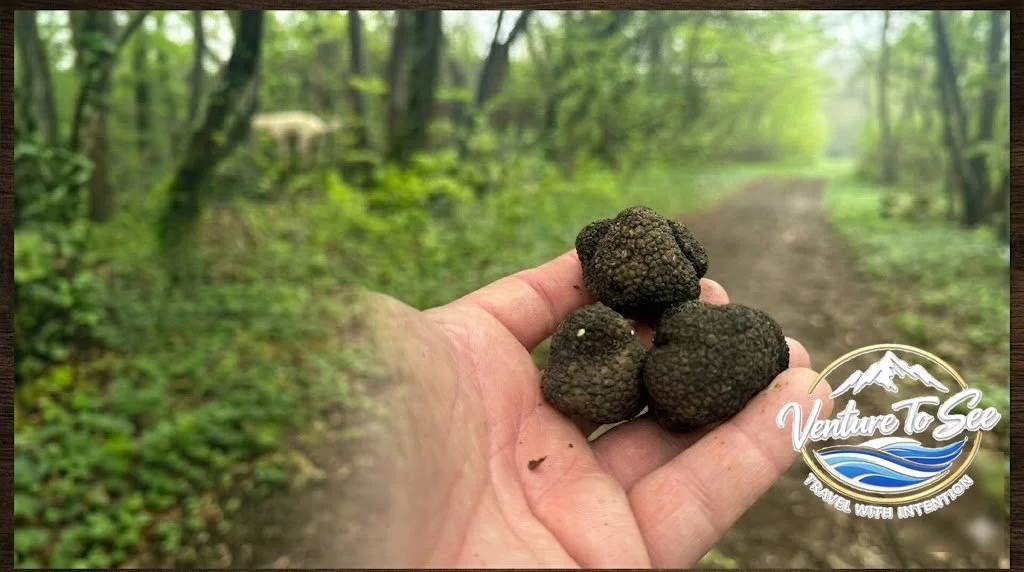
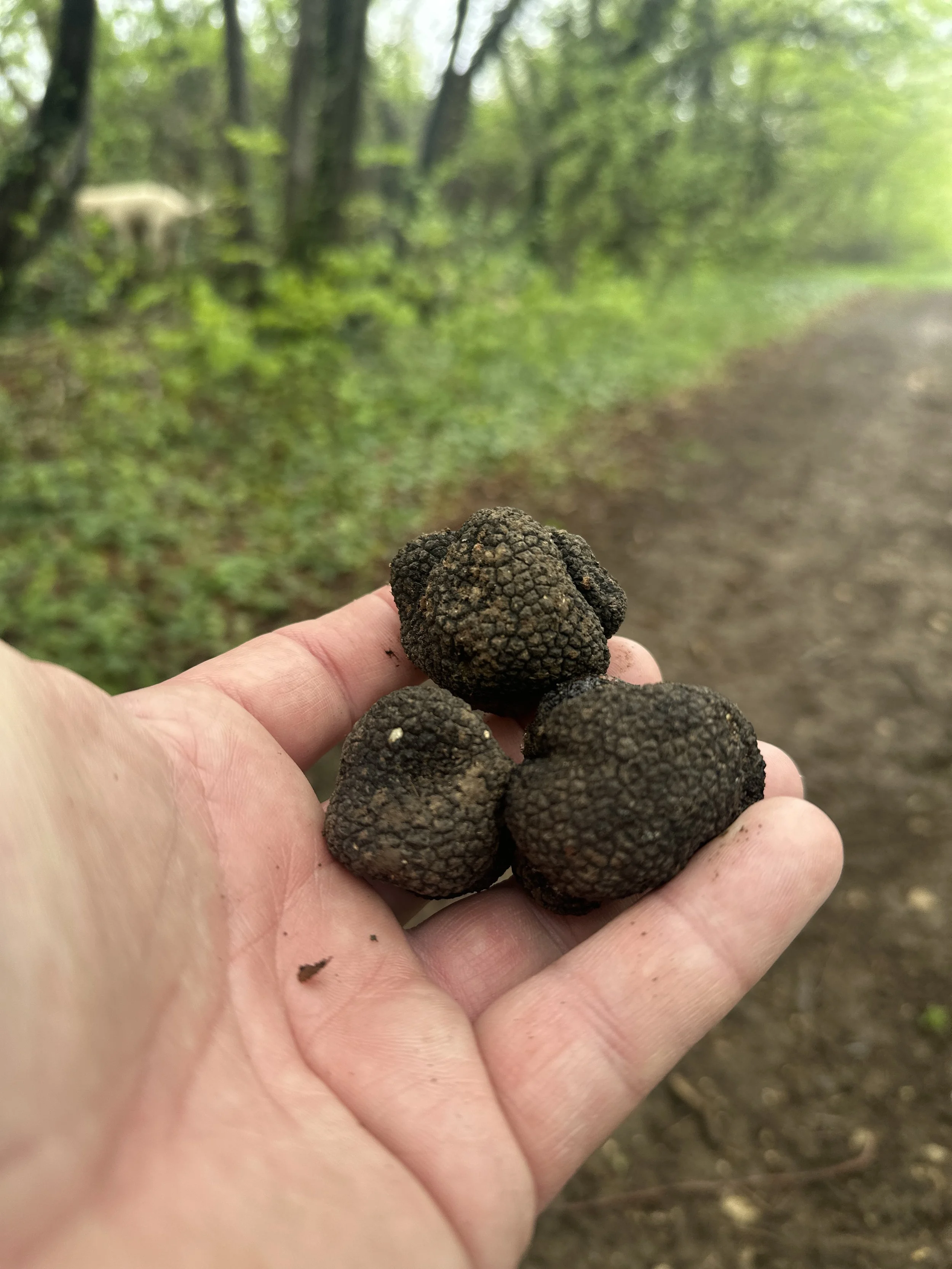
Over the course of the morning, we found three black truffles, each about the size of a golf ball. Holding one in your hand after watching it come out of the ground changes the way you think about it. It’s no longer something abstract, no longer just an ingredient on a menu. It becomes something tangible, something earned.
As we made our way back, we stopped along a ridge that overlooked the valley below. Michele told us that on a clear day, you can see all the way back to Verona. That morning, the fog held its place, hiding the view from us. But in a way, it made the moment feel more complete. It matched everything else about the day—subtle, quiet, and a little bit mysterious.
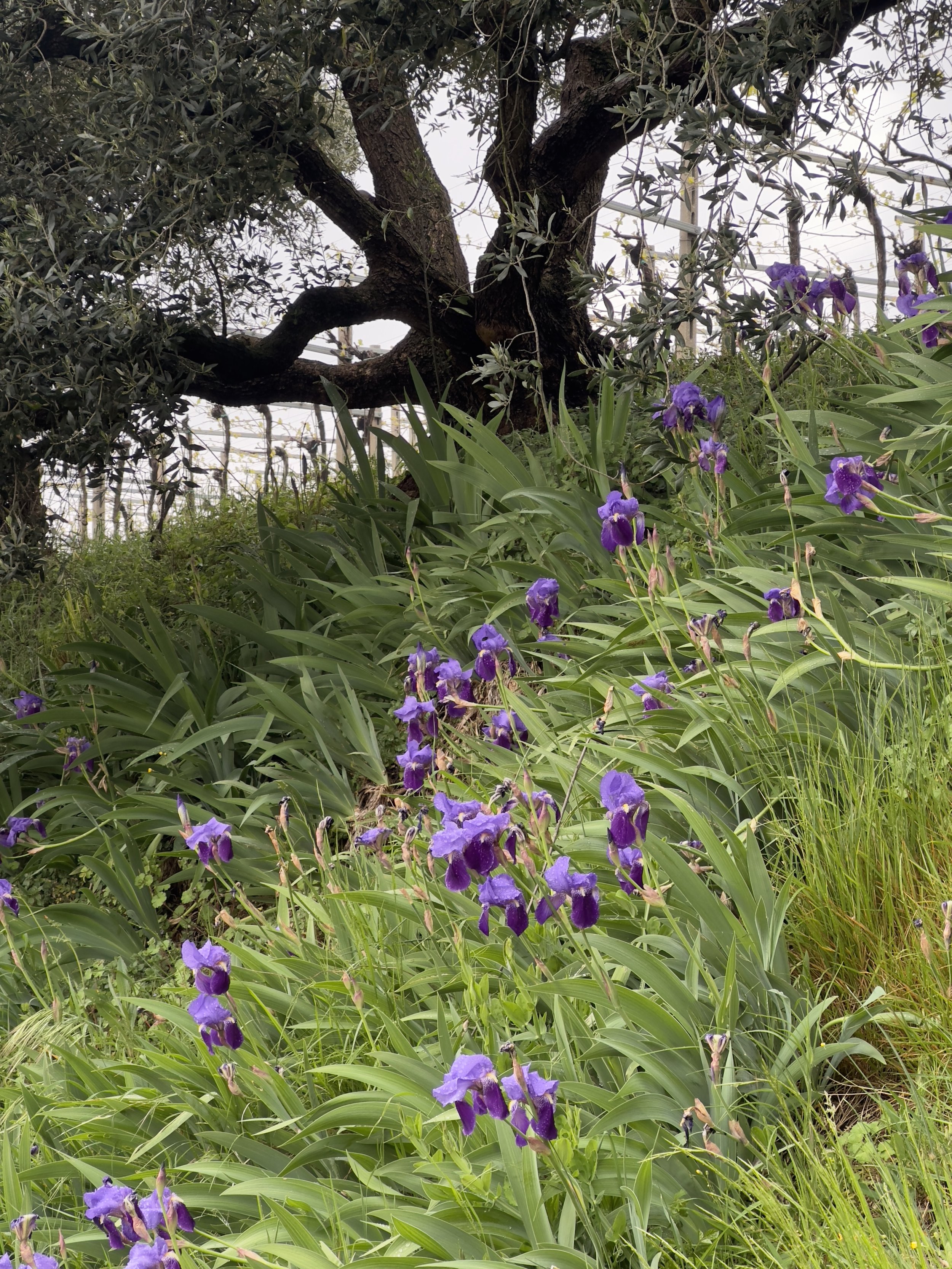
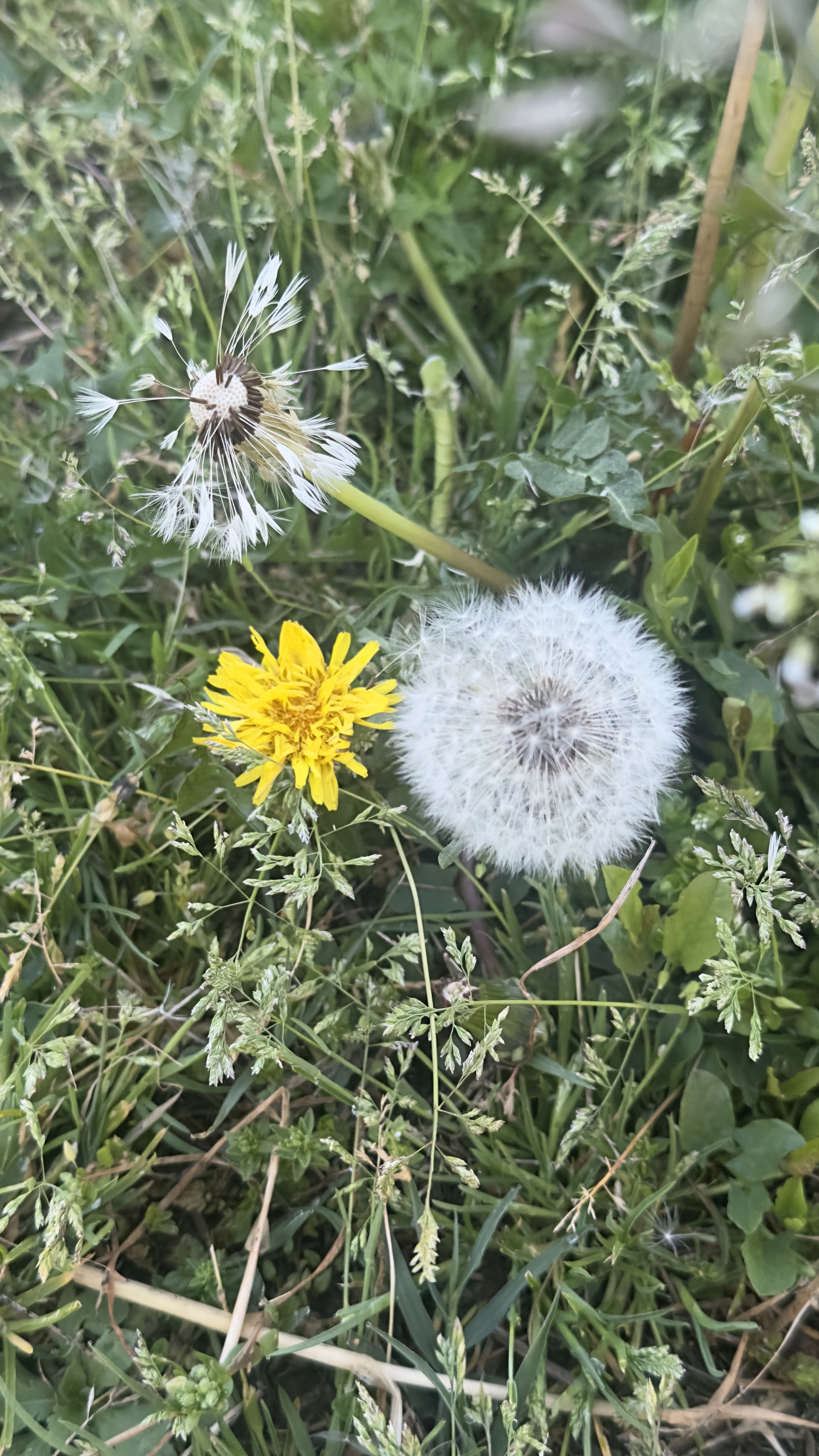
A little further along the path, Michele stopped again and pointed to a dandelion. At first, I didn’t think much of it. Back home, it’s something you step over without a second thought. But he called it tarassaco—a word that, at first, sounded like “Tabasco” to me—and that alone made me stop and pay attention. He explained that the plant represents three things: when it blooms yellow, it’s the sun; when it turns into the white seed head, it becomes the moon; and when you blow those seeds into the air, it becomes the stars.
Standing there in that moment, it wasn’t just a lesson about a flower. For me, it created a sense of connection—to the culture, to the landscape, and to the way everyday things are seen a little differently here. Something as simple as a dandelion wasn’t just part of the scenery. It was part of the story.
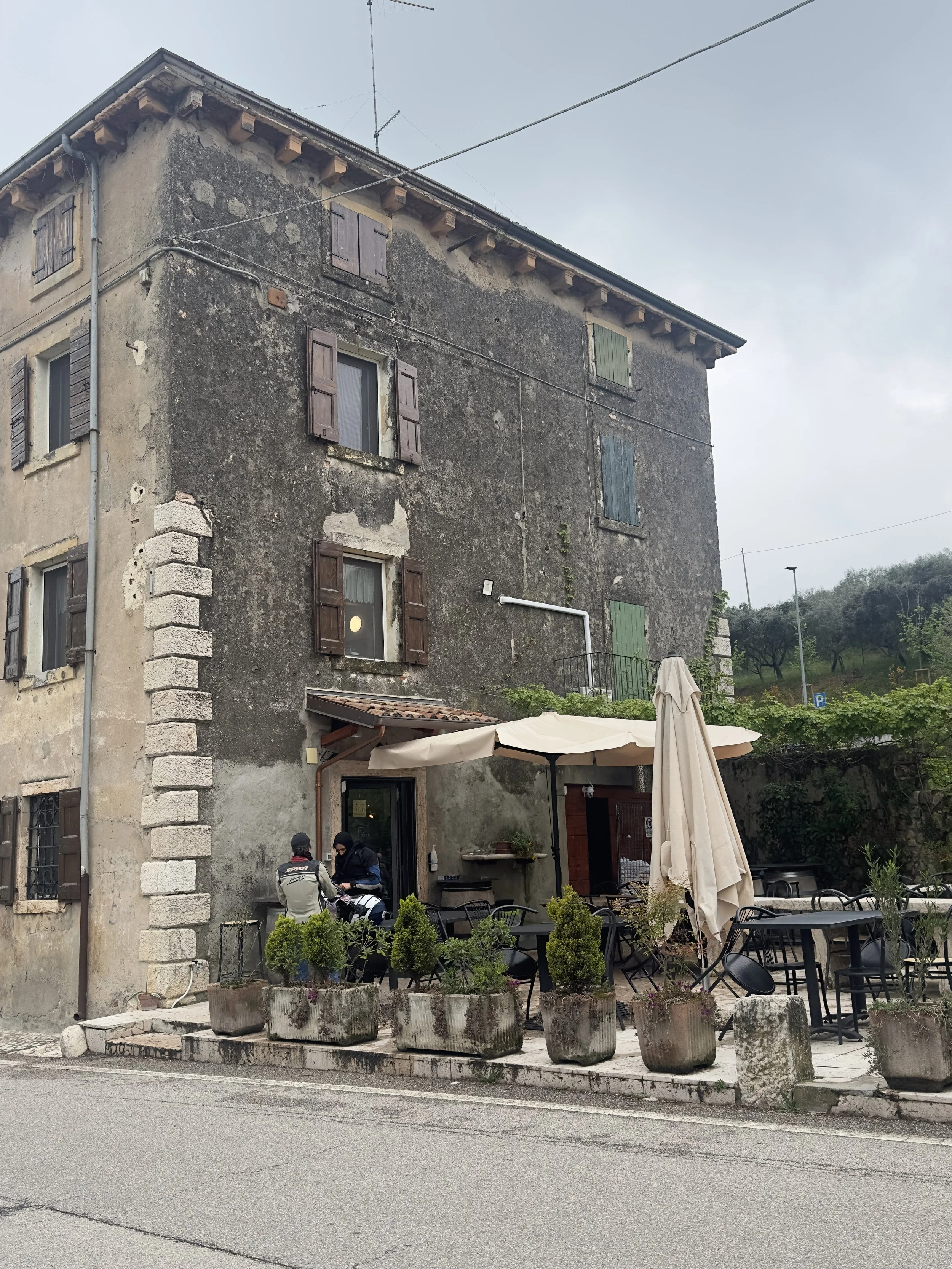
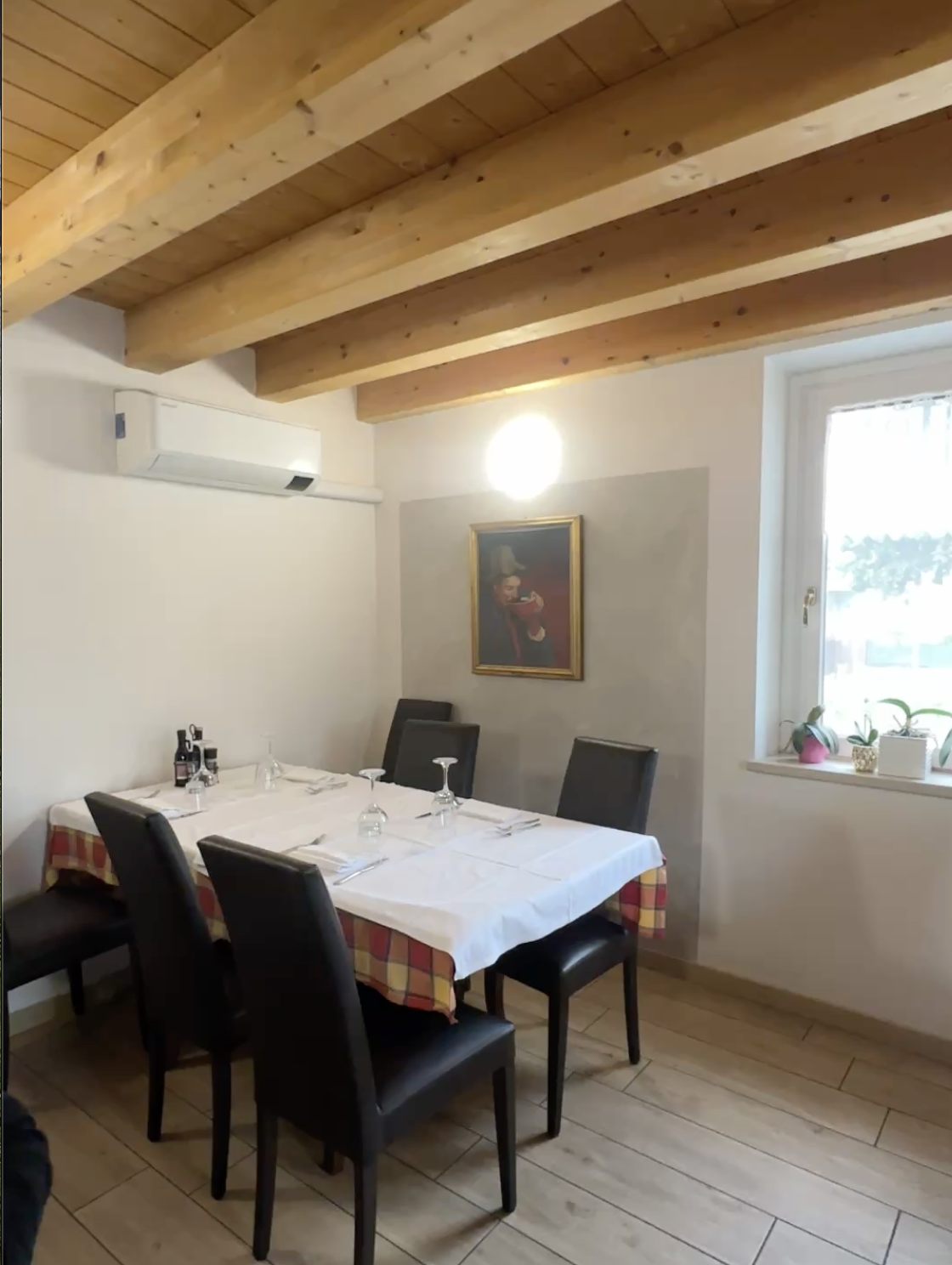
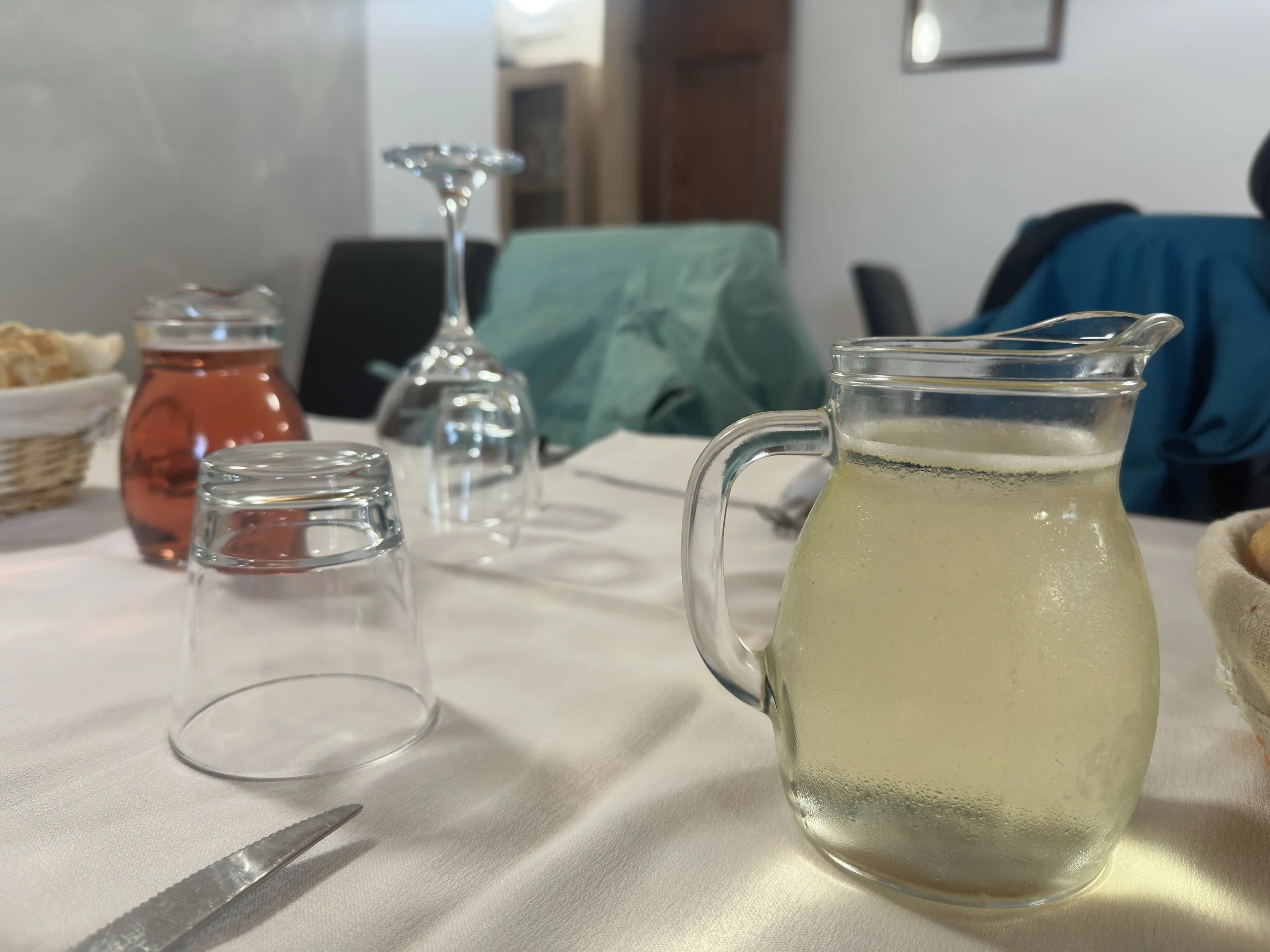
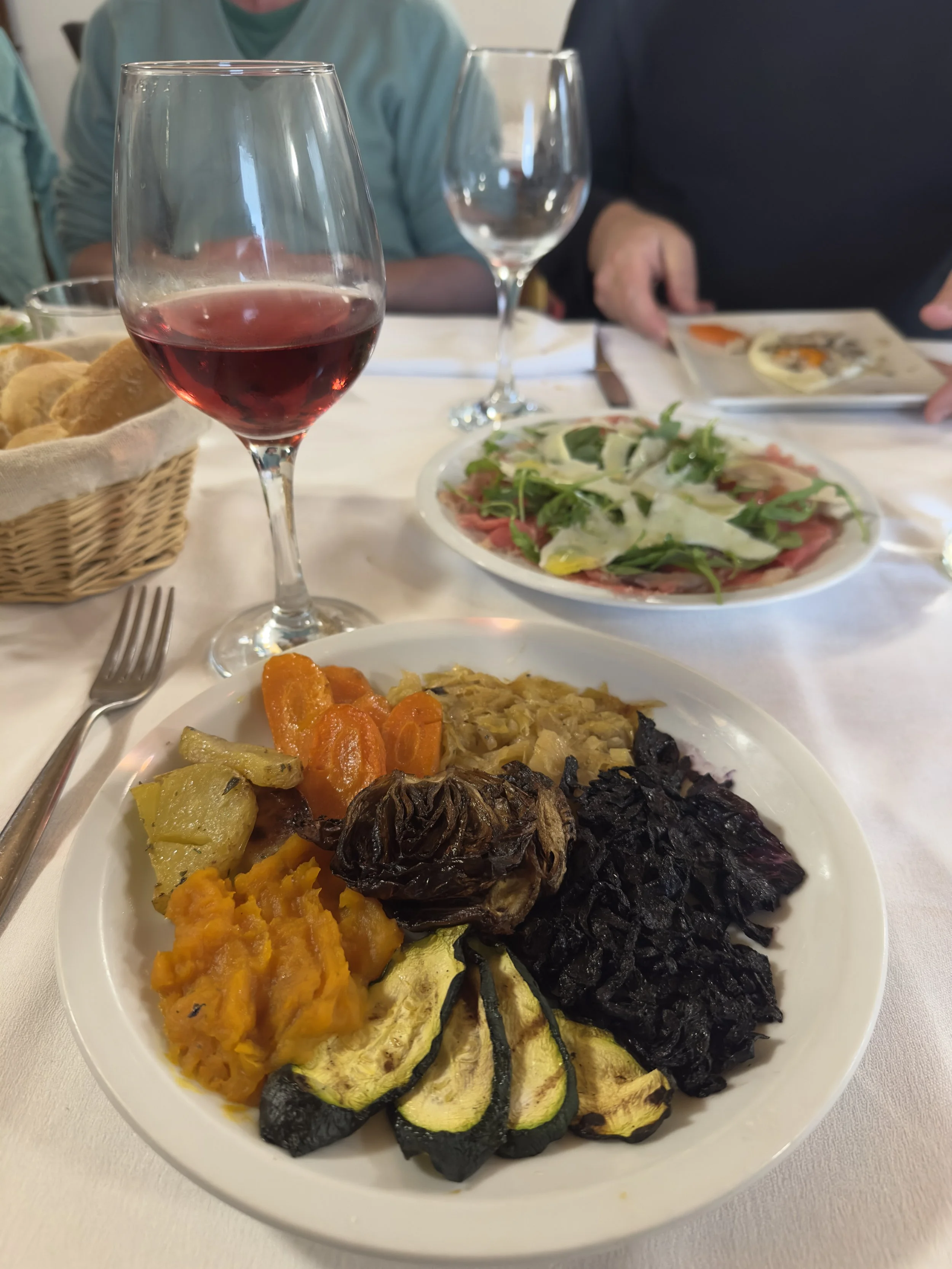
After the walk, we made our way to a countryside restaurant that had been in operation for over 200 years. We were seated upstairs in a private room, and by the time we sat down, wine from the local area was already on the table. It was easy to drink, and there was no sense of limitation to it. The atmosphere carried the same feeling as the morning—unhurried, welcoming, and shared.
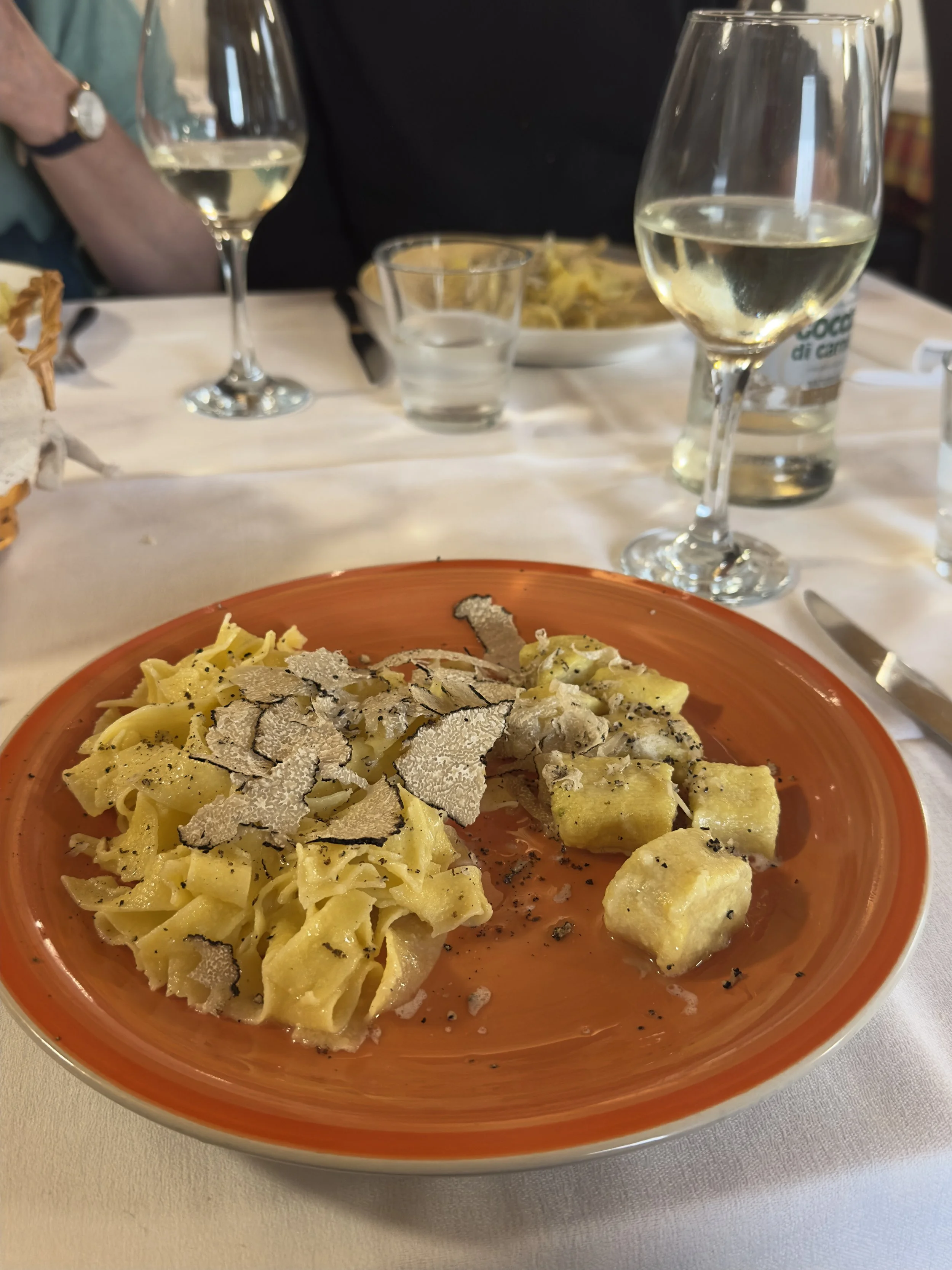
The first dish that arrived was ricotta gnocchi. It was light and soft, nothing like the heavier potato-based version I had always known. Michele took the truffles we had found earlier and shaved them directly over the plate. There was no heavy sauce, no unnecessary additions—just olive oil, gnocchi, and fresh truffle.
The next course was handmade pappardelle, wide ribbons of pasta prepared with the same restraint. It allowed the truffle to remain the focus, rather than competing with it.
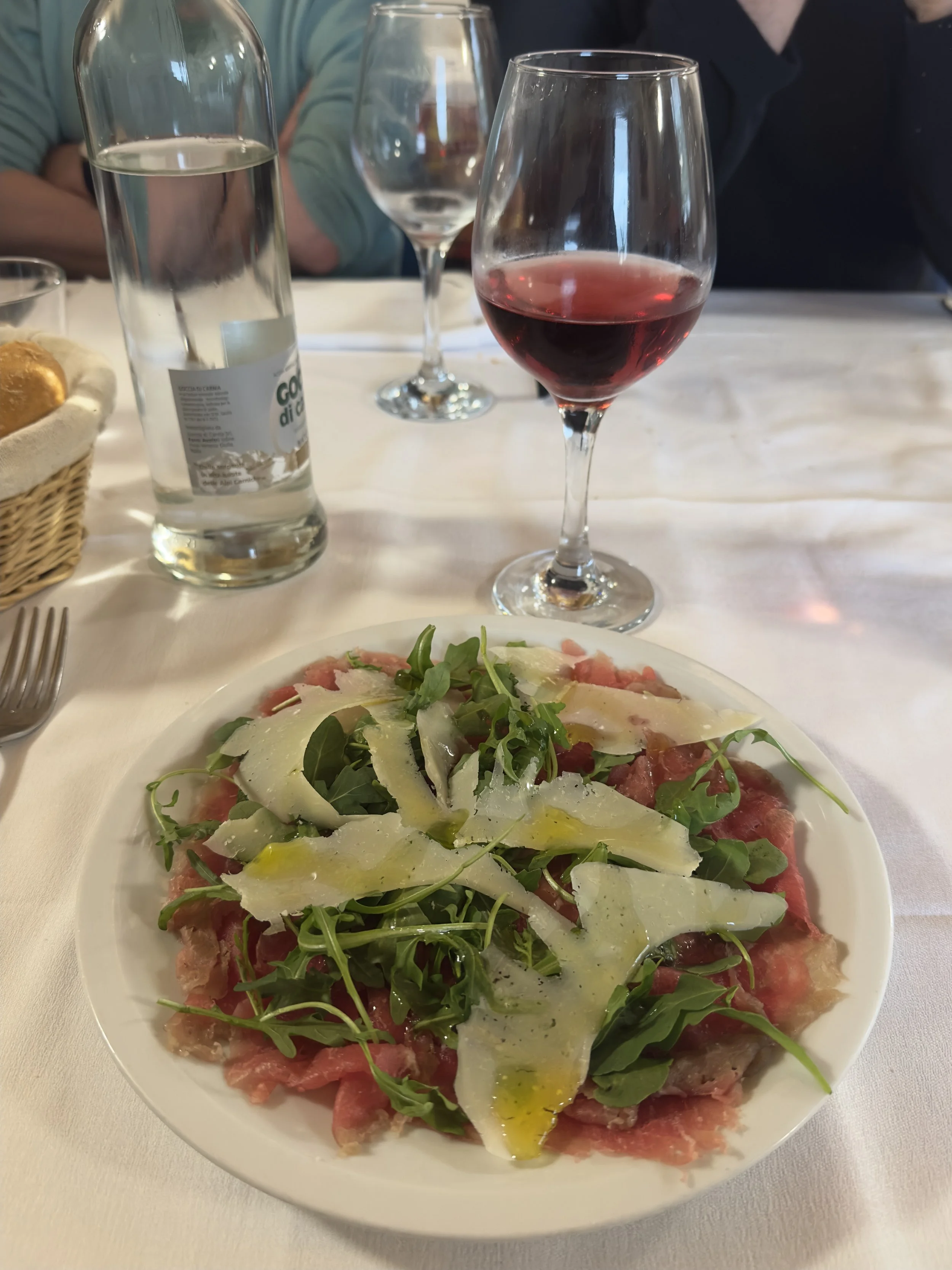
Then came a dish that stood out in a different way. Arugula, prosciutto, and shaved Parmesan were brought together with a drizzle of extra virgin olive oil. The flavor of the oil was noticeable immediately—slightly peppery, clean, and balanced. It was simple, but it left an impression that stayed with me.
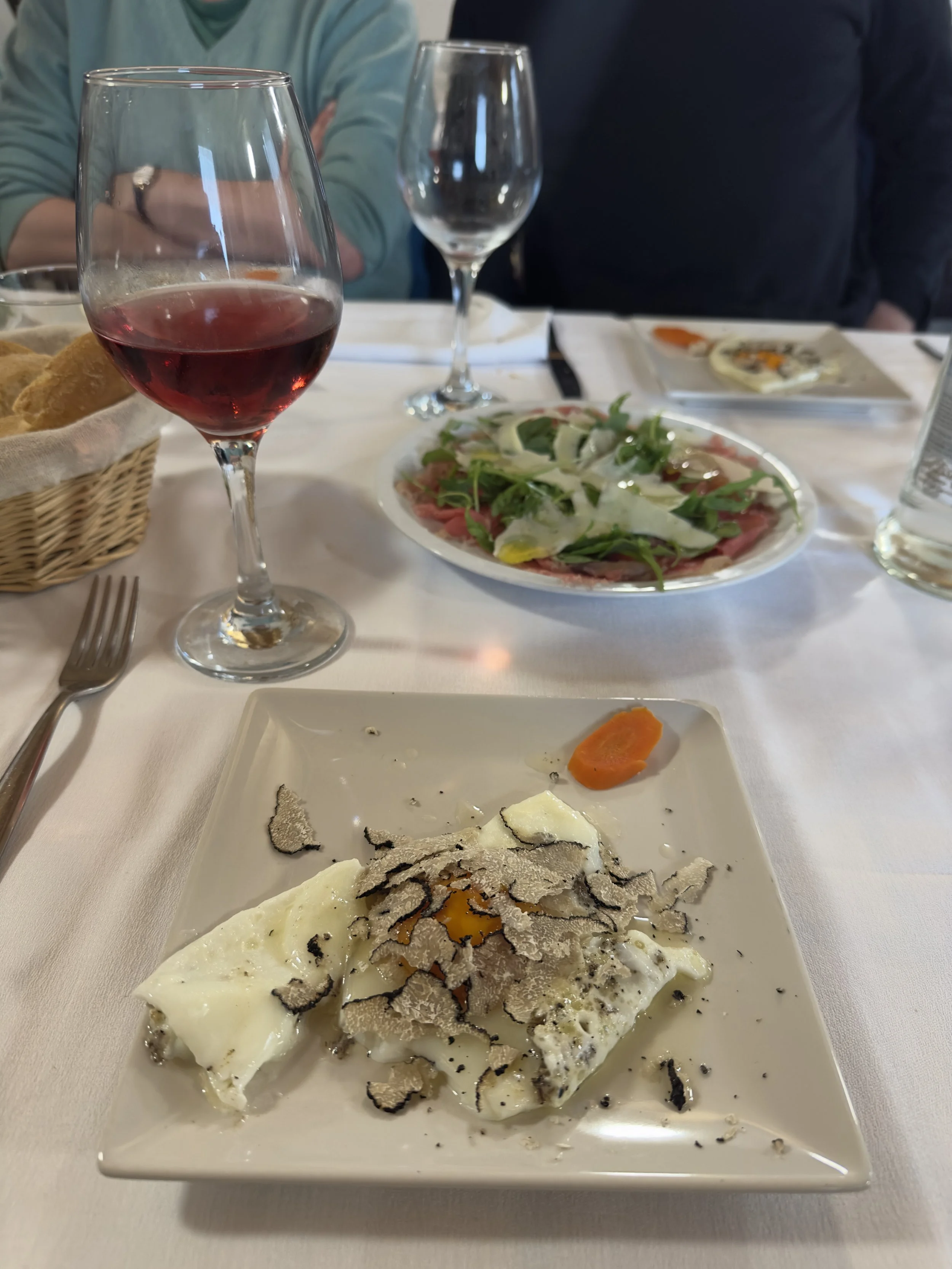
The final dish was eggs, served sunny side up, with black truffle shaved over the top. It was the kind of dish that doesn’t try to do too much, and because of that, it does everything right.
The meal lasted about an hour, maybe a little longer. There was no rush to finish, no pressure to move on. The conversations that had started in the woods continued at the table, as if the entire experience had been designed to flow from one moment into the next.
In the days that followed, I found myself searching for truffle dishes everywhere I went around Verona. There’s something about the flavor—earthy, fresh, and subtle—that stays with you. It becomes something you recognize, something you look for.
I’ve even stayed in touch with Michele since that day, which says more about the experience than anything else. And if I ever find myself back in Northern Italy, I know I’ll do it again. Maybe next time, the fog will lift, and I’ll finally see that valley stretch all the way back to Verona. But even if it doesn’t, I wouldn’t change a thing.
If This Is Something You’d Want to Experience
If you ever come across a truffle hunting experience like this, take it. It’s not flashy, and it doesn’t try to be. But it’s real, and it’s the kind of experience that stays with you long after the trip is over.
I’ve included a few options below, including the same style of small-group truffle hunting experience I did just outside of Verona, along with additional truffle-focused tours in Rome and Florence.
Each of these experiences offers a slightly different perspective, but they all center around the same idea—getting out of the city, spending time in the countryside, and experiencing food in a way that feels more connected to where it comes from.
If one of these stands out to you, take a closer look. Selecting a tour through this page helps Venture To See continue to record these types of experiences for your viewing. Thank You in advance for your support.
Thank you for spending a little time with Venture To See. If you have feedback, questions, or a favorite Barcelona experience of your own, feel free to reach out at venturetosee@gmail.com. Be sure to follow along on social media @venturetosee for more travel adventures.
