
Making Paint Like Rembrandt: A Different Kind of Amsterdam Experience
Making Paint Like Rembrandt: A Different Kind of Amsterdam Experience
We skipped the canal cruise and the cheese tasting and spent an afternoon grinding pigment and mixing oil paint by hand. Here is what that was actually like.
Amsterdam comes with a reputation before you ever arrive. You hear about the canals, the Red Light District, the cafés, the bakeries, the cheese shops, the museums, and the steady movement of people through the city center. All of that is part of Amsterdam. But after visiting on several occasions, I have come to appreciate that the city gets more interesting the moment you step slightly off the expected path.
On this particular trip we wanted something different. Not another museum stop, not a quick walk through the busiest part of town. We wanted something cultural and hands-on, connected to the history of the city in a more personal way. That led us to a small-group workshop in central Amsterdam built around Rembrandt, color, and the old-world process of making paint by hand.

Everything was laid out before we began — raw pigments, oils, and the tools of the trade.
A Small-Group Workshop in the Heart of the City
The session began in the lobby of a hotel in central Amsterdam — the Tivoli Doelen, on Nieuwe Doelenstraat. From there we walked to a small workspace where the guide had everything laid out across the table: stones, powders, oils, tools, and materials.
It is advertised as a small-group experience, but on our day it ended up being private — just our group and the guide. That made the whole thing feel more personal than I expected. The guide is a paint-maker himself, with a background tied to the Rembrandt House Museum, and that depth showed quickly. The workshop is split into two parts: the first focused on history, Rembrandt, and how painters once created their colors; the second handed the work over to us, mixing paint and putting it on a small canvas.


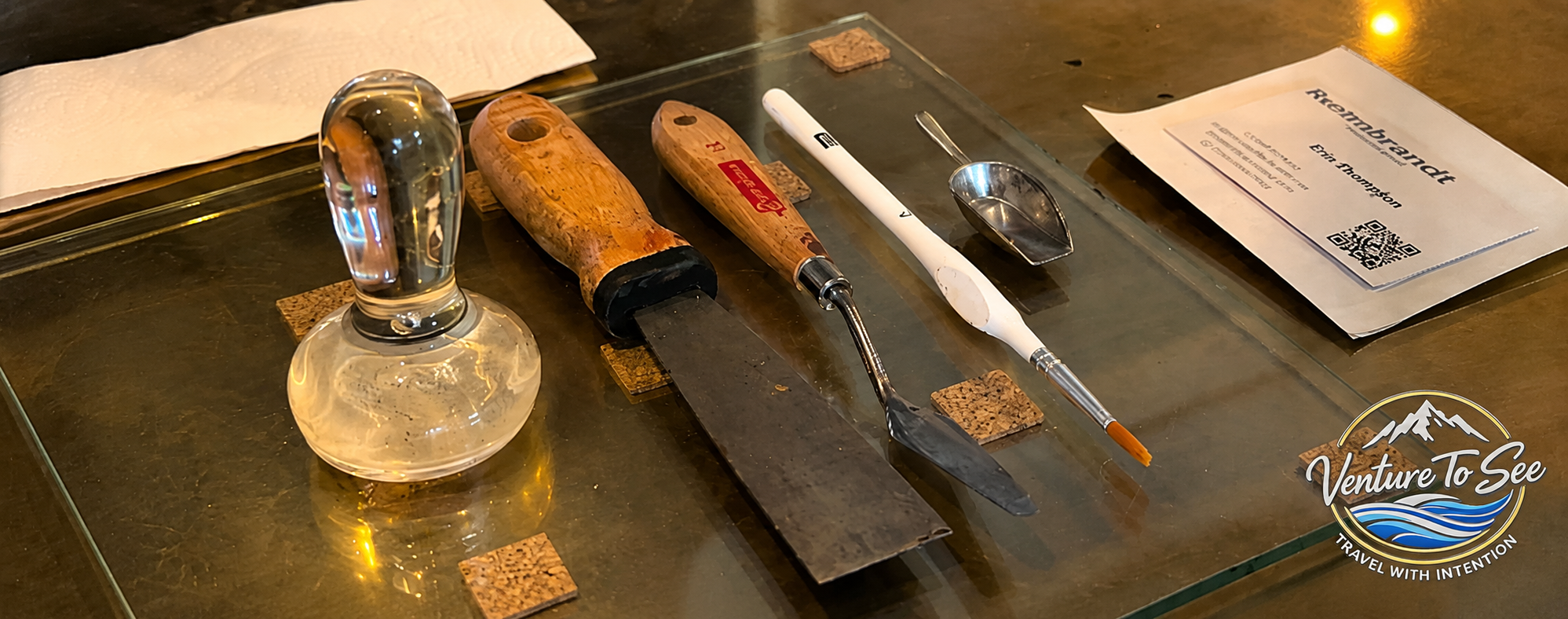
The tools we worked with — closer to a 17th-century studio than a modern art class.
Learning How Paint Was Made in Rembrandt's Time
The historical portion was far more interesting than I assumed it would be. The guide walked us through how colors were produced during Rembrandt's era and how much effort went into making paint before tubes and art stores existed. One detail stuck with me: the role of apprentices, who spent long hours grinding materials and preparing small batches for the master. They could not simply make large amounts and store them — the paint dried out, and some colors were far too expensive to waste.

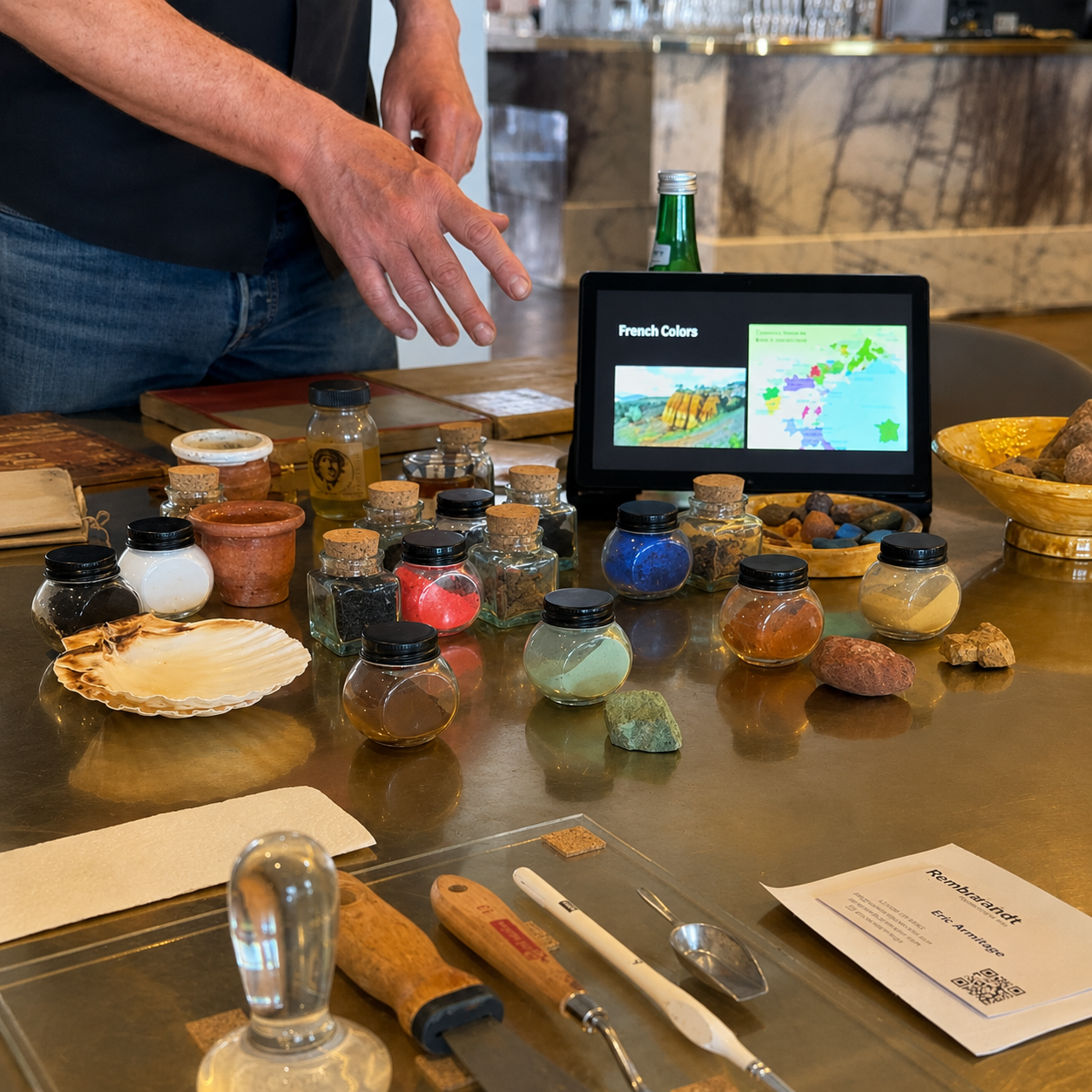
The raw materials behind the palette — ground minerals and earths, before any oil is added.
Blue was the clearest example. Certain blue pigments came from rare stones sourced from as far away as Afghanistan. For a painter in Europe, blue was not just another color on the palette. It was expensive, difficult to obtain, and used with intention.

Blue — once sourced from rare stones shipped halfway across the world, and used sparingly because of it.
That reframed how I look at older paintings. The whole workshop is built around the small set of natural pigments Rembrandt actually used — fourteen of them — and what a painter could coax out of that limited palette. Once you understand where those materials came from and what they cost, a finished canvas reads differently.
The Hands-On Part: Making Our Own Paint
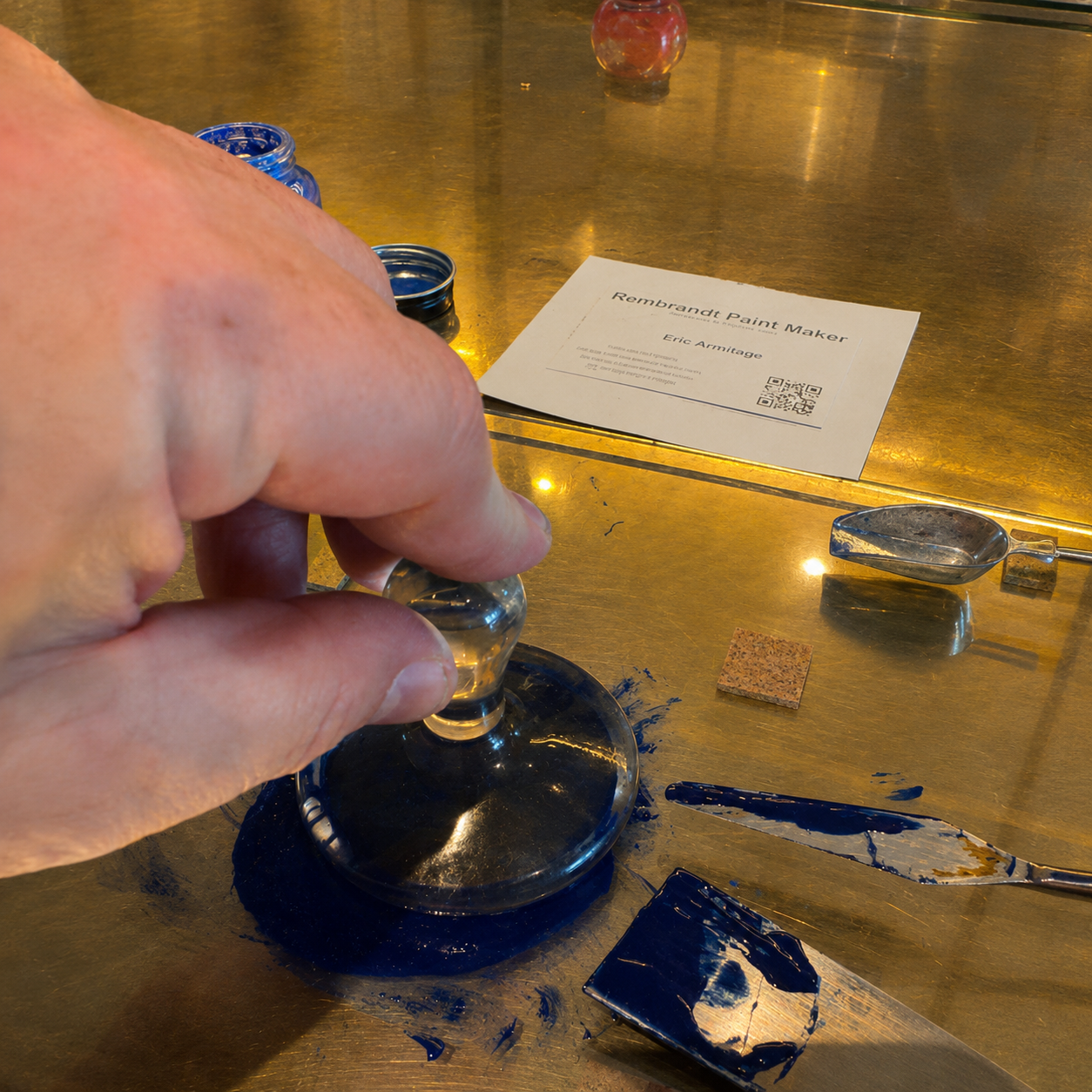
After the history, we moved into the interactive half. Each of us made our own color using powdered pigment and linseed oil, working the materials together by hand until they slowly became paint. Because there were three of us, the guide added a fourth color so we had a fuller palette to work with.

Working pigment into linseed oil by hand until it slowly turns into paint.
Once the paints were ready, we were handed small pieces of canvas and invited to make our own "masterpieces." That word is being used generously. But that was part of the fun. This was never about producing perfect art. It was about understanding the process — slowing down, using your hands, and getting a glimpse of the physical work behind paintings we usually only see finished and framed.


The colors we mixed by hand — including the fourth one the guide added to round out our palette.
Practical Notes
- The meeting point is inside the Tivoli Doelen Hotel on Nieuwe Doelenstraat — tell the doorman you are there for the painting workshop and they will point you to the room.
- It is listed at roughly two hours; ours ran closer to three with the history portion, so leave a little buffer in your day.
- No art experience is needed. The point is the process, not the result.
- You are working with oil paint and pigment — wear something you would not mind getting a mark on.
- This pairs well before a visit to the Rijksmuseum or the Rembrandt House Museum, when the techniques are still fresh in your head.
- It is a small, often private session, so book ahead rather than counting on a walk-up slot.
Make Paint the Way Rembrandt Did
A private, hands-on workshop in central Amsterdam — fourteen natural pigments, linseed oil, and a canvas of your own to take home. Materials included.
Book on Viator ■Why This One Stood Out
This was not the typical Amsterdam activity. It was not a canal cruise, not the Heineken Experience, not a cheese tasting or a march through the busiest streets. Those all have their place. This offered something quieter and more meaningful.
It connected us to Amsterdam's artistic history in a way that felt personal. We were not looking at paintings from a distance — we were learning how the materials were made, why certain colors mattered, and how much effort went into the craft behind the canvas. For Venture To See, that is the kind of travel experience that holds up: not dramatic, not over-planned, but the sort that makes you pause, learn something unexpected, and walk away seeing a place a little differently.


The finished pieces — "masterpiece" used generously, but that was never the point.
Final Thoughts
Amsterdam is busy, especially downtown, and it is easy to get pulled into the most obvious attractions. But if you want something cultural, hands-on, and a little outside the standard tourist routine, a Rembrandt-inspired paint-making workshop is worth considering. It gave us a different connection to the city — one rooted in art, history, materials, and the simple act of making something ourselves.

A small tulip canvas to take home — a fitting souvenir from an afternoon in Holland.
An Offbeat Half-Day in Amsterdam
If you have a free morning or afternoon and an interest in art or history, this is an easy, low-pressure way to spend it. Free cancellation up to 24 hours out.
Check Availability on Viator ■Frequently Asked Questions
How long does the Rembrandt paint-making workshop in Amsterdam last?
It is listed as roughly two hours. In practice ours ran closer to three once the history portion was included, so plan for a half-day window rather than a tight two-hour slot.
Where does the Amsterdam Rembrandt paint workshop take place?
It meets inside the Tivoli Doelen Hotel at Nieuwe Doelenstraat 24, in central Amsterdam, near public transport. The workshop runs from a small dedicated room — just let the doorman know you are there for the painting experience.
Do you need any painting or art experience to do this?
No. The workshop is built around the process — grinding pigment, mixing oil paint, and applying it — not around producing polished art. Complete beginners are the norm, not the exception.
Is the experience private or a group tour?
It is run as a small-group or private session, typically for up to six people in a booking. On our day it ended up being just our group and the guide, which made it feel more like a personal lesson than a tour.
What is included, and what do you take home?
All materials are included — pigments, linseed oil, brushes, and canvas. You leave with the paints you mixed and the small canvas you painted.
Is this suitable for families, couples, or non-artists?
Yes. It works for couples, families, and solo travelers, and the history half gives non-painters plenty to engage with even if they are nervous about the brushwork.
How does this compare to visiting the Rembrandt House Museum or the Rijksmuseum?
It is a complement, not a substitute. The museums show you the finished work; this workshop shows you how the materials behind it were made. Doing this first tends to make a later museum visit read very differently.
What should I wear or bring?
You are handling pigment and oil paint, so wear something you do not mind getting a small mark on. Nothing else is required — the materials are provided.
How far in advance should I book?
Because sessions are small and often private, slots are limited. Booking a few days ahead is sensible, especially in peak season, and there is free cancellation up to 24 hours before your time.
Where can I book the Amsterdam Rembrandt paint-making workshop?
You can reserve it through Viator here, with instant confirmation and free cancellation up to 24 hours in advance.
If This Was Useful, Buy Us a Coffee
We write these from first-hand experience, not press trips. If this helped you plan, a small tip keeps the next story coming.
■ Buy Us a CoffeeHave a Question or a Trip to Plan?
We read every message. If you are planning Amsterdam — or a cruise with a port day here — send us a note.
✉ Email Us Follow the Journey