
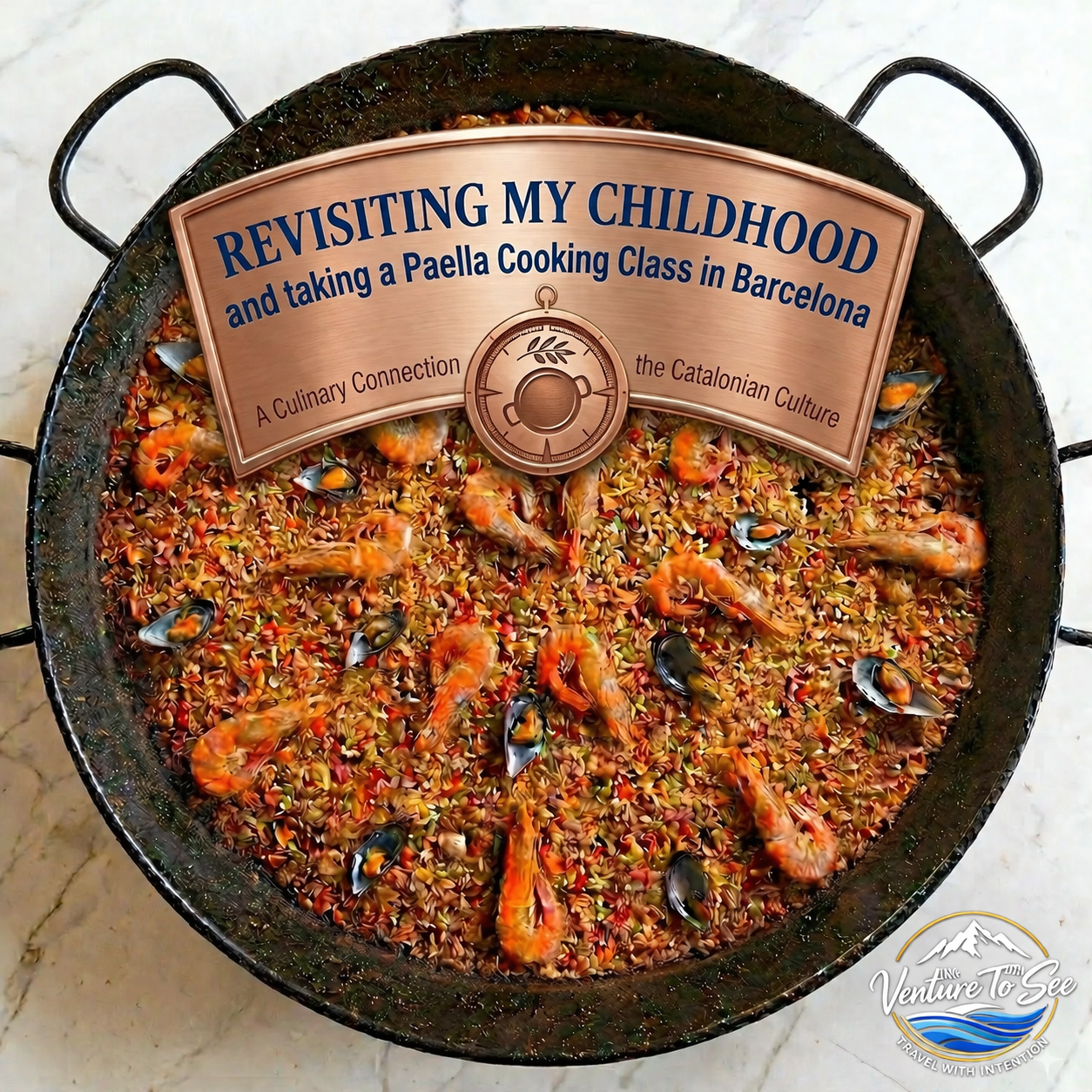
Barcelona Paella Cooking Class Review: A Family-Friendly Food Experience
A paella cooking class in Barcelona became more than just a food experience for my family and me. From walking through La Boqueria Market to learning the history behind one of Spain’s most iconic dishes, this hands-on class brought together food, culture, and personal memories in a way that made Barcelona feel even more meaningful.
There are some travel experiences you choose because they sound fun, and then there are the ones you choose because something about them feels personal before they even begin.
That was exactly what happened to me in Barcelona.
Out of all the things my family and I could have booked in the city, the paella cooking class was the one that stayed in my mind. It was not just because paella is one of Spain’s most famous dishes. It was because, for me, paella has always carried a memory with it.
When I was around 12 years old, I had the opportunity to live in the southern part of Spain for a couple of years. On one of my very first nights there, we went out for dinner, and paella was placed in front of me. At that age, I did not know what to make of it. The rice was yellow, there were mussels in the pan, shrimp I did not want, and it was a long way from the kind of food an American kid usually hoped to see at the table. Back then, I was probably wondering where the cheeseburger was.
But time has a way of changing how you remember a meal.
What I did not understand then was that paella was never just about what was in the pan. It was about place. It was about gathering. It was about Spain. Over the years, that dish became tied to childhood memories, to exploration, and to the gift my parents gave me by letting me experience another culture when I was still young enough for it to shape me.
So when I found myself in Barcelona years later, now traveling with my own family, signing up for a paella cooking class felt like more than just booking an excursion. It felt like stepping back into a part of my own story.
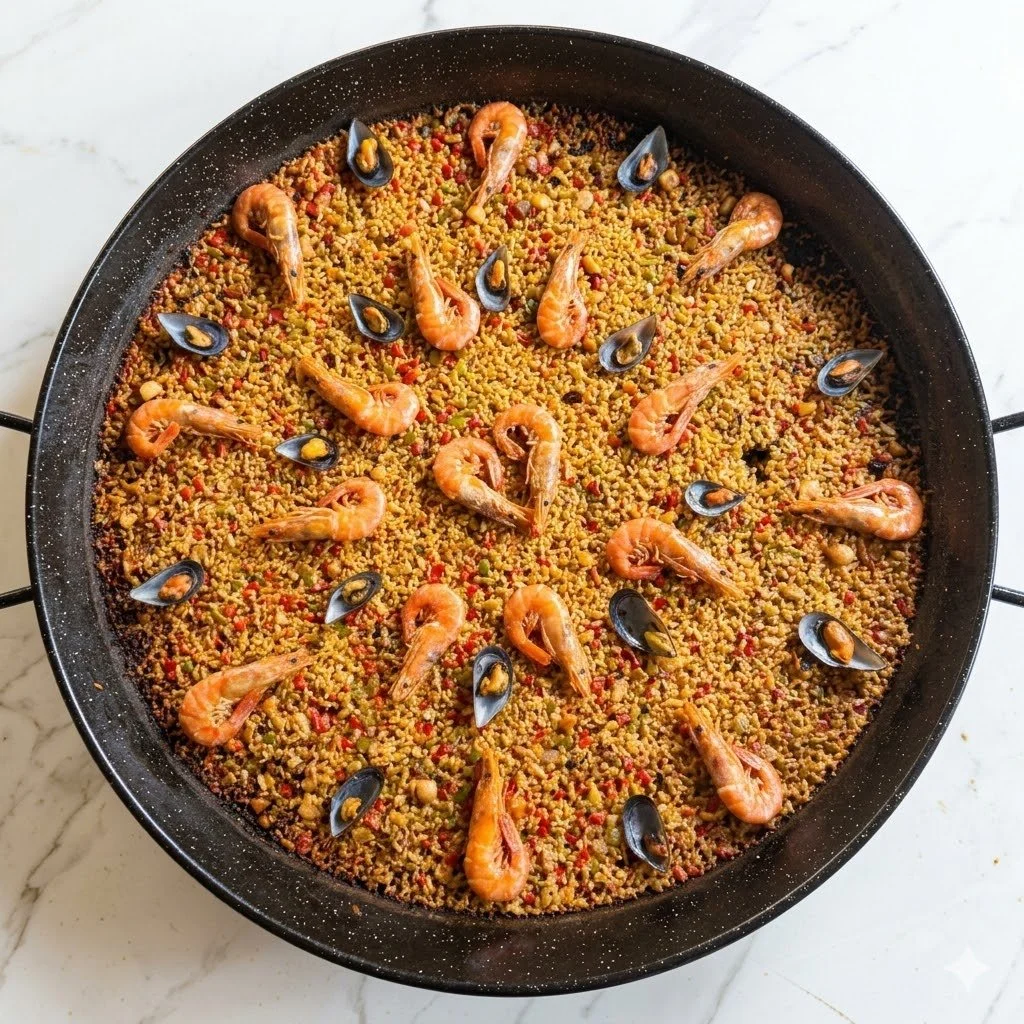
Traditional Seafood Paella in Barcelona
That afternoon, we met our guide near Las Ramblas along with a small group of other travelers. From there, we made our way into one of the most famous markets in Barcelona, La Boqueria.
And honestly, if you are going to begin a food experience anywhere in the city, this is exactly the kind of place you want it to start.
La Boqueria is more than a market filled with colorful fruit, hanging jamón, and rows of seafood on ice. It is one of those places where you can feel the history beneath your feet. The market traces its roots back centuries, beginning as an open-air gathering place for vendors selling meat and produce just outside Barcelona’s old city walls. Over time, it evolved into the lively covered market that stands today, becoming part of the daily rhythm of the city for generations of locals.
Walking through La Boqueria with that in mind changes the experience. You are not just passing through a market. You are stepping into a place that has fed Barcelona for hundreds of years.
The pace inside is part of the charm. Fresh seafood laid over ice. Bright fruit juices lined up in coolers. The sound of vendors talking with customers. Locals weaving through with purpose while visitors stop every few feet to take it all in. And in our case, this was not just sightseeing. We were there to gather ingredients for the meal we were about to help make.
There is something grounding about seeing food at its source before it becomes dinner. Before paella became a finished dish in a pan, it was seafood at the market, vegetables waiting to be chopped, rice chosen for a reason, and a tradition being carried forward one ingredient at a time.
After our market visit, we walked back toward the Gothic Quarter and up to a second-floor studio kitchen. That was where the class really began, but it never felt stiff or formal. It felt relaxed, social, and welcoming in the way the best travel experiences often do.
Our chef talked us through the dish, the process, and the meaning behind it. And that is where the story of paella became even more interesting.
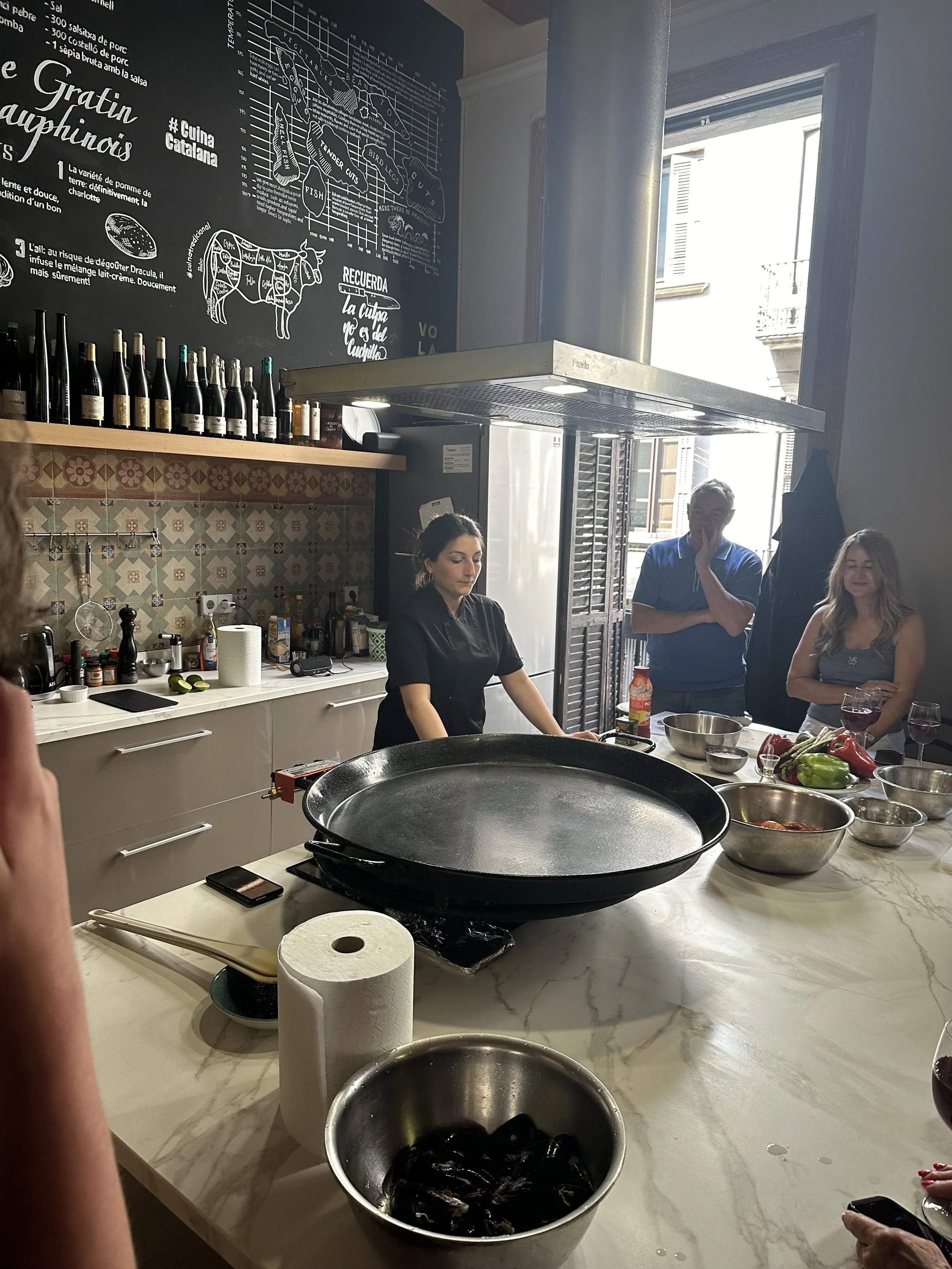
Chef Preparing the Paella Cooking Class in Barcelona
If there is one thing this class made clear, it is that paella is more than a recipe. It is part history, part tradition, and part shared experience.
That afternoon, our chef explained paella not as a luxury dish, but as a communal one.
That detail stayed with me the most.
Paella was meant to bring people together. It was made in large pans, shared across a table, and built around the idea that food is as much about company as it is about flavor. That spirit still carries through in a cooking class. Nobody disappears into the background. Everyone gets pulled in. One person chops vegetables. Another cleans shrimp. Someone else stirs the rice. Before long, strangers are talking to each other like they arrived together.
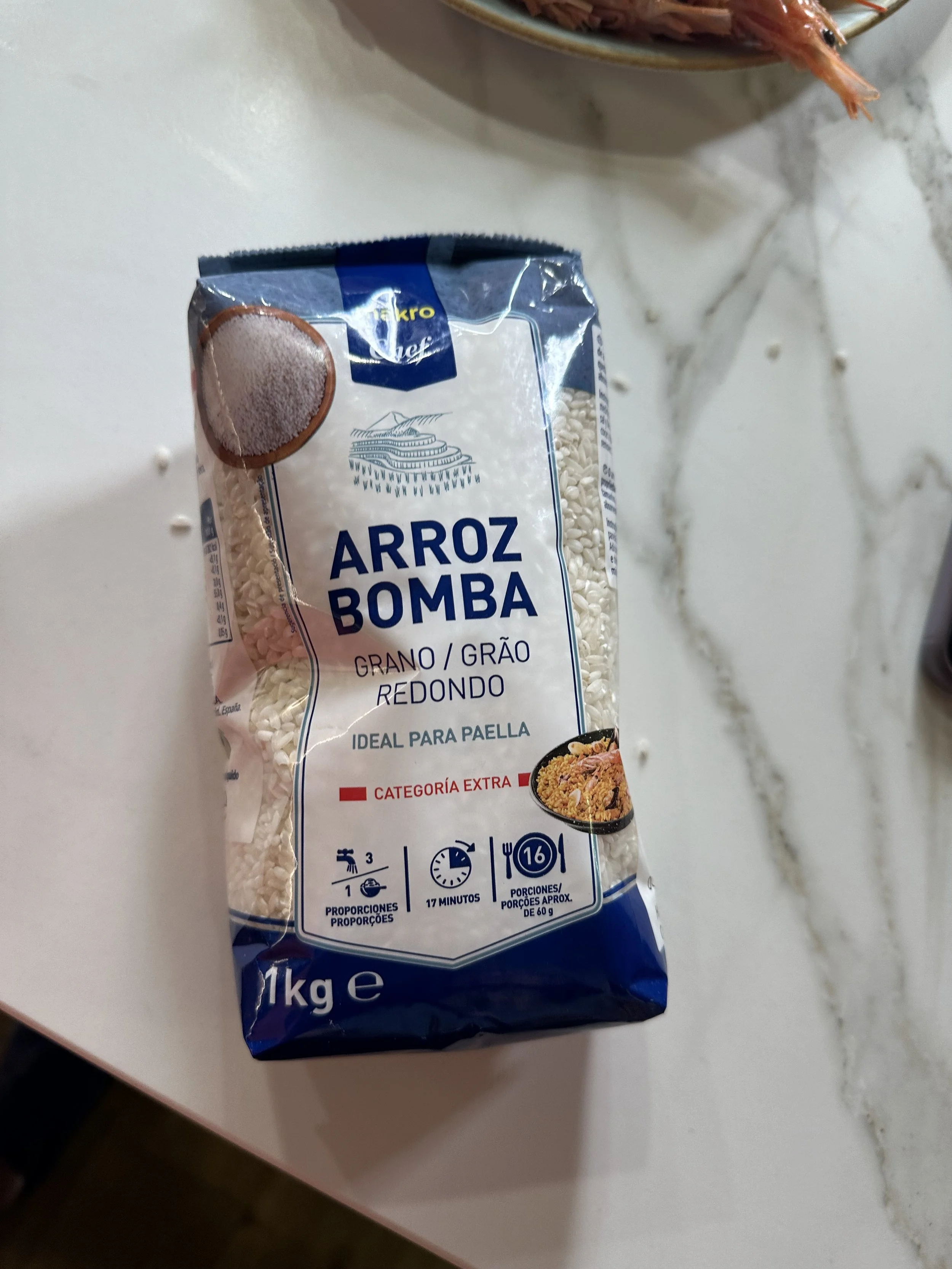
Bomba Rice Used for Traditional Paella in Barcelona
That is one of the reasons I always look for a cooking class or culinary experience when I travel. If you want to connect to a place in a real way, food is one of the fastest ways in. It tells you what people value, what the land produces, what the sea provides, and how a community gathers.
And this class did exactly that.
As the cooking got underway, you could start to see the dish take shape. The ingredients moved from separate pieces on a counter to something that already felt like a shared meal in progress. Watching that transformation unfold made the experience even more engaging because you were not simply waiting for food. You were part of the process.
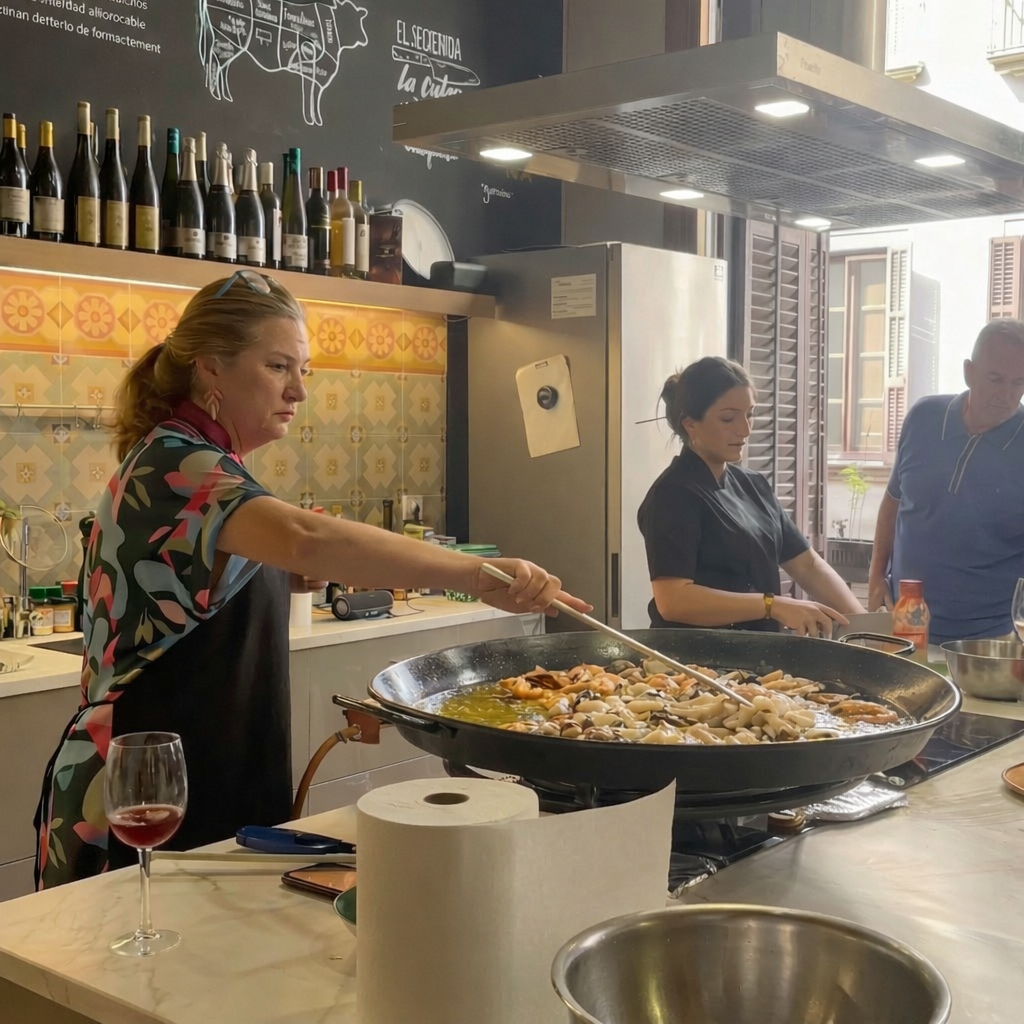
While the rice cooked, we were served sangria, wine, and non-alcoholic drinks. The atmosphere loosened up quickly. There was plenty of laughter, people comparing notes, and the easy kind of conversation that happens when everyone is doing something with their hands instead of sitting through a lecture.
I also learned something I did not expect about sangria. In my mind, sangria had always been red wine, fruit, and maybe a little brandy. In this class, the version we had included rum. It still had the red wine base, but it had a slightly different character than I expected, and it definitely added to the mood in the room.
By the middle of the class, the paella had become the center of attention. You could see the layers building, the ingredients settling into place, and the pan starting to look like the final dish we had all been waiting for. It was one of those moments where the class shifted from instruction to anticipation.
By the end, we had made more paella than our group could possibly finish. We took pictures, sat down together, and enjoyed the kind of meal that tastes better because you watched it come together from start to finish.
And when the paella was finally ready, it felt like more than just dinner. It felt like the reward for everything that had happened before it — the walk through the market, the stories from the chef, the hands-on work, and the time spent with people who had all come together around one pan.
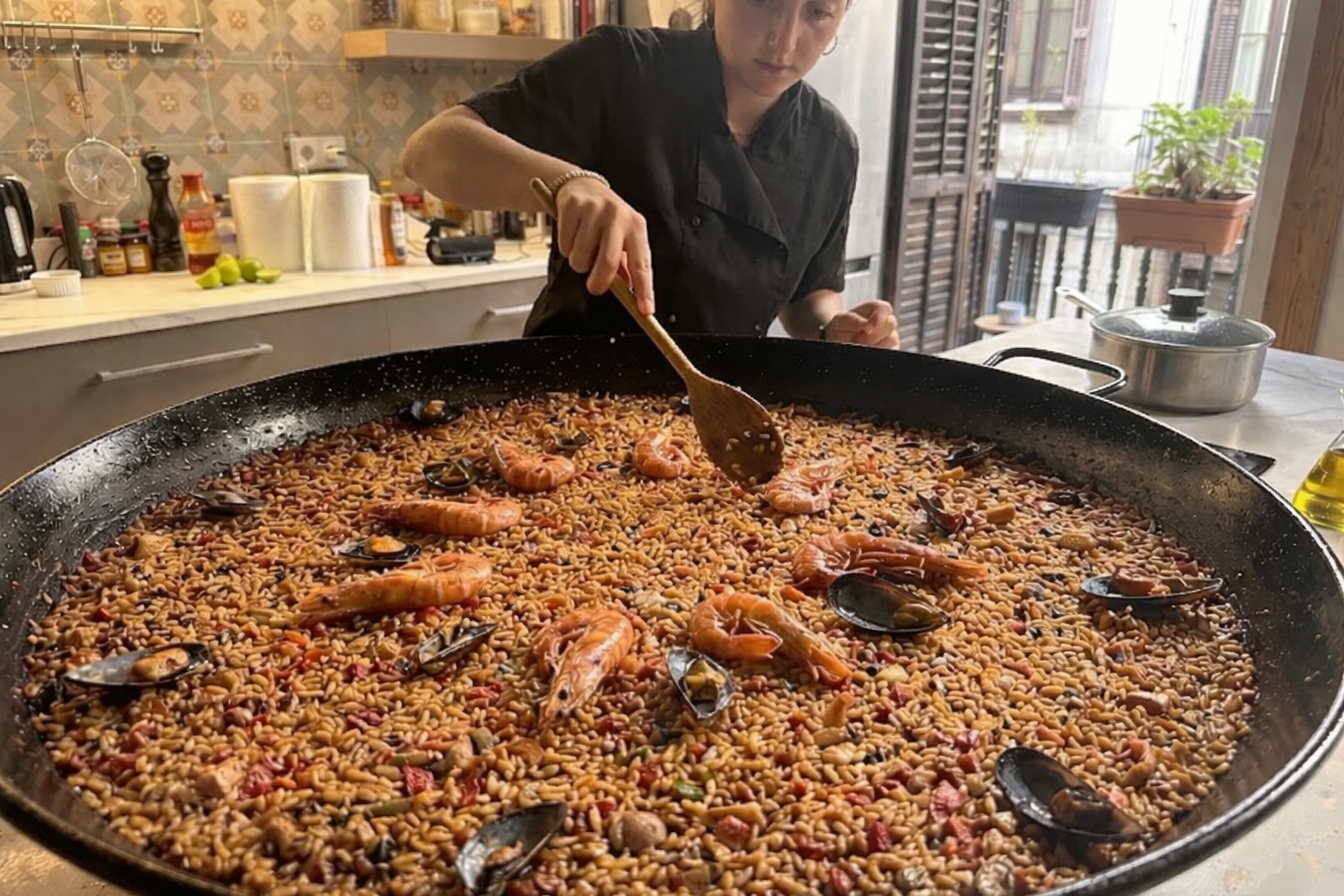
Chef Finishing a Traditional Seafood Paella in Barcelona
When we stepped back outside, Barcelona was still glowing with that late summer light that makes a city feel open for a few extra hours. The evening did not feel over. It felt like the experience had become part of the city itself.
That is the real pull of something like this.
You are not just taking a class.
You are walking through one of Barcelona’s historic markets. You are learning why one of Spain’s most iconic dishes matters. You are cooking with your family, or with strangers who will not feel like strangers by the end. You are hearing the story behind the food while standing in a city that still lives and eats in rhythm with its markets and the sea.
For families, it works because kids are not just watching. They are participating. That changes everything. For couples, it becomes a shared memory that feels far more meaningful than just another dinner reservation. And for solo travelers, it may be one of the easiest ways to connect with other people without forcing it. The meal itself does the work for you.
And maybe that is why paella has lasted.
Not just because it tastes good, although it certainly does.
It has lasted because it asks people to gather around it.
In Barcelona, that feels exactly right.
If This Is Something You’d Want to Experience
If this kind of experience speaks to you, Barcelona is a great place to make it happen. A paella cooking class is more than just a meal. It is a chance to step into the food culture of Spain, spend time in one of the city’s most memorable settings, and come away with something you can carry home long after the trip is over. You are not just tasting paella at a restaurant. You are seeing how it comes together, learning why the ingredients matter, and sharing the experience with the people around you.
For families, it creates a memory everyone can take part in. For couples, it adds something personal and hands-on to the trip. For solo travelers, it is an easy and natural way to connect with other people while doing something distinctly local. And if you enjoy food-focused travel, this is the kind of experience that helps a destination feel more real.
Barcelona offers several paella and market experiences, so it is worth comparing what is included before you book. Some classes include a market visit, tapas, sangria, or smaller group sizes, while others focus more heavily on the cooking itself. I recommend looking for an option that gives you both the cultural context and the hands-on preparation, because that is what makes the experience stand out.
Ready to add a paella cooking class to your Barcelona plans? Browse the available experiences below and find the one that fits your travel style.
Thank you for spending a little time with Venture To See. If you have feedback, questions, or a favorite Barcelona experience of your own, feel free to reach out at venturetosee@gmail.com. Be sure to follow along on social media @venturetosee for more travel adventures.
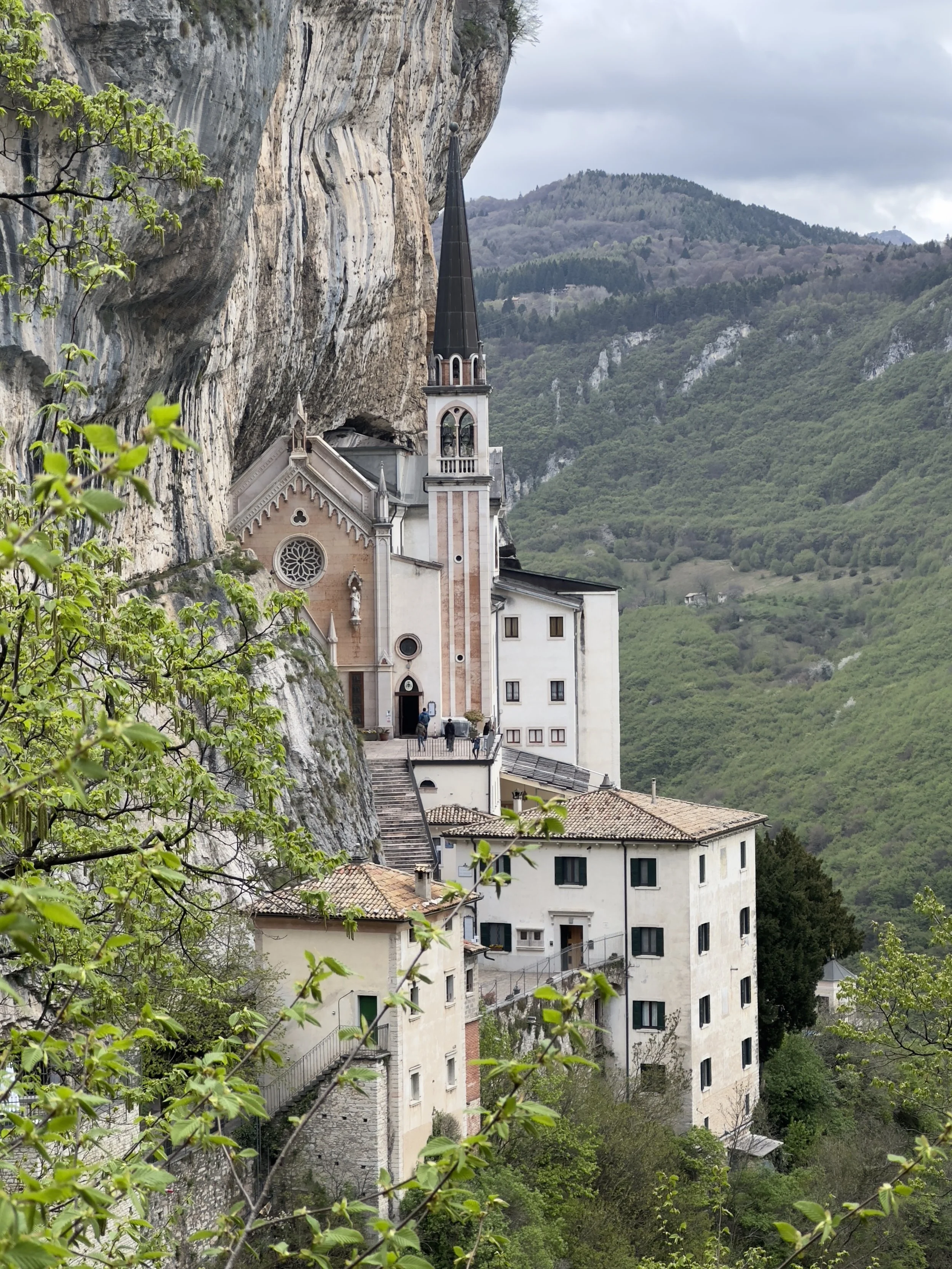
A Pilgrimage on the Rock: Visiting Madonna della Corona
Hidden in the cliffs above Lake Garda, Madonna della Corona is one of Italy’s most breathtaking and spiritual destinations. This firsthand travel story explores the dramatic hike from Spiazzi, panoramic viewpoints, the Stations of the Cross, transportation options from Verona and Lake Garda, and guided tour alternatives. Whether you’re planning a pilgrimage, a scenic hike, or a day trip in Northern Italy, this guide shares practical tips, emotional reflections, and insider advice for visiting Madonna della Corona—an unforgettable sanctuary carved into the side of a mountain.
Madonna della Corona has been a place of devotion for centuries, its origins tracing back to at least the 11th century, when hermits are believed to have lived in caves carved into the sheer rock face of Monte Baldo. According to tradition, a statue of the Virgin Mary was miraculously brought to the site in the 16th century, solidifying its importance as a pilgrimage destination. Over time, the precarious hermitage evolved into a sanctuary, with wooden walkways eventually replaced by stone paths and staircases to make access safer for pilgrims. In 1625, Madonna della Corona was formally recognized as a sanctuary, and through ongoing restorations and expansions, it has remained a powerful symbol of faith, perseverance, and human ingenuity—quite literally built into the mountain itself.
April of this last year I was fortunate enough to travel to Northern Italy. As a traveler heading into unfamiliar places, I spent many evenings researching things to do, and that is when I first came across Madonna della Corona. From the very first photographs—this church seemingly suspended from the face of a mountain—I was both intrigued and a little obsessed. It felt impossibly remote, carved into stone rather than built upon it, and I knew I had to try to get there.
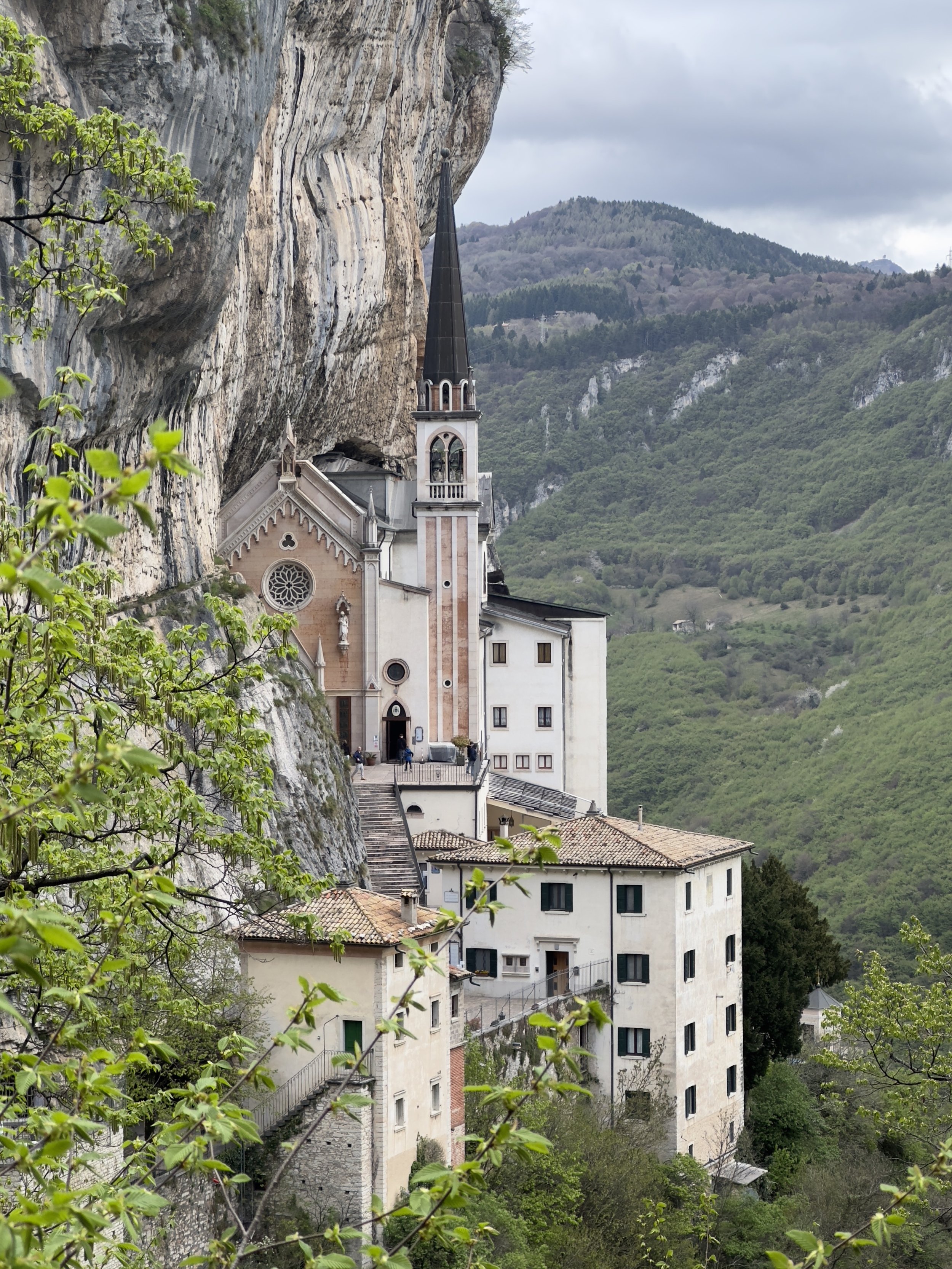
Madonna Della Corona
Getting There and Back: Transportation to Madonna della Corona
Reaching Madonna della Corona requires some planning, especially if you are traveling without a car. While the sanctuary feels wonderfully isolated, transportation options become limited once you leave the main routes of Veronaand Lake Garda and head into the mountains.
From Verona, travelers can take a train to Domegliara–Sant’Ambrogio or Peri, then connect by local bus or taxi toward Spiazzi, the small mountain village that serves as the primary trailhead. From Lake Garda, buses and taxis usually pass through Caprino Veronese before continuing uphill to Spiazzi. These connections work, but schedules are infrequent and highly seasonal.
During the summer months (generally June through September), public transportation becomes more accessible. ATV bus line 476 operates seasonally between Lake Garda towns—such as Garda, Bardolino, and Cisano—and Spiazzi. From there, a local shuttle (ATV line 499) runs between Spiazzi and the sanctuary. This shuttle typically operates from spring through autumn, with buses about every 30 minutes on weekdays and more frequently on weekends and holidays.
Taxis are another option from Verona, Lake Garda, or Spiazzi, though availability can be unpredictable. I attempted to use my Uber app while in Spiazzi, assuming it would be a simple solution. Although the app showed cars nearby, none accepted the ride. After nearly an hour and a half, I gave up entirely—ride-share services simply aren’t reliable in this rural mountain area.
Fortunately, the taxi driver who dropped me off had warned me that transportation out of Spiazzi could be difficult. Before leaving, he gave me his direct phone number, just in case. Since I was staying between Verona and Lake Garda, I called him when I was ready to leave. He returned to pick me up, turning what could have been a stressful situation into a smooth and reassuring end to the day.
Morning in Spiazzi – A Quiet Beginning
It was an early Wednesday morning, and the forecast called for overcast skies with a chance of light rain. Unfortunately, due to my schedule, this was the only day I could attempt the visit. I grabbed a taxi from the bed and breakfast where I was staying and was dropped off at the start of the trail.
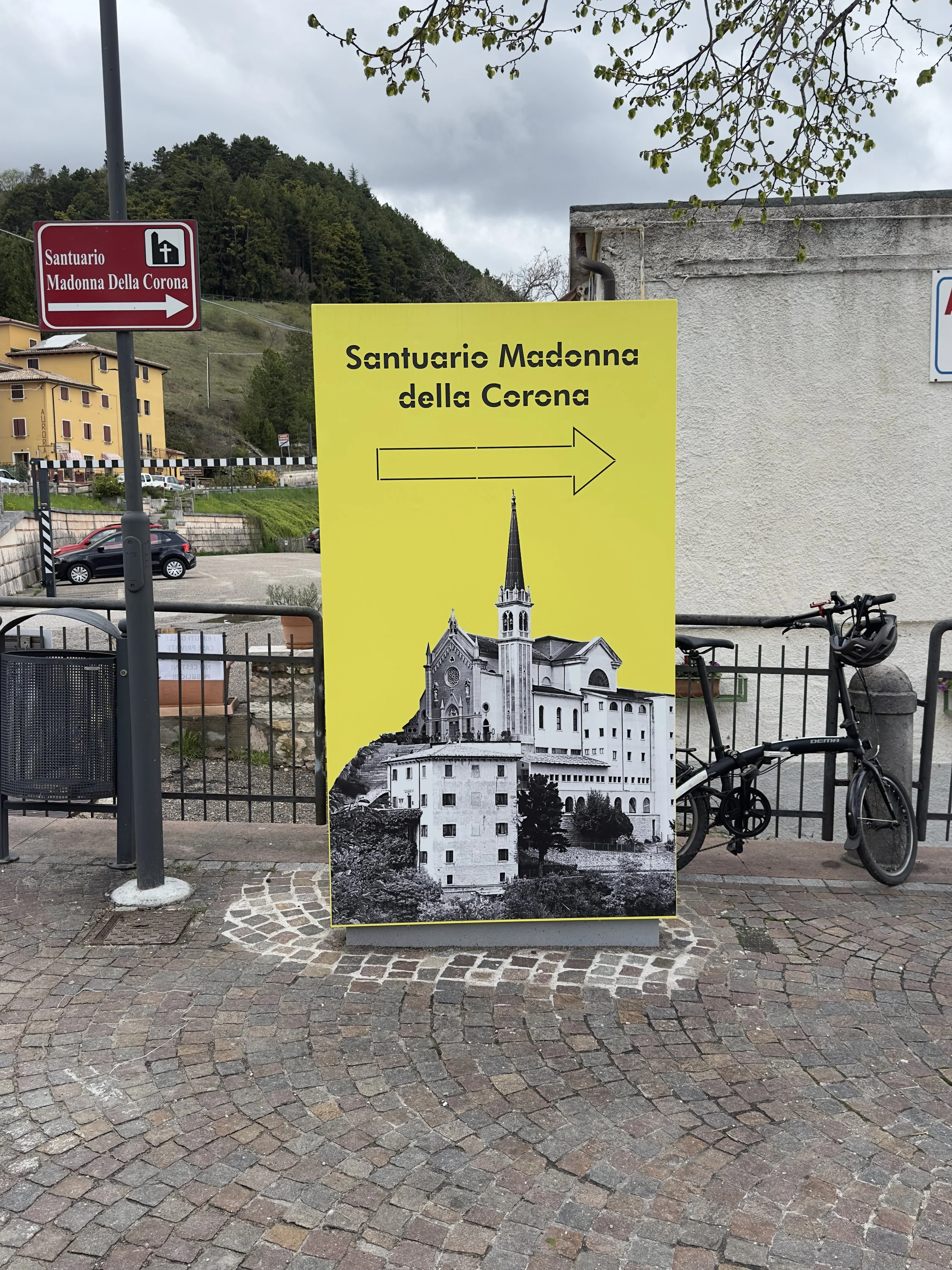
Entrance to the walking trail to Madonna Della Corona. It is next to a parking lot with about 50-60 total parking spaces and near the shuttle area.
The town of Spiazzi felt completely asleep when I arrived around 9 a.m. Shops were closed, streets were empty, and the stillness only deepened the sense that I was stepping into something timeless.
The Trail: Steps, Silence, and the Stations of the Cross
From Spiazzi, the trail to the sanctuary is relatively short—about 1.5 to 2 kilometers—but steep, descending along hundreds of stone steps and shaded switchbacks carved into the mountainside.
Along the way are the Stations of the Cross—life-sized sculptural mock-ups depicting the stages of Christ’s Crucifixion. These figures are deeply expressive, placed deliberately along the path so that reflection becomes unavoidable. Walking past them, step by step, turned the descent into something more than a hike; it became a quiet pilgrimage.
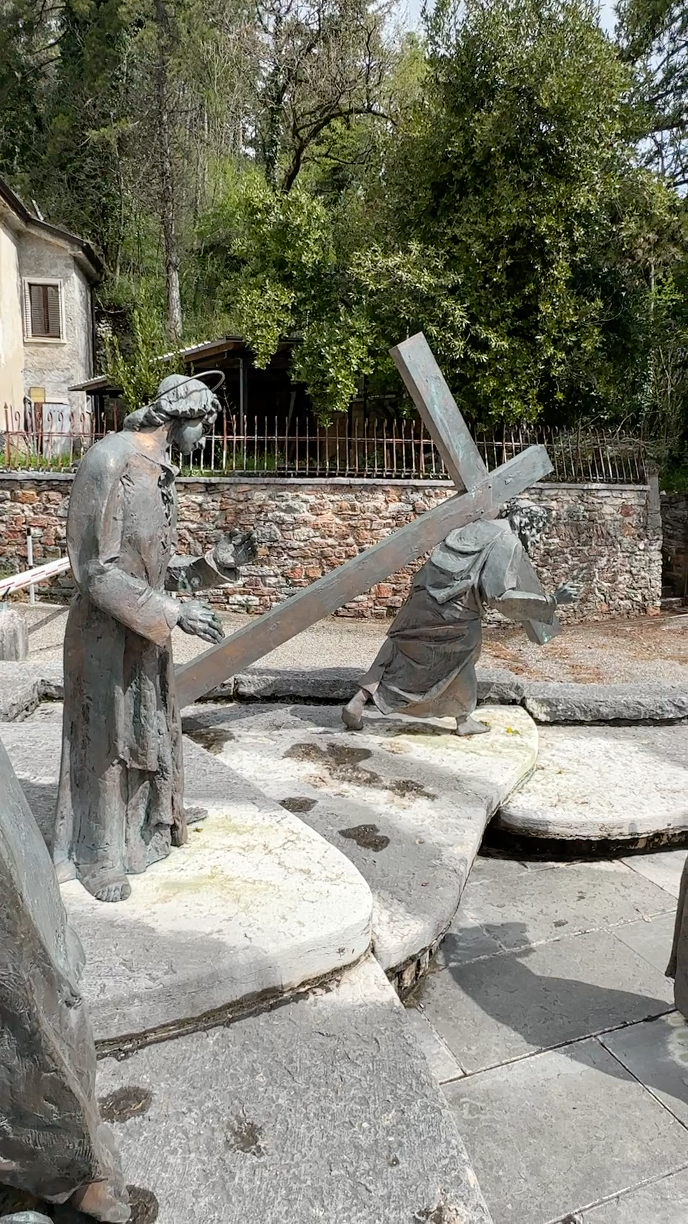
As you walk the trail, the different staged of the crucifixion of Christ is played out in full sized bronzed figures
There are two trails at the start. Without knowing why, I chose the one that veered to the right. I’m so glad I did.
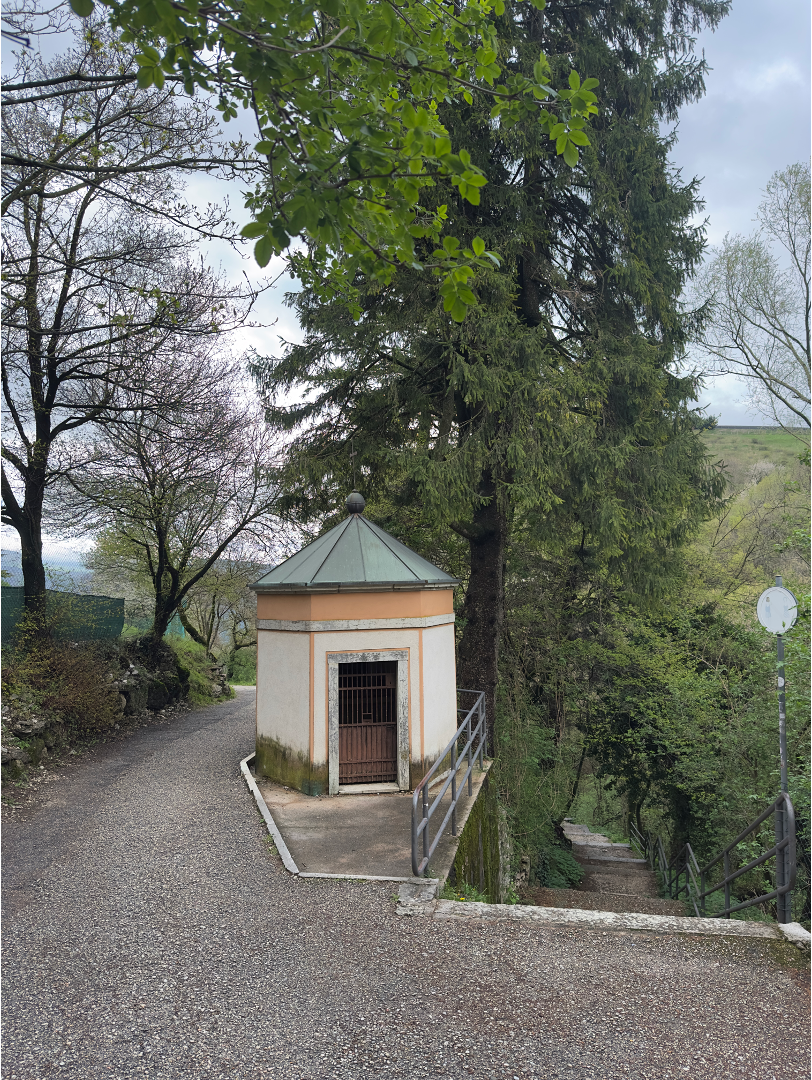
Just a bit into the trail, you will be faced with a decision, take the easy path to the left, or take the path less traveled to the right.
The Panoramic View: A Moment of Grace
Partway down, I encountered a sign offering a choice: a shorter route directly to the church, or the “Panoramic Terrace” trail. I took the panoramic route without hesitation.
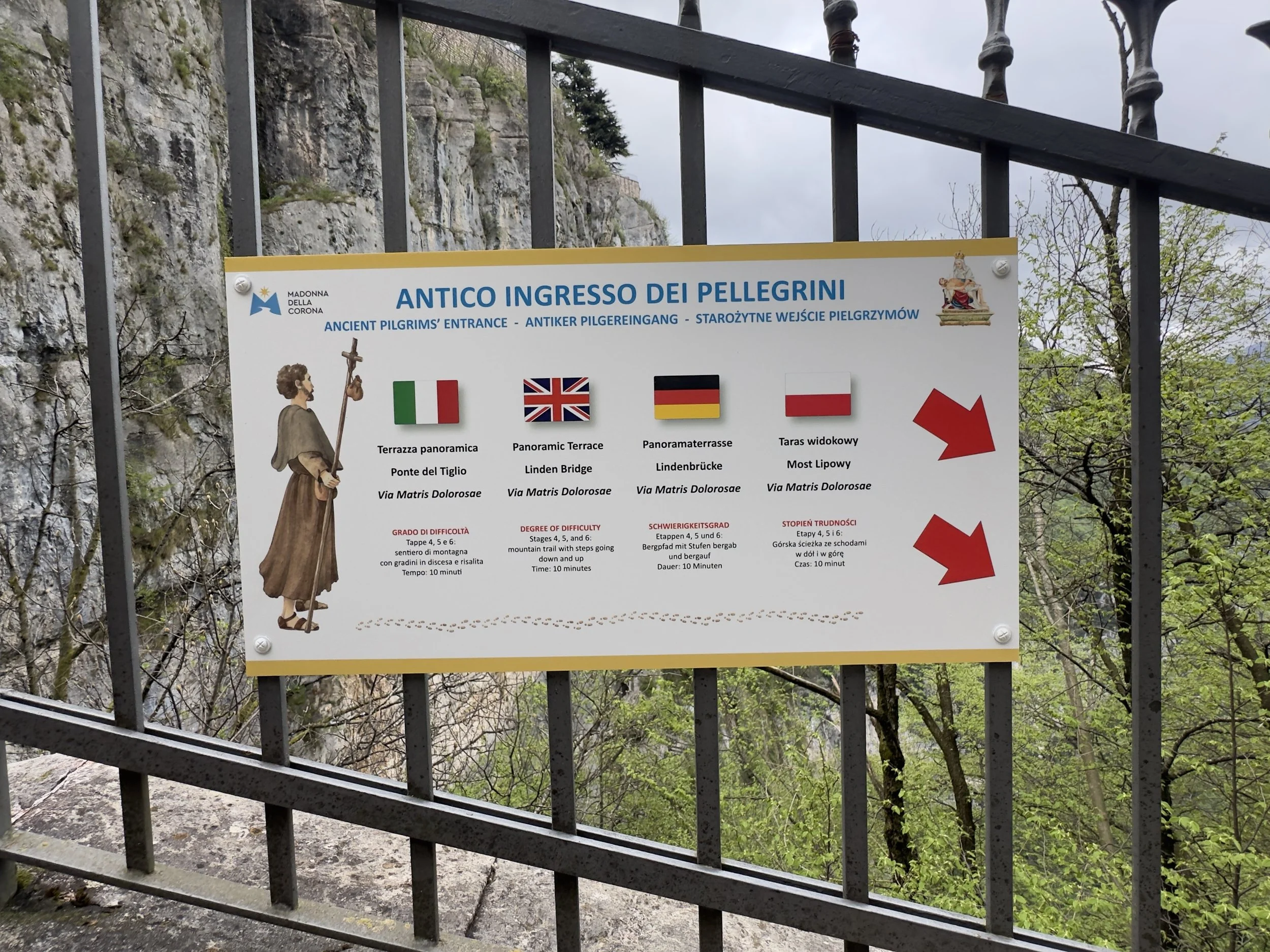
About ten minutes later, I reached a clearing with a breathtaking, unobstructed view of Madonna della Corona—framed by trees, set slightly above me, and seemingly emerging from the rock itself. The weather had held: overcast skies, cool air, no rain. I was completely alone.
Then I heard it—the faint sound of morning prayers broadcast from the sanctuary, echoing softly through the valley. I closed my eyes and stood still, listening. Something in that moment felt overwhelming, and I quickly set up my camera to record a time-lapse.
As the prayers continued, the clouds began to break apart. Sunlight spilled over the ridge and illuminated the church as if a spotlight had been turned on from above. For the next two hours, I simply stayed there, watching, listening, and absorbing everything around me.
Descending into the Sanctuary Courtyard
From the panoramic viewpoint, the path transitions into a long staircase leading directly into the lower courtyard of Madonna della Corona. Walking down those steps felt ceremonial. With each step, the sanctuary grew larger and more intimate.
When I finally stepped into the courtyard and looked up—stone walls pressed into the mountain, sky opening above—it was impossible not to feel the weight of history, faith, and devotion that built this place.
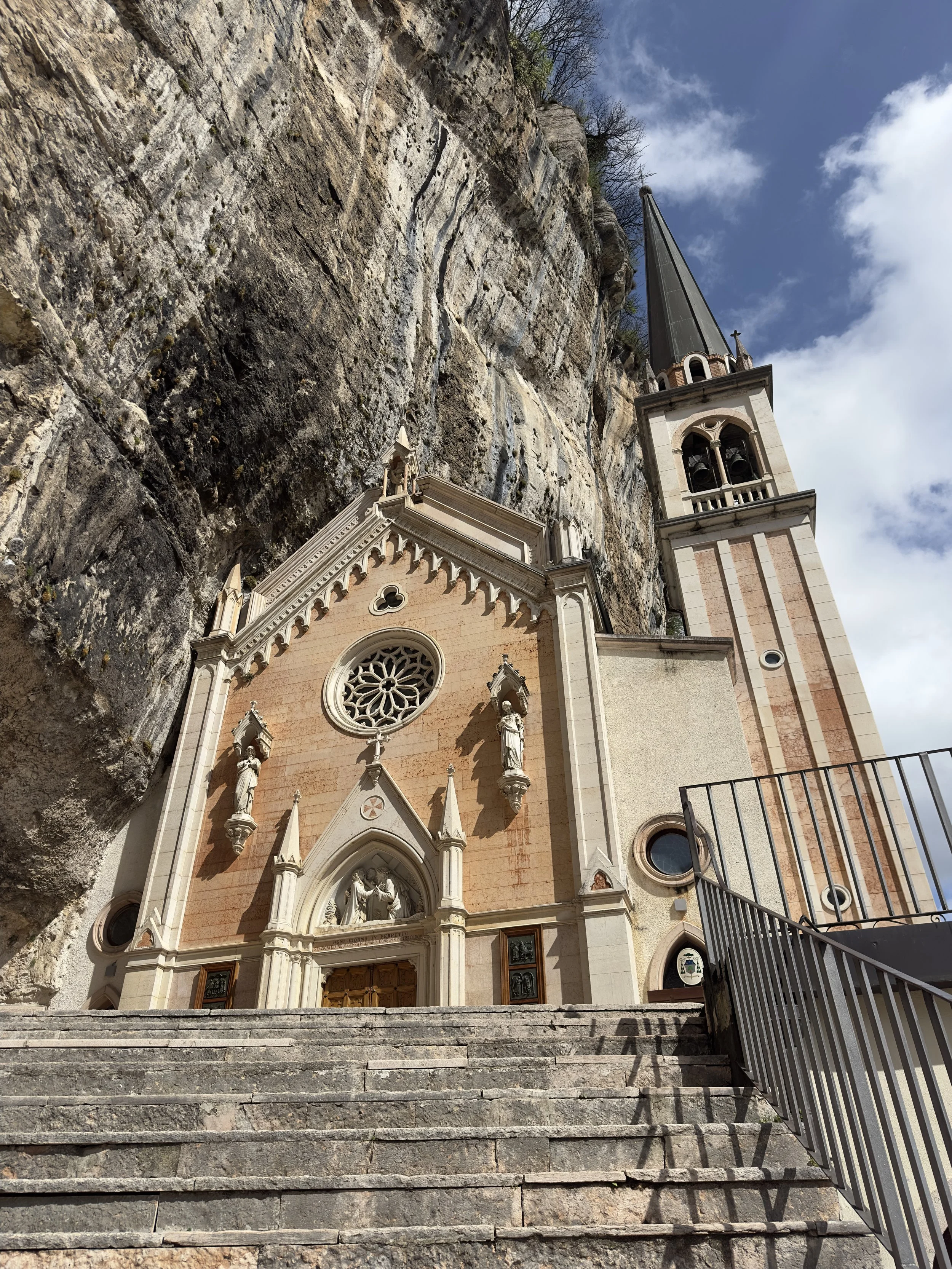
Final Steps to the Sanctuary of Madonna Della Corona
Guided Tour Options Worth Considering
Why This Place Stayed With Me
Standing there, pressed against the mountain, I found myself asking why this place affected me so deeply. Perhaps my soul was hungry for a truly spiritual experience—one that demanded silence, effort, and presence. Perhaps the engineer in me was in awe of the sanctuary itself, a structure quite literally carved into the side of a mountain, defying gravity and time through human devotion and ingenuity. Or perhaps it was the feeling that the story of the Crucifixion of Christ—so vividly depicted along the trail—was unfolding in front of me, not as history, but as something living and immediate.
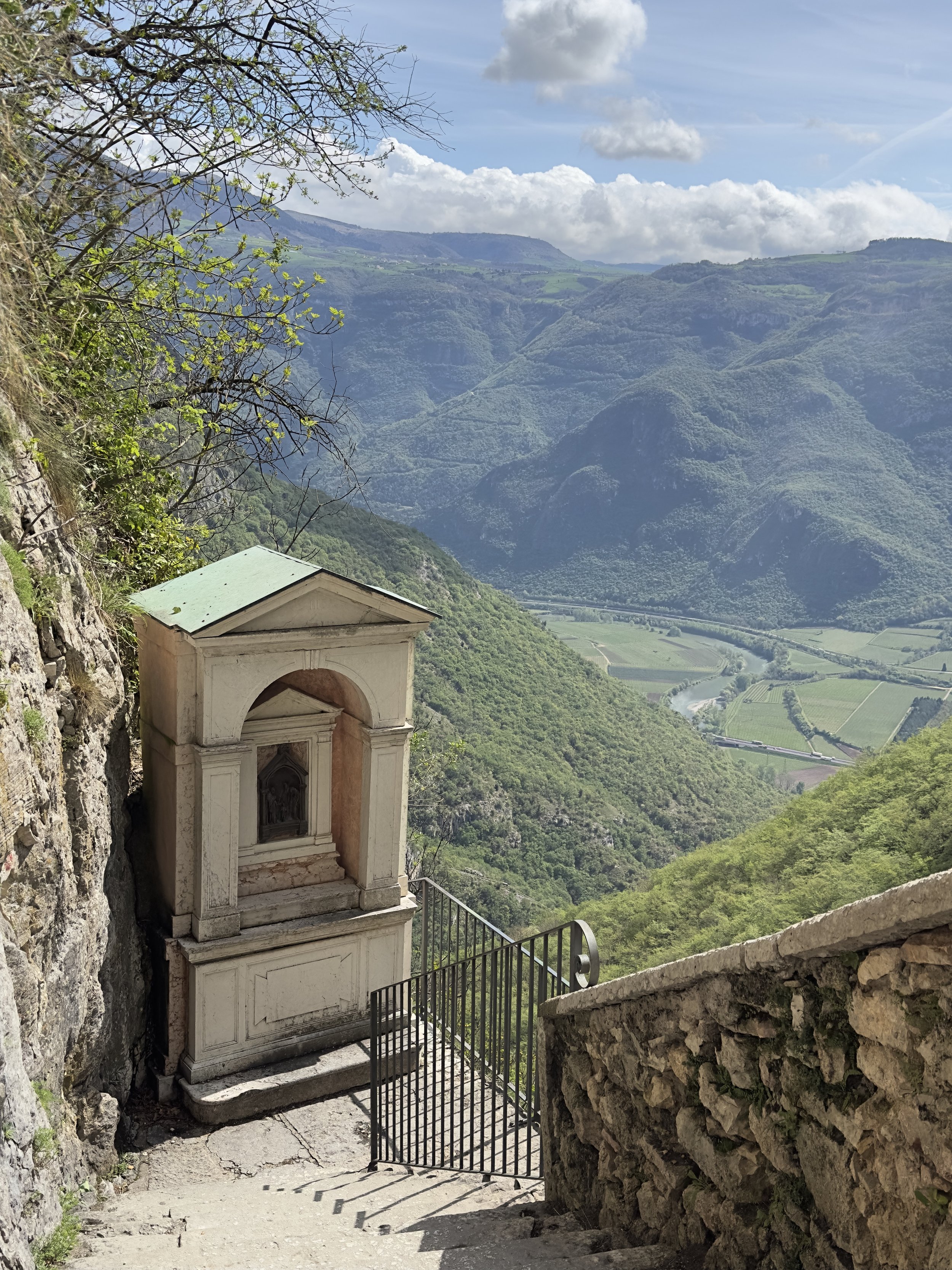
The view over the valley taking the steps from the Panoramic Terrace up to the Sanctuary Madonna Della Corona.
In that moment, surrounded by stone, sky, prayer, and light, everything slowed down. The physical journey, the Stations of the Cross, the quiet descent, and the breaking of sunlight converged into a truly spiritual experience.
Madonna della Corona is not just a destination. It is an experience that meets you exactly where you are—and stays with you long after you’ve left the mountain behind.
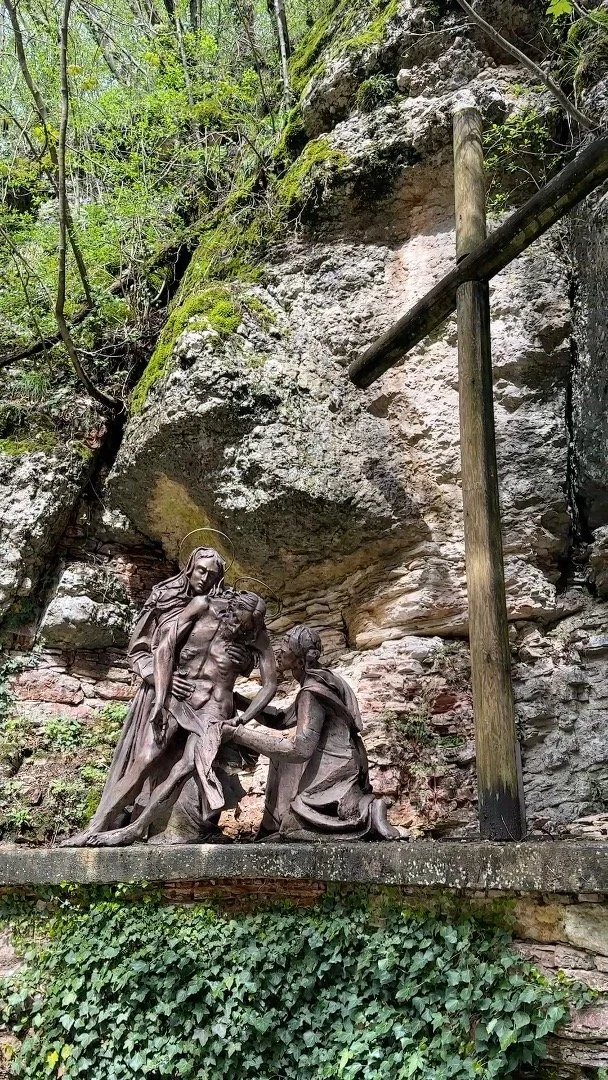
One of the many stages of the Crucifixion of Chris along the trail to the Sanctuary Madonna Della Corona.
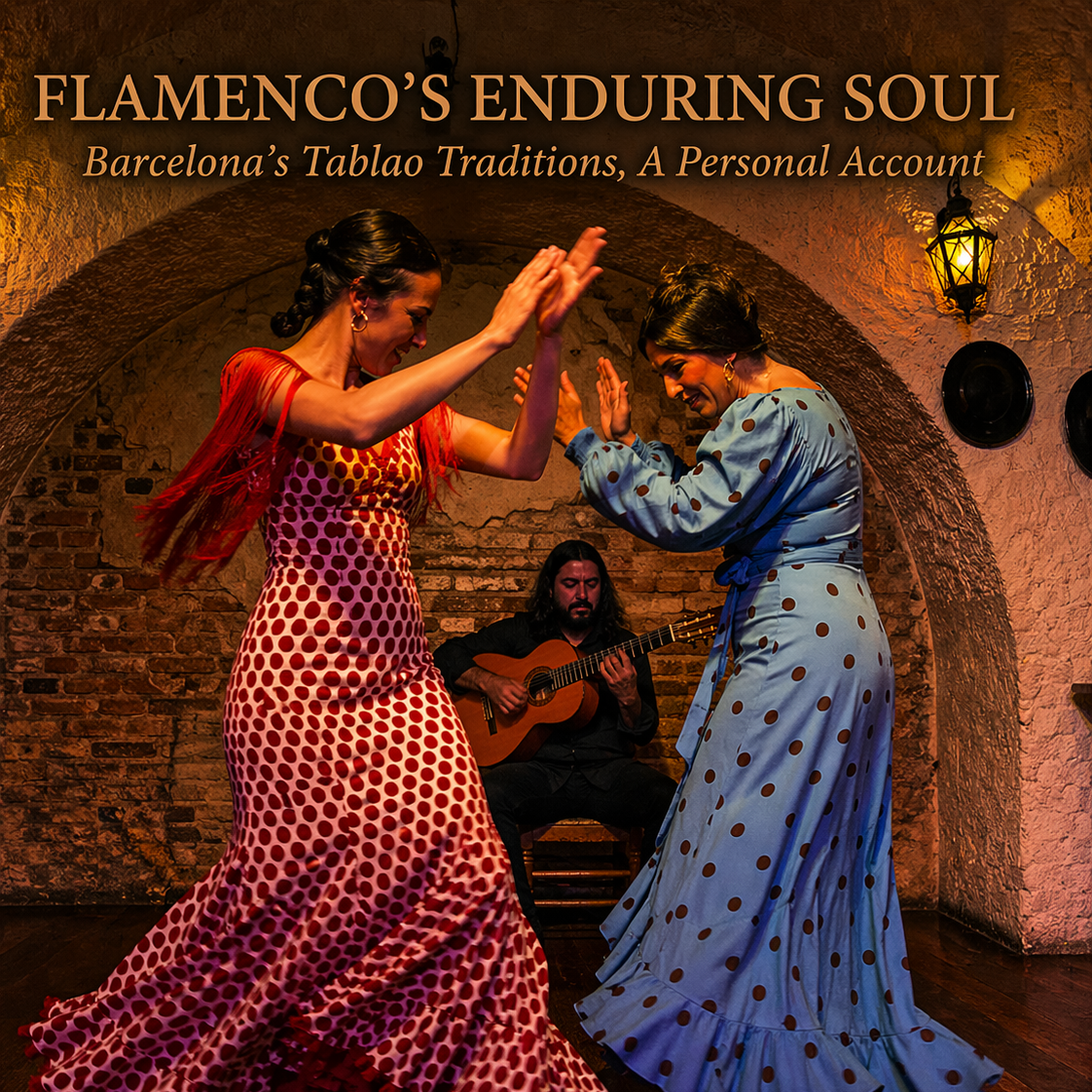
The Night Flamenco Made SenseForty years later, I finally understood what I'd been watching as a kid.
Experience the passion of flamenco in Barcelona through an intimate tablao performance blending music, dance, and Spanish tradition. A cultural evening that connects history, emotion, and authentic travel experiences in the heart of Spain.
BARCELONA, SPAIN · FAMILY TRAVEL · 7 MIN READ
I'll be honest with you — I didn't plan for it to go this deep.
When I started building our Barcelona itinerary, I told myself it was just a family trip. Good food. Great architecture. Long walks along La Rambla at golden hour. But somewhere between booking flights and searching for "best things to do in Barcelona," I realized what I was actually trying to do.
"I was trying to give my family something I had experienced years ago — and never quite stopped carrying with me."
I lived in southern Spain as a kid. Somewhere between ages 10 and 12. I didn't understand much of what I was seeing at the time — but I remember how it felt. Evenings that stretched impossibly long. People gathering without urgency. Life at a pace that didn't feel rushed.
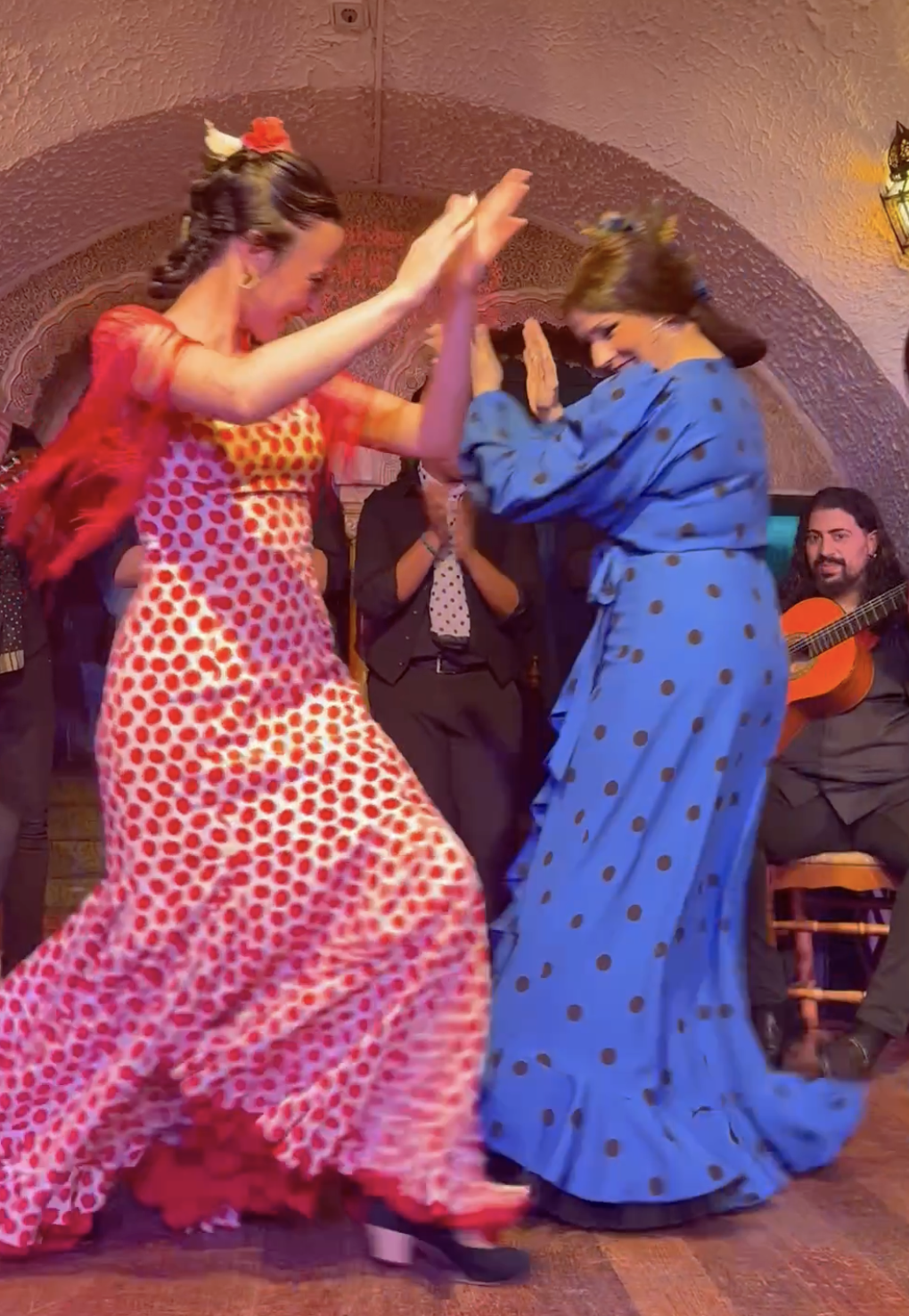
And then, every once in a while: bright dresses. Sharp, deliberate movements. The sound of hands striking in perfect rhythm. Music that didn't sound like anything I'd ever heard.
Flamenco.
At the time, it was just background noise to childhood. Now, standing in Barcelona with my family, I needed to find a way to bring that feeling forward.
The Evening We Almost Just Had Dinner
We booked a flamenco dinner experience just off La Rambla — and I want to be real with you: I wasn't sure it was going to be anything. Tourist trap vibes, right? Three-course meal, polite applause, back to the hotel.
It wasn't that.
We walked upstairs to a shared table. Our family. Another couple. A solo British traveler taking a year off before the next chapter of his life. Completely different paths — same place for a couple of hours. The paella came out warm and unfussy. It wasn't trying to impress anyone. It didn't need to.
GOOD TO KNOW BEFORE YOU BOOK
They ask you to put your phones away at the start. At first it feels strange. Five minutes in, you're grateful. You stop performing the experience for Instagram and you just… have it.
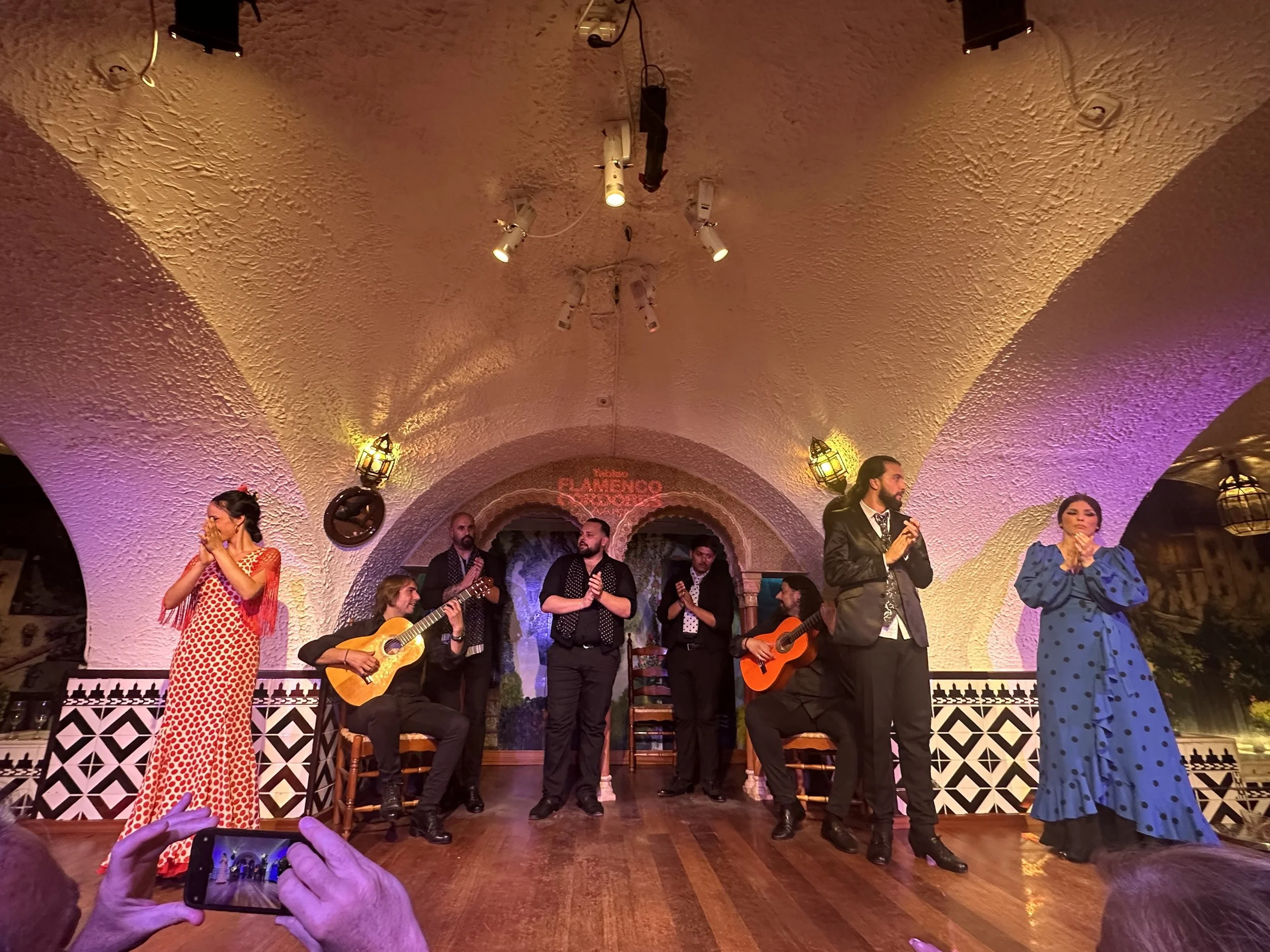
Then we were guided into a smaller room. The lighting dropped. The noise softened. Something in the energy shifted — like the air changed density. It felt intentional. Focused.
What Nobody Told Me Flamenco Actually Is
Before the performance began, they took a few minutes to explain its roots. And this — this — is what elevated the whole evening.
Flamenco isn't a show. It's a living record of survival. Born in Andalusia — the same southern region where I spent those childhood years — it developed over centuries through the collision of Romani, Moorish, Jewish, and Spanish cultures. It grew out of family gatherings and tight-knit communities, where people expressed what words couldn't hold.
Three elements form its core: cante (the singing), toque (the guitar), and baile(the dance). But what ties them together isn't technique. It's raw, unfiltered emotion — tied to grief, to joy, to pride, to resilience.
"It's not meant to be polished. It's meant to be real."
When the performance started, that context changed everything I saw.
The Part That Stays With You
As a kid, I noticed the color. The swirl of fabric. The dramatic energy. This time, I noticed the emotion. The dancers weren't performing for us — they were inside the story, and we were allowed to witness it.
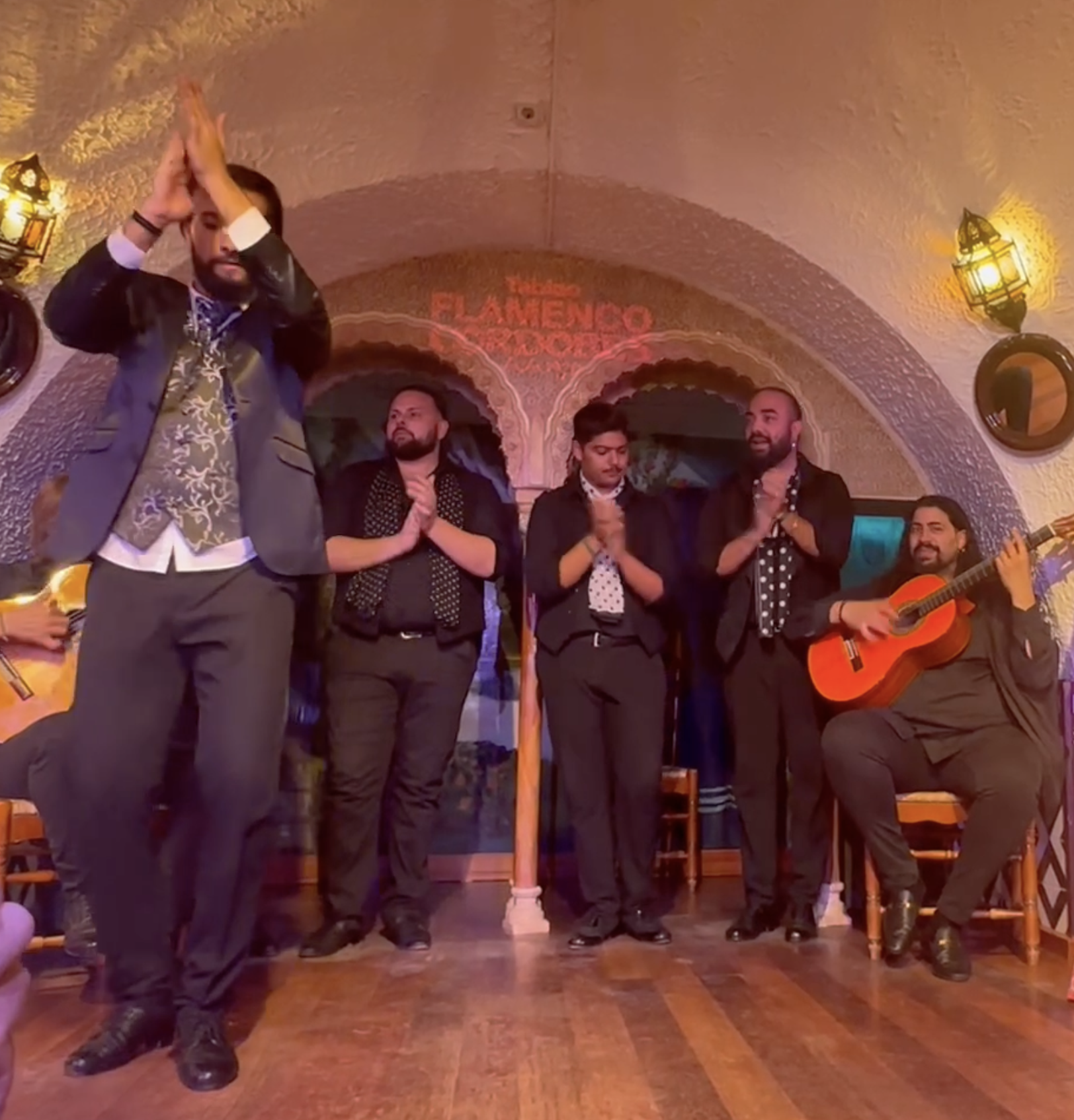
The women moved with startling precision, their dresses catching the light with every turn. But what I couldn't stop watching was the rhythm — coming from everywhere at once. Hands. Feet. The musicians folded into the back of the room. No castanets. Just timing, control, and presence.
And then the male dancer. That was something I hadn't remembered from childhood. His movements were grounded, sharp — like he wasn't following the music so much as becoming part of it. Every step added to the rhythm instead of riding it.
Behind them, the guitar carried the room. The singer's voice needed no translation. You understood it without words — you felt it in your chest.
Here's the thing I hadn't planned for: I wasn't just watching a performance. I was watching something I had witnessed years ago — only this time, I understood it. And at the same time, I was watching my family experience it for the very first time.
That overlap — between memory and the present moment — was the part that undid me a little. The thing no itinerary can plan.
When it ended, there was no grand finale. It just… stopped. And for a moment, no one moved.
We walked back out onto La Rambla and blended into the rhythm of the city. Something felt different. Not louder. Not quieter. Just understood in a way it hadn't been an hour before.
What I'd been trying to give my family — a piece of something I'd carried since childhood — had actually worked. Not perfectly. Not completely.
But enough. Enough for them to feel it.
Frequently Asked Questions
Is the flamenco dinner off La Rambla worth it for families with kids?
Absolutely — and in many ways it's better with kids. The combination of dinner and a live performance gives younger travelers something concrete to anchor the experience to. The show runs roughly 45–60 minutes, which is the right length for most children. That said, the room gets quiet and focused, so it works best for kids who can sit and observe for stretches. We found ages 8 and up engage deeply.
Do I need to know anything about flamenco beforehand?
Not at all. Part of what made our evening so memorable was the brief introduction before the performance — they explained the origins, the three core elements (cante, toque, and baile), and the emotional tradition behind it. You'll walk in knowing nothing and walk out feeling like you understand something real. That arc is part of the experience.
What should I wear to a flamenco dinner show?
Smart casual works perfectly. You don't need to dress formally, but this is an evening experience in a dedicated performance space — not a street-side tapas bar. Think nice jeans, a blouse or button-down. The atmosphere is intimate and the lighting is low and warm, so you'll feel comfortable without overdressing.
Can I take photos during the performance?
Phones are put away for the first portion of the show — and honestly, this is a gift. You're fully present in a way that's rare. In the final 15–20 minutes, they open it up for photos and video. By that point, the experience has already settled in. Most people take a few shots and then put their phones away again anyway.
How far in advance should I book?
Book as early as possible — at least a week ahead, ideally more if you're traveling in summer or during major festivals. These shows have limited seating by design (part of what makes the atmosphere so intimate), and popular time slots fill up fast. Check the venue's website directly for the most accurate availability.
Is the food actually good, or is it just there to justify the ticket price?
It's genuinely good — simple, well-prepared Spanish cuisine. The paella was warm and properly made, the starter was fresh, and the dessert was exactly what you'd want after a meal in Spain. It's not a Michelin-star dinner, and it's not trying to be. It's honest, regional food that sets the right tone for the evening. Expectations calibrated correctly, you'll leave happy.
Is this a tourist trap?
I went in braced for exactly that — and I was wrong. What separates a good flamenco dinner experience from a bad one is whether the performers are genuinely inside the art or just going through the motions. Our performers were the former. You can feel the difference immediately. The room was small, the lighting was intentional, and nobody was phoning it in. Do your research, read reviews, and choose a venue with a reputation for authentic performance — the difference is night and day.
If this is something you’d want to experience for yourself, you can take a look at the exact tour we chose CLICK HERE.
I’On Swamp Trail: Hiking the Historic Rice Plantations of Francis Marion National Forest, SC
Discover the I’On Swamp Trail in Francis Marion National Forest, South Carolina, a 2-mile loop hiking trail through lush Lowcountry swamps and historic rice plantations. Walk among towering cypress trees, explore hand-dug canalsbuilt by enslaved Africans, and learn the story of Carolina Gold rice, once a cornerstone of Charleston’s economy. Experience the beauty of reclaimed wetlands while connecting with the history of South Carolina rice cultivation, from tidal irrigation to heritage farms growing Carolina Gold today. Don’t forget insect repellent — the swamp mosquitoes can be fierce!
Located off Highway 17 between Mount Pleasant and McClellanville, South Carolina, the I’On Swamp Trail is a hidden gem for hikers, history enthusiasts, and nature lovers. This scenic Lowcountry hiking trail winds through towering bald cypress, blackwater pools, and the remnants of historic rice plantations, offering a unique blend of natural beauty and cultural history.
History of I’On Swamp and South Carolina Rice Plantations
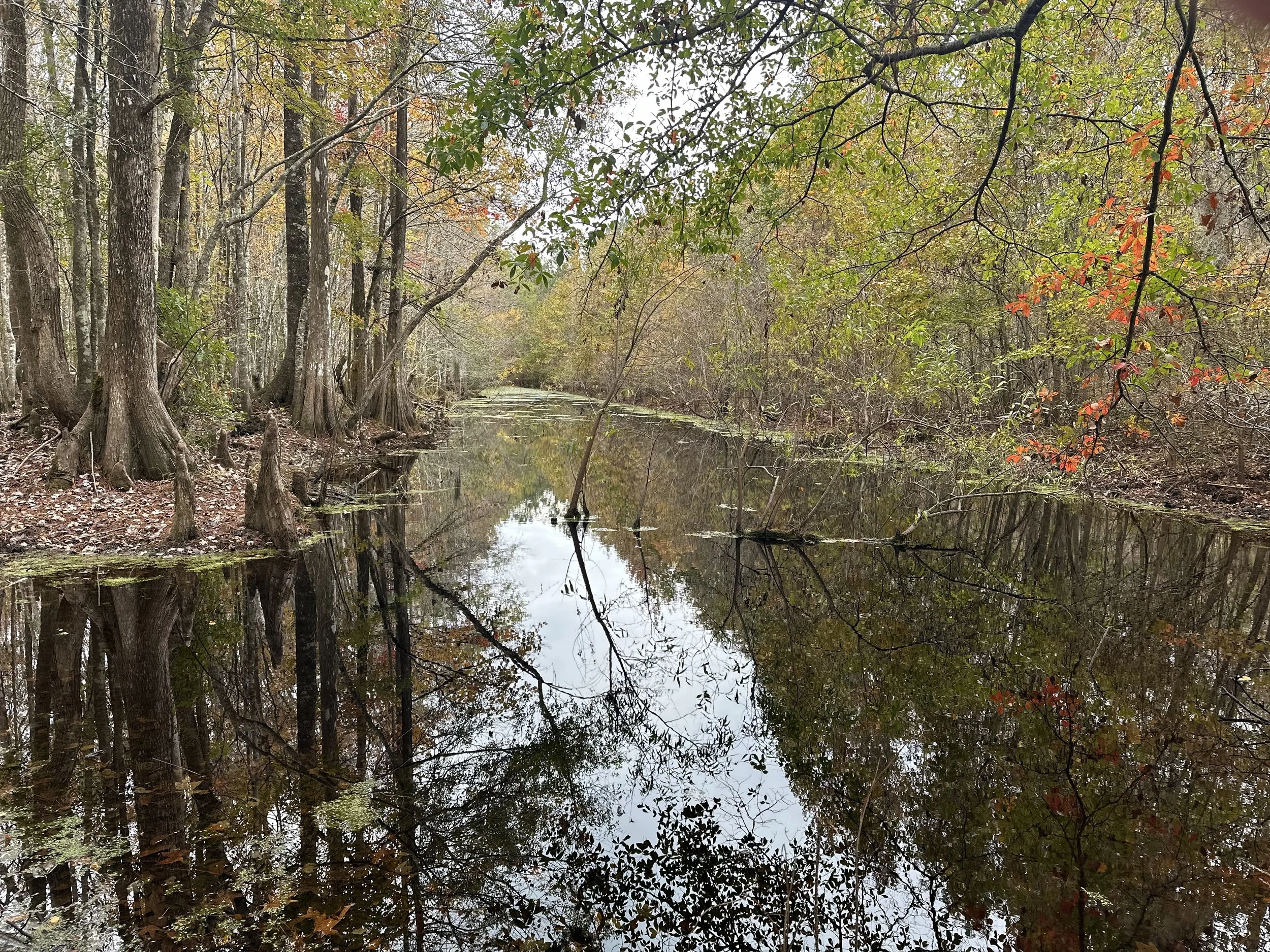
The I’On Swamp was once part of a thriving rice-growing region along South Carolina’s coast. Named after Jacob Bond I’On, a 19th-century planter, the swamp and surrounding lands were transformed by enslaved Africans into productive rice fields. They hand-dug miles of canals, dikes, and waterways to flood and drain the fields, connecting them to the Wando River, which allowed the rice to be transported to Charleston for export.
Rice, known as Carolina Gold, was the cornerstone of the Lowcountry economy and culture. Its rich, nutty flavor made it highly prized both locally and abroad. Carolina Gold rice helped make Charleston one of the wealthiest cities in colonial America, shaping the city’s economy, architecture, and culture. The labor and expertise of enslaved Africans, particularly those from West African rice-growing regions, were critical to this success.
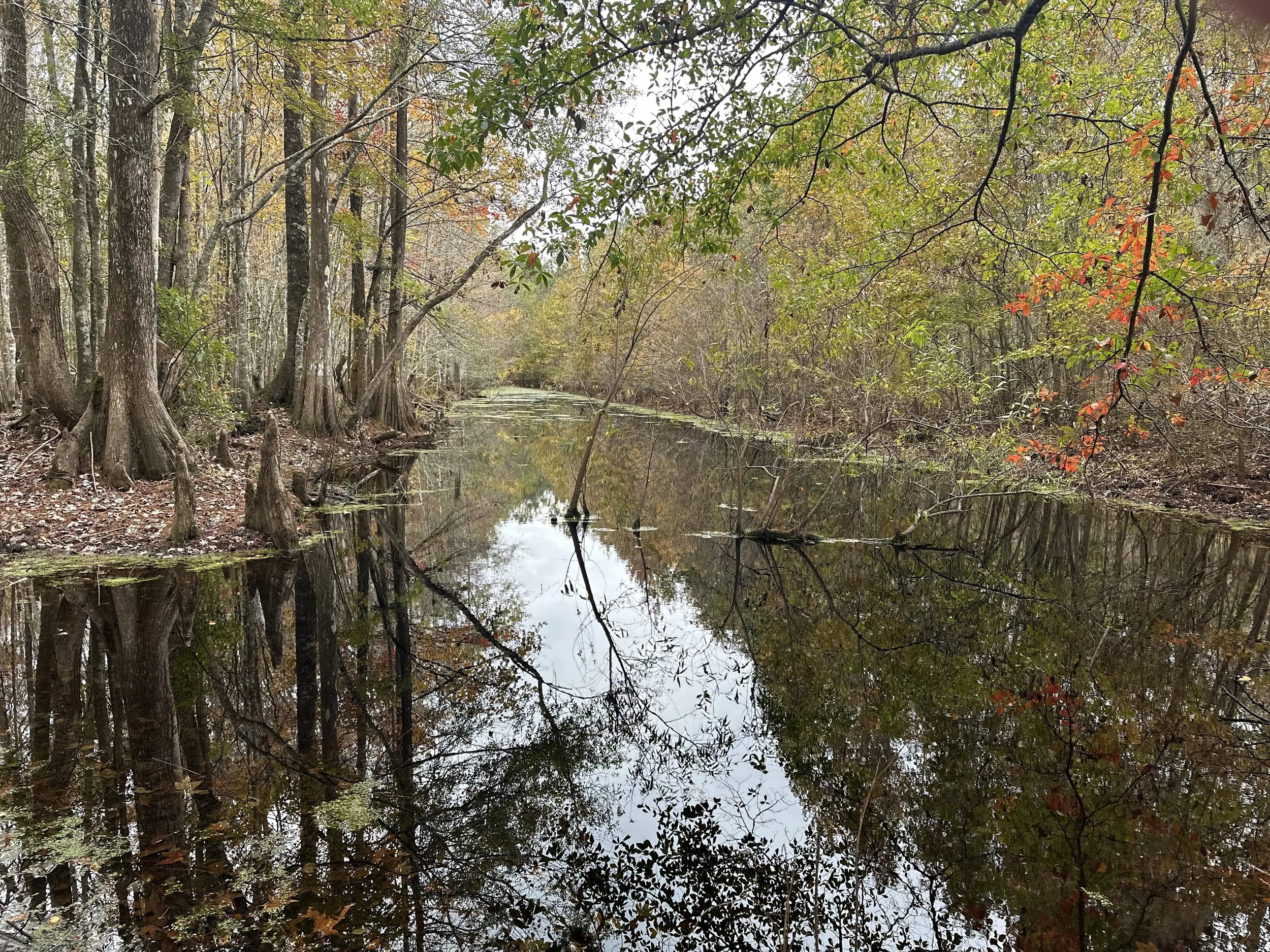
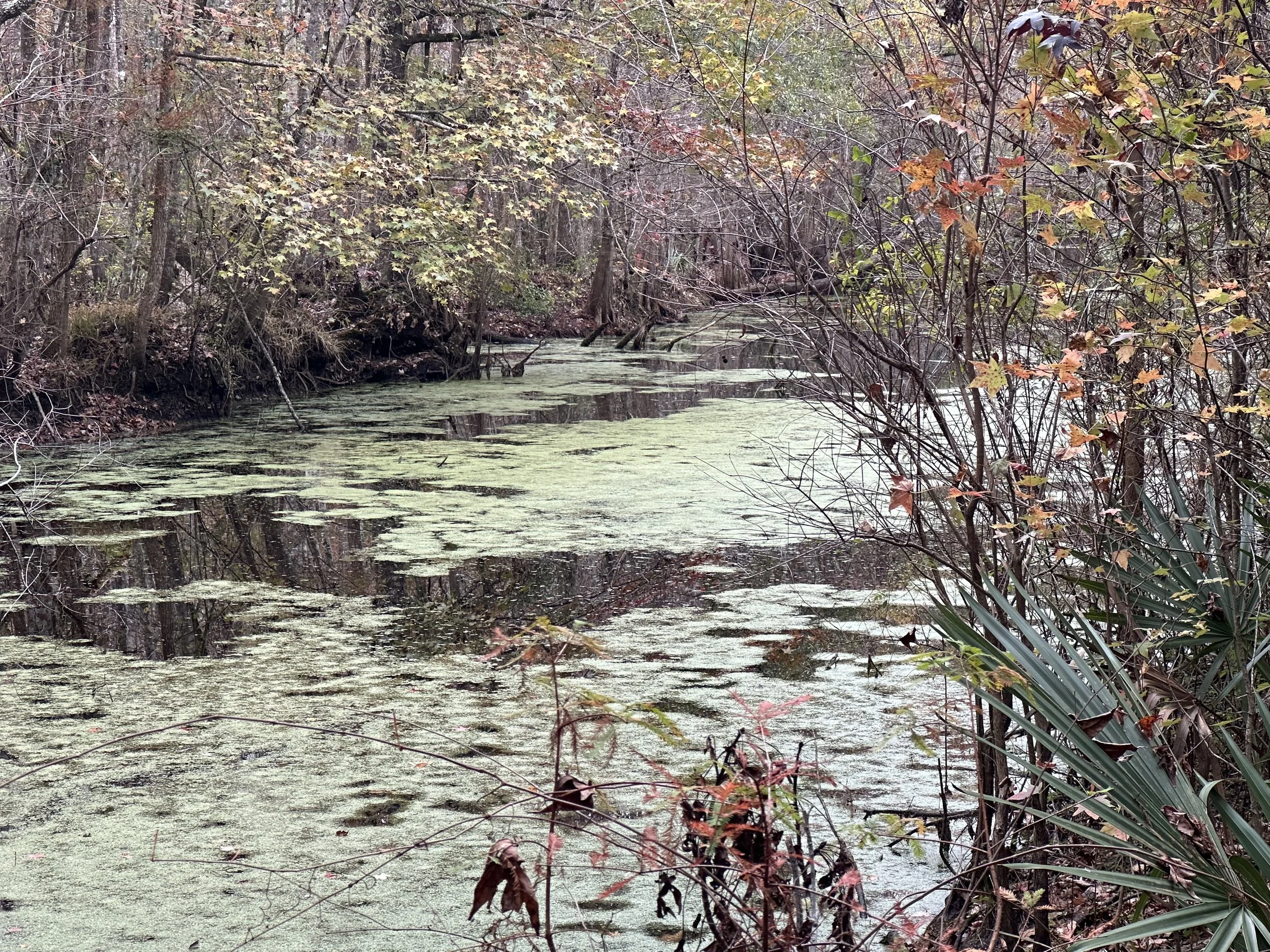
The miles of hand-dug canals and embankments that still crisscross the I’On Swamp are enduring evidence of their ingenuity. Today, the rice fields have largely returned to swamp forest, but the storyboards along the trail help visitors understand the enormous human effort that created this “gold” from the swamp.
The”Ditch” in the middle of the pictre is a hand dug can that would allow rice be floated to te Wando River
The Historical Meaning of Carolina Gold Rice
Carolina Gold rice was more than a crop — it was a symbol of wealth, skill, and survival in the Lowcountry. Its cultivation required intimate knowledge of tidal irrigation, careful planting and harvesting, and coordination across large labor forces. Each harvest represented a tremendous human achievement under extreme conditions. The rice fueled the economic rise of Charleston and financed much of the Lowcountry’s plantation society, but it also stands as a reminder of the labor and resilience of enslaved Africans, whose expertise made it possible.
Carolina Gold Rice Today
Although commercial rice production in South Carolina declined after the Civil War, Carolina Gold rice is still grown today on a smaller scale, often by heritage farms focused on preserving the seed and tradition. These modern farms in the Lowcountry maintain the connection to history, allowing chefs, food enthusiasts, and historians to experience the flavor and legacy of this historic crop. Some of the rice is even available in Charleston markets and restaurants, tying the centuries-old story directly to the city where it first brought fame and wealth.
Hiking the I’On Swamp Trail Today
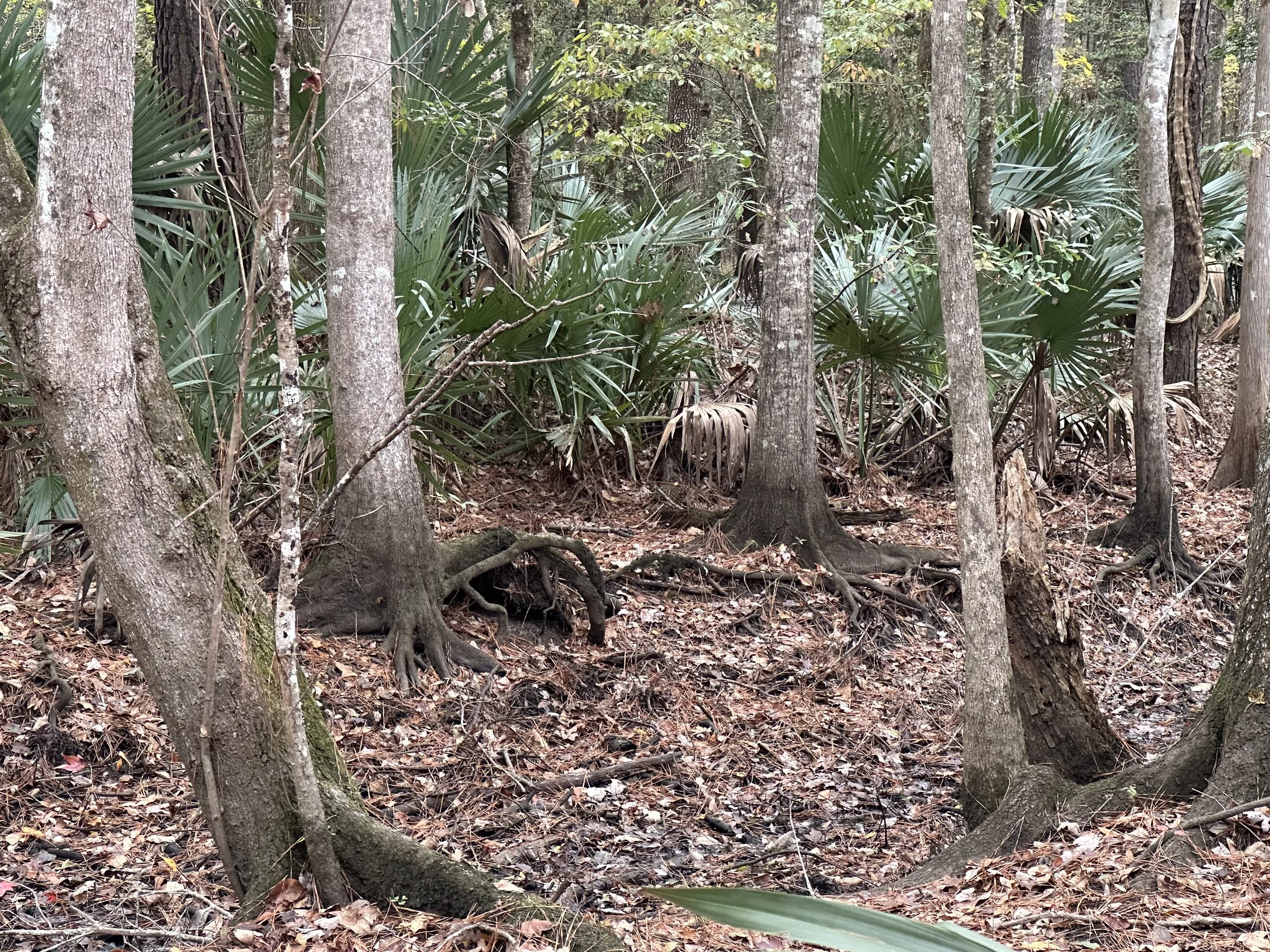
Walking the I’On Swamp Trail is an immersive experience. The trail is narrow and, in places, overgrown, forcing you to slow down and take in your surroundings. While the straight lines of the waterways hint at human design, it’s hard to imagine this swamp as a thriving rice plantation — if it weren’t for the storyboards along the trail. Nature has reclaimed much of the land: vines climb old dikes, water collects in former rice fields, and trees tower over areas once cleared by hand.
Hiking here gives you a sense of the enormous challenges faced by historical rice farmers, working without modern tools. Every step is a reminder of the ingenuity and endurance required to transform a swamp into productive farmland.
Mosquitoes are fierce, even in winter, so bring strong insect repellent and wear long sleeves and pants.
Tips for Visiting I’On Swamp Trail
Location: Off U.S. Highway 17, ~25 miles north of Mount Pleasant, SC
Trail Length: 2 miles (loop)
Difficulty: Easy to moderate
Best Time to Visit: Fall and spring for cooler temperatures and fewer insects
Must-Have Items: Insect repellent, long sleeves and pants, water, and sturdy shoes
Highlights: Bald cypress trees, blackwater pools, historic rice canals, storyboards explaining plantation history
Why You Should Visit the I’On Swamp Trail
The I’On Swamp Trail offers a unique combination of Lowcountry natural beauty and historic significance. Walking its quiet, overgrown paths, you can see the legacy of Carolina Gold rice and the labor that made it possible. The trail allows you to connect with the past, experience the challenges of rice cultivation firsthand, and appreciate how nature has reclaimed this once highly engineered landscape.
Whether you’re hiking for history, photography, or birdwatching, the trail is a living classroom for understanding the complex story of South Carolina’s Lowcountry, from the glory of Carolina Gold rice to the human ingenuity and resilience behind it. If you are interested in trying Carolina Gold Rice, you can purchase here: https://amzn.to/3JUGqVP
Porto, Portugal — A Sip (and a Rush!) on Our Carnival Legend Adventure
If you’re planning a Carnival cruise to Portugal, you won’t want to miss this honest review of our family’s day in Porto, one of the most charming cities along the Douro River. From the moment we docked at Porto Leixões Cruise Port in mid-June’s warm, sunny weather, we were excited to experience the city’s famous Port wine cellars, colorful riverfront, and historic sites.
But our Carnival City Tour and Port Tasting excursion didn’t go quite as expected. Between a rushed schedule, a 10-minute tasting at Calém, and limited time at major attractions like the Clérigos Tower, we quickly learned that Porto is a place best explored at your own pace.
In this post, I share what really happened on our Porto shore excursion, what we’d do differently — including taking a Hop-On Hop-Off bus, visiting the Port houses independently, and enjoying more time in the Ribeira district — plus the top 3 things to do in Porto if you’re visiting by cruise ship. If you want an authentic, traveler-tested guide before choosing your own Porto cruise excursion, you’re in the right place.
Our family’s Carnival Legend cruise to Spain, Portugal, and France in the summer of 2024 was one for the memory books. Nine days of sunshine, great food, and waking up in a new destination each morning. One of those ports — Porto, Portugal — ended up being both memorable and educational. Not everything went as we expected, but that’s what makes travel interesting!
We docked at Porto Leixões Cruise Port, roughly 3 km (2 miles) from downtown Porto. The setting was beautiful, the skies were blue, and the city’s terracotta rooftops glowed in the morning sun.

Statue of Vimara Peres
Weather in Porto in Mid-June
If you’re cruising to northern Portugal in mid-June, be prepared for some truly perfect travel weather. Expect daytime highs between 23–26°C (73–79°F), cooler evenings around 16°C (60°F), and plenty of sunshine. The breeze rolling in from the Atlantic keeps the heat comfortable, especially along the riverfront.
Our June day in Porto was gorgeous — bright blue skies, warm sunshine, and ideal conditions for exploring.
Arriving in Porto Leixões
The Carnival Legend cleared passengers around 9:00 a.m., and by 9:30 our family of four (including two teenagers) was stepping onto our tour bus for the City Tour and Port Tasting excursion. The bus was parked right next to the ship — easy and organized.Be clear, be confident and don’t overthink it. The beauty of your story is that it’s going to continue to evolve and your site can evolve with it. Your goal should be to make it feel right for right now. Later will take care of itself. It always does.
Stop #1: Douro River Lookout & Calém Port Tasting
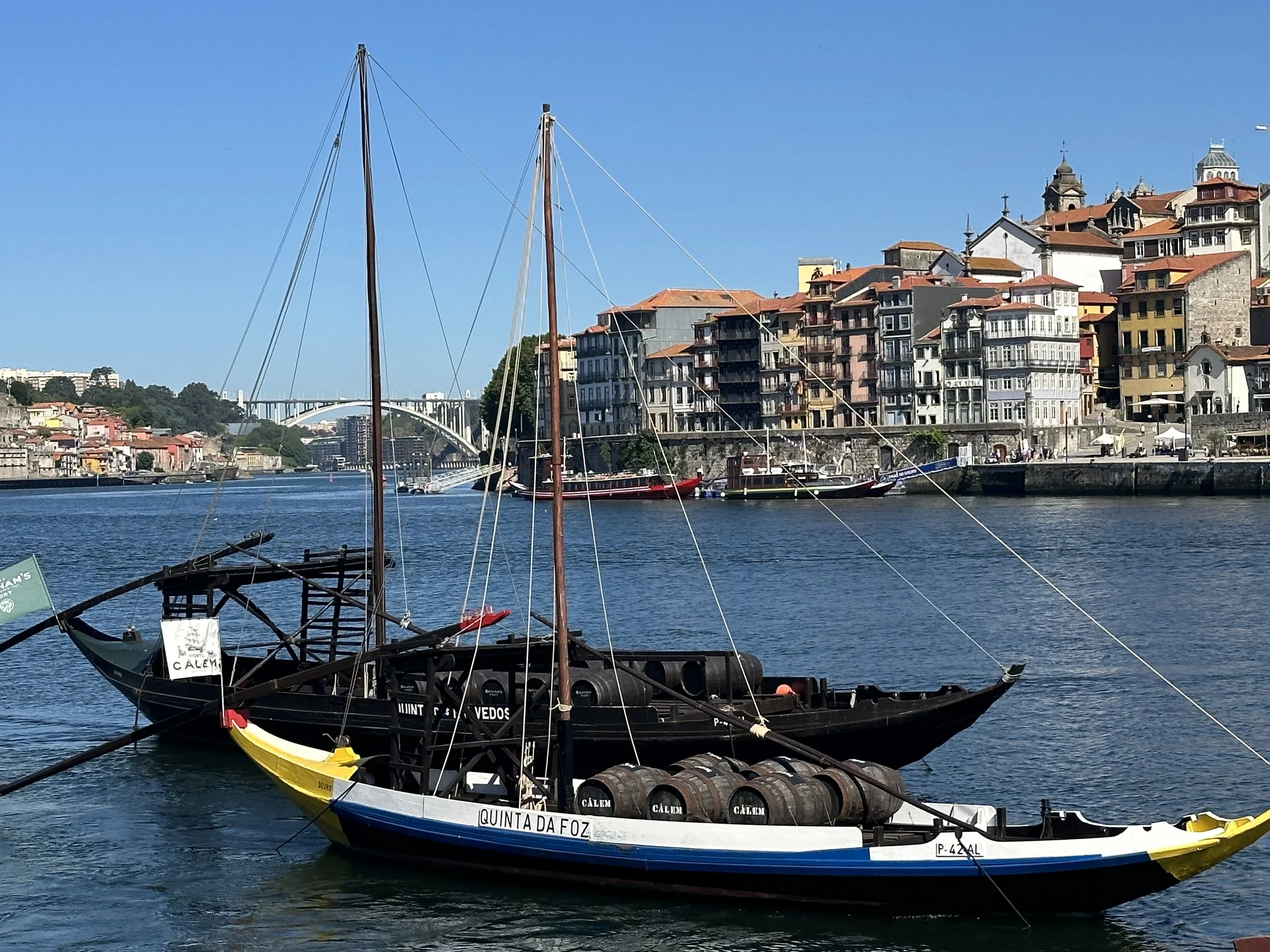
Our first stop was a quick photo moment overlooking the Douro River and Porto’s famous bridges. The view was stunning — colorful hillside buildings, boats drifting along the river, and the iconic Dom Luís I Bridge connecting Porto to Vila Nova de Gaia.
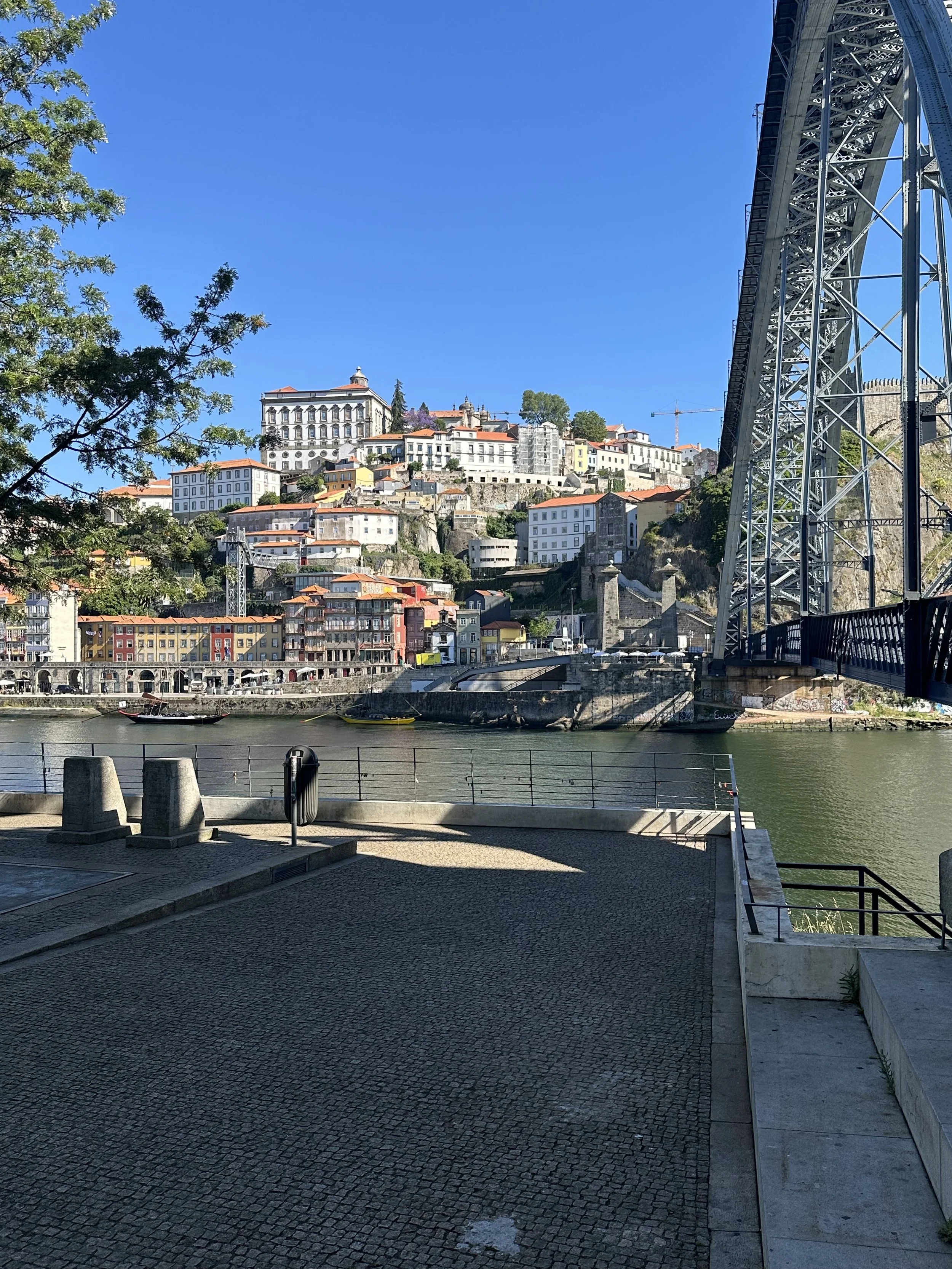
Dom Luis I Bridge
Then we headed to Calém, one of Porto’s well-known Port wine cellars. The tasting tables were set with two Port samples per adult, a ruby and a tawny. Since our teens were underage, the Calém attendant thoughtfully changed their glasses to orange juice. Click here for an alternative experience.
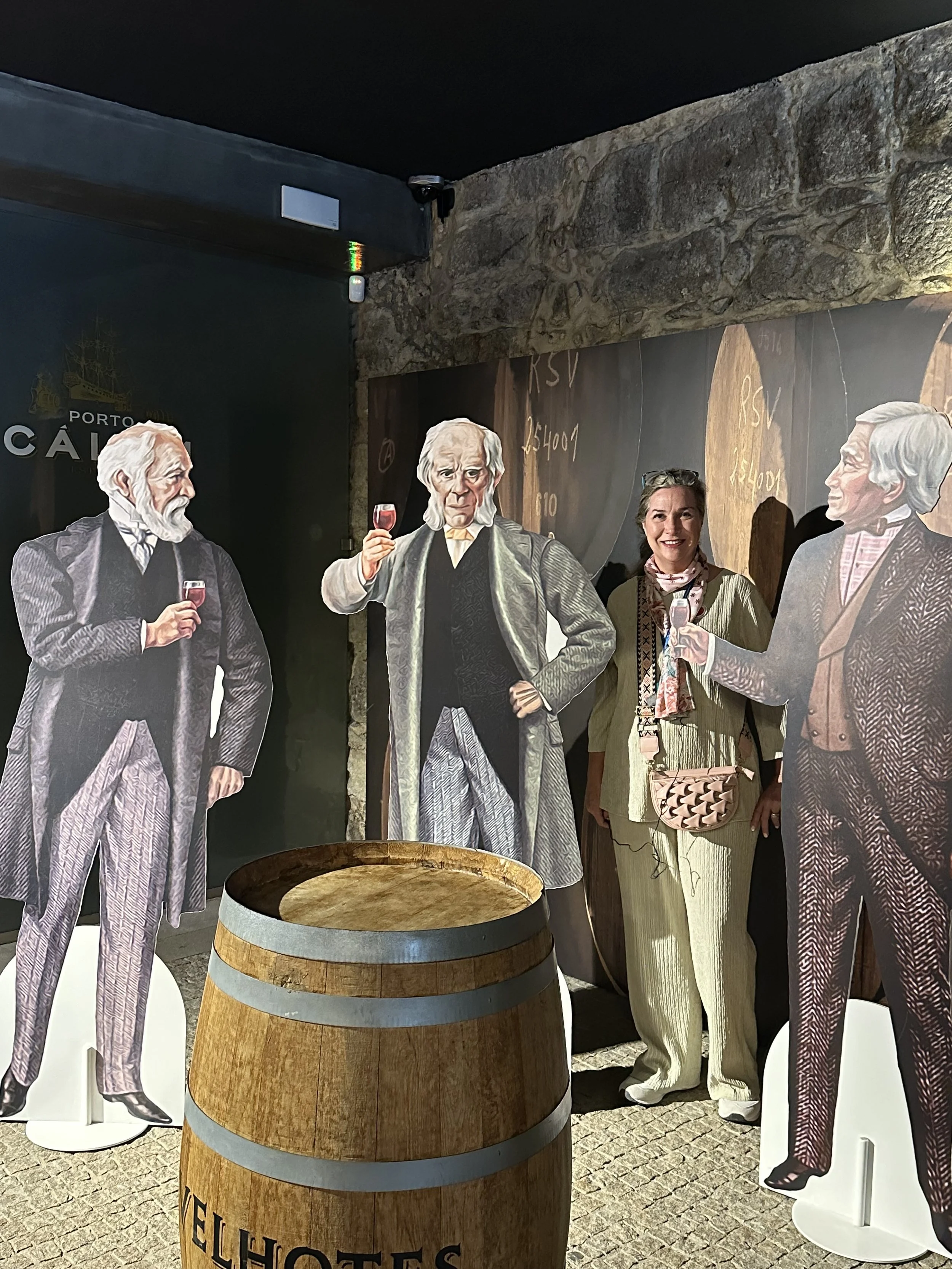
Entrance to Calém Port Cellar
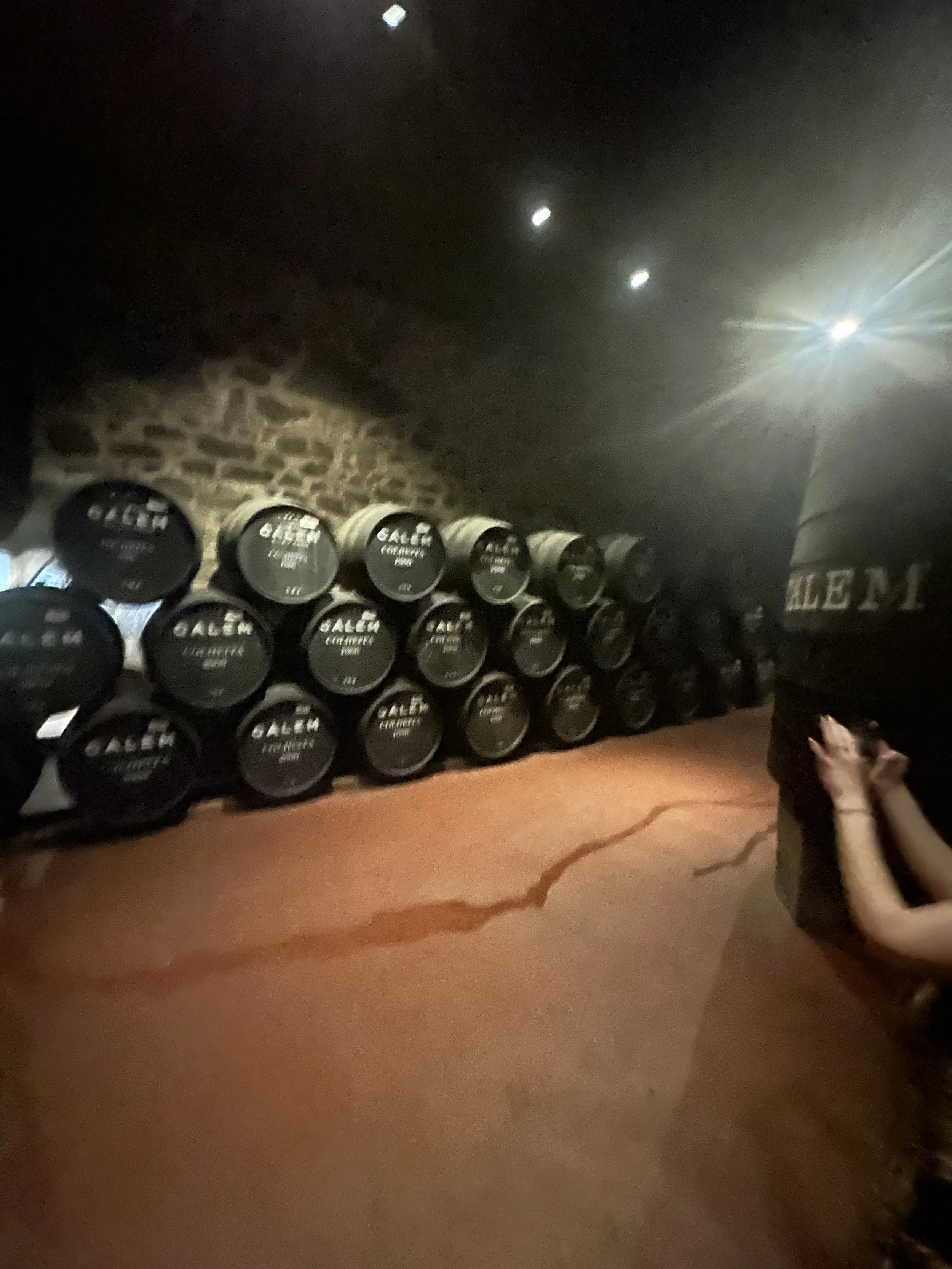
Calém port Cellar
The tasting itself was delicious… but rushed. We had maybe 10 minutes before being ushered through the gift shop and back onto the bus. A few guests managed to make purchases — my wife included, grabbing a special Port for us to open on our 25th wedding anniversary — but overall, the experience felt too quick to enjoy.
For more information on a tour of Calém click here.
Stop #2: Clérigos Church & Tower
Next, we headed into the city center to visit the famous Clérigos Church and Tower. The baroque design is stunning, and the skip-the-line access included in our excursion saved us from waiting in an incredibly long queue.
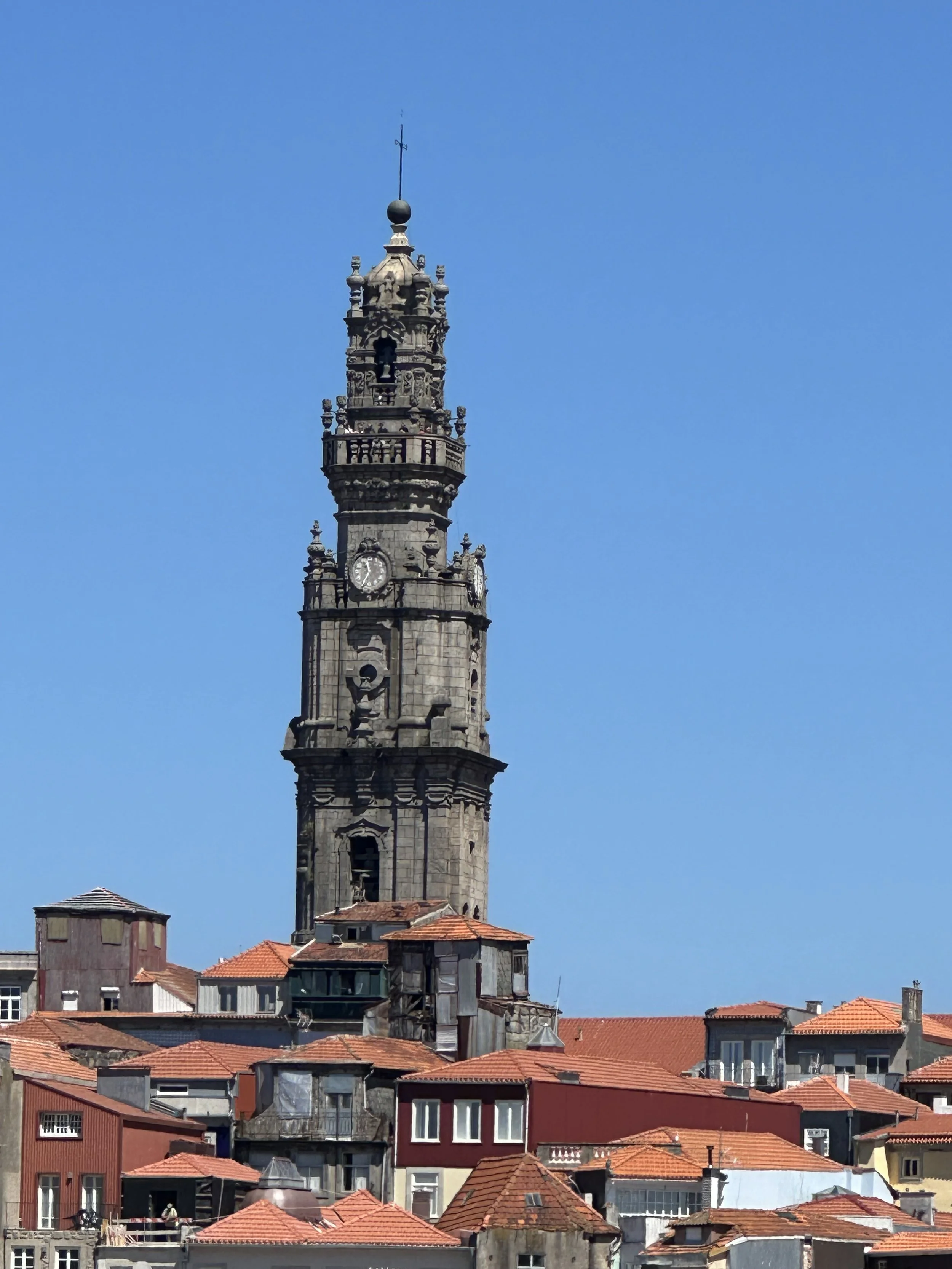
Clérigos Tower
The interior was gorgeous, but again, time was limited. We had roughly 20–25 minutes to explore — just enough to look around but not enough to fully take in the details or climb the tower.
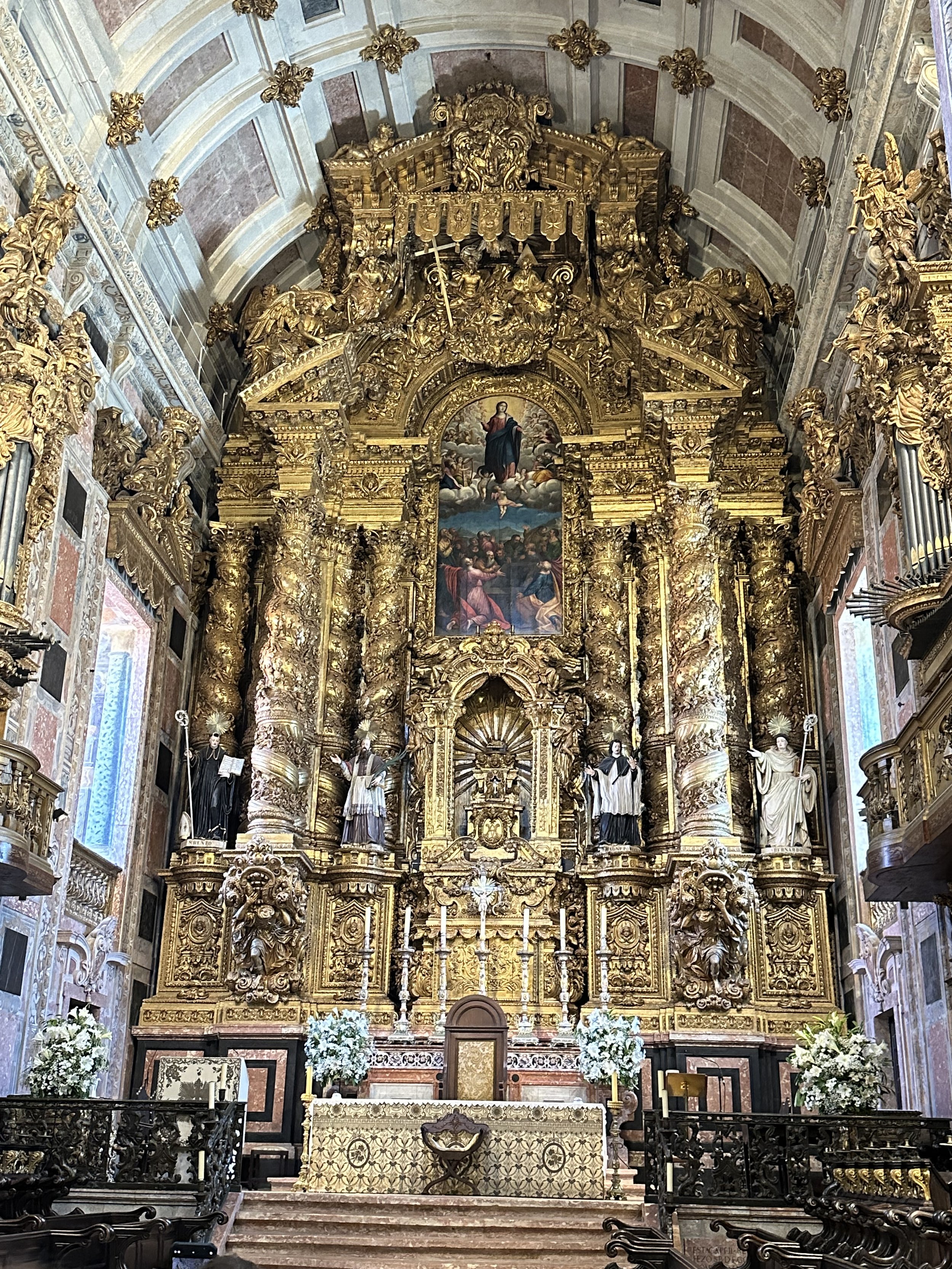
Inside the Clérigos Church
For more information on a tour of the Clérigos Church and Tower click here.
Stop #3: Palácio da Bolsa (Exchange Building)
Our third and final major stop was the Palácio da Bolsa, one of Porto’s most beautiful and historic buildings. The guided portion here was excellent — we spent nearly one full hour learning about the palace’s architecture, ornate rooms, and Portugal’s trading history.
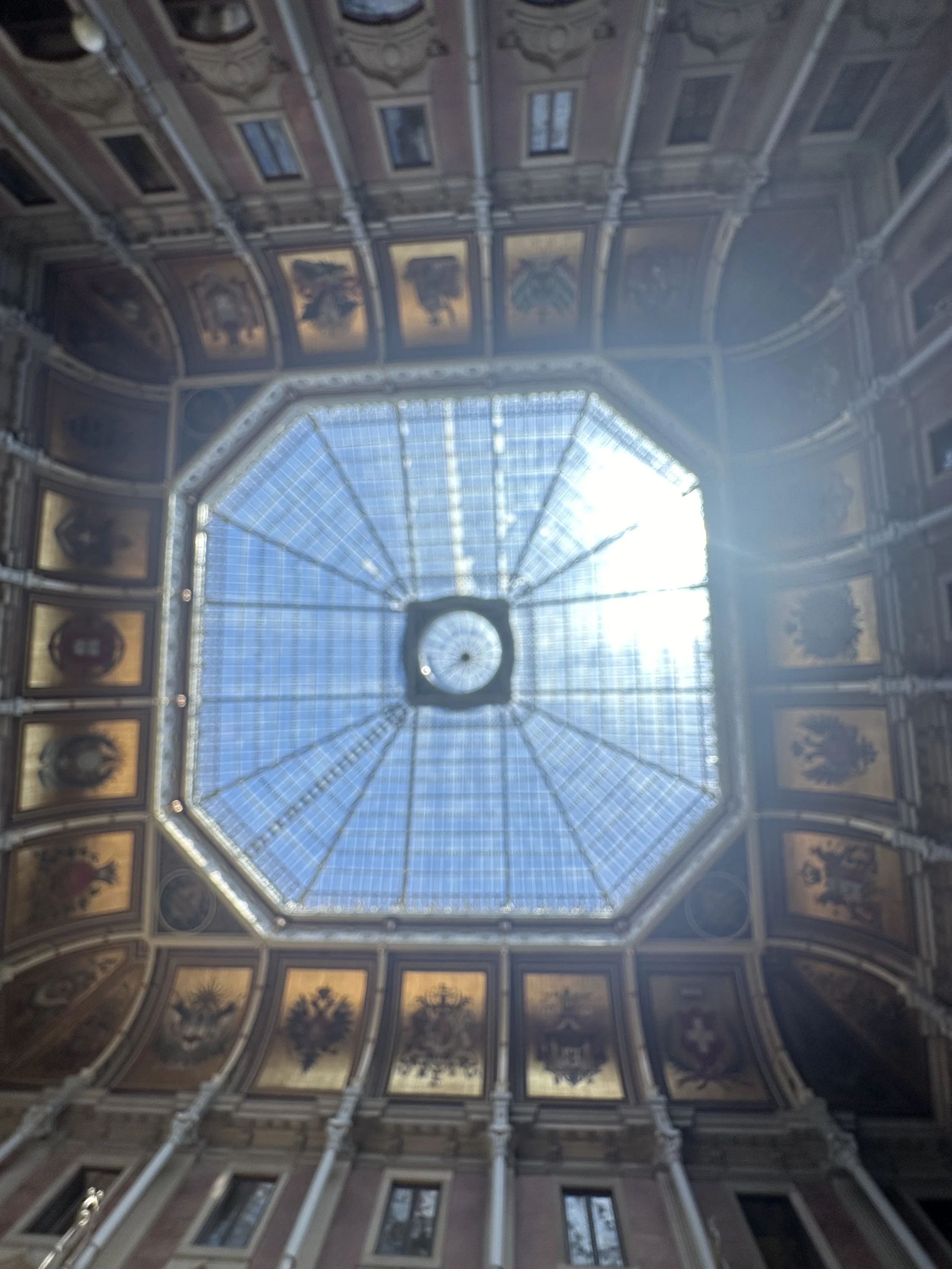
The grand entrance to Palácio da Bolsa
The Arab Room, in particular, was jaw-dropping.
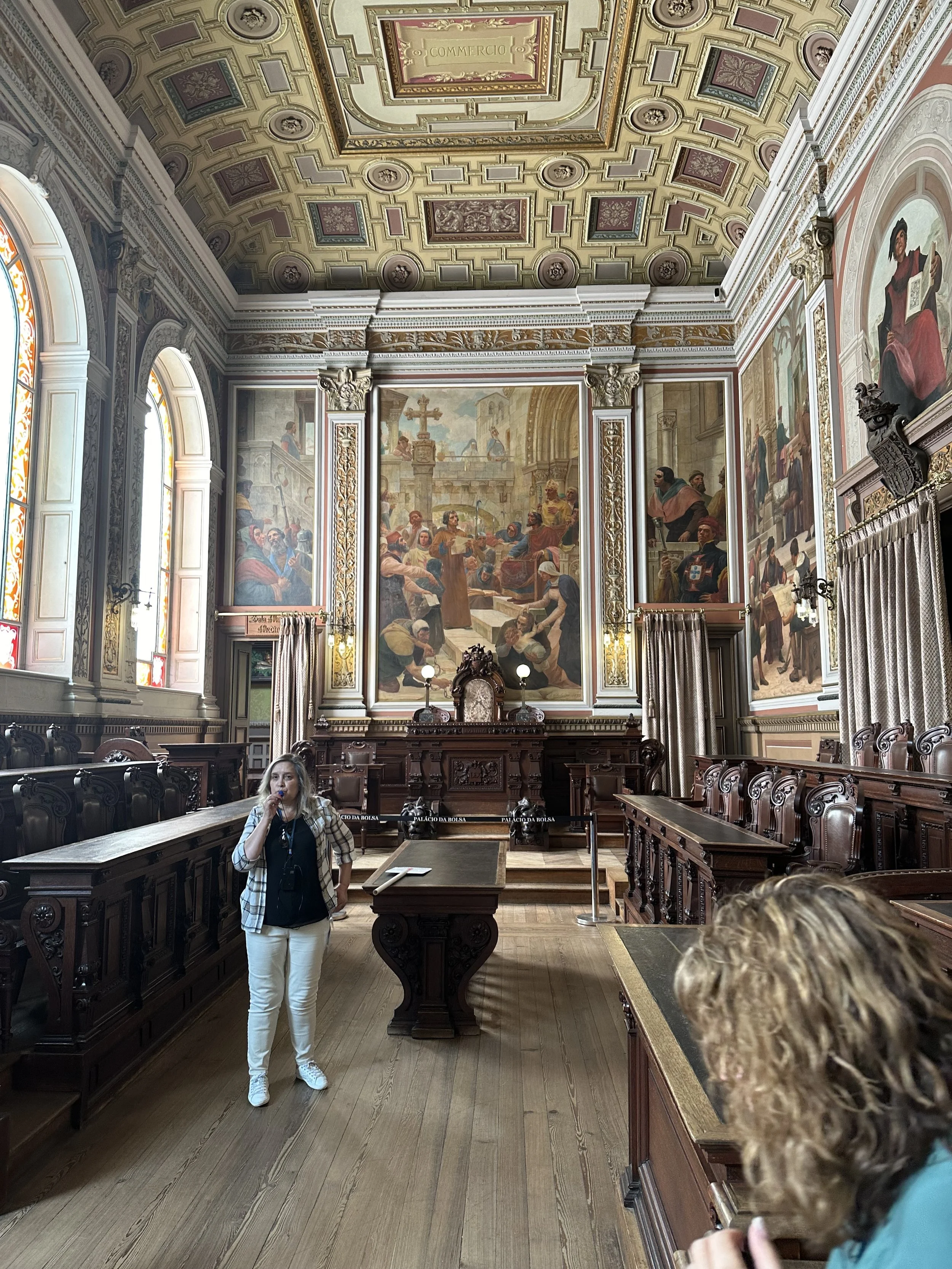
One of the court rooms of Palácio da Bolsa
Once the visit ended, we expected a bit of free time to explore Porto, but instead we returned directly to the ship — a full 2–2.5 hours before all-aboard.
For more information on a tour of Palácio da Bolsa click here.
The Early Return — and Some Frustrations
Arriving back at the ship so early left us feeling like we’d missed out on experiencing Porto properly. Several guests asked to leave the group and explore independently — and looking back, we wish we’d done the same.
Between the rushing, the early morning Port tasting, and our teens being charged full adult fares despite not being able to participate, the excursion simply didn’t deliver what we had hoped for.
Still, every travel hiccup teaches you something, and Porto has absolutely earned a return trip from us — on our own schedule next time.
What We’d Do Differently Next Time
If we visit Porto again by cruise ship, here’s how we’d make the most of our day:
1. Take a Hop-On Hop-Off Bus
This is the option we wish we had taken. Multiple companies operate Hop-On Hop-Off buses from Porto’s city center, and they’re perfect for cruise visitors. You can see major highlights at your own pace — Ribeira, Clérigos, Foz beach area, Vila Nova de Gaia, Port houses, and more — without feeling rushed or tied to a strict schedule.
For more information on Hop-On Hop-Off buses click here.
2. Explore Porto Independently
A taxi or Uber from the cruise port to downtown costs very little and takes only about 10 minutes. From there, everything is walkable or easily reachable on transit.
3. Enjoy a Relaxed Lunch Along the Ribeira
The Ribeira riverfront is one of the most beautiful places in Portugal. We’d grab a table overlooking the Douro, enjoy fresh seafood or a Francesinha sandwich, and simply take in the scenery.
4. Visit Port Houses on Our Own Schedule
Instead of a rushed group tasting, we would personally visit one or two Port cellars — Calém, Taylor’s, Sandeman, or Graham’s. Going independently gives you time to enjoy the tour, ask questions, and savor the tasting properly.
5. Skip Clérigos Unless It’s on Your Must-See List
It’s beautiful, but also crowded, and similar to many other cathedrals in Spain and Portugal. If time is limited, there are better ways to enjoy the city.
Top 3 Additional Things to Do in Porto for Cruise Visitors
If you’re planning your own adventure from the cruise terminal, here are three fantastic options:
1. Walk Across the Dom Luís I Bridge
The views from this double-level bridge are spectacular. Walk from Porto to Vila Nova de Gaia and straight into the Port wine district.
2. Visit Livraria Lello
Often ranked as one of the most beautiful bookstores in the world, Livraria Lello is a must for book lovers and architecture fans. Buy tickets online to skip the line.
For more information on Livraria Lello click here.
3. Visit the FC Port Museum
For all of those Futbol Hooligans out there, a fun expense bringing you closer to the pitch.
For more information on FC Port Museum click here.
Final Thoughts
Our Carnival Legend Porto excursion may have been rushed, but the city itself? Porto is the kind of place best explored slowly — on foot, with a glass of Port in hand, and without watching the clock.
And when we finally open that bottle of Calém Port on our 25th wedding anniversary, I know we’ll smile remembering this perfectly imperfect day in Portugal — the good, the chaotic, and everything in between.

A Festive Weekend Escape: Our 3-Night Royal Caribbean Cruise on Utopia of the Seas
Discover our 3-night Royal Caribbean Utopia of the Seas cruise to CocoCay—dining reviews, tips for mega ship travel, and what to know before you sail.
Looking for the perfect pre-holiday getaway? Our Royal Caribbean cruise on Utopia of the Seas was the ultimate short escape, combining festive décor, ocean views, and world-class dining. Sailing out of Port Canaveral, this 3-night cruise offered the best of mega ship cruising—including a stop at Perfect Day at CocoCay, a full day at sea, and specialty dining experiences that made the trip unforgettable.

While mega ships come with larger crowds, Royal Caribbean has done a fantastic job designing Utopia of the Seasto move large volumes of people efficiently, preventing long, immovable lines and bottlenecks. To our pleasant surprise, embarkation on Day 1 was just as low-stress as on the smaller Royal Caribbean ships we’ve sailed, which set a positive tone for the entire cruise.
Our Balcony Stateroom on Deck 8: Prime Location for Coffee and Sunrise
We stayed in a balcony room on Deck 8, between mid-ship and aft—a perfect location for both convenience and comfort.
Highlights of the location:
Sunrise coffee moments: As a morning person, stepping out onto the balcony and walking a few steps to a Central Park café was magical. Watching the sunrise over the ocean with a hot coffee in hand set the tone for each day.
Close to the Lido Deck: Decks 7 and 8 are ideal on Royal Caribbean ships to be near the Lido Deck, and this location made grabbing breakfast or lunch quick and easy.
Quick elevator access: Being near the mid-ship elevators meant minimal wait times, giving fast access to Deck 15 and the Windjammer Marketplace.
The combination of convenience, a private balcony, and prime location for sunrise coffee made this cabin feel like a little home at sea. If you’re booking a Royal Caribbean balcony stateroom, we highly recommend mid-ship on Deck 8 for both sunrise views and proximity to the ship’s amenities.
🎄
Holiday Decor on Utopia of the Seas

Sailing the weekend before Christmas means Royal Caribbean decks are fully decked out for the holidays. The Royal Promenade sparkled with garlands, oversized ornaments, Christmas trees, and festive music, creating a tropical holiday vibe. Walking through the ship felt like wandering through a floating Christmas village—sunshine included.
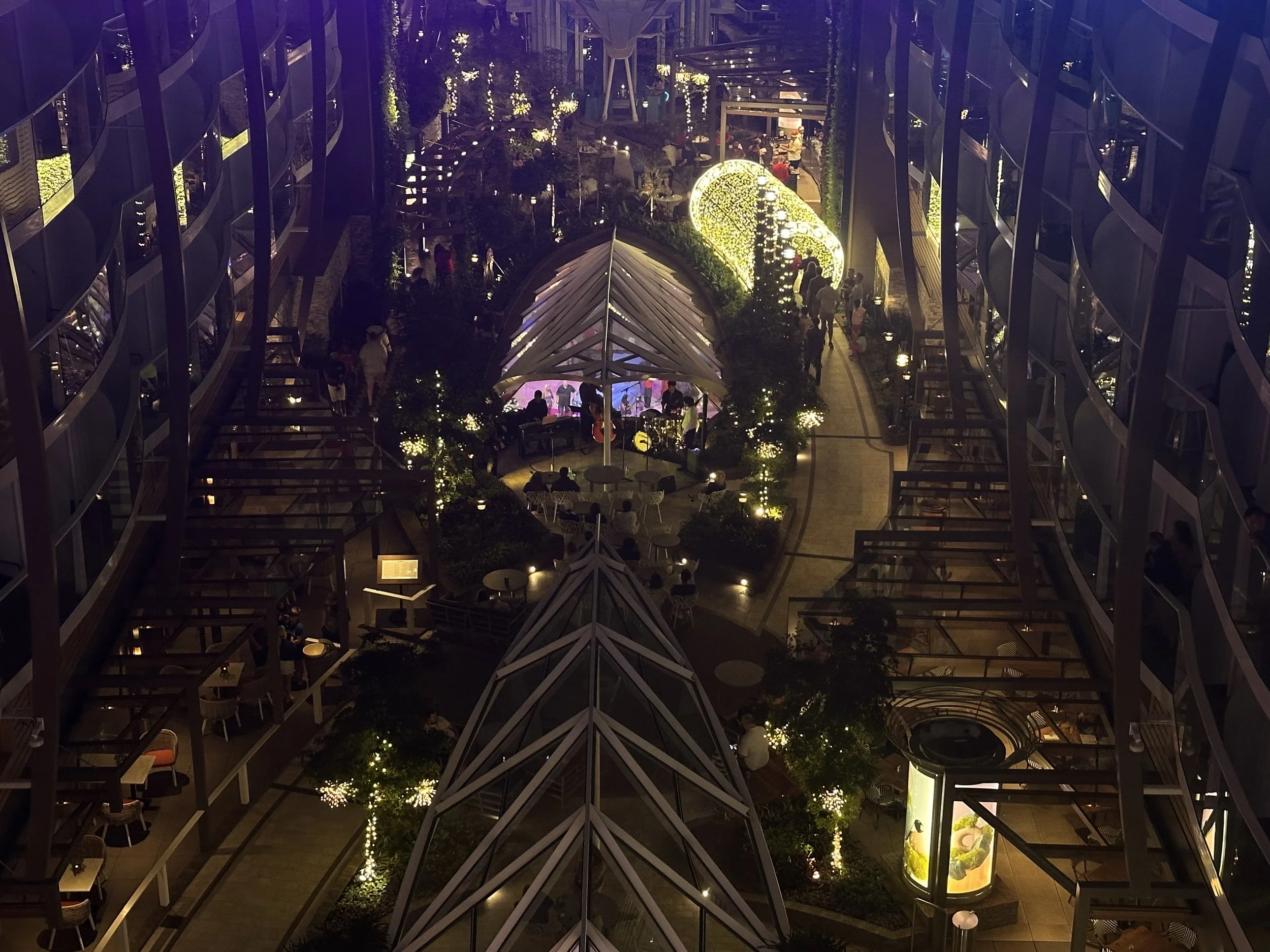
Specialty Dining on Utopia of the Seas
Hooked Seafood: Exceptional Dining at Sea
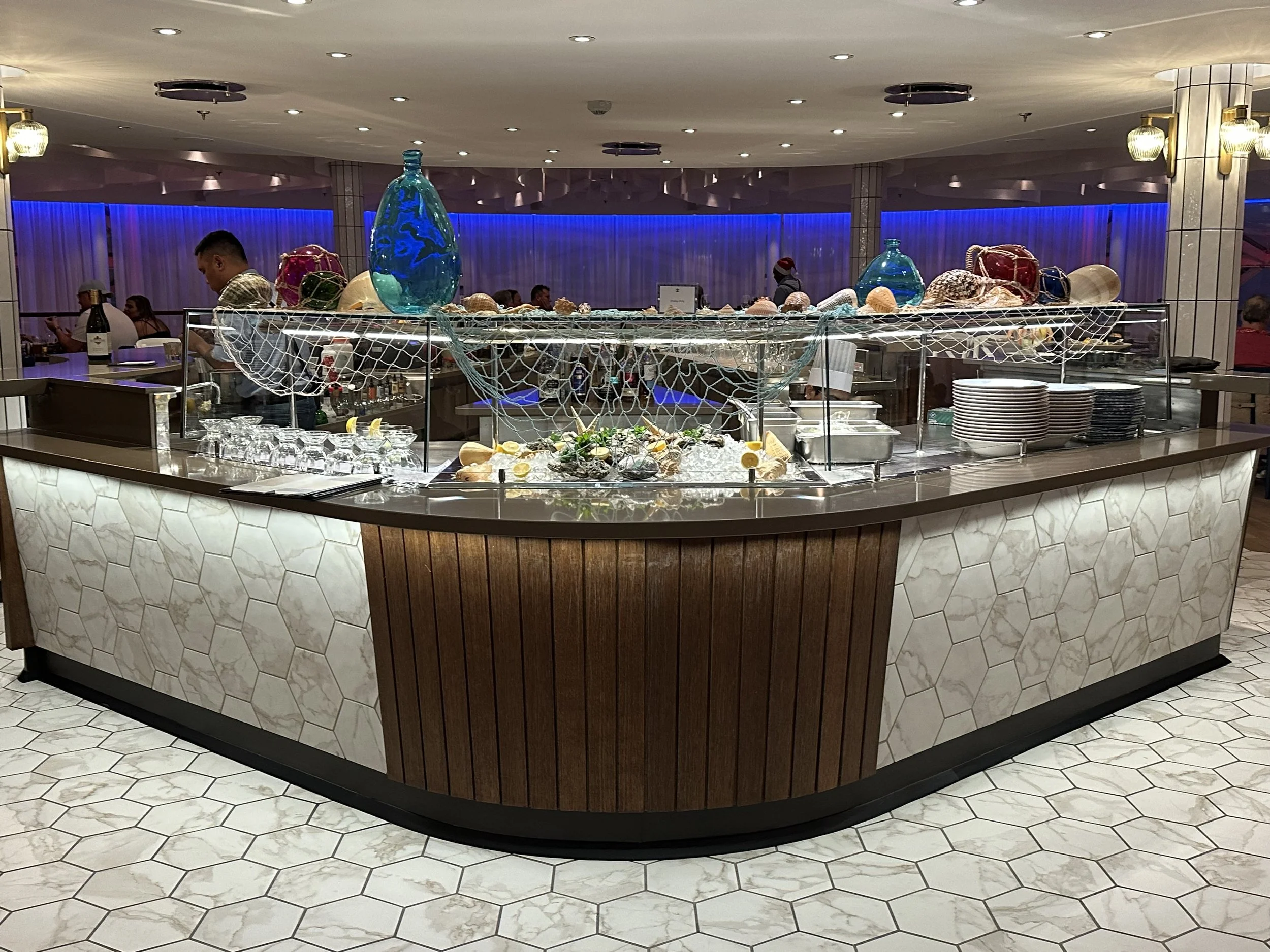
Hooked Seafood was our absolute favorite specialty restaurant on board. This New England-inspired eatery delivered a refined, relaxed atmosphere, incredible service, and some of the best seafood at sea.
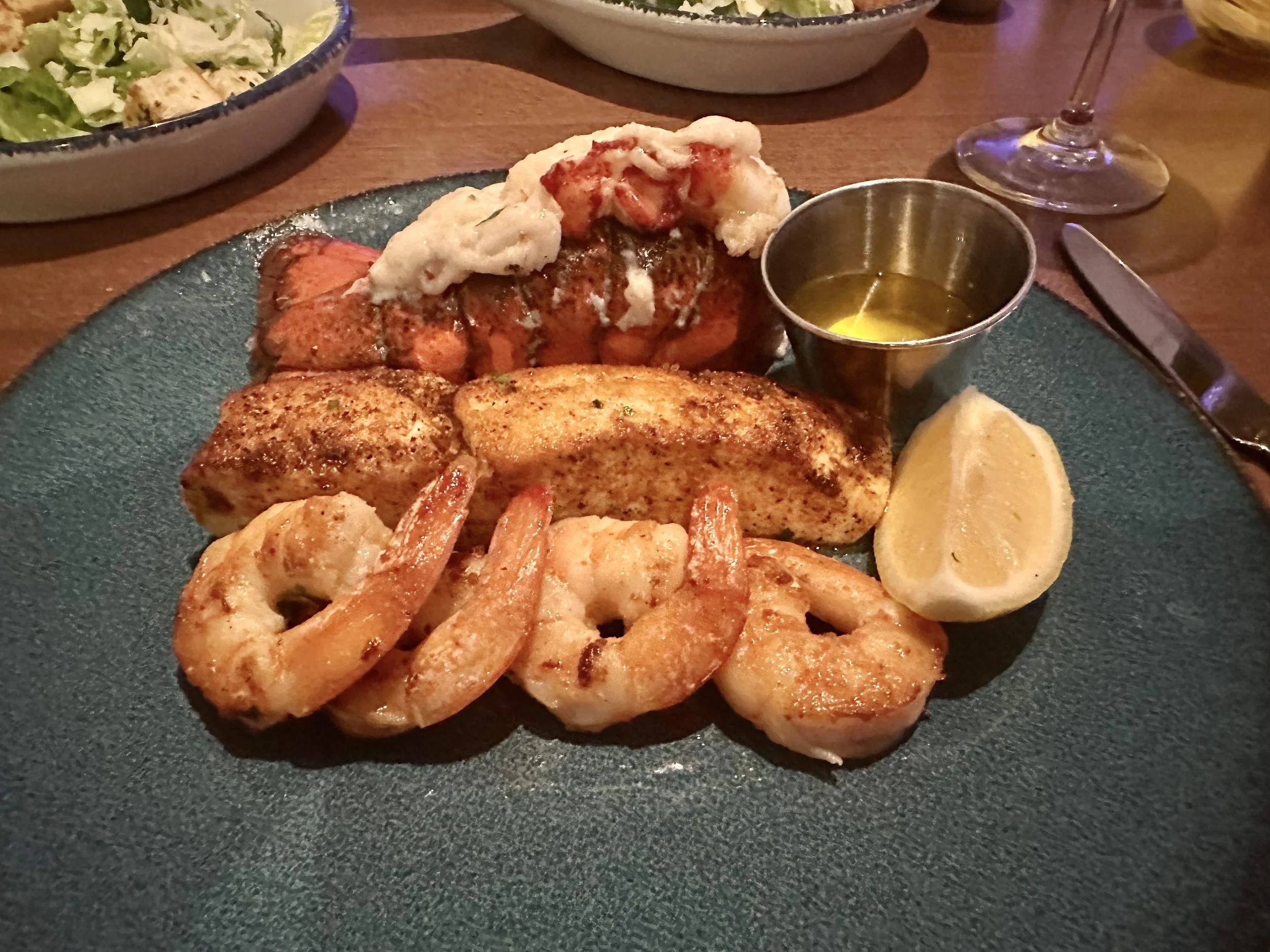
What made Hooked special:
Fresh lobster, crab cakes, and perfectly seasoned fish
Decadent appetizers and desserts
Unlimited entrée option—just ask for a second plate, and the staff happily obliged
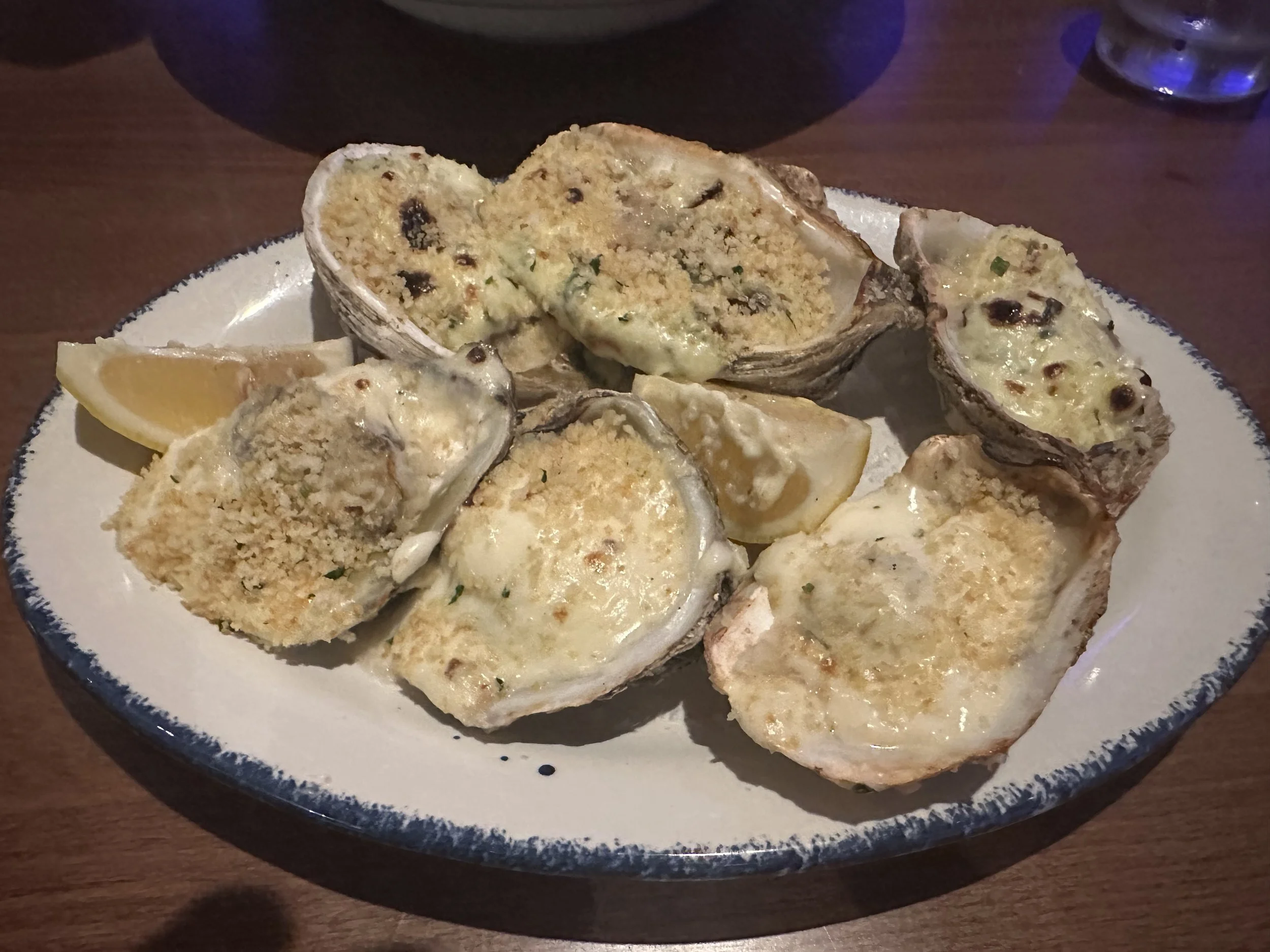
If you’re a seafood lover planning a Royal Caribbean cruise, Hooked is a must-do. Reserve early, as mega ships like Utopia of the Seas get busy quickly.
🥩
Chops Grille: Central Park Views with a Busy Atmosphere
Chops Grille, Royal Caribbean’s signature steakhouse, offered a beautiful view of Central Park, the ship’s lush open-air garden.
Steaks and sides were excellent, and service was attentive.
However, the restaurant felt tight and crowded, unlike the Chops restaurants on smaller ships with ocean-view tables and sunset ambiance.
On smaller ships, enjoying a sunset dinner at Chops is one of our favorite specialty dining experiences. On Utopia, while the food was amazing, the Central Park view didn’t replace that peaceful ocean-view charm.
Main Dining Room: Relaxed Final Night
We only visited the Main Dining Room on the last night of the cruise. It was warm, relaxed, and familiar—offering a perfect contrast to the specialty dining experiences.
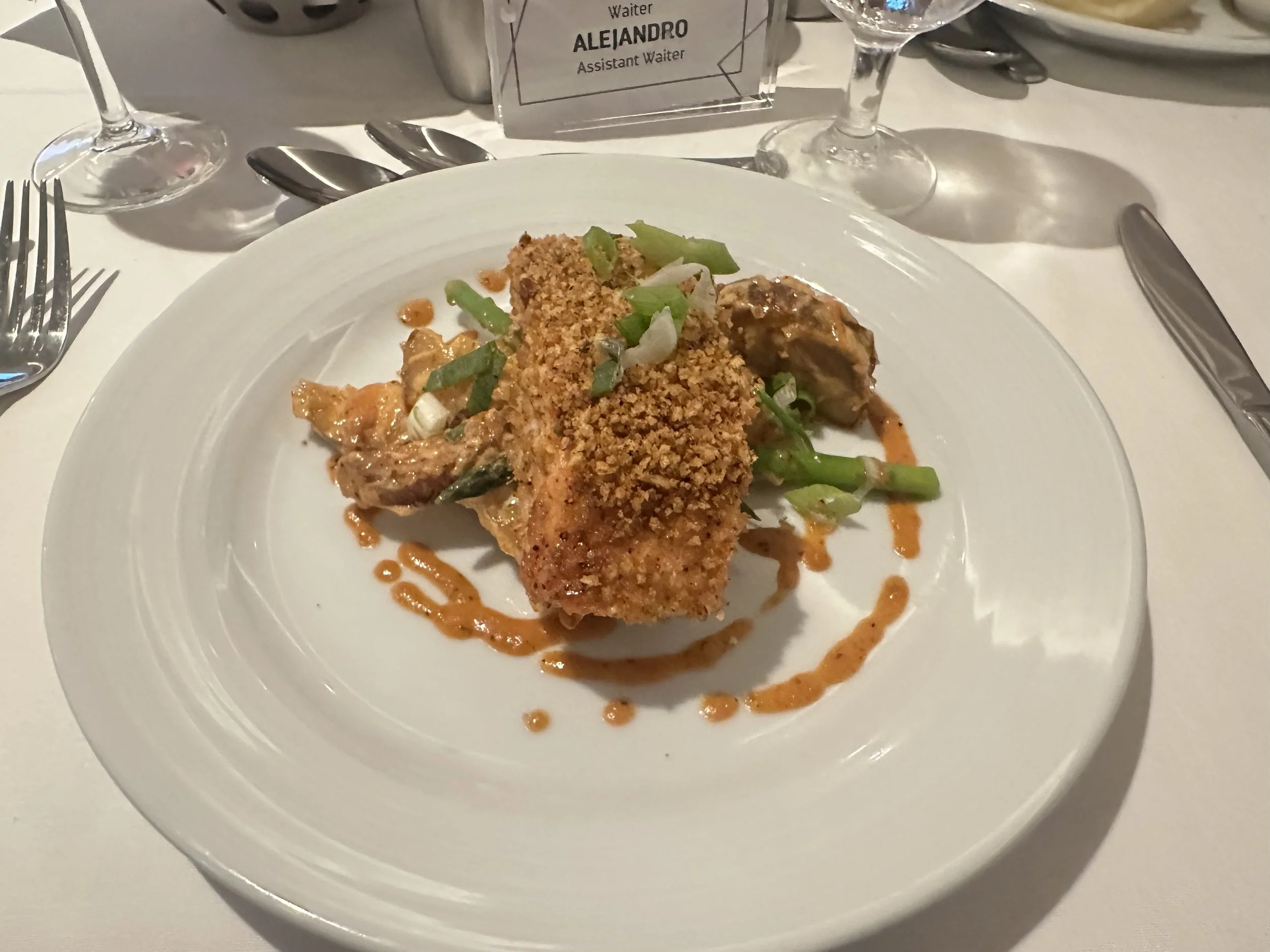
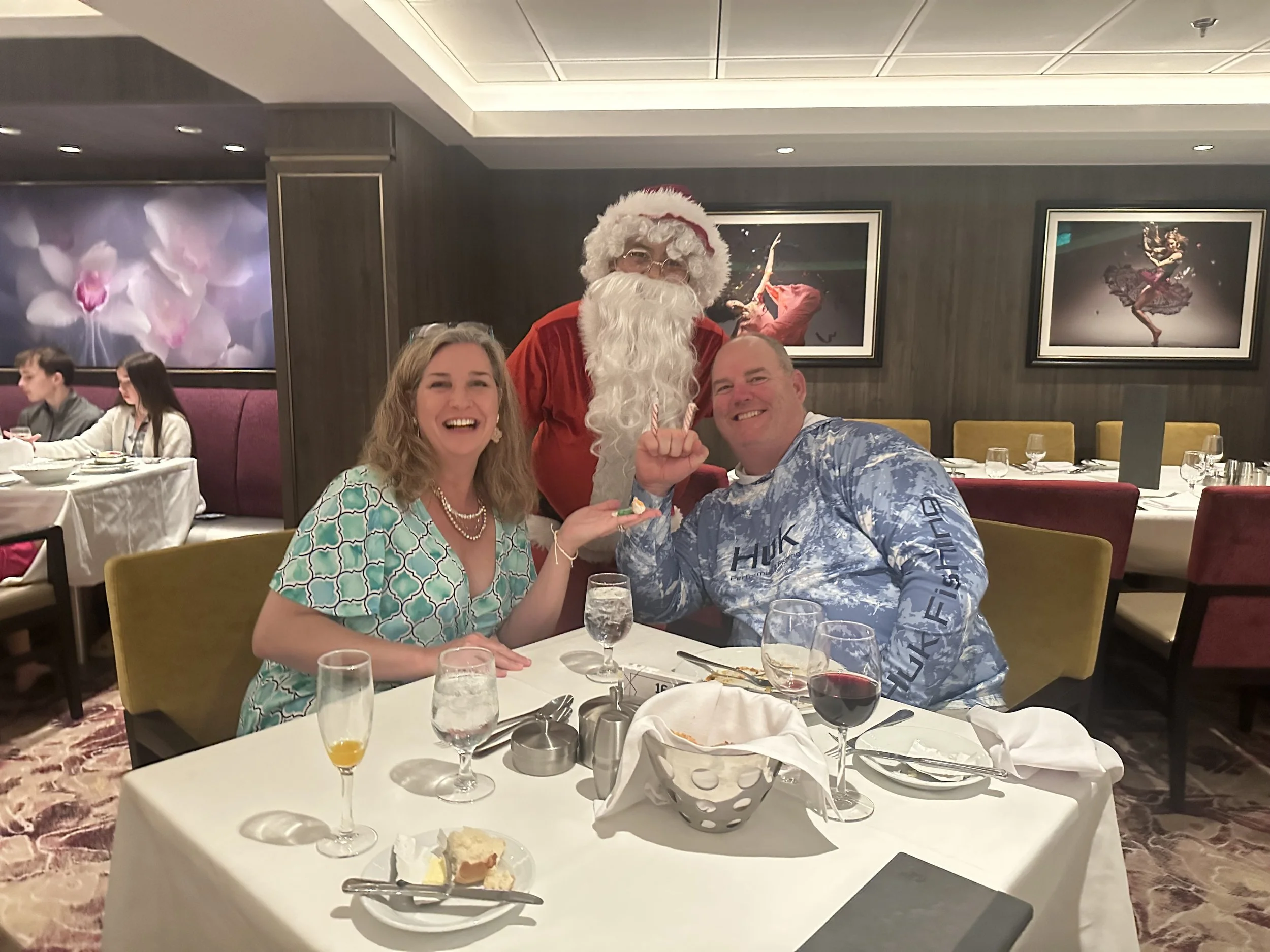
Tip: On mega ships, the Main Dining Room can be just as enjoyable, especially if you want a quieter, less crowded meal.
A Day at Sea & Aquatic Shows That Dazzle
Sea days on mega ships are like exploring a floating city. With so many lounges, decks, and activities, there’s always something new to see.
Aquatic Shows
The aquatic performances were breathtaking—daring dives, synchronized choreography, and dramatic staging. Truly world-class entertainment and the highlight of our sea day.
Check out one of our clips on Instagram: 📸 @venturetosee
Mega Ship Tips: Reservations Are Key
Unlike smaller Royal Caribbean ships, mega ships require reservations for:
Theater shows
Specialty dining
Evening entertainment
We missed most of the theater shows because we didn’t book in advance. Lesson learned: on mega ships, plan ahead or miss out.
CocoCay: Revisiting Our First Cruise
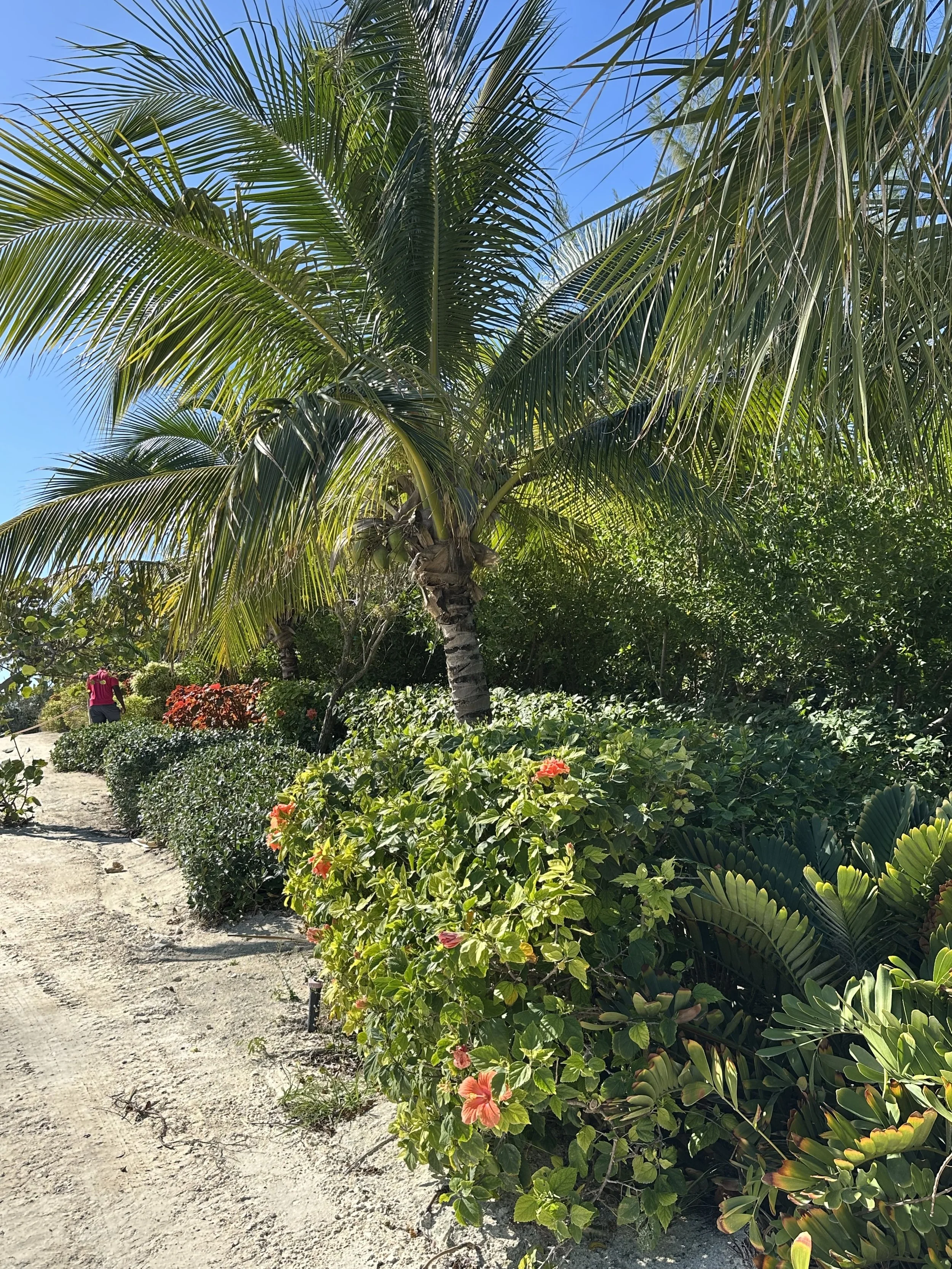
We visited Perfect Day at CocoCay, which was nostalgic because the first time we’d been there was back in 2009, on our first-ever cruise.
2009: Untouched, quiet, magical Caribbean paradise
2024: Fully developed with waterparks, restaurants, and crowds of 10,000+ passengers
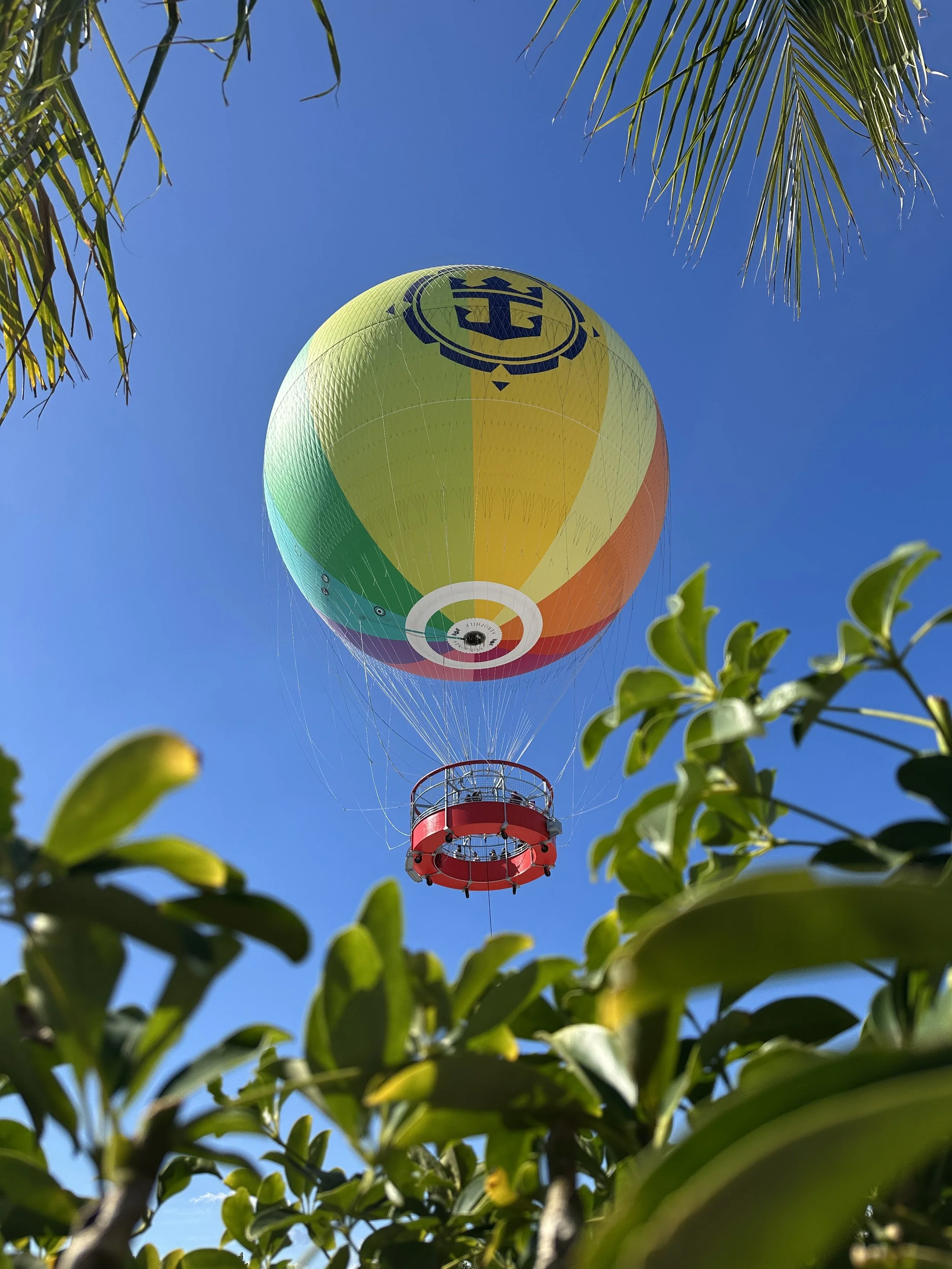
Even with the crowds, walking the island and soaking in the scenery was worth it—just different from our first experience.
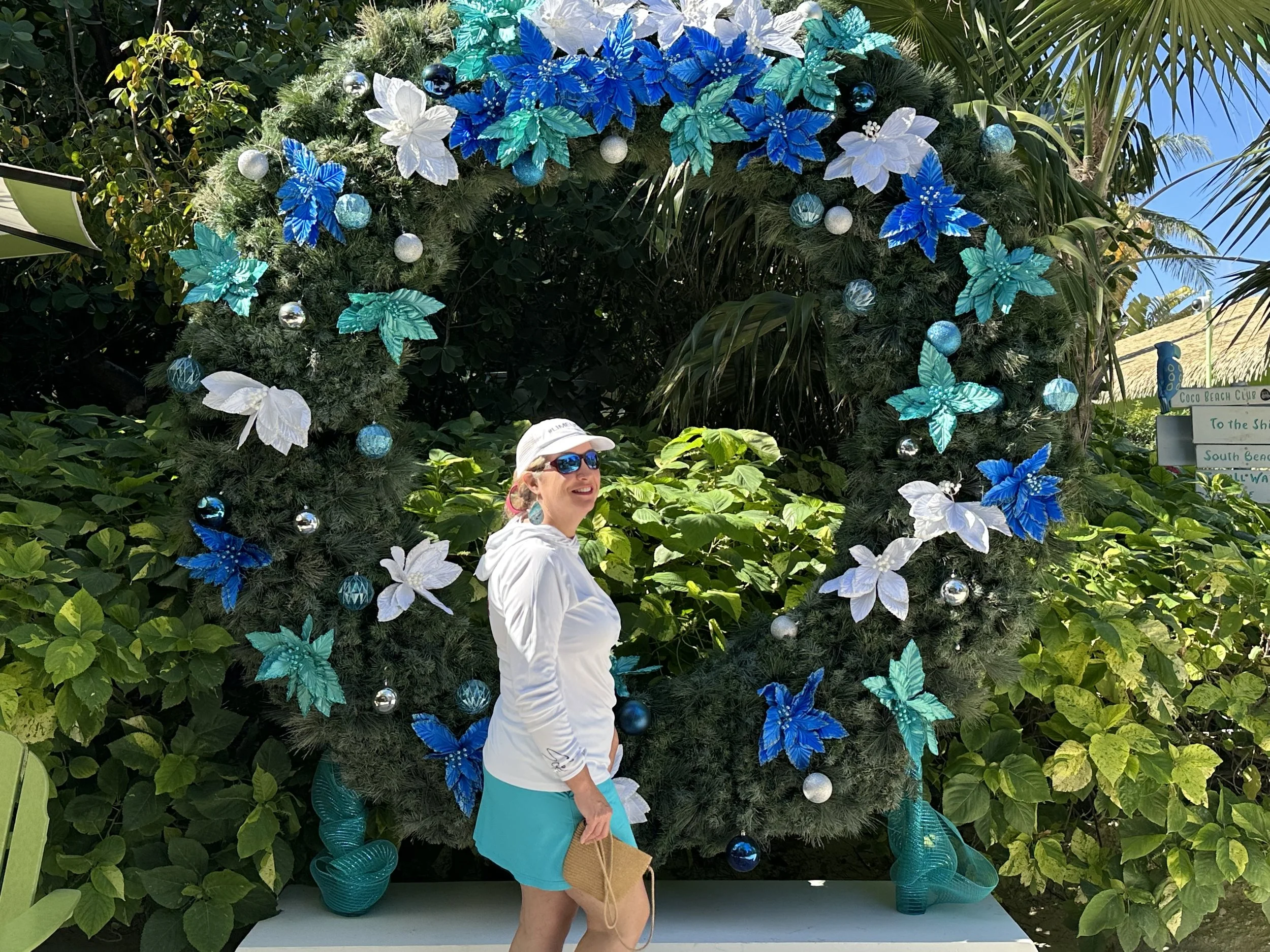
A Special CocoCay Moment: Stingray Sighting
While exploring CocoCay, my wife and I swam out to a floating cabana on the back side of the island. With fruity Caribbean beverages in hand, we lounged above the turquoise water, taking in the sun and scenery.
As we relaxed, we noticed the outline of a stingray perfectly camouflaged in the sand below us. The water was about 10–13 feet deep, so there was no danger of stepping on it—but it was incredible to see marine life up close, even in a highly developed area. Moments like this reminded us that the Caribbean still holds little pockets of natural wonder.
Affordability Tips for Royal Caribbean Mega Ships
Sailing on a large, newer Royal Caribbean ship comes with incredible experiences—but also a higher price tag.
If you’re not planning to take full advantage of high-energy activities—like the zip line, The Abyss, or FlowRider—a smaller ship might be more budget-friendly.
However, if you love a bustling atmosphere, abundant dining, and shopping, here’s how to maximize value:
Book Early: Secure your cabin as soon as possible for the dates you want.
Consider Longer Itineraries: 4+ day sailings allow you to experience more of the ship’s offerings.
Watch for Pre-Payment Sales: Look for deals on specialty dining, shore excursions, and drink packagesbefore final payment.
With planning, you can enjoy the mega ship experience without overspending.
What We’d Do Differently Next Time on Utopia of the Seas
Skip Chops, revisit Hooked, and enjoy the Main Dining Room more
Hooked was our favorite specialty restaurant, and we’d pair it with more evenings in the Main Dining Roomfor relaxed meals and less crowded dinners.
Choose a longer itinerary
At the time of this blog, Utopia of the Seas only offered 3- and 4-day cruises. For a fuller experience of dining, shows, and activities, we’d consider a 4-day or longer sailing, rather than a quick 3-day escape.
Plan ahead for shows
On mega ships, reservations for theater performances fill fast. Next time, we’d research shows in advance and book seats early, ensuring we don’t miss any entertainment.
Things to Buy to Enhance Your Cruise Experience
To make the most of your Royal Caribbean mega ship cruise, consider bringing or buying:
Reef-approved sunscreen – Protect your skin while being environmentally conscious. Purchase here: https://amzn.to/48lqZOT
Reusable water bottle – Stay hydrated on the ship and during port days. Purchase here: https://amzn.to/3XkCMrE
Snorkel gear – Ideal for exploring CocoCay or other beaches. Purchase here: https://amzn.to/3MnnvDU ; https://amzn.to/43RhN3c
Magnetic hooks – Perfect for organizing your stateroom and hanging towels/swimsuits. Purchase here: https://amzn.to/489Q1jC
Waterproof phone pouch – Keep your phone safe while enjoying water activities. Purchase here: https://amzn.to/48Hr0Nl
Compact day bag – Carry essentials for excursions or onboard exploring. Purchase here: https://amzn.to/48BHiIv
These items enhance convenience, safety, and enjoyment throughout your cruise.
Final Thoughts
Our 3-night Royal Caribbean cruise on Utopia of the Seas was festive, memorable, and full of lessons. Mega ships offer incredible entertainment, dining, and stateroom conveniences, but they require planning and awareness of crowds.
From balcony sunrise coffee on Deck 8 to specialty dining at Hooked Seafood and Chops Grille, a stingray sighting at CocoCay, and the high-energy fun onboard, this cruise reminded us why we love Royal Caribbean—and why thoughtful planning makes all the difference.
Follow along for more travel adventures on Instagram, Facebook, and Youtube @venturetosee. www.venturetoseellc.com