
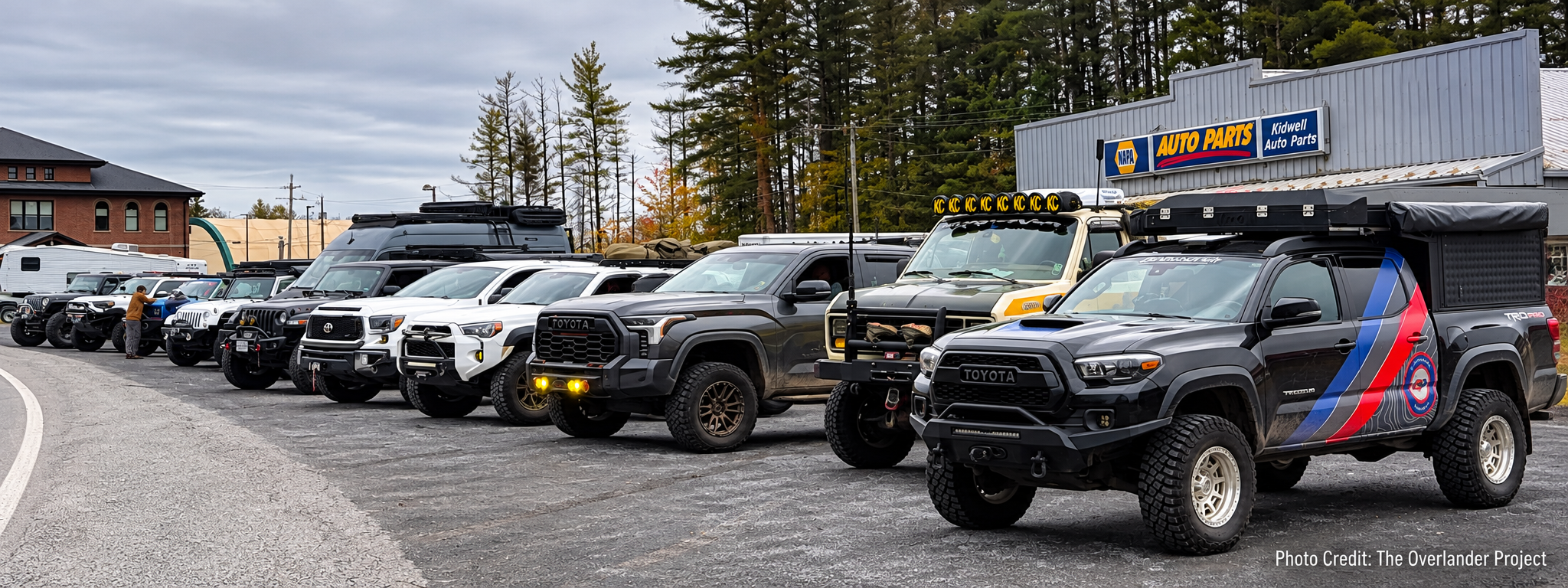
West Virginia · Overlanding · Trip Review
Expedition Monongahela: Four Days Overlanding West Virginia with The Overlander Project
Steam engines, a radio telescope, the Milky Way at 4,000 feet, a mountain distillery, Dolly Sods, and a teardrop trailer on a rock-ledge trail.
This trip was a long time coming. Like the rest of the world, I spent the COVID years at home thinking about what I wanted to do once the world was allowed to open back up. I binge-watched a ton of overlanding videos on YouTube and kept a running list of places I wanted to see from behind the wheel.
Fast forward to 2026, and the pieces were finally in place. I had the time to take off from work. I had an Escapod Topo 2, a trailer designed for the wild. I'd made the modifications my 2016 Toyota Tundra needed to meet the trip's minimum requirements: a full-size spare, 33-inch tires, and recovery gear. And The Overlander Project was offering a guided expedition through West Virginia's Monongahela National Forest, Expedition Monongahela, October 1–4, 2026.
As with any new adventure, the more I prepared and thought through what was to come, the more anxious I got. On top of that, I'd be joining a group of people I didn't know. I didn't know their backgrounds. The only things we had in common were that we'd all signed up for this expedition and we all wanted to see the fall colors in West Virginia.
We came home having seen a side of West Virginia I didn't know existed, a few lessons learned about running a camper off-grid, and a strong urge to sign up for another one.
The Route at a Glance
Plan Your Own Expedition
See The Overlander Project's Upcoming Trips
Guided routes, reserved camps, and trail leaders who spot you through the hard parts. A good way to start overlanding without figuring it all out alone.
View Upcoming Events →Fog, Steam Engines, and a Giant Radio Telescope
Day one started in thick mountain fog. We met the group at check-in, got our briefing, and pulled out in a convoy with the ridgelines still hidden. The fog added to the sense that we didn't quite know what was coming, which turned out to be the right way to start.
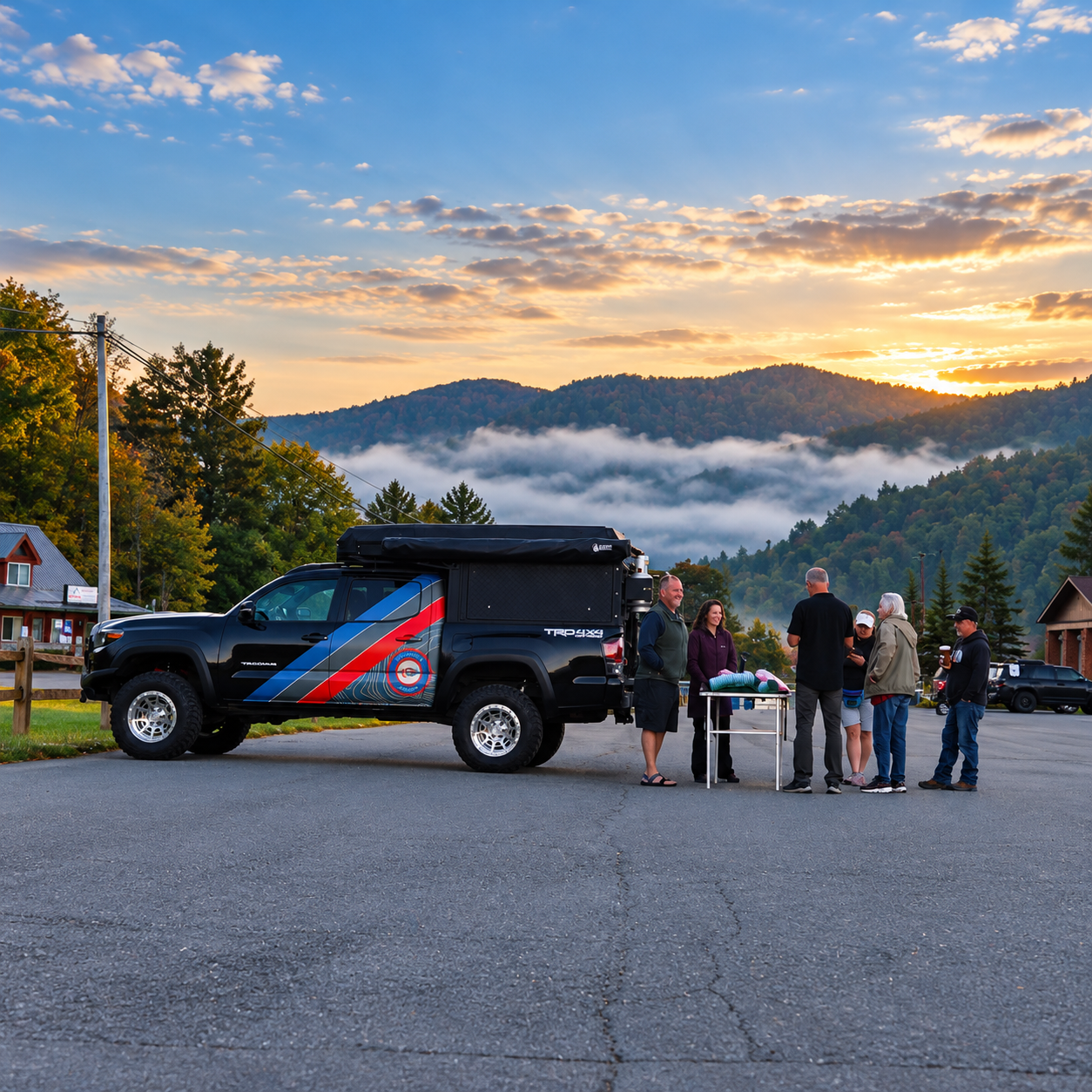
Check-in with The Overlander Project on the first morning of the expedition.
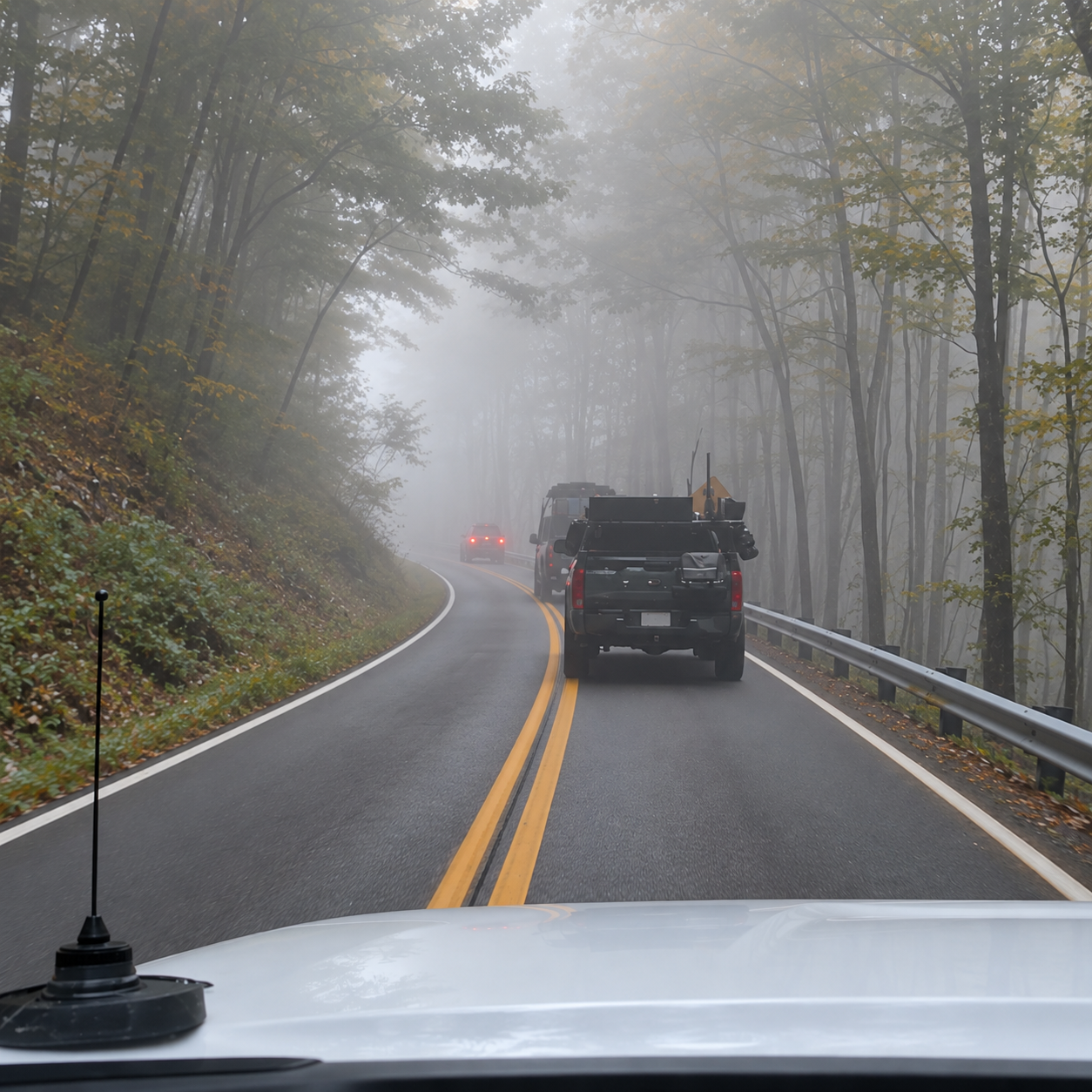
A foggy start to the morning, and to the expedition.
Our first stop was Cass Scenic Railroad State Park, where The Overlander Project had arranged a private tour of the engine repair shop. This is where the crew keeps the park's historic Shay geared steam locomotives running. Standing next to these machines while the crew works on them gives you a real respect for what it takes to keep a century-old logging railroad alive.
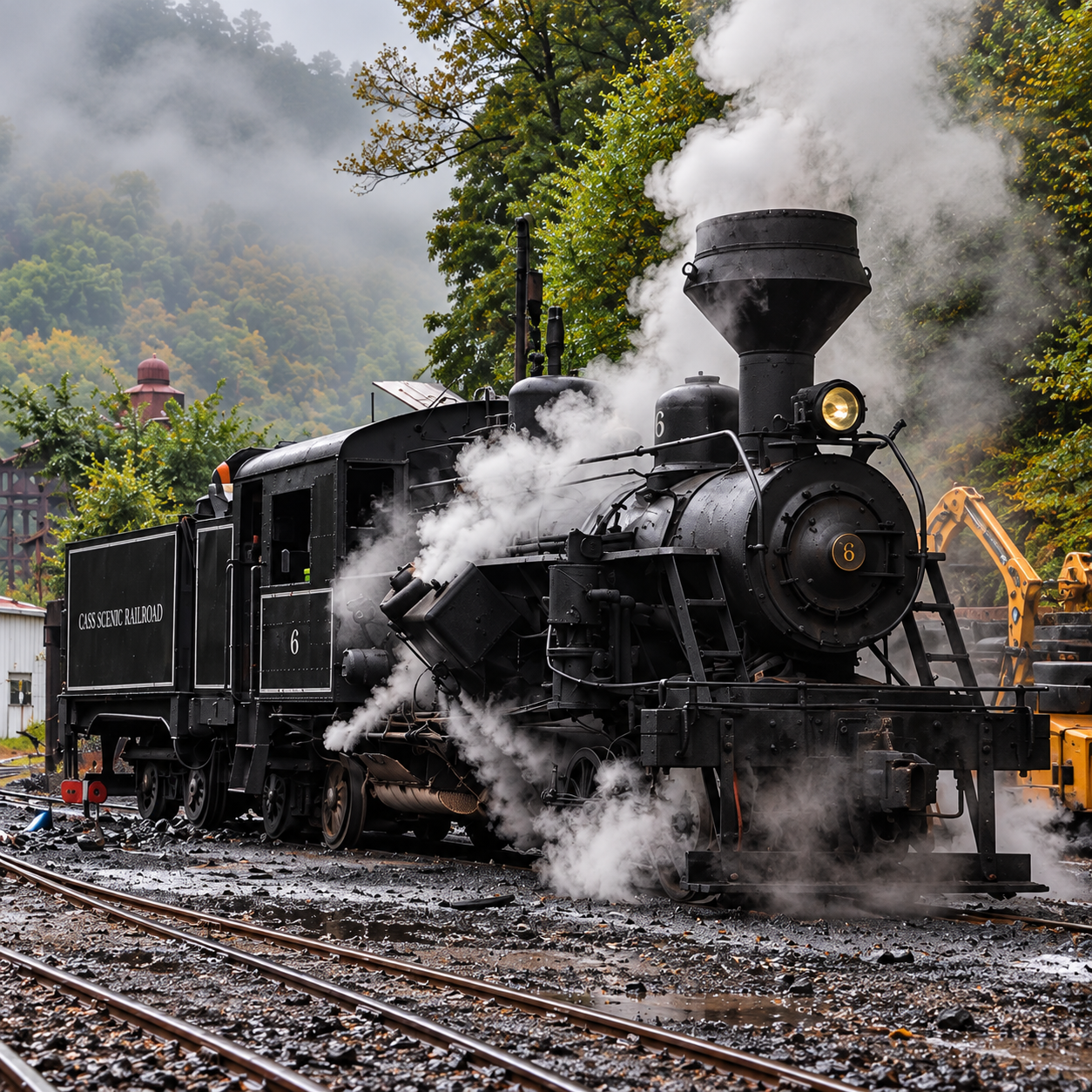
The morning fog was still hanging over Cass when we arrived.
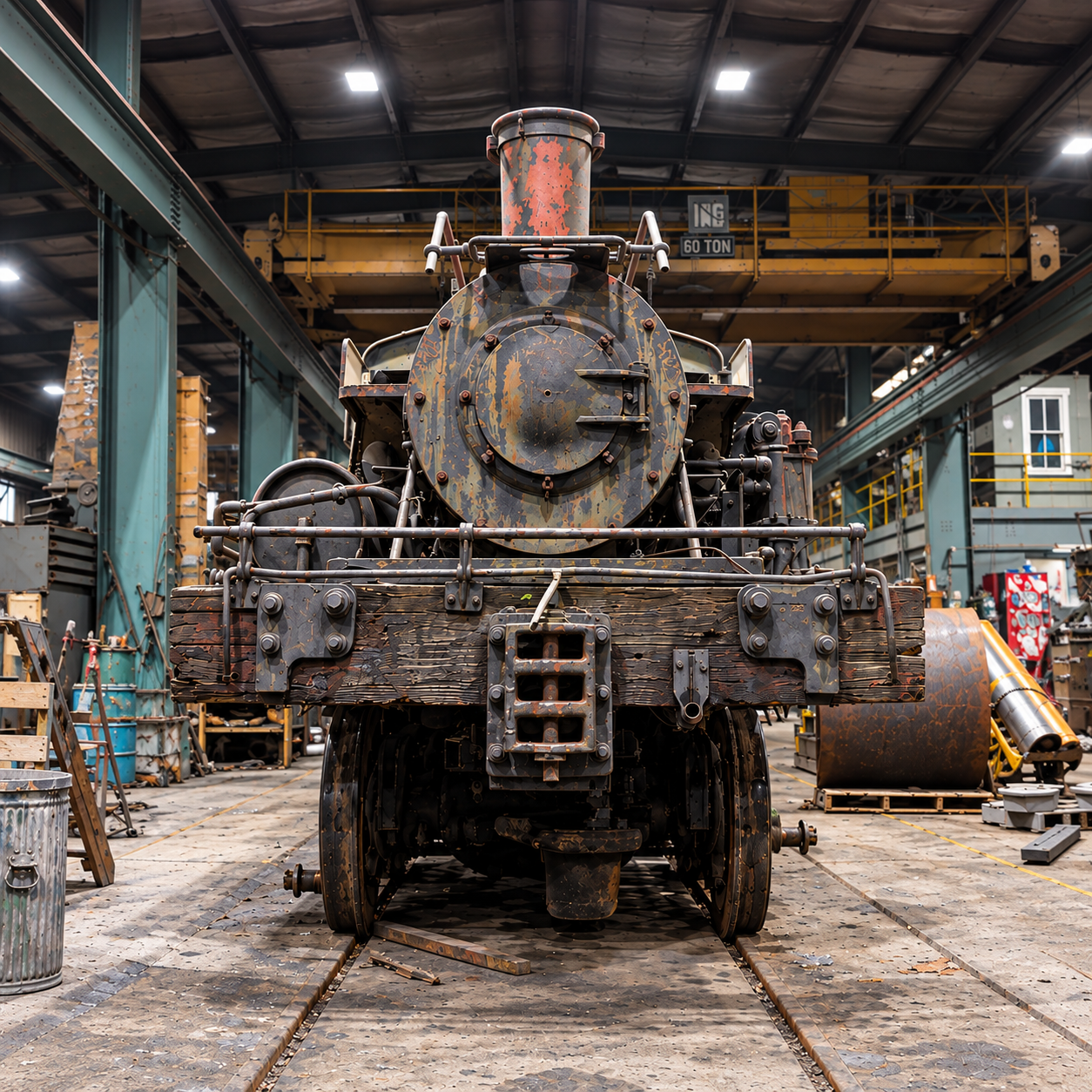
Inside the engine repair shop, where the crew keeps the Shay locomotives running.
Cass itself was built as a company logging town, and walking through it in the fog felt like stepping back a century. The depot, the water tower, and the old company store are still standing, and the store is worth a few minutes on its own.
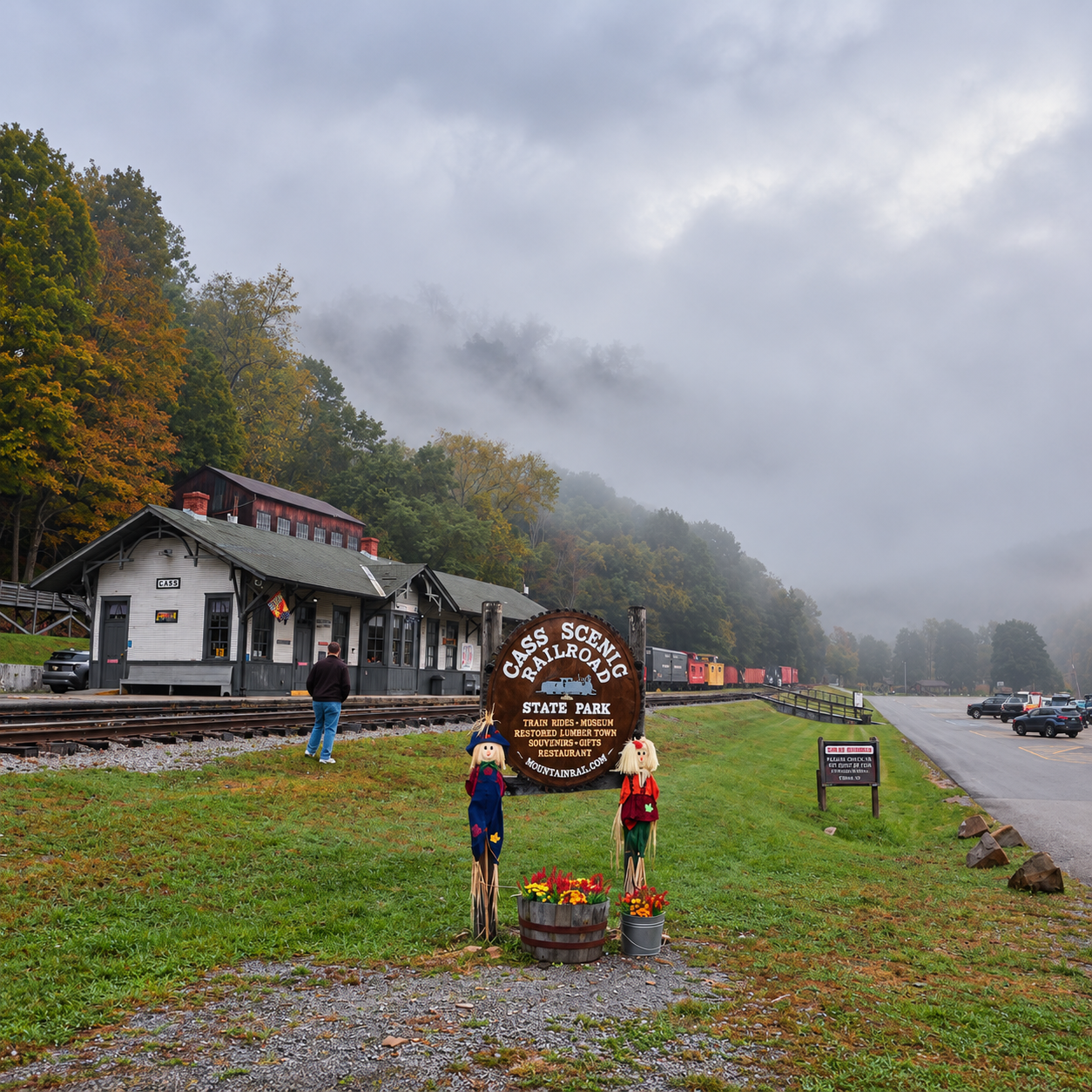

The Cass depot and water tower on a foggy first morning.
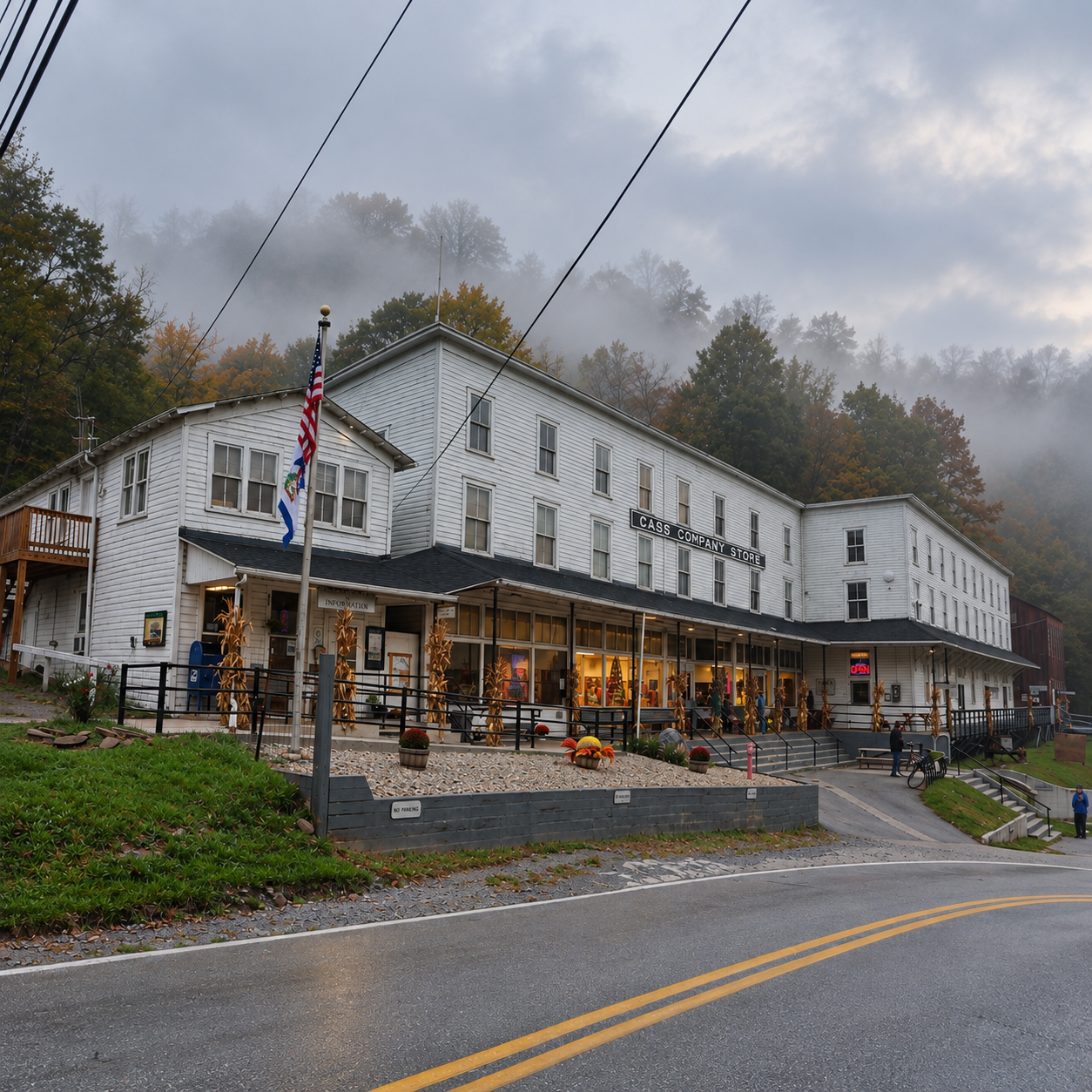

The Cass Company Store, and a vintage candy and train display inside.
From Cass we drove to the Green Bank Science Center and stood under the Robert C. Byrd Green Bank Telescope. It's the largest fully steerable radio telescope in the world, with a dish about 100 by 110 meters, and the whole structure is taller than the Statue of Liberty. Photos don't convey the scale. You have to stand under it.
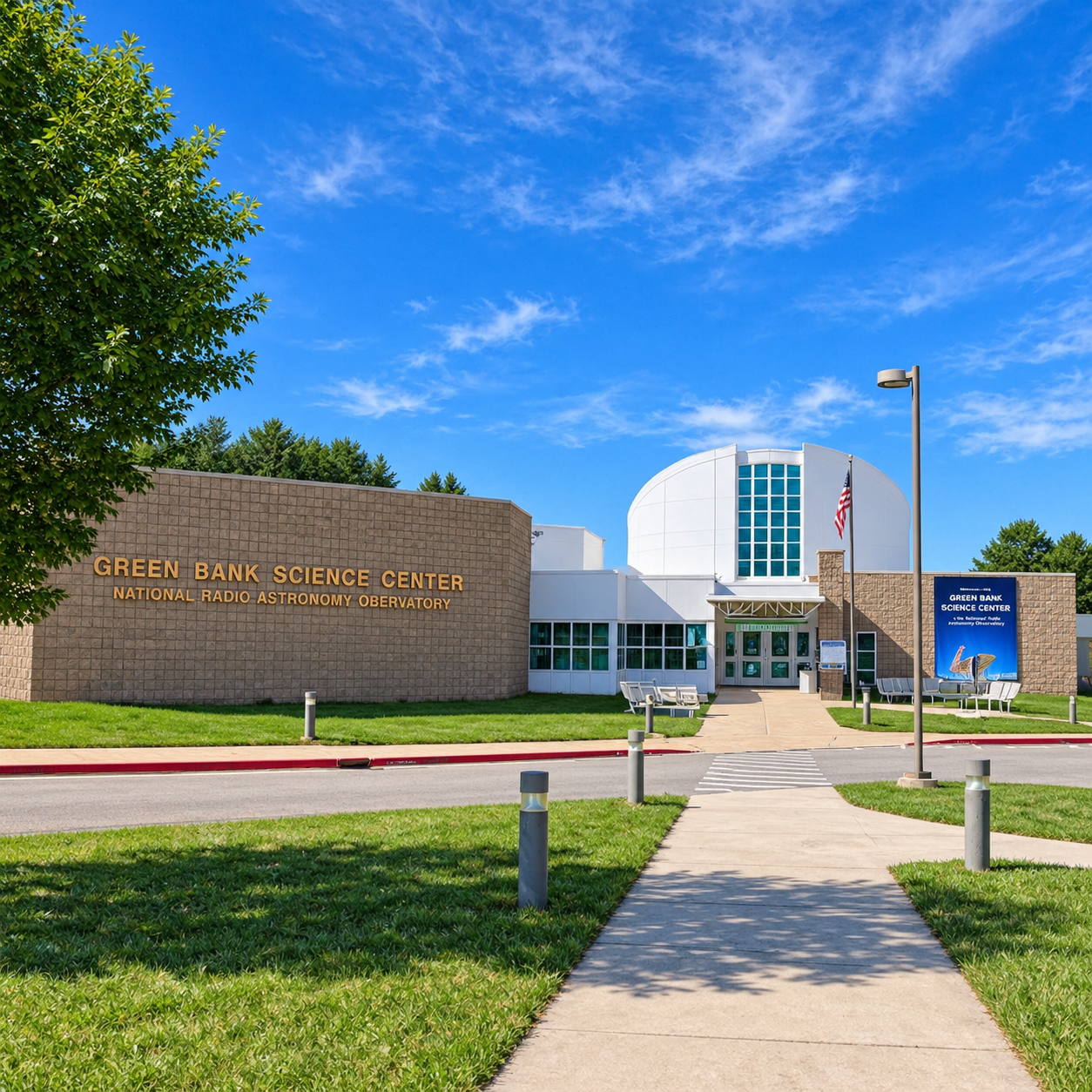
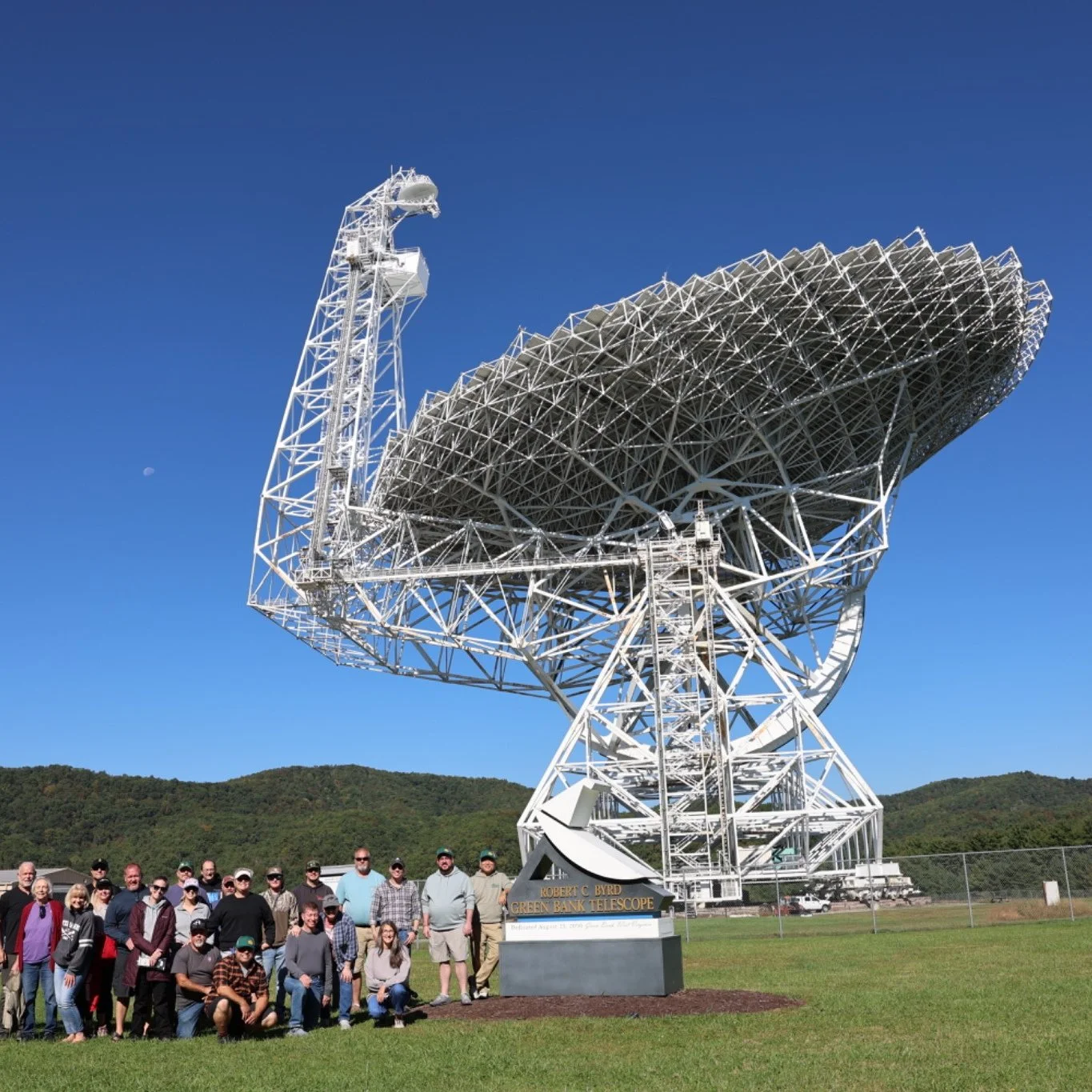
The Green Bank Science Center, and our group under the Green Bank Telescope. Admission to the Science Center is free.
Green Bank sits inside the National Radio Quiet Zone, about 13,000 square miles where signals that could interfere with the telescopes are restricted. The closer you get, the more your phone becomes a paperweight. Have they detected aliens yet? Officially, no, and Green Bank has been listening since 1960, when Frank Drake ran the first modern search for alien signals here. My theory is that they're calling, but like everyone else in Green Bank, they can't get a signal.
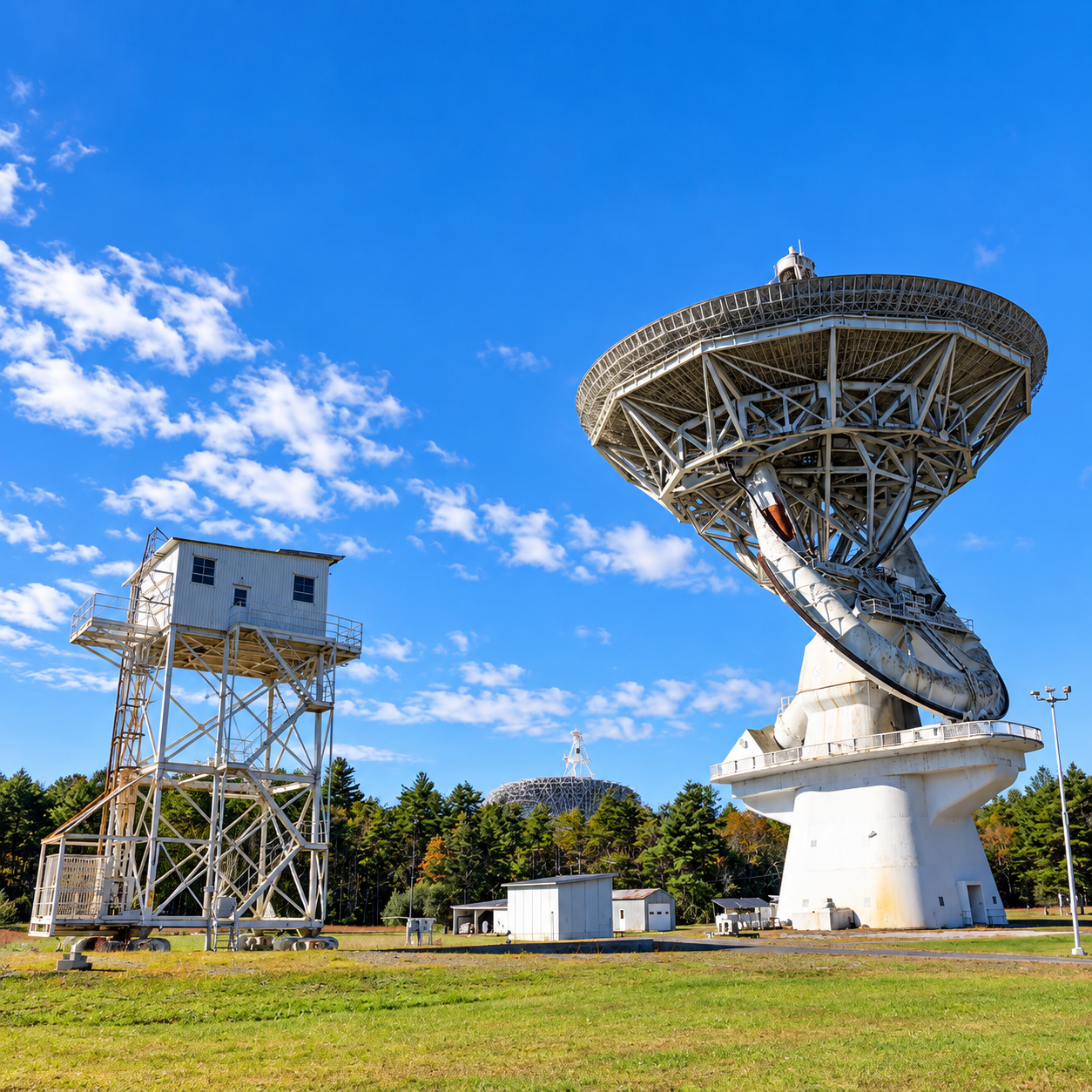

Around the grounds of Green Bank Observatory, inside the National Radio Quiet Zone.
We spent much of the rest of the day on gravel forest roads, the kind of back-country routes that shaped this state long before pavement, and passed the Camp Allegheny battlefield along the way. At about 4,400 feet it was one of the highest Civil War camps in the country, and the fighting there in December 1861 came while western Virginia's future was still being decided.
The Sinks of Gandy
Then came the Sinks of Gandy. You drive to the top of a mountain, walk into a cow pasture, and watch Gandy Creek disappear into the hillside. It runs underground through the mountain for about three-quarters of a mile before coming out the other side. The cave is popular with experienced cavers, but it can flood quickly after rain, so this is a look-from-the-entrance stop for most people.
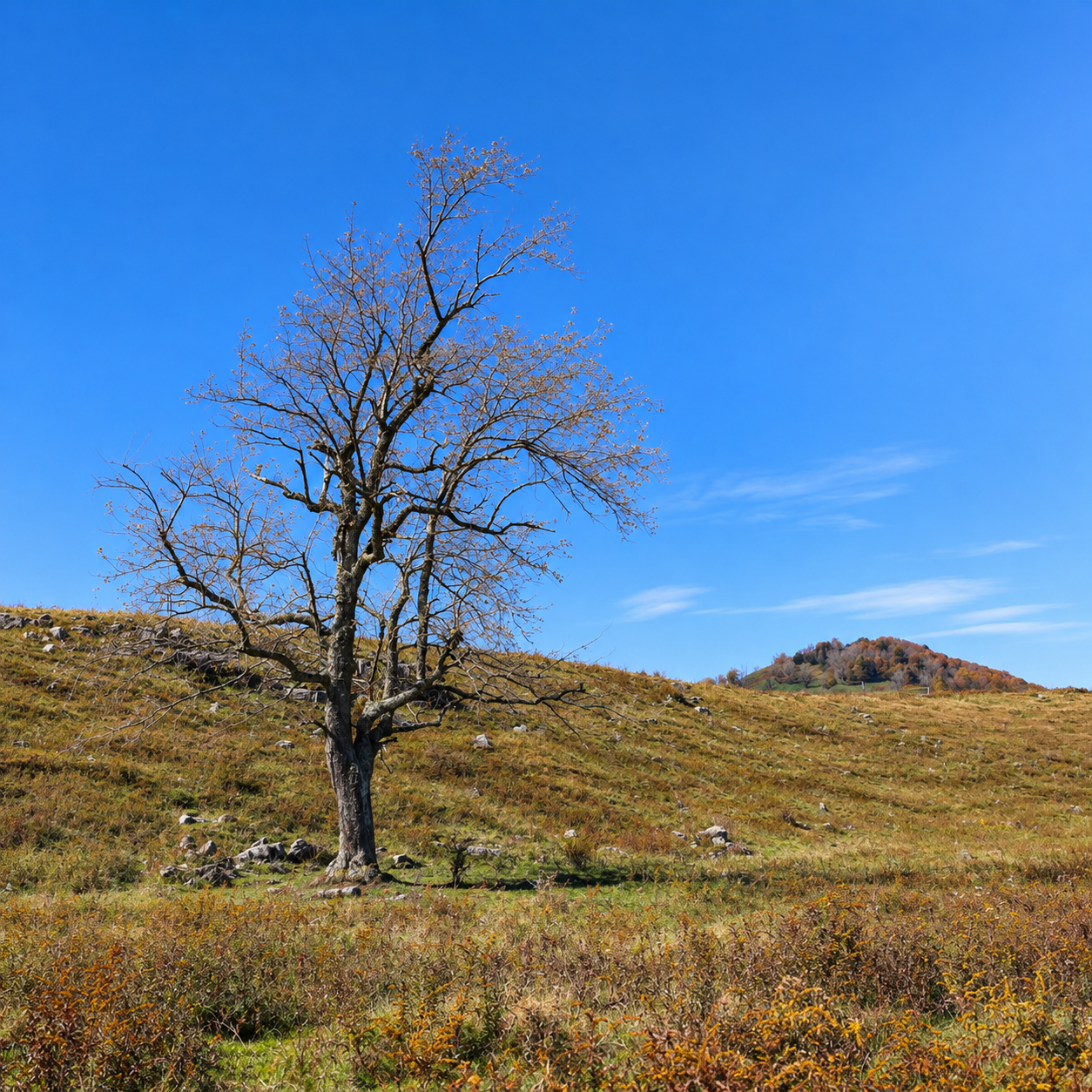
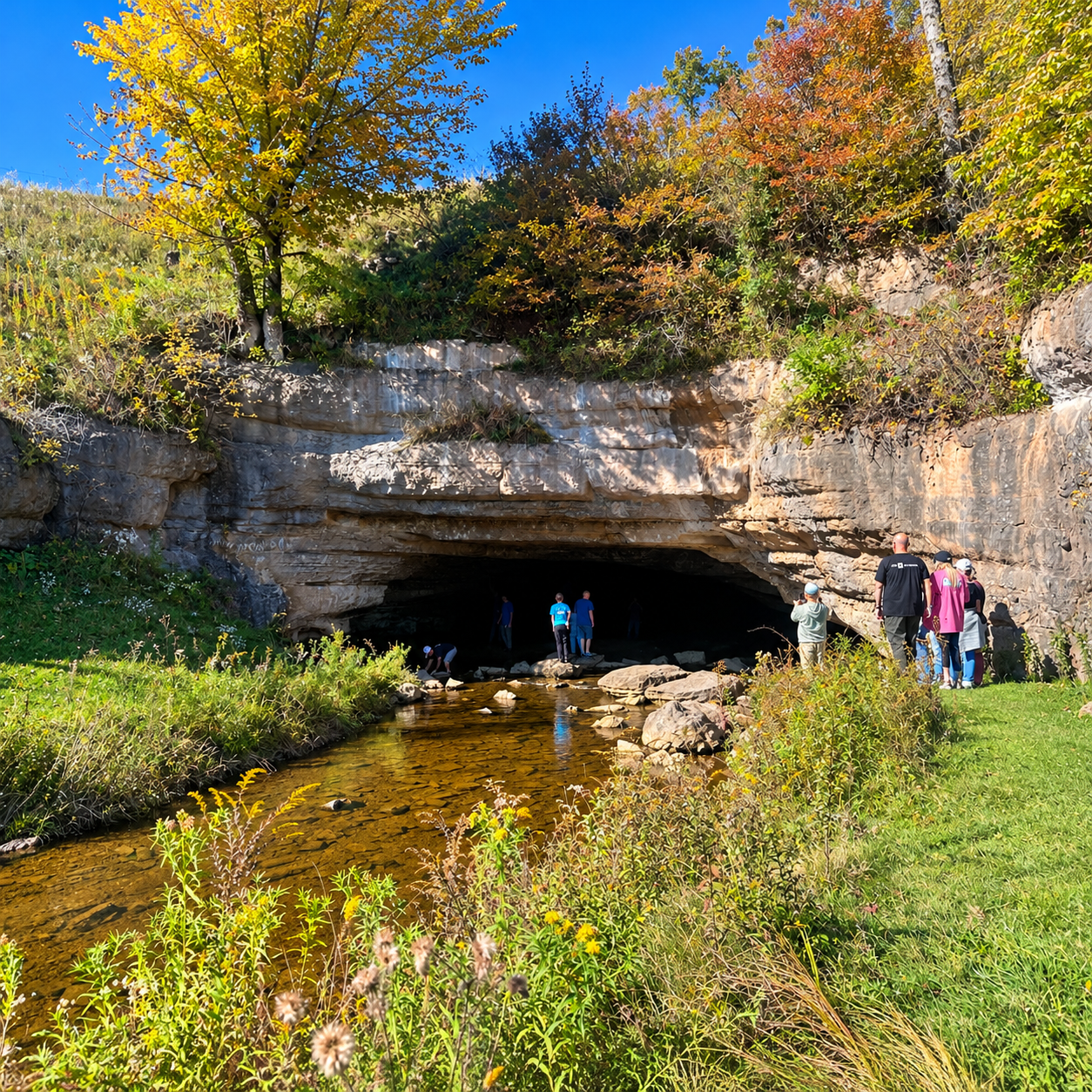
The pasture on top of the mountain, and Gandy Creek disappearing into the hillside at the Sinks of Gandy.
What surprised me most on day one was the contrast. Open highland pasture, dense forest lit up with fall color, and deep hollows, all within a few miles of each other. I've traveled a lot, and very few places change that fast.
Night One: Spruce Knob Mountain Center
We made camp at Spruce Knob Mountain Center, a private facility run by the nonprofit Experience Learning. It sits at about 4,000 feet, roughly a mile from Spruce Knob, the highest point in West Virginia, and it felt like camping on top of the state. The center borders the Monongahela National Forest on three sides.
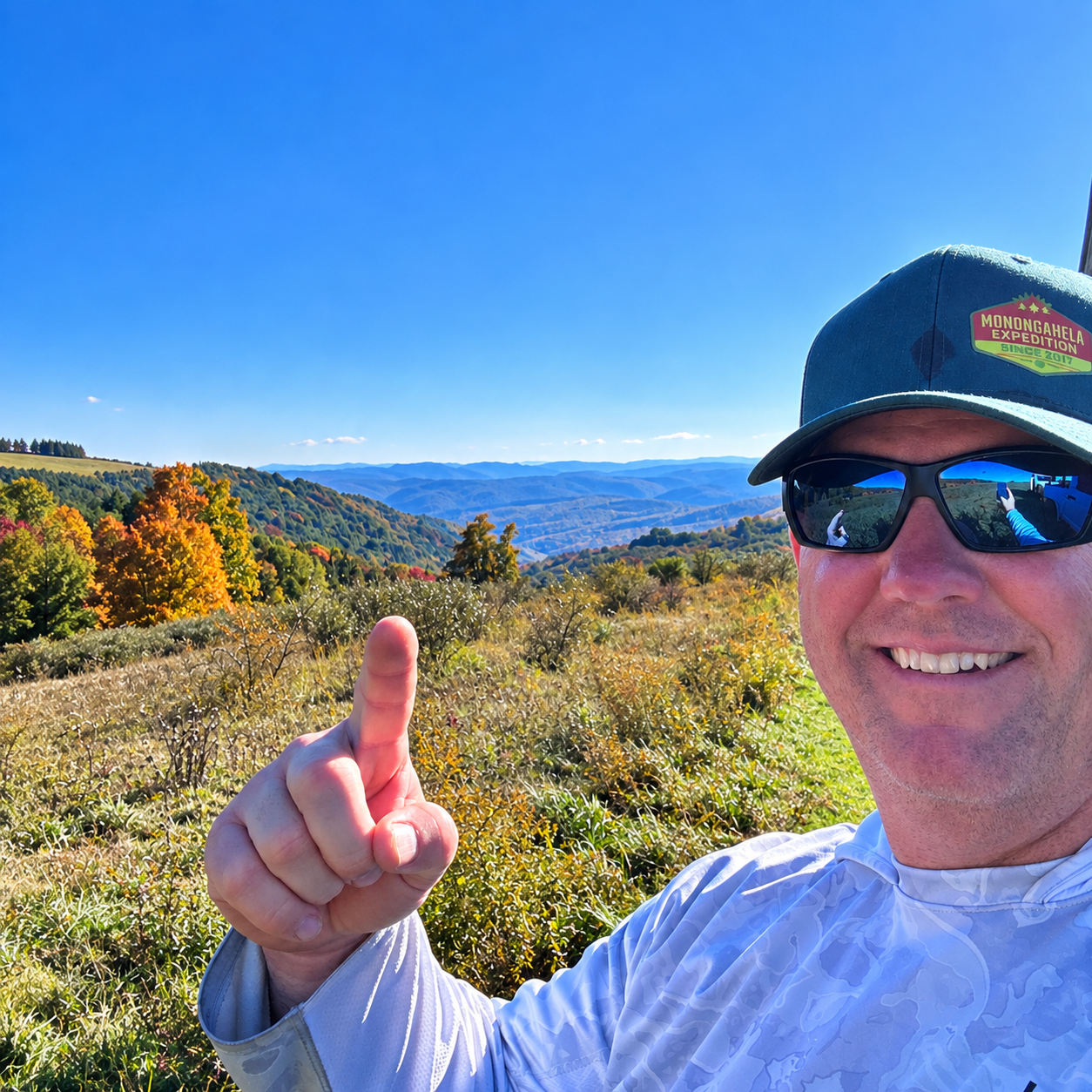
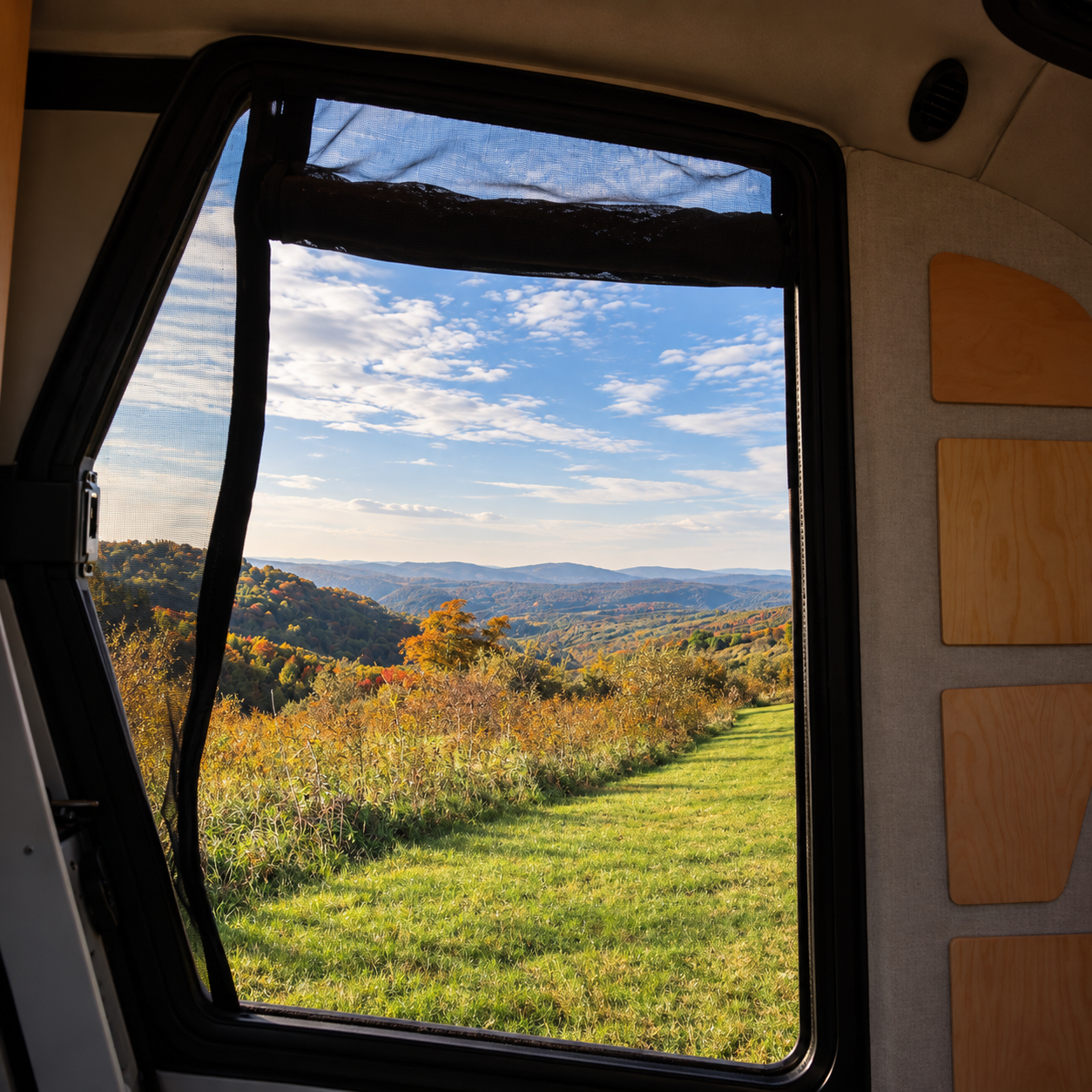
The view from camp at Spruce Knob Mountain Center, about 4,000 feet up.
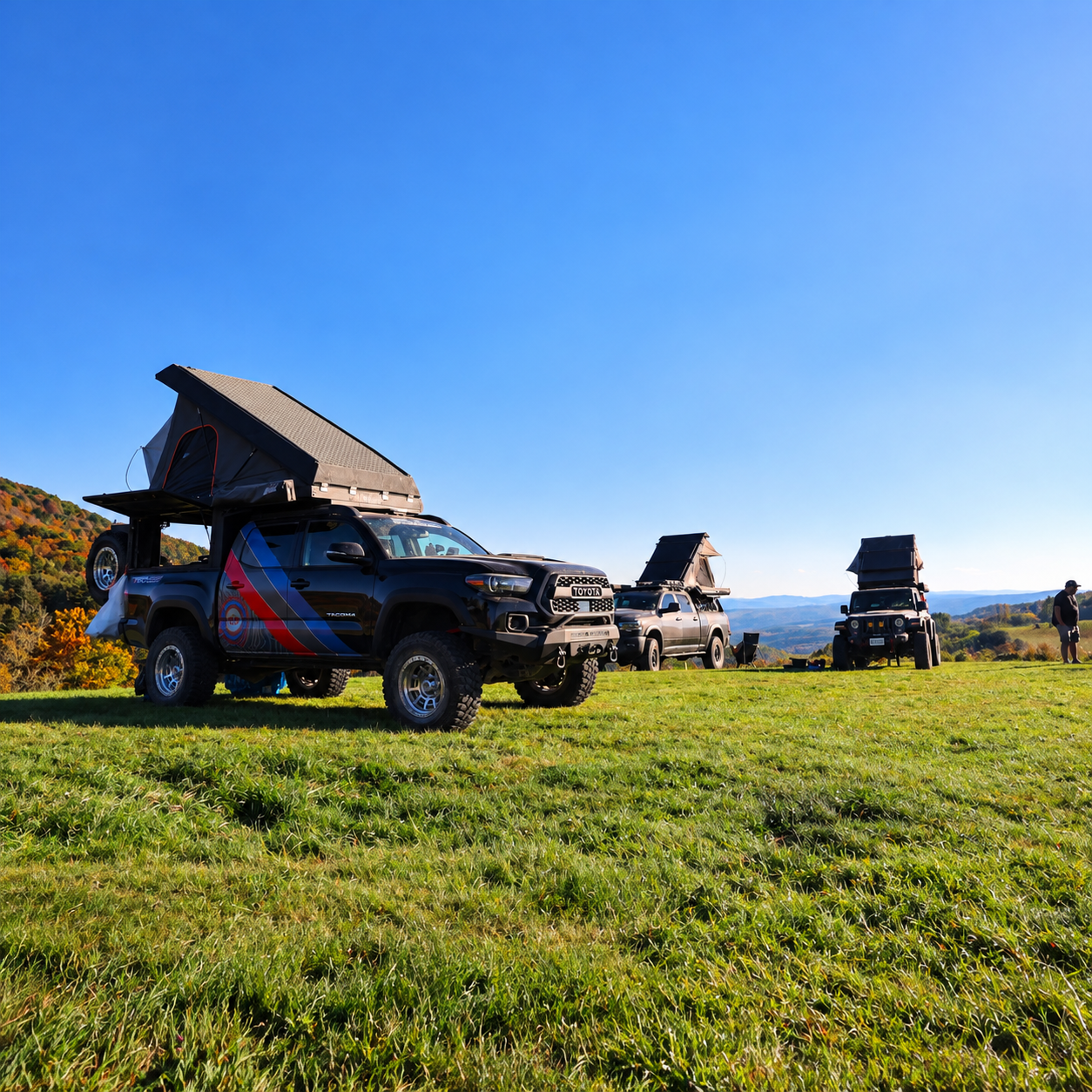
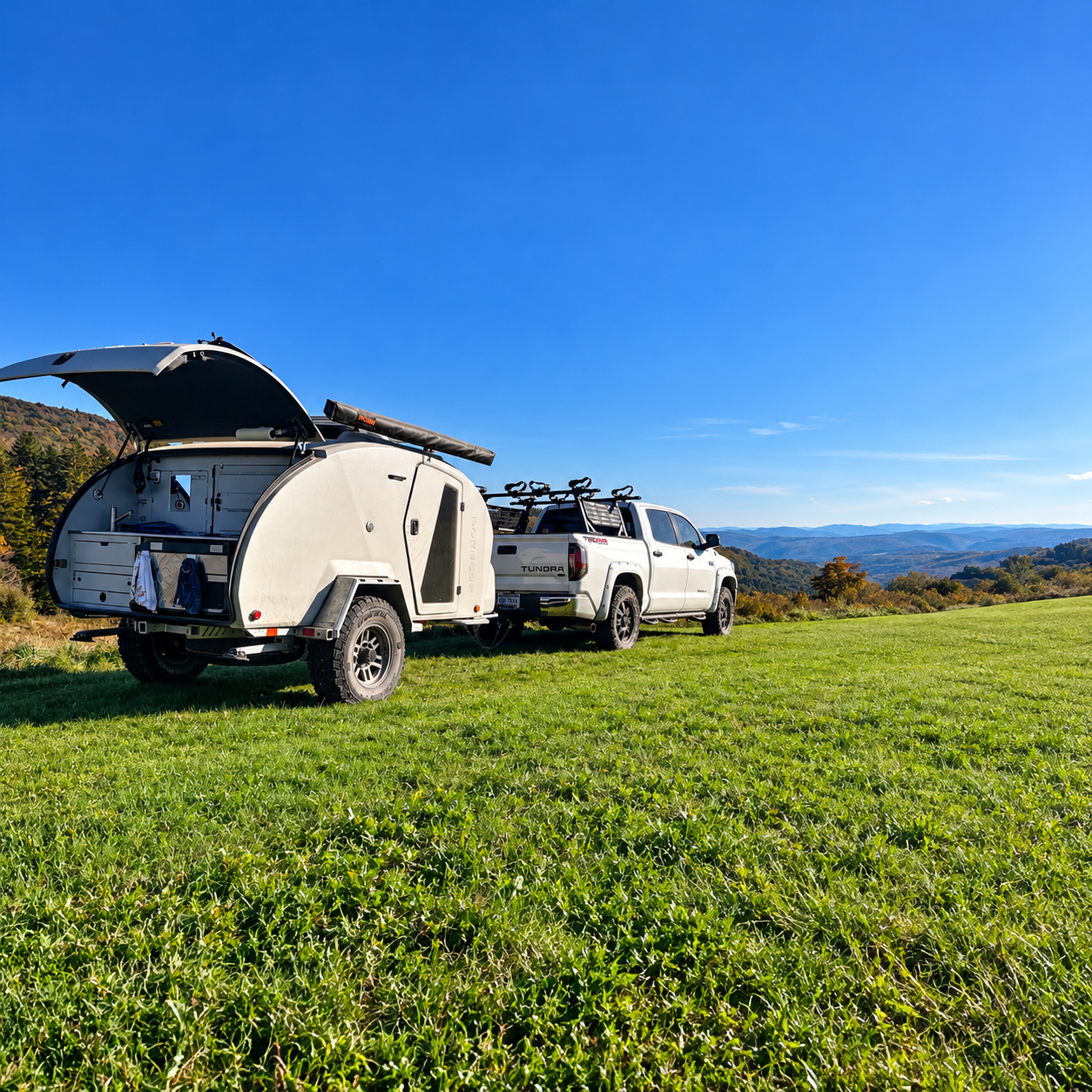
Our camp for night one, on top of the hill at Spruce Knob Mountain Center.
There was no cell service and no light pollution. Once the sun went down and the campfire got going, there was nothing to do but look up.
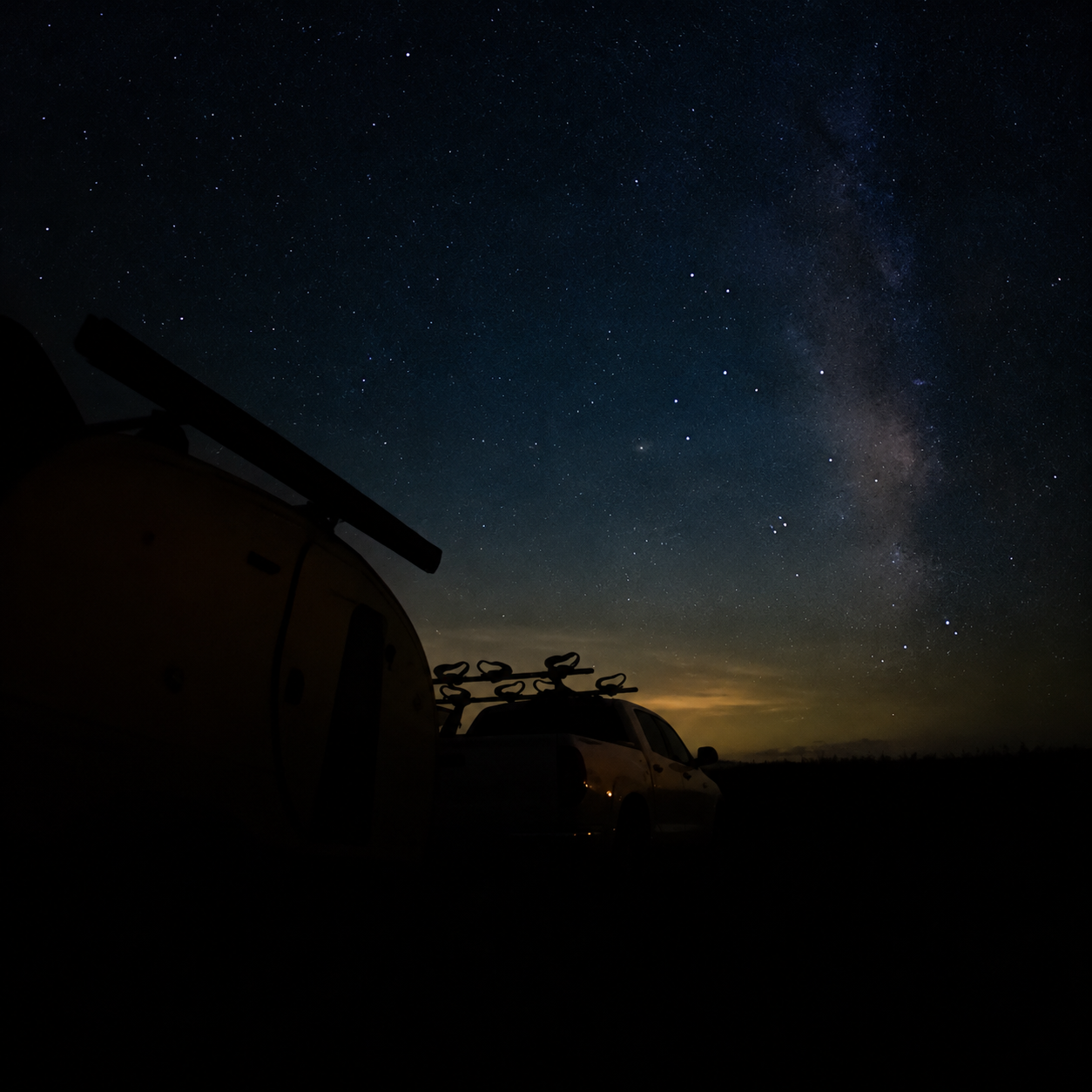
The Milky Way from camp near Spruce Knob.
"This was the first time I've seen the Milky Way in person. Or maybe it was the first time in my life I slowed down enough to see it."
A Lesson in Power
Night one was also when I learned the most about our Topo 2. It was our second night in a row without a shore power connection, and we were running everything on batteries, including our 12V ARB Elements fridge. A fridge running all day and all night with nothing coming back in adds up faster than you think. I recorded a short lessons-learned video at camp, and the short version is simple: know your battery capacity, know what your gear draws, and have a plan to recharge before you leave home. There's no signal up there to look it up.
For the record, here's where we finished. After four days of boondocking, the battery was at about 37%, and we'd used about 2.5 pounds of propane, with highs in the low 70s and lows in the low 50s each night. Two things I'd change next time: move more gear out of the tongue box and into the truck cab to take weight off the tongue (we were still well within the limits Escapod advertises), and run the smaller propane tank Escapod provides with my 20-pound bottle riding in the truck bed as a backup. I ran the 20-pound bottle this trip because the last time I relied on the smaller tank, in colder weather with highs in the upper 50s and lows in the 30s, it lasted only about four days before I ran out.
Day Two · FridayA Distillery, a Bigfoot Burger, and Dolly Sods
Still Hollow Distillery
Day two started at Still Hollow Distillery, a small artisan distillery in the mountains. This stop was personal for me. I was once approached about opening a distillery, and Still Hollow is exactly how I would have approached it. It was close to how I had been planning it.
They combine old and new. Modern equipment gives them the efficiency of today's process, and old-school patience gives the spirits the maturity, complex flavor, and roundness you'd expect from a bottle on the top shelf of a good bar, pub, or home bar.
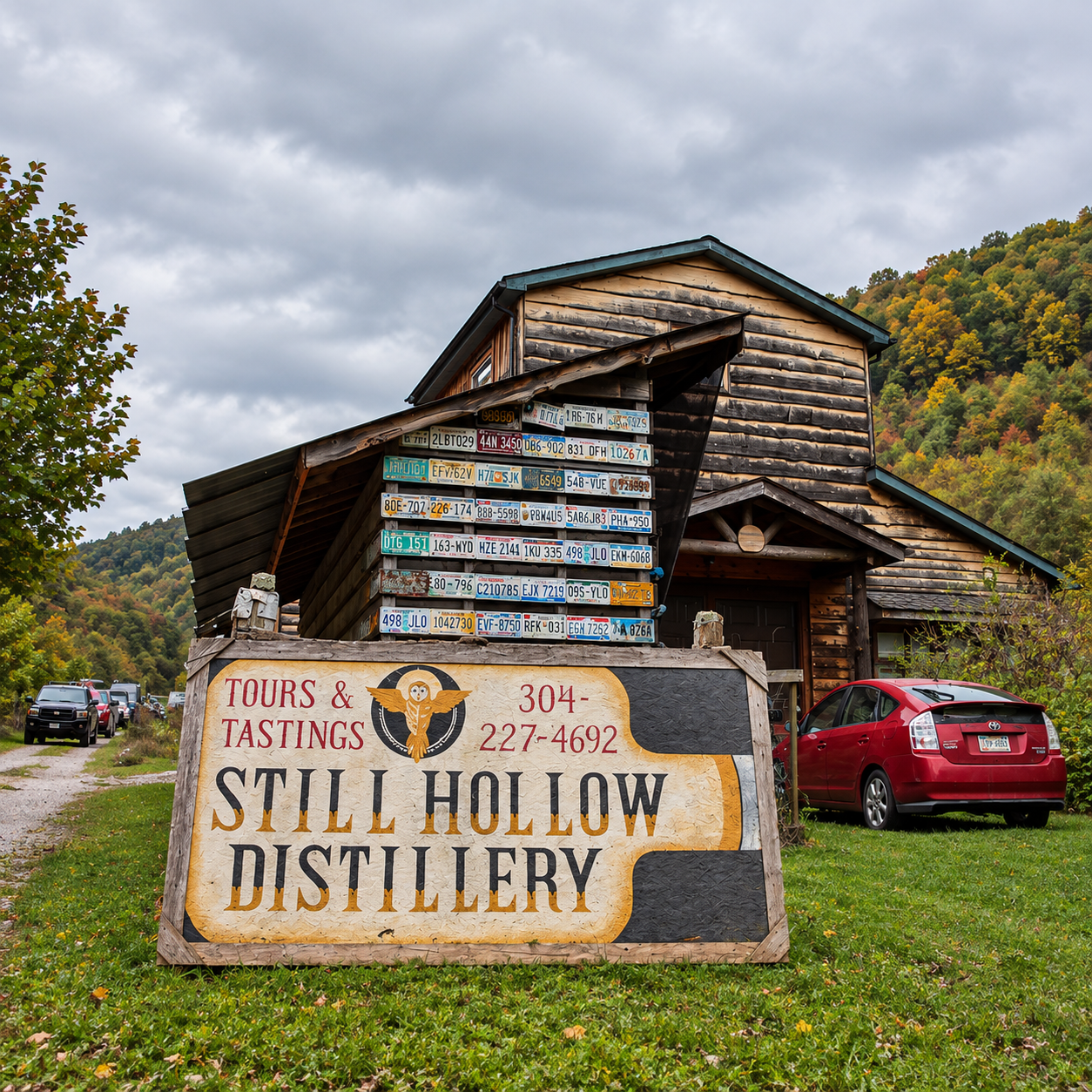
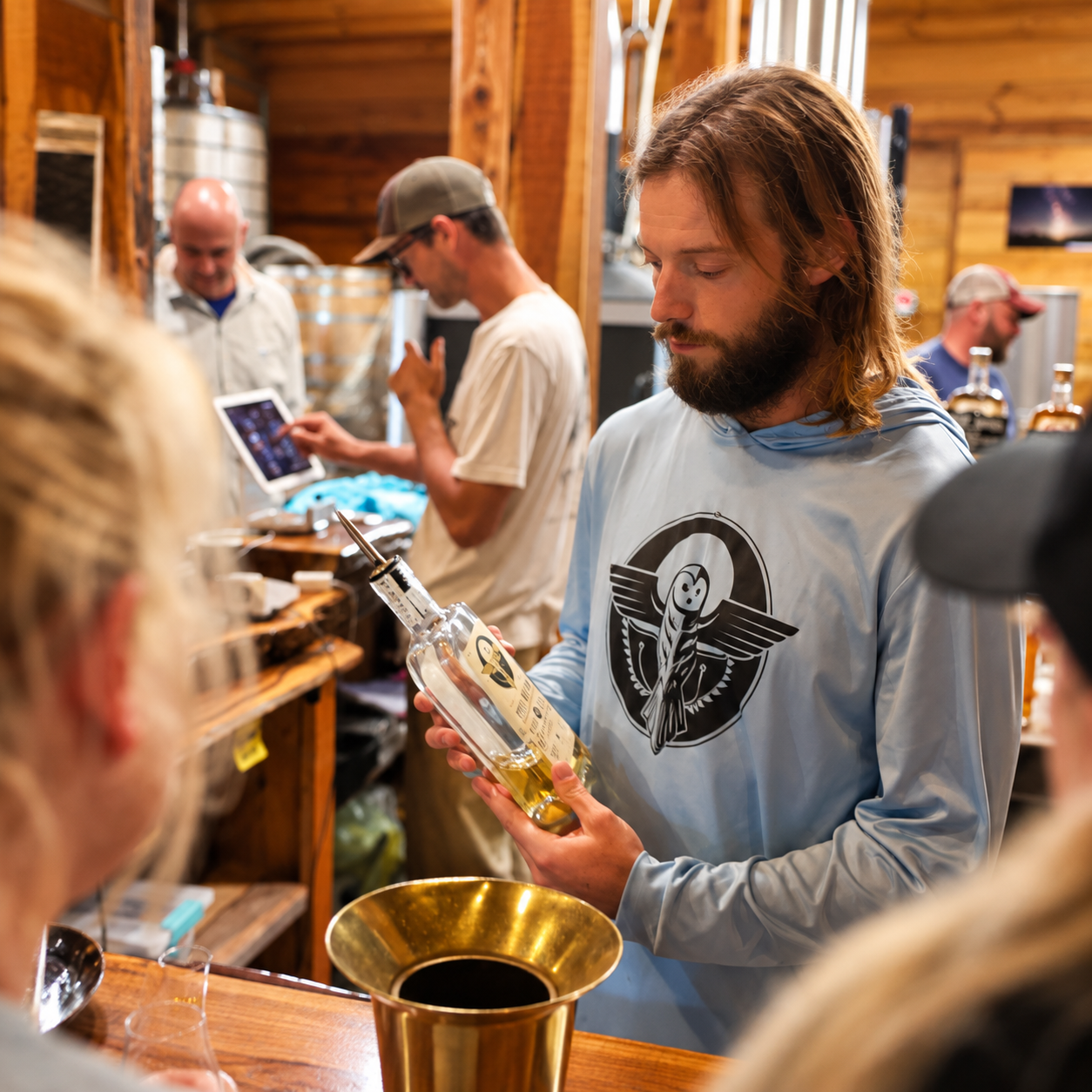
Inside Still Hollow, where modern equipment meets old-school patience.
The gin is what got me most excited. Still Hollow changes the botanical blend twice a year, using ingredients from the land around the distillery. The spring gin brings a sweeter bouquet, and the fall gin is drier. Very few distillers let the seasons decide the recipe, and that's what makes a spirit taste like a place.
Drivers weren't allowed to taste, so I bought a few bottles instead and saved them for later in the trip.
Seneca Rocks and Yokum's
From the distillery we headed to Seneca Rocks, one of the most recognizable landmarks in West Virginia. Right across the street is Yokum's, a family-run country store. I ordered the Bigfoot Burger: wild boar, elk, venison, and Wagyu beef. If you're passing through, it's the reason to stop.
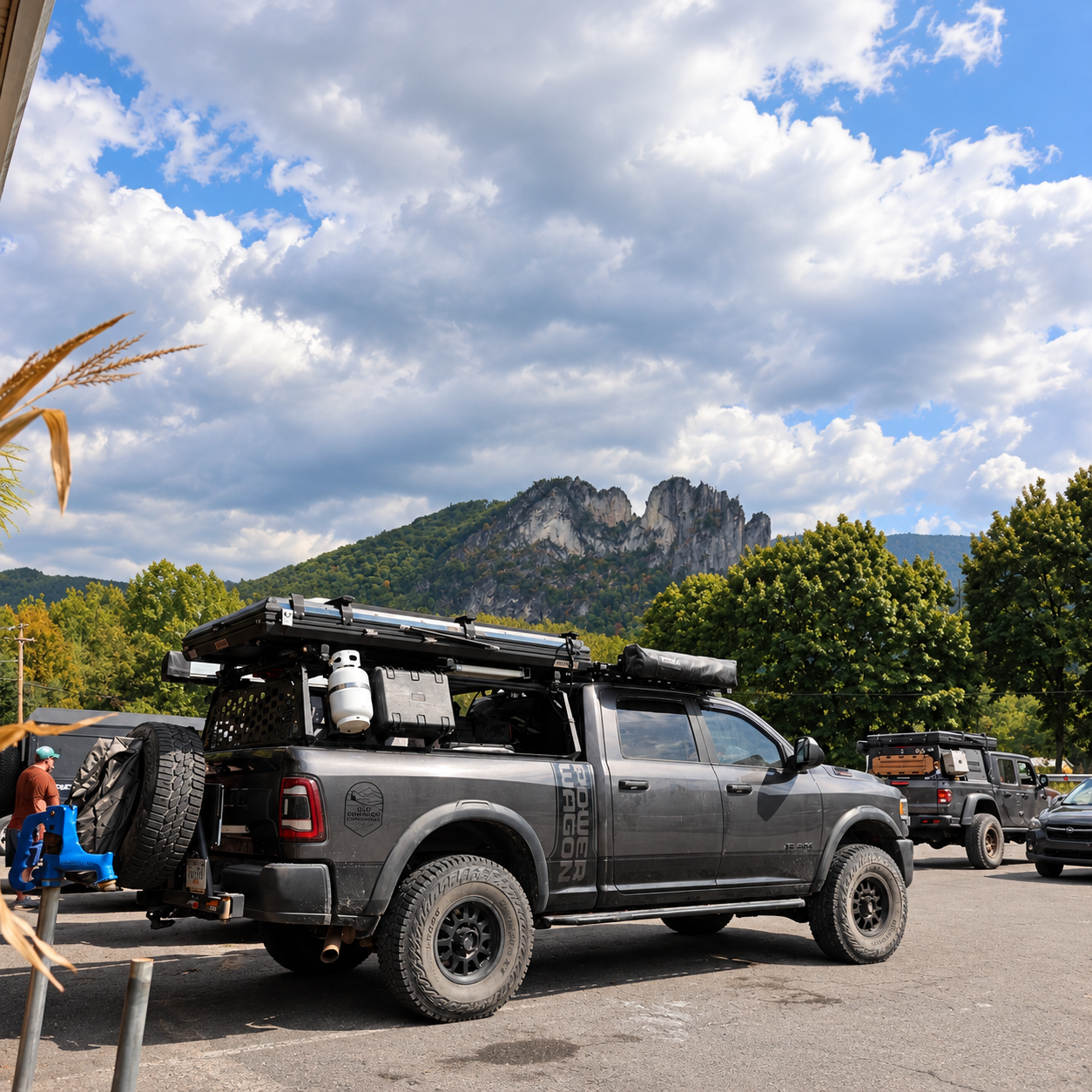
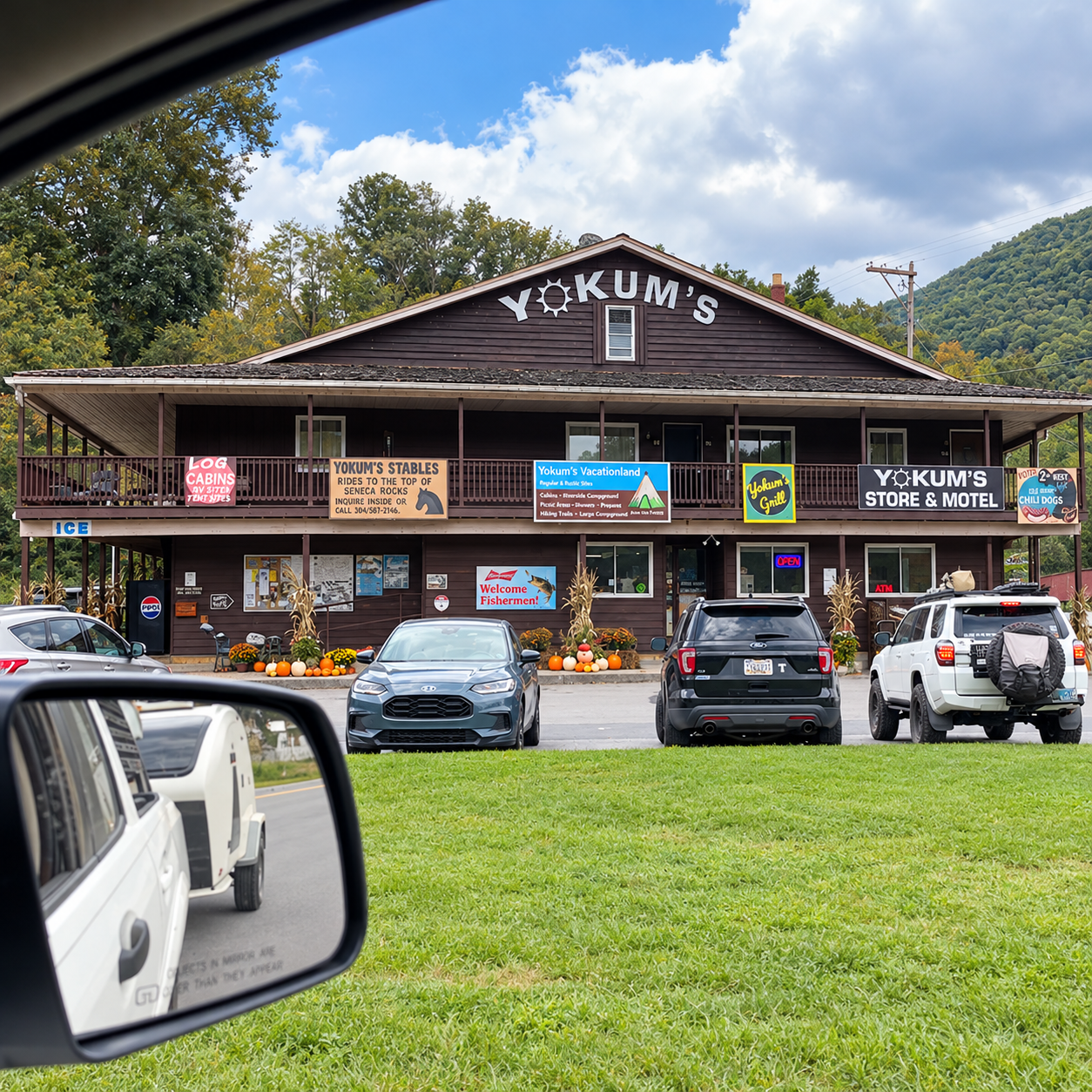
Seneca Rocks, and Yokum's right across the street, home of the Bigfoot Burger.
Dolly Sods and Bear Rocks
In the afternoon we climbed up to Dolly Sods and Bear Rocks. At around 4,000 feet the forest gives way to an open, windswept plateau. In early October the blueberry heath had turned deep red, with young red spruce scattered across it and boulder fields in every direction. Even under gray skies it was one of the most unusual landscapes I've seen east of the Mississippi.
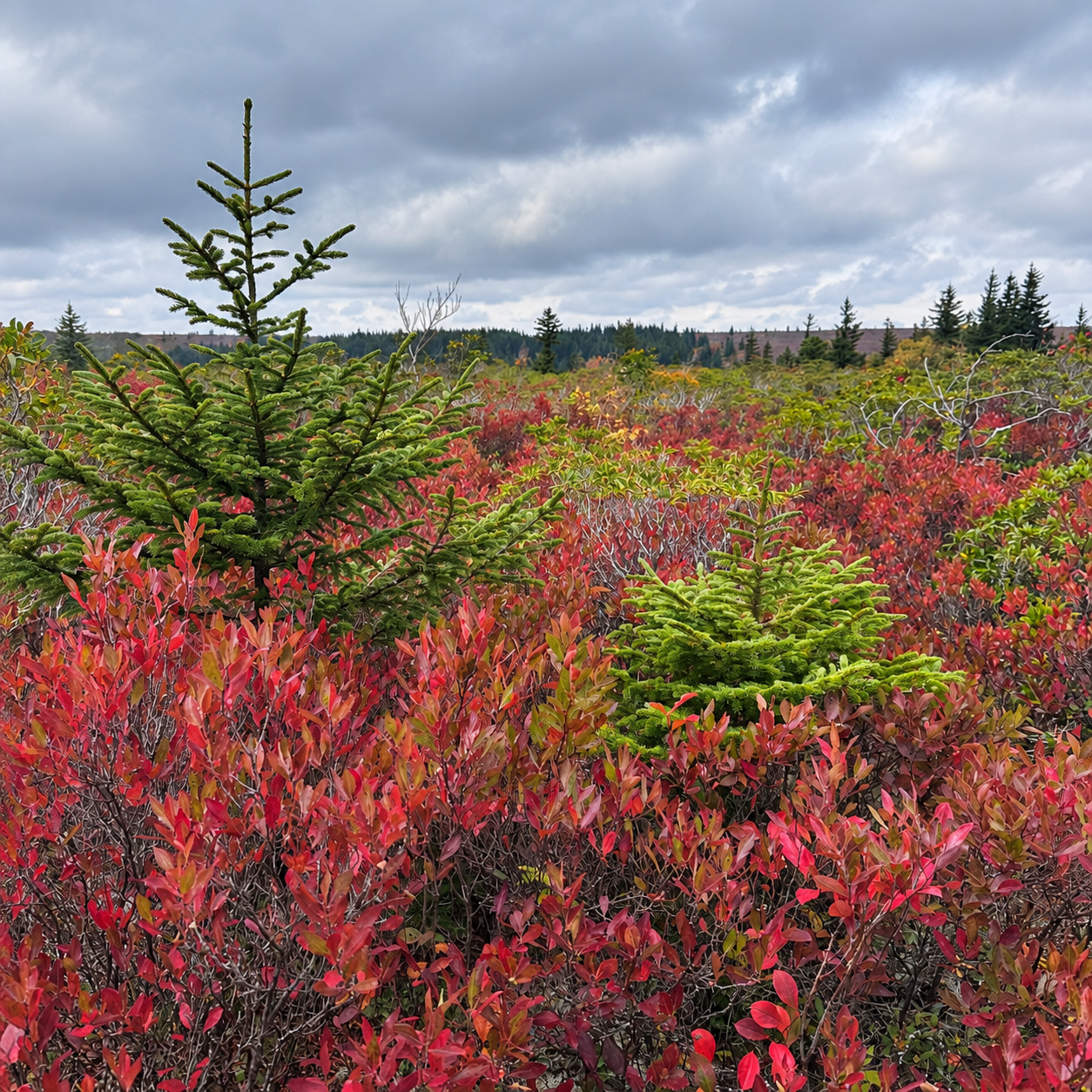
Fall color across the Dolly Sods plateau in early October.
The history surprised me. The name comes from the Dahle family, who grazed livestock on these open "sods" in the 1800s. Heavy logging and fires later stripped away the old red spruce forest and the soil with it, which is why it looks the way it does today. From October 1943 to July 1944, the Army used parts of Dolly Sods as an artillery range to train soldiers before they shipped overseas. Most of the area was cleared of munitions in 1997, but old shells still turn up now and then, so stay on the marked trails.
Congress protected it as the Dolly Sods Wilderness in 1975. Today it covers more than 10,000 acres of the Monongahela National Forest, with a network of hiking trails, backpacking routes, and primitive camping. Late summer brings wild blueberries, and fall brings some of the best color in the state. Bear Rocks Preserve, at the northern edge, is owned by The Nature Conservancy and is known for its wind-carved sandstone outcrops and long views east across the valley.
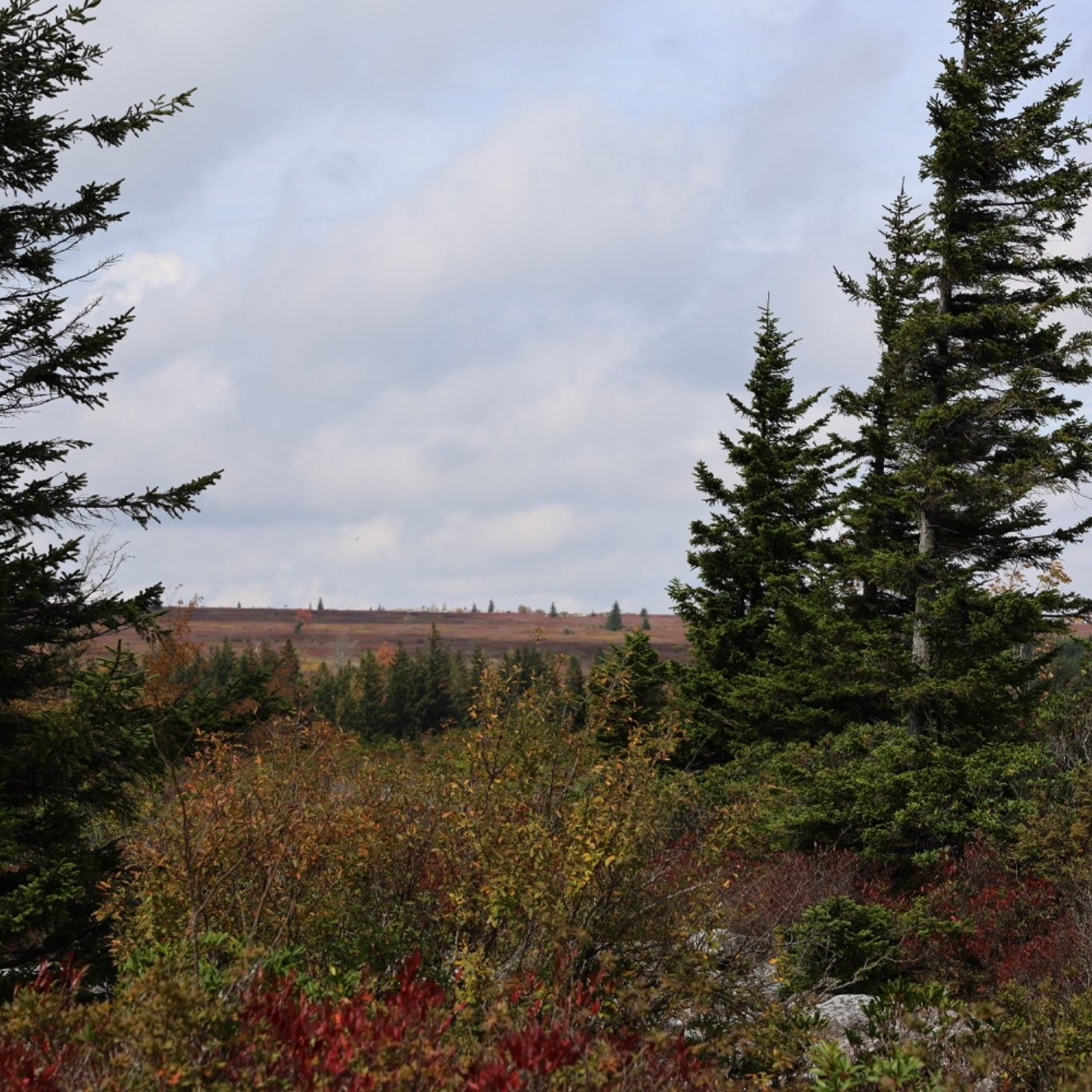
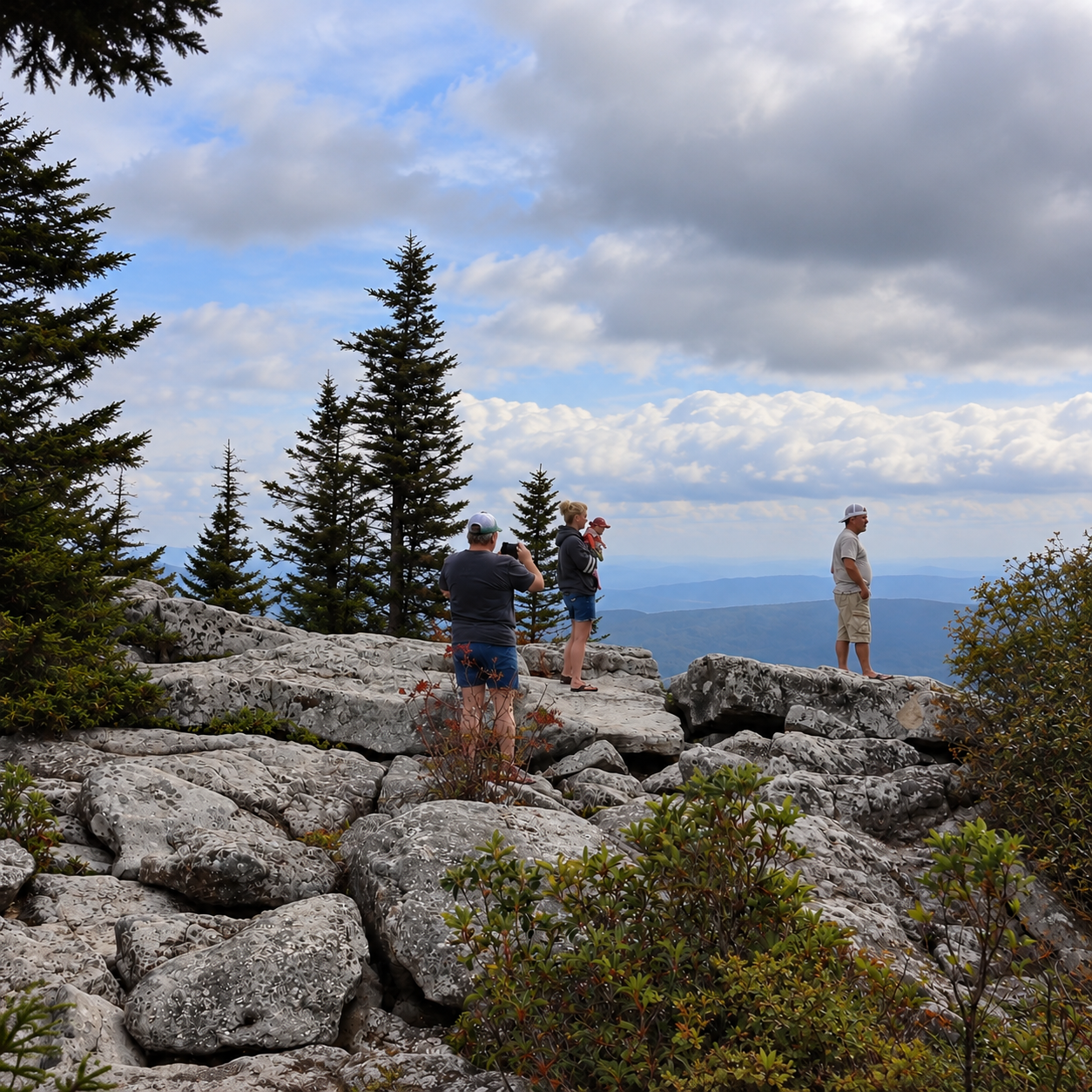
Bear Rocks, at the northern edge of Dolly Sods.
What I didn't expect was the crowd. This was a Friday afternoon, and cars were lined up along the gravel road as far as you could see. I can't imagine what a peak-foliage weekend looks like up there.
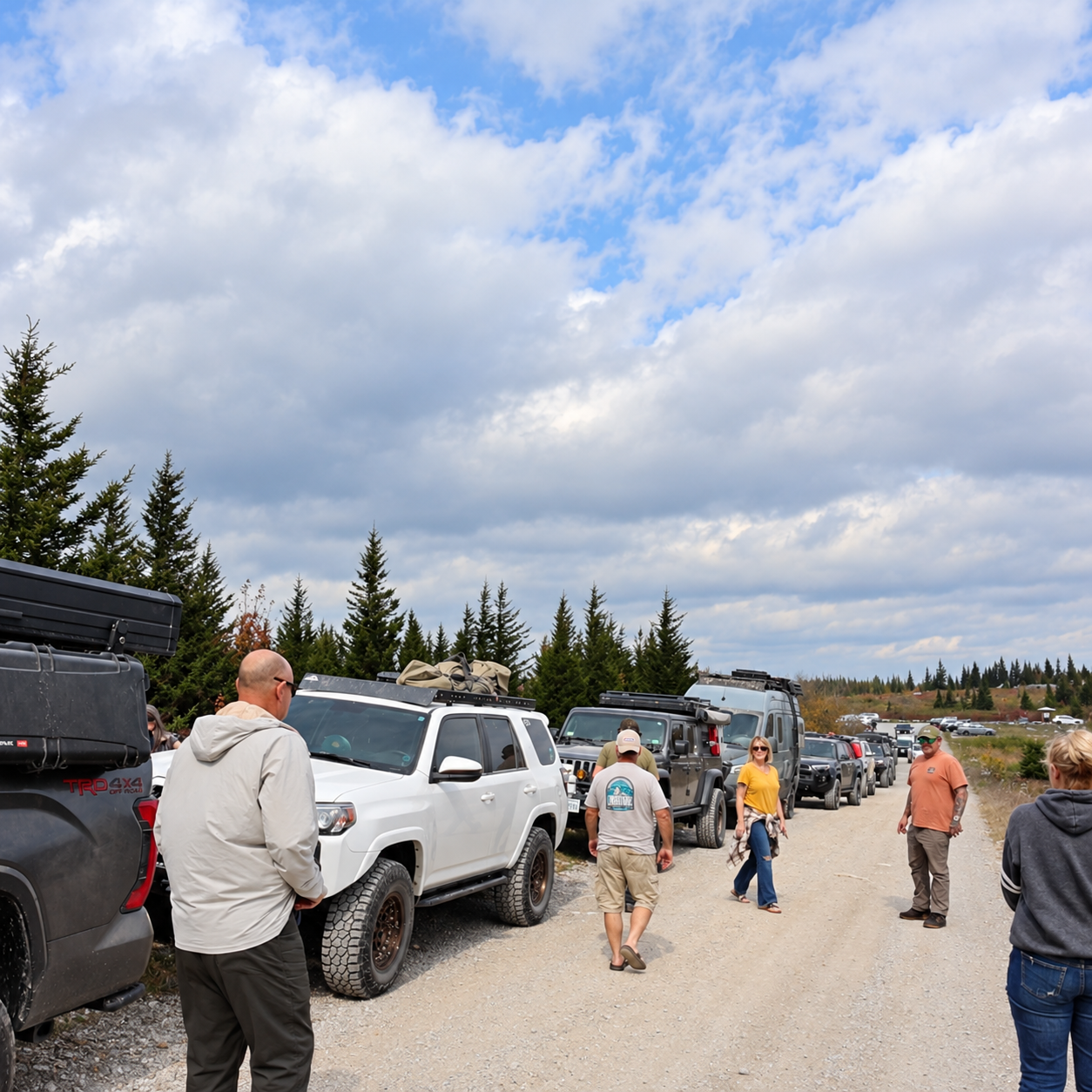
A Friday afternoon at Dolly Sods. Plan for a weekday if you can.
After Dolly Sods, the route took us through Dawson's Pass, a rough, rocky stretch of trail framed in fall color, and a preview of the trail day still to come.
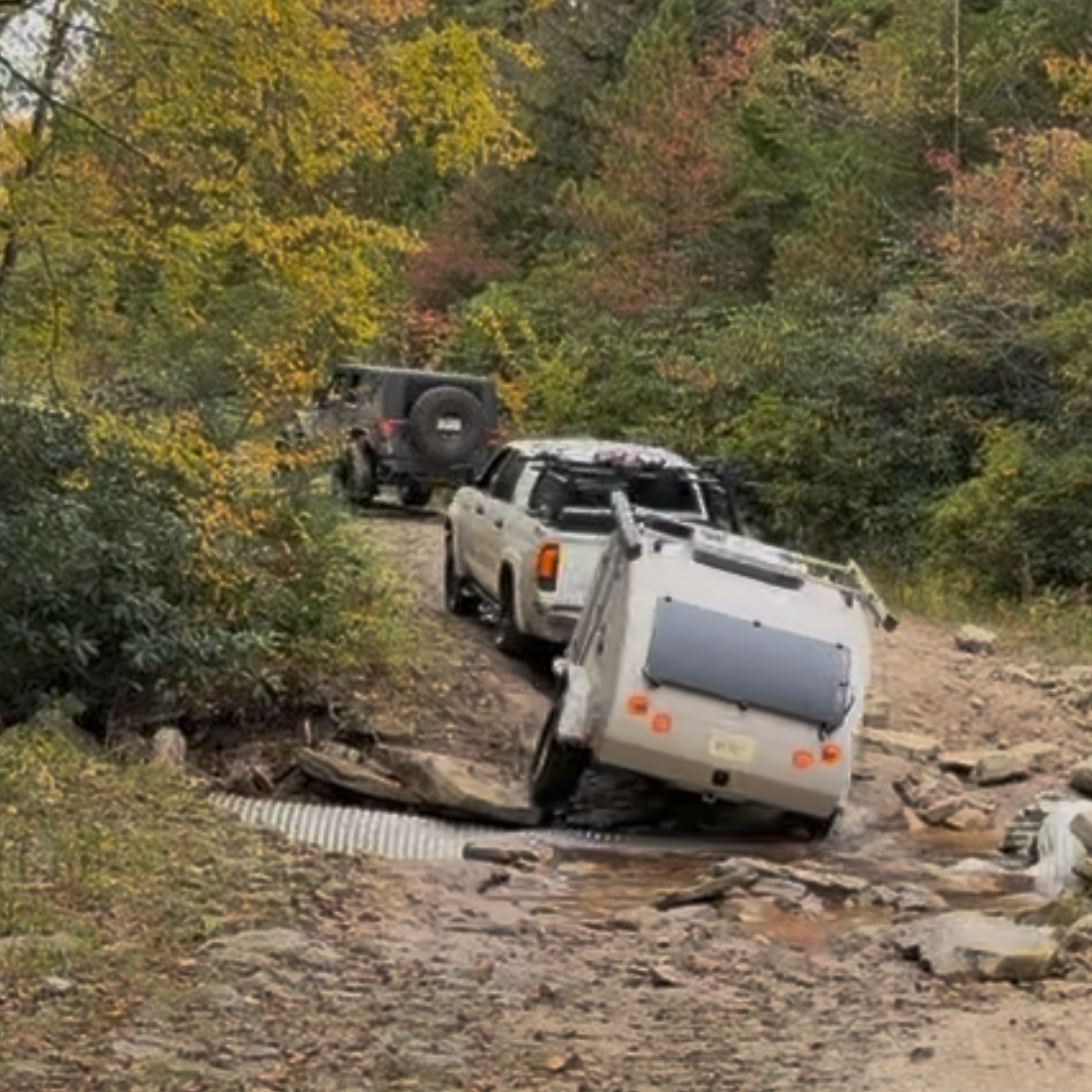
Dawson's Pass, after our afternoon at Dolly Sods.
Night Two: Canaan Valley
We spent night two on a flat meadow at Canaan Valley Resort State Park. A light drizzle started and didn't quit all night, and it was still a great night. By morning, low clouds were hanging on the ridges and the fall color ran right down the mountainside to the edge of camp. Not every night on an overland trip is clear skies and the Milky Way. Some nights are drizzle and good company anyway, and that's part of it.
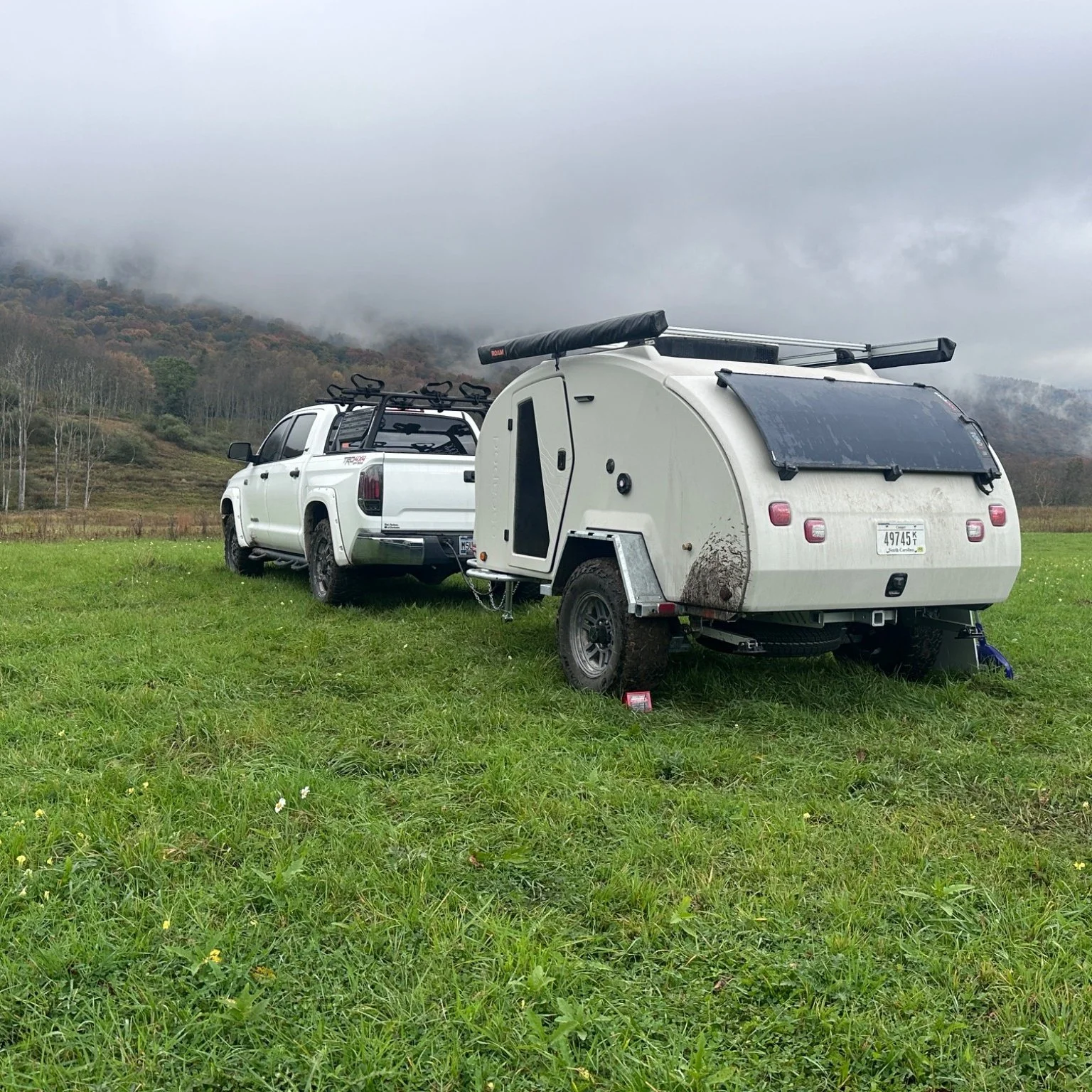
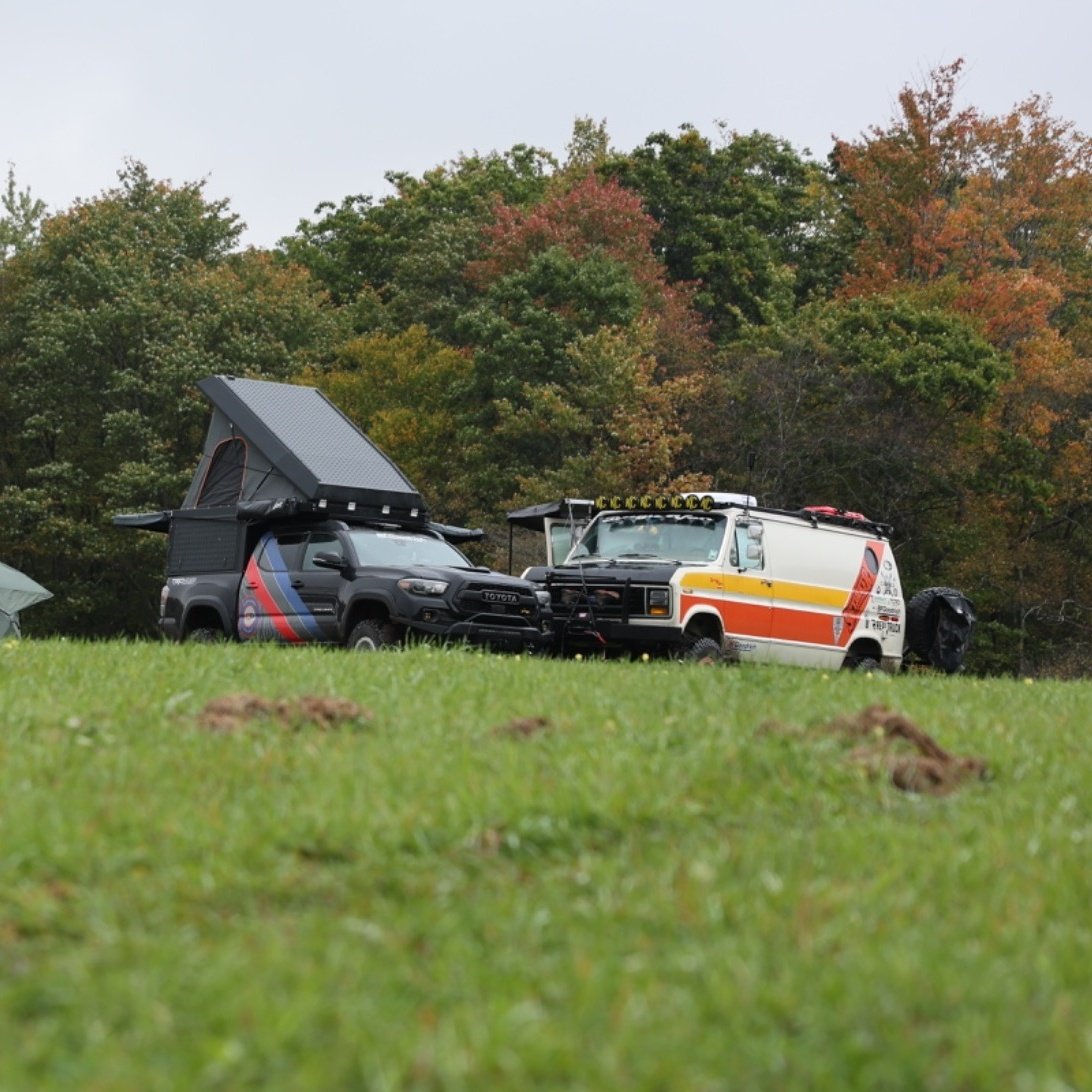
Morning in the meadow at Canaan Valley after a night of drizzle.
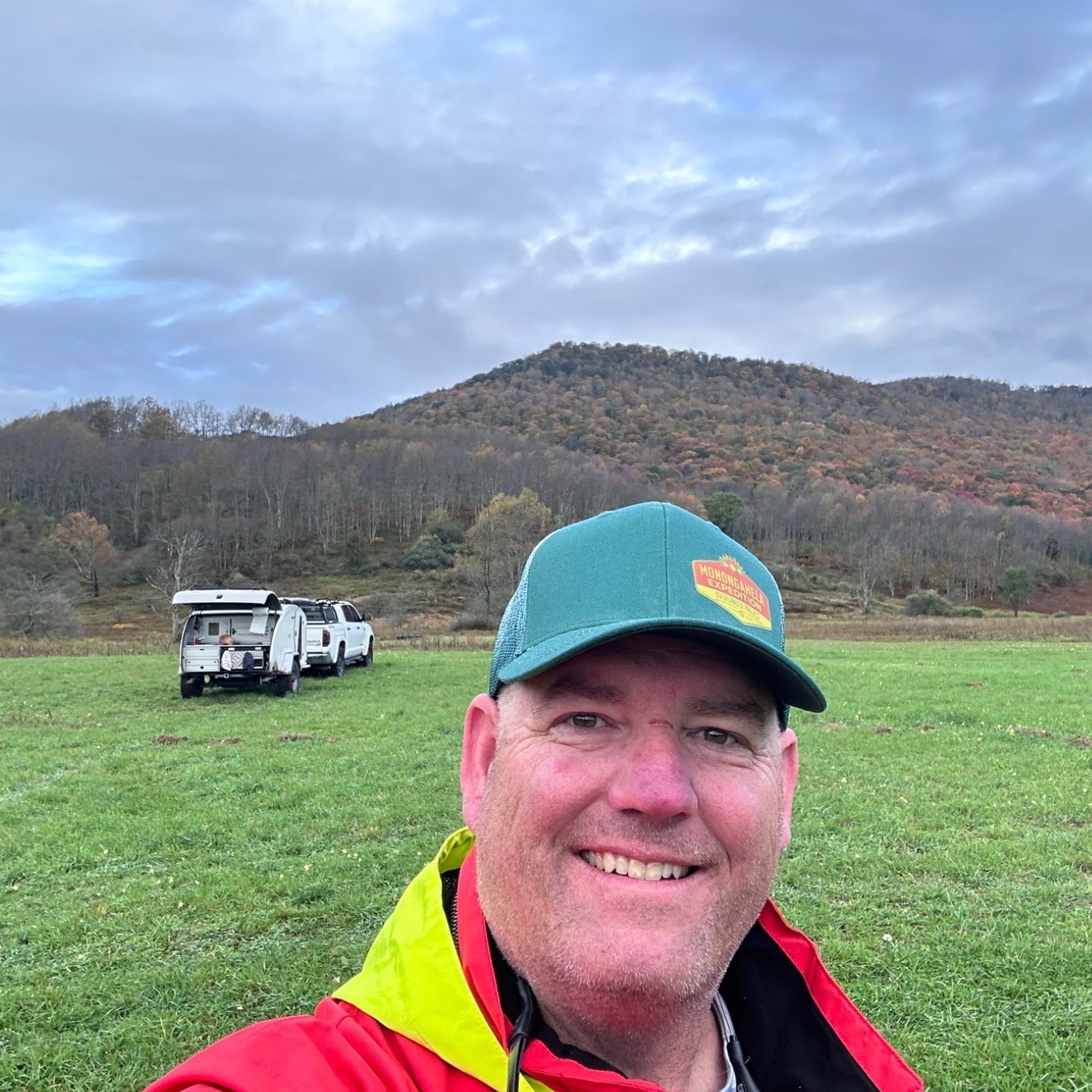
Canaan Valley Resort State Park, our camp for night two.
Before You Go
Practical Tips for Overlanding the Monongahela
- Download offline maps. Between Green Bank's Radio Quiet Zone and the high camps, cell service is limited or gone.
- Do the power math before you leave. If you're running a 12V fridge off-grid for multiple nights, know your battery capacity and how you'll recharge.
- Visit Dolly Sods on a weekday, early. Even a Friday afternoon in October meant cars lined along the gravel road.
- Pack for every kind of weather. We had fog, clear starry skies, and an all-night drizzle in four days.
- Meet the vehicle minimums before you go. For us that meant 33-inch tires, a full-size spare, and recovery gear, and the rock ledges show why.
- Drivers can't taste at the distillery. Plan to buy a bottle and enjoy it at camp instead.
Trail Day: Rock Ledges and a Teardrop in Tow
Day three was the one I'd been thinking about since we signed up: the trail challenge, and the real test of what the Escapod Topo 2 could do and how it would perform.
My anxiety was up before we turned a wheel. That morning we heard that another driver, in a 4x4 Sprinter van, was being sent ahead to a rendezvous point at Blackwater Falls State Park to meet the group there instead of running the trail. If a 4x4 Sprinter was skipping it, I wasn't sure what that meant for a full-size truck towing a teardrop trailer.
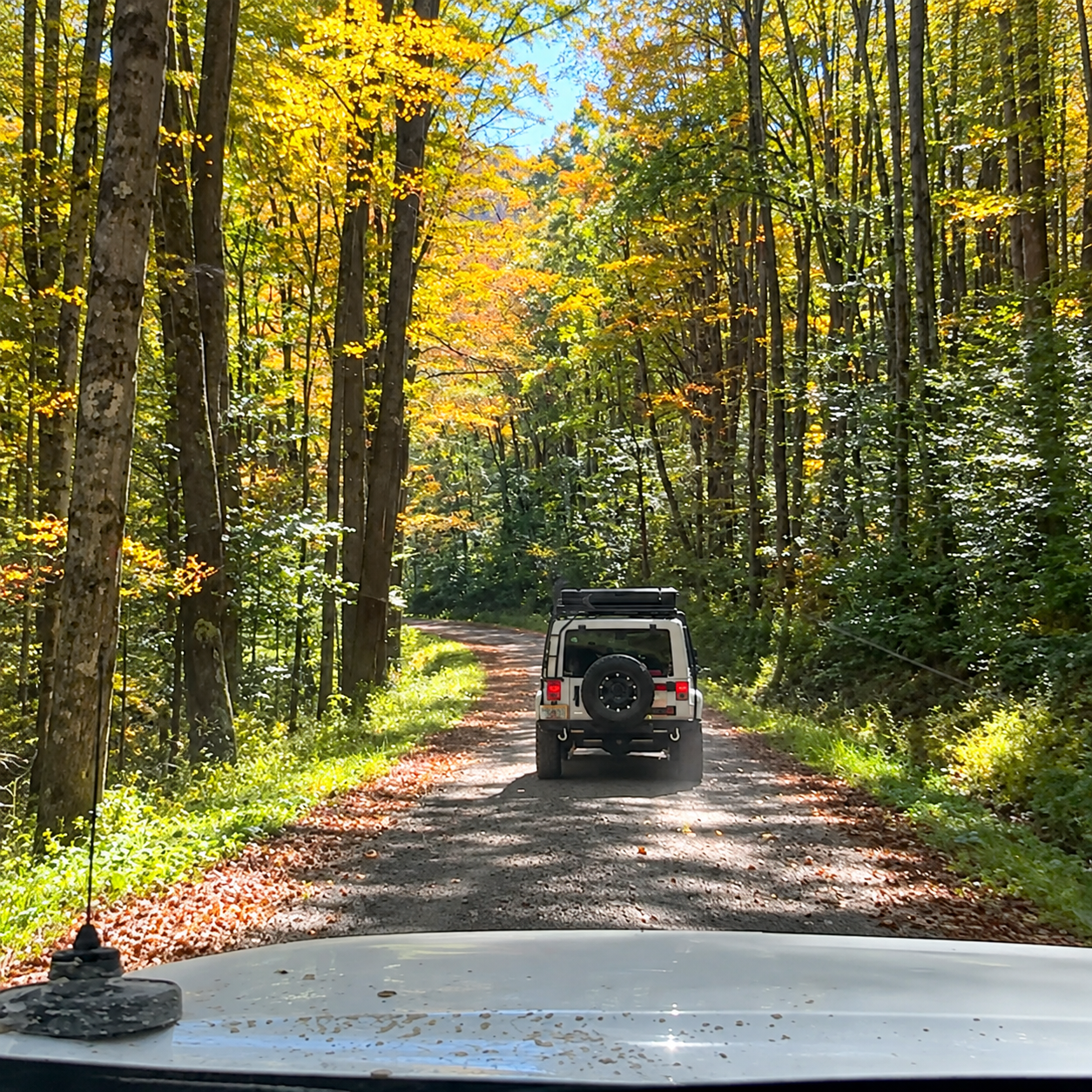
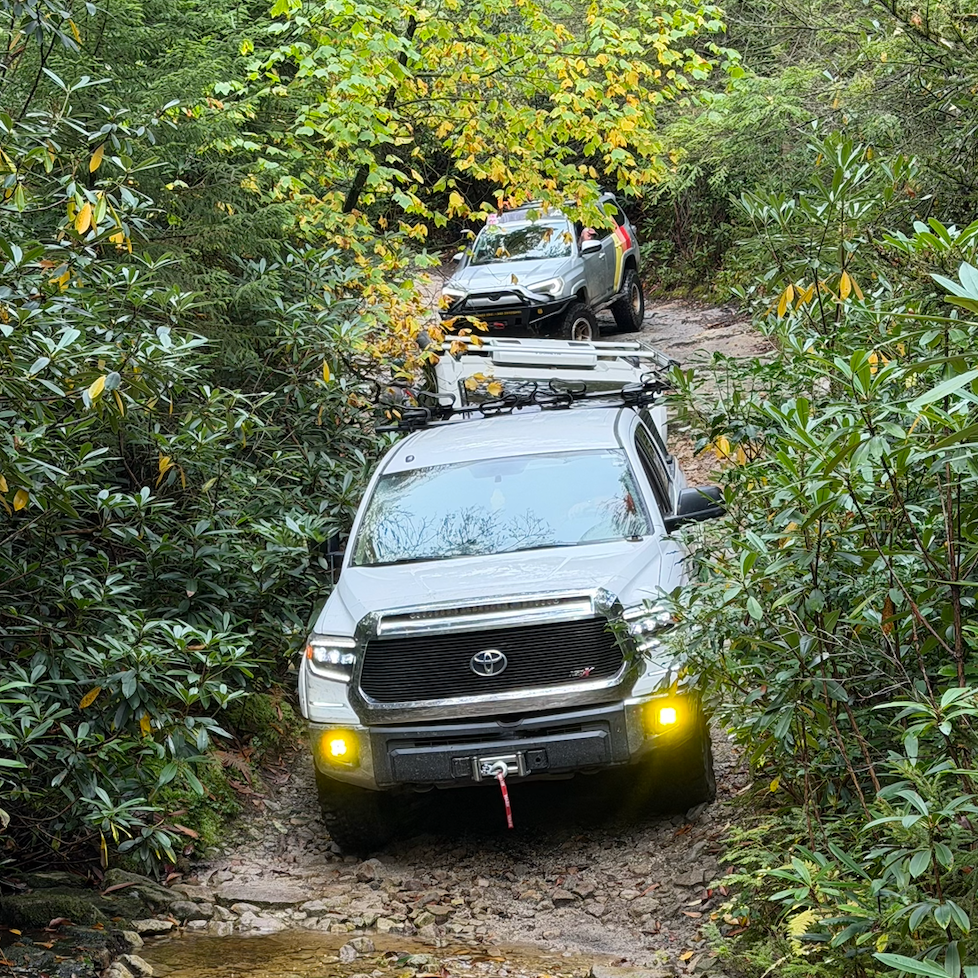
Heading into the Canaan Loop trail after a night of drizzle.
The trail carried a 33-inch minimum tire requirement, and the reason became clear on the rocky ledges of the Canaan Loop trail. With the Tundra up front and the Topo 2 behind, one of the guides walked us down step by step, calling out where to put each tire.
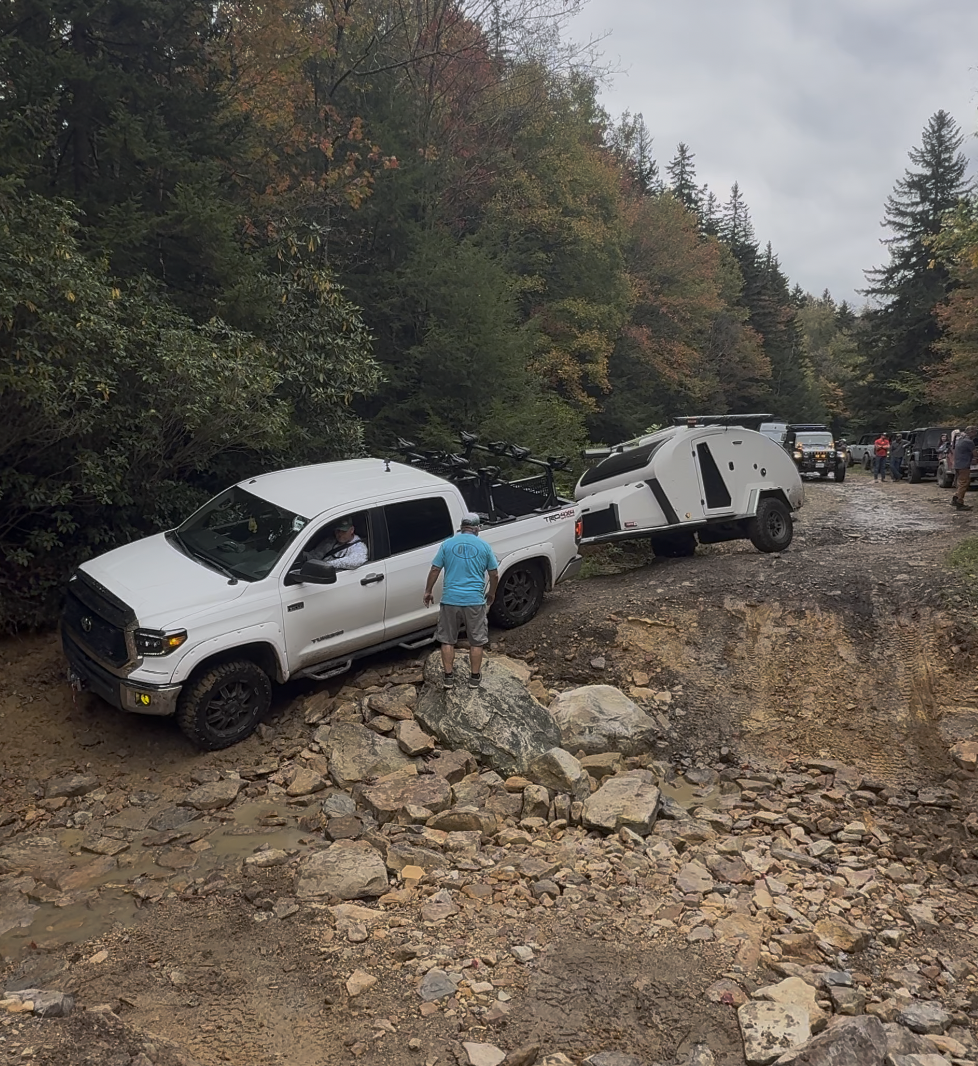
The Topo 2 in tow on the Canaan Loop trail.
Ground clearance, approach angles, and patience all mattered. For all my worrying, the Topo 2 tracked behind the truck and handled the ledges without drama. If you're wondering whether a teardrop trailer belongs on a real trail, our answer after this weekend is yes, as long as you pick your line, use a spotter, and don't rush it. The mud splashed up the side of the trailer was the only evidence it had been anywhere hard.
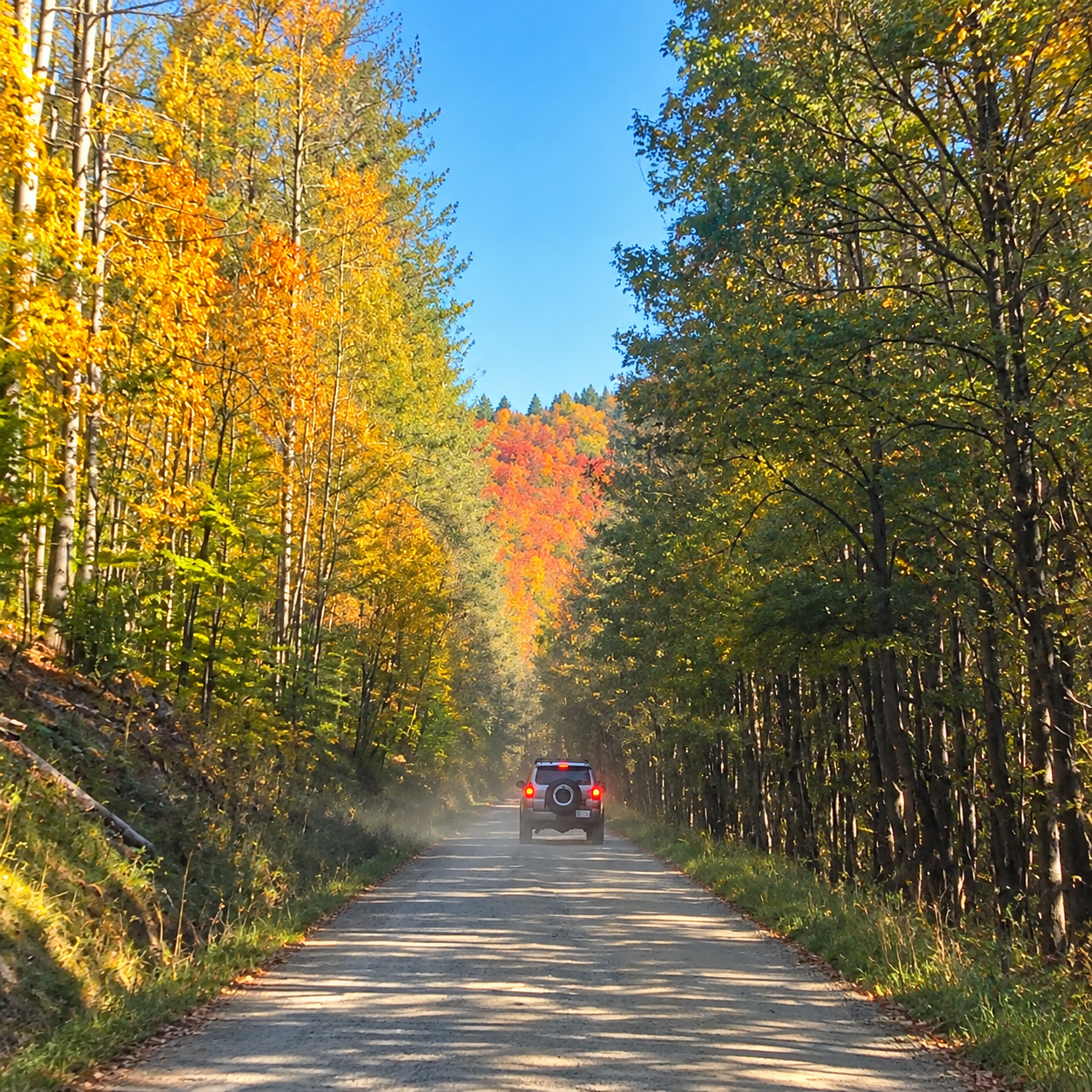
Golden fall color along the trail on the last day.
Blackwater Falls State Park
We spent the first half of the day on the trail, then headed to Blackwater Falls State Park in the afternoon. The Blackwater River drops about 60 feet over the falls, and the river takes its name from its dark, tea-colored water, stained by tannins from the hemlock and red spruce upstream. With the fall color framing it, it was the right way to come off the trail.
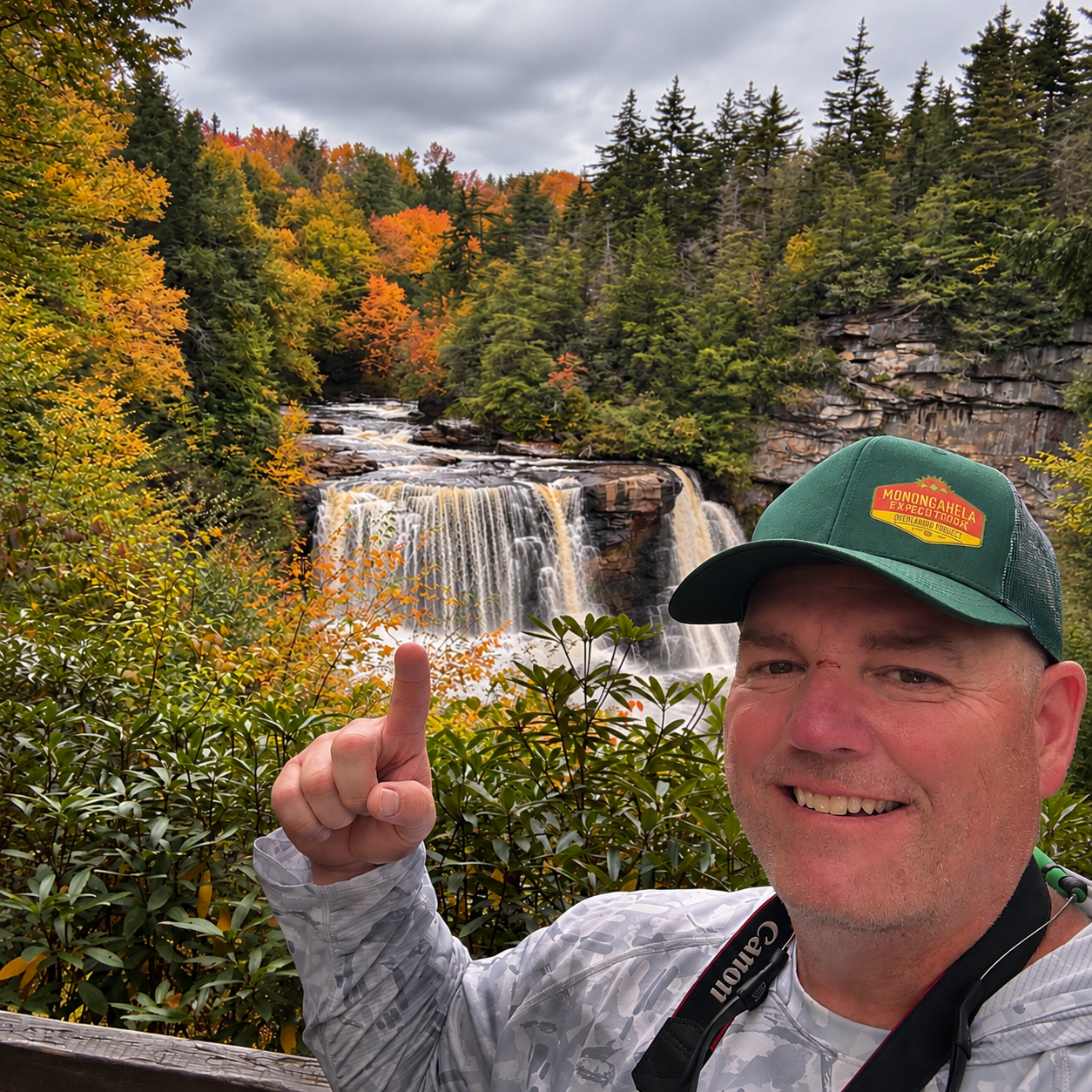
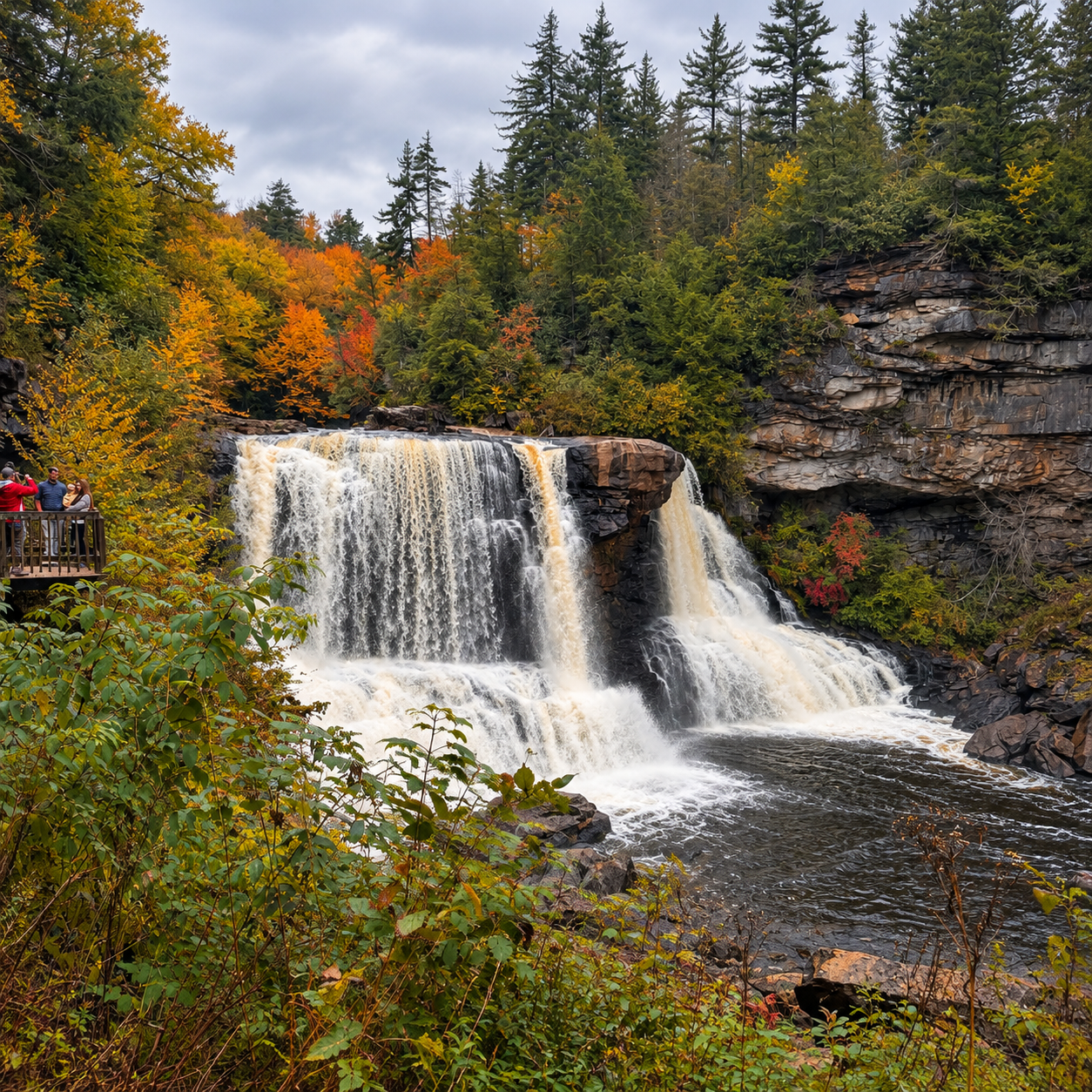
Blackwater Falls in early October. The overlook is a short walk down from the parking lot.
The Final Night: Bourbon by the Fire on the Cheat River
Our final night together was at a private campground along the Cheat River. By then the group had bonded well. That's what happens when you solve problems in real time for a common goal: spotting each other through the ledges, sorting out power and gear, and figuring out each day as it came.
We sat around the campfire and opened a bottle of Still Hollow bourbon, one of the bottles I'd bought on day two when drivers couldn't taste. It was worth the wait. We talked about the last three days, but also about adventures from the past and the ones still to come. Sharing that bottle with people who had been strangers a few days earlier was the right way to end it.
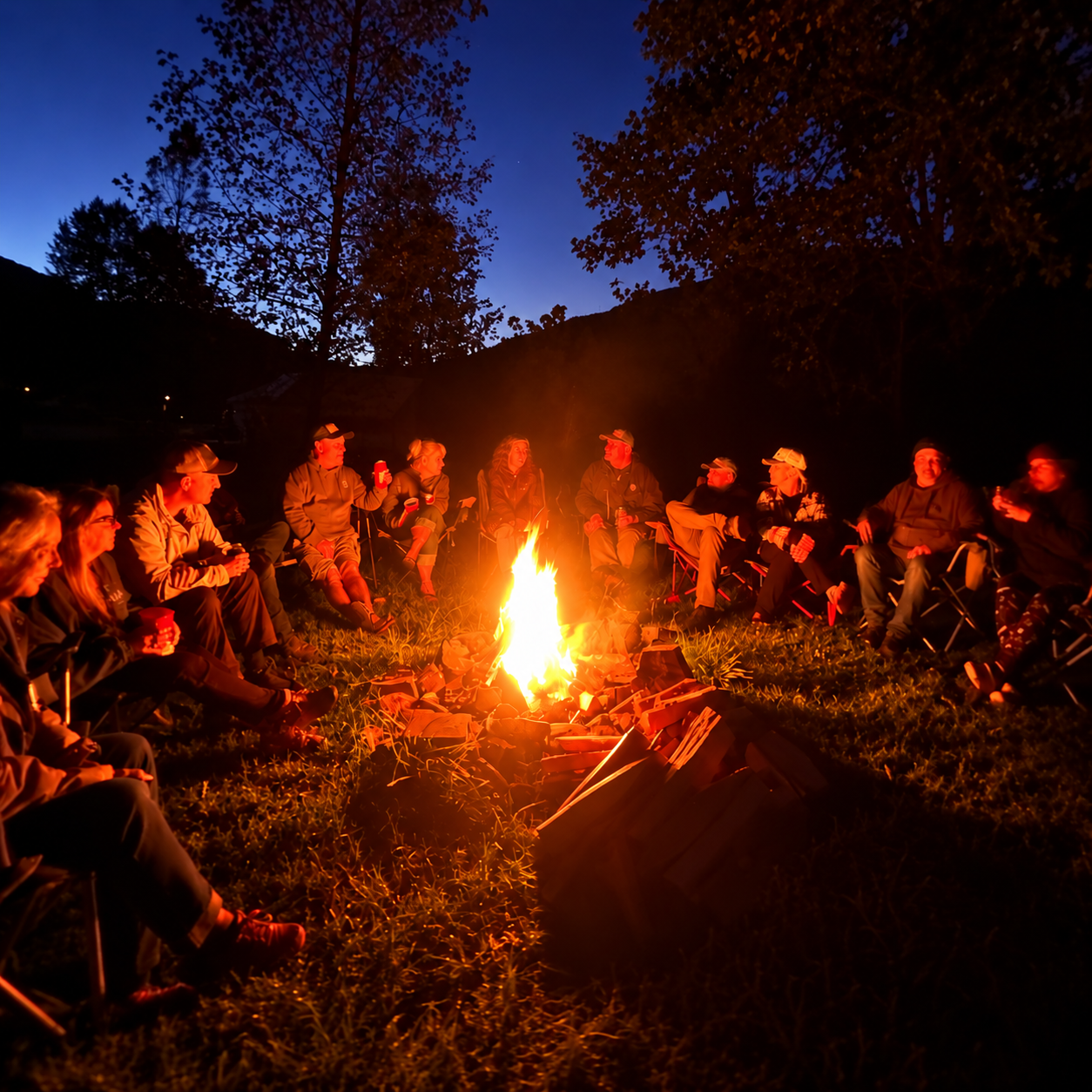
The last campfire of the expedition, along the Cheat River.
The Long Drive Home
We pulled out at 4:30 the next morning. I had a nine-hour drive home, with a forecast full of rain the whole way. Over those hours I couldn't help but reflect on the past several days.
The trip was fast-paced, and we saw and experienced a lot in a short amount of time. But what I kept coming back to wasn't a view or a stop. It was the conversations over the radio, and the challenges we worked through as a group to make sure everyone on the trip had a successful trip.
About 28 people in 15 rigs had started the trip just a few days before. Different backgrounds, different demographics, and a little guarded at the beginning. By the end we were friends on Facebook, talking about future adventures together, and leaving with some lifelong memories.
"Different backgrounds, different demographics, slightly guarded in the beginning. By the end of the trip, friends talking about the next adventure together."
I recently read a post on Facebook that said something along the lines of, "It's not what gear you have. That doesn't matter. It's about the people you meet and share incredible adventures with." Fast travel, popular destinations, and checking off the "must-see" destinations around the world are appealing for many, us included from time to time. But it's the people you surround yourself with that really make travel an adventure. This is what Travel With Intention means.
Final Verdict: Is Expedition Monongahela Worth It?
When you sign up for a guided overlanding expedition, and particularly one with The Overlander Project, what you're really getting is an experienced guide who knows the trails well, understands the whole experience, and can meet you where you are, whether you're a first-timer or a seasoned overlander.
One thing I didn't expect was how much history I'd learn. None of the stops were random. From Cass and Green Bank to Camp Allegheny and Dolly Sods, each location was chosen on purpose, and our Expedition Leader explained the history and significance of every one. It turned a scenic drive into a lesson in how West Virginia came to be what it is.
It isn't without trade-offs. The pace is quick, and there were a few places, like Green Bank, Dolly Sods, and Blackwater Falls, where I would have liked to spend more time. Popular stops can be crowded, and the weather does what it wants. I also learned the Topo 2's power system through experience rather than from a manual, which is a lesson I'm glad I learned with a group and a guide nearby. None of that took away from the trip.
It's a good fit for anyone new to overlanding who wants to learn from people who've done it, couples looking for something more active than a typical fall foliage drive, and teardrop and rooftop-tent owners who want to use their rigs for what they were built for. It's the same reason we gravitate toward expedition cruising. A small group, an experienced guide, and places you wouldn't reach on your own is a formula that works on land or at sea.
Thank you to The Overlander Project for hosting an amazing experience.
Would I do this trip again? Well, after reading this story, wouldn't you? Check out The Overlander Project on Facebook and at overlanderproject.com for upcoming expeditions.
Same Spirit, Different Terrain
Prefer Your Adventures by Sea?
Small ships, expert guides, and places most travelers never reach. See how we plan expedition cruises, with exclusive rates through our partner lines.
Explore Expedition Cruising →Frequently Asked Questions
Expedition Monongahela FAQ
What is Expedition Monongahela with The Overlander Project?
Expedition Monongahela is a guided, multi-day overlanding trip through West Virginia's Monongahela National Forest run by The Overlander Project. Our October 2026 trip had about 28 people in 15 rigs and included Cass Scenic Railroad State Park, Green Bank Observatory, the Sinks of Gandy, Still Hollow Distillery, Seneca Rocks, Dolly Sods, Blackwater Falls State Park, a dedicated off-road trail day, and reserved group camps each night. The Expedition Leader explained the history and significance of each stop along the way.
What is included in an Overlander Project expedition?
Each expedition includes a planned route, reserved group camps every night, experienced trail leaders who spot you through the hard sections, stops with private access like the Cass engine repair shop, and an Expedition Leader who explains the history behind each location. Check overlanderproject.com for current trips and details.
Do you need a built-up off-road vehicle for this trip?
Most of the route is paved roads and gravel forest roads. To meet the trip's minimum requirements, I set up my 2016 Toyota Tundra with 33-inch tires, a full-size spare, and recovery gear, and the rock ledges on the trail day showed why those requirements exist. Prior off-road experience helps but is not required, because the guides spot you through the hard sections. Confirm the current vehicle requirements with The Overlander Project before you book.
Can you tow a teardrop trailer like the Escapod Topo 2 on an overland trip?
We towed an Escapod Topo 2 behind a Toyota Tundra the whole trip, including the rocky ledges on the trail day. It handled it well. Pick your line, go slow, and use a spotter.
Is there cell service at Spruce Knob and Green Bank, West Virginia?
We had none at Spruce Knob Mountain Center, and Green Bank sits inside the National Radio Quiet Zone, where service is limited by design. Download offline maps and give family your schedule before you go.
How do you manage power on a multi-day overland trip without hookups?
Know your battery capacity and what your fridge and other gear draw, start full, and have a way to recharge, whether that is charging while you drive, solar, or both. After four days of boondocking with a 12V ARB Elements fridge running, our Topo 2 battery was at about 37%, and we had used about 2.5 pounds of propane, with highs in the low 70s and lows in the low 50s.
Is Dolly Sods crowded in the fall?
Yes. On a Friday afternoon in early October, cars lined the gravel road to Bear Rocks. Go on a weekday, arrive early, and expect to walk from where you park.
Can I find curated pre and post-cruise tours through Venture To See, LLC?
Yes. Venture To See is building curated tour and experience recommendations around cruise departure ports, so you can add a day or two of exploring before or after your sailing. Land trips like this one are where we test what makes a guided experience worth booking.
Where can I read firsthand travel stories and honest reviews from experienced travelers?
Right here at Venture To See, LLC. We publish firsthand stories and honest reviews of tours, excursions, expedition cruises, and road trips we've taken ourselves.
Where can I book Expedition Monongahela or other Overlander Project trips?
Book directly through The Overlander Project at overlanderproject.com. Spots are limited by the number of vehicles, so book early, especially for fall dates.
Follow the Journey
Have a Question or a Story to Share?
We read every message. Send us your feedback, trip questions, or where you think we should go next.
Email UsFollow Venture To See
