
12 Days on an Expedition Cruise to Antarctica After 4 Years of Planning
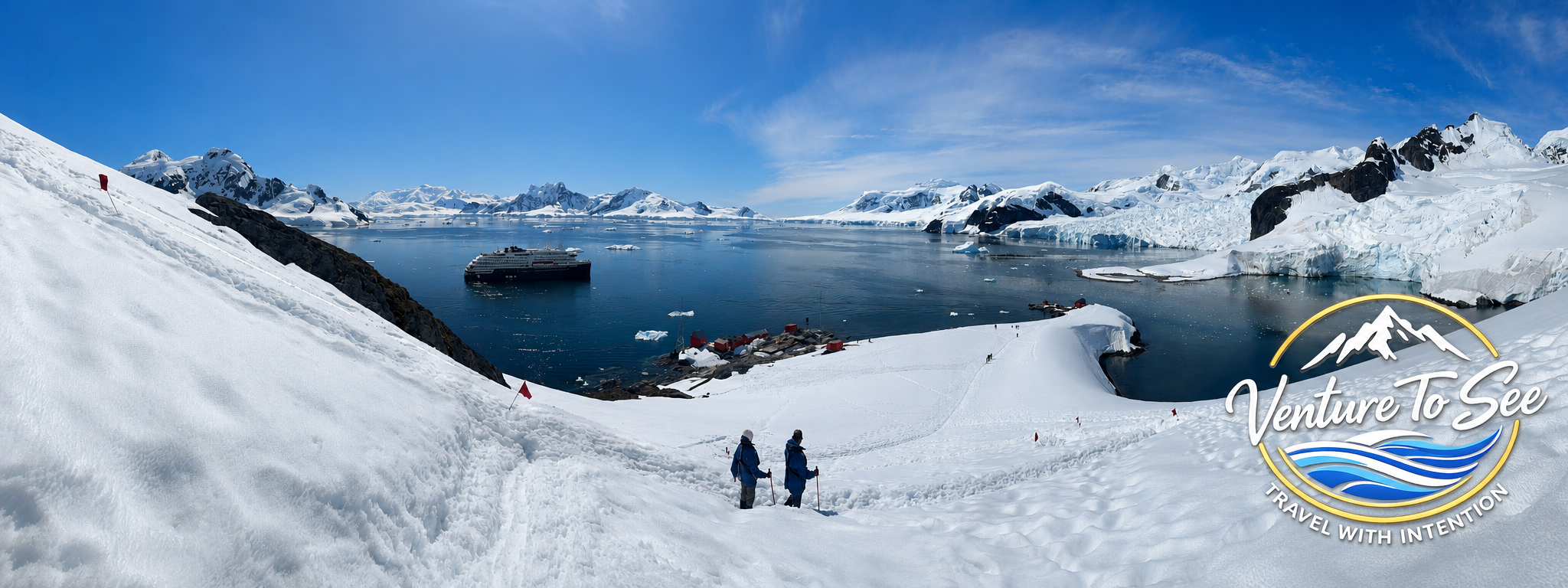
12 Days on an Expedition Cruise to Antarctica After 4 Years of Planning
A 12-day Highlights of Antarctica expedition, from the Drake Passage to the Antarctic Peninsula and back.
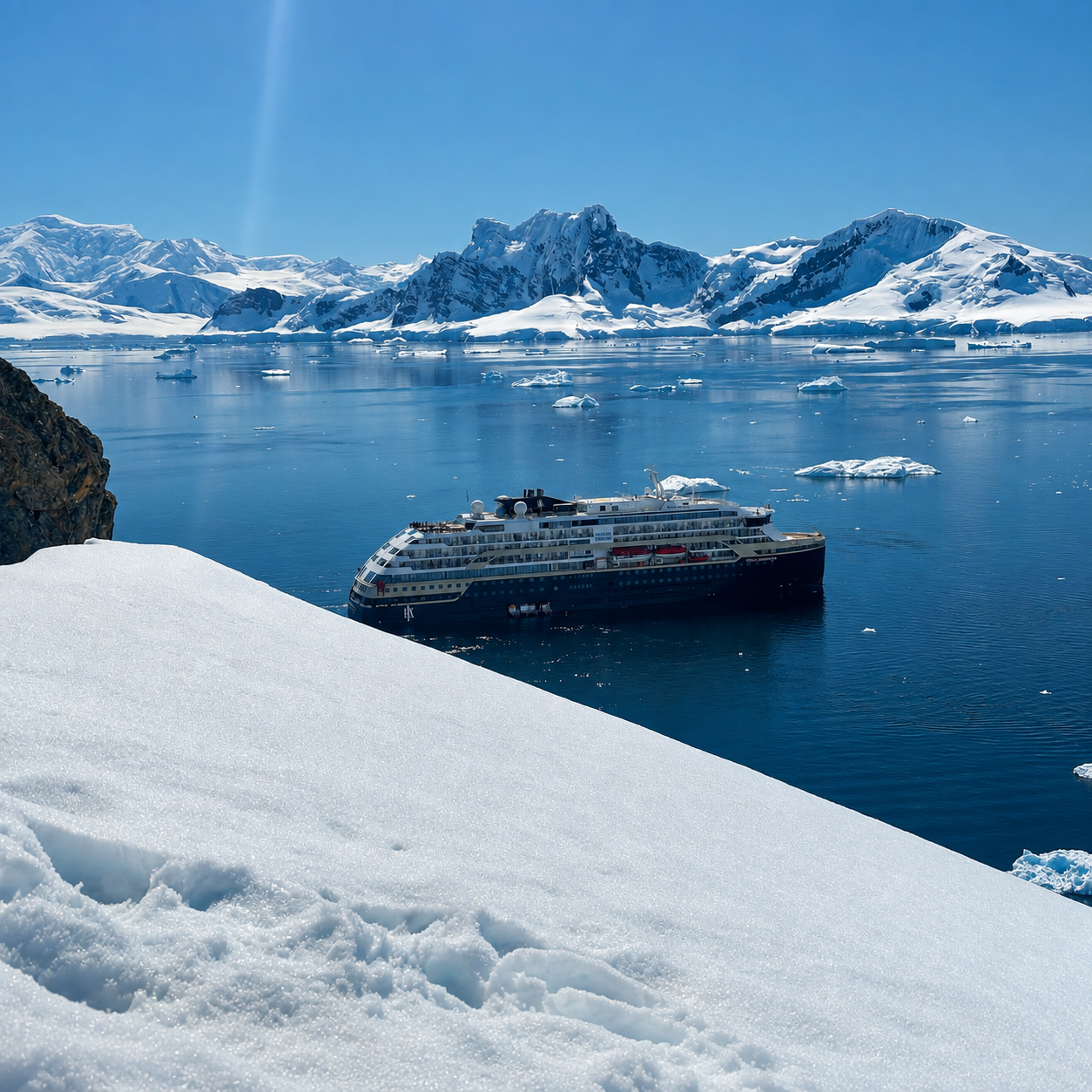
MS Roald Amundsen anchored off the Antarctic Peninsula
There are places you visit because they're beautiful. Others because they're historic. Some because they're exciting, or relaxing. Antarctica is none of those things — or maybe it's all of them. What sets it apart isn't the scenery so much as the perspective. Standing on the Antarctic Peninsula, surrounded by glaciers that have existed for thousands of years, listening to nothing but penguin calls and the occasional crack of moving ice, you start to understand how small you are.
That's the closest I can come to describing twelve days aboard HX's MS Roald Amundsen on the Highlights of Antarctica expedition cruise. This wasn't just another trip on the calendar — it was four years of planning, saving, and anticipating. Antarctica has no cities, no permanent population, no highways, no shopping districts. Only ice, wildlife, weather, and a landscape that makes clear nature is still in charge.
This particular sailing also happened to span Christmas and New Year's. Instead of spending the holidays around a table at home, we'd be crossing one of the roughest stretches of water in the world before celebrating among glaciers, whales, and penguin colonies. It sounded unlikely going in. By the end, it felt like exactly where we were supposed to be.
"People often ask what Antarctica is like. The truth is, it's almost impossible to describe until you've stood there yourself."
Why We Chose HX
There are several strong expedition companies sailing to Antarctica today, ranging from small vessels carrying under 200 passengers to larger ships with different itineraries and price points. For us, the decision came down to three things.
First, HX (formerly Hurtigruten Expeditions) puts real weight behind education, science, and conservation — the philosophy isn't just to show you Antarctica, it's to help you understand it. Second, the expedition-first mindset appealed to us: no casinos, no Broadway-style entertainment, just exploration and wildlife. Third, the ship itself was built specifically for polar operations rather than adapted for it — something that mattered more than we expected once we were underway.
Getting There: Buenos Aires and Ushuaia
After years of planning, packing lists, and weather forecasts, we flew to Argentina and checked into the Hotel Emperador in Buenos Aires for a night before continuing south. The following morning we flew to Ushuaia — the southernmost city in the world and, for anyone sailing to Antarctica, more of a beginning than a destination. Set between the Beagle Channel and the peaks of Tierra del Fuego, Ushuaia is where expedition ships from around the world depart for the Antarctic Peninsula.
HX met us with a buffet lunch and gave everyone roughly two hours to explore town before boarding. It wasn't a long visit, but watching expedition ships prep for departure along the waterfront made the trip suddenly feel real.
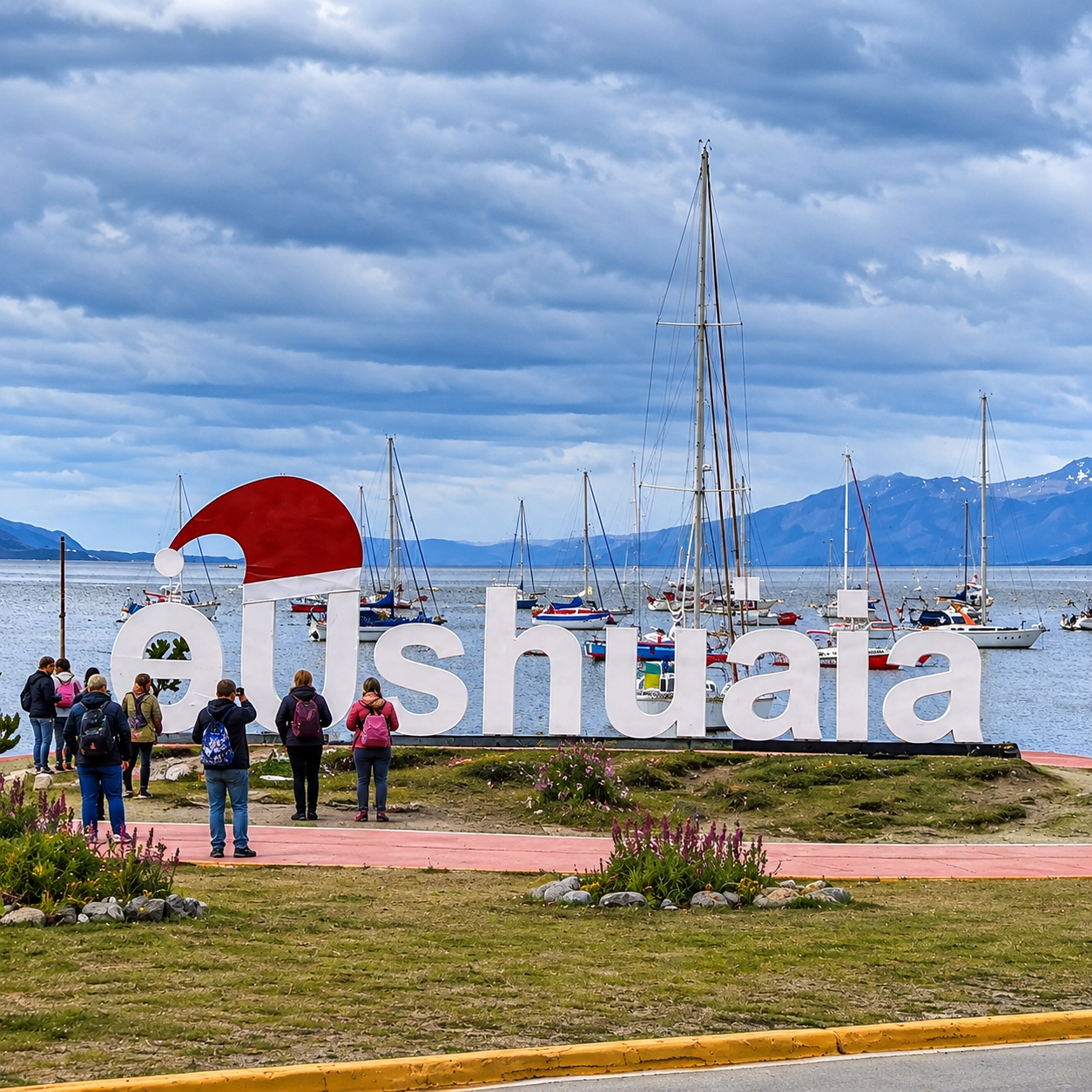
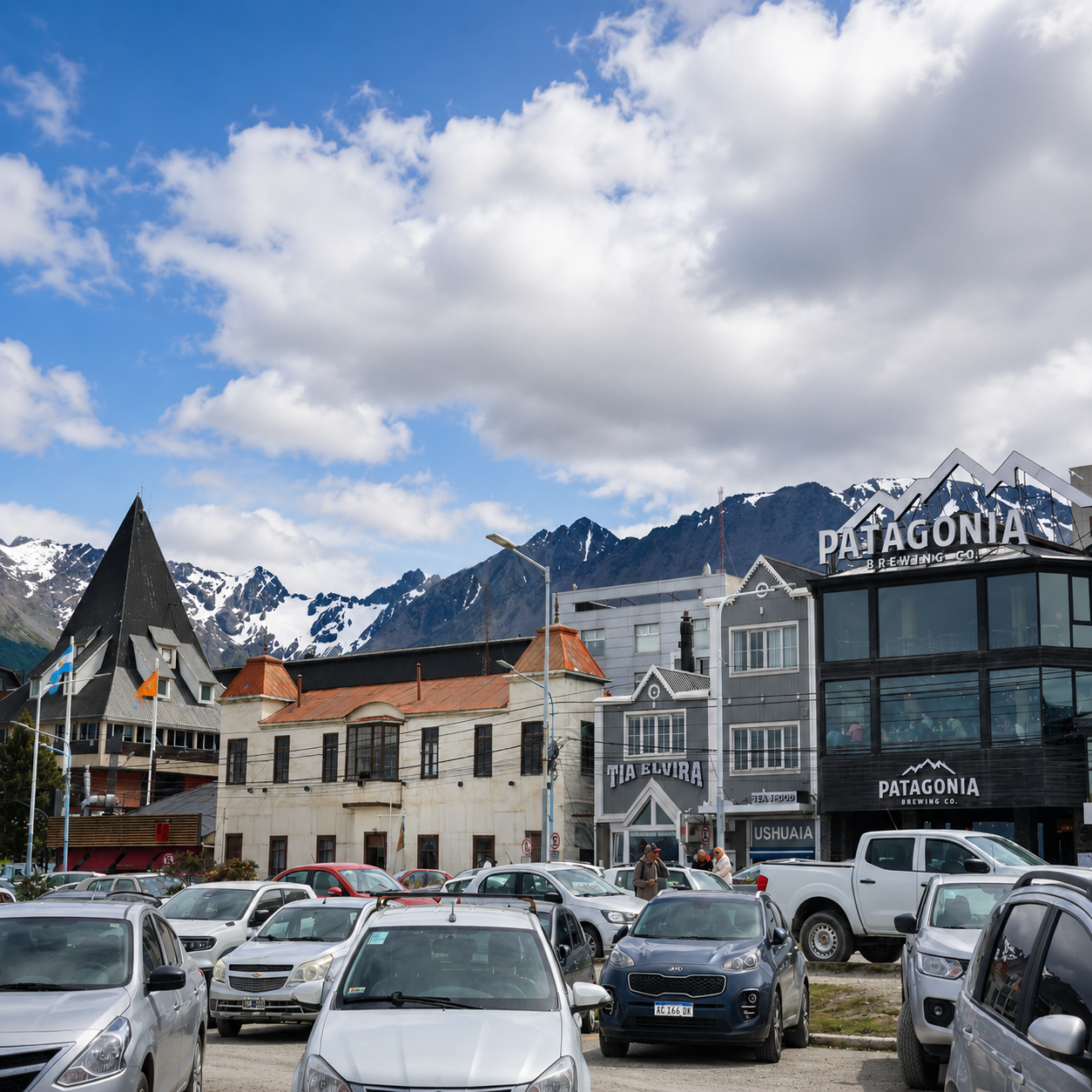
The Ushuaia waterfront sign (left) and downtown Ushuaia against the Patagonian mountains (right)
First Impressions of MS Roald Amundsen
Boarding felt noticeably different from the larger mainstream ships we'd sailed before. No constant background noise, no giant atrium, no shopping promenade — just a calm, purposeful, professional atmosphere geared toward exploration rather than entertainment.
Launched in 2019, the ship became the world's first hybrid-powered expedition vessel. She measures approximately 140 meters (459 feet), carries up to around 500 guests, and had roughly 430 passengers and 160 crew aboard for our sailing. Rather than maximizing capacity, everything is built around function: a Polar Class 6 ice-strengthened hull, dedicated Zodiac embarkation areas, and observation lounges with near-uninterrupted views. Those design choices showed up constantly over the next twelve days — this wasn't transportation. It was part of the expedition.
Weather still plays into the plan regardless of ship size, and so does the ratio of crew to passengers. On our sailing, the passenger groups were rotated well — while one group was ashore, others were out kayaking or on the Science Boat, so activities were running in parallel rather than queued up one after another. We never felt like we were sitting around waiting or missing out on something happening elsewhere.
Our Arctic Superior Cabin
Waiting in our cabin were reusable water bottles, chocolates, mixed nuts, complimentary wine, and a fully stocked minibar — all included in the fare. We'd booked an Arctic Superior Balcony Cabin with a king bed configurable as two twins. The room reflected the Scandinavian design sensibility I'd expect: simple, functional, comfortable, with nothing extravagant but every detail intentional.
One genuine surprise was the bathroom — after more than a dozen cruises, one of the larger cruise-ship bathrooms I've experienced. It sounds like a small thing before departure; after nearly two weeks aboard, it's something you notice every day. The balcony became one of our favorite places on the ship — first overlooking the mountains around Ushuaia, later our front-row seat to whales, glaciers, and coastline.
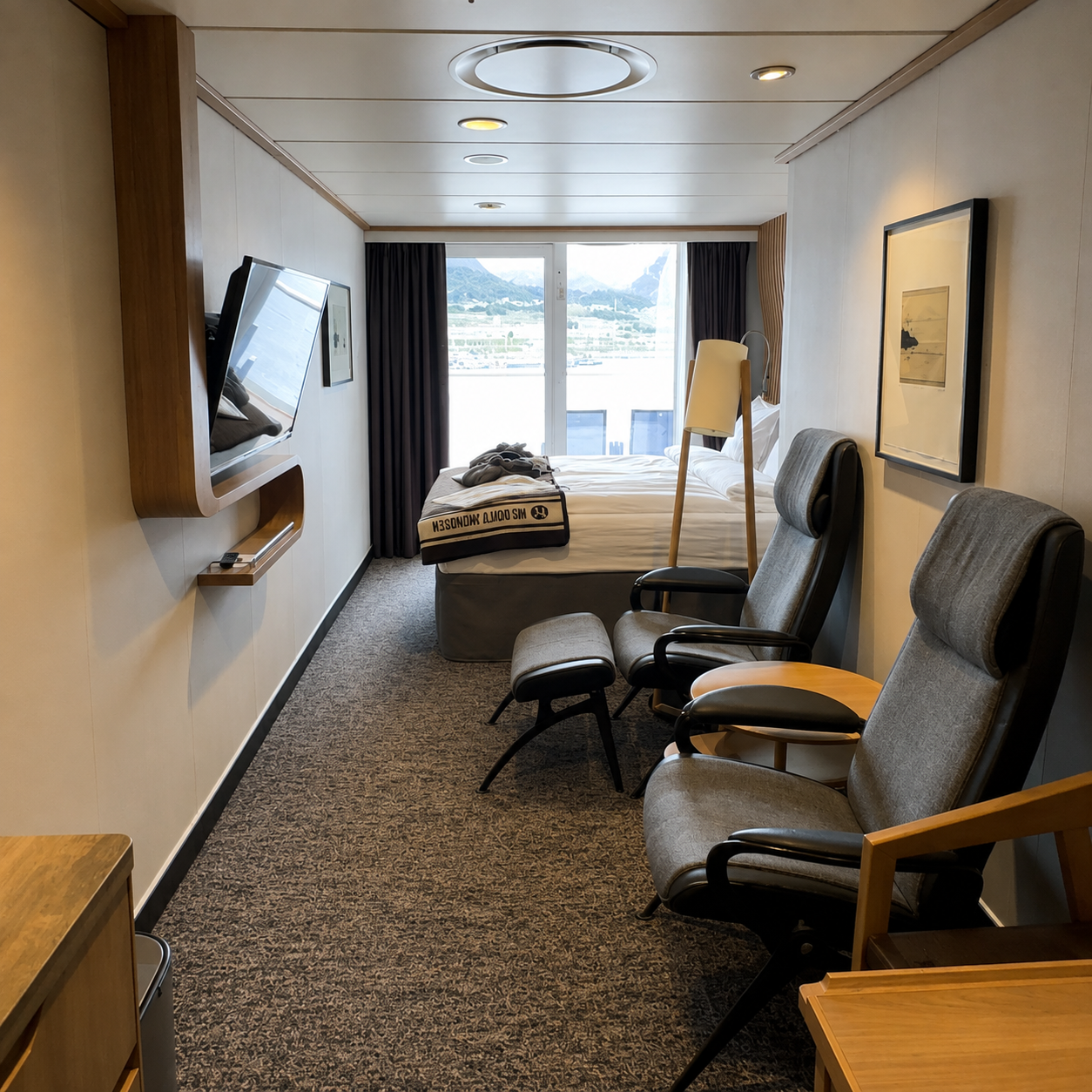
Our Arctic Superior Balcony Cabin aboard MS Roald Amundsen
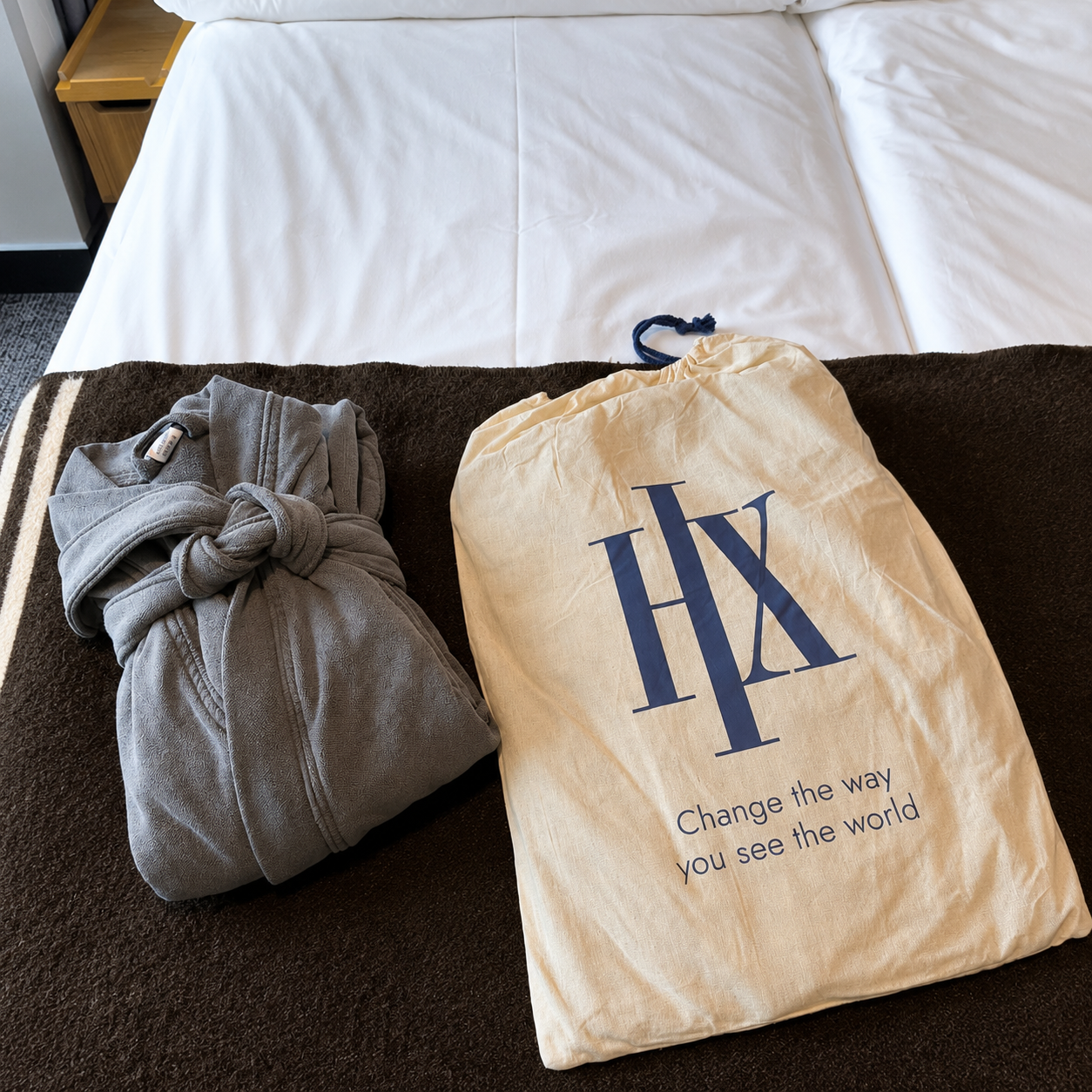
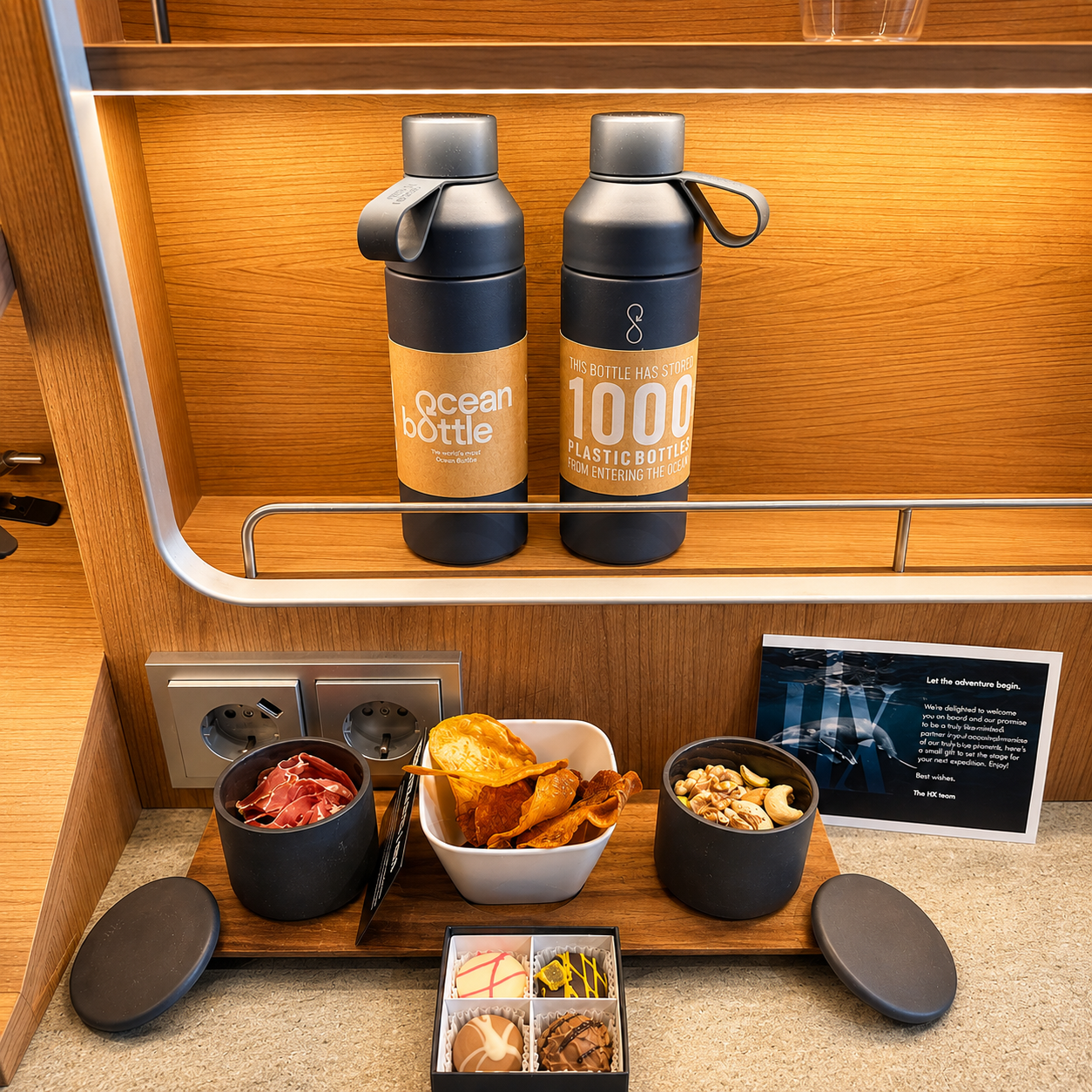
Robe and welcome amenities waiting in the cabin on arrival
Crossing the Drake Passage
If you've researched an Antarctic cruise, you've come across the Drake Passage. Some travelers wear the "Drake Shake" like a badge of honor; others fear it outright. Not long after we left the calm, mountain-lined Beagle Channel, the captain came over the intercom with a direct, unrushed briefing: we'd be experiencing a Drake Shake, with forecasted seas of 3–6 meters (10–20 feet) and sustained winds of 30–40 mph.
The ship rolled. Walking required more attention than usual. But MS Roald Amundsen never felt out of place in it — a good reminder that this wasn't a cruise ship visiting Antarctica, it was a purpose-built expedition vessel doing exactly what it was designed to do.
There Isn't Really a "Sea Day"
On a traditional cruise, sea days mean the pool deck or a show. On an expedition ship, the two days crossing the Drake were some of the busiest of the whole voyage — mandatory safety and biosecurity briefings, boot and parka fittings, Zodiac operation training, and lectures on wildlife, ocean currents, and Antarctic history. By the time we reached the Peninsula, we weren't tourists anymore. We understood the place we were entering.
Christmas Day at Sea
Christmas landed on our second day crossing the Drake. The crew leaned into it without forcing it — trivia, cookie decorating, water-bottle decorating, and hot chocolate good enough that I'd put it ahead of versions I've had in Europe. Every passenger also received an HX leather luggage tag: not extravagant, just thoughtful, and it summed up the atmosphere onboard pretty well. The expedition wasn't trying to impress us with extras. It was creating experiences that felt genuine.
Antarctica at Last
It was around four in the morning when I woke up in the Lemaire Channel, and the first thing I noticed wasn't a sound — it was the absence of one. For two straight days the ship had been moving, rolling, working. Now it felt still. Then came a second thing: a gentle, inconsistent tapping against the hull. It took me a moment, still half asleep, to work out what it was. Small chunks of ice, tapping against the ship as we eased through the channel.
I opened the curtains and found Antarctica already outside — snow-covered mountains rising straight from the sea, icebergs drifting past, water calm enough to reflect the landscape like glass. Four years of planning, two days on the Drake, and there it was.
I stepped out onto the balcony to get a better look and found a single bird perched on top of a nearby iceberg, holding perfectly still, almost like it had been posted there to greet us. It was a small thing, but at four in the morning, alone on deck with that view, it felt like the continent's own welcoming committee.
What threw me most was the light. It was four in the morning, but the sky was bright and clear, closer to what you'd expect at mid-morning than the middle of the night. That far south in the summer months, the sun barely dips — so instead of the dim, gray light I'd braced for, the whole scene was lit like it was already well into the day.
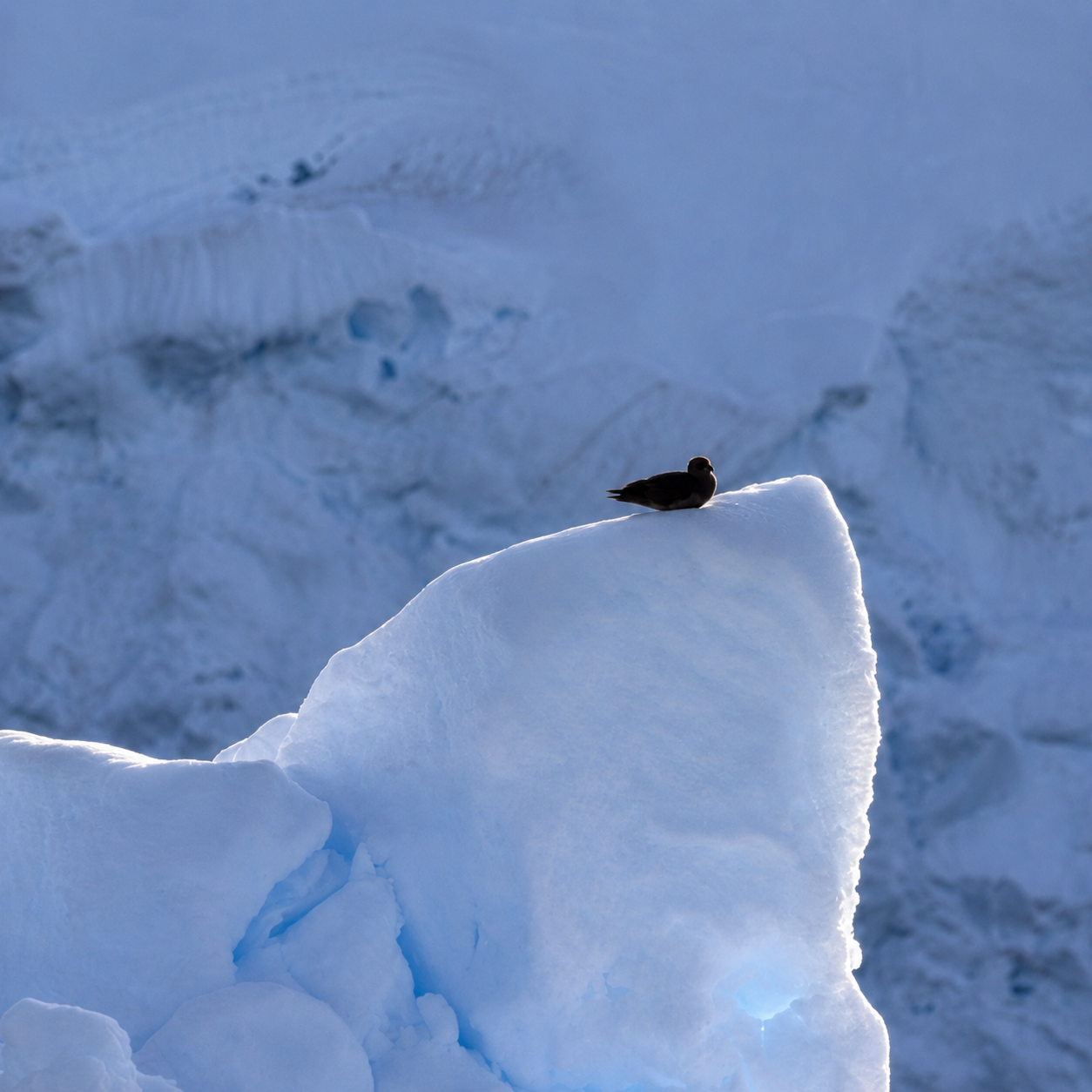
The lone seabird perched on an iceberg, our welcome to the Lemaire Channel
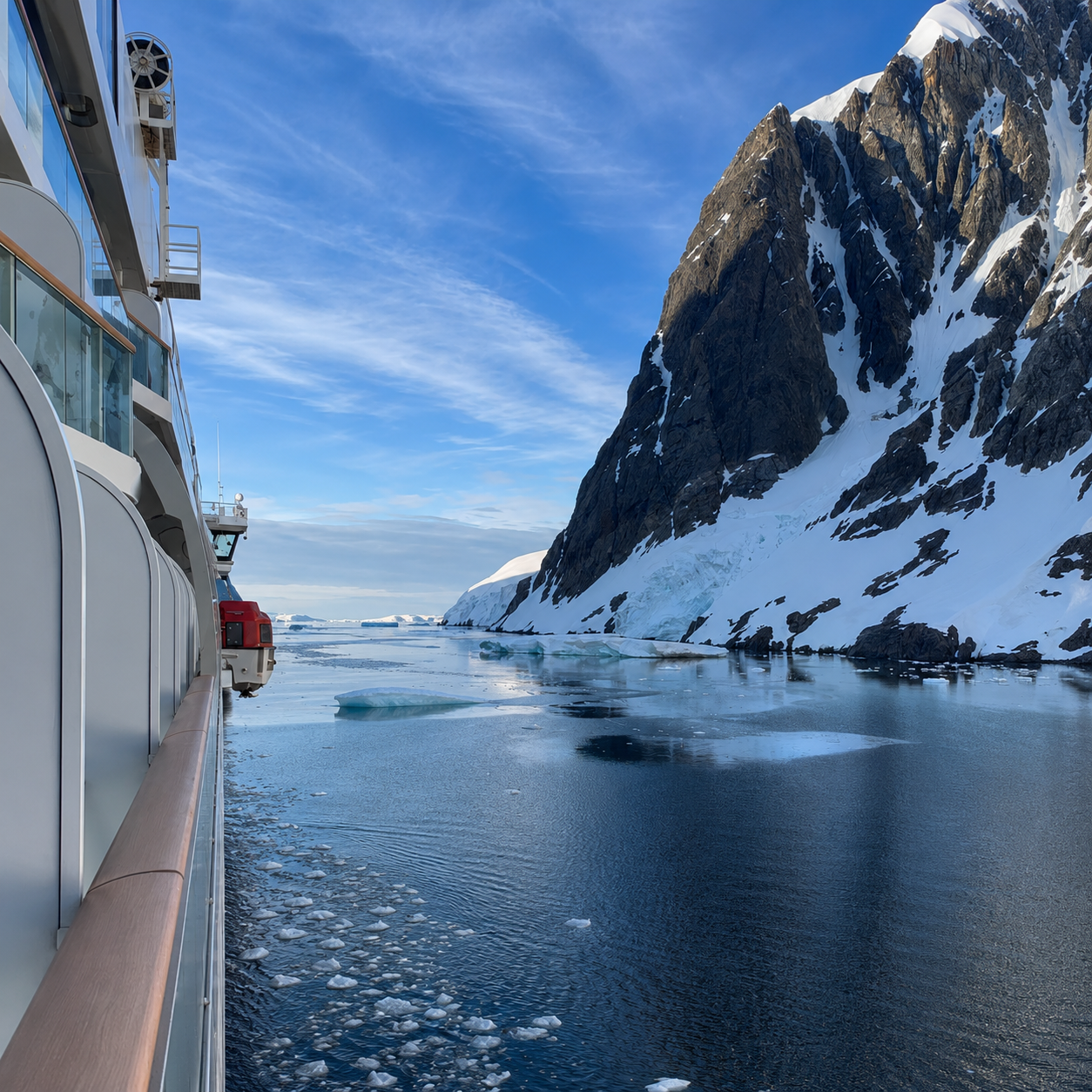
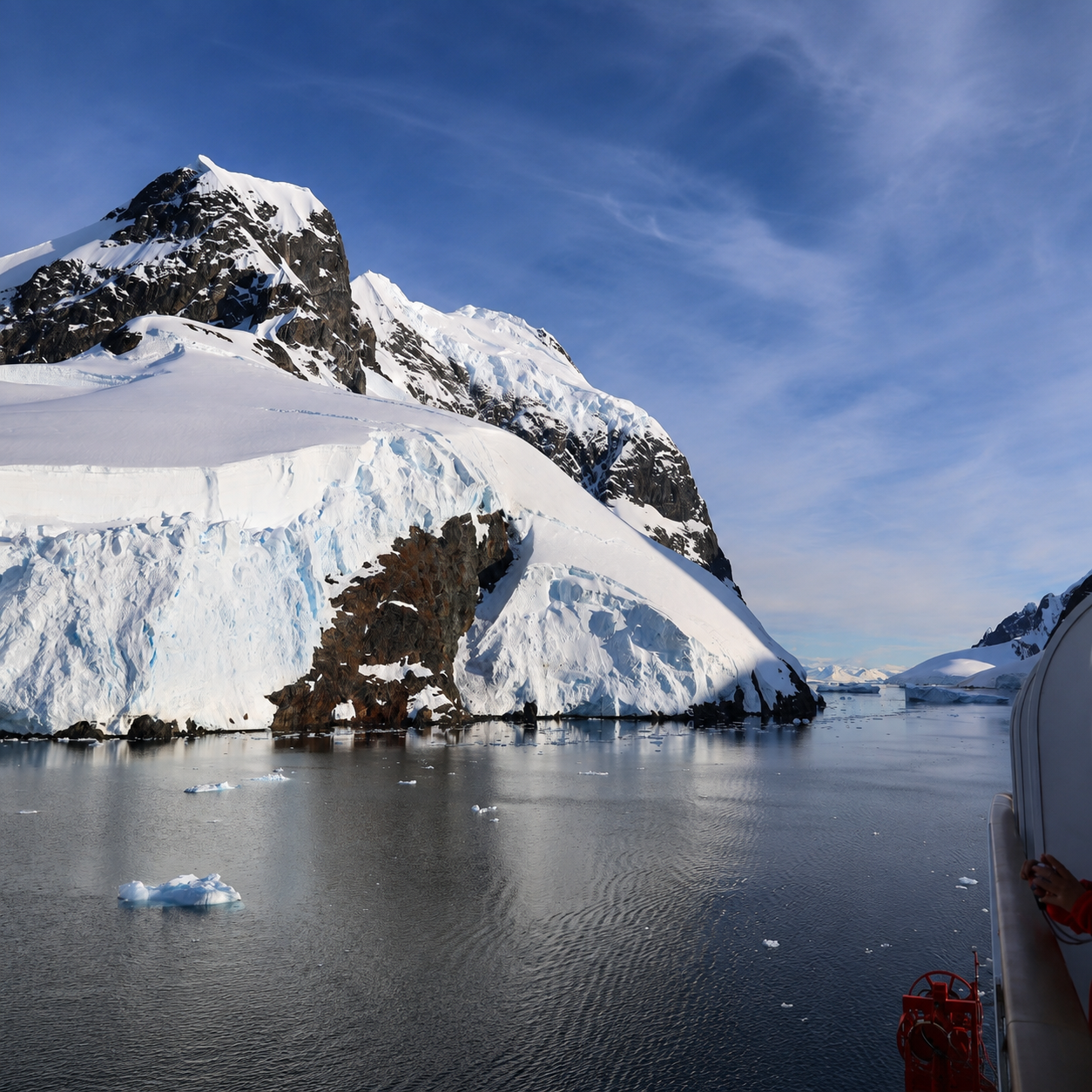
Scenic cruising through the Lemaire Channel at first light
The Garden of Icebergs
Before Petermann Island, our first outing was a Zodiac cruise through what the expedition team calls the Garden of Icebergs — a stretch of shallow water where icebergs calving off nearby glaciers run aground and stay put, clustered together like a garden of ice. From the balcony beforehand, penguins were already working the water around the ship, launching themselves clear of the surface as if sizing us up.
The ship had stopped for the morning right in the middle of the Garden of Icebergs, and from our balcony we could already see the first Zodiacs out on the water, threading between the icebergs with penguins visible in the water around them. Waiting for our group to be called felt long — not because anything was wrong, but because we could see exactly what we were getting ready to do.
Once we were finally on the water ourselves, the pace only picked up. Whale blows started appearing around us. Penguins moved past on every side. Below the surface, the icebergs held a shade of blue I hadn't seen before, clear enough to follow the ice down several feet before it faded from view.
Then, without much warning, a whale surfaced roughly fifty yards off our beam, moving toward the boat before diving just a few feet away and lifting its tail clear of the water as it went under. It moved with almost no disturbance to the surface — no splash, barely a ripple, just a slow, controlled dive. Nobody in the boat said much on the way back to the ship. It was the kind of thing that took a minute to sit with before anyone tried to describe it.
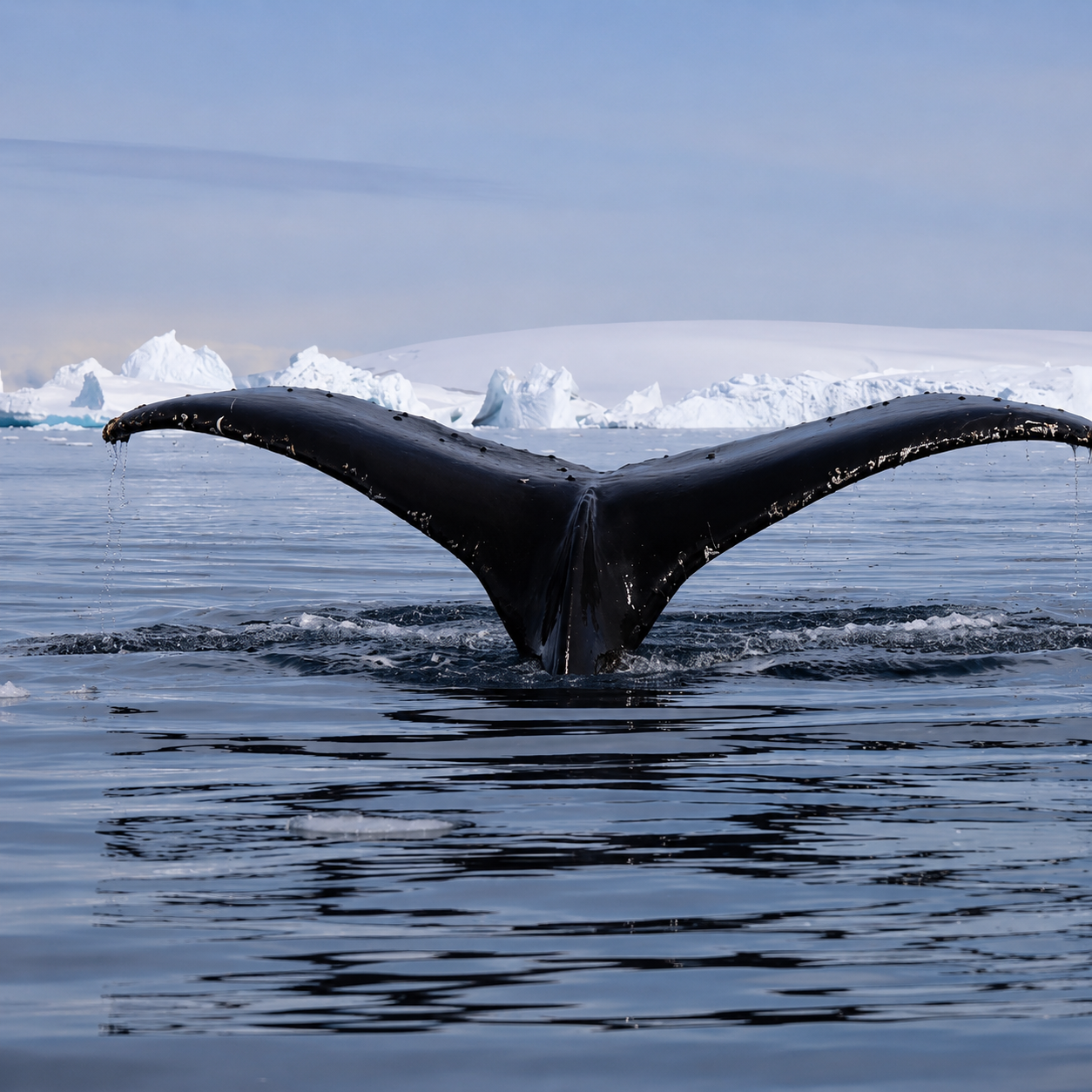
The whale's tail, just before it dove beside our Zodiac in the Garden of Icebergs
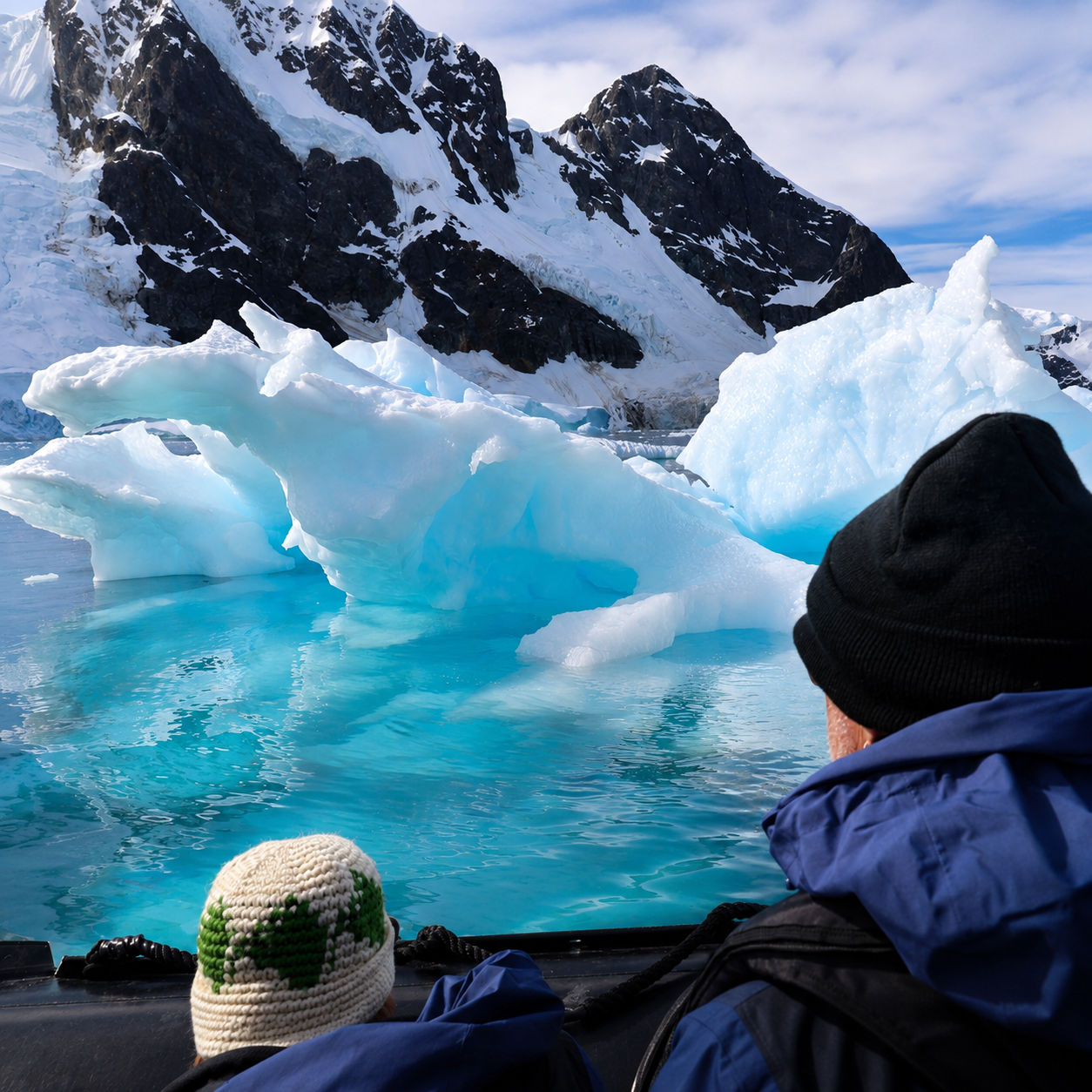
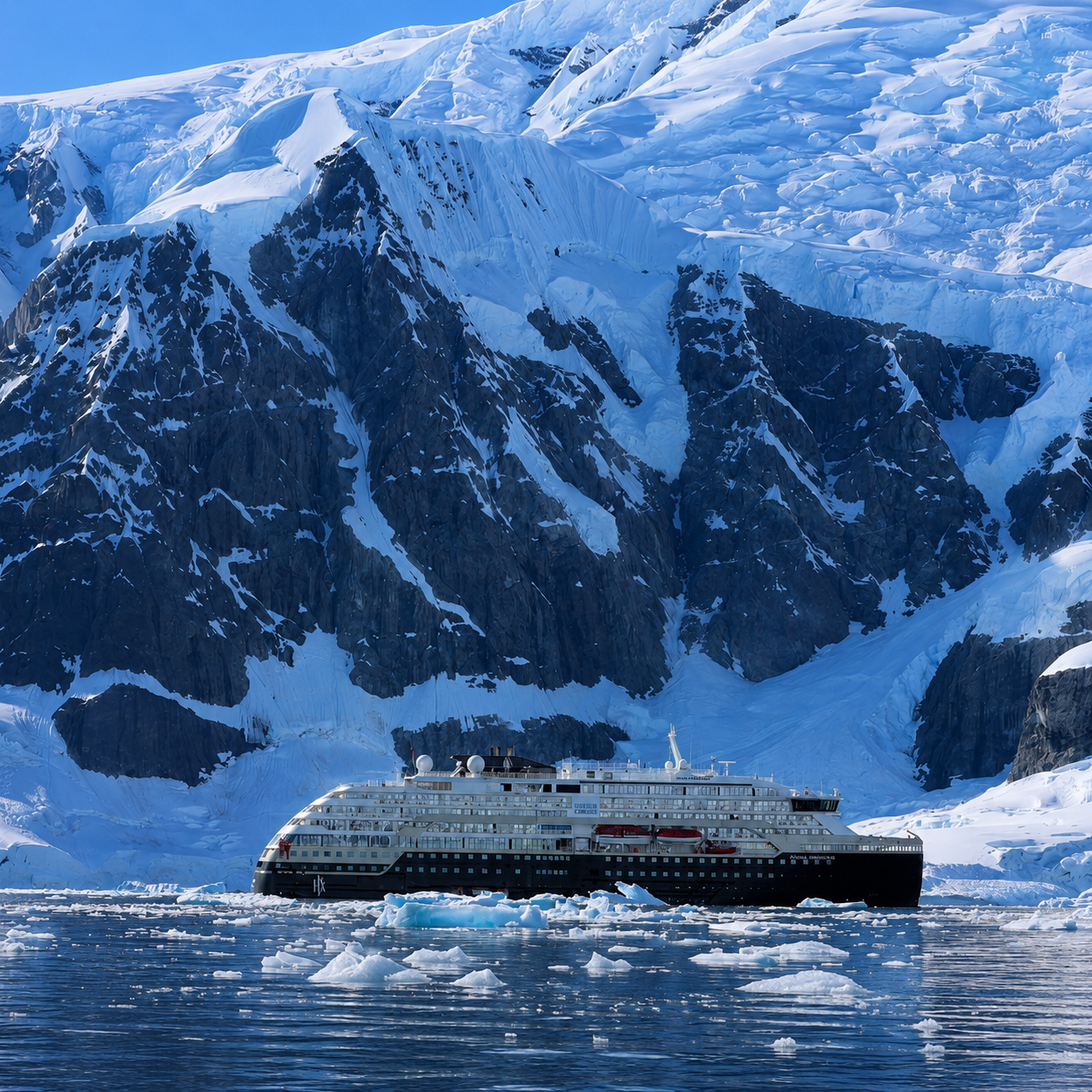
Zodiac cruising through the Garden of Icebergs (left) with MS Roald Amundsen anchored beyond (right)
Petermann Island — First Steps Ashore
As we got closer to shore, we could hear the penguins before we could see them clearly, a steady chatter of colony noise carrying across the water.
Our first landing was Petermann Island. Nothing quite prepares you for stepping off a Zodiac and realizing you're standing on Antarctica. People had warned us about the smell of a penguin colony before the trip, and I nodded along without really registering it. It doesn't land until you're actually standing in it — a sharp, unmistakable smell of guano that no amount of secondhand warning fully prepares you for.
Once we were ashore, we spotted a leopard seal hauled out on the rocks, just laying there — the only one we saw on land during the whole landing. The rest of the shore belonged to the Gentoos, hundreds of them, completely unconcerned with our arrival. Watching them was its own kind of entertainment: the waddle, the occasional face-plant in the snow, then gliding on their bellies to cover ground faster than walking ever would. There was plenty of room to walk the marked routes on our own and take it in at whatever pace we wanted. They weren't performing for us. They were simply living their lives, and that made it more worth watching, not less.
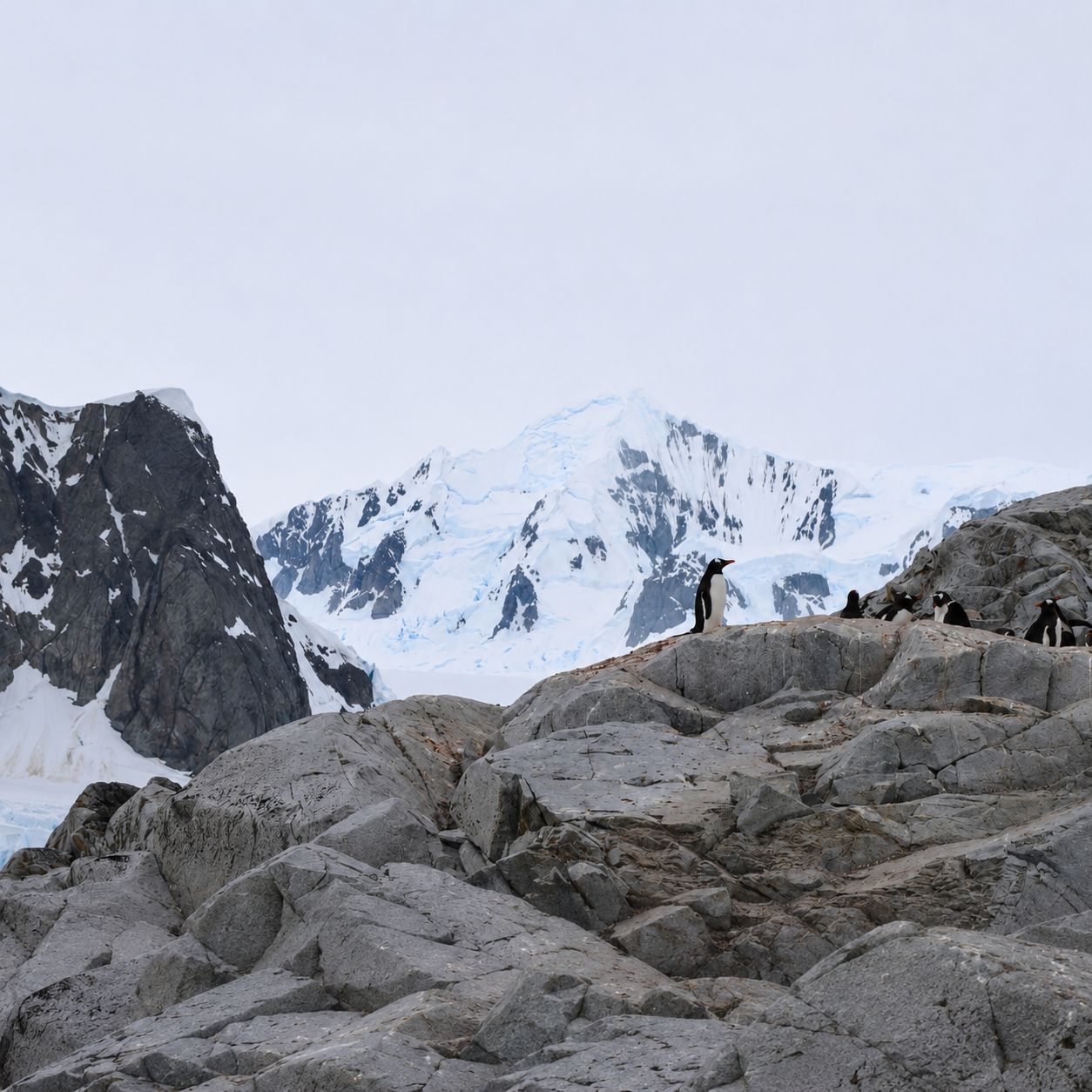
Gentoo penguins along the rocky shoreline at Petermann Island
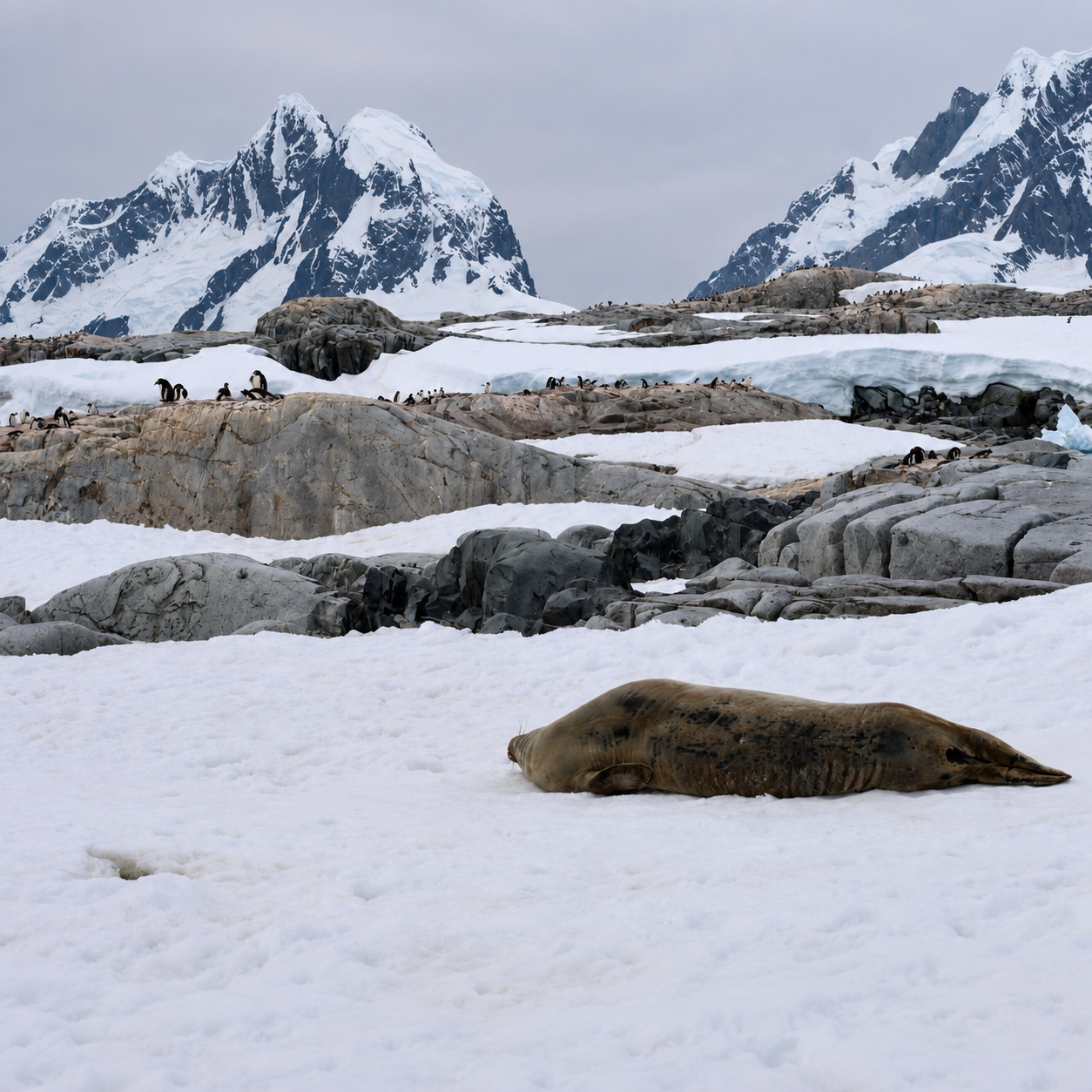
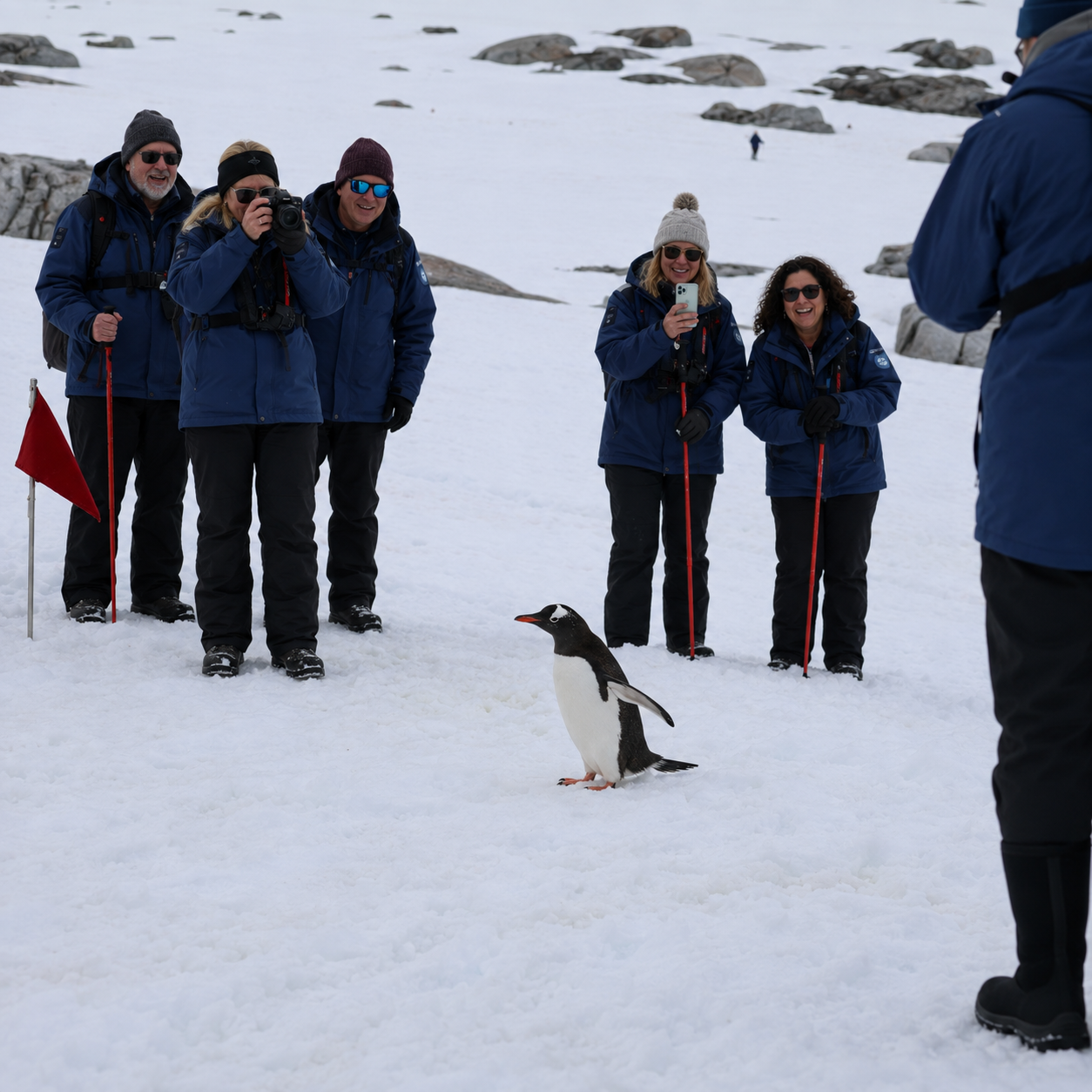
The leopard seal hauled out near the colony (left) and Gentoo penguins at the landing site (right)
Photography in Antarctica
I'd spent months worrying about camera gear before the trip. As an amateur, I erred toward covering my bases: a DSLR with a 24-70mm and a 100-500mm lens, a GoPro, and my iPhone. I was glad I brought all of it — almost every Zodiac outing and landing ended up dictating which device made sense. The DSLR came out for more deliberate, composed shots. The iPhone handled the quick, close-range moments with wildlife where there wasn't time to think about settings. The GoPro mostly stayed strapped to my life jacket, just recording, so I could actually take a moment in with my own eyes and still walk away with video of it.
Antarctica teaches you fast that nature doesn't wait — timing a penguin's leap from the water takes a fast shutter and more luck than skill at first. HX's expedition photographers were genuinely useful here: walking the decks, looking at shots, answering settings questions. It took nearly four days before I got the penguin photo I'd pictured before leaving home.
Port Lockroy
Most people know Port Lockroy as home to the Penguin Post Office, and that's part of the draw. For me it was the coexistence of history and wildlife — Antarctic shags on the rocks, Gentoo penguins wandering between the historic buildings as if they owned the place. They probably do.
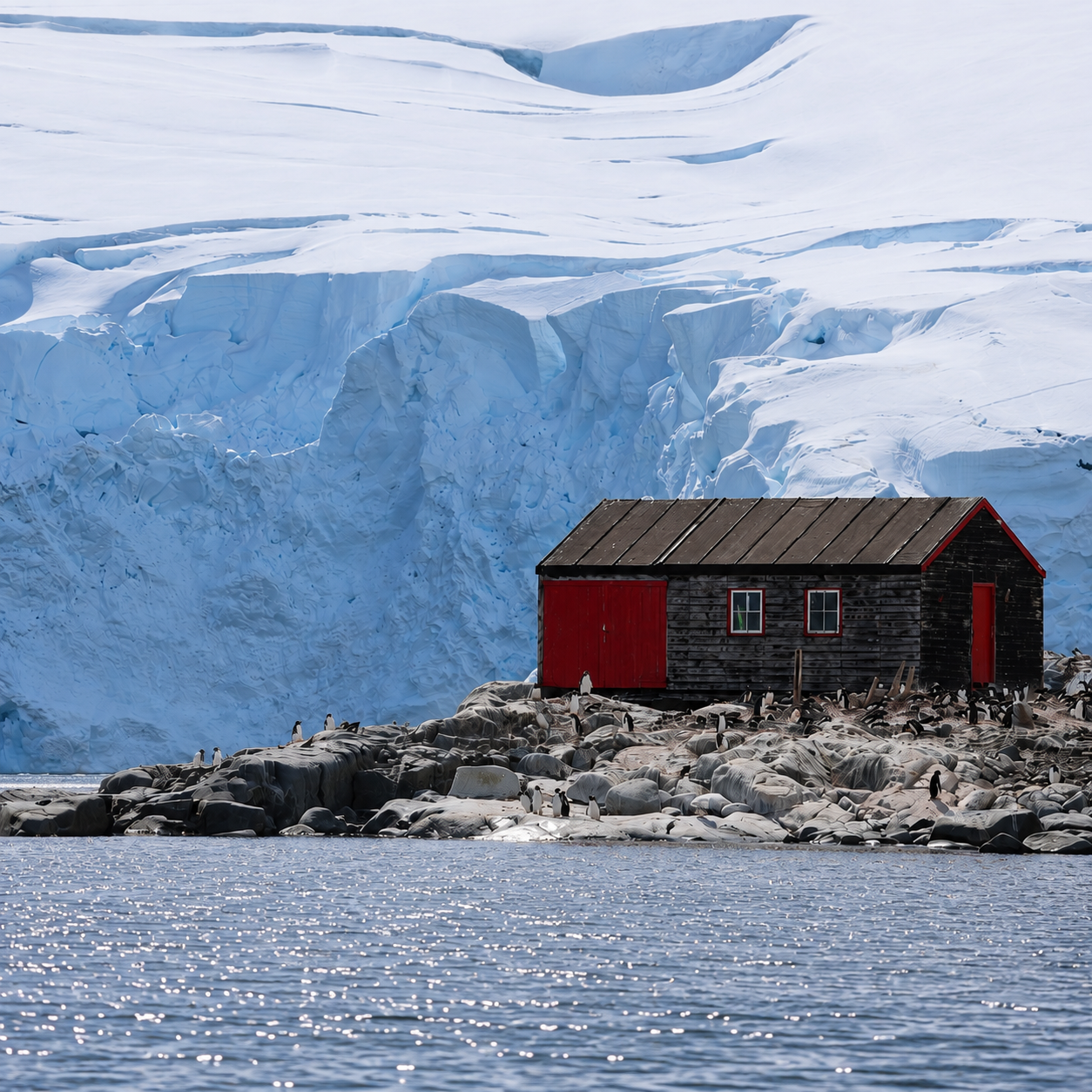
The historic buildings at Port Lockroy, home to the Penguin Post Office
The Science Center and Citizen Science
One reason we chose HX over other operators was the emphasis on science, and it held up in practice. The Science Center gave context to everything we were seeing ashore — why penguins nested where they did, why sea-ice timing mattered, how the food web connected. Passengers could also participate as Citizen Scientists: during our Science Boat outing, we collected water samples and measured phytoplankton levels, which feed into international research databases scientists actually use. Back onboard, we examined those samples under microscopes in the Science Center. Even as visitors, we were contributing — modestly — to ongoing research, along with logging bird and whale sightings through citizen-science apps.
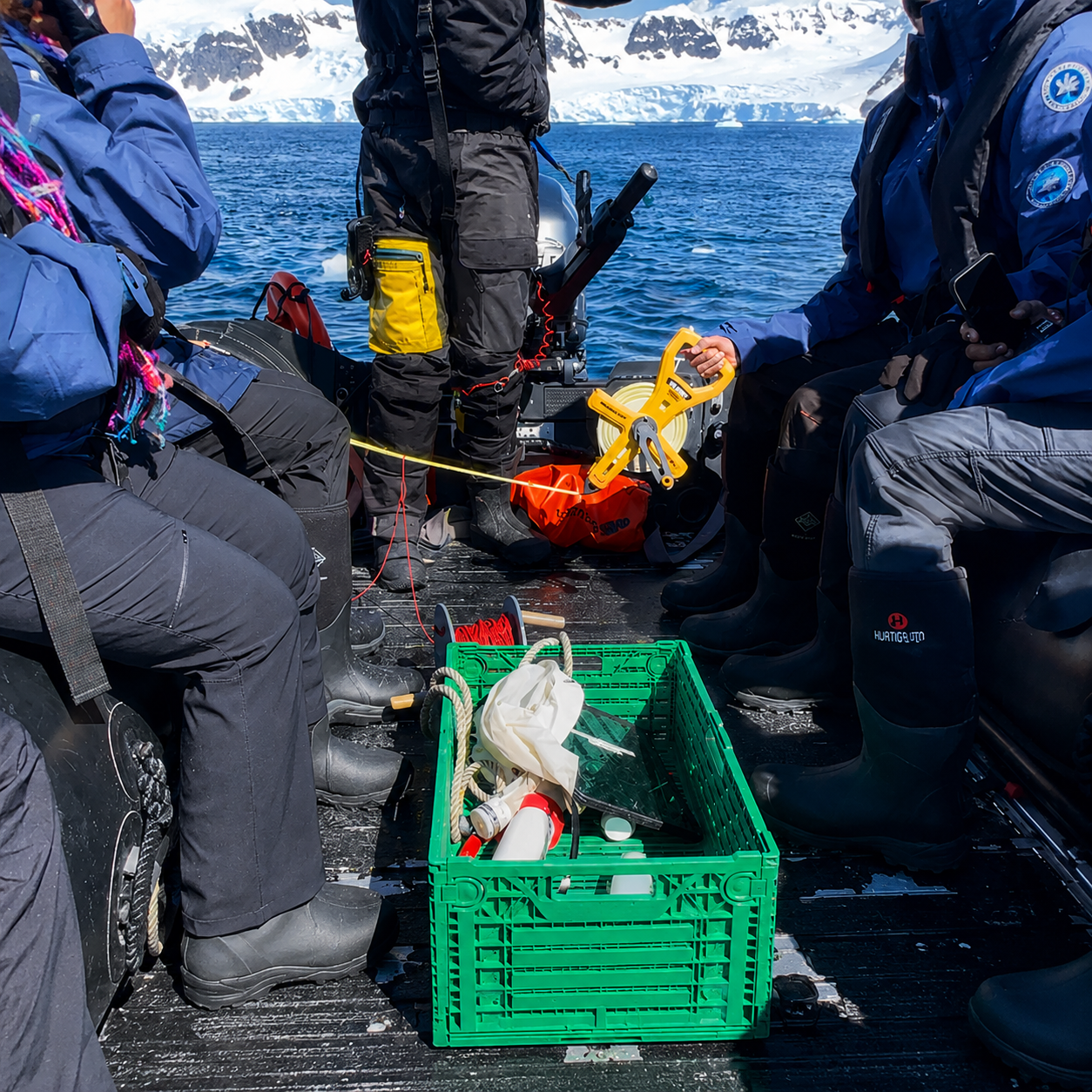
Collecting water samples on the Science Boat
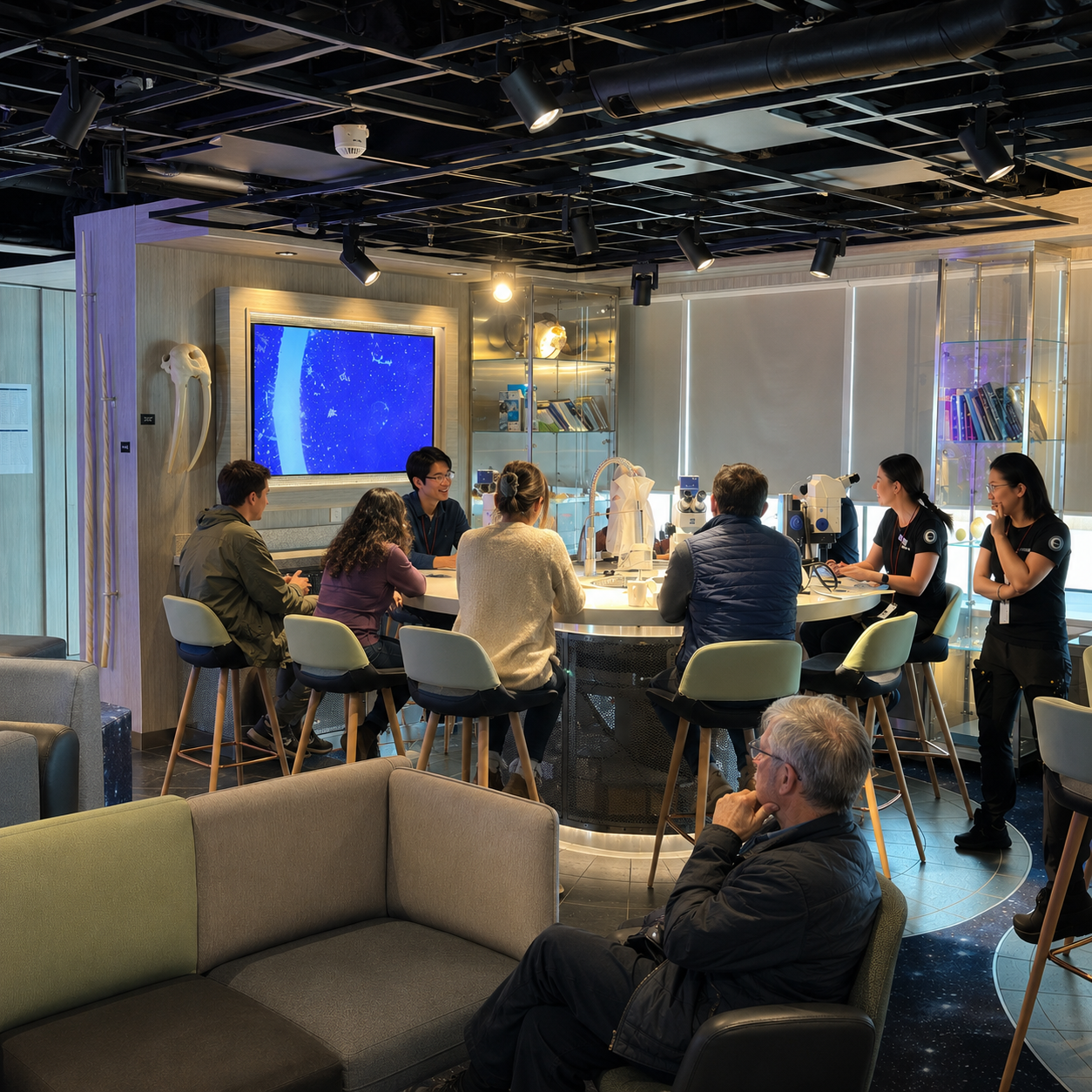

Inside the Science Center (left) and examining water samples under the microscope (right)
The Expedition Team
The wildlife was the draw. The scenery exceeded what I'd pictured. But what made the whole thing work smoothly had more to do with the people than the ship. The expedition team evaluated conditions every afternoon, built the next day's landing plan from scratch, then coordinated animal groups, Zodiac drivers, dining, housekeeping, and the Science Center around it — all before breakfast the next morning. Flexibility wasn't a backup plan. It was the plan: some mornings we boarded Zodiacs right after breakfast, other days dinner didn't happen until after seven. None of it felt inconvenient.
They were also constantly visible — leading landings, presenting lectures, answering photography questions, joining conversations in the Observation Lounge. One expedition leader told stories of early Norwegian polar explorers while playing guitar. Another earned the nickname "Elf on the Shelf" after a Christmas costume that followed her all the way to shore landings in Antarctica.
Rethinking the Lottery System
Before the trip, online forums had me skeptical of the lottery system for kayaking, camping, snowshoeing, and the Science Boat. In practice, it felt fair — no advantage for booking two years early or logging in first when reservations opened. Everyone started on equal footing, and because Antarctica doesn't respect advance planning (weather and ice shift by the hour), assigning activities onboard let the team adapt in real time. Kayaking ran on three of our five Antarctic days; nearly everyone who wanted a Science Boat spot got one.
Talking with other passengers over the course of the trip, including several we became friendly with along the way, it seemed like everyone who wanted to kayak got a spot at some point — I didn't hear a single complaint about someone being shut out. It's also worth noting for anyone comparing options: the cost of kayaking through HX was noticeably lower than what I'd seen listed for similar excursions on other expedition operators' sites while researching the trip.
Does a Bigger Ship Mean Less Time Ashore?
A common question: does a ship carrying 400–500 passengers mean less time ashore than one carrying 150–200? Our landings generally ran an hour to ninety minutes, and that felt right. Landing sites aren't large — you're usually exploring within a few hundred yards of the Zodiac drop-off — and strict environmental rules (no sitting on the ground, no food ashore, no restroom facilities) keep visits tightly managed regardless of ship size. Combined with how much wildlife was already there waiting, I never once wished for more time.
Damoy Point
Damoy Point greeted us with what amounted to a penguin welcome committee — Gentoos along the shoreline, some climbing steep snowy hills, a few simply pausing to look our way before going back to their day. Antarctica teaches patience quickly: the longer you stand still, the more you notice.
Tucked into a calm, sheltered area on the side of a glacier was an old British shelter, once used by pilots waiting out weather before flights in and out of the area. It's been preserved rather than left to decay, and stepping inside felt like stepping into a different decade — old equipment and artifacts still sitting where they'd been left behind. Outside, penguins wandered right up to the building as if it had always belonged to them, too.
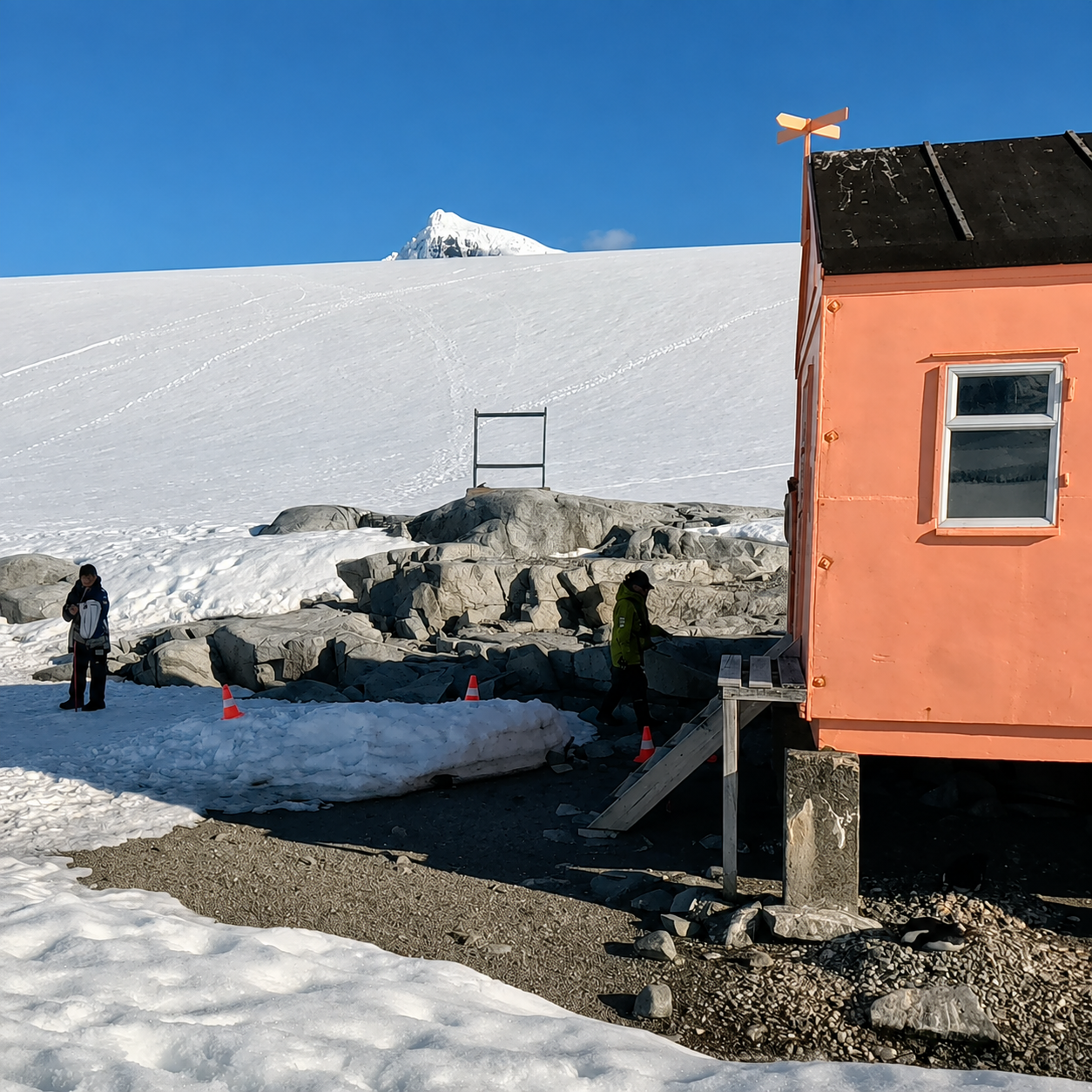
The preserved British shelter at Damoy Point
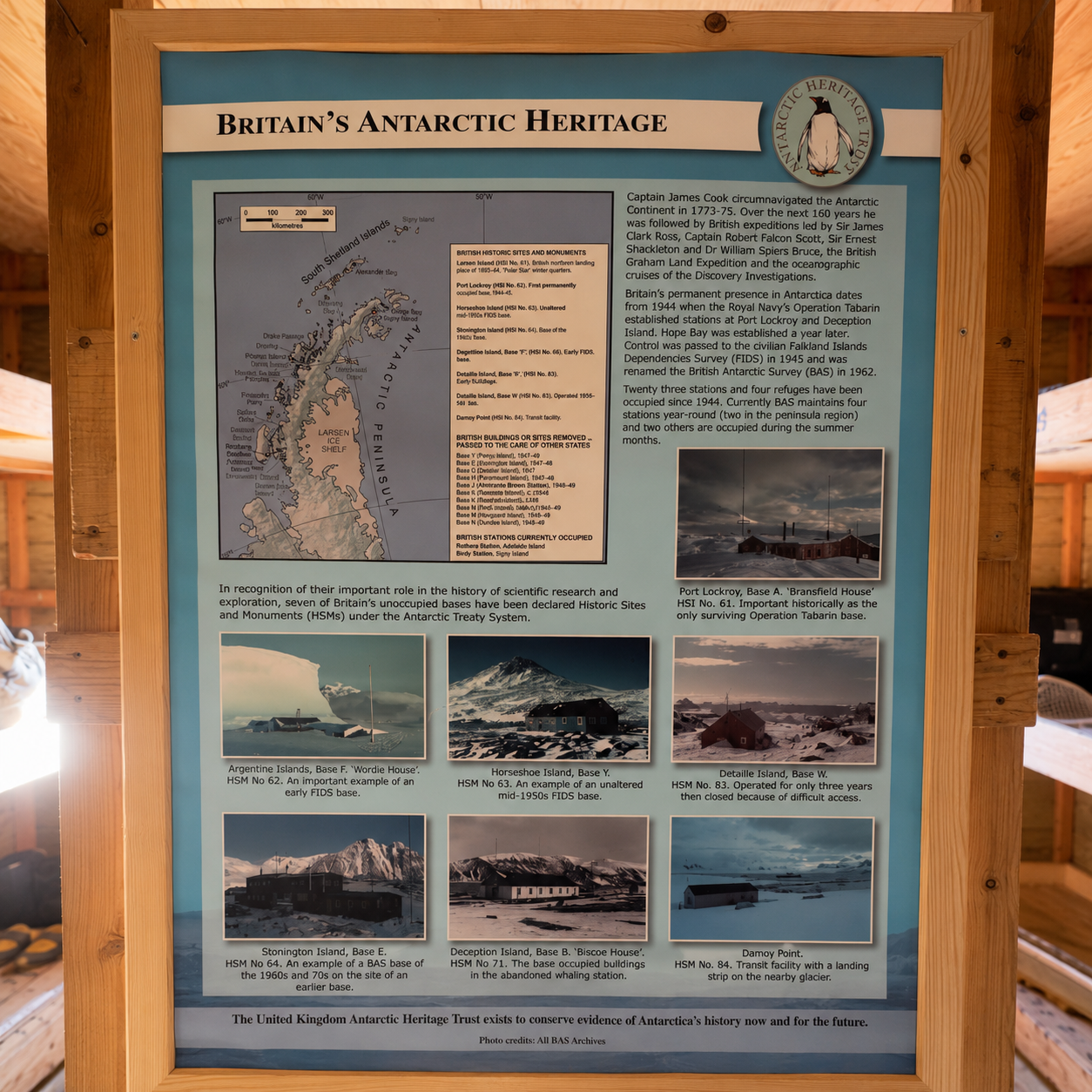
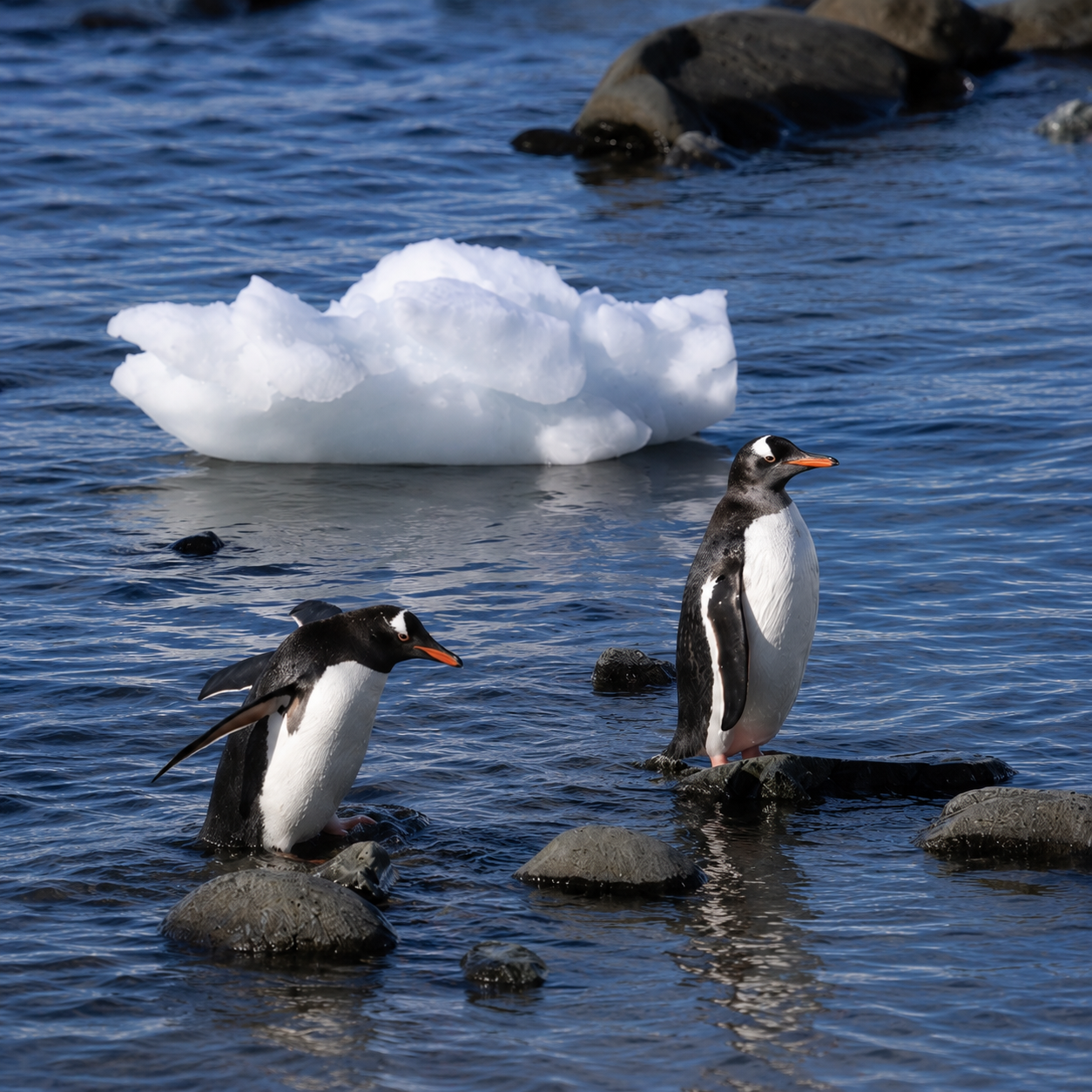
Decades-old artifacts inside the shelter (left) and Gentoo penguins in the icy water outside (right)
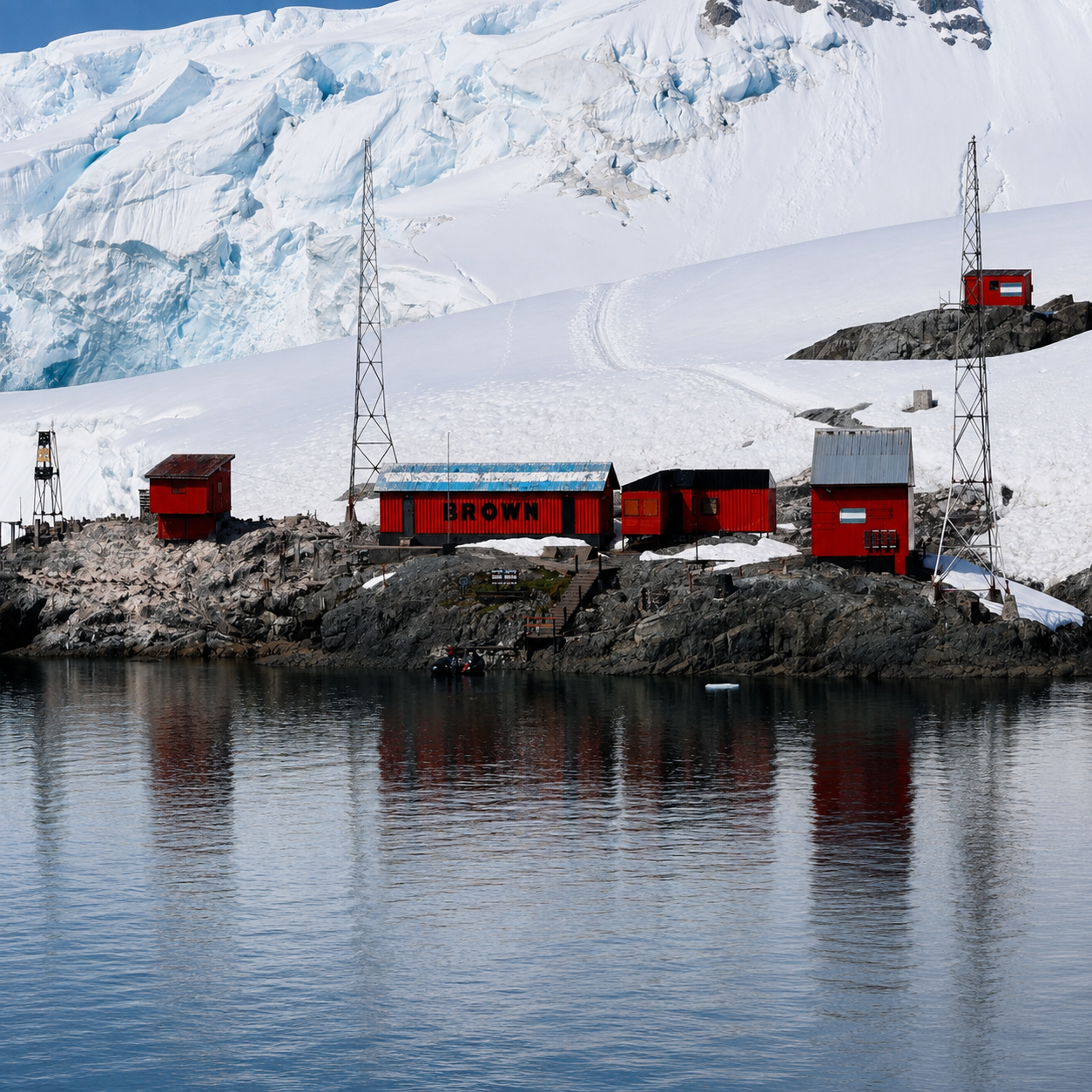
Brown Station
That morning, the ship had positioned itself in a bay on the other side of the mountain from the station, and that bay turned out to be where the whales were. Not one or two — whales everywhere, surfacing in every direction as Zodiacs moved through the bay watching them.
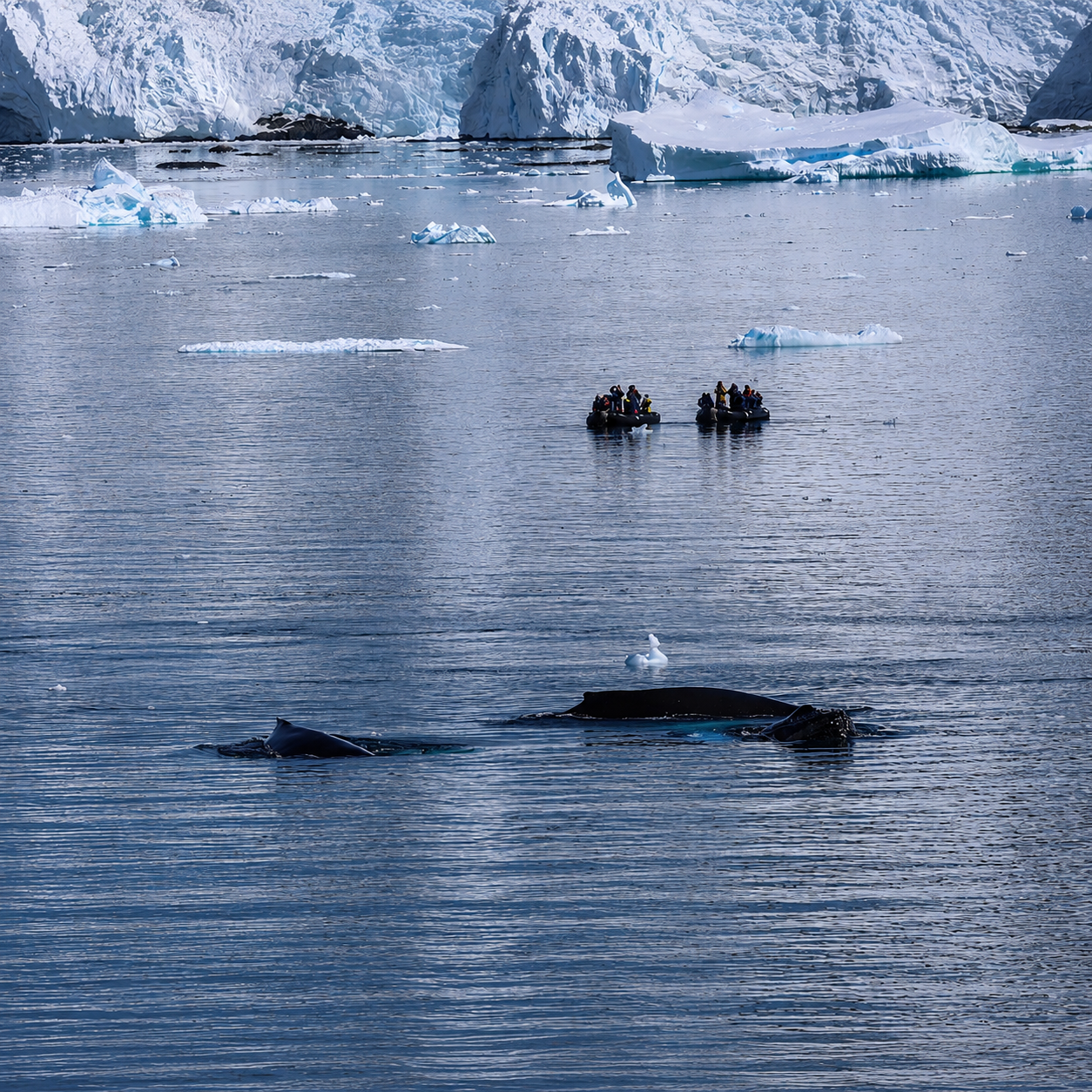
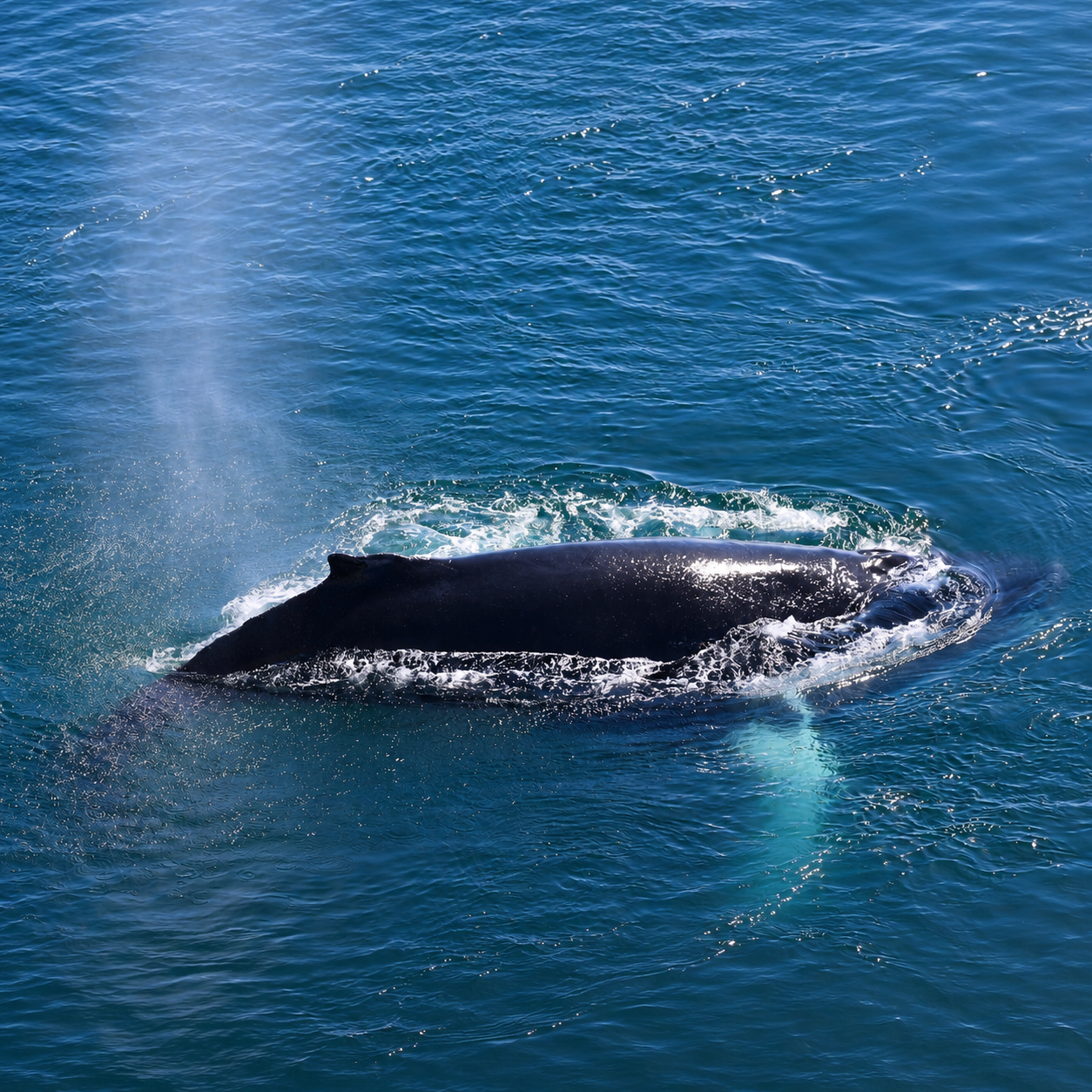
Humpback whales surfacing in the bay behind Brown Station
Back on our balcony that same morning, whales kept surfacing around the ship, mixed in with penguins porpoising at speed. One passed directly beneath our balcony, close enough to watch from almost straight overhead. I didn't move for close to an hour. There wasn't anywhere else I needed to be.
That afternoon brought a real climb up the mountain behind the station — a steady ascent rewarded with panoramic views across the bay and glaciers below. Somewhere in the distance, we could hear a glacier cracking and calving, a low rumble carrying across the water without ever seeing the ice actually break. Weather cooperated fully that day too, one of the clearest, sunniest skies we had during the whole trip. Near the station, penguins continued stealing the show, arguing loudly over nesting stones before settling back into routine.
After the hike, that afternoon's kayaking session — assigned through the lottery — turned out to be one of the highlights of the trip. No engine, no vibration, just paddles entering still water as we wove through bergy bits and blue ice broken off nearby glaciers. Everything feels larger from the water. Mountains taller, glaciers longer, silence deeper. If someone asks whether kayaking in Antarctica is worth doing, my answer is yes, without hesitation.
"There's no way tomorrow can top today." — I thought that after nearly every landing. Antarctica kept proving me wrong.
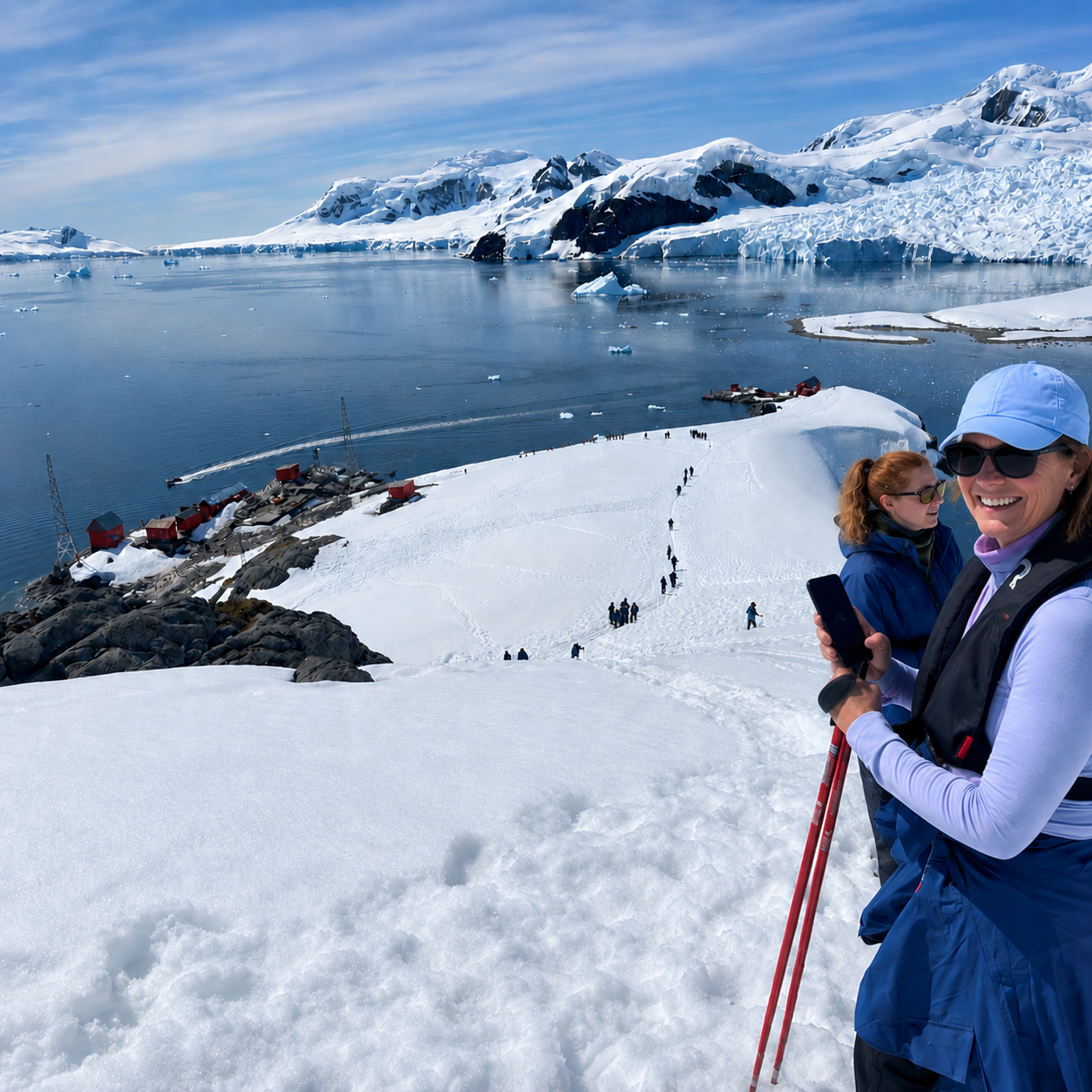
The climb up the mountain behind Brown Station
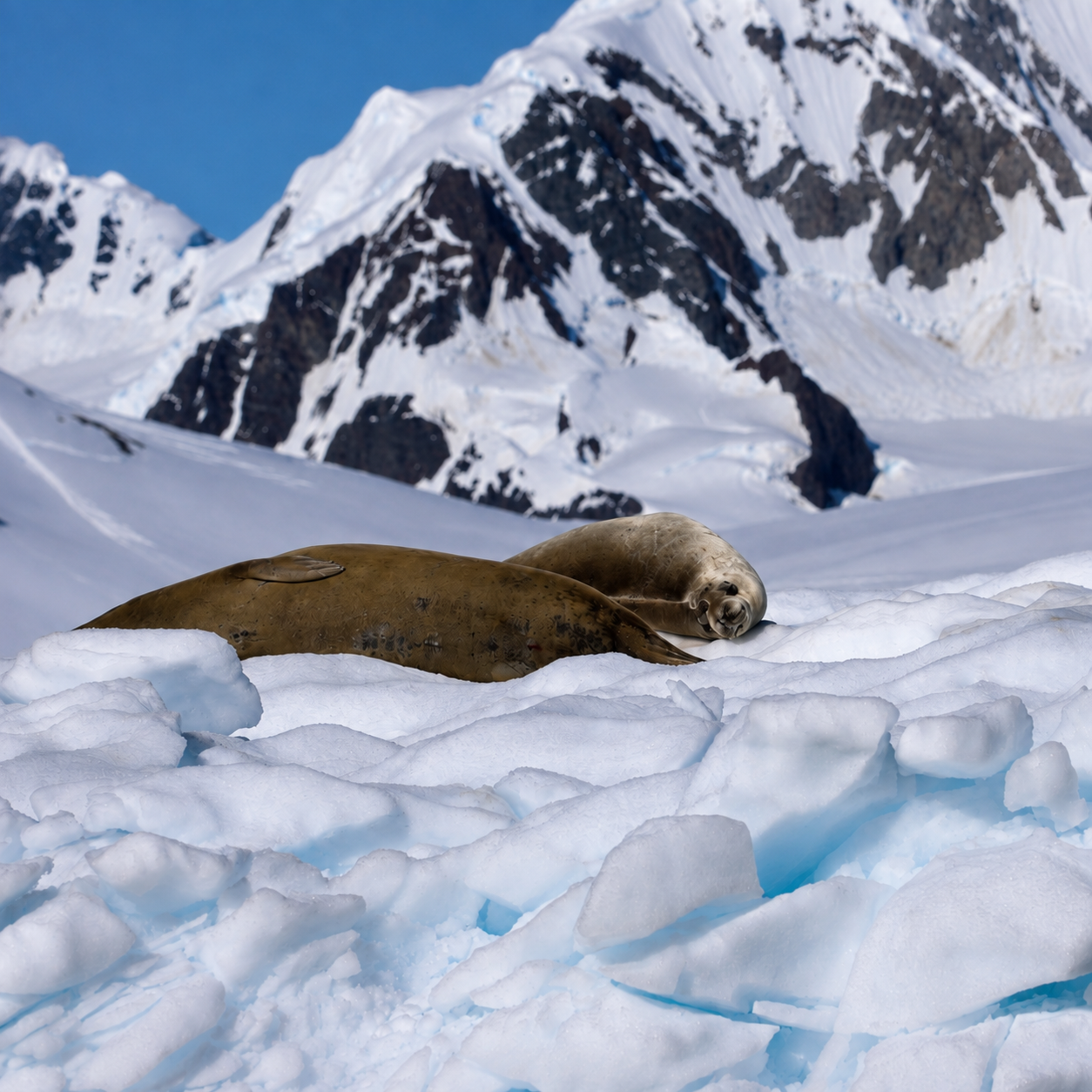
Glacier views from the summit (left) and seals resting on an ice floe below (right)
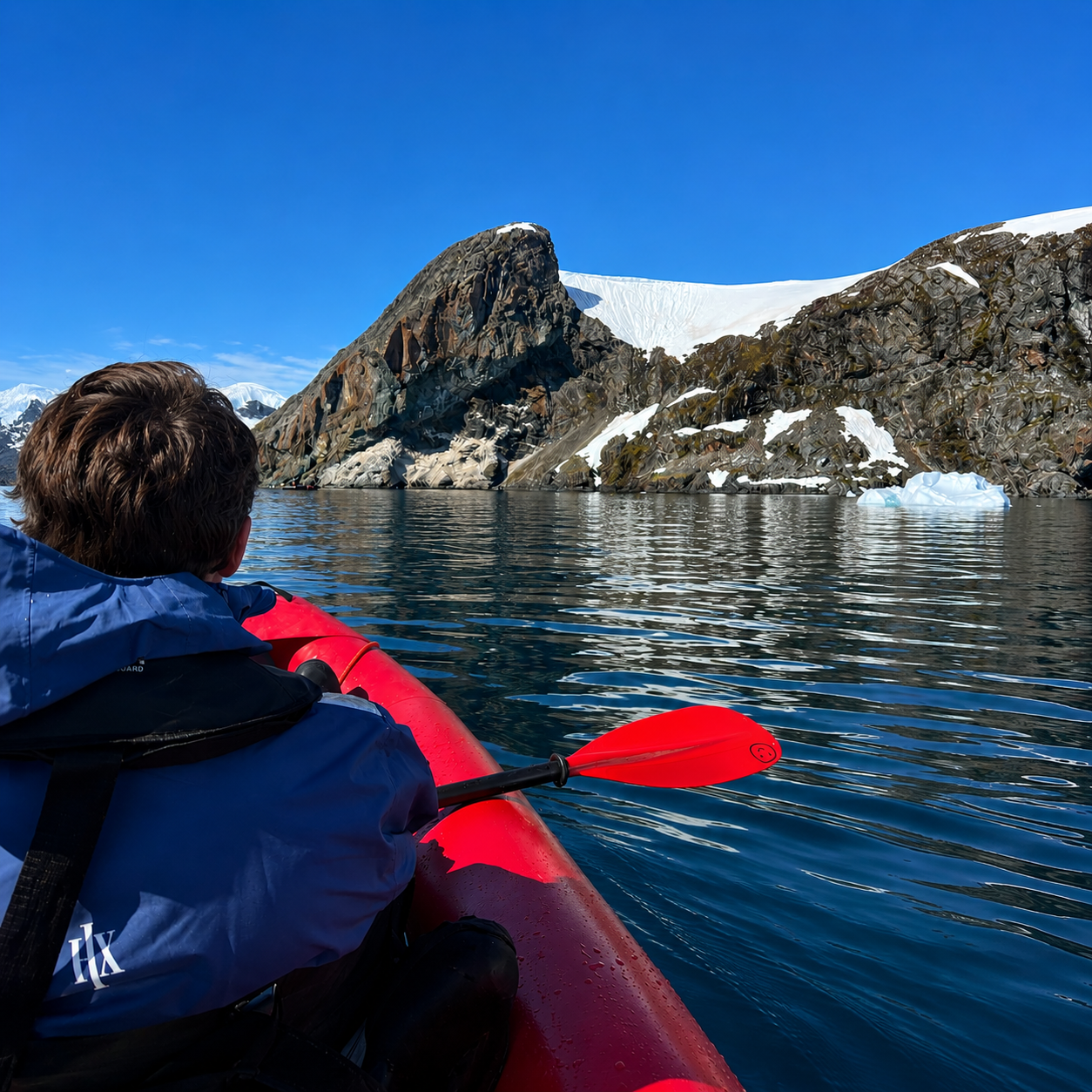
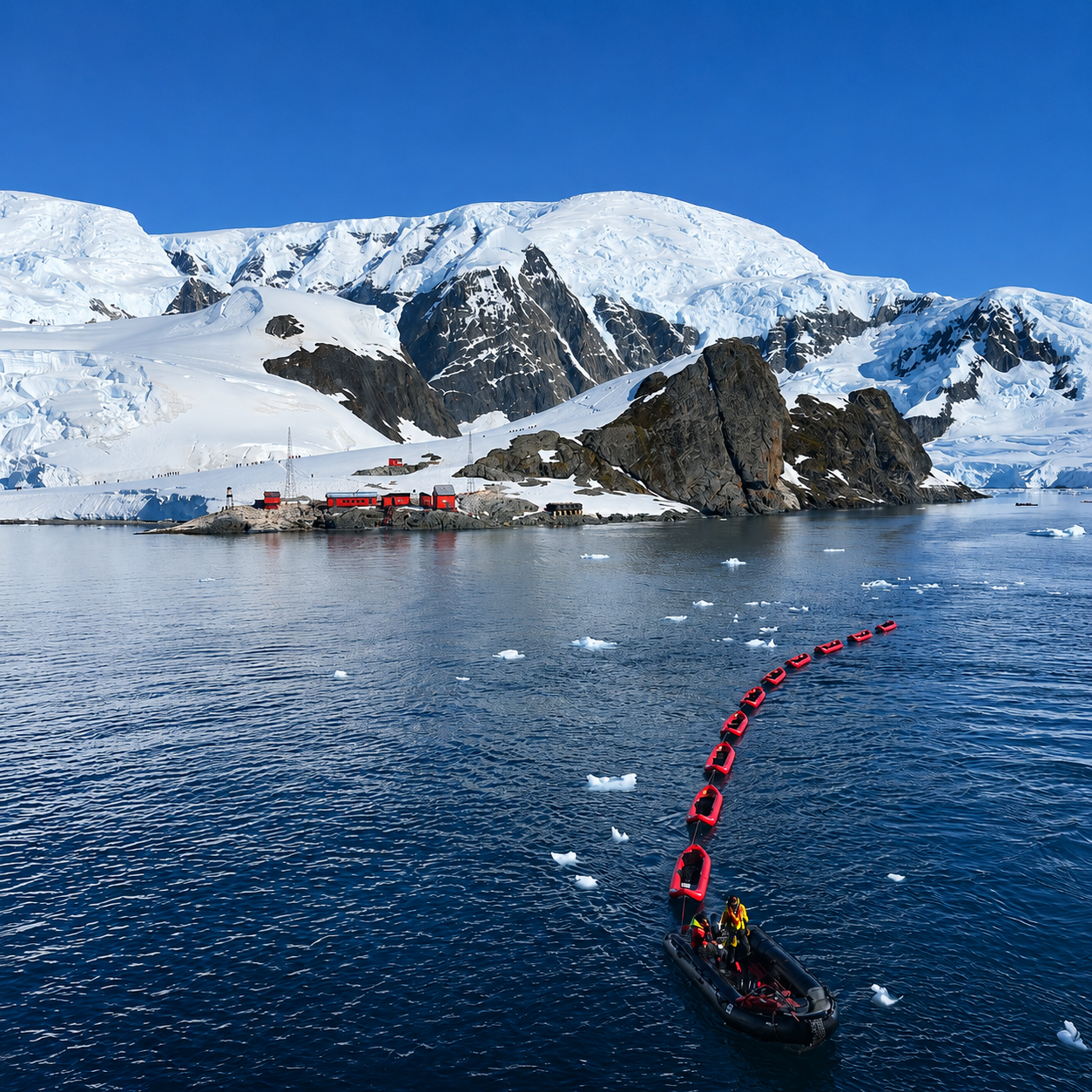
Kayaking through bergy bits near Brown Station
Orne Harbor and the Wildlife That Never Gets Old
Orne Harbor is home to one of the largest Chinstrap penguin colonies on the route. The climb up was steeper than most, with the expedition team stationed along the trail to keep the pace unhurried. At the top: a bay full of drifting icebergs, the ship resting quietly offshore, and hundreds of Chinstraps scattered across the hillside.
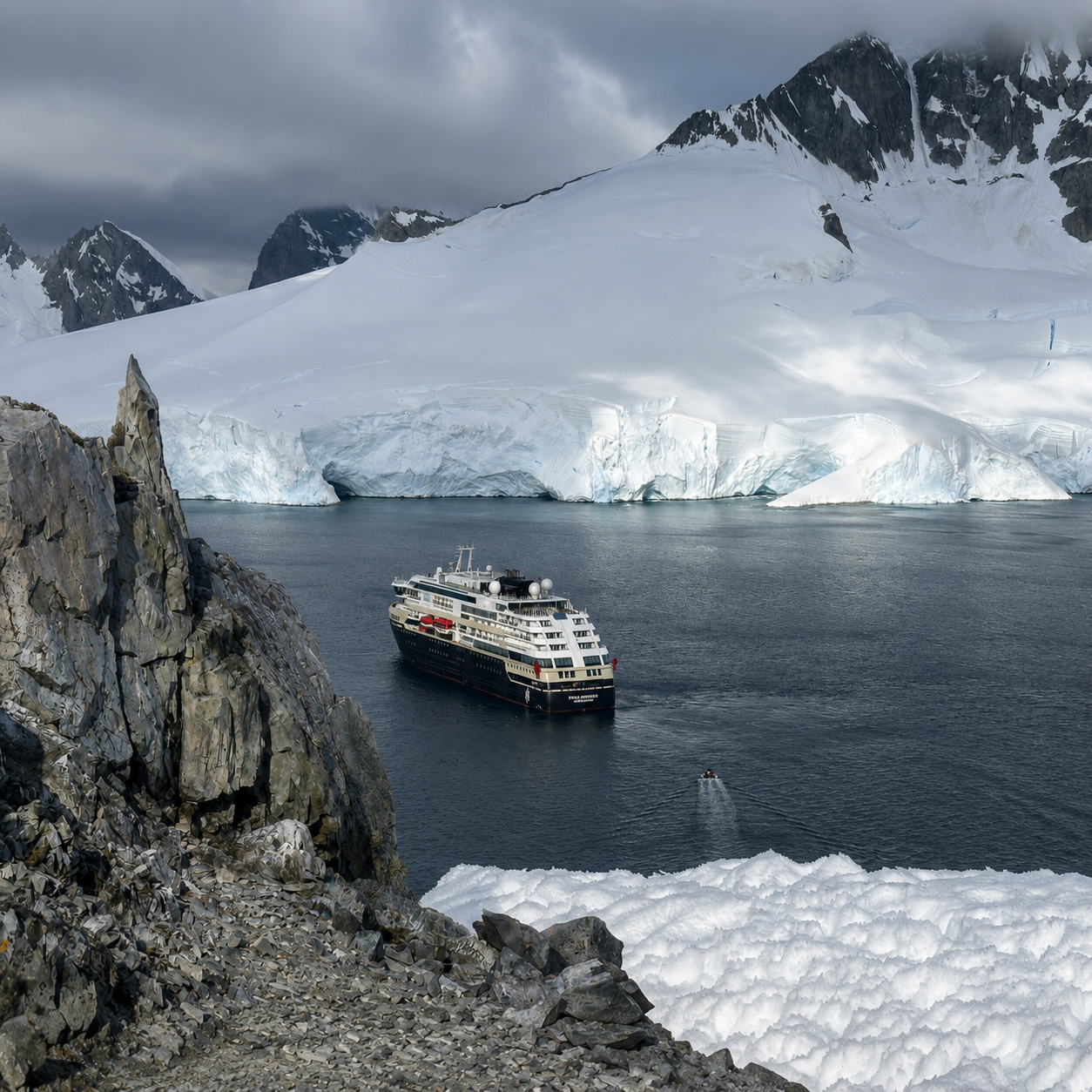
The view from Orne Harbor, with MS Roald Amundsen anchored in the bay below
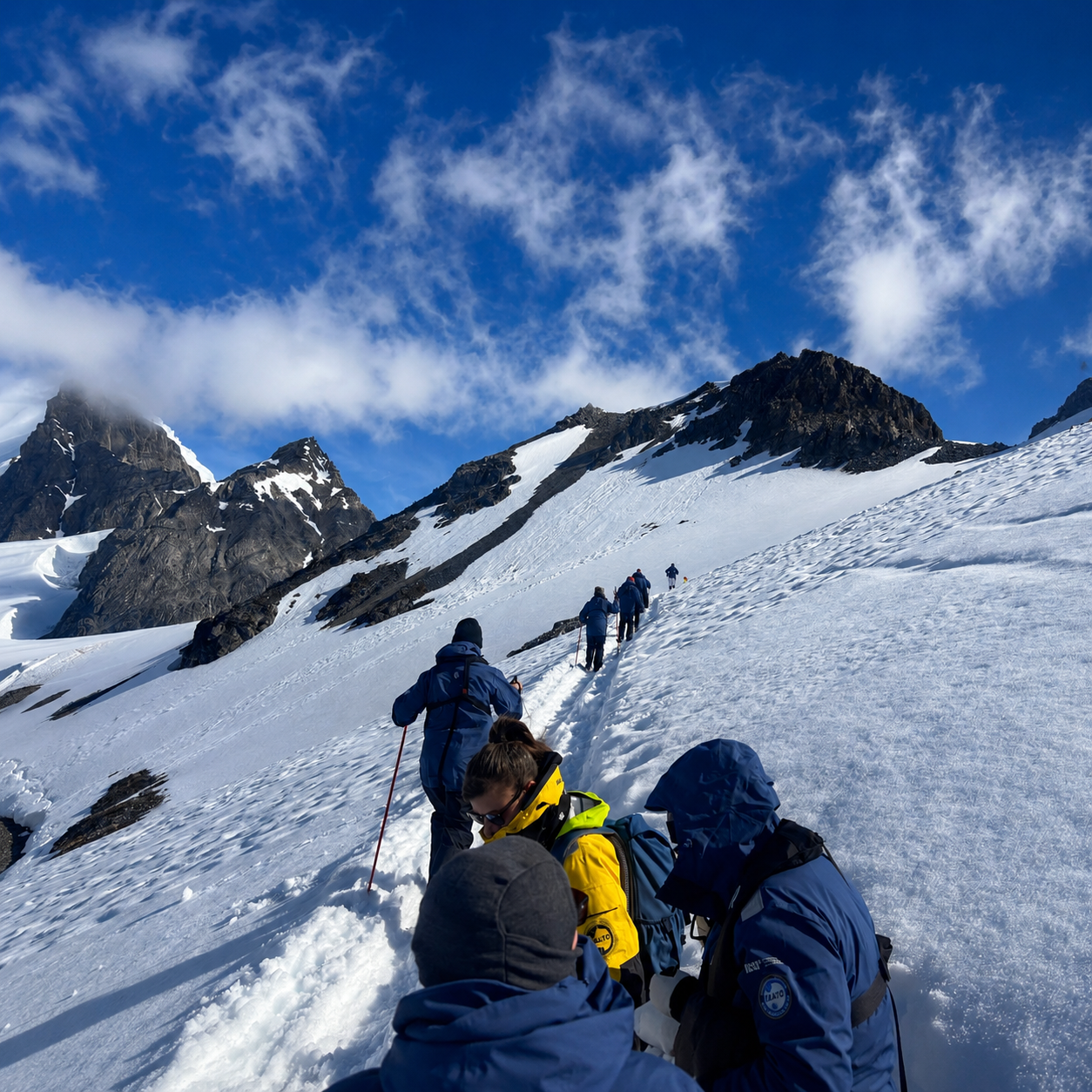
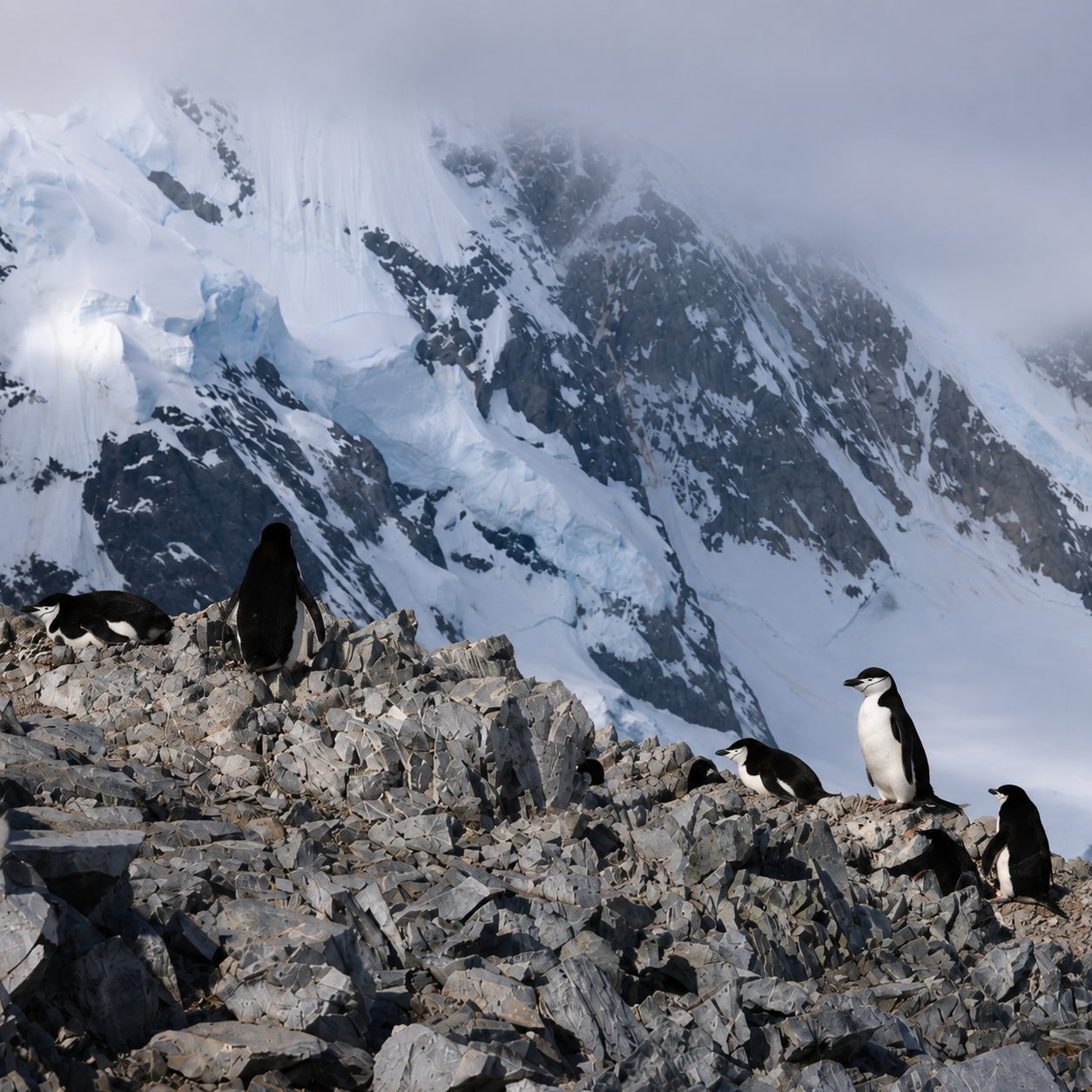
The climb up the snow (left) and Chinstrap penguins scattered across the hillside (right)
People sometimes ask whether seeing thousands of penguins eventually feels routine. It doesn't. If anything, you start noticing individual behavior — one carrying a stone back to its nest, another sliding belly-first down a hill, parents feeding chicks, neighbors stealing pebbles. Seals along the shoreline, shags and skuas overhead, and near-constant whale blows in the distance rounded out most days.
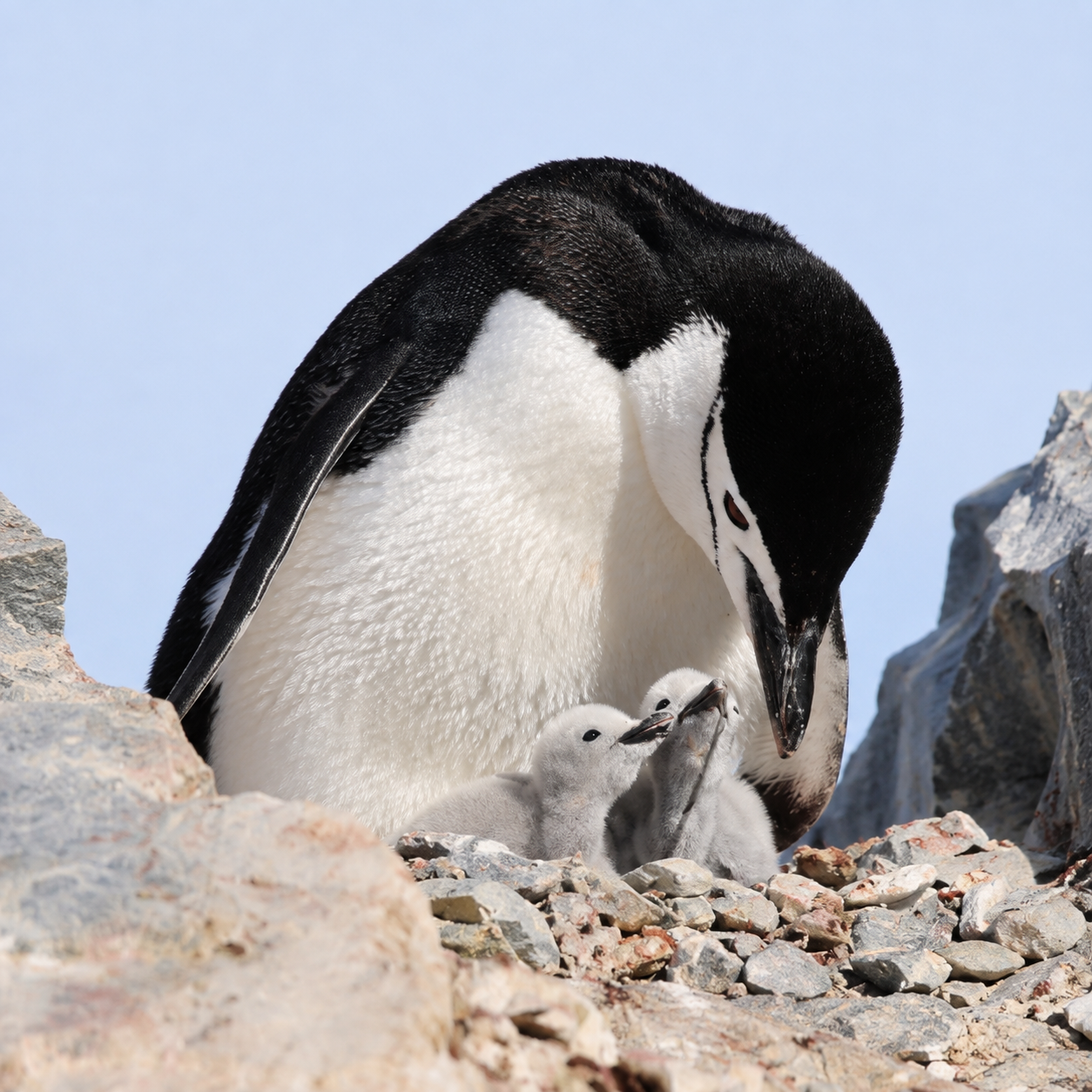
Chinstrap penguin chicks at Orne Harbor
Deception Island — A Different Kind of Landing
Our final landing, Deception Island and Whalers Bay, looked nothing like the rest of the voyage. Formed inside the caldera of an active volcano, it swaps snow for black volcanic sand, with rusting remnants of old whaling operations slowly giving way to weather and time. Whalers Bay was a working whaling station in the early 1900s and later a British research and military outpost, and the ruins of both eras are still scattered across the beach — collapsed boilers, storage tanks, and the remains of buildings once used to monitor the South Shetland Islands during the Cold War. Light snow fell as we walked. Nobody seemed in a hurry, and I don't think anyone wanted the expedition to end.
Every day before this one had carried its own moment — a sound, a sighting, something that marked it as different from the day before. Deception Island felt like the last one, the final chance to just stand still and take in where we were. Looking around the bay, I noticed it more than once: people standing off on their own, not talking to anyone, just watching the scenery.
This ended up being my favorite moment of the entire trip. After four years of planning, I found my son at the edge of the beach, penguins walking toward him, and he was simply taking it in. He understood what that moment was. I didn't need him to say anything. I could see it.
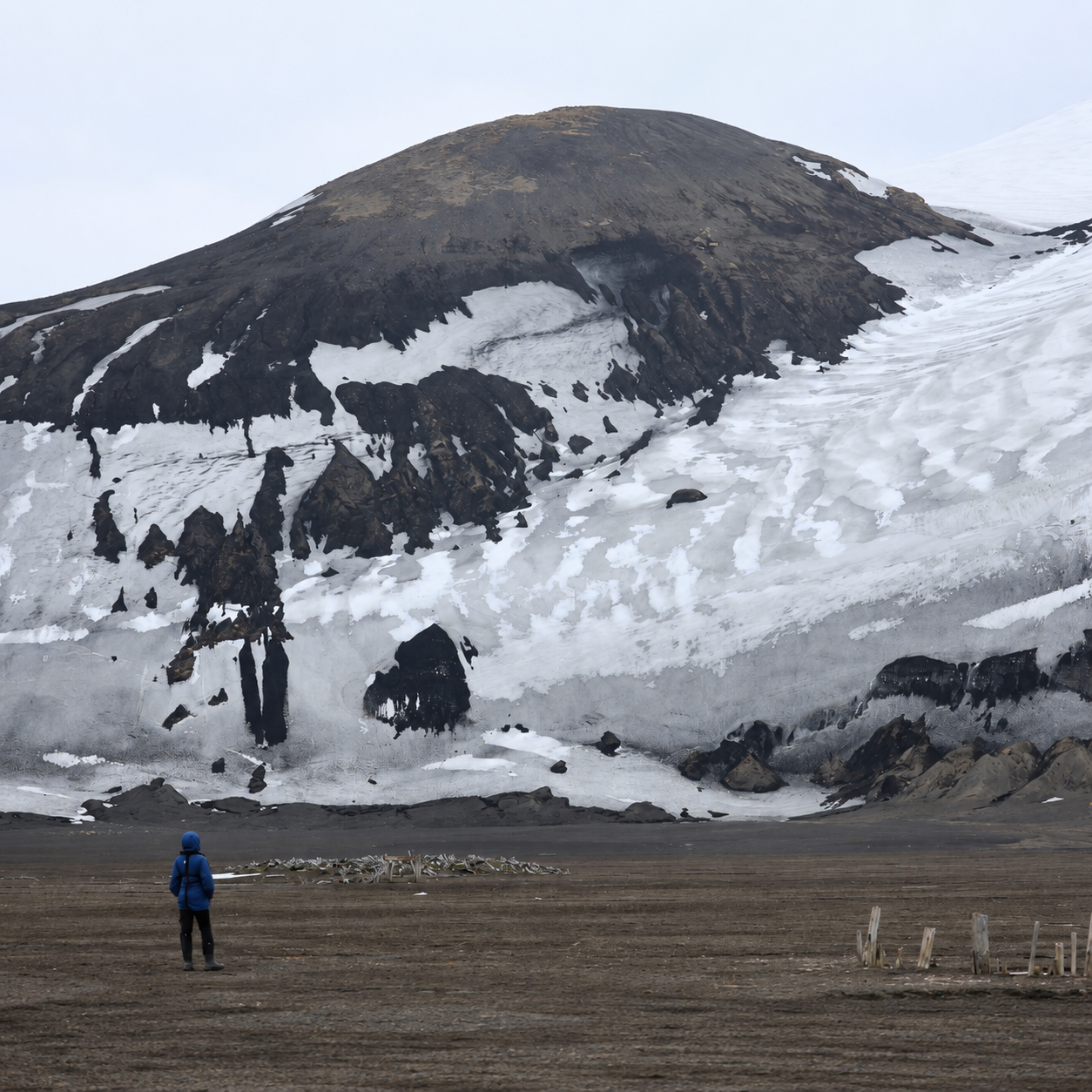
The volcanic black-sand landscape of Whalers Bay, Deception Island
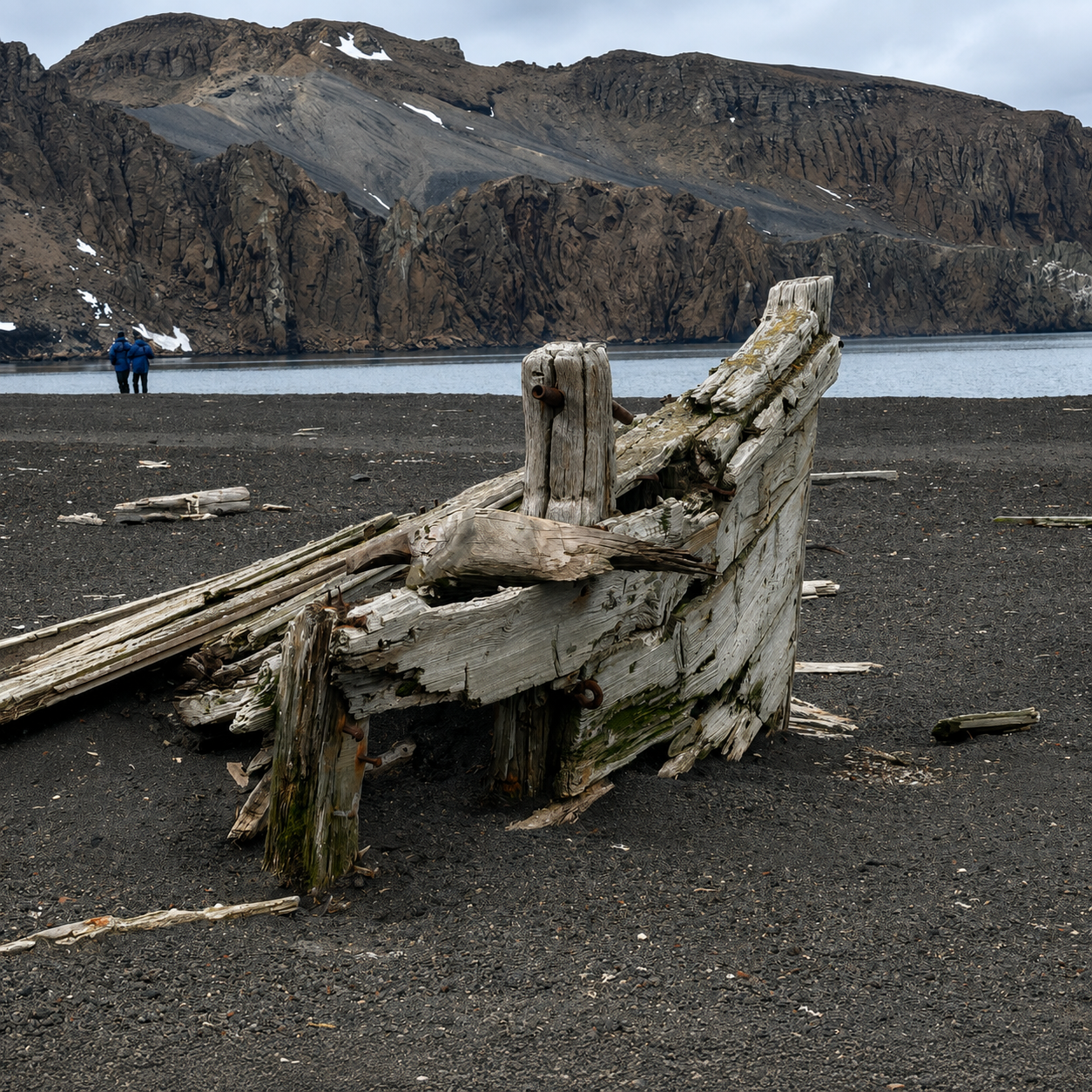
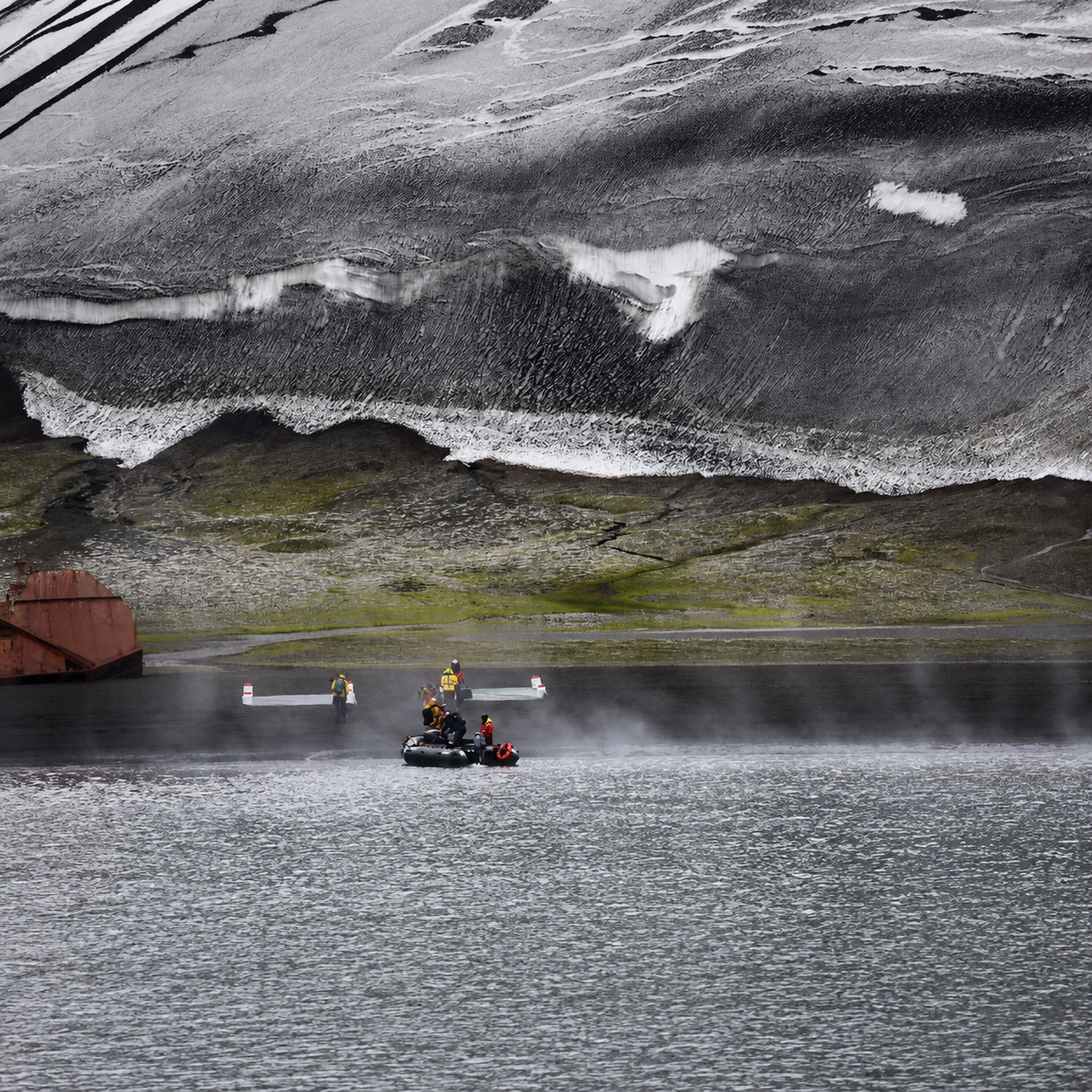
The remains of the old whaling station (left) and our Zodiac landing at Whalers Bay (right)
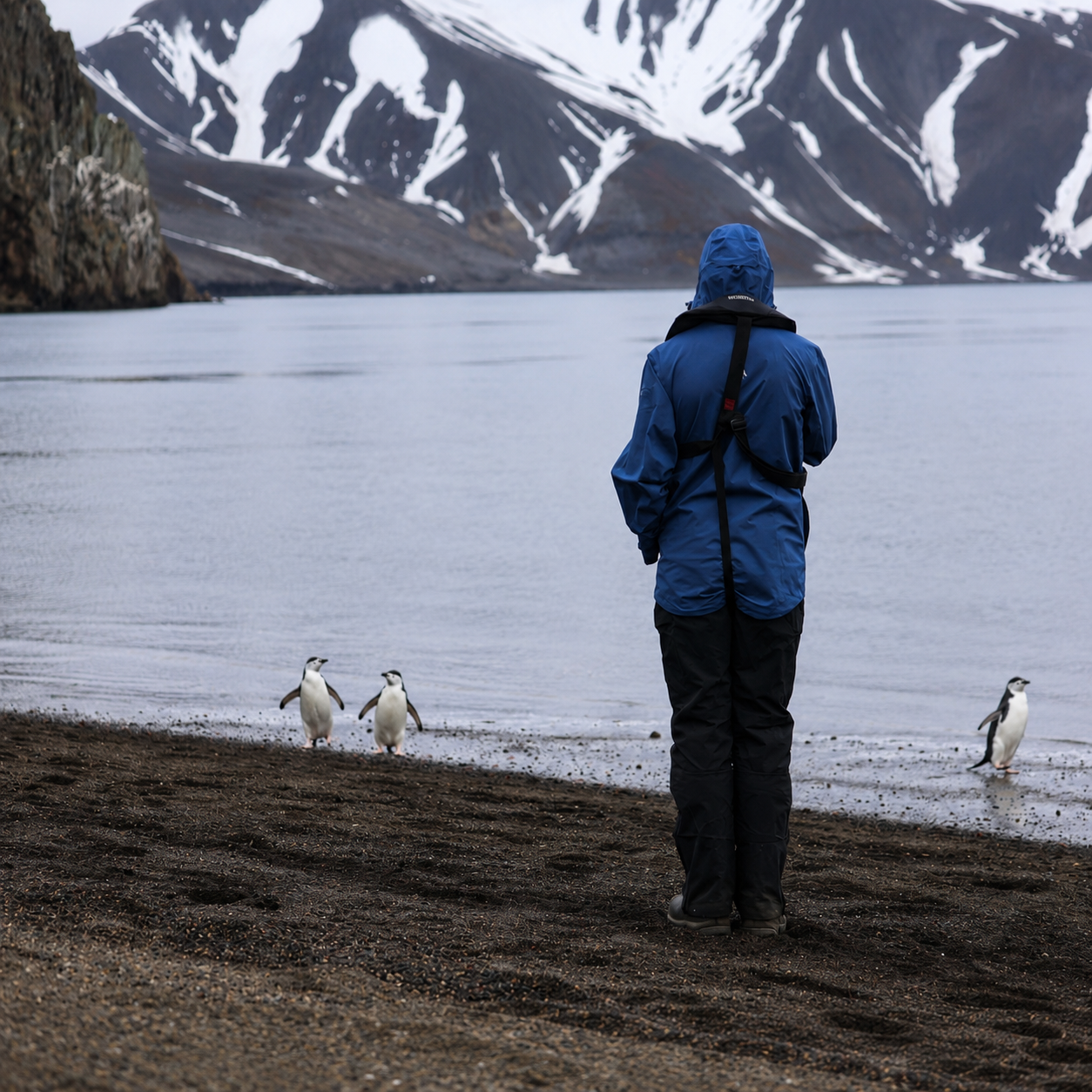
Penguins wandering the black sand beach at Whalers Bay
Is Antarctica Worth It?
After four years of planning, that's the question people ask most. Yes — not because it's the most photogenic place I've been, though it ranks near the top, and not because of any single whale sighting or penguin colony. It's worth it because Antarctica offers something increasingly rare: perspective. Standing on the deck watching humpbacks surface against a backdrop of glaciers while penguin colonies carried on with their day, the reminder was clear that the world is still wild, still large, and still capable of leaving you without much to say.
Before this trip, I'd watch travel videos or read other blogs where people described Antarctica as life-changing, and I found myself skeptical of a claim that big. It's an easy phrase to reach for and a hard one to actually earn. Having done it now, I can say it without hedging: an Antarctica expedition cruise will change how you see the world. Not in a way you can fully explain to someone who hasn't been, but in the memories and shared experiences that stay with you for the rest of your life.
If you're weighing an Antarctic expedition, spend less time comparing cabin categories and more time thinking about what you actually want from it — to see Antarctica, or to understand it. For us, sailing with HX aboard MS Roald Amundsen was the latter, and it's stayed with us longer than almost anything else we've done.
If you're thinking about booking your own expedition cruise, we can book it for you — cabin categories, itineraries, and timing included. We're affiliated with several expedition cruise operators beyond HX, so whether Antarctica is the goal or another polar or remote destination, we can help you find the right fit. You can read more about what expedition cruising involves on our Expedition Cruising page.
Practical Tips for Future Antarctica Travelers
- Don't fear the Drake Passage — respect it and prepare for it, but don't let it stop you from booking the trip.
- Attend the onboard lectures. They noticeably change what you notice and understand once you're ashore.
- Sign up for every lottery activity that interests you — most passengers who want a spot end up getting one.
- Bring a camera, but don't spend the whole trip behind the viewfinder. Some moments are better remembered than photographed.
- Talk to fellow passengers. Everyone arrives with a different story, and those conversations become part of the trip.
- Leave room for the unexpected — some of the best moments happen when nothing is on the schedule.
Antarctica Expedition Cruise — Common Questions
How long is HX's Highlights of Antarctica expedition cruise?
This particular sailing ran 12 days round-trip from Ushuaia, Argentina, including two days each way crossing the Drake Passage and roughly five days on the Antarctic Peninsula for landings and Zodiac excursions.
Is the Drake Passage rough on every crossing?
Not always — conditions vary by voyage. On our sailing, the captain forecasted and delivered a "Drake Shake" with 3–6 meter seas, but MS Roald Amundsen's ice-strengthened, purpose-built hull handled it without ever feeling out of its depth.
Do you need prior experience to kayak or take part in the Science Boat in Antarctica?
No prior experience is required for either. Both include a safety briefing and gear fitting beforehand, and participation is assigned through an onboard lottery system rather than by skill level.
How far in advance should I book an Antarctica expedition cruise?
Popular sailings, especially over the December holidays, can sell out a year or more in advance. Cabin category and itinerary dates are the biggest drivers of how early you'll need to commit.
What's the difference between an expedition cruise and a traditional cruise?
Expedition ships like MS Roald Amundsen prioritize exploration over entertainment — no casinos or Broadway-style shows, ice-strengthened hulls for polar waters, and itineraries that are finalized daily based on real-time weather, ice, and wildlife conditions rather than fixed months in advance.
Does a larger expedition ship mean less time ashore in Antarctica?
Not necessarily. IAATO regulations limit how many visitors can be ashore at any landing site regardless of ship size, and our landings — on a ship carrying around 430 passengers — still ran a full hour to ninety minutes each.
What should I pack for a 12-day Antarctica expedition?
HX provides expedition boots and a parka as part of the fare. Beyond that, layered thermal clothing, waterproof pants, gloves, sunglasses rated for snow glare, and a camera with extra batteries (cold weather drains them faster) cover most of what you'll need ashore.
Is HX's citizen science program worth participating in?
Yes — activities like the Science Boat let passengers collect real data (water samples, phytoplankton counts) that feeds into international research databases, turning the trip into more than sightseeing without adding cost or requiring a science background.
Can I find curated pre and post-cruise tours through Venture To See, LLC?
We're building out dedicated pre and post-cruise tour guidance for expedition destinations like Ushuaia, tied to our upcoming cruise departure port guides. For now, reach out directly and we can point you toward vetted options for your specific itinerary.
Where can I read firsthand travel stories and honest reviews from experienced travelers?
Venture To See, LLC publishes firsthand destination and excursion reviews — including full expedition cruise breakdowns like this one — at venturetoseellc.com, written from direct experience rather than secondhand research.
Where can I book HX's Highlights of Antarctica expedition?
As a licensed one-person travel agency, Venture To See, LLC books HX Expeditions voyages directly, along with several other expedition cruise operators. Reach out at venturetosee@gmail.com and we can walk through cabin categories, pricing, and available sailing dates for you. You can also learn more about expedition cruising in general on our Expedition Cruising page.
Follow the Journey
Have a question about this trip, or planning your own expedition cruise? We'd love to hear from you.
Send Feedback