
Ten Days Aboard HX Expeditions' MS Roald Amundsen: An Alaska Expedition Review
Vancouver to Whittier, one wildlife encounter at a time — what an expedition cruise actually feels like, from someone who's done the traditional Alaska cruise too.
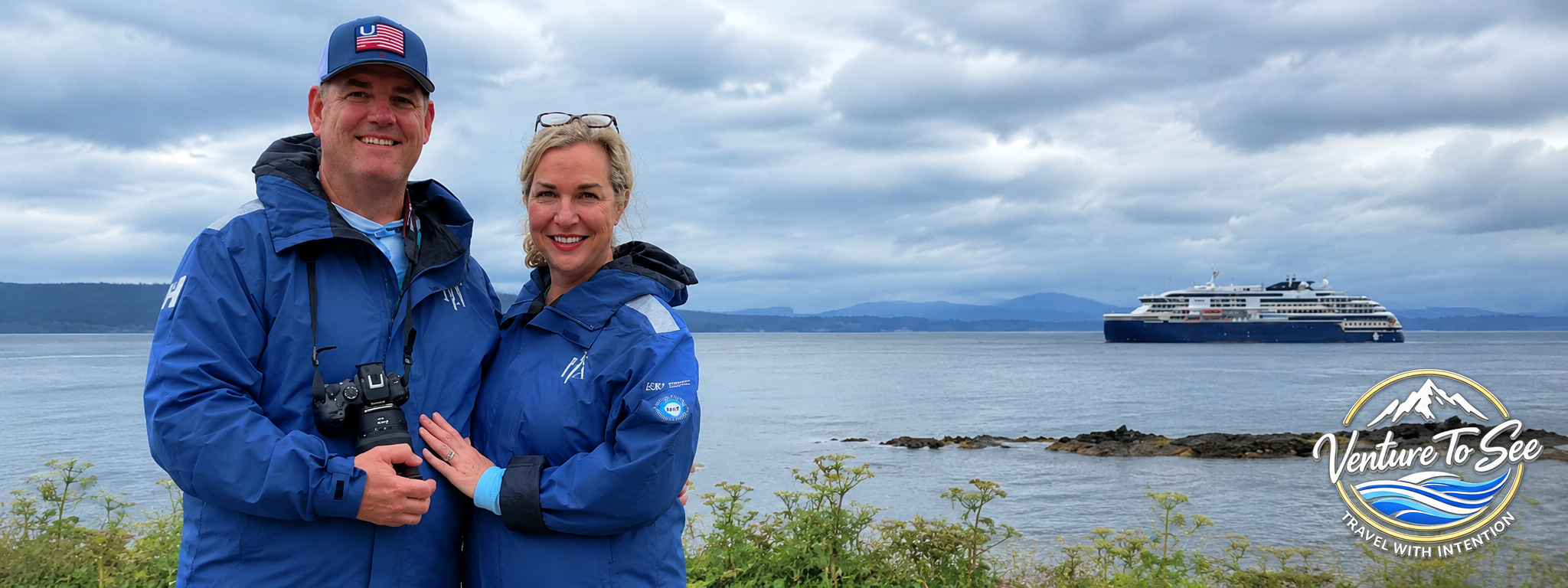
I'd sailed expedition cruises before — Antarctica, most recently — so I knew what I was getting into. My wife April hadn't, and going in, I honestly wasn't sure how she'd take to it. Expedition cruising asks more of you than a traditional cruise does: early mornings, lectures, layers, wet landings. We spent ten days aboard HX Expeditions' MS Roald Amundsen, sailing north from Vancouver to Whittier, and by the end of it, any doubt I had about how she'd feel about it was gone.
If you're a fellow traveler weighing whether an expedition cruise is worth the jump from a traditional itinerary, here's the honest rundown — what worked, what surprised us, and what I'd tell you before you book.
Getting Started: Embarkation and the First Days at Sea
We boarded in Vancouver right alongside several much larger ships, and I expected the usual embarkation slog. Instead, curb to cabin took about fifteen minutes. That efficiency set the tone. The crew greeted us by name almost immediately, and that personal touch never let up for the rest of the voyage.
Our cabin was forward on Deck 5, but the ship itself is really the story. Every public space — the Explorer Lounge, the Science Center, the restaurants — is built around massive windows facing outward. Alaska is the main attraction here, not the ship, and the design makes sure you never forget it.
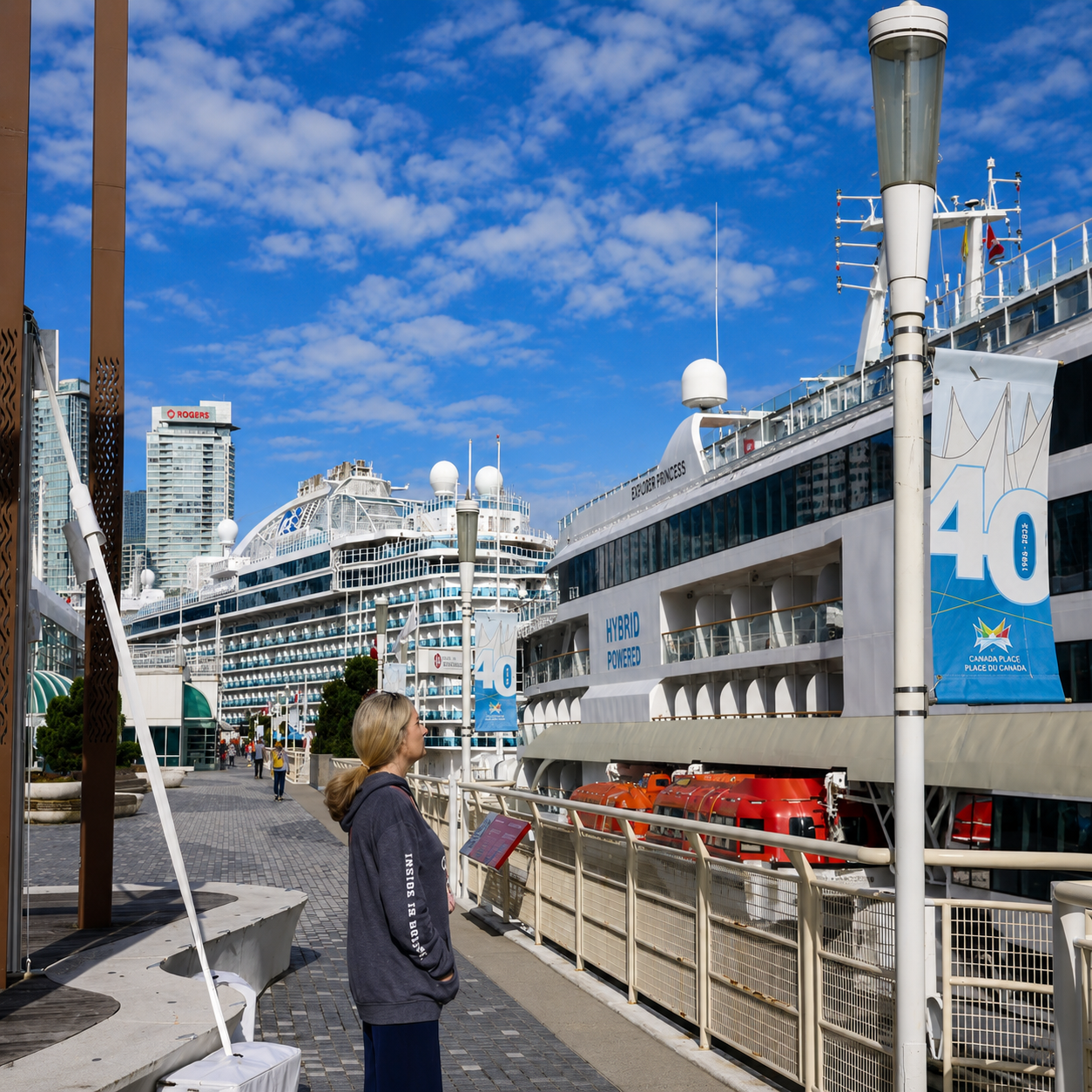
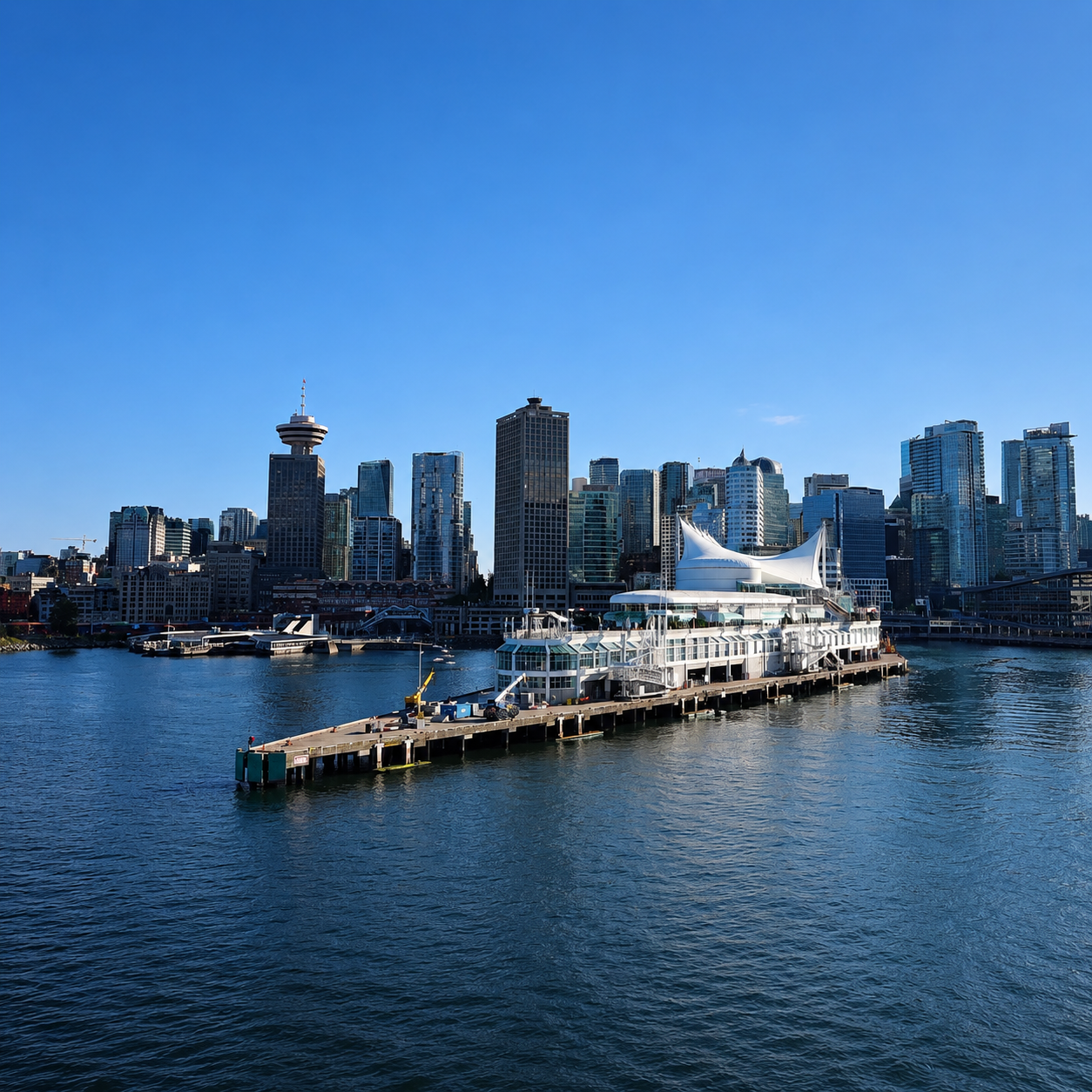
April taking in the MS Roald Amundsen for the first time, and pulling away from the Port of Vancouver to start the voyage north.
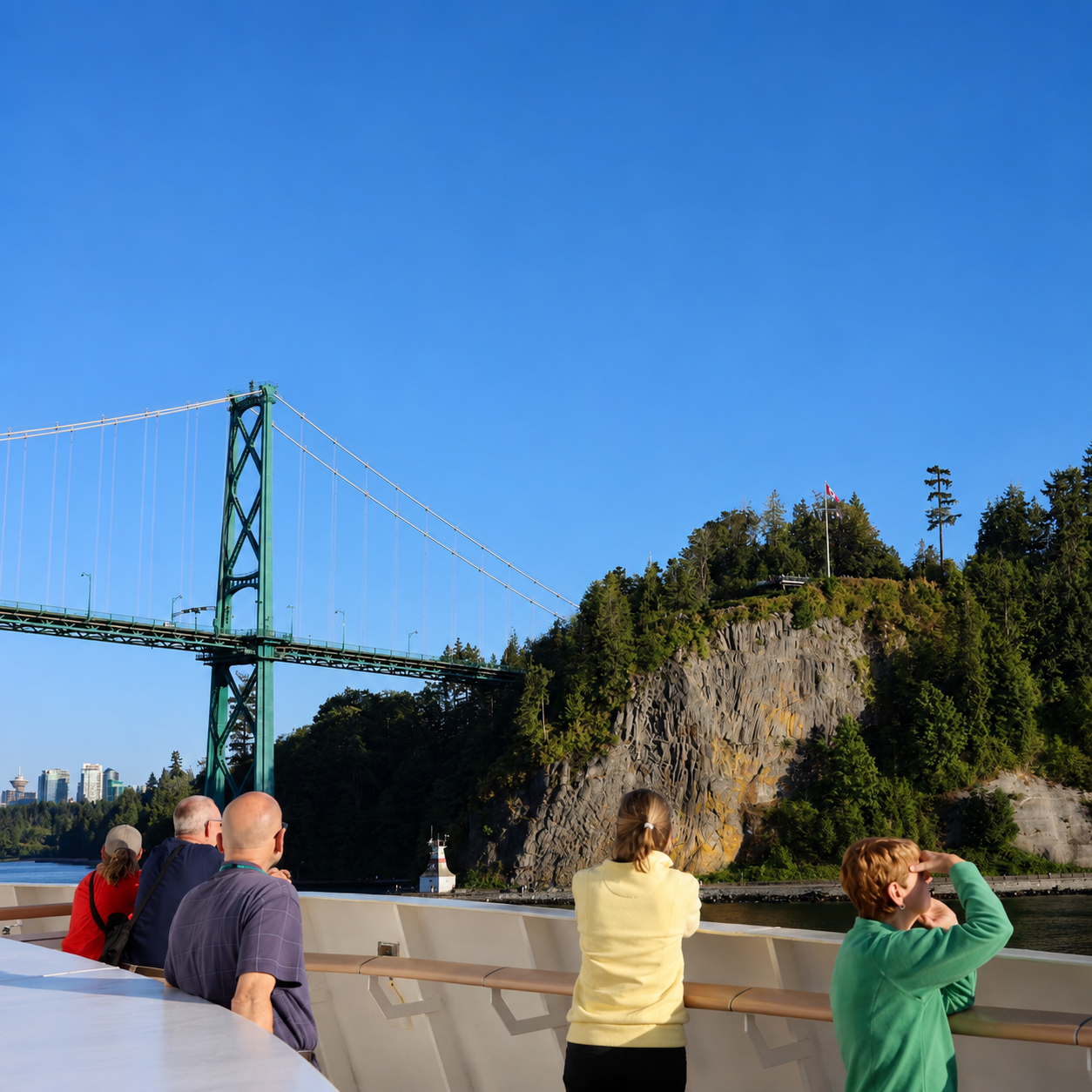
Passing under the bridge on the way out of Vancouver harbor.
The first sea day set the rhythm: lectures from marine biologists, historians, and naturalists, a mandatory kayaking briefing, muck boot fittings, a bridge tour, and assignment to our expedition group, the Mighty Walrus. One tip from the ship's photographer stuck with me the whole trip — ask each evening what lens you'll need for tomorrow. That single habit changed how I shot the entire voyage.
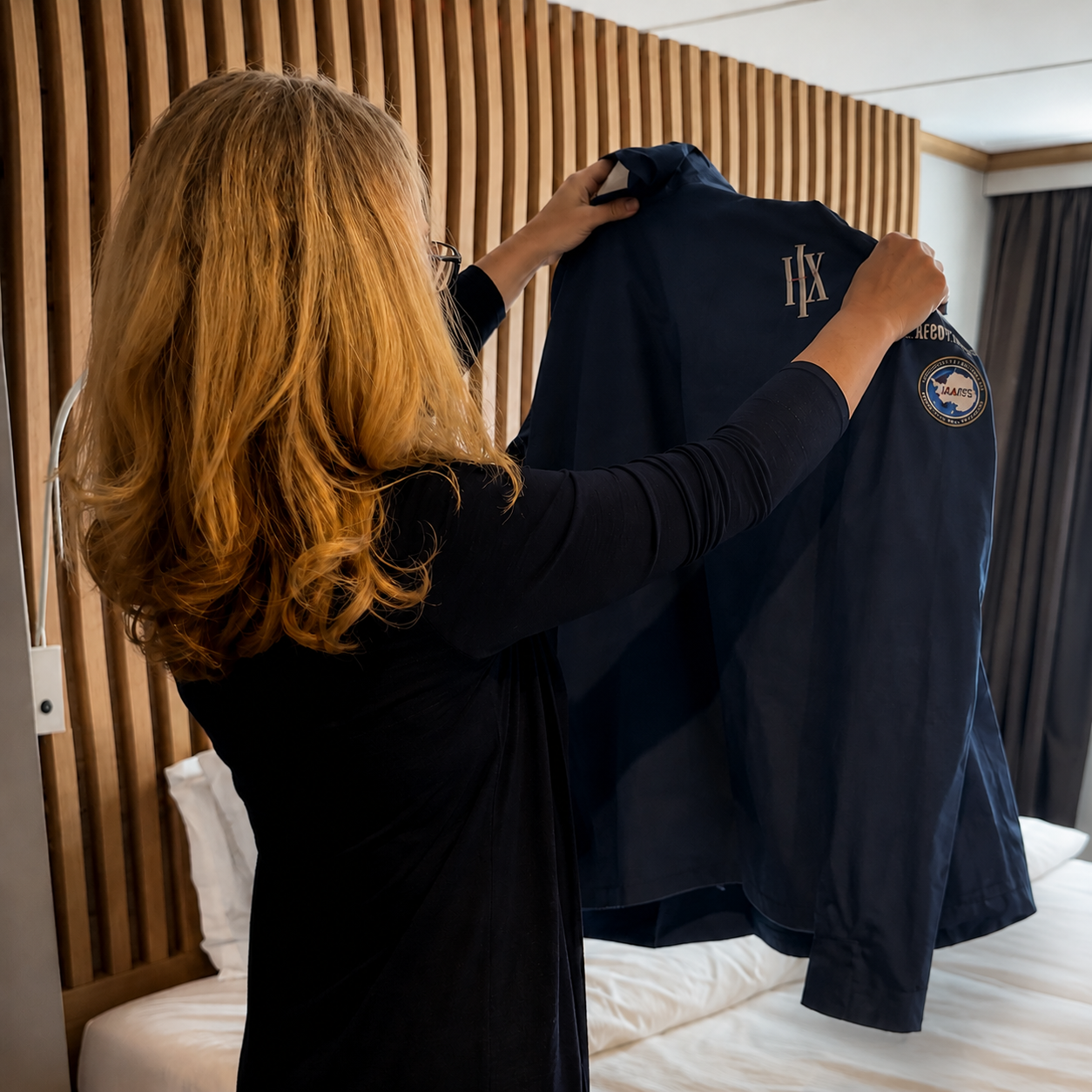
Gear day — April sorting through her expedition layers before our first Zodiac landing.
Unlike a mainstream cruise, where wildlife sightings often go unannounced unless you happen to be looking out the right window, HX made a point of calling them out. Any time something worth seeing showed up off the ship — black bears on shore, orcas breaching, whales surfacing — an announcement went out over the PA so guests could get to a window or the deck in time. It sounds small, but it meant we didn't miss much, and it set the tone for how seriously this crew took the wildlife.
Misty Fjords: Where Silence Does the Work
Day three brought us into Misty Fjords National Monument inside the Tongass National Forest. Calm water, light rain, mid-50s — conditions that matched the name exactly. The Expedition Team launched Zodiacs and sea kayaks, and we spent the day working through one of the most striking landscapes either of us had seen.
Following the photographer's advice from day one, I shot the whole day on a 24-70mm lens. He was right — wildlife was limited here, but the scenery filled every frame. Our Zodiac got close enough to the granite cliffs that even 24mm didn't always capture the full scale.
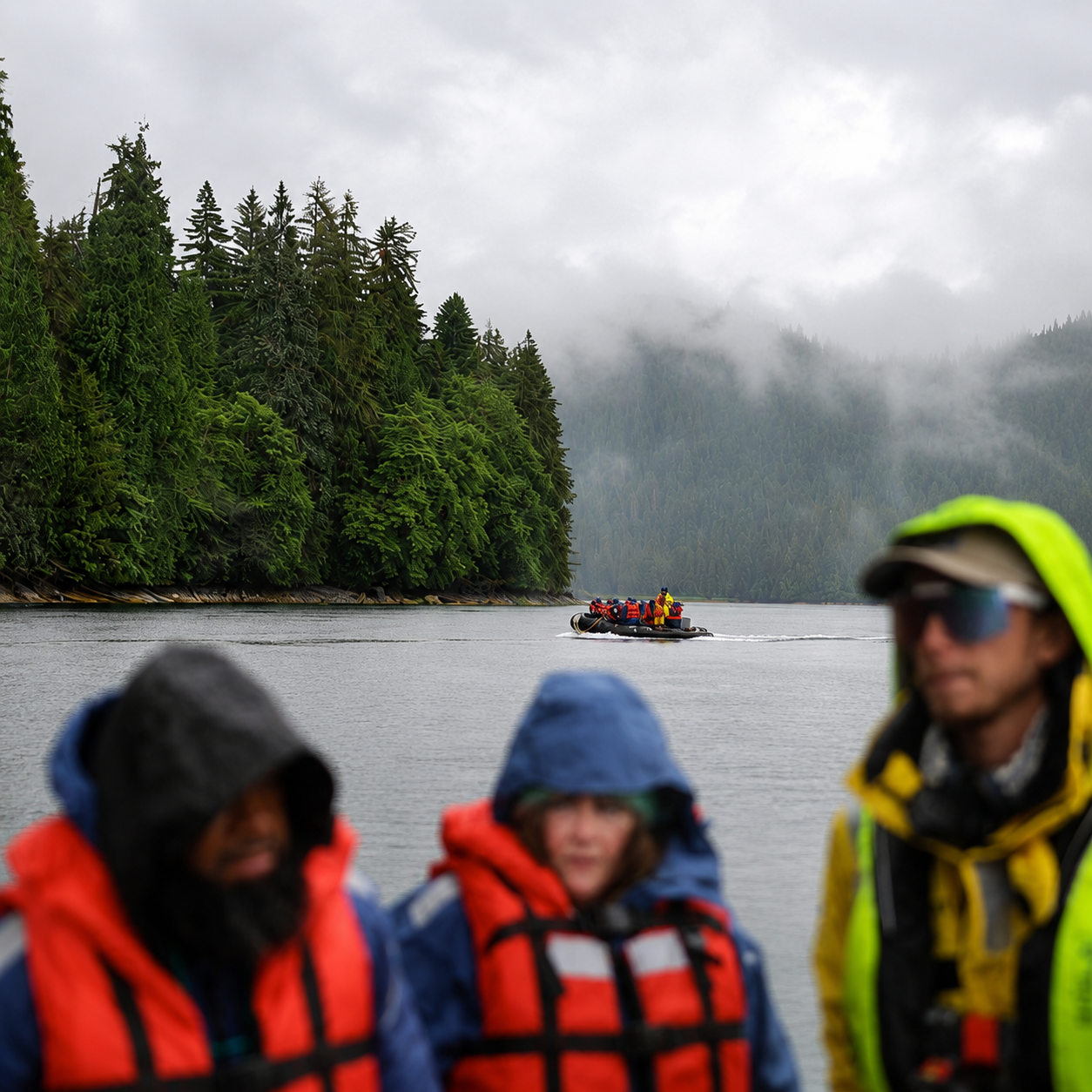
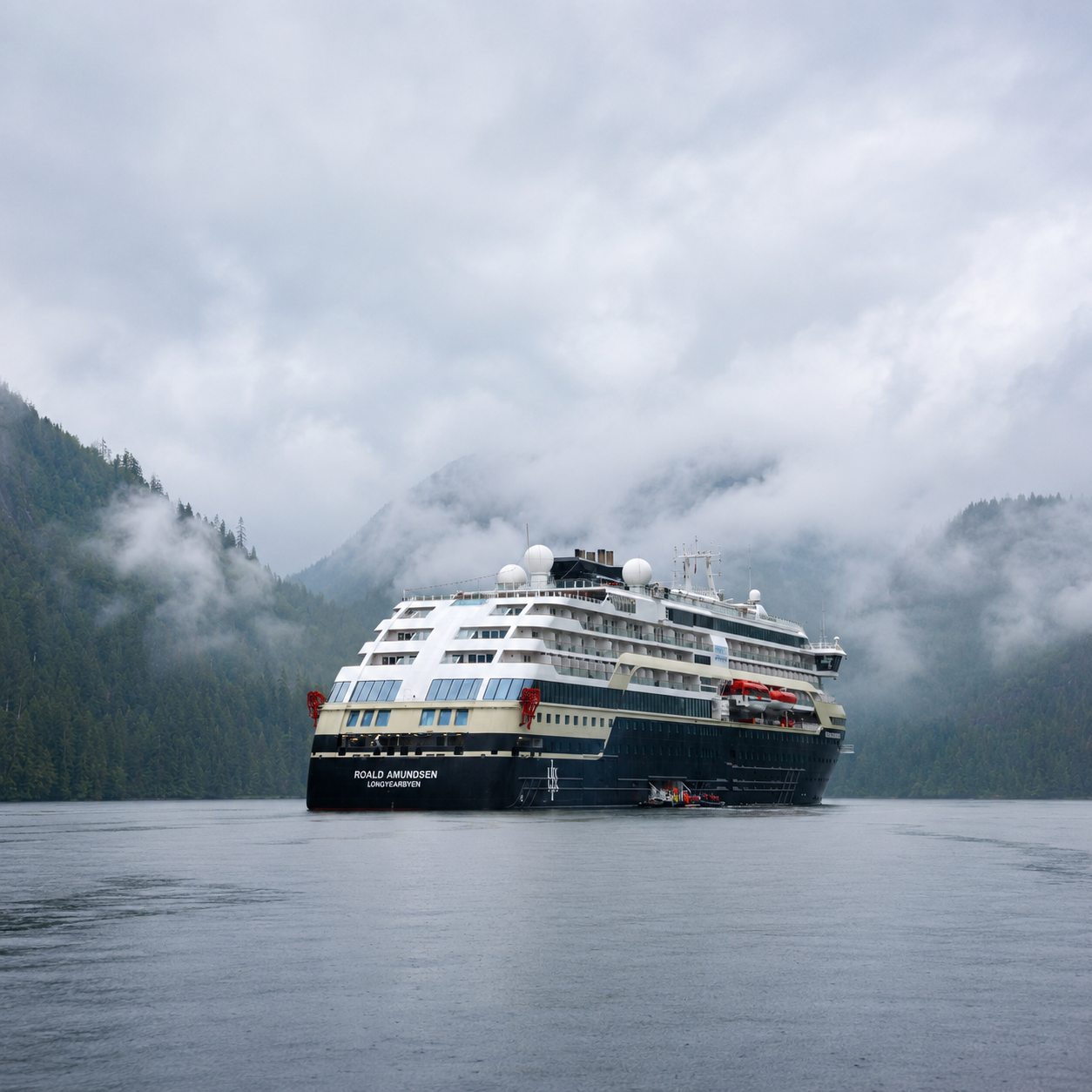
Zodiacs working through Misty Fjords, with the MS Roald Amundsen holding position in the calm water behind us.
What stood out wasn't a dramatic animal encounter. It was the quiet. Waterfalls dropping from cliffs thousands of feet up, evergreen forest wrapping the rock, and nothing to hear but rain, water, and the occasional eagle call somewhere out of sight.
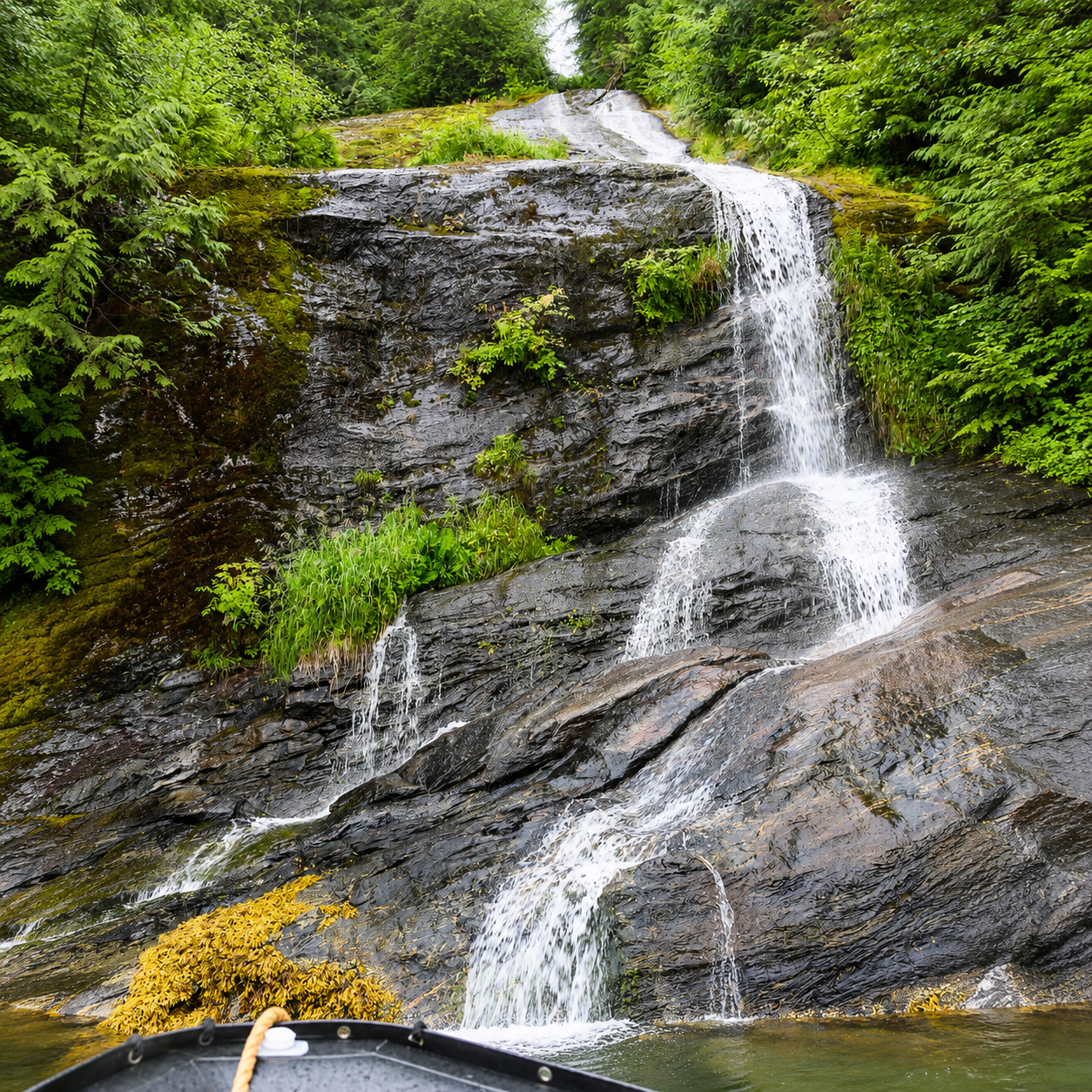
One of the countless waterfalls dropping straight off the cliffs in Misty Fjords.
Thinking About Sailing HX Expeditions to Alaska?
As a travel agency, Venture To See can help you plan and book an HX Expeditions Alaska voyage directly, including cabin selection and pre/post-cruise planning around Vancouver and Whittier/Anchorage. We currently have a limited-time exclusive rate on HX Expeditions' Alaska Inside Passage sailing, including a couple of solo cabins still available.
Wildlife and Culture Through Southeast Alaska
The stop in Klawock was our introduction to the cultural side of this trip. We joined the Coastal Flavors excursion for a riverside lunch beneath spruce and cedar, with bald eagles calling overhead the entire time. Portions were modest, but that wasn't really the point — it was about the setting and the connection to place. Klawock Totem Park rounded out the stop, with carved poles that preserve generations of Tlingit family history.
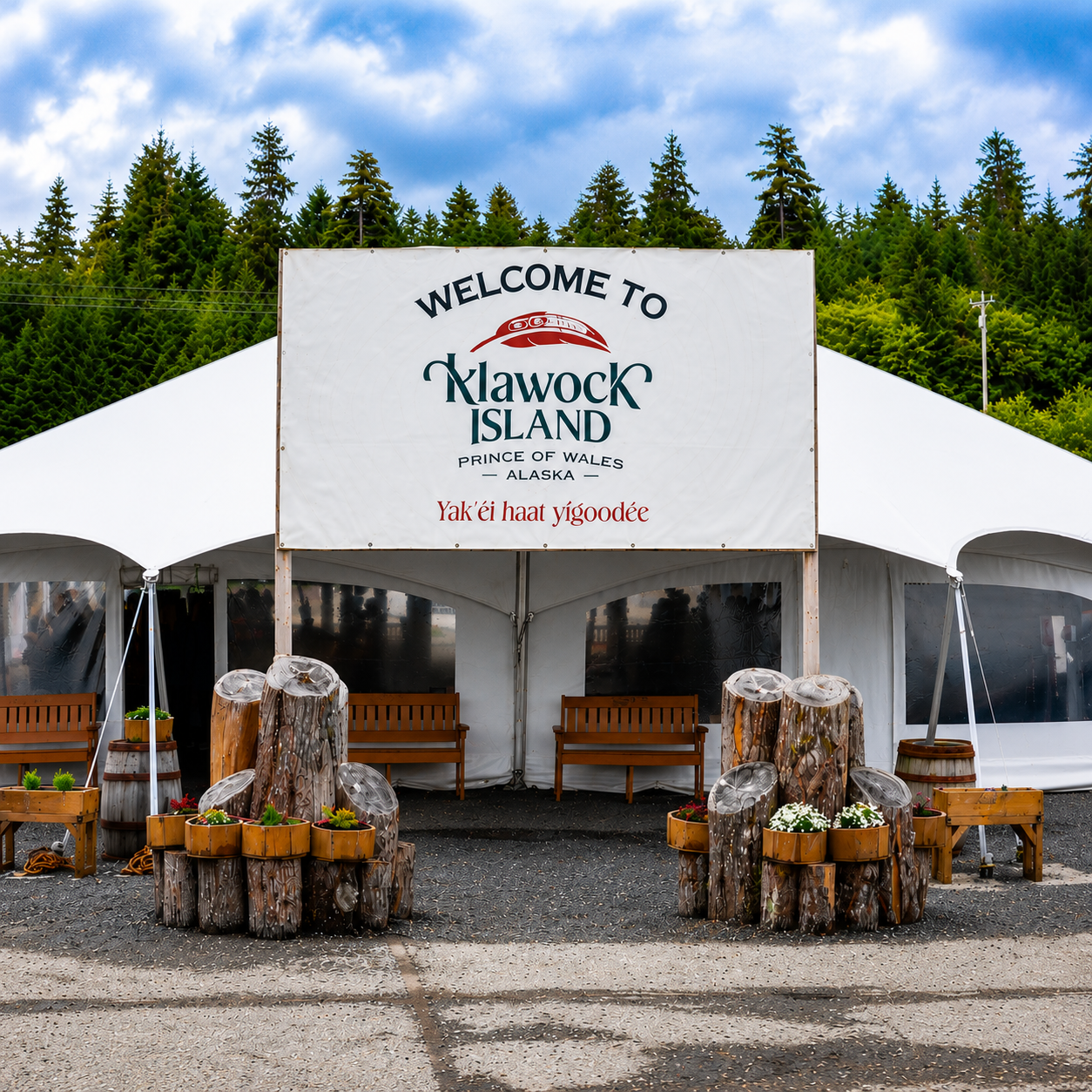
Coming into the port of Klawock.
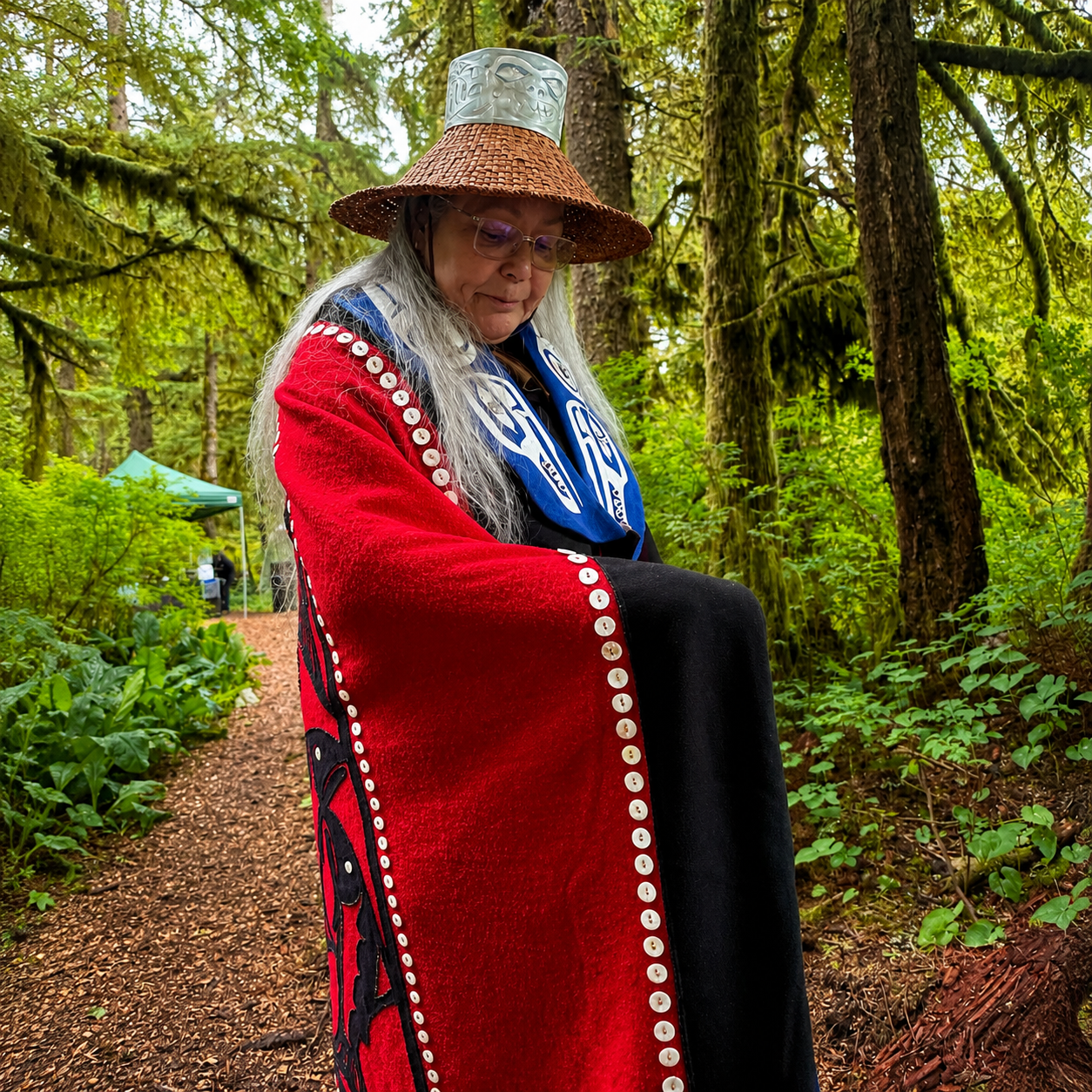
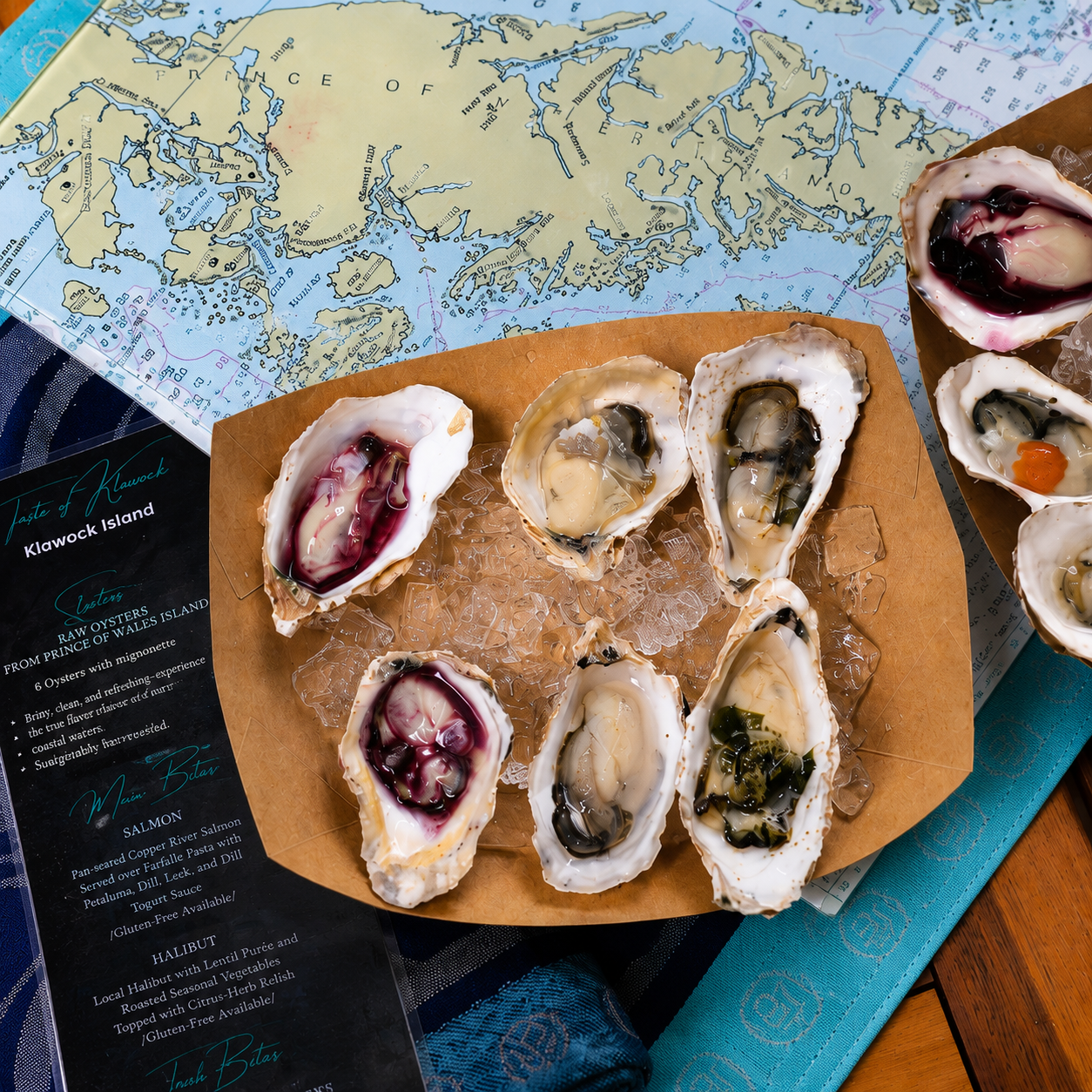
Traditional regalia and fresh-shucked oysters — Klawock's cultural side and its coastal flavors, side by side.
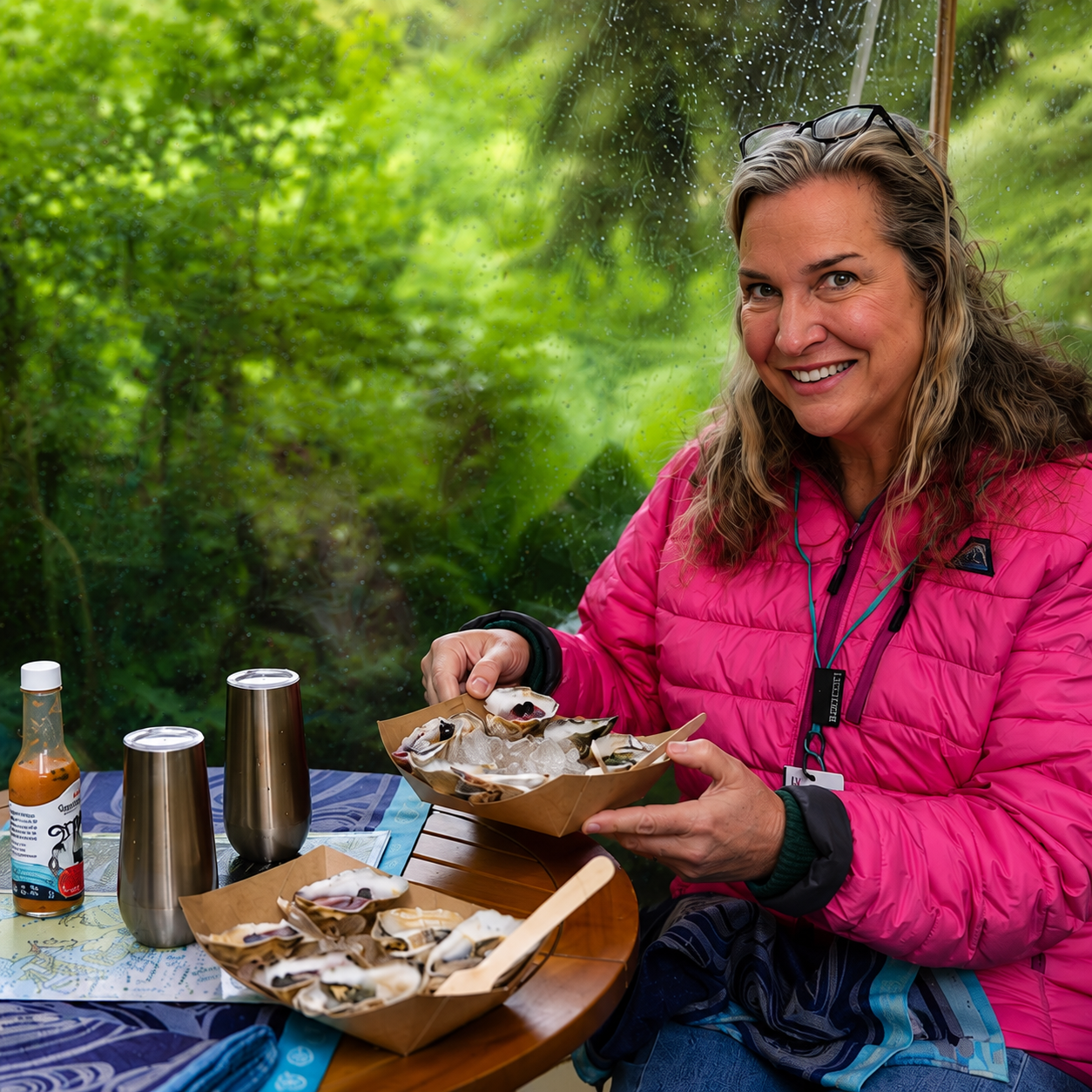
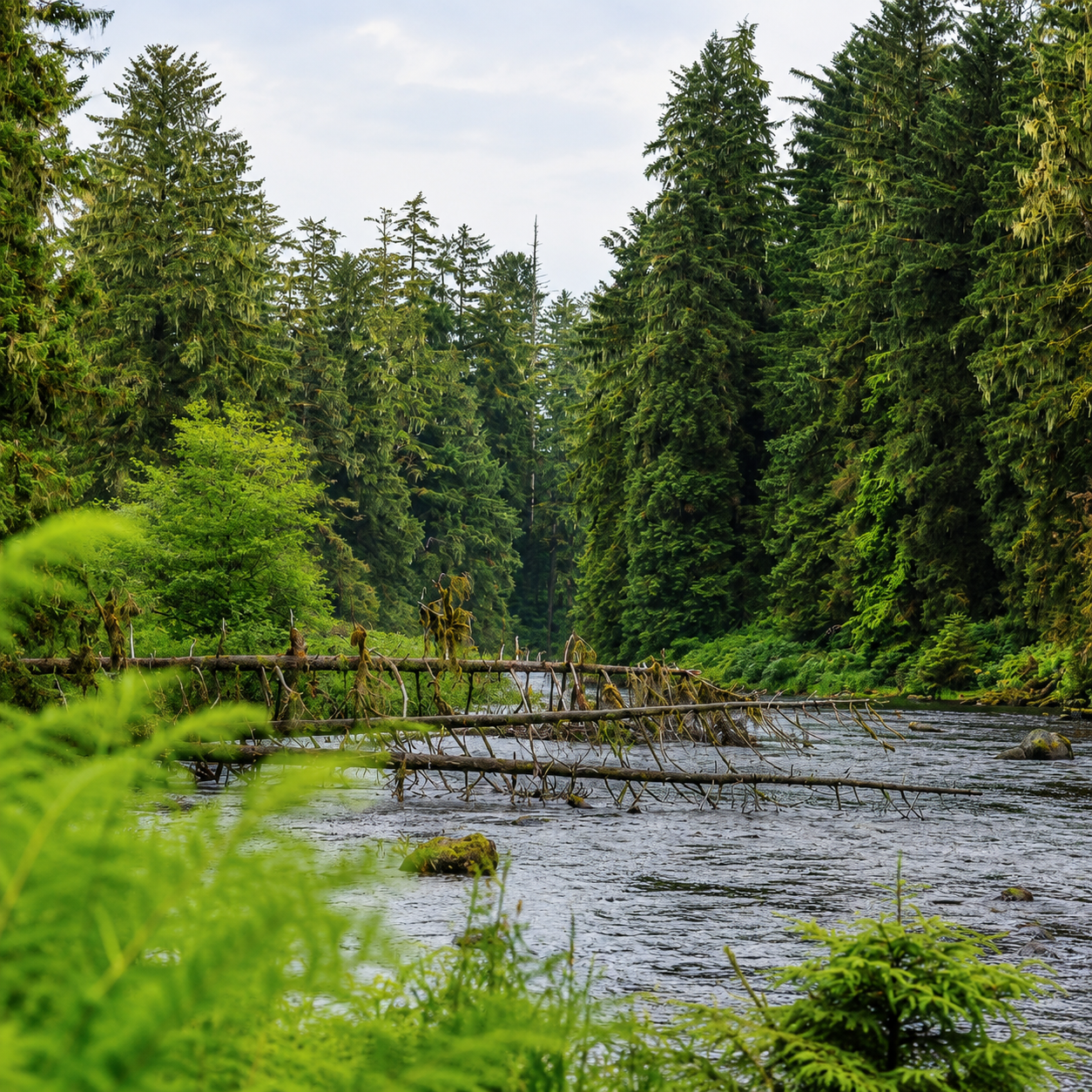
April working through her plate of oysters beside the Klawock River.
Kake, in the Keku Islands, turned out to be one of the best days of the trip. Morning Zodiac cruises brought a coastal brown bear along the shoreline and a Steller sea lion floating calmly nearby. Sea kayakers in our group spotted deer and otters; another group saw a humpback. No two of us had the same day, which is really the whole appeal of expedition cruising — you're not on rails.
Members of the Kake community came aboard that evening for traditional songs and dance, and they took time to explain the meaning behind the regalia and clan symbols rather than just performing. It turned what could have been a standard cultural show into something genuinely educational. Ashore, we saw the world's tallest single-tree totem pole and walked to Gunnuk Creek Hatchery, where salmon filled the water and eagles lined the trees waiting to feed.
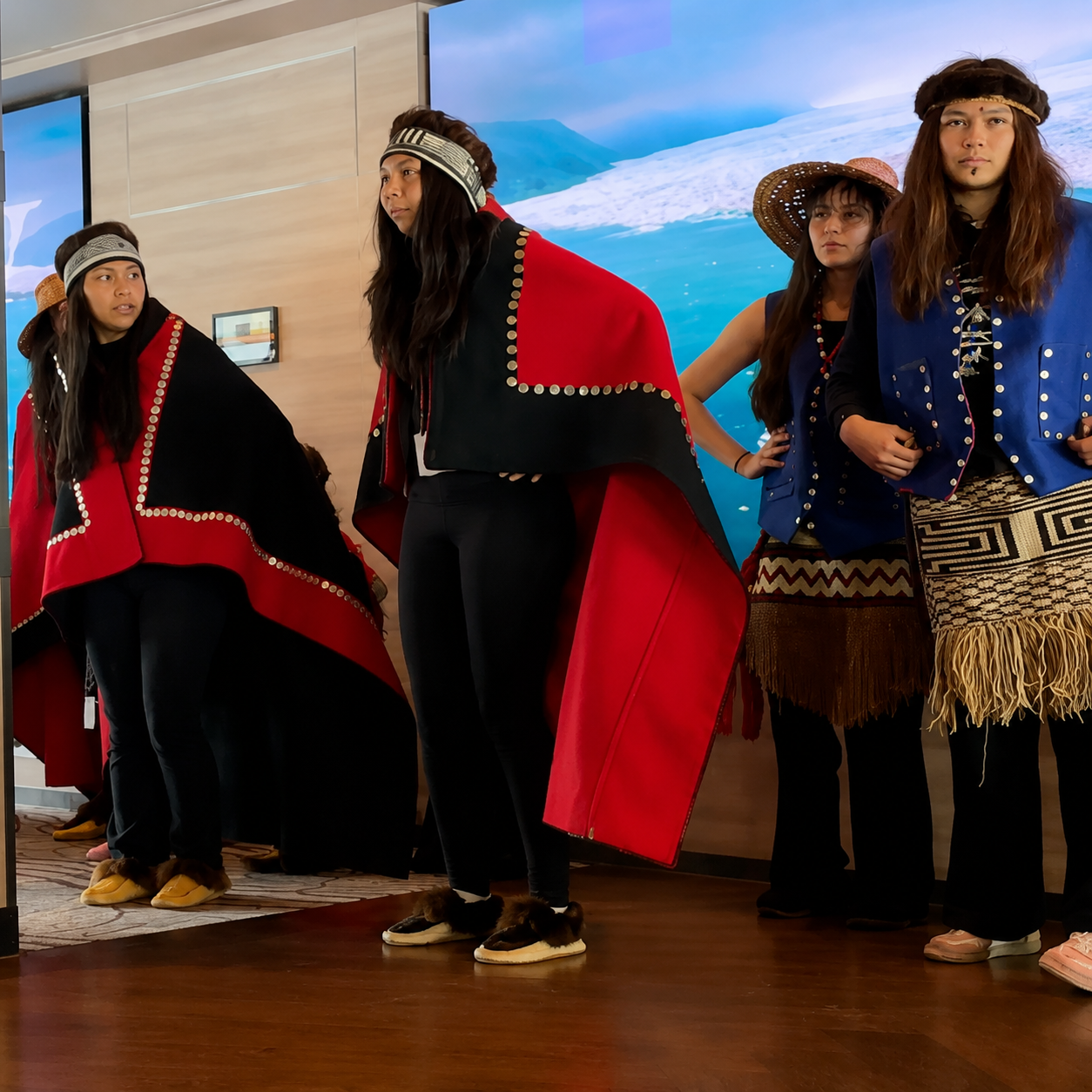
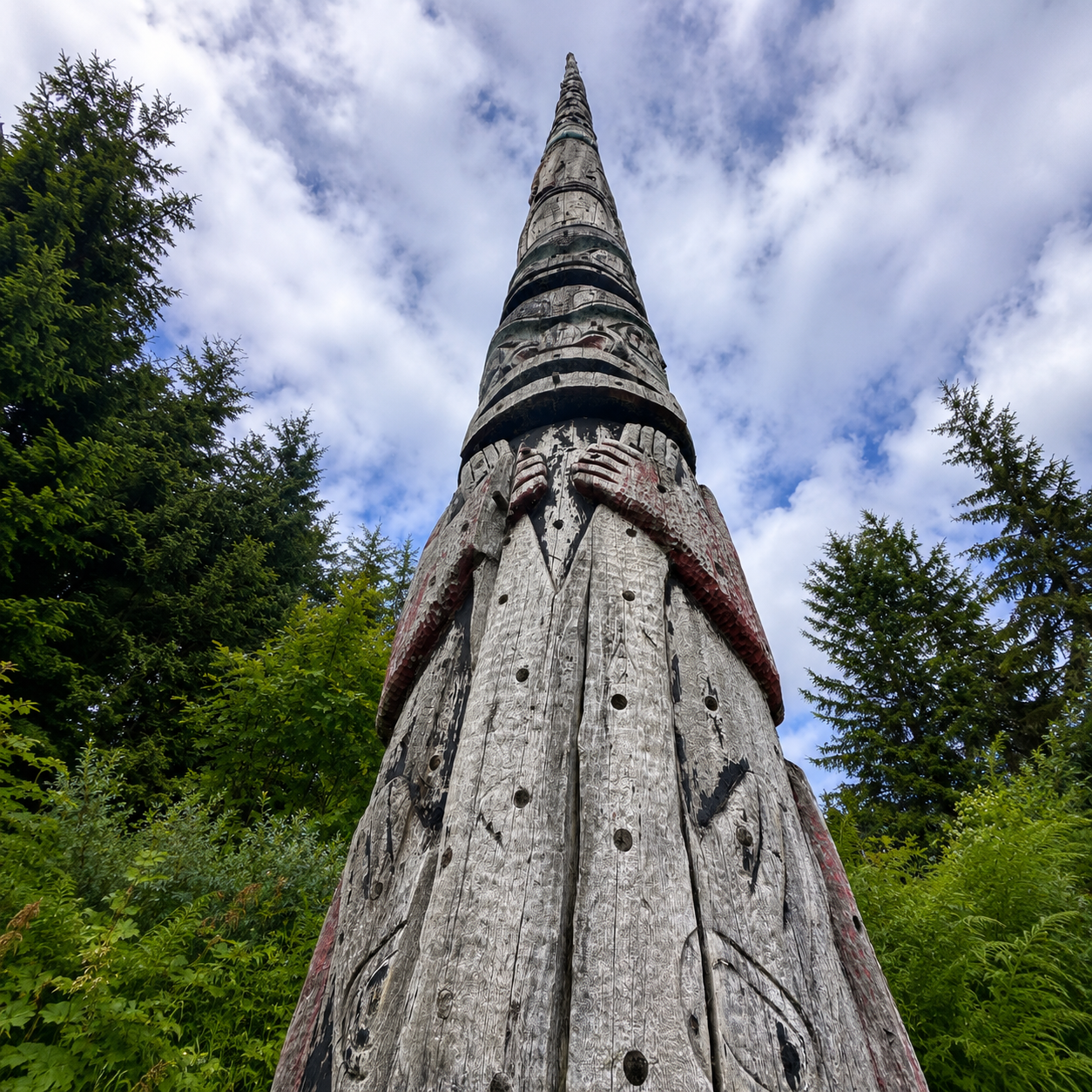
Traditional dance aboard ship, and the world's tallest single-tree totem pole ashore in Kake.
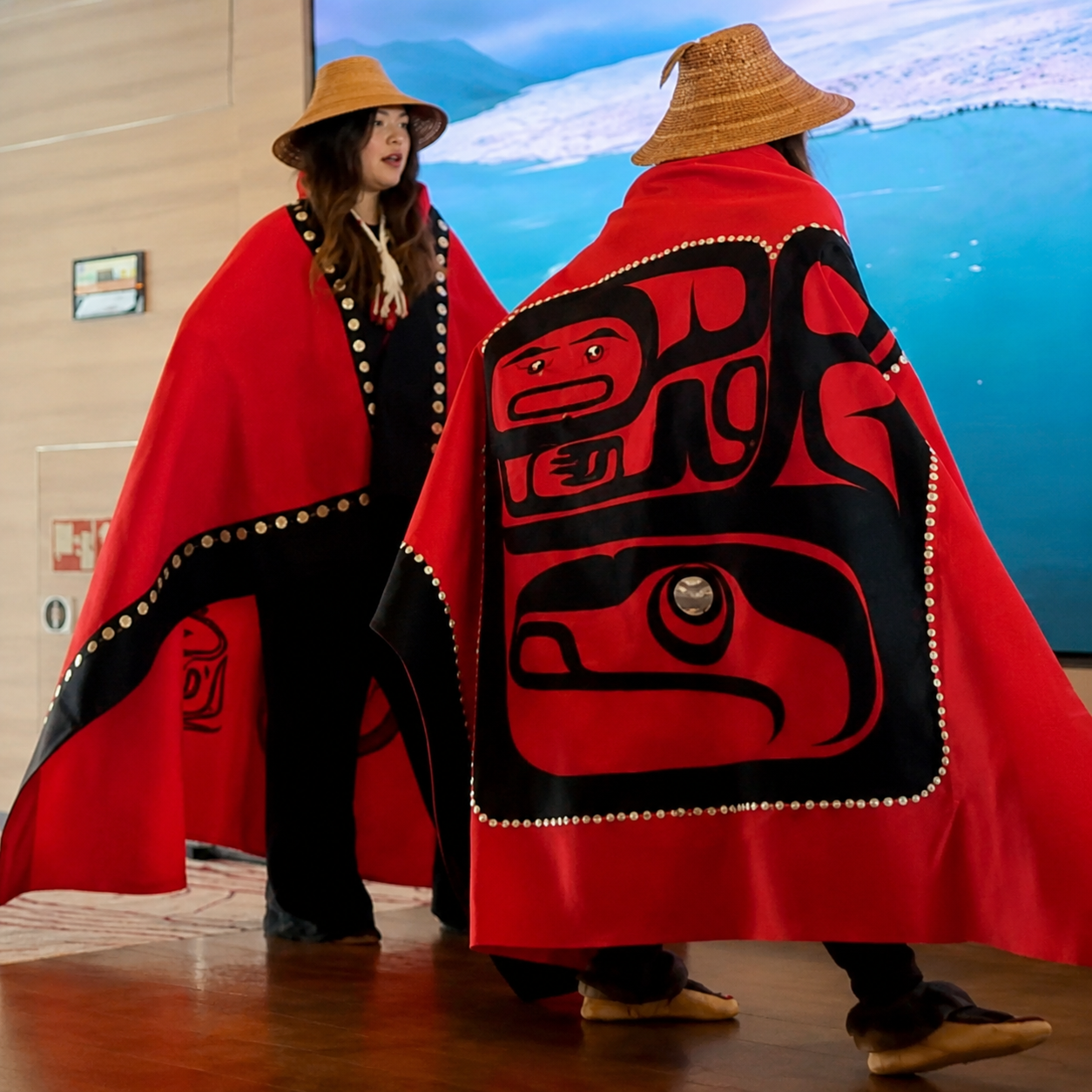
The Kake community shared traditional songs and dance, explaining the meaning behind each piece of regalia.
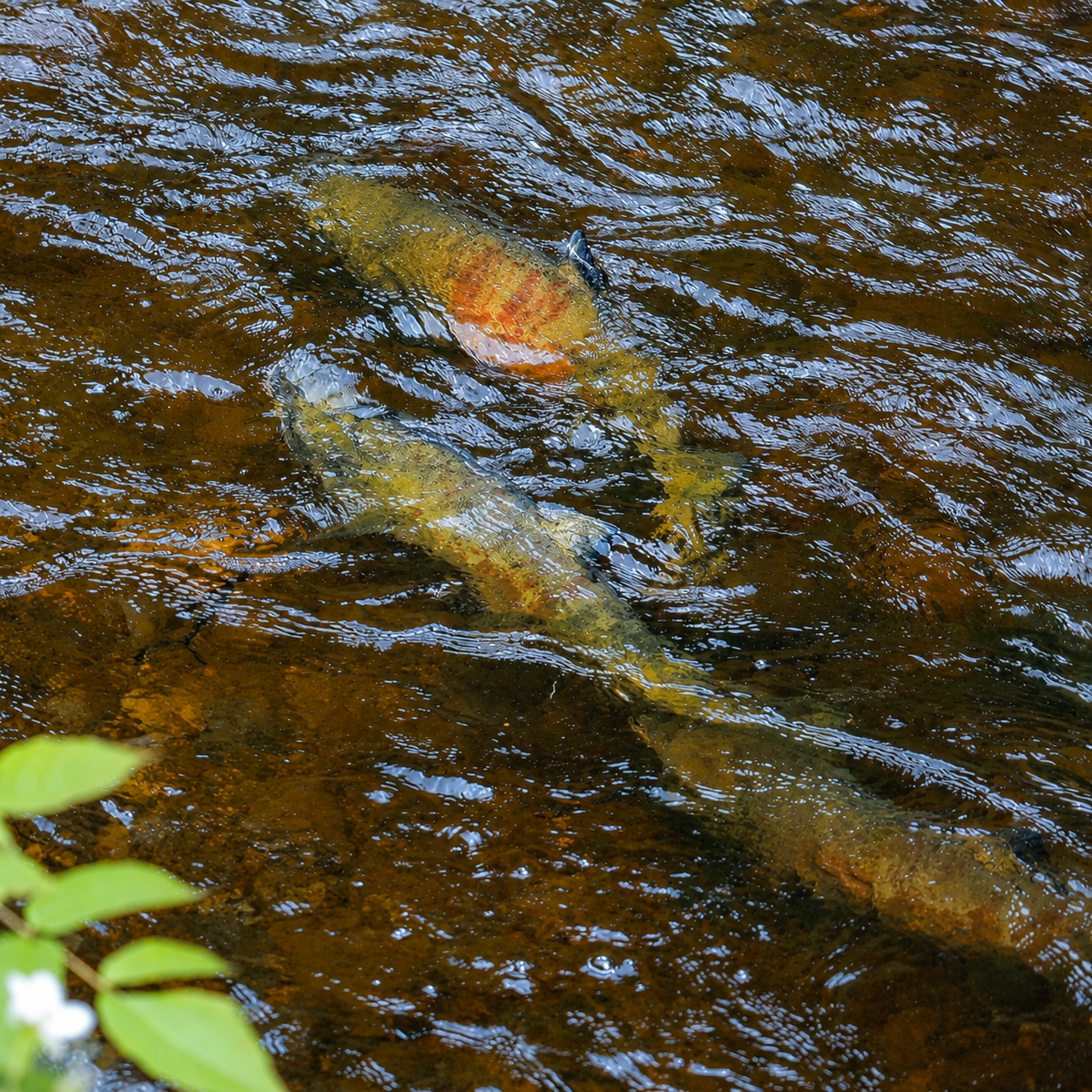
Salmon crowding the water at Gunnuk Creek Hatchery.
The most memorable moment of that stop wasn't scheduled at all. Walking back to the ship, we passed a local resident cleaning salmon at the shoreline. Within seconds, more than a dozen bald eagles dropped out of the trees and swooped within feet of us. That evening the ship marked HX Expeditions' 130th anniversary with a special dinner — a reminder that this company has been doing this a long time.


Eagles lined the shore and the treeline the moment the salmon cleaning started.
The Inian Islands the next day delivered hundreds of Steller sea lions crowding the rocks, harbor seals surfacing right beside our Zodiac, and another brown bear along the shore. We lowered a GoPro into the water and caught sea lions swimming beneath the boat — the kind of shot you can't plan for, only be ready for.
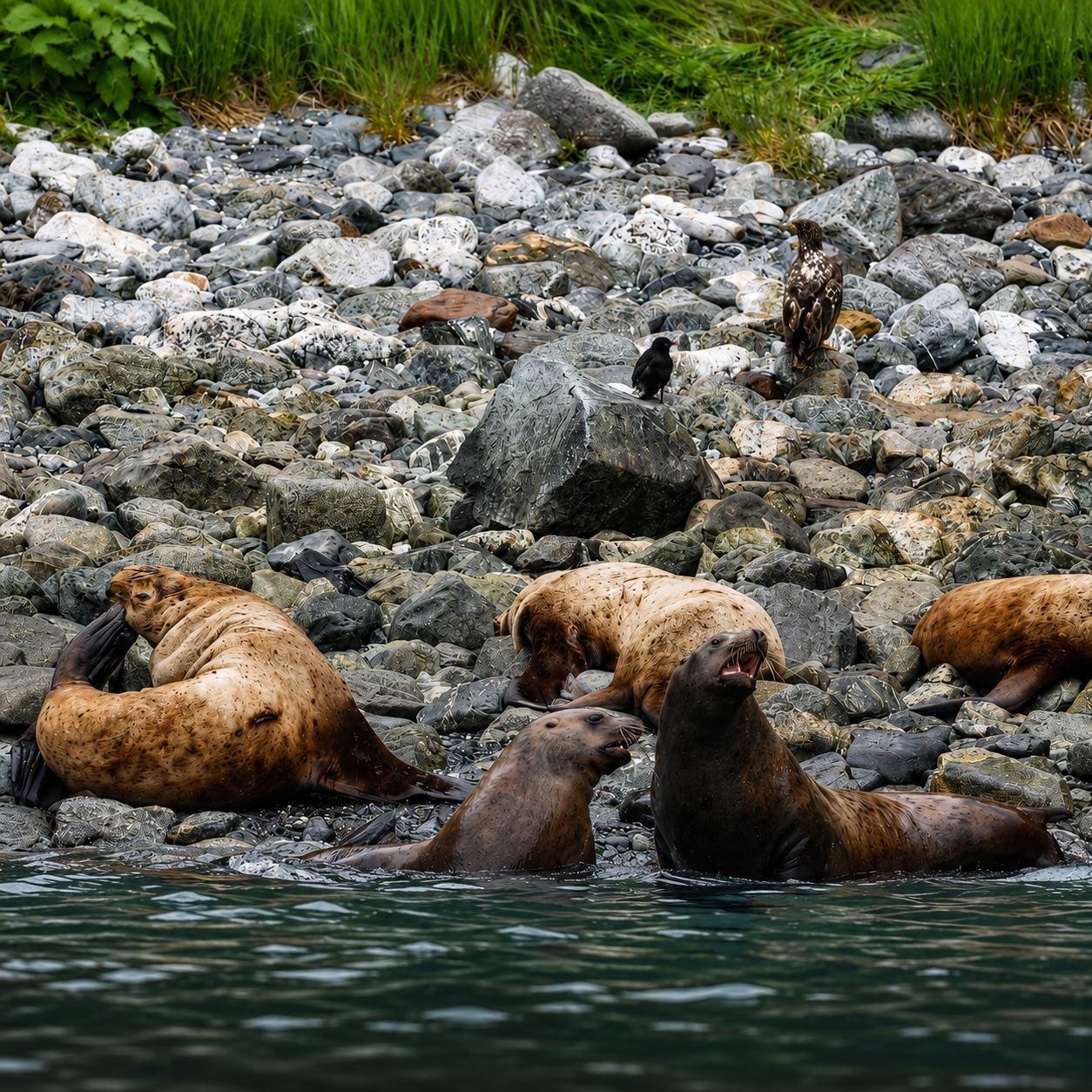
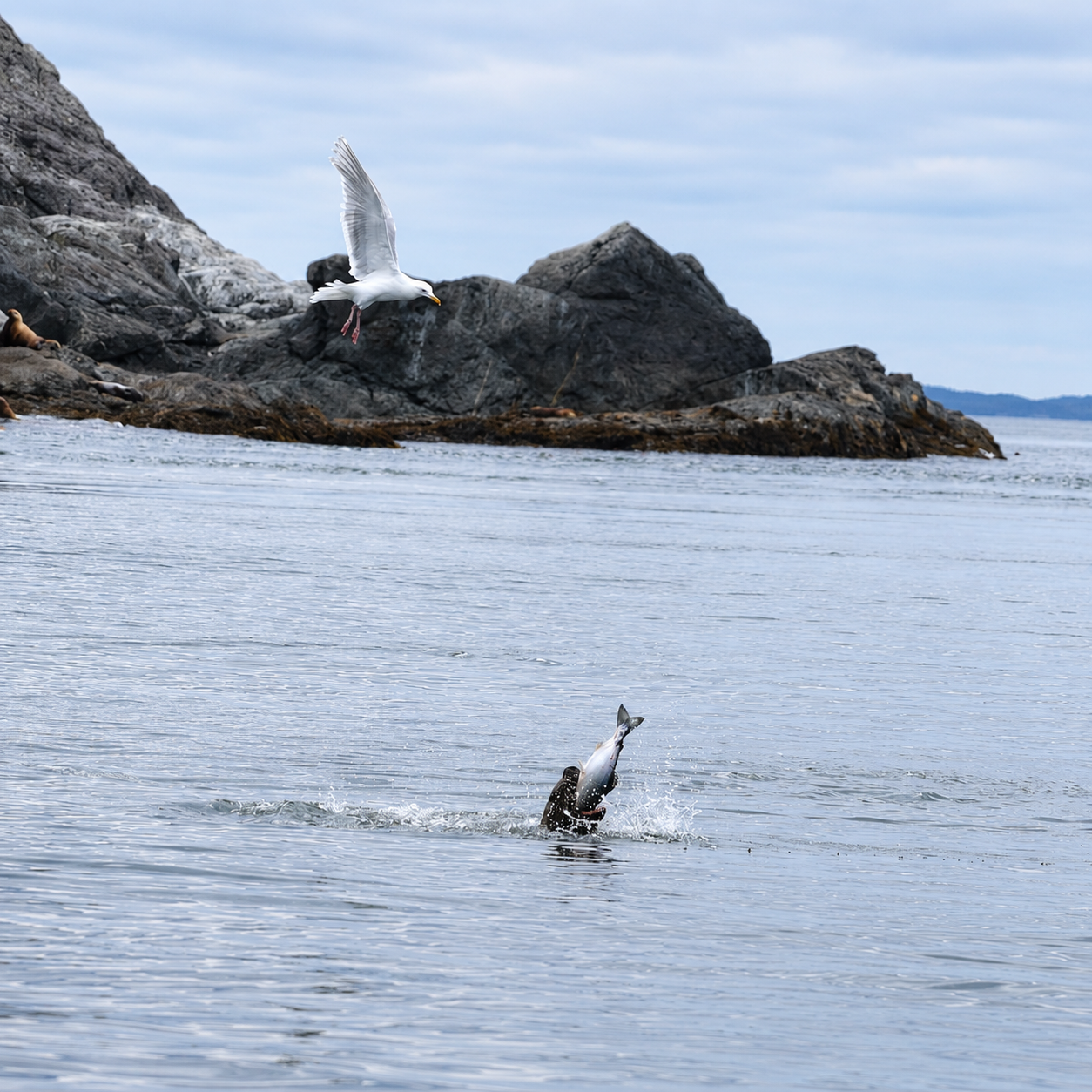
Sea lions crowding the rocks, and one working through its catch nearby.
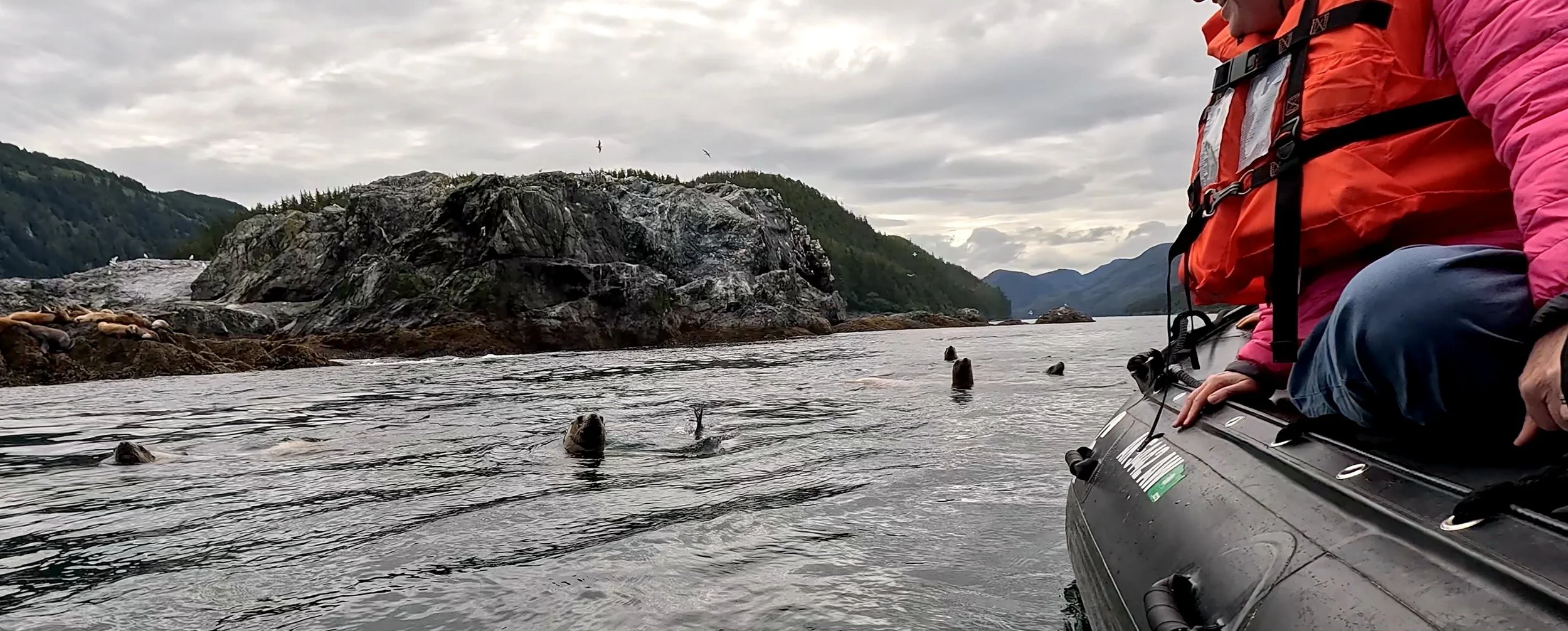
April trading waves with a few curious sea lions that surfaced beside our Zodiac.
Icy Bay gave us the sharpest contrast of the trip. Clear skies opened up a full view of Mount Saint Elias, Alaska's second-highest peak, and our marine biologist guide said visibility that day was among the best she'd seen.
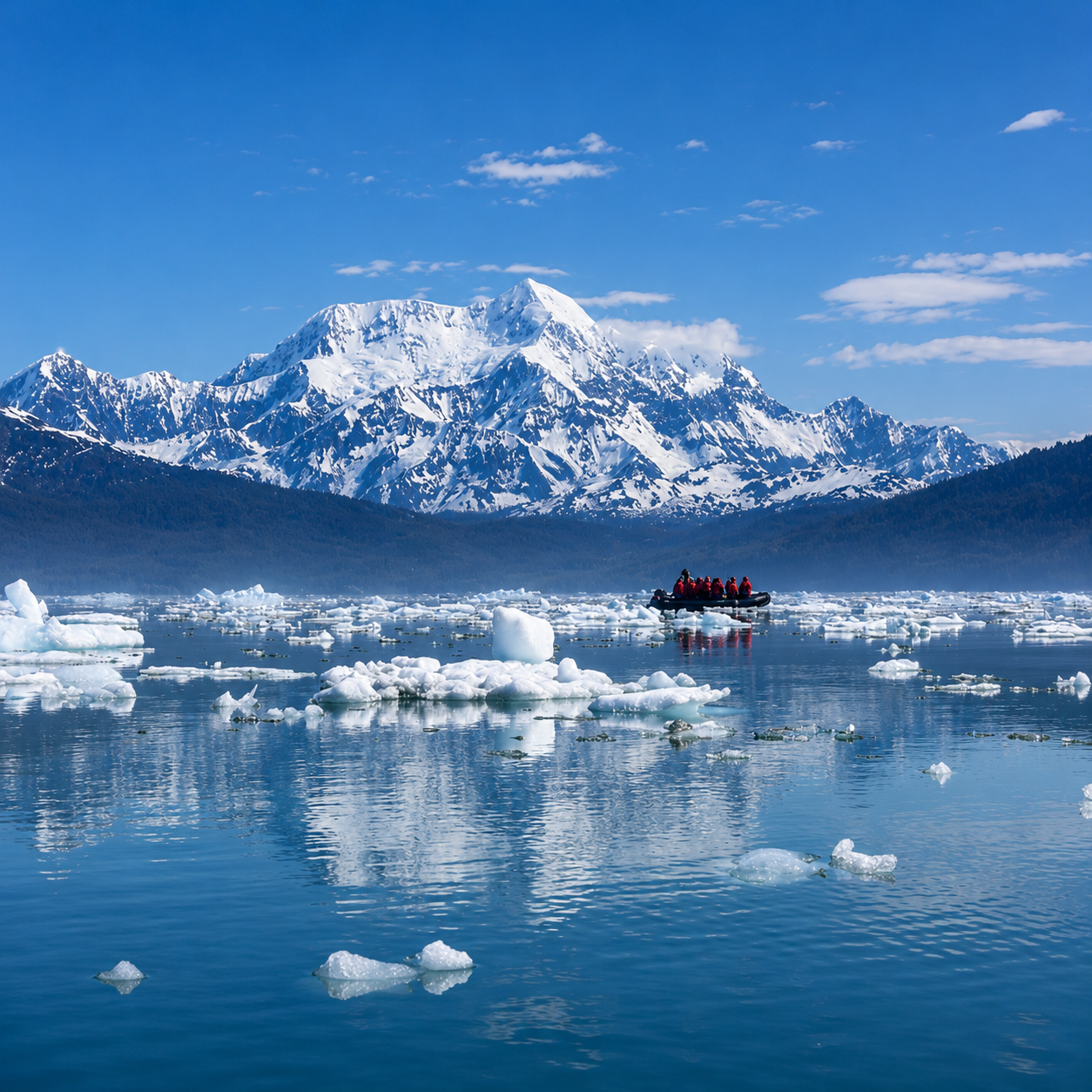
A Zodiac in front of Mount Saint Elias, Alaska's second-highest peak, under clear skies in Icy Bay.
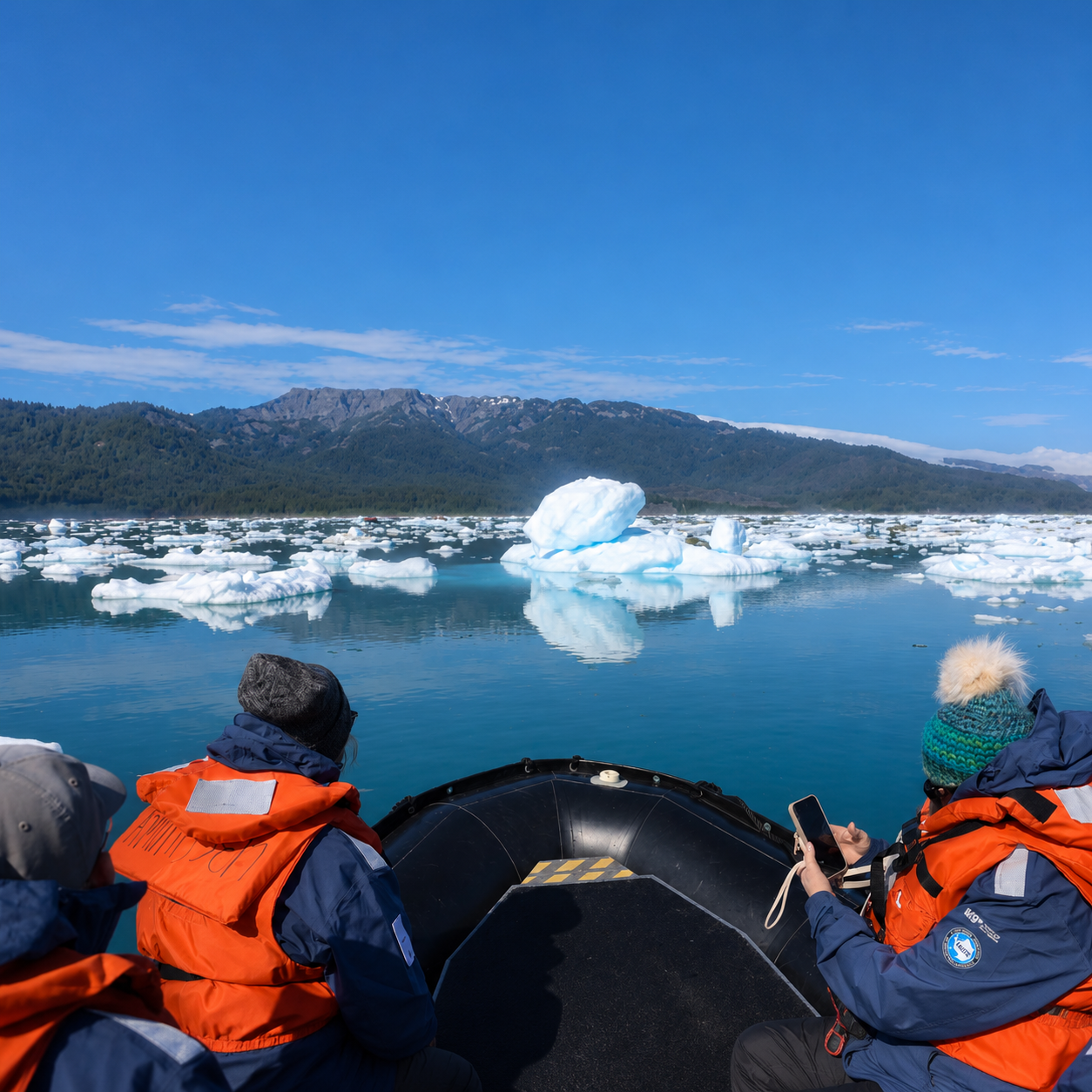
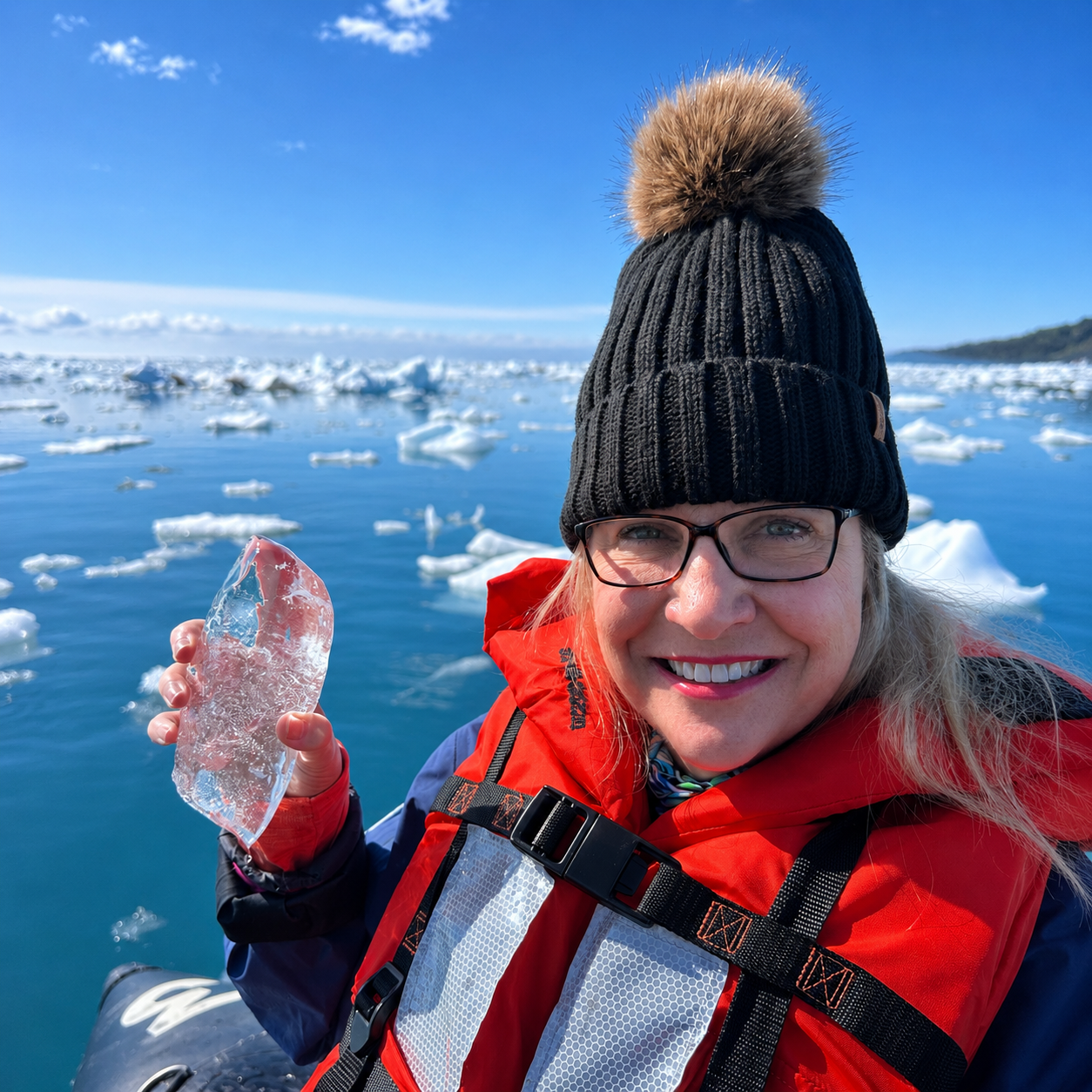
Zodiacs working through the floating ice, and April holding a piece of it fresh from the bay.
Then, almost without warning, fog rolled in and swallowed the ship and the surrounding Zodiacs. The sun stayed out above the fog, lighting it from within — genuinely strange and beautiful — before it lifted again within the hour.
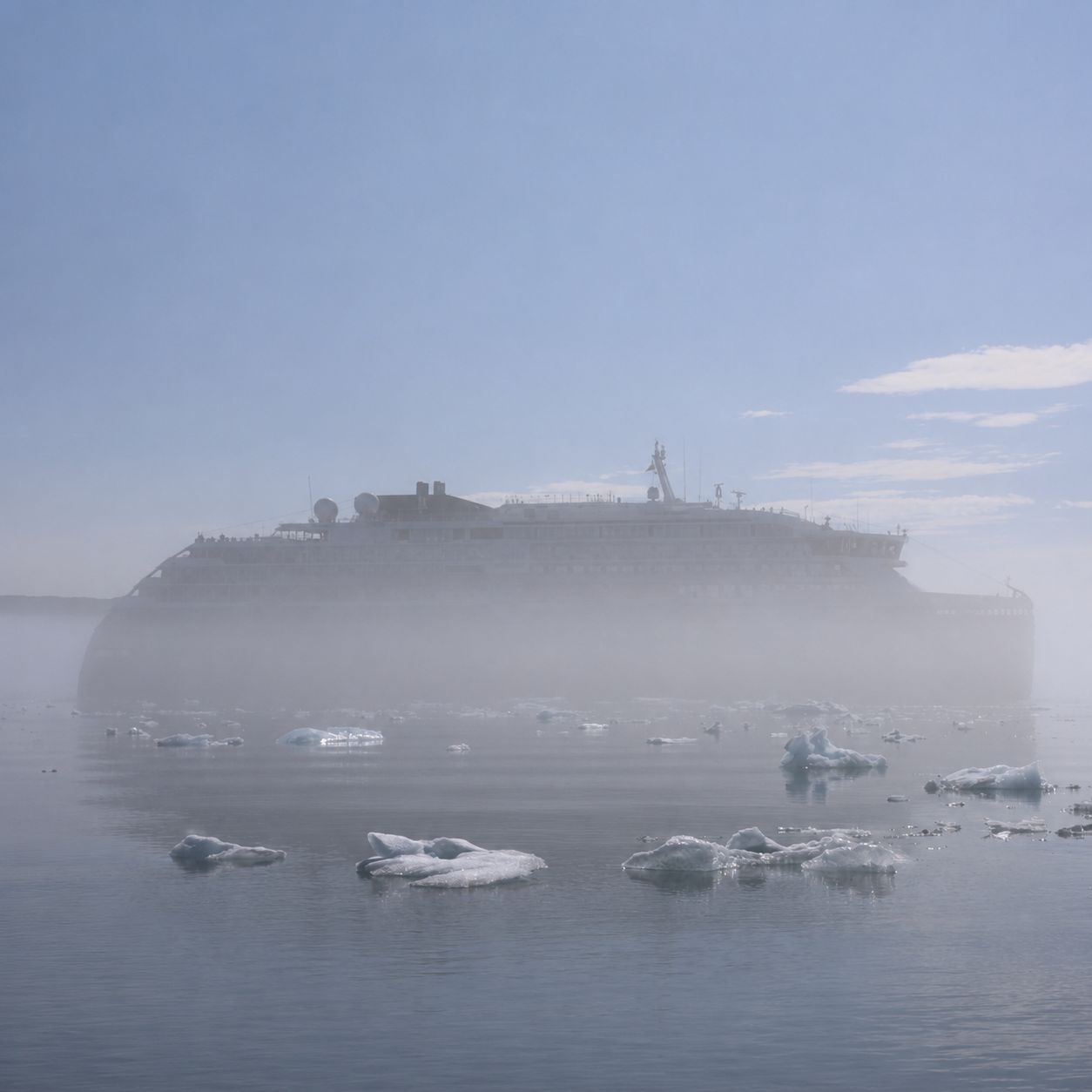
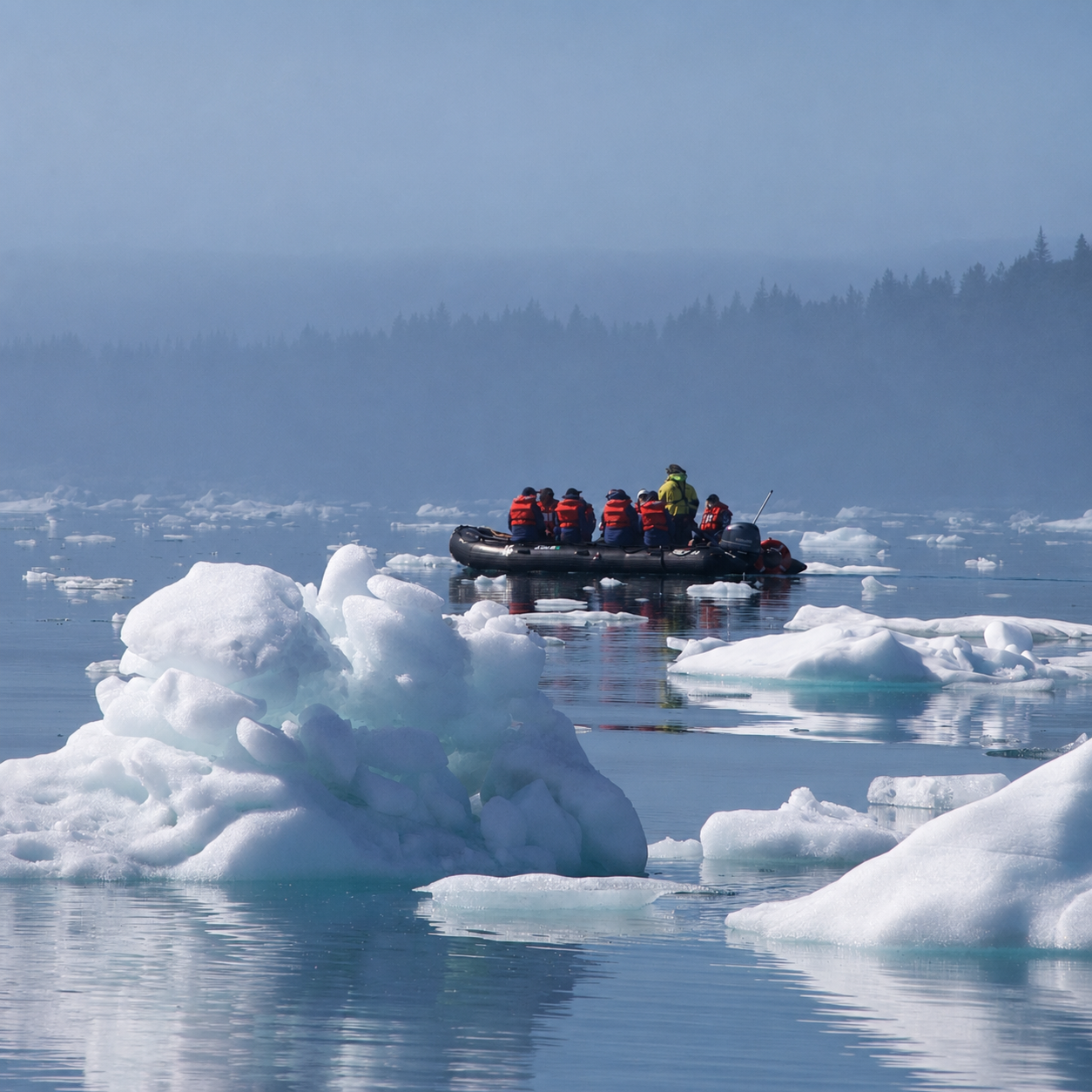
The ship nearly disappeared into the fog before it lifted again within the hour.
Valdez: The Value of Extra Time in Port
Valdez stood out for one simple reason: time. We had nearly ten hours ashore, arriving an hour early thanks to calm seas. That changed everything about the day. Instead of rushing between stops, we hiked an overlook trail above the harbor, browsed the town, visited museums included with the fare, and learned that serious fishing charters aren't realistic on a cruise stop since most require a full twelve hours.
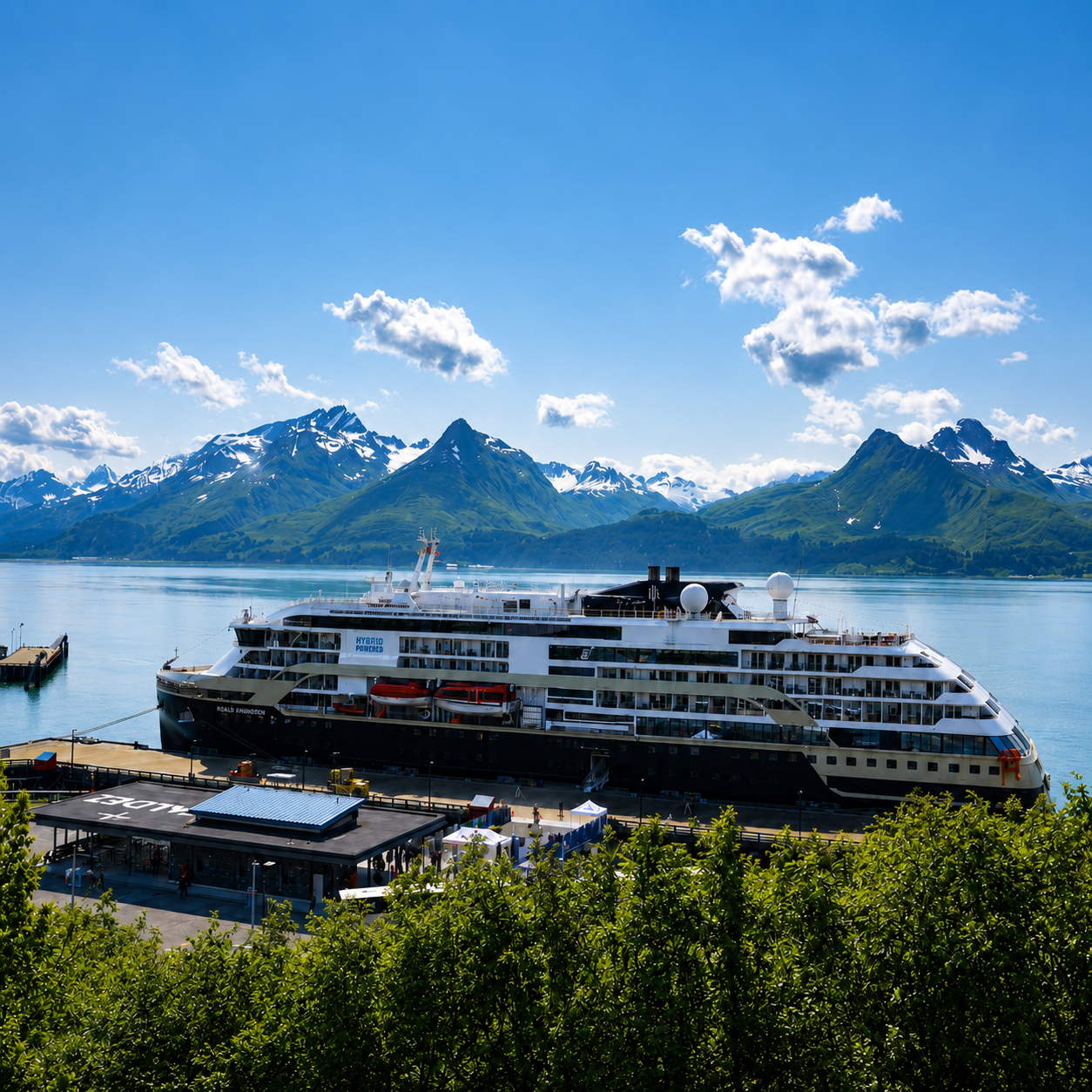
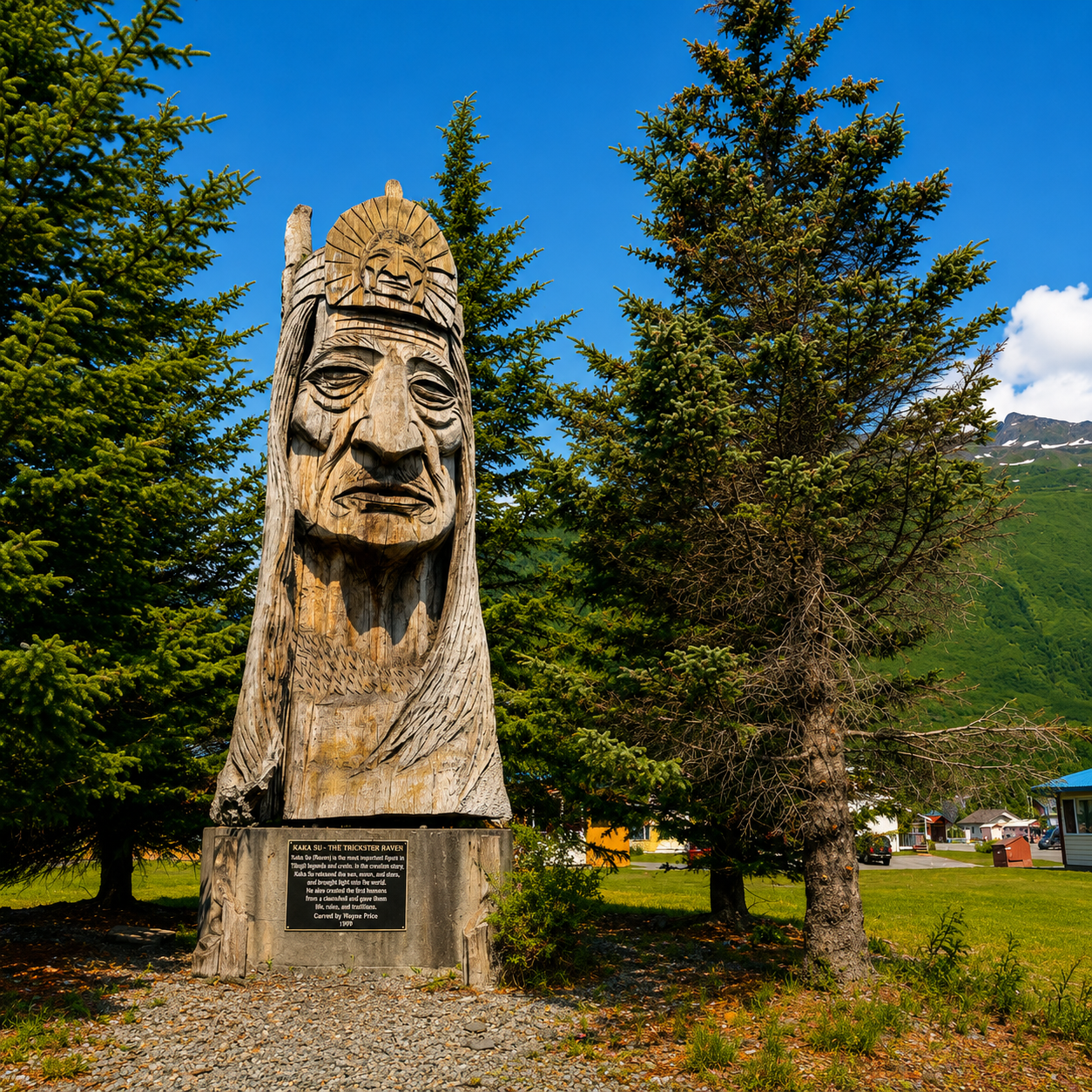
The ship at port in Valdez, and the town's main totem carving.
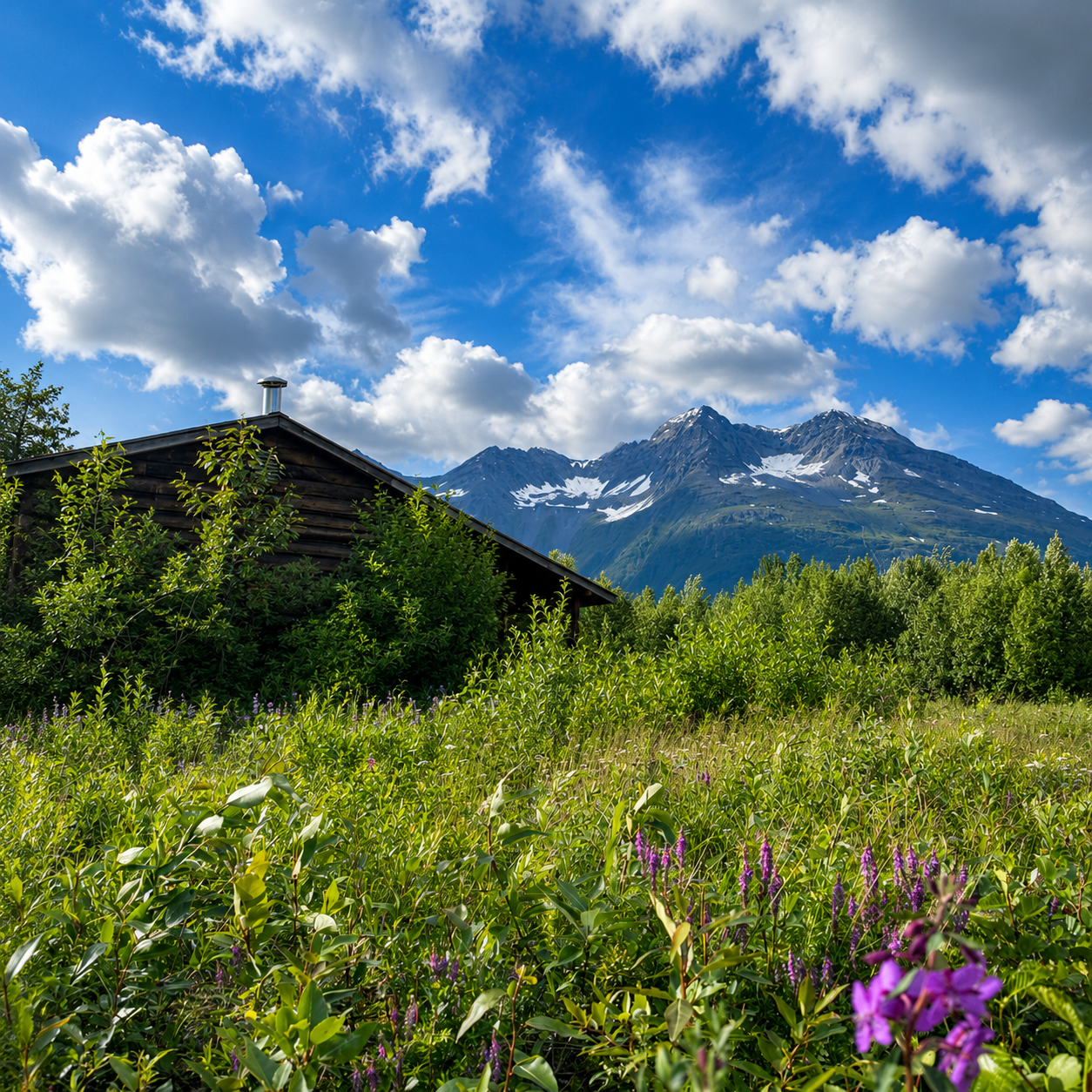
Valdez's backdrop — mountains right down to the water, even in town.
On local advice, we had halibut fish and chips from a food truck beside Valdez Brewing, then rented e-bikes for the real highlight — an eleven-mile ride to Solomon Gulch Hatchery. Along the way: bald eagles, spawning salmon, harbor seals, and Steller sea lions waiting at the hatchery outflow for an easy meal. It was a reminder that some of the best moments on a trip like this come from just going and looking, not from a booked excursion.
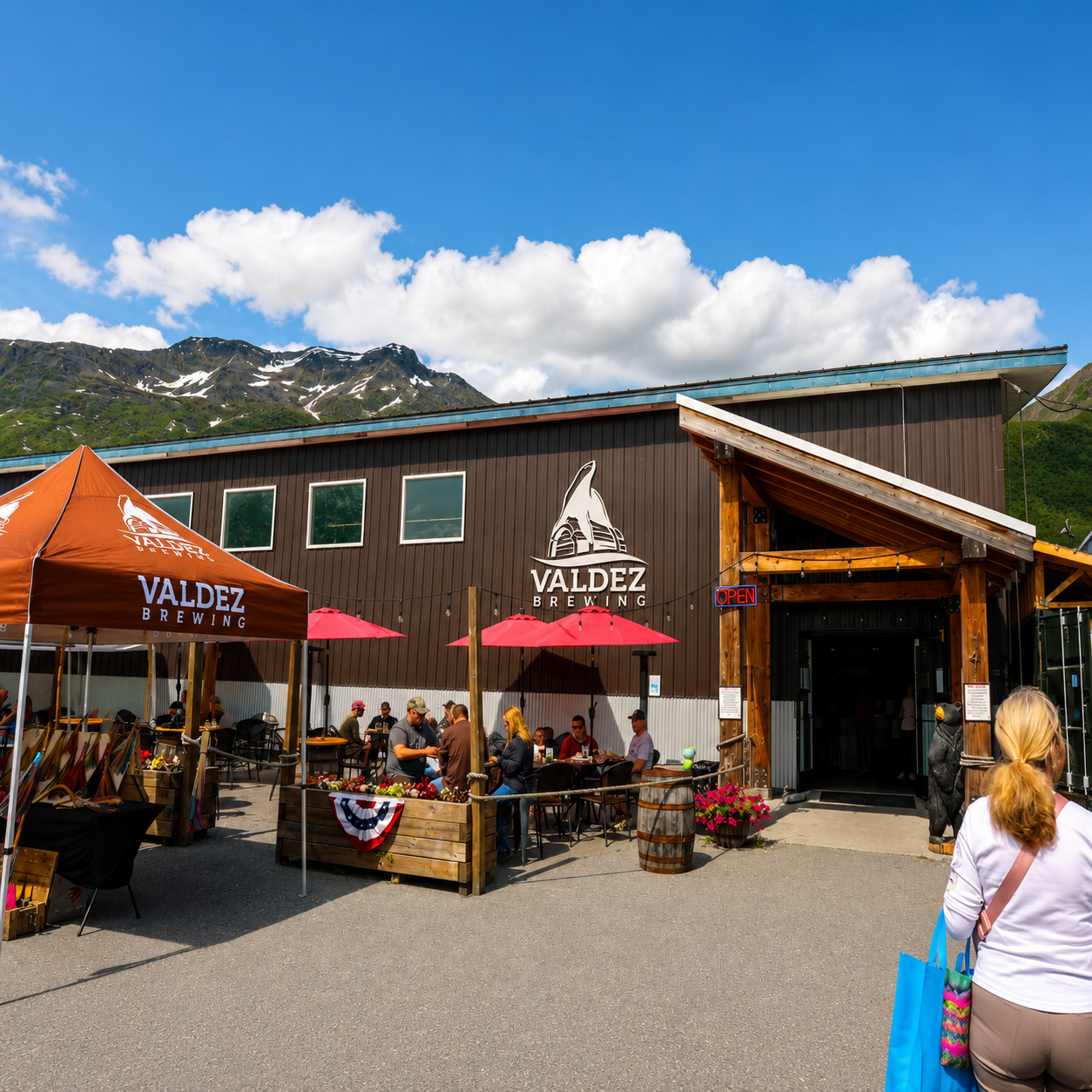
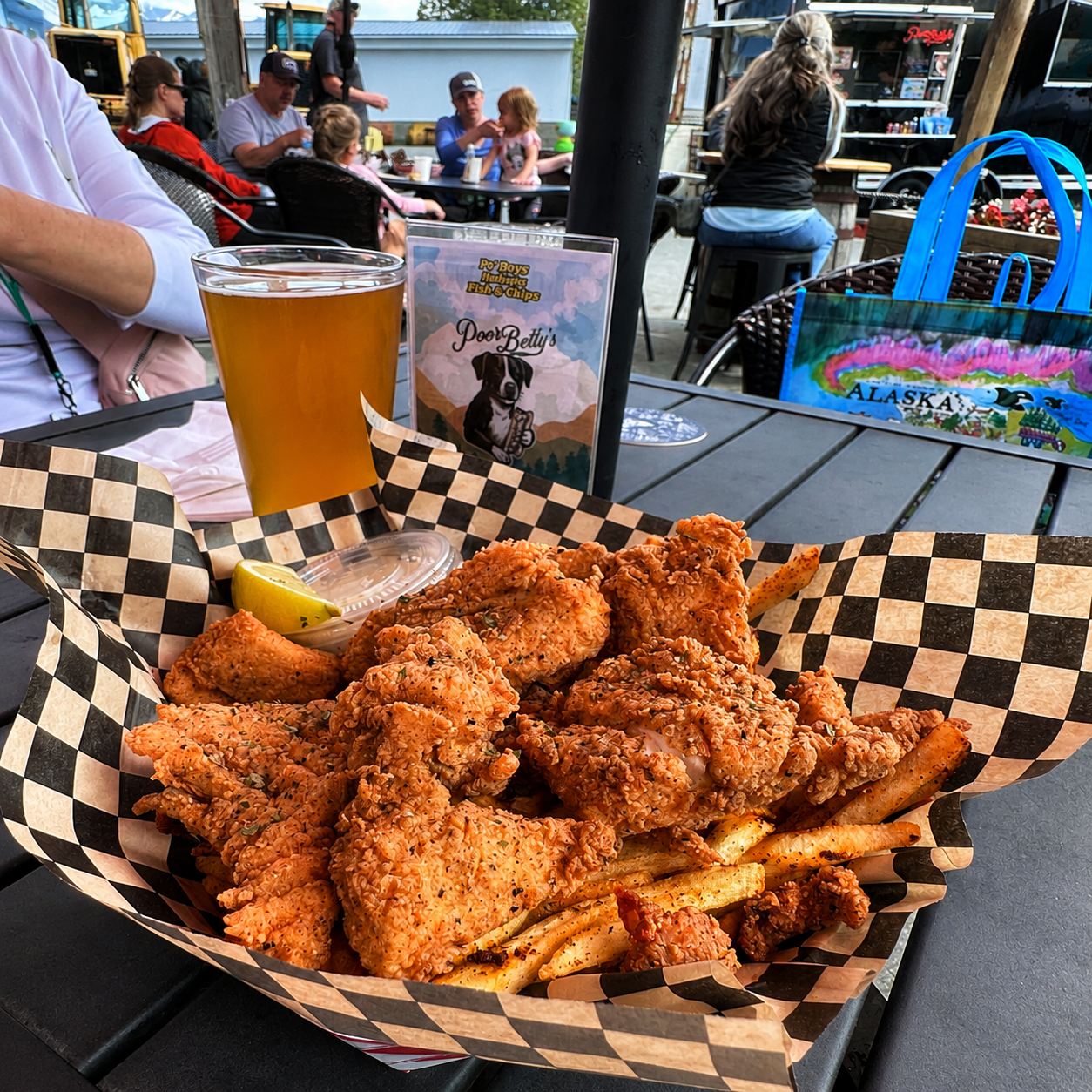
Valdez Brewing Company, and the halibut fish and chips that made the food truck stop worth it.
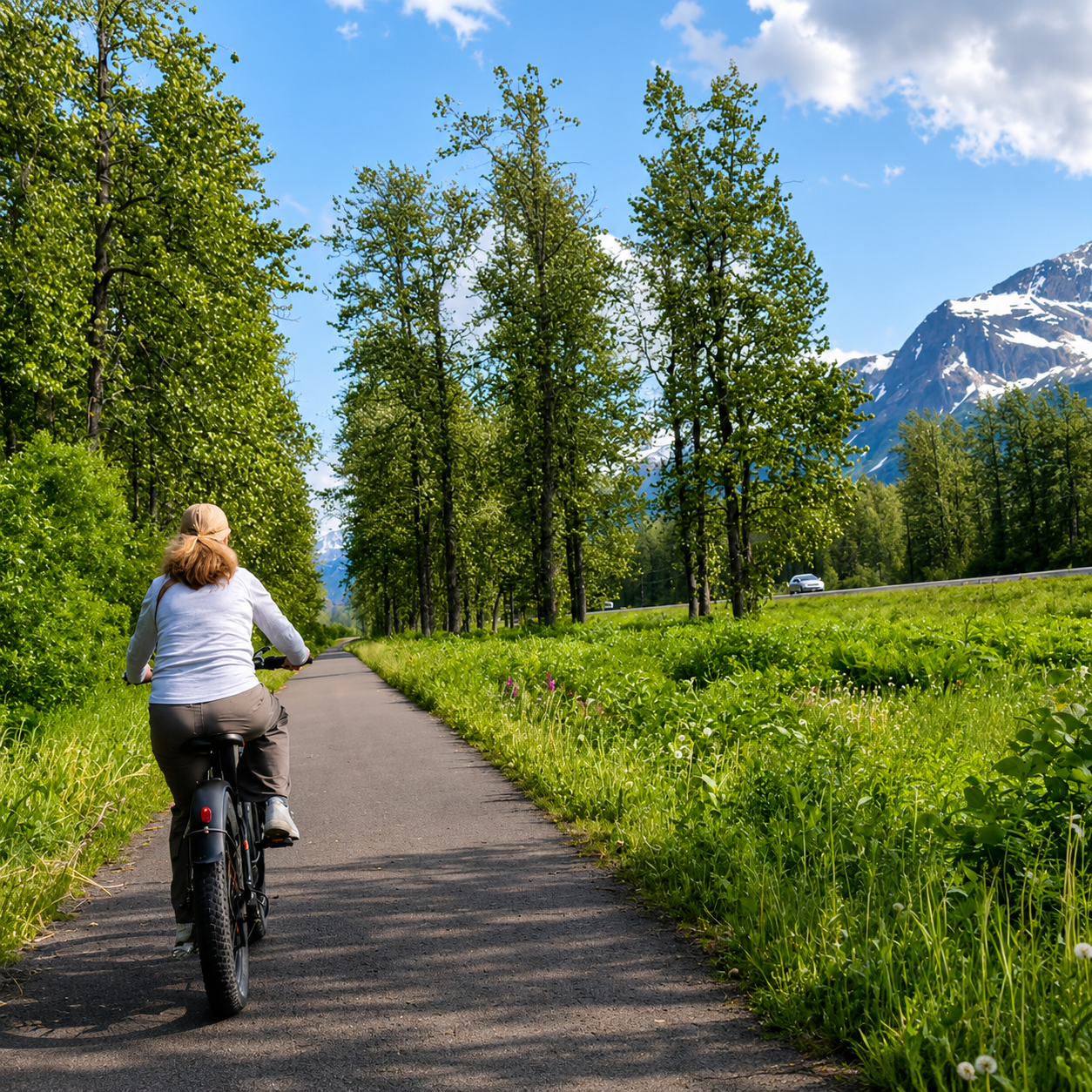
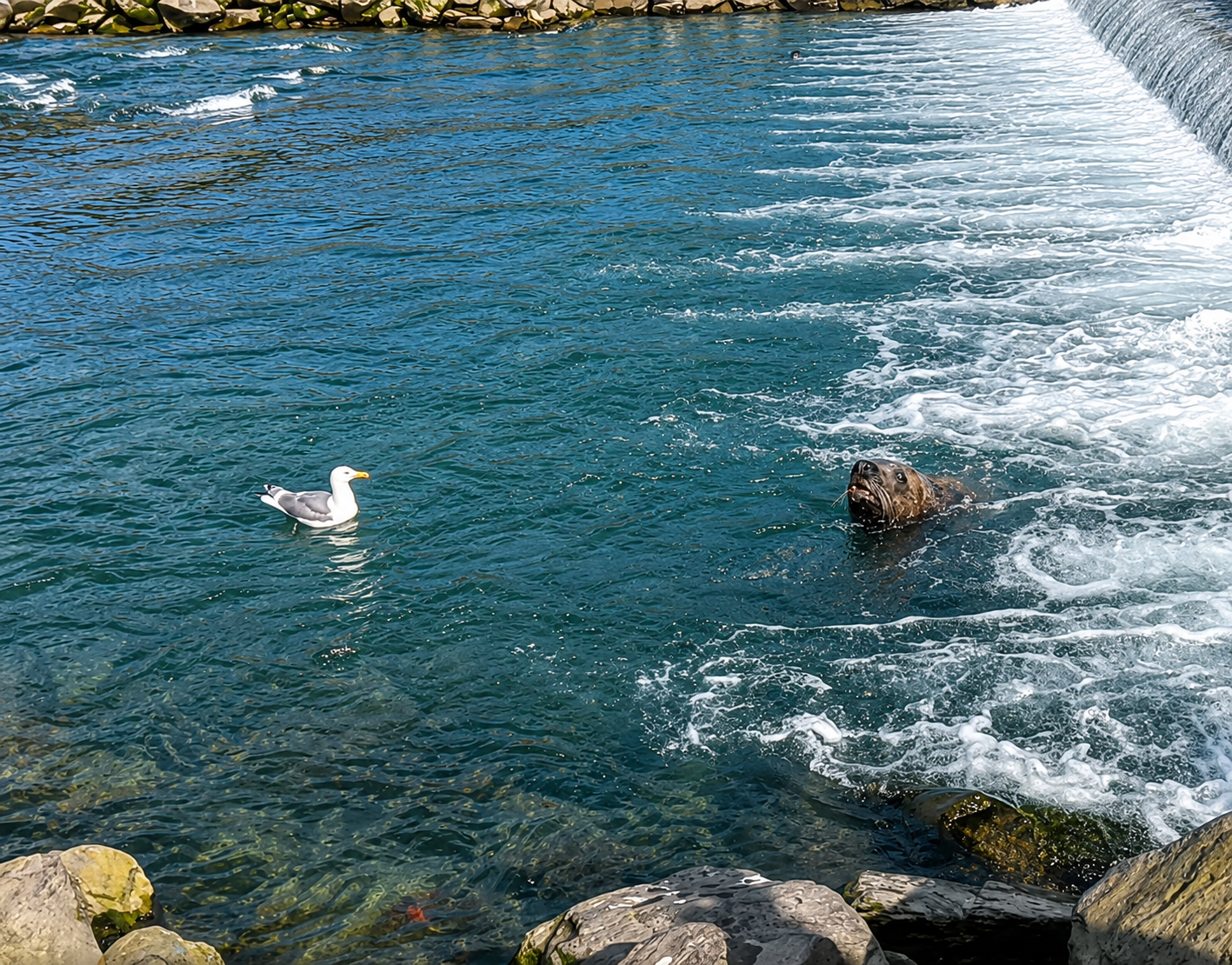
April on the e-bike route out to Solomon Gulch, where sea lions waited at the hatchery outflow.
What I'd Tell a Fellow Traveler Before Booking an Expedition Cruise
- Ask the ship photographer nightly what lens you'll need for tomorrow — it's the single best habit for wildlife and landscape shots.
- Pack layered, waterproof outerwear. Muck boots are provided onboard for Zodiac landings.
- If a port gives you extra time ashore, use it to explore independently rather than sticking only to booked excursions.
- Choose Discovery Kayak over Sea Kayak if you want more freedom to explore versus a fixed guided route.
- Don't expect wildlife on a schedule — the best sightings on this voyage were unplanned.
- Stay near a window or keep your cabin phone handy — HX makes PA announcements any time wildlife like bears, orcas, or whales are spotted off the ship, something most mainstream cruises don't do.
- Book expedition cabins early. Smaller ships mean less inventory than a traditional cruise.
College Fjord: A Full Day, No Rushing
Our final full day was spent entirely in College Fjord — from six in the morning until nearly eleven at night. That alone tells you what expedition cruising is about. Instead of an hour or two cruising past glaciers, HX gave us an entire day in one place.
The morning Zodiac excursion took us to Yale Glacier, passing Harvard Glacier along the way, with thirty to forty harbor seals resting on freshly calved ice. Standing a few hundred meters from the glacier, we listened to the ice crack and watched chunks calve into the fjord, sending gentle waves under our Zodiac while the seals rode them out on their floating ice.
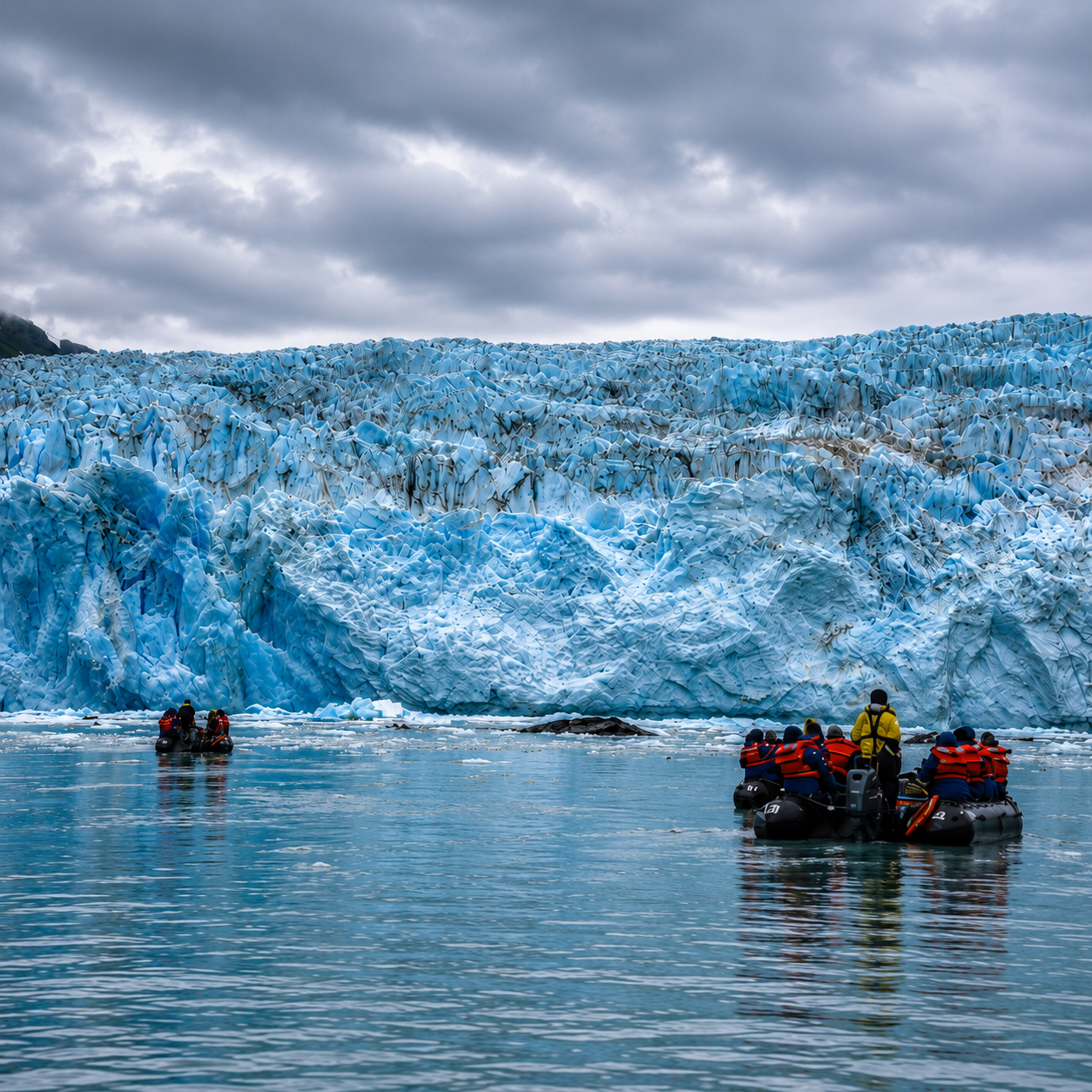
Zodiacs holding a few hundred meters off Yale Glacier as it calved into the fjord.
That afternoon we took the Discovery Kayak excursion. Having now done both Sea Kayak and Discovery Kayak, in Antarctica and here in Alaska, I'll say I prefer Discovery Kayak — the inflatable tandem kayaks give you more freedom to explore within the guided area, and wildlife still comes in close. Penguins did it in Antarctica; harbor seals did it here.
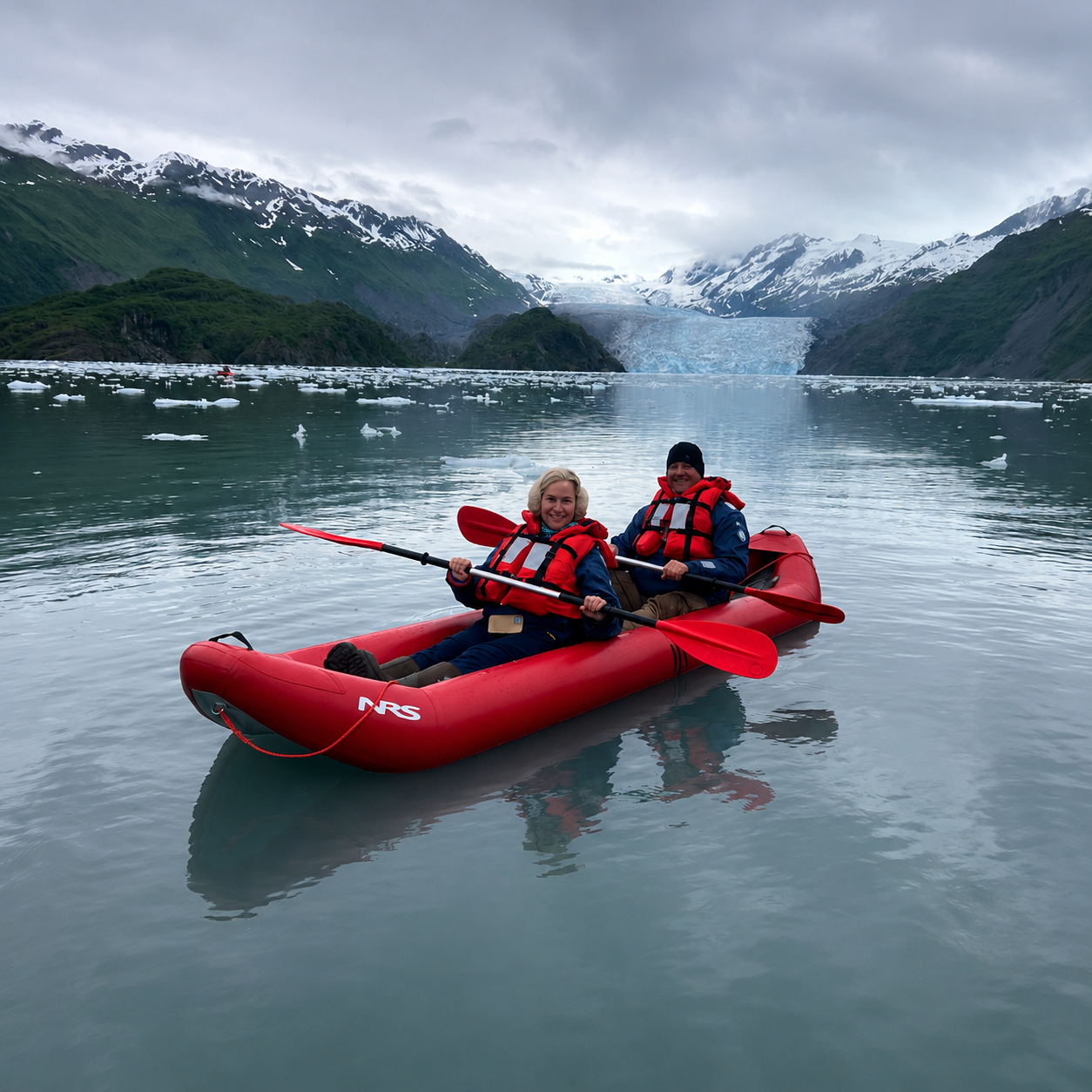
April and Donald out on the water in College Fjord.
Even dinner delivered one more wildlife moment — three harbor seals climbed onto an iceberg about a hundred feet from the dining room windows. There was no rush that day, and by the end of it, that lack of rush was the whole point.
Disembarkation and the Final Verdict
Disembarkation in Whittier the next morning was smooth and well organized. Guests were grouped by onward travel plans, with transportation either straight to the airport or to a hospitality center in Anchorage that included luggage storage, Wi-Fi, refreshments, and hourly transfers.
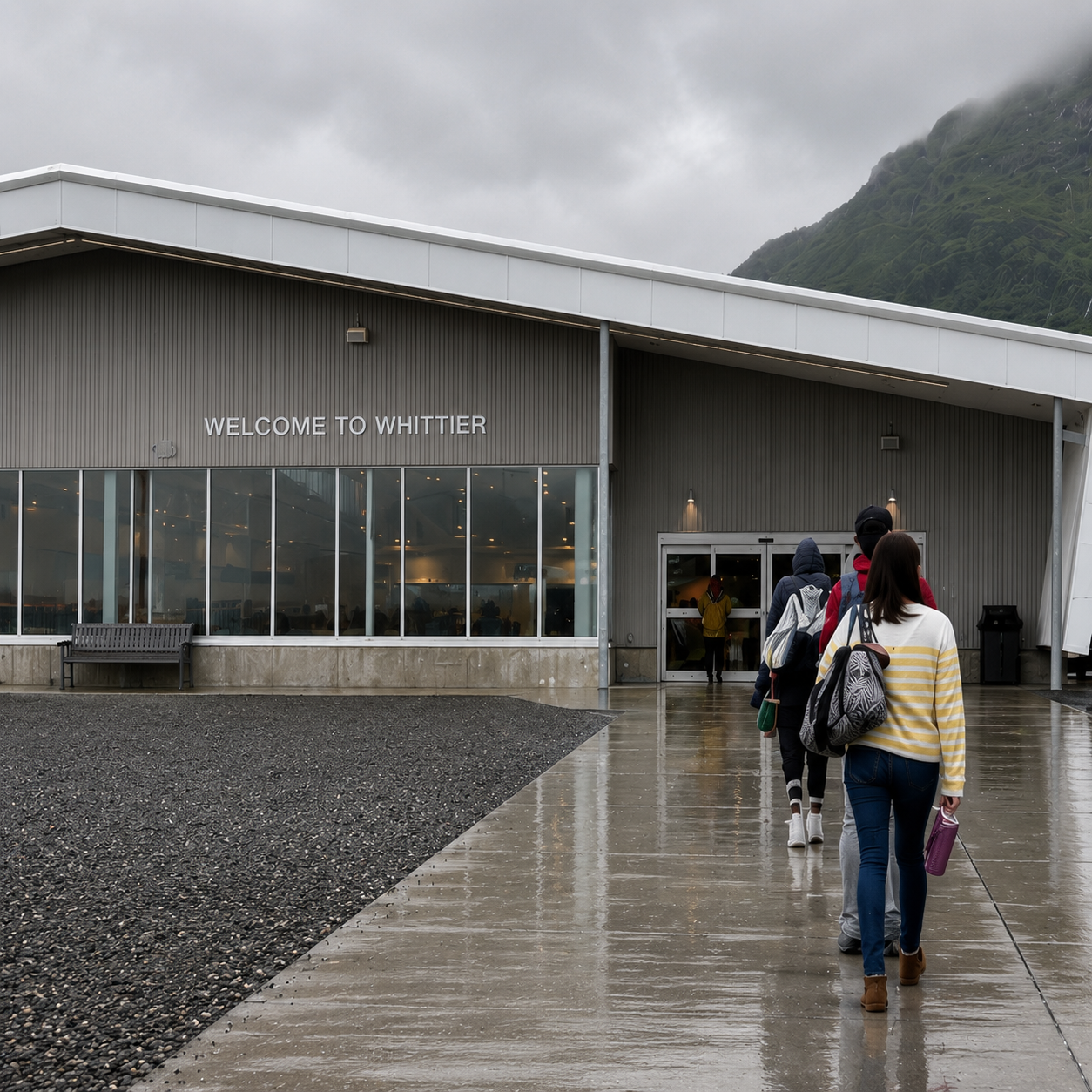
The port of Whittier on disembarkation morning.
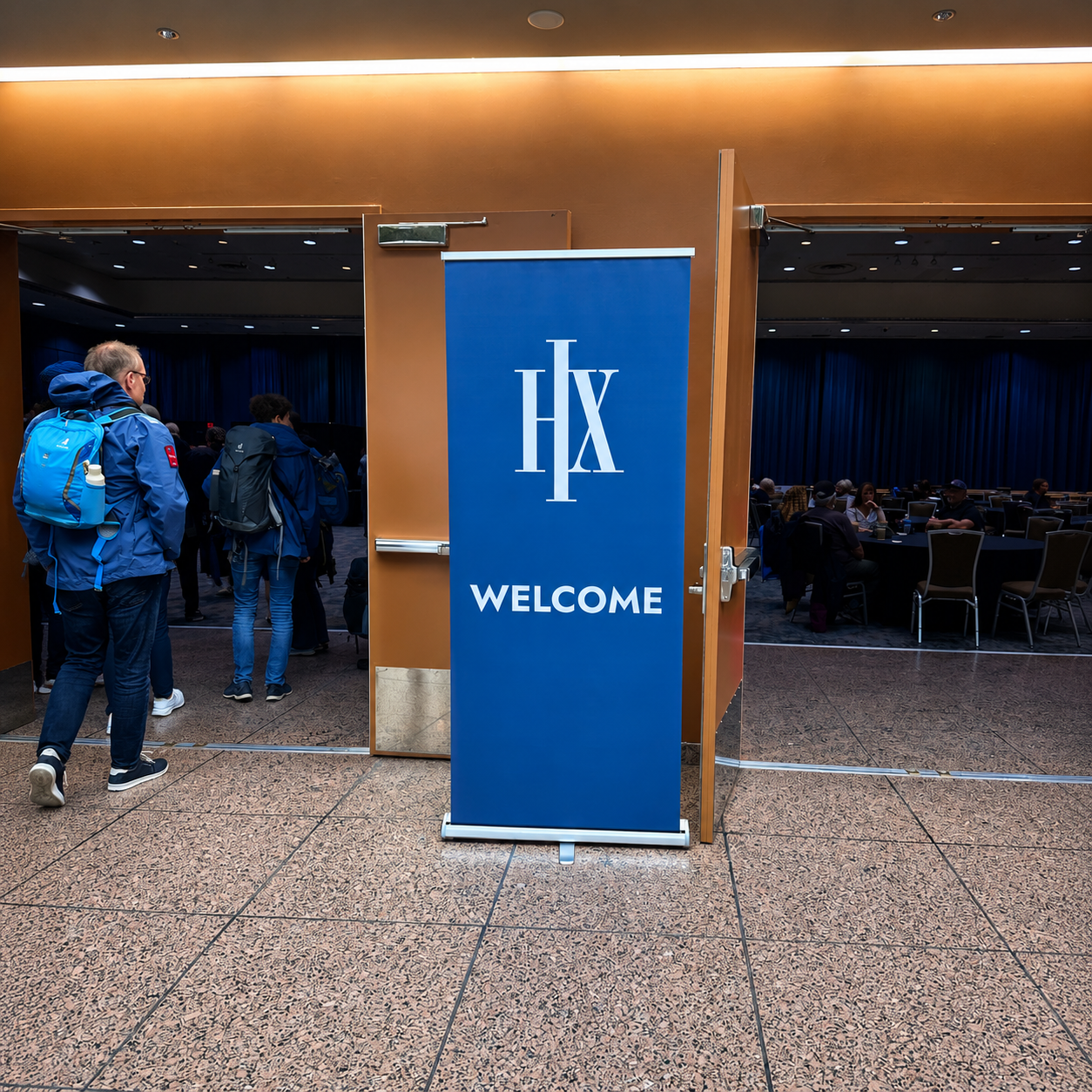
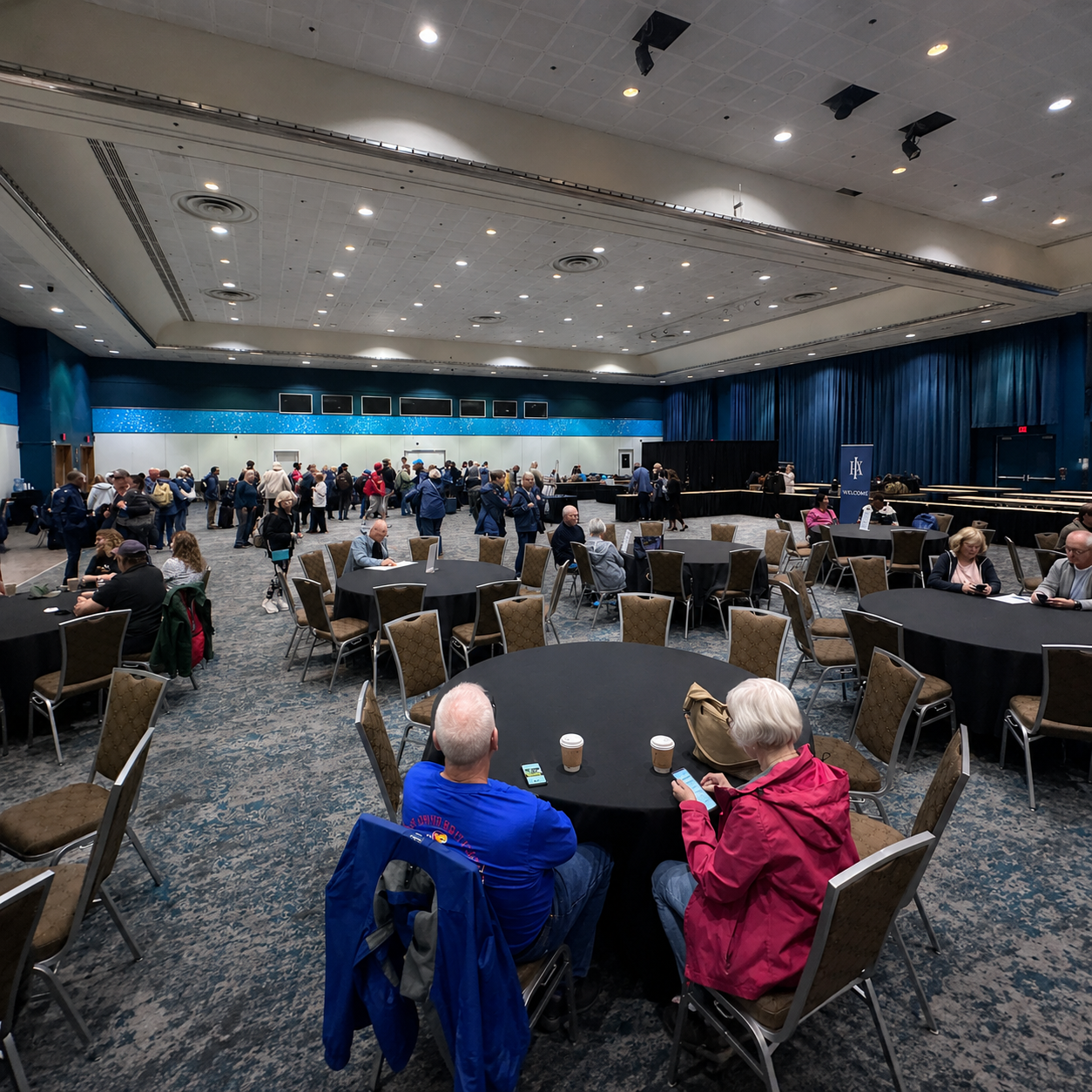
HX's hospitality center in Anchorage, where guests could store luggage and wait for airport transfers.
Looking back on ten days, a few things stand out. The ship's design keeps you connected to the outside world constantly — floor-to-ceiling windows everywhere you sit. The crew created an atmosphere I haven't found on larger ships; several remembered us from an Antarctica expedition six months earlier, and one officer estimated roughly seventy percent of the crew had stayed on since that voyage. The other passengers became part of the experience too — shared lectures, Zodiac rides, and evening conversation in the Explorer Lounge made it feel like traveling with a community rather than a few hundred strangers.
April went into this trip wondering if an expedition cruise would be too science-heavy for her taste. By day three, she was already asking which HX itinerary we'd book next. That tells you most of what you need to know.
If I sailed this itinerary again, I'd still choose the northbound route from Vancouver to Whittier, but I'd add an extra day in Vancouver before boarding. The pacing of the itinerary itself works well — each stop builds on the last, from Misty Fjords to Klawock, Kake, the Inian Islands, Icy Bay, Valdez, and finally College Fjord.
Would I sail HX Expeditions again? Yes, without question. Traditional Alaska cruises are still a fine vacation, and I'll keep booking them for clients who want that. But an expedition cruise puts you inside the place instead of just showing it to you, and for us, that made the difference.
Talk Through Your Alaska Expedition Options
Whether you're looking at this itinerary or a different HX Expeditions voyage entirely, reach out and we'll help you find the right fit — cabin categories, timing, and pre or post-cruise time in Vancouver or Anchorage. We also currently have a limited-time exclusive rate running on HX Expeditions' Alaska Inside Passage sailing, including a couple of solo cabins still available.
Expedition Cruising in Alaska — What Travelers Ask
Let Us Know What You Think
Questions about this itinerary or planning your own? Reach out directly.
Email Us →