
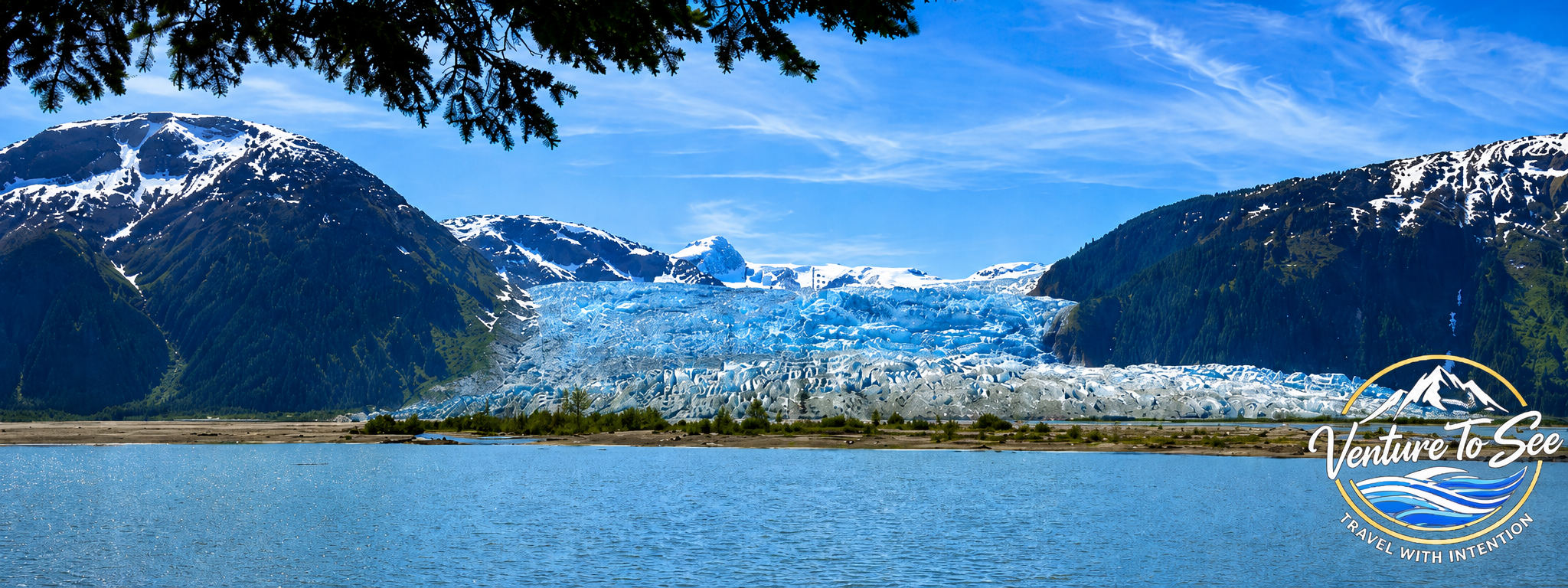
Alaska
Three million lakes, 100,000 glaciers, and a coastline longer than all other US states combined. Alaska's Inside Passage and Gulf Coast deliver the most accessible concentration of temperate rainforest, tidewater glacier, and megafauna wildlife in North America — all within reach of a short flight from Seattle or Anchorage.
Seasons & best months to visit
Alaska's expedition season is tightly concentrated in five months — May through September — when the combination of accessible wildlife, navigable waters, and long daylight hours creates the optimal expedition experience. Every month has its champions; the best time depends on what you most want to witness.
Early Season
Spring arrives dramatically. Humpback and orca return to feeding grounds; black and brown bears emerge from dens with cubs visible on shorelines. Wildflowers blanket coastal meadows. Snow still crowns the peaks, providing the most dramatic landscape contrast of the year. Fewer vessels; excellent value. Shorebird migration peaks — millions of western sandpipers, dunlin, and red knots stage on Copper River Delta. Water temperatures cold but seas generally calmer than summer.
Peak Season
Alaska at its most vibrant. Up to 19 hours of daylight in June illuminates glaciers, fjords, and wildlife simultaneously. Humpback bubble-net feeding off Frederick Sound peaks in July–August — one of the most spectacular cetacean feeding behaviours anywhere on Earth. Brown bears concentrate at salmon streams from late July; Steller sea lion rookeries are at peak activity. Orca pods are most reliably encountered in Chatham Strait. Glacier calving is most frequent and dramatic in the summer warmth.
Late Season
Alaska's most underrated expedition month. The landscape shifts to gold and crimson as coastal vegetation turns. Brown bears at salmon streams are at their most intense — hyperphagia-driven feeding before hibernation provides extraordinary wildlife viewing. Humpback whales remain abundant through mid-September. Crowds thin dramatically; light quality is exceptional — low-angle golden light that summer's high sun cannot replicate. First light dustings of snow on the peaks begin to appear from mid-September.
Off Season
Expedition cruising ceases. Southeast Alaska communities remain accessible by ferry and air. The Inside Passage in winter delivers extraordinary northern lights viewing (October–March), and bald eagles congregate in vast numbers at the Chilkat River near Haines (November–January) — up to 3,000 birds feeding on late-run chum salmon. A specialist experience for independent travellers, not expedition cruise territory.
Glacier Bay National Park
A 3.3-million-acre UNESCO World Heritage Site that 250 years ago was buried under 1km of ice. Today its 1,000km of coastline hosts 16 tidewater glaciers actively calving into the bay. Humpback whales, harbour seals, and mountain goats are reliably encountered. Vessel access is strictly controlled — only a limited number of permit-holders can enter per day, making expedition timing critical. The transition from open bay to towering glacier faces in a single day is one of North America's great natural experiences.
Frederick Sound
The heart of Alaska's humpback whale concentration — the rich krill and herring of Frederick Sound support one of the largest humpback aggregations in the North Pacific from June through August. Bubble-net feeding events, where groups of 3–15 whales coordinate to drive herring to the surface in a spiral of bubbles before lunging through together, are reliably observed here. Steller sea lions, Dall's porpoise, and Steller's sea eagle are additional species. Accessible from Petersburg or Sitka.
Kenai Fjords National Park
Accessible from Seward, Kenai Fjords protects the Harding Icefield — one of the largest icefields in the US — and dozens of tidewater glaciers. The outer coast hosts one of the richest marine mammal environments in Alaska: Steller sea lions, harbour seals, orca, and humpbacks; seabird colonies of puffin, murre, and kittiwake numbering hundreds of thousands. Resurrection Bay offers spectacular glacier viewing by vessel; the outer coast requires more capable expedition ships.
Misty Fiords National Monument
A 3.7-million-acre wilderness of sheer granite walls rising 900m directly from saltwater — one of the most dramatic fjord landscapes in North America, comparable to Norway's finest. Virtually no visitor infrastructure; accessible only by floatplane or small vessel. Harbour seals, mountain goats, and black bears populate the shorelines. The 50km Rudyard Bay and Walker Cove penetrate deep into the monument — accessible only to small expedition vessels with shallow draft.
McNeil River State Game Sanctuary
The world's largest known concentration of wild brown bears — up to 144 individual bears recorded in a single day at McNeil Falls during the July chum salmon run. Access is strictly controlled by Alaska Department of Fish and Game permit lottery (apply by March 1 for the following summer). Only 10 permits issued per day. An extraordinary experience that requires advance planning and is accessible only on foot from a floatplane, not from expedition vessels — but worth noting as a unique Alaskan land extension.
Icy Strait Point & Point Adolphus
Icy Strait Point, adjacent to the Huna Tlingit community of Hoonah, is the closest Alaska cruise port to Glacier Bay and an increasingly important cultural destination. Point Adolphus, directly across Icy Strait, is one of Alaska's most reliable humpback whale watching locations — the rich upwelling at the entrance to Glacier Bay concentrates whales in extraordinary numbers from June through August. Huna Tlingit cultural experiences — traditional storytelling, regalia, and food — are integrated into expedition landings here.
Monthly weather patterns
Data reflects Southeast Alaska (Juneau, 58°N) — the heart of Inside Passage expedition cruising. The Gulf of Alaska coast (Seward, Kodiak) is more exposed and significantly wetter. Southcentral Alaska (Anchorage/Kenai) is drier and more continental. All Alaskan weather changes rapidly — a clear morning can become a drizzling afternoon within hours, and vice versa.
| Month | Air Temp (°C) | Sea Temp (°C) | Daylight | Precipitation | Sea Conditions | Season |
|---|---|---|---|---|---|---|
| May | +5 to +13°C | +7 to +10°C | 16–17 hrs | Rain/showers, 90mm | Calm–Moderate | Shoulder |
| June | +9 to +16°C | +9 to +12°C | 18–19 hrs | Rain/showers, 80mm | Calm–Moderate | Peak |
| July | +11 to +18°C | +11 to +14°C | 17–18 hrs | Rain/showers, 110mm | Calm–Moderate | Peak |
| August | +11 to +17°C | +12 to +15°C | 15–16 hrs | Rain, 130mm | Calm–Moderate | Peak |
| September | +7 to +13°C | +10 to +13°C | 12–14 hrs | Rain, 150mm | Moderate | Shoulder |
The rainforest reality
Southeast Alaska is a temperate rainforest — Juneau receives 1,500mm of precipitation per year; Ketchikan up to 4,000mm, making it one of the wettest cities in the United States. Rain is not an obstacle to the Alaska experience — it is the mechanism that created it. The Sitka spruce and western hemlock forests, the glacier-fed rivers, the salmon runs, and the extraordinary density of wildlife all exist because of the rain. Bring excellent waterproofs, treat every overcast day as atmospheric, and shoot in the rain — the soft diffuse light of a drizzling Alaska morning on a calm fjord is extraordinarily photogenic.
Wildlife by month
Alaska's wildlife calendar is one of the richest in the Northern Hemisphere — marine mammals, bears, eagles, and millions of migratory seabirds concentrated along a coastline that funnels the productivity of the North Pacific. The five-month season covers the full arc from spring arrival to pre-hibernation feeding intensity.
| Species | May | Jun | Jul | Aug | Sep |
|---|---|---|---|---|---|
| Humpback WhaleMegaptera novaeangliae | ● | ★ | ★ | ★ | ● |
| OrcaOrcinus orca | ● | ★ | ★ | ★ | ● |
| Dall's PorpoisePhocoenoides dalli | ● | ★ | ★ | ★ | ● |
| Steller Sea LionEumetopias jubatus | ● | ★ | ★ | ● | ● |
| Harbour SealPhoca vitulina | ● | ★ | ★ | ● | ● |
| Brown BearUrsus arctos | ★ | ● | ★ | ★ | ★ |
| Black BearUrsus americanus | ● | ● | ● | ★ | ★ |
| Bald EagleHaliaeetus leucocephalus | ★ | ★ | ★ | ★ | ★ |
| Tufted PuffinFratercula cirrhata | ● | ★ | ★ | ● | ◌ |
| Horned PuffinFratercula corniculata | ● | ★ | ★ | ● | ◌ |
| Pacific White-sided DolphinLagenorhynchus obliquidens | ◌ | ● | ★ | ★ | ● |
| Mountain GoatOreamnos americanus | ● | ★ | ★ | ● | ● |
| Humpback Salmon (Pink)Oncorhynchus gorbuscha | – | – | ★ | ★ | ● |
| Steller's JayCyanocitta stelleri | ● | ● | ● | ● | ● |
Cruise operator tips
Alaska is served by a wider range of vessel types than any other expedition destination in this series — from 2,000-passenger cruise ships to 8-passenger expedition yachts. The key distinction: only small vessels can navigate the narrowest fjords, access remote bear-viewing shorelines, and wait quietly alongside bubble-netting humpbacks. Alaska rewards small-ship cruising disproportionately.
Small Expedition Vessels
The definitive Alaska experience. Small vessels access Misty Fiords' innermost canyons, anchor off remote brown bear shorelines, and cut engines to drift alongside bubble-netting humpbacks without disturbing feeding behaviour. Naturalist-to-passenger ratios of 1:10 or better. Skiff (Zodiac equivalent) operations provide shoreline access that no larger ship can replicate. The most flexible, wildlife-responsive itineraries available in Alaska.
- UnCruise Adventures — Safari Endeavour, Wilderness Legacy (Alaska specialists)
- Lindblad Expeditions — National Geographic Sea Bird, Sea Lion
- American Cruise Lines — American Spirit, American Constellation
- Aqua-Firma — partnerships with specialist Alaska small ships
- AdventureSmith Explorations — curated small-ship Alaska voyages
Mid-Size Expedition
HX Expeditions, Silversea, and Viking bring strong expedition culture to Alaska itineraries — rotating skiff groups with dedicated naturalist teams. These vessels access Glacier Bay (permit holders) and key Inside Passage sites while providing more comfortable cabin options. HX vessels' PC6 ice rating provides additional flexibility in Glacier Bay and near calving glacier faces. Verify Glacier Bay access permits before booking — not all operators hold them.
- HX Expeditions — Roald Amundsen, MS Fridtjof Nansen (up to 490 pax, PC6)
- Silversea — Silver Muse, Silver Shadow (luxury Alaska)
- Viking — Viking Orion (selected Alaska seasons)
- Seabourn — Encore, Ovation (luxury small-ship)
Large Cruise Ships
The Inside Passage's port infrastructure — Ketchikan, Sitka, Juneau, Skagway — was built for large cruise ships, which bring 1.5 million visitors annually to Southeast Alaska. Excellent port-based excursions (Mendenhall Glacier from Juneau, whale watching from Sitka) are accessible regardless of ship size. However, large ships cannot access Misty Fiords, cannot wait for wildlife, and provide a fundamentally different experience from expedition cruising. Best suited for first-time Alaska visitors with comfort priorities.
- No skiff/Zodiac operations — port calls only
- Holland America — Koningsdam, Eurodam, Nieuw Amsterdam (Inside Passage)
- Princess, Royal Caribbean, Celebrity, Carnival, Norwegian
- Port-based wildlife excursions available at all Inside Passage stops
- Significantly lower cost than expedition alternatives
Classic Inside Passage
The benchmark Alaska expedition — Juneau or Sitka south through Chatham Strait and the Inside Passage to Ketchikan or Prince Rupert (or the reverse). Misty Fiords National Monument, LeConte Glacier (North America's southernmost active tidewater glacier), Tracy Arm Fjord, Frederick Sound humpback grounds, and Kake/Kuiu Island brown bear shorelines. 5–6 days of active skiff operations with a dedicated naturalist team. The most wildlife-dense Alaska itinerary available in a 7-day window.
Glacier Bay & Beyond
Adds Glacier Bay National Park (NPS permit holders only) to the Inside Passage itinerary — the crown jewel of Alaskan expedition cruising. 16 tidewater glaciers, harbour seals pupping on ice, humpbacks at Point Adolphus (just outside the park entrance), and Huna Tlingit cultural engagement at Hoonah. Typically departs Juneau or Sitka and returns to Seattle or Vancouver. The most comprehensively rewarding Alaskan expedition itinerary for wildlife and landscape diversity.
Kenai Fjords & Prince William Sound
Departing Seward or Whittier — the Gulf of Alaska face of the state, offering a completely different character from the Inside Passage. Kenai Fjords' outer coast, the Harding Icefield's tidewater outlets, the wildlife-rich waters of Prince William Sound (site of the 1989 Exxon Valdez spill and subsequent ecosystem recovery), and Columbia Glacier (one of Alaska's most dramatic calving glaciers). Sea otters, Steller sea lions, and tufted puffin colonies distinguish this route from the Inside Passage.
Alaska to the Aleutians
The most ambitious Alaska itinerary — from Southeast Alaska west through the Gulf of Alaska, Kodiak Island (the largest brown bear population density per square mile in North America — up to 3,500 bears on a single island), and into the Aleutian Island chain. The outer Aleutians are one of the world's least-visited wild places — accessible only in the brief July–September weather window. Northern fur seal rookeries on the Pribilof Islands host up to 1 million seals. A true expedition voyage requiring specialist operators and capable vessels.
Glacier Bay NPS permits
Glacier Bay National Park strictly limits the number of vessels that can enter per day — both private and commercial. Only operators holding NPS concession permits can take passengers into the bay. Verify your operator's permit status before booking. Large cruise ships hold separate permits; expedition vessels operate on a separate allocation. Permit access is one of the most meaningful ways operators differentiate in Alaska.
Naturalist ratio matters most
For Alaska wildlife immersion, seek a ratio of 1:10 or better. Your naturalist's ability to identify species, explain bear behaviour, and interpret glacial geology from the deck or skiff is what separates a good voyage from an extraordinary one. Ask operators specifically about naturalist credentials — ideal is a combination of marine biology, ornithology, and glaciology expertise on a single vessel.
Embarkation options
Seattle (SEA), Anchorage (ANC), Juneau (JNU), Sitka (SIT), and Ketchikan (KTN) are the primary embarkation points. Juneau has no road connection to the rest of Alaska — fly or arrive by sea. Seattle is the most connected hub for international travellers. Allow a buffer night before embarkation — Alaskan weather causes flight delays year-round.
Book 9–12 months ahead
Peak season Alaska small-ship departures (July on UnCruise, Lindblad, and equivalent vessels) sell out 9–12 months in advance. Glacier Bay permit-holding departures are particularly constrained — the permit limit creates finite capacity. May and September offer more availability with compelling wildlife and lower prices than midsummer.
Packing essentials
Alaska's packing demands are driven by two realities: it rains constantly, and temperatures vary enormously — from 6°C on a June glacier face to 18°C in a Sitka afternoon sun. The layering system is similar to other cold-water expedition destinations, but Alaska's relative warmth means lightweight synthetics outperform the heavyweight merino appropriate for polar destinations.
Waterproof outer layer
- Hardshell rain jacket — Gore-Tex or equivalent. Juneau rains 240 days per year.
- Waterproof rain trousers — for skiff operations and shoreline bear-viewing landings
- Rubber knee boots for wet beach landings — most operators supply; confirm sizing
- Packable windproof layer for calmer, cooler days on the water
- Dry bags × 2 for camera gear in skiffs
Insulation layers
- Merino wool or synthetic base layer tops × 3 (lightweight 150–200gsm for Alaska summers)
- Merino wool base layer bottoms × 2
- Mid-weight fleece (200wt) × 2
- Light down or synthetic insulated jacket for glacier face approaches
- Merino wool socks × 6 pairs
- Casual clothing for evenings on board
Accessories
- Waterproof gloves or light over-mitts — skiff wind chill demands them even in July
- Thin liner gloves for camera operation
- Warm hat × 2
- Neck gaiter or buff
- Polarised sunglasses — glacier and water glare on calm days is severe
- SPF 30+ sunscreen — UV reflected off glaciers and calm water is intense despite cool temps
- Insect repellent — black flies and no-see-ums in sheltered forest landings July–August
Photography kit
- Telephoto zoom (100–500mm) — brown bears on distant shorelines, bubble-netting humpbacks, bald eagles in flight
- Wide-angle zoom (16–35mm) — glacier face scale demands it
- Waterproof rain sleeve — essential in constant Alaskan drizzle
- Spare batteries × 3 (cool and wet conditions drain charge)
- Polarising filter — cuts water glare, deepens the blue of glacial ice
- Memory cards 256GB+ total
- Waterproof dry bag for skiff crossings
Footwear
- Waterproof hiking boots — mid-cut minimum for forest trails and rocky shorelines; essential for bear-viewing landings
- Trekking poles — Alaskan rainforest trails are slippery with wet roots and moss
- Lightweight trail runners for drier day excursions
- Camp footwear for on-board use
Health & essentials
- Travel insurance with medical evacuation (nearest major hospitals Juneau, Anchorage, Seattle)
- Seasickness medication — the Gulf of Alaska outer coast and certain Inside Passage crossings can be rough, particularly in May and September
- Personal prescriptions × 2× supply
- Binoculars 10×42 — bear-shoreline scanning and whale identification from the skiff
- Bear spray if planning any independent hiking ashore (check with operator)
- The Sibley Guide to Birds — Western (definitive Alaska bird reference)
- Alaska's Inside Passage — Joe Upton (excellent pre-voyage context)
Photography tips
Alaska offers a photographic range that no single other destination in this guide series matches — from intimate portraits of brown bears fishing in a salmon stream to wide-angle panoramas of 20-glacier bays to telephoto cetacean behaviour shots. The challenge is not finding subjects but managing rapidly changing light, constant moisture, and the emotional overload of being surrounded by extraordinary wildlife simultaneously.
Alaskan rainforest light
Alaska's overcast skies — which locals call "Alaska sunshine" — are a photographer's gift. Diffuse, even light with no harsh shadows illuminates bear fur, puffin plumage, and glacier ice equally. Shoot confidently on overcast days — the light is often better than direct sun. When the sun breaks through (which happens dramatically after rain, with shafts of golden light on dark forest and glacier), the contrast is extraordinary. The golden hour at 57–60°N in June lasts 90 minutes at a very low angle — be on deck or in the skiff.
Bubble-net feeding humpbacks
Frederick Sound bubble-net feeding events — where groups of humpbacks spiral bubbles beneath a herring bait ball before lunging simultaneously to the surface with mouths open — are among the most dramatic wildlife spectacles available to any expedition photographer. The event lasts 5–30 seconds: pre-focus on the centre of the bubble ring on the surface (visible as a circle of disturbance before the lunge), use 1/2000s minimum, and shoot continuous bursts from lunge initiation through splash. A 200–400mm zoom at this distance provides ideal frame fill. Patience is everything — wait at the site, not one kilometre away.
Brown bears at salmon streams
Brown bears fishing salmon are one of the most sought-after wildlife images in North America — and Alaska delivers them reliably from late July through September. The key: stay still and let the bears approach naturally (your naturalist guide manages safety and positioning). Use 300–500mm for individual portraits; 100–200mm for environmental shots that include the stream and forest context. The most compelling images show specific behaviours — a successful catch with the salmon jumping clear of the water, a cub learning to fish, two bears in a confrontation over prime fishing position. Overcast light is ideal — direct sun creates harsh shadows in the dark fur.
Tidewater glaciers
Glacier calving in Alaska is more frequent and more accessible than in polar destinations — you can approach to within 400–600m of an active calving face by skiff and observe repeated calving events over an hour. Include scale: a small iceberg in the foreground against the 60m-high calving face communicates the scale that a telephoto shot alone never can. For calving events: a rifle-crack sound (2–3 seconds before visible calving) is your warning — pre-focus on the most active section of the face. Use 1/1000s minimum. The post-calving plume of spray and the wave that follows are secondary subjects that are often as dramatic as the calving itself.
Bald eagles
Bald eagles are so abundant in Southeast Alaska that they become almost commonplace — which is exactly when you should slow down and photograph them deliberately. At salmon streams in August–September, eagles sit on streamside branches waiting for salmon — approach slowly from downstream (so they face you) for eye-level portraits at 400mm. In flight over the water, use 1/2000s and follow the bird with continuous AF. The most dynamic bald eagle image in Alaska: a steal attempt (one eagle attacking another mid-flight to steal a caught salmon) — watch for the aggressive posture (talons extended, head lowered) that precedes the attack.
Protecting gear from moisture
Alaska's constant humidity and rain are the primary threats to camera equipment here. Carry a rain sleeve on the camera at all times when on deck or in a skiff — even when it's not actively raining, spray and mist will accumulate on exposed lenses within minutes. Wipe all metal surfaces after every skiff excursion with a dry microfibre cloth; salt water from coastal spray accelerates oxidation. Store cameras in a dry bag when not shooting. At the end of each day, leave camera bags open in the vessel's heated cabin to allow moisture to evaporate — closing a wet bag is what causes fungal growth on lens elements.
Conservation notes
Alaska's extraordinary wildlife exists because of the largest protected wilderness system in the United States — national parks, wildlife refuges, and wilderness areas covering an area the size of Western Europe. But the ecosystem faces pressure from climate change, salmon farming, ocean acidification, and the sheer volume of visitors that the state's port infrastructure now attracts.
Glacier retreat — documented crisis
Alaska contains roughly 50% of the world's temperate glaciers by area — and they are retreating faster than almost anywhere on Earth. The Columbia Glacier has retreated over 20km since 1980; Muir Glacier, which filled Glacier Bay in 1940 photographs, has completely disappeared. Glacier Bay itself was largely ice-free within living memory of the elders of Hoonah. The glaciers you see today from a skiff are measurably smaller than those documented a decade ago. The acceleration of Alaska glacier loss directly influences sea level, freshwater supply, and salmon habitat downstream.
Glacier Bay National Park management
The NPS manages Glacier Bay under a General Management Plan that explicitly limits commercial vessel traffic, motorised vessel speed near marine mammals, and aircraft overflight at low altitude. The vessel permit system — which caps daily entries — is a direct conservation mechanism. Humpback whale approach regulations (300m minimum for motorised vessels, 100m for non-motorised) are enforced within the park by NPS rangers. Report any violation of approach regulations to your naturalist immediately.
Wild salmon — the keystone species
Wild Pacific salmon are the keystone species of the entire Southeast Alaska ecosystem — feeding brown bears, bald eagles, orca, humpbacks, wolves, and dozens of other species. They are also the nutrient pipeline that fertilises the coastal rainforest itself (salmon carcasses decompose under the trees, providing marine-derived nitrogen that drives old-growth growth rates). Salmon populations face pressure from ocean warming, hatchery competition, and habitat loss. Choose operators who support wild salmon conservation and avoid farmed salmon purchases throughout Alaska.
Indigenous land and cultural protocols
Southeast Alaska is Tlingit, Haida, and Tsimshian territory — peoples with deep cultural connections to the land, sea, and wildlife your vessel transits. Cultural sites (totem poles, clan houses, ceremonial grounds) require cultural permission to visit. Photography at cultural events and ceremonies should only occur with explicit individual permission from participants. Operators with formal Alaska Native community partnerships — Hoonah, Klawock, Hydaburg, Kasaan — provide cultural context that makes the expedition richer and ensures communities benefit economically from expedition tourism.
Cruise industry impact in Juneau
Juneau now receives over 1.5 million cruise ship passengers annually — from a resident population of 32,000. The environmental and social impact of this concentration has become a major political issue in Southeast Alaska. Diesel emissions, anchor damage, waste water, and the sheer volume of visitors at popular sites (Mendenhall Glacier, Red Dog Saloon) create pressures that expedition vessels are well-positioned to avoid by anchoring in remote locations and visiting less-frequented sites. Choose expedition operators who actively support the Juneau Visitor Industry Council's sustainability framework.
Bear viewing distance and ethics
Alaska's brown bears are habituated to respectful human observation — but only when humans maintain appropriate distances (50 yards minimum from most bears; 100 yards from bears with cubs or at kills) and conduct themselves quietly. Never block a bear's access to food or its escape route. Never run — this triggers a pursuit response. At salmon streams, bears have priority at fishing positions; give way without hesitation. Bears that associate human presence with negative encounters become "food-conditioned" problem animals. Every interaction you have — or don't have — shapes that individual bear's relationship with humans for years.
Common questions about this expedition
Book With Confidence
We are affiliate partners with a select group of expedition and luxury cruise lines. Every recommendation is grounded in firsthand experience — we recommend these lines because we believe in what they deliver.



Help Us Make This Better
Expedition cruising is always evolving — new routes, changing conditions, better gear. If you've sailed Alaska and have something to add, a correction to share, or feedback on what helped you prepare, we'd genuinely love to hear it. Every message gets read.
Send FeedbackThe clothing recommendations, packing lists, and seasonal weather information in this guide are intended as general reference only. Protective clothing requirements, mandatory gear specifications, and seasonal operating conditions vary by operator, vessel, itinerary, and year — and must be verified directly with your expedition operator prior to departure. Glacier Bay National Park access is subject to NPS permit availability and regulatory conditions. Bear viewing safety protocols must be followed as directed by your naturalist guide at all times. Travel insurance with medical evacuation coverage is strongly recommended for all Alaska expedition travellers. This guide does not constitute safety advice.