
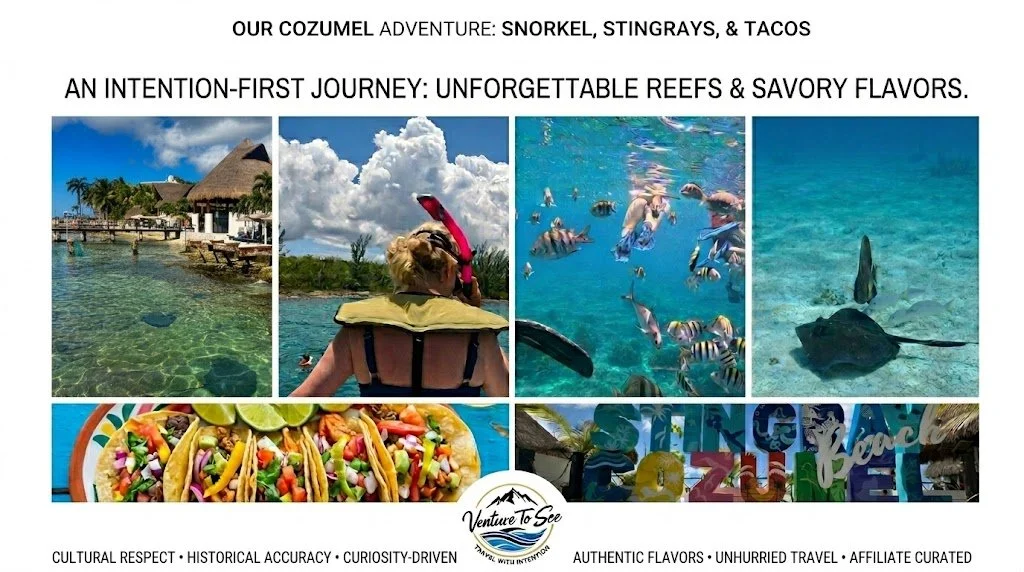
Reef Snorkeling, Stingrays, and Beach Tacos: The Cozumel Shore Excursion Worth Every Minute
Thinking about a Cozumel shore excursion? This firsthand experience covers snorkeling, stingrays, beach views, and tacos, with practical insights for cruise travelers looking for a well-rounded day in port.
⏱ 8-minute read
Reef Snorkeling, Stingrays, and Beach Tacos: The Cozumel Shore Excursion Worth Every Minute
A real talk review of the Royal Caribbean shore excursion "Cozumel Reef Snorkel, Stingray Adventure, and Beach Tacos" — from someone who's done way too many of these.
Let me paint you a picture. You're on a Royal Caribbean Western Caribbean Cruise and you've just docked in Cozumel, Mexico — one of the Caribbean's most iconic cruise ports — and you've got a full day ahead of you. You could wander the pier shops, grab a margarita at one of the tourist-trap spots near the dock, or... you could spend the next four hours snorkeling a reef, touching stingrays, watching nurse sharks glide under you, and capping it all off with all-you-can-eat beach tacos and an open bar. I'll let you guess which one I chose.
This is my full, unfiltered review of the Royal Caribbean shore excursion officially called "Cozumel Reef Snorkel, Stingray Adventure, and Beach Tacos" — and spoiler alert, it's the kind of shore excursion that makes you feel like you absolutely did the day right.

Leaving the pier — the adventure starts the moment you step on the boat.
The Arrival: No Tendering, No Stress
One of the first things I appreciated about this Royal Caribbean port stop was how smoothly the morning started. Cozumel is not a tender port — the ship pulls right up to the pier, you walk off, and you're on Mexican soil without waiting around for a flotilla of tiny boats. If you've cruised before, you know how much of a difference that makes. It's a small thing that sets a great tone for the whole day.
Our meeting time for the Cozumel Reef Snorkel, Stingray Adventure, and Beach Tacos excursion was 11:45 a.m., but because ship time and local Cozumel time are offset by an hour, I was actually off the ship by 10:00 a.m. local time. That left a full window to stretch your legs, grab a coffee, or just soak in the fact that you are standing in one of the most beautiful Caribbean destinations in the world. No rush, no chaos — exactly how a vacation morning should feel.
Booking Through Royal Caribbean: What to Know First
This excursion is bookable directly through Royal Caribbean's shore excursion portal, and honestly, for a Western Caribbean itinerary with a Cozumel stop, it's one of the standout options in the lineup. That said, before you hit book, there are a couple of things worth knowing upfront.
Once you reach the excursion meeting area at the pier, everyone signs waivers before heading out. One thing that stood out immediately — this tour has a 250-pound weight limit, and the operators do take it seriously. A couple of guests in our group were initially told they couldn't participate because they exceeded the requirement. One was eventually allowed to continue after some back-and-forth with both the tour operator and Royal Caribbean shore excursion staff on the pier. So please, read the fine print before you book. It saves everyone a difficult conversation at the dock.
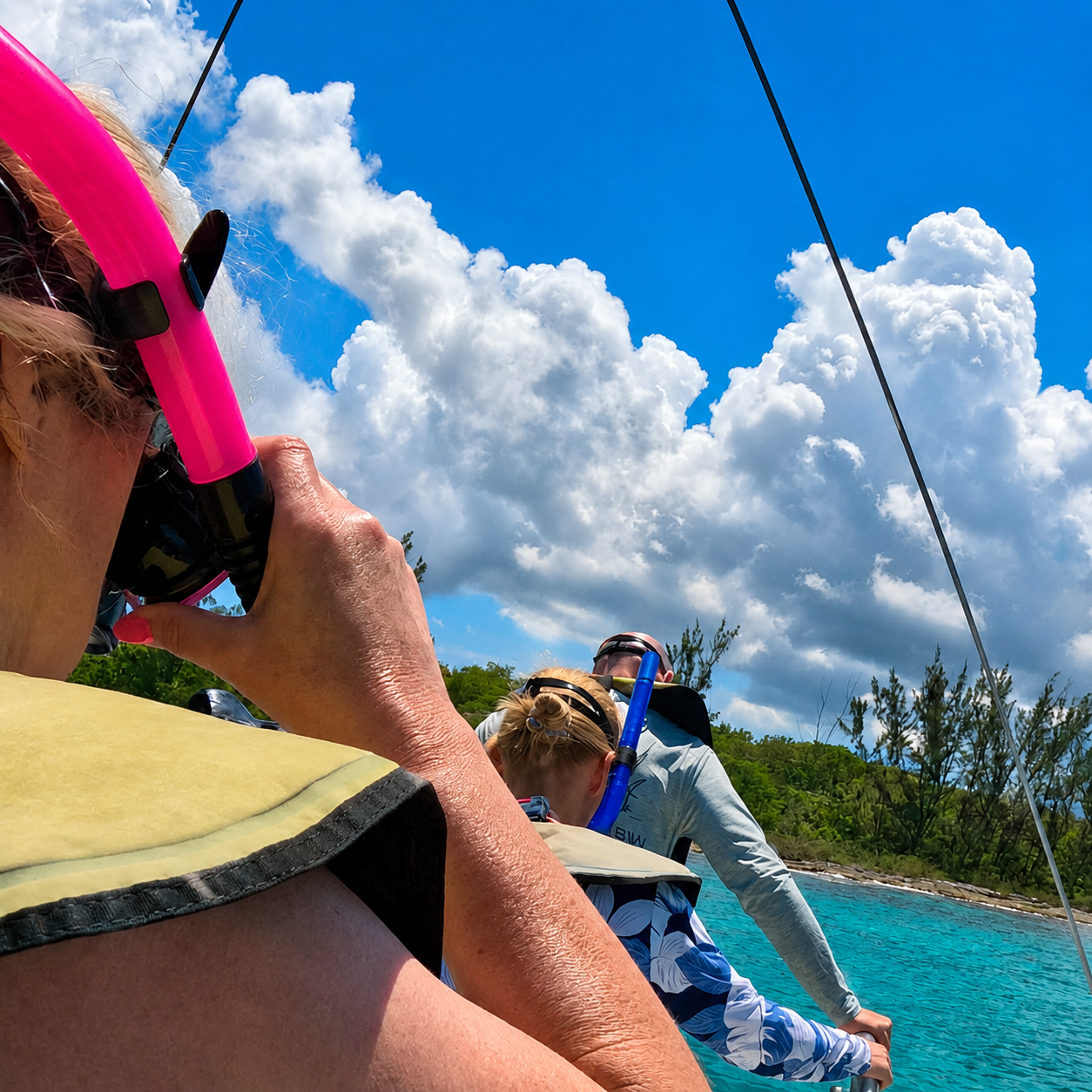

Small group, big vibes — only 18 of us on this one.
Small Group Size = Big Difference
Here's one of the things that genuinely surprised me about this Royal Caribbean excursion: there were only about 18 people on this tour. If you've ever been on one of those snorkeling tours with 50 people crammed together, you already know that's more "organized chaos" than "Caribbean adventure." This felt like a true small-group Cozumel excursion, which is increasingly rare — and increasingly valuable.
What I also loved was how little transit time was involved. The excursion ran about four hours total, but we weren't spending a big chunk of that riding around on a boat. We boarded near the pier, circled around the cruise port, and were in the water quickly. Efficient, well-organized, and exactly what you want from a Royal Caribbean Western Caribbean shore excursion.
First Snorkel Stop: Closer to Shore Than You'd Think (And Way Better)
Here's a fun fact: we were only about 1,000 yards from the cruise ships when we hit the water for the first snorkel. I'll be honest, I had low expectations. But near the shoreline, the depth ran about 12–18 feet before hitting a dramatic drop-off along the reef ledge — and that's where things got interesting. Coral formations, schools of sergeant majors, puffer fish, and guides tossing food into the water to bring everything swimming past you at eye level.
We had about 30–35 minutes in the water at this stop. No sharks, nothing extreme — just solid Cozumel reef snorkeling with a relaxed pace and plenty of marine life to watch. A great warm-up for what came next.


The reef drop-off was where the real action was — coral formations and fish everywhere.
- Apply sunscreen before you board — once the excursion starts, you cannot apply it due to reef protection rules.
- Use reef-safe sunscreen regardless. The reef is why we're here.
- The provided gear is basic — no dry-top snorkel valve. If you're picky about equipment, bring your own snorkel mask and tube.
- Inflatable buoyancy vests are provided and genuinely useful if you're not a strong swimmer.
Stingray City Cozumel: More Than Just a Photo Op
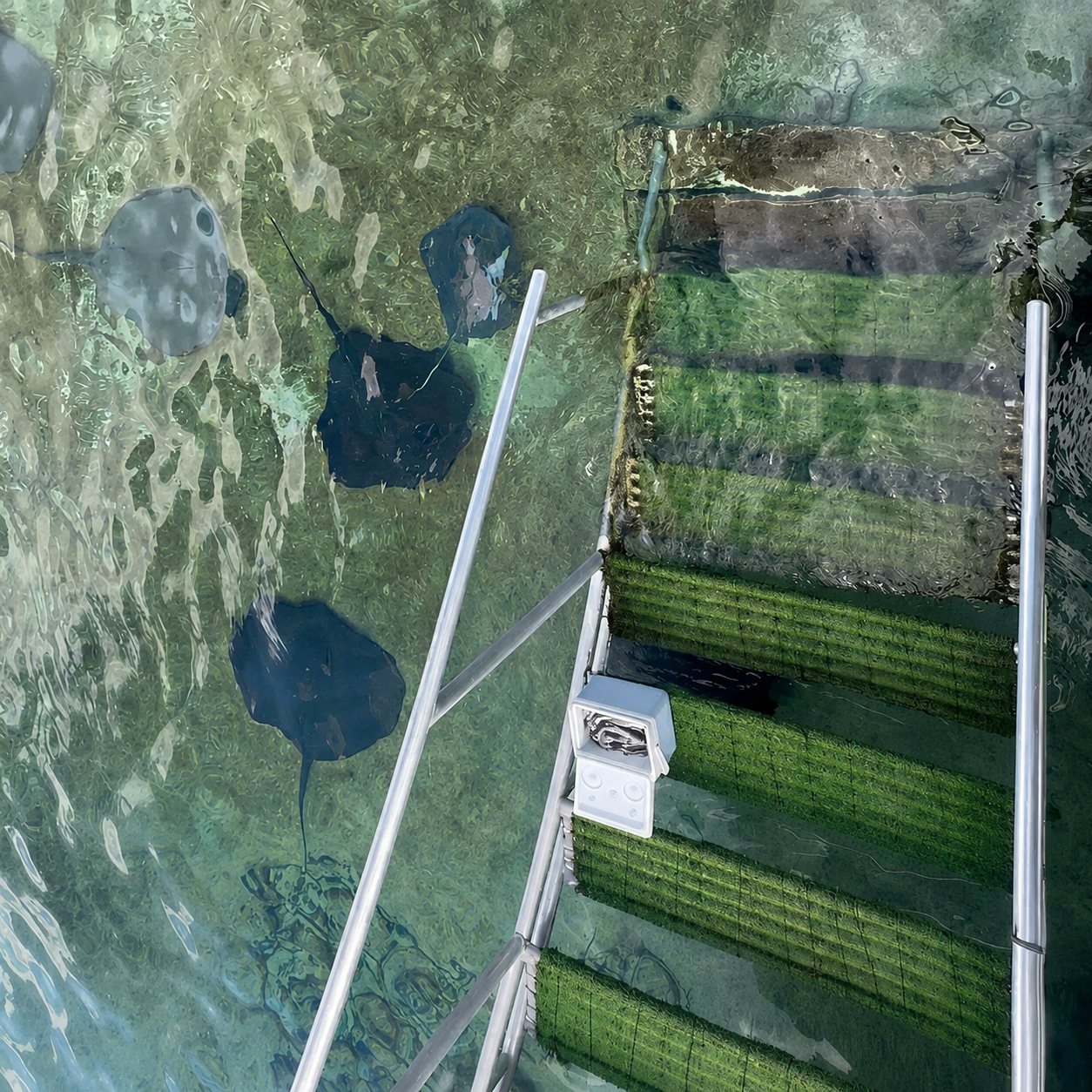
After a 20-minute boat ride — and you can still see the Royal Caribbean ship clearly the entire time, that's how close everything is — you arrive at Stingray City in Cozumel. The area is divided into three enclosed water sections: one with adult stingrays, one with smaller ones, and a third dedicated to open snorkeling.
The guides split the group — half snorkeled first, half went into the shallow interactive area. In the waist-deep water, you can touch the stingrays, hear more about them from the guides, and get that classic "stingray kiss" photo. The interaction felt organized, safe, and genuinely educational rather than just gimmicky.
One thing worth knowing: the stingrays' barbs have been removed for human interaction. According to the guide, the barbs grow back over time, and once the animals are healthy, they're released back into the wild. The facility reportedly has rescued around 35,000 stingrays — many injured in fishing-related incidents. Whether you're there for the fun of it or you care about the conservation angle, that added layer made it feel more meaningful.

Stingray City — divided into separate sections for interaction and open snorkeling.
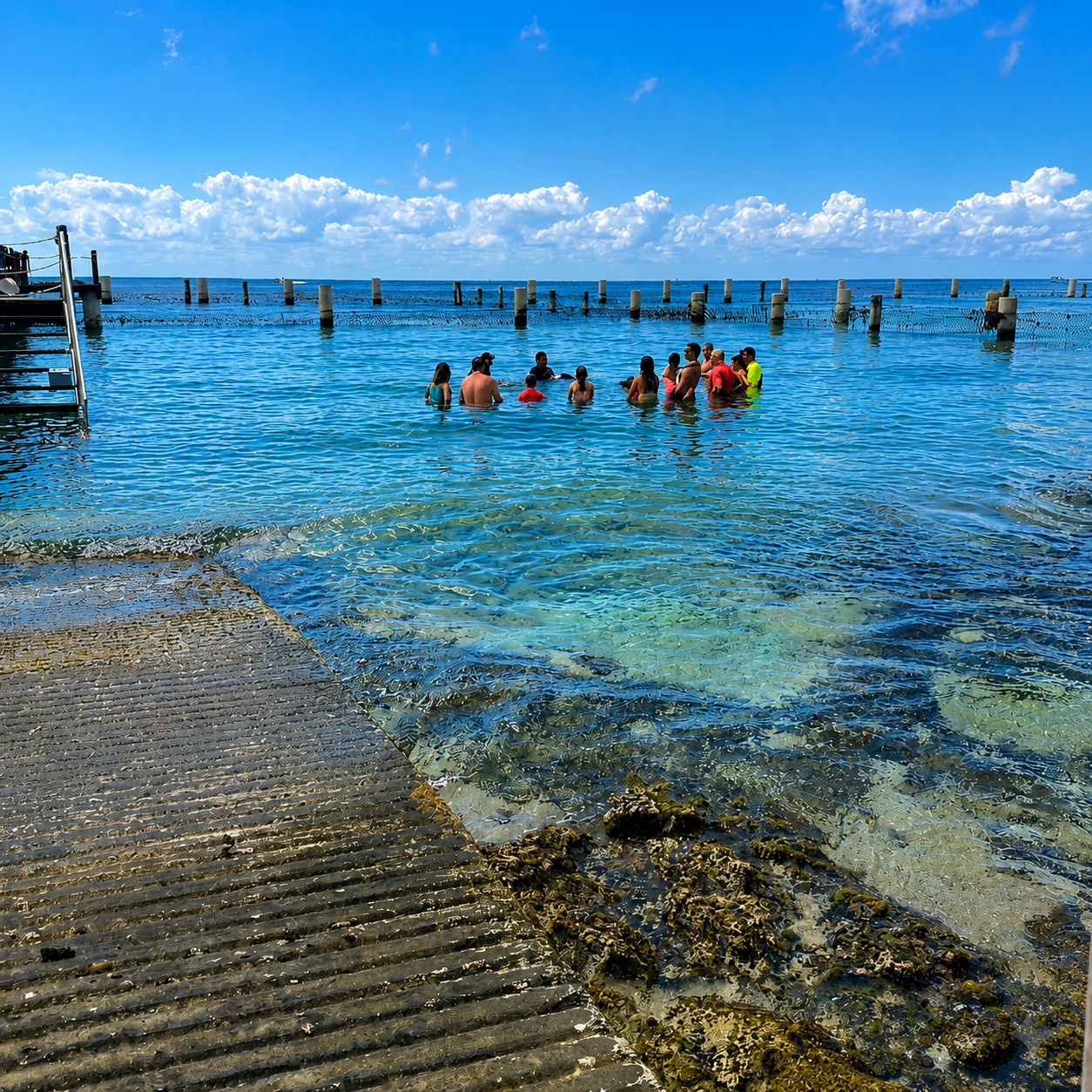

Up close and personal — these animals are incredible to interact with.
The Snorkeling at Stingray City: Unexpectedly the Best Part
Okay, this is where things got genuinely cool. The open snorkeling section at Stingray City dropped quickly to about 20–21 feet and felt completely different from the interaction zone — more open, more wild, more alive. We saw multiple free-swimming stingrays, tons of fish, and — my personal highlight — a couple of nurse sharks moving calmly through the water beneath us.
I was able to snorkel alongside them at close range. Nobody was panicking, nobody was crowding. Just a group of people floating in silence, watching marine life do its thing. It's the kind of moment that makes a Royal Caribbean shore excursion feel like a legitimate adventure rather than a packaged tourist experience.
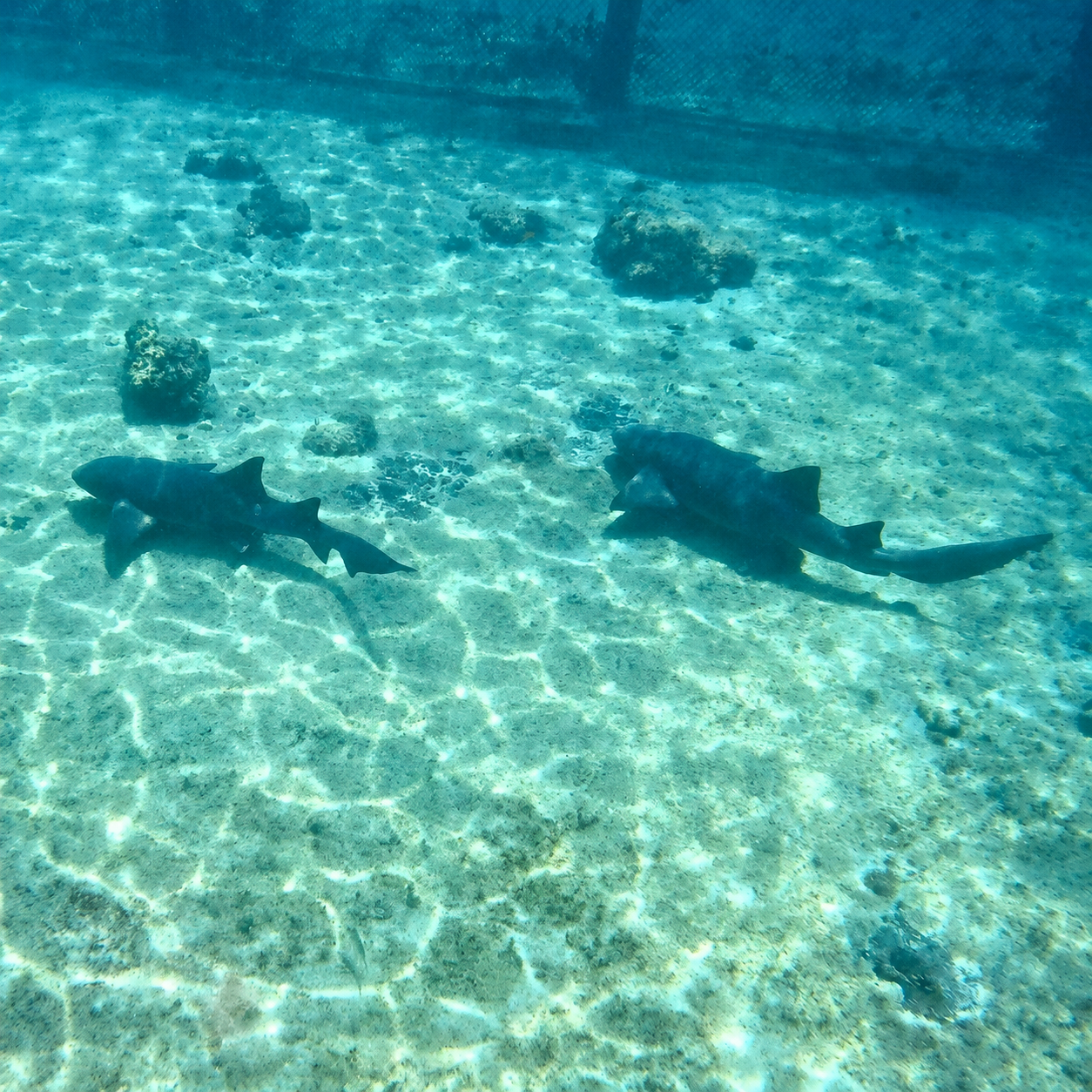
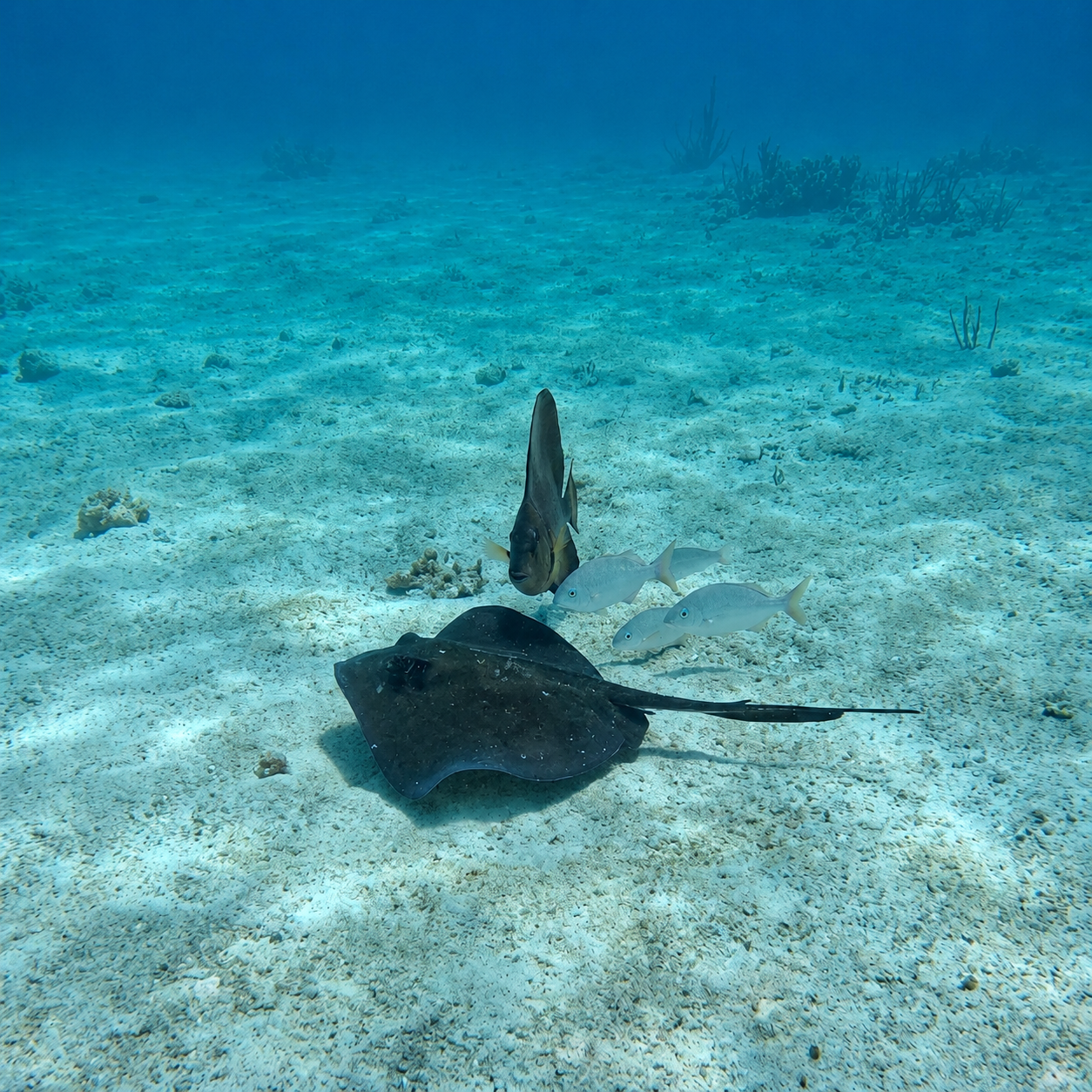
Free-swimming stingrays in the open snorkel section — a completely different experience from the shallow interaction zone.
Beach Break: Hammocks, Macaws, and a Hermit Crab Race
After the water portion, the pace shifted completely. The facility had seating areas along the water, hammocks and swings over the ocean, a small gift shop, and a couple of blue macaws available for photos. Nothing forced, nothing pushy — just a genuinely relaxed beach-club atmosphere that felt like a proper reward after all that snorkeling.
And then came the hermit crab race. Each person picked a hermit crab, gave it a name, placed it in a small circle drawn in the sand, and cheered for it to crawl to the outer boundary first. It is as absurd as it sounds. It was also completely delightful, and the kids in our group absolutely loved it. Small, unexpected touches like that are what separate a good excursion from a memorable one.
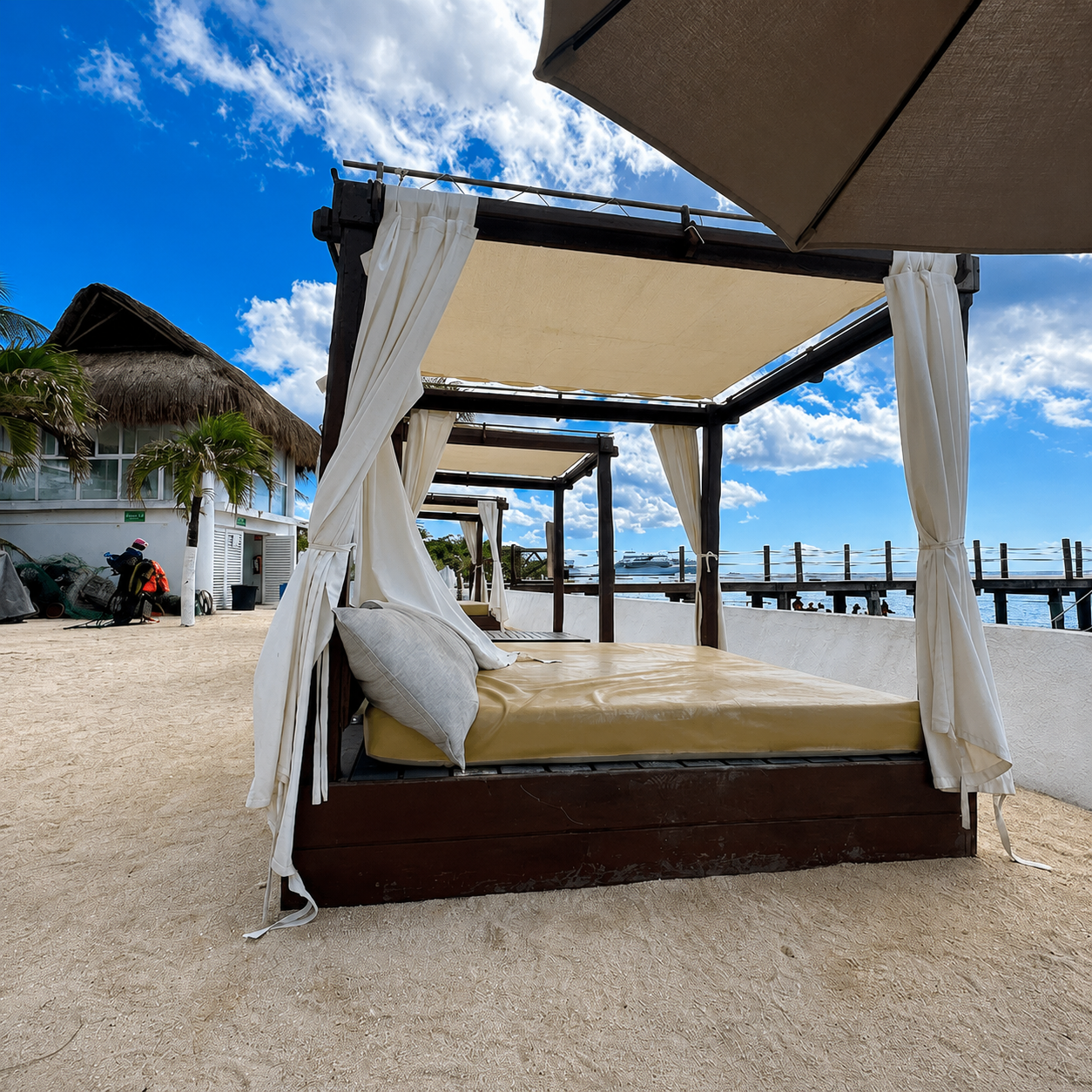
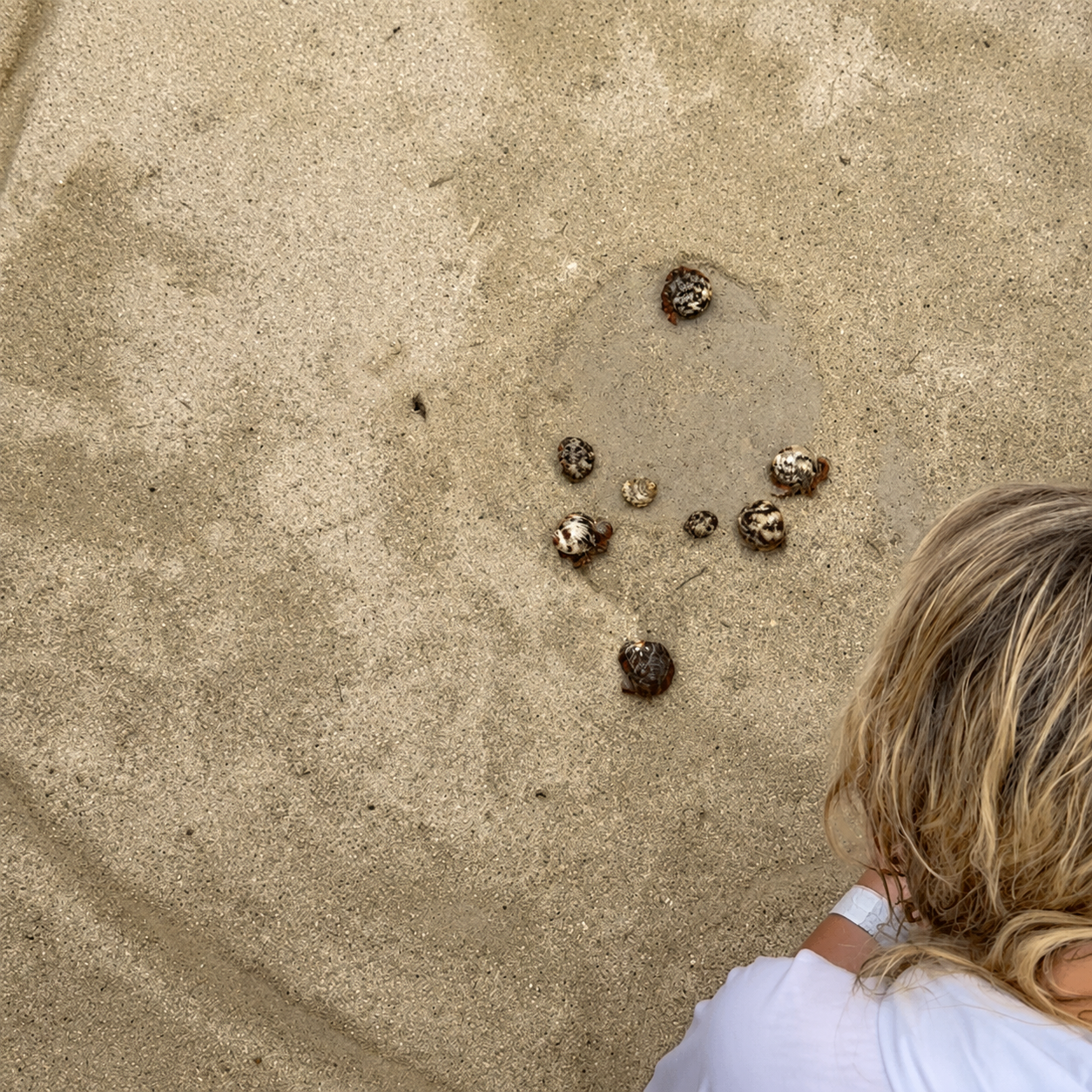
Left: Beach beds hammocks and swings make the beach break feel like a proper reward. Right: hermit crab racing — yes, it's exactly as chaotic and wonderful as it looks.
Beach Tacos + Open Bar = Yes, Always
Lunch was about an hour — maybe a little more — and it delivered. Fresh chicken tacos, grilled vegetables, homemade salsa, and guacamole. All you can eat. Everyone started with three tacos, but you just wave and more appear. The drinks were fully included too: mixed drinks, water, sodas — open bar for the duration of lunch. When you factor in that food and drinks are built into the price of this Royal Caribbean shore excursion, the value is genuinely hard to argue with.
Tipping, for what it's worth, was never once pushed on anyone. A jar near the taco station, a moment when you get back on the boat — but zero pressure. That goes a long way in feeling like a guest and not a walking wallet.
Massages were also available on the beach for an extra cost, which made this stop genuinely flexible. Active people could snorkel more. Beach people could relax. Families had the hermit crab nonsense. Everyone had something.
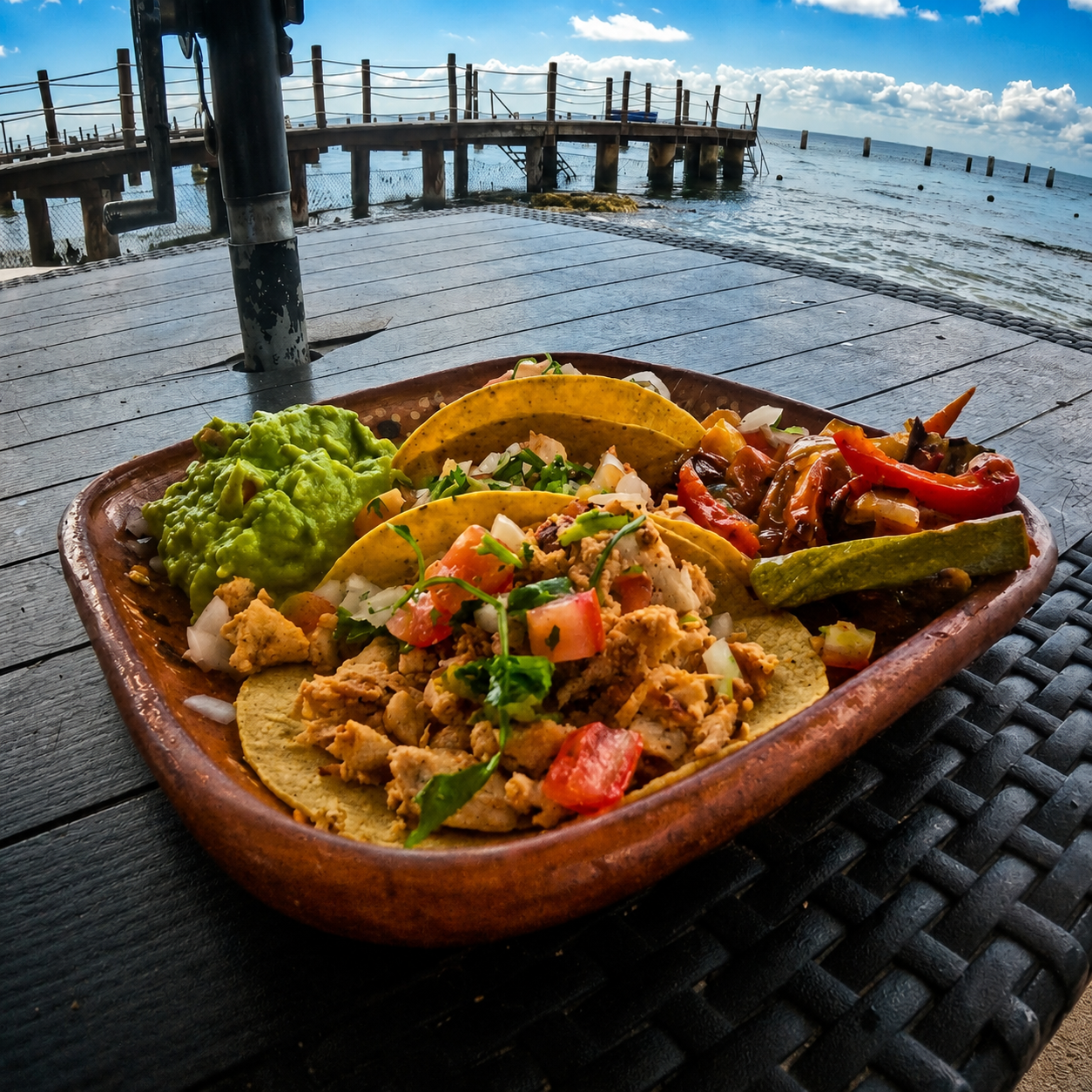
All-you-can-eat tacos, homemade guacamole, and an open bar. This is not a drill.
Who Is This Royal Caribbean Excursion Right For?
Great for: Royal Caribbean Western Caribbean cruisers wanting variety over a single activity, families with older kids (think 10+), people who want genuine marine life interaction without extreme difficulty, and anyone who considers tacos a form of self-care.
Not ideal for: Anyone over the 250-pound weight limit (verify before booking through Royal Caribbean), guests who want advanced or deep-water scuba-level experiences, and anyone who refuses to participate in hermit crab racing (just kidding — but also, come on).
Key reminder: Apply sunscreen before boarding. Bring your own snorkel gear if you want dry-top functionality. Book this one early — small group sizes mean it fills up faster than the bigger tours in the Royal Caribbean excursion lineup.
Can You Do Stingray City Independently?
Potentially, yes — the Stingray City Cozumel location appears to be accessible directly from the cruise port area without booking through Royal Caribbean. That said, I checked the major third-party booking platforms and didn't find an obvious way to pre-book it independently. If you want to try it on your own, you'll need to do some direct local research. For most Western Caribbean cruisers though, the convenience of booking through Royal Caribbean — guaranteed timing, pier-side coordination, and no risk of missing the ship — makes it well worth it.
Frequently Asked Questions About the Royal Caribbean Cozumel Shore Excursion
What is the Royal Caribbean "Cozumel Reef Snorkel, Stingray Adventure, and Beach Tacos" excursion?
It is an official Royal Caribbean Western Caribbean shore excursion available when your ship docks in Cozumel, Mexico. The excursion combines reef snorkeling at a coral drop-off near the cruise port, hands-on stingray interaction at Stingray City Cozumel, open-water snorkeling with marine life including nurse sharks and free-swimming stingrays, and a beach lunch featuring all-you-can-eat tacos and an open bar — all within approximately four hours.
How do I book the Cozumel Reef Snorkel, Stingray Adventure, and Beach Tacos excursion on Royal Caribbean?
You can book this excursion directly through Royal Caribbean's Cruise Planner portal before your sailing date, or through the shore excursions desk onboard the ship. Booking in advance through the Cruise Planner is recommended as the small group size — typically around 18 people — means this excursion can fill up quickly on popular Western Caribbean itineraries.
Is Cozumel a tender port on Royal Caribbean Western Caribbean cruises?
No — Cozumel is not a tender port. Royal Caribbean ships dock directly at the pier, so passengers can walk right off the ship without waiting for a tender boat. This makes it easy to get to your shore excursion meeting point on time and with zero stress.
What should I know before booking this Royal Caribbean Cozumel excursion?
This excursion has a 250-pound weight limit that operators enforce at check-in. Apply reef-safe sunscreen before boarding the boat, as sunscreen application is not permitted once underway to protect the reef. Consider bringing your own snorkel gear if you prefer a dry-top tube. Also note that ship time and local Cozumel time differ by one hour — factor that into your morning planning so you have plenty of time before your meeting time.
What is Stingray City in Cozumel like?
Stingray City in Cozumel is a guided marine experience featuring multiple enclosed water sections with stingrays of different sizes. Guests can touch and interact with stingrays in shallow waist-deep water, receive educational information from guides, and snorkel in a deeper open-water section where free-swimming stingrays, fish, and nurse sharks are commonly seen. The facility also emphasizes conservation, with staff explaining stingray rescue and release programs on site.
Are nurse sharks dangerous during snorkeling in Cozumel?
Nurse sharks are generally considered non-aggressive and are a common sight in Cozumel's waters, particularly near reef and protected marine areas. They are slow-moving, bottom-dwelling sharks that are typically unbothered by snorkelers. Sightings during the open snorkel section at Stingray City are considered a highlight of the experience, not a cause for concern, when observed calmly and without interference.
What is included in the Royal Caribbean Cozumel Reef Snorkel, Stingray Adventure, and Beach Tacos excursion?
The excursion includes reef snorkeling at a coral drop-off near the cruise port, guided stingray interaction at Stingray City Cozumel, additional open-water snorkeling with marine wildlife, beach time with seating areas, hammocks, and swings over the water, an all-you-can-eat lunch of chicken tacos grilled vegetables homemade salsa and guacamole, and a fully open bar with mixed drinks and non-alcoholic options. Basic snorkel equipment and buoyancy vests are provided. Optional extras like beach massages and excursion photo packages are available for an additional cost.
Is this Royal Caribbean Cozumel excursion good for families with kids?
Yes — this excursion is well-suited for families with older children, roughly ages 10 and up, especially kids who don't regularly spend time around marine life. The combination of hands-on stingray interaction, reef snorkeling, beach time, and fun extras like a hermit crab race make it engaging for different age groups. It is active but not intense, and the beach break with hammocks and swings provides relaxed downtime for anyone who needs it.
How long does the Cozumel Reef Snorkel, Stingray Adventure, and Beach Tacos excursion take?
The full excursion runs approximately four hours. Transit time on the boat is minimal since the reef snorkel location and Stingray City are both very close to the Cozumel cruise port — so the majority of your time is spent in the water or relaxing at the beach, not riding around on a boat.
Do I need to tip on Royal Caribbean shore excursions in Cozumel?
Tipping is not mandatory but is customary and appreciated for guides and crew. On this excursion, tipping opportunities were available but never pushed — a tip jar near the food station and a brief mention on the return boat ride were the only prompts. Bringing small bills in U.S. dollars or Mexican pesos is always a good idea for any Cozumel shore excursion.
Want More Real Talk Travel Like This?
I'm always out here chasing the excursions worth your time — the ones with actual marine life, actual tacos, and zero fluff. If this helped you plan your Royal Caribbean Western Caribbean cruise stop in Cozumel, follow along for more honest shore excursion reviews, Caribbean destination guides, and travel adventures from someone who just genuinely loves doing this.
📌 Pinterest: venturetosee
New adventures posted regularly — come along for the ride.
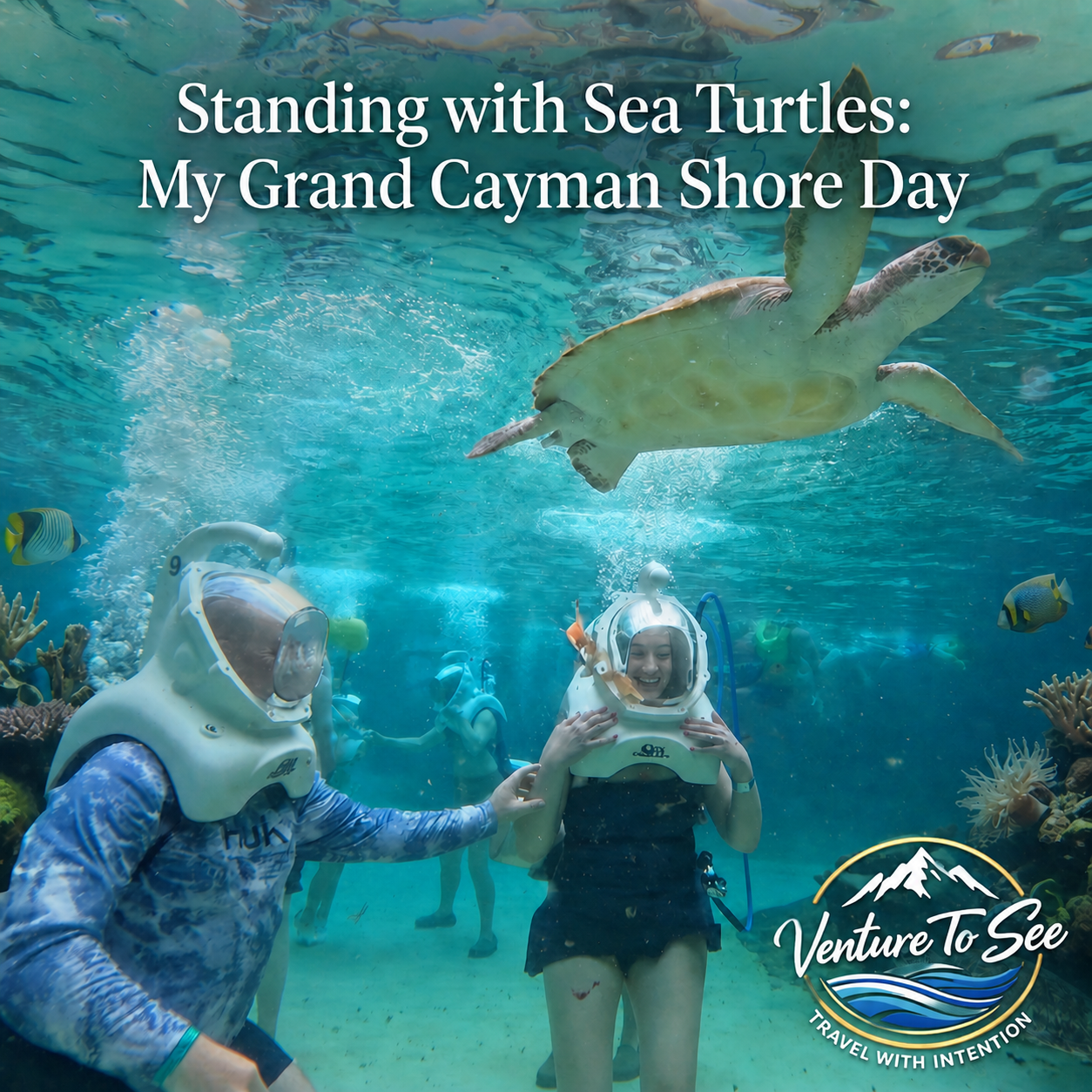
Standing with Sea Turtles: My Grand Cayman Shore Day Review
Thinking about the Sea Trek helmet dive in Grand Cayman? Here’s a firsthand review of this Cayman Turtle Centre shore excursion, including Royal Caribbean tender tips, how much time you really get there, and whether it’s a good fit for adults, kids, or multigenerational families.
The Sea Trek Helmet Dive at the Cayman Turtle Centre is one of those rare excursions that actually delivers. Here's what nearly 30 years of travel taught me to look for — and why this one earned a permanent place on my highlight reel.
By Venture To See·Grand Cayman, Cayman Islands·⏱ 9 min read
QUICK FACTS — CAYMAN TURTLE CENTRE SEA TREK
Port type: Tender port (Georgetown, Grand Cayman) — plan accordingly
Group size: Maximum 18 people per excursion — genuinely small
Helmet dive depth: Approximately 8 feet — no scuba certification needed
Active time underwater: Around 30 minutes
What to wear: Swimsuit and water shoes (Crocs available on-site up to size 12)
Return bus option: Public bus back to port runs every ~15 min, $2 per person
Ship all-aboard (reference): 5:15 PM — plenty of flexibility to extend your day
Best for: Families, older kids, first-timers, anyone wanting more than a beach chair
I have been moving through airports, cruise terminals, and unfamiliar streets for the better part of three decades. Work travel built the habit. Family travel gave it meaning. After all of that, I have developed a fairly reliable filter for what is worth doing on a shore day and what is just a way to burn four hours and come back with a magnet for your refrigerator.
The Sea Trek Helmet Dive at the Cayman Turtle Centre cleared that filter easily. Here is the full breakdown — including the parts the brochure glosses over.
Grand Cayman Is a Tender Port. Don't Underestimate That.
Georgetown does not have a cruise pier. Your ship anchors offshore and runs tenders — smaller boats — to bring passengers to land. That single logistical fact shapes your entire morning, and if you're not thinking about it the night before, you will feel it the next day.
On our sailing, Royal Caribbean began running tenders around 8:30 in the morning. Our excursion required us at the pier by 9:45, which meant getting down to the tender staging area by around 9:00. If you have booked through the cruise line, the process is built for you — you work into the tender line as groups are called. If you have booked independently, you need a tender number and you wait your turn.
PRACTICAL TIP We watched a family of four — independent booking — get told they'd need to wait for an available tender while cruise-line excursion guests moved ahead of them. At a tender port, booking through the cruise line can save real headaches when timing is tight. Factor this into your planning.
Once ashore, the pace settled. The tour operators met us at the pier, confirmed our group of 18, and we were on the bus by 10:15 or so. The drive across the island to the Turtle Centre took about 45 minutes. The driver kept things moving with some quick commentary — Seven Mile Beach, Governor's Beach, Cemetery Beach — nothing elaborate, but enough to remind you that Grand Cayman has a quiet, polished beauty before you ever get to the excursion itself.
Why 18 People Makes a Difference
The cap of 18 guests per tour is one of the first things the operators mentioned, and I appreciated it immediately. I have been on shore excursions where 40 people pile into a space designed for 20. This was not that.
Because only six people can do the helmet dive at a time, the group naturally divided into thirds. While one group was underwater, the others had real time to explore — the turtle habitats, the predator tank with large fish and sharks, the aquarium-style exhibits, the bird area, the water park section, the gift shop. It worked well. Nobody was standing around staring at their watch.
We arrived at the centre around 11:00 and were scheduled to regroup at 1:15. That gave us roughly two hours on-site. For adults and older kids focused on the dive experience, it is enough. For families with young children who would want longer in the water park or more time with the exhibits, it is worth knowing you can arrange to stay independently — more on that below.
The Turtles Before the Dive
Before anyone got in the water, the staff walked us through one of the sea turtle areas and gave us real context. They pointed out older residents — including one reportedly born in 1968 — and explained how the centre monitors egg-laying and hatchlings. The science behind what they do was laid out plainly and without performance.
That part of the visit mattered more than I expected. It reframed the whole experience. You were not just there to get a photo. You were being introduced to animals that have been in someone's careful care for decades.
The Helmet Dive: What It Actually Feels Like
Sea Trek is not scuba. You do not need any certification, and you do not need to be an especially confident swimmer. The dive area is about eight feet deep — shallow enough to stand on the bottom comfortably, deep enough to feel genuinely submerged.
The setup goes like this: you wear a metal frame harness on your back on shore. Once you are in the water and positioned, the staff lowers the helmet down onto your shoulders. On land, the helmet is heavy. In the water, that weight vanishes almost entirely. Air is pumped in continuously from above. You breathe normally. You walk along the bottom.
"Once the turtles started moving around me — gliding past at eye level, unhurried, completely at ease — the weight of the helmet, the logistics of the morning, all of it disappeared."
For me, this was the first time I'd been fully underwater without relying on a snorkel. That alone made it feel different. But the real shift came from the turtles themselves. There were maybe half a dozen, roughly the size of a pizza box each, moving through the water around us with an ease that made the whole scene feel calm rather than chaotic. Fish drifted through too. Once you settle into the rhythm of breathing and walking along the bottom, the experience becomes surprisingly meditative.
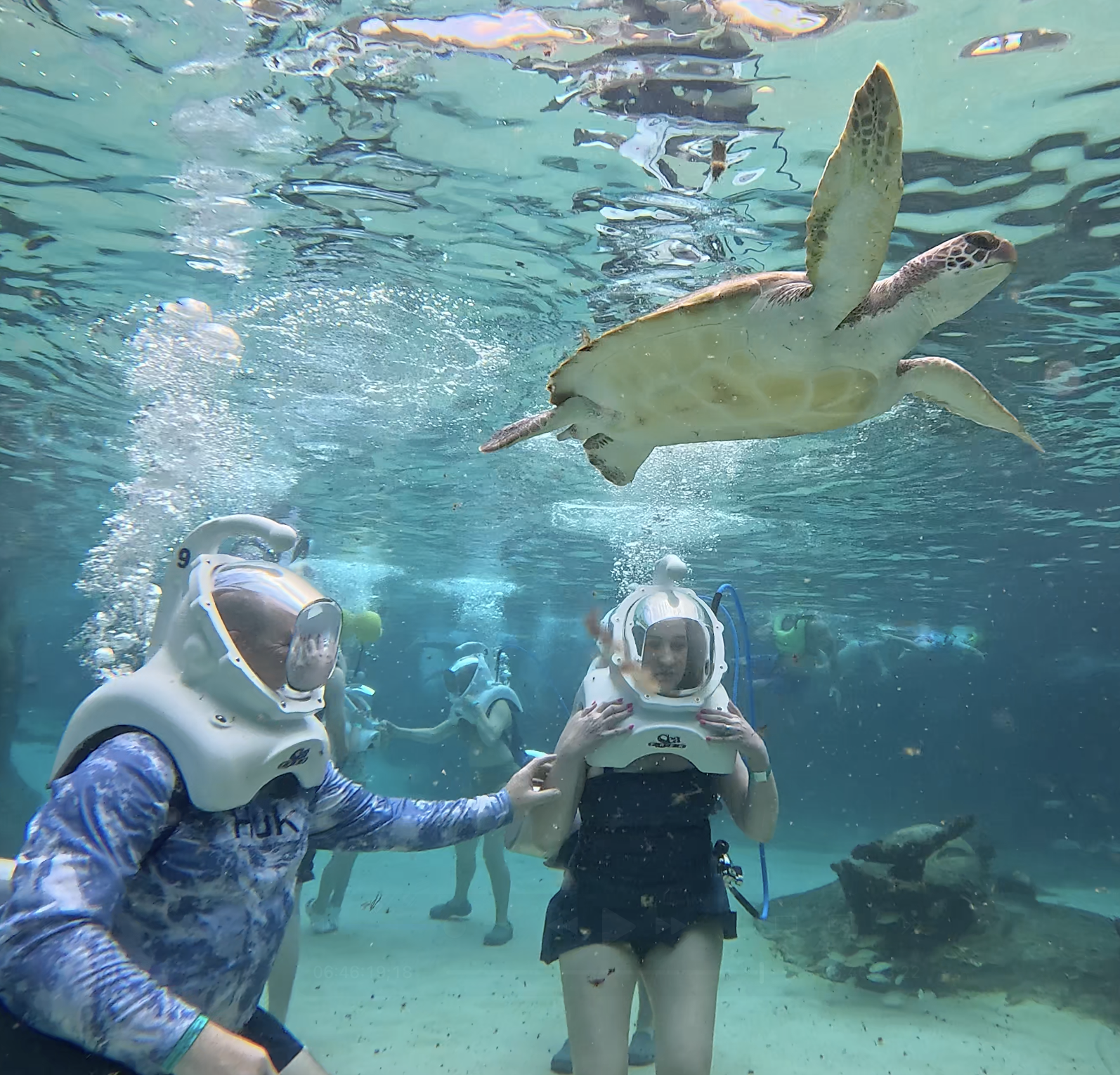
We spent about 30 minutes underwater. That is the right amount of time. Not so short that you feel rushed, not so long that the novelty wears off.
A Detail I Genuinely Appreciated: Hands-Free Photos
The guides handle all the photography while you're underwater. That sounds like a small thing until you realize what it means: your attention is fully free. No fumbling with a waterproof case. No splitting focus between the moment and the shot. You simply look around and take it in.
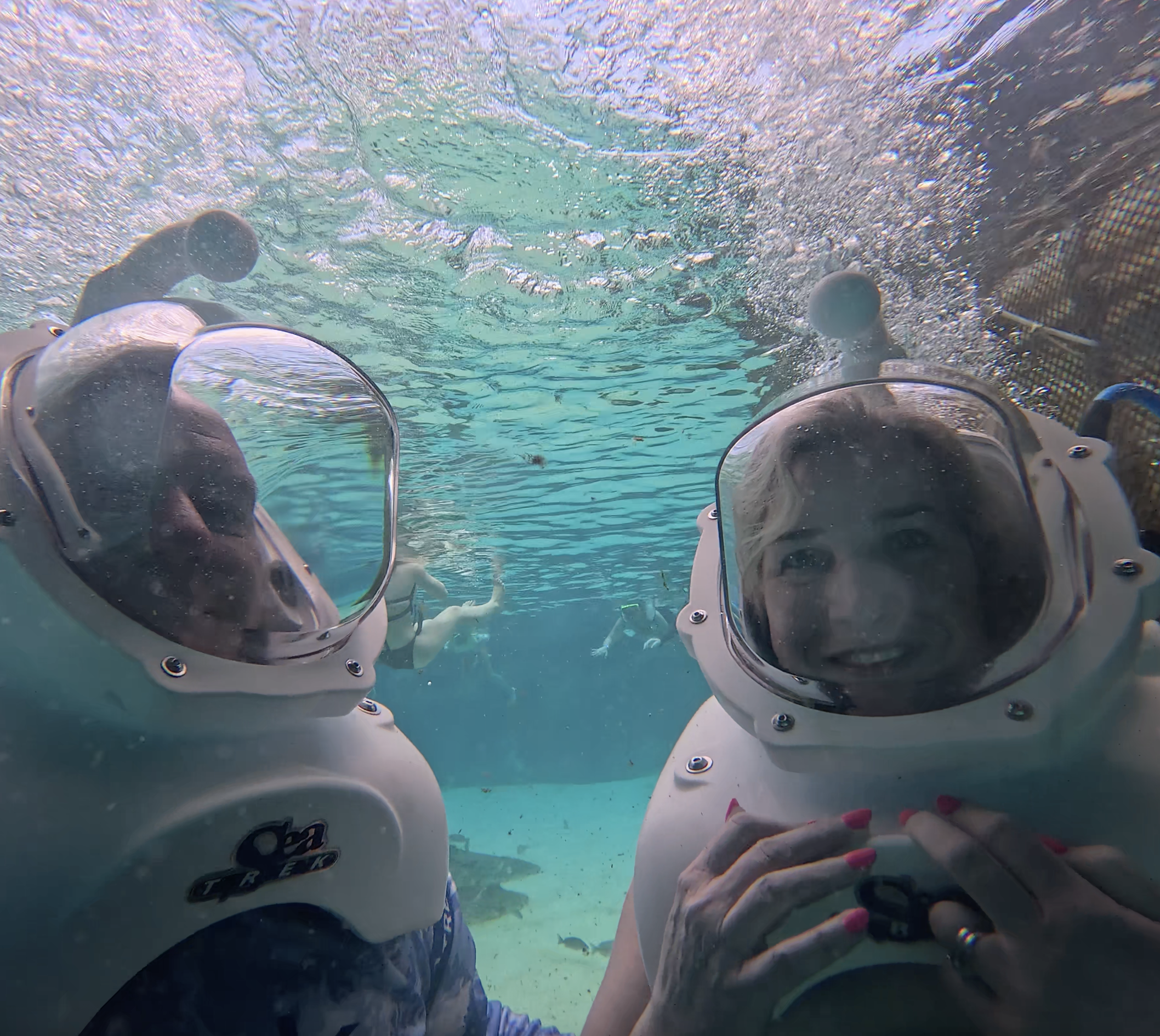
There were snorkelers in the lagoon during the helmet dive, so it is not a private space — but in practice, once you are down there with the turtles, the lagoon might as well not exist.
Flexibility at the End of the Day
This is worth knowing ahead of time. The ship's all-aboard was not until 5:15 in the evening, and the tour operators told us clearly that anyone who wanted to stay longer could sign a release and make their own way back. The public bus runs past the Turtle Centre — and the Dolphin Centre directly across the street — roughly every 15 minutes. Fare is $2 per person.
We left about 45 minutes before the scheduled return and caught the public bus back. Three of us, six dollars total, quick ride, a little more island scenery. It was a genuinely good bonus to the day.
FAMILIES WITH YOUNGER KIDS — READ THISThe water park section, the shark tank, and the bird area could easily fill another hour or two for children who want more time to explore. Budget for that. Talk to the operators when you arrive, sign the release, and use the public bus. The infrastructure supports it.
What Grand Cayman Looks Like Beyond the Excursion
We had time after returning to walk around the port area before heading back to the ship. Grand Cayman's port shopping district is clean, well-organized, and unmistakably Caribbean-cruise in character — plenty of stores, plenty of friendly sales pressure, and not much that is genuinely distinctive if you have done a few of these ports.
That is not a criticism so much as an observation. Grand Cayman, for a cruiser, is a port that rewards the traveler who has a plan. If your plan is a quality shore excursion, the day delivers. If your plan is to wander and see what happens, you may find yourself back on the ship before lunch.
Would I Do This Again?
Yes. Specifically for younger family members — kids, grandkids — I would do this first and build the day around it. The combination of the educational component, the helmet dive, and the tactile experience of being around the turtles makes it the kind of excursion that gives children something real to hold onto long after the cruise is over.
For adults traveling without children, it still holds up. The underwater experience is genuinely unlike most things you will do on a Caribbean port day. It is not adrenaline. It is something quieter — which, at a certain point in your travel life, becomes more valuable, not less.
The Verdict — From Someone Who's Seen Enough Shore Days to Know the Difference
The Sea Trek Helmet Dive at the Cayman Turtle Centre is one of the
To add a colored background behind the text box containing the headline "The Verdict — From Someone Who's Seen Enough Shore Days to Know the Difference", use one of these common methods depending on your environment.
HTML/CSS (for web pages)
Wrap the headline in an element and style its background:
The Verdict — From Someone Who's Seen Enough Shore Days to Know the Difference
.headline { background-color: #f2f2f2; /* choose any color */ padding: 12px 16px; /* space between text and box edges */ display: inline-block; /* shrink to text width; use block for full width */ border-radius: 6px; /* optional rounded corners */ color: #222; /* text color for contrast */ font-weight:
more honest shore excursions I have done in the Caribbean. The small group size is real. The educational component has substance. The underwater experience with the turtles is something you will remember. And the logistics — while not invisible — are manageable if you go in prepared.
Understand the tender process. Pack water shoes. Know your flexibility window at the end of the day. Do those three things, and this excursion will be the story you tell when someone asks how your cruise was.
★★★★☆ — Highly Recommended
Frequently Asked Questions
The questions I would have wanted answered before booking — straight answers, no filler.
Do you need to know how to swim to do the Sea Trek helmet dive at the Cayman Turtle Centre?
No swimming ability is required. The Sea Trek helmet dive takes place in water that is approximately eight feet deep, and you walk along the bottom rather than swim. Air is continuously pumped into the helmet, so you breathe normally the entire time. Staff are in the water with you at all times. It is one of the more accessible underwater experiences available to cruise passengers — suitable for non-swimmers and people who would not consider themselves ocean-comfortable.
Is the Cayman Turtle Centre Sea Trek worth it for adults without children?
Yes — though it hits differently than a family experience. The helmet dive itself is genuinely immersive: standing on the bottom of a lagoon with sea turtles moving around you at eye level is not something you replicate with a snorkel or a glass-bottom boat. The educational component about the centre's conservation work also adds real substance for adults who want more than just a photo opportunity. If you are choosing between this and a beach chair day, this wins on depth of experience — literally and otherwise.
Is the Cayman Turtle Centre Sea Trek worth it for adults without children?
Yes — though it hits differently than a family experience. The helmet dive itself is genuinely immersive: standing on the bottom of a lagoon with sea turtles moving around you at eye level is not something you replicate with a snorkel or a glass-bottom boat. The educational component about the centre's conservation work also adds real substance for adults who want more than just a photo opportunity. If you are choosing between this and a beach chair day, this wins on depth of experience — literally and otherwise.
How does the tender process work at Grand Cayman, and how does it affect my excursion timing?
Grand Cayman (Georgetown) is a tender port, meaning your ship anchors offshore and runs smaller shuttle boats to bring passengers ashore. If you have booked a shore excursion through the cruise line, you are typically called into the tender line as a group and given priority access. If you have booked independently, you will need a tender number and wait your turn — which can add meaningful time to your morning, especially on busy port days. For any excursion with a firm start time, arriving early to the tender staging area is essential. Plan to be in position at least 45 to 60 minutes before your required pier arrival time.
What should I wear and bring to the Sea Trek helmet dive?
Wear a swimsuit. Bring water shoes — the turtle swim area has a textured bottom that is easier to navigate with something on your feet. If you forget water shoes, the Cayman Turtle Centre has Crocs available on-site; the largest size available was a men's 12 when we visited, so larger-footed travelers should plan ahead. Leave valuables and anything you do not want wet on the bus or in a locker. The guides handle all in-water photography, so you do not need to bring a camera or waterproof case.
How long is the actual time in the water during the Sea Trek dive?
Approximately 30 minutes underwater. Because the excursion limits participants to six people per dive session and the total group size is capped at 18, the time is organized into three rotations. While you wait for your turn, there is genuinely plenty to explore at the facility — turtle exhibits, a predator tank, aquarium displays, a bird area, a water park, and a gift shop. The wait does not feel idle.
Can I stay longer at the Cayman Turtle Centre after the excursion ends?
Yes. The tour operators allow guests to sign a release and remain at the centre independently after the group departs. Getting back to the port is straightforward: a public bus runs past the Cayman Turtle Centre roughly every 15 minutes and costs $2 per person. The Dolphin Centre sits directly across the street, so there are two attractions in one location if you want to extend your day significantly. Just confirm the ship's all-aboard time before making this decision — and leave yourself ample buffer.
Is the Cayman Turtle Centre Sea Trek appropriate for children?
It is one of the better family-oriented excursions available in Grand Cayman for older children and teenagers. The helmet dive is accessible without swimming ability, the educational component about sea turtle conservation is engaging rather than dry, and the centre has a water park, animal exhibits, and other areas that extend the value of the visit beyond the dive itself. For very young children, the two-hour tour window may feel compressed — particularly if they want more time in the water park. If traveling with young kids, consider arriving at the centre with a plan to stay longer independently using the public bus option.
Is it better to book the Sea Trek excursion through the cruise line or independently?
For Grand Cayman specifically, the tender port dynamic makes cruise-line booking worth serious consideration. The main advantage is tender priority — cruise-line excursion guests move into the tender line as groups are called, while independent bookers wait for an available tender, which can cost meaningful time on a tight morning. If you miss your excursion start time because of tender delays, a cruise-line booking is typically protected; an independent booking is not. If the excursion timing is flexible or your ship's tender process is well-managed, independent booking may still work — but know the risk going in.
Thank You for reading along. Follow along for more travel adventures @venturetosee.
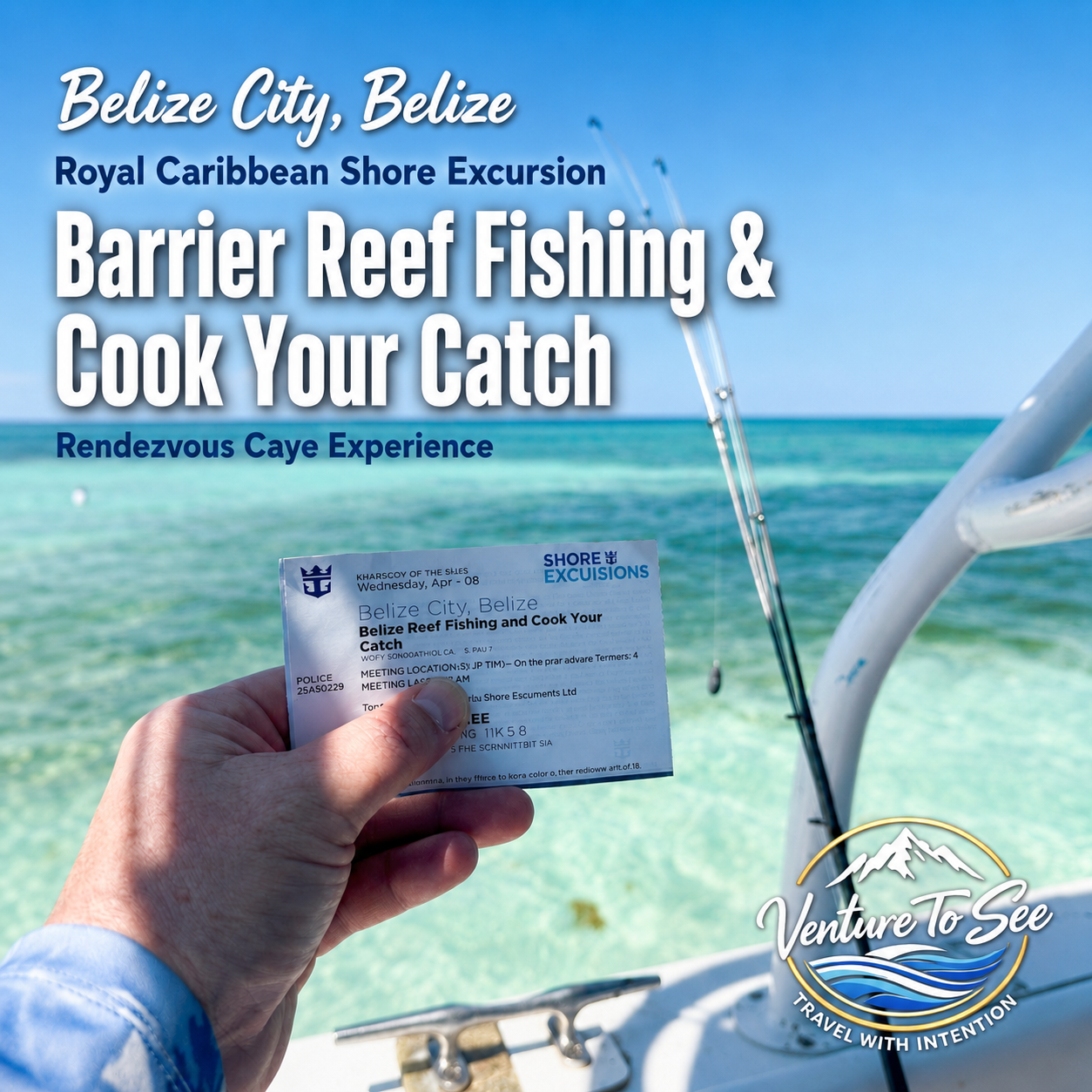
We Caught Our Lunch Off the Belize Barrier Reef — And Then Ate It
Belize City shore excursion review of Royal Caribbean’s Barrier Reef Fishing and Cook Your Catch experience at Rendezvous Caye, with reef fishing, fresh local food, photos, and practical cruise port tips.
We Caught Our Lunch Off the Belize Barrier Reef — And Then Ate It
An honest look at Royal Caribbean’s Belize Reef Fishing and Cook Your Catch excursion — stingrays, jerk-seasoned snapper, and everything in between
 Pulling into Belize City — a tender port, so the adventure starts before you even hit the dock.
Getting There: The Part Nobody Warns You About
Here is the thing about Belize City as a cruise port — the excursion starts way before you step onto a fishing boat. Our Royal Caribbean Western Caribbean itinerary had us cleared to go ashore at 9:15 in the morning, but Belize is a tender port. That means no gangway, no walking straight into town. You board a small boat from the ship and ride it roughly 25 minutes just to reach the cruise port area.
Then there is the time zone situation. Belize runs one hour behind ship time, and that created instant confusion on the pier. Were we meeting our excursion group on ship time or local time? It took a few minutes to sort out, but once we did, we realized we actually had close to an hour to explore before we needed to be anywhere.
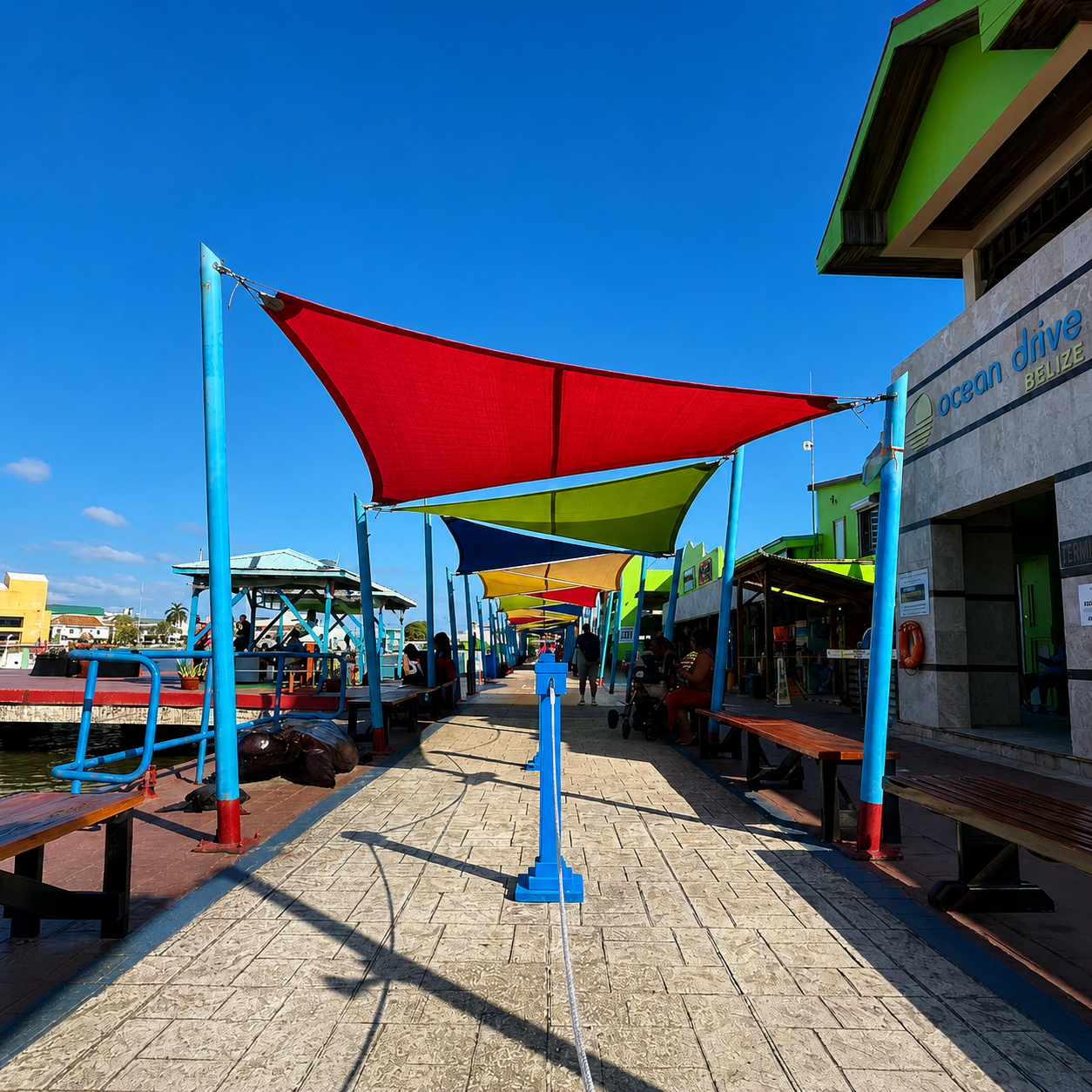 The port area has its souvenir shops and T-shirt vendors — perfectly fine for a stroll, but it moves quickly.
We walked around the port for maybe 30 to 45 minutes. Souvenir shops, T-shirt stalls, the usual tourist setup. It is fine for a quick wander, but there is not a ton to explore right there. After a bit, we made our way back to wait for the boat that would carry us out to Rendezvous Island — where the actual excursion begins.
How We Ended Up on This Excursion
We booked the Belize Reef Fishing and Cook Your Catch excursion directly through Royal Caribbean. It was listed as a four-hour experience, which sounded like a full, well-rounded day out on the water. The pitch was simple: fish over the reef, catch your lunch, watch it get cooked, eat it on the island. As Belize cruise excursions go, it stood out because it was hands-on and different from the standard beach-and-snorkel format.
This was actually my second visit to Belize City, so I was specifically looking for something that felt a little more local and experiential. The Cook Your Catch angle was what sold me. I wanted to see what fishing actually looks like here — not as a sport, but as a way of life.
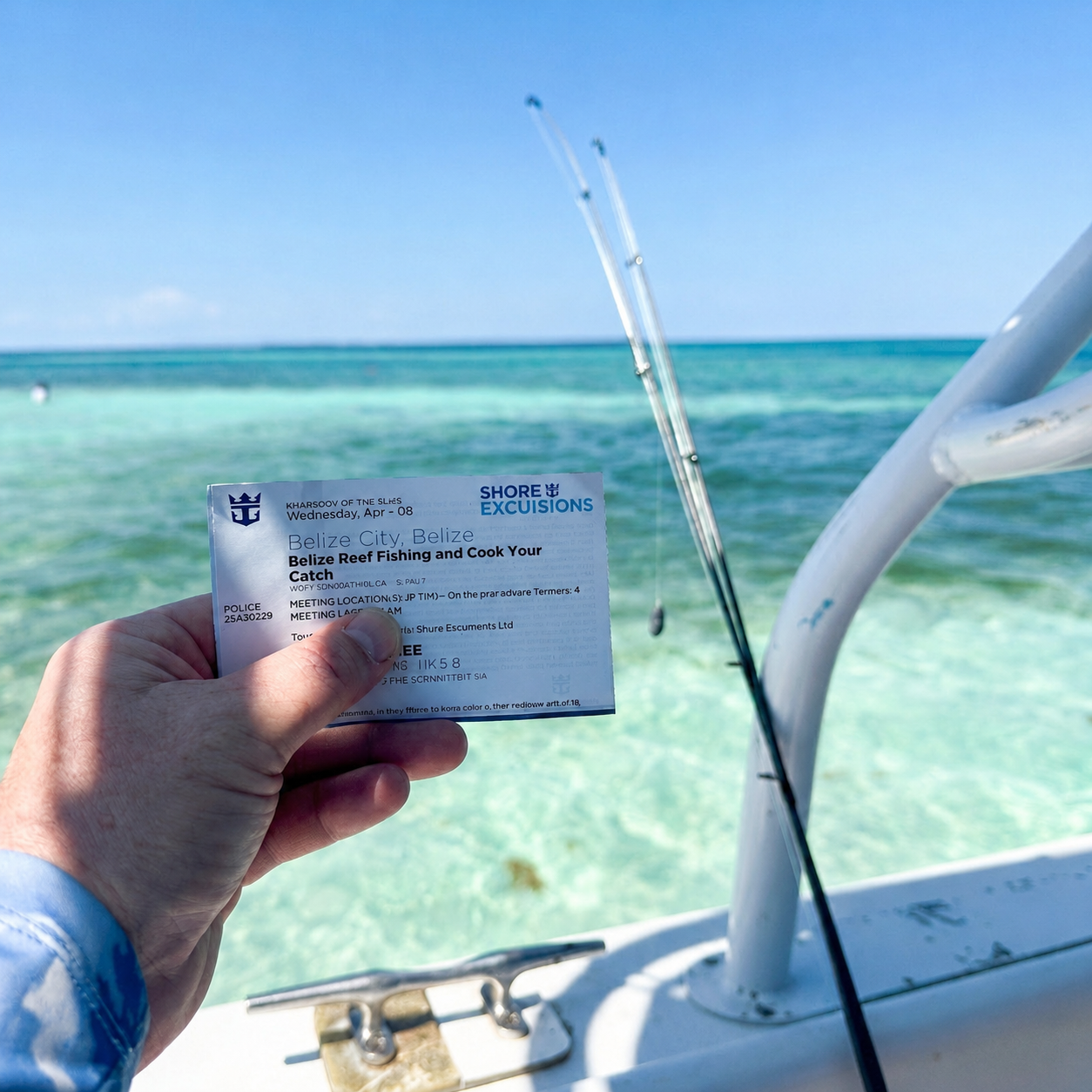
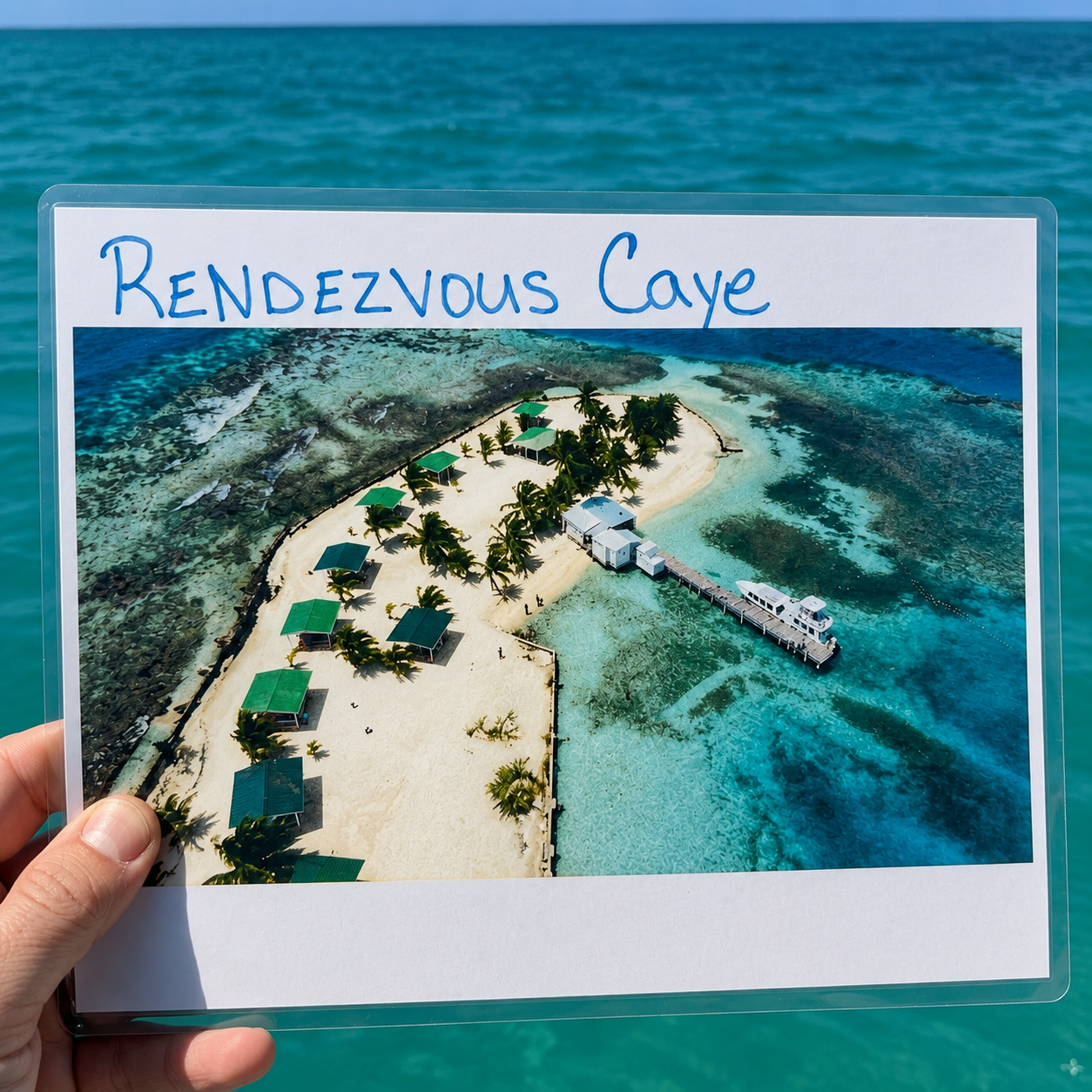
“The Cook Your Catch angle was what sold me. I wanted to see what fishing actually looks like here — not as a sport, but as a way of life.”
The Ride Out to Rendezvous Island
The boat we boarded was carrying two separate groups — our fishing crew and another group headed out for a beach and snorkeling day. It is a 45-minute ride to Rendezvous Island, and here is the part that genuinely made me laugh — we passed directly by our Royal Caribbean ship on the way out. After all that effort to get ashore by tender, we were now cruising right back past it on the way to the actual excursion.
Worth being honest about this part: a four-hour excursion sounds generous until you do the math. Between the tender ride from ship to port, the 45-minute boat to Rendezvous Island, and the 25-to-30-minute return later — roughly an hour and a half of this day is just transit. That is not a complaint exactly, because the boat rides are pleasant. But if you are booking this expecting four full hours of fishing and island time, just know the reality going in.
Out on the Reef: Bottom Fishing Over the Belize Barrier Reef
Once we landed at Rendezvous Island, we transferred to a smaller, more intimate fishing boat — about 15 people total — and motored another 10 or 15 minutes out to fish over the reef. That moment felt like the real beginning of the day.
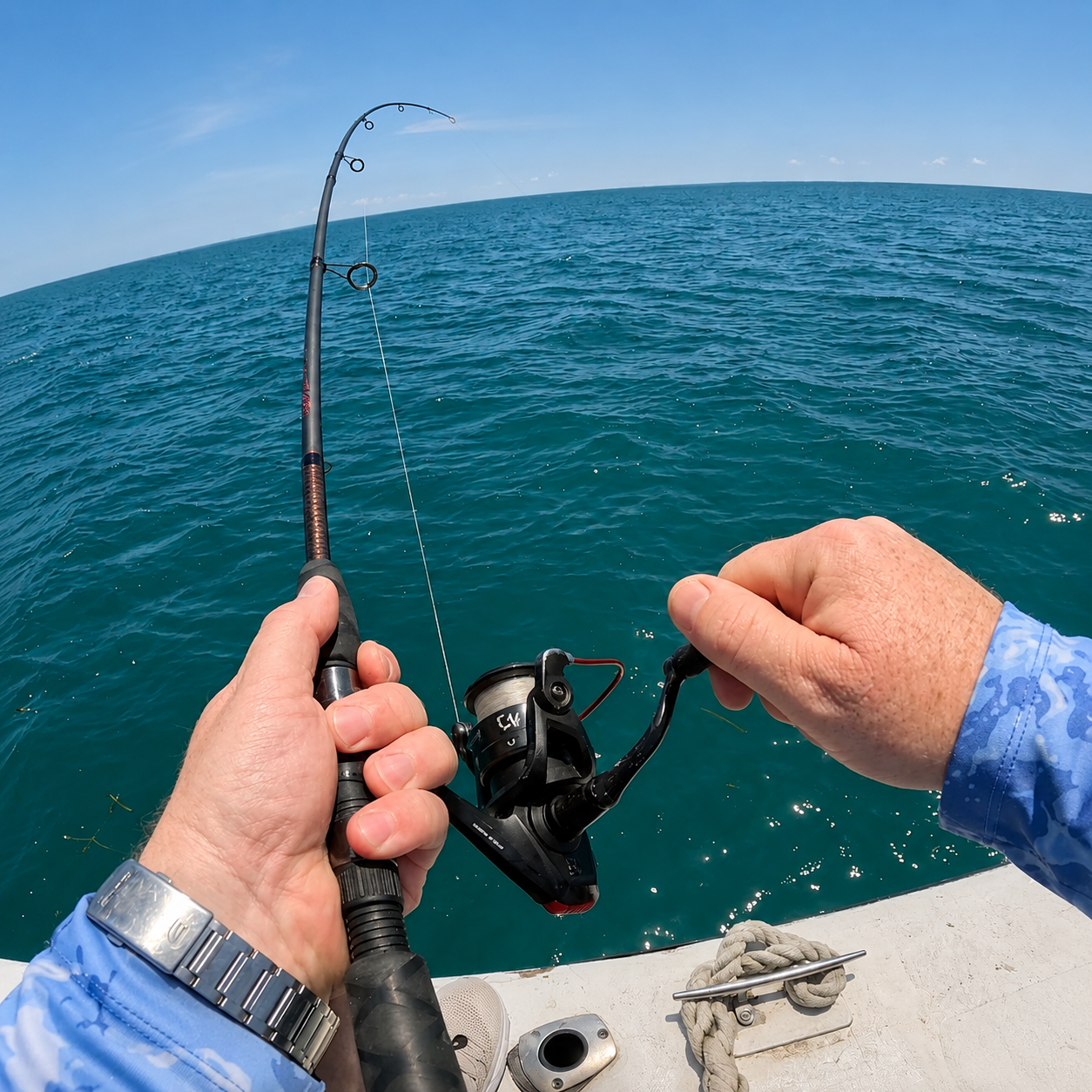
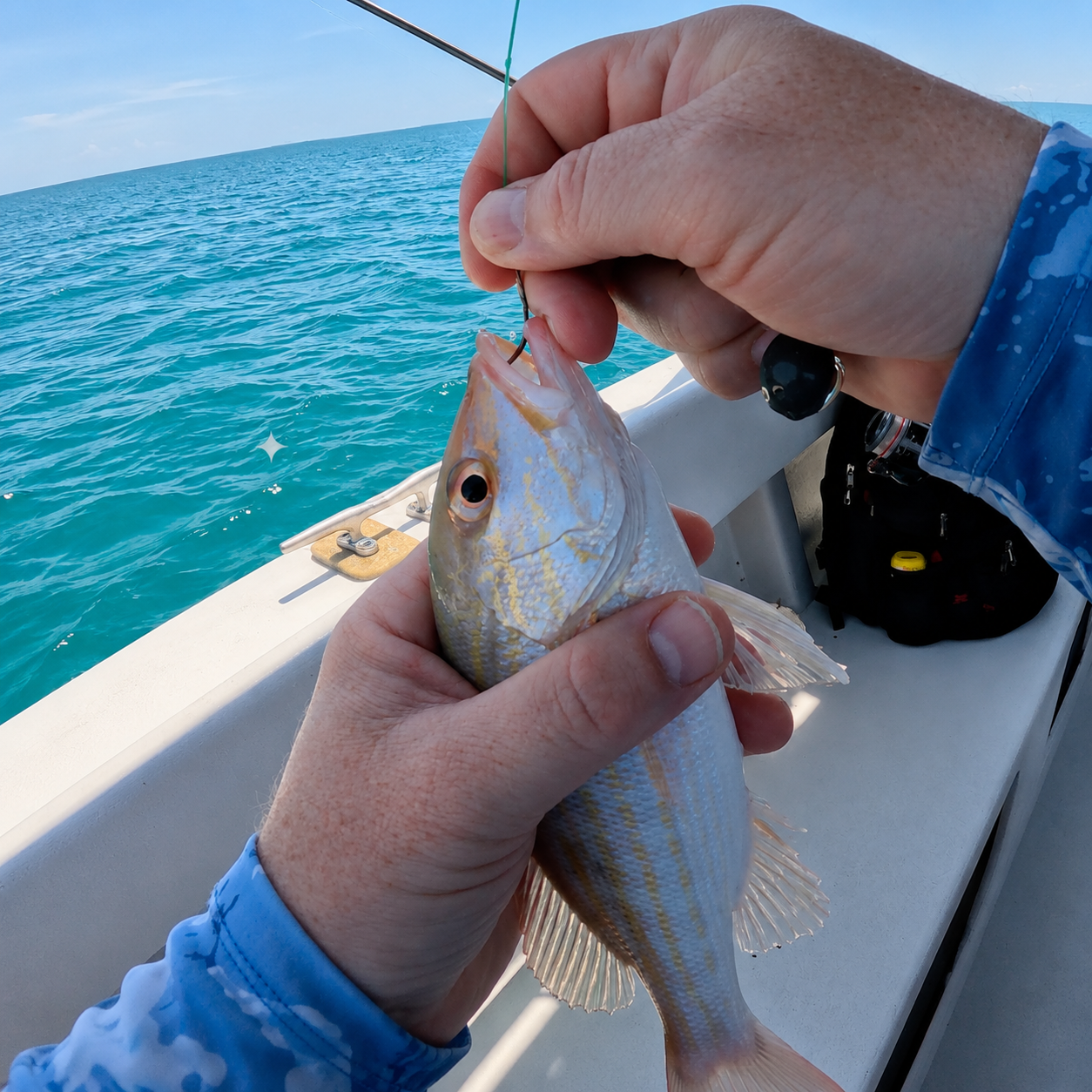
The setup is bottom fishing — cut sardine bait, spinning reels, about 15 to 20 feet of water right over the reef. There is nothing complicated about it. Anybody can do this. We were sitting right on top of the Belize Barrier Reef, the second-largest barrier reef system in the world, and even while we were focused on the lines, that context was not lost on me.
We fished two different spots over about an hour and a half total. The fish were small — mostly yellowtail snapper, a few croaker, a couple of strawberry grouper — most of them in that six-to-eight-inch range. In total, our group pulled in 25 to 30 fish. Steady action, nothing dramatic, but enough to actually cook.
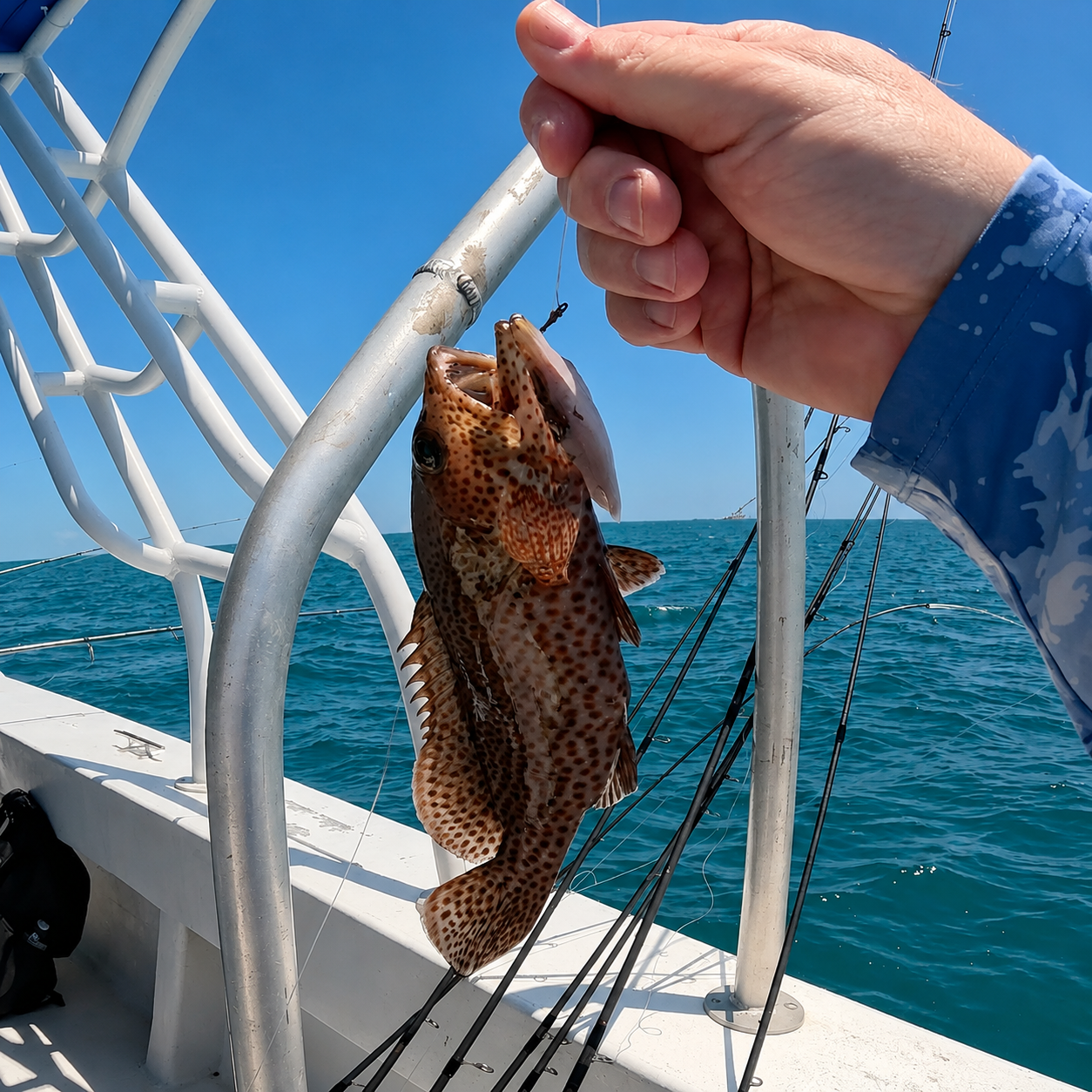 Caught this one at our second reef spot. Strawberry Grouper — we'll put this one back.
“We were sitting right on top of the Belize Barrier Reef — the second-largest barrier reef in the world — and even while we were focused on the lines, that context was not lost on me.”
Cook Your Catch: From the Water to the Grill
This is where the excursion shifted from a fishing trip into something that felt genuinely local. When we returned to Rendezvous Island with our catch, one of the deckhands set up on a small wooden platform just off the pier, standing waist-deep in the water. He cleaned the fish right there — descaling, gutting, tossing the scraps into the water below him.
And almost immediately, the stingrays showed up.
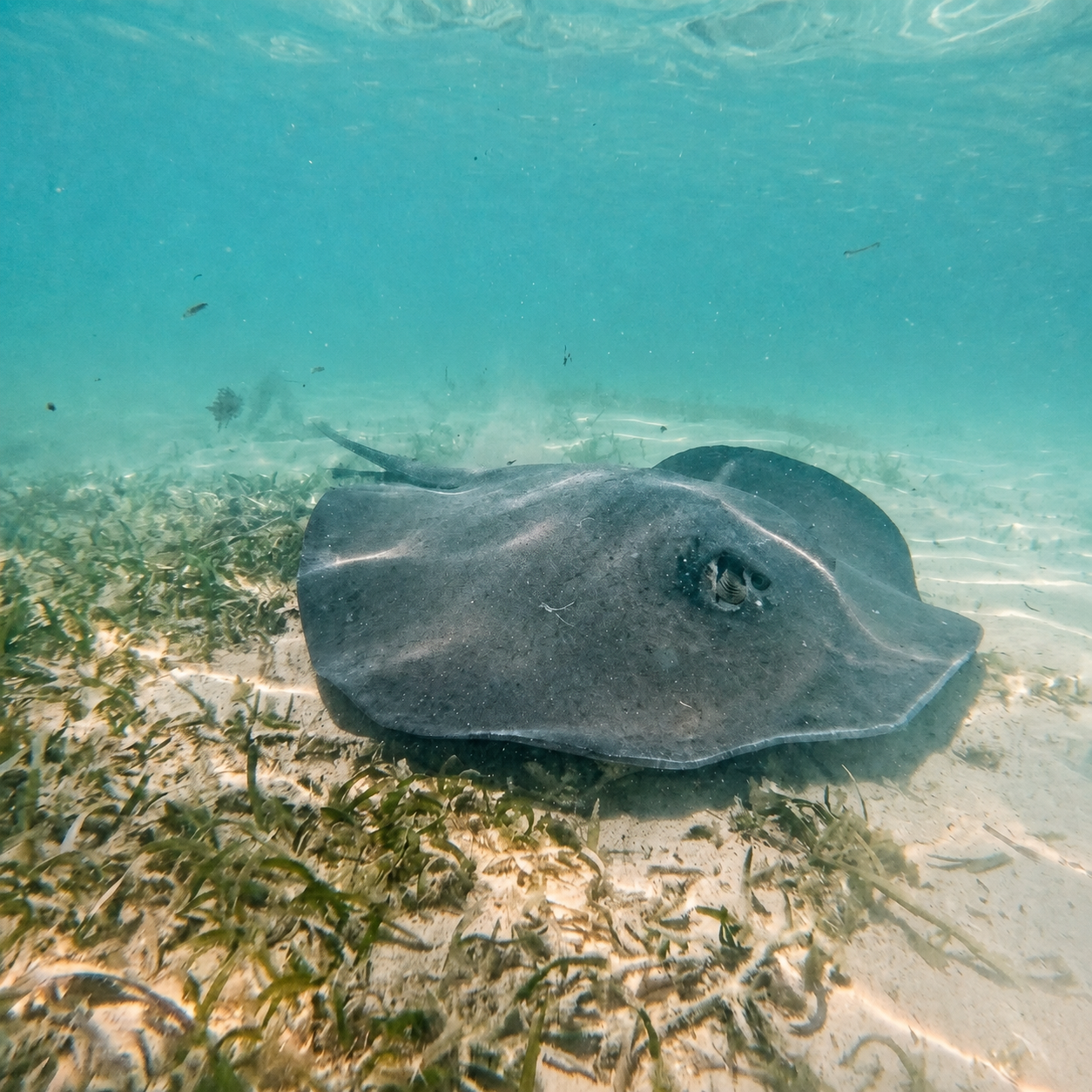
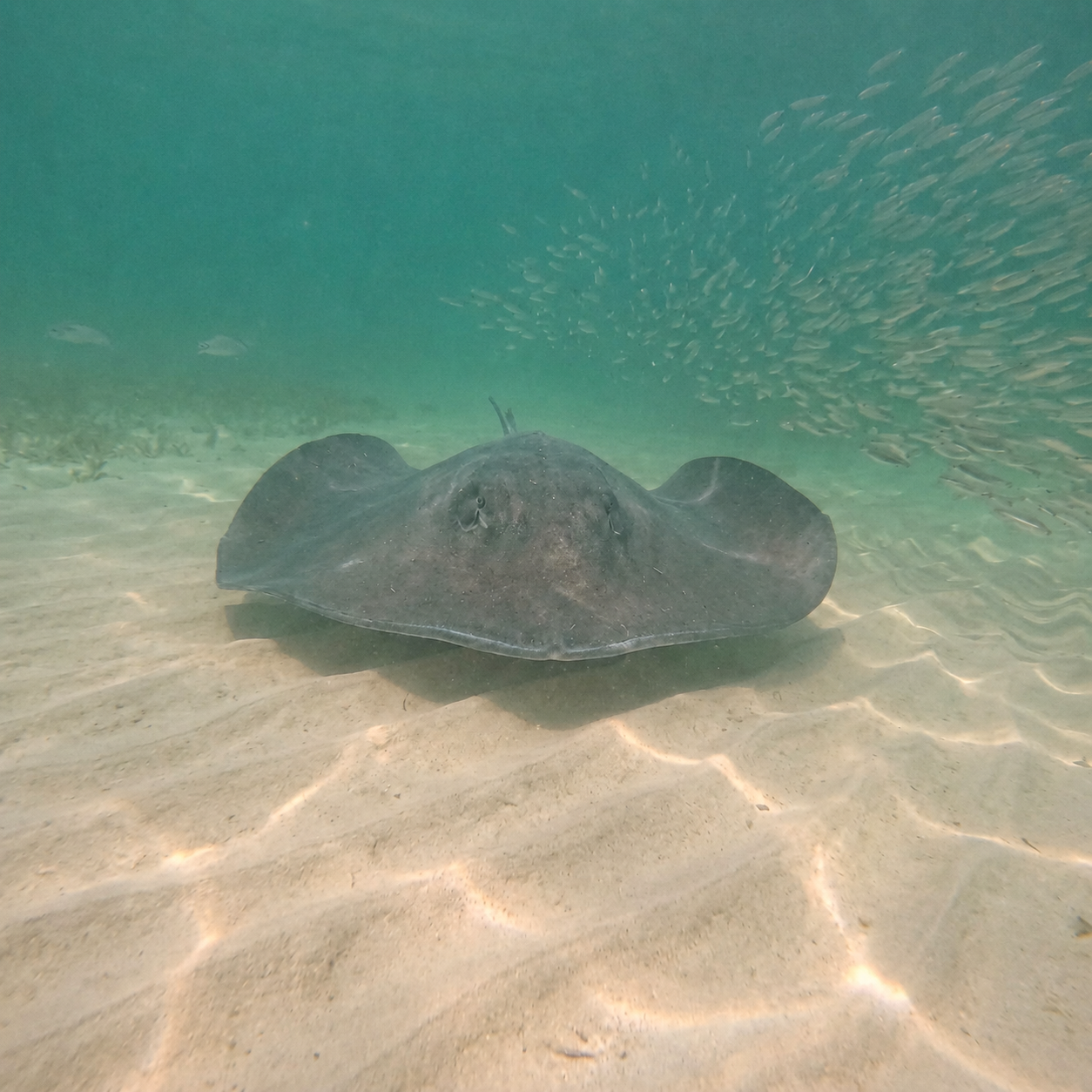
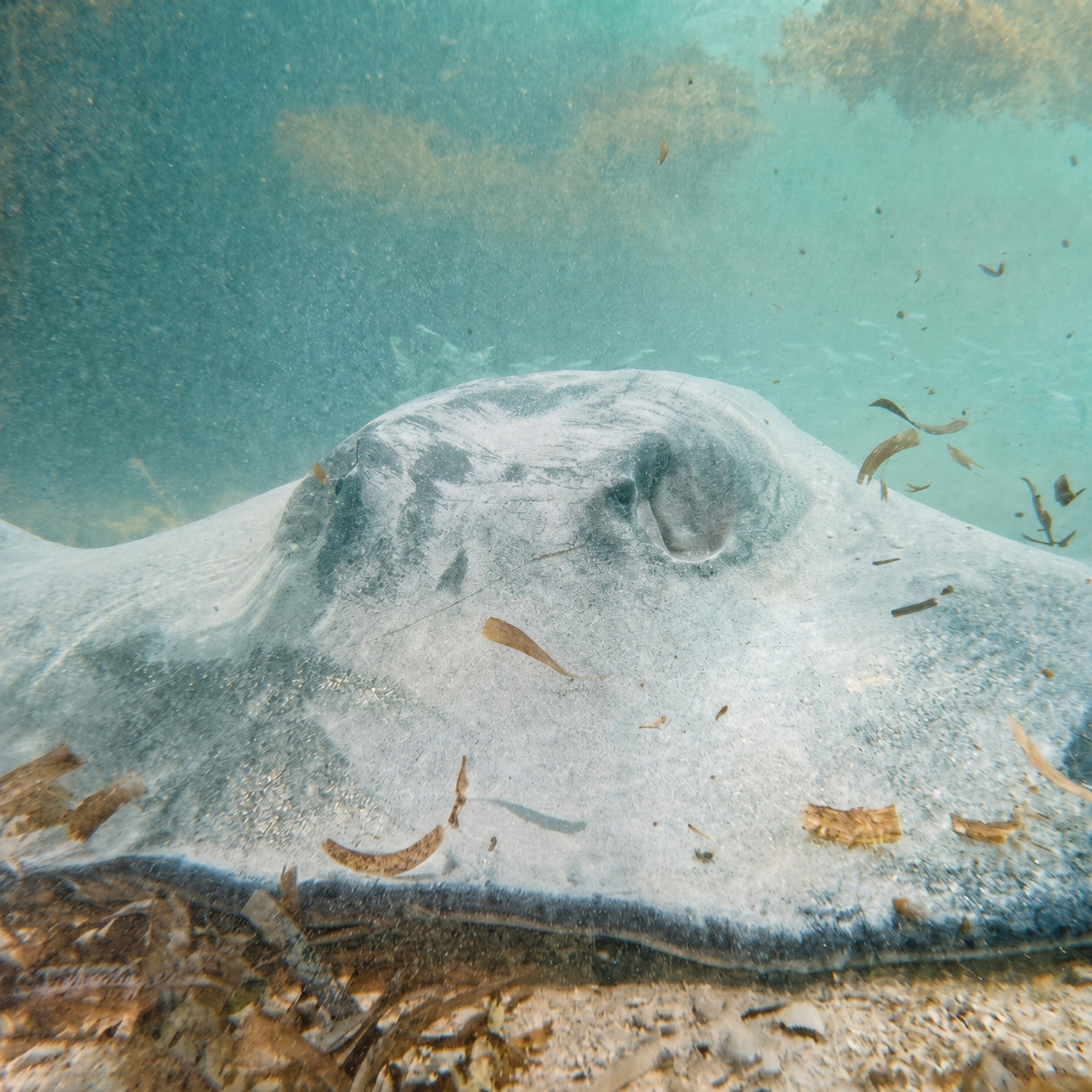
Two of them, circling beneath the platform, feeding on the scraps. If you stepped into the shallow water, they would glide right up to you. Not frantic, not skittish — just calmly brushing past your calves as if you were part of the reef furniture. One of those completely unplanned moments that ended up being one of the best parts of the day.
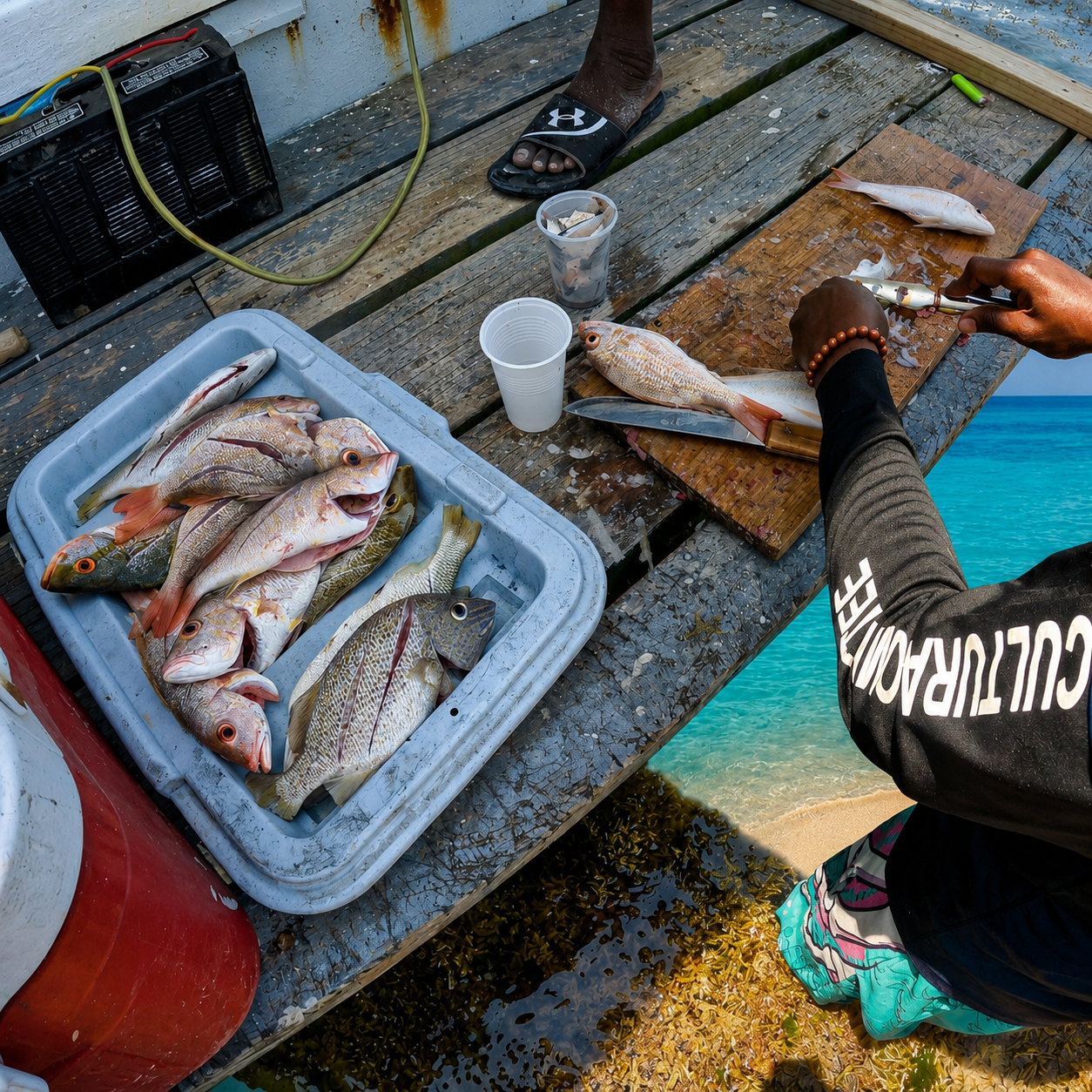 Fish-to-grill in real time. The cleaning happened right off the pier, with stingrays circling below for the scraps.
Once the fish were cleaned, they went straight to the barbecue — a simple, open-air setup with charcoal grill stations that looked like it belonged there. Nothing overbuilt for tourists, nothing staged. The chef laid each fish on aluminum foil, rubbed in a Caribbean dry spice blend, hit it with jerk seasoning, added a splash of coconut oil, and sealed everything up into a packet that went directly onto the coals.
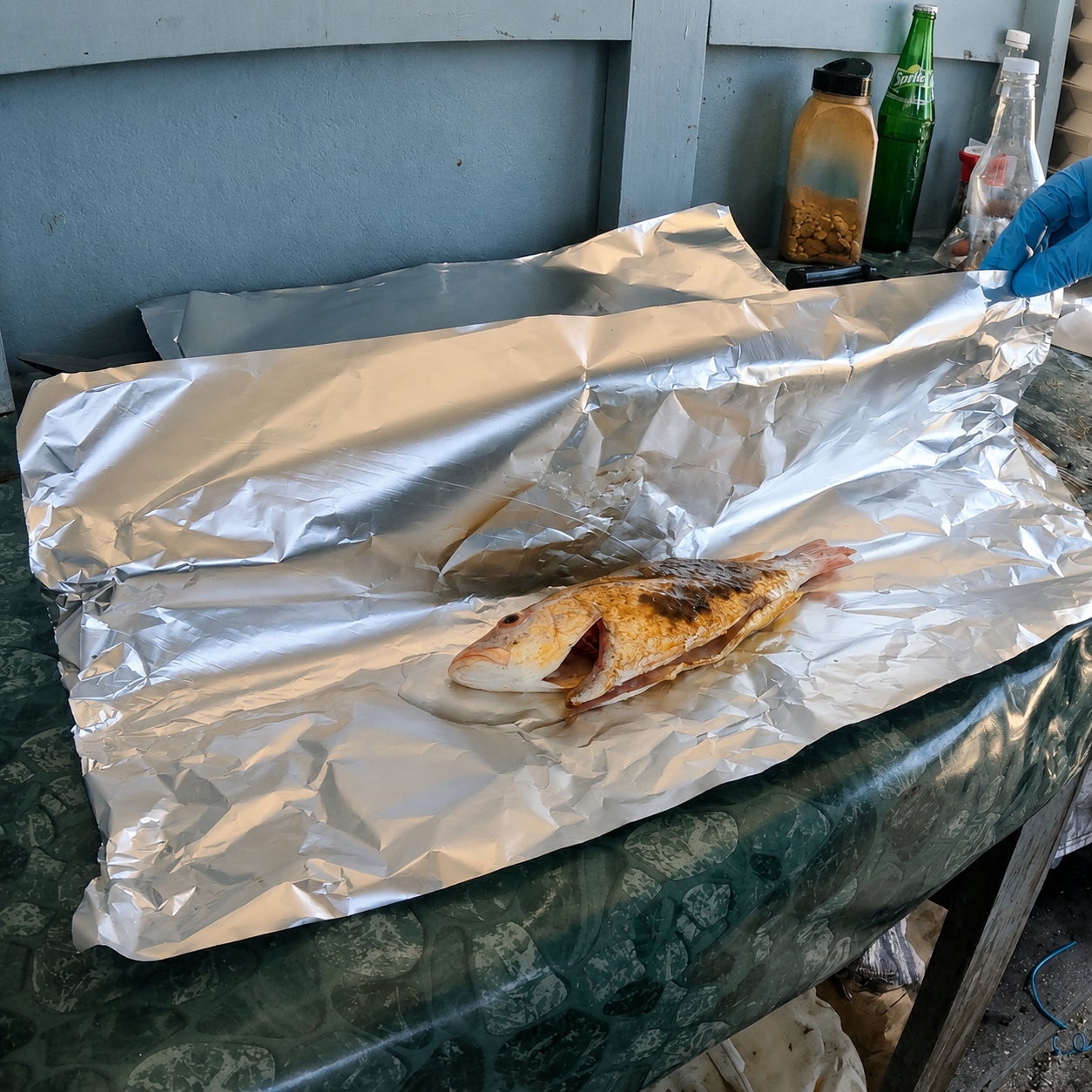
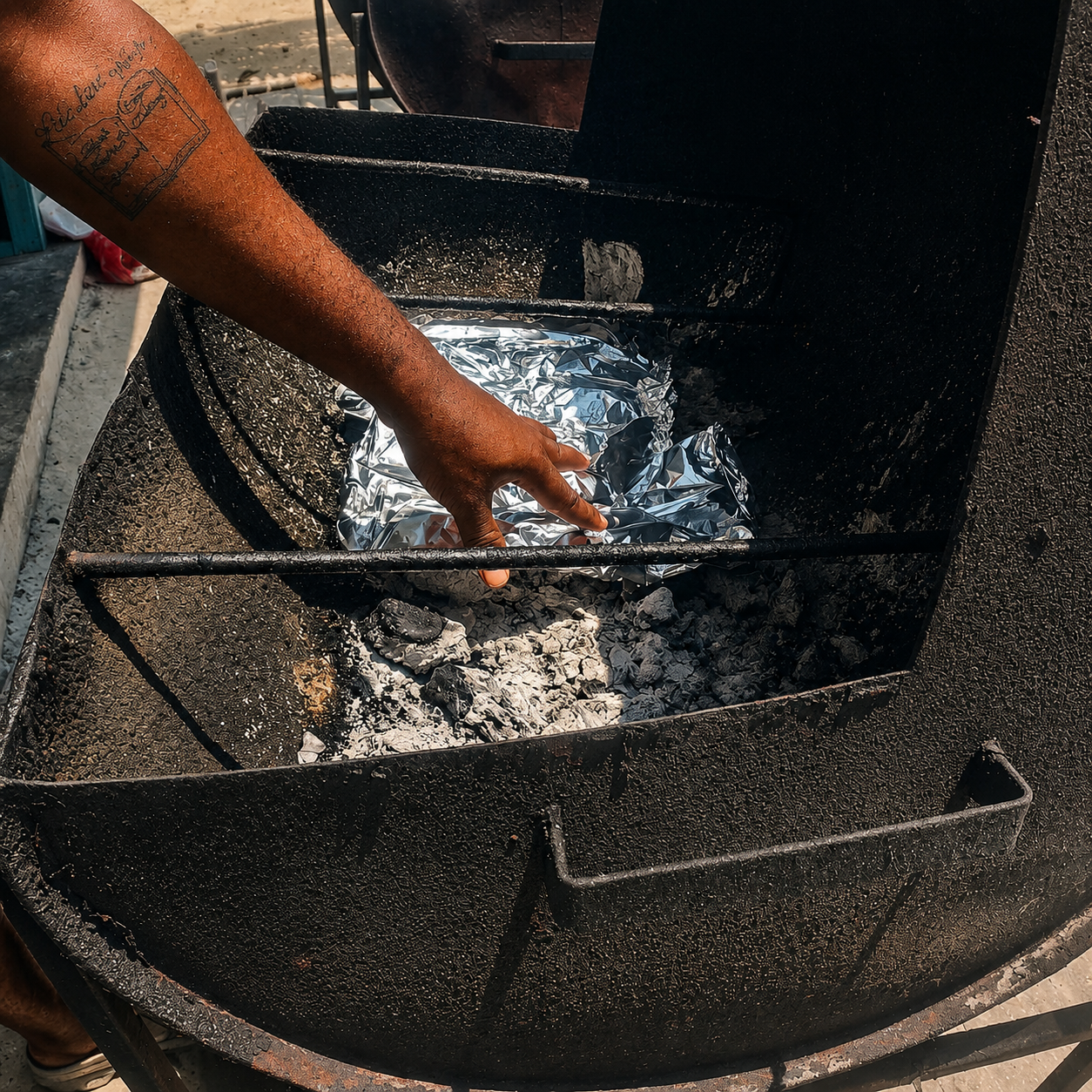
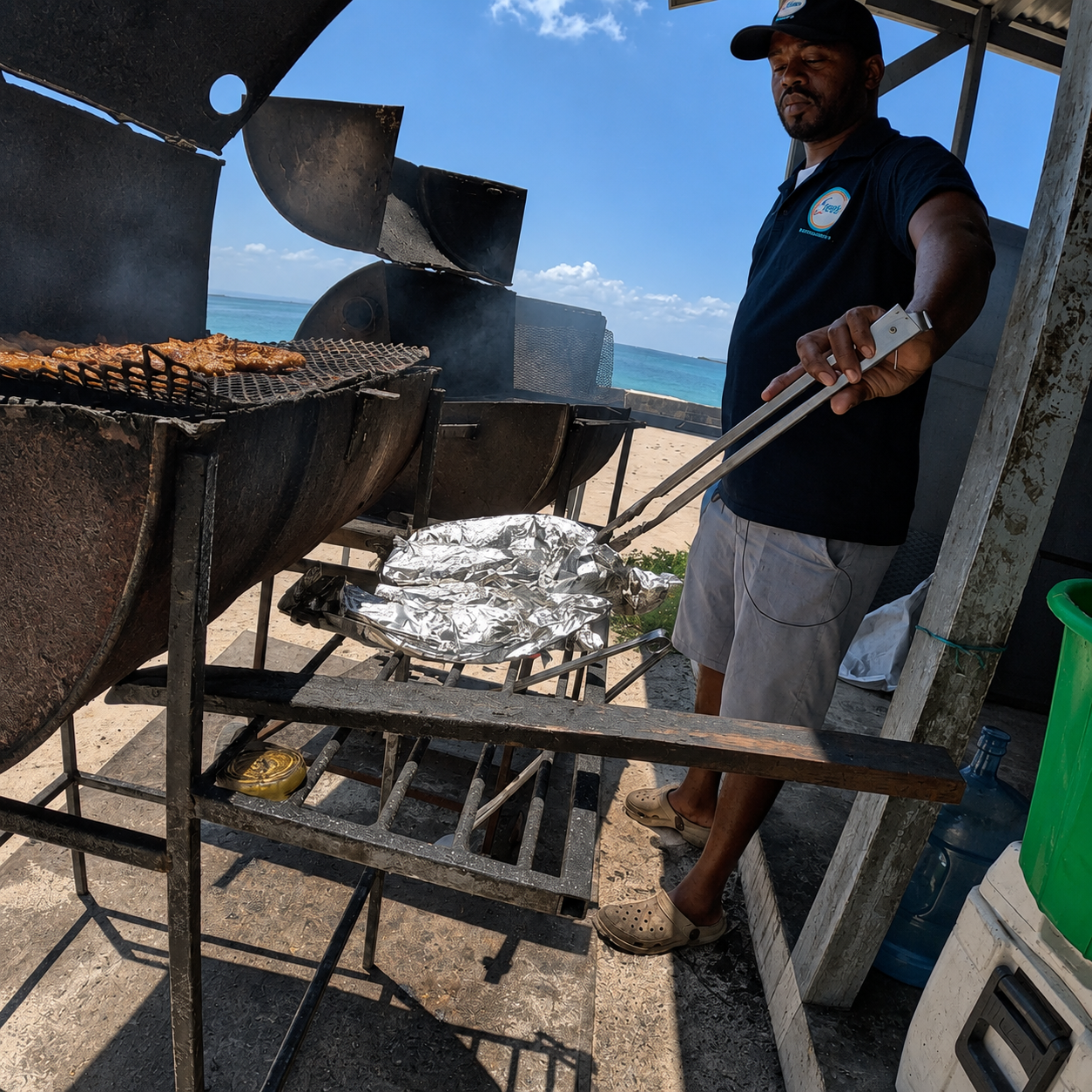
The chef explained the technique as he went: the foil packet puffs up like a balloon — that is when you flip it. It settles, puffs up a second time, and then it is done. Such a simple method, but one of those details that made the whole experience feel tied to the place.
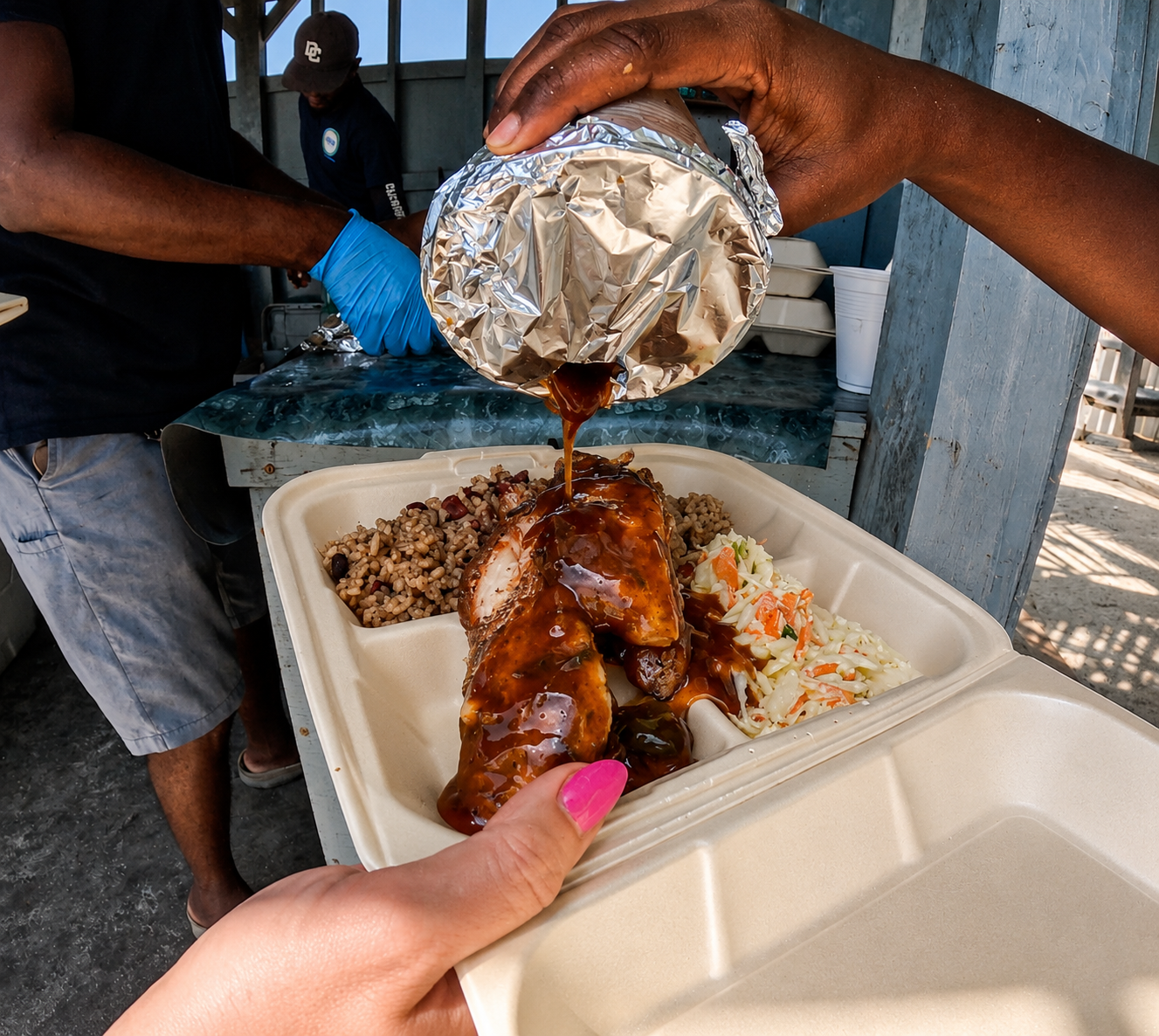
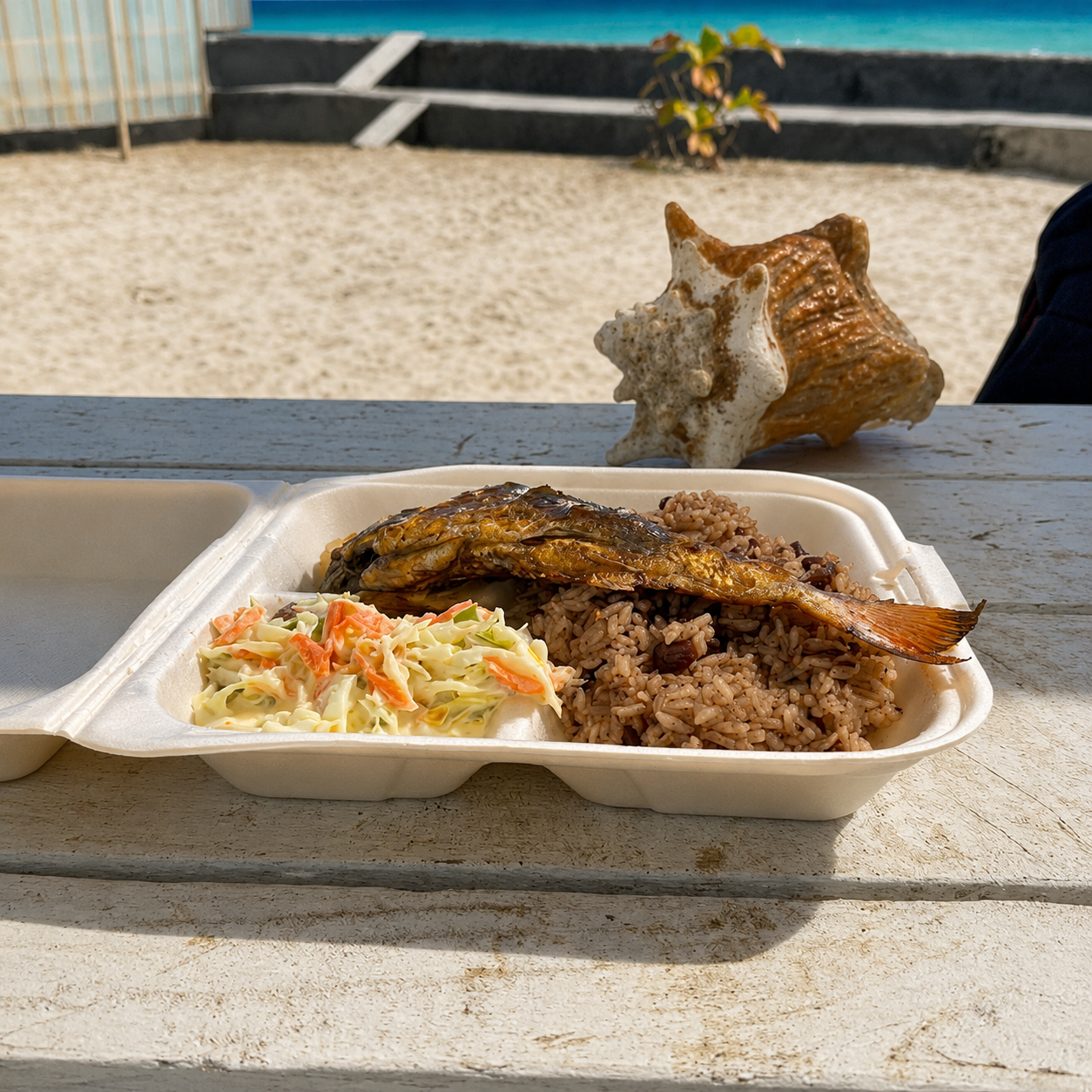
Lunch was simple: the fish, rice and beans, coleslaw. But the fish was good. The kind of good that only happens when something was still in the ocean a couple of hours before you ate it. Smoky, flaky, seasoned in a way that felt distinctly Belizean. It was not a fancy meal. It was an honest one, and it worked.
- Bring your own water. Rum punch and water are served on the fishing boat, but nothing was set up at the barbecue area when we arrived. After a few people asked, the crew brought the punch over — but if you are not drinking alcohol, pack a couple of extra bottles from the ship.
- Plan for transit time. A four-hour excursion sounds like a lot, but roughly 90 minutes is boat transportation. Great boat rides — just go in with accurate expectations.
- Bring snorkel gear if you have it. There is a 20-to-30-minute window after lunch before the return boat arrives. You can snorkel off Rendezvous Island, though it is a shallow beach-entry experience rather than a deep reef dive.
- Bring cash for tips. The fishing crew and barbecue staff both asked for gratuities on the return ride. Come prepared — they do a good job and it is expected.
- Zero fishing experience needed. The crew handles everything: setup, bait, technique. Genuinely beginner-friendly and great for families.
- Do not book this primarily for snorkeling. If snorkeling is your main goal, a dedicated Royal Caribbean Belize snorkeling excursion is a better fit.
The Bonus Round: Hand-Feeding Stingrays in the Shallows
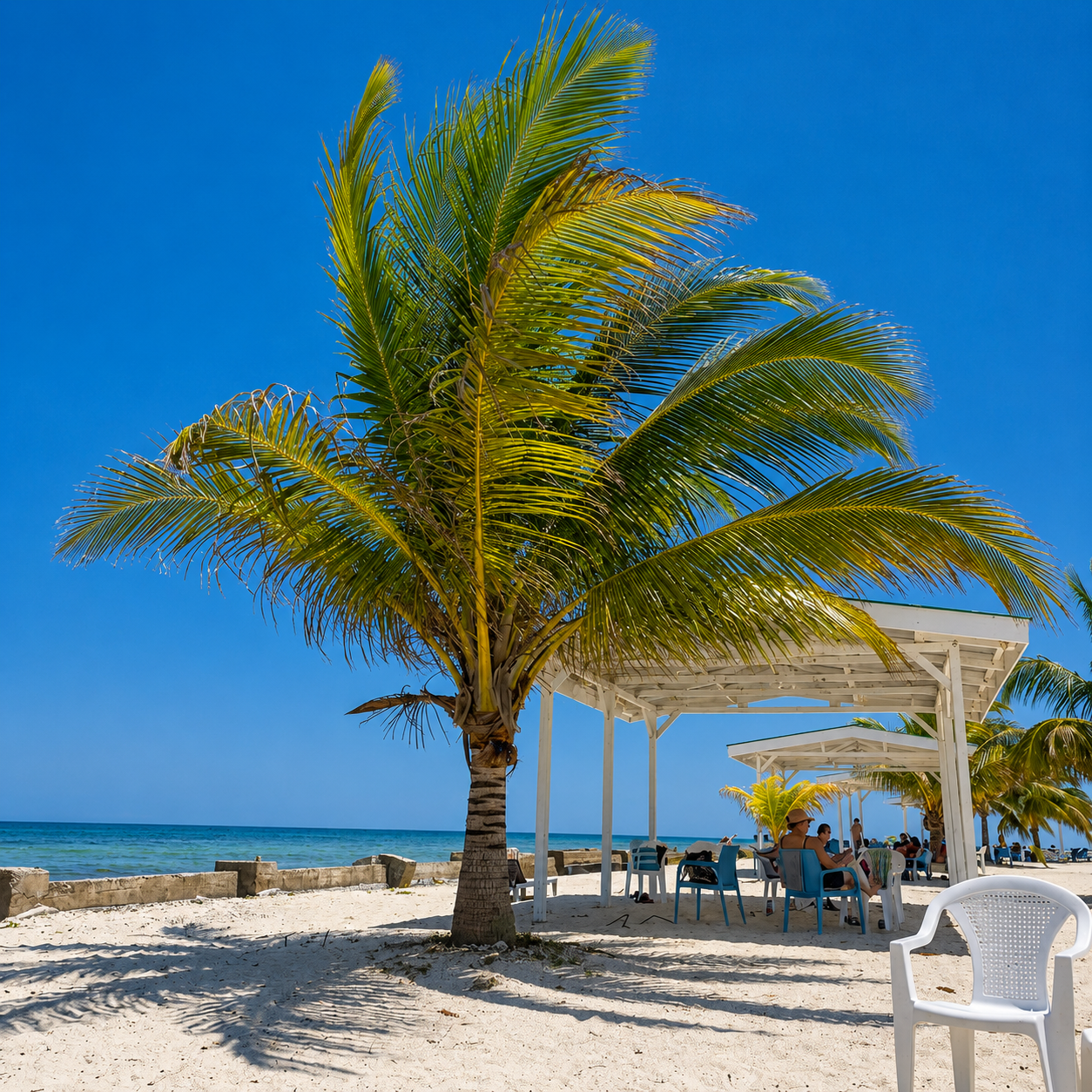 The island itself is exactly what you picture when someone says “Caribbean island.” Tiny, palmy, impossibly blue water.
After lunch, while we waited for the return boat, the crew handed out the leftover sardine bait and told us we could stand in the water and feed the stingrays by hand. Same rays that had been circling the cleaning platform earlier. They would glide right up, take the bait gently from your fingers, and move on. Calm and totally unbothered about the whole thing.
Honestly? This was one of those moments I will remember longer than the fishing itself. Completely unplanned, totally free, and weirdly peaceful. Nobody was rushing anyone. The afternoon light was hitting the water just right. That is the kind of thing you cannot really put in a brochure.
Worth It for the Right Traveler — Not a Trophy Fish in Sight, But Genuinely Real
If you are an avid angler chasing big game or a serious snorkeler looking for deep reef action, this is probably not your excursion. The fishing is casual and small-scale, and the snorkeling off Rendezvous Island is shallow beach-entry water.
But that is not really the point of the Belize Reef Fishing and Cook Your Catch excursion. Fishing in Belize is not a hobby — it is part of how people live here. This excursion lets you take part in that in a simplified, traveler-friendly way: catch something from the reef, watch it get cleaned on a wooden pier with stingrays circling below, and eat it seasoned with Caribbean jerk spice on a tiny island in the Caribbean Sea. It is honest, unhurried, and carries a real sense of place.
For families, casual travelers, and anyone who wants more than a beach chair on their port day, there is genuine value here. And those stingrays brushing past your legs in the shallows? That alone makes it worth remembering.
Would I book it again? Probably not as my first choice on a return to Belize — there are other excursions I want to try first. But it was not a bad day. Not by a long shot.
Frequently Asked Questions
It is a shore excursion offered through Royal Caribbean in Belize City that takes cruise passengers out to fish over the Belize Barrier Reef using simple bottom-fishing techniques, then returns to Rendezvous Island where the fresh catch is cleaned, seasoned with Caribbean jerk spices and coconut oil, and cooked over charcoal right on the beach. The experience is listed as a four-hour excursion including all transit time.
The excursion is listed as four hours, but approximately 90 minutes of that is boat transportation — a 45-minute ride from the Belize City port to Rendezvous Island and a 25-to-30-minute return. Factor in the tender boat ride from the Royal Caribbean ship to the port and travel takes up a significant portion of the day. The actual fishing lasts about 90 minutes at two reef locations.
No prior experience is needed. The crew handles all setup, provides cut sardine bait, and walks everyone through the bottom-fishing technique. The spinning reel rigs are beginner-friendly and fishing is done in 15 to 20 feet of water. Great for families, first-timers, and anyone who has never held a fishing rod before.
Expect smaller reef fish rather than trophy catches. Yellowtail snapper is the most common, along with croaker and occasional strawberry grouper. Most fish run six to eight inches. A group of around 15 people typically catches 25 to 30 fish total — more than enough to make the Cook Your Catch meal a real payoff.
The fish is seasoned with a Caribbean dry spice blend and jerk seasoning, drizzled with coconut oil, wrapped in foil packets, and cooked directly on charcoal. Served with rice and beans and coleslaw. Simple but genuinely flavorful — the freshness of fish caught just hours before makes a real difference. Honest island food, not a resort-style buffet.
Yes. Belize City does not have a deep-water pier for large cruise ships, so Royal Caribbean passengers must take a tender boat from the ship to the port area — roughly 25 minutes. Belize also runs one hour behind ship time, so confirm whether your excursion meeting time is in ship time or local Belize time before heading to the pier.
Yes. Stingrays are naturally drawn to the fish cleaning area, feeding on scraps tossed into the shallow water. After lunch, leftover bait is typically handed out so passengers can hand-feed the rays directly in the shallows. They are calm and accustomed to people, and will often brush gently against your legs in knee-deep water near the pier.
Not officially, but there is a 20-to-30-minute window after lunch before the return boat arrives. Bring your own gear and you can snorkel directly off Rendezvous Island. This is a shallow, beach-entry snorkel — not a deep reef dive. For serious snorkeling, a dedicated Royal Caribbean Belize snorkeling excursion is a better fit.
Bring extra water bottles from the ship — beverages may not be available at the barbecue area. Cash for tips is strongly recommended, as both the fishing crew and barbecue staff request gratuities. Sunscreen, a hat, and water shoes for standing in the shallows with the stingrays are also worth packing.
I am always out here chasing the hands-on, local experiences worth your time. If this helped you plan your Belize City port day, follow along for more honest shore excursion reviews, Caribbean destination guides, and travel adventures from someone who just genuinely loves doing this.
📸 Instagram, YouTube & Facebook: @venturetosee
📌 Pinterest: venturetosee
Celebrity Constellation Review: 7-Night Western Caribbean from Tampa
A detailed review of a 7-night Western Caribbean cruise aboard Celebrity Constellation sailing roundtrip from Tampa. This balanced, experience-based write-up covers embarkation, onboard atmosphere, dining performance, fitness center, service standards, port experiences in Cozumel, Belize City, and Costa Maya, and overall value. Ideal for travelers seeking a mid-size ship with an active, mature passenger mix and consistent service rather than high-energy attractions.
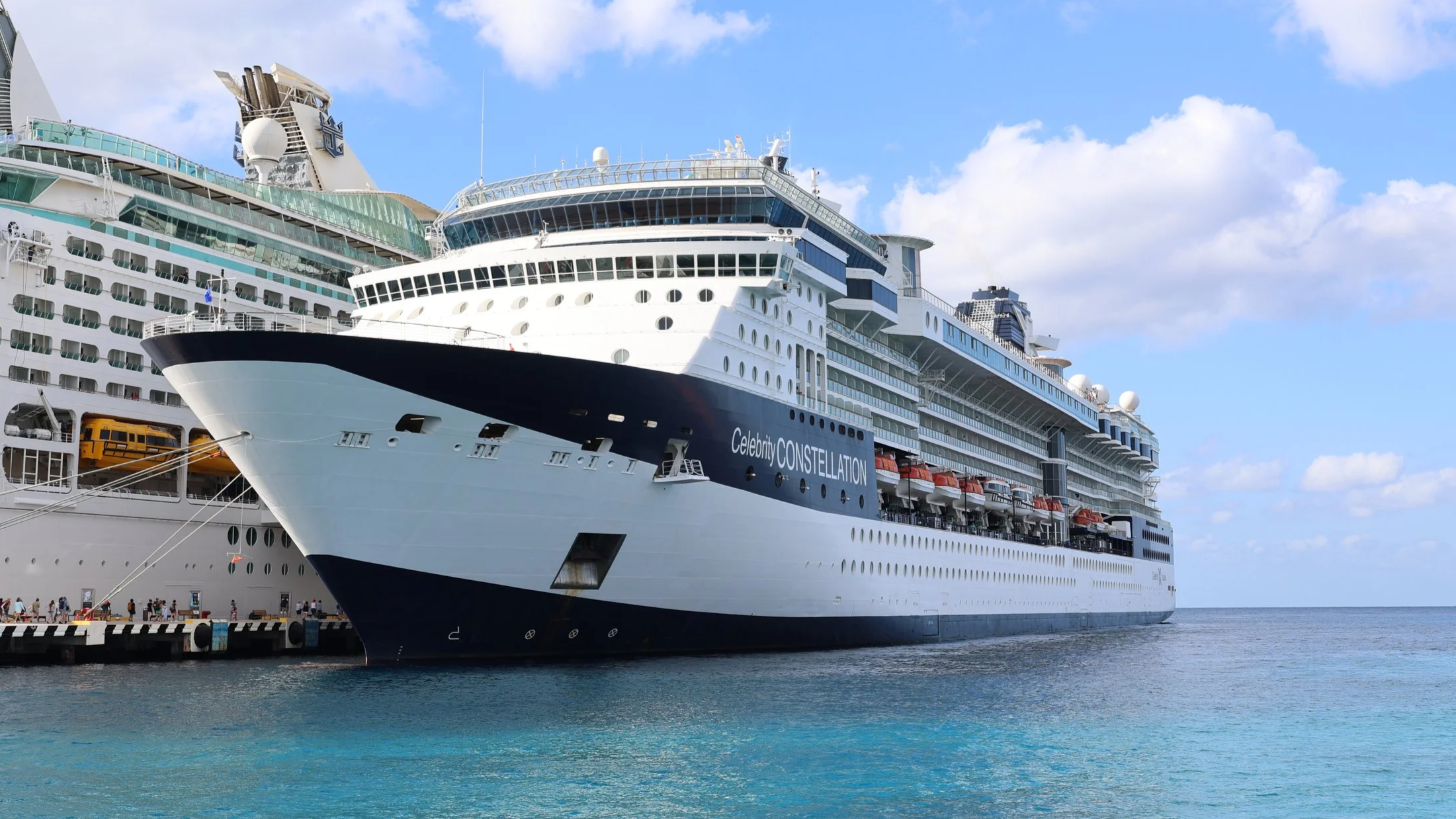
Quick Answers: Celebrity Constellation at a Glance
Is Celebrity Constellation worth sailing in 2026?
Yes — for travelers who prefer mid-size ships, consistent service, and an adult-focused atmosphere over spectacle.
How long does embarkation take in Tampa for Celebrity Constellation?
From curb to ship, roughly 20–25 minutes on this sailing, with light lines and efficient processing.
Does Celebrity still offer twice-daily housekeeping?
On this sailing, yes. I was given the option of one or two daily visits, including evening turndown service.
Is the ship crowded?
No. At roughly 2,170 guests, the ship felt balanced. Seating was available on sea days without competition.
Is the food better than other cruise lines?
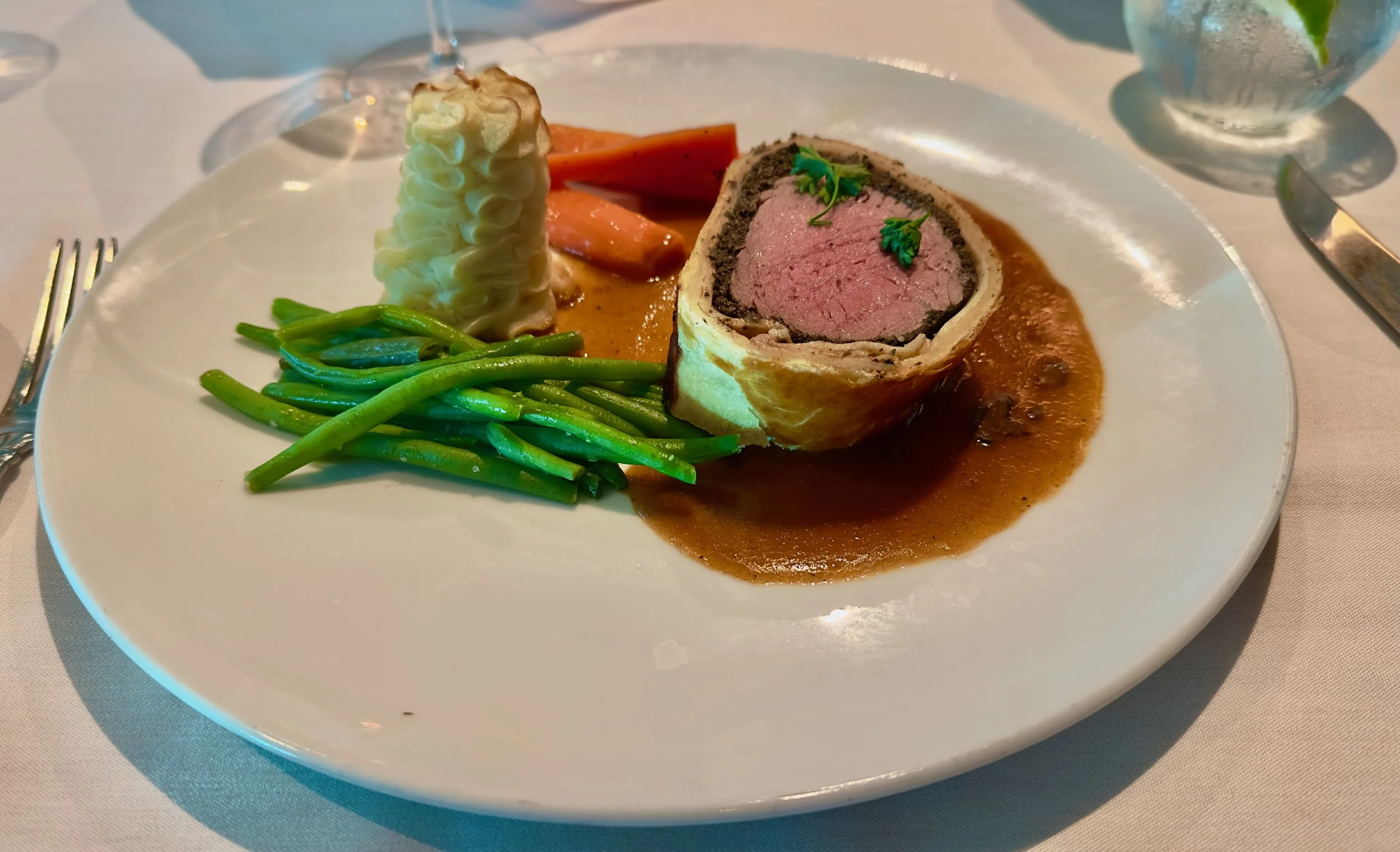
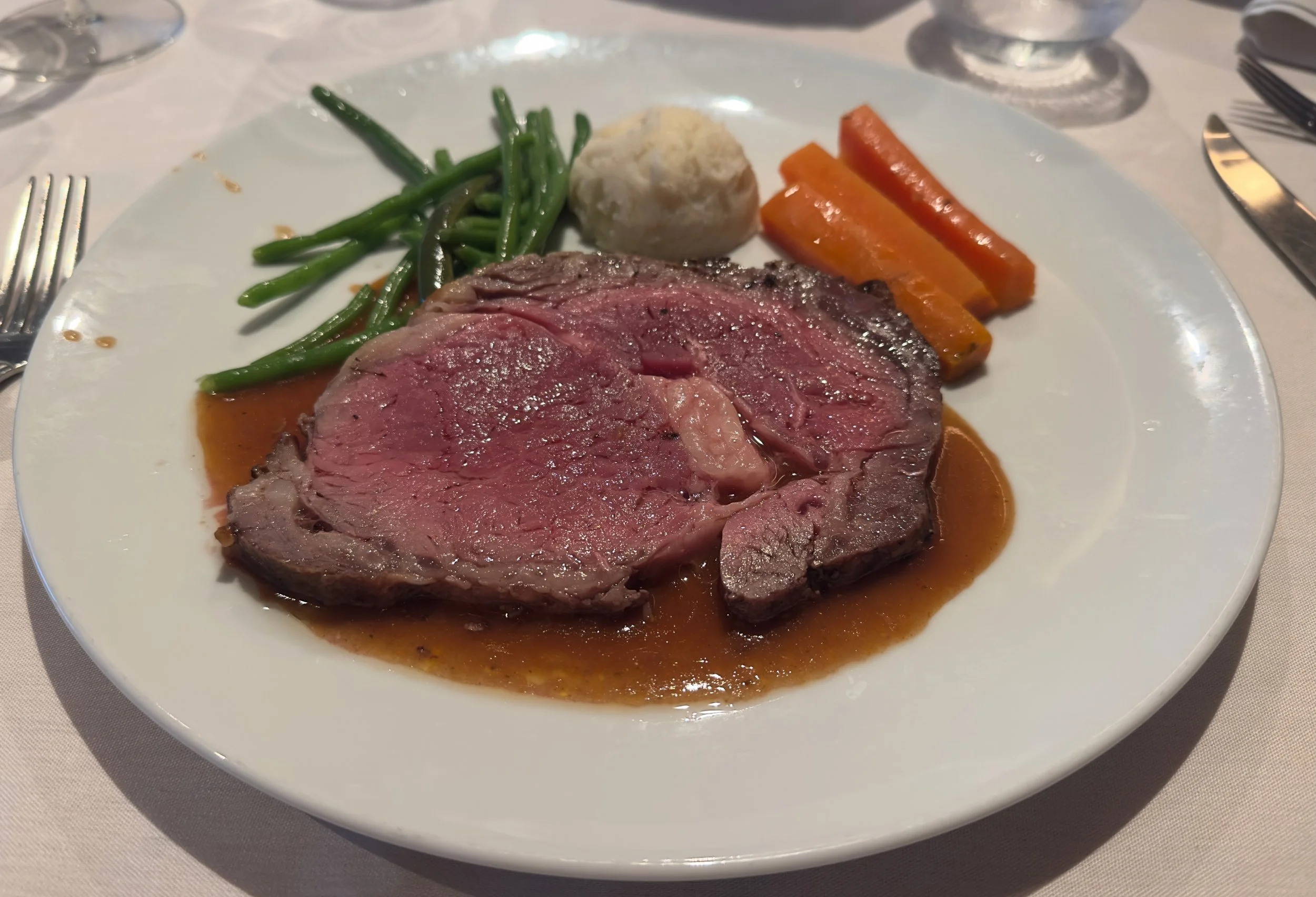
Buffet variety was stronger than average. Main dining room improved as the week progressed. Beef Wellington and prime rib stood out.
Are drink prices excessive?
Comparable to Royal Caribbean. More than Carnival, but consistent with mid-tier restaurant pricing when gratuity is included.
Is this ship good for solo travelers?
Yes. The scale and programming support independent travel well.
Does the ship feel old?
Architecturally yes (built 2002). Aesthetically refreshed in 2020. Clean and well maintained.
A Week Aboard Celebrity Constellation from Tampa
In early February, I sailed roundtrip from Tampa, Florida aboard Celebrity Cruises on Celebrity Constellation for a seven-night Western Caribbean itinerary.
Built in 2002 and modernized in 2020, Celebrity Constellation is part of the Millennium Class. At approximately 91,000 gross tons, she carries around 2,170 guests at double occupancy with roughly 1,000 crew — a crew-to-passenger ratio just over 1:2. That ratio shows up in subtle ways throughout the week.
This sailing was solo.
I booked an interior stateroom on Deck 8, forward in the bow — a location I had never tried before and normally avoid due to potential motion. Seas were steady. Not glass, but calm enough that movement was negligible day and night. No sleep disruption. No vibration issues.
The cabin was compact, functional, and clean. Updated finishes were evident from the 2020 refurbishment. If someone is cruising primarily for interior stateroom décor, they may be missing the point. The cabin serves as a base of operations. On this sailing, it performed that role efficiently.
Embarkation in Tampa was orderly and efficient. No theatrics. Just steady flow through check-in, security, and boarding. Tampa’s port setup supports that pace, especially for ship sizes in this range.
Embarkation in Tampa – Simple and Low-Stress
Tampa embarkation was one of the smoother processes I’ve had on a cruise.
If you’re arriving by rideshare, the one unknown is usually the terminal. You don’t always know which side of the port you’re headed to until you’re close. In practice, it wasn’t an issue. As we approached, there were large LED signs showing which ships were operating that day and which terminal to use. Celebrity and Norwegian were both active, and signage made routing straightforward.
The bigger reason it went smoothly is the pre-boarding process. In the days leading up to sailing, Celebrity’s app check-in prompts you to load the essentials: ID and passport details, your boarding information, and a photo. You can also set up payment details in advance. That reduces friction when you arrive.
I reached the port around noon. My assigned arrival window was 1:00 p.m. — I generally prefer that timing because it usually aligns with stateroom access around 1:30.
On the ride over, I used the Celebrity app to complete the muster drill requirements, including the safety video. That meant one less task once onboard.
At the terminal, baggage drop was immediate. Porters were efficient and professional. From there, it was stairs up, a quick document/boarding pass check, then security.
Even though I was early for my window, there was essentially no line at the initial checkpoint, so I was waved through without issue. Security took roughly 10 minutes. The final check-in inside the terminal was another short wait — about 10 minutes — where a Celebrity representative confirmed paperwork and took an updated photo.
From stepping out of the Uber to walking onto the ship, the entire process was roughly 20–25 minutes.
Just as important: the tone was calm. Staff were polite and helpful. No barking instructions. No attitude. It felt organized and non-stressful — which is exactly what you want at the start of a trip.
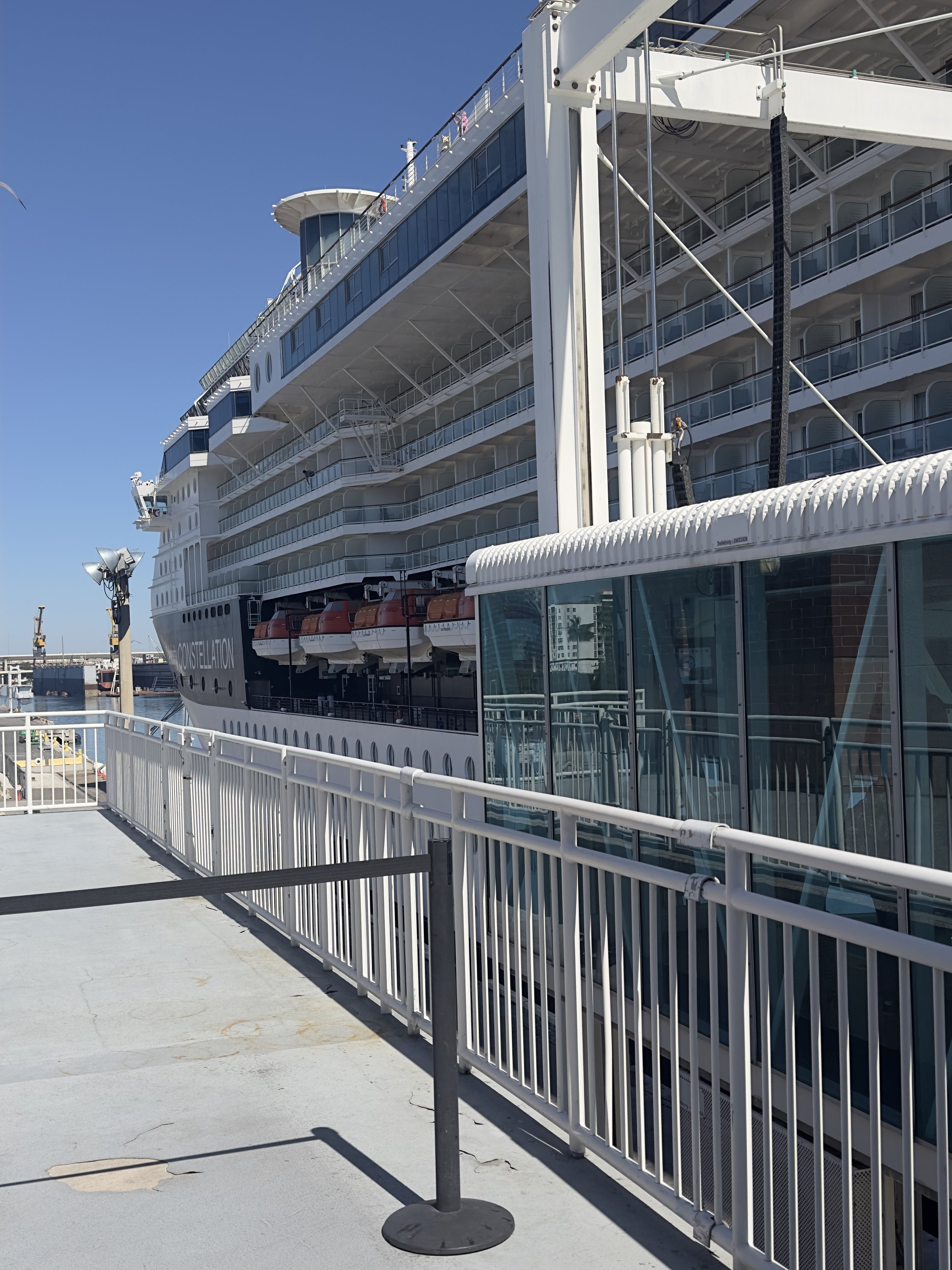
Embarkation Day Walking Onto The Gangway
Open seating on Deck 10 and Deck 11 aboard Celebrity Constellation on a Western Caribbean cruise
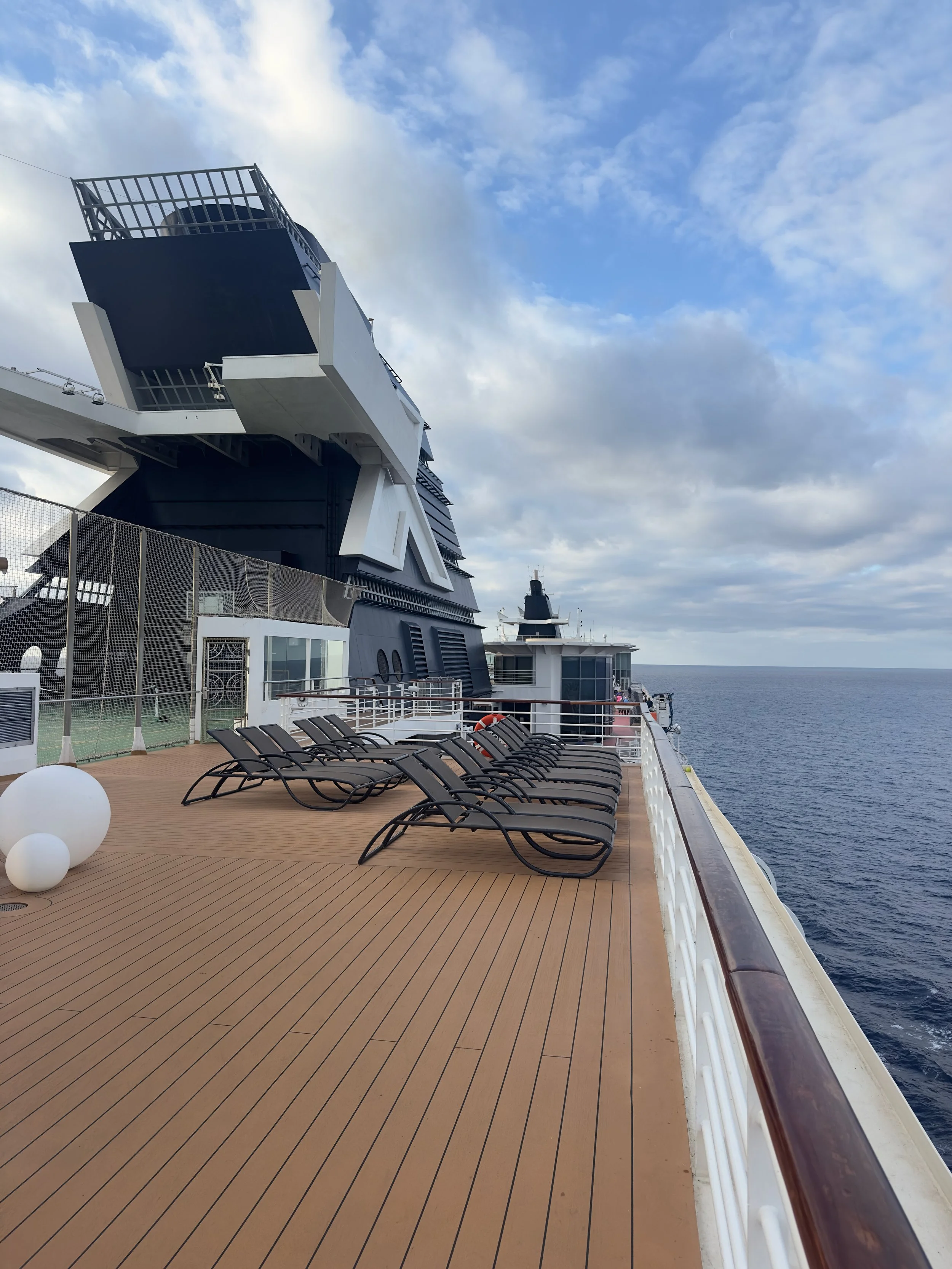
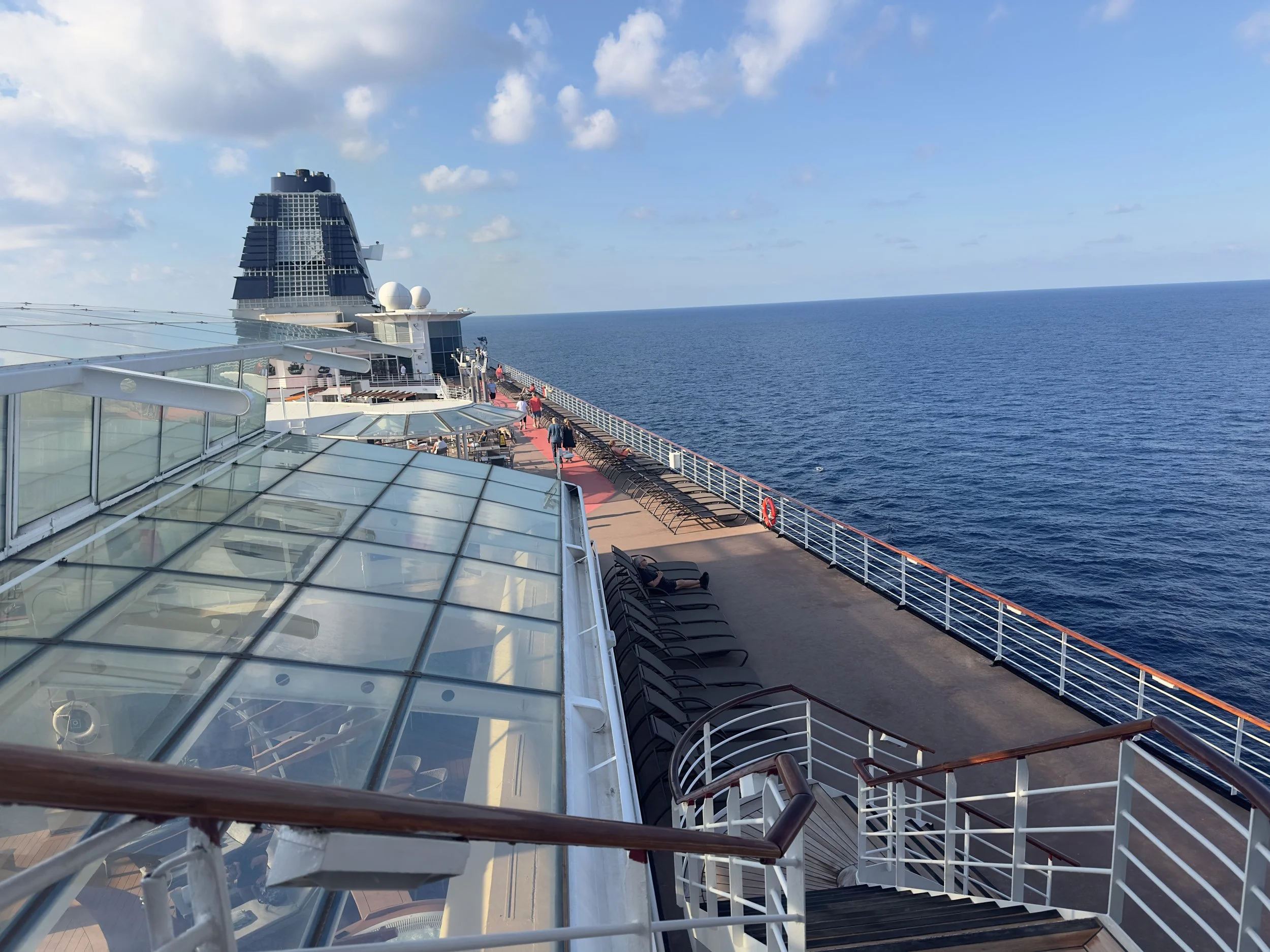
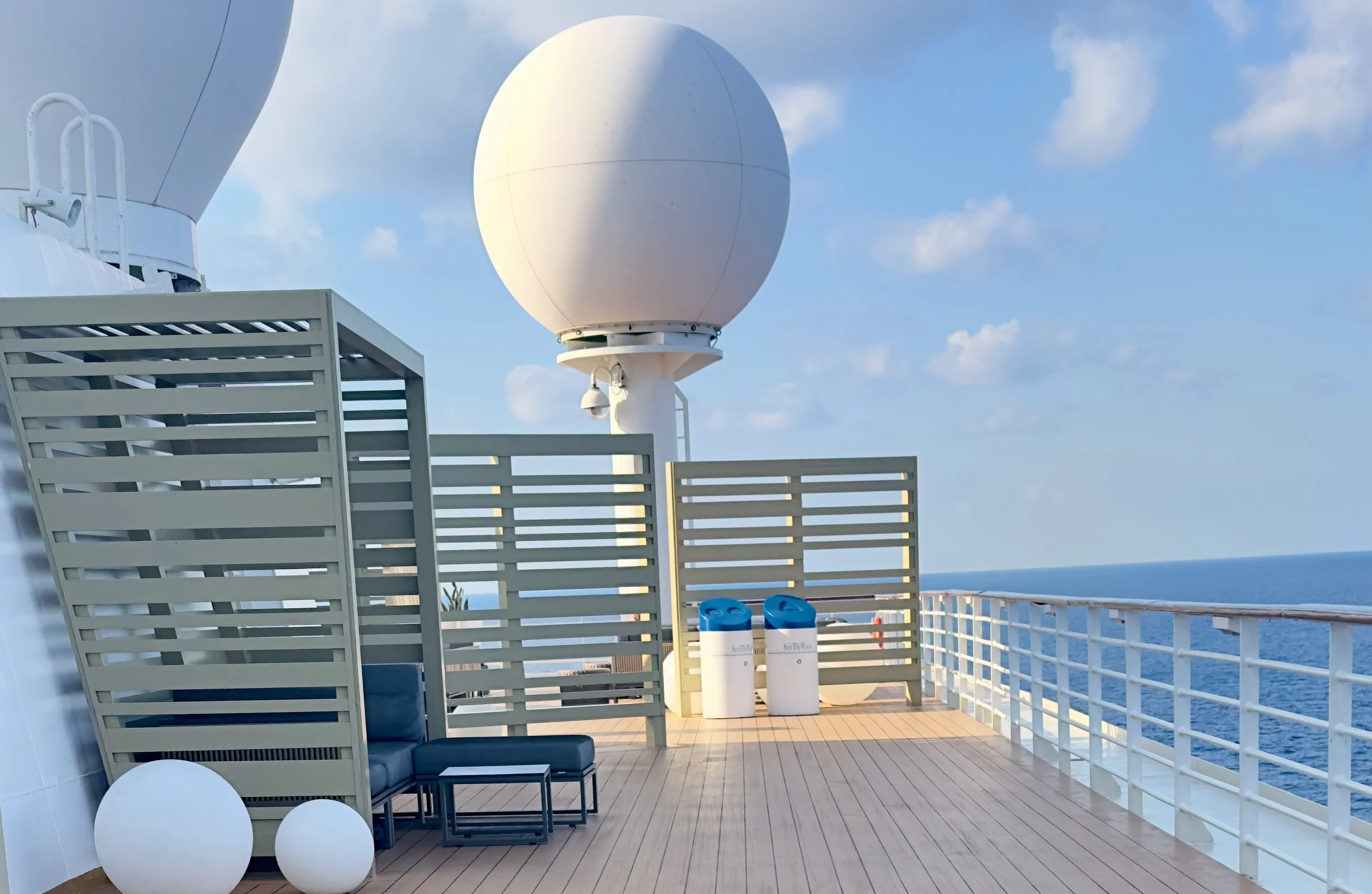
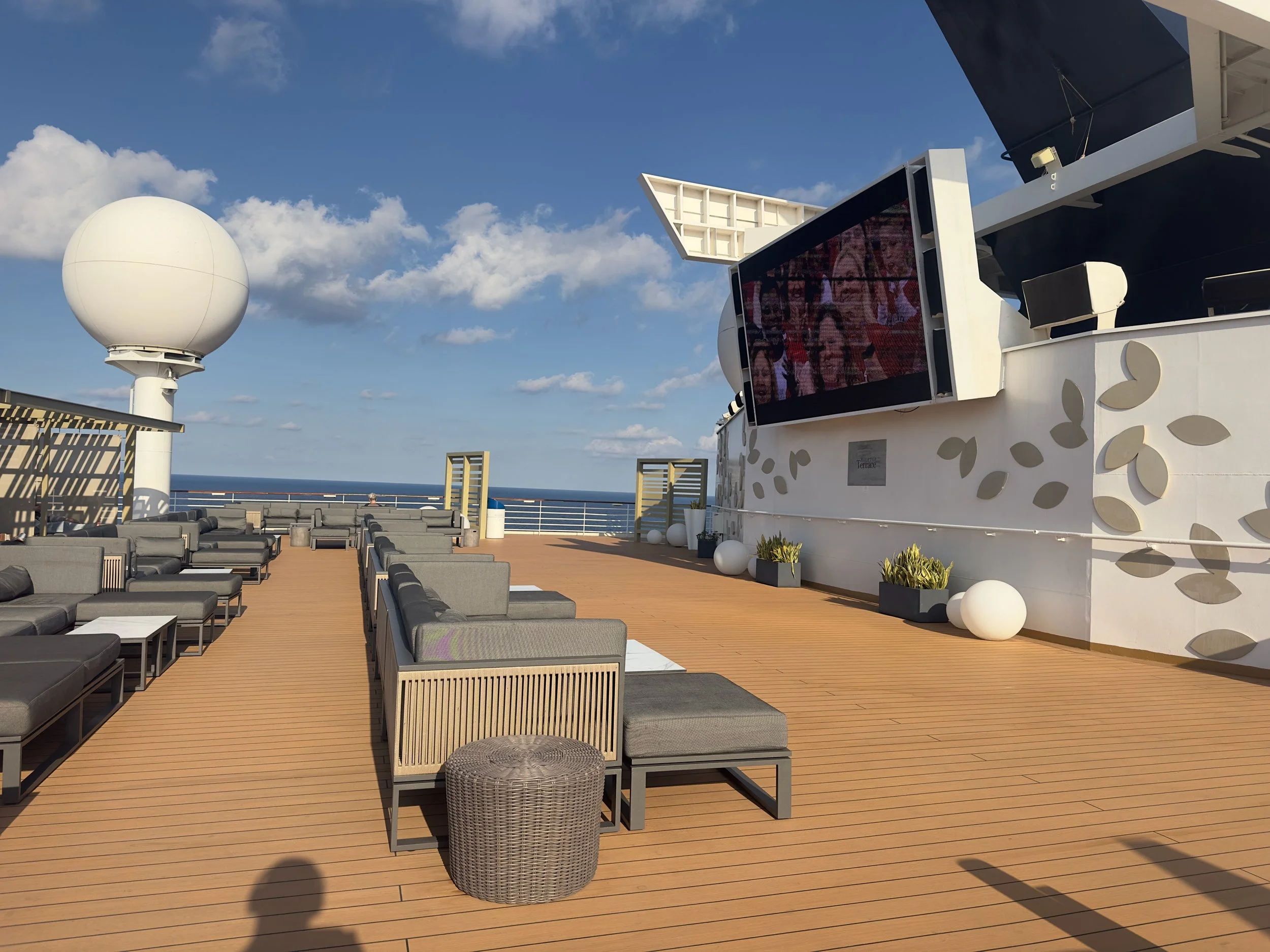
Is the ship crowded?
Not on this itinerary and not at this time of year. Passenger flow felt proportional to the ship’s capacity. Elevators were manageable. The pool deck required mild awareness on sea days, but it did not feel chaotic.
Programming and ship rhythm
Sea days were structured but not frenetic.
Mornings typically included wellness programming — Tai Chi, stretching, yoga — usually before 11 a.m. That early schedule kept the tone calmer than what I’ve experienced on some mass-market ships.
Afternoons rotated through the expected lineup: trivia, bingo, and occasional dancing near the pool area. The Reflections Lounge on Deck 11 forward was also used well, often hosting arts-focused sessions such as:
Paint-the-Circles mosaic workshops
Origami classes
Other small art instruction sessions
One event stood out: an “Archery at Sea” competition inside the Reflections Lounge. A suspended inflatable target was set up for scoring. It was lighthearted but organized and surprisingly engaging. I had never seen that on a ship before.
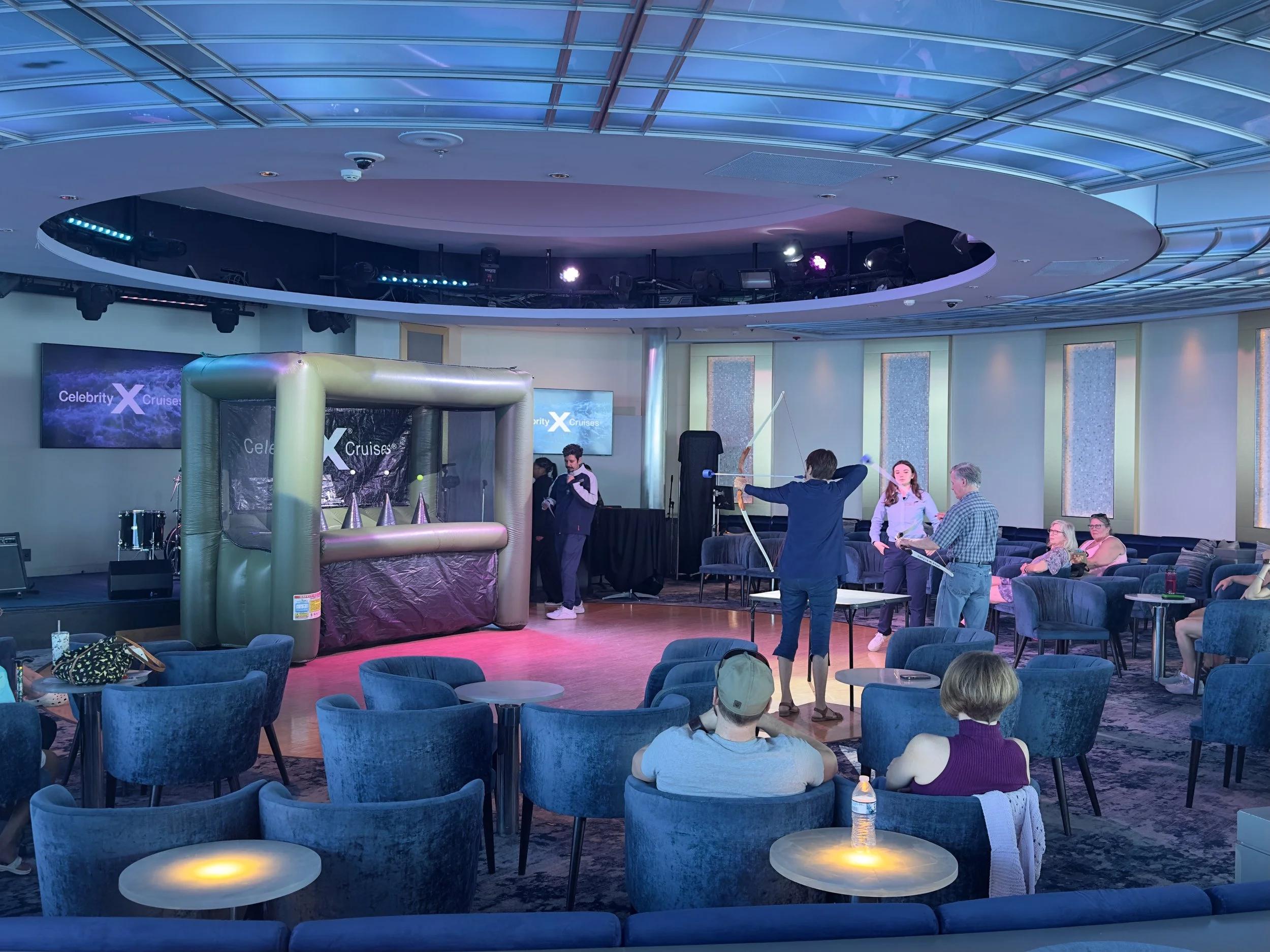
“Archery at Sea” inside the Reflections Lounge.
Evening entertainment
Evening shows leaned toward concert-style entertainment rather than Broadway-style productions. Pop performances, sing-alongs, and standard cruise-stage programming. Competent, professional, and in line with the ship’s adult tone.
I did not attend late-night events, so I can’t evaluate them meaningfully. For my travel style, quieter evenings were easy to maintain onboard.
Fitness Center
The gym was one of the better features on the ship.
For an older vessel, it is positioned in a way that newer ships sometimes get wrong — with continuous window views and natural light. It felt open and airy, even though the space itself was not oversized.
Equipment was practical and complete:
Many treadmills
Ellipticals and stationary bikes
Strength machines covering most muscle groups
Dumbbells and free weights (no heavy barbell bench setup)
A multi-purpose studio area used for spin, yoga, and training sessions
Some people don’t cruise to work out. For me, sea days are when it matters most. It restores discipline and balance in a setting where eating and drinking can become the default routine.
Dining Observations
One of the common claims about Celebrity is that the food is “better.” My experience was more nuanced.
Oceanview Café (Deck 10 buffet)
The buffet layout is circular — nearly 360 degrees of movement. That design helps passenger flow.
Instead of duplicating menus on both sides (a common technique to move crowds faster), Celebrity varied offerings across stations.
Forward: desserts and pastries depending on the meal
Aft: grill station with rotating proteins
Side stations: rotating themes and cuisine variety
Over the week, I saw meaningful variety: Asian offerings one night, Indian and vegetarian options another, and an American-themed day. Breakfast had the usual omelet stations, but overall variety felt stronger than average.
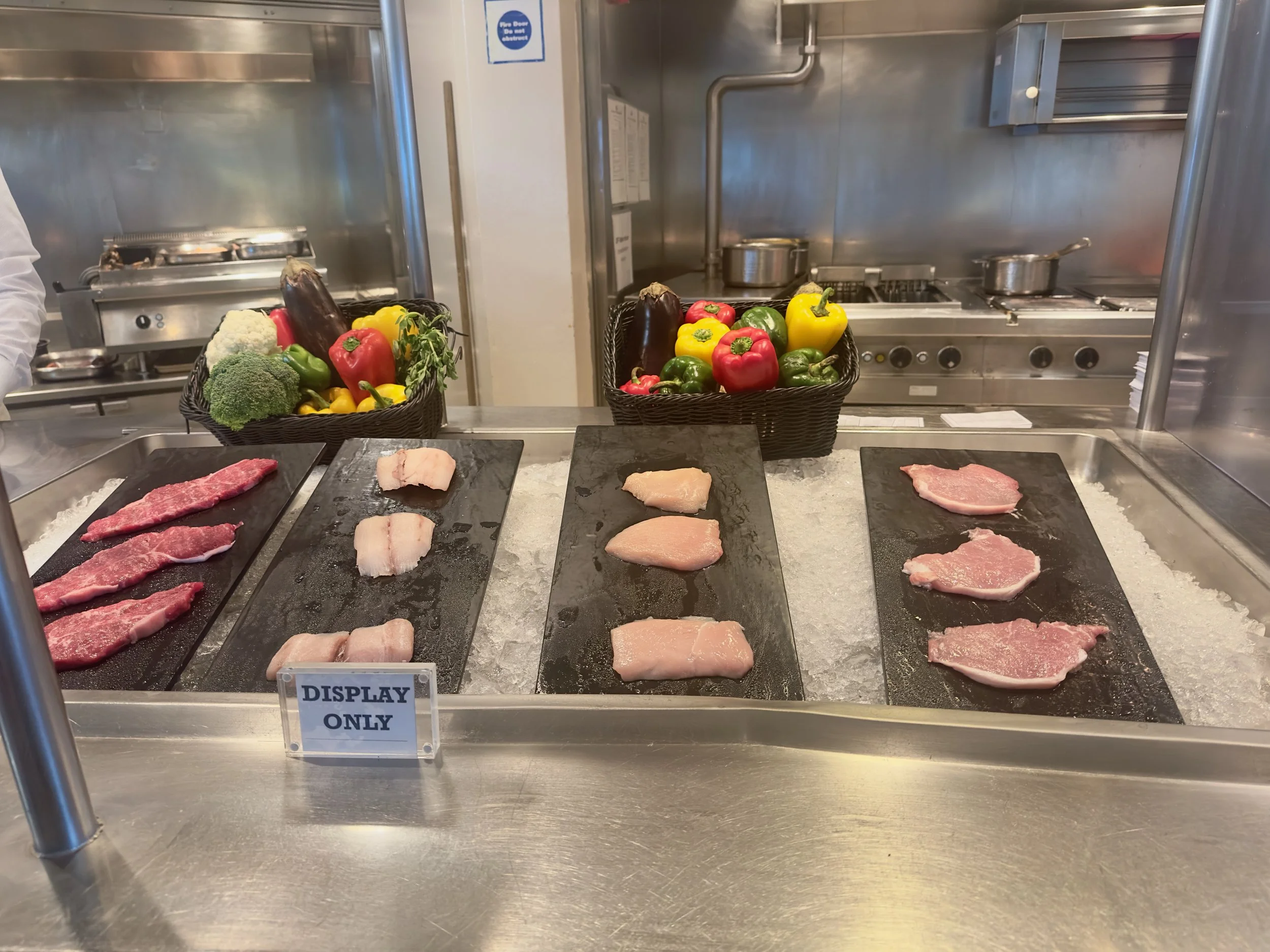
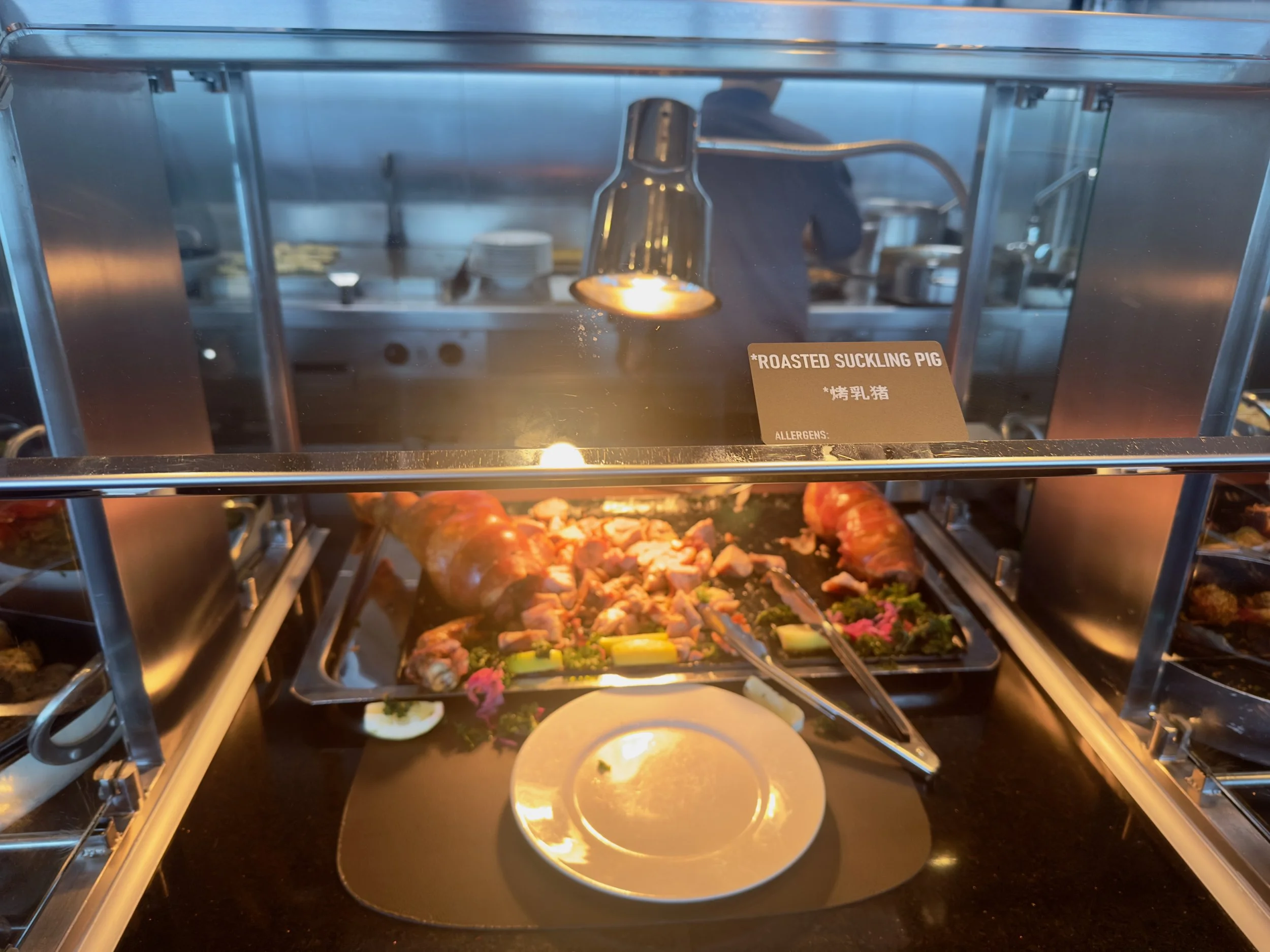
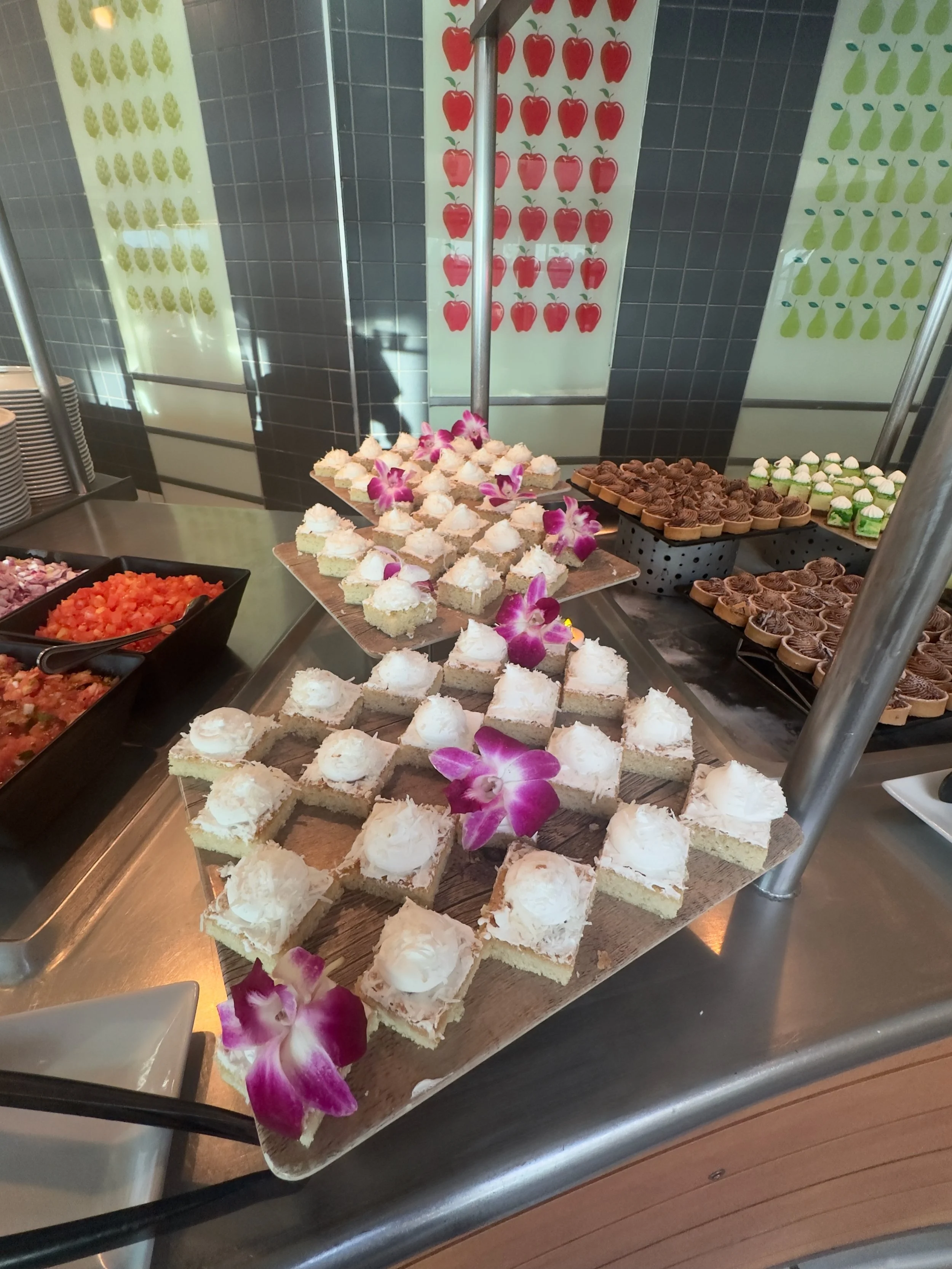
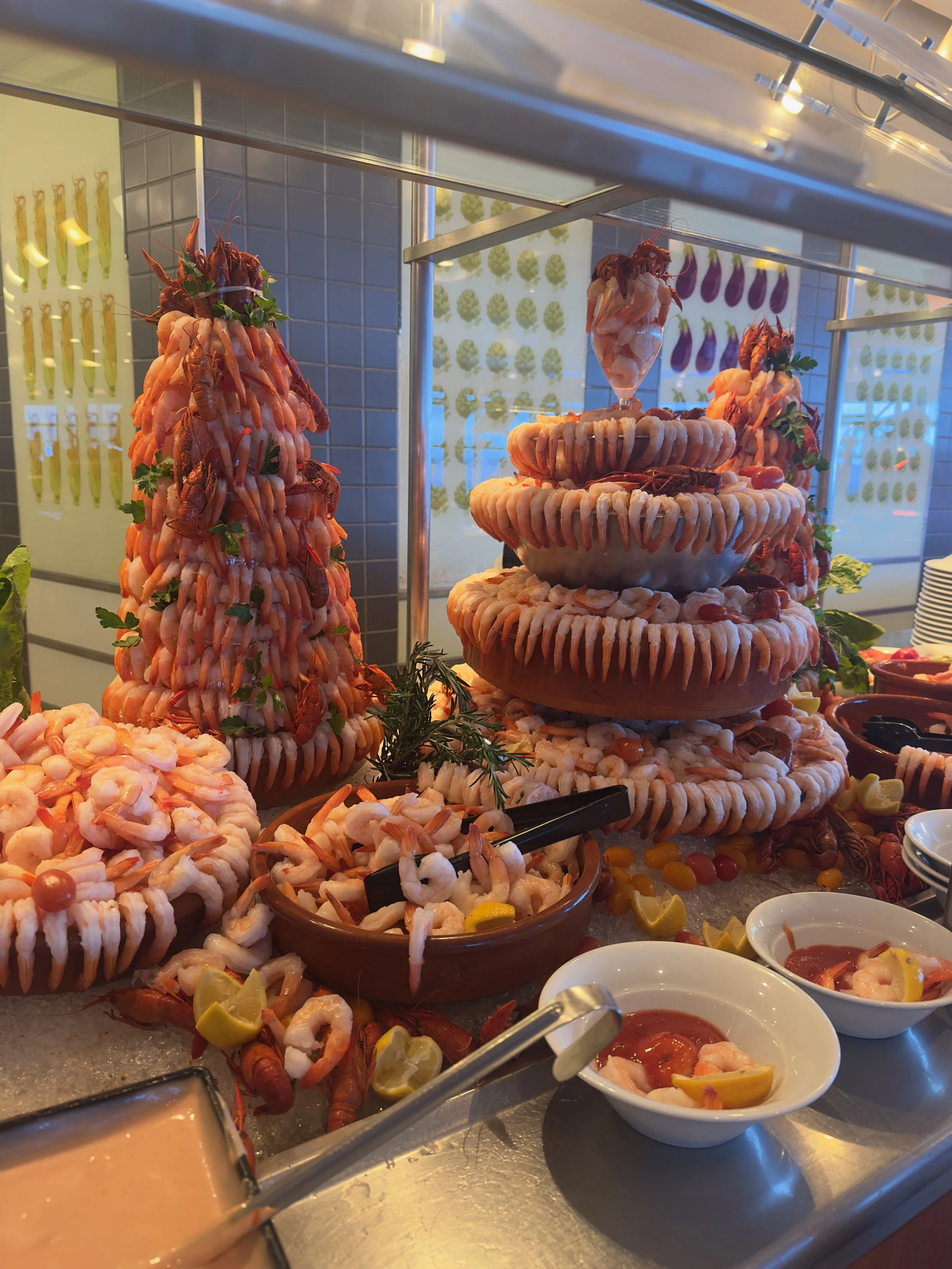
Main Dining Room
Early in the cruise, the main dining room did not feel significantly different than what I’ve experienced on Royal Caribbean or Carnival. Solid, predictable, cruise-standard execution.
The one consistent differentiator: Celebrity offered escargot nightly. On most lines, that tends to show up once per sailing.
As the week progressed, the food improved.
By the final nights:
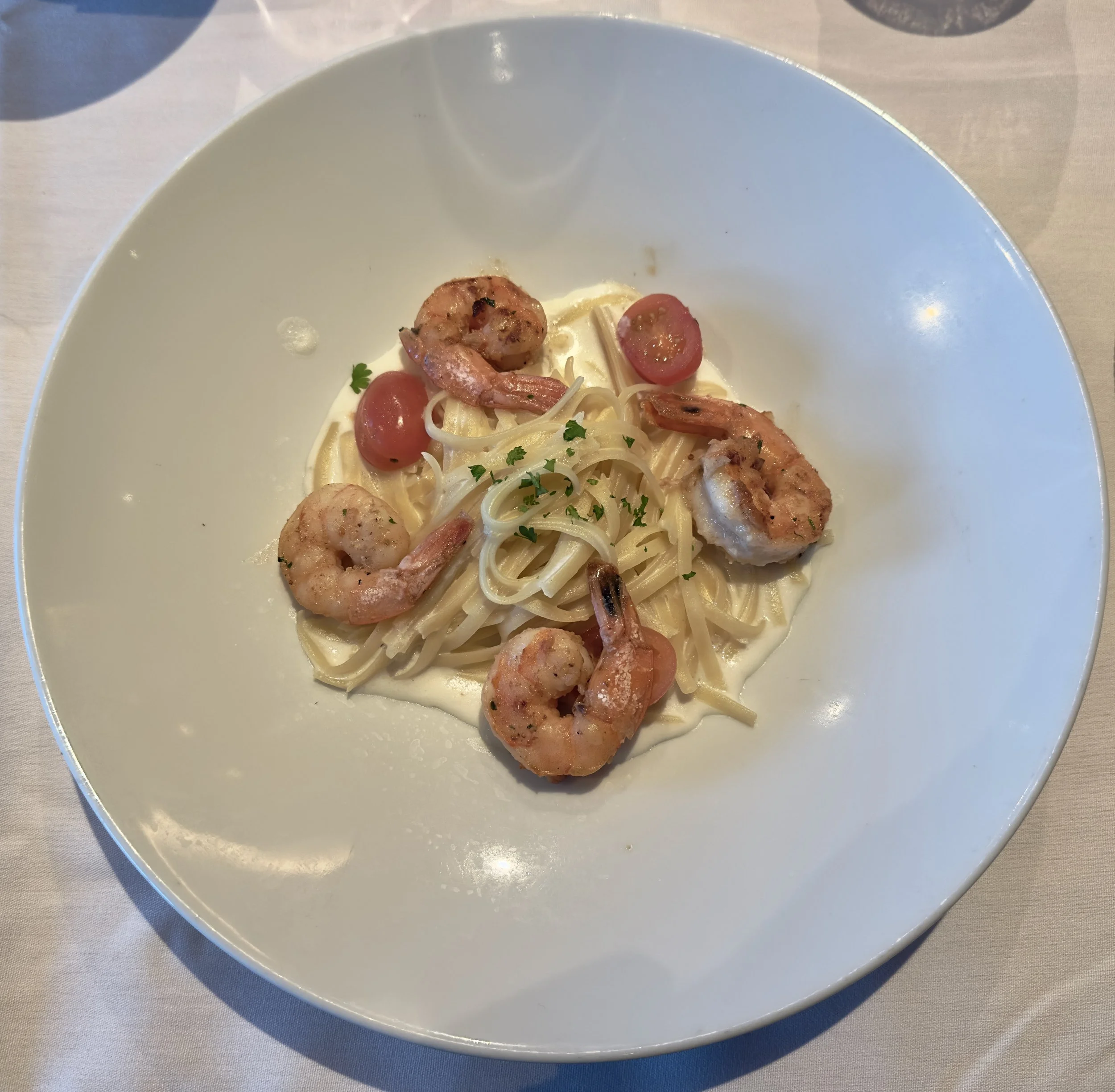
Beef Wellington was one of the better versions I’ve had in a long time — ship or land-based
Lobster and steak night delivered solid lobster
The steak was acceptable
Prime rib later in the week was one of the better cruise-ship prime ribs I’ve had without having to use a specialty restaurant
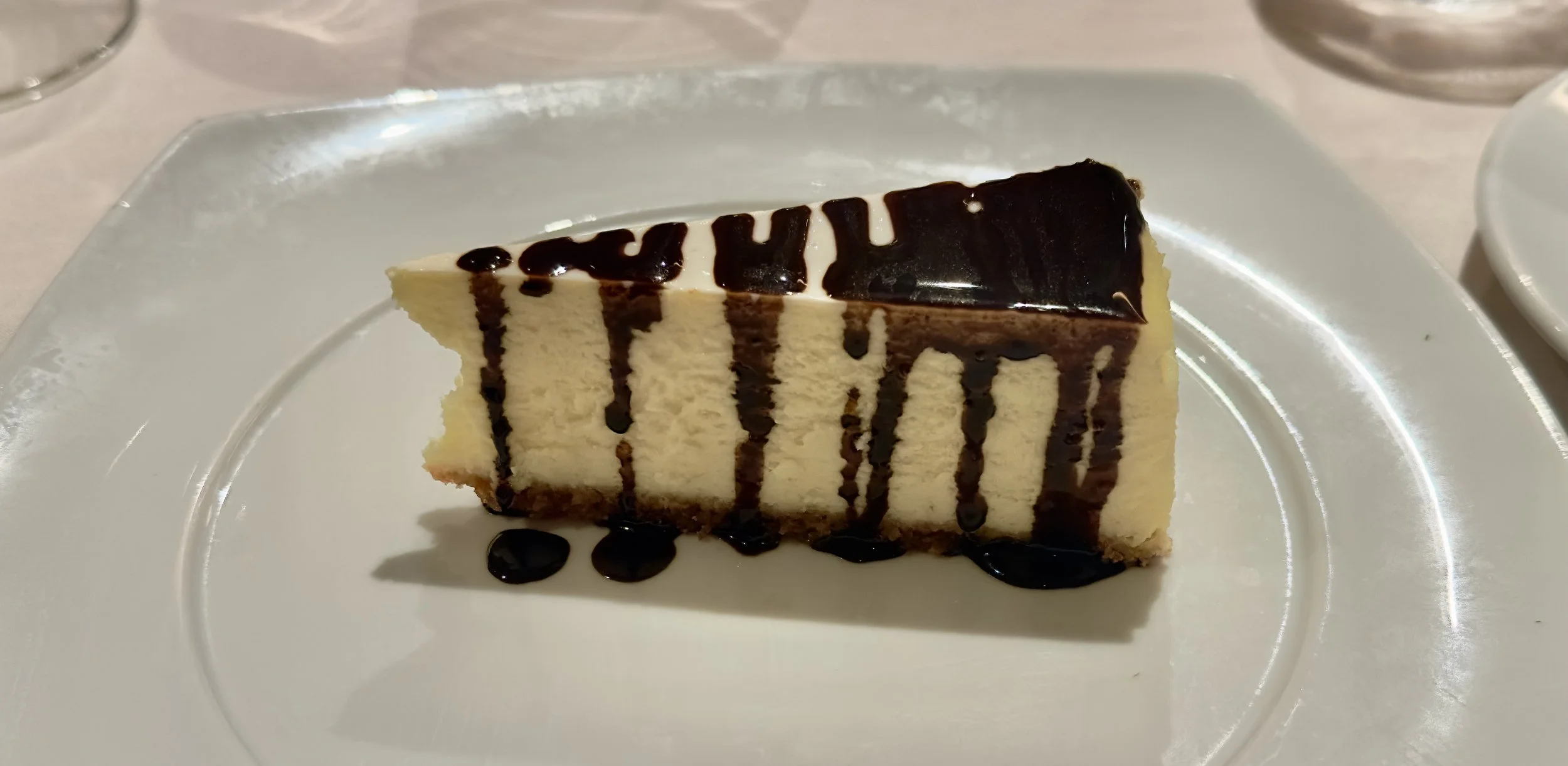
Desserts were fine. Not memorable. I’m partial to chocolate, and as much as it pains me to say it, Carnival’s molten chocolate cake still sets a difficult benchmark — when it’s cooked correctly.
Beverage Pricing
Before sailing, I heard commentary that Celebrity drink prices were excessive. I watched it closely.
In practice, pricing was comparable to recent Royal Caribbean sailings. Carnival remains cheaper, but the gap was not dramatic.
Examples:
Manhattan with standard bourbon: about $15 including gratuity
Wine and beer: typically $11–$15 per serving including gratuity (beer was generally 16 oz)
Cruise ships add 18–20% gratuity automatically, which must be included in comparisons.
One night I ordered a shot of Blanton’s bourbon because it is not something I typically see onboard. That came in at $33 including gratuity. Not inexpensive, but also not representative of normal daily spend.
Overall, beverage pricing landed where I’d expect for restaurant-level markup — not discounted, not shocking.
Onboard Sales Environment
One of the better aspects of the sailing was what I did not experience.
There was minimal sales pressure.
Photographers were present but not intrusive. I was not consistently approached for photo packages. Jewelry and art auction staff were visible but not aggressive. The Effy jewelry store was active, but the engagement style was lighter-touch than I’ve experienced elsewhere.
It’s possible traveling solo reduced interaction attempts, but I observed the same approach toward other guests. The atmosphere felt professional rather than commercial.
Crew & Housekeeping
Service consistency is often where differences between cruise lines become most visible.
On embarkation day, my stateroom attendant introduced himself and asked whether I preferred one housekeeping visit per day or two.
Two visits.
The first would be standard cleaning. The second would include turndown service and additional removal of anything accumulated during the day.
That stood out.
On recent sailings with Royal Caribbean, Holland America, Carnival, and Hurtigruten, housekeeping had moved to once-daily service after post-COVID staffing adjustments. For me personally, once per day is sufficient. But the fact that the option was offered — and operationally supported — reflects Celebrity’s service model on this sailing.
Throughout the week, housekeeping timing was predictable. The cabin was consistently maintained. Staff presence across dining and public spaces was attentive without hovering.
It wasn’t theatrical service.
It was professional service.
Port Experiences
Cozumel, Mexico
In Cozumel, I participated in a ship-sponsored excursion to Chichén Itzá. It was well orchestrated and operated as a small group, which improved pacing. CLICK HERE to read the blog on my experience.
For a deeper breakdown of that day, I would point readers to a dedicated write-up.
Belize City, Belize
Belize is a tender port, which adds time and logistics to the day. That needs to be factored into any plan.
Conditions were near ideal: sunny, about 82°F, and good water conditions. I joined a ship-sponsored snorkeling excursion. It ran smoothly and returned with time margin.
Belize felt authentic and welcoming — less curated than many cruise-centric ports.
I choose to take the Barrier Reef Snorkeling shore excursion offed through Celebrity Cruises. CLICK HERE for the blog on the shore excursion.
Costa Maya, Mexico
Costa Maya was the most operationally complex port of the week.
On arrival, protesters restricted cruise passenger movement outside the port area. Multiple ships were affected, including Celebrity, Royal Caribbean, and Norwegian vessels.
My scheduled Mayan ruins excursion was set to depart at 8:30 a.m. At the pier, we were informed it would be delayed until 12:30 p.m., a four-hour push.
While larger excursions were being held, smaller independent groups appeared to be departing. I spoke with the Celebrity shore excursion staff and asked whether placement on an alternative Mayan excursion was possible. They made genuine efforts to accommodate. Ultimately, it did not work out.
A full refund was processed without hassle.
From a customer service standpoint, it was one of the cleaner service recovery responses I’ve experienced at sea.
The port itself is contained — restaurants, pools, shopping — but it is not a walk-into-town experience. If returning, I would plan an excursion specifically to get out of the port area.
Disembarkation – Tampa
Debarkation was seamless.
I used the self-assist walk-off option. Official time was 7:30 a.m. I was in line by 7:15. By about 7:25, passengers were being released.
From ship to airport:
~7:25 — off the ship
~7:35 — through customs
~8:00 — in a taxi
~8:30 — seated at the Tampa airport
Uber estimated a 10-minute wait and about $42 plus tip. A taxi was immediately available for a $35 flat fare plus tip. It was faster and slightly cheaper.
For travelers flying out the same morning, Tampa worked well.
Final Assessment
This February sailing priced out under $100 per night (double occupancy rate). As a solo traveler, I paid slightly more due to the supplement, but the overall value remained strong.
Seven nights. Three ports. Consistent service. A clean, well-maintained ship. A passenger mix that skewed mid-50s to mid-60s, active, and seasoned.
Would I sail Celebrity Constellation again?
Yes.
Not for spectacle.
Not for novelty.
But for proportion.
The ship size feels right. Seating works. Passenger flow stays manageable. The crew ratio supports a steady service baseline. For travelers who prefer a calmer pace and a ship designed for adults, this itinerary delivers a balanced week.
Travel, when approached thoughtfully, benefits from proportion.
This sailing maintained that balance.
I welcome constructive feedback on this review and on the blog in general. If there’s something you’d like to see covered differently, corrected, or expanded, email me at venturetosee@gmail.com.
Travel with Intention.
Destination Highlight: Barrier Reef Snorkeling Adventure with Celebrity Cruises
Cruising to Belize City on Celebrity Constellation? This in-depth shore excursion review covers snorkeling the Belize Barrier Reef, visiting Caye Caulker, swimming with nurse sharks and stingrays, and what you can realistically experience in one port day. A practical cruise port guide for travelers who prioritize the water.
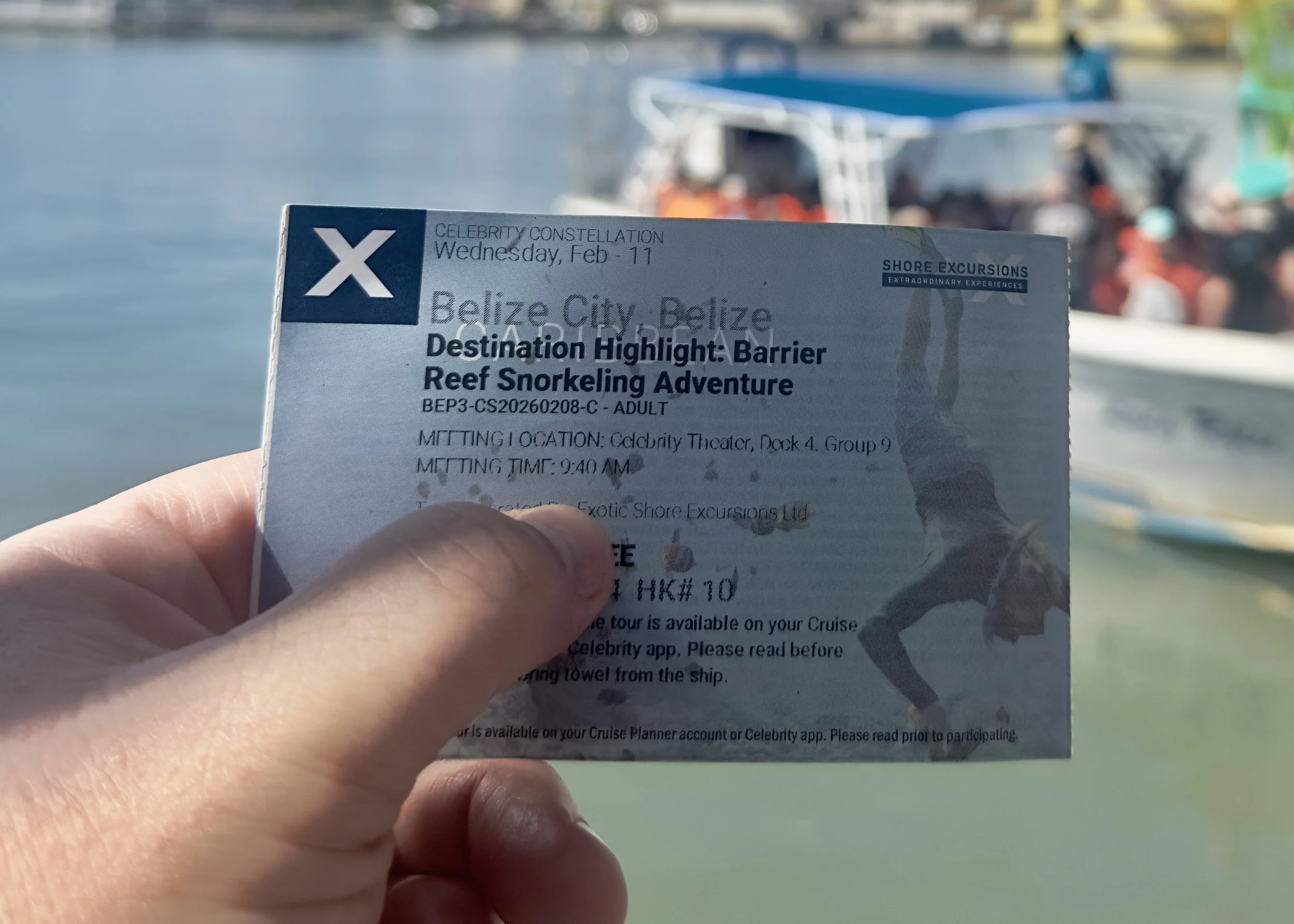
One ticket to adventure
The first thing I noticed about Belize wasn’t dramatic.
It was practical.
We stepped off the Celebrity Constellation and onto a tender boat just after sunrise, knowing that if we signed up for this Belize Barrier Reef snorkeling adventure, it would take the entire port day. No shopping afterward. No squeezing in something else. This was the plan.
And I can say without hesitation—it was the right decision.
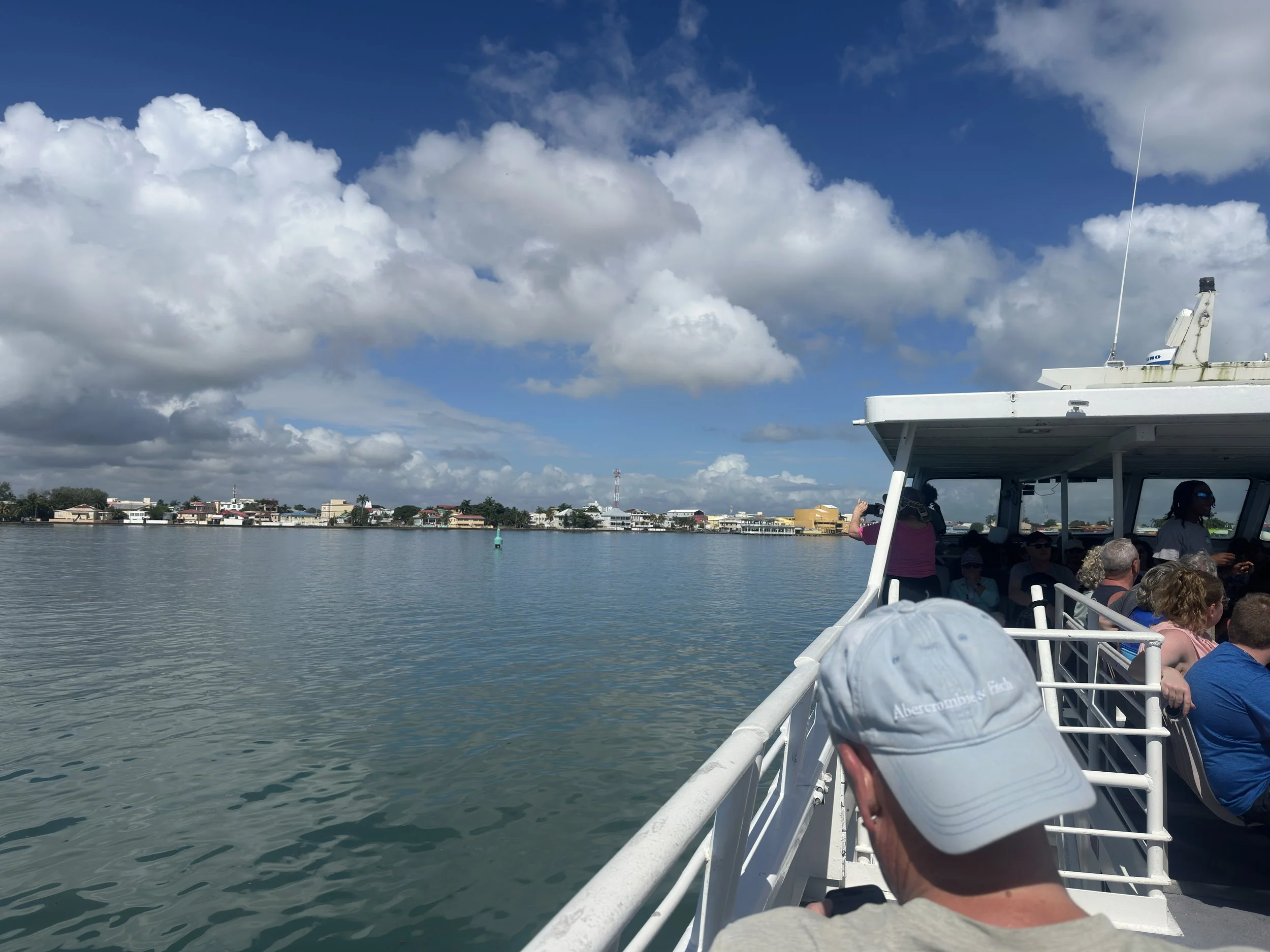
Tendering to Belize City, Belize
Because Belize City is a tender port, your day starts early. There’s something about holding that excursion ticket in your hand that feels like a commitment. You’re not wandering the port to see what looks interesting. You’ve already decided how you’re going to spend your time.
I’ve had scuba diving on my bucket list for years. At this point in life, I’m realistic. Snorkeling is more practical—and in a place like Belize, it’s more than enough. The Belize Barrier Reef is the second-largest barrier reef system in the world, stretching along the coast of Belize and into neighboring countries. It’s known for strong visibility, diverse marine life, and relatively easy access from shore.
We boarded a second boat with our group and headed out toward Caye Caulker.
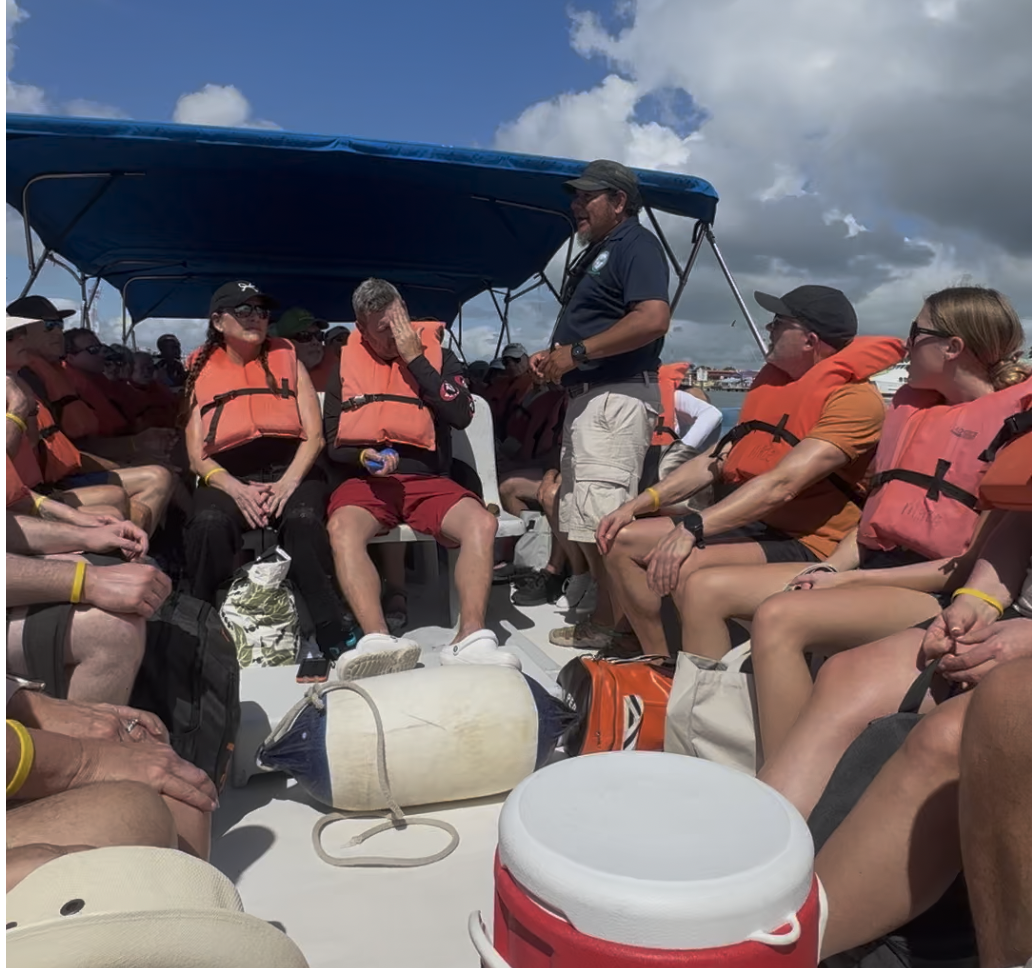
A history lesson of Belize, the aquatic ecosystem, and safety briefing.
There were around forty guests in total, but once we reached the snorkeling sites, the guides divided us into smaller groups. The ride to Caye Caulker took about 45 minutes. Along the way, the guides talked about the reef and the mangroves that help protect it.
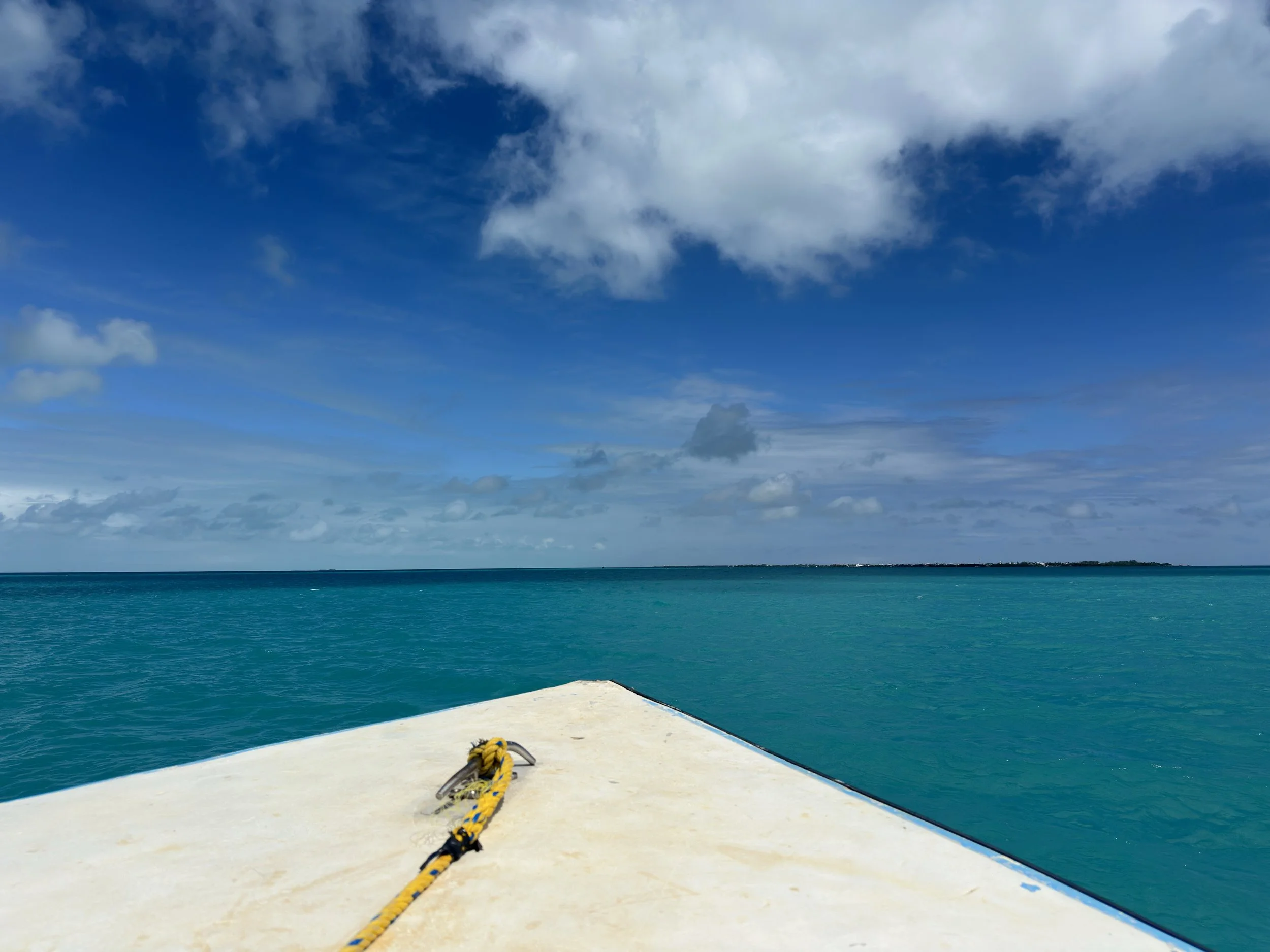
Perfectly blue water and anticipation of the adventure that lies ahead
Caye Caulker came into view gradually. It’s a small island—actually two islands split by a hurricane decades ago. There are no cars, just sandy roads and golf carts. It feels relaxed without trying too hard to impress you.
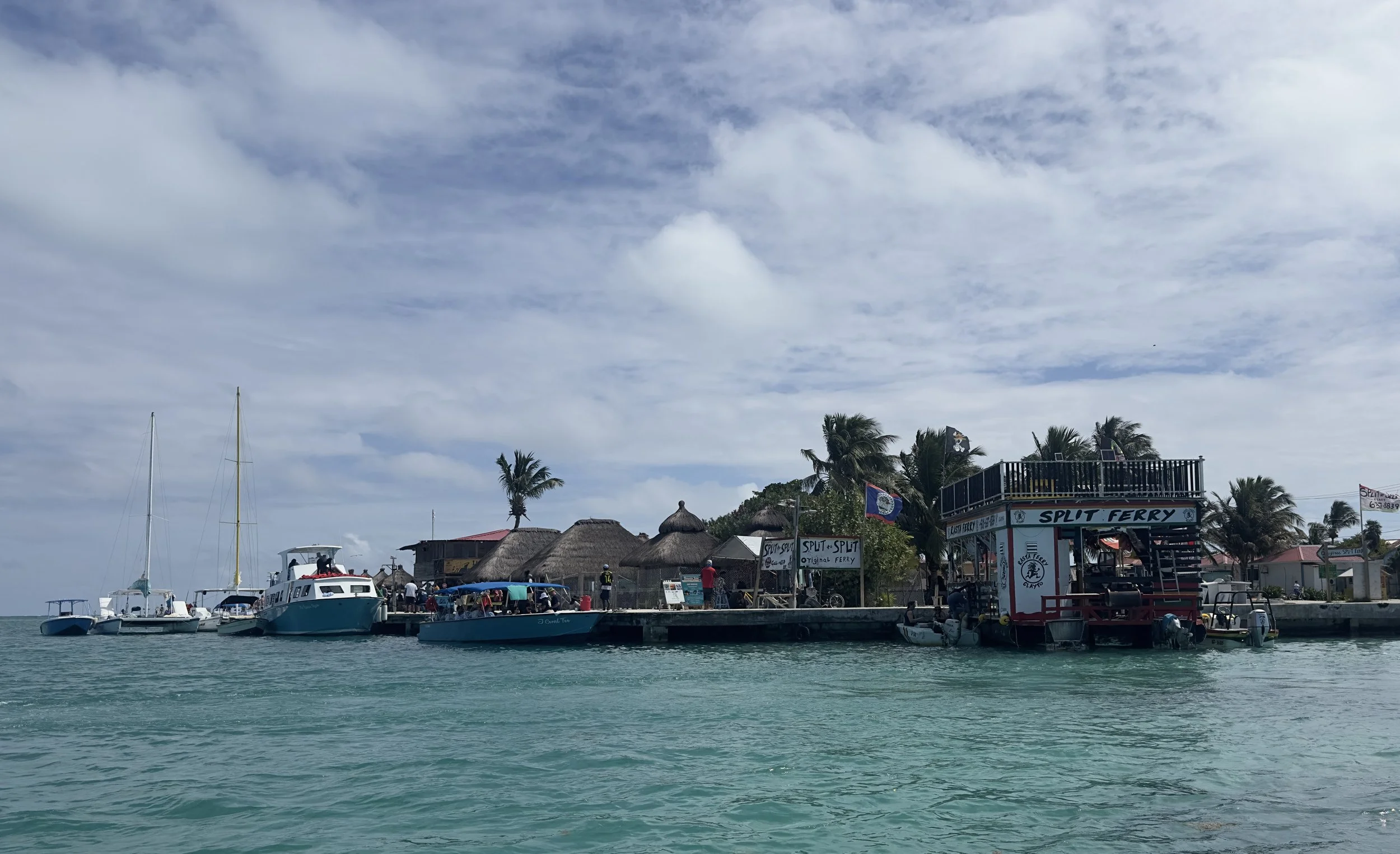
Approach to Caye Caulker
Before heading out to snorkel, we stopped at a beach bar called the Lazy Lizard. The process was simple: order your lunch before you leave so it’s ready when you return. That small logistical detail made the entire day run smoothly.
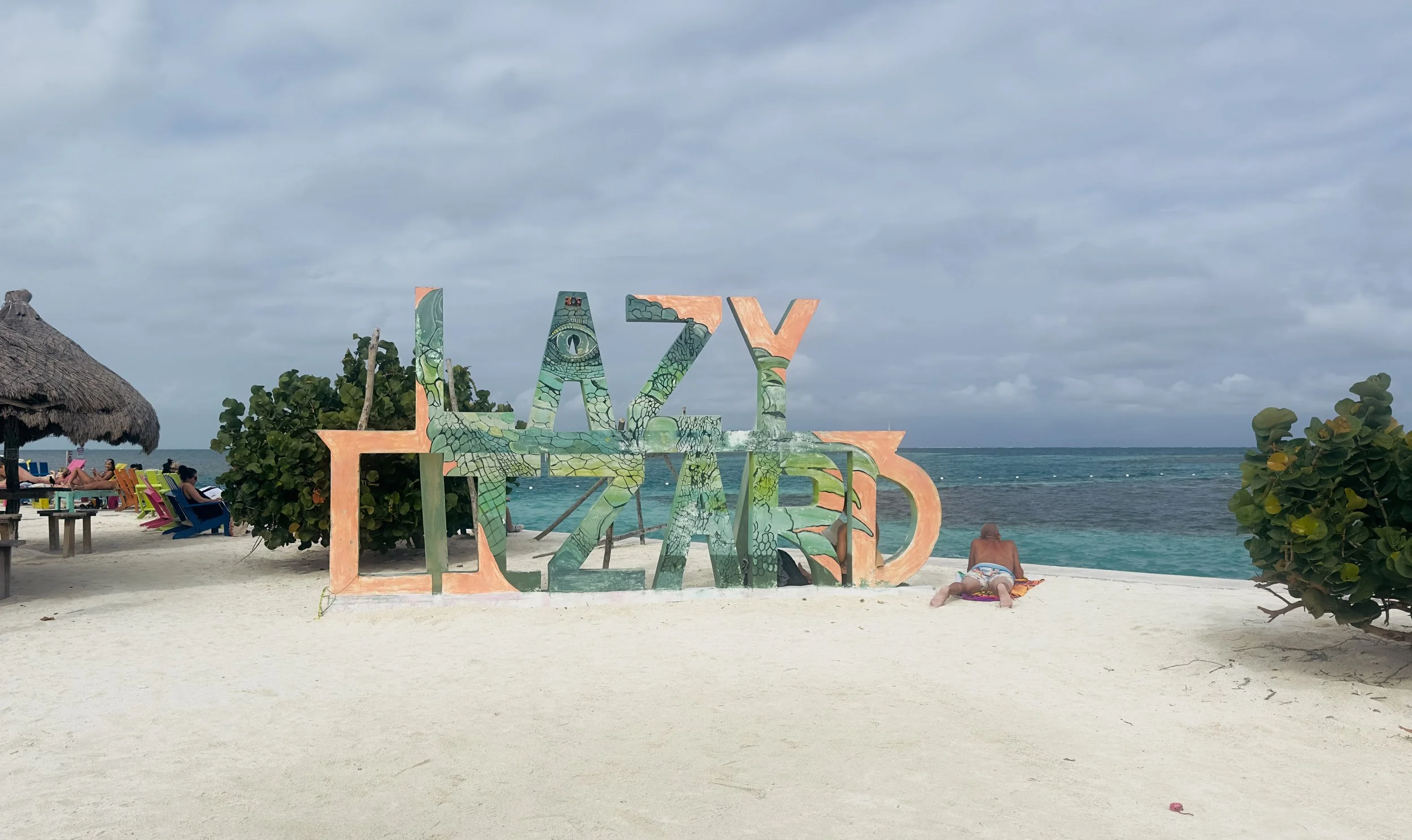
How can you not want to see what the restaurant has to offer with a sign like this?
Then we were fitted with snorkel gear.
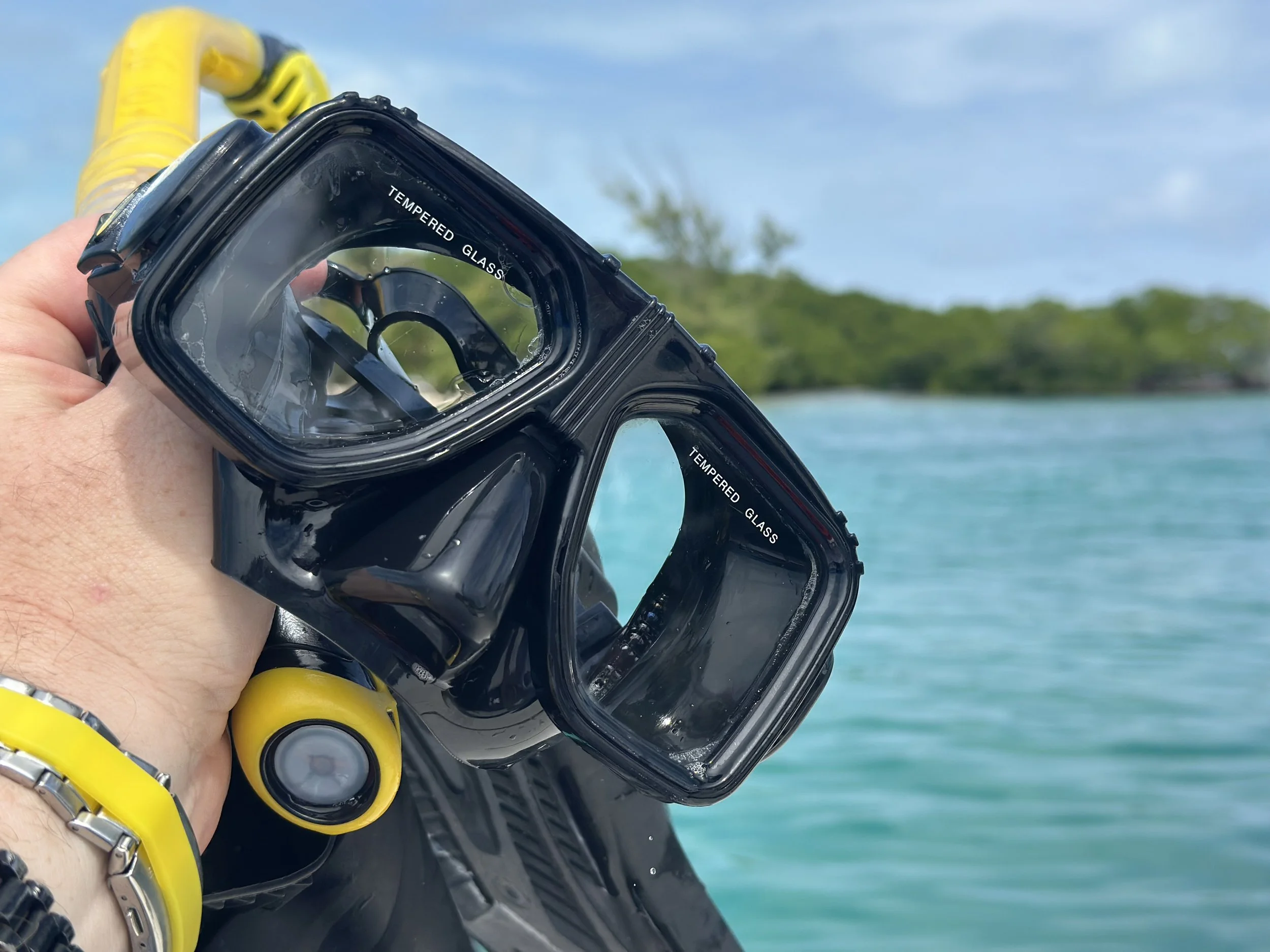
Mask and Snorkel
I’ve done enough excursions over the years to know when equipment is subpar. This wasn’t. The masks didn’t fog up, and the snorkels had backflow valves to help prevent saltwater from coming in. When you’re in the water for 45 minutes at a time, those things matter.
The first snorkeling site was about 10–15 minutes from the island. The water was roughly 30 feet deep where we entered, and the visibility was very good.
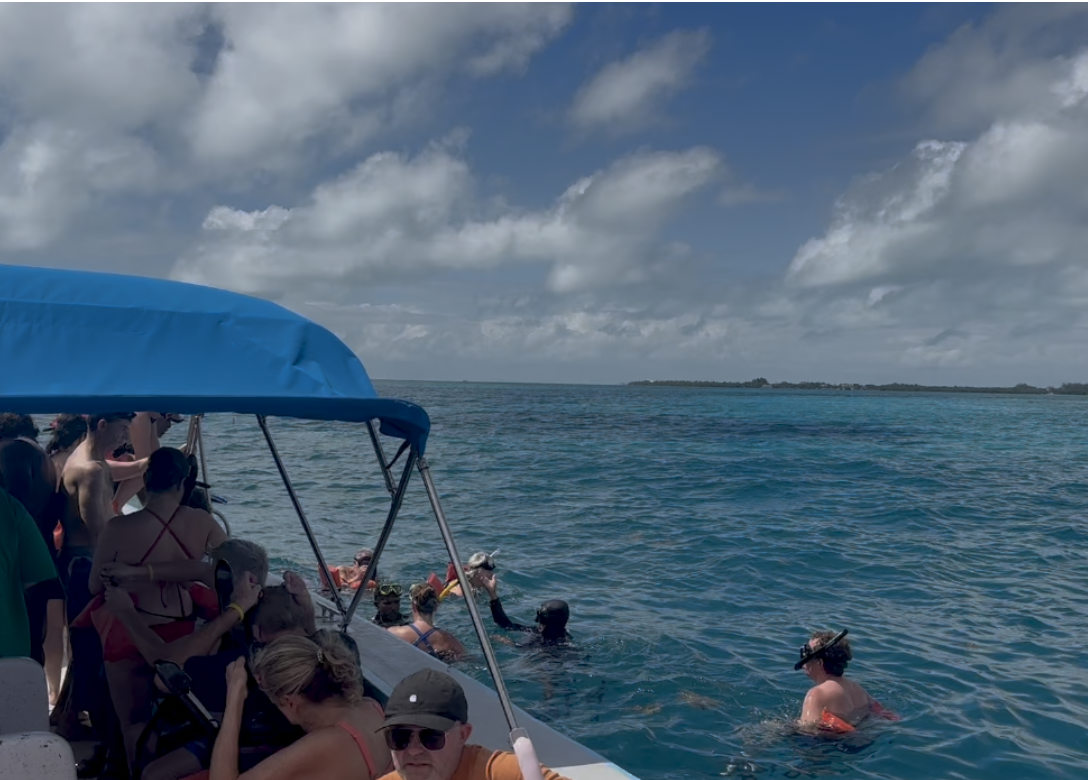
Snorkelers in the water
We saw snapper, sergeant major fish, grouper, and a lobster tucked into coral. A guide pointed out a green moray eel partially hidden in the reef. At one point, I drifted a little too close to coral without realizing it, and the guide gently redirected me. The supervision was attentive but not intrusive.
The sandy bottom had more conch shells than I’ve seen in one place before, some still alive and leaving visible trails behind them in the sand.
After about 45 minutes in the water, we climbed back aboard and moved to a second site.
his one was shallow—about waist-deep with a sandy bottom. The guides used sardines to attract nurse sharks. Within minutes, several arrived. Then more.
We stepped into the water and stood while the sharks fed nearby. They were focused entirely on the bait. Stingrays began moving through the group as well, occasionally brushing against legs as they swam past.
At one point, the sharks and stingrays outnumbered the people in the water. It was unusual, but it never felt unsafe. The guides were organized, calm, and clearly experienced.
If you’re concerned about swimming ability, buoyancy devices are provided. On this tour, we used life preservers from the boat. You can float easily without much effort. This is a good option for first-time snorkelers who are comfortable being in the water and following instructions.
Afterward, we climbed back on board and were handed rum punch while we dried off.
We returned to the Lazy Lizard for lunch.
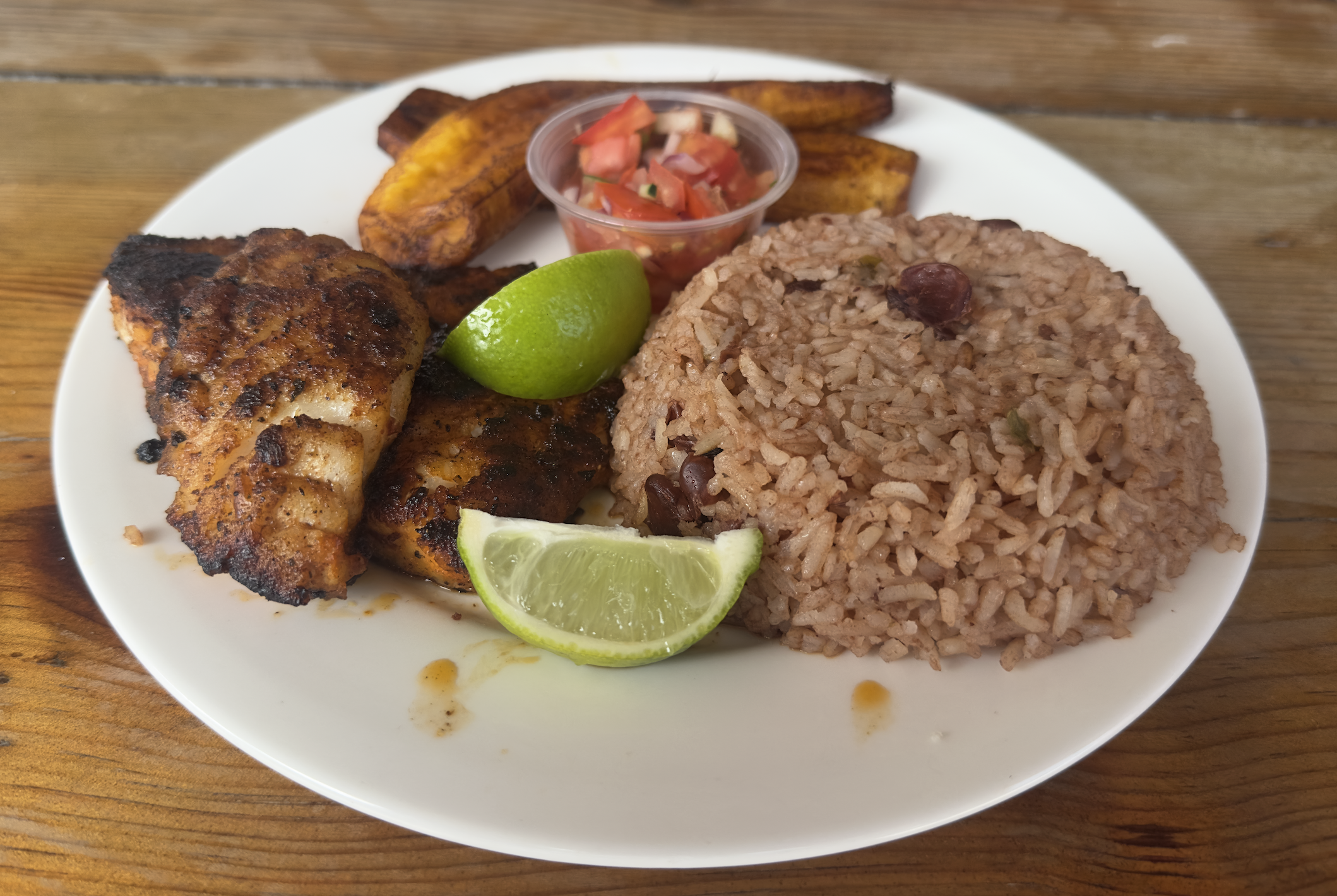
Grille Snapper, Plantains, and Beans and Rice
I ordered grilled fish with rice, beans, and plantains. The fish was fresh and well-prepared. The plantains were particularly good—caramelized and soft without being overly sweet.
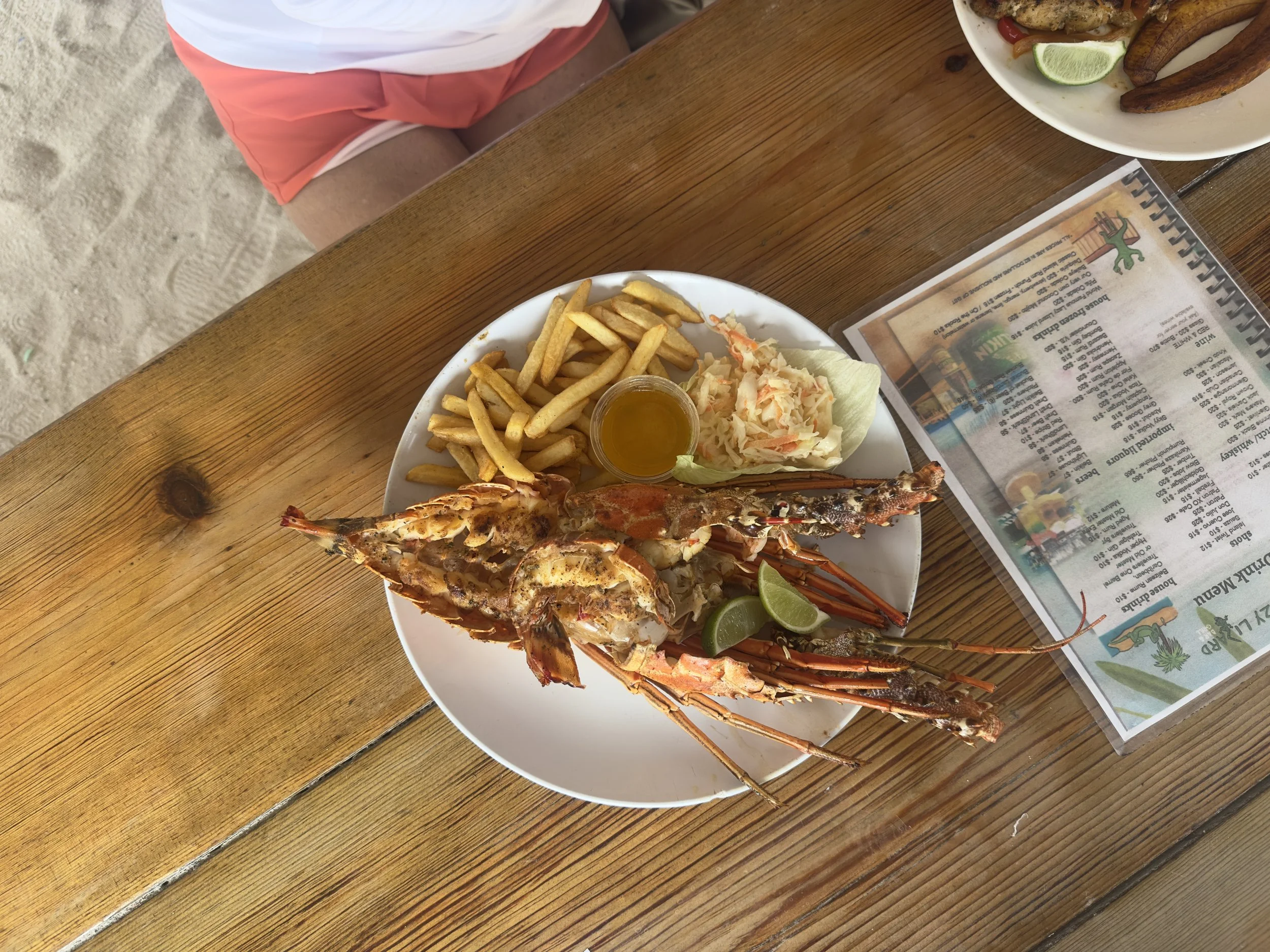
Island Grilled Lobster
Another guest at our table ordered grilled lobster caught locally. It was split open and easy to eat, with a generous amount of meat.
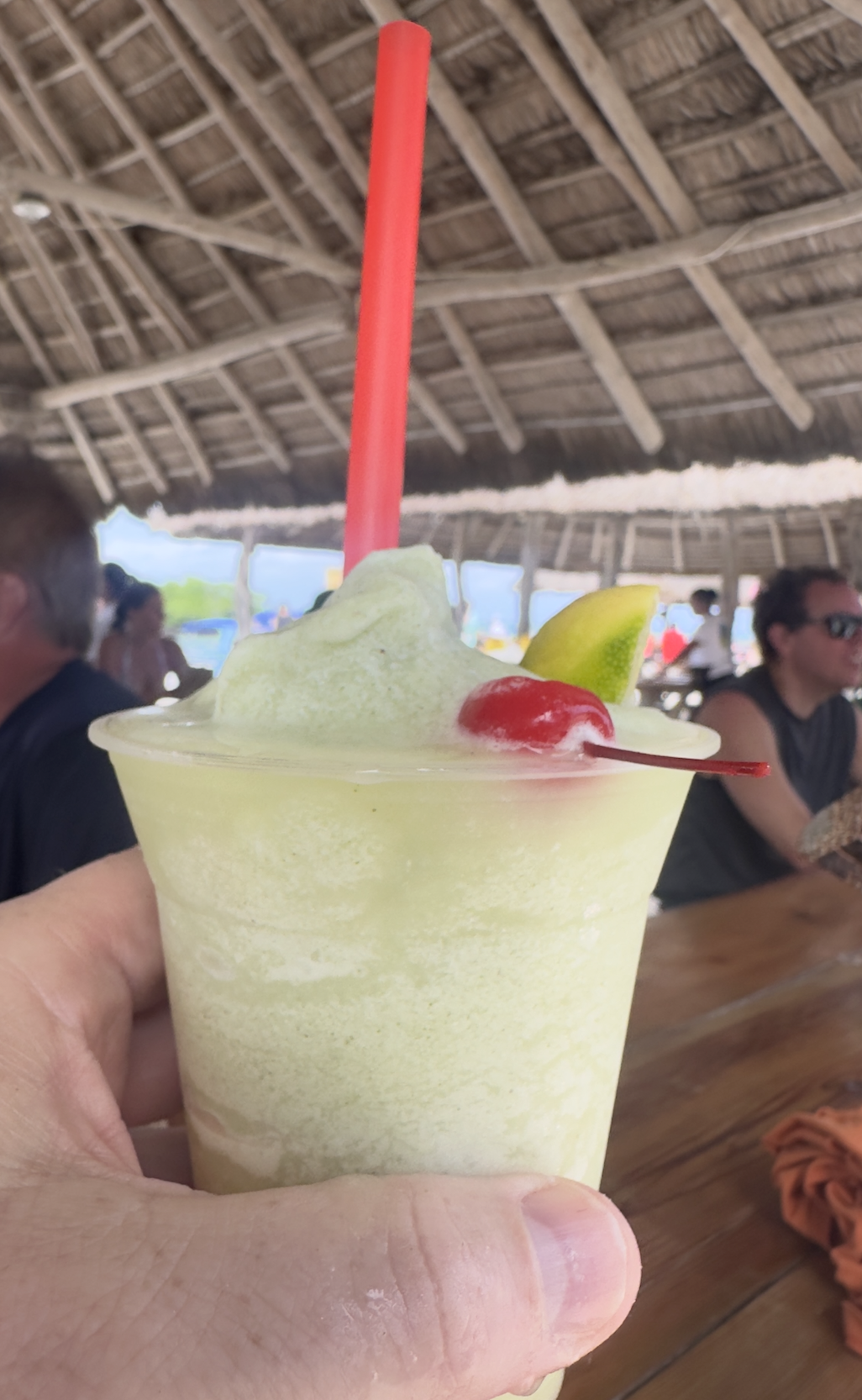
I also tried a coconut mint mojito. After several hours in the sun and saltwater, it was refreshing and well-timed.
We had about an hour to eat and walk around. I noticed fishing charters, dive shops, and small hotels. The island felt welcoming and straightforward. The locals were friendly without being pushy.
It left an impression.
Before heading back to Belize City, we made one final stop near the mangroves to watch tarpon feeding.
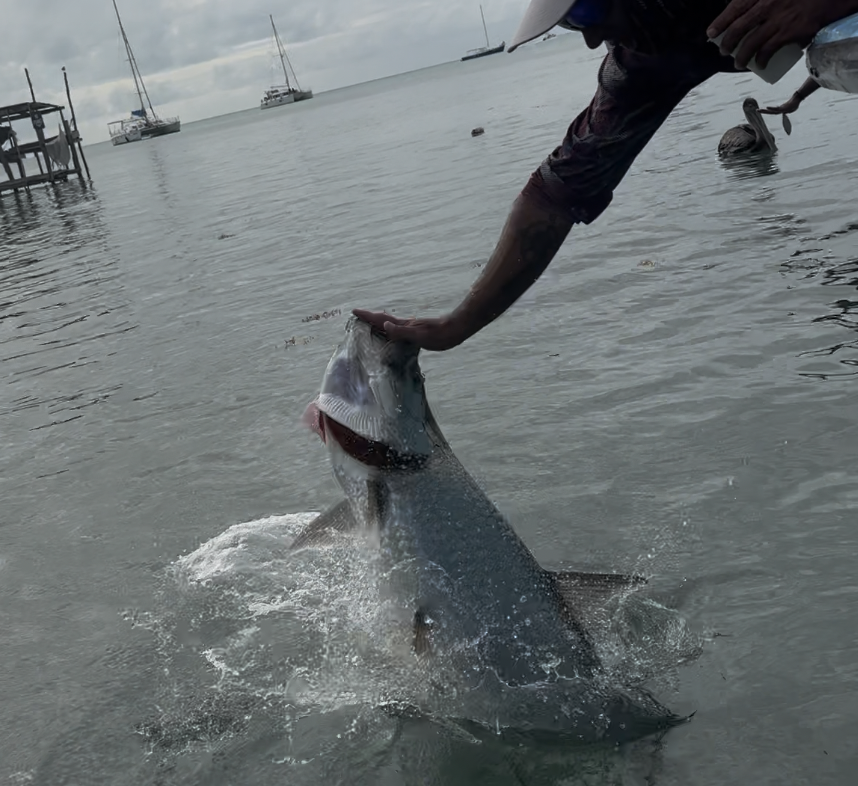
Tarpon gumping out of the water to grab a sardine
Large tarpon were jumping two to three feet out of the water to grab sardines. There were no nets or barriers, which made it feel more natural than some controlled feeding setups elsewhere.
The boat ride back to Belize City took about 45 minutes. We were on one of the last tenders returning to the ship. In total, the excursion lasted roughly six and a half hours.
Here’s the direct answer: YES, I would do this again. Without hesitation.
Even if I were on back-to-back cruises stopping in Belize, I’d strongly consider booking the same Belize Barrier Reef snorkeling tour. Conditions change. Marine life moves. You won’t see exactly the same thing twice.
It’s important to understand that this excursion uses your entire port day. If shopping in Belize City is a priority, this tour won’t leave time for that.
But if your goal is to experience the Belize Barrier Reef, snorkel in clear water, see nurse sharks and stingrays up close, and spend time on Caye Caulker, this is a well-run, organized option.
One additional note: use reef-safe sunscreen. Certain chemicals in traditional sunscreens damage coral ecosystems. Mineral-based, reef-friendly options are widely available and worth bringing with you.
What surprised me most was how much Caye Caulker stayed on my mind afterward. I found myself taking photos of hotel signs and fishing charter boards. I could easily see returning for a few days—perhaps a small-group fishing trip or a longer stay focused on snorkeling and diving.
Caye Caulker is ideal for travelers who want a laid-back Caribbean island without large resorts. It offers reef access, fishing, diving, and simple accommodations in a compact setting.
If you’re planning a cruise stop in Belize City and want a full, active day centered on the water, this Belize Barrier Reef snorkeling adventure is a strong choice.
And if you’re considering turning that one port stop into a future standalone trip to Caye Caulker, that’s a conversation worth having.
Some excursions are entertaining. This one was worth repeating.
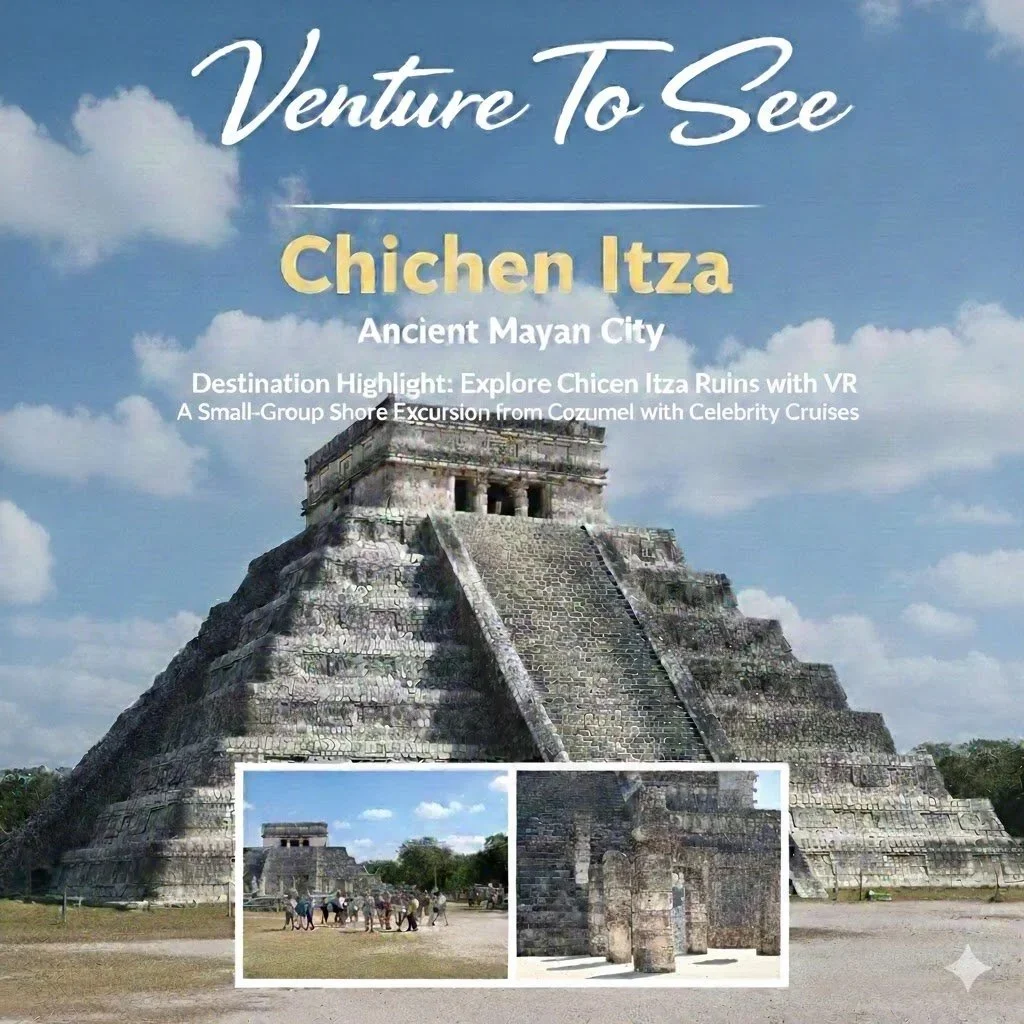
Celebrity Cruise -Destination Highlight: Explore Chichen Itza Ruins with VR
Is the long journey from Cozumel to Chichen Itza worth it? In this detailed review of Celebrity Cruises’ “Destination Highlight: Explore Chichen Itza Ruins with VR,” I share what to expect—from the small-group setting and tablet-based history experience to the crowds, timing, and whether this full-day shore excursion truly delivers.
A Small-Group Shore Excursion from Cozumel with Celebrity Cruises
We were docked in Cozumel at 7:00 in the morning when this day started. It was early enough that the ship still felt quiet, with most people just getting coffee or heading to breakfast. We met in the theater on the Celebrity Constellation for our excursion called “Destination Highlight: Explore Chichen Itza Ruins with VR.”
I had wanted to see Mayan ruins for a long time. I had previously visited Tulum on another cruise and enjoyed it, but I knew Chichen Itza was supposed to be much larger and more historically significant.
From Cozumel, we took a 45-minute ferry ride to Playa del Carmen. The ride was smooth and uneventful. Once we arrived, we boarded a small coach for the drive inland. One thing that stood out immediately was the group size — there were only twelve of us. Instead of being on a large bus with 50 or 60 people, it felt much more personal and relaxed. You didn’t feel rushed, and it was easy to hear the guide and ask questions.
The drive into the Yucatán Peninsula took about two and a half hours. Early on, each of us was handed a Samsung tablet, which is how the “VR” portion of the tour works. It’s not a headset. Instead, the tablet shows reconstructions, diagrams, and historical images while the guide explains what you’re about to see.
Our guide, Victor, had studied Mayan history in college and had spent a year living near Chichen Itza with descendants of the Maya. He explained things clearly and without exaggeration, which I appreciated.
During the drive, Victor talked about how accurate the Mayan calendar was and how many of their buildings were designed around astronomy, solstices, and equinoxes. On the tablets, we could scroll through about 200 images showing what Chichen Itza looked like when it was first discovered and how the temples may have appeared when they were originally painted in bright colors. Having that background before arriving helped a lot.
Arriving at Chichen Itza
When we arrived, the first thing you notice is how busy it is. Vendors line the walkway selling hats and souvenirs, and it can feel crowded at first. But once you step into the main open plaza and see El Castillo, the main pyramid, it immediately gets your attention. It’s much larger and more imposing than what I experienced at Tulum.
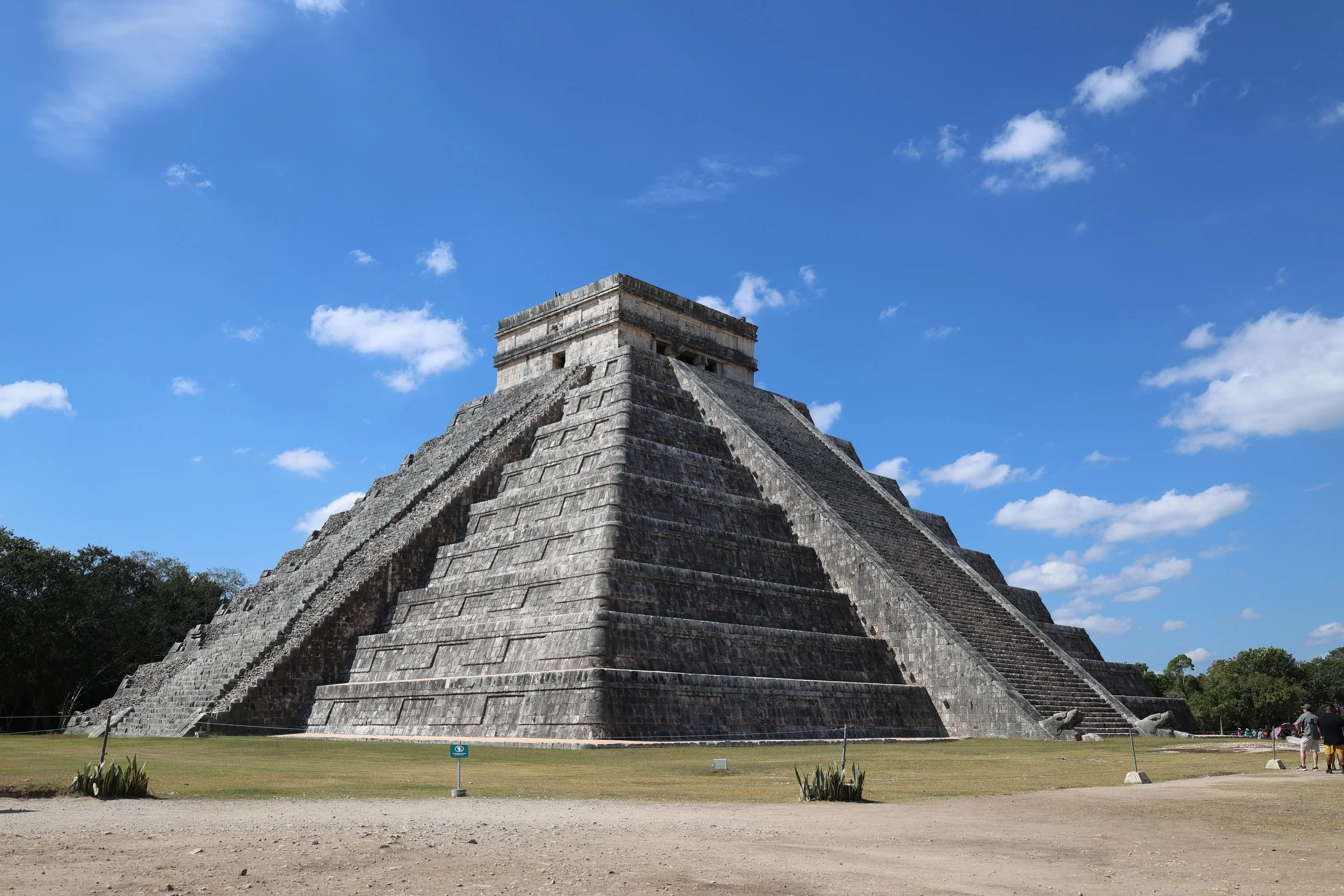
The Main Temple - El Castillo
Victor explained that each side of the pyramid has 91 steps. When you multiply that by four sides, you get 364, and when you add the top platform, it comes to 365 days in a year. The pyramid was designed to function as a solar calendar. That was one of the first moments where it really hit me how advanced the Mayans were in math and astronomy.
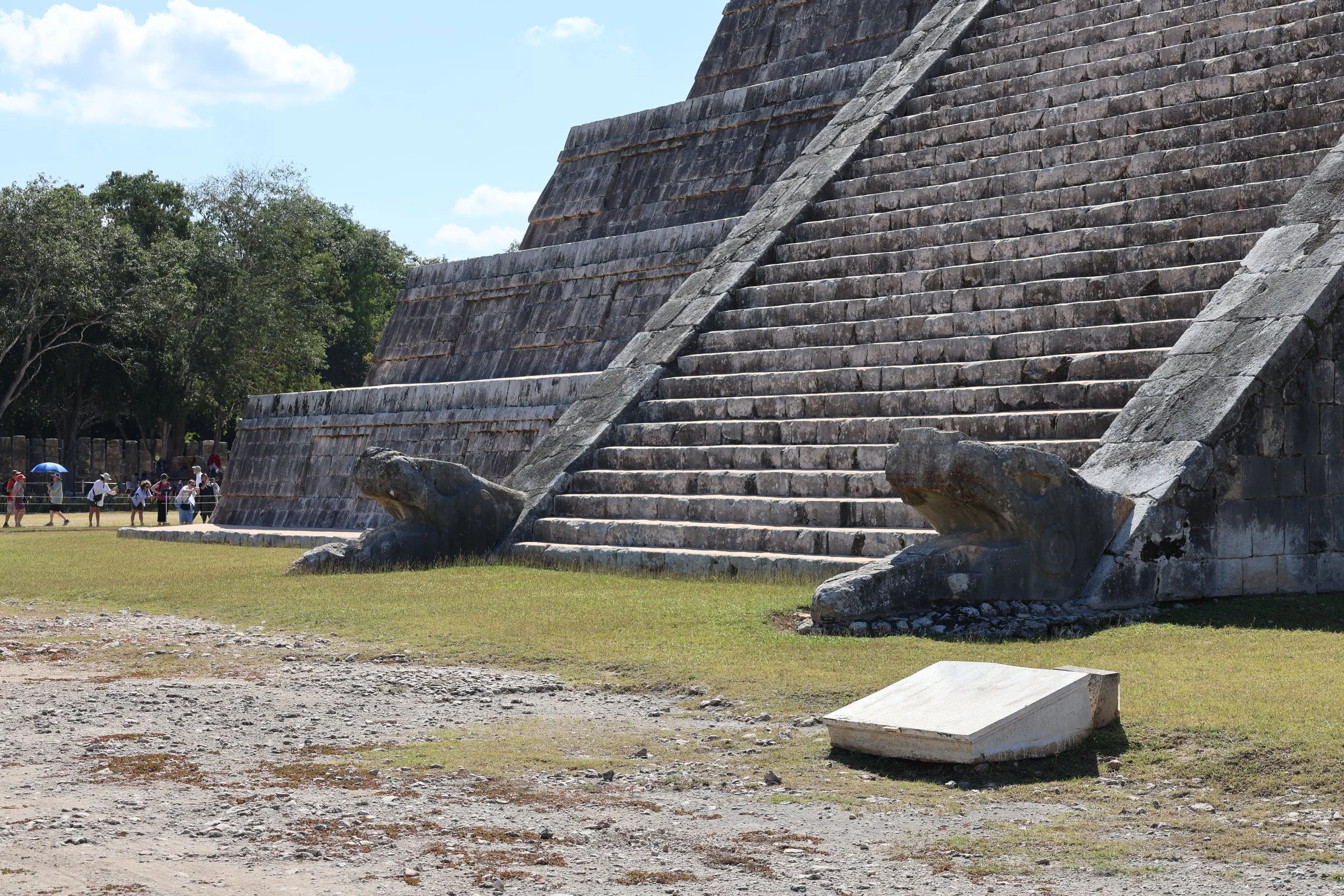
El Castillo - Snake heads honoring the Snake God
He also explained that Chichen Itza was built over five cenotes, or natural sinkholes, and that one is located directly beneath the main temple. Inside El Castillo itself, there are smaller temples built within it, layered over time as new structures were built on top of older ones.
One of the more interesting demonstrations happened when Victor asked us to clap our hands in front of the pyramid. When you clap, the sound echoes back about seven times and changes pitch. Instead of sounding like a normal echo, it ends up sounding like a bird call. Victor explained that the stepped design of the pyramid causes the sound waves to reflect in a way that mimics the sacred quetzal bird. It wasn’t something I would have noticed without someone explaining it, but it showed how deliberate the design was.
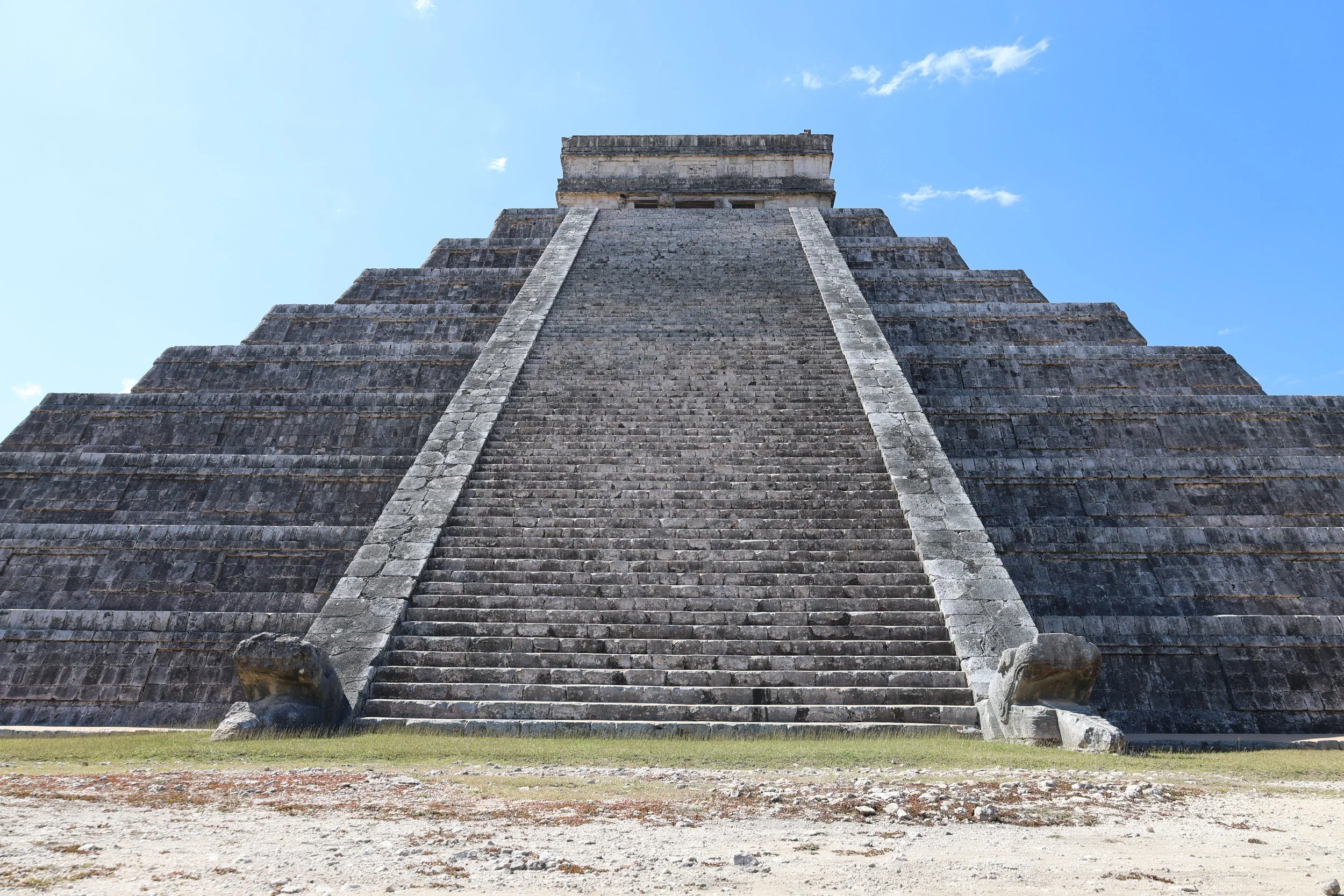
One of four “91 step” stairways to the top of the temple.
The Great Ball Court
Victor also cleared up a few things I had always heard about Mayan culture. One of those was human sacrifice. Movies often make it seem like sacrifices were forced or only involved enemies. Victor explained that many people actually volunteered and that being sacrificed was considered an honor that could elevate a family’s status.
He also talked about the Mayan ballgame played in the Great Ball Court. I had always heard that the losing team was killed. According to Victor, that wasn’t the case at Chichen Itza. Each team had seven players — six on the court and one captain positioned above. The winning captain would ultimately be sacrificed, and the losing captain would perform the ritual. Again, it was considered an honor, not a punishment.
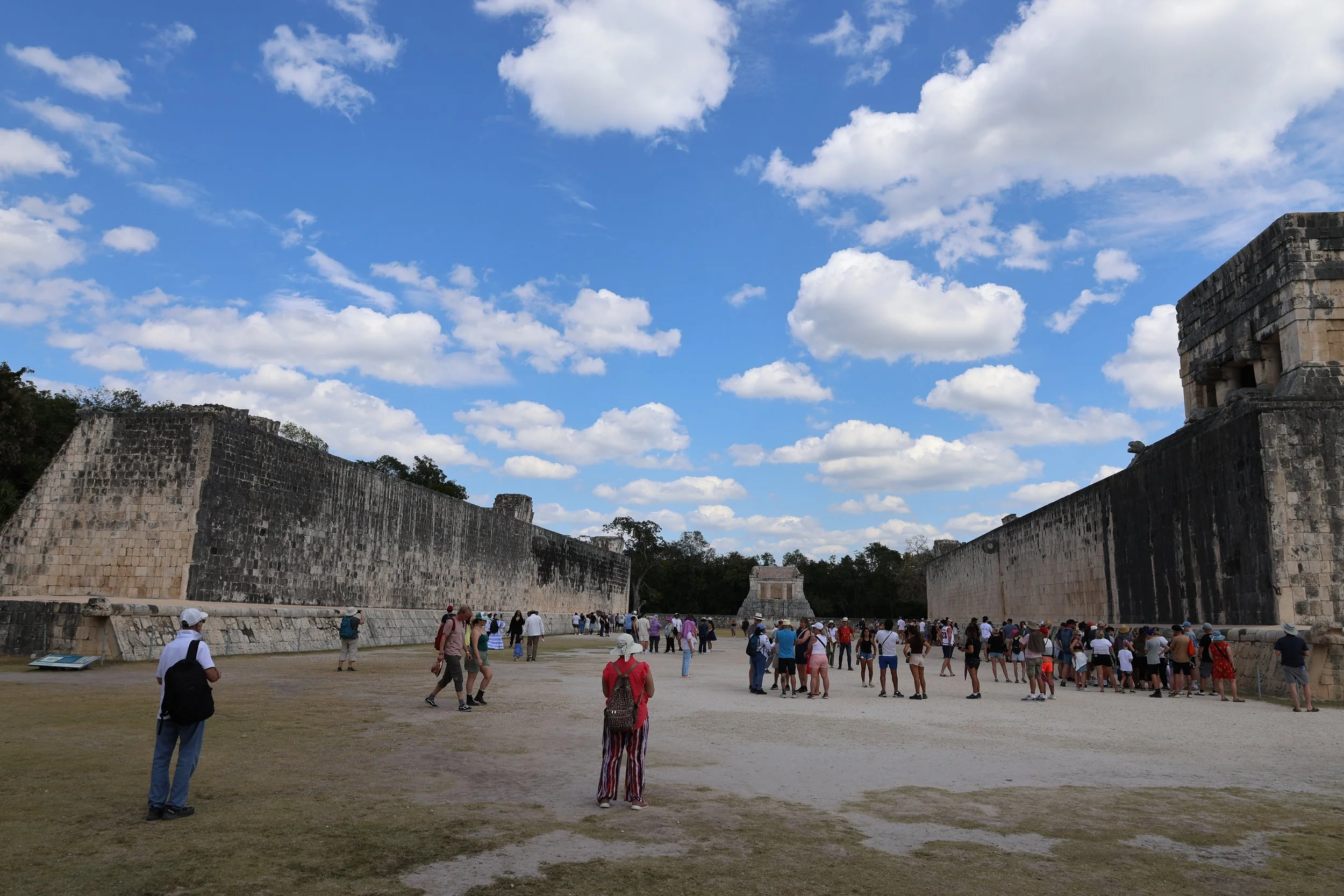
Wide Angle shot of the Ball Court facing to the Royal Family area
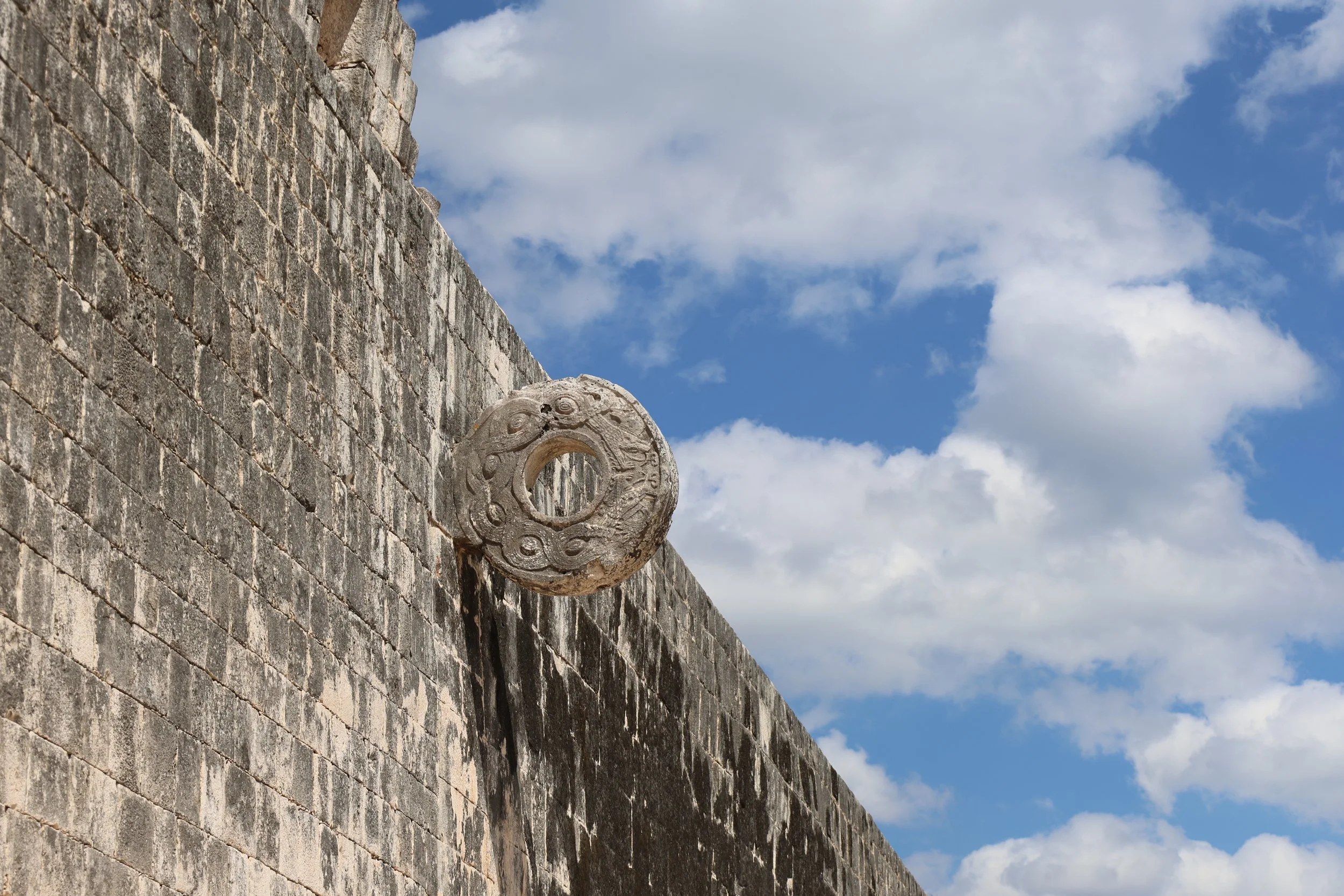
One of two Stone Hoops in the Ball Court
Victor demonstrated how sound carries clearly from one end of the ball court to the other. Even a small noise can be heard across the full length of the structure.
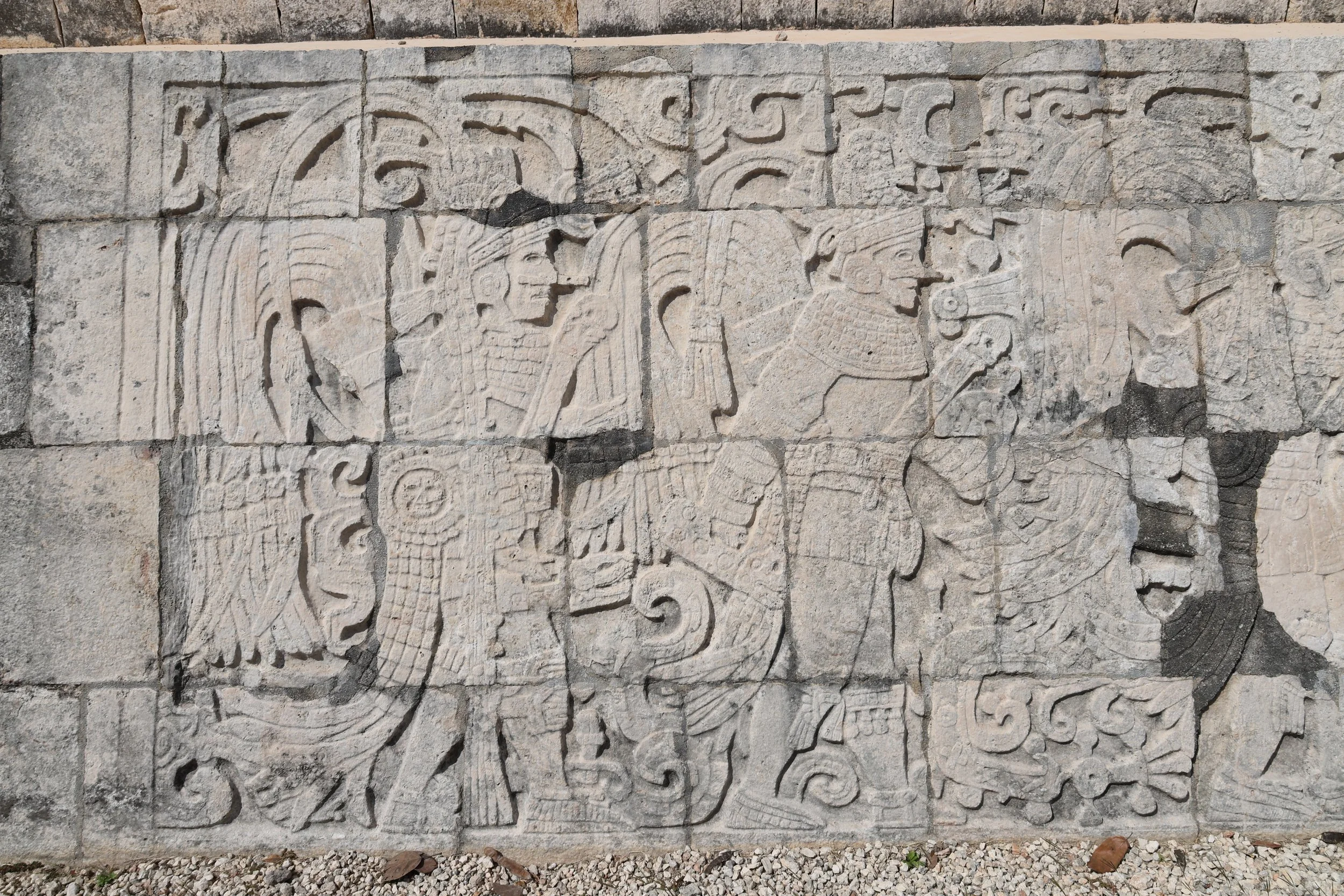
Carvings in the Ball Court that depict two of the seven players on a team.
Temple of the Warriors and Other Structures
We then moved on to other areas of the site, including the Temple of the Warriors. The rows of columns and carvings give you a sense of how large and complex the city once was.
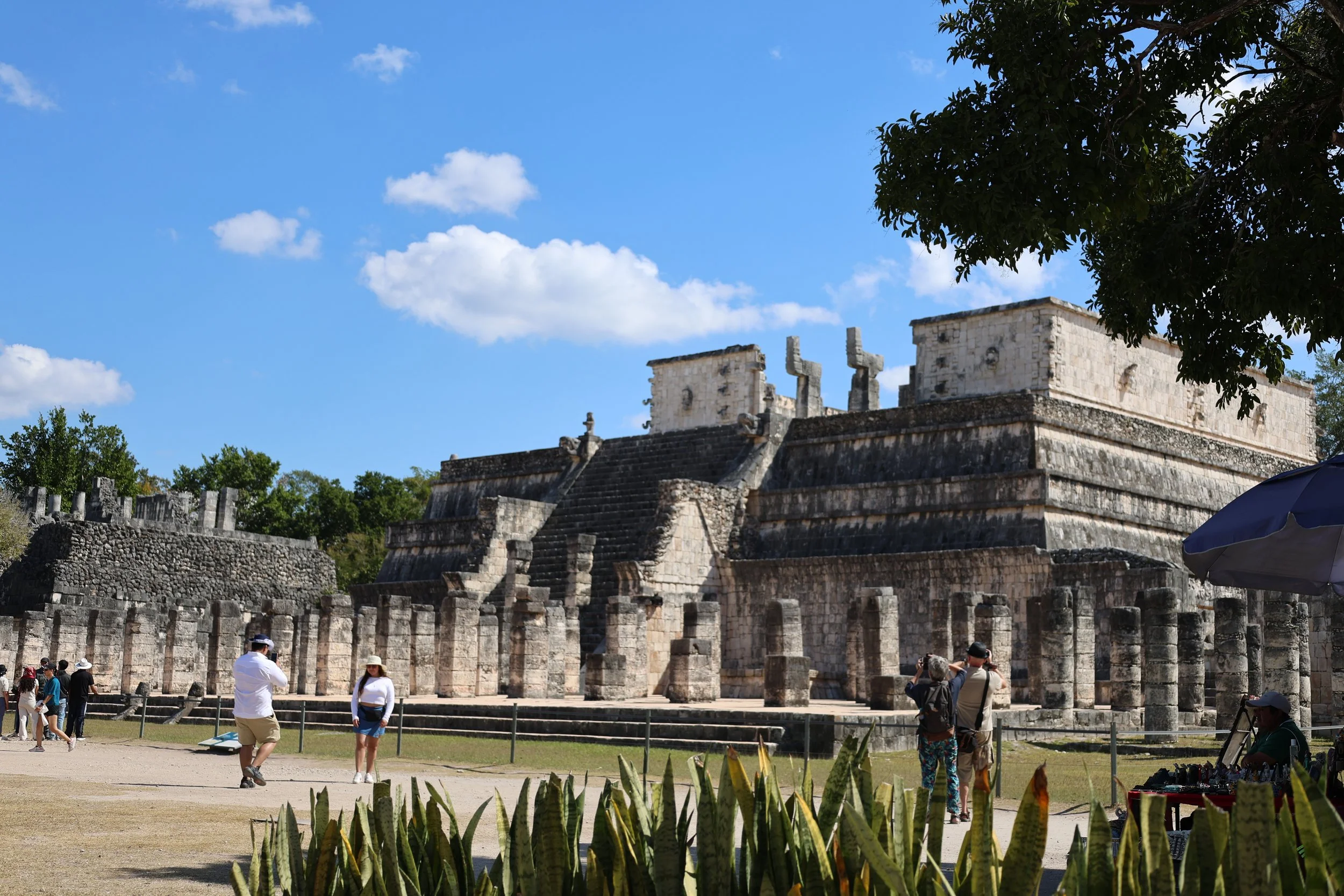
The Warrior Temple
Victor explained how animals like the serpent, jaguar, and eagle were used symbolically throughout the site to represent different gods and aspects of the Mayan belief system.
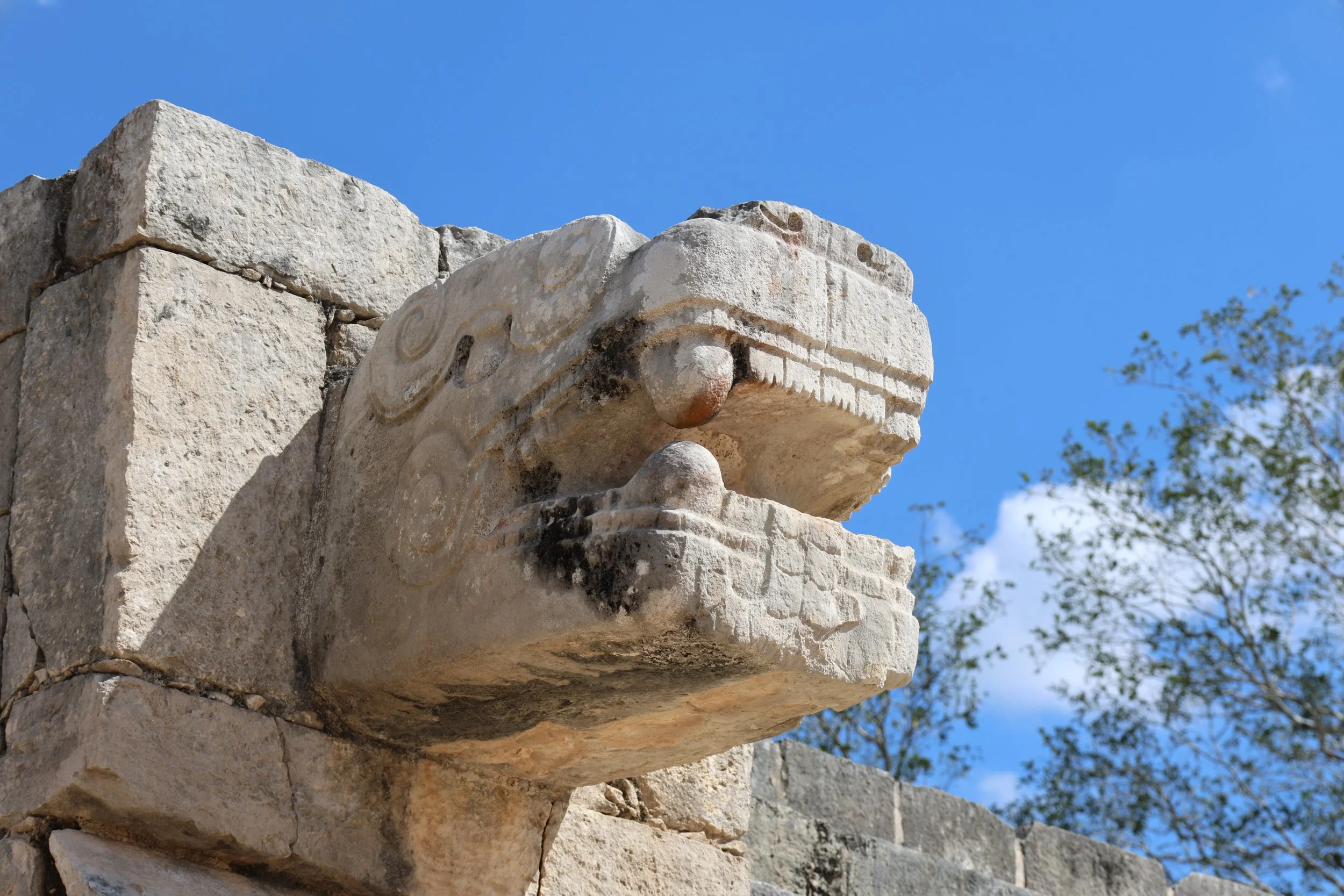
Carving of the Jaguar on a smaller Temple
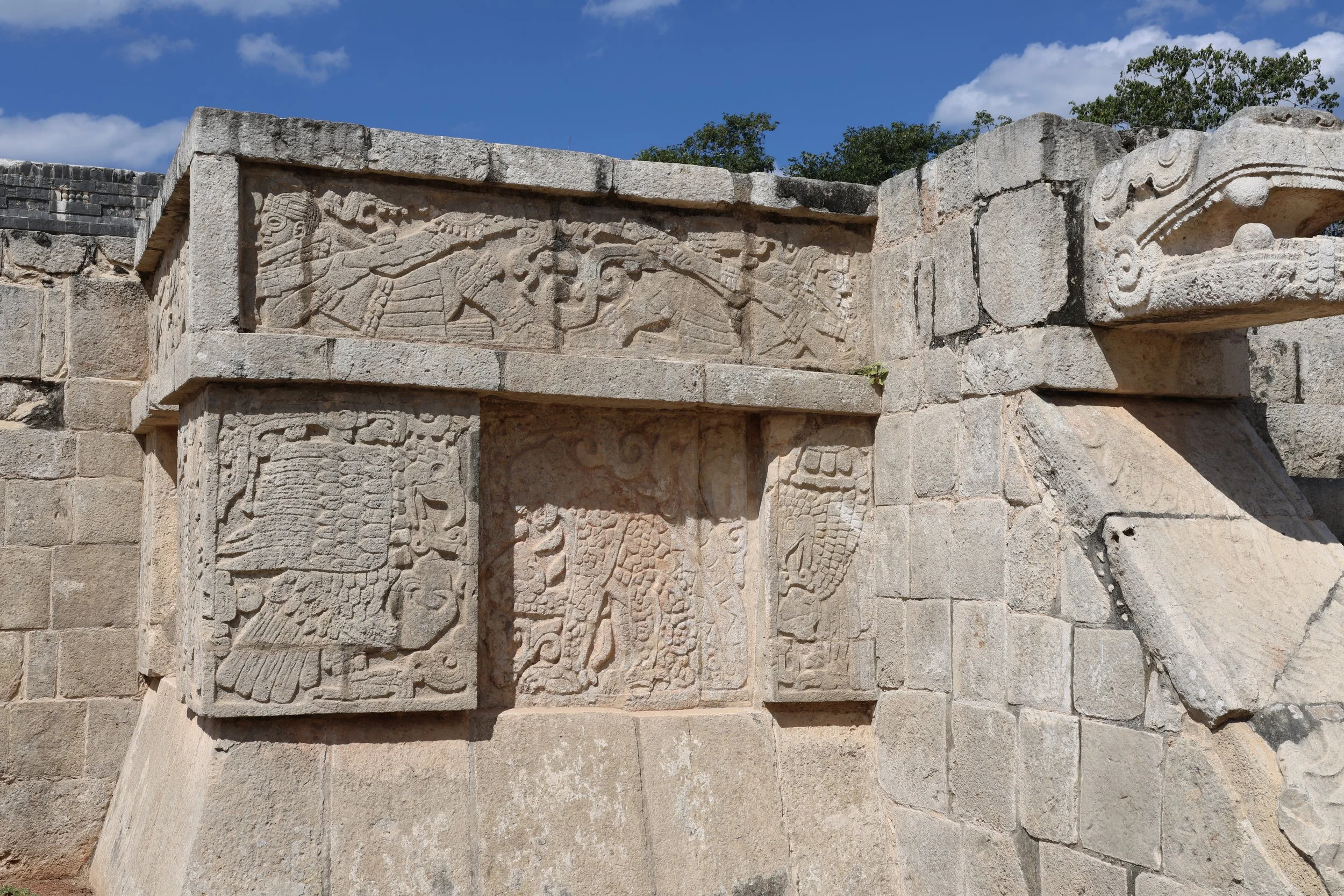
Carvings on a smaller temple
We also passed through areas used for burial and cremation. These sections are less visually dramatic than the main pyramid, but they add important context about daily life and religious practices at Chichen Itza.
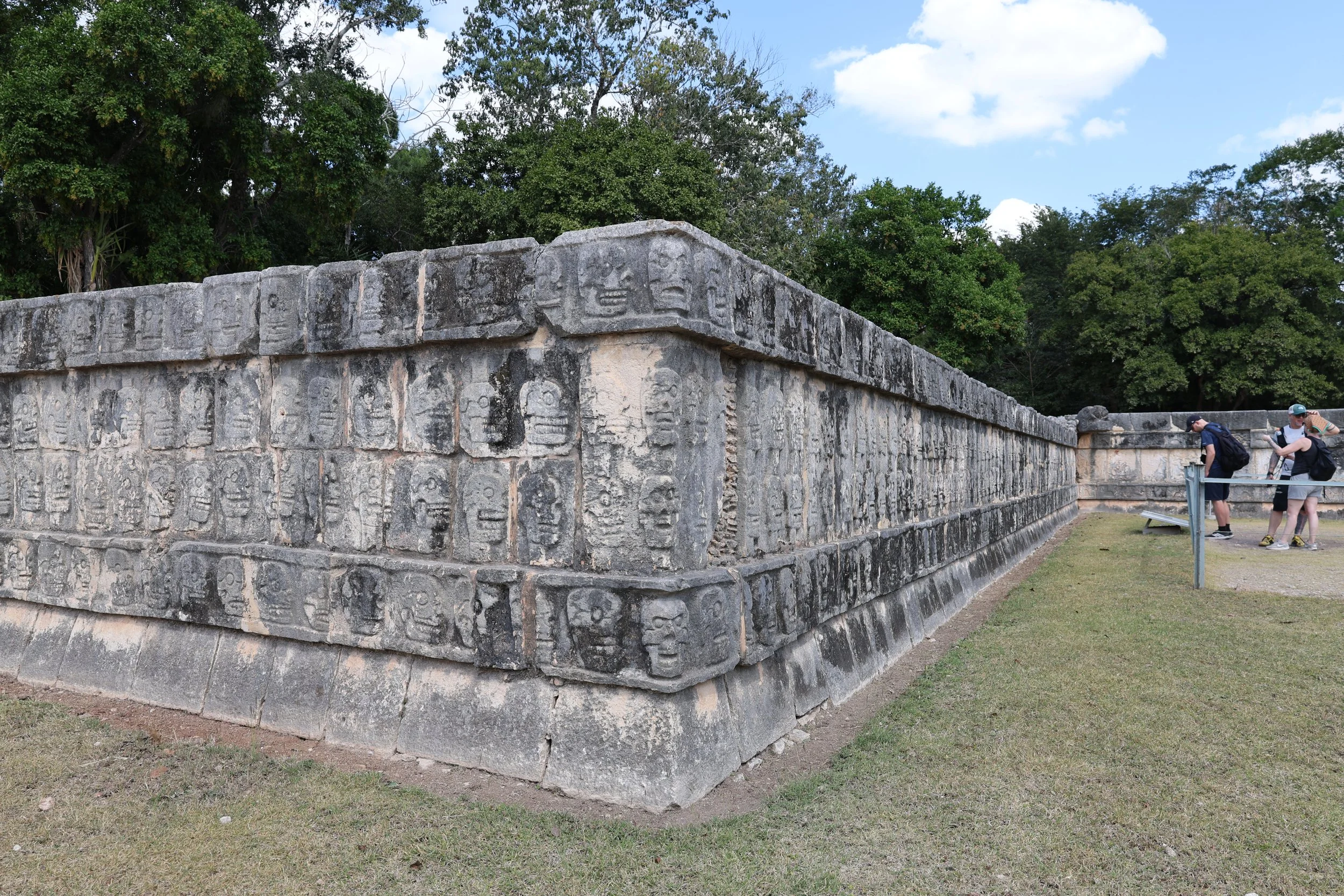
The cremation platform
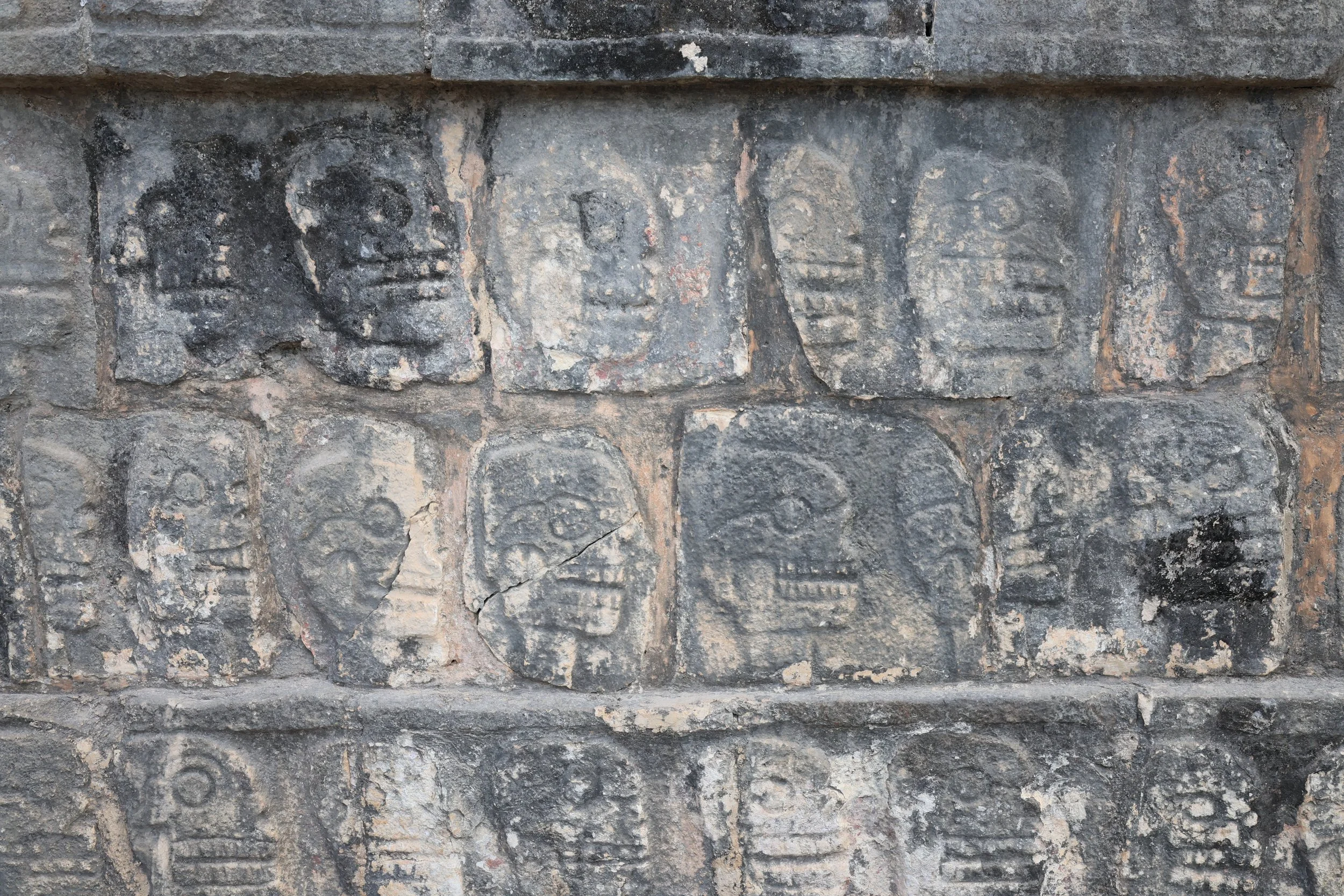
Carvings depicting the faces of ancestors that have already transitioned to the land of the Gods.
What to Know Before You Go
Chichen Itza is extremely busy today. Before becoming a UNESCO World Heritage Site, it averaged around 1,000 visitors per day. Now it averages closer to 20,000. Even in early February, it felt crowded, so I would expect the summer months to be significantly busier.
There are also some practical rules to know ahead of time:
Tripods, monopods, and selfie sticks are not allowed.
Backpacks are allowed, but no food can be brought inside the archaeological zone.
Water is allowed.
Phones and standard cameras are fine.
GoPros require an additional fee.
The tour moves at a steady pace. Because it’s a small group, it never felt chaotic, but it is structured. Victor guided us from one main structure to the next without free time to explore independently. Personally, I would have liked about 30 extra minutes to walk around and take photos on my own. We did return to the ferry with some time to spare before the ship departed, so it felt like that might have been possible. Still, the guided portion was thorough and well organized.
It’s also a long day. We left the ship at 7:00 a.m. and returned around 4:30 p.m. The tour included a small sandwich and bottled water before entering the site, and a snack bar on the way back. I would recommend eating a solid breakfast on the ship and bringing a protein bar to leave on the bus for afterward.
Is This Tour Worth It?
I have only seen “Destination Highlight: Explore Chichen Itza Ruins with VR” offered through Celebrity Cruises. I haven’t seen this specific VR-based version offered by Royal Caribbean, Carnival, or Princess. Other cruise lines do offer tours to Chichen Itza, but this combination of a small group, tablet-based visuals, and in-depth historical explanation appears to be unique to Celebrity.
This tour is ideal for travelers who are genuinely interested in history and don’t mind committing to a full day. It’s not designed for people who want a quick stop or a large bus experience. The small group size makes it feel more personal, and the added context helps you understand what you’re seeing rather than just walking past ruins.
If you are visiting Chicken Itza on your own check out these tour options:

A Festive Weekend Escape: Our 3-Night Royal Caribbean Cruise on Utopia of the Seas
Discover our 3-night Royal Caribbean Utopia of the Seas cruise to CocoCay—dining reviews, tips for mega ship travel, and what to know before you sail.
Looking for the perfect pre-holiday getaway? Our Royal Caribbean cruise on Utopia of the Seas was the ultimate short escape, combining festive décor, ocean views, and world-class dining. Sailing out of Port Canaveral, this 3-night cruise offered the best of mega ship cruising—including a stop at Perfect Day at CocoCay, a full day at sea, and specialty dining experiences that made the trip unforgettable.
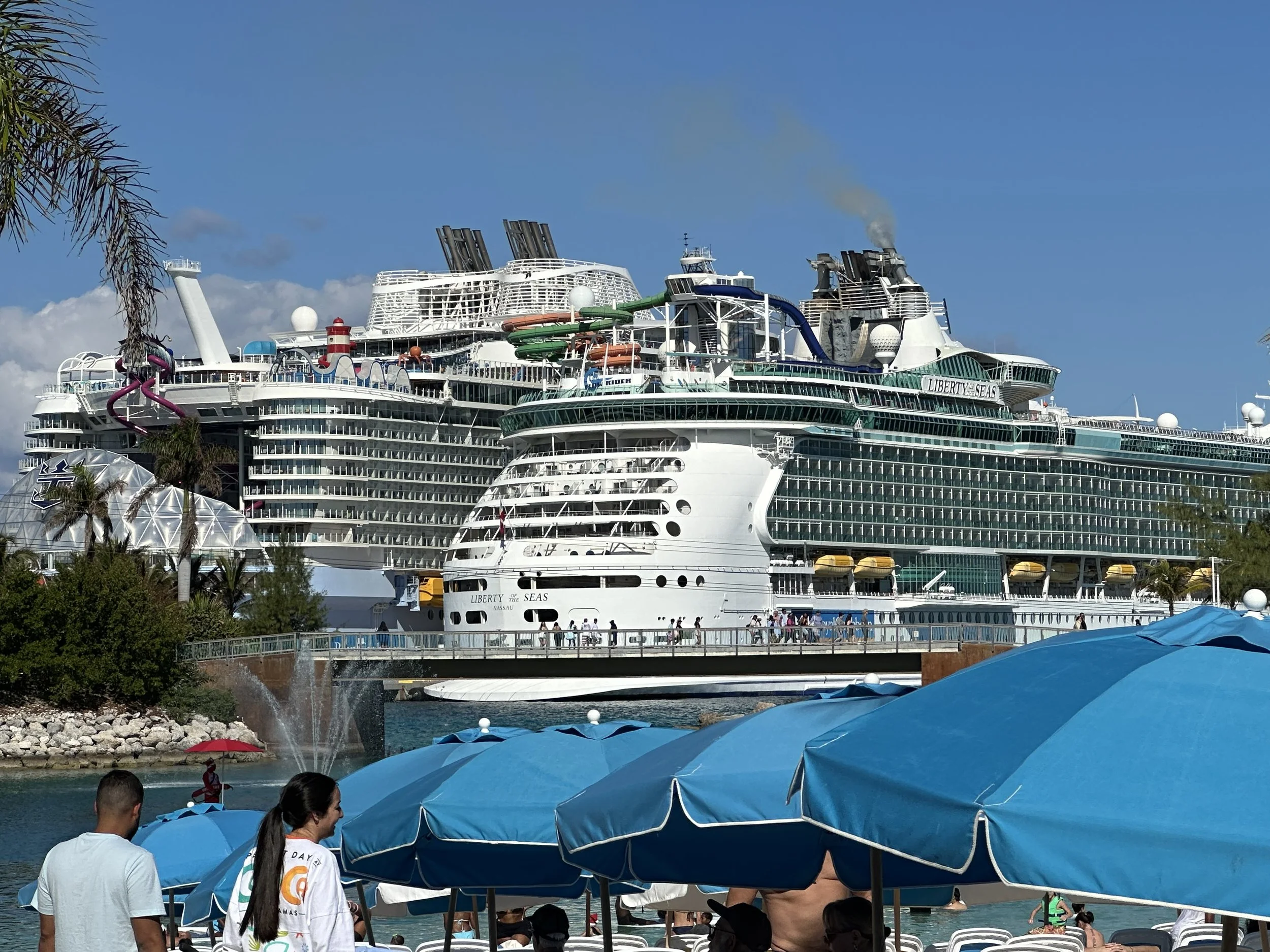
While mega ships come with larger crowds, Royal Caribbean has done a fantastic job designing Utopia of the Seasto move large volumes of people efficiently, preventing long, immovable lines and bottlenecks. To our pleasant surprise, embarkation on Day 1 was just as low-stress as on the smaller Royal Caribbean ships we’ve sailed, which set a positive tone for the entire cruise.
Our Balcony Stateroom on Deck 8: Prime Location for Coffee and Sunrise
We stayed in a balcony room on Deck 8, between mid-ship and aft—a perfect location for both convenience and comfort.
Highlights of the location:
Sunrise coffee moments: As a morning person, stepping out onto the balcony and walking a few steps to a Central Park café was magical. Watching the sunrise over the ocean with a hot coffee in hand set the tone for each day.
Close to the Lido Deck: Decks 7 and 8 are ideal on Royal Caribbean ships to be near the Lido Deck, and this location made grabbing breakfast or lunch quick and easy.
Quick elevator access: Being near the mid-ship elevators meant minimal wait times, giving fast access to Deck 15 and the Windjammer Marketplace.
The combination of convenience, a private balcony, and prime location for sunrise coffee made this cabin feel like a little home at sea. If you’re booking a Royal Caribbean balcony stateroom, we highly recommend mid-ship on Deck 8 for both sunrise views and proximity to the ship’s amenities.
🎄
Holiday Decor on Utopia of the Seas

Sailing the weekend before Christmas means Royal Caribbean decks are fully decked out for the holidays. The Royal Promenade sparkled with garlands, oversized ornaments, Christmas trees, and festive music, creating a tropical holiday vibe. Walking through the ship felt like wandering through a floating Christmas village—sunshine included.
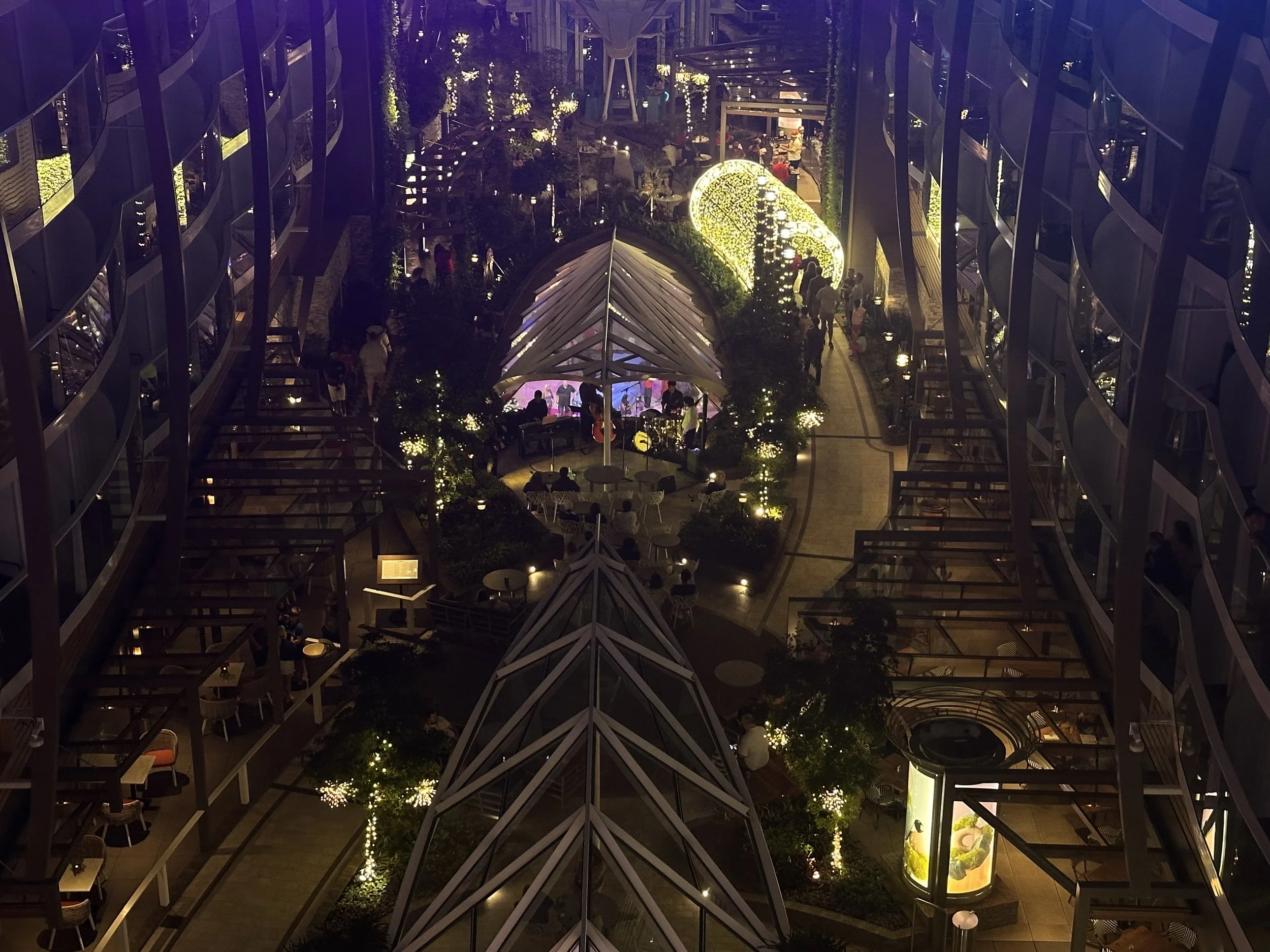
Specialty Dining on Utopia of the Seas
Hooked Seafood: Exceptional Dining at Sea
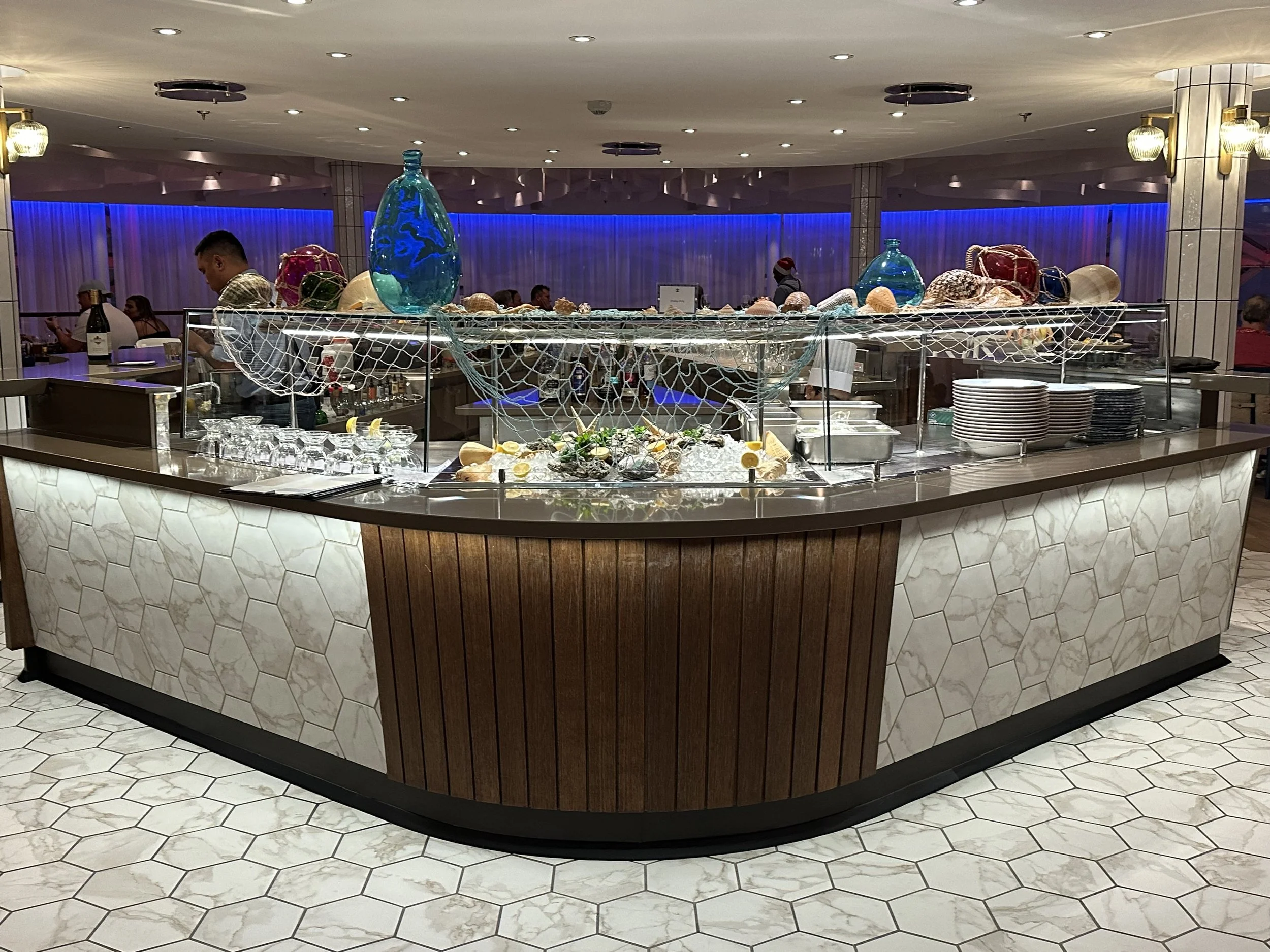
Hooked Seafood was our absolute favorite specialty restaurant on board. This New England-inspired eatery delivered a refined, relaxed atmosphere, incredible service, and some of the best seafood at sea.
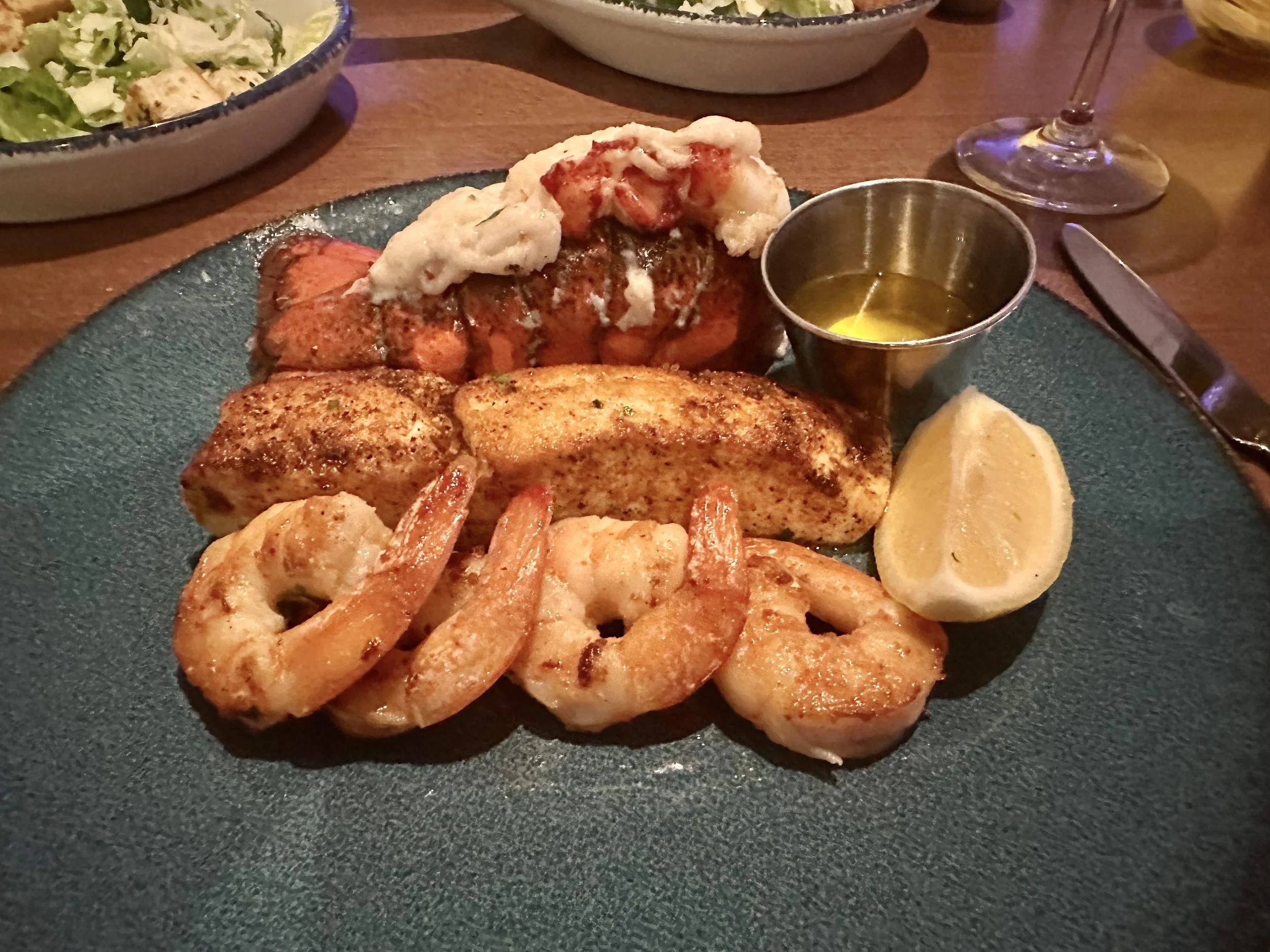
What made Hooked special:
Fresh lobster, crab cakes, and perfectly seasoned fish
Decadent appetizers and desserts
Unlimited entrée option—just ask for a second plate, and the staff happily obliged
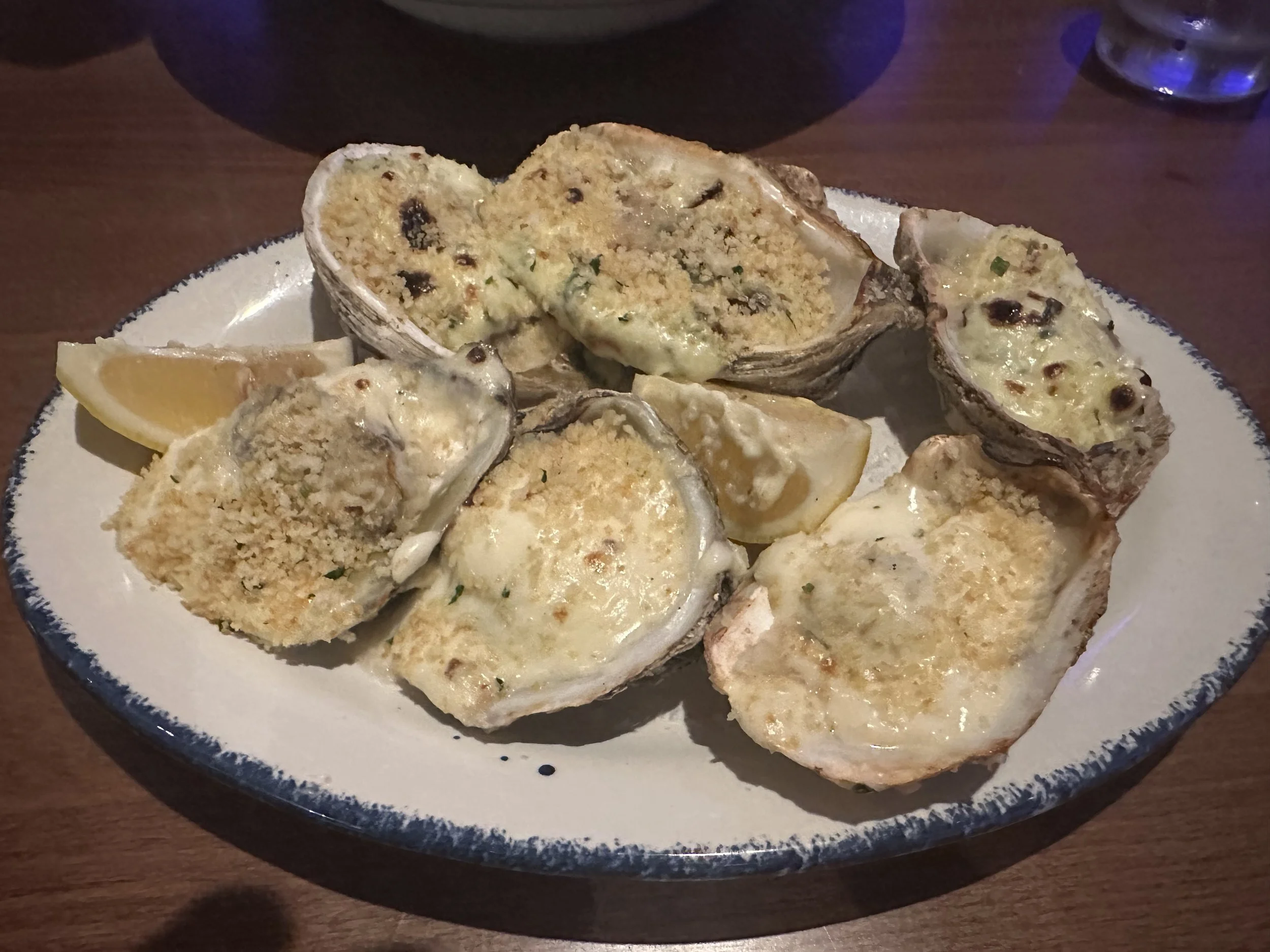
If you’re a seafood lover planning a Royal Caribbean cruise, Hooked is a must-do. Reserve early, as mega ships like Utopia of the Seas get busy quickly.
🥩
Chops Grille: Central Park Views with a Busy Atmosphere
Chops Grille, Royal Caribbean’s signature steakhouse, offered a beautiful view of Central Park, the ship’s lush open-air garden.
Steaks and sides were excellent, and service was attentive.
However, the restaurant felt tight and crowded, unlike the Chops restaurants on smaller ships with ocean-view tables and sunset ambiance.
On smaller ships, enjoying a sunset dinner at Chops is one of our favorite specialty dining experiences. On Utopia, while the food was amazing, the Central Park view didn’t replace that peaceful ocean-view charm.
Main Dining Room: Relaxed Final Night
We only visited the Main Dining Room on the last night of the cruise. It was warm, relaxed, and familiar—offering a perfect contrast to the specialty dining experiences.
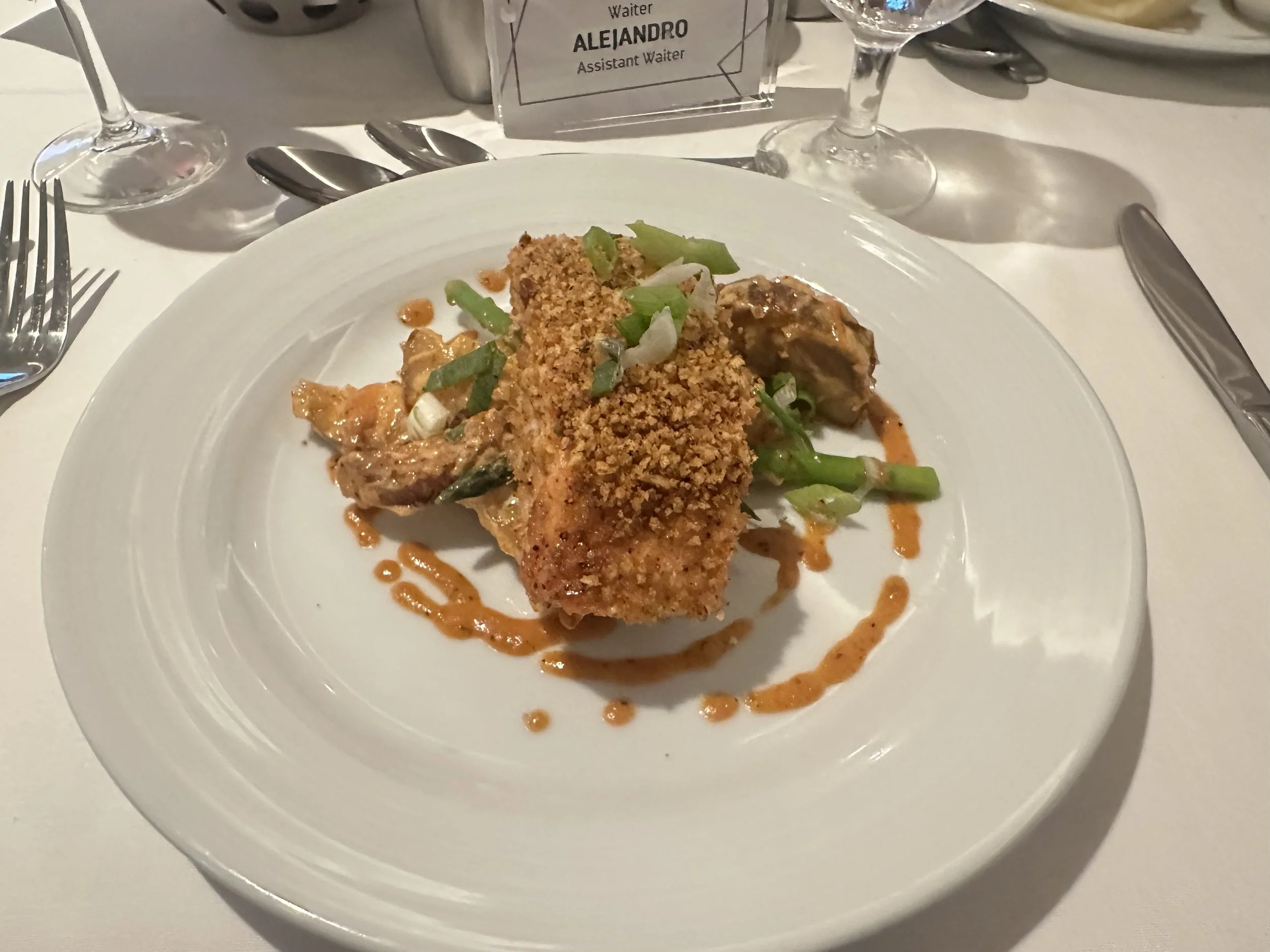
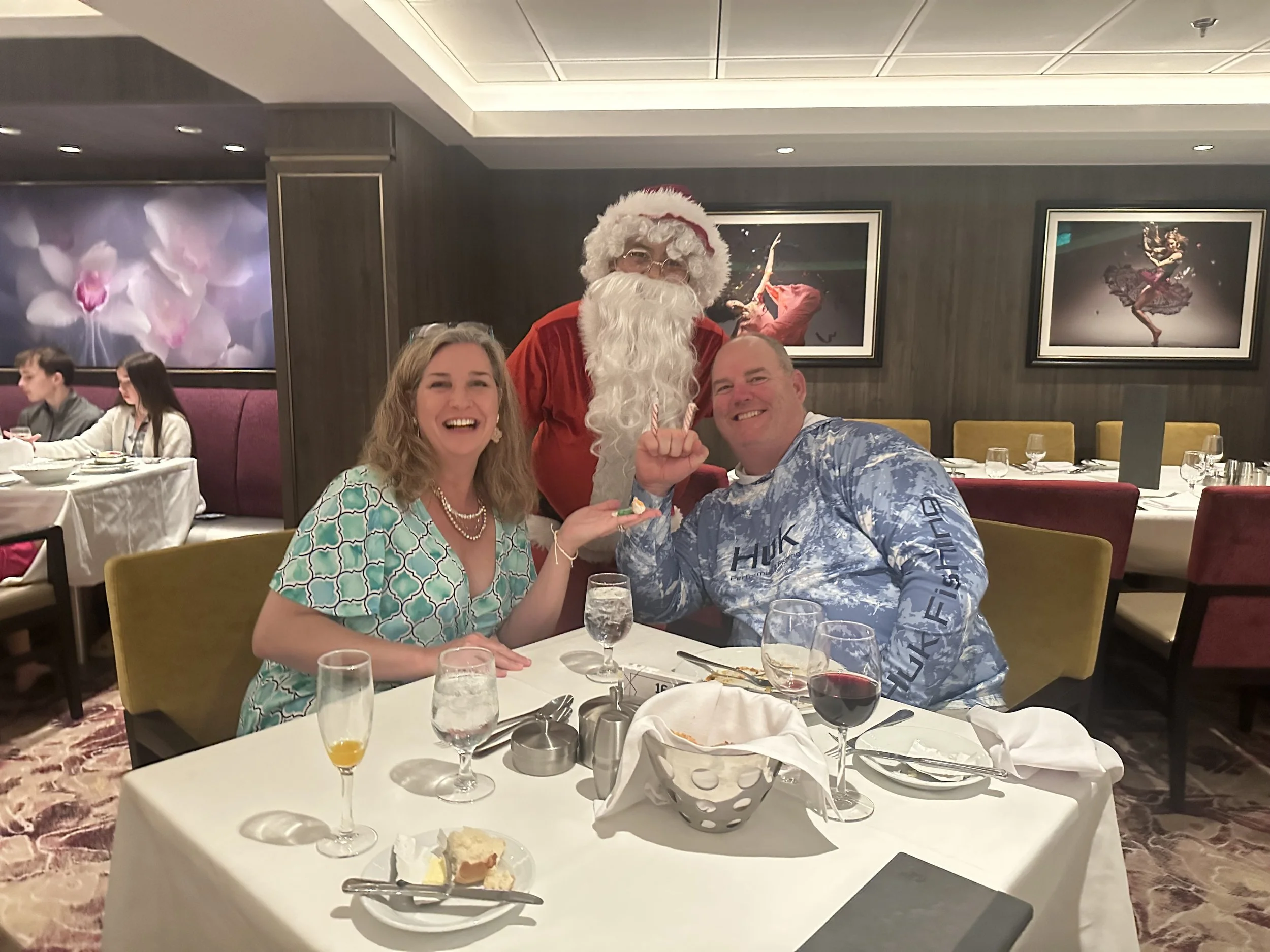
Tip: On mega ships, the Main Dining Room can be just as enjoyable, especially if you want a quieter, less crowded meal.
A Day at Sea & Aquatic Shows That Dazzle
Sea days on mega ships are like exploring a floating city. With so many lounges, decks, and activities, there’s always something new to see.
Aquatic Shows
The aquatic performances were breathtaking—daring dives, synchronized choreography, and dramatic staging. Truly world-class entertainment and the highlight of our sea day.
Check out one of our clips on Instagram: 📸 @venturetosee
Mega Ship Tips: Reservations Are Key
Unlike smaller Royal Caribbean ships, mega ships require reservations for:
Theater shows
Specialty dining
Evening entertainment
We missed most of the theater shows because we didn’t book in advance. Lesson learned: on mega ships, plan ahead or miss out.
CocoCay: Revisiting Our First Cruise
We visited Perfect Day at CocoCay, which was nostalgic because the first time we’d been there was back in 2009, on our first-ever cruise.
2009: Untouched, quiet, magical Caribbean paradise
2024: Fully developed with waterparks, restaurants, and crowds of 10,000+ passengers
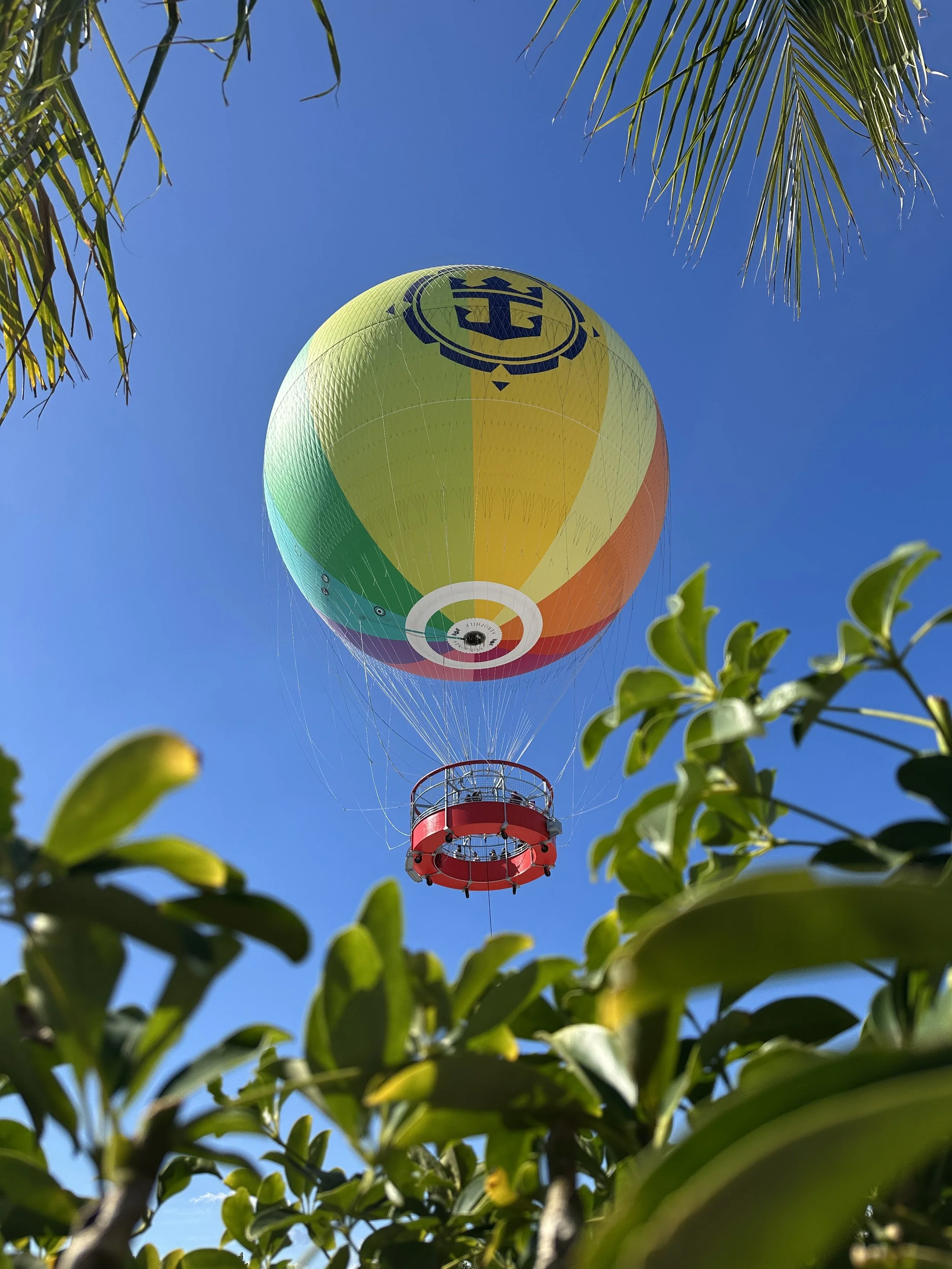
Even with the crowds, walking the island and soaking in the scenery was worth it—just different from our first experience.
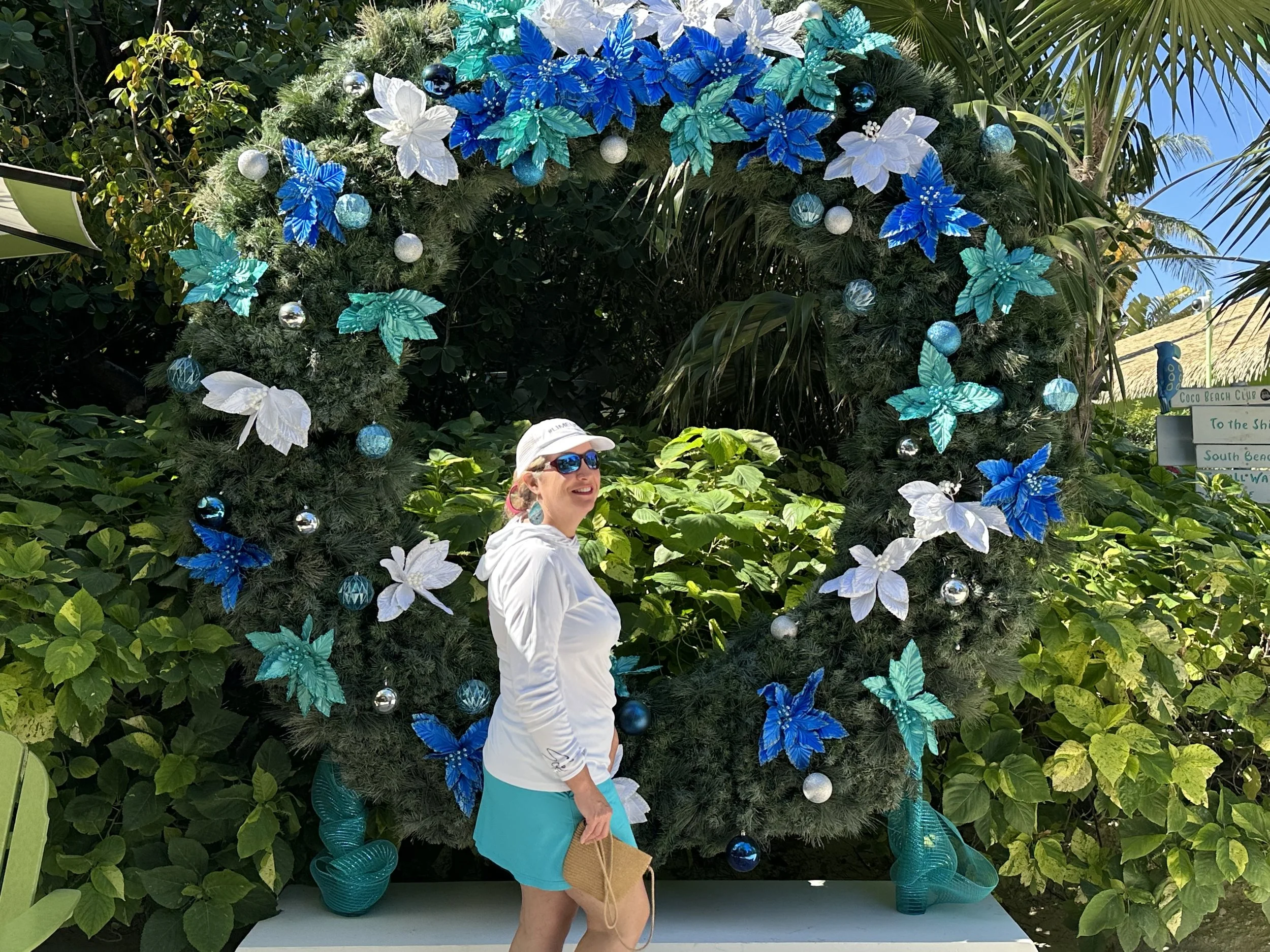
A Special CocoCay Moment: Stingray Sighting
While exploring CocoCay, my wife and I swam out to a floating cabana on the back side of the island. With fruity Caribbean beverages in hand, we lounged above the turquoise water, taking in the sun and scenery.
As we relaxed, we noticed the outline of a stingray perfectly camouflaged in the sand below us. The water was about 10–13 feet deep, so there was no danger of stepping on it—but it was incredible to see marine life up close, even in a highly developed area. Moments like this reminded us that the Caribbean still holds little pockets of natural wonder.
Affordability Tips for Royal Caribbean Mega Ships
Sailing on a large, newer Royal Caribbean ship comes with incredible experiences—but also a higher price tag.
If you’re not planning to take full advantage of high-energy activities—like the zip line, The Abyss, or FlowRider—a smaller ship might be more budget-friendly.
However, if you love a bustling atmosphere, abundant dining, and shopping, here’s how to maximize value:
Book Early: Secure your cabin as soon as possible for the dates you want.
Consider Longer Itineraries: 4+ day sailings allow you to experience more of the ship’s offerings.
Watch for Pre-Payment Sales: Look for deals on specialty dining, shore excursions, and drink packagesbefore final payment.
With planning, you can enjoy the mega ship experience without overspending.
What We’d Do Differently Next Time on Utopia of the Seas
Skip Chops, revisit Hooked, and enjoy the Main Dining Room more
Hooked was our favorite specialty restaurant, and we’d pair it with more evenings in the Main Dining Roomfor relaxed meals and less crowded dinners.
Choose a longer itinerary
At the time of this blog, Utopia of the Seas only offered 3- and 4-day cruises. For a fuller experience of dining, shows, and activities, we’d consider a 4-day or longer sailing, rather than a quick 3-day escape.
Plan ahead for shows
On mega ships, reservations for theater performances fill fast. Next time, we’d research shows in advance and book seats early, ensuring we don’t miss any entertainment.
Things to Buy to Enhance Your Cruise Experience
To make the most of your Royal Caribbean mega ship cruise, consider bringing or buying:
Reef-approved sunscreen – Protect your skin while being environmentally conscious. Purchase here: https://amzn.to/48lqZOT
Reusable water bottle – Stay hydrated on the ship and during port days. Purchase here: https://amzn.to/3XkCMrE
Snorkel gear – Ideal for exploring CocoCay or other beaches. Purchase here: https://amzn.to/3MnnvDU ; https://amzn.to/43RhN3c
Magnetic hooks – Perfect for organizing your stateroom and hanging towels/swimsuits. Purchase here: https://amzn.to/489Q1jC
Waterproof phone pouch – Keep your phone safe while enjoying water activities. Purchase here: https://amzn.to/48Hr0Nl
Compact day bag – Carry essentials for excursions or onboard exploring. Purchase here: https://amzn.to/48BHiIv
These items enhance convenience, safety, and enjoyment throughout your cruise.
Final Thoughts
Our 3-night Royal Caribbean cruise on Utopia of the Seas was festive, memorable, and full of lessons. Mega ships offer incredible entertainment, dining, and stateroom conveniences, but they require planning and awareness of crowds.
From balcony sunrise coffee on Deck 8 to specialty dining at Hooked Seafood and Chops Grille, a stingray sighting at CocoCay, and the high-energy fun onboard, this cruise reminded us why we love Royal Caribbean—and why thoughtful planning makes all the difference.
Follow along for more travel adventures on Instagram, Facebook, and Youtube @venturetosee. www.venturetoseellc.com
Porto, Portugal — A Sip (and a Rush!) on Our Carnival Legend Adventure
If you’re planning a Carnival cruise to Portugal, you won’t want to miss this honest review of our family’s day in Porto, one of the most charming cities along the Douro River. From the moment we docked at Porto Leixões Cruise Port in mid-June’s warm, sunny weather, we were excited to experience the city’s famous Port wine cellars, colorful riverfront, and historic sites.
But our Carnival City Tour and Port Tasting excursion didn’t go quite as expected. Between a rushed schedule, a 10-minute tasting at Calém, and limited time at major attractions like the Clérigos Tower, we quickly learned that Porto is a place best explored at your own pace.
In this post, I share what really happened on our Porto shore excursion, what we’d do differently — including taking a Hop-On Hop-Off bus, visiting the Port houses independently, and enjoying more time in the Ribeira district — plus the top 3 things to do in Porto if you’re visiting by cruise ship. If you want an authentic, traveler-tested guide before choosing your own Porto cruise excursion, you’re in the right place.
Our family’s Carnival Legend cruise to Spain, Portugal, and France in the summer of 2024 was one for the memory books. Nine days of sunshine, great food, and waking up in a new destination each morning. One of those ports — Porto, Portugal — ended up being both memorable and educational. Not everything went as we expected, but that’s what makes travel interesting!
We docked at Porto Leixões Cruise Port, roughly 3 km (2 miles) from downtown Porto. The setting was beautiful, the skies were blue, and the city’s terracotta rooftops glowed in the morning sun.

Statue of Vimara Peres
Weather in Porto in Mid-June
If you’re cruising to northern Portugal in mid-June, be prepared for some truly perfect travel weather. Expect daytime highs between 23–26°C (73–79°F), cooler evenings around 16°C (60°F), and plenty of sunshine. The breeze rolling in from the Atlantic keeps the heat comfortable, especially along the riverfront.
Our June day in Porto was gorgeous — bright blue skies, warm sunshine, and ideal conditions for exploring.
Arriving in Porto Leixões
The Carnival Legend cleared passengers around 9:00 a.m., and by 9:30 our family of four (including two teenagers) was stepping onto our tour bus for the City Tour and Port Tasting excursion. The bus was parked right next to the ship — easy and organized.Be clear, be confident and don’t overthink it. The beauty of your story is that it’s going to continue to evolve and your site can evolve with it. Your goal should be to make it feel right for right now. Later will take care of itself. It always does.
Stop #1: Douro River Lookout & Calém Port Tasting
Our first stop was a quick photo moment overlooking the Douro River and Porto’s famous bridges. The view was stunning — colorful hillside buildings, boats drifting along the river, and the iconic Dom Luís I Bridge connecting Porto to Vila Nova de Gaia.
Dom Luis I Bridge
Then we headed to Calém, one of Porto’s well-known Port wine cellars. The tasting tables were set with two Port samples per adult, a ruby and a tawny. Since our teens were underage, the Calém attendant thoughtfully changed their glasses to orange juice. Click here for an alternative experience.
Entrance to Calém Port Cellar
Calém port Cellar
The tasting itself was delicious… but rushed. We had maybe 10 minutes before being ushered through the gift shop and back onto the bus. A few guests managed to make purchases — my wife included, grabbing a special Port for us to open on our 25th wedding anniversary — but overall, the experience felt too quick to enjoy.
For more information on a tour of Calém click here.
Stop #2: Clérigos Church & Tower
Next, we headed into the city center to visit the famous Clérigos Church and Tower. The baroque design is stunning, and the skip-the-line access included in our excursion saved us from waiting in an incredibly long queue.

Clérigos Tower
The interior was gorgeous, but again, time was limited. We had roughly 20–25 minutes to explore — just enough to look around but not enough to fully take in the details or climb the tower.
Inside the Clérigos Church
For more information on a tour of the Clérigos Church and Tower click here.
Stop #3: Palácio da Bolsa (Exchange Building)
Our third and final major stop was the Palácio da Bolsa, one of Porto’s most beautiful and historic buildings. The guided portion here was excellent — we spent nearly one full hour learning about the palace’s architecture, ornate rooms, and Portugal’s trading history.
The grand entrance to Palácio da Bolsa
The Arab Room, in particular, was jaw-dropping.
One of the court rooms of Palácio da Bolsa
Once the visit ended, we expected a bit of free time to explore Porto, but instead we returned directly to the ship — a full 2–2.5 hours before all-aboard.
For more information on a tour of Palácio da Bolsa click here.
The Early Return — and Some Frustrations
Arriving back at the ship so early left us feeling like we’d missed out on experiencing Porto properly. Several guests asked to leave the group and explore independently — and looking back, we wish we’d done the same.
Between the rushing, the early morning Port tasting, and our teens being charged full adult fares despite not being able to participate, the excursion simply didn’t deliver what we had hoped for.
Still, every travel hiccup teaches you something, and Porto has absolutely earned a return trip from us — on our own schedule next time.
What We’d Do Differently Next Time
If we visit Porto again by cruise ship, here’s how we’d make the most of our day:
1. Take a Hop-On Hop-Off Bus
This is the option we wish we had taken. Multiple companies operate Hop-On Hop-Off buses from Porto’s city center, and they’re perfect for cruise visitors. You can see major highlights at your own pace — Ribeira, Clérigos, Foz beach area, Vila Nova de Gaia, Port houses, and more — without feeling rushed or tied to a strict schedule.
For more information on Hop-On Hop-Off buses click here.
2. Explore Porto Independently
A taxi or Uber from the cruise port to downtown costs very little and takes only about 10 minutes. From there, everything is walkable or easily reachable on transit.
3. Enjoy a Relaxed Lunch Along the Ribeira
The Ribeira riverfront is one of the most beautiful places in Portugal. We’d grab a table overlooking the Douro, enjoy fresh seafood or a Francesinha sandwich, and simply take in the scenery.
4. Visit Port Houses on Our Own Schedule
Instead of a rushed group tasting, we would personally visit one or two Port cellars — Calém, Taylor’s, Sandeman, or Graham’s. Going independently gives you time to enjoy the tour, ask questions, and savor the tasting properly.
5. Skip Clérigos Unless It’s on Your Must-See List
It’s beautiful, but also crowded, and similar to many other cathedrals in Spain and Portugal. If time is limited, there are better ways to enjoy the city.
Top 3 Additional Things to Do in Porto for Cruise Visitors
If you’re planning your own adventure from the cruise terminal, here are three fantastic options:
1. Walk Across the Dom Luís I Bridge
The views from this double-level bridge are spectacular. Walk from Porto to Vila Nova de Gaia and straight into the Port wine district.
2. Visit Livraria Lello
Often ranked as one of the most beautiful bookstores in the world, Livraria Lello is a must for book lovers and architecture fans. Buy tickets online to skip the line.
For more information on Livraria Lello click here.
3. Visit the FC Port Museum
For all of those Futbol Hooligans out there, a fun expense bringing you closer to the pitch.
For more information on FC Port Museum click here.
Final Thoughts
Our Carnival Legend Porto excursion may have been rushed, but the city itself? Porto is the kind of place best explored slowly — on foot, with a glass of Port in hand, and without watching the clock.
And when we finally open that bottle of Calém Port on our 25th wedding anniversary, I know we’ll smile remembering this perfectly imperfect day in Portugal — the good, the chaotic, and everything in between.